



Abstract
The study examines the effects of work-from-home (WFH) on working mothers in India, characterized by a patriarchal mindset, during the COVID-19 pandemic. A survey involving 560 mothers from various sectors, all utilizing WFH due to pandemic measures, was conducted. A moderated mediated model was analyzed in the quantitative study using structural equation modeling. The results showed the absence of domestic help and family work guilt affected the job satisfaction of working mothers. The results showed that the overall dual-stage moderated mediation index from home demands (HDs) to job satisfaction via family–work conflict was significant. In addition, the first stage (HDs × absence of domestic help family–work conflict) and second stage (family–work conflict × family–work guilt job satisfaction) moderations were significant. This article also outlines the limitations of the current work and presents future scope for research.
Introduction
With the need for social distancing in the troubled times of the COVID-19 pandemic, work from home (WFH) had become inevitable for both employers and employees all over the world (Greenstone & Nigam, 2020). Almost all jobs, with the exception of essential services such as healthcare and banking, had adopted WFH in India during the pandemic years (January 2020–5 May 2023). Although there are debates on virtual work engagement and virtual group coherence, WFH undoubtedly afforded a feeling of safety among people and the satisfaction of being with family during troubled times (Felstead et al., 2002).
Although an alternate work arrangement such as WFH provides several benefits for women in terms of work–life balance during normal times, WFH during the pandemic lockdown was a different situation for working mothers due to many reasons. The patriarchal lifestyle/mindset in India requires that home chores, including taking care of the husband, children, and the aged, are the sole responsibility of women (Kelkar et al., 2002). The constant presence of all family members at home during the pandemic-induced lockdown increased the woman's responsibilities of handling family even when she was working on her job. Secondly, the absence of paid domestic help, which is a significant source of support for the Indian working woman, due to lockdown-induced restriction of movement, resulted in an increase in the household chore burden for the woman (Valk & Srinivasan, 2011). Such additional pressures of responsibilities and tasks affect the woman's work–life balance, and it is important to understand the effects, in order to develop solutions.
There is a need to understand the levels of job satisfaction of women employees during pandemic restrictions because their professional tasks overlap with their day-to-day personal activities (Nemteanu et al., 2021). Due to the heavier home demands (HDs) in the WFH scenario, women tend to experience lower job satisfaction compared to men (Feng & Savani, 2020). While a few studies have discussed the impact of the pandemic on job satisfaction (Lathabhavan & Griffiths, 2023; Nemteanu et al., 2021), the integration of home roles and related conflicts as determinants of job satisfaction has been less explored.
Effects of pandemic lockdown among working mothers and present study
It is of immense theoretical and practical value to understand how the pandemic lockdown has affected the professional and personal lives of working mothers, who, even in nonemergency times, play crucial dual roles of homemaker and employee (Daraba et al., 2021; Lott, 2020). Understanding the effects of forced WFH on such women during this unexpected and unavoidable situation, would help in designing better work protocols and coping mechanisms for them.
Work–life balance is always challenging for women from developing countries that foster a patriarchal culture, like India. Gender inequality, sexism and male domination are characteristics of a patriarchal society and hence regardless of their status and professions, women are responsible for domestic responsibilities such as household chores, bearing and raising children, doing the laundry, cooking, etc. (Adisa et al., 2019). Women in these societies navigate both traditional roles required of the patriarchal order and economic and social roles spurred by developing economies, resulting in formidable challenges in striking a balance between work and personal life (Akanji et al., 2020).
There has been a growing number of women entering the Indian workforce in recent times, propelled by factors such as better education for women, expanded job opportunities, and the necessity for dual incomes (Lathabhavan, 2019). Despite this welcome change toward female autonomy, the entrenched patriarchal mindset in India still designates household chores, encompassing childcare, spousal care, care for the elderly, cooking, and cleaning, as the exclusive responsibility of women (Kelkar et al., 2002). Furthermore, men traditionally dominate decision-making processes in India and then coerce other family members into adhering to the decisions they have made, such that women lack the capability to oppose or negate decisions that are imposed upon them (Murthi & Hammell, 2021). This environment led to heightened mental health concerns among women compared to men, particularly during the pandemic (Lathabhavan, 2021). Working mothers, in particular, grappled with parenting stress and a diminished quality of life while working from home (Limbers et al., 2020). Moreover, working mothers reported less job satisfaction and productivity compared to men among dual-career parents (Feng & Savani, 2020). Although studies attempted to explore WFH effects in the Western context, few studies discussed WFH effects on working mothers in Eastern patriarchal cultures like India. Moreover, a family–work transition sphere has rarely been taken into consideration, especially in the WFH context.
In a patriarchal society, women often avail of domestic help to strike a balance between their work and professional lives (Prakash, 2018; Valk & Srinivasan, 2011). However, the COVID-19 pandemic, by limiting access to childcare and domestic help, compelled women to spend more time on these responsibilities than before, thereby spotlighting the gendered nature of household chores and parenting (Mazumdar et al., 2022).
The increased pressures from these additional tasks adversely impact the work–life balance of working mothers, leading to heightened work–life conflicts, particularly in the WFH scenario (Clark et al., 2021; Schieman et al., 2021). The unequal distribution of responsibilities between men and women poses obstacles to the career advancement of working mothers in such cultures. This, in turn, contributes to the glass ceiling effect that results from women having to prioritize personal goals over their professional aspirations (Lathabhavan, 2020; Lathabhavan & Balasubramanian, 2017). Although studies have attempted to explore factors of work–life conflict during the pandemic among working mothers, few studies have discussed the effects of the absence of domestic help on the well-being of working mothers.
This study presents the findings of a quantitative investigation conducted to comprehend the impact of the pandemic lockdown on working mothers in India. The primary objective was to investigate the antecedents of job satisfaction of working mothers during the pandemic taking into account the demands at home and family–work conflict (FWC), as they simultaneously navigated their roles as employees and homemakers. Subsequently, a survey was administered to validate the research model.
Theoretical background and hypotheses development
FWC as a role transition reaction to HDs and absence of domestic help during COVID-19 pandemic
Concepts from boundary theory (Ashforth et al., 2000) were drawn to develop the hypothesized model and guide the choice of focal variables. According to the theory, role transitions are boundary-crossing activities and micro and psychological movement between the roles must be considered. The theory delineates three domains of everyday role transaction involving the work, viz., work–home, work–work and work–third-place transitions (Ashforth et al., 2000). Work–home transitions occur during commuting, switching between home-based work and office-based work. Work–work transitions involve shifts between roles such as subordinate, peer, superordinate, and organizational representative (Allen et al., 2015). Work–third-place transition pertains to movement between work and other social domains like a church, health club, etc. (Ashforth et al., 2000). The current work focused on work–home transition and specifically on the psychological movement between the roles. The consideration of psychological aspects was prompted by changes in the global manpower market due to the pandemic.
Ashforth et al. (2000) proposed that in work–home transition, integrated roles work better than segmented roles. Integrated roles allow more flexibility and permeable boundaries so that working mothers do not feel the conflict. On the other hand, if the roles of the employee and mother are segmented, inner conflict is created, which leads to negative effects on the career (Ashforth et al., 2000; Ilies et al., 2009) since segmented roles possess more inflexible and impermeable role boundaries.
The role transition between segmented roles, although predictable as a physical response, seems to be relatively infrequent, and is associated with specific and planned activities such as commuting to the office from home. In highly integrated roles, on the other hand, the transition between the integrated roles is relatively more frequent and perhaps unpredictable; attending to a crying child during WFH is a classic example of this scenario. An unexpected shift from a segmented role to an integrated role due to situational demands poses an even greater challenge. The COVID-19 scenario brought about such situations where segmented roles became disabled due to social distancing and other protective measures, and integrated roles were globally enabled in the form of remote work.
Although crossing role boundaries is comparatively easy in the case of integrated roles, maintaining role boundaries is difficult. An unexpected and unavoidable WFH, for which the employee is unprepared, leads to both increased job demands and increased HDs. The presence of all family members at home all the time and movement restrictions cause more HDs on mothers in the family, and this leads to stress (Richardson et al., 2017). The stress increases FWC among working mothers (Russell et al., 2009).
Situational strength and culture are two factors that can explain the conditions of working mothers since they affect boundary creation, maintenance and crossing (Ashforth et al., 2000). In a strong situation, there is consensus on what behavior is deemed right or wrong. In the current study, the situational factors revolved around the pandemic-induced restrictions, leading to a mandatory WFH scenario and reduced socialization demands (Lathabhavan & Vellasamy, 2022). The situational strength in this context was notably high, as the changes resulting from the pandemic restrictions were globally consensual, leaving little room for employee arguments or negotiations (Ashforth et al., 2000).
From a cultural perspective, a country like India, characterized by a patriarchal attitude, endorses segmented roles that establish a rigid distinction between gender responsibilities. In such a setting, household chores and childcare predominantly fall under the purview of women, even if they are the primary breadwinners, while men typically do not engage in these activities (Rout et al., 1999). Building on the perception of housework as a woman's responsibility, the current generation of working mothers in dual-earning couples often delegate domestic tasks to paid help instead of involving their husbands. This strategy helps them circumvent work–family conflicts (WFCs) and mitigate the risk of work overload (Rout et al., 1999; Valk & Srinivasan, 2011).
Family support and social support are arguably important factors that influence the career success of women. An additional factor with equal importance in India's patriarchal society is paid domestic labor (Jauhar & Lau, 2018). The pandemic-induced lockdown hindered the movement of domestic help, and working mothers thus faced increased amounts of FWC.
This situation led to the first hypothesis.
Hypothesis 1: Absence of domestic help during lockdown moderates the relationship between home demands with family–work conflict, such that the relationship is stronger and positive when there is the absence of domestic help.
Family–work guilt as a capacity to intensify the negative effects of FWC
FWC is an interrole conflict, in which, the role pressures from employment and family domains are mutually incompatible in some respects, and hence participation in one of the roles is made more difficult by the participation in the other role (Grönlund & Öun, 2018).
Guilt can be defined as an emotion or painful feeling of regret that arises when an individual causes, anticipates causing, or is associated with an aversive event (Burmeister et al., 2019). Guilt can be broadly categorized into interpersonal guilt and intrapersonal guilt based on its impact on individuals (Zhang et al., 2023). Interpersonal guilt, which results from doing harm to someone else, mostly occurs within intimate personal relationships (Borelli et al., 2016; Zhang et al., 2023), while intrapersonal guilt results from harming oneself (Zhang et al., 2023). Guilt typically comprises various components. The cognitive component involves the feeling that one is responsible for causing harm or violating perceived standards of conduct (Pivetti et al., 2016). The affective component is associated with unpleasant feelings such as grief and depression (LeBlanc et al., 2020). The behavioral component is associated with the individual trying to adapt to different situations such as the desire to escape (Gilchrist et al., 2020). When experiencing guilt, individuals tend to reflect deeply on the misdeed, wishing they had behaved differently (Tangney et al., 2011).
Work–family guilt is a relatively new concept that has more relevance and scope in the contemporary work and organizational scenario (Korabik, 2015; Morgan & King, 2012). A few studies have analyzed the subtypes of guilt, viz., work–family guilt and family–work guilt (FWG) (Borelli et al., 2016). Work–family guilt arises when professional work interferes with family and FWG is when family interferes with professional work (Glavin et al., 2011).
In this study, we focused on FWG considering the changes in work styles brought about by the pandemic. The circumstances were distinct from the usual work environment, as employees were compelled to WFH, always surrounded by all family members, particularly children. Consequently, work was frequently interrupted by familial demands, leading to the likelihood of guilt among the employees. Additionally, in this scenario, mothers experienced a higher degree of guilt compared to fathers (Borelli et al., 2016, 2017).
WFC is a form of interrole conflict, in which, the role pressures from personal life and professional life are mutually incompatible (Kiburz et al., 2017). WFC can occur in two directions, work-to-family and family-to-work conflicts (Beigi et al., 2018). As the names imply, work-to-family conflict arises when work encroaches upon family responsibilities, while family-to-work conflict occurs when family demands interfere with work commitments (Netemeyer et al., 1996).
Job satisfaction is a positive emotional state resulting from the evaluation of one's job or job experiences (Nemteanu et al., 2021). It is an employee's attitude toward their job and job conditions (Lathabhavan & Griffiths, 2023). More precisely, job satisfaction is determined by a discrepancy between what one wants in the job and what one has in the job (Matthews et al., 2018). The pandemic sparked extensive academic discussions on job satisfaction, primarily focusing on the reduced levels of job satisfaction among employees due to rapid structural changes, such as the shift to remote work (Feng & Savani, 2020). In particular, the discussions highlighted the challenges faced by women employees in managing dual responsibilities at home and in the office (Chanana, 2021).
According to the boundary theory (Ashforth et al., 2000), individuals create boundaries in order to simplify the environment such as work and home, with role segmentation and integration. During the pandemic, the shift from a physical office environment to a virtual office environment, resulted in a transition from role segmentation to role integration. Since WFH is, as the name suggests, in the home environment, these role integrations increase interference and conflicts (Allen et al., 2013). These conflicts affect job satisfaction (Hwang & Ramadoss, 2017; Wang & Peng, 2017).
According to the Conservation of Resources theory, any change in resources would create stress among individuals as they strive to retain and foster those they centrally value such as knowledge and autonomy of work (Hobfoll, 2012). The assumed family-role responsibility of women creates more stress among them than among men (Grandey & Cropanzano, 1999), which, in turn, creates more FWG in women than men (Borelli et al., 2016; Livingston & Judge, 2008). This difference in family–wok guilt between women and men determines the different career outcomes (Aarntzen et al., 2019; Zhang et al., 2019). Consolidating these arguments, the following hypotheses were framed.
Hypothesis 2: Family–work guilt moderates the relationship of family work conflict with job satisfaction, such that the relationship is stronger and positive when family work guilt is high (vs low).
Taking hypotheses 1 and 2 together,
Hypothesis 3: Absence of domestic help during lockdown and family–work guilt moderate the negative indirect relationship of home demands with job satisfaction via family–work conflict.
Figure 1 illustrates the research model of the study.
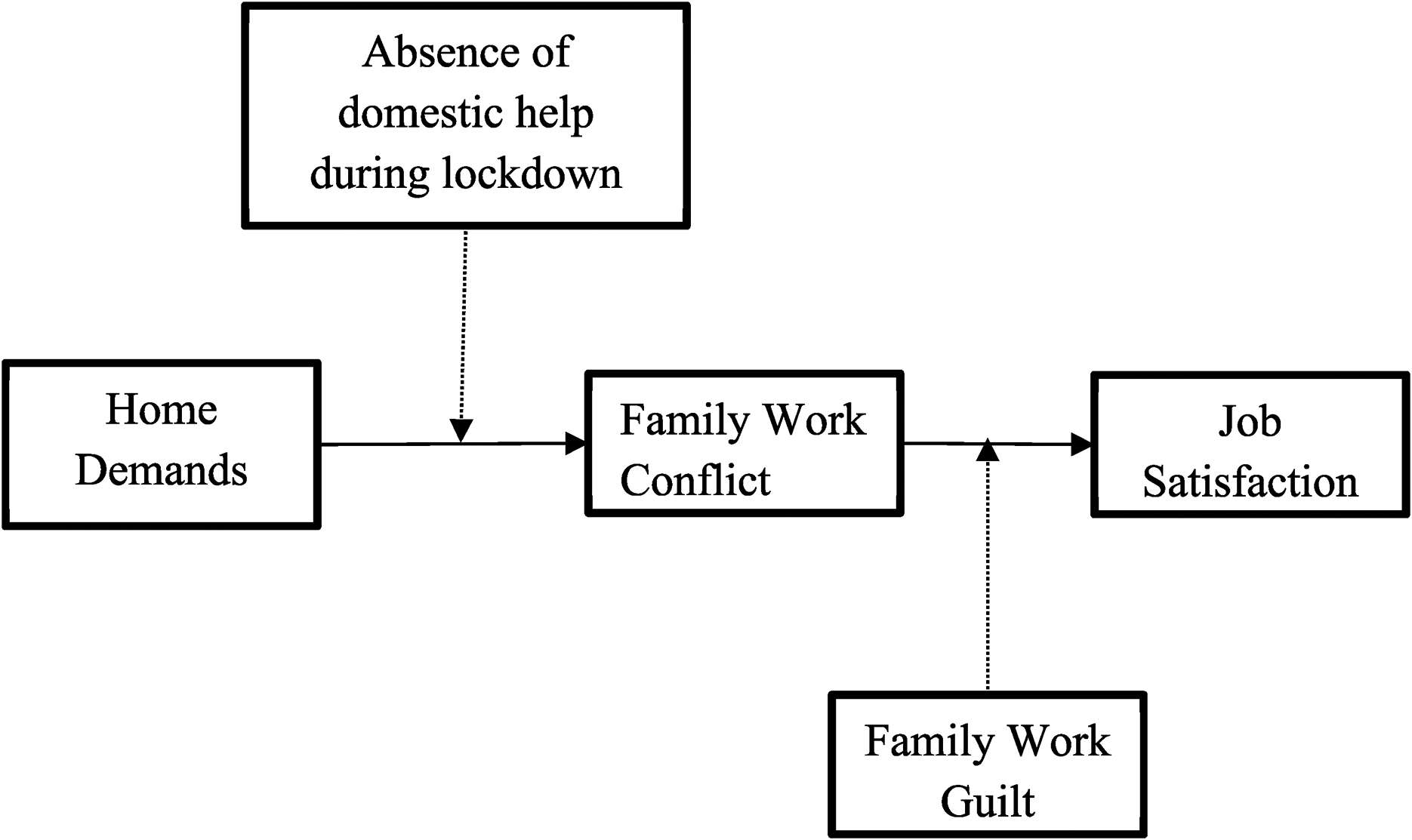
Conceptual framework.
Method
Participants and procedure
All data were collected though online survey during the pandemic lockdown period in India. A total of 560 working mothers from different sectors in India participated. A random sampling method was adopted after getting the women employee's list from the HR department of various organizations. Participation in the survey was voluntary, and informed consent was obtained from all participants. The survey was restricted to working mothers who availed of the WFH option.
The participants were from different sectors including IT, ITES, teaching, finance, and automobile sectors. All participants had previously utilized either partial or full domestic assistance, which was discontinued during the pandemic. Among the participants, 130 (23.22%) sought assistance for cooking alone, 105 (18.75%) for cleaning/household chores other than cooking, 39 (6.96%) for childcare and 286 (51.07%) for both cooking and cleaning.
All participants were working mothers, with 259 (46.25%) having one child, 287 (51.25%) having two children, and 14 (2.5%) having more than two children. Within the respondents, 131 (23.39%) had elderly parents or in-laws at home (of which 43 had one elderly person and 88 had two elderly persons at home), while the remaining respondents resided with their spouses and children.
Participants ranged in age from 24 to 48 (M = 34.2, SD = 6.2). All scales were administered in English.
Measures
HD was measured using an eight-item scale (Peeters et al., 2005). Two HDs were included in the questionnaire, namely, home overload and emotional demands. Home overload was assessed with five items, including “Do you find that you are busy at home?” Home emotional demands were measured with three items, such as, “How often do emotional issues arise at home?” Responses were made on a 7-point scale (1 = strongly disagree to 7 = strongly agree). Higher scores indicate higher levels of HDs. The Cronbach's alpha coefficient of the scale was 0.88.
FWC was measured using a five-item scale (Netemeyer et al., 1996). The sample item included such statements as “the demands of my family or spouse/partner interfere with work-related activities.” Participants rated their agreement with the statements as 1 = “strongly disagree” to 7 = “strongly agree.” The Cronbach's alpha coefficient of the scale was 0.89.
Absence of domestic help was measured with a question “Is domestic help available for you during COVID-19 pandemic times.” Participants rated their agreement with the statements as absence of domestic help = 1 and presence of domestic help = 0.
Family–Work Guilt (FWG) was measured using a six-item scale (McElwain, 2008). The sample items included “ I regret missing work due to family responsibilities” and “1 feel bad because I can't concentrate at work because of the things happening in my family”. Participants rated their agreement with the statements as 1 = “Strongly disagree” to 7 = “Strongly agree”. The Cronbach's alpha coefficient of the scale was 0.83.
Job satisfaction was measured using four items scale (Autry & Daugherty, 2003). Representative items included “I feel fairly satisfied with my present job.” All items were rated on a scale ranging from 1 (strongly disagree) to 7 (strongly agree). The Cronbach's alpha coefficient of the scale was 0.93.
Statistical analysis
The study used Structural Equation Modeling (SEM) methods to test the research model, and implemented in AMOS 25.0 (Arbuckle, 2016). SEM is best suited to evaluate multiple interrelated dependent relationships in the research model (Hair et al., 2009). Confirmatory factor analysis was performed with maximum likelihood estimation, to examine the accuracy of the proposed model. The models’ goodness of fit was evaluated using χ2 test static, the relative chi-square (χ2/df), the goodness-of-fit index (GFI), adjusted GFI (AGFI), the root-mean-square error of approximation (RMSEA), standardized root mean square residual (SRMR), the comparative fit index (CFI), and Tucker–Lewis index (TLI). Values larger than 0.80 for GFI and AGFI, larger than 0.90 for CFI and TLI, lower than 3 for χ2/df and 0.08 or lower for RMSEA indicated an acceptable fit with the model (Byrne, 2013; Hu & Bentler, 1998). Values of 0.05 or less indicate the close fit of the model in the case of RMSEA (Browne & Cudeck, 1992). Values of 0.06 or less represent the acceptable fit of the model in the case of SRMR (Byrne, 2013; Hooper et al., 2008).
Results
Descriptive statistics
Descriptive statistics, reliability, and intercorrelations among the study variables are reported in Table 1. Before testing the hypotheses, a confirmatory factor analysis was performed, which included the five research variables, viz., HDs, family–work conflict, family–work guilt, job satisfaction. The five-factor measurement model showed good fit, with χ2 = 969.998, df = 676, p < .01, GFI = 0.89, AGFI = 0.88, CFI = 0.97, TLI = 0.97, RMSEA = 0.03, and SRMR = 0.04.
Means, standard deviations, and correlations.
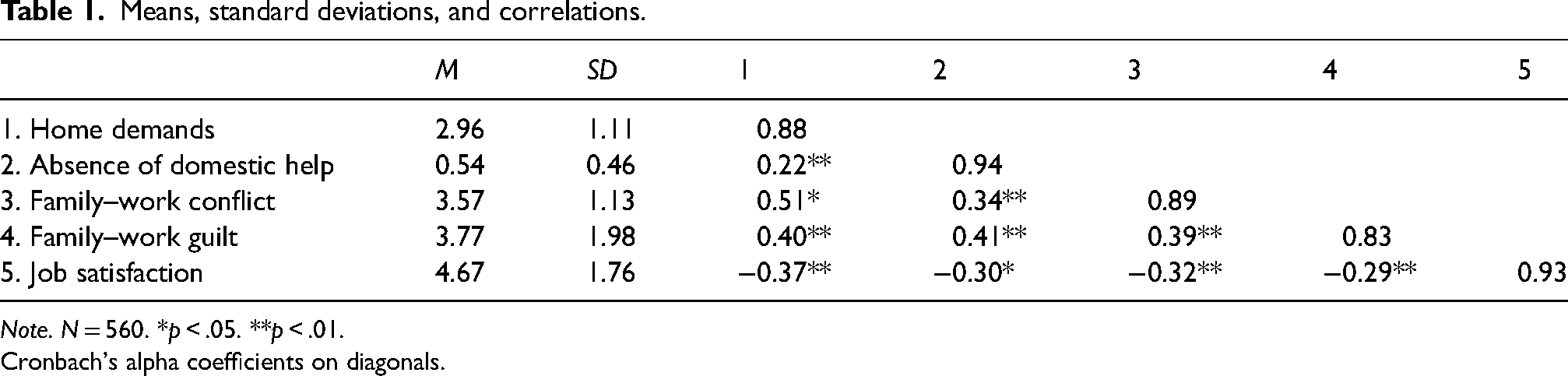
Note. N = 560. *p < .05. **p < .01.
Cronbach's alpha coefficients on diagonals.
Tests of hypothesized moderated mediation relations
The hypothesized moderated mediation, in which, unavailability of domestic help functioned as Stage 1 moderator and FWG as a Stage 2 moderator, was tested using AMOS 25.
As summarized in Table 2, this model accounted for 28% of variance in family–work conflict and 15% variance in job satisfaction. The first stage moderation of HDs with absence of domestic help was positively related to family–work conflict (β = .51, p < .05). Consistent with Hypothesis 1, “HDs” was seen to have a significant positive relationship with family–work conflict in the absence of paid domestic help, whereas this relationship was nonsignificant in the presence of domestic help (see Figure 2).
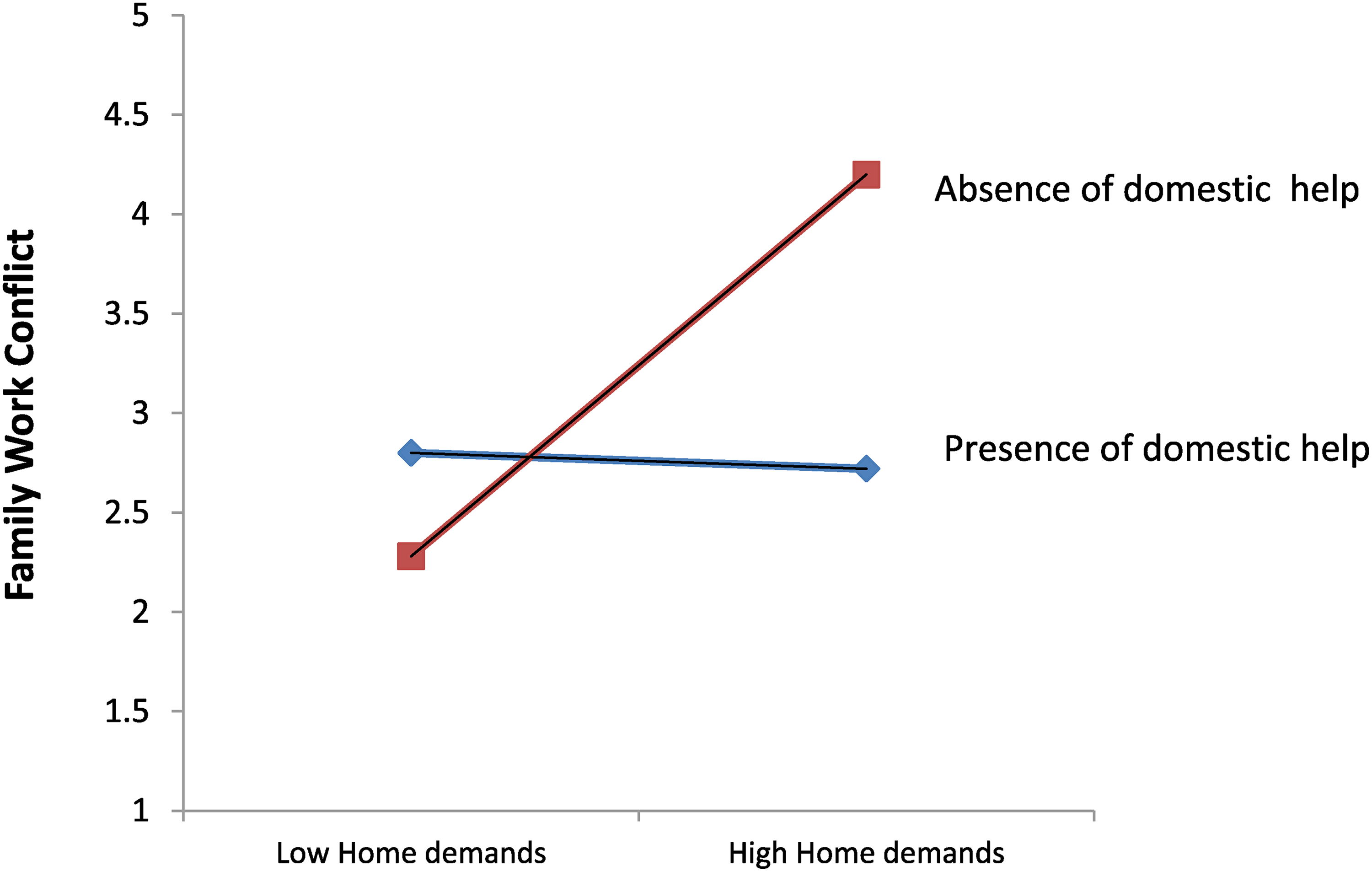
Interaction effects on family–work conflict.
Moderated regression analyses predicting family–work conflict and job satisfaction.
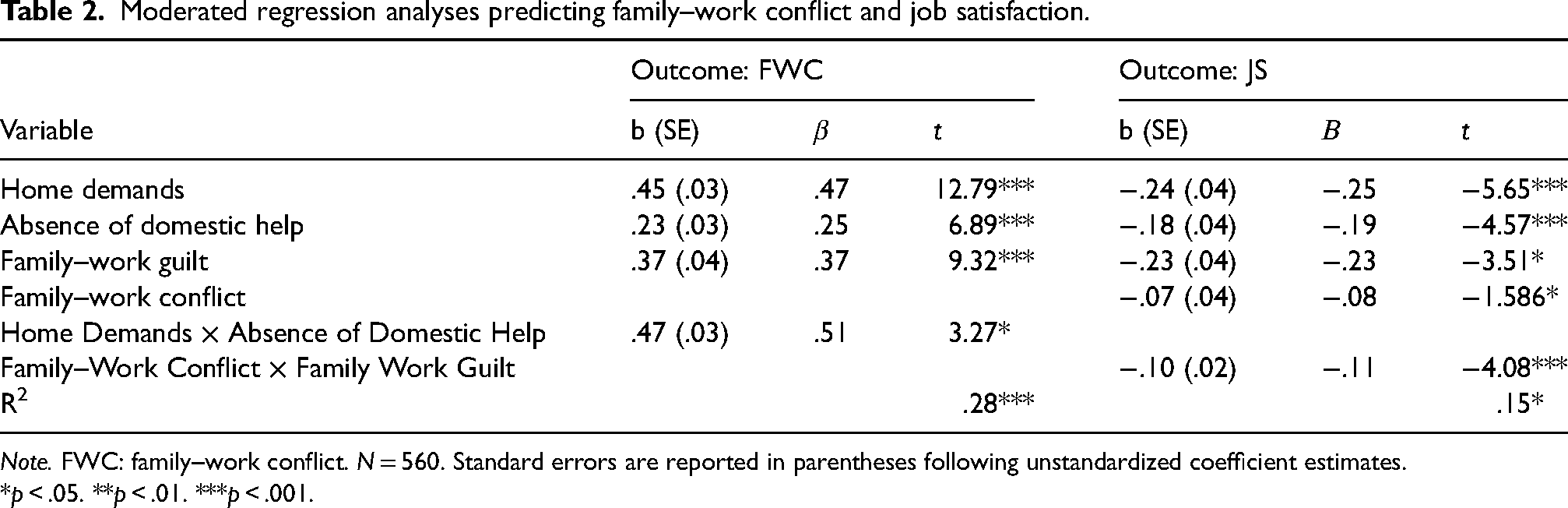
Note. FWC: family–work conflict. N = 560. Standard errors are reported in parentheses following unstandardized coefficient estimates. *p < .05. **p < .01. ***p < .001.
As seen in Table 2, the relationships between HDs with job satisfaction were significant both in the absence and presence of domestic help. The effect of HDs on job satisfaction (βdiff = .15) was also significant at p < .01 and thus Hypothesis 1 was accepted.
The second moderation effect of family–work guilt on the relationship of family–work conflict with job satisfaction was negative and significant (β=.11, p < .001). In support of Hypothesis 2, the negative relationship of family–work conflict and job satisfaction was relatively stronger for working mothers who reported high (vs. low) family–work guilt (see Figure 3). As seen in Table 2, the relationship of family–work conflict was significant at both lower and higher levels of family–work guilt.
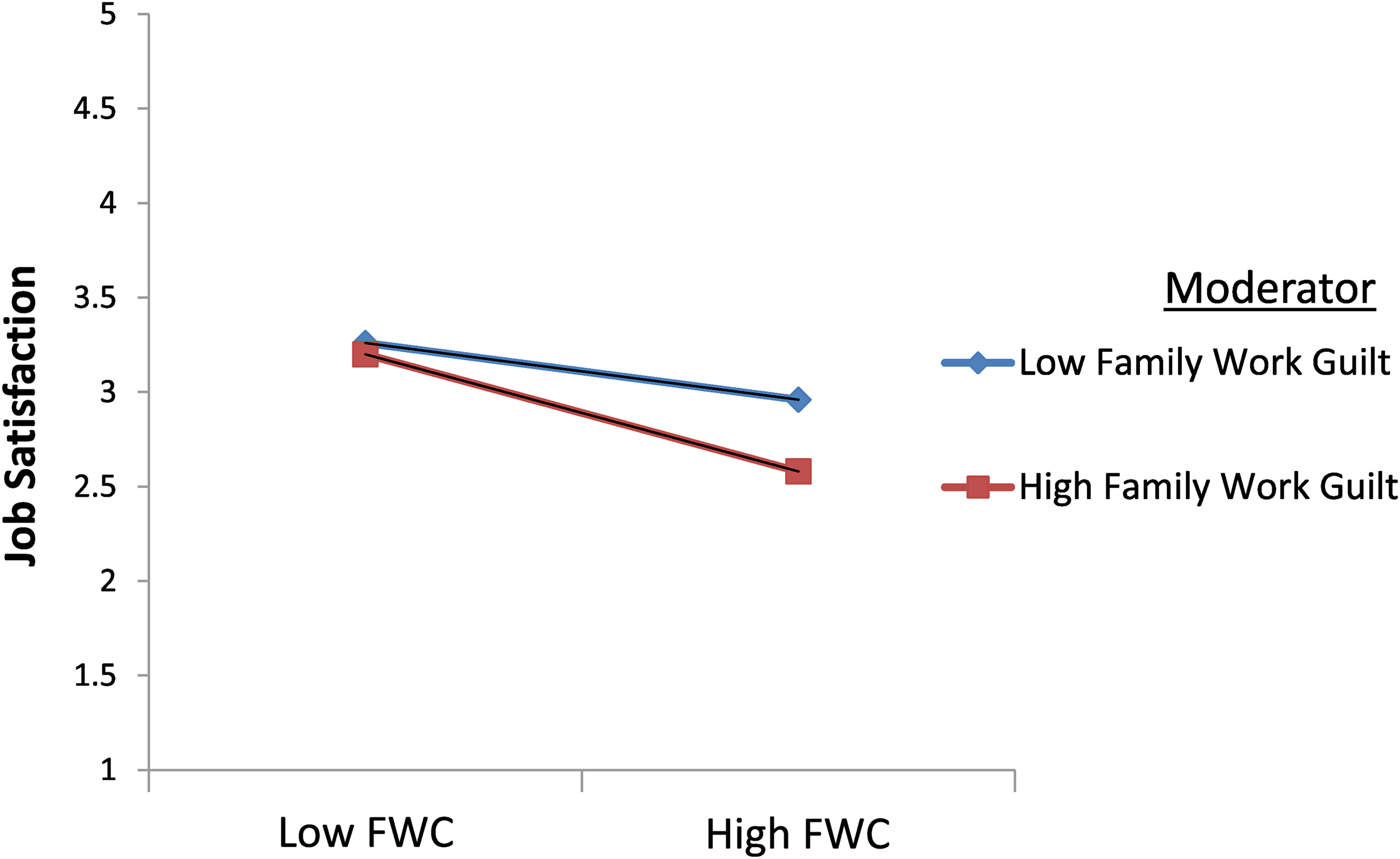
Interactions effects on job satisfaction.
Hypothesis 3 predicted a full moderated mediation model, such that negative indirect relationship of HDs with job satisfaction via family–work conflict would be strongest in the absence of domestic help and when work–family guilt is high. In line with this prediction, the indirect effect was strongest in the absence of domestic help and high work–family guilt (−0.078, **p < .01). The indirect effects were also significant for the other conditions mentioned in Table 3.
Direct, indirect, and total effects of home demands predicting job satisfaction at absence (complete absence) and presence (small amount) of domestic help during lockdown and family–work guilt.
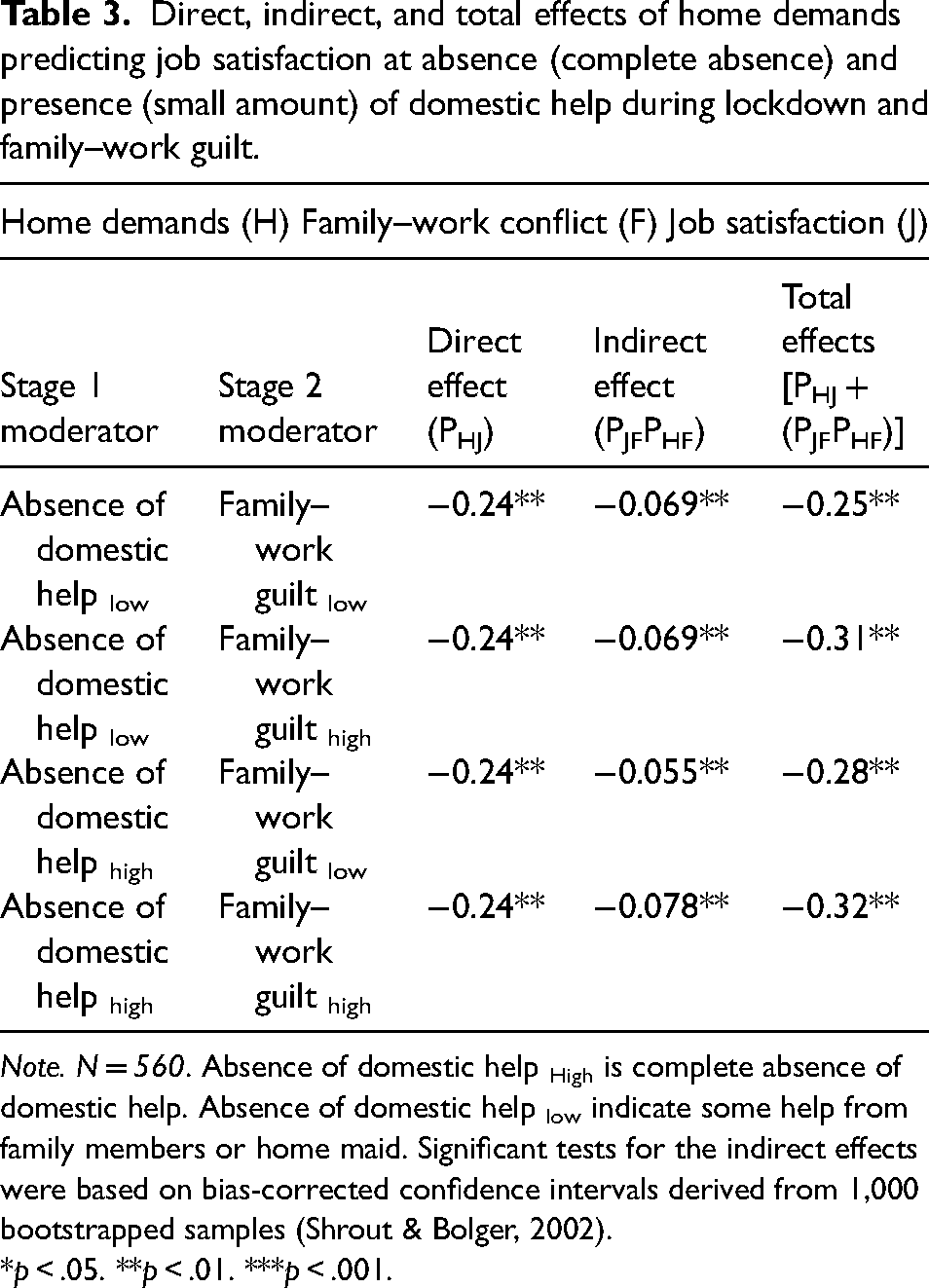
Note. N = 560. Absence of domestic help High is complete absence of domestic help. Absence of domestic help low indicate some help from family members or home maid. Significant tests for the indirect effects were based on bias-corrected confidence intervals derived from 1,000 bootstrapped samples (Shrout & Bolger, 2002).
*p < .05. **p < .01. ***p < .001.
Discussion
This research developed and tested a dual-stage moderated mediated mechanism to shed light on the role of work–life conflict on the job satisfaction of working mothers in India during the COVID-19 crisis. Specifically, the Indian working mother's HDs had a stronger positive relationship with family–work conflict in the absence of paid domestic work. In turn, family–work conflict had a stronger negative relationship with job satisfaction in working mothers with high family–work guilt. The dual-stage moderated mediation between HDs and job satisfaction also had a significantly important relationship. The indirect relationship between HDs and job satisfaction via family–work conflict were significant in the absence of domestic help and higher levels of family–work guilt, suggesting that HDs can trigger job satisfaction from targets via family–work conflict under the two conditions during the lockdown period, that is, absence of domestic help and high family–work guilt.
Theoretical and practical implications
This research has several theoretical and practical implications. First, the application of boundary theory (Ashforth et al., 2000) as a comprehensive guiding framework helps to expand the literature on WFH during pandemic, domestic help in patriarchal societies and FWG. Utilizing boundary theory as a guiding framework enables an integrated approach that considers both observable factors (such as the absence of domestic help) and psychological factors (like FWG), along with a focus on role boundary-related issues (FWC). This approach allows for the examination of the behavioral consequences of HDs on Indian working mothers who operated from home during the pandemic-induced lockdown. The integrative process provides insights into the psychological mechanisms by which working mothers respond to HDs, shedding light on the reasons behind their specific reactions.
Second, the findings of the research have implications in the area of family–work conflict. Researchers have analyzed the importance of family–work conflict in the contemporary world (Hao et al., 2016; Mansour & Tremblay, 2018; Soomro et al., 2018). However, few have analyzed the negative connotations of family–work conflict in WFH circumstances (Allen et al., 2013), especially since family–work conflict tends to be lower in the case of regular office-going work style (Ongaki, 2019). By drawing from the boundary theory (Ashforth et al., 2000), the study has identified the psychological disturbances experienced by the Indian working mother under the forced WFH setup mandated by the pandemic, represented by family–work guilt, as a potential moderator of the negative relationship of family–work conflict with job satisfaction. This shows that family–work guilt can rein in the detrimental emotions typically associated with family–work conflict, which may lead to reduction in psychological disorders (Aarntzen et al., 2019; Borelli et al., 2016, 2017; Sousa et al., 2018). Importantly, this research extends prior sudies that have shown that HDs on women employees result in more family–work conflicts for them than for men (Mansour & Tremblay, 2018; Smoktunowicz et al., 2017).
Finally, the research suggests that there may be different mediating mechanisms based on different theoretical perspectives that link HDs to career outcomes. The results showed that the overall dual-stage moderated mediation index from HDs to job satisfaction via family–work conflict was significant. In addition, the stage (HDs × absence of domestic help family–work conflict) and second stage (family–work conflict × family–work guilt job satisfaction) moderations were significant. The strong support for the overall moderated mediation suggests that family–work conflict is the most appropriate mediator that connects HDs to job satisfaction.
On a practical level, the results suggest that the work demands during such unavoidable situations must be meticulously or empathetically planned since the HDs may provide extra psychological health issues for women organizations can proactively assess the mental health of female employees through various channels such as telecommunication, email surveys, and informal discussions facilitated by the human resource department or direct supervisors. As a coping mechanism, the originations can arrange feedback sessions, counseling, and indoor entertainment activities that can foster positive mental health among women employees working from home. Sharing of personal experiences on successfully managing both HDs and work with all employees can provide catharsis from stress, offer perspectives to address challenges, and serve as a source of ideas and inspiration for others dealing with similar situations.
Career development counseling plays a crucial and indispensable role in supporting the well-being of employees, especially during times of crises (Como et al., 2021). The FWC arising from the HDs of working mothers during the pandemic-induced WFH scenario can be alleviated through the provision of professional career development counseling (Redekopp & Huston, 2020). Hence organizations may consider an ecosystem that support the mental health of the employees to enhance their job satisfaction and related positive outcomes (Lathabhavan, 2023).
Another major contribution of this study is toward society. The patriarchal perception of domestic chores and child rearing being a woman's domain must change in these modern times in which, women work outside of home (Rout et al., 1999). Women in patriarchal societies must be emotionally empowered along with being economically empowered, and such training must start early in their upbringing. Behavioral changes must also be fostered among male members of the household, and indeed, the entire family and community at large (Dalal, 2011). Policy makers and social reformers must work toward eliminating the perception of women as second-class citizens. Families must be provided the awareness to empower the girl child and sensitize the boy to women and their rights, to usher in an era of unconditional equality.
This research can be extended to any crisis scenario, for enabling visionary measures to cope with the altered situations.
Limitations and future scope
Despite its contributions to theory and practice, there are some limitations of the research. First, the study utilized self-report measures and cross-sectional data. The use of self-report measures is essential for capturing job demands, as they may appear as low intensity or go unnoticed by a third person. However, the exclusive use of self-reports can introduce common method variance (Podsakoff et al., 2003). To mitigate this problem, all study variables were measured with established scales to control measurement errors and reduce common method bias (Spector, 1987). Future research can concentrate on longitudinal studies with multidimensional data collection.
Second, the research combined the pandemic related or induced variables to predict job satisfaction, which typically represents a long-term outcome of one's career. This approach restricted the focus of job satisfaction to the pandemic scenario, potentially defining the terms exclusively within this context. Therefore, the results may be specific to the conditions brought about by the pandemic. Future studies may extend the scope of the study variables considering long term duration, or beyond pandemic to other crises or normal scenario.
Third, the research was unable to ascertain the long-term value or costs of HDs on working mothers during pandemic crisis. HDs and family–work guilt may affect the target's well-being beyond the time frame of the current study. Such situations may arise in future crises as well. Hence future research can focus on different behavioral aspects among women employees in such crisis. Moreover, a single item as “absence of domestic help” may appear as a limit for the current model. Future works may consider broader views including multiple items ranging from personality and cultural aspects for measuring the constructs.
Fourth, the reliance on boundary theory (Ashforth et al., 2000) as the guiding framework focuses on job satisfaction as the outcome. This precludes other potential outcomes, such as performance. In situations involving high HDs and significant family–work conflicts, performance may be affected. While the study appropriately focused on intrinsic factors, there is room for refining the current model to consider other potential scenarios. For example, various career outcomes such as commitment, performance, etc. must be directly assessed. This is a potential direction for future research because it would shed light on the diverse array of behavioral responses.
Finally, the data were gathered from working mothers in large and formalized sectors such as IT, ITES, teaching, finance, and the automobile industry in India. Future studies may focus on women who are self-employed or working in small, family-run businesses to enhance the generalizability of the study. Moreover, the sample for the study was collected from a single societal context (India). A cross-cultural study that includes multiple samples from diverse cultures or comparison of similar culture for future studies would help in generalizations. Future research will also benefit from replicating this research in other samples to further assess its generalizability across occupations.
Conclusion
The causes of job satisfaction are often ambiguous and more complicated during unavoidable and unexpected crises. Drawing on insights from boundary theory (Ashforth et al., 2000), this research showed that working mothers who have been forced to WFH during the COVID-19 pandemic faced issues such as absence of domestic help, which resulted in family–work conflict driven by HDs. More importantly, family–work guilt was an important factor that lowered the job satisfaction in working mothers with family–work conflict. The study also showed that HDs predict a decrease in job satisfaction through family–work conflict with the effect of moderators among working mothers in India. The study's findings provide valuable insights into understanding career development challenges among working mothers in India, offering a foundation for addressing and supporting their career advancement It is acknowledged that this model only scratches the surface of the intricate ways in which working mothers in patriarchal societies managed HDs during a pandemic and their levels of satisfaction in their jobs. Future research, coupled with practical interventions and policies, should strive to tackle these challenges collectively, providing support to working mothers as a vital component of society.
Footnotes
Data availability
Data available on request from the author.
Declaration of conflicting interests
The author declared no potential conflicts of interest with respect to the research, authorship, and/or publication of this article.
Funding
The author received no financial support for the research, authorship, and/or publication of this article.
