



Abstract
Consciousness, Relaxation, Attention, Fulfillment, and Transcendence (CRAFT) is a neuroeducational program for self-actualization, happiness, and well-being grounded in yoga, mindfulness, positive psychology, and emotional intelligence. The present study was devised to build on preliminary CRAFT research by examining the effectiveness of CRAFT to enhance tertiary students’ physical, psychological, and emotional well-being. Accordingly, tertiary student musicians (n = 93) were assessed on psychophysical measures before and after participating in a 3-arm non-randomized controlled trial—conducted once a week for 60–90 min over 7 months within courses based on CRAFT (CRAFT group, n = 28), Alexander Technique (active control group, n = 32), or regular music instruction (inactive control group, n = 33) at a higher conservatory. Measures included surveys of mindfulness, music performance anxiety (MPA), emotional regulation, well-being, and psychological distress, as well as tests of lower body balance and flexibility. Statistical and practical significance of the between-group differences in change scores was tested through planned contrasts and Cohen’s d ESs ± 95% CIs. CRAFT participants reported statistically and practically significant improved levels of overall mindfulness (d > 0.96), non-reactivity (d > 0.78), and left leg balance (d > 1.24) compared to active and inactive controls; observing mindfully (d = 0.68) and cognitive reappraisal (d = 0.79) compared to active controls; and right leg balance (d = 0.69), flexibility (d = 0.70), proximal MPA (d = −0.57), dread/scrutiny MPA (d = −0.69), depression (d = −0.73), anxiety (d = −0.68), and overall psychological distress (d = −0.65) compared to inactive controls. Notwithstanding some limitations, this study supported CRAFT as an effective intervention to multidimensionally enhance tertiary student musicians’ well-being and resilience. Larger multi-arm studies with students from other disciplines are needed to substantiate these findings.
The health and well-being of university students has gradually gained more attention in recent decades due to the numerous and growing challenges faced by this population (Hernández-Torrano et al., 2020). These challenges include managing autonomy (e.g., independent learning, living, caring; Thompson et al., 2021), unhealthy habits (e.g., drinking, smoking, drug consumption; Jao et al., 2019; Molina et al., 2012), financial worries (Richardson et al., 2017; A. G. T. T. Tran et al., 2018), high academic workloads (Jääskeläinen et al., 2023), and physical and mental disturbances (Hernández-Torrano et al., 2020; Hussain et al., 2013; Sanci et al., 2022). Notably, anxiety and depression appear to be widely spread among tertiary students (Auerbach et al., 2018; Ibrahim et al., 2013), with rates seemingly heightened—ranging from 15% to 41%—among arts, design, and music students (Lipson et al., 2016; Ruiz-Hernández et al., 2022; Vaag et al., 2021).
In addition to the generic stressors affecting university students, tertiary student musicians may encounter specific health and well-being issues from the highly physical, emotional, and mental demands required to meet elite levels of music performance. One of the most widely documented concerns disrupting student musicians’ ability to perform at the level they are accustomed to is playing-related musculoskeletal disorders (PRMDs), such as pain, tingling, and numbness (Zaza et al., 1998). There have been reported prevalence rates of PRMDs for student musicians ranging between 49% and 81% (Cruder et al., 2023; Steinmetz et al., 2012), with evidence suggesting higher musculoskeletal symptoms among music students than tertiary students in other disciplines (Ballenberger et al., 2023; Kok et al., 2013). A series of risk factors has been highlighted as potential predictors of PRMDs, including poor physical condition, deficient playing-related posture, muscular fatigue, excessive practice, as well as high levels of perfectionism, competitiveness, and psychological distress (Ballenberger et al., 2023; Cruder et al., 2023; Rodríguez-Romero et al., 2016). In addition, the occurrence of PRMDs has been associated with music performance anxiety (MPA; Kenny & Ackermann, 2015), another common problem experienced by tertiary student musicians (Kenny, 2011). Rates of MPA among student musicians appear to vary between 65% (Kokotsaki & Davidson, 2003) up to even 96% (Zakaria et al., 2013), with reportedly higher MPA levels than professional musicians (Biasutti & Concina, 2014; Steptoe & Fidler, 1987). Typical MPA symptoms occurring either before, during, or after challenging performance situations include feelings of panic, lack of self-confidence, inattention, fear of making mistakes, worrying about external evaluations, negative self-judgment, and overthinking (Kenny, 2011).
To manage these problems and prevent their occurrence while satisfying high levels of performance, it is of paramount importance that student musicians maintain an optimal level of holistic well-being (Williamon, 2004; Kenny, 2011). In this vein, the manner in which student musicians self-regulate their physical, mental, and emotional states may play a crucial role in ascertaining to what extent these stressors may impact their well-being and academic performance (Kaleńska-Rodzaj, 2023; Osborne et al., 2014). At an emotional level, using adaptive emotional regulation strategies (e.g., acceptance, positive reframing) as opposed to maladaptive ones (e.g., rumination, expressive suppression) may help student musicians monitor situations of emotional instability, such as when experiencing MPA symptoms (Kaleńska-Rodzaj, 2023; Osborne et al., 2014). For instance, positive reappraisal may be used to re-construe unwanted feedback about their performances not only as a potential source to derive useful learning but also to develop resilience and establish their happiness irrespective of the valence of other people’s opinions. Compared to expressive suppression and rumination, positive reappraisal has been consistently associated with lower anxiety and depression as well as higher self-esteem, life satisfaction, and positive emotions (Gross & John, 2003; Megías-Robles et al., 2019; Moore et al., 2008). In this milieu, mindfulness-based practices, which encourage a sustained and purposeful awareness of the present moment with a non-judgmental and acceptance-based attitude (Kabat-Zinn, 1990), have been particularly recommended (Juncos & Markman, 2016; Kaleńska-Rodzaj, 2023; Shaw et al., 2020). Drawing from the mindful mechanism of re-perceiving (Shapiro et al., 2006), by paying attention to the content of their present-moment experience (e.g., feeling anxious before performing) with acceptance and a non-evaluative stance, student musicians may learn to disidentify with such content, and re-perceive themselves as different from it. Based on the mindful coping model (Garland et al., 2009, 2011), such a metacognitive experience of re-perceiving may encompass a state of heightened awareness and cognitive flexibility from which new meaningful insights could arise and be deployed by student musicians to re-construe stressful primary appraisals as growth-promoting.
Despite the major role that mindfulness-based training could play in enhancing tertiary students’ well-being, academic performance, emotional regulation skills, and MPA, the research literature in the field remains scarce. In a quasi-experimental study (B. J. Steyn et al., 2016; M. H. Steyn, 2013), significant within-group improvements were reported for competitive state anxiety, concentration, motivation, relaxation, self-confidence, worry, growth mindset, psychological well-being, and mindfulness skills among undergraduate music students following a 7-week, 1 hr per week, combined mindfulness and sport-related psychological skills program (n = 21) relative to controls (n = 15). Enhancements in mindfulness skills have also been found in single-arm studies with a mixed-methods design implementing a hybrid program based on both Mindfulness-Based Stress Reduction (MBSR) and Mindfulness-Based Cognitive Therapy (MBCT) followed by 8 (Czajkowski & Greasley, 2015) and 25 (Czajkowski et al., 2022) tertiary student musicians. Subsequently, Czajkowski et al. (2021) substantiated their previous findings through a larger mixed-methods investigation followed by tertiary-level singing music students participating in the same program. In this study, Czajkowski et al. (2021) employed a non-randomized controlled trial, in which experimental participants (n = 16) reported within-group improvements in mindfulness skills relative to controls (n = 11), and a randomized controlled trial, in which between-group differences in the same mindfulness abilities favoring experimental participants (n = 12) over waitlist controls (n = 12) were found. Some of the perceived benefits reported by Czajkowski and Greasley (2015) and Czajkowski et al. (2021, 2022) included improved bodily awareness, attention, learning experience, effectiveness, creativity, coping strategies, collaborative skills, expressivity, and MPA. The hybrid mindfulness program was delivered over 8 weeks, once per week, for either 1 hr (Czajkowski et al., 2021; Czajkowski & Greasley, 2015) or 2–2.5 hr (Czajkowski et al., 2022). Regarding MPA, Chang et al. (2003) conducted a randomized controlled study in which tertiary student musicians following 8 weeks of mindfulness training on Chan meditation (n = 9)—once a week for 1 hr—reported significant MPA within-group improvements before performing in a concert compared to controls (n = 10). In a further study linked to the former, Lin et al. (2008) reported a significant positive association between performance quality and MPA in the Chan meditation group, suggesting that meditation training may help student musicians optimize their performance even when feeling higher levels of MPA. Finally, in a one-group design study, Stern et al. (2012) found significant reductions in MPA and general anxiety in a sample of 24 higher conservatory music students following a 9-week Kripalu yoga intervention, twice a week, for 1 hr.
Fitness promotion in conservatory settings has recently gained prominence due to the diversity of physically demanding functions and abilities (e.g., cardiovascular, flexibility, postural balance, and pulmonary functions) involved in professional music practice and performance (Araújo et al., 2020; Kim & Kim, 2023). This growing interest is not surprising considering also the apparent association between being physically active and reducing the frequency and severity of both MPA (Burin & Osorio, 2016; Rocha et al., 2014; Wasley et al., 2012) and PRMDs (Lundborg & Grooten, 2018; Matei & Ginsborg, 2020; Roos & Roy, 2018) among professional and student musicians. Yet, the apparent scarcity of student musicians’ involvement in physical activity and other health-promoting behaviors warrants concern (Araújo et al., 2017; Panebianco-Warrens et al., 2015). Findings from a cross-sectional study (Araújo et al., 2020), in which the physical condition of 483 tertiary student musicians was assessed through various standardized tests, call into question whether student musicians’ fitness levels are adequate to meet the high physical demands of professional performance. Although Araújo et al. (2020) found that 79% of participants reported an overall satisfactory level of physical activity, their lower back and hamstring flexibility, upper body strength, and endurance scores were lower than normative values.
The multiple demands and concerns affecting tertiary student musicians have raised awareness of the need to incorporate comprehensive approaches to health, well-being, and academic performance promotion within higher music education settings (Araújo et al., 2020; Matei & Ginsborg, 2020). One of the approaches that has been frequently leveraged by musicians is the Alexander Technique (Alexander, 2001), a psychophysical self-regulatory method with the potential to optimize performance by ameliorating balance, flexibility, coordination, movement, MPA, and PRMDs through a holistic use of the self (Conable & Conable, 1995; Davies, 2020; Wong et al., 2024). This is accomplished through a series of principles (e.g., habit recognition, inhibition and non-doing, provision of directions, and primary control) that enable the practitioner to consciously become aware, avoid, and undo detrimental neuromuscular tensions, reactions, and patterns (Cacciatore et al., 2020; Little et al., 2008; MacDonald, 2006). Results from a systematic review of controlled trials suggest that the Alexander technique may be an effective approach to induce various psychophysical effects among professional and student musicians, such as improved neck and shoulder flexibility, head-neck alignment, pain, awareness, executive skill function, stress, anxiety, well-being, heart rate variability, blood pressure, performance quality, and MPA (Klein et al., 2014). The most replicated finding, reported in 4 out of the 12 reviewed studies by Klein et al. (2014), was reduced MPA. In addition, other benefits, such as reduced muscle tension (Loo et al., 2015) and PRMDs (Davies, 2020), have been noted in subsequent studies conducted with tertiary student musicians after receiving Alexander technique training.
Holistic approaches to health and well-being, such as mindfulness and yoga, may also afford tertiary student musicians a variety of practices to effectively address their physical, psychological, and emotional needs. Springing from these ancestral disciplines, Consciousness, Relaxation, Attention, Fulfillment, and Transcendence (CRAFT), a newly developed neuroeducational program for self-actualization, happiness, and well-being—named after its five core elements—appears to be a suitable asset to that end (Posadas, 2019). CRAFT was developed by author M. P. P., a music professor of pedagogy, language, and singing, as well as an advanced certified yoga and mindfulness teacher with over 20 years of professional experience teaching and integrating these mind-body practices alongside modern psychological approaches in tertiary music education. Drawing from this multifaceted background, CRAFT combines a careful selection and/or adaptation of the theories, philosophies, practices, and state-of-the-art neuroscientific findings of mindfulness, yoga, positive psychology, and emotional intelligence, its so-called four foundations, insofar as the limitations of a particular foundation could be offset by the strengths of others (Bartos et al., 2021, 2022; Posadas & Bartos, 2022). As a result, CRAFT could potentially be more effective than other programs based on one of these four disciplines and/or fields of knowledge alone to address tertiary student musicians’ multidimensional demands.
Since 2016, CRAFT has been curricularly implemented at the Royal Conservatory of Music Victoria Eugenia of Granada, Spain. During 2016/2017, it was first applied as the CRAFT’s 7 mindful minutes in the subjects English for Musicians and Chamber Music, with students reporting improvements in second-language acquisition skills (Rull et al., 2019) and positive program evaluations (Posadas & Bartos, 2022). The satisfactory implementation of the CRAFT’s 7 mindful minutes motivated the creation of the CRAFT-based elective subjects of Mindfulness and Emotional Intelligence, which have been imparted once a week for 1 hr at this music conservatory since 2017 (Bartos et al., 2022). With this format of program delivery, a series of studies were conducted to assess the feasibility and preliminary effectiveness of CRAFT to enhance tertiary student musicians’ well-being and academic experience, paving the way for future larger investigations (Bartos et al., 2022).
In a quasi-experimental study conducted amidst the COVID-19 pandemic, Bartos et al. (2021) found that student musicians’ participation in a CRAFT group (n = 40) was associated with higher proactivity and perceived benefits—in terms of implementing practices to improve their well-being during the lockdown—than in a control group (n = 54). In a qualitative study reporting on Bartos et al. (2021), Bartos, Posadas, and Krägeloh (2023) found that such perceived benefits aligned with CRAFT’s five elements and four foundations, including developments such as enhanced conscious awareness, emotional self-regulation, psychological distress, relaxation, concentration, and wellness. Moreover, the findings from a recent feasibility study (Bartos et al., 2022) conducted with a sample of 25 student musicians appear to support the preliminary effectiveness of CRAFT in improving mindfulness skills, positive reappraisal, psychological well-being, and physical flexibility. Subsequent evidence from a program evaluation survey (Bartos et al., 2024) lent support to the social validation of the program, its viability to be implemented in other settings and populations, and its potentiality to bestow benefits related to the five CRAFT elements (e.g., increased self-awareness, non-reactivity, attention, self-knowledge, empathy, eudaimonic happiness, self-acceptance, and resilience). In addition to tertiary music education, the preliminary effectiveness of CRAFT in engendering health and well-being effects has been recently examined through a clinical trial followed by translation and interpreting tertiary students (Cásedas et al., 2023). Participants were randomly assigned to either a CRAFT (n = 24) or MBSR (n = 18) program administered 2 hr per week over 4 months. Although Cásedas et al. (2023) did not find significant between-group differences, participants in both the CRAFT and MBSR groups reported significant within-group improvements in mindfulness skills, cognitive reappraisal, expressive suppression, trait emotional intelligence, cultural intelligence, stress, and mind wandering.
Although overall these preparatory studies have served the purpose of successfully establishing the feasibility and preliminary effectiveness of CRAFT to enhance the well-being and academic experience of tertiary students, specifically student musicians, they are not exempt from various limitations. Some of their most relevant shortcomings relate to the absence of either a control or an active control group, the lack of significant between-group differences, and the scant use of objective and/or performance-based measures. Therefore, the current study was conceived as the first investigation upon completion of the CRAFT feasibility phase that could offset these limitations and examine the efficacy and effectiveness of CRAFT to enhance tertiary student musicians’ physical, psychological, and emotional well-being. To that end, tertiary student musicians’ scores on psychophysical measures of MPA, mindfulness, psychological distress, emotional regulation, balance, and flexibility were compared before (Time 1) and after (Time 2) participating in a 3-arm non-randomized controlled trial—conducted once a week for 60–90 min over 7 months within courses based on CRAFT (CRAFT group), Alexander Technique (active control group), or regular music instruction (inactive control group). It was hypothesized that CRAFT participants would report greater improvements than both active and inactive controls on the aforementioned variables.
Method
Participants
Participants were a sample of 93 tertiary student musicians (41 females, 52 males; M age = 20.15 years, SD = 3.58; age range = 17–24 years) enrolled at two higher music conservatories in Spain during the academic year 2022/2023. Based on their different involvement in pre-existing subjects at these educational providers, they were subdivided into three pre-determined groups. The CRAFT group included participants (n = 28) following CRAFT-based elective subjects (Mindfulness and/or Emotional Intelligence) at the Royal Conservatory of Music Victoria Eugenia of Granada, Spain. The active control group consisted of participants (n = 32) attending an Alexander Technique-based elective subject at the Higher Music Conservatory of Málaga, Spain. The inactive control group comprised participants (n = 33) studying other courses different from the aforementioned subjects (e.g., Theory of Music, Choir, English) at the Royal Conservatory of Music Victoria Eugenia of Granada, Spain. Both CRAFT and active control participants could also be engaged in any of the subjects undertaken by inactive controls. Inclusion criteria involved being full-time tertiary student musicians, aged 17 years or older, matriculated at these institutions, having not studied CRAFT- or Alexander Technique-based elective subjects in previous years, nor having any prior or concurrent experience with other mindfulness- and/or yoga-based trainings by the end of the intervention.
Measures
Demographic questionnaire
Participants were asked to report their age, gender, years of musical practice, elective subject enrollment, education level, grade year, specialty, attendance to either CRAFT- or Alexander Technique-based subjects in previous years, prior mindfulness- and/or yoga-based experience, as well as exercise engagement and weekly hours of physical activity during the last 2 months. Additionally, this survey included three questions to monitor CRAFT and active control participants’ adherence to out-of-class intervention-related practice during the 2 months preceding Time 2 assessments. First, participants were prompted to report whether they had engaged in the activities practiced in class (i.e., home-based practice), and if so, to specify the extent of it (i.e., minutes per week). Then, they were asked to rate how frequently they applied what they learned in class to their daily lives (e.g., problems, social relationships, work, studies, musical practice, family, eating, walking) using a 10-point visual analog scale ranging from 0 = Never to 10 = Always.
Five Facet Mindfulness Questionnaire Short Form
The Five Facet Mindfulness Questionnaire Short Form (FFMQ-SF-24; Bohlmeijer et al., 2011) is a short 24-item version of the original Five Facet Mindfulness Questionnaire (FFMQ; Baer et al., 2006) used to measure dispositional mindfulness. We employed the Spanish version of the FFMQ-SF-24 validated by Asensio-Martínez et al. (2019). The FFMQ-SF-24 includes the same five subscales of the FFMQ, each identifying a distinct mindful skill: Observe (four items), Describe (five items including three reversed items), Act Aware (five reversed items), Non-Judge (five reversed items), and Non-React (five items). Items are rated on a 5-point Likert-type scale ranging from 1 = Never or very rarely true to 5 = Very often or always true. Scores can be reported for both the total scale and each subscale with greater values indicative of a higher tendency of being mindful either generically or for a particular mindful skill, respectively. For the present study sample, internal consistency was acceptable across subscales (Cronbach’s alpha ranged from .72 to .81 at Time 1).
Kenny Music Performance Anxiety Inventory–Revised
The Kenny Music Performance Anxiety Inventory–Revised (KMPAIR) is a 40-item questionnaire designed to evaluate the developmental theory of anxiety (Barlow, 2000) as it relates to MPA (Kenny, 2009; Kenny et al., 2014). From the seven subscales proposed by Kenny et al. (2014) in the KMPAIR, we only employed those containing specific MPA items: Proximal somatic anxiety and worry about performance (KMPAIR Proximal subscale; 11 items); Worry/dread focused on self-other scrutiny (KMPAIR Dread/Scrutiny subscale; 8 items); Memory (2 reversed items); and Anxious/Apprehension (3 items including 1 reversed item). We retrieved these subscales from the Spanish version of the KMPAIR validated by Arnáiz (2015). Items are rated following a 7-point Likert-type scale ranging from 0 = Strongly disagree to 6 = Strongly agree. Results can be reported for the total scale or each subscale with greater scores representative of higher MPA. For the present study sample, internal consistency was acceptable across subscales (Cronbach’s alpha ranged from .69 to .92 at Time 1).
Subjective Psychological Well-Being Subscale
The Subjective Psychological Well-Being Subscale (SPWS), which is a 30-item subscale of a larger psychological well-being questionnaire (Sánchez-Cánovas, 1998), was administered to measure subjective psychological well-being. The SPWS includes items related to well-being, happiness, and positive psychology components (e.g., optimism, savoring, humor, personal growth, accomplishment). Items are positively worded and rated following a 5-point Likert-type scale ranging from 1 = Never or almost never to 5 = Always, with greater values indicative of higher subjective psychological well-being. For the present study sample, Cronbach’s alpha was .93 at Time 1.
Emotional Regulation Questionnaire
The Emotional Regulation Questionnaire (ERQ; Gross & John, 2003) is a 10-item instrument devised to assess individuals’ tendency to regulate their emotions. We utilized the Spanish version of the ERQ (Cabello et al., 2013) consisting of two subscales, each designating a different emotional regulation strategy: Cognitive Reappraisal (6 items) and Expressive Suppression (4 items). Items are rated on a 7-point Likert-type scale ranging from 1 = Strongly disagree to 7 = Strongly agree. Scores are reported separately for each subscale and greater values are indicative of a higher tendency to apply the corresponding emotional regulation strategy. For the present sample, Cronbach’s alpha was .75 for Cognitive Reappraisal and .74 for Expressive Suppression at Time 1.
Depression Anxiety Stress Scales
The Depression Anxiety Stress Scales (DASS-21) is a short version of the original Depression Anxiety Stress Scales (DASS; Lovibond & Lovibond, 1995) used to measure psychological distress. We employed the Spanish version of the DASS-21 validated by Bados et al. (2005). The survey consists of the following three 7-item subscales: Depression, Stress, and Anxiety. Items are rated according to a 4-point Likert-type scale ranging from 0 = Did not apply to me at all to 3 = Applied to me very much or most of the time during the past week. Results, which can be reported for both the total and each subscale, must be multiplied by two with greater scores representative of either higher general psychological distress or higher depression, stress, or anxiety, respectively. For the current study sample, Cronbach alpha values at Time 1 for the Depression, Anxiety, and Stress subscales were .86, .80, and .79, respectively.
Sit and Reach Test (SRT)
The SRT (Hoeger et al., 1990) was employed to measure trunk and lower body flexibility. Participants, seated barefoot with extended knees and flexed ankles, placed their feet on the SRT box’s frontal inner panel. They then performed a hip-forward bending, sliding their fingers as far as possible on the upper panel. The measurement was recorded when the participant held their maximum stretch for approximately 2 s. After a practice trial, participants performed two attempts and the best score (cm) was taken for analysis. Greater scores are indicative of higher flexibility with the line of the feet marked at 23 cm on the measuring scale of the upper panel.
Stork Balance Test
The Stork Balance Test (SBT; Makhlouf et al., 2018) was employed to assess lower body balance on the right (SBTR) and left (SBTL) legs. Participants stood on their dominant leg, with hands at their waist, and the opposite foot resting on the inner edge of the standing knee by externally rotating the lifted leg. When ready, they raised the heel of the standing leg, and the stopwatch was started as they balanced on their toes for as long as possible. The stopwatch was stopped if participants’ heels touched the floor, hands moved from their waist, and/or if the toes shifted around. After a practice trial, two attempts were performed on each leg and the best score (in seconds) was kept for analysis.
Procedure
After obtaining ethical approval from the relevant university’s Institutional Review Board, the study was advertised through the conservatories’ websites and announcements sent by the faculty and board of directors. Additionally, 10 days before recruitment, students were sent a participant information sheet by their teachers on behalf of the main investigator with detailed information about the study procedures and requirements. In this document, to facilitate concealment of the pre-determined groups they could be involved in, students were broadly informed that the study aimed at examining different psychophysical factors related to their lifestyle, well-being, and curricular instruction.
Recruitment and Time 1 data collection occurred from 24 October to 8 November 2022, 3–4 weeks after classes started and all students had officially confirmed their enrollment choices in elective subjects at both conservatories. The main investigator approached students at the beginning of six different classes to recruit participants for the CRAFT group, from the CRAFT-based elective subject of Mindfulness and Emotional Intelligence; active control group, from the Alexander Technique-based elective subject; or inactive control group, from the core subjects of Theory of Music, Sociology and Aesthetics of Music, and History of Music. The main investigator gave a brief presentation of the study in each of the classes, explaining the main points covered in the participant information sheet which had been sent to them beforehand. During these presentations, students were notified that their participation would be voluntary, confidential, completely unrelated to their course grades, and that they could withdraw at any time. Following such presentations, interested students signed a consent form and completed Time 1 assessments in their classrooms.
To safeguard confidentiality, participants were instructed to provide in all surveys (demographic questionnaire, FFMQ-SF-24, KMPAIR, SPWS, ERQ, and DASS-21) and physical tests (SRT and SBT) an alphanumeric code. Each participant was provided with a card displaying a Google Docs link to fill in the surveys online through their mobile phones. While filling out the surveys, the main researcher called participants individually to perform the physical tests in a separate space of the classroom, away from the view of the survey respondents. All participants were instructed to remain silent and focus on their task at hand. In each of the approached classes, it was previously agreed with the board of directors and faculty that no lessons would be imparted during the 45 min required to complete these procedures. The same processes described for Time 1 assessments were applied 7 months later for Time 2 assessments, which took place from 10 May to 25 May 2023, at least 2–3 weeks before students’ final exams and 4–5 weeks before the end of classes. Figure 1 illustrates the flow of participants through the different research phases.
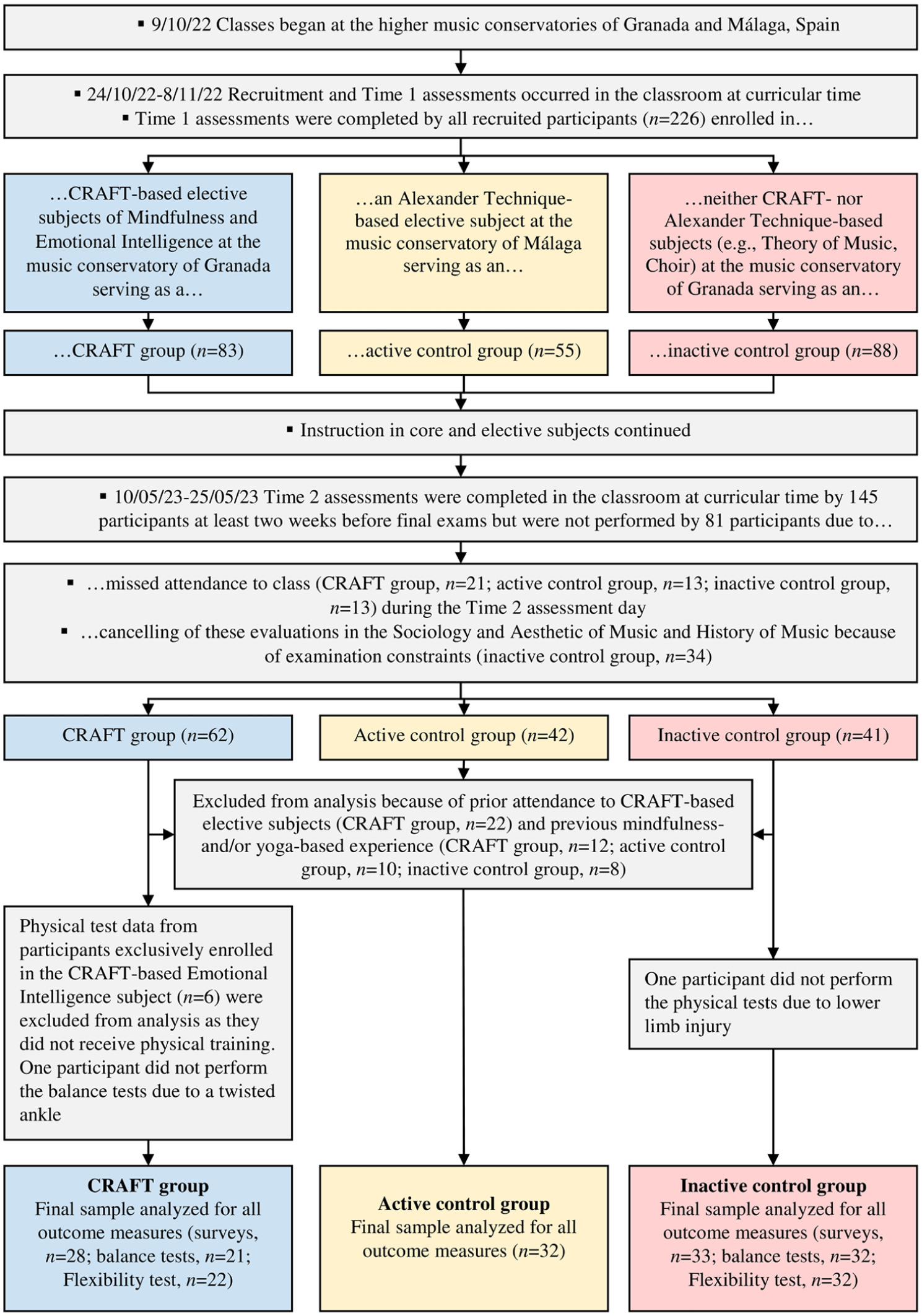
Flow of participants and procedures through the study research phases.
Intervention: Core and elective subjects
All participants were involved in the various core (e.g., Theory of Music, Aesthetic and Sociology of Music, History of Music) and elective (e.g., English, German, Choir) subjects typically offered in a regular higher music conservatory in Spain. These were taught in a conventional classroom by the specialized corresponding professor, once a week for 60–90 min throughout the entire academic year (i.e., approximately 9 months), a frequency of delivery which for the current study Time 1-Time 2 intervention spanned 7 months.
Excluding holiday periods and occasional teacher absenteeism, CRAFT participants received 23 hr of instruction in the CRAFT-based elective subjects of Mindfulness and/or Emotional Intelligence—once a week for 1 hr, whereas active controls completed 36 hr of instruction in an Alexander Technique-based subject—once a week for 90 min. These classes were conducted in a large open learning classroom. CRAFT-based subjects were imparted by the CRAFT developer, a certified yoga and mindfulness teacher, and a singing and pedagogy professor, while a musicologist and authorized Alexander Technique teacher delivered the Alexander Technique-based subject. CRAFT and active control participants were encouraged to practice at home what they learned in class and were required to attend at least 80% of the classes throughout the academic year to successfully complete their instruction in either subject. Further details on the contents, activities, and directions for home-based practice provided in these elective subjects can be consulted in the supplementary material.
Sample size, power, and precision
Power analyses were conducted using G*Power (Faul et al., 2007). A priori power analysis revealed that for two-tailed planned contrasts from one-way ANOVAs with α = .05 and β = .80, a sample of 53 participants in each group would be required to detect an effect size (ES) of Cohen’s d
Data analyses
Data were analyzed using IBM SPSS v. 29. Normality was assessed by examining whether Fisher’s absolute values of Skewness and Kurtosis for Time 1, Time 2, and change (Time 2 minus Time 1) scores presented a mild (0–1), moderate (1–2.3), or high (> 2.3) departure from normality (Lei & Lomax, 2005). The results of this analysis are reported in Table S1 (supplementary material). Data from years of musical practice, frequency of daily life application, weekly hours of physical activity, and the FFMQ-SF-24, KMPAIR, SPWS, ERQ, and DASS-21 exhibited mild to moderate deviations from normality and were deemed suitable to be analyzed through parametric statistics. A logarithmic (base 10) transformation,
Homoscedasticity for all continuous variables was assessed through Levene’s test, with only the SBTL and the DASS-21 change scores, as well as the frequency of daily life application Time 2 scores violating the equality of variance assumption. Therefore, between-group statistical significance for these variables was determined through either the Welch’s F-test or the Welch’s t-test. Descriptive statistics were employed to summarize participants’ demographic characteristics and Time 1, Time 2, and change outcome measures scores through counts and frequencies (categorical variables) and means and standard deviations (continuous variables). Separate planned contrasts from one-way ANOVAs and two-way chi-square tests of independence were conducted to test whether there were significant differences for each of the present study continuous and categorical variables, respectively, between the CRAFT versus active control group, and the CRAFT versus inactive control group at Time 1, including involvement in physical activity and adherence at Time 2.
For all outcome measures as part of our main analysis, statistical and practical significance was tested by examining differences in the change scores between the CRAFT versus active control group, and the CRAFT versus inactive control group through separate planned contrasts from one-way ANOVAs and Cohen’s d ESs ± 95% CIs. Statistical significance was achieved if p < .05. Practical significance was attained if d
Results
Assessment of group demographic characteristics
Participants’ demographic characteristics by group at Time 1 are displayed in Table 1. The majority of participants were high-school diploma completers and first-year students. There were significant differences between the CRAFT and inactive control group for age, years of musical practice, and grade year, with CRAFT participants reporting higher age and more years of musical practice than inactive controls. These results may largely be explained by our inability to conduct Time 2 assessments due to examination constraints in the second-year core subjects of Sociology and Aesthetic of Music and History of Music (see Figure 1 in Procedure section). Consequently, all inactive controls were first-year students recruited from the first-year core subject of Theory of Music, and therefore, potentially younger and with less music practice experience than CRAFT and active control participants, two-thirds of whom were second- or third-year students. The CRAFT group was mostly constituted of participants enrolled in Mindfulness, with some participants attending the Emotional Intelligence subject, and a few of them studying both courses concurrently.
Participants’ demographic characteristics.
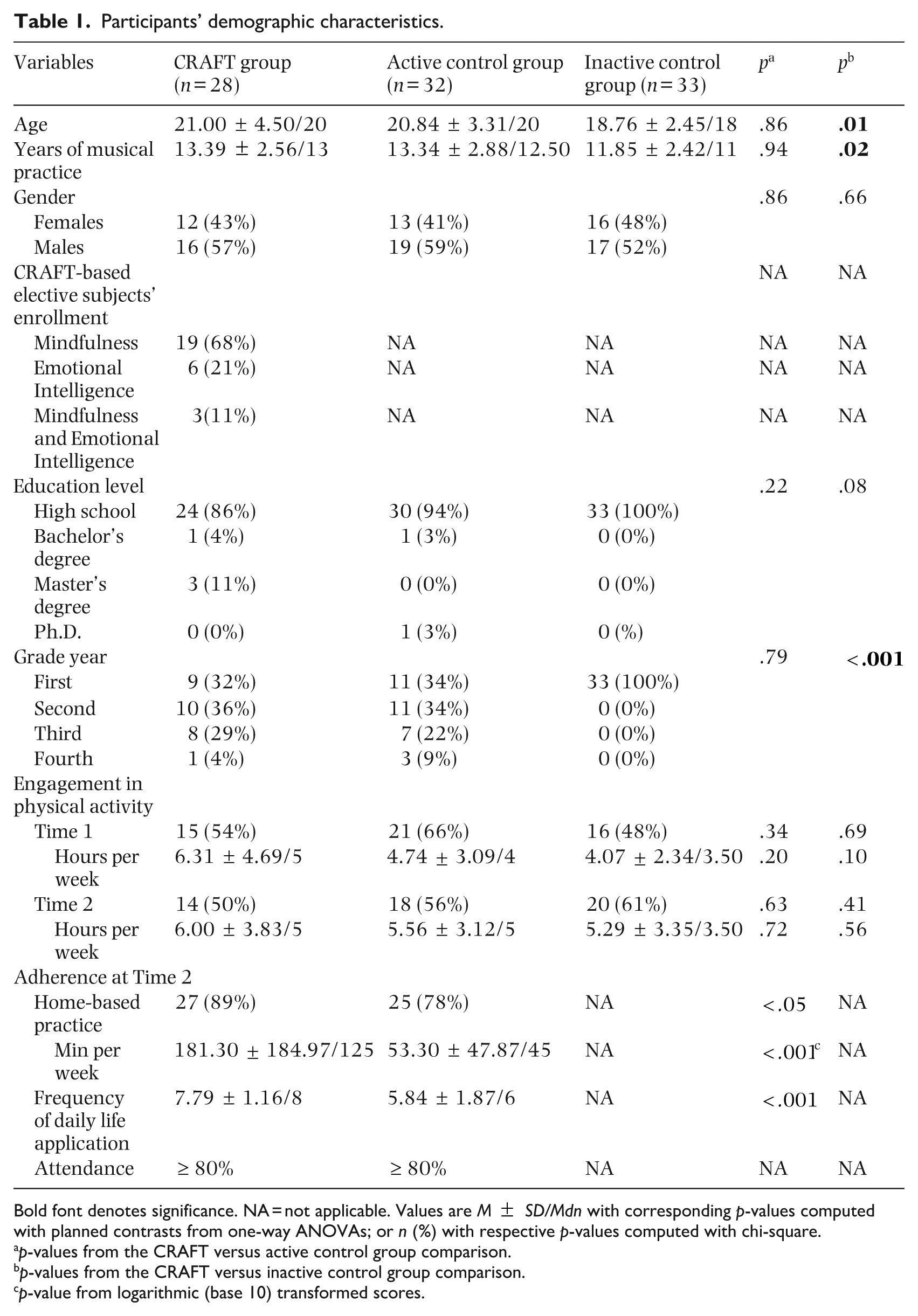
Bold font denotes significance. NA = not applicable. Values are M ± SD/Mdn with corresponding p-values computed with planned contrasts from one-way ANOVAs; or n (%) with respective p-values computed with chi-square.
p-values from the CRAFT versus active control group comparison.
p-values from the CRAFT versus inactive control group comparison.
p-value from logarithmic (base 10) transformed scores.
Moreover, there were significant differences favoring CRAFT participants over active controls in their engagement in home-based practice, extent of home-based practice (min per week), and frequency of daily life application of what they learned in class. In addition, as confirmed by the CRAFT- and Alexander Technique-based elective subjects’ instructors, all students accomplished the minimum 80% attendance prerequisite to complete their instruction in these subjects by the end of the academic year. Therefore, we can be confident that CRAFT and active control participants exhibited an overall adequate level of engagement with their respective training. No other significant between-group differences were found regarding the variables examined in the current study demographic questionnaire.
Outcome measures
Participants’ Time 1 and change scores’ descriptive statistics by group including the between- and within-group comparisons for all outcome measures are shown in Table 2. The results of the planned contrasts conducted on Time 1 scores revealed that, compared to active controls, CRAFT participants reported significantly higher scores in the KMPAIR Proximal and Dread/Scrutiny subscales, as well as the SBTR. Moreover, CRAFT participants exhibited significantly higher scores in the SPWS than inactive controls. No significant between-group differences were found for any of the other outcome measures at Time 1.
Descriptive statistics and between-group comparison of time 1 and change scores using planned contrasts and Cohen’s d ESs ± 95% CIs.
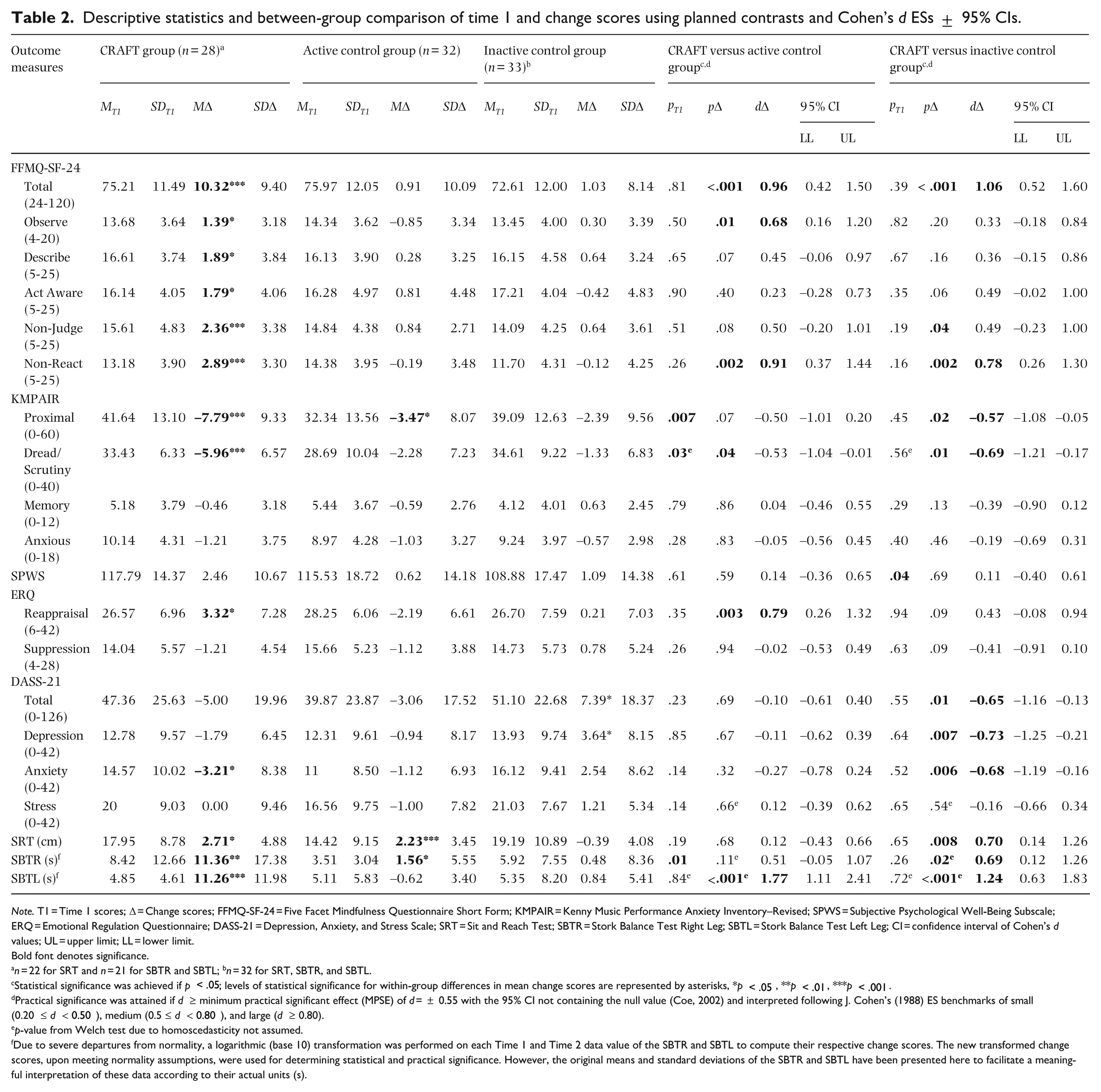
Note. T1 = Time 1 scores; Δ = Change scores; FFMQ-SF-24 = Five Facet Mindfulness Questionnaire Short Form; KMPAIR = Kenny Music Performance Anxiety Inventory–Revised; SPWS = Subjective Psychological Well-Being Subscale; ERQ = Emotional Regulation Questionnaire; DASS-21 = Depression, Anxiety, and Stress Scale; SRT = Sit and Reach Test; SBTR = Stork Balance Test Right Leg; SBTL = Stork Balance Test Left Leg; CI = confidence interval of Cohen’s d values; UL = upper limit; LL = lower limit.
Bold font denotes significance.
n = 22 for SRT and n = 21 for SBTR and SBTL; bn = 32 for SRT, SBTR, and SBTL.
Statistical significance was achieved if p
Practical significance was attained if d ≥ minimum practical significant effect (MPSE) of d = ± 0.55 with the 95% CI not containing the null value (Coe, 2002) and interpreted following J. Cohen’s (1988) ES benchmarks of small (0.20 ≤ d
p-value from Welch test due to homoscedasticity not assumed.
Due to severe departures from normality, a logarithmic (base 10) transformation was performed on each Time 1 and Time 2 data value of the SBTR and SBTL to compute their respective change scores. The new transformed change scores, upon meeting normality assumptions, were used for determining statistical and practical significance. However, the original means and standard deviations of the SBTR and SBTL have been presented here to facilitate a meaningful interpretation of these data according to their actual units (s).
To test our hypotheses that CRAFT participants would report higher improvements than active and inactive controls on measures of mindfulness, MPA, psychological well-being, emotional regulation, psychological distress; and lower body balance and flexibility, statistical and practical significance of the between-group differences in change scores was examined through planned contrasts from one-way ANOVAs and Cohen’s d ESs ± 95% CIs. In addition, paired sample t-tests and Cohen’s d ESs ± 95% CIs were also employed to determine statistical and practical significance of the within-group differences from Time 1 to Time 2 for these outcome measures.
Between-group results
CRAFT versus active control group planned contrasts
The CRAFT group exhibited a statistically and practically significant higher mean change score than the active control group in the FFMQ-SF-24 total scale, FFMQ-SF-24 Observe and Non-React subscales, ERQ Reappraisal subscale, and SBTL (Table 2). Practical significance was reflected by the medium to large ESs exceeding the MPSE, d =
Moreover, the CRAFT group reported a statistically significant lower mean change score than the active control group in the KMPAIR Dread/Scrutiny subscale (Table 2). However, this result did not achieve practical significance as the ES did not reach the MPSE nor 80% statistical power, β = .52. No significant differences were found for any of the other outcome measures (Table 2).
CRAFT versus inactive control group planned contrasts
The CRAFT group showed a statistically and practically significant higher mean change score than the inactive control group for the FFMQ-SF-24 total scale, FFMQ-SF-24 Non-React subscale, SRT, SBTR, and SBTL (Table 2). Practical significance was reflected by the medium to large ESs exceeding the MPSE, d =
Furthermore, the CRAFT group showed a statistically and practically significant lower mean change score than the inactive control group in the KMPAIR Proximal and Dread/Scrutiny subscales, as well as the DASS-21 total scale and the DASS-21 Depression and Anxiety subscales (Table 2). Practical significance was explained by the medium ESs exceeding the MPSE and 95% CIs that did not include the null value. However, except for the ES reported in the Depression subscale, statistical power for the ES reported in the KMPAIR subscales of Proximal, β = .59, and Dread/Scrutiny, β = .75, the DASS-21 scale, β = .70, and the DASS-21 Anxiety subscale, β = .74, was below 80% and hence caution is warranted in the interpretation of these results. No significant differences were reported for any of the remaining outcome measures (Table 2).
Between-group robustness check
Planned contrasts from one-way ANCOVAs on Time 2 outcome measures scores, controlling for Time 1 levels, were conducted to ascertain the robustness and accuracy of the current study findings. The results of this analysis, which have been detailed in Table S2 (supplementary material), followed a similar pattern to those obtained from our main analysis confirming each result herein reported that achieved both practical and statistical significance.
Within-group results
A complete illustration of the within-group results is provided in Table S3 (supplementary material). CRAFT participants exhibited statistically and practically significant improvements quantified with large ESs in the FFMQ-SF-24 total scale, FFMQ-SF-24 Non-React subscale, SBTL, as well as the KMPAIR Proximal and Dread/Scrutiny subscales; and medium ESs in the FFMQ-SF-24 Non-Judge subscale, SRT, and SBTR. Moreover, they showed statistically significant improvements with small ESs approaching the medium range in the FFMQ-SF-24 Observe, Describe, and Act Aware subscales, as well as the ERQ Reappraisal and DASS-21 Anxiety subscales.
Active controls reported a statistically and practically significant increase of a medium ES in the SRT. Furthermore, they also exhibited statistically significant improvements of small ESs approaching the medium range in the KMPAIR Proximal subscale and the SBTR. Inactive controls reported a statistically significant increase of a small ES close to the medium range in the DASS-21 total scale and the DASS-21 Depression subscale.
Main findings visualization
All the practically and statistically significant findings of the current study derived from our main analysis (i.e., planned contrasts from one-way ANOVAs on change scores) are illustrated in Figures 2 to 6. Following recommended guidelines (Dankel, 2020; Weissgerber et al., 2019), in these figures, each data point has been made visible for a more transparent visualization of the results that could be critically assessed by readers.
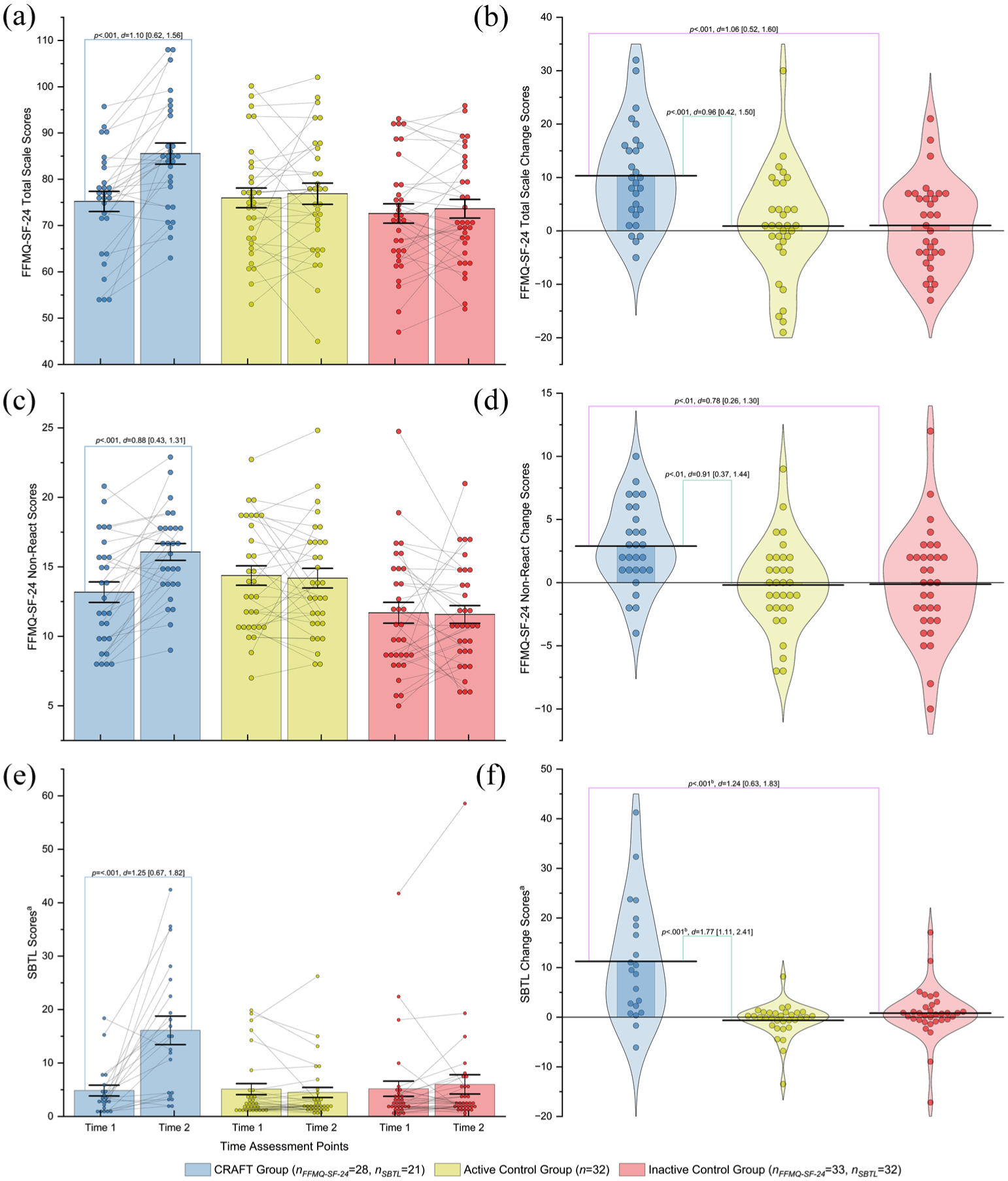
Within- and between-group results of the FFMQ-SF-24 total scale, FFMQ-SF-24 Non-React subscale, and SBTL across the CRAFT, active control, and inactive control group. FFMQ-SF-24 = Five Facet Mindfulness Questionnaire Short Form; SBTL = Stork Balance Test Left Leg. Panels a, c, and e show the within-group results through dot plot line graphs highlighting each paired data point and bar graphs emphasizing the Time 1 and Time 2 mean scores. Panels b, d, and f illustrate the between-group results through violin plot graphs highlighting each change score (Time 2 minus Time 1) data point and bar graphs topped with horizontal lines emphasizing each group’s mean change score. aDue to severe departures from normality, a logarithmic (base 10) transformation was performed on each Time 1 and Time 2 data value of the SBTL to compute their respective change scores. The new transformed change scores, upon meeting normality assumptions, were used for determining statistical and practical significance. However, the original means and standard deviations of the SBTL have been presented here to facilitate a meaningful interpretation of these data according to their actual units (s); bp-value from Welch test due to homoscedasticity not assumed.
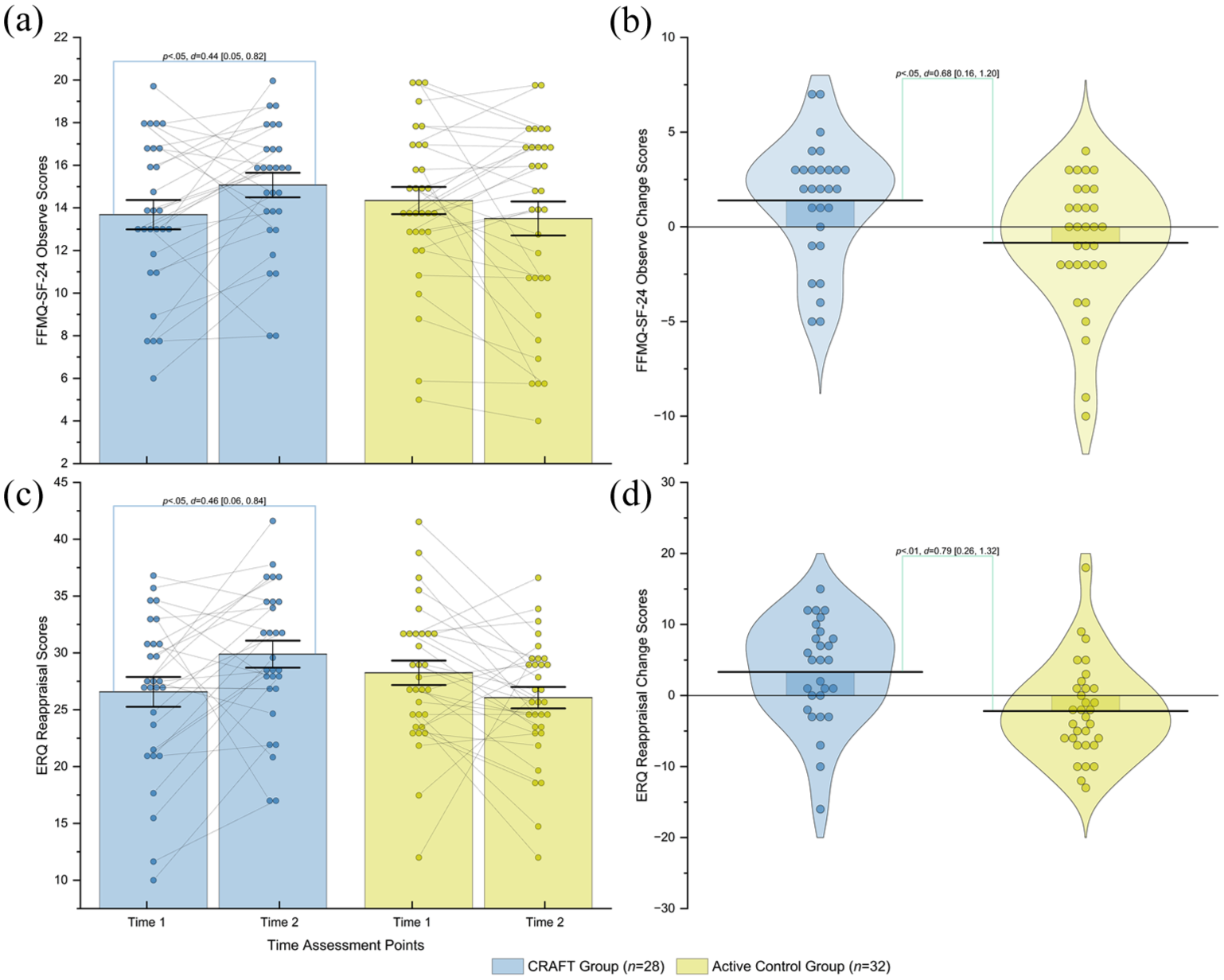
Within- and between-group results of the FFMQ-SF-24 Observe subscale and ERQ Reappraisal subscale across the CRAFT and active control group. FFMQ-SF-24 = Five Facet Mindfulness Questionnaire Short Form; ERQ = Emotional Regulation Questionnaire. Panels a and c show the within-group results through dot plot line graphs highlighting each paired data point and bar graphs emphasizing the Time 1 and Time 2 mean scores. Panels b and d illustrate the between-group results through violin plot graphs highlighting each change score (Time 2 minus Time 1) data point and bar graphs topped with horizontal lines emphasizing each group’s mean change score.
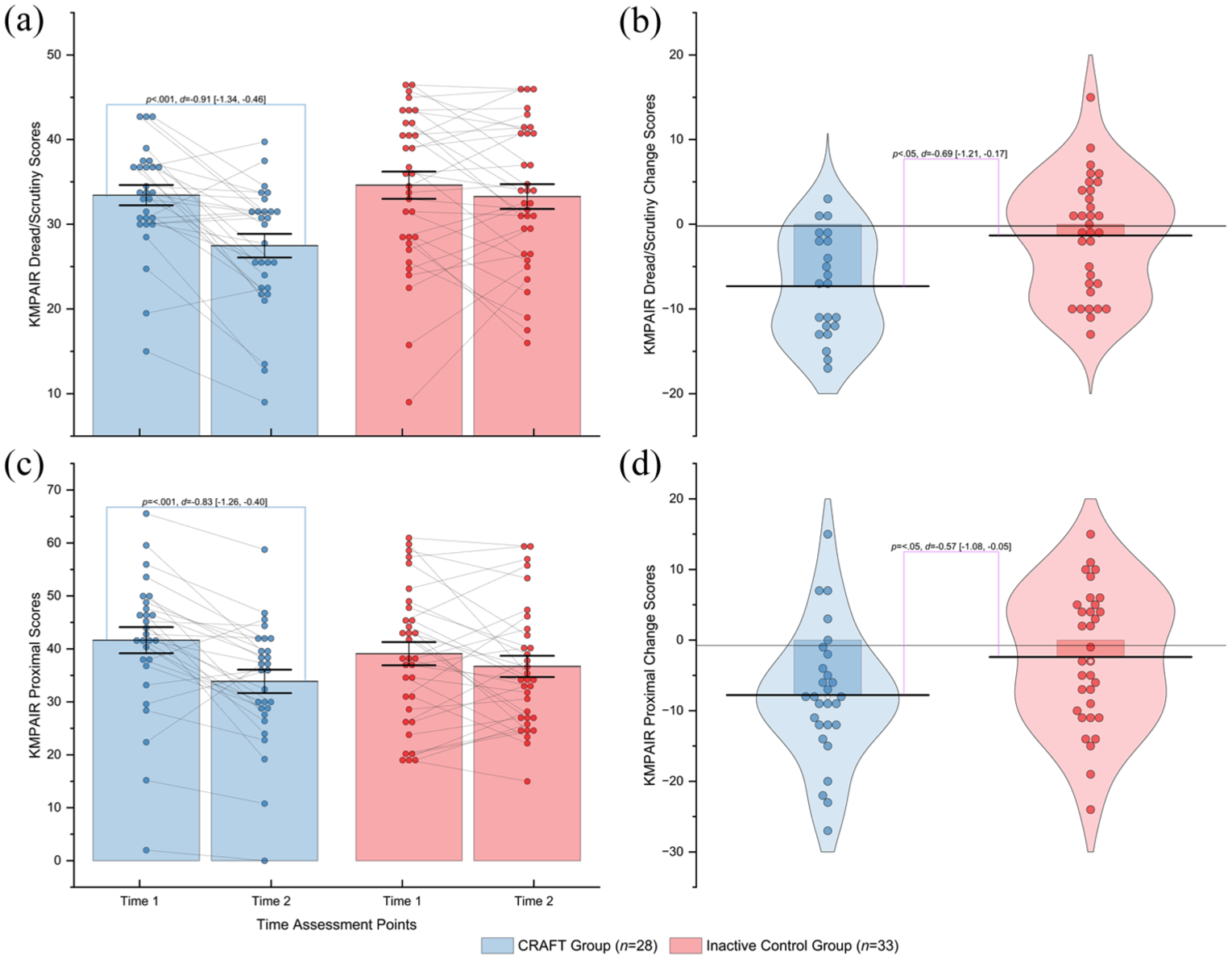
Within- and between-group results of the KMPAIR subscales of Dread/Scrutiny and Proximal across the CRAFT and inactive control group. KMPAIR = Kenny Music Performance Anxiety Inventory-Revised. Panels a and c show the within-group results through dot plot line graphs highlighting each paired data point and bar graphs emphasizing the Time 1 and Time 2 mean scores. Panels b and d illustrate the between-group results through violin plot graphs highlighting each change score (Time 2 minus Time 1) data point and bar graphs topped with horizontal lines emphasizing each group’s mean change score.
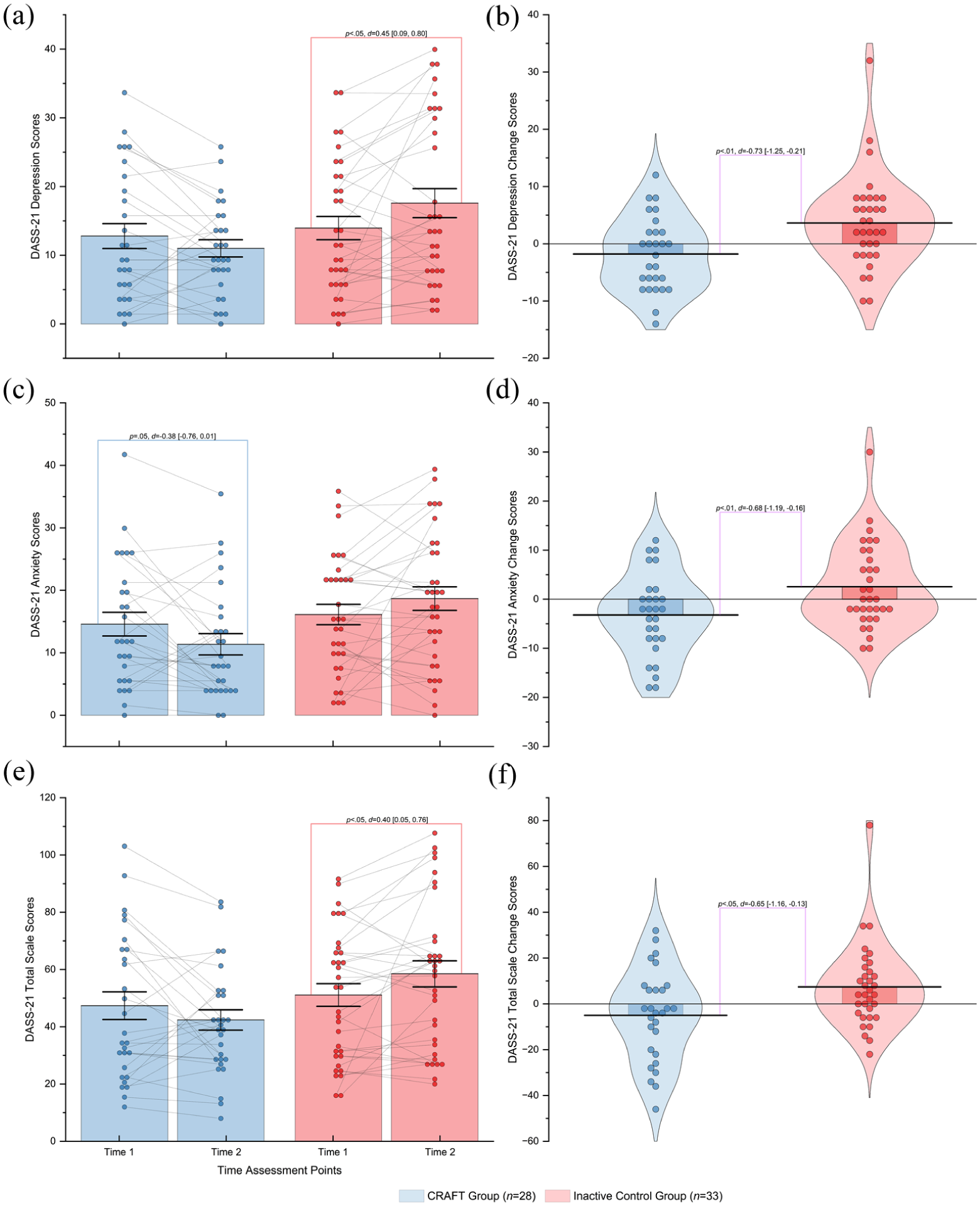
Within- and between-group results of the DASS-21 subscales of Depression and Anxiety and DASS-21 total scale across the CRAFT and inactive control group. DASS-21 = Depression, Anxiety, and Stress Scale. Panels a, c, and e show the within-group results through dot plot line graphs highlighting each paired data point and bar graphs emphasizing the Time 1 and Time 2 mean scores. Panels b, d, and f illustrate the between-group results through violin plot graphs highlighting each change score (Time 2 minus Time 1) data point and bar graphs topped with horizontal lines emphasizing each group’s mean change score.
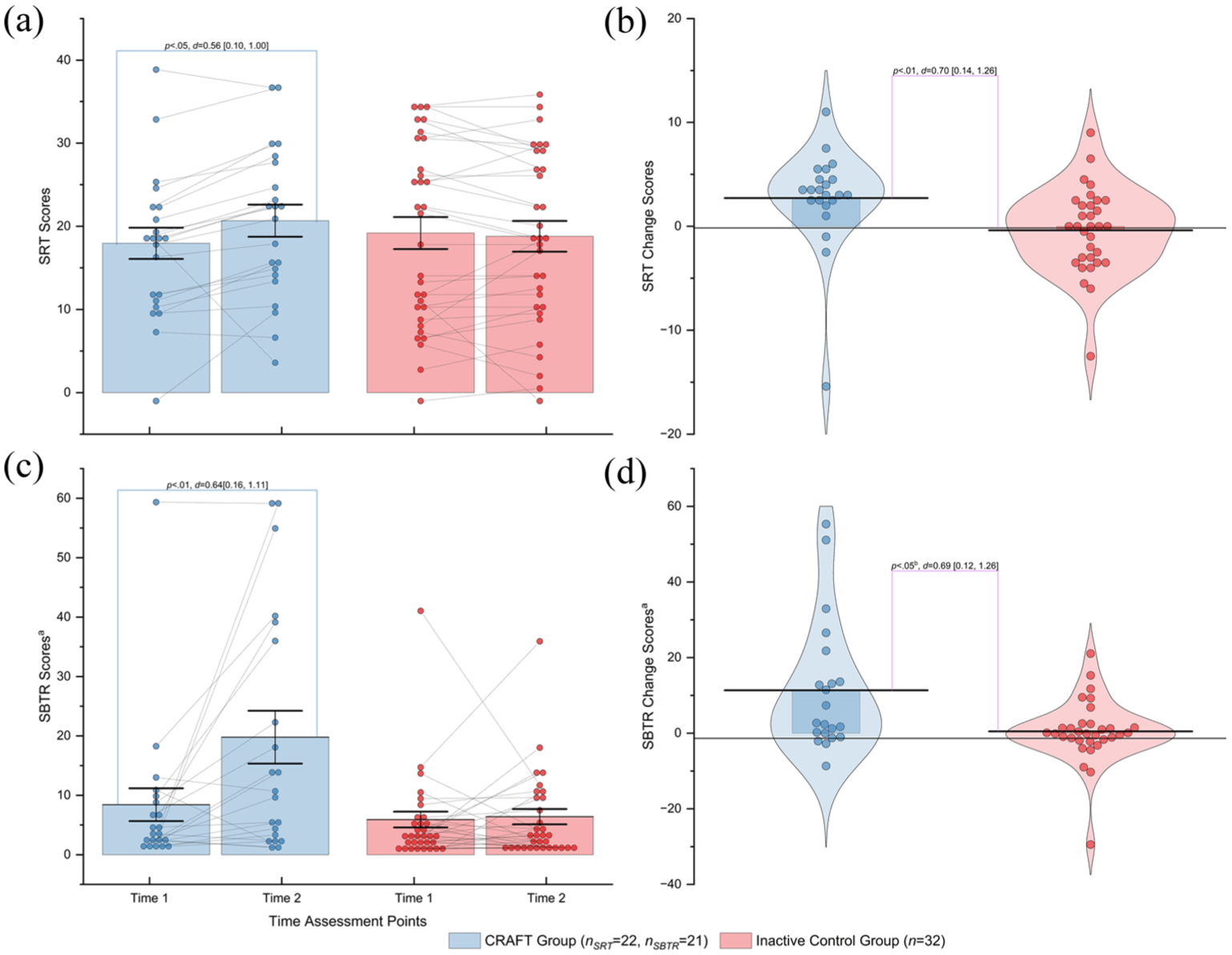
Within- and between-group results of the SRT and SBTR across the CRAFT and inactive control group. SRT = Sit and Reach Test; SBTR = Stork Balance Test Right Leg. Panels a and c show the within-group results through dot plot line graphs highlighting each paired data point and bar graphs emphasizing the Time 1 and Time 2 mean scores. Panels b and d illustrate the between-group results through violin plot graphs highlighting each change score (Time 2 minus Time 1) data point and bar graphs topped with horizontal lines emphasizing each group’s mean change score. aDue to severe departures from normality, a logarithmic (base 10) transformation was performed on each Time 1 and Time 2 data value of the SBTR to compute their respective change scores. The new transformed change scores, upon meeting normality assumptions, were used for determining statistical and practical significance. However, the original means and standard deviations of the SBTR have been presented here to facilitate a meaningful interpretation of these data according to their actual units (s). bp-value from Welch test due to homoscedasticity not assumed.
Discussion
The purpose of the current study was to build on preliminary CRAFT feasibility research by examining the effectiveness of CRAFT in enhancing tertiary student musicians’ physical, psychological, and emotional well-being through a three-arm non-randomized controlled trial design. As hypothesized, CRAFT participants reported statistically and practically significant improved levels of overall dispositional mindfulness, non-reactivity, and left leg balance compared to active and inactive controls; observing mindfully and cognitive reappraisal compared to active controls; and right leg balance, lower body flexibility, MPA, depression, anxiety, and overall psychological distress compared to inactive controls.
Overall, our results in dispositional mindfulness, cognitive reappraisal, and lower body flexibility substantiated the within-group improvements found for these types of abilities in a previous feasibility study (Bartos et al., 2022) and clinical trial (Cásedas et al., 2023) examining the preliminary effectiveness of CRAFT to enhance well-being outcomes among tertiary music and translation students, respectively. Specifically with regard to improved mindfulness skills, our findings also aligned with previously reported effects in these abilities among tertiary student musicians (Czajkowski et al., 2021, 2022; Czajkowski & Greasley, 2015; B. J. Steyn et al., 2016; M. H. Steyn, 2013) and non-music university students following mindfulness-based interventions (McConville et al., 2017; Pan et al., 2024).
The potential improvement in mindfulness and cognitive reappraisal skills among CRAFT participants relative to active and/or inactive controls can be mainly explained by the different mindfulness- and yoga-based meditative practices learned in CRAFT. Examples of these techniques include an array of focused attention, open monitoring, and loving-kindness and compassion meditations (Bartos et al., 2022) that have been linked to top-down and bottom-up mechanisms instigating high and low brain networks (Guendelman et al., 2017). Through these neural pathways, these techniques may facilitate disengagement from maladaptive cognitions, such as rumination, reactivity, and expressive suppression, while promoting adaptive emotional regulation strategies, such as meta-awareness and cognitive reappraisal (Chiesa et al., 2013; Gard et al., 2014). A pivotal aspect underlying these benefits appears to be the non-evaluative and acceptance-based stance through which the meditative practices of yoga and mindfulness are performed. Drawing from the metacognitive mechanism of re-perceiving (Shapiro et al., 2006), CRAFT participants may have learned, to a certain extent, to disidentify with the content of their stressors (e.g., negative thoughts and emotions from MPA and psychological distress) by observing it with a non-judgmental and acceptance-based attitude. This process of disidentification and change of perspective, named re-perceiving, was what Garland et al. (2009) alluded to as the naturally occurring phenomenon preceding the actualization of any cognitive reappraisal. According to Garland et al. (2009, 2015), re-perceiving frees one’s attention from being enclosed within the content of a given appraisal into a metacognitive space of expanded awareness and cognitive flexibility that embraces the stressor and inconspicuous meaningful possibilities, including positively valenced states and affects (e.g., inner peace, calmness, joy, compassion, love). As explained by the authors, from this state of broadened cognition, new valuable perspectives and insights might arise and be deployed to meaningfully re-construe stressful primary appraisals (e.g., MPA, psychological distress) as beneficial for intrapersonal growth and eudaimonic well-being.
Additionally, CRAFT participants’ cognitive reappraisal abilities may have also been enhanced through various hands-on activities specifically designed by the program developer (e.g., group debates, role play cases of guided discovery; Bartos et al., 2022) to nurture core components of positive psychology (e.g., focusing on the positive aspects of one’s life, the appreciation of beauty and excellence, gratitude, hope, engagement, and humor; Peterson & Seligman, 2004) and emotional intelligence (e.g., self-awareness, social skills, empathy, and motivation; Goleman, 1998). Except for a previous feasibility study (Bartos et al., 2022), it appears that the extant literature does not show any studies explicitly examining the effectiveness of well-being interventions to improve tertiary student musicians’ mindfulness and cognitive reappraisal abilities. Therefore, further research including specific instruments to concurrently measure these skills is highly encouraged, considering the relevant impact that enhanced mindfulness and/or cognitive reappraisal may have on ameliorating student musicians’ well-being, self-regulated learning, academic performance, MPA, and psychological distress (Kaleńska-Rodzaj, 2023; Peistaraite & Clark, 2020).
As has been discussed, CRAFT participants’ increased levels of mindfulness and cognitive reappraisal may have contributed to enhancing their capacity to cope with symptoms related to MPA and psychological distress. This rationale is supported by CRAFT participants’ reported improvements in their levels of overall psychological distress, depression, anxiety, and MPA related to proximal somatic anxiety and judgments/scrutinies compared to active and/or inactive controls. The current study results of reduced MPA among CRAFT participants are consistent with those found among tertiary student musicians following interventions based on Chan meditation (Chang et al., 2003) and Kripalu yoga (Stern et al., 2012), and among adolescent, student, and professional musicians involved in similar practices (e.g., biofeedback, yoga, Alexander Technique; Burin & Osorio, 2016).
Drawing on positive psychology, various practices implemented in CRAFT to foster engagement (Seligman, 2011) and flow (Csikszentmihalyi, 1990), such as group-meditative improvisations and mindful concerts (Bartos et al., 2022), may have contributed to reducing psychological distress, especially MPA. Evidence from studies conducted with student (Fullagar et al., 2013) and professional (S. Cohen & Bodner, 2019, 2021) musicians indicate that higher flow is associated with lower MPA. Flow refers to a state of heightened awareness, self-control, attention, and joy that may occur when one is fully immersed in an activity and might therefore accomplish it effortlessly and at a high level of performance while losing track of time (Csikszentmihalyi, 1990). Hence, it is possible that CRAFT participants through CRAFT exposure may have enhanced their ability to attain flow states during demanding events (e.g., music performance), enabling them to experience such stressful situations of MPA and psychological distress as a meaningful, enjoyable, and successful process. Further explanations of CRAFT participants’ potential improvement in psychological distress that may also cast light on their reported MPA reductions can be found in the specific self-regulation training developed in CRAFT through the different yoga-based postural, breathing, and relaxation techniques. Via bottom-up processes engaging lower-level brain networks, the interoceptive, proprioceptive, and embodied experience elicited by these practices may engender an enhanced relaxation response of vagal nerve and parasympathetic nervous system upregulation (Gard et al., 2014). Conversely, these processes would be reflected in a counteraction of the stress response via a downregulation of the sympathetic tone, hypothalamic–pituitary–adrenal axis, catecholamines, and proinflammatory cytokines (McCall, 2013; Sullivan, Erb, et al., 2018).
In the physical domain, the between-group results of increased lower body flexibility and balance favoring CRAFT participants over active and/or inactive controls align with those reported in previous Hatha yoga-based interventions followed by university students (Park et al., 2017; Smith et al., 2011; M. D. Tran et al., 2001). These findings are congruent with CRAFT participants’ training in the different hatha yoga-based practices implemented through the program that promote various physical qualities, such as flexibility, balance, and strength (Bartos et al., 2022; McCall, 2013). However, CRAFT participants’ lower body flexibility levels at Time 2, albeit being higher than controls, were lower than average according to normative values (ACSM, 2014) and those reported in a recent cross-sectional study conducted with conservatory students (Araújo et al., 2020). Similarly, although CRAFT participants reported the highest scores at Time 2 in lower body balance, these values were below average compared to previous norms (Coulson & Archer, 2009). These results are not unexpected considering the high proportion of CRAFT participants in the Mindfulness subject that did not exercise in the past 2 months preceding Time 1 and Time 2 assessments and CRAFT’s low dosage of physical training delivery per week. Notwithstanding this, CRAFT participants increased by a medium ES their lower body flexibility and by a medium and large ES their ability to balance on the right and left leg, respectively. These physical gains appear to be particularly relevant for tertiary student musicians for whom developing optimal levels of physical fitness has been specifically recommended to prevent and ameliorate PRMD, MPA, and psychological distress, and enhance their overall music practice and performance experience (Araújo et al., 2020; Kim & Kim, 2023; Matei & Ginsborg, 2020).
Finally, CRAFT’s primary purpose of nurturing human intrinsic capacities as an inner technology driven by a self-grounded paradigm (e.g., self-awareness, self-inquiry, self-knowledge, self-regulation, self-responsibility, self-acceptance, self-care, self-engagement, self-transcendence; Bartos et al., 2021; Posadas, 2019) may have transversally accounted for several of the well-being benefits reported in the current study. Through this central tenet, CRAFT participants are urged to autonomously leverage the techniques learned in the program to optimize their well-being and academic experience, as well as to self-inquire into the essence and root cause of their problems and who they are (Bartos et al., 2021; Posadas, 2019). For example, by independently integrating a non-judgmental, accepting, and equanimous stance into their daily lives with a self-reflexivity approach (Goenka, 2000; Sullivan, Moonaz, et al., 2018), CRAFT participants might have gradually learned to disengage from their concerns (e.g., MPA, psychological distress), understand their ever-changing nature, and allow them to naturally arise and dissolve without clinging to or repelling them. Eventually, they may have been able to reframe these concerns, realizing they are not the fleeting phenomena of their perceived pleasant and/or unpleasant thoughts and sensations. Accordingly, it could be surmised that CRAFT exposure could have bestowed upon CRAFT participants long-term well-being effects and resilience, empowering them to self-regulate their health-related concerns more meaningfully and effectively than relying on symptom-focused strategies. In support of this proposition, we found in the present study that CRAFT participants exhibited a higher frequency of daily life application regarding the contents imparted in class compared to active controls. These findings coalesce with those of a previous study in which CRAFT participants reported higher levels of proactivity and more perceived benefits compared to controls—in terms of independently deploying practices for well-being promotion during the COVID-19 lockdown (Bartos et al., 2021). Despite these results suggest that CRAFT exposure could induce lasting effects by instilling a sense of agency for health self-care, longer longitudinal studies including follow-up assessments are strongly recommended to investigate the long-term well-being effects of CRAFT.
In contrast to the CRAFT versus inactive control group comparison, the results of MPA related to proximal somatic anxiety and judgments/scrutinies, overall psychological distress, depression, anxiety, and stress, as well as lower body flexibility and right leg balance between the CRAFT and active control group, were not as hypothesized. These findings suggest that active controls may have also experienced positive effects on these variables as a result of their Alexander Technique training. Although a thorough investigation into the effectiveness of the Alexander Technique-based subject was beyond the scope of our study, we examined its within-group effects, with active controls reporting significant improvements in proximal somatic MPA, lower body flexibility, and right leg balance. These results partially concur with those of previous studies suggesting this training may effectively improve several well-being outcomes, such as anxiety, stress, MPA, and flexibility (Klein et al., 2014). Additionally, active controls’ adherence to home-based intervention-related practice, as monitored through the proportion of participants who engaged in it and the weekly minutes they spent on it, was substantially lower than that of CRAFT participants at Time 2. These between-group differences could be majorly explained by the fact that active controls were not given specific time guidelines for home-based practice (see supplementary material), which may have been a way to compensate for the additional 13 hr of instruction they received compared to CRAFT participants. Therefore, it could be argued that the relatively low levels of both program delivery—in the CRAFT-based subjects—and adherence—in the Alexander Technique-based subject—may have prevented us from detecting the actual effect of these trainings. Furthermore, we cannot discount either that the differences in adherence and overall improvement in the outcome measures, favoring CRAFT participants over active controls, may also have been attributable to CRAFT’s higher applicability and/or transferability in inducing self-promoting attitudes, states, and abilities. Therefore, given the naturalistic design and limited power of the current study, it is plausible that extraneous variables we were unable to control for—such as quality of home-based practice, fidelity of both program delivery and home-based practice, as well as independently engaged practice—may have impacted the current study results. Accordingly, despite excluding participants with previous yoga and/or mindfulness-based experience, it is conceivable that inactive controls may have autonomously engaged in well-being activities. However, controlling for this eventuality, either statistically or in terms of research design, may have even amplified the intervention effects reported between the CRAFT and inactive control participants. Considering these findings and reasonings together, along with the seemingly limited evidence in the field, larger studies applying higher control over these extraneous variables are called for to examine the effectiveness of CRAFT- and Alexander Technique-based interventions on tertiary student musicians’ well-being and academic experience.
Contrary to our hypothesis, there were no between-group differences favoring CRAFT participants compared to active and inactive controls in the levels of psychological well-being, stress, mindfulness regarding describing and acting with awareness, expressive suppression, and MPA related to playing from memory and feeling anxious/apprehension. Moreover, the non-significant results in the abilities of cognitive reappraisal and observing mindfully between CRAFT and inactive control participants as well as the mindfulness skill of non-judging between CRAFT and active control participants were not as hypothesized. These null effects could obey, to various degrees of extent, to the low dosage of program delivery, variations in the actual fidelity of program implementation and practice that was attained in resonance with CRAFT’s contents and objectives, and the differential emphasis placed on developing certain components, practices, and abilities over others. In addition, potential response shift effects due to the program inducing changes in participants’ internal standards, understanding of the measured construct, and values/priorities, may have masked the actual improvement they might have gone through on the current study self-reported outcome measures (Bartos, Posadas, Wrapson, & Krägeloh, 2023; Sprangers & Schwartz, 1999). However, CRAFT participants’ change scores compared to inactive controls trended toward significance in the mindfulness ability of acting with awareness, emotional regulation strategies of cognitive reappraisal and expressive suppression, and their MPA related to playing from memory, and those in the mindfulness abilities of observing and describing followed the expected pattern in accordance with our hypothesis. Similarly, trends toward significance in the direction of our hypotheses were also noted between CRAFT participants and active controls in the levels of MPA related to proximal somatic anxiety and mindfulness regarding the skills of non-judging and describing.
Limitations and future research
Various limitations can be identified in the current study. First, the three groups involved in this investigation were formed based on students’ enrollment in pre-existing subjects at two music conservatories. Therefore, the absence of randomization may have contributed to the between-group baseline imbalances reported in participants’ levels of psychological well-being, right leg balance, and MPA related to proximal somatic anxiety and judgments/scrutinies (Van Breukelen, 2006). In this regard, the fact that participants were recruited from two different conservatories and cities may have also had an effect on increasing the heterogeneity of the sample and further explained these observed differences at Time 1. However, the naturalistic design implemented posed the advantage of conducting this investigation with high ecological validity and therefore mirroring what normally occurs in the community without meddling with participants’ choices and interests (Dimitrov & Rumrill, 2003; Verster et al., 2019). Moreover, the inclusion of active and inactive controls, alongside a strict exclusion criterion of prior and/or concurrent familiarization with yoga and/or mindfulness-based training, further strengthened the validity of the effects herein reported as being primarily attributable to CRAFT exposure rather than other possible factors. As a further layer of robustness following previous recommendations (Van Breukelen, 2006), the current study findings derived from our main analysis were corroborated when pre-existing between-group differences were controlled for.
Second, due to some students’ unavailability to complete Time 2 assessments because of examination constraints, we fell short of achieving the expected sample size of our a priori power analysis that would have enabled us to detect ESs equivalent to our estimated MPSE. Notwithstanding this, the current study results were consistently interpreted following benchmarks derived from our sensitivity power analysis to estimate whether they achieved adequate power and both statistical and practical significance. Thus, we were able to rigorously discriminate some statistically and/or practically significant results warranting replication with larger samples because our study may not have been sufficiently powered to detect them. In addition, by inferring the practical significance of our results through the MPSE and ESs
Fourth, Time 1 assessments were conducted after students had officially confirmed their final enrollment choices, which occurred after they had already completed 3 weeks of instruction (3 hr) in their respective subject classes. Although evidence suggests that even 2.5–5 hr of mindfulness training may engender measurable effects (Baer et al., 2012), it remains unclear to what extent, if at all, those 3 hr of training prior to Time 1 assessments may have impacted participants’ actual baseline levels and the overall between- and within-group effects reported. Thus, future CRAFT research within such naturalistic settings should contemplate multiple assessments including evaluations conducted before the onset of any academic instruction, after confirmation of enrollment choices or mid-term, upon completion of the intervention, and at follow-up, to adequately examine both the short- and long-term effects of CRAFT. Fifth, despite most significant results being quantified within the medium to large ES range, the dosage of program delivery of 1 hr per week may not have been sufficiently high to allow us to detect the actual effectiveness of CRAFT in enhancing well-being outcomes. Although encouraging and monitoring fidelity of formal and informal home-based practice was a way to extend this dose, further research should determine whether higher exposure to CRAFT instruction in both frequency and intensity could lead to greater effects. Given the need to enhance tertiary student musicians’ fitness levels (Araújo et al., 2020), future CRAFT interventions within higher conservatory settings should also specifically increase the dose of physical training and include other relevant physiological measures related to their physical demands (e.g., strength, pulmonary and cardiovascular functions, postural balance; Araújo et al., 2020; Kim & Kim, 2023).
Sixth, this study is not different from most Mindfulness-based interventions in the sense that often the sample size does not permit detailed analysis of additional factors that may affect intervention outcome measures, such as adherence to or extent of intervention-related home-based practice, independently engaged practice, and quality of practice. Considering the naturalistic design of the current study, it was not possible to apply stringent control of such extraneous factors. Whether and the extent to which they may have impacted the current study results is uncertain and deserves further examination through more controlled and powered studies. Mindfulness-based research has only recently started to explore the effect of practice-related variables, such as dose response, and more in-depth understanding of these factors would undoubtedly help us improve the efficiency of holistic well-being interventions (Strohmaier, 2020).
Seventh, we cannot disregard the possibility that survey fatigue, due to a relatively high response burden from completing six different questionnaires, along with the simultaneous undertaking of physical tests, could have curtailed the quality of participants’ performance and data collection process. Nonetheless, to minimize response burden, we used the FFMQ-SF-24 (Bohlmeijer et al., 2011), a short version of the FFMQ (Baer et al., 2006), and only four subscales of the KMPAIR (Kenny, 2009). Additionally, physical tests were performed in a separate space from the survey area, which was a way to mitigate interference between the two types of measurement. Notably, all participants completed the assessments within the expected timeframe and reported no complaints regarding survey length or fatigue. Finally, in resonance with yoga and mindfulness, CRAFT is ultimately a method for intrapersonal and spiritual development toward self-actualization (Posadas, 2019). Therefore, as a contemplative intervention, it may have the potential of inducing transcendental and genuine lived experiences of subtle perception that could bring about a relevant change of meaning and perspective about reality (Bartos, Posadas, Wrapson, & Krägeloh, 2023; Ekici et al., 2020; Leledaki, 2014). Thus, to register such experiences, identify their relevant patterns, and gain a greater understanding of CRAFT participants’ quantitative effects and perceived benefits, future CRAFT research should incorporate in-depth qualitative methods, such as semi-structured interviews and practice logs.
Notwithstanding these limitations, the current study findings support CRAFT as an effective intervention to improve tertiary student musicians’ levels of mindfulness, cognitive reappraisal, MPA, psychological distress, and lower body balance and flexibility. In addition, this investigation served the purpose of building on previous CRAFT feasibility research, and in turn, on the extant literature in the field of higher music education which appears not to include any studies with an active control group examining the effectiveness of mindfulness-based interventions on the aforementioned outcomes. Our findings have important implications as far as raising awareness of the importance of implementing comprehensive interventions within university settings, in general, and specifically, music tertiary education to holistically enhance the well-being and academic experience of university students. Although this evidence is promising, larger multi-arm-controlled studies implementing mixed methods and higher dosages of program delivery among tertiary students of music and other disciplines are needed to substantiate these findings.
Supplemental Material
sj-docx-1-msx-10.1177_10298649251347365 – Supplemental material for Examining the CRAFT program’s impact on student musicians’ well-being compared to controls
Supplemental material, sj-docx-1-msx-10.1177_10298649251347365 for Examining the CRAFT program’s impact on student musicians’ well-being compared to controls by L Javier Bartos, M Pilar Posadas, Wendy Wrapson, Oleg N Medvedev and Chris Krägeloh in Musicae Scientiae
Footnotes
Acknowledgements
We would like to thank the Royal Conservatory of Music Victoria Eugenia of Granada, Spain, and the Higher Music Conservatory of Málaga, Spain—especially the board of directors, faculty, and students—for supporting this investigation.
Author contributions
Declaration of conflicting interests
The authors declared the following potential conflicts of interest with respect to the research, authorship, and/or publication of this article: The authors declare that the research was conducted in the absence of any commercial or financial relationships that could be construed as a potential conflict of interest. We acknowledge that one of the authors (M. P. P.) developed the CRAFT program. However, as can be seen in the author contributions statement, M. P. P. did not conceive this particular study nor was involved in any of the data collection and data analysis stages of this investigation, which was also a way to manage this potential conflict of interest.
Funding
The authors disclosed receipt of the following financial support for the research, authorship, and/or publication of this article: This study was funded as part of a larger research project funded by the Regional Government of Andalusia, Spain (PIV-036/21). The first author was supported by an Auckland University of Technology Vice Chancellor’s Doctoral Scholarship.
Ethics approval
Ethical approval to conduct this study was granted by Auckland University of Technology Ethics Committee (AUTEC, no. 21/421) and according to the ethical standards established in the 1964 Declaration of Helsinki and subsequent amendments.
Informed consent
All recruited participants provided written informed consent before embarking upon this study.

Data availability statement
The datasets related to this article have been made publicly available in the supplementary material folder linked to the present study.
Supplemental material
Supplemental material for this article is available online.
References
Supplementary Material
Please find the following supplemental material available below.
For Open Access articles published under a Creative Commons License, all supplemental material carries the same license as the article it is associated with.
For non-Open Access articles published, all supplemental material carries a non-exclusive license, and permission requests for re-use of supplemental material or any part of supplemental material shall be sent directly to the copyright owner as specified in the copyright notice associated with the article.
