



Abstract
Mindfulness courses are beneficial in clinical domains for anxiety and depression and are becoming more prevalent as interventions in education. However, little is known about what effects mindfulness might have on musicians. In an exploratory study, 25 music students, who completed one of four 8-week MBSR/MBCT mindfulness courses adapted for musicians at the Guildhall School of Music and Drama, completed the validated Five Facet Mindfulness Questionnaire and a bespoke Mindfulness for Musicians questionnaire pre- and post-intervention. Twenty-one music students also took part in a post-intervention one-to-one semi-structured interview. Post-intervention mindfulness scores for both questionnaires increased significantly in comparison to pre-intervention scores. In interviews, participants were reportedly more aware and focused in instrumental lessons, were less self-critical, and developed increased body awareness, which improved their learning of instrumental technique. Participants also described enhanced teacher/pupil communication. In instrumental practice sessions, participants reported more efficient, effective and creative practice, and said that mindfulness exercises helped them deal with problems experienced while practising. Participants also described enhanced listening skills and improved socio-collaboration in ensemble rehearsals. They reported that mindfulness strategies had positive effects on music performance anxiety and described changes in time perception, enhanced expressivity, and positive post-performance effects. Future researchers could adopt a more robust methodology, such as a randomised controlled trial, and incorporate further design elements, such as longitudinal follow-up. Providing more systematic evidence of the beneficial role of mindfulness for conservatoire music students as learners and performers may encourage greater provision of such opportunities in musical settings in the future.
Mindfulness is appearing with increasing regularity in secular and Westernised forms in different contexts such as clinical and educational domains. Mindfulness Based Stress Reduction (MBSR; Kabat-Zinn, 1990) is one of the most prevalent and well-established mindfulness courses (Hofmann et al., 2010; Khoury et al., 2015). This type of mindfulness, defined operationally by Kabat-Zinn, means “paying attention in a particular way: on purpose, in the present moment, and non-judgmentally” (Kabat-Zinn, 1994, p. 4). The course includes practical exercises, group discussions, weekly practice, and teaching based on attitudes of mind and behaviour (psycho-education) that can be tailored to different group demographics. This psycho-education includes learning about mental concepts such as the “being mode,” which means adopting a present-centred focus, and the “doing mode” where a person is constantly focused on the future. Practical exercises are designed to help participants experience “being” non-judgementally in the present moment in order to observe their experience. The exercises include, for example, becoming aware of moment-by-moment sensations of breathing (Breathing Awareness), sensations in the body (Body Scan) and, later in the course, being encouraged to become aware of thought patterns (Sounds and Thoughts) and apply mindfulness strategies to difficult memories in preparation for use as and when needed (Exploring Difficulties). The Mindfulness Based Cognitive Therapy course (MBCT) devised by Segal et al. (2002) is based closely on the MBSR format but is tailored to clinical participants with chronic depression by focusing on moods and thoughts early in the course.
There have been over 40 years of empirical research since Kabat-Zinn devised the first secular mindfulness course in 1979 for patients with chronic pain (Kabat-Zinn, 2011) showing positive results for clinical samples (Black, 2014; Goldberg et al., 2018; Kabat-Zinn, 2017; Ludwig & Kabat-Zinn, 2008). For example, Goldberg et al. (2018) conducted a meta-analysis of 142 randomised-controlled clinical trials from 1966 to 2017 employing mindfulness interventions in the treatment of psychiatric disorders involving 12,005 participants. Evidence supported the use of these interventions to help participants deal with physical and mental symptoms accompanying a wide range of conditions such as depression, chronic pain, and anxiety.
There is also a growing body of evidence to support the teaching of mindfulness in schools and higher education. In schools, researchers have found positive effects of mindfulness on wellbeing and stress (Kuyken et al., 2013), on cognitive performance and resilience to stress (Zenner et al., 2014), on educational and psychosocial outcomes (Felver et al., 2015; Langer et al., 2015; Langer, Ulloa, Cangas, Rojas, & Krause, 2015) and on academic outcomes for primary and high school students (Bakosh et al.,; Bennett & Dorjee, 2015). In UK higher education, the number of university students requesting counselling has grown by 50% from 2010 to 2015 (Galante et al., 2018) and, outside the UK, mental health is of increasing concern Ingram et al., 2017). Various studies report links between learning mindfulness and improvements in students’ mental health and wellbeing (Conley et al., 2013; Galante et al., 2018; Regehr et al., 2013).
Despite this growing body of evidence, there are almost no data exploring the effects of teaching mindfulness to music students. In 2016, Patston wrote “the author could find no studies extant offering applied mindfulness as a pedagogic approach with studio teachers” (p. 414) and Lecuona and Rodríguez-Carvajal (2014) described mindfulness and music as a “promising subject of an unmapped field” (p. 27). Studies have reported beneficial effects of other contemplative interventions on music performance anxiety (MPA) (Butzer et al., 2015; Chang et al., 2003; Juncos et al., 2017; Stern et al., 2012). However, very few studies have explicitly explored mindfulness and MPA. Farnsworth-Grodd and Cameron (2013) discovered that students with higher trait mindfulness coped better with performance-related thoughts and emotions before performing, Rodríguez-Carvajalet al. (2017) found that dispositional mindfulness had positive effects on self-consciousness and negative mood in 151 music students, and Diaz (2018) reported that higher trait mindfulness predicted lower levels of MPA among a group of 255 music students. Steyn et al. (2016) combined a sports mindfulness course (MAC; Gardner & Moore, 2004) with psychological skills testing (PST) intervention for university musicians with MPA, and found that the intervention had the potential to improve psychological wellbeing for musicians. In another study, Hribar (2012) explored the effect of two iterations of the 8-week mindfulness course at the Guildhall School of Music and Drama (GSMD) on music students’ psychological wellbeing and performance, using a quantitative-dominant mixed-methods approach. Results from 36 questionnaires showed improvements in wellbeing, positive emotion, life satisfaction, and trait mindfulness, and decreases in stress and depression. Eight interview responses suggested other effects of mindfulness on the participants such as increased enjoyment of performance and more effective practice.
There is little direct evidence of how mindfulness affects other aspects of music training such as instrumental lessons and solo practice. It has been suggested that increased body awareness, focus, and attention can help individuals develop good instrumental practice and performance skills (Cornett-Murtada, 2012; Diaz, 2011), increase sound volume and stability of tone in violinists (Dora et al., 2019), and assist with learning and practising singing (Elliott, 2010; Sandage, 2011). Steinfeld and Brewer (2015) argue that the type of attention that one learns to bring to the present moment in meditation would be of benefit to music students practising their instruments, whilst De Felice (2004) proposed that it would improve concentration, efficiency, reduce boredom, and increase healthy playing awareness. Some of these suggested effects have been documented in two intervention studies (Czajkowski & Greasley, 2015; Hribar, 2012). Several students in Hribar’s (2012) mindfulness intervention study noted more effective instrumental practice due to increased focus. In Czajkowski and Greasley (2015), eight voice students took part in a unique Mindfulness for Singers (MfS) course (based on the MBSR/MBCT) and reported that learning to be more mindful as singers improved their ability to learn technique, encouraged more effective and efficient practice, and enhanced relationships with their singing teachers. Participants’ singing teachers (n=3), enrolled in a single-blinded element of the study, were also able to identify six of the eight participants who took part in the mindfulness course from their total student register of 32. It has also been suggested that learning mindfulness could improve musicians’ listening skills (De Felice, 2004), and evidence from studies that have shown a link between mindfulness sessions and improved music listening sensitivity in university and school students (Anderson, 2012; Diaz, 2011) provides support for this.
The current study aimed to investigate the effects of a mindfulness course on music students in all aspects of their music educational lives. Previous mindfulness and music studies have used a predominantly quantitative methodology so this study aimed to redress the balance by using quantitative and qualitative methods in a mixed-methods approach. The main advantage of such an approach is that it provides a more complete analysis of complex enquiries than traditional uni-methodological approaches (Creswell & Plano-Clark, 2007). In the current study, levels of mindfulness were measured quantitatively pre- and post-intervention, followed by qualitative interviews to investigate participants’ personal experiences and effects of learning mindfulness on them as musicians. The site of study was GSMD as it is, currently, the only known UK institution that regularly runs a Mindfulness for Performing Arts Student course and has already been part of a previous study (Hribar, 2012). Based on research to date, it was expected that participants would report positive effects of mindfulness on MPA and possibly also on music practice. However, in-depth qualitative research may uncover other unknown effects so the present study might also explain, at least in part, why mindfulness has benefits on MPA and instrumental practice.
Method
Participants
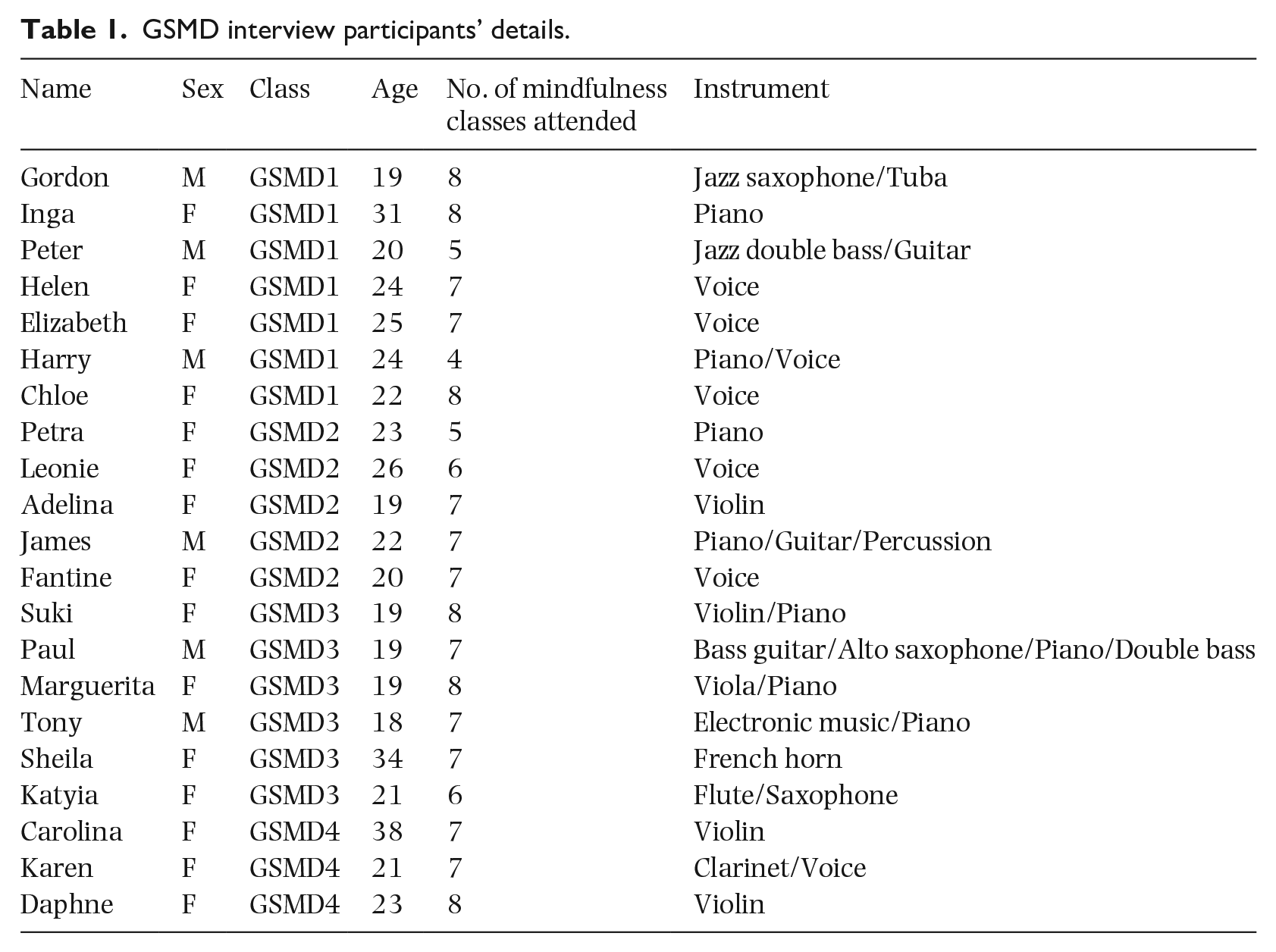
Twenty-five participants (male n=7, age range=18–38 years, mean age=23, SD=4.89) were recruited from music students at the GSMD and completed pre- and post-questionnaires. Twenty-one students also took part in the interview study (see Table 1 for participants’ demographic details, instruments played and number of mindfulness classes attended). All names are pseudonyms.
GSMD interview participants’ details.
Design
The mixed-methods design consisted of the collection of quantitative data followed by qualitative data (see Figure 1). The quantitative data was collected pre- and post-intervention to measure levels of mindfulness. The qualitative data was collected post-intervention to discover any effects of learning mindfulness on participants’ lives as musicians. The rationale was that the quantitative data provides evidence of levels of mindfulness and the qualitative data explores the effects of mindfulness on behaviour and experience.
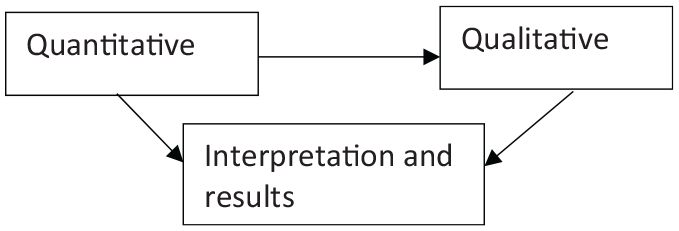
Study design.
Materials
Mindfulness was measured using the Five Facet Mindfulness Questionnaire (FFMQ) and a bespoke Mindfulness for Musicians questionnaire. The FFMQ is a 39-item measure, 5-point Likert scale and was developed using a factor analysis of five mindfulness questionnaires (Baer et al., 2006). It measures mindfulness using five facets: Observe, Describe, Act with Awareness, Non-Judge, and Non-React. The Observe facet assesses the moment-by-moment awareness of internal and external stimuli and is measured using statements such as “I notice the smells and aromas of things.” Describe assesses noting or mental labelling of stimuli with statements such as “I’m good at finding words to describe my feelings.” Act with Awareness measures the ability to attend to current action, rather than behaving automatically or absentmindedly. A representative statement in the FFMQ is “I am easily distracted.” The Non-React facet assesses reaction to inner experience with statements such as “I watch my feelings without getting lost in them.” Finally, Non-Judge measures judgements of inner experience. An example statement from the FFMQ is “I disapprove of myself when I have irrational ideas.”
The FFMQ is described as popular (Andrei et al., 2016) and comprehensive (Bergomi et al., 2013), and is rated as having high construct validity and internal consistency (Park et al., 2013). Christopher et al. (2012) explored the psychometric properties of the FFMQ with non-clinical participants using tests of reliability and validity and a confirmatory factor analysis (CFA). Internal consistency was good, ranging from α=0.84 (Observe) to α=0.93 (Non-Judge).
The Mindfulness for Musicians (MfM) is a new 15-item measure designed in response to a previous study (Czajkowski & Greasley, 2015) in which participants discussed musically related experiences that were not registered by the FFMQ, but which the authors thought were important to capture. The MfM mindfulness measure was designed using the same five-facet model designed by Baer et al. (2006). Three statements were devised for each facet, but unlike the more general FFMQ, each of these statements was rooted in a primary area of student musicians’ experience: lessons, practice, and performance. An example of a statement for the Observe facet referring to body awareness is “When learning technique in lessons, I notice new tiny muscular sensations or small changes in sound production as they happen.” An example of a Describe statement is “It is difficult to describe clearly in words how I feel before I go on stage.” The FFMQ Act with Awareness statements include the term “Distraction,” used as follows in the MfM statement for this facet: “I’m easily distracted when practising my voice or instrument.” An example of a Non-React statement is “If something unexpected happens when I am on stage, I notice it without reacting and easily carry on performing” and an example of a Non-Judge statement, to measure levels of self-criticism, is “I’m always criticising myself in singing or instrumental lessons.” Czajkowski (2018) reports a full overview of the development of the MfM.
Procedure
Ethical approval was obtained from the University of Leeds and GSMD. The first researcher (based at the University of Leeds) informed potential participants about the study at the initial recruitment session for the mindfulness course. Those who chose to take the course were invited by the course leader (based at GSMD) to take part in the study. If they agreed, they completed the consent forms and pre-intervention questionnaires. They then took the Mindfulness for Performing Arts Students course (MfPAS). This is an 8-week MBSR/MBCT course in which the psycho-education is tailored to music students and their experiences, albeit with no day retreat because of students’ timetables and other commitments. This twice-yearly course is run by a member of the GSMD teaching staff who is also a trained MBSR teacher. Participants pay a reduced fee to take part in the weekly group sessions (lasting 2–2.5 hours) and agree to do 40–45 minutes’ mindfulness practice a day. After the final session, participants were asked to complete the post-intervention questionnaire and invited to an interview. Those who agreed to be interviewed spoke to the researcher mainly by phone or Skype. Semi-structured interviews took between 30 and 40 minutes. The interview questions asked if participants had experienced effects of learning mindfulness on daily life in lessons, practice sessions, and performance. The study ran over two years and covered four iterations of the MfPAS course.
Data analysis
Quantitative
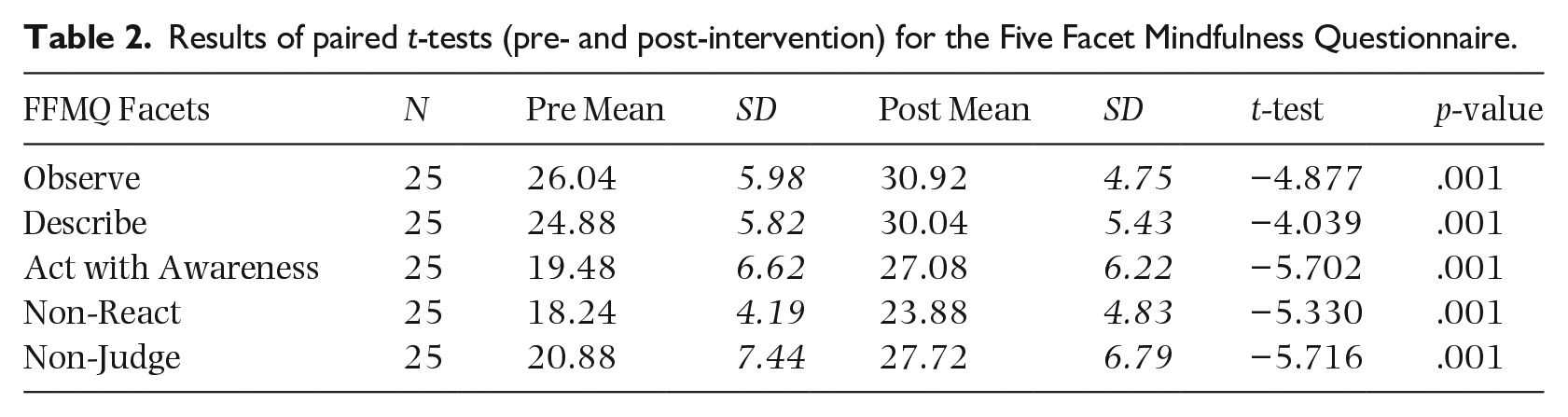
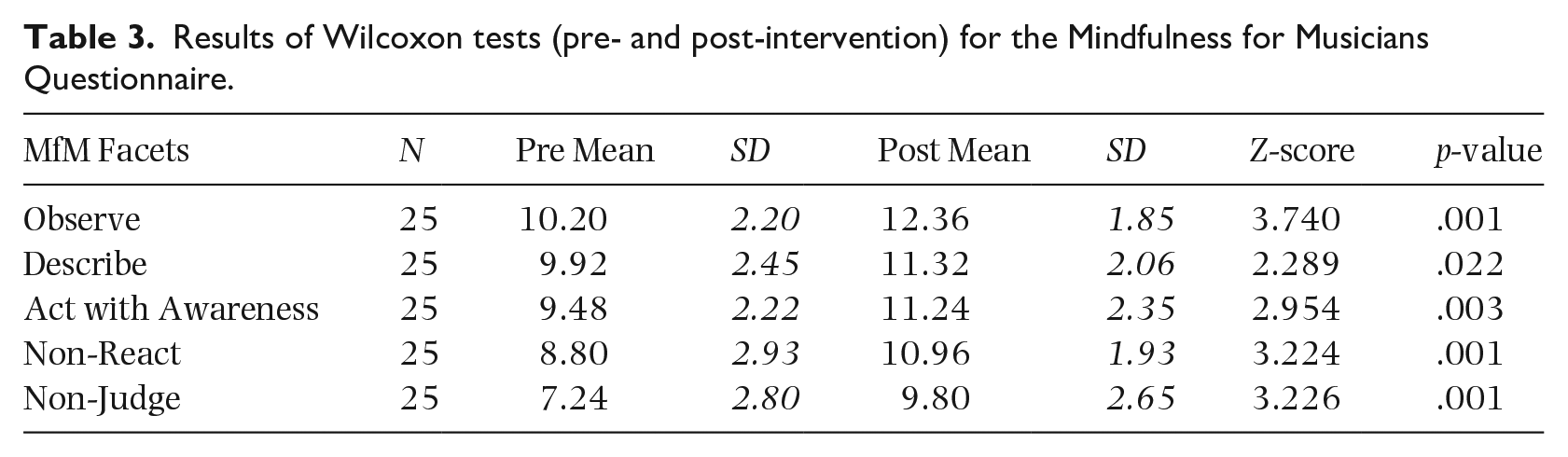
Reliability analyses were run on FFMQ and MfM in the facets of Observe, Describe, Act with Awareness, Non-React, and Non-Judge for both the pre- and post-intervention scores from the 25 participants. Cronbach’s alpha results for the FFMQ were generally good (Observe, α=0.851; Describe, α=0.883; Act with Awareness, α=0.920; Non-React, α=0.711; Non-Judge, α=0.919), and in line with the results of other studies (e.g., Baer et al., 2006). The MfM had lower levels of reliability (Observe α=0.338; Describe α=0.788; Act with Awareness, α=0.487; Non-React, α=0.683; Non-Judge, α=0.491). This could be due to the fact that the MfM is a new, exploratory, and unvalidated measure with fewer items per facet that needs further testing with larger samples. The FFMQ, however, is a standardised measure: protocols were followed and results were reported as separate facets in the same way as previous research (Baer et al., 2006; Farnsworth-Grodd & Cameron, 2013; Steyn et al., 2016). The MfM was based on the FFMQ and the same protocols were followed. Pre- and post-intervention scores were compared. Data were tested for normality and homogeneity of variance and all assumptions were met for the FFMQ, so paired t-tests were used. As the MfM had lower construct validity and only the facets of Describe and Non-Judge were normally distributed, non-parametric related-samples Wilcoxon tests were run on all facets for this measure.
Qualitative
Each interview was transcribed verbatim and analysed following the principles of thematic analysis (Braun & Clarke, 2006, 2013). The six-step process involved transcription followed by several readings of the transcribed data. Transcriptions were then fully coded in NVivo Software and codes were subsequently clustered to create themes. Provisional thematic maps were created and these themes were tested against the data, defined and named, and revised where necessary. The final report was generated by choosing suitable data to illustrate each theme, which was then set within the context of the research question and previous literature. The number of participants contributing to each theme was noted so that the prevalence of each theme could be identified. A limitation of thematic analysis is that individual accounts can be lost when datasets are large, so care was taken to ensure that participants’ voices remain heard in the narrative (Braun & Clark, 2013). Pseudonyms were used throughout to preserve anonymity.
In the next section, we report the results of the quantitative and qualitative analysis as follows: first, students’ mindfulness scores before and after the intervention as measured by the FFMQ and MfM, and second, the themes and sub-themes identified in the thematic analysis, which includes thematic diagrams and numerical indications of prevalence of the themes. In the second section, where appropriate, we refer to the quantitative scores on the measures to contextualise the qualitative findings.
Results
Pre- and post-mindfulness intervention scores
All the post-intervention facet scores on the FFMQ (see Table 2) and MfM (see Table 3) questionnaires were significantly higher than the pre-intervention scores, indicating that participants had become more mindful.
Results of paired t-tests (pre- and post-intervention) for the Five Facet Mindfulness Questionnaire.
Results of Wilcoxon tests (pre- and post-intervention) for the Mindfulness for Musicians Questionnaire.
Qualitative themes
The four overarching themes were general effects of learning mindfulness on body awareness and technical learning, effects specific to instrumental lessons, effects on instrumental solo practice and ensemble rehearsals, and effects on aspects of performance. These are described in detail in the following sub-sections.
General effects of mindfulness on body awareness and instrumental technique
Twenty of the 21 participants interviewed reported enhanced body awareness in lessons, practices, and performances as a result of doing the mindfulness course. They became aware of specific body parts, tension and posture, and effects on the sound they produced when playing or singing (see Figure 2).
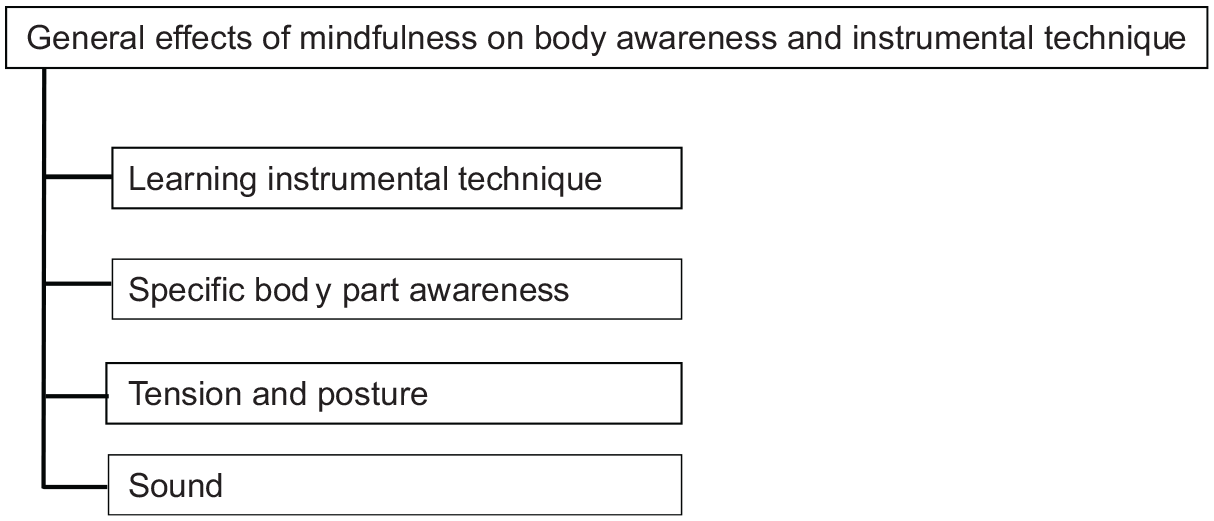
General effects of learning mindfulness on body awareness and instrumental technique.
Learning instrumental technique
Eight participants highlighted the Body Scan technique as being particularly helpful in developing an awareness of their bodies when learning and maintaining technique. Five participants used mindful body awareness to bring themselves out of autopilot playing. For example, Sheila reported breaking off from playing technical scales and thinking, “Am I doing or am I being?” and then continued by being more mindful about how she was focusing on the scale (either airflow or fingering etc.). Six participants found that being mindful when learning technique helped them to know “the feeling when you get it right” (Fantine) or “wrong” (Gordon).
Specific body part awareness
Participants described feeling more aware of specific parts of their body. This corresponds to significant increases in their mean scores for the FFMQ and MfM Observe facets. Wind player participants reported heightened awareness of their embouchure, breathing mechanisms and support, and fingers, legs, arms, and back. Pianists were aware of fingers, sides, back and chest, hands and wrists. String players described being more aware of hands, arms, and shoulders. Specific areas noted by singer participants were shoulders, tongues, breathing mechanisms, back of mouth, soft palate and cheekbones.
The ability to describe sensations in the body is measured by the Describe facet and the significant increases in scores on this facet suggests that participants may have developed this skill through participation in the mindfulness course. For example, Helen said, “I think now when I’m like speaking with my teacher about my support or breathing or other aspects of my technique it is easier to communicate exactly where I’m feeling things.”
Tension and posture
High levels of playing-related muscle tension were found to be a significant predictor of outcome indices of pain and symptom severity and frequency in 240 professional musicians from Sydney in a study by Davies and Mangion (2002). Elliott (2010) suggests that mindfulness could help singers be aware of their bad habits and unlearn them. Eleven participants specifically noted the effect that learning mindfulness had on playing- or singing-related tension. For example, Peter found that it was hard to play his double bass with tense shoulders, noting that he “never realised how ridiculously tense my body [is]” and how being more mindful had made a positive improvement. Four participants all reported improvements in posture; for example, Tony, who spent most of the day in a chair composing, found that his posture had improved by “listening to what the body is saying.” This type of body awareness during hours of playing is essential for maintaining musicians’ health (Ginsborg et al., 2012) and is enhanced, in these cases, by mindfulness training.
Sound
In a similar way to string participants in a study exploring the effects of increased body awareness on sound (Dora et al., 2019), five participants described how enhanced body awareness and reducing tension also seemed to have an effect on sound and tone quality. For example, Sheila used the Body Scan to help her be aware of maintaining good support and breathing and reported, “The sound changes hugely. It is just much more open, the phrasing is better because it is much more evened out, more open sound that doesn’t sound as pinched and just lends itself better to being more musical.” This tonal change, engendered by a mindful approach to instrumental playing, was also observed in the study by Langer et al. (2009), where most listeners preferred the orchestra’s “mindful” performance.
Instrumental lessons
Participants reported several effects of being more mindful in instrumental lessons, such as changes in mindset and improved relationships with teachers (see Figure 3).
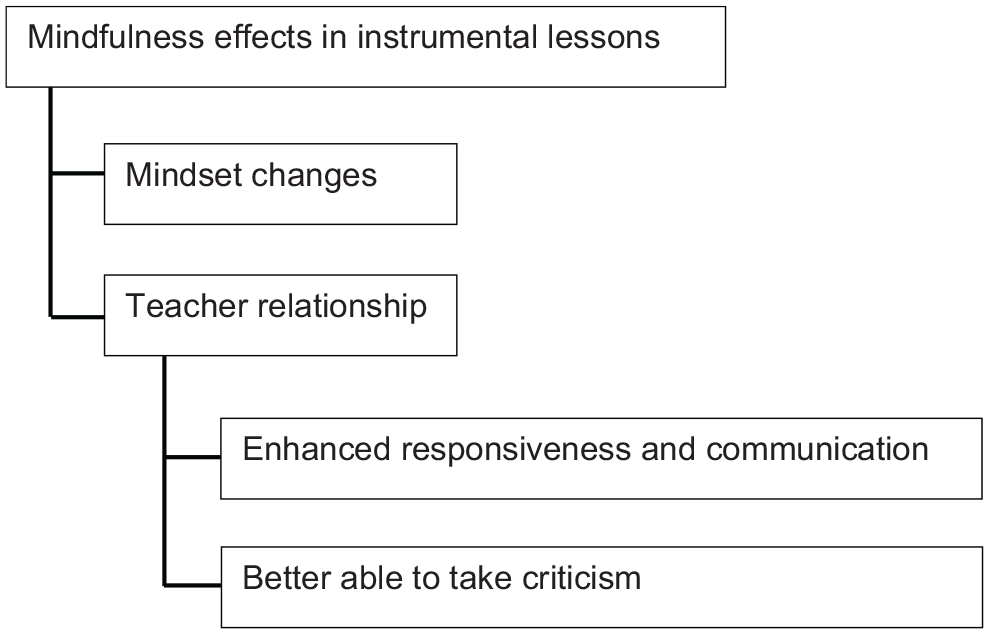
Mindfulness effects in instrumental lessons.
Mindset changes
Participants described changes of mindset in lessons due to learning mindfulness: more awareness, greater concentration, less mind wandering and distraction, reductions in self-criticism, and less worry and stress. For example, Harry said he felt “definitely more aware, more spacious, mindfulist [sic]” and Leonie said she was “less ‘Oh, I wish I could do that, I wish it would be a perfect lesson today.’” Katyia said that she had been “realising the amount of stress I had for nothing, just like changing my mindset in general, I feel like the lessons were a lot different.” However, six participants mentioned no effect and, of these, four felt that they had always been focused or responsive in lessons. Two participants, who reported themselves as perfectionists, described developing self-compassion on making errors in lessons. This finding corresponds to significant increases in mean scores for the FFMQ and MfM Non-Judge facets.
Teacher relationship
Participants reported a variety of effects of mindfulness on relationships with their teachers such as enhanced communication and responsiveness.
Enhanced responsiveness and communication
Four participants found that the mindfulness course had helped them to concentrate, accept, or be ready to “hear” the teacher better and listen to what was being said. Karen, for example, realised that she had been focusing too much on what the teacher was saying and was now focused more on sensations that she experienced in lessons such as extraneous tension and sensory effects of new technique, which improved her sound; this was subsequently remarked on by her teacher.
Four participants found that learning to be more mindful helped them to understand better something the teacher had explained or demonstrated. For example, Marguerita reported, “I feel I’m able to observe better what he does and to apply it.” Harry’s teacher had suggested that he did “mental instrumental practice,” a skill that may be particularly useful for developing musicians (cf. Connolly & Williamon, 2004). Harry had previously found this type of practice too hard due to feeling distracted but discovered that focused mindfulness exercises helped him to develop this skill.
Better able to take criticism
Participants in a study by Atlas et al. (2004) found that musicians who were more affected by teacher criticism improved less, found it difficult to communicate with the teacher and experienced reduced enjoyment and confidence. Five participants in the current study reported depending heavily on their self-perception of their teacher’s approval or esteem. Eight participants said that they found it easier to deal with criticism from their teachers as a result of doing the mindfulness course. This finding corresponds to significant increases in their mean scores for the FFMQ and MfM Non-React facets. For example, James said “Yes, this is something I’ve got better at definitely. . . one of the teachers being critical was something I definitely had to come to terms with.”
Solo instrumental practice and ensemble rehearsals
Participants talked about how the mindfulness course had affected their solo instrumental practice and group rehearsals (see Figure 4). They noted themselves being more efficient, and being better able to deal with problems during individual practice sessions and group rehearsals. They reported changes in length of practice time, a connection between mindful and musical concepts, and heightened creativity.
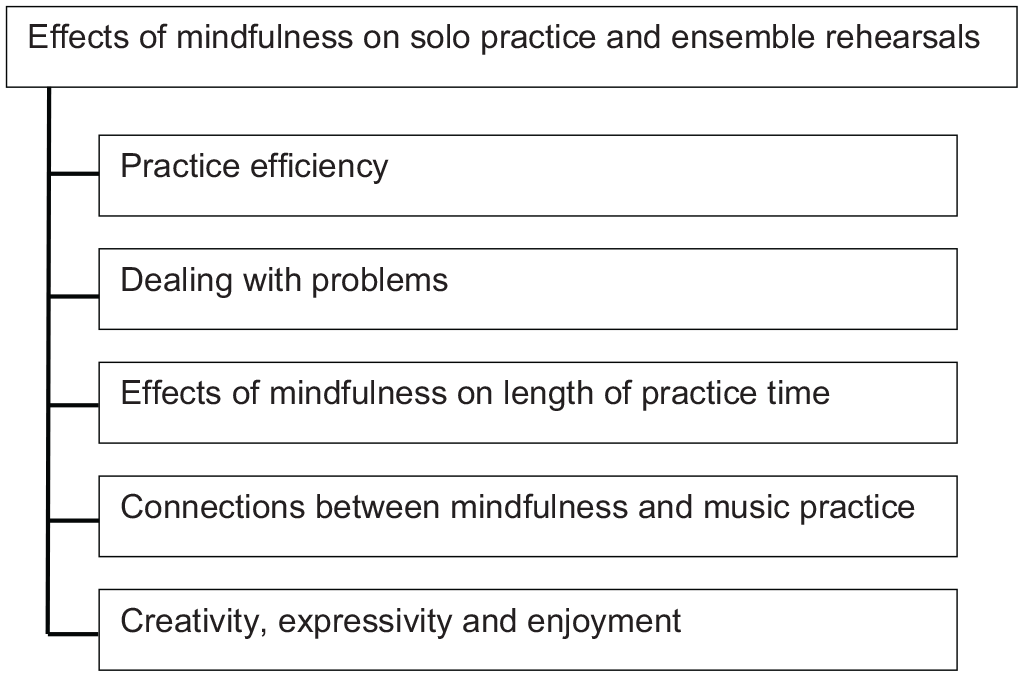
Mindfulness effects in instrumental solo practice sessions.
Practice efficiency
Ten of the participants reported doing mindfulness exercises directly before some, or all, of their practice sessions. The most commonly reported effect of mindfulness on both individual instrumental practice and ensemble rehearsal was described using a range of synonyms: better focus, being more conscious, in the zone, improved concentration and less mind wandering. These findings correspond to significant increases in their mean scores for the FFMQ and MfM Act with Awareness facets. For example, James reminded himself of something that the mindfulness trainer had told him might help when he got distracted:
One of them is “back to the breath.” It is so applicable to everything I do in my life, whether it is a difficult situation, or you play all the wrong notes or something. . . it is just brilliant. And then there is “escorting your mind back to the task in hand.” They are the two buzz phrases that stuck with me the most and I will probably use them as a way into practising on a daily basis.
Jørgensen’s (2000) study shows that students felt training in how to practise had been neglected and it may be the case that learning mindfulness could support the learning of more effective practice methods.
Thirteen participants described more efficient solo practice and two felt that being more mindful improved ensemble rehearsal efficiency. Four participants felt that mindfulness helped them learn faster, and other individuals mentioned that they achieved more, practice was more productive, and more fruitful. As Adelina said, “it is helpful to practise well, better and be more focused and achieve some results in a faster way.” There appeared to be a link for participants between being able to develop mindfully aware and focused practices, on the one hand, and performance outcomes, on the other, providing support for the seminal work of Ericsson et al. (1993) who highlighted the importance of focused and deliberate practice in the acquisition of expert levels of performance.
Dealing with problems
While learning to be more mindful, 11 participants noted becoming aware when things were not going well in practice sessions. Four participants said difficult passages or negative thoughts could demoralise them, four participants often procrastinated, and seven admitted they might stop practising altogether. Steinfeld and Brewer (2015) suggest that learning mindfulness skills could help with psychological problems such as practice avoidance, only practising that which is already mastered or an unwillingness for self-scrutiny during music practice, and participants echoed these assertions. Instead of stopping when practice became difficult, seven of them tried doing some mindfulness exercises instead. They found that doing the exercises helped them to realise that thoughts are just thoughts, how to put them into perspective, learn how problems can be viewed more dispassionately, and carry on in a more positive mindset. This finding corresponds with significant increases in mean scores for the FFMQ and MfM Observe, Act with Awareness, and Non-Judge facets: participants described becoming more observant of their emotions, acting on them with awareness, and subsequently judging themselves less harshly, enabling them to continue to practise. For example, Elizabeth said:
If I felt that I wasn’t in a kind of mental state, or physical state where the practice was working, it also gave me permission to walk away for a bit but not to throw all my toys out the pram and go back maybe 5 minutes later having done a meditation.
Five participants said that their mindful work on thoughts and emotions helped them worry less about making mistakes or others’ opinions. This corresponds with significant increases in mean scores for the FFMQ and MfM Non-React facet, which represent improved non-reactivity to inner experiences by noting distressing feelings, for example, and letting them go. Seven participants described feeling more confident about their own ability, and about voicing their musical opinions. Daphne said, “It is in ensemble playing where I can comment on music, I can say ‘actually I rather prefer this, actually this doesn’t work.’ That confidence has come up a bit more.” James and Marguerita discovered that learning mindfulness helped them to cope with confrontational situations in rehearsals.
Effects of mindfulness on practice time
Five participants found that they practised for longer due to being in a different mindset and more focused. Helen said, “Now, because I’m in the right frame of mind I’m like ‘Oh, I can do this, and I can do this, and then I could do this’ and actually they’ve got longer.” However, five other participants reported practising for a shorter time due to less distraction and increased efficiency; for example, Paul said “Time could very easily go from 10 minutes into 2 hours. . . just been noodling. . . nothing practised but now I’ll practise just for 30 minutes [with] infinitely more done.”
Connections between mindfulness and music practice
Five participants found a close connection between their mindful practice and their instrumental practice – a connection suggested by Steinfeld and Brewer (2015) who propose that mindfulness practice could serve as a useful model for music practice. For example, Marguerita said:
So I say I’m going to do a 40 mins practice on one piece, concentrating on ONE thing. Like we do in mindfulness. So, we do our 40 mins sitting meditation focusing on the breath, so I do the same thing with my practice.
Four participants broke their practice into smaller sections; for example, Karen said, “I’m much better at playing for a short period of time and then putting the instrument down and resetting, refocusing on what I’m trying to achieve and then picking up the instrument and carrying on.”
Creativity, expressivity, and enjoyment
To improve instrumental practice, Jørgensen (2004) advises students to try to introduce new elements into their practice. Some participants found that the mindfulness exercises encouraged them to be more creative in their music practice. For example, Fantine said:
What I found is “beginner’s eyes”. . . in practice, every day is different. Your voice can be different every single day. . . because if I’m seeing it with new eyes, I try to, every time, then, I don’t know, you can bring something new. You’ll realise things you didn’t see before. Even markings or dynamics. . . you can be more creative and explore so much more.
In ensemble rehearsals, being more mindful was reported as helping listening skills and was said by some participants to help them to be more creative. Gordon felt that he played more freely and his improvisation in groups was improved after doing the mindfulness course. Adelina described using more expression now in rehearsals and Fantine found that she and her ensemble were more creative saying “You just bounce off each other.”
Four participants found that the mindfulness training had increased their enjoyment of practice. For example, Katyia said “It made me enjoy it so much more because basically I like recently just sorted out a structure that I want to be practising in. It was definitely connected to the whole mindfulness course.” Marguerita said, “I feel I’ve achieved more when I’ve practised. . . I feel more satisfied when I’ve finished practising.” Every participant on the course confirmed that they would recommend the MfPAS course to other student musicians.
Performance themes
Participants reported that learning mindfulness had had an effect on them as performers. As expected, they spoke about MPA but also reported effects in other areas of performance such as changes in time perception and enhanced creativity on stage (see Figure 5).
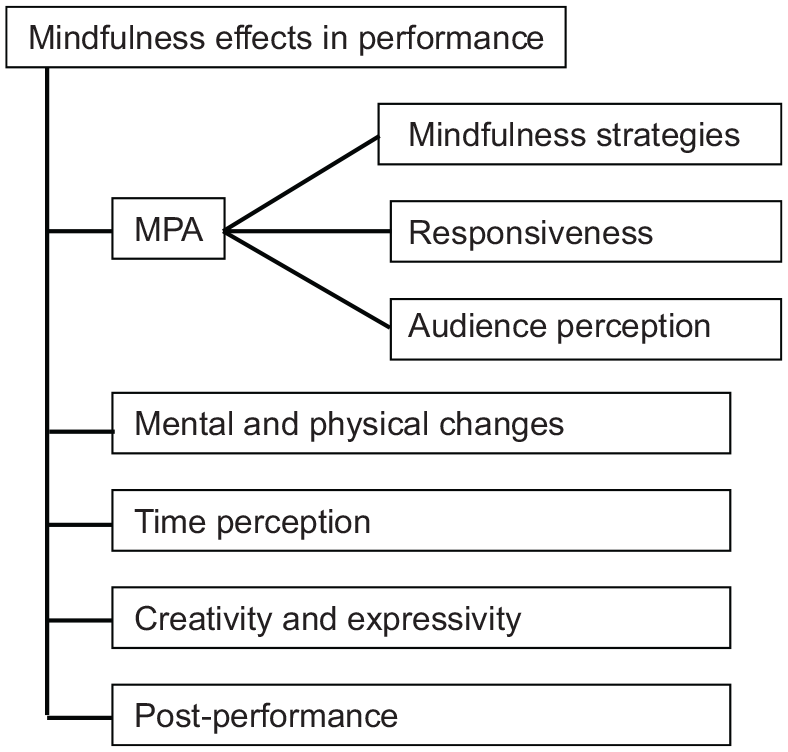
Mindfulness effects in performance.
Music performance anxiety
It was expected that mindfulness would have a positive effect on those who reported high levels of MPA. The clinical literature demonstrates many years of research on the positive effects of mindfulness on Social Anxiety Disorder (Goldin et al., 2017) under which MPA is classified when it becomes a clinical diagnosed disorder (American Psychiatric Association, 2013). However, there was a mixture of experiences among the participants regarding levels of MPA: some reported high levels and talked in great detail about the positive effects of mindfulness on MPA, while other performers were less concerned with symptoms of MPA. Nine participants in the current study described experiencing high levels of MPA either pre-performance or on stage. Gordon spoke little about performance anxiety during his interview, although his pre- to post-intervention MfM score on three questions that covered this topic showed the largest improvement of all participants. Seven others mentioned having nerves or anxiety but said that it did not affect them too badly and four participants had hardly any performance nerves at all.
MPA was frequently raised during interviews. Participants reported physical symptoms of MPA such as shaking, sickness, faster or reduced breathing, sweating and cold hands, racing heartbeat, dry mouth, and excessive tension. Mental effects were stress and anxiety, catastrophising, and having bad thoughts. Kenny (2011) described catastrophising and attention binding (a preoccupation or involuntary focus on threat and danger) as the two most regular and worst “cognitive distortions” in MPA (p. 123).
Mindfulness strategies
The most popular pre-performance mindfulness practice, reported by eight participants, was breathing and three participants also used it onstage when they were tense. After practising mindfulness, reductions in pre-performance MPA symptoms were reported such as calmer breathing, less heart pounding and clammy hands, and Petra stopped being sick from nerves, saying “I know it is getting better but it is still taking its time.” The results of this study echo those of previous research in which it has been shown that higher levels of mindfulness correlate with lower levels of MPA (Diaz, 2018; Farnsworth-Grodd & Cameron, 2013), and mindfulness interventions have also been shown to have significant and positive effects on student musicians with MPA symptoms (Hribar, 2012; Steyn et al., 2016). However, adding to the findings of these predominantly quantitative studies, the interview participants in the current study described how and why these changes happened for them.
Responsiveness
Mindfulness teaches one to respond to events rather than to react mindlessly, a skill that is measured by the FFMQ and MfM Non-React facet. Once aware in the present moment, one can choose whether or not to respond and what response is best. The significant increase in participants’ mean scores for Non-React was reflected in the interview data. Ten participants reported that they were able to respond more effectively to situations while on stage. For example, Fantine said, “I used to get really tingly hands and I’d begin to shake, and. . . my mind will wander. . . but now that I’m more aware, I can get through that little dip without it happening.”
The FFMQ and MfM facet Act with Awareness measures the ability to attend to current actions rather than behave on autopilot. Participants’ mean scores increased significantly from pre- to post-intervention, supporting the results of Farnsworth-Grodd and Cameron’s (2013) survey of dispositional mindfulness and MPA, which found that lower scores for MPA correlated with higher scores for Act with Awareness on the FFMQ. However, the qualitative findings of the current study shed more light on practical outcomes. Several participants reported acting in the moment by refocusing on playing, communicating, expressing, and being in control. For example, Leonie noted, “During the exam I could actually have much more control of what I wanted to do with my voice. . . I never really had that before.” Sheila and Marguerita observed their technical inadequacies while performing and said that they were able to adjust themselves physically in the moment.
Audience perception
Being aware of other people listening can affect arousal levels and disturb musicians’ attention and mental balance when performing (Davidson, 2002). Two thirds of participants were apprehensive about what audiences might think, and that they might notice mistakes or “sit in judgment.” Carolina felt that her mind was unclear on stage, leading Carolina to feel “afraid to be afraid.” The worst thing she found with MPA was that “I can’t feel the music.” Participants noted how learning mindfulness had helped them to deal with performing in front of audiences. From the psycho-educational discussions held during the mindfulness course, participants learned that they imagined and created their own thoughts about what the audience was thinking whereas, in reality, it is difficult to know another person’s thoughts unless they are asked about them directly. As a result, participants described reassessing their perceptions of the audience: four worried less about the audience’s imagined perceptions. Leonie said that she was able to cope better when her teacher turned up unexpectedly and Petra, when asked whether she had found any effect of doing mindfulness on her instrumental lessons, said that “[actually] things that were a problem, like performing, the audiences and stuff, is where it is affected me most.”
Mental and physical changes
On the basis of the literature it was expected that those with lower self-reported levels of MPA might not report any effects of learning mindfulness on performance; however, this was not the case. In addition, many participants whose previous experiences of performing had been clouded by serious MPA began to describe the positive effects of mindfulness on performance in similar ways to those who reported lower levels of MPA, once they were dealing more effectively with the performance situation. In fact, nearly every participant mentioned the positive effects of mindfulness on performance in terms of improved mental focus and physical awareness on stage, the perception that time was slower, an increase in musical present-moment creativity, and more positive feelings after the performance.
Fourteen participants said that they felt more focused, aware, in the moment, conscious or concentrated on stage as a result of learning mindfulness. This corresponds with the increase in mean scores for the FFMQ and MfM Observe facet but the experience of Helen, for example, provided context from the interview data:
But this time was so in the moment and I was like, I can feel myself standing there, I can feel myself there grounded and I was, it made me so much more aware of what I was singing, my text, my characterisation as well because I was fully there, my mind wasn’t elsewhere.
Participants also experienced changes in thought processes that they observed from being more mindful on stage. For example, Adelina said, “I could be inside but not too much so I could monitor a bit.” Peter felt that it was permissible now to make mistakes and Leonie said that she worried less when the pianist made mistakes.
Participants also described having more positive feelings on stage. Ten participants reported feeling calmer and more relaxed whilst performing after mindfulness training. Suki said that doing pre-performance breathing helped her calm her violin bow arm down: “it is more like relaxed in that way, natural. . . I can realise and then control it.” Music performance at student and professional levels can lead to significant physical issues and mental problems (Araújo et al., 2017; Ginsborg et al., 2012; Sousa et al., 2016). Therefore, learning mindfulness could have positive effects on those who need to maintain high levels of mental control and physical technique in demanding music education settings and in the music profession.
Time perception
It has been noted that being more in the present moment can change the sensation of time passing (Kabat-Zinn, 2016) where time has been reported as seeming to pass more slowly after mindfulness meditation (Kramer et al., 2013). Performances, like stressful experiences, can be so full of sensory demands that the working memory capacity is often flooded, which can result in temporal distortion. When musicians perform mindlessly on autopilot, the performance can seem to be a “blur,” or go by very quickly, resulting in their being often unable to remember the performance and being dissatisfied. This can be due to MPA where, for example, Fantine reported thinking “I wish I could do it again.” In the interviews, nearly half the participants noted that they were able to remember more of what happened on stage when engaging in mindful performance. Five participants noticed the time perception of mindful performances as slower in comparison with their normal experience, but Carolina felt that her performances were now proceeding at the right time. However, James mentioned that even when mindful the performance can still seem to be a “bit of a blur.” There are similarities between mindfulness and flow, such as subjective temporal distortion. However, flow is primarily the serendipitous balance between the challenge of an activity and a participant’s skills (cf. Nakamura & Csikszentmihalyi, 2002), whereas being mindful is a chosen state of being and could encourage the state of flow (Diaz, 2011). For example, Adelina described finding herself in the “flow of the music” whilst being more mindful on stage which she described as a “really beautiful experience.” However, being in a flow state is not necessarily the same as being mindful.
Creativity and expressivity
Oyan (2006) had suggested in his theoretical paper that mindfulness might enhance creativity in performance, and Diaz (2011), investigating the effects of mindfulness on musical listening, had suggested possible unknown benefits of mindfulness on musical creativity. These theories gained some support from the participants in the current study and may also suggest a mechanism by which mindfulness could help to enhance creativity and expressivity on stage. Three participants who reported being more mindfully aware on stage also reported slower time perception. They described being able to use the extra time and clarity of mind they perceived in order, as Fantine said, to “bring new things to the performance.” Adelina said, “I had the time to think ‘Now you go there’ and it was fine. . . ‘This sound I could do a bit more like that’ and yeah it was really better.” Participants reported playing to a greater extent with expressive musical elements such as dynamics, articulation, and rubato when “in the moment” on stage. Gordon said that his new mindful performance state “changes it [his playing] massively” and a friend who knew his style mentioned, “‘You sound like a totally different player!’”
Post-performance
Three participants reported having more self-kindness and being less judgemental post-performance, an aspect measured by the Non-Judge facet in the FFMQ and MfM. The significant increases in mean scores for this facet correspond with the interview data; for example, Katyia reported, “I didn’t hate myself afterward!”
After being more mindful on stage, five participants reported feeling more positive than usual. For example, Helen said, “I had so much fun. . . it is just I feel like a different singer.” Enjoyment during performance was mentioned by two participants in an intervention study involving mindfulness for music students by Hribar (2012), although no explanation or suggestion was given as to why this might be so. The findings of the current study, however, suggest a cascade effect: being in the present moment led participants to feeling more in control of their performance both physically and mentally, and they experienced fewer symptoms of MPA or accepted the sensations more readily. Some also found time had slowed down which allowed them to be more creative and gave them time to become more expressive, which engendered, in turn, a feeling of enjoyment and satisfaction. For student performers who wish to enjoy performing more, and maybe even for those professionals who have become bored (Parasuraman & Purohit, 2000), learning and applying mindfulness could have a positive effect.
Conclusion
This study explored the effects of teaching 8-week MBSR/MBCT courses adapted for conservatoire musician students over a period of two years. The study was run with 25 participants from the GSMD who completed two pre- and post-mindfulness measures. The results suggest that all participants’ levels of mindfulness increased over the course of the intervention. Twenty-one participants also took part in post-intervention semi-structured interviews and, although not all participants reported all the benefits that were mentioned, their comments were overwhelmingly positive and suggest that teaching a mindfulness course to music students can benefit them as both educational learners and proto-performers.
A number of limitations of the current study must be acknowledged. First, all participants selected themselves to take part in the study, which could mean that that they were invested in the success of the intervention. However, a strength was that the University of Leeds-based researcher was unconnected to the GSMD and completely unknown to the participants, which likely reduced social desirability bias in participants’ responses. Also, participants were diverse in their age, experience, and the instrument they studied. A second limitation is that there may have been other factors that influenced the results, such as concurrent participation in yoga or Alexander Technique classes as well as the mindfulness classes. This is an aspect which could be explored more closely in a subsequent study. A third limitation was the lack of a control group, which limited the researchers’ ability to comment on whether increases in mindfulness in these musicians might have occurred without the intervention. However, the use of the well-respected FFMQ pre- and post-intervention, combined with the targeted bespoke MfM questionnaire, enables us to be confident that participants’ levels of mindfulness improved as a result of the intervention, while the qualitative data indicates that participants themselves felt that it had positive effects on their music making.
Future researchers could build on these findings by investigating the specific effects of mindfulness on particular types of musician such as singers or pianists, perhaps by carrying out a longitudinal study in which teachers were blind to whether their students were taking a mindfulness course. It would also be useful to validate the MfM questionnaire to provide future researchers with a tool for measuring levels of mindfulness specifically in musicians. As most research on mindfulness and music has been carried out in relation to MPA, future researchers could use the qualitative data reported here as a basis for designing a rigorous randomised controlled intervention study utilising measures of generalised anxiety disorder or MPA. Despite the extensive literature on performance-related physical and mental issues, many professional musicians still suffer from such issues (Gembris et al., 2018), so it could be useful to explore the effects of teaching mindfulness on professional musicians’ health and music making over time. Children begin to develop physical and mental habits as soon as they start learning to play instruments (Ranelli, et al., 2011), therefore it would also be worth teaching mindfulness to instrumental teachers and studying the effects on their teaching of beginners and students in the early stages of their learning.
The evidence from this exploratory study at the GSMD supports the recommendation that mindfulness courses should be made available to students at university music departments and music conservatoires in the UK and further afield. It may be possible for institutions to subsidise sessions delivered by a musician-mindfulness expert such as that employed at the GSMD, or to deliver mindfulness training via distance or online teaching, which has been shown to improve mental health in clinical and non-clinical samples (cf. Spijkerman et al., 2016). Mindfulness skills enhance the whole musician and should be made readily available to all music students, offering them support for their skills development and their health during their studies, and in preparation for their future professional lives.
Footnotes
Declaration of conflicting interests
The authors declared no potential conflicts of interest with respect to the research, authorship, and/or publication of this article.
Funding
The authors received no financial support for the research, authorship, and/or publication of this article.
