




Abstract
During a live concert, the mind can wander to unrelated thoughts such as personal concerns or past memories or to vivid images that are inspired by the music. This is an omnipresent phenomenon commonly referred to as mind-wandering. Psychological research on mind-wandering has explored its main characteristics, such as frequency, phenomenology, and impact on mood, both in the laboratory and in daily life contexts. This study aimed to harness the ecological setting of a live music concert to examine the occurrence and content of mind-wandering, as well as visual mental imagery as a mode through which mind-wandering occurs, and its relationship with the concertgoers’ moods before and after the music event. A self-report questionnaire (n = 43) was used to collect data at two concerts of ambient music given as part of the CTM Festival. Findings suggest that mind-wandering occurs extensively in a concert environment. While mind-wandering episodes feature negative themes and moods—in the form of dark content of the visual mental imagery associated with the program’s musical tone—the concert environment still contributes to participants feeling more inspired afterward. Overall, this study points to the potential of live music contexts to stimulate a beneficial style of mind-wandering (i.e., one that leads to a positive impact on mood and imagery), and its findings are in line with those of previous research showing that live concerts lead to increased well-being of concertgoers. Implications for well-being and a call for more systematic research on this subject are discussed.
Music listening is known to afford a variety of emotions and internally oriented mental states, including mind-wandering and visual mental imagery (Juslin et al., 2008; Taruffi et al., 2017). In a live music setting, such as a concert, mind-wandering could be inspired not only by the auditory experience but also by additional external stimuli, such as visual information, creating a unique, multisensory experience. This makes the concert an ideal context for an ecological perspective on mind-wandering (i.e., one that takes the listener outside the laboratory). Since mind-wandering is an omnipresent phenomenon that is modulated by several factors including context and task characteristics, among others (Christoff et al., 2016; Kane et al., 2007; Smallwood & Schooler, 2015), we aim to investigate how the concert environment shapes mind-wandering and, vice versa, how mind-wandering shapes the experience of live music.
Mind-wandering
Mind-wandering is broadly defined as an intentional or unintentional shift of attention away from the external environment or a current task to an internally oriented, dynamic flow of thoughts and images (Christoff et al., 2016; Seli et al., 2018). Mind-wandering episodes can be modulated by characteristics of the ongoing task or activity (e.g., a boring lecture that gives the mind space to wander, or a novel task that requires focus and thus obstructs mind-wandering) and individual characteristics of the mind-wanderer (e.g., a propensity to get lost in thoughts) (Smallwood & Andrews-Hanna, 2013; Smallwood & Schooler, 2015). Recent conceptualizations of this mental phenomenon stress its dynamic (Christoff et al., 2016) and multidimensional (Seli et al., 2018) nature, with mind-wandering belonging to a family of heterogeneous mental experiences varying on a number of dimensions such as intentionality (mind-wandering can be spontaneous or deliberate) and task-relatedness (Seli et al., 2016, 2018). The latter perspective highlights the observation that mind-wandering episodes do not always completely shift away from external events, like a concert or a performed task, and recent researchers (e.g., Wang et al., 2017) have called for a more nuanced understanding of this mental phenomenon despite the traditional, yet restrictive, definitions of mind-wandering as “task-unrelated thought” or “stimulus-independent thought” (e.g., Smallwood et al., 2003). Shifting away from tasks, regardless of to what extent, often takes the form of visual mental images (Pearson, 2019). These can range from simple depictions to very detailed, vivid scenes in the “mind’s eye” by drawing on perceptual information from memory, or recombining previous information into unfamiliar images (Kosslyn et al., 2001). Such visual mental imagery can be characterized as a specific mode of mind-wandering—other modalities are inner speech and musical imagery such as earworms (Jakubowski et al., 2017)—and often occurs during listening to music (Küssner & Eerola, 2019; Taruffi et al., 2017). A related type of mental experience is daydreaming (Herbert, 2017). While the definition overlaps with mind-wandering in that both are formed by the individual’s own dynamic stream of consciousness, daydreams have a stronger visual mental imagery component. For example, Newby-Clark and Thavendran (2018) define daydreaming as “imagining events” and, according to Singer and Antrobus (1970) and Klinger (2009), such imaginary events do not need to be task-unrelated to be classified as daydreaming. In musical contexts, Herbert (2018) characterized daydreams as lived experiences of music marked by a fluctuating distributed attentional focus. According to her framework, musical daydreams involve a systemic interaction between the perceiver, affordances of music, and environment, and thus are linked to simultaneously distribute internally and externally focused attention.
Psychological research on mind-wandering has focused on the phenomenology of thought, showing that the most common thoughts that people experience while mind-wandering include self-relevant matter, future planning, and autobiographical memories (Andrews-Hanna et al., 2013; Konu et al., 2021; Smallwood & O’Connor, 2011). Research has also shown a strong relationship between the temporal focus of mind-wandering and mood (Ruby et al., 2013; Smallwood et al., 2009a, 2009b). Specifically, mind-wandering episodes associated with an unhappy mood tend to be past-related (Smallwood & O’Connor, 2011), more self-centered, and with a negative valence (Andrews-Hanna et al., 2013). Similarly, there is a link between frequent and negatively hued mind-wandering and self-reported symptoms of depression (Mar et al., 2012; Ruby et al., 2013), as well as neuroticism (Perkins et al., 2015; Robison et al., 2017). In the same way, mind-wandering occurs less when people are happier and engaged in activities that they prefer and can perform well (Kane et al., 2007).
Mind-wandering in musical contexts
More recently, the relationship between the frequency of mind-wandering, thought content, and emotion has been explored using music as a tool to afford emotion in the context of laboratory studies or online music listening tasks (Herff et al., 2021; Koelsch et al., 2019;Martarelli et al., 2016; Taruffi et al., 2017). Findings have shown that music can modulate mind-wandering via emotion. For example, sad (compared with happy) music is linked to enhanced mind-wandering and the engagement of the default mode network of the brain (Taruffi et al., 2017), which is known to underlie mind-wandering (e.g., Christoff et al., 2009). Moreover, the emotional tone of the music reflects on the content of mind-wandering (i.e., heroic music is associated with heroic thoughts; Koelsch et al., 2019), and music-evoked emotions can predict thought valence (Taruffi, 2021).
While previous work by Herbert (2016) examined music-related experiences arising from the interaction with inner mentation (including visual imagery) and aspects of the environment adopting an ecological perspective, the majority of studies specifically focused on mind-wandering (Koelsch et al., 2019; Martarelli et al., 2016; Taruffi et al., 2017) have not yet evaluated the impact of different listening settings and contexts. In particular, the relationship between a live concert and the attendees’ mind-wandering has been neglected, even though the concert environment provides a naturalistic setting that can increase the ecological validity of the findings. In a live concert, music may act as an “ignition point” (Seli et al., 2016, p. 688) for mind-wandering episodes, which could encompass thoughts that are completely unrelated to the music (e.g., thinking about dinner plans), but also visual daydreams (e.g., imaging a fantastic narrative) that follow the unfolding of the music. On the contrary, thoughts related to music would be more analytical (e.g., thinking about harmony, instrumentation, resolutions) or critical (e.g., liking a certain phrase or song or arrangement), and therefore would not belong to mind-wandering, but could be better defined as a type of goal-oriented cognition (Christoff et al., 2016).
This naturalistic approach to the study of mind-wandering may also lead to valuable insights into the connection between mind-wandering and mood regulation, and consequently mental health—an increasingly prominent concern in Western culture today (Cullen et al., 2020; Gopalkrishnan, 2018; Makita et al., 2020). In other words, a live music context, such as a concert or a festival, may provide the audience with a rich multisensory, affective, aesthetic, and social experience capable of stimulating positive and inspiring thoughts or daydreams, which in turn may enhance their mood. This assumption arises from studies exploring the role of daydreaming, which show it to have a positive effect on emotional well-being (Mar et al., 2012; McMillan et al., 2013; Singer, 1966). Research on the effect of music on daydreaming confirms a relationship between daydreaming and well-being, revealing that positive daydreams, including episodic memory and visual mental imagery, can relax the listener (Martarelli et al., 2016). Furthermore, research on live music has pointed to a number of beneficial outcomes for audience members, including positive effects on psychological and social well-being as well as mood (Lamont, 2011; Little et al., 2017; Packer & Ballantyne, 2010).
Aims of the study
We aimed to test four hypotheses as well as explore the occurrence, content, and visual imagery of mind-wandering episodes.
Because previous research has shown that mind-wandering occurs less when participants are engaged in preferred activities (e.g., Kane et al., 2007), it could be expected that, as listening to live music in a concert setting is generally associated with a positive experience, mind-wandering would be inhibited. However, the fact that music can trigger mind-wandering in the laboratory or during online music listening (e.g., Koelsch et al., 2019) suggests that people’s minds also wander during live concerts. We therefore hypothesized that extensive mind-wandering would be reported by concertgoers (as in previous studies; Koelsch et al., 2019; Martarelli et al., 2016; Taruffi et al., 2017), assuming our chosen music types and concert environments facilitate the phenomenon. This hypothesis was also supported by the literature on ecological modes of listening (Clarke, 2005; Herbert, 2012; Lee, 1933). For example, Clarke (2005) acknowledged the contribution of the listening environment to the process of heteronomous listening, whereby the listener may explore a potential variety of connected domains such as socio-cultural associations, personal memories, unresolved problems, and multimodal perceptions, as opposed to the process of autonomous listening in which the music is the sole focus of attention.
Visual mental imagery was expected to be prevalent during live music in this experiment, because it has been shown as a prominent mode of mind-wandering during music listening regardless of the type of emotion experienced (Taruffi et al., 2017; Taruffi & Küssner, 2019), and because it is a key feature of daydreaming (Herbert, in press).
We expected the content of participants’ mind-wandering (i.e., thoughts and imagery) to be associated with the musical narrative and the overall atmosphere of the concerts given the previously suggested link between features of the music and thought (e.g., Koelsch et al., 2019).
In line with Little et al.’s (2017) research, we also expected the live music concert to have an overall positive effect on participants’ mood.
Method
Participants
Twenty-one participants who had attended the Deathprod concert and 22 participants who had attended the Jacob Kirkegaard concert (see section “Music stimuli” for more information) completed the questionnaire, constituting a total of 43. 1 Out of the 43 questionnaires, 13 questionnaires were incomplete. However, all completed sections were used for the analysis of the target items, and the questionnaires were still taken into account. The exact n value is reported every time answers were missing.
On the musical training subscale of the Gold-MSI (see also below, Müllensiefen et al., 2014), participants reported an above-average level of musicianship, M = 4.08, SD = 2.20. Thirty-nine percent of participants indicated that they often listen to the musical genres showcased at the selected concerts and 34% stated that they were familiar with the artists. Three participants mentioned having had a beer before the concert, and only one participant mentioned the use of drugs. All participants gave informed consent according to the procedures approved by the Ethics Committee of the Music Department of Durham University, and the study was performed in accordance with ethical standards outlined by the Declaration of Helsinki.
Design
We used retrospective self-reports in the form of paper and online questionnaires to assess participants’ mental and affective experiences during each of the concerts (Kahneman et al., 2004). Our questionnaire featured 26 questions divided into two sections (see Questionnaire in the Supplementary Information) and was conceived to provide a comprehensive assessment of the main characteristics of mind-wandering.
A definition of mind-wandering was provided to ensure the participants were clear as to its meaning (see Supplementary Information). Participants were asked whether their thoughts during the concert were mainly focused on the “music,” “visual images (realistic or fantastical),” or “something else.” Mind-wandering was considered present if participants selected “something else” or “visual images,” and absent when “music” was selected. A set of 14 items (see Questionnaire in the Supplementary Information) was then employed to assess the occurrence, content, intentionality, and valence of mind-wandering, visual mental imagery, and the range of thought content experienced during the music performances. These items were all based on a recent experience-sampling study aimed at capturing mind-wandering experiences evoked during personal music listening in daily life (Taruffi, 2021). The remaining questions covered more general information on the concert and musical habits: the influence of drugs and/or alcohol, the participants’ musical training, their familiarity with the music, their mood before and after the concert, and finally their motives for attending the CTM Festival. For the questions about musical training, we used the Gold-MSI questionnaire (Müllensiefen et al., 2014), and for the mood assessment we used the PANAS shortlist (Watson et al., 1988).
Three questions were open-ended to gain detailed insight into participants’ thought content. With the exception of these questions, all items used a 7-point Likert scale for assessment, ranging from 1 (not at all or strongly disagree) to 7 (all the time or strongly agree), except for question 17, which assessed familiarity with the music on a 5-point Likert scale: never, rarely, sometimes, most of the time, always.
Music stimuli
The concerts given by Deathprod and Jacob Kirkegaard, respectively, were part of the annual CTM Festival in Berlin, which showcases a variety of contemporary, electronic, ambient, and experimental music. These concerts were chosen specifically for our research because we expected mind-wandering to take place in an atmosphere where the audience is seated and has minimal interaction with the artists, and the focal point is not the artist’s persona but the music itself, which is purely instrumental. We wanted to avoid the possibility of participants’ attention being dragged away from listening by moving around, dancing, interacting with the other audience members or the artist, and focusing on song lyrics. Furthermore, it has been argued that the occurrence of mental imagery while experiencing multiple altered states of consciousness evoked during music listening may be enhanced by assuming a recreational recumbent posture (Fachner, in press).
The Deathprod concert included some of the tracks of his album Occulting Disk. These were recombined during the concert to form a continuous piece that lasted around 50 min containing a range of drone sounds, low-bass frequencies, and silences interrupted by sudden loud interjections of foghorn-like sounds (see Picture 1 in the Supplementary Information). The concert by Jacob Kirkegaard consisted of his program-music composition Opus Mors. Before the performance, the artist explained the source of the recording for each hyper-real depiction of postmortem sounds, including those of an autopsy. The final product was a composition characterized by multilayering and strong reverberation (see Picture 2 in the Supplementary Information). Kirkegaard presented four movements of about 30 min each, separated by 15-min breaks. Data related to the performance of the composition by Kirkegaard were gathered from all participants after the second movement so that the stimulus would be the same length as the composition by Deathprod.
Both concerts took place at the Betonhalle, the former mortuary of a Berlin crematorium with a concrete interior, high ceilings, and long paths, all of which played a significant role in creating a dark and eerie atmosphere. In addition, the venue used atmospheric ultraviolet lighting throughout, and Deathprod used a single laser stripe with fog during his performance, which made him look, in the words of two participants, “mechanically still” and like a “robotic” figure (question 14; see Questionnaire in the Supplementary Information).
Procedure
The participants were randomly approached by the researchers after each concert. A retrospective self-report method of data collection was chosen since assessing real-time reactions during the live performances without disrupting the participants’ musical and mental experience—especially any experiences involving mind-wandering episodes—would have been impossible to document because the venue was so dark. We also tried to avoid guiding the participants’ thoughts by handing out the questionnaires after the concerts. All but one participant chose to complete the questionnaire on paper rather than online. It took roughly 10 m to complete.
Analysis
To reveal recurring themes of visual mental imagery reported in the open-text answers, we carried out a thematic analysis (Braun & Clarke, 2006). The analysis was conducted by one of the authors, who coded the data inductively without using predefined categories. Pronouns, adverbs, articles, and prepositions were excluded; words with similar semantic content (e.g., “music,” “making music,” “musicians”) were grouped or merged into broader themes (e.g., “ocean” and “forest” were merged into “nature”). The resulting themes consisted of groups of words (codes) used by the participants. Besides gathering qualitative data, we used quantitative methods to reveal the characteristics of the participants’ mind-wandering experience. Due to the exploratory nature of our study and the small sample size for correlational analysis, we adjusted for multiple testing by applying the Bonferroni-Holm correction to groups of p values resulting from separate correlation analyses. Furthermore, single Bonferroni corrections were applied to ANOVAs and t-tests.
Results
Occurrence of mind-wandering
The results presented in this section include the frequency with which concertgoers experienced mind-wandering during the concert they attended, its length, and its connection with the mood experienced before the concert. As shown in Figure 1, 83% of the participants indicated that they experience mind-wandering regularly to very regularly during live music events in general, n = 41, M = 5.02, SD = 1.45, 95% confidence interval (CI) = [4.30, 5.74]. The extent to which participants experienced “visual images” during the CTM concert, n = 40, M = 5.00, SD = 1.43, 95% CI = [4.28, 5.71], was slightly higher than thoughts about “music,” n = 42, M = 4.69, SD = 1.46, 95% CI = [3.98, 5.40], and “something else,” n = 42, M = 4.52, SD = 1.44, 95% CI = [3.82, 5.22], although these differences were not significant, p > .05.
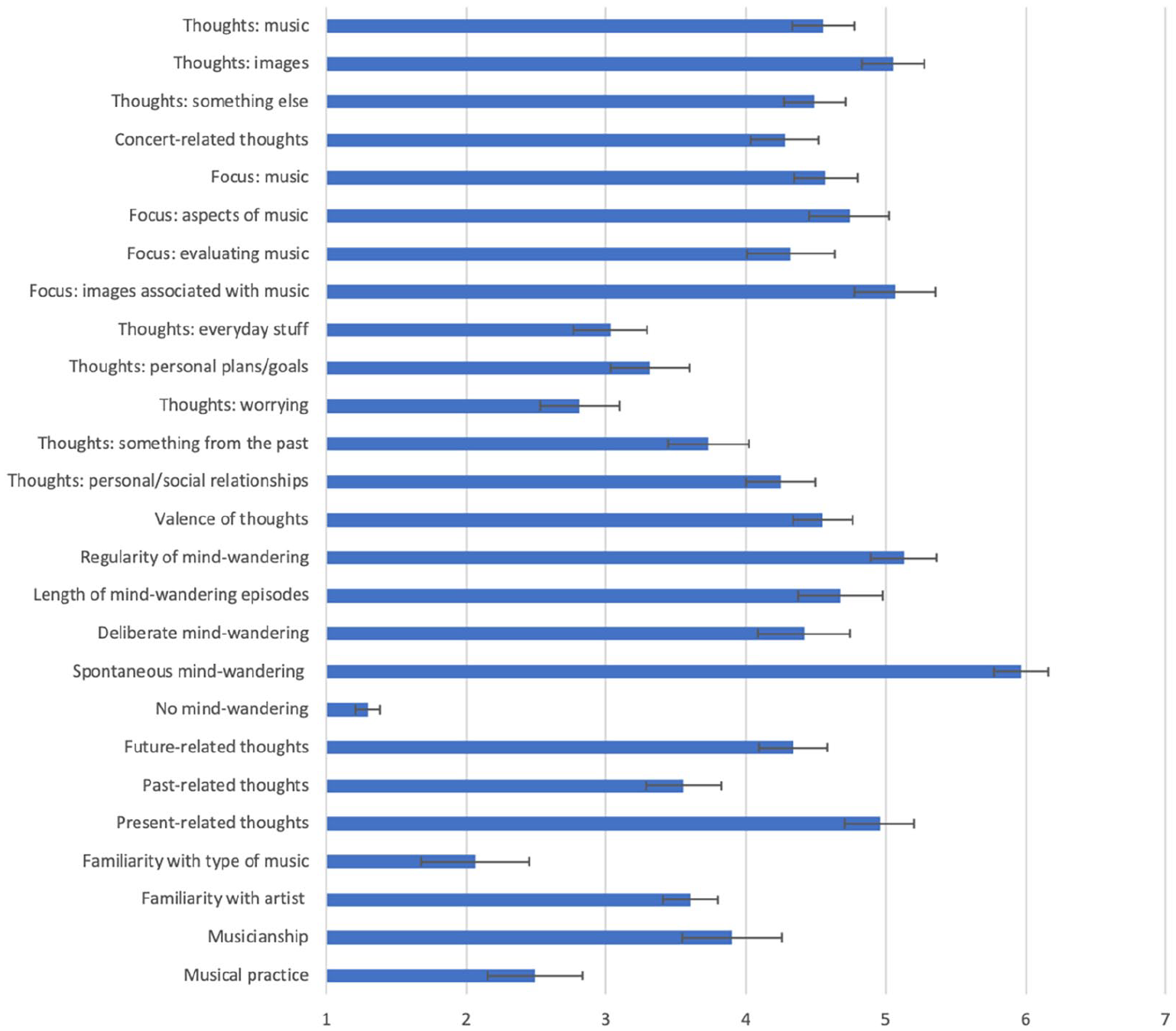
Means of all discussed variables.
Visual images were predominantly associated with the music, r = .444 and p = .015. We also found a positive correlation, n = 38, r = .416, p = .009, between thoughts associated with the music, specifically with the variable indicating a focus on certain aspects of the music, such as instrumentation, and one item from the Gold-MSI indicating the amount of musical practice, “at the peak of your interest, how many hours did you practice per day on your primary instrument (including voice)?”
When asked about the length of their mind-wandering episodes, on a scale from 1 (very briefly) to 7 (very long [up to several minutes]), participants reported experiencing moderately long episodes, n = 41, M = 4.68, SD = 1.93, 95% CI = [3.73, 5.63]. A repeated-measures ANOVA with a Greenhouse-Geisser correction showed that means indicating intentionality of mind-wandering differed significantly within participants, F(1.55, 61.80) = 103.80; p < .001, ηp2 = .717. Participants reported experiencing significantly more spontaneous mind-wandering, M = 5.90, SD = 1.28, 95% CI = [5.28, 6.52], than deliberate mind-wandering, M = 4.48, SD = 2.14, 95% CI = [3.45, 5.51], p = .003, and no mind-wandering at all, M = 1.29, SD = 0.55, 95% CI = [1.02, 1.55], p < .001. When asked to further characterize their mind-wandering during the concert, one participant mentioned they “lost track of time” (question 15; see Questionnaire in the Supplementary Information).
The means and standard deviations representing all moods experienced before and after the concert are shown in Figure 2.
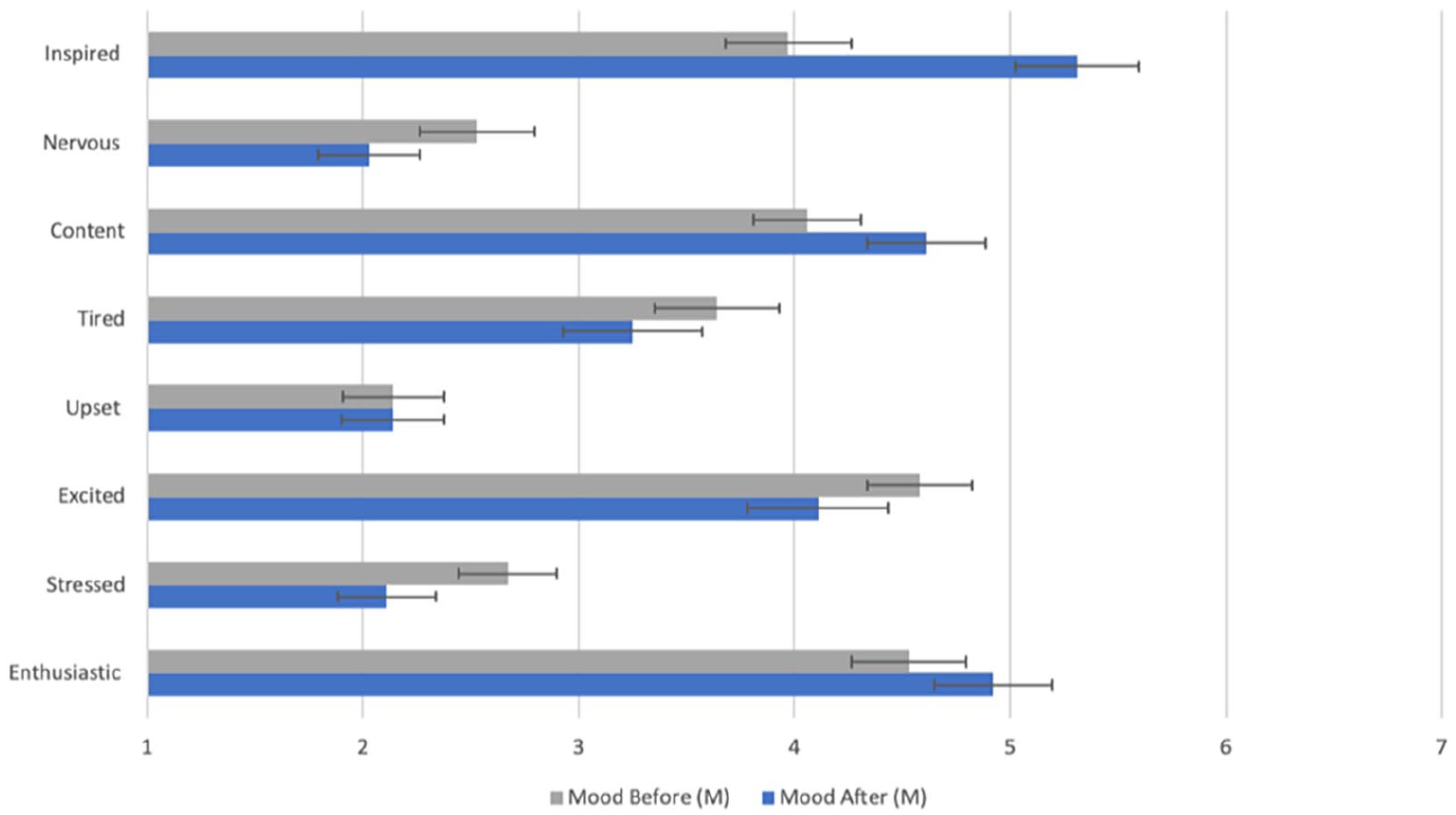
Means of PANAS moods before and after the concert.
We found significant correlations between the frequency of mind-wandering and a range of various moods experienced before the concert. As shown in Figure 3, there was a positive correlation with the mood “tired,” n = 38, r = .419, p = .027, and the mood “nervous,” n = 38, r = .357, p = .046, as well as a positive correlation with the mood “content,” n = 38, r = .368, p = .046.
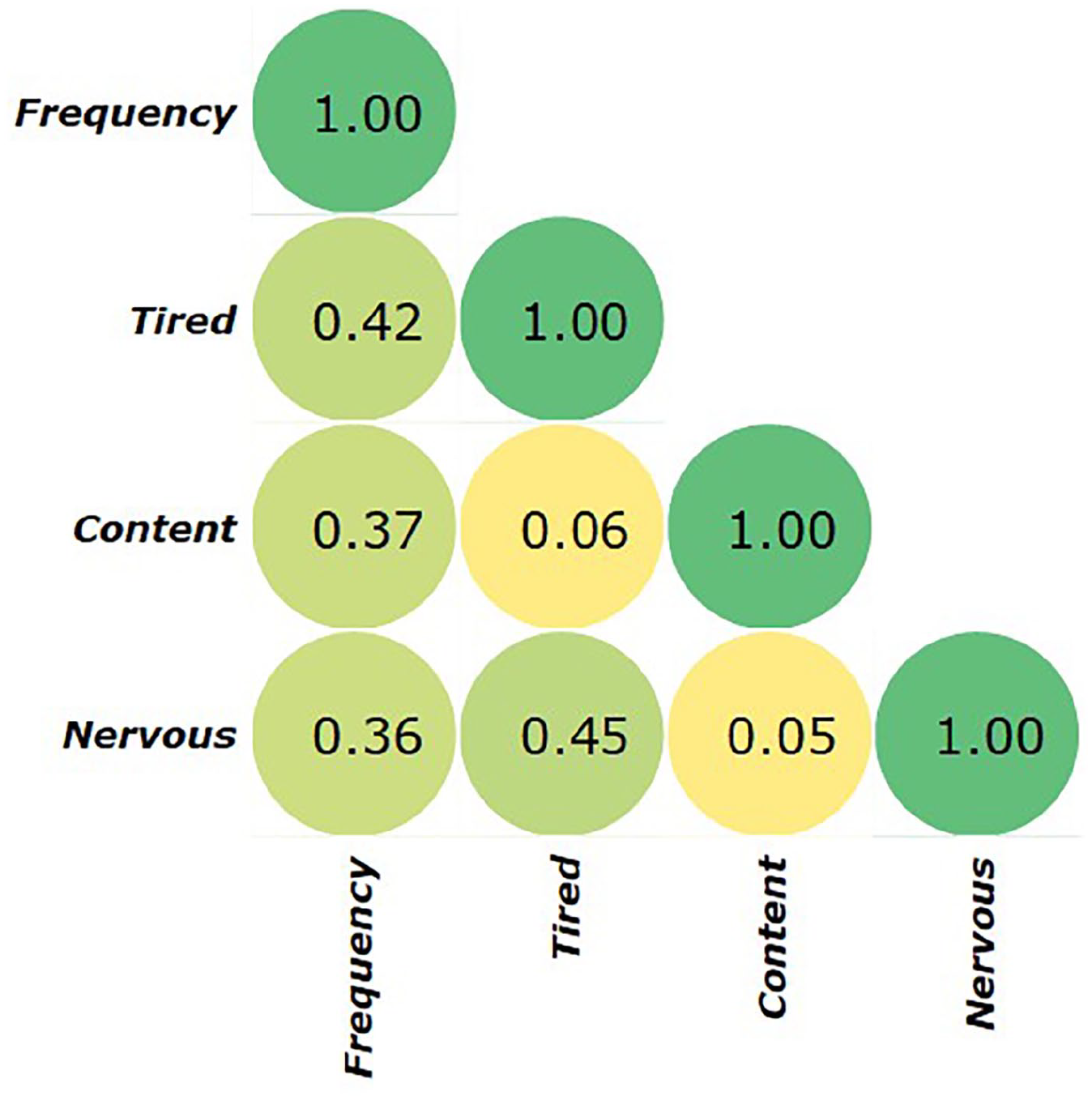
Correlations between the frequency of mind-wandering and mood intensity (for tired, content, and nervous moods).
Regarding the relationship between moods before the concert and type of mental experience, as shown in Figure 4, there was a negative correlation between “images” and the mood “upset,” n = 37, r = −.494, p = .012, and a positive correlation between “thoughts about something else” and the mood “nervous,” n = 39, r = .429, p = .030.
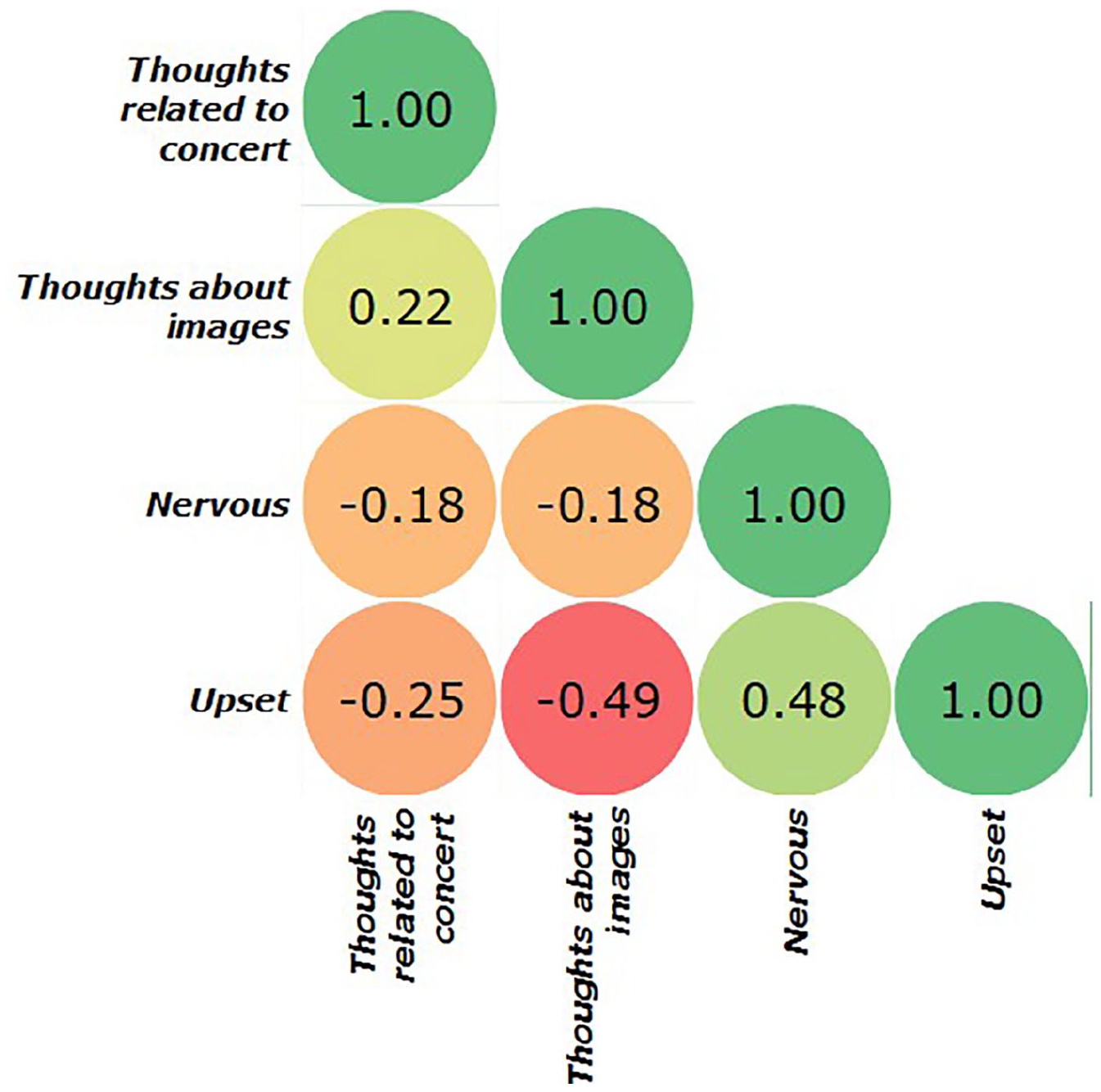
Correlations between concert-related thoughts, visual mental imagery, and mood intensity (for nervous and upset moods).
Thought valence and mood change
One of the main findings regarding the valence of concertgoers’ thoughts is that they generally tended to be positive, as demonstrated by a t-test against chance level, n = 42, M = 4.52, SD = 1.38; t(41) = 4.80, p < .001, r = .600. As shown in Figure 5, participants who were familiar with the artists tended to have more positive thoughts, n = 40, r = .351, p = .048, and more concert-related thoughts, n = 41, r = .373, p = .026, than those who were unfamiliar with them. There was also a positive correlation between thoughts about the music and thought valence, n = 42, r = .369, p = .048.
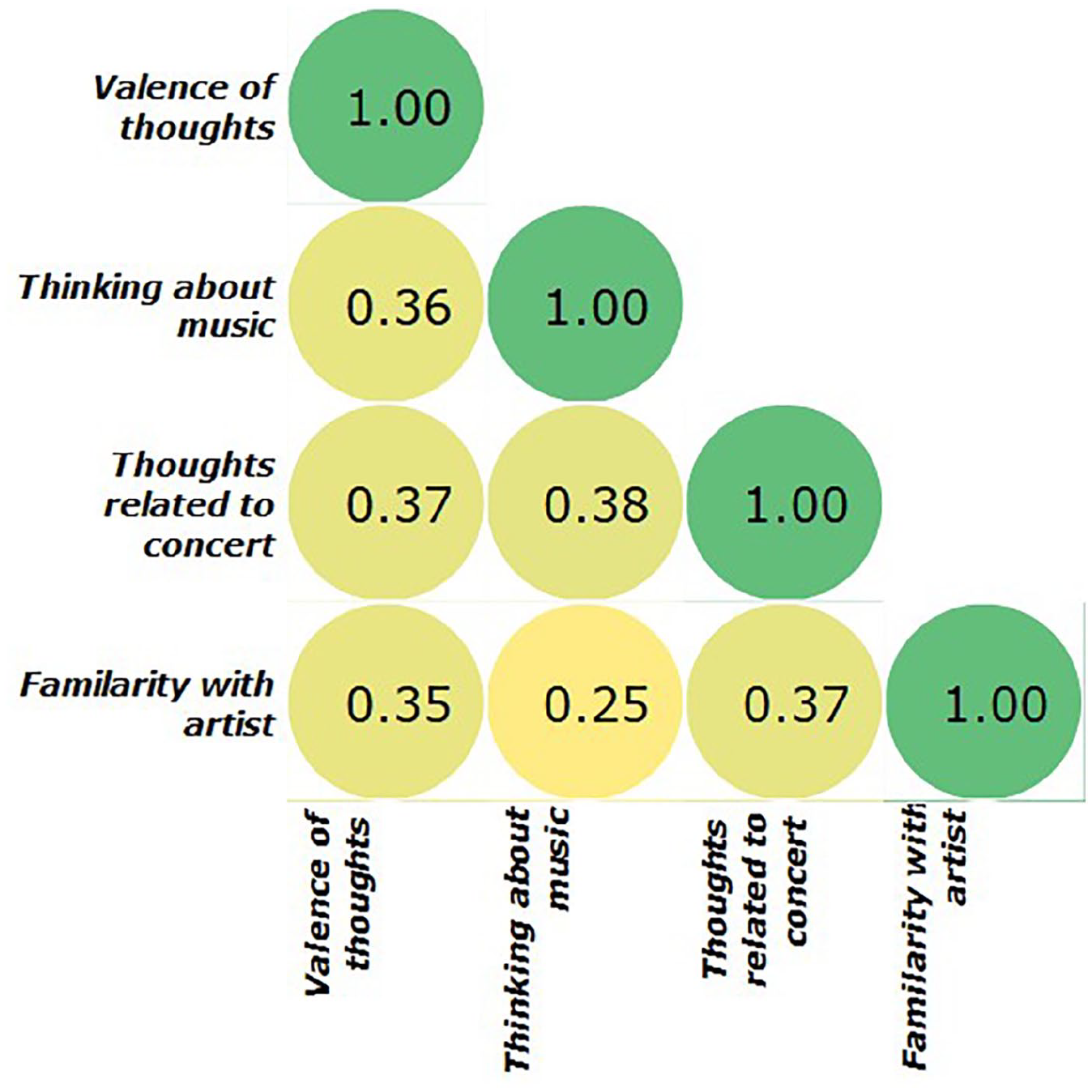
Correlations between thought valence, music-related thoughts, concert-related thoughts, and familiarity with the artist.
Despite an overall prevalence of positive moods before, during, and after the concert, negative moods including “nervous,” “tired,” “upset,” and “stressed” were also reported. Three significant changes in the means of the moods before and after the concerts can be observed when looking at the paired t-test results. As illustrated in Figure 2, there was a significant decrease in subjective stress level, n = 36, t(34) = 2.82, p = .008, r = .435, and nervousness, n = 36, t(34) = 2.80, p = .007, r = .433. Furthermore, the average level of inspiration increased significantly, n = 36, t(34) = −5.05, p < .001, r = .655.
Temporal focus of mind-wandering
Several significant correlations were found in relation to the temporal focus of mind-wandering, most of which concerned past-related thoughts. As shown in Figure 6, past-related thoughts were significantly correlated with preconcert stress, n = 40, r = .374, p = .036, and nervousness before the concert, n = 40, r = .318, p = .046. Past-related thoughts were also correlated with “thinking about personal/social relationships,” n = 42, r = .351, p = .012.
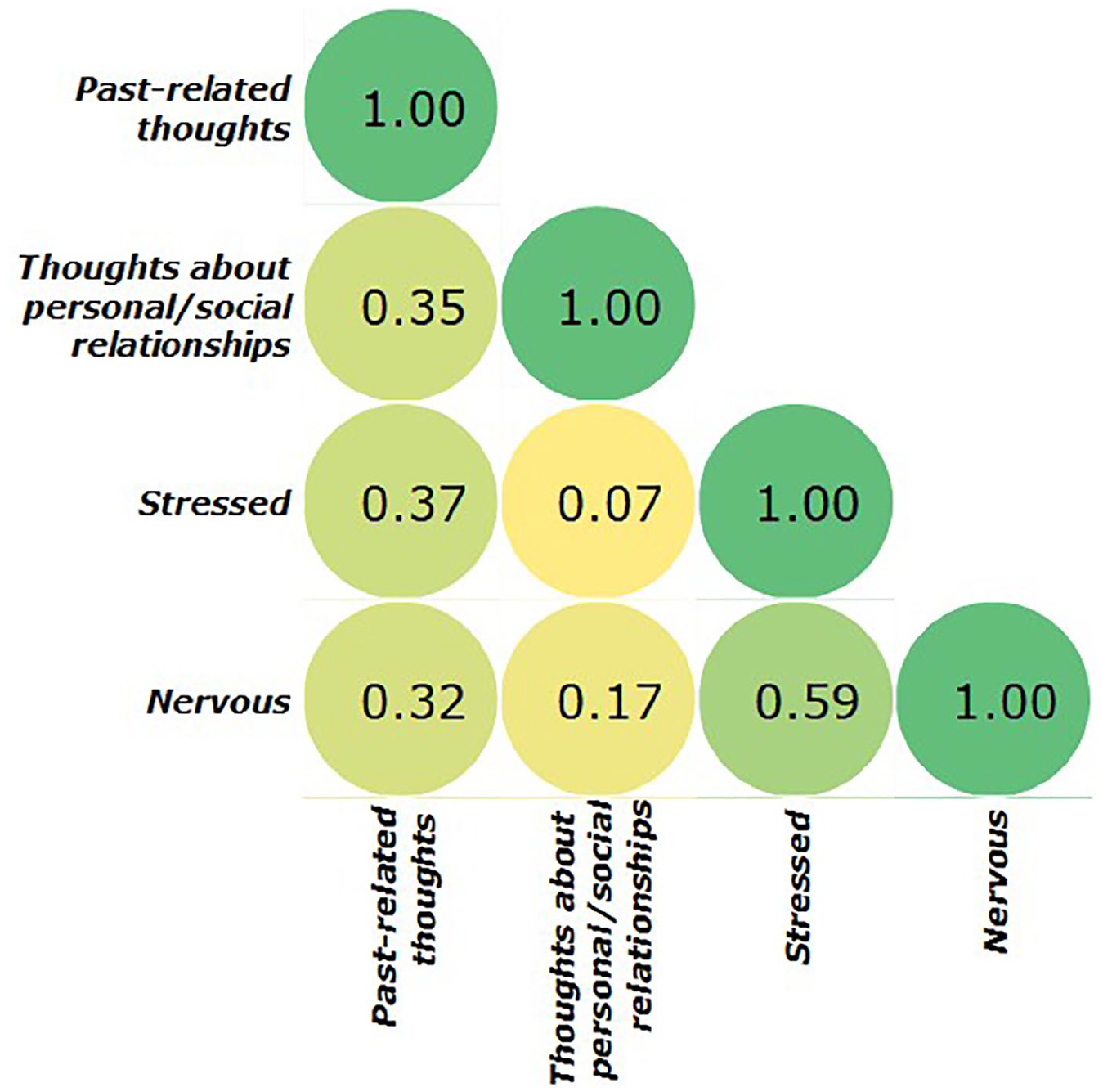
Correlations between thought content (temporal focus and social content) and mood intensity (for stressed and nervous moods).
Overall, the temporality ratings of mind-wandering differed significantly among participants, as shown by a repeated-measures ANOVA, F(1.97, 82.88) = 5.89; p = .004, ηp2 = .123. As shown in Figure 1, participants experienced significantly more present-related thoughts, M = 4.88, SD = 1.64, 95% CI = [4.09, 5.67] than past-related thoughts, M = 3.58, SD = 1.78, 95% CI = [2.72, 4.44]. However, present-related thoughts did not differ significantly from future-related thoughts, M = 4.47, SD = 1.61, 95% CI = [3.69, 5.25].
Visual mental imagery
A comparison of data from the two concerts showed that visual mental imagery occurred more often during the concert by Jacob Kirkegaard, M = 5.15, SD = 1.60, 95% CI (4.38, 5.92), than the concert Deathprod, M = 4.85, SD = 1.27, 95% CI (4.24, 5.47), although this difference was not statistically significant, p > .05.
Descriptions of participants’ visual mental imagery were categorized into 10 recurring themes, as shown in Table 1. Codes such as “morgue,” “autopsy,” and “corpses” are unique to the concert by Jacob Kirkegaard. All remaining codes were drawn from both concert responses because the themes were remarkably similar. Images of “nature,” “violence,” and “dark” elements such as “doom,” “superior judgment,” or “death,” were especially common. These themes show a correspondence between the musical narrative and thought content.
Recurring themes featured in the evoked visual mental imagery.
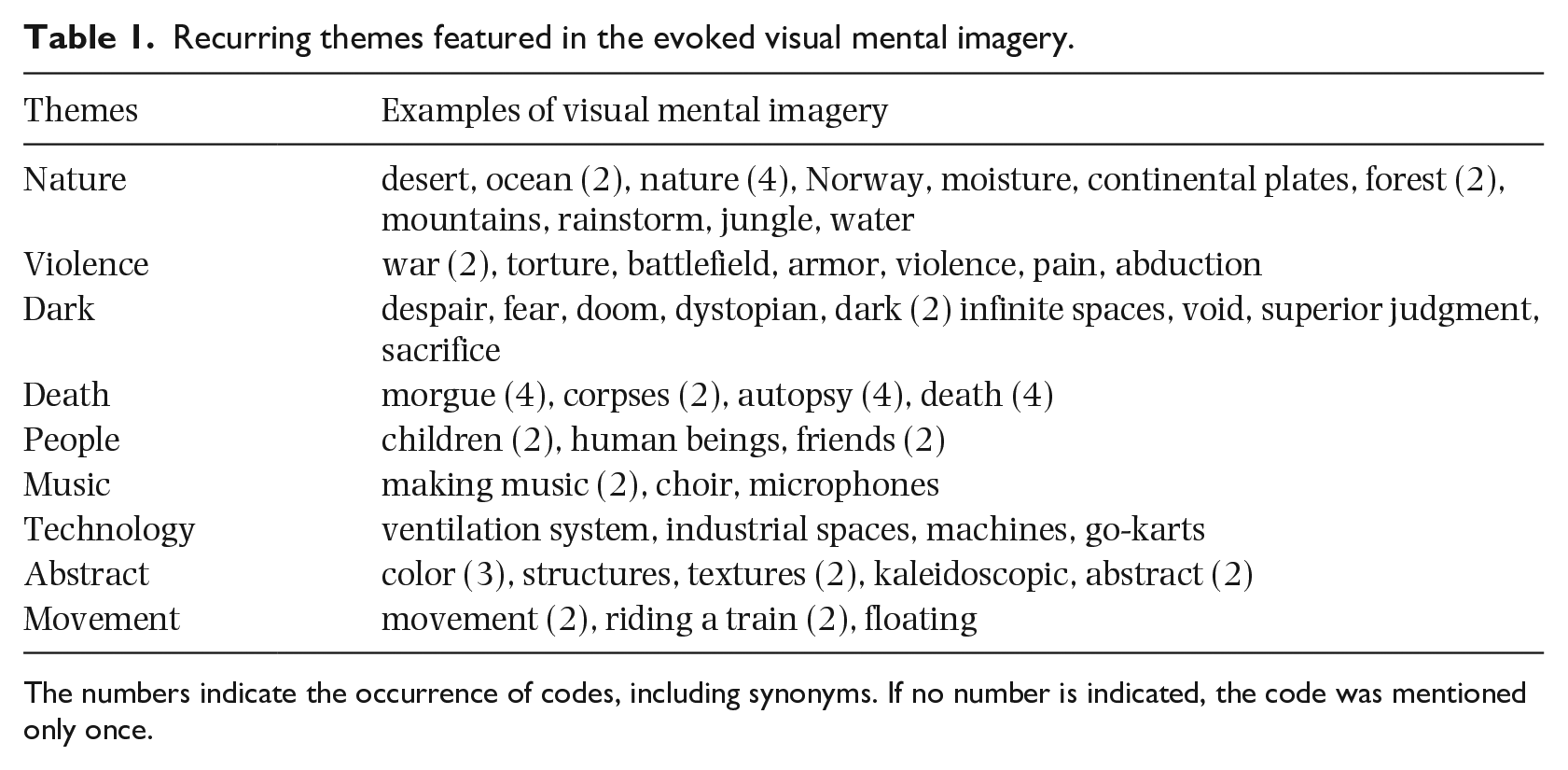
The numbers indicate the occurrence of codes, including synonyms. If no number is indicated, the code was mentioned only once.
Other themes centered around “people,” “music,” “movement,” “technology,” and more “abstract” images. In regard to the latter category, participants reported visualizing colors, structures, or textures, with one participant reporting regular synaesthetic episodes when listening to music. Also presented in Table 1 are “life-related” topics such as personal or future plans, for example assembling a bunk bed for kids or an upcoming job interview. It is important to note that such responses existed, and that visual mental imagery varied considerably by participant across the themes.
Discussion
The purpose of our research was to investigate how the concert environment and mood before the concert broadly shape mind-wandering, as well as how mind-wandering shapes the experience of listening to live music. We found that mind-wandering and visual mental imagery occurred regularly, and that mood before the concert was significantly associated with the frequency and content of mind-wandering. Both visual mental imagery and mood before the concert are likely to play a part in the positive impact of a concert on subsequent mood. Below we discuss these points and other findings in more detail.
Occurrence of mind-wandering
One of the central findings of our study, which is in accordance with our hypothesis, is that participants experienced extensive mind-wandering, despite the possibility that levels of mind-wandering could be low during a pleasant or preferred activity such as a live concert (Kane et al., 2007). While this grants us a perspective on the effects of ambient music on mind-wandering, it is possible that another genre would reveal different results. Ambient music is nonrhythmic and unobtrusive, and the atmosphere it evokes allows the listener space to think (Szabo, 2018). Performances in genres such as rock, with a standing audience, on the other hand, may invite less mind-wandering due to the larger number of musical cues presented that may keep the mind’s focus on the individual’s immediate surroundings. Furthermore, our expectation that there would be more visual mental imagery than thoughts, whether related or unrelated to the music, was supported although the difference between imagery and thoughts was not statistically significant. This is in line with the findings of Taruffi et al. (2017), which suggest that visual mental imagery is the dominant mode of mind-wandering evoked during music listening, compared with mind-wandering in the form of words. Moreover, in a recent study, Küssner and Eerola (2019) found that 77% of a representative sample of listeners experienced visual mental imagery during music listening.
Accounts of regular mind-wandering are typically associated with negative mood and low well-being (Killingsworth & Gilbert, 2010; Mar et al., 2012; Ruby et al., 2013). In the present study, however, live music was reported to have positive effects on mood after the concert, in accordance with our hypothesis based on research by Little et al. (2017). The concert environment may trigger positive mind-wandering comprising not only thoughts unrelated to the music but also visual images associated with the music. This kind of mind-wandering is dissimilar to the kind of frequent mind-wandering that is typically reported and suggests that live music may act as a tool for stimulating positive mind-wandering experiences. Nevertheless, our research provides evidence that the link between frequent mind-wandering (i.e., thinking about something else than music) and a negative mood also exists in the context of live music. Specifically, participants who felt “tired” or “nervous” before the concert also indicated more regular mind-wandering during it, and those who felt “nervous” before the concert reported frequently thinking “about something else.” However, people who were “content” or less “upset” before the concert also mind-wandered a lot, which reinforces the previous point that mind-wandering during live concerts might not only be an effect of negative mood. Further research exploring the causal links between mood states and the frequency and phenomenology of mind-wandering in the context of live performance should be able to shed light on this point. Nevertheless, our findings show the importance of participants’ moods before concerts.
Concertgoers experienced more spontaneous than deliberate mind-wandering in accordance with the results of an experience-sampling study assessing mind-wandering during personal music listening in daily life (Taruffi, 2021). Spontaneous mind-wandering occurs more often during less demanding tasks, which allows for a more passive approach to paying attention (Seli et al., 2016). While previous research has suggested that spontaneous mind-wandering may be associated with lower well-being (Seli et al., 2019), this relationship may be moderated by the nature of the task at hand and by individual differences. More research is needed here to clearly identify the links between spontaneous and deliberate mind-wandering, and participants’ well-being. In the present study, the spontaneous nature of mind-wandering may also have a connection with concertgoers’ inherent interest in and motivation to listen to the music, having chosen and paid to attend the concert; they were unlikely to shift their attention away from it deliberately.
Thought valence and mood change
Analysis of the valence of concertgoers’ thoughts shows the persistence of overall positive valence, which corresponds with the predominance of positive moods. This again aligns with the idea that live music concerts have a positive influence on well-being (Little et al., 2017; Packer & Ballantyne, 2010), which is also supported by the positive correlation between the valence of thoughts and thoughts related to the concert.
Looking at the significant decrease in levels of nervousness and stress, and the significant increase in the level of “inspired” mood, assessed before and after the concert, it can be deduced that the concerts had a positive effect on their audiences despite their topics, which included death and an autopsy. This finding is in line with those of Martarelli et al.’s (2016) study revealing that listening to sad music can lead to the increased positive valence of listeners’ daydreaming topics and does not necessarily result in negative thoughts. While in the present study mind-wandering could have produced the enhanced mood of the participants (in particular their increased level of inspiration), it is more likely to have been the result of the overall live music experience. This is supported by Packer and Ballantyne’s (2010) study of the impact of a music festival experience on well-being, which showed that 91% of participants felt that the festival inspired them to do something new or creative. In the same study, 84% of participants reported that they felt more able to cope with stresses in life, which also corresponds with our findings.
Furthermore, we found that participants familiar with the artist and participants familiar with the music had more concert-related thoughts. Additionally, participants familiar with the artist also had more positive thoughts. This ties in with research on mindfulness, which involves having a mental state that focuses on the circumstances of the present (Bishop et al., 2006). Mindfulness has been found to be a symbol of psychological well-being (Brown & Ryan, 2003) and is also shown to alleviate stress and anxiety (Hofmann et al., 2010), leading to an improvement in mood.
Similarly, empirical evidence has shown that familiarity with music is a factor that changes emotional and hedonic responses in the brain (Freitas et al., 2018; Salimpoor et al., 2011). According to Freitas et al. (2018), familiarity and repetition may increase the appreciation of a piece of music, thus inducing positive emotions. Feng and Bidelman (2015) also demonstrated that the familiarity of music has a strong effect on mind-wandering. They found that participants who were familiar with the music demonstrated a lower frequency of mind-wandering, suggesting that familiar music increases task enjoyment.
Temporal focus of mind-wandering
Ruby et al. (2013) investigated the socio-temporal context of mind-wandering episodes. They discovered that future- and self-related thoughts were associated with an increase in positive moods, while past- and other-related thoughts preceded low moods. Our results confirm the latter, but not the former, by showing strong links between stress and nervousness and past-related mind-wandering. In the same study, Ruby et al. (2013) also found that these associations were not dependent on the valence of thought content, meaning that if a person with a low mood had past-related thoughts, the actual thought content could still be positive in the moment it was measured. Judged by these findings, the correlation we found between retrospective mind-wandering and thoughts about personal and social relationships should not lead to the assumption that reflecting on certain relationships equates to lamenting or regretting them.
Concerning happy moods, we found no significant correlations between future-, present-, and self-related thoughts nor a tendency to think about the future during mind-wandering (Smallwood & Schooler, 2015). This may be a result of the unique concert environment, which focuses the individual’s attention on the current event or generates memories to a greater extent than it facilitates future planning, despite positive mood often being associated with future-related thoughts (Ruby et al., 2013; Seli et al., 2016).
Visual mental imagery
Based on previous research (e.g., Herff et al., 2021; Taruffi, 2021; Taruffi et al., 2017), we further assumed participants’ thought and image content during mind-wandering to be associated with the music, in particular its perceived emotional tone. Considering the strong correspondence between participants’ dark imagery reports about death and violence, and the music’s dark ambient style and eerie tone, we were able to confirm this hypothesis. Overall, the evoked imagery ranged from abstract impressions such as colors to actual narratives such as “children playing in the streets” (question 5; see Questionnaire in the Supplementary Information).
It is crucial to mention that the titles of the movements of the composition by Jacob Kirkegaard refer to their content (e.g., Opus Autopsia); the audience knew that they were about to hear a recording of an autopsy. Moreover, he even described the sounds and their sources, such as the cracking of bones, before presenting them. We assume that levels of visual mental imagery were higher during the Jacob Kirkegaard concert because the audience had been given a guided listening experience. We expected codes such as “morgue,” “autopsy,” or “corpses” to be more frequent than others because the setup and topic of the concerts increased the likelihood of visual imagery, despite the lack of lyrics.
Several other themes such as “nature” and “abstract” images are broadly similar to those featured in the 2019 study by Küssner and Eerola, and Hashim et al. (2021), who are investigating visual mental imagery evoked by classical music more broadly. While the similarity between themes facilitates the potential systematization of themes identified in music-induced visual mental imagery, it would also be helpful to be able to distinguish between different musical genres. The number of negative images reported in data from both concerts in the present study, such as “war,” “torture,” “death,” and “despair,” suggests that specific types of music affect imagery in the same way that different types of music affect our emotional responses to it (Juslin & Västfjäll, 2008; Hashim et al., 2021).
Regarding the relationship between mood and visual mental imagery, we found a significant correlation between being “upset” or “tired” and frequent visual mental imagery. Again, this supports the findings of mind-wandering studies in which low mood was associated with a high frequency of mind-wandering (Killingsworth & Gilbert, 2010; Smallwood & O’Connor, 2011).
Limitations and future research
While the impact of music on mind-wandering is confirmed by the close relationship between visual mental imagery and the musical narrative, little can be concluded regarding the impact of mind-wandering on the level of inspiration or decrease in stress. This is a limitation that could be overcome by investigating possible influences on mind-wandering through the collection of more qualitative data from interviews; this would enable variables representing the content of mind-wandering to be standardized so that experimental paradigms could be used to test hypotheses. In general, participants’ free descriptions are particularly valuable for deciding which aspects of music should receive more attention in future research. The present study strongly highlights specific aspects of the music to be considered, such as how loud the music was played as well as the atmosphere of the concert, including the venue and its visual aspects.
It would be interesting to examine participants’ descriptions of visual imagery experienced during a live concert for the variety of meanings they attach to the musical materials, including relevant dimensions such as contingency, episodic memory, level of consensus, and influence of enculturation. Such inclusion of sociocultural sources would enhance the ecological approach to heteronomous music listening by referring to participants’ meaning-making informed by musical attributes and extra-musical factors (Dibben, 2001; Herbert & Dibben, 2018).
Another future step would be to discover the extent to which different genres, venues, whether the audience is standing, seated, or recumbent, and/or lyrics play a role in mind-wandering. It would be worth investigating whether mind-wandering induced by live music events is a cause of improved mood, and ultimately general well-being and mental health. Although methods such as probe-caught or descriptive experience sampling might have the benefit of reducing the memory bias associated with retrospective self-reports (Weinstein, 2018), it is important to avoid disrupting the mind-wandering experience, that is, the actual stream of consciousness under investigation, and its vividness. An approach for overcoming this drawback could be the use of the self-caught method, where participants report each time they notice their mind has been wandering. Combining this with a postconcert questionnaire or in-depth interviews would provide greater insights into episodes of mind-wandering episodes, their connection with mood regulation processes during the concert, and the exploration of possible ignition points of mind-wandering, whether these are specific aspects of the music, the environment, or other members of the audience (Seli et al., 2016).
Conclusion
Our study contributes to research on the psychology of live music (e.g., Burland & Pitts, 2010; Merrill et al., 2021; Wald-Fuhrmann et al., 2021) by showing that despite the dark narratives of the music in the two concerts given as part of the CTM Festival, the music events still had an overall positive impact on participants’ mood, in particular by increasing levels of inspiration and contentment and decreasing nervousness. Importantly, our findings show that mind-wandering and visual mental imagery occur extensively in the concert environment. We identified several interesting associations between mood and the characteristics of mind-wandering. For example, past-related thoughts and the negative moods “stress” and “nervousness” were found to be correlated, as well as the frequency of mind-wandering and negative moods, and the mood “content.” The concert environment afforded mind-wandering episodes and was linked to the content of the evoked thoughts, often reflecting the narrative of the music. These findings are in line with previous research (e.g., Martarelli et al., 2016; Taruffi et al., 2017), confirming the capacity for music to shape mind-wandering episodes.
Supplemental Material
sj-docx-1-msx-10.1177_10298649221103210 – Supplemental material for Mind-wandering during contemporary live music: An exploratory study
Supplemental material, sj-docx-1-msx-10.1177_10298649221103210 for Mind-wandering during contemporary live music: An exploratory study by Juliane Deil, Nina Markert, Philip Normand, Philipp Kammen, Mats B. Küssner and Liila Taruffi in Musicae Scientiae
Footnotes
Funding
The author(s) disclosed receipt of the following financial support for the research, authorship, and/or publication of this article: The authors gratefully acknowledge the funding by SEMPRE and the bologna.lab at Humboldt-Universität zu Berlin.

Supplemental material
Supplemental material for this article is available online.
Notes
References
Supplementary Material
Please find the following supplemental material available below.
For Open Access articles published under a Creative Commons License, all supplemental material carries the same license as the article it is associated with.
For non-Open Access articles published, all supplemental material carries a non-exclusive license, and permission requests for re-use of supplemental material or any part of supplemental material shall be sent directly to the copyright owner as specified in the copyright notice associated with the article.
