




Abstract
Research about the internationalisation of higher education has expanded rapidly in recent decades with few attempts to map available evidence. This scoping review provides a synthesis of articles about how internationalisation practices specifically impact students’ outcomes and experiences. We identified 967 articles in 21 thematic categories, spread across 493 journals and 27 disciplines. Of these, only 233 (22.8%) were categorized as ‘designed to highlight impacts on students’. We characterise research as scattered and primarily descriptive, with limited efforts to build on previous research. However, we have synthesised five key principles that underpin practice with the most demonstrable impact on students: (1) embedding internationalisation holistically across the institution; (2) centering inclusion and connection; (3) developing active and creative learning approaches; (4) providing opportunities for reflection and personal connection; and (5) explicitly scaffolding intercultural skills. We call for researchers to design more research that builds on this maturing subfield, centring evidence to inform critical practice.
Introduction
Internationalisation is a significant area of research and practice in higher education (Tight, 2021). Although many researchers refer to Jane Knight's (2004, p. 2) definition, scholars continue to debate and discuss how the concept is defined and applied (e.g., Buckner & Stein, 2020). What definitions hold in common is recognising internationalisation is purposefully broad or ‘fuzzy’, considering its myriad practices across institutions, affecting many activities and stakeholders (Hudzik, 2014).
Internationalisation is frequently categorised into three areas: abroad, at home, and at a distance. Internationalisation abroad involves the physical movement of education across borders (Mazzarol & Soutar, 2012). Most commonly, this is the movement of international students (OECD, 2023), but can also involve mobility of staff (Morley et al., 2018) or programmes (Waterval et al., 2015).
Internationalisation at home focuses on infusing formal and informal curricula with international or intercultural elements within domestic environments (Beelen & Jones, 2015, p. 12). This might include internationalising the content taught (Leask, 2009), offering intercultural learning opportunities (Tsang et al., 2021), or shifts towards internationalised pedagogies (Lomer & Anthony-Okeke, 2019). For home students, this is often seen as offering some benefits of internationalisation abroad without leaving their home country.
Internationalisation at a distance focuses on educational connections across borders through technology (Mittelmeier et al., 2021). One example is international distance learning, where students enroll in online programs from countries abroad (ibid). Another is the integration of pedagogies across borders, such as international group work projects that are undertaken with students based in different countries (e.g., Villar-Onrubia & Rajpal, 2016).
While these three areas can, and often do, mutually coexist within institutions, typically scholarship self-orients to one of these.
Research About Internationalisation as a Thematic Research Subfield
Research about internationalisation makes a significant contribution to higher education studies, labeled a distinct thematic subfield since the early 2000s (Kosmützky & Putty, 2016). Publications on the topic indexed in Scopus show an increase from 3 articles published in 1990 to 182 articles published in 2020 (Ghani et al., 2022). An estimated 200 articles are published annually (Tight, 2021).
Several bibliometric and systematic reviews about internationalisation outline key topics in focus (Bedenlier et al., 2018; Ghani et al., 2022; Kosmützky & Putty, 2016; Kuzhabekova et al., 2015; Lomer & Mittelmeier, 2023; Mittelmeier & Yang, 1982; Tight, 2021; Yemini & Sagie, 2016). While this helps situate areas of scholarly interest, there has been limited scoping of how findings map across this complex research area. The tendency for reviews to focus on quantifying research through bibliometric approaches also means that we know how much research is undertaken, but not necessarily what impact internationalisation has. Demonstrating impact has been attempted in small ways, such as through reviews of subtopics like student mobility (Gümüş et al., 2020) or academic development (Wimpenny et al., 2020). However, to our knowledge, there have been limited attempts to holistically map findings in global research about internationalisation.
In our study, we focus specifically on whether and how internationalisation makes a demonstrable impact on students (both home and international), their outcomes, and experiences. Impact, in this context, is broadly defined as having any form of effect on students’ learning experiences or outcomes throughout their study program. Understanding how internationalisation impacts students is important, as it is often an assumed element of learning outcomes, taken for granted in institutional and national policies and rhetoric (Lomer, 2017). Despite the wide range of scholarship on practice, to our knowledge no evidence-based synthesis has been conducted. The implications of this mean understanding ‘what works' and how best to design meaningful internationalised learning for students is a major challenge.
Method
We conducted a scoping review, following Arksey and O’Malley (2005), conceptualised as ‘a process of summarizing a range of evidence in order to convey the breadth and depth of a field’ (Levac et al., 2010, p. 1). Scoping reviews are used when researchers wish to examine existing evidence and evaluate ongoing research needs (Munn et al., 2018). This approach was suitable because internationalisation is a broad research subfield which requires mapping of current knowledge and gaps. As outlined by Arksey and O’Malley (2005), our approach has been conducted through five steps, described next. Figure 1 provides a flowchart of our approach.
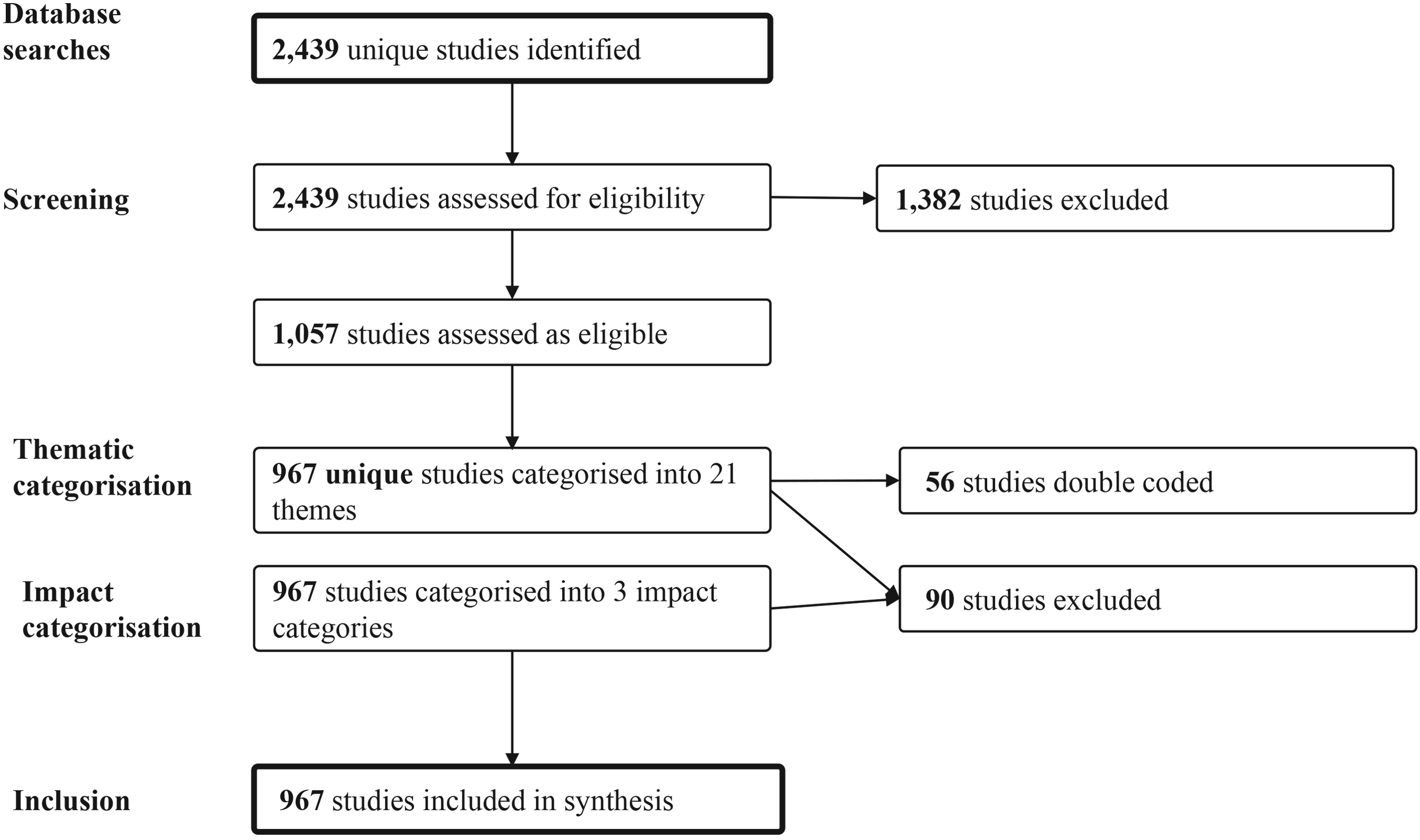
Flowchart of scoping review inclusion strategy.
Step one: Identifying Research Questions
The research questions guiding this study were:
How is the internationalisation of higher education being researched in relation to students’ outcomes and experiences? How and under what conditions does internationalisation make a demonstrable impact on students in higher education?
Step two: Identifying Relevant Studies
Twelve keyword search strings were developed, listed in full in Mittelmeier et al. (2022). All strings began with ‘higher education’, followed by a string exploring processes or student groups using global spellings (e.g., -s and -z). We generated a Boolean string: internationalisation OR internationalization OR internationalise OR internationalize OR international students OR intercultural.
Building on previous reviews, we developed a further set of related keywords that reflected specific processes or areas of activity, namely: pedagogy, teaching, curriculum, assessment, recruitment, study abroad, decolonisation/decolonization, accreditation, social interactions, or language.
Based on our research questions, we focused on the impact of internationalisation on students’ outcomes or experiences. We sought to identify literature that reported some evidence of impact on students, broadly defined, and included synonyms relating to impact (e.g., outcome, impact, effect). We also included potential specific outcomes, including: progression, performance, engagement, awareness, skills, friendship, and language.
Search strings were applied to four databases: ProQuest, Web of Science, British Education Index, and Google Scholar. We also reviewed the ERIC, Jstor, and EBSCO databases, which returned exclusively duplicates of the original databases. The searches were limited to titles, keywords, and abstracts to avoid any results where internationalisation merely formed the context rather than the object of research. Altogether, the initial search identified 2,439 unique articles.
Step Three: Study Selection
Our inclusion and exclusion criteria are listed in Table 1. We reviewed the meta-data, titles, abstracts and, where necessary, full texts of the papers to provisionally include or exclude. In total, 1057 articles were retained for further evaluation.
Inclusion and Exclusion Criteria.
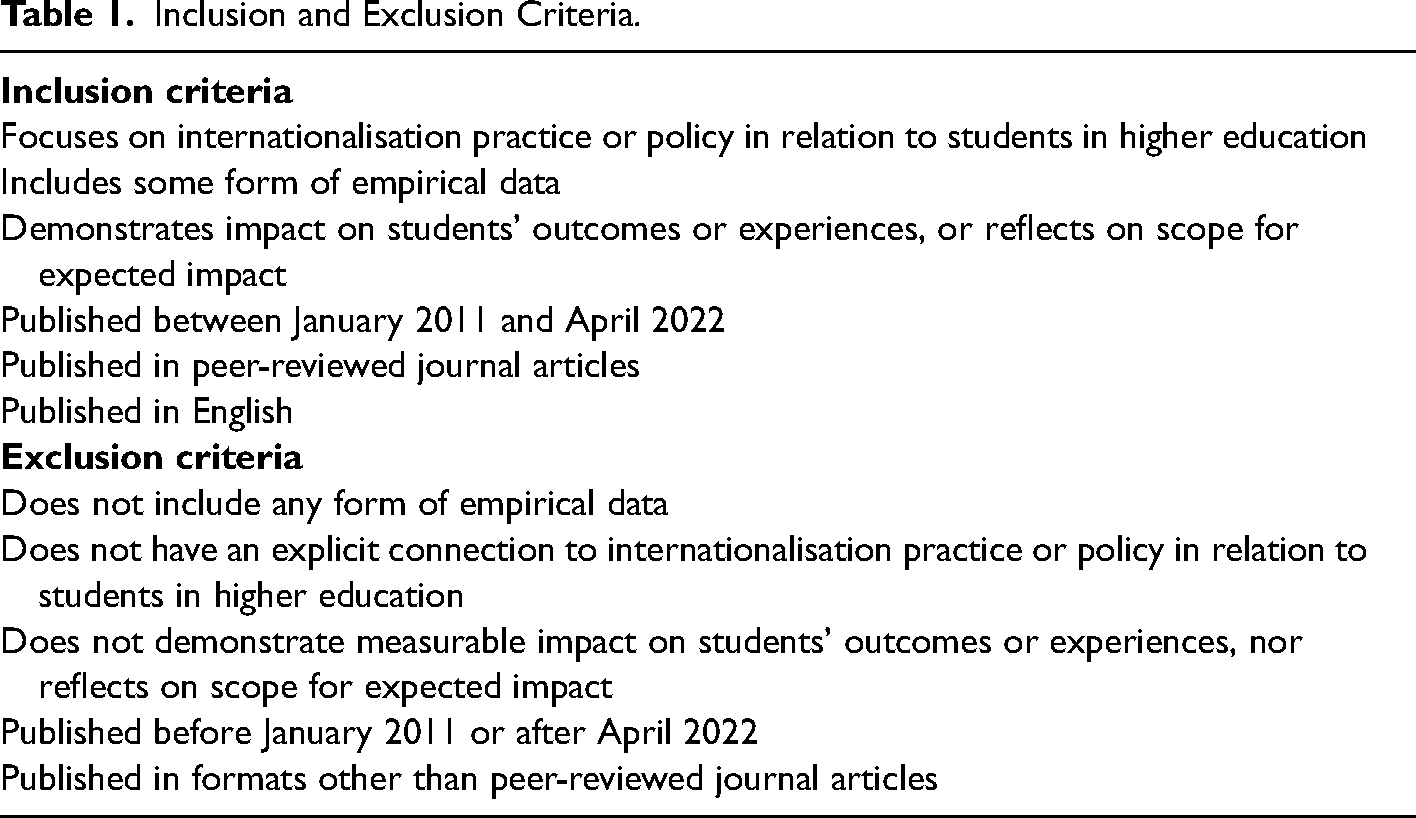
Any article with an explicit focus on internationalisation was included. Articles which mentioned internationalisation as a context only were excluded (n = 577). We set our timeframe as from January 2011 to April 2022 (when the search was conducted and commissioned), which reflects the intensification of academic interest (Tight, 2021).
Only peer-reviewed journal articles were included. This excluded a range of literature of relevance to the topic in book chapters due to lack of systematic access. We excluded fully conceptual or theoretical work, literature reviews, and synthesis papers (n = 404). We also excluded papers that focused exclusively on teacher experiences (n = 211) and papers that only examined policy or strategy (n = 190) with no exploration of student impact. We recognise these hold valuable information regarding practices with students, but felt steps were necessary to tighten the focus in line with our research questions, given the volume of included studies. These references are available in an online database for future evaluation (available at: https://www.advance-he.ac.uk/knowledge-hub/internationalisation-and-students-outcomes-or-experiences).
Due to time limitations for this funded work and limited resourcing, we limited our search to publications in English. We recognise important critical scholarship will be excluded by this approach, reinforcing the existing ‘Western’ focus of existing higher education research (George Mwangi et al., 2018). We hope future research can build on this through multilingual search strategies.
Step Four: Charting the Data
The metadata were charted in a spreadsheet for analysis. The research team categorised papers in thematic categories and impact categories, as described below.
Thematic Categorisations
We developed 21 thematic categories of distinct practice domains (Table 2). A further 90 studies were excluded here for not meeting inclusion criteria. The research team reviewed all 967 papers individually to assign their thematic category. In some cases (n = 56), articles were located in two folders simultaneously where both categories were equally important.
Numbers of Articles by Thematic and Impact Categories of Full Article Dataset.
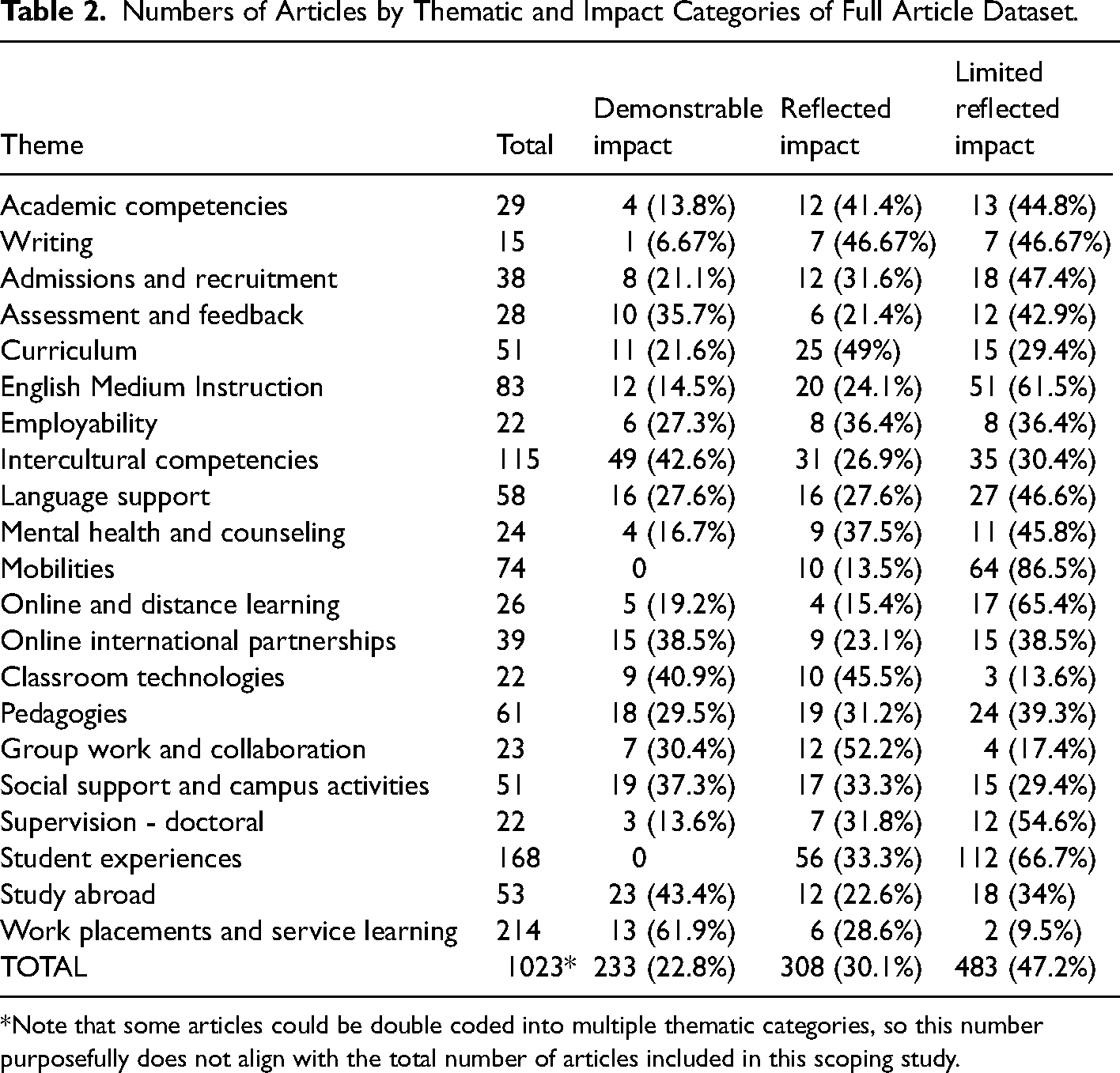
*Note that some articles could be double coded into multiple thematic categories, so this number purposefully does not align with the total number of articles included in this scoping study.
Impact Categorisations
We further categorised each paper according to the type of impact it presented, defined broadly as having any effect on students’ experiences or outcomes. This described the degree to which the study was designed to measure impact on students, not as a quality judgement. These categories were applied without preference for research method or impact direction (positive or negative).
The categories were:
Impacts were varied and broadly defined, given the range of study topics, including (but not limited to): academic achievements, language acquisition, intercultural competencies, skills, attitudinal change, subject knowledge, etc.
This review purposefully did not evaluate research quality. As Buus and Perron (2020) argue, applying even established checklists for quality criteria can de-politicise and de-contextualise research. We opted for greater inclusivity, but observed variable research and methodology norms.
Stage 5: Collating, Summarising, and Reporting Results
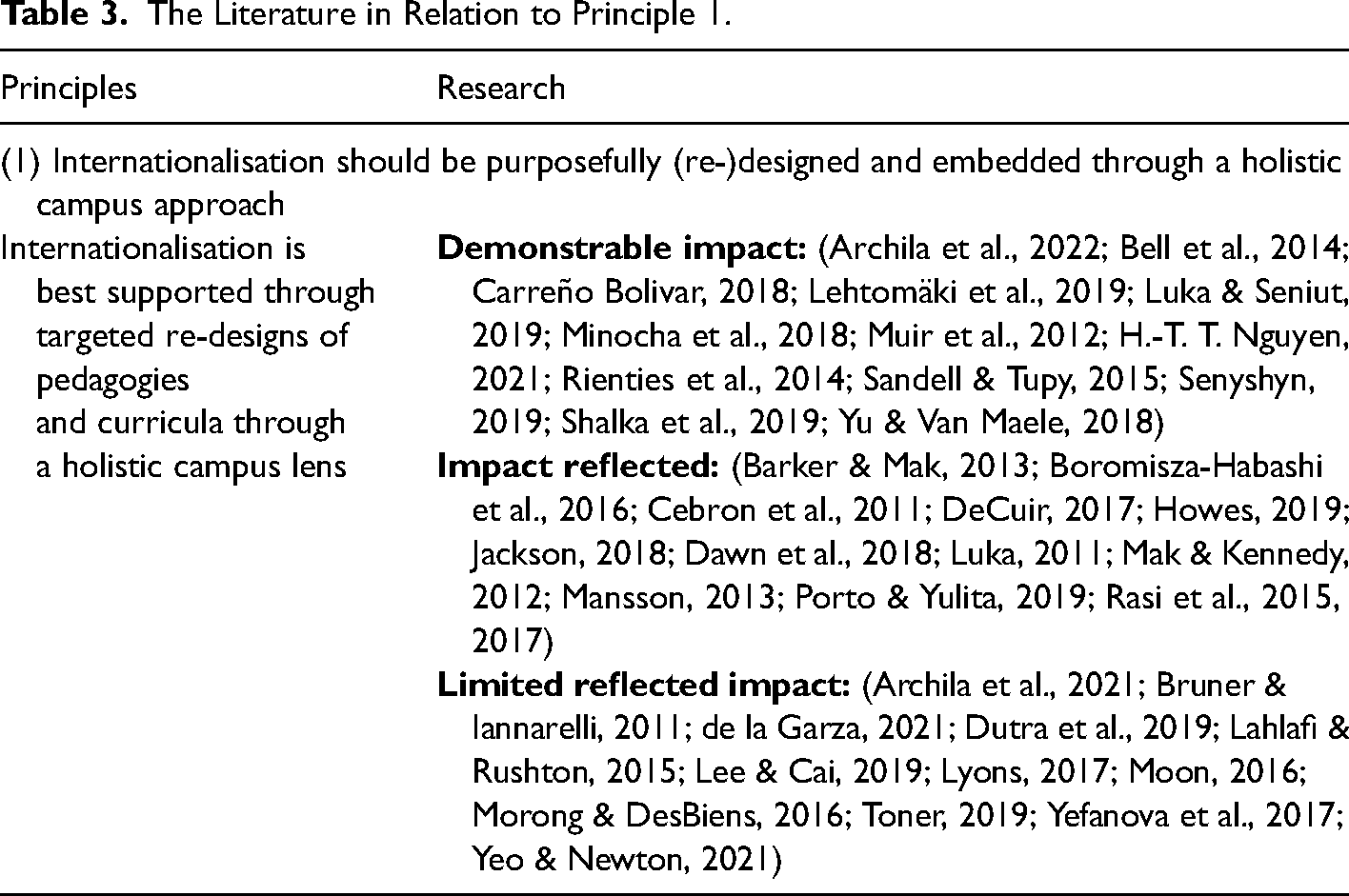
Studies were compiled in each thematic and impact category, mapping existing research (Table 2). We collated a list of journals the articles were published in, coded by research discipline. We previously published an in-depth synthesis of each of the 21 thematic categories (Mittelmeier et al., 2022). This present article reports on the next step in our analysis, inspired by the analysis by Evans (2013). We co-developed a narrative synthesis of underlying principles that impactful internationalisation approaches share, after which the project team met to construct the fundamental approaches and ethos that underpinned various activities across studies. The assigned impact categories played a role in our analysis by informing the degree of evidence that is available to support each principle. We did not focus our analysis solely on those in the “demonstrable impact” category, but have noted in our findings where more evidence may be needed. We have provided aggregated studies by impact categories to support each principle in Tables 3–7. Our findings were refined through two workshops with researchers and practitioners held by the funder, offering feedback on findings. Due to word count limitations, the full list of references in the tables presented in the finding section are included in a supplementary file in the online version of this article.
The Literature in Relation to Principle 1.
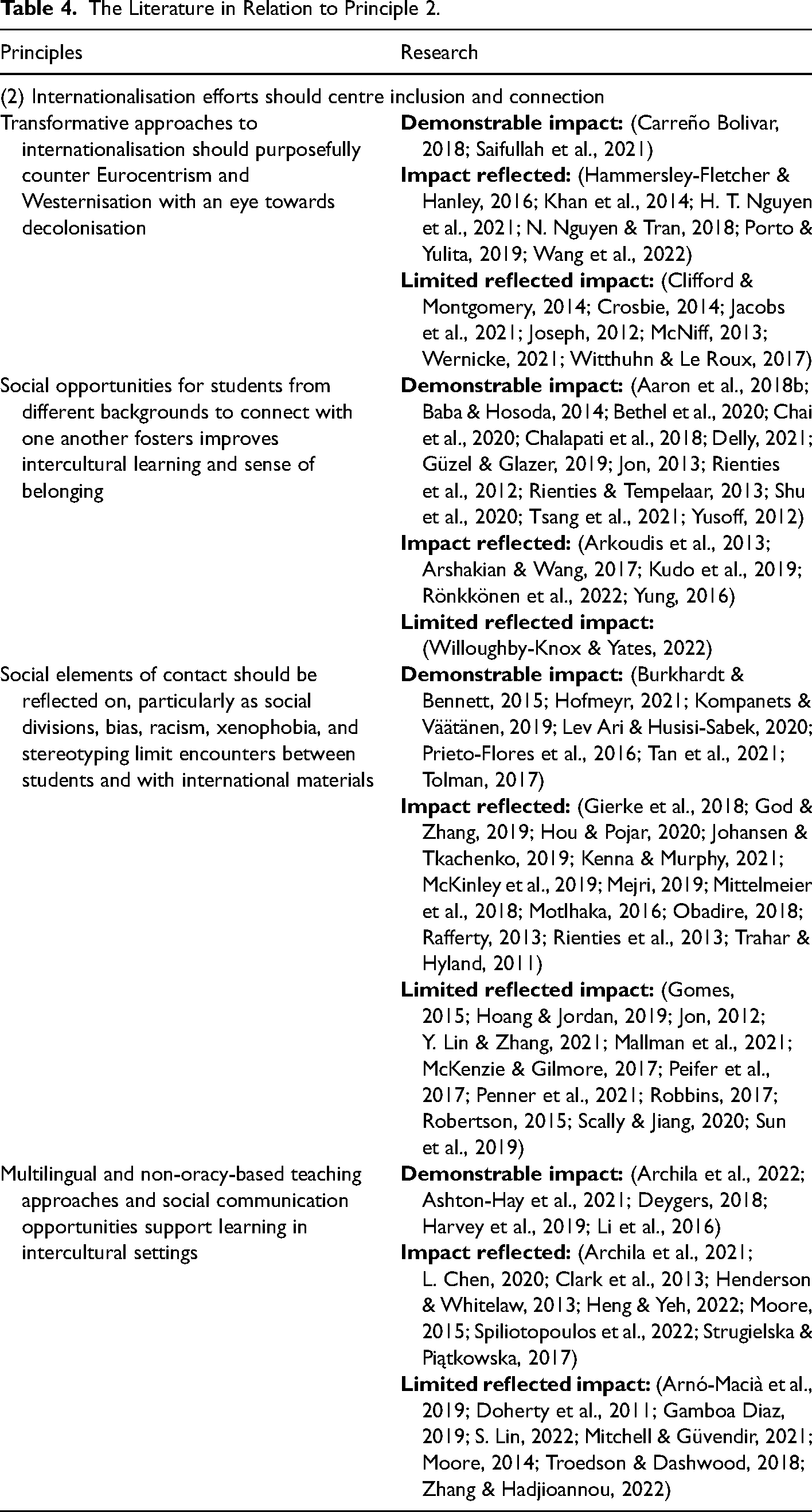
The Literature in Relation to Principle 2.
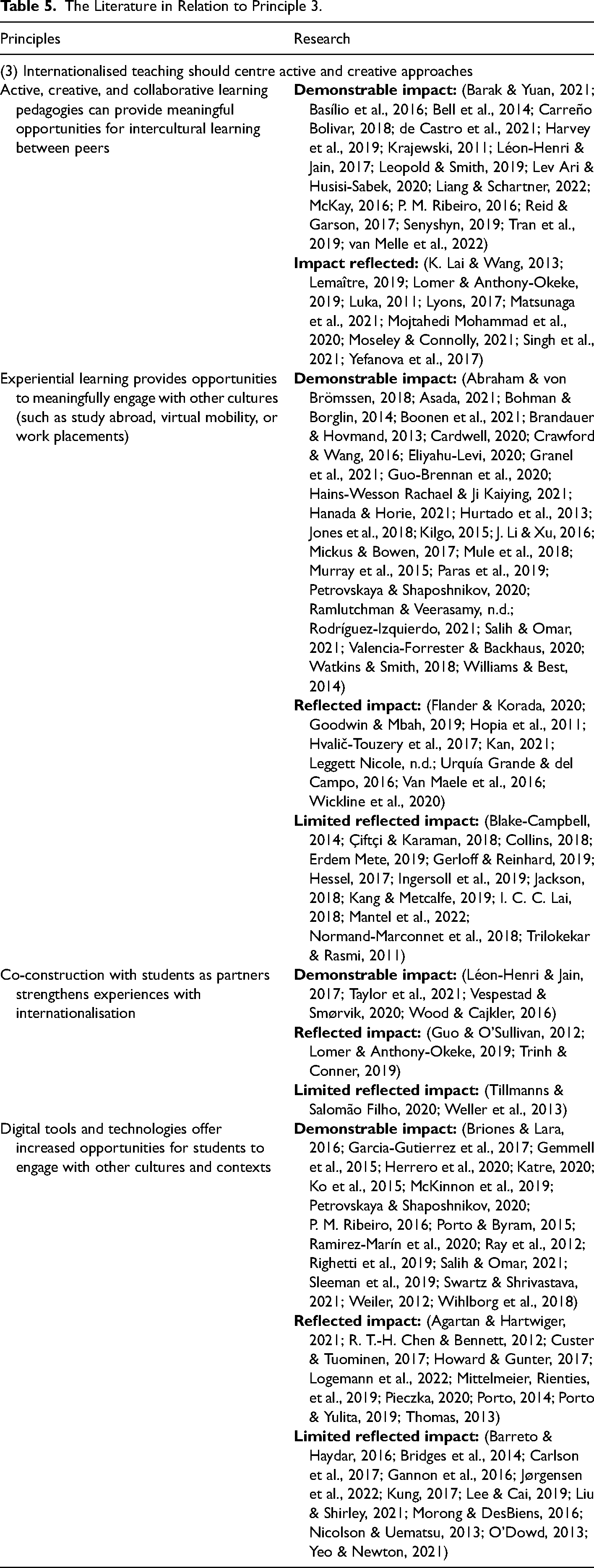
The Literature in Relation to Principle 3.
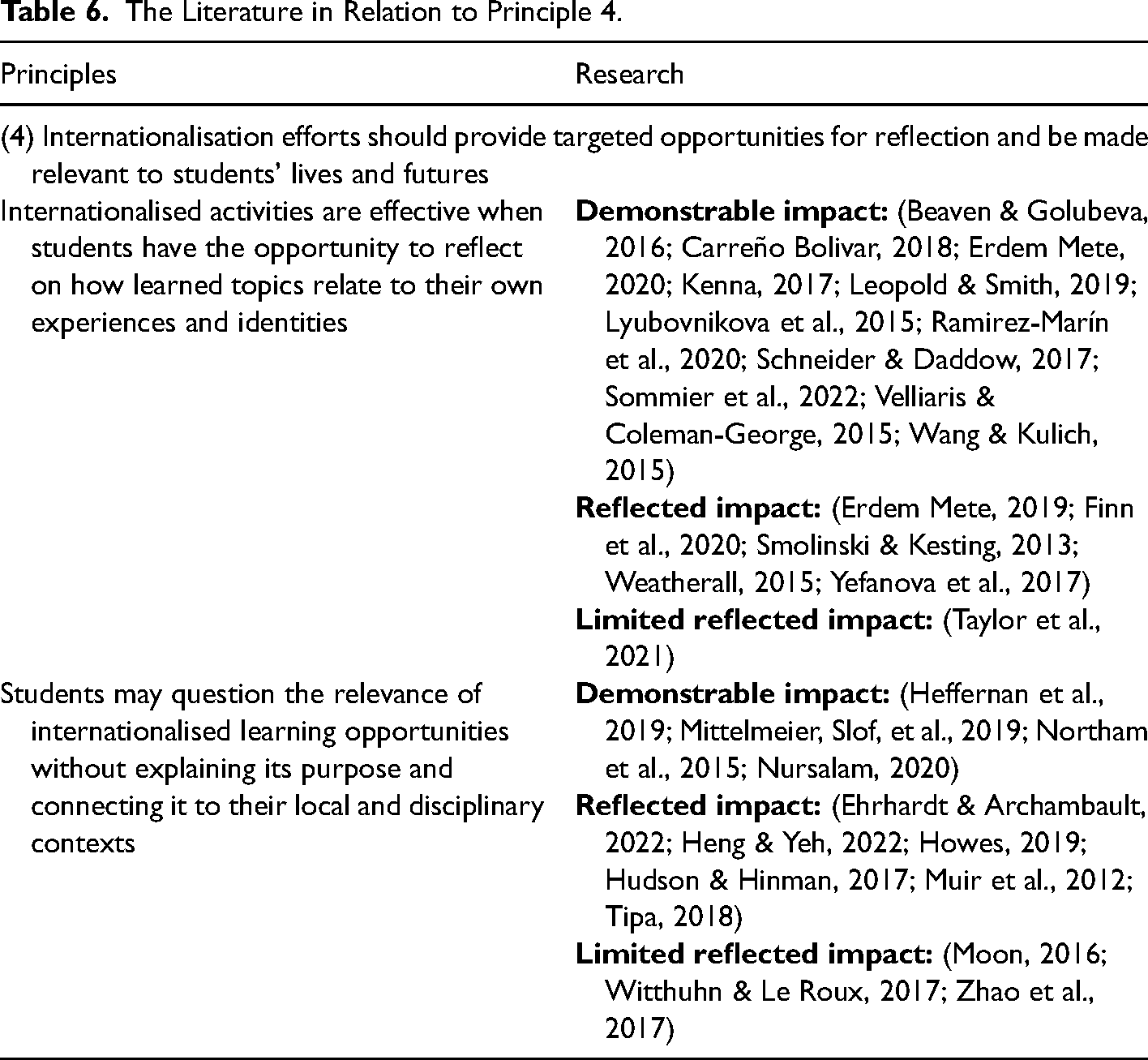
The Literature in Relation to Principle 4.
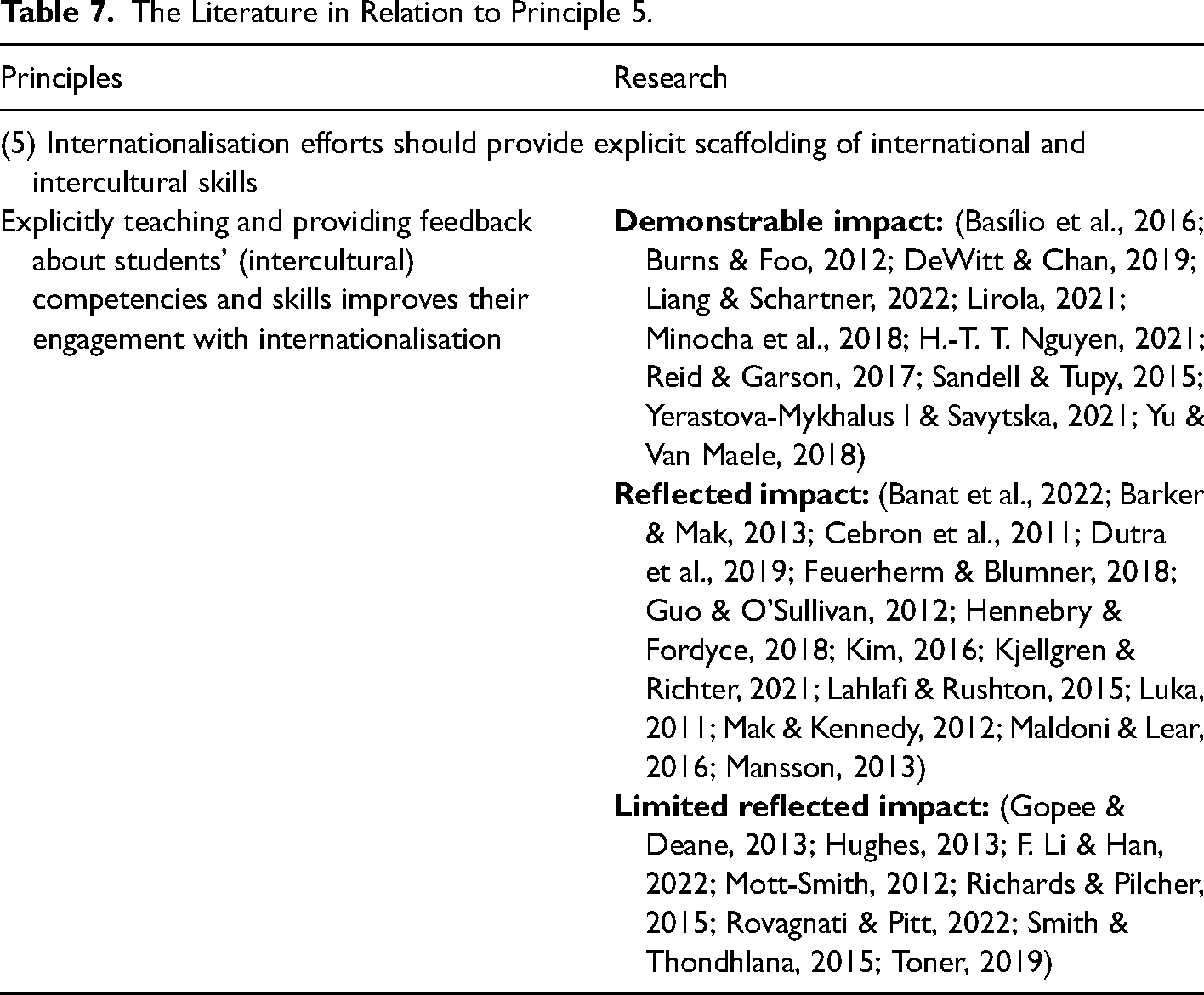
The Literature in Relation to Principle 5.
Findings
Thematic and Impact Categories Within Existing Research
Table 2 highlights the largest theme was international competencies development. Other popular topics included: language support, internationalised pedagogies, curriculum internationalisation, global social programming, study abroad, academic competencies, and online international partnerships. There are also several areas with less research: admissions/recruitment, assessment/feedback, international online/distance learning, classroom technologies, and work placements/service learning.
Most research did not explicitly evaluate impact on students’ outcomes or experiences, as only 22.8% (n = 233) of studies were categorised as “demonstrable impact”. Studies in other impact categories still make valuable contributions to knowledge, but we highlight there is a relatively limited evidence base. Thematic categories also had varied levels of impact evidence available. For instance, ‘intercultural competencies’ has a relatively strong evidence base, with 49 demonstrable impact articles (42.6%). However, several thematic categories have fewer studies showing demonstrable impact, including admission/recruitment of international students (n = 8, 21.1%), academic competencies (n = 4, 13.8%), and language support (n = 16, 27.6%). Therefore, more research designed to capture impact is needed across all thematic categories, but it is urgently needed in less developed thematic categories.
Research About Internationalisation as Siloed and Scattered
We identified significant siloing of academic disciplines. This is best demonstrated by the sheer volume of journals represented: the 967 articles were published in a staggering 493 different journals. Of those 493 journals, 73% included only one publication about internationalisation (n = 363), with the average being 1.96 articles (SD = 3.407). The most commonly included journals were Journal of Studies in International Education (n = 41), Journal of International Students (n = 37), and Higher Education (n = 31).
The 493 journal outlets demonstrate that research is prolific across disciplines, most prominently in education (n = 207 journals, 42%). Other disciplines included language studies (n = 55 journals, 11%), business and management (n = 30 journals, 6%), sociology (n = 28 journals, 6%), health and medicine (n = 23 journals, 5%), linguistics (n = 22, 5%), psychology (n = 12 journals, 2%), and library sciences (n = 8 journals, 2%).
A full citation analysis was beyond our scope, but is one suggested future area. For instance, we did a manual citation analysis of a sample of 20 papers in one thematic category and identified only 3 co-citations, each of which occurred only once. This suggests substantial siloing, echoing previous work (Lomer & Mittelmeier, 2023).
Principles of Effective Internationalisation Practices
Vast publication numbers mean there is an overwhelming amount of findings for researchers and practitioners to consider. Research primarily consists of smaller-scale studies within a single context, typically the author's own classroom (Lomer & Mittelmeier, 2023). This makes a synthesis of individual studies challenging (see our full project report - Mittelmeier et al., 2022) and transferability of activities difficult. Therefore, beyond the specific actions or approaches undertaken, there is value in synthesising underpinning principles in existing research that lead to impactful internationalisation across contexts. In line with Evans (2013) approach, we synthesised five core principles of effective internationalisation:
Internationalisation should be purposefully (re-)designed and embedded through a holistic campus approach Internationalisation efforts should centre inclusion and connection Internationalisation teaching should centre active and creative approaches Internationalisation efforts should provide targeted opportunities for reflection and be made relevant to students’ lives and futures. Internationalisation efforts should provide explicit scaffolding of international and intercultural skills
Each principle is described next. We include in each subsection a table of relevant literature from our scoping review with evidence for each principle. The full reference list is an online appendix.
Embedding Internationalisation as a Holistic Approach
Principle one (Table 3) shows approaches which have the greatest demonstrable impact on students are those which are purposefully (re-)designed to embed and center internationalisation (de Wit & Altbach, 2021). This shows that internationalisation cannot simply be ‘tacked on’ to existing course units or programmes, but must instead be holistically enmeshed throughout the formal curricula, pedagogies, intended learning outcomes, student support mechanisms, assessments, and informal curricula (and beyond) (Joseph, 2012). One illustrative example is from Carreño Bolivar (2018), who developed a new course unit on ‘intercultural studies and local identities’, aiming to strengthen students’ intercultural awareness and link internationalisation to locally-relevant practices. Internationalisation was purposefully built into a curriculum design that centered identity and nationality, interwoven through regular reflective activities and pedagogies that valued cultural knowledge sharing. Collectively, the research in Table 3 shows that internationalisation is more than just the presence of international topics and contact with people from other cultures, but must be explicitly centred throughout a holistic experience.
Centring Inclusion and Connection
Principle two (Table 4) outlines that social opportunities for students to connect with others fosters intercultural learning and belonging. While this is highly variable depending on students’ motivations and engagement, research is sufficiently convincing that social connections are important spaces for intercultural learning (e.g., Aaron et al., 2018). However, research also highlights that meaningful intercultural contact is frequently stymied by social divisions, biases, racism, xenophobia, and stereotyping (Hou & Pojar, 2020). These stereotypes may be unpredictable and dynamically develop in response to, for example, geopolitical events. Therefore, impactful internationalisation acknowledges and addresses these inequalities and divisions, purposefully and proactively tackling manifestations of injustice. An illustrative example is the development of an anti-xenophobia programme based on student experiences in a rural South African institution (Obadire, 2018).
Although in less focus, another consideration is for transformative internationalisation approaches that counter Eurocentrism and Westernisation, particularly through decolonisation efforts. Developing a critical global awareness of underpinning coloniality within international structures and practices allows students to challenge assumptions that shape power in internationalisation by centring international justice as a guiding principle (Nursalam, 2020). An illustrative example is the development of a ‘postcolonial learning design’ in Sino-British transnational higher education, which enabled students to explore indigenous knowledge while interrogating ‘Western’ frameworks (Wang et al., 2022).
Relatedly, multilingual and non-oracy-based teaching approaches and social communication opportunities are found to support inclusive learning in intercultural settings. The assumption of most practice, particularly in Anglophone and ex-imperial destinations, has been that teaching should be provided exclusively in the language of instruction, such that multilingual support has only recently become a focus for pedagogic innovation. Yet our synthesis suggests that there is good evidence in support of interventions that, for example, develop bilingual glossaries (Ashton-Hay et al., 2021) or library support resources (Li et al., 2016).
Developing Active and Creative Learning Approaches
Principle three (Table 5) highlights that active, creative, and collaborative learning pedagogies can provide meaningful opportunities for internationalised learning. These pedagogies are well established in the scholarship of teaching and learning literature, but it is only comparatively recently that literature has explored the intersection between internationalised contexts or curricula and active learning pedagogies. Widespread stereotypes of international students as shy, reserved, and culturally opposed to active and group-based learning (Matsunaga et al., 2021) have mitigated recognition of this intersection. However, our synthesis demonstrates that structured active learning, explicitly designed sensitively for intercultural cohorts, can be successfully implemented in a range of national contexts, disciplines, and with large cohorts.
There has been a frequent assumption that intercultural pedagogies must rely on multicultural group work, often assessed, where research has highlighted a range of challenges (Liang & Schartner, 2022). However, our synthesis demonstrates that possibilities extend beyond this, including project-based learning (Barak & Yuan, 2021) or role-play (Léon-Henri & Jain, 2017), tailored approaches such as drama-based methodology (Harvey et al., 2019), blog writing (Lomer & Anthony-Okeke, 2019), or simple activities such as peer feedback (Yefanova et al., 2017). These approaches all share recommendations for implementation that involve teaching the process of group work and foundational intercultural skills (Liang & Schartner, 2022; Reid & Garson, 2017).
Our synthesis also shows that experiential learning such as study abroad, virtual mobility, or work placements provides opportunities to meaningfully engage with other cultures. Study abroad and work placements have a particularly substantial impact on intercultural outcomes. Virtual mobility, or Collaborative Online International Learning (COIL), is an emerging research area, and similarly demonstrates positive outcomes. These are all undoubtedly resource-heavy interventions, with complex issues of equity to navigate, since study abroad is more accessible to more financially privileged students (even where most costs are institutionally provided) and obtaining work placements often relies on students’ social networks and capitals.
The evidence also highlights that co-construction with students as partners strengthens experiences. Like the broader literature on active learning pedagogies, students as partners in higher education is an established pedagogic approach which is understood as a process of student engagement in designing and researching learning, teaching, and assessment. However, the extant research connecting internationalisation with students as partners is limited. The few studies identified here present a convincing case for involving students as partners in, for example, assessment (Taylor et al., 2021) and learning design (Wood & Cajkler, 2016).
Digital tools and technologies similarly offer increased opportunities for students to engage with other cultures and contexts. Our synthesis highlights that digital technologies can facilitate international learning through remote partnerships and encourage active learning with large international cohorts. One illustrative example is the creation of collaborative digital stories using photos and videos based on a real-life intercultural communication experience, presented and discussed in class (P. M. Ribeiro, 2016).
Providing Opportunities for Reflection and Personal Connection
Principle four (Table 6) highlights reflection as key to meaningful internationalisation. Research which identified successful outcomes tended to be those which provided students with time and space to reflect on how the topics discussed apply to their own lives, identities, and futures. Examples include the use of learning diaries (Sommier et al., 2022), blogs (Lomer & Anthony-Okeke, 2019), or debriefing experiences (Erdem Mete, 2019), among others. Individual approaches varied, but the literature shows that internationalisation influences students best when it is personally relevant (i.e., connected with) rather than information transmitted (i.e., learned about).
The literature also demonstrates this principle through its inverse: students often question the purpose and relevance of learning about internationalisation when it is not purposefully connected to their local realities, disciplines, and future careers (e.g., Ehrhardt & Archambault, 2022). Therefore, impactful internationalisation is purposefully situated within local contexts and disciplinary learning.
Explicitly Scaffolding Skills
Principle five (Table 7) demonstrates the need for explicit scaffolding of skills, specifically for the intercultural competencies required for engagement in an internationalised university and curriculum. The principles of respect for difference and avoidance of stereotypes, and the skills to overcome communication barriers or negotiate conflicting expectations, are often learned only through experience and reflection (principles two and four). Group work (principle three) often surfaces the absence of these skills and principles, sometimes with high-stakes consequences, such as in assessment (Liang & Schartner, 2022). Therefore, impactful internationalisation will likely need to embed these skills gradually through the curriculum, develop assessments that stage the complexity of intercultural skills required, and incorporate skills as curricular outcomes with explicit subject material for some learning opportunities.
Discussion and Conclusion
This scoping review synthesised 967 published articles about internationalisation and how it impacts students in higher education. This serves as a significant resource for researchers and practitioners by summarising what is known about effective internationalisation through the last decade of research. Our review outlines a prolific subfield which is scattered rather than cohesive, with a tendency to be descriptive rather than provide demonstrable evidence for impact. While there is also extensive critical and conceptual literature offering nuanced insights, this is often divorced from empirical scholarship, particularly that which focuses on students.
Internationalisation has been described as a disrupting force on higher education practices which has significantly influenced nearly all university activities over the last few decades in many contexts (Hudzik, 2014). The benefits of internationalisation for students’ learning and development are often part of an idealist vision for the purpose of global higher education (Tight, 2021). Yet, this vision currently is only partially evidenced in research, despite prolific publication, as shown by the comparatively small number of included studies which were designed to show demonstrable evidence for impact on students (22.8%). This highlights a need to develop more complex research designs which collect evidence for whether and how internationalisation activities influence students’ outcomes and experiences. In particular, we urge future research to consider replicability, transferability, and generalisability, to test whether findings highlighted here are applicable beyond their institutional containers (see our previous analysis - Lomer & Mittelmeier, 2023).
Yet, building on the approach by Evans (2013), there is enough available evidence to identify five clear principles of successful internationalisation for students. These provide guidance for practice by highlighting ‘what works’ in internationalisation: purposefulness and embedded approaches, engagement with social inequalities, active and creative learning, space for reflection, and explicit scaffolding of intercultural skills. Internationalisation, therefore, should be holistically planned by institutions across teaching, student support, extra-curricular activities, and (although this review did not include these in the discussion) policy, staff training, research, professional services, and administration. Additive or optional approaches that see internationalisation as isolated to the study abroad office, the curriculum initiatives led by passionate members of staff, flagship programmes or classes, or international student recruitment, are unlikely to capitalise on the full potential benefits for students. Together, this also highlights that what makes internationalisation meaningful is often a set of guiding ethos and intentionality, rather than specific actions.
These findings are significant, considering our prior work has outlined that the vast majority of institutional strategies about internationalisation focus on research and international student recruitment, rather than issues of student experience, pedagogies, or curricula (Lomer et al., 2023). Therefore, there is a need for strategic focus not just on what universities can gain from internationalisation (particularly in terms of research funding or impact and tuition fees), but also what it contributes to the development of graduates with critical, ethical, and meaningful intercultural competencies and experiences.
Supplemental Material
sj-docx-1-jsi-10.1177_10283153231222278 - Supplemental material for Developing Meaningful Internationalisation that Impacts Students’ Outcomes in Higher Education: A Scoping Review of the Literature 2011–2022
Supplemental material, sj-docx-1-jsi-10.1177_10283153231222278 for Developing Meaningful Internationalisation that Impacts Students’ Outcomes in Higher Education: A Scoping Review of the Literature 2011–2022 by Jenna Mittelmeier, Sylvie Lomer, Said Al-Furqani and Daian Huang in Journal of Studies in International Education
Footnotes
Declaration of Conflicting Interests
The author(s) declared no potential conflicts of interest with respect to the research, authorship, and/or publication of this article.
Funding
The authors disclosed receipt of the following financial support for the research, authorship, and/or publication of this article: This work was supported by the Advance HE, (grant number ADV003).

Supplemental Material
Supplemental material for this article is available online.
Author Biographies
References
Supplementary Material
Please find the following supplemental material available below.
For Open Access articles published under a Creative Commons License, all supplemental material carries the same license as the article it is associated with.
For non-Open Access articles published, all supplemental material carries a non-exclusive license, and permission requests for re-use of supplemental material or any part of supplemental material shall be sent directly to the copyright owner as specified in the copyright notice associated with the article.
