



Abstract
In this paper we consider the experiences of international students studying in Norway, analysing data from more than 5,000 survey respondents. Variations according to students’ region of origin and whether they are full degree students or exchange students are the focus. Students report a high level of overall satisfaction, exchange students in particular, and the vast majority of students are content with the quality of teaching. Students from the African continent report being more content than others, despite struggling somewhat more with academic demands and having weaker social networks, something they have in common with Asian students. Multivariate analyses show that type of mobility (full degree cf. exchange), region of origin, coping with academic demands, satisfaction with teaching and interaction with Norwegians are predictors of overall satisfaction with studying in Norway. The patterns observed are assumed to be related to prior experiences and expectations.
Keywords
Introduction
International student mobility (ISM) has increased substantially in the last two decades. The number of students enrolled in higher education institutions (HEIs) beyond their home country increased from 2.1 million in 2000, to more than 6.1 million in 2018 (OECD, 2021). In addition to students moving abroad to pursue a full degree, many students take shorter (exchange) sojourns as a part of a degree in their home country. While exchange mobility mostly takes place between Western countries, most students taking a full degree abroad go from Asian and less developed countries to highly developed countries. North America, the UK and Oceania are attracting the highest number of such students (OECD, 2019). But less established destination countries are also experiencing an increased inflow of students, and Norway is an example of the latter. The number of foreign-born students in Norwegian HEIs has more than quadrupled since 2000 (DBH, 2020).
As pointed out by Alemu and Cordier (2017), there is limited knowledge about international students in countries that are emerging as contenders, especially non-English speaking countries. Norway is an interesting case to investigate from this perspective, due to the policy context as well as the composition of international students. Policy aims for recruiting international students to Norway have so far been founded on academic rationales (Ministry of Education and Research, 2009, 2017, 2020), contrasting with the predominantly economic rationales of many other countries (Lomer, 2018; Rizvi, 2011; Sin et al., 2019). Norway attracts almost equal proportions of full degree students and exchange students, hence we have the opportunity to explore differences between these groups, rarely addressed in previous research.
It has been pointed out that international students constitute a heterogenous group, and that differences in cultural, linguistic and socioeconomic background need to be considered (Hanassab, 2006). Differences in background are likely to influence students’ experiences and outcomes, and more research addressing this needed. This exploratory study accounts for some aspects of heterogeneity such as region of origin and type of study sojourn (full degree cf. exchange). We investigate the experiences of various groups of international students studying in Norway, and how these are related to social networks, coping with academic demands, and perceived quality of teaching.
Patterns, Drivers and Motivations
The reasons why ISM has become more widespread are related to market mechanisms, development in infrastructure, internationalisation policies and more. Higher education (HE) is increasingly marketised, and international students are increasingly seen as a revenue source (Beech, 2018; Robertson & Keeling, 2008; Slaughter & Rhoades, 2004). Technological developments have made information about HE more easily accessible and travelling costs have generally declined. Further, internationalisation of HE is high on the policy agenda in many countries. ISM is a visible manifestation of internationalisation and facilitating shorter sojourns abroad has become an essential part of national and institutional strategies for internationalisation, particularly in Europe.
The motivations of the students themselves are complex and overlapping, but often divided into two main categories; push- and pull factors (Altbach, 1998; Maringe & Carter, 2007; Mazzarol & Soutar, 2002; Nghia, 2019; Wadhwa, 2016). Pull factors describe features of the host country that attracts, such as opportunities for cultural learning, personal development, perceived quality, enhanced career opportunities or lower costs (Brooks & Waters, 2011; Bryntesson et al., 2018; Sin et al., 2019; Wadhwa, 2016). Push factors describe features of the home country that makes students want to leave, such as lack of study places, perceived low quality, or political instability/low security (see e.g., Li & Bray, 2007; Maringe & Carter, 2007). The latter type of motivation is more often shown in research on students from developing countries. However, admission restrictions are also relevant to certain groups of students from Western countries (Brooks & Waters, 2009; Findlay et al., 2011; Hovdhaugen & Wiers-Jenssen, 2021a, 2021b).
Rivza and Teichler (2007) distinguish between vertical and horizontal mobility. Vertical mobility refers to moving to a country of perceived higher standards, educationally or economically, while horizontal mobility refers to moving to a country of similar conditions. Vertical and horizontal mobility may involve quite different experiences and challenges, influence how students assess their study sojourn, and how their networks are formed. Also, the educational model that students are accustomed to may influence how students experience being an international student. HE has been categorised by some scholars according to three models: the Humboldtian, the Napoleonic and the Anglo-Saxon models (Sam & van der Sijde, 2014). These models reflect the emphasis on research, professional knowledge and self-development, respectively, and are also related to matching pedagogical modes. Although these models increasingly overlap, such categorisations illustrate that students with backgrounds in different educational systems may have different expectations of their learning experience abroad.
Previous Research
Studying abroad involves a range of challenges, such as mastering language, academic demands and pedagogical approaches as well as personal and practical issues such as social networks and cultural adaptation. Traditionally, research on international students has tended to focus on adaptation problems and negative experiences (Ward et al., 2001; Zhou et al., 2008). In the last couple of decades, studies addressing a wider range of topics have emerged, such as motivation, study engagement and satisfaction with study programme. Below, we will refer to some examples of research contributions that have addressed the topics examined in this paper: satisfaction, coping with academic demands, social networks and how these topics may be related.
Student Satisfaction
The marketisation of HE has generated increased interest in how students evaluate their student experience, and surveys of international students are often used to establish benchmarks for HEIs. Some surveys have also been used for research purposes. Perrucci and Hu (1995) investigated the academic satisfaction of international graduate students in the USA as early as in in the 1990s, finding that higher academic satisfaction was closely related to increased contact with local students, stronger language skills and (absence of) perceived discrimination. A study based on the International Study Barometer (ISB) found that international students in the UK, Australia and the USA are generally quite satisfied with their overall student experience, and that satisfaction with the learning experience was decisive for overall satisfaction (Ammigan & Jones, 2018). Also based on the ISB, Merola et al. (2019) found substantial differences in satisfaction among students of different nationalities, with Indian students being more content than either Chinese or South Korean students. Variations according to geographical background was also shown in a study of international students in Korea: students from a close cultural sphere (East Asian) were more satisfied than students from other countries (Alemu & Cordier, 2017).
Coping with Academic Demands
Some research contributions have shown that international degree students struggle with academic demands (e.g., Jochems et al., 1996). A study from the Netherlands found that students from Western countries perform well, while students from Non-Western countries struggle more (Rientes et al., 2012). The authors relate this to lower levels of academic integration among students from Non-Western countries. But there is also research showing that international students cope well. A study from the USA showed that international students were more likely than local students to engage in educational practices that are seen as purposeful regarding high levels of learning and personal development (Zhao et al., 2005).
Social Networks and Integration
International students form networks with co-nationals, other international students and students from the host country. These networks have been shown to serve different purposes (Bochner et al., 1977; Van Mol & Michielsen, 2015). Several studies have shown that interacting frequently with people from the host country has a positive impact on students’ satisfaction (Hendrickson et al., 2011; Wiers-Jenssen, 2008) and general adaptation (Zimmermann, 1995). But many studies have revealed that international students have limited interaction with domestic students (Brown, 2009; Sawir et al., 2008; Williams & Johnson, 2010), implying weaker social and academic integration.
A Dutch study comparing several groups of international students to domestic students in the found that European students score similarly to Dutch students on academic as well as social integration, while Asian students scored lower (Rientes et al., 2014). Research addressing European exchange students has shown that the interaction pattern of this group relies relatively less on co-nationals (Van Mol & Michielsen, 2015).
The literature reviewed above has shown that satisfaction among international students is associated with factors like students’ region of origin, motivations, assessment of academic quality and social and academic integration. It also indicates that the networks of exchange students are different from degree students, but that both groups mix less with students from the host country than with other international students. Studies comparing exchange and degree students are rare, hence it is an open question whether exchange students and degree students diverge regarding satisfaction and coping with academic demands.
The Norwegian Context
Norway has a long tradition of outbound mobility, while inward mobility is a more recent phenomenon. The number of bachelor's and master's degree students with foreign citizenship has risen from 5,611 in 2000 to 23,725 in 2019 (DBH, 2021). The sharp growth in inward ISM is highly influenced by the fact that more courses and programmes in English are being offered, due to internationalisation policies. International students in Norway are seen as prerequisites for creating international campuses, and this is perceived as enhancing quality in HE (DIKU, 2019b, 2019c; Ministry of Education and Research, 2009, 2020). Quality is an academic rationale, and the most prominent policy rationale for ISM in Norway. However, cultural, political and economic rationales are also present (DIKU, 2019b; Ministry of Education and research, 2009, 2020; Wiers-Jenssen, 2019). The fact that most HEIs are public and do not charge tuition fees has become a comparative advantage, as more HEIs around the world charge fees.
Asking the international students, they advise that the absence of tuition fees and courses in English are the most strongly emphasised reasons for studying in Norway (DIKU, 2019a; Wiers-Jenssen, 2019). In addition, they put weight on the fact that that Norway is a peaceful and safe society and is perceived as having quality HEIs. International students in Norway appear to be students searching for education of decent quality taught in English in a safe, western country at a reasonable cost, rather than students searching for the highest level of institutional prestige.
The largest numbers of degree students in Norway come from China, Sweden, Germany and Denmark, with Nepal, India, Syria and Iran next in line (DIKU, 2020). Exchange students mainly come from Europe: Germany, France, Italy, Spain and the Netherlands in particular (DIKU, 2020).
Upon graduation, students from EU and EEA countries are entitled to stay in Norway for six months to apply for jobs. Citizens from other countries may also apply for a working permit if they have skills in high demand (e.g. nursing). However, there is no explicit policy for skilled migration in general. On the contrary, avoiding ‘brain drain’ from developing countries has traditionally been a vital part of Norwegian policy for ISM (Ministry of Education and Research, 2020).
Research Questions
We used an exploratory approach, addressing several aspects related to how international students assess and cope with studying in Norway: overall assessment, perceived quality of teaching, coping with academic demands and what social networks they form. We also look at how these factors are related by investigating factors influencing the students’ overall assessment of their current study programme in Norway. More specifically, we ask:
What overall impression do international students have of their study programme in Norway? How do students perceive the quality of teaching? How do they cope with academic demands? How are the social networks of international students composed? Are there differences in satisfaction and social networks according to type of study sojourn (degree mobility vs credit mobility) and region of origin? To what extent is overall assessment related to region of origin, coping with academic demands, social networks and perceptions of quality of teaching?
Based on previous research, we anticipate that students from non-western countries would face more challenges regarding social networks and coping with academic demands. Further, we assume that students from Nordic countries would experience fewer challenges, due to linguistic and cultural proximity. It is less obvious how geographical background will influence satisfaction with study sojourn and teaching, and if there are differences between full degree and exchange students.
Data and Methods
We used survey data collected over a five-week period in March and April 2019, conducted by DIKU (The Norwegian Agency for International Cooperation and Quality Enhancement in Higher Education). The survey was distributed by email, and three reminders were sent. The vast majority of HEIs in Norway (24) were included in the sample and provided email addresses to all their students with foreign citizenship. The survey was distributed to 15,209 students, who were ascertained that their anonymity was guaranteed.
International students are defined as bachelor's and master's students who have come to Norway with the purpose of studying, on a sojourn lasting three months or more. As semesters in Norway last for approximately four months, this implies that most students staying less than one full semester are not included. A screening question was used to single out students who had come to Norway for reasons other than HE, and 1,431 students (22%) of the gross respondents were excluded from the survey.
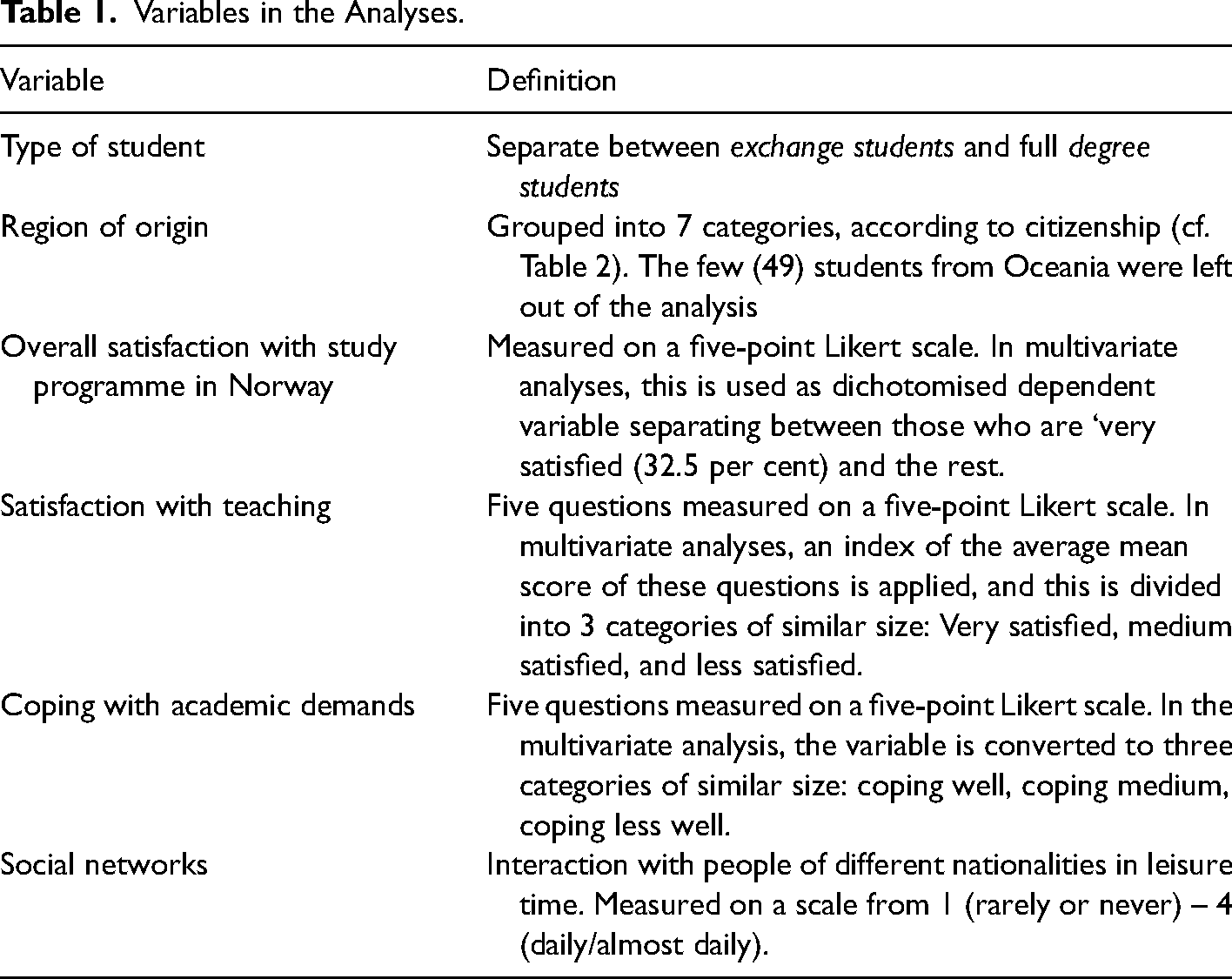
The calculation of response rates is complicated by the fact that we do not have information on the exact number of non-respondents not belonging to the target group. If we calculate response rate from the gross sample, the 6,508 responses correspond to a response rate of 43 per cent. If we assume that the proportion not belonging to the target group is approximately the same among respondents and non-respondents (22 per cent) and exclude these from the gross sample, the estimated net sample is 11,863 students, corresponding to a response rate of 55 per cent. In any case, the response rate is high, and the large number of respondents allowed us to break down results into sub-groups. For more information on sampling and data collection, see DIKU (2019b). Definitions of variables included in the analyses are shown in Table 1.
Variables in the Analyses.
Methods
Bi- and tri-variate analyses were used for descriptive results, and reported according to type of sojourn (exchange vs. degree) and region of origin. Binominal logistic regression analyses were used to investigate how overall satisfaction was influenced by other variables.
Results
Who are International Students in Norway?
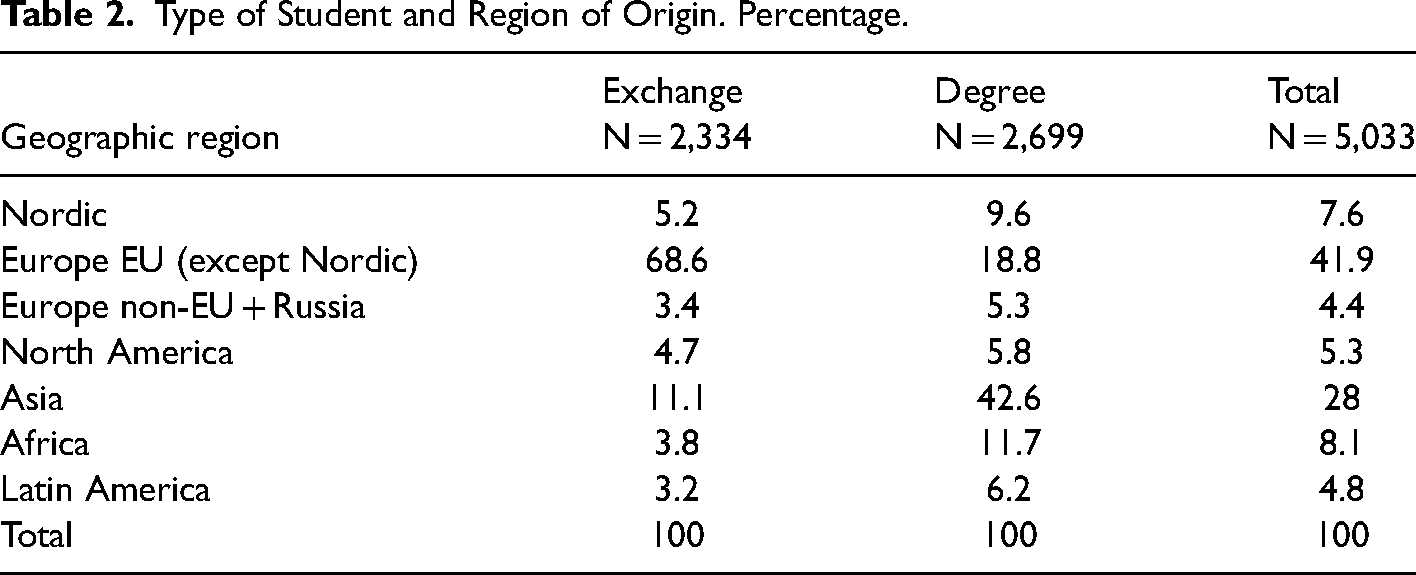
Before reporting on the main topics of this paper, we have provided some information on the composition of the students in our dataset. International students consist of two groups of similar size: exchange students, taking a sojourn in Norway as a part of a HE degree in another country, and degree students, taking a full degree in Norway. Students from Europe make up most exchange students, while degree students are recruited from more parts of the world, with many coming from Asia Country of origin is categorised here into seven groups (Table 2).
Type of Student and Region of Origin. Percentage.
Natural science is the most popular field of study, followed by arts and humanities and economics and business studies. Compared to domestic students, international students are overrepresented in natural science and technology. Degree students are mainly master's students (83%) while exchange students are predominantly bachelor's students (76%). There are more women among the exchange students (61%) than among full degree students (51%). Half the students are enrolled in the four oldest (and more prestigious) universities.
Overall Assessment of Current Study Programme
Students were asked to express their view on the statement ‘Overall I am satisfied with my current study programme in Norway’ (Figure 1). More than eight out of ten students agree, and very few disagree. The proportion that ‘strongly agree’ is significantly higher among exchange students compared to degree students (38 cf. 28 per cent). Students from the African continent are the most satisfied, followed by students from Europe.
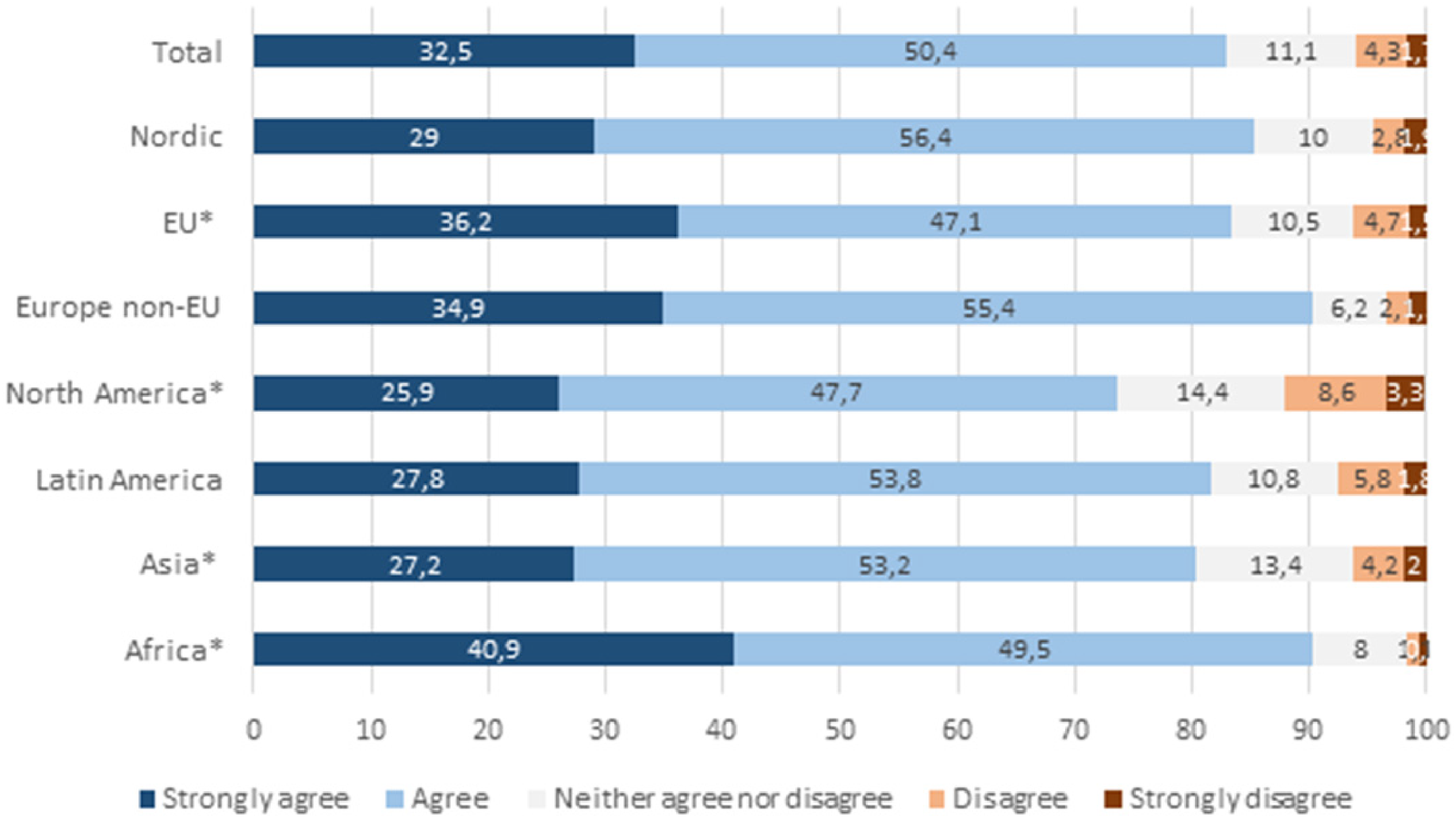
Overall assessment with current study programme in Norway. Proportion that agrees or disagrees that they are satisfied. * Proportion ‘strongly agree’ statistically significant from the total sample (p < .05).
Perceptions of Teaching
Many aspects of quality of HE could be relevant to investigate, but we have chosen questions regarding teaching and feedback, as such factors has been shown to be crucial regarding students’ overall assessment of their study programme and HEI (Ammigan & Jones, 2018; Wiers-Jenssen et al., 2002) (Table 3).
Assessment of Teaching and Feedback. Mean Scores on the Scale 1 (very dissatisfied) to 5 (very satisfied).
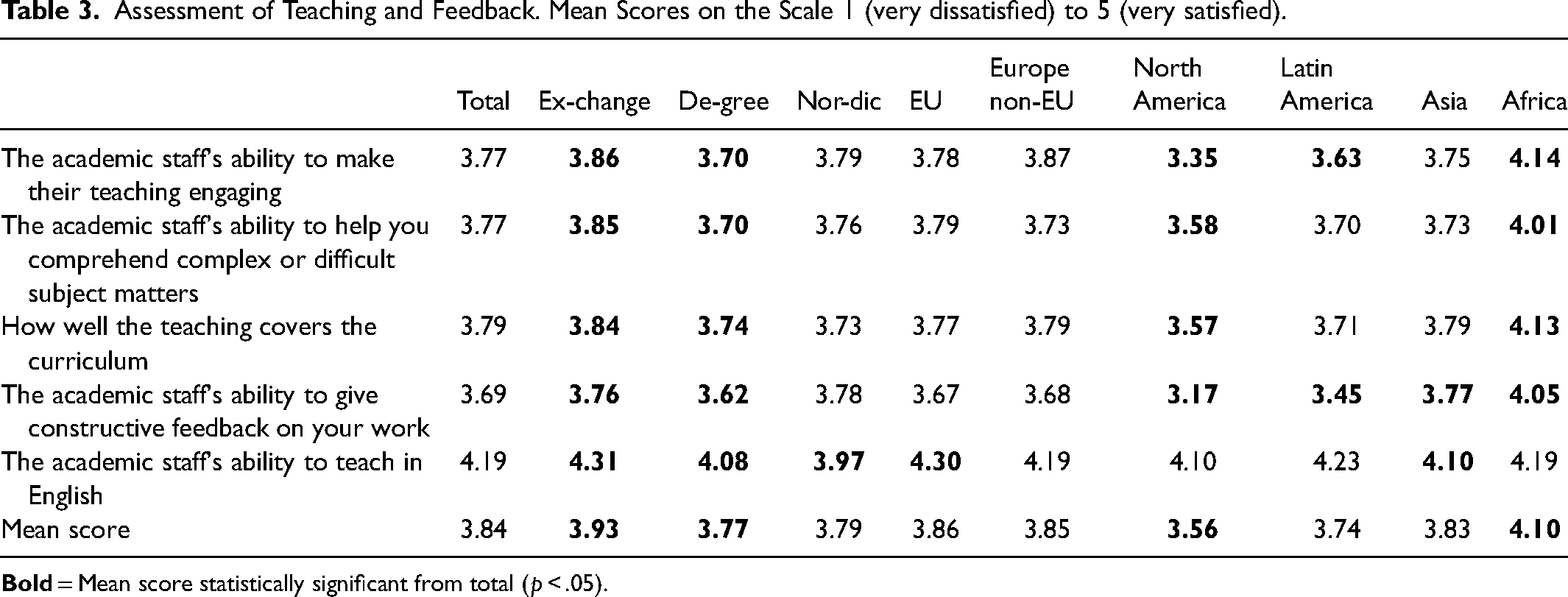
The aspect of teaching that students are most satisfied with is the teachers’ ability to teach in English, while feedback is least positively assessed. Feedback has been shown to be a weak spot among domestic students as well (Stabell et al., 2020; Wiers-Jenssen et al., 2002). Exchange students are generally more satisfied than degree students. Students from African countries give the most positive assessments, while students from North America are the least positive. The difference between African and North American students is most striking regarding feedback; while eight out of ten Africans report to be satisfied, this is true for just under half of the North Americans.
Exchange students were asked to assess the academic level of their Norwegian institution compared to their home institution. Nearly half of the North Americans perceived the quality of their Norwegian institution as lower than their home institution. In contrast, students from Africa, Asia and Non-EU Europe mainly found their Norwegian institution to be of higher quality than their home institution. Even if we do not have similar information for degree students, this clearly illustrates that the students’ assessments are related to prior experiences and expectations, and that their assessments are relative.
Coping with Academic Demands
Students were asked to state whether they agreed or disagreed with a list of demands and workloads (Table 4). A higher score means there was a perception that demands and workloads were more challenging.
Assessments of Academic Demands. Mean scores on scale 1 (strongly disagree) – 5 (strongly agree).
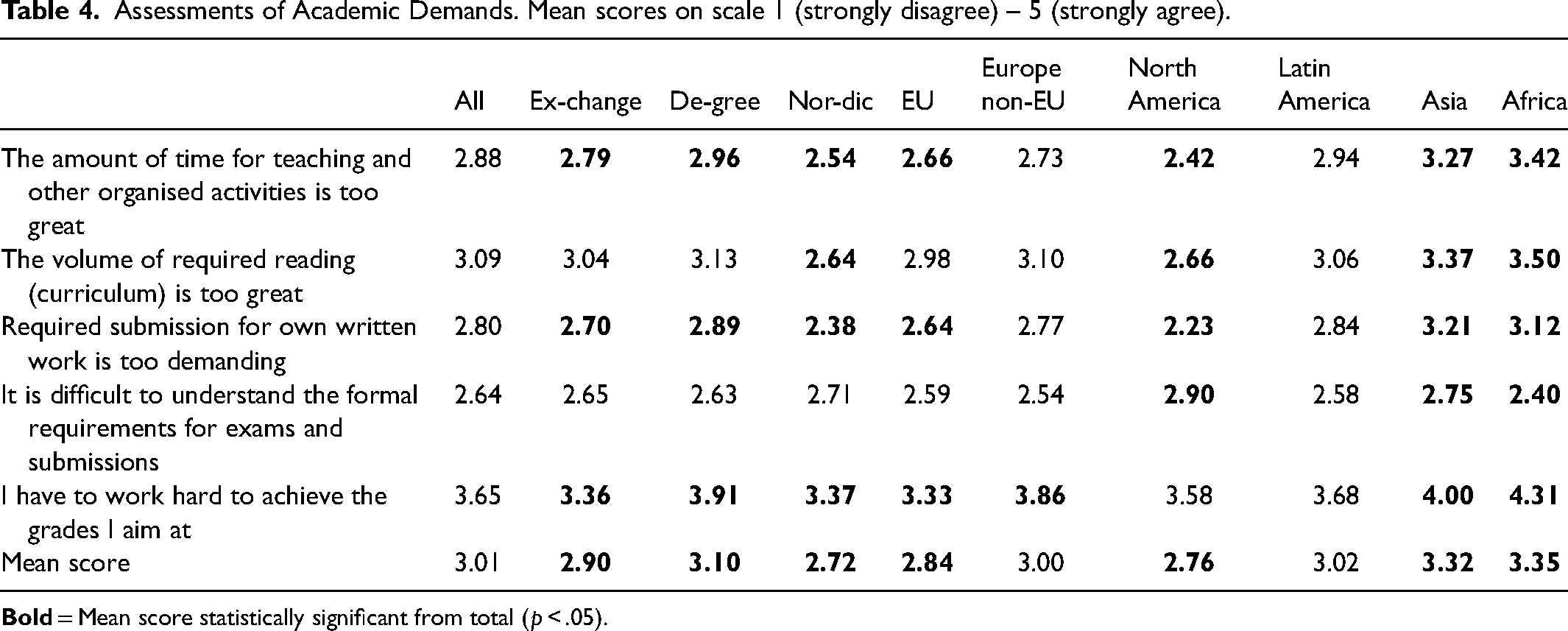
Generally, students do not find their studying to be too demanding, and average scores fluctuate around 3, corresponding to the ‘neutral’ category. However, there are variations between groups. Degree students find coping with academic demands slightly more challenging than exchange students. Students from African and Asian countries find it more challenging, while students from the Nordic countries and North America report to struggle less. We note that there is one task that appears to be more challenging for North Americans than for others: understanding the formal requirements for exams and submission.
Social Networks
As seen in the literature review, students’ academic and social integration and networks may be important for students’ learning and satisfaction. Mean scores for interaction according to type of sojourn and region of origin are shown in Figure 2. There were no differences between exchange and degree students in the frequency of interaction with Norwegians, but exchange students have more contact with co-nationals and other international students.
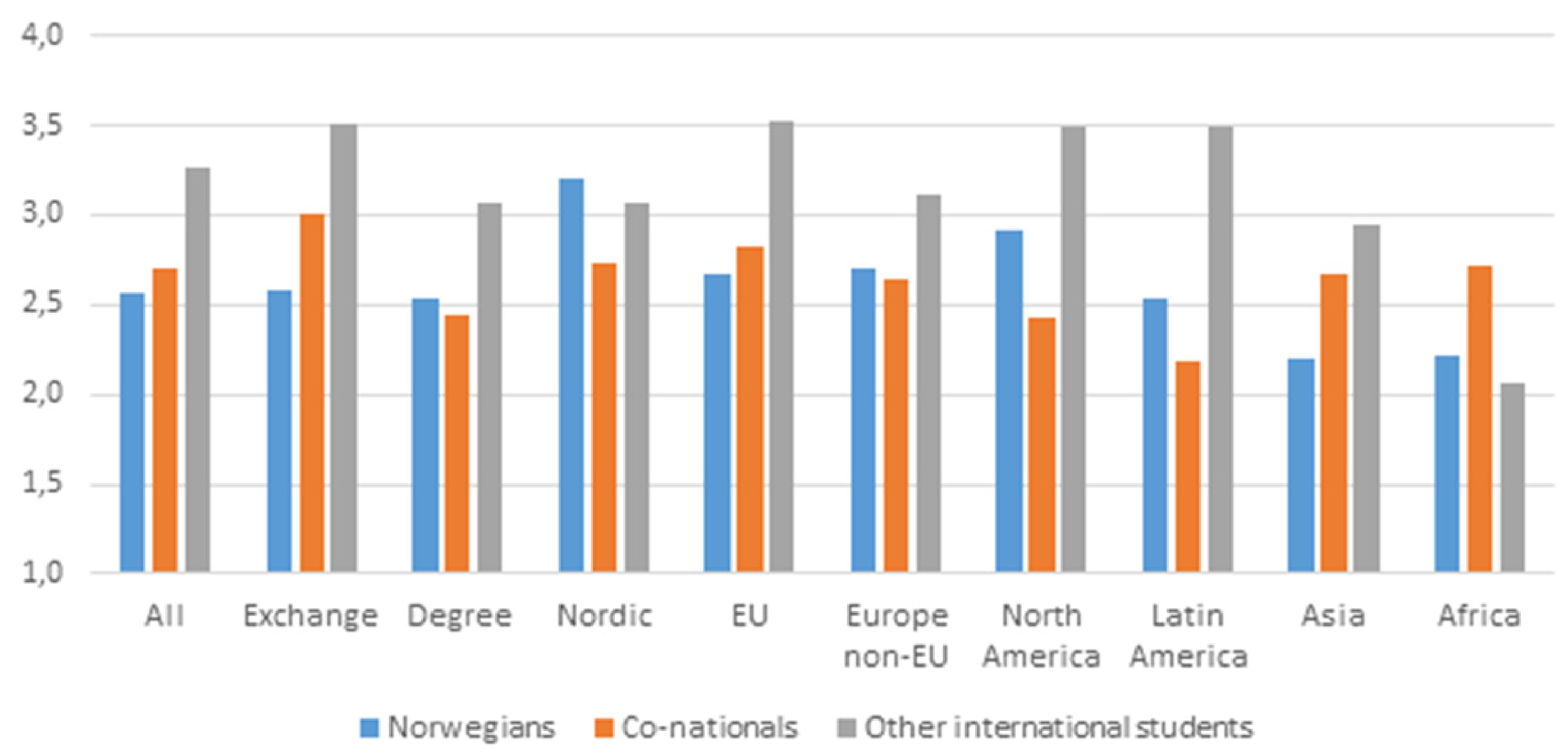
Interaction with different groups of students in leisure time. Score 1 (rarely or never) to 4 (daily/almost daily).
Students from Nordic countries interact more with Norwegians than any other group. These students are more likely to be enrolled in programmes in Norwegian, as Scandinavian languages are similar. Students from Asian and African countries have the lowest level of interaction with Norwegians. Less than half of students from these regions had contact with Norwegians on a weekly basis, and four out of ten African students reported that they rarely or never interacted with Norwegians in their leisure time. We also note that Asian and African students have a lower level of interaction with other international students than others, and this is particularly striking for African students.
The Relationship between Overall Assessment of Study Programme and Other Variables
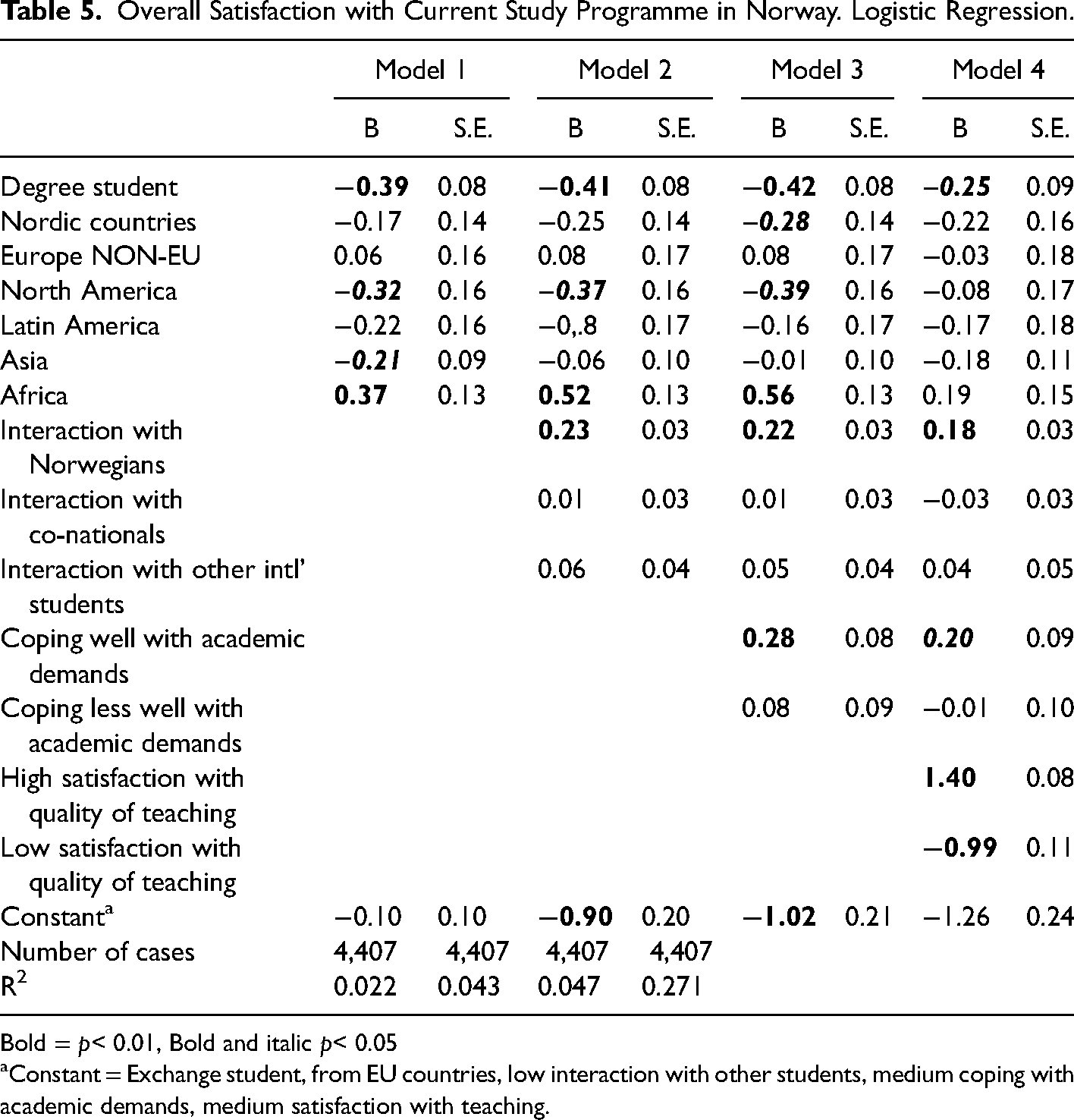
The patterns we have observed are complex, and we assume that several variables are interrelated, e.g., that assessment is related to whether the student is an exchange or a degree student and what region students come from. Bivariate logistic regression analyses were conducted to investigate how overall satisfaction with the study programme is influenced by other variables (Table 5). For these analyses, overall satisfaction was dichotomised, distinguishing between students who strongly agree that they are satisfied (32.5 per cent) and the rest.
Overall Satisfaction with Current Study Programme in Norway. Logistic Regression.
Bold = p< 0.01, Bold and italic p< 0.05
Constant = Exchange student, from EU countries, low interaction with other students, medium coping with academic demands, medium satisfaction with teaching.
Model 1 includes the two variables we controlled for in the bivariate analyses: type of sojourn and student's region of origin. Being a full degree student has a negative impact on overall satisfaction, so has originating from North America and Asia. Originating from African countries displays a positive impact.
In Model 2 interaction with different nationalities in leisure time is introduced. Interaction with Norwegians is positively related to satisfaction, while interaction with people of other nationalities is not.
In Model 3 we introduced how students cope with academic demands. Coping well is positively related to overall satisfaction, while coping less well displays no significant effect.
In Model 4 we introduced satisfaction with the quality of teaching. Not surprisingly, positive assessment of teaching has a strong impact on overall satisfaction, while a negative assessment has a negative impact. Being a degree student remains negative, and interaction with Norwegians and coping well with academic demands remain positive. However, the effects of region are no longer statistically significant when satisfaction with teaching is introduced.
We also tested models including gender, age, parents’ education, academic level (bachelor's / master's) subject field and type of institution, but none of these variables showed significant effects, and these models are not shown here. We also ran separate analyses for exchange and degree students and found that the positive effect of African origin on satisfaction is valid for degree students only. As most students from this region are degree students this does not alter the overall picture.
Discussion
In this study we mapped the experiences of international students in Norway, showing that students generally report a high level of overall satisfaction with their study programme and with teaching and that they cope well with academic demands. Results have also shown variations in satisfaction and coping, and that composition of social networks varies according to region of origin and type of sojourn.
Exchange students are more content than degree students, and this finding also holds through multivariate analyses when region of origin and a range of other variables are controlled for. There may be several explanations for this. Exchange sojourns may in general be more facilitated. It could also be that students who spend just a few months abroad do not worry too much about challenges and shortcomings, as the main part of their degree is taken elsewhere. Further, exchange students may still be in what Oberg (1960) describes as the ‘honeymoon’ stage of the sojourn, occurring before a more realistic perception of challenges related to living abroad emerges. The higher level of satisfaction can also be related to the students’ motivations for coming to Norway. It is reasonable to assume that exchange students mainly exhibit the ‘pull type’ of motivation, while degree students have more mixed rationales for studying abroad.
Students from African countries report a more positive overall assessment of their study programme compared to students from other regions. Multivariate analyses show that this is related to their positive perceptions of the quality of teaching. African students are satisfied with the study sojourn, despite facing more challenges with academic demands and having a less extensive social network, factors that generally have a negative influence on overall satisfaction. As we do not see the same patterns for students from other regions of developing countries such as Latin America and Asia, we cannot confirm that this pattern per se is associated with what Rivza & Teichler (2007) have described as vertical mobility.
Students from North America and Nordic countries are somewhat less positive overall and specifically, about teaching. North American students come from an Anglo-Saxon educational model that is highly focused on the students as customers, and their expectations regarding service and feedback may not be met in Norway. It is less obvious why students from Nordic countries express a lower level of satisfaction, as the education models in the Nordic region have many similarities, and the Nordic students do not perceive HEIs in their home country as superior.
Our interpretation is that the level of satisfaction with the overall experience is high. However, we do not have directly comparable data that can tell us if international students in Norway are more or less satisfied than international students in other countries, as other studies have used different phrasing of questions and different scales. This illustrates a need for more comparative research to investigate if and why countries with shorter traditions of incoming mobility diverge from countries with longer traditions for accommodating international students.
We note that the proportion satisfied with the study programme is slightly higher among international students than domestic students (Stabell et al., 2020). International students are generally more satisfied with the pedagogic quality of the teaching and with the feedback from academic staff. As satisfaction and motivation have been shown to be related (Astin, 1993; Diseth et al., 2010), this suggests that international students constitute a selected group regarding motivation. This interpretation is supported by a study showing that Norwegian students who participate in ISM abroad are more motivated for studies than domestic students (Hovdhaugen & Wiers-Jenssen, 2021b).
International students mix less with Norwegians than other nationalities, and this is particularly striking for African and Asian students. International students are mainly enrolled in English taught programmes that do not always include Norwegians, and this reduces the opportunities to meet local students. The multivariate analyses showed a positive association between interaction with Norwegians and overall satisfaction across models, while interaction with co-nationals and other international students did not show such associations.
The patterns that emerge are most likely related to prior experiences and expectations (e.g. educational models), motivation and cultural background. This could be further explored by using quantitative as well as qualitative approaches. It would also be interesting to look at country of origin, rather than region, and to take more background factors into account to get a better understanding of the mechanisms influencing the satisfaction of international students.
Limited interaction between international and host country students is a phenomenon observed in many countries (Brown, 2009; Sawir et al., 2008) and Norway is no exception. This is a challenge for the international students, who miss opportunities for social integration and intercultural learning. Most of them would like more chances to experience Norwegian culture and family life (DIKU, 2019a), and they find ‘getting to know Norwegians’ more challenging than expected (Wiers-Jenssen, 2015). Low interaction is not in line with the policy of ‘internationalisation at home’ (Ministry of Education, 2009), and hence represents missed opportunities for HEIs and domestic students. Why African and Asian students, clearly visible minorities, are less socially integrated than others should be a matter of concern and subject to further research.
According to national and institutional policies, international students are contributors to quality enhancement in HE. Such impacts are difficult to measure, and our data cannot settle if and how international students are ‘contributors to quality’, except from making the student body more diverse. However, our data suggest that international students are ‘appreciators of quality’. From the multivariate analyses, we learned that satisfaction with teaching has a larger impact on overall satisfaction than any of the other variables we controlled for. This means that the perceived quality of education is more important for overall satisfaction than students’ background, social networks and how students cope with the academic demands.
Strengths and Limitations of the Study
This study has provided an overview of how international students in Norway assess and cope with their study sojourn. A high number of students participated in the survey, and a further strength is that we have been able to compare exchange students and full degree students from a range of countries. Interesting patterns have been revealed, though not discussed in detail. Survey data has several limitations, among these are that respondents of different backgrounds (e.g., linguistic and cultural origins) may not interpret questions in the same way. Classifications are often rough, and alterative categories may generate different results. An example is that the categorisation of geographical regions makes some groups seem to be heterogenous, and nuances are missed. Also, qualitative approaches would be valuable to further explain the patterns observed and to study the topics addressed in more depth.
Conclusion
This study has shown that most international students see themselves as satisfied with their study sojourn in Norway. They are generally content with the quality of teaching, and most cope well with academic demands. Exchange students are generally more content than students who undertake a full degree in Norway. Variations according to students’ geographical origin were observed, with degree students from Africa reporting to be significantly more satisfied than students from North America and Nordic countries. Variations are most likely related to previous experiences and expectations. Regarding networks, we find that international students interact more with other international students than with co-nationals and Norwegians, and students from Asia and Africa have less contact with others compared to students of other origins. Limited contact with Norwegians influences overall satisfaction with the study sojourn negatively and is not in accordance with the goals of Norwegian policy for internationalisation in HE.
Footnotes
Declaration of Conflicting Interests
The author(s) declared no potential conflicts of interest with respect to the research, authorship, and/or publication of this article.
Funding
The author(s) disclosed receipt of the following financial support for the research, authorship, and/or publication of this article: This work was supported by the Norges Forskningsråd (Research Council of Norway), (grant number 283545).
