




Abstract
This study investigates differences in academic satisfaction among undergraduate international students studying at international branch campuses (IBCs) and their home campuses, considering student stage of study, gender, and institution. It draws on data from 2,145 undergraduate international students enrolled at four home campuses and their six affiliated IBCs that responded to the 2018 International Student Barometer (ISB). Results indicate that international students studying at IBCs were significantly less satisfied with their academic experience—including constructs of academic and teaching quality, academic environment, and academic engagement—than international students studying at the associated home campuses. Results have important implications for how institutions carry out internationalization amid uncertain times; in particular, ensuring that the unique experiences of students are understood and considered in the planning and provision of transnational education.
Keywords
Introduction
International branch campuses (IBCs) can be a complex and high-risk form of transnational education (TNE), at times requiring large upfront investment with no guarantee of success (Garrett et al., 2017; Healey, 2015). Despite this, the number of branch campuses worldwide continues to increase, with 263 campuses identified in the most recent IBC report by the Observatory on Borderless Higher Education (OBHE) and the Cross-Border Education Research Team (C-BERT). The report, and this study, define an IBC as an entity that is owned, at least in part, by a foreign education provider; operated in the name of the foreign education provider; and provides an entire academic program, substantially on site, leading to a degree awarded by the foreign education provider. (Garrett et al., 2017)
IBC expansion has taken place around the world: The OBHE/C-BERT reports that in 2017, there were 77 countries that hosted IBCs, and in that year alone, IBCs opened in Mexico, the United Arab Emirates (UAE), Sierra Leone, Malta, the United Kingdom, Qatar, South Korea, and China. Although founding institutions of IBCs can be found in 33 counties, the majority come from a small set of countries. Seventy-three percent of the 263 IBCs come from institutions based in the United States, the United Kingdom, Russia, France, and Australia. Furthermore, around half of the IBCs currently under development worldwide come from institutions based in the United States and the United Kingdom (Garrett et al., 2017).
Institutions that seek to open IBCs do so for a variety of reasons; however, most come under four primary rationales: internationalization, revenue, status enhancement, and existing connections (Garrett et al., 2016). Some use IBCs as a strategy to grow and diversify international student enrollment (McBurnie & Ziguras, 2007; British Council & DAAD, 2014; Ziguras & McBurnie, 2015). Host countries, likewise, have many reasons for opening their doors to IBCs. The governments of countries that host IBCs often do so to prevent “brain drain,” in which students and academics pursue opportunities outside their countries (McBurnie & Ziguras, 2007; Ziguras & Gribble, 2015). Host countries may also have economic incentives, anticipating a potential boost to the economy and research capacity from collaboration with industry and influx of international students and experts (Garrett et al., 2017).
While the net effects stemming from the COVID-19 pandemic on global student mobility are yet unknown, mid-pandemic data—as of December 2020—from the top three English-speaking destination countries show evidence of reduced international student enrollments. The United States experienced a drop of 43% in new international student enrollments in the 2020–2021 academic year (Institute of International Education, 2020); Australian researchers predict a 50% decrease in international students in Australia by mid-2021 if borders are not reopened (Hurley, 2020); and the United Kingdom’s Office for Students (OfS, 2020) has projected at least a 10% decrease in revenue from non-EU (European Union) students in 2020–2021. The changes in international student flows may lead to increased consideration of IBCs as an alternative to international study—or as a closer-to-home option—for prospective international students.
Given the widespread presence of IBCs and their important role in the delivery of TNE—possibly to become even more significant by the COVID-19 pandemic—there is a need to understand the unique academic experience offered at these campuses. This study endeavors to explore if, and how, home and IBC-enrolled international undergraduate students differ in their satisfaction with the academic experience. The study will consider students’ gender and stage of study, and the particular institution at which the student is enrolled, to account for any variance these variables contribute to satisfaction.
Importance of Academic Experience
Regardless of reasons for opening and hosting IBCs, there is high incentive to support their success and the satisfaction of the students enrolled. Central to success is the ability to offer students the same style of academic experience they would receive at the home campus. This study defines “academic experience” as described in a 2014 report from the Higher Education Academy (HEA) as “students’ interactions with the institution associated with their studies,” including the teaching and learning processes (Temple et al., 2014).
Various studies have looked at the satisfaction of students studying at IBCs, as well as the factors that influence it. While some studies show that students are generally satisfied with the teaching and learning at the IBCs where they study (Ahmad, 2015), there is also evidence that students may have difficulty adapting to the teaching methods at the IBC, which are intended to be similar to those of the home university (Heffernan et al., 2010; Kelly & Tak, 1998; Marginson, 2011; O’Mahoney, 2014; Pimpa, 2009; Prowse & Goddard, 2010; Wang, 2008). For example, a study by Ahmad (2015) of students at IBCs in Malaysia found that satisfaction would be improved if course content was more geared toward the Asian/Malaysian context.
Other research notes that IBC students sometimes have low satisfaction with the campus facilities and environment, stemming from a perceived difference between the IBC and the home university (Miliszewska & Sztendur, 2012; Ramsden, 1979). A study analyzing a sample of more than 200 students enrolled at IBCs in Qatar found that students’ perceptions of service quality are lower than their expectations (Bhuian, 2016). These findings support the notion that simply replicating the home institutions’ model of education in the distinct context of the IBC may not be sufficient to ensure the satisfaction of the students enrolled, as perceptions and expectations play a role.
Ensuring that the same academic quality exists at both IBC and home campus is a top priority for institutions engaged in TNE, and a number of studies offer evidence both for and against this being the case (Blackmur, 2007; Castle & Kelly, 2004; Cheung, 2006; Coleman, 2003; Craft, 2004; Edwards et al., 2010; Hodson & Thomas, 2001; Lim, 2010; Smith, 2010; Wilkins, 2020). There are many motivations for studying at an IBC, including (but not limited to) institution and academic reputations, marketability of the degree, and similarity of education systems (Ahmad & Buchanan, 2017), and prospective students are concerned with earning an academic qualification that is equivalent to the one earned at the home campus (Wilkins et al., 2012; Wilkins & Huisman, 2011). The global pandemic of COVID-19 has raised the question of whether increasing numbers of prospective international students may instead choose TNE in their home country. For these reasons, the question of equivalence of academic experience becomes even more salient to explore.
Likewise, the physical location of the IBC has bearing on the academic life of the campus. A case study from OBHE/C-BERT on Nottingham Malaysia (UNMC) highlights this, quoting Provost Graham Kendall saying “We put GPS collars on elephants. They cannot do that in the UK. We do research on tropical plants. They can’t do that” (Garrett et al., 2017, p. 29). In addition, the host countries of some IBCs may require certain coursework not required at other sites. In Malaysia, for example, the Malaysian Qualifications Agency (MQA) mandates that all degrees must include Bahasa and Islamic Studies, resulting in additional credits required for students at UNMC than students at the U.K. campus to earn the same qualification.
Several seminal studies on student experience suggests students’ own perceptions of their learning environment, in light of their motivations and expectations, determine their approach to learning and academic outcomes (Biggs, 1989; Ramsden, 1979). Asking students themselves is an effective method of understanding their experiences (Chapman & Pyvis, 2007); for this reason, numerous studies have focused on evaluating TNE from the student perspective (Bhuian, 2016; Humfrey, 2009; Lee, 2017; Miliszewska & Sztendur, 2012).
Theoretical Foundations
There are several theories that provide a foundation for looking specifically at academic satisfaction to understand how this affects the student experience. Theories grounded in psychology and sociology lend support to a student-centered approach to understanding their experience and, ultimately, outcomes, in higher education, focusing on factors such as perception of and attitude toward academics (Bean & Eaton, 2000), and the role played by learning quality (Biggs, 2003; Ramsden, 2003). Metzner and Bean (1987) theorize that factors such as participation, communication, and membership in academic communities are at the center of understanding student experience. Astin’s Student Involvement Theory places the student at the center of the learning process, and asserts that the level of learning and growth that takes place as part of an education program is directly proportionate to the quality and quantity of student involvement in that program (Astin, 1999).
It is clearly important for universities to understand how international students experience their life on campus—particularly the academic experience—and what aspects they most value. The above research highlights both the importance of, and difficulties in, creating an equivalent academic experience between IBCs and home campuses. However, there are no large-scale quantitative studies examining differences between home institutions and their associated IBCs. This study seeks to investigate differences in international student satisfaction at home institutions and IBCs concerning academic experience using a set of home campuses and their associated IBCs.
This research draws on the global integration–local responsiveness (I–R) paradigm, developed by Prahalad and Doz (1987) and adapted to the context of IBCs by Healey (2018), as the key theoretical lens used to examine student satisfaction and experience in transnational settings such as IBCs. The I–R paradigm describes the tension faced by multinational corporations (MNCs) in balancing standardization across all markets versus adapting a service—in this case, education—to a local market.
Healey notes, On the one hand, providing a standardized product or service globally allows them to exploit economies of scale and build a powerful global brand. For example, Coca Cola and Apple, the two most valuable manufacturing brands in the world (Interbrand 2014), sell standardized products across the world. On the other hand, if demand conditions vary between national markets, MNCs may be able to grow sales and profits by selling differentiated products tailored to local requirements. McDonalds, for example, offers a standardized core menu across its restaurants, but allows a high degree of localization at national level—for example, McDonalds substitutes chicken for beef in its “Big Macs” in India and sells teriyaki pork and fried shrimp patties in Japan.
While universities are not MNCs, understanding that similar tensions may exist for universities that choose to open IBCs is an important starting place for understanding differences in the student experience at each campus.
For the purpose of this study, international students are considered “students who are not citizens of the country in which they study” (Organisation for Economic Co-Operation and Development [OECD], 2020). For example, a Chinese student enrolled at an IBC based in China would not be considered an international student; however, a Malaysian student enrolled at that IBC would be considered an international student.
Research Question
Based on the above literature, the central research question is as follows:
The study will take into account students’ gender and stage of study, and the particular institution at which the student is enrolled, to account for any variance these variables contribute to satisfaction.
Method
Design and Sample
This study uses a mixed-methods approach to explore the research question above, drawing on the responses of undergraduate international students who answered the International Student Barometer (ISB) at the start of their academic year—Spring or Fall 2018, depending on the university’s location (Northern or Southern hemisphere) and corresponding academic calendar. The sample was limited to international students enrolled full-time in degree granting programs and who were attending in person and on campus.
The ISB is a survey launched in 2005 by the International Graduate Insight Group Ltd. (i-graduate). It encompasses nearly 3 million student responses across all student types, levels, and years of study including more than 30 countries and 200 institutions, making it the largest and most widespread dataset of student responses in existence. The ISB tracks satisfaction levels of international students across specific areas of key importance, including the academic, living, and support experiences. Students are asked to indicate their satisfaction with a particular element of their experience on a Likert-type scale of 1 to 4 (1 = very dissatisfied, 2 = dissatisfied, 3 = satisfied, 4 = very satisfied). While there are many possible metrics that could be used to measure the experience of international students, self-reported satisfaction provides a direct, subjective measure of how the student rates their experience in each area. In addition, using an ordinal 1 to 4 scale results in a “forced choice,” which requires respondents to deeply process each question and response option (Allen, 2017).
This study draws on the 2018 ISB dataset, which contained more than 65,000 student responses. Data were filtered to contain only institutions that had IBCs that also participated in the ISB in 2018. It was further filtered to contain only undergraduate international students studying full-time, on campus, in degree-awarding programs. 1 Applying these parameters resulted in a subset of 2,145 responses, of which 812 (38%) responses came from international students at IBCs and 1,333 (62%) responses came from international students at home campuses. Universities had varying levels of international student responses, ranging from 256 responses at one university up to 1,127 responses at another. In total, there were four universities included in the dataset, resulting in four home campuses, and six IBCs.
Two of the universities had multiple IBCs included in the sample, accounting for the difference in total number of IBCs’ home campuses. The identities of the home campuses and IBCs are not revealed in this study to protect their anonymity. All of the institutions were based in either the United Kingdom or Australia, and all of the IBCs were hosted in countries in Asia, including Malaysia, Singapore, and China.
Within the sample, 686 students (32%) were in their first year of study, 615 (29%) were in their last year of study, and 844 (39%) were in a middle year of study. Looking at gender, 965 (45%) of the international students in the sample were male and 1,180 (55%) were female students.
Variables
Differences in academic satisfaction between international undergraduate students enrolled in IBCs and home campuses were measured using the independent and dependent variables outlined in Table 1. Students’ gender (male/female), stage of study (first/single year, other year, or last year), and at which university they were enrolled were controlled for in analyses.
Variables and Measures.
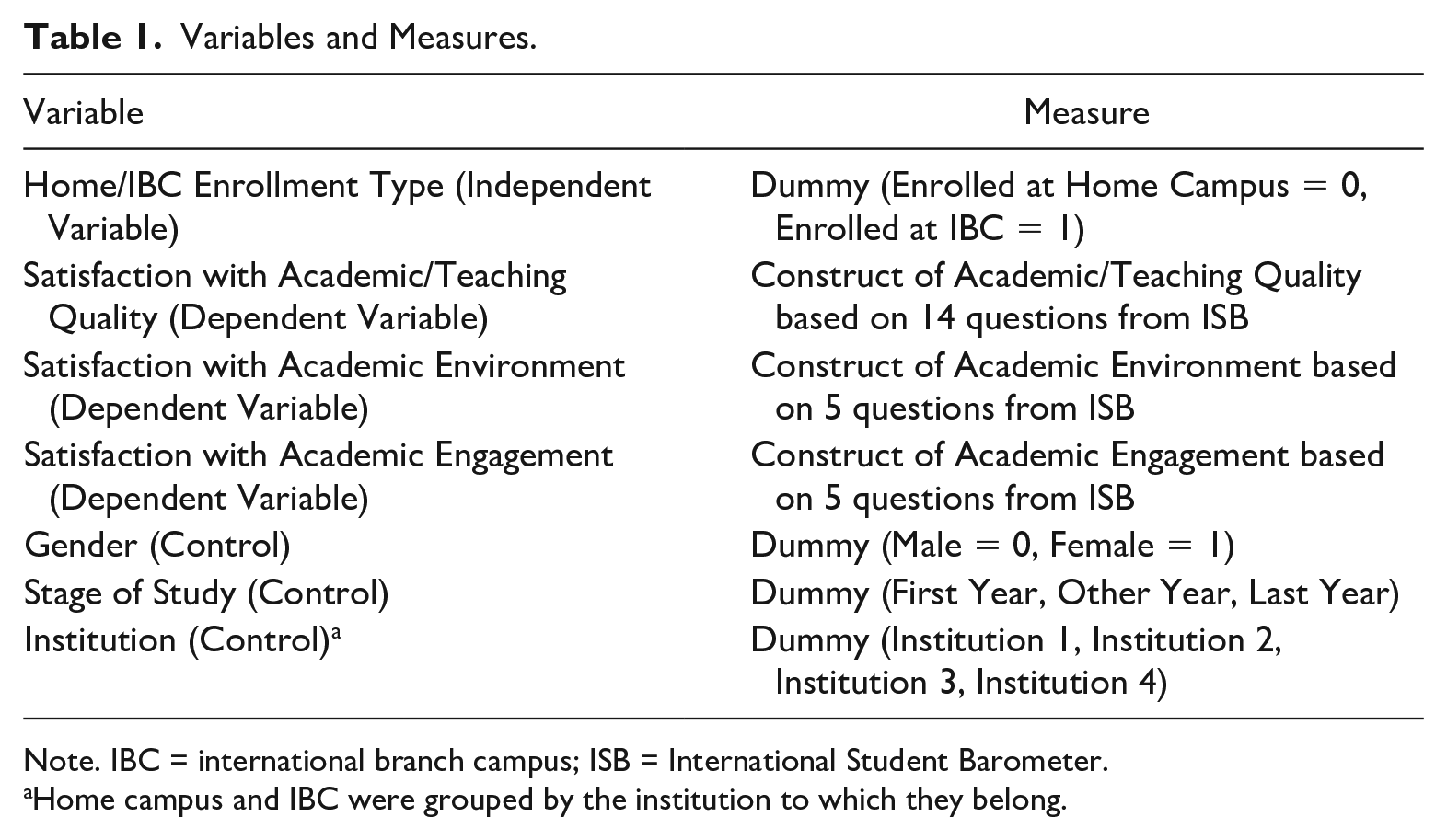
Note. IBC = international branch campus; ISB = International Student Barometer.
Home campus and IBC were grouped by the institution to which they belong.
Independent/control variables
The independent variable was enrollment type (home campus or IBC). Student gender, stage of study, and institution were included in analyses to account for any variance they contribute.
Dependent variables
Using factor analysis in SPSS, constructs were created as measures of aspects of the academic experience of students in the sample. As quantitative research on the student experience at IBCs is scarce, the literature revealed no specific set of constructs that could be adopted in its entirety (Wilkins & Balakrishnan, 2013). Based on research and expert knowledge, the primary aspects of the academic experience considered in the factor analysis were elements from the ISB related to academic and teaching quality, academic environment, and academic engagement.
An exploratory factor analysis of 28 items from the ISB was conducted on a sample of 2,124 students who responded to all of these items. A three-factor solution was selected based on the scree plot, which demonstrated a “leveling off” of eigen values after three factors, and by theoretical foundations that suggest distinct areas of academic experience. All 28 items correlated at least .421 with at least one other item, and items with loadings less than .5 were excluded, resulting in the exclusion of four items. 2 An examination of the Kaiser–Meyer–Olkin (KMO) measure of sampling adequacy suggested that the sample was factorable (KMO = .940) (See Table 2). The factor analysis resulted in three constructs of academic experience, called “academic and teaching quality,” “academic environment,” and “academic engagement.” Cumulatively, these factors explained 49.27% of variance in satisfaction with aspects of the academic experience.
Factor Loadings and Communalities Based on a Principal Components Analysis for 24 Items From the ISB Varimax With Kaiser Normalization (N = 2,124).
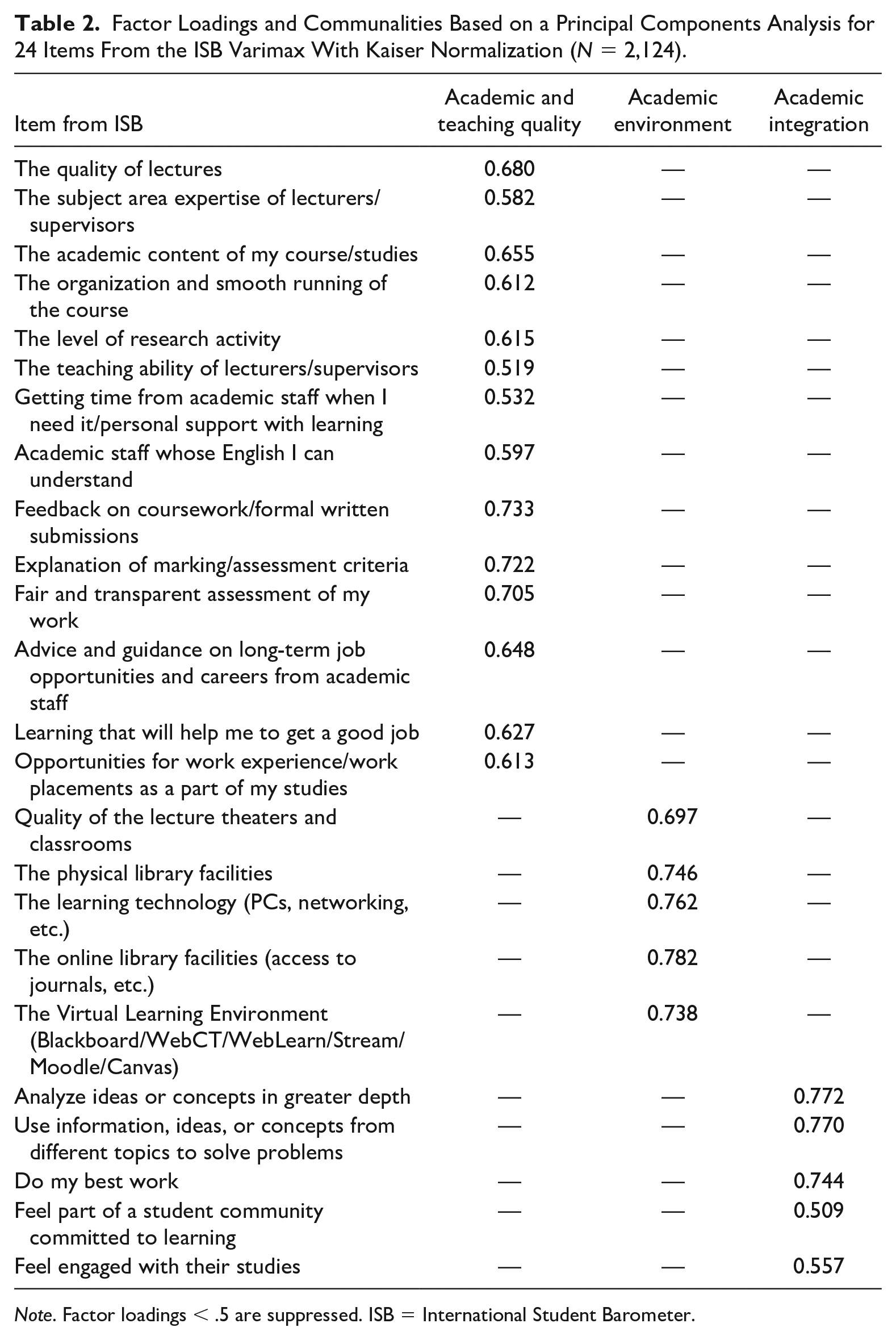
Note. Factor loadings < .5 are suppressed. ISB = International Student Barometer.
The first construct, which researchers called Academic and Teaching Quality included 14 items, explaining 36.09% of variance 3 with Cronbach’s alpha .922. The second construct, called Academic Environment, was constructed of five items that explained 6.85% of variance 4 with Cronbach’s alpha .842. The third construct, called Academic Engagement, was constructed of five items, explaining 6.33% of variance 5 with Cronbach’s alpha .754.
Analysis strategy
Using the constructs of academic experience, composite scores were created for each respondent for each of the three factors. To compare these scores in the two groups, while considering other factors, a one-way analysis of covariance (ANCOVA) was selected (Field, 2016). The ANCOVA tests for differences in mean satisfaction with these three constructs between international students enrolled at IBCs and home campuses, while controlling for student gender, study stage, and institution. Comments written into the ISB by students who responded were analyzed to gain further insight into the results. Verbatim comments were included when relevant to “add life to the narrative on often convey the point very expressively—without it being mediated or softened by the academic language of the researcher” (Cohen et al., 2011, p. 553). A table of comment frequency and sentiment, categorized by enrollment type (IBC/Home Campus) was created. Although positive/negative sentiment coding has limited power on its own (Cohen et al., 2011), it is used in this study to search for patterns in the comments that relate to satisfaction with the academic experience.
Results
Results indicate that academic satisfaction does differ between international students enrolled at IBCs and home campuses. Specifically, international students enrolled at home campuses demonstrate higher mean satisfaction with Academic and Teaching Quality, Academic Environment, and Academic Engagement than international students enrolled at IBCs. While significant differences in satisfaction were found even without inclusion of the control variables, including these variables as controls explained part of the variance. In particular, satisfaction with Academic Environment and Academic Engagement are both sensitive to at which university the student was enrolled. Student gender and stage of study did not significantly affect their satisfaction with the academic experience.
Levene’s test indicated that equal population variances for home and IBC-enrolled students could be assumed for satisfaction with Academic and Teaching Quality and Academic Engagement (p > .05). The variances for home and IBC-enrolled students in satisfaction with Academic Environment were significantly different (p = .025); however, the variance ratio was calculated to be 1.06, indicating that variances are likely homogeneous (Field, 2016).
Academic/Teaching Quality
There was a significant effect of enrollment type on international student satisfaction with Academic/Teaching Quality after controlling for gender, stage of study, and university, F(1, 1426) = 45.13, p < .05 (Table 3). Effect sizes were small but significant. Specifically, international students enrolled at home campuses demonstrate higher mean satisfaction with Academic and Teaching Quality than international students enrolled at IBCs (Table 4). The control variables did not have a significant effect on satisfaction.
Tests of Between-Subjects Effects of Enrollment Type (IBC or Home Campus) on International Student Satisfaction With Academic/Teaching Quality.
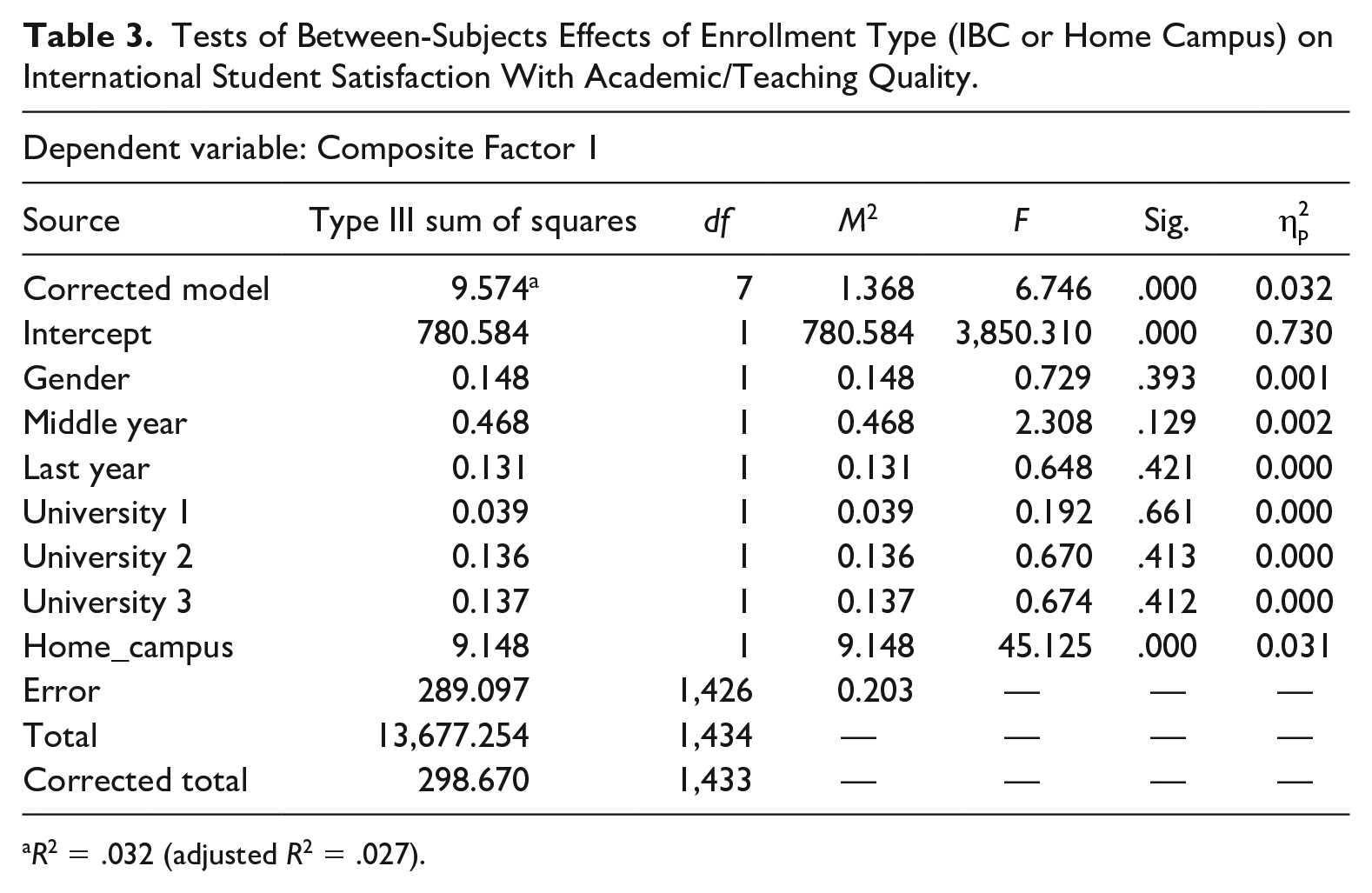
R2 = .032 (adjusted R2 = .027).
Parameter Estimates With Robust Standard Errors of Effect of Enrollment Type (IBC or Home Campus) on International Student Satisfaction With Academic/Teaching Quality.
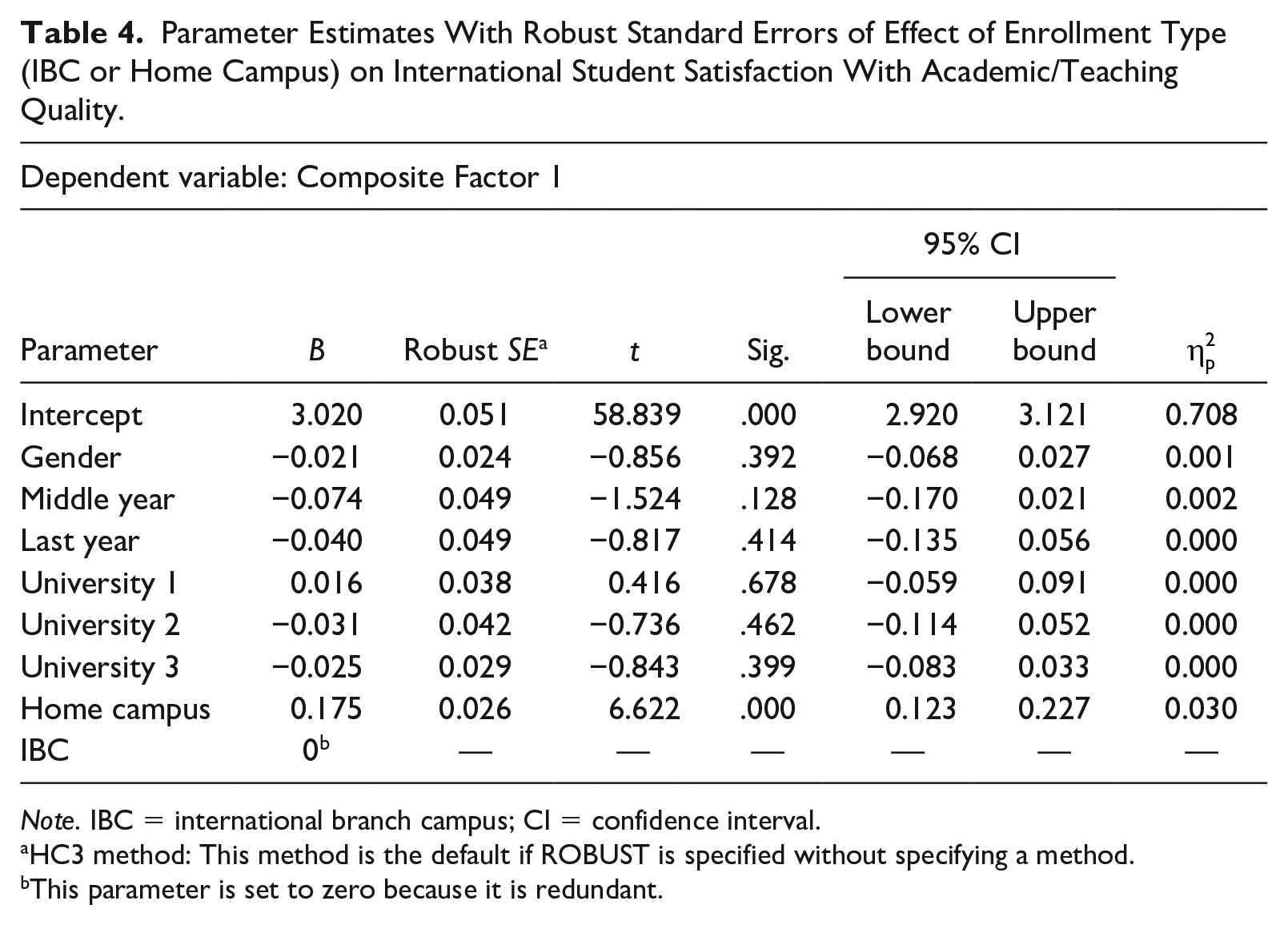
Note. IBC = international branch campus; CI = confidence interval.
HC3 method: This method is the default if ROBUST is specified without specifying a method.
This parameter is set to zero because it is redundant.
Academic Environment
There was a significant effect of enrollment type on international students satisfaction with Academic Environment after controlling for gender, stage of study, and university, F(1, 1420) = 95.39, p ≤ .05 (Table 5). Specifically, international students enrolled at home campuses demonstrate higher mean satisfaction with Academic Environment than students enrolled at IBCs (Table 6). The model showed a small but significant effect of university on satisfaction with Academic Environment after controlling for gender, stage of study, and enrollment type. While satisfaction with Academic Environment varied significantly between universities, this study does not wish to highlight differences among specific universities, only to account for the different academic experiences provided by universities to international students.
Tests of Between-Subjects Effects of Enrollment Type (IBC or Home Campus) on International Student Satisfaction With Academic Environment.
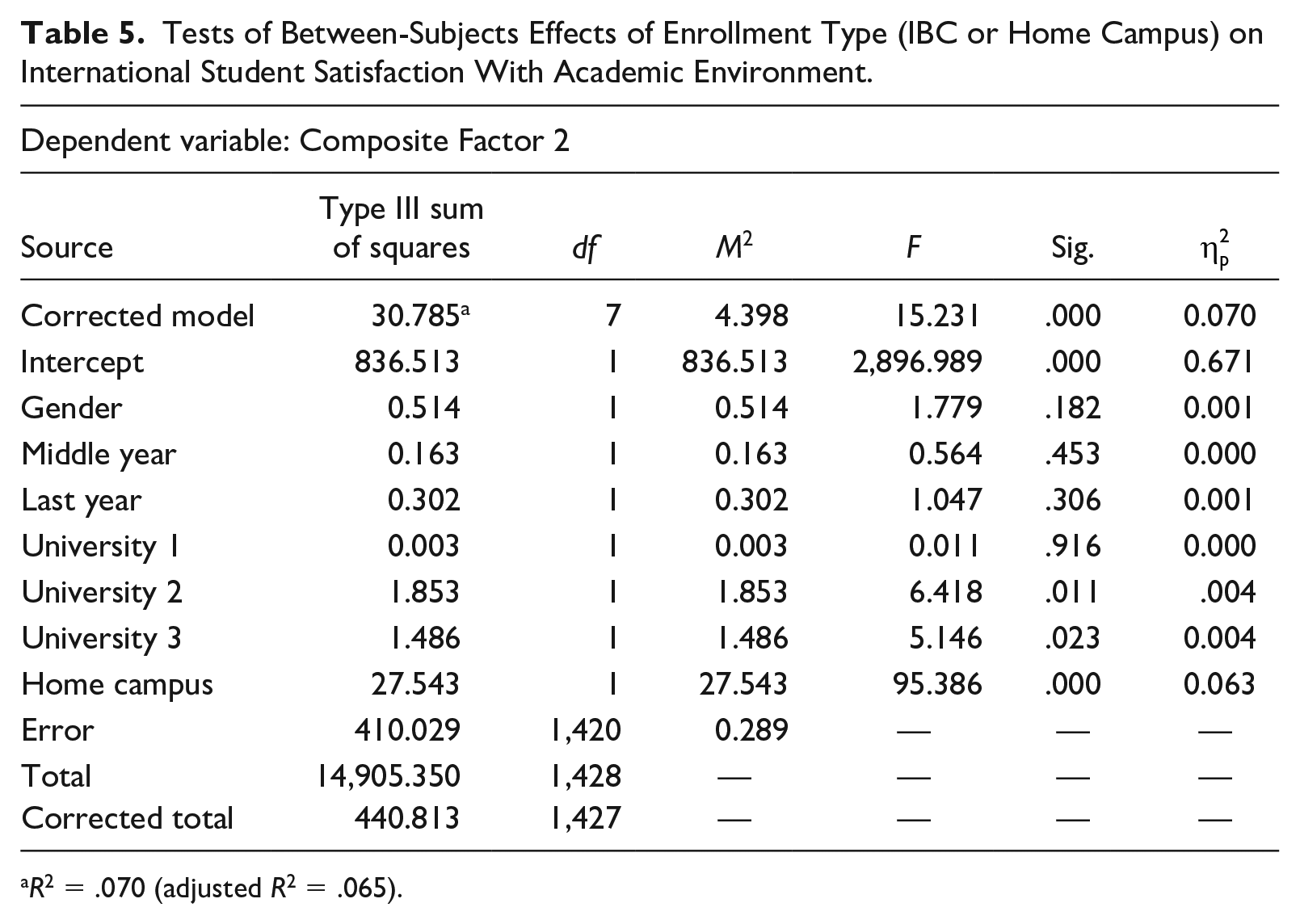
R2 = .070 (adjusted R2 = .065).
Parameter Estimates With Robust Standard Errors of Effect of Enrollment Type (IBC or Home Campus) on International Student Satisfaction With Academic Environment.
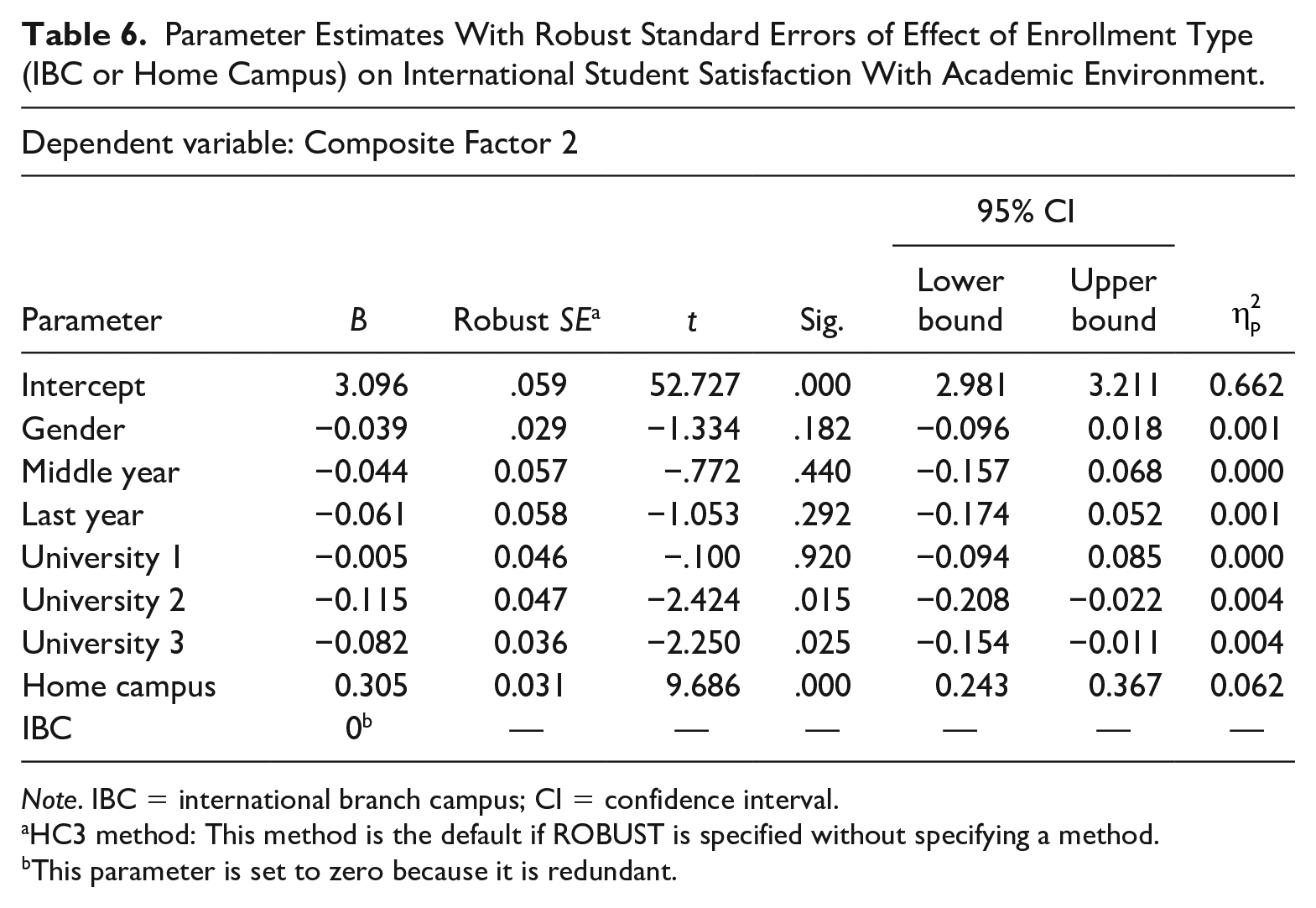
Note. IBC = international branch campus; CI = confidence interval.
HC3 method: This method is the default if ROBUST is specified without specifying a method.
This parameter is set to zero because it is redundant.
Academic Engagement
There was a significant effect of enrollment type on international students’ Academic Engagement after controlling for gender, stage of study, and university, F(1, 1418) =31.11, p < .05 (Table 7). Specifically, international students enrolled at home campuses demonstrate higher Academic Engagement than international students enrolled at IBCs (Table 8). The model demonstrated that Academic Engagement varied significantly between universities after controlling for gender, stage of study, and enrollment type.
Tests of Between-Subjects Effects of Enrollment Type (IBC or Home Campus) on International Student Academic Engagement.
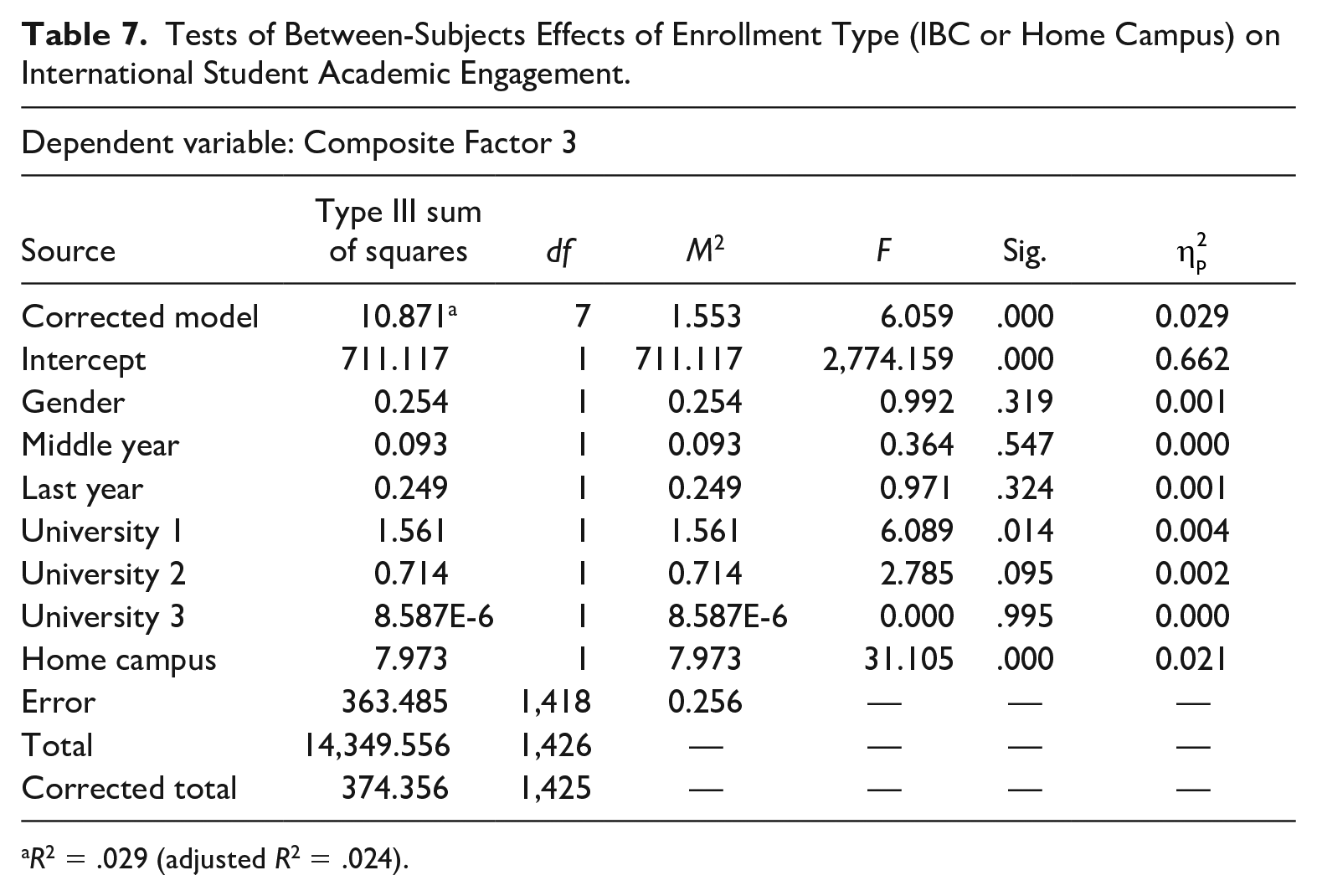
R2 = .029 (adjusted R2 = .024).
Parameter Estimates With Robust Standard Errors of Effect of Enrollment Type (IBC or Home Campus) on International Student Academic Engagement.
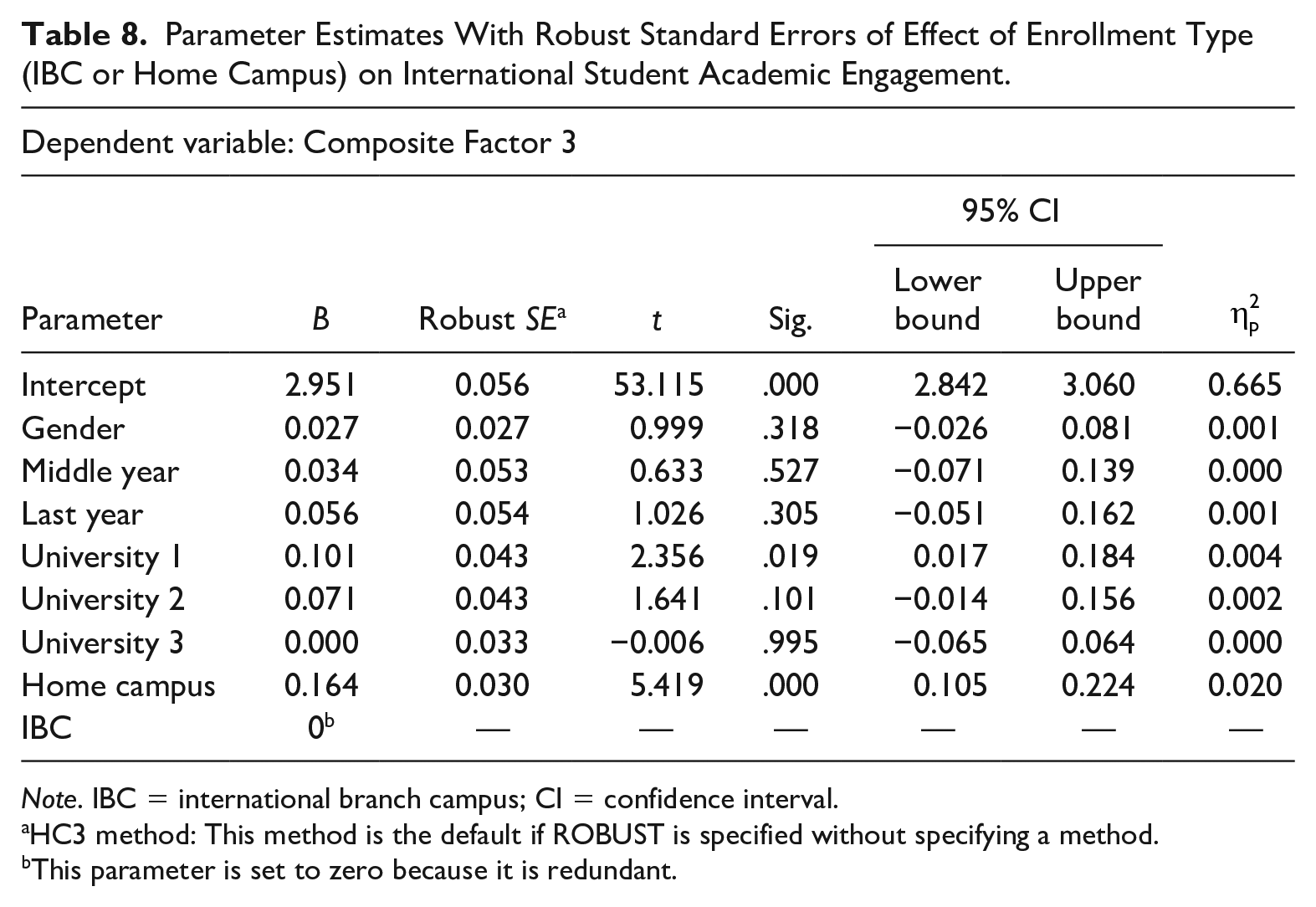
Note. IBC = international branch campus; CI = confidence interval.
HC3 method: This method is the default if ROBUST is specified without specifying a method.
This parameter is set to zero because it is redundant.
A Qualitative Interpretation of the Results Through ISB Student Comments
Comments from the ISB help understand how the experiences of international students differ, helping to explain the quantitative findings. Summative comment analysis revealed different proportions of comments from international students at home campuses and IBCs, with 23% of the IBC sample and 16% of the home campus sample writing in comments in the learning experience section of the survey (190 and 225 comments, respectively). On the whole, 61% of comments written in were negative in sentiment (i.e., complaints about academic facilities, lecturer’s teaching styles, program content). Looking at sentiment by enrollment type, 66% of comments from students enrolled at IBCs were negative, compared with 57% of comments from students enrolled at home campuses. Positive sentiment was identified in 16% of comments from IBC-enrolled students and 27% of home campus–enrolled students. The remaining comments were categorized as mixed or neutral in sentiment. Overall, this supports the notion that international students enrolled at IBCs have lower satisfaction with their academic experience than students at home campuses. See Table 9 for an index of frequency and sentiment by enrollment type (IBC/Home Campus).
Sentiment and Frequency of Comments Related to Academic Experience.
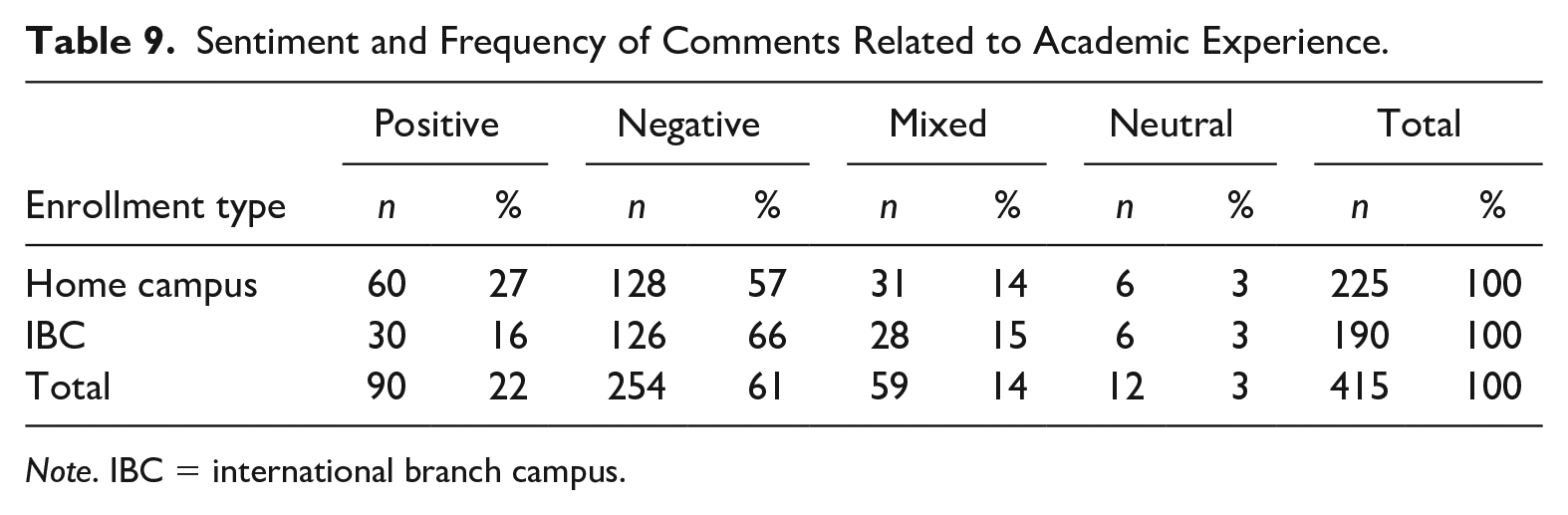
Note. IBC = international branch campus.
Students enrolled at IBCs sometimes commented on perceived differences between the home campus and IBC, whereas no such comparisons were found in comments from students enrolled at home campuses. For example, a student at an IBC noted The fact that [IBC Name] is an international branch of [Institution Name], I expected the same services and facilities, that will allow the students to experience robust learning and understanding. But, having met many exchange students from [Home Campus Name], I got to acknowledge the differences in both campuses; regardless of the lecturing/knowledge delivering skills incompetence.
Another IBC student noted that “The optional modules are too little limited compared to [Home Institution Campus]. I have to select the module that not really interest me out of no choice.” While not all comments were to this effect, it is notable that some IBC students commented on perceived differences, whether it was reality or not.
Comments elucidate the finding that there is lower satisfaction with academic and teaching quality at IBCs than at home campuses. Although it was raised by students at both types of campuses, overall, dissatisfaction with teaching ability was a theme that showed up more frequently in comments from IBC students than in comments from home campus students. Some comments related specifically to the fact that non-native English speakers were employed as lecturers. One student wrote, there are a lot of professors whose English is the main reason or sole reason that many students just give up going to classes due to the fact that it is not efficient to attend a class where you achieve nothing and students would rather study themselves with the ppt slides.
Another IBC student noted that “there are few professors that has worse English than the students themselves. As an international student I believe that lecturers should get further training in the English capabilities.” Although staff and lecturers whose first language is not English are employed at both the home campuses and IBCs of all universities in this study, students at IBCs may be more likely to evaluate whether they are receiving an education experience akin to what they envision being offered at the home campus.
A report from the OBHE (Garrett et al., 2017) corroborates this, finding that There is a clear preference to use faculty based in the country, and an avoidance of the “flying faculty” model. Mature IBCs have introduced academic staff development and elements of home country academic practices, especially around pedagogy and assessment of student learning. (p. 8)
While complaints about the quality of English spoken by lecturers was a theme in comments from both IBC and home campus–enrolled students, it was more prevalent in the former group. It may be that IBC students are more sensitive to perceptions of receiving an “authentic” Western education and, as a result, comment on it more.
Discussion
It is compelling that there are indications of differences between international students enrolled at home campuses and IBCs in all areas of satisfaction with academic experience investigated by this study. To date, there have been no large-scale quantitative studies investigating this question. Results corroborate the body of research that suggests that differences exist between the academic experiences offered by home campuses and their international outposts (Garrett et al., 2016; Wang, 2008; Ziguras & McBurnie, 2011), although they may be altogether comparable (Wilkins, 2020).
This study has important implications for how IBC leaders, faculty, and administrators consider the role of academic satisfaction in the international student experience. The successful replication of satisfaction with the academic experience may be a crucial element of an IBC’s success—this has been noted in research and by leaders of both home campuses and IBCs (Clifford, 2015; Garrett et al., 2017; Shams & Huisman, 2016, 2012; Wilkins & Balakrishnan, 2013). Results highlight the key role that academic satisfaction plays in the international student experience, suggesting that universities should make this area a top priority.
National policies and regulatory frameworks have an impact on the delivery of TNE (Hou et al., 2018), including on the international/local mix of staff; the coursework required to receive a qualification; how the campus is structured and governed, and many other areas. Nonetheless, universities must ensure that the academic experience is replicated in the areas that they can control, and that any discrepancy is made clear to the student during the decision-making process. A 2014 report on TNE in the UAE by the United Kingdom’s Quality Assurance Agency (QAA), suggests that institutions must work harder to replicate the standards they achieve at their home campuses at their overseas branch campuses, recommending good practices such as “engaging branch campus staff in academic governance and quality assurance; encouraging a culture of scholarly enquiry” and “providing better staff training and support to locally recruited part-time and fixed-contract staff.”
Beyond the differences in academic satisfaction found between international students enrolled at home campuses and IBCs, the study found that academic engagement is affected by at which university the international student is enrolled, regardless of whether they are enrolled at a home campus or an IBC. While factors such as institutional prestige/reputation may partly underlie this finding, previous studies provide actionable ideas for how to increase engagement. For example, long-term student satisfaction and performance is higher among international students who participated in a first year “transition workshop” (Peat et al., 2010), and foundation and first-year programs set the stage for international students’ “academic empowerment,” helping them with the acculturation process, academic preparedness, and managing their studies (Lee, 2017). Viewed within the lens of Astin’s Student Involvement Theory, ensuring that academic programs put the student at the center of the learning process and foster involvement may help foster academic engagement.
Limitations and Conclusion
This study is not without limitations. First, because it draws on a convenience sampling technique, based on universities that opt in to administer the ISB survey, sampling bias is a limitation. Universities that take part in the ISB may differ somewhat in their characteristics from universities that do not take part in the ISB. In particular, universities that take part in this survey may have budget allocated to endeavors designed to understand and improve the international student experience. These universities perhaps have (a) more resources, (b) more international students, and/or (c) more focus on student experience than universities that do not take part in the ISB. All these factors could mean that the experience of international students at universities in this sample is not representative of the experience of international students at all universities.
A second limitation is in the instrument used: the ISB. While comprehensive, there are aspects of the student experience not measured by the ISB, which covers only institutional dimensions. Benckendorff et al. (2009) posit that the factors identified in the literature that appear to influence the student experience can be grouped broadly into four dimensions: institutional, student, sector-wide, and external. The ISB instrument captures only the first dimension comprehensively. Furthermore, the fact that the survey is intended for student feedback rather than research purposes reduces the validity of the responses as well as content analysis of comments (Cohen et al., 2011). Comment sentiment may have been mostly negative in part because students were being prompted for feedback which they hoped would be acted upon and used to make improvements.
This study opens pathways for several areas of future inquiry. For example, what role does cultural distance play in international student satisfaction, and does it help explain the apparent difference in satisfaction? It would be intriguing to compare data from new IBCs with mature ones, as this might shed light on what factors lead to long-term success. Finally, the effect of COVID-19 on international student decision-making and experience must be explored. A “push-pull” perspective of study abroad highlights the notion that certain factors “push” a student away from their home country to seek study abroad, and other factors “pull” the student toward certain universities and countries (Altbach, 2004; Mazzarol & Soutar, 2002). These push–pull factors may change as a result of this global pandemic and would be worth exploring in the context of IBCs.
Overall, this study suggests that universities must carefully consider and prioritize the academic experience of both their domestic and international students to ensure their satisfaction. The ever-changing landscape of transnational higher education attracts a mix of students—international and domestic alike—that share in their desire to know what academic experience is in store for them. The advent of the COVID-19 pandemic and ensuing uncertainties will likely heighten the need to provide an academic experience at IBCs that is carefully designed and thoughtfully controlled by the university.
Footnotes
Acknowledgements
The research reported in this paper was conducted with data from the International Graduate Insight Group Ltd. (i-graduate). However, the views expressed in this paper are solely those of the authors.
Declaration of Conflicting Interests
The author(s) declared no potential conflicts of interest with respect to the research, authorship, and/or publication of this article.
Funding
The author(s) received no financial support for the research, authorship, and/or publication of this article.
