




Abstract
Internationalization of higher education has increased the diversity of the student body at higher education institutions. There is evidence that the experiences of international students vary according to their region of origin, but trends on a larger scale remain underexamined. Drawing on Eurostudent VI data from the Republic of Ireland, this article investigates how academic satisfaction varies between students from different global regions of origin and from national settings with distinct cultural distance characteristics. Results suggest that international students have higher levels of academic satisfaction than Irish students, but that differences between students from diverse regions of origin persist. In addition, international students originating from a national context with high power distance, irrespective of levels of individualism, have higher levels of academic satisfaction compared with Irish students. Furthermore, self-perception of being a detached customer rather than an equal partner in education has the strongest association with academic satisfaction, suggesting that commercialization trends affect both international and domestic students.
Keywords
Introduction
International students’ enrolment in higher education (HE) has expanded considerably in recent decades, as the position of internationalization has become firmly established on the policy agenda (de Wit et al., 2015). International students are increasingly important in bringing both academic prestige and financial benefits to host institutions (Hazelkorn, 2015). They contribute to cultural diversity in their classrooms, campuses, and communities through enhancing mutual understanding, broadening perspectives, and appreciation of differences across cultures (Jibeen & Khan, 2015; Lee et al., 2019).
There is increasing evidence of the challenges that international students face as they pursue HE abroad (Gopalan et al., 2019; Santini et al., 2017). Challenges include, but are not limited to, adjusting to an unfamiliar culture, financial and accommodation constraints, balancing work and study, experiencing different learning styles, and difficulties with the language of instruction (de Wit et al., 2015). These occur in increasingly marketized education contexts, in which students can be viewed as customers (Brooks et al., 2020). Supportive environments can alleviate these challenges (Baik et al., 2019). While the types of difficulties encountered by international students from particular world regions have been explored, these tend to be primarily small-scale exploratory studies focusing on students from select countries, most frequently China, from where a large number of international students originate (Boafo-Arthur, 2014; Constantine et al., 2005; Moore & Constantine, 2005). Few studies have explored how the experiences of international students vary by region of origin and cultural distance from their host country. As an exception, Rienties and Tempelaar (2013) examined the effect of cultural distance (Hofstede, 1984) on the academic adjustment of international students in the Netherlands, finding that some national groups of international students experience considerable personal–emotional and social adjustment issues, whereas other national groups do not. Ammigan et al. (2020), in an analysis of institutional satisfaction, found that what students value in relation to their learning experience varies according to nationality and destination country. Nevertheless, how academic satisfaction varies between domestic students and international students from different global regions of origin enrolled at HE institutions remains underexplored.
Disaggregating by region of origin facilitates the identification of specific needs of different subgroups of international students, often treated as homogeneous within research and practice. Recognizing the role of culture in the experiences of international students (Neto, 2019), this article tests whether cultural distance is associated with academic satisfaction. This allows for better targeting of institutional support (Ammigan et al., 2020) as well as leveraging the experiences of international students to also enhance support for domestic students (Mihut, 2019). Culture can also manifest in the marketization of the education system (Tomlinson, 2018). In short, the article examines the profile of domestic and international students; whether region of origin predicts academic satisfaction among international students when holding academic and material context constant; and the effect of cultural distance on academic satisfaction.
To investigate these questions, the study is situated in the Republic of Ireland. Ireland’s international student body was counted at 23,127 in 2018 (10.6% of total enrolments), with 16,689 at universities, 4,201 at institutes of technology, and 2,237 at college of further education (Higher Education Authority, 2018). Between 2013 and 2018, the highest number of non-European Education Area (EEA) international students arriving to Ireland was from China, with Malaysia, the United States, Canada, India, and Saudi Arabia also among the most common countries of origin (Groarke & Durst, 2019). The country’s policy regime is governed by a specific International Education Strategy entitled Irish Educated Globally Connected: An International Education Strategy for Ireland, 2016 to 2020, which aimed to increase the economic value of the sector to €2.1bn per annum by 2020 and the total number of international HE and English language students to more than 176,000. In line with global trends, international students pay substantial fees for HE. Non-EEA students pay higher fees, generally of between €9,000 and €25,000, but for some courses such as medicine as much as €54,000 a year (Groarke & Durst, 2019).
International Students’ Adjustment Experiences and Satisfaction in Their Host Countries
International students are motivated to study abroad by obtaining degrees from overseas universities, expanding their educational capital, availing of cheaper tuition fees (Wilken & Dahlberg, 2017), obtaining education not available in their home countries, or a qualification as a gateway to employment or permanent migration (King & Ruiz-Gelices, 2003; Marcu, 2015). While the literature documenting these motivations is vast, there is less evidence on the lived experience of international students (Connelly & Merola, 2019; Wu et al., 2015). Qualitative studies in this field have highlighted a suite of challenges these students face. An exploratory study with international students from China found that the main challenges anticipated by these students before commencing their studies were language related (Bailey, 2006). Students had difficulty in understanding assignments involving reflective practice and tended to underperform in exams due to the pressure of writing. Language difficulties can affect student satisfaction and well-being (Gatwiri, 2015), and less active learning styles have also been identified as challenges for Asian students in Europe (Gang et al., 2009). Cultural differences between home and host country can exacerbate challenges for some national groups, especially those of Asian and African origin (Bamber, 2014; Boafo-Arthur, 2014; Burrows, 2016). Bailey (2006) explored how cultural differences can affect the social sphere of international students, highlighting how both West African and Chinese students faced difficulties socializing with British students, while McFaul (2016) demonstrated that international students interact mainly with each other and find it difficult to make friends with domestic students. International students can also be the victims of racist behaviors and cultural difference can magnify the discrimination faced by visible minorities (Brown & Jones, 2013). Immigration status can create restrictions, for example, punitive visa regulations posed particular challenges for Chinese students in the United Kingdom (Bamber, 2014), trends also identified in the Irish context (Groarke & Durst, 2019). This body of work suggests variations in experience related to country of origin. Finally, the increased view of students as customers affects how students view their HE experience (Bay & Daniel, 2001; Clayson & Haley, 2005) and may particularly affect international students (Brandenburg & De Wit, 2011).
A common concept in exploring how students settle into college life is academic satisfaction (Neto, 2019). Broadly defined as “enjoyment of one’s role or experience as a student” (Lent et al., 2007 p. 87), it is typically measured through combinations of relevant statements on Likert-type scales (Baik et al., 2019; Duffy et al., 2011; Gopalan et al., 2019; Lent et al., 2007; Merola et al., 2019). Prior studies have examined the impact of personality, academic motivation, and student engagement on academic satisfaction (Chau & Cheung, 2018; Wach et al., 2016). The concept was first operationalized in seminal work by Vallerand and Bissonnette (1990), with Diener (1995) further developing understandings related to well-being and cross-cultural differences.
Neto (2019) has identified that sociocultural adaptation factors predict satisfaction, with satisfaction proving to have particular utility in the study of cultural variation. To date, broad patterns on the experiences of international students according to global region of origin remain underexamined. With both national and institutional pressures to increase the number of international students (de Wit et al., 2015), it is important to understand how experiences vary by region of origin to offer maximum support to these students. Some evidence suggests that policy makers have a more positive view of the lived and integration experiences of international students than warranted (Scott et al., 2015). Prior studies have also linked marketization of HE to student satisfaction (Nixon et al., 2018), as how students value education is affected by marketization (Tomlinson, 2018).
Theorizing Cultural Distance
Culture is defined by Menipaz and Menipaz (2011) as the set of values, symbols, beliefs, languages, and norms that guide human behavior within a workplace, region, or country. Cultural distance is a function of differences in values and communication styles—created when individuals or groups perceive that their values and communication styles differ from others—and thus can contribute to understandings of diversity (Triandis, 1998). Cultural distance theories postulate that country of origin may have a direct influence on students’ satisfaction due to differences between education systems, in teaching and learning styles, and facilities and resources available.
Hofstede (1984) examined dimensions of cultural distance through an ecological factor analysis, analyzing interactions with reference to five dimensions: individualism versus collectivism, large versus small power distance, strong versus weak uncertainty avoidance, masculinity versus femininity, and long- versus short-term orientation. He later applied the same model to education, specifically the archetypal roles of teachers and students and the interaction differences between these roles (Hofstede, 1986). While this framework was developed in the 1980s, and Hofstede cautions against employing it with relatively small sample sizes (Eringa et al., 2015), its use endures (Cortina et al., 2017; Furukawa, 1997; Rienties & Tempelaar, 2013). Supporting the model’s contemporary relevance, Rienties and Tempelaar (2013) found that Hofstede’s cultural dimensions significantly predicted academic adjustment and social adjustment of international students in the Netherlands. While the power distance of the country of origin was negatively related to academic and social adjustment, masculinity and uncertainty avoidance were positively related to these outcomes.
There are several critiques of the internal coherence of Hofstede’s approach. Signorini et al. (2009) identified limitations with regard to the model’s use in HE, including an oversimplification of cultural distance, inconsistencies between categories, lack of empirical evidence from educational settings, and an overall model of culture as static rather than dynamic. Eringa et al. (2015) tested the model on a sample of 1,033 international business students and demonstrated that the dimensions of power distance and long-term orientation showed significant differences from Hofstede’s original country values. Individualism, masculinity, and uncertainty avoidance displayed significant differences in half of the countries (Eringa et al., 2015), either supporting Hofstede’s cautions or suggesting that culture is a less stable construct to rely on. In an empirical assessment of the dimensions, Dennehy (2015) did not yield results that supported the validity of the five dimensions of cultural values in an educational context. Furthermore, as the paradigm of students-as-customers increases, national culture may not be as salient (Clayson & Haley, 2005). Educational consumerism may comprise an aspect of social and cultural distance, it may be an independent proxy for (lack of) engagement (Tomlinson, 2017), or may point toward differences between international and domestic students in how they perceive the value of their experience at HE institutions (Woodall et al., 2014). The explanatory power of Hofstede’s model endures but should be interpreted in recognition of these limitations, critiques, and evolving contexts.
Method
The article utilizes data from Eurostudent VI in the Republic of Ireland, an international study collating data on the social dimension of European HE, and centrally coordinated by the Higher Education Information System (HIS) (ISSDA, n.d.). National surveys are disseminated by each participating country every 3 years. The number of participating countries has increased over time from eight in 2000 to 26 in 2016. Eurostudent VI gathered data on key characteristics of the student population in Ireland, such as health and well-being, income and expenditure, socioeconomic background, and travel and accommodation.
Data were collected primarily through online and postal surveys of 27 HE institutions in 2016, reaching both full- and part-time students. Circa 20,000 valid student responses were collected (response rate of 10%). Survey responses were weighted to reflect the population intersecting parameters of sex, age, qualification, and full-/part-time status by institution (Harmon & Foubert, 2016).
Description of Variables and Measures
The outcome variable of academic satisfaction (M = 3.698, SD = 0.778) comprised six Likert-type scale items from Eurostudent VI: (a) my lecturer inspires me; (b) I would recommend my current (main) study program to other students; (c) it was clear from the beginning what is expected from me in my current (main) program; (d) (satisfaction with) quality of teaching; (e) (satisfaction with) organization of studies and timetable; and (f) (satisfaction with) study facilities (e.g., library, computers, building, classrooms). Reliability analyses suggest strong construct validity (α = .798). Factor analysis suggests the six items align into one single factor that explains 50.54% of the variability in the data. The content of these items reflect aspects of academic satisfaction already established in the literature (Duffy et al., 2011; Gopalan et al., 2019; Lent et al., 2007).
International student was defined by proxy, using three criteria: students (a) who were born outside of Ireland, (b) whose parents were not Irish nationals, and (c) who had not taken their final state school exams in Ireland. Using this definition, 2,098 respondents (13.3%) are identified as international students. Region of origin was obtained using the global framework of the World Bank administrative region classification. Table 1 includes information on the number of students from different geographic regions and Ireland. Cultural distance was operationalized based on Hofstede’s framework (Hofstede, 1984). Countries of origin were coded according to the 1984 categorizations covering 68 countries, with additional information available at Hofstede Insights. An attempt was made to include all dimensions of cultural distance (individualism/collectivism; large/small power distance; strong/weak uncertainty avoidance; masculinity/femininity; long-/short-term orientation) in the analysis, to facilitate the inclusion of cultural distance dimensions previously observed to affect academic outcomes (Rienties & Tempelaar, 2013). However, the inclusion of all dimensions in the analysis was not possible due to multicollinearity concerns; therefore, the analysis relies solely on the dimensions of power distance and individualism, a combination which has been utilized elsewhere (Cortina et al., 2017). Countries of origin were placed in one of four categories: “small power distance, high individualism” (including Ireland, and a reference for subsequent categories); “small power distance, low individualism” (12 students only and thus excluded from the analysis); “large power distance, high individualism”; and “large power distance, low individualism.” Further descriptive information is included in Table 1.
Distribution of Eurostudent VI Respondents by Region of Origin and Cultural Distance.
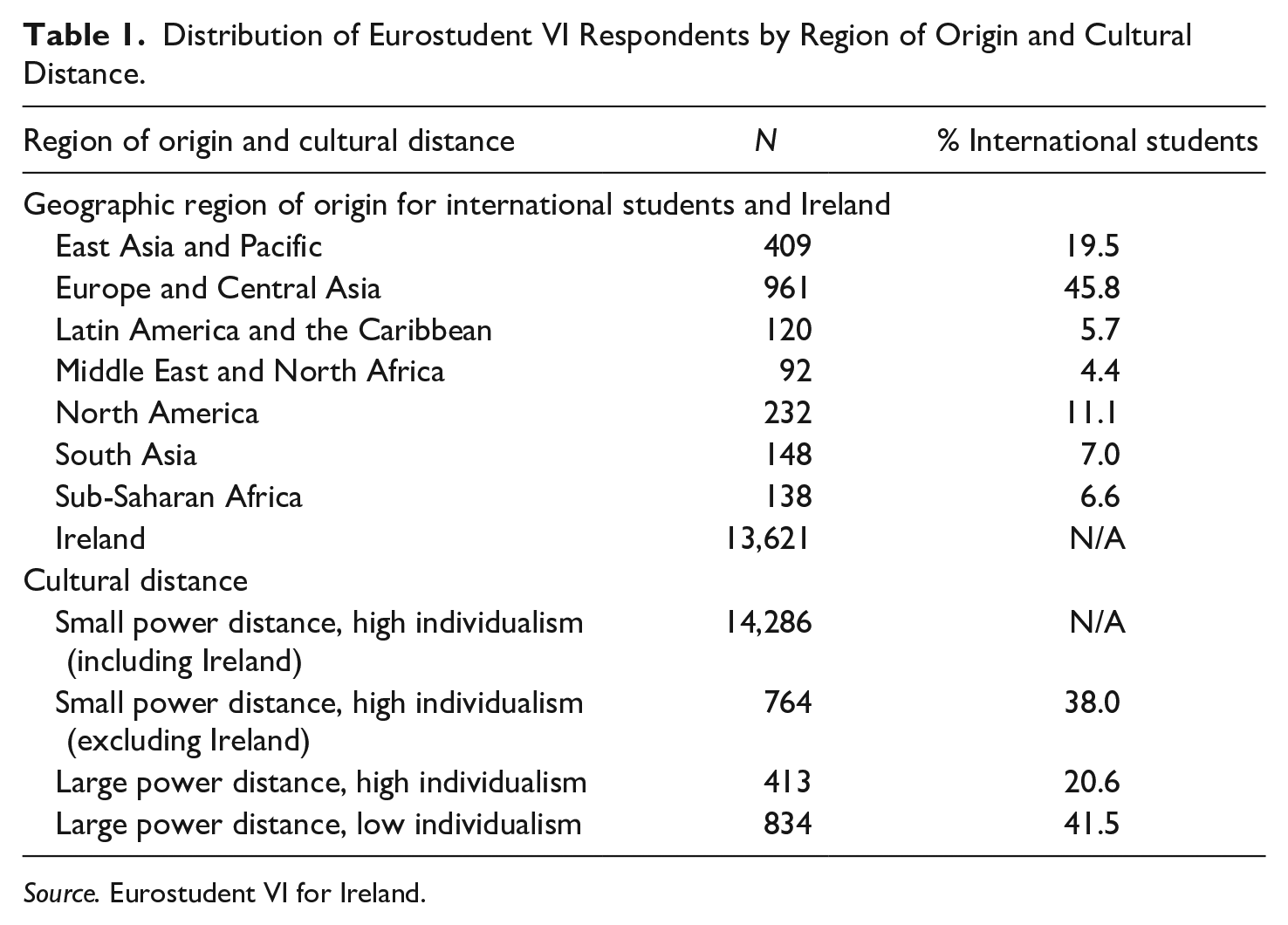
Source. Eurostudent VI for Ireland.
The regression analyses included in this article used control variables, to test whether the association between region of origin and cultural distance persisted when accounting for the effect of key demographic, socioeconomic, and institutional factors. Drawing on literature and on the available self-reported data, these were constructed as follows: Sex of the respondent, has male as a reference category. Mother’s level of education, has mother completed less than HE as a reference category. For financial difficulty, respondents were asked “to what extent are you currently experiencing financial difficulty?,” with responses on a 5-point Likert-type scale ranging from “not at all” to “very seriously.” Students who chose the option “seriously” and “very seriously” were constructed as experiencing financial difficulties. This subjective measure aligns to Sam (2001), though objective measures including details on work, debt, bursary receipt, and parental contribution have been captured elsewhere (Benson-Egglenton, 2019). Satisfaction with accommodation, identified previously as affecting student academic satisfaction (Finn & Darmody, 2017), comprised the mean value of two Likert-type-scale items: (a) (satisfaction with) cost of accommodation and (b) (satisfaction with) overall condition of accommodation. A third item regarding quality of accommodation—(satisfaction with) location of accommodation—was excluded from this measure, as it lowered the reliability of the composite variable. Type of institution, with a reference category of those who attended university, was constructed from variables for institutes of technology and other types of HE institutions. Type of degree was constructed from dummy variables for diploma and postgraduate programs, with the reference being respondents who pursued an undergraduate degree. Finally, a measure of customer perception among respondents was also included as a control: being treated as a detached consumer in education (reference partner or other).
Analytic Approach
Ordinary least squares (OLS) analyses were used to test the association between region of origin, cultural distance, and academic satisfaction. Unlike Rienties and Tempelaar (2013), the data structure did not allow for nesting at the institutional level and no nesting was detected at the level of geographic region. To assess whether associations between region of origin and cultural distance, and academic satisfaction, persisted when controlling for other variables, several OLS models were conducted. In Model 1, the association between region of origin and academic satisfaction was tested. Model 2 added demographic and socioeconomic characteristics. Model 3 incorporated institutional characteristics, and Model 4 incorporated cultural distance. Finally, Model 5 tested whether the association between previous variables persisted with the inclusion of perception of being treated as a detached customer in education.
Results
Descriptive Characteristics
There were both similarities and differences in the demographic and socioeconomic characteristics of Irish and international students. Notably, greater differences were visible between groups of students from different regions of origin than between Irish and international students as a whole. Irish and international students were comparable in relation to sex; the extent to which they reported experiencing economic difficulty; and type of HE institution attended. However, several differences were evident between groups of international students from different regions of origin. Within sex, female students were underrepresented among the South Asian (33.1%) and the Middle East and North Africa (MENA; 29.5%) populations and were overrepresented among North Americans (66.5%). Students from South Asia (47.8%) and sub-Saharan Africa (59.1%) experienced higher levels of financial difficulties than both other international students and domestic students. Students from the MENA region (28%) were less likely to attend a university than overall international students (51.7%), and students from Latin America and the Caribbean (55.4%) and sub-Saharan Africa (55.9%) were most likely to attend an institute of technology. Information on the comparison between international and Irish students is provided in Table 2. More comprehensive breakdowns by region of origin are included in the supplemental material.
Comparison Between International Students and Irish Students on Key Characteristics.
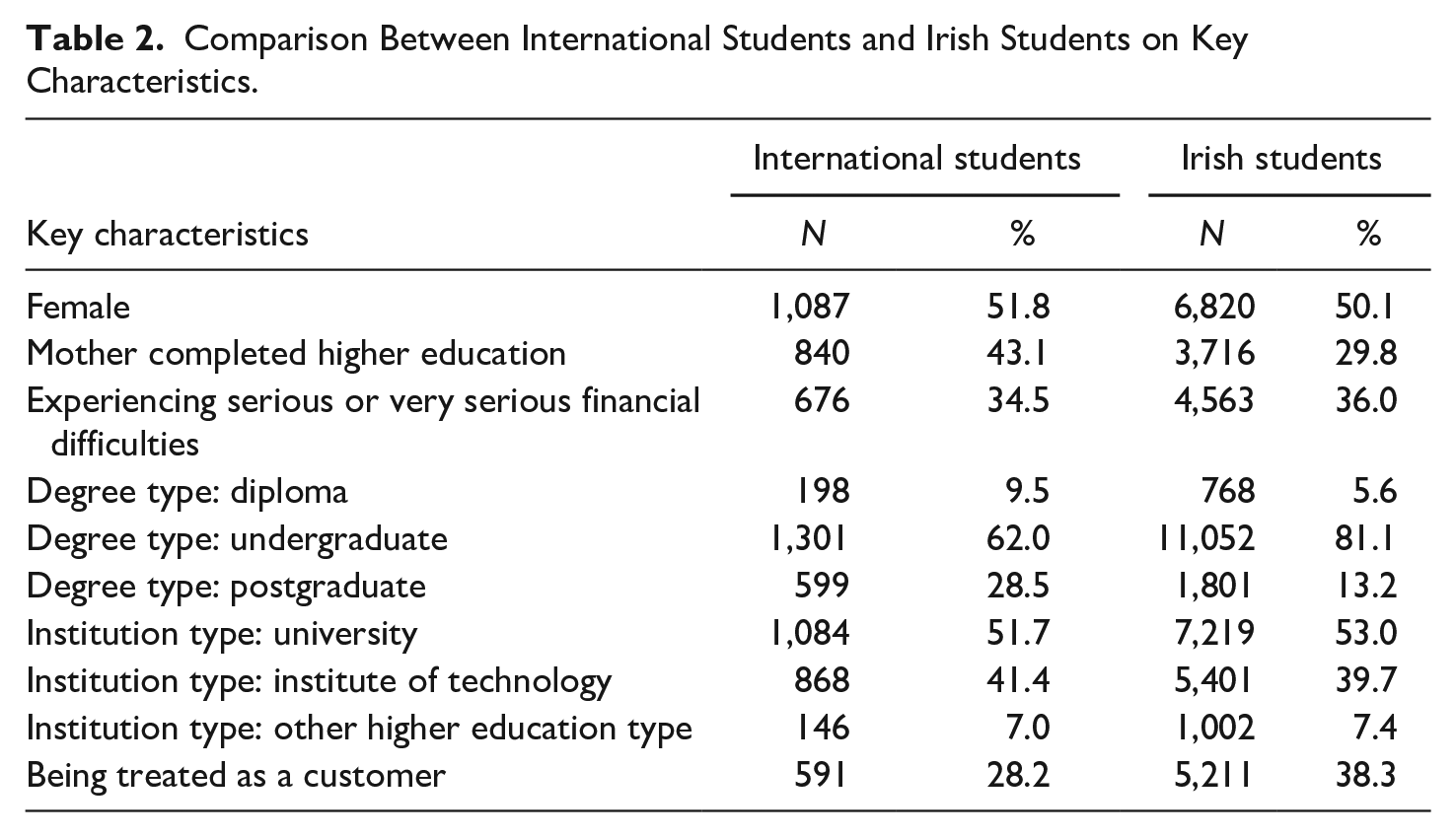
In other regards, international students as a group were distinct from Irish students. They were generally of higher socioeconomic standing and more likely to have mothers who completed HE (43.1%) than Irish students (29.8%). Among international students, those from North America had the highest proportion of mothers who completed HE (65.5%) and students from sub-Saharan Africa (30.4%) registered the lowest proportion. International students were also overrepresented in pursuing diplomas (9.5%) and postgraduate degrees (28.5%) compared with Irish students (5.6% and 13.2%, respectively). Irish students (81.1%) were more likely than international students (62%) to be enrolled in an undergraduate program.
Notably, across all regions, international students (28.2%) were less likely than Irish students (38.3%) to see themselves treated as detached customers in education. Among international students, those from North America (37.7%), and Latin America and the Caribbean, (35.2%) were most likely to see themselves as detached customers. This trend suggests that both domestic and international students feel the effect of commercialization of HE. Yet despite prevailing assumptions, feelings of being treated as a detached customer were not stronger among international students. Furthermore, the variations by region of origin suggest that the feeling of being treated as a detached customer among students may have a cultural component (Woodall et al., 2014).
Levels of academic satisfaction were relatively high for all students, suggesting an overall positive academic experience for students at Irish HE institutions. The only area where dissatisfaction emerged related to accommodation. Satisfaction with accommodation was lower for all international students (M = 3.37) compared with Irish students (M = 3.83), with students from the MENA region being least satisfied (M = 3.22). Generally, international students (M = 3.80) had higher levels of academic satisfaction than Irish students (M = 3.69). As illustrated by Figure 1, international students from North America (M = 3.45) registered the lowest levels of academic satisfaction, whereas students from South Asia (M = 4.12) register the highest levels. The differences in means obtained by North American and South Asian students on one hand and Irish students (M = 3.69) on the other hand were statistically significant. 1 Other mean differences were not statistically significant.
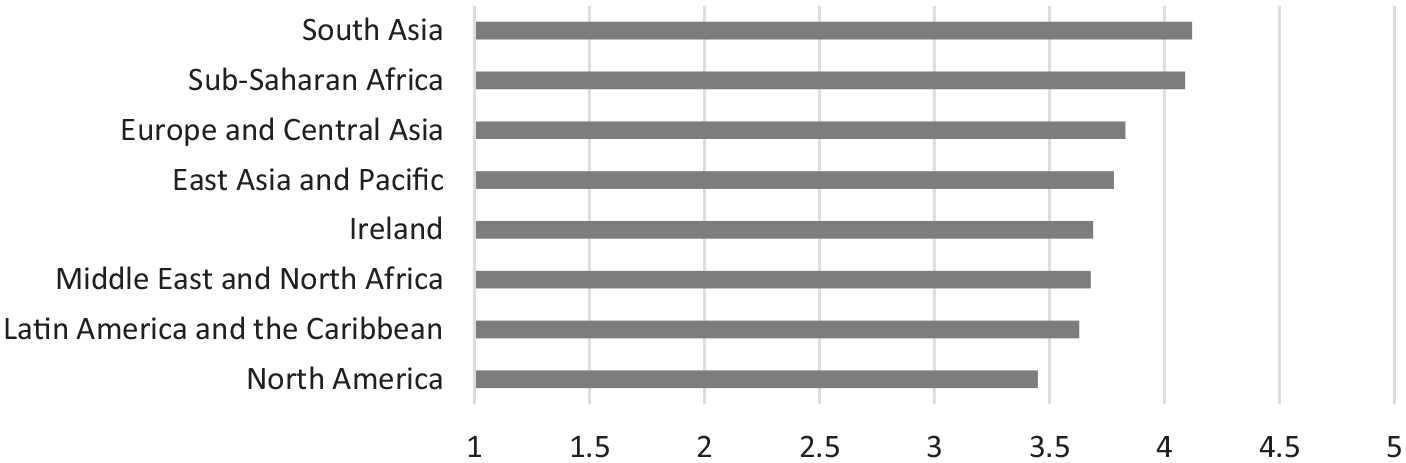
Mean academic satisfaction by region of origin.
Academic satisfaction also varied according to categories of cultural distance. Students from small power distance, high individualism contexts had lower levels of academic satisfaction (M = 3.68). Students from both high power distance, high individualism (M = 3.88) and high power distance, low individualism (M = 3.87) contexts had statistically significantly 2 higher levels of academic satisfaction.
Inferential Analysis
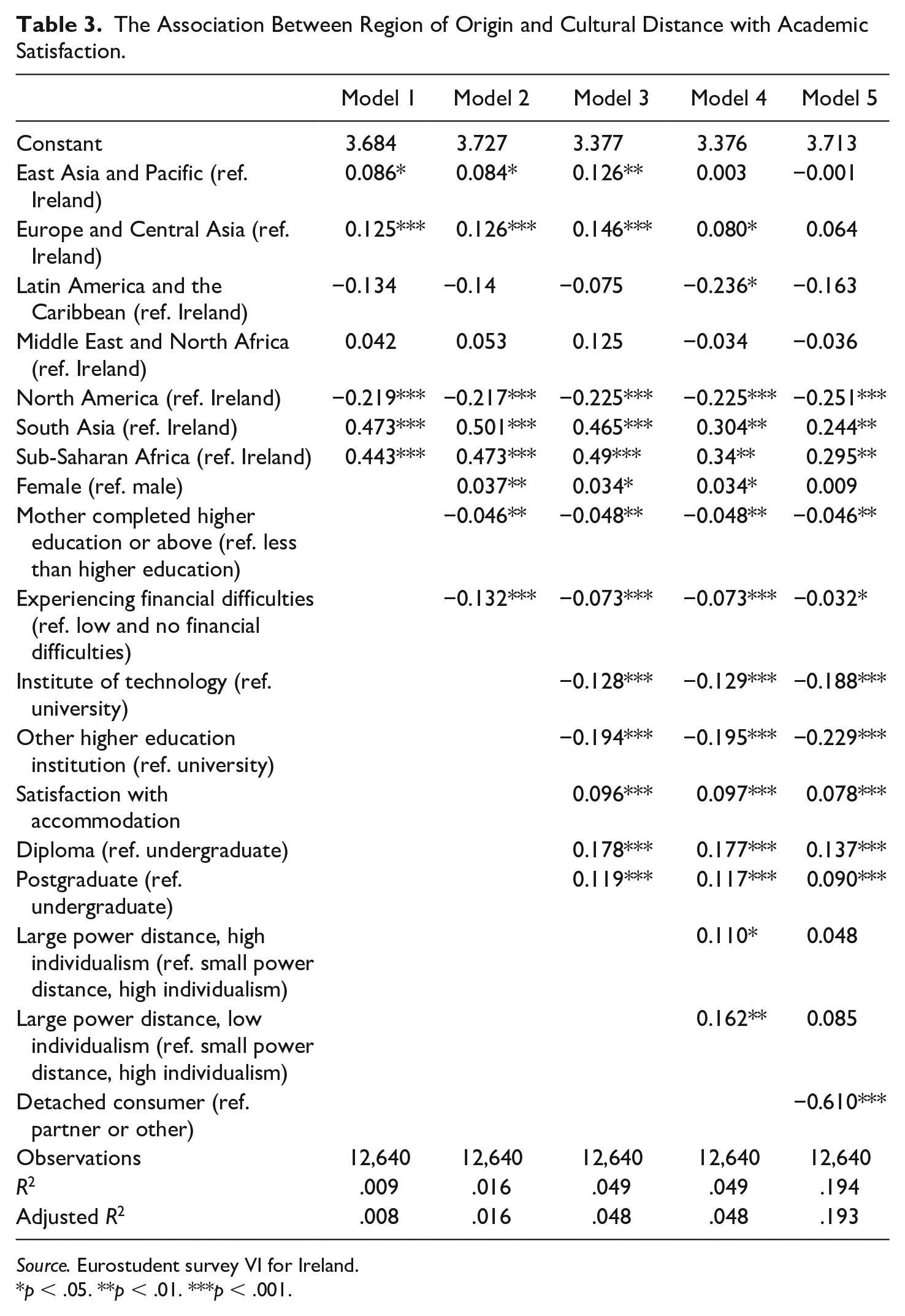
Table 3 displays the association between region of origin and cultural distance with academic satisfaction. Across models, students whose mother completed HE and those who were experiencing financial difficulties showed lower levels of academic satisfaction. While the addition of cultural distance and being treated as a detached customer lowered the effect of financial difficulties on academic satisfaction, these controls did not affect the effect of maternal education. Furthermore, across models, students attending institutes of technology and other HE institutions had lower levels of academic satisfaction than students attending universities. In contrast, students pursuing both diplomas and postgraduate degrees had higher levels of academic satisfaction than students pursuing undergraduate degrees.
The Association Between Region of Origin and Cultural Distance with Academic Satisfaction.
Source. Eurostudent survey VI for Ireland.
p < .05. **p < .01. ***p < .001.
Controlling for demographic, socioeconomic, and institutional characteristics, international students from East Asia and Pacific, and Europe and Central Asia, had statistically significant higher levels of academic satisfaction than Irish students. However, the association diminished with the inclusion of cultural distance variables and disappeared upon including the variable “being treated as a detached customer.” In contrast, academic satisfaction remained statistically significantly lower for North American students and higher for South Asian and sub-Saharan African students than for Irish students after including additional controls.
The small association between cultural distance and academic satisfaction—with students from both high power distance contexts registering higher levels of academic satisfaction—persisted after adding demographic, socioeconomic, and institutional controls. However, this effect disappears after the introduction of the detached customer variable (Model 5). Additional robustness checks on the effect of cultural distance on academic satisfaction without region of origin controls were conducted. These revealed that without region of origin controls, (a) the association between cultural distance 3 and academic satisfaction persists after the addition of the customer variable; (b) the addition of cultural distance controls explains an additional 1% in the variability of academic satisfaction; and (c) the detached customer variable continues to be the strongest predictor of academic satisfaction, explaining 15% of variability in the outcome variable. Both domestic and international students who perceive themselves as being treated as detached customers in the education process were statistically significantly more likely to be less satisfied with their academic experience.
Limitations
The methodology is not without limitations. First, as with all self-reported surveys, caution should be exercised in generalizing the results, as participant selection effects may skew the results. Second, the Eurostudent survey does not contain meaningful indicators on potential experiences with discrimination for international students, or on friendships, networks, and interactions with peers. Third, the anonymized data did not allow the use of nested models to disaggregate institution-level effects. Fourth, the data do not allow investigations of how academic satisfaction may relate to broader concepts of well-being and adjustment, despite connections identified in the literature. Fifth, in addition to academic satisfaction, other academic outcomes such as retention, graduation, or postschool outcomes would merit further investigation in relation to region of origin.
Discussion and Conclusion
How international students from distinct geographic and cultural contexts experience study abroad has not been adequately investigated, despite the increasing number of small-scale studies suggesting particular situations for different nationalities and ethnic groups (Connelly & Merola, 2019). In response, this article sought to explore whether there are variations in academic satisfaction for international students by global region of origin, in a context of an increasingly marketized provision of education. It is important that students, regardless of their geographic and cultural origin, are satisfied with their study abroad experience in host institutions, due to the substantial investment on their part and the importance of a rounded, quality educational experience (Lent et al., 2007; Neto, 2019).
Treating international students as a heterogeneous group allows for better targeting of supports at the institutional and national level. This analysis reveals both similarities and differences between international students and domestic students and among international students from different regions of origin. The analysis here underscores differences in sex, socioeconomic status, type of program studied, institution attended, and experience of economic difficulty among regional groups of international students.
Both international and domestic students were broadly satisfied with their study experience in Ireland, a trend identified elsewhere (Ammigan et al., 2020). Originating from a national cultural context with high power distance—that is, the extent to which individuals accept unequal distribution of power—marginally increased the academic satisfaction of students, regardless of the level of individualism. These findings offer some support for the relevance of Hofstede’s (1984, 1986) model in HE studies. However, it was not cultural distance from the national cultural context in which students studied that affected satisfaction most significantly. Crucially, the associations between cultural distance and region of origin and academic satisfaction were affected by the extent to which students saw themselves as detached customers or partners in education (Bay & Daniel, 2001; Clayson & Haley, 2005). The variable was the strongest predictor of students’ satisfaction. The direction of the association between students’ perceptions of being a detached customer or equal partner, and academic satisfaction, cannot be ascertained by this study. Students who report lower levels of academic satisfaction may be more inclined to perceive themselves as customers rather than partners in their experience of education. Reversely, self-perception as a customer may increase the likelihood of having lower levels of academic satisfaction. Alternatively, the association may be explained by another distinct, unobserved variable. Indeed, self-perception as a detached customer could constitute an alternative mechanism through which cultural distance plays out in HE settings. Perhaps, cultural distance can better be understood through the lens of engagement (Cotter & Reichard, 2019). Distance may be a function of cultural features at the group or national level, as suggested by Hofstede’s framework, or a feature of the trust and belonging students feel at their place of study. Trust and belonging may be diminished by the encouragement of consumer cultures in HE, rather than by diversity of national cultures.
Students invest much time and financial resources into their study (Jibeen & Khan, 2015), and it is important to understand whether they appraise their education experience in a positive light. However, satisfaction offers a particular view on the complex experiences of both domestic and international students. Future research could focus on education outcomes such as grades or academic performance (Gang et al., 2009), or broader measures of well-being (Baik et al., 2019; Neto, 2019), going beyond satisfaction to include engagement, friendships, relationships, social life, and experiences of discrimination (Brown & Jones, 2013). Regarding maternal education, and its endurance on satisfaction in this study after adding region of origin and cultural distance, it is important to note broader evidence of strong links between maternal education and the outcomes of their children (Currie & Moretti, 2003). The negative relationship between maternal education and academic satisfaction in this study underlines some of the limitations of using academic satisfaction as an outcome variable.
This study illustrates how the marketization of education is something that all students are affected by and highlights the merits of fostering trust and belonging among students and educators. Inculcating a sense of partnership within the classroom is important (Lee et al., 2019); otherwise, both internationalization and HE risk becoming a consumer, profit-driven mechanism to generate income through the commodification of domestic and international students, to the detriment of broader values and ideals (Altbach & Knight, 2007).
To foster a sense of trust and belonging, education institutions can offer clearer language guidance, offer more opportunities for classroom participation, have smaller class sizes, provide needs based financial support, and generate program diversity (Bamber, 2014). For Hofstede (1986), the burden of adaptation should be largely on educators. Likewise, Rienties and Tempelaar (2013) argue that HE institutes should focus on facilitating academic adjustment. To this end, Faas (2020) calls for ongoing investment in education at all levels, including adequate staff training and continuous professional development programs on education in culturally diverse classrooms. To support educating third-level students from different cultural backgrounds and learning traditions, intercultural and pedagogical skills including different didactical and assessments techniques can be expanded among HE staff and leaders. International students are a heterogeneous group and further consideration can be given to how international and domestic students can be supported in a more tailored way. This study has highlighted the importance of fostering active engagement and partnership for international students. The combination of these approaches would support student engagement and contribute to greater satisfaction, and indeed well-being (Neto, 2019) for all students, both international and domestic. Institutional context matters, and future research could also investigate trends in student satisfaction within and between institutions in different national contexts.
Supplemental Material
sj-xlsx-1-jsi-10.1177_10283153211027009 – Supplemental material for Academic Satisfaction of International Students at Irish Higher Education Institutions: The Role of Region of Origin and Cultural Distance in the Context of Marketization
Supplemental material, sj-xlsx-1-jsi-10.1177_10283153211027009 for Academic Satisfaction of International Students at Irish Higher Education Institutions: The Role of Region of Origin and Cultural Distance in the Context of Marketization by Mairéad Finn, Georgiana Mihut and Merike Darmody in Journal of Studies in International Education
Footnotes
Declaration of Conflicting Interests
The author(s) declared no potential conflicts of interest with respect to the research, authorship, and/or publication of this article.
Funding
The author(s) received no financial support for the research, authorship, and/or publication of this article.

Data Availability Statement
Supplemental Material
Supplemental material for this article is available online.
Notes
Author Biographies
References
Supplementary Material
Please find the following supplemental material available below.
For Open Access articles published under a Creative Commons License, all supplemental material carries the same license as the article it is associated with.
For non-Open Access articles published, all supplemental material carries a non-exclusive license, and permission requests for re-use of supplemental material or any part of supplemental material shall be sent directly to the copyright owner as specified in the copyright notice associated with the article.
