Abstract
Growth model scholarship posits that wage-led growth has become increasingly difficult to achieve in advanced capitalist economies since the demise of Fordism. The constraints to the pursuit of policies compatible with wage-led growth strategies could be expected to be particularly stringent in peripheral economies, which often rely on price-sensitive exports, suppression of domestic demand, and labour disempowerment to compete in global markets. Yet, empirical experience shows that even advanced peripheral economies that adopted export-led growth strategies have successfully implemented policies intended to raise wages and expand social transfers. How to explain the emergence of such wage-boosting policies in the context of advanced peripheral, export-oriented economies? Drawing on the cases of Israel, Poland, and Spain since the Great Recession, we identify one common mechanism accounting for this unexpected outcome: the contingent political incorporation of organized labour through a cross-class political exchange in the coalition supporting a country’s growth strategy. We identify two scope conditions that enable the implementation of such policies in unlikely contexts. Domestic political instability, coupled with a contingent relaxation of prior economic constraints, leads governing parties of both left and right orientation to activate political exchange with unions, resulting in the implementation of diverse policies boosting household income. These policies also increase the role of domestic consumption as a key growth driver. Nonetheless, the depth and durability of such changes remain conditioned. The findings develop our understanding of the role of, and structural limits to, organized labour’s agency to promote wage growth in advanced peripheral economies.
Introduction
Numerous studies have recently observed the emergence of robust wage-growth in various export-led economies. Such developments – either as the outcome of stated policies or as an unintended side-effect – have resulted in boosting household consumption via the increase of wages or the net social wage (rather than via debt). This trend has been witnessed in several countries, including advanced peripheral economies such as Brazil, Israel, Ireland, and Poland (Bohle and Regan 2021; Bondy and Maggor 2023; Morgan et al. 2021; Schedelik et al., 2021), where the presence of stronger economic constraints arising from their positioning in the world economy would have us expect such wage developments to be especially unlikely. 1 In all these cases, the implementation of wage-boosting policies – that intervene either on salaries or on the social wage – produced economic effects that challenge the political and economic foundations of existing growth models. 2
In many ways, these patterns are at odds with what the Growth Model (GM) perspective, one of the most prominent theoretical frameworks for understanding the contemporary comparative political economy, would predict (Baccaro et al. 2022; Baccaro and Pontusson 2016). A key tenet of this framework has been to theorize the severe obstacles to achieving wage-led growth in the post-Fordist era (Baccaro and Pontusson 2016; Lavoie and Stockhammer 2013). This doubtfulness stems from a combination of conditions, chief among which is the continuous decline of labour’s institutional and political power. This, in turn, has led to the erosion of wage-bargaining institutions which, as ‘beneficial constraints’ (Streeck 1997), previously ensured real wage growth would stay in line with productivity and stimulate both domestic consumption and investment (Baccaro and Pontusson 2022, 206; Paternesi Meloni and Stirati 2022). Deepening financialization and trade liberalization further constrained real wage growth by enhancing capital mobility and ushering a ‘race to the bottom’ dynamic (Lavoie and Stockhammer 2013).
The advanced peripheral economies that our analysis focuses on are arguably even more constrained than core economies in pursuing wage-boosting policies by international political-economic factors. This makes them particularly relevant cases to identify the conditions of possibility and mechanisms that enable wage-boosting policies to emerge. One key constraint is the so-called current account constraint on growth (Thirlwall, 2012; Baccaro et al., 2022: 39–40). The current account (CA) constraint implies that no country can grow faster than the rate consistent with the balance of payments (BoP) equilibrium on the current account unless it can finance ever-growing deficits. For advanced peripheral countries that do not borrow in their currency and are thus reliant on foreign capital flows to finance their imports and service their debt, expansion of domestic consumption fuelled by wage growth could thus run the risk of creating unsustainable BoP deficits. Similar constraints apply to countries inserted in a common currency area such as the European Monetary Union (EMU) which occupy peripheral positions – in terms of productivity and thus competitiveness levels – vis-à-vis other economies in the same currency area (Del Río-Casasola, 2021). The inability to control their exchange rate and thus compensate for productivity differentials via the currency channel can also make such countries prone to CA deficits, creating pressures for internal devaluation and continued wage repression (Del Río-Casasola, 2021; Johnston and Regan, 2018; Rathgeb and Tassinari 2022). Boosting domestic demand via wages could also increase inflation and real exchange rate appreciation, creating further pressure on the BoP.
A further, related obstacle to the pursuit of expansive monetary and fiscal policies that could support wage growth arises from advanced peripheral countries’ subordinate position in the global currency hierarchy and sovereign debt markets. This constrains the domestic economic policy space, as even the pursuit of conventional Keynesian expansionary fiscal and monetary policies under conditions of monetary and financial asymmetries can result in countries being disciplined by capital markets, global financial institutions, and rating agencies (de Paula and Fritz 2017 ; Fritz et al., 2018; Barta and Johnston 2021, 2023).
Finally, advanced peripheral economies might confront adverse patterns of integration in global value chains. Their dependence on FDI attraction and export strategies based primarily on cost competitiveness limit, according to conventional wisdom, the space for wage re-evaluation, as increasing labour costs could risk undermining cost-based comparative advantage. Furthermore, the integration of late developers into global value chains and international markets via trade liberalisation is often associated with the repression of labour that, in turn, undermines those institutions and political mechanisms that underpin wage-led growth by securing the redistribution of profits into wages (Dean 2022). This dynamic also applies to countries within EMU, which have witnessed, especially since the Global Financial Crisis (GFC), severe pressures for labour market and industrial relations liberalization in the name of maintaining price competitiveness at the expense of labour cost increases (Bulfone and Tassinari 2021).
Given all these constraints, how can we explain the emergence of wage-boosting policies in the especially adverse context of advanced peripheral economies? We propose one mechanism leading to this unlikely outcome: the contingent re-incorporation of organized labour in growth coalitions via means of political exchange. Our theoretical argument re-asserts the role of organized labour in shaping the politics of growth, as we show that under specific political and economic conditions, the activation of different kinds of ‘political exchange’ between governments of diverse partisan orientations and organized labour can have policy outputs with potentially ‘growth-model relevant’ implications. We identify the necessary conditions that enable this mechanism, using three cases of export-led advanced peripheral economies – Israel, Poland, and Spain. In all three cases, since the GFC, conditions of political instability and a temporary relaxation of prior structural constraints arising from their model of growth and their position in the global political economy paved the way for the implementation of wage-boosting policies. These, we argue, were an outcome of political exchange between organized labour and governments, aimed at restoring or shoring up political legitimacy, and had important implications on the durability of existing GMs.
To summarize, in this paper, we make three original contributions to the existing literature. First, by theorizing and illustrating the relevance of political exchange between labour and political elites in shaping growth policies, we re-centre the role of labour in the politics of growth, thus stressing the role of political agency in the politics of GMs’ change and stability. Second, we theorize different paths to re-integrate organized labour into growth coalitions through a political exchange. This, we show, works to stabilize the growth coalition while producing wage-boosting policies even in unlikely macroeconomic contexts. Finally, we highlight how contradictions, instabilities, and endogenous dynamics internal to GMs interact with external constraints to create policy space for the emergence of different economic policies, with potential impact on the GM.
The article proceeds as follows. Section 1 introduces our theoretical argument. Section 2 summarizes our logic of case selection and methodology and introduces the cases. Sections 3, 4, and 5 present, respectively, the cases of Poland, Israel, and Spain after the GFC to develop and illustrate our argument. Section 6 concludes.
Theory: Political exchange, labour re-incorporation, and wage-boosting policies
Labour re-Incorporation through political exchange
According to Baccaro et al. (2022), GMs emerge and are reproduced as a result of two political conditions. First, is the presence of a coalition of organized interests, including corporate elites and unelected as well as elected government officials that promote policies that favour specific drivers of economic growth and ‘key sectors’. Second, is the ability of political parties that form part of the dominant growth coalition to mobilize electoral majorities that are compatible with the agenda of this coalition and provide ‘democratic legitimation’ for the relevant policy program (ibid: 44, 52–53).
The literature on the politics of growth models thus far has paid comparatively little attention to the role played by organized labour in growth coalitions, reflecting a broader observation in contemporary CPE scholarship about the declining weight of unions in the politics of advanced capitalism (Culpepper and Regan 2014). The existing GM framework acknowledges that fractions of labour could potentially be incorporated in the growth coalition, but only in a ‘subordinated position’ and in cases where their interests do not impair the GM’s functionality (Baccaro and Pontusson 2022:204). Taken to its extreme implication, this perspective leads to a view of the contemporary politics of advanced capitalism as pertaining solely to the sphere of electoral politics (Beramendi et al., 2015), or to the realm of ‘quiet politics’ where business-state interactions are determining (Culpepper 2010).
Our theory re-centres the role of interactions between the state and organized labour in the conceptualization of the politics of GM maintenance or change. Building on recent theoretical developments (Bondy and Maggor 2024), we stress the role of ‘political exchange’ (Pizzorno 1978) between political parties and organized labour. This, we argue, represents a key mechanism leading to the implementation of ‘wage-boosting policies’ as a central ‘growth driver’ (Kohler and Stockhammer, 2022). We conceptualize political exchange as a plastic institutional form and practice (Tassinari 2019) that can fulfil different macroeconomic and political functions in different historical conjunctures. In its classic formulation, Pizzorno (1978:279) defines political exchange as a process in which governments trade certain ‘goods’ (such as public spending or occasional wage concessions) to trade unions on the ‘political market’ in exchange for political consensus or support (as well as generalized wage restraint).
This form of political exchange was identified as one of the main equilibrating mechanisms of wage-led GMs during Fordism (Boyer 2005), keeping inflation in check by ensuring wage moderation, whilst securing (social) wage-based redistribution sufficient to support adequate rates of domestic consumption. Political exchange fulfilled thus a double function: stabilizing the wage-led GM in a macro-economic sense and providing governments with legitimation through the inclusion of labour in their support base via policy concessions. Following the demise of Fordism, the instrumental function of political exchange evolved – from stabilizing wage-led growth to supporting ‘national competitiveness’, or price-sensitive export-led growth strategies – through ‘competitive corporatism’ (Rhodes 2001). Political exchange also retained its legitimizing function as support for weak governments by deflecting the responsibility for unpopular reforms and increasing international credibility (Avdagic, 2010; Baccaro and Lim, 2007).
We depart from these insights and posit that, even in economies that face strong constraints to boosting wage growth – of which export-oriented advanced peripheral economies are a crucial example – the activation of political exchange can occasionally pave the way to the implementation of policies that boost domestic demand – intervening either on wages or on the broader ‘social wage’, that is, the net transfers received via welfare state spending (Gough 1979).
We analyse wage-boosting policies as an outcome of political exchange between governments and social partners, seen as a dynamic process of constructing and changing growth coalitions. Growth coalitions may differ in their scope and inclusiveness: they can be either narrow, representing a strong alignment around the similar interests of its core actors and the exclusion of opposing interests; or broad, representing more diverging interests through the inclusion of organized interests beyond its core actors. A narrow growth coalition characterizes a more homogenous alignment that shares similar political-economic interests. Due to its exclusive nature, narrow coalitions often suffer from legitimacy problems, that may pose risks to their long-term stability and, as a result, to the endurance of the GM that it underlies. In such cases, scholars predict a process of broadening, through which actors from the core of the growth coalition, in particular governments facing political instability, incorporate previously excluded actors to maintain or construct a viable coalition (Amable 2003; Amable and Palombarini 2009; Baccaro and Pontusson 2022; Bohle and Regan 2021; Bondy and Maggor 2024). Preserving this broadened composition necessitates negotiations and concessions on policies through some form of ‘political exchange’ (Pizzorno 1978). By requiring core actors to compromise on policy, and by granting concessions to previously excluded groups, political exchange can facilitate the implementation of policies at odds with the prevailing ‘functional logic’ of the GM.
We theorize that, as legitimation issues emerge in growth regimes characterized by the prior exclusion of labour from the dominant growth coalition, as is frequently the case in export-oriented advanced peripheral economies, policy concessions are thus granted to labour, compensating its prior exclusion. These compensatory policies – what we name wage-boosting policies – can take different forms: direct interventions on wages (e.g. minimum wage revaluation or public sector wage increases); indirect interventions on wages and employment quality (e.g. re-centralization of collective bargaining and re-regulation of flexible labour markets); and interventions on the social wage (e.g. family benefits or minimum income schemes that increase the reservation wage).
The political and economic scope conditions of wage-boosting policies
Under what conditions can such processes of labour re-incorporation leading to the implementation of wage-boosting policies take place? In terms of political scope conditions, in line with the insights of prior literature on social pacts (Avdagic 2010; Baccaro and Lim 2007) and union-government relations (Rathgeb 2018), we theorize that a crucial precondition for the activation of political exchange with organized labour is political instability, often triggered by the fragility of excessively narrow growth coalitions which causes problems of legitimation. This leads to various degrees of governmental weakness, which can open windows of opportunity for labour re-incorporation.
In policy regimes that have been oriented towards pursuing price-sensitive export-led growth strategies – based on wage suppression, liberalized industrial relations, and a restrictive fiscal and monetary policy regime – problems of legitimation often arise due to dynamics that are endogenous to features and contradictions of the growth regime itself – such as the excessive wage stagnation, suppression of consumption power and erosion of employment quality. Such tensions can be particularly acute in advanced peripheral economies that, due to their prior indebtedness or precarious position vis-à-vis international financial markets, face strict fiscal constraints that limit their capacity to compensate losers and redistribute resources. Without adequate redistributive policies, these regimes lead to decreased living standards and growing inequality, which result in political tensions.
Legitimation issues can also arise due to a misalignment between features of the policy regime, which disempowers labour and has an in-built bias towards continued wage suppression (often as a result of path dependencies and accumulated imbalances in class power); and the ‘structural’ features of the GM, which might not (or no longer) depend on wage suppression and cost competitiveness as a driver of export-led growth. In such cases, the explosion of political tensions can bring such contradictions out in the open and trigger a re-alignment between wage policies and macroeconomic conditions.
In terms of structural scope conditions, we theorize that the implementation of wage-boosting policies in advanced peripheral economies becomes viable in situations where the constraints that normally operate against wage growth in such contexts are (temporarily and partially) relaxed. We outline several contextual situations under which such deviations from extant conditions of wage repression, fiscal discipline and overall labour disempowerment become possible. Some of these are, to some extent, endogenous to the internal dynamics of the evolution of export-led GMs – and, arguably, contingent on their success in industrial upgrading; whilst others are exogenous to the internal dynamics of the extant GM, arising, for instance, from changes in the international economic or fiscal environment.
The first scenario is one where the structure of exports of advanced peripheral countries, usually as a result of industrial policy, undergoes a process of upgrading which, over time, makes exports less dependent on cost competitiveness or on the value of the real effective exchange rate, reducing the risk from a negative BoP. Following Gräbner and colleagues (2020) and Kohler and Stockhammer (2022), we stress that as the export structure shifts ‘up the value chain’, towards greater reliance on technological complexity or knowledge intensity, it reduces the industry’s price-sensitiveness. This, then creates the space for relative wage increases without hurting export performance.
A related scenario is one where technological upgrading and skill formation increases the attractiveness of FDI, independently of wage levels. This, in turn, allows advanced peripheral countries to decrease their reliance on low labour costs to attract the FDI flows they depend on to finance their BoP. These can include the development of deeper supply chain relationships based on the provision of specific niche products and knowledge not easily sourced elsewhere (so-called ‘strategic coupling’ – (Yeung and Coe 2015); on the consolidation of long-term collaborations and coordinating mechanisms with lead firms; or on other locational-geographical advantages that give FDI host countries some ‘room to move’ on the labour costs front (Vukov, 2023).
A third possible scenario relates to the realm of fiscal-monetary policy. Periods of low inflation and globally low-interest rates, or other contingent exogenous conditions loosening the surveillance of international markets, lenders, and economic governance institutions of public finances and debt, might allow space for expansionary fiscal policy contributing to a revaluation of the social wage. The COVID-19 crisis, for example, and the associated issuing of joint debt in the EU alongside generous quantitative easing by the European Central Bank is an example of such a contingent relaxation of the fiscal policy constraints operating on peripheral countries within the Eurozone. When such conditions are present, policy space might become available for the implementation of wage-boosting policies that would have previously been heavily constrained.
It is important to stress that the presence of such conducive macroeconomic and structural conditions does not automatically lead to the implementation of wage-boosting policies. Indeed, our theoretical argument goes counter to structural determinism by emphasizing the important role of contingency and agency in the politics of growth. It is only when such contradictions and legitimation issues become politicized and seized upon by organized labour and/or governmental actors that significant policy shifts will occur.
The contingent nature of such scope conditions makes also evident the potential fragility of wage-boosting policies in advanced peripheral economies. Unless they become more deeply embedded in institutions that reinstate labour bargaining power in the long run, such policies run the risk of being reversed due to changes in the political or economic context. Nonetheless, by making evident the potentially unintended but growth-model relevant economic implications of policies implemented because of politically motivated labour re-incorporation in the growth coalition, our argument underlines the space for politics in the political economy of growth, by showing how political agency and contingency can be generative of substantive change even in constrained political-economic environments.
In terms of outcomes, it is important to stress that wage-boosting policies are seldom implemented with the goal of changing the GM or its drivers, but rather, often, for sole legitimation purposes. However, they can end up having such an (unintended) effect, leading the political economy towards a more balanced equilibrium between the contribution of external and domestic demand. These policies can however also support technological and quality upgrading to maintain competitiveness and reinforce integration into global value chains (see also Naczyk and Eihmanis 2023), thus shoring up the sustainability of export-led growth via drivers other than cost competitiveness (Kohler and Stockhammer 2022). From this perspective and in contrast to previous literature (e.g. Baccaro and Pontusson 2016), wage-boosting policies, or the return thereof, can function as a complementary element for both export- or domestic consumption-led GMs.
In this regard we provide further support for Kohler and Stockhammer’s (2022) claim that the current GM literature overemphasizes the role of price competitiveness as the central growth driver of export-led models while overlooking the feasibility of alternative growth drivers, particularly technological and quality upgrading. Building on their insights, as well as those of other structuralist post-Keynesian macroeconomists (Gräbner et al., 2020; Simonazzi et al., 2013; Storm and Naastepad, 2016) we stress that wage-boosting policies can coexist with export-led growth, particularly when governments incorporate industrial policies that support technological and quality upgrading. In fact, wage-boosting and upgrading policies can be mutually reinforcing. Technological upgrading reduces dependence on cost competitiveness thus creating more space for wage increases, while wage increases compel firms to make the necessary investments to ‘move up the value chain’, providing further support to upgrading policies (see Naczyk and Eihmanis, 2023).
Three channels of political exchange
We outline and illustrate three different forms through which political exchange leading to the implementation of wage-boosting policies can take place, distinguished by the form of exchange between partisan governments and organized labour – in the electoral or the industrial relation arena: (1) electoral settlement (illustrated here by Poland); (2) corporatist settlement (illustrated by Israel); and (3) a hybrid ‘electoral-corporatist’ settlement (illustrated by Spain). These three forms of exchange result in different policy outputs with diverse implications for labour’s autonomous power resources. Yet, all three pathways lead to the implementation of wage-boosting policies – reinforcing wage-based domestic consumption.
The first path works mainly through the domain of parliamentary politics and involves an electoral settlement. Electoral competition intensifies in moments of growing social unrest, either due to the endogenous accumulation of problems or to external shocks, as the circle of growth beneficiaries narrows excessively. In these moments, politics shifts from ‘quiet’ to ‘noisy’ (Culpepper 2010), as either established parties or new anti-system parties seek to enhance their electoral appeal by reaching out to the ‘losers’ of the existing GM (Baccaro et al. 2022:52–53). Incorporating previously excluded constituencies – such as low-income families or (precarious) workers – requires some form of political exchange, by which the electoral support of new groups, often obtained through organized actors such as labour unions, is provided in return for material gains secured via policy reform. This mechanism is often based on bi-partite connections between labour and governing parties, often excluding other organized interests.
In contrast to the electoral path, the second path works mainly through a classic ‘corporatist’, bi- or tri-partite political exchange route between organised interests – trade unions and/or employers’ associations – and the state. In this form, governments’ attempts to restore legitimacy are channelled in the sphere of industrial relations, to centralized social concertation and corporatist pacts. Through institutionalized (centralized) dialogue, political exchange leads to policy concessions and redistribution of resources and incomes. Despite the decline in the power of organized labour to pursue corporatist exchange as an effective distributive mechanism (Tassinari 2019; Palestini and Madariaga 2021), social unrest (or the threat thereof) may lead to the re-activation of more substantive negotiations with redistributive potential (Bondy and Maggor 2024).
The third path is that of a hybrid, electoral-corporatist settlement, where political exchange between power-seeking parties and organized labour happens both through bipartite partnership in the electoral arena to extract support, as well as through the traditional channels of social dialogue. Differently from the electoral route, bi-partite collaborations are directed to the reformation of traditional tripartite concertation and other institutions that shore up governments’ legitimacy and labour’s power resources. In these cases, the institutional weakness of organized labour requires a proactive role from governments to revive their traditional position and their power to redistribute wealth and incomes.
Case selection and methodology
Following a most different systems design (Anckar, 2008; Teune and Przeworski, 1970), our case selection strategy tests our theoretical argument and theorized mechanisms about the effect of labour re-inclusion through a political exchange (our explanans) on the implementation of wage-boosting policies (our explanandum) in advanced peripheral economies, and about the scope conditions under which such mechanism operates. Methodologically, we use in-depth qualitative case studies (Flyvbjerg, 2011; Stake, 1995) to test the hypothesized mechanism linking a broadening of the growth coalition through a political exchange to the promotion of wage-boosting policies. To reconstruct the process linking antecedents to outcomes, we leverage a range of qualitative evidence from policy documents, newspaper articles, public speeches, and a comprehensive review of the secondary literature.
Our decision to focus on advanced peripheral economies embarked on export-led growth strategies is due to the greater structural constraints that they face compared to, for instance, export-led core economies. These cases provide a particularly unlikely context for the emergence of wage-boosting policies, and thus a hard test for our theoretical argument. To illustrate our argument, we compare three cases of advanced peripheral economies that, although diverse in their macroeconomic and institutional features, present a comparable process of implementation of wage-boosting policies (our explanandum) resulting in sustained wage increases, especially at the bottom of the income distribution, in different periods of varying length following the GFC.
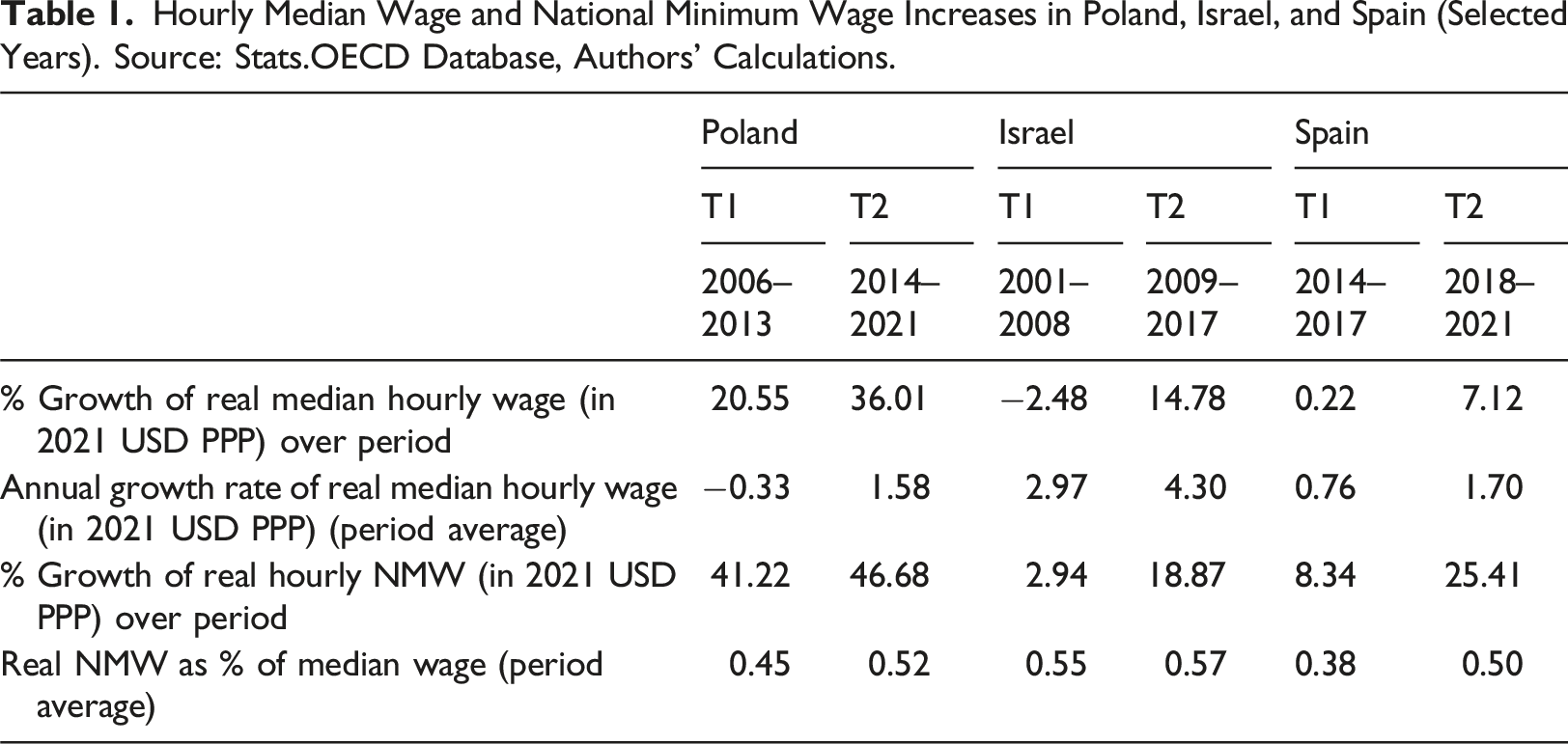
Hourly Median Wage and National Minimum Wage Increases in Poland, Israel, and Spain (Selected Years). Source: Stats.OECD Database, Authors’ Calculations.
Figures 1–3 show the growth rate of household net income (by decile or quintile) over the period of interest (T2) and in the immediately preceding reference period (T1) for all of our case studies.
3
Generally, the more robust rate of income growth in the periods of interest (T2) – especially in the lower deciles, as well as across the entire distribution – in comparison to the preceding reference periods, demonstrates the pro-labour distributive implications of this trend. We use household net income, as this measure represents both direct wages and ‘social wages’, which are complementary measures for the policies we seek to understand. Poland – Household Income Growth (%), by Quintile, 2007–2013 (T1) and 2014–2021 (T2). Source: Stats.gov.pl data, Household Budget Survey, 2006–2021, authors’ calculations. Israel – Household Income Growth (%) by Decile 1999–2008 (T1) and 2009–2018 (T2). Source: Israel Bureau of Statistics, Household Income and Expenses Survey, authors’ calculations. Spain – Household Income Growth (%) by Decile, 2013–2017 (T1) and 2018–2021 (T2). Source: ine.es (Instituto Nacional de Estatistica) data, Life Conditions Survey, 2013–2022, authors calculations.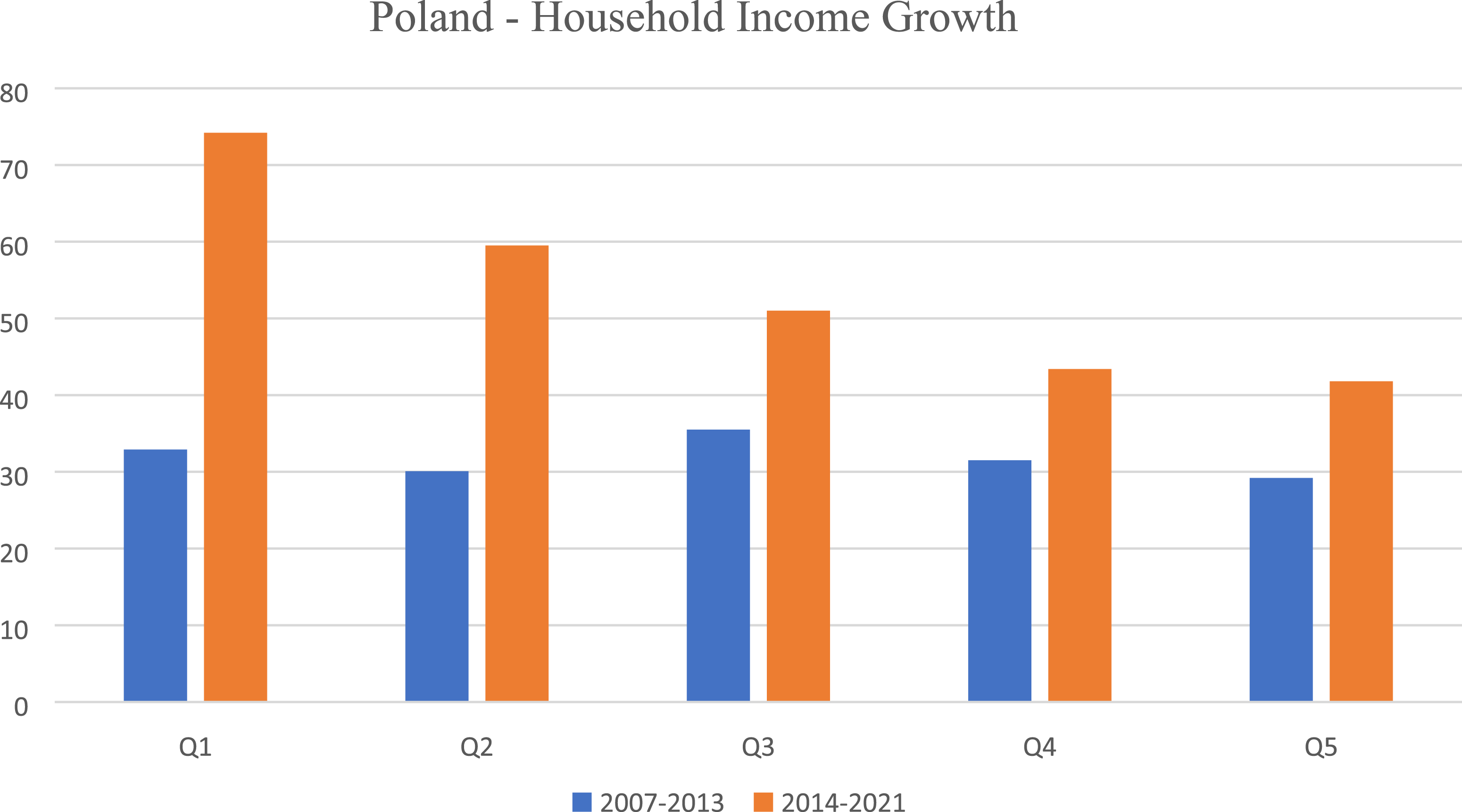
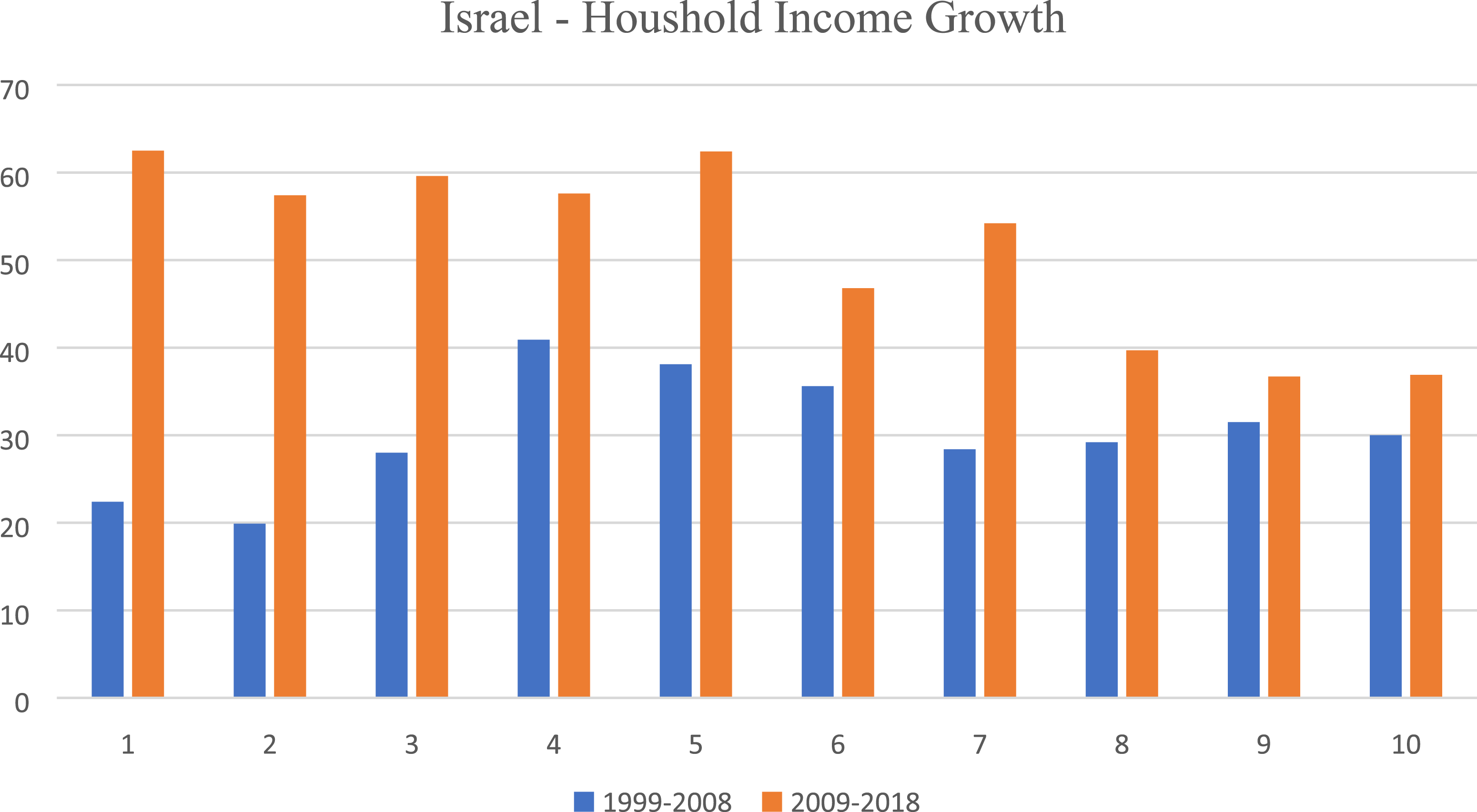
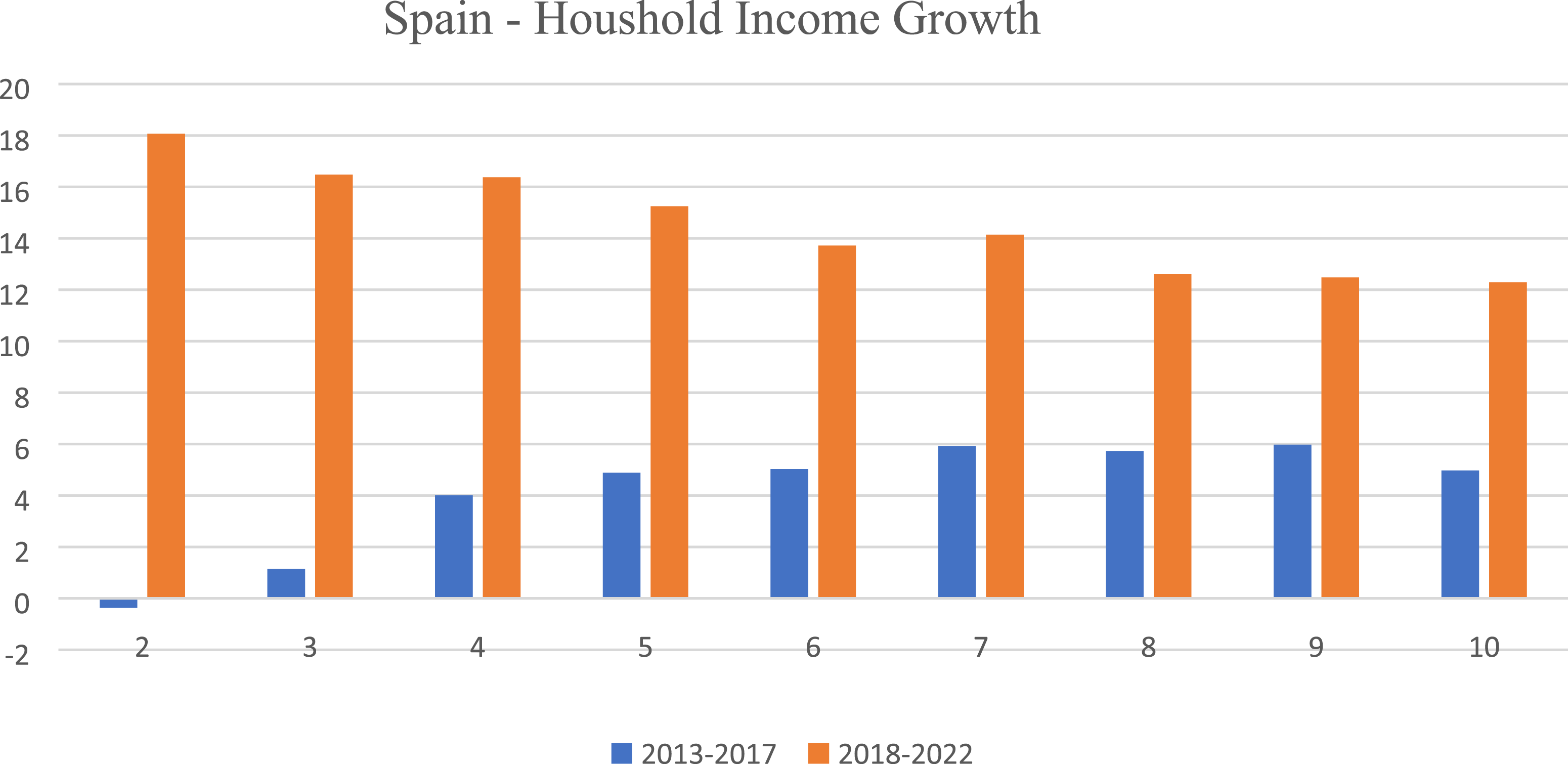
As the data makes clear, the pattern of wage growth is not the same across all cases. The shift between T1 as a phase of wage moderation and T2 as a phase of wage growth is particularly pronounced in Israel and Spain. In Poland, a trend of wage growth is observed also in T1, but becomes more pronounced in T2, especially for workers in the lower earning deciles – towards whom, as the case studies will make clear, the majority of wage-boosting policies in the Polish context are targeted towards. Nonetheless, looking at household income (Figures 1–3) emphasizes the differences between phases in all three cases, further demonstrating the differences between policies – as targeting direct wages as well as the ‘social wage’ (e.g. social transfers and pensions). These features make the three cases comparable in terms of outcomes.
Our logic of case selection follows therefore the logic of ‘most different’ system design, to show how the same mechanism bringing about similar outcomes operates in the presence of common pre-conditions across otherwise differing cases. Poland, Israel, and Spain present common antecedents insofar as they can all be characterized as advanced peripheral economies that came to rely on wage suppression as a means to promote or pursue price-sensitive export-led growth (Akcay and Jungmann 2022; Baccaro and Hadziabdic 2023; Hein et al., 2021) – either through inclusion in global value chains through FDI attraction (Poland); as a state-led, export-oriented development strategy (Israel); or as a conjunctural recovery strategy after a period of a deep economic crisis based on a combination of manufacturing and service exports (Spain). 4 In virtue of their common reliance on exports as the main growth driver in recent years, all three countries are, in theory, constrained in the implementation of wage-boosting policies, although the specific nature of the constraints they face varies in virtue of their diverse integration in global value chains and production networks.
Despite their deeply different political and party systems, and their different welfare and industrial relations regimes, Poland, Israel, and Spain share a key antecedent of broadening: austerity and wage suppression were promoted by narrow growth coalitions that excluded organized interests – mainly labour – in favour of stronger autonomy for the state and business interests. Labour exclusion was particularly marked as export-based growth strategies entailed in all cases policies disempowering labour in political and material terms: an erosion of social dialogue; retrenchment of welfare; reduction of labour power; and the flexibilization of labour regulation. The process of broadening and labour re-inclusion, articulated through diverse forms of political exchange, leads in all three cases to the activation of the same mechanism: governing parties grant concessions to unions, resulting in the implementation of economic policies that contribute to boosting domestic consumption via increases in the direct wages or the social wage. In our case studies, we reconstruct whether the sequence of events in the three cases corresponds to our theorized model. Identifying a similar causal sequence across diverse cases provides empirical support for our theory.
The politics of wage-Boosting policies in Poland: The electoral pathway
Since the collapse of the communist bloc, the Polish political economy has trended towards dramatic liberalization. Following decades of authoritarian state-led economic governance, state, capital, and labour were united in their pursuit of liberal reforms and the formation of an open, liberal market economy (Mrozowicki and Maciejewska 2017; Olejnik 2020; Ost 2000). These reforms placed Poland’s economy on the path to rapid economic growth, based on the rising share of exports and FDI from GDP, complemented by compensatory mechanisms to maintain household consumption (Uroz 2020). Advanced by the famous Balcerowicz Plan (Balcerowicz 2022), the liberalization of Poland’s economy during the 1990s and early 2000s resulted in a drastic decline in wages; an increase in unemployment; and a gradual retrenchment of welfare spending. Early-retirement policies and curtailment of unemployment benefits enacted in this period were part of the government’s strategy to develop an FDI-based export-led model (Uroz 2020; Czarzasty and Mrozowicki 2021). These liberalization measures went hand in hand with a multi-faceted industrial policy, seeking to attract FDI while also reinforcing the competitiveness of Poland’s exports. This was advanced through a combination of wage-suppression and gradual upgrading of manufacturing (Bruszt and Greskovits 2009).
While other European countries in this period based structural reforms on different forms of cross-class dialogue, in Poland its extent was minor and unions and employers’ associations were incorporated into the growth coalition as marginal and weak partners, maintaining an ‘illusory’ form of corporatism (Czarzasty and Mrozowicki, 2021; Ost 2000). This process, expressing a gradual narrowing of the growth coalition, permitted major policy decisions to pass unilaterally, subordinating labour’s interests to those of the core of the growth coalition. Nonetheless, like other advanced peripheral or Dependent Market Economies (Nölke and Vliegenthart 2009), the dominant growth coalition in Poland also sought to manage constant ‘compromises between market transformation and social cohesion’ (Bohle and Greskovits 2012:3). Therefore, despite the gradual retrenchment of welfare institutions, throughout the transition period household consumption remained an important growth driver. As a result, Poland maintained a relatively balanced economic regime of ‘embedded neoliberalism’ (Bohle and Greskovits 2012).
Despite the ongoing importance of domestic demand to the Polish GM (Akcay and Jungmann 2022), the rise to power of the liberal government led by the PO party marked a change in Poland’s growth coalition. This new coalition pursued gradual exclusion of labour, in favour of the interests of both foreign capital and export-oriented employers (Naczyk 2022). Starting in 2009, in response to the GFC, this new, narrower growth coalition, acted to reduce the country’s growing deficit while enhancing its FDI attractiveness. This goal was promoted mainly through cuts in redistributive social spending. Indeed, in the years 2011–2014, the coalition’s policy agenda included a gradual reduction in state allowances and a rapid ‘marketization’ of labour regulation, through pension retrenchment and partial erosion of labour protections.
While all Polish political parties post-1989 embraced export-led growth strategies and sought to increase FDI attractiveness, the PO-led coalition expanded this trajectory more systematically by further sidelining organized labour. This exclusion manifested both institutionally and in the realm of public policy. Institutionally, the government began bypassing and ignoring the existing tripartite consultative institutions (TK). Regarding social policy, the government further eroded traditional safety nets by raising the retirement age and promoting temporary and under-protected labour contracts. The latter resulted in the well-known ‘Junk Contracts’ problem, referring to the exceptionally high rate of workers exempted from labour laws (Meardi and Trappman 2013).
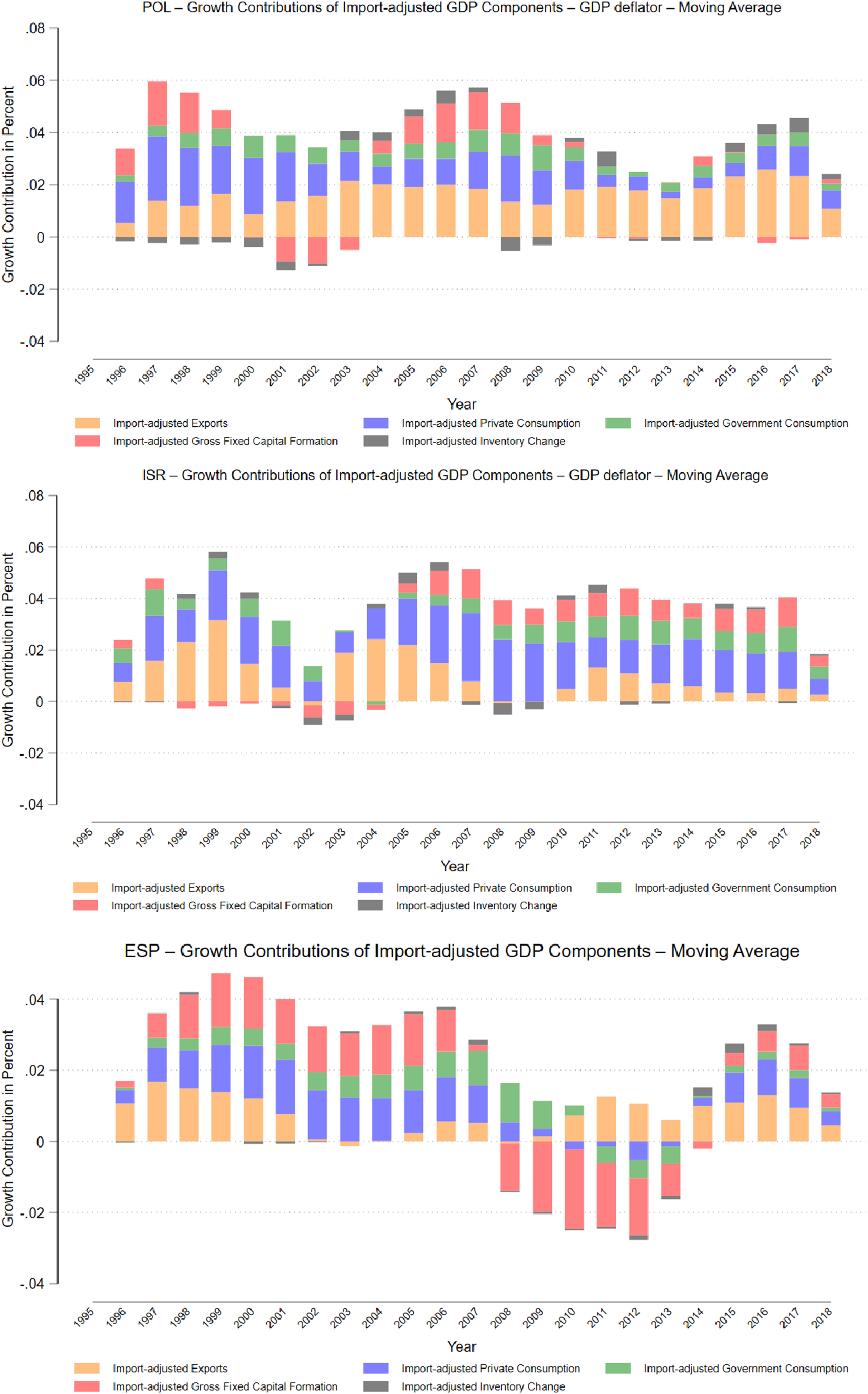
The anti-labour policies enacted by the PO government intensified existing precarity and resulted in greater repression of household consumption (Oruz 2020. For growth decomposition see Appendix 1 – POL). Furthermore, they increased social tensions and fuelled widespread social unrest, culminating in workers’ resistance as well as wider social protests against the socio-economic reforms, leading to the coalition’s growing political instability (Czarzasty and Mrozowicki 2021; Meardi and Guardiancich 2022). This manifested in two ways. First, unions’ formal withdrawal from tripartite institutions and a call for a general nationwide strike and social protests which were the biggest since the early 1980s (Czarzasty and Mrozowicki 2021). Second, a reinforcement of the historical alliance between the largest union, Solidarity, and then the opposition party – PiS (the right-wing populist Law and Justice party) – culminating in an official accord of mutual support between the two sides just before the parliamentary elections of 2015. 5
Despite PiS′ previous contributions to the liberalization of Poland’s economy, following its loss to PO in 2007 it gradually changed its approach. It aligned with public dissent against the conservative policies promoted by the exclusive and narrow growth coalition and in favour of more labour-inclusive, heterodox economic policies. Consolidating an alternative growth coalition that included the main ‘losers’ of Poland’s growth strategies during 2007-2014, PiS advanced policies that reformed and consolidated traditional redistribution mechanisms which, in turn, increased private consumption. 6 This inclusive strategy and policies represented the mutual goals of PiS and Solidarity and secured PiS′ sweeping victory in the parliamentary elections of 2015 as part of a lower- and working-class inclusive coalition. Combining nationalist ideology and redistributive policies, this new growth coalition began favouring the interests of domestic capital, advanced through favourable tax policies and nationalization, mainly in the banking and retail sectors (Naczyk 2022). These policies relied on a gradual reduction of CA deficits, which were based on the partial success of previous coalitions: growing FDI (that materialized starting in 2014, following 3 years of sharp decline); a gradual upgrading of its industry, which resulted from Poland’s advantage in global supply chains and continuous industrial policies; and finally, Poland’s monetary sovereignty, which permitted the new coalition to run larger deficits and thus partially reverse the policies promoted by the previous PO-led coalition.
This combination of external and internal conditions opened opportunities for the new broad growth coalition to pursue a complete reversal of previous policies, based on expanded social spending. This included the cancelling the 2014 increase to the retirement age; the introduction of an additional pension payment, ‘the 13th month’ (later expanded with an additional ‘14th month’); the increase of the national minimum wage by 50%; accepting the union’s demands to halt the expansion of ‘junk contracts’ and extending workers’ rights; banning Sunday commerce to ensure weekly rest for retail workers; and extended security and service workers’ right of association, allowing unions to organize in these sectors (Sitnicka, 2019 in Oljenik, 2020). Alongside these pro-labour policies, the PiS government launched the ‘500+’ policy, a generous child allowances policy, proven highly effective in reducing post-distributive income inequality (Meardi and Guardiancich 2022). While strengthening the welfare state, the government also reduced the tax rate for low-middle-income workers, increasing their disposable income (Oljenik 2020) – the effects of which can be seen in the data on household income during this period.
Due to increased investments in technological upgrading in this period (Vukov 2023), Poland enjoyed upgraded, high-value-added export sectors. As a result, the wage-boosting measures outlined above did not damage Poland’s FDI attractiveness or exports. In fact, in this period the country’s export competitiveness only increased (de Paula and Fritz 2017). This indicates that some room for (social) wage growth was available in this period, as can be seen from the increased role of domestic consumption in the growth decomposition following 2015 (Appendix 1 – POL).
Notwithstanding its many advantages, this electoral-based form of labour’s inclusion left Solidarity with very little autonomy, which manifested in its overwhelming support of most government policies, including its anti-democratic judicial reforms (Meardi and Guardiancich 2022). Furthermore, relations between the government and the union were often based on bypassing formal consultation structures (Czarzasty and Mrozowicki, 2021), under a ‘patronage’ form of social dialogue (Olejnik 2020). With a strong electoral base and a solid majority in parliament, PiS′ inclusive policies stopped short of broadening the institutional infrastructure of industrial relations in a more democratic fashion and continued to consolidate the etatist nature of economic governance. Solidarity maintained its role in the growth coalition as a junior-partner, serving as a supportive vehicle of government policies in the face of domestic challenges (e.g. claims from other unions and civil-society organizations) and international forces such as the EC, which opposed the government’s anti-liberal reforms (Oljenik 2020).
Therefore, while the formation of a broad and inclusive growth coalition produced positive outcomes for labour by paving the way for the implementation of (social) wage-boosting policies, it also resulted in some negative consequences for organized labour, among which were the divisions among various parts of the labour movement and the continuous erosion of democratic institutions of formal concertation (Czarzasty and Mrozowicki, 2021). Moreover, the transformations in the Polish political economy seem to maintain the authoritarianism that characterized Poland during the Soviet era (Akcay and Jungmann 2022), thus making any labour gains inherently fragile to future changes in the government’s policy orientation and Poland’s position in the global economy.
Wage-boosting policies in Israel – the corporatist path
Historically, Israel’s economy relied on a wage-led GM supported by a broad coalition that included the Labour party and the main trade union federation, The Histadrut (Grinberg 1991; Mandelkern and Rahat 2017). Starting in the late 1970s, this structure and its influence on macroeconomic policy endured fundamental changes. During the 1980s and 1990s, like most other advanced economies, Israel’s political economy was gradually liberalized (Mandelkern and Shalev 2018; Maron and Shalev 2017; Shafir and Peled 2018). The campaign for economic liberalization was an expression of the declining alignment among organized interests that traditionally composed Israel’s growth coalition. During this process, the Histadrut’s position in policymaking was gradually eroded, in the face of the growing power of the state and business (Maron and Shalev 2017). This transformed Israel’s dominant growth coalition from a relatively broad one to a narrower coalition that excluded organized labour (Shafir and Peled 2018).
With the changing nature of Israel’s growth coalition state managers were able to pursue new interests, namely, the construction of an innovation-based, export-led GM. Accordingly, starting in the mid-1980s Israel rapidly redistributed public resources and state protection away from domestically oriented traditional manufacturers and created the conditions for the emergence of an export-oriented, high-tech sector (Breznitz 2008; Krampf 2018; Maggor 2021). The winners of this new growth strategy were export-oriented private sector employers, for which new political-economic opportunities were opened by deepening globalization (Shafir and Peled 2018; Shalev 1998).
Excluded from the growth coalition, the Histadrut was powerless to resist the government-led restructuring that was accompanied by continuous austerity in government expenditure and welfare budgets (e.g. reduction in family and unemployment benefits), as well as rapid flexibilization of labour regulation (e.g. increase in a-typical work and outsourcing). Without its traditional political power, the Histadrut also saw its institutional position eroded. This led to a severe decline in union density and coverage, and the dismantlement of central concertation, which resulted in the significant retrenchment of workers’ wages and dramatic increases in income inequality (Kristal 2013).
While the narrowing of the growth coalition and the respective liberalization trends it promoted seemed to proceed uninterrupted, by the mid-2000s Israel’s political coalition began experiencing growing political instability, leading to its eventual collapse in the wake of the GFC. This turning point created a political opportunity for the transformation of the ruling parliamentary coalition when in January 2009 the right-wing Likud party, led by Chairman Netanyahu, returned to power. Likud strived to create a broader coalition that could provide greater public legitimation (Bondy and Maggor 2024). Therefore, while previous governments undermined the Histadrut and advanced the interests of export-oriented elites, this government included the centre-left Labour party as a junior partner and the Histadrut, which had a dominant position within the party. This marked a significant shift from a narrow, labour-exclusive growth coalition to a broader one, that included labour as a significant partner.
The coalitional agreement integrated the Histadrut into policy-making processes and set the conditions for future tripartite negotiations for a ‘package deal’ (historically a code name for tripartite peak-level collective agreements in Israel). In this package deal, the Histadrut entered a classical corporatist political exchange – granting stable legitimacy to the government in return for political and institutional benefits, mostly addressing non-unionized private-sector workers and short-term wage demands of unionized public-sector workers. This political exchange marked a dramatic shift away from the liberalization of labour regulations advanced by previous governments. Through its newly-acquired seat around the decision-making table, the Histadrut resurrected some of the labour movement’s traditional power resources which enabled multifaceted pro-labour policies. These included a series of agreements between the Histadrut, the state, and the peak (and sectoral) employers’ association on an increase in the minimum wage and several new (or renewed) sectoral collective agreements in low-wage sectors. The Histadrut was also able to secure labour-friendly legislation reforms that facilitated greenfield organizing, leading to unprecedented numbers of new and successful unionization campaigns, mainly in sheltered services sectors like Cellular, Public Transportation and Insurance (Bondy 2022; Mundlak 2020, 2007; Preminger 2018).
Policymakers did not make an explicit attempt to change Israel’s GM. Nevertheless, the new wage-boosting policies resulted in increasing domestic consumption and increasing its share of GDP, as can be seen in the growth decomposition of these years (Appendix 1 – ISR) (see also Bondy and Maggor 2024). In this period, the rapid growth in income from work (based on real wage increases) was overrepresented in the lowest income deciles (cf. Figure 2), which translated into a disproportionately greater increase in consumption.
Due to Israel’s growing BoP surplus, Israel’s export-oriented industries were able to tolerate growing wage growth (Bondy and Maggor 2024). This was mainly due to the nature of Israel’s exporting sectors which became increasingly specialized in knowledge-intensive services, such as computer software and R&D, that are insensitive to price-based competition or fluctuations in currency value (Bondy and Maggor 2024). 7 Nonetheless, without a fundamental change in the inter-class-power relations or the core interests of members of the growth coalition, its durability was weak from the start. With the Likud government’s legitimacy restored, the Histadrut eventually lost its role as a key factor in the formation of parliamentary coalitions and so its impact in the policy-making arena waned. Furthermore, the endurance of conservative fiscal policies in national economic governance posed a significant challenge to the endurance of the labour-inclusive coalition and its wage-boosting policies.
The hybrid pathway towards wage-boosting policies – electoral and institutional exchange in Spain
In the first decade of EMU membership, Spain’s ‘growth miracle’ was led by domestic consumption, with private indebtedness as the main growth driver and construction as the dominant sector (Buendia 2020). Employment creation was concentrated in low-productivity sectors, leading to real wage and productivity stagnation (Baccaro and Bulfone 2022). The detrimental effects of wage stagnation on domestic demand were compensated by easing access to credit. The unsustainability of Spain’s financialized debt-led and construction-led growth strategy became apparent during the GFC, which triggered profound restructuring.
As capital flows from core Eurozone economies which had financed Spain’s BoP deficit slowed down, the hard constraints to consumption-boosting policies arising from Spain’s peripheral integration within the Eurozone kicked in (for more on sudden stops of capital flows, see Kohler 2022). Through mechanisms of conditionality leveraged by creditors and EU authorities, post-2009 Spanish governments were compelled to embark on a path of re-orientation of Spain’s GM towards exports through internal devaluation (Armingeon and Baccaro, 2012). This entailed austerity and labour market reforms to devaluate wages and increase export competitiveness and FDI attraction through the liberalization of employment protection legislation (EPL) and decentralization of collective bargaining to the firm level (Bulfone and Tassinari 2021).
As can be seen in growth composition data on Spain (Appendix 1 – ESP), forced re-orientation towards exports only partly made up for the collapse in domestic demand, and the beneficiaries of the export-led recovery remained narrow. The bulk of the export activity was driven by a small number of large internationalized firms. Savings arising from wage devaluation mainly resulted in higher corporate profits (Álvarez et al., 2019). Large, often multinational companies in tourism, business, and IT services, multi-services, and utilities emerged as the main new winners of Spain’s post-crisis recovery from 2013–14 onwards.
Politically, unions were excluded. All major reforms pursuing internal devaluation over 2010–2013 were implemented unilaterally (Molina 2021). Dependent employees were also marginal in the electoral base of the governing party PP, made up primarily of SME owners and managers (Bulfone and Tassinari 2021). Internal devaluation hurt dependent employees by leading to falls in nominal wages, causing a distributional shift in favour of profits (Febrero 2021: 187). Whilst employment creation has been the main ‘compensatory’ measure, it has been primarily low quality and low waged (Perez and Matsaganis 2019), thus contributing to suppressing domestic consumption. These measures translated into the
An unbalanced recovery strategy founded on a narrow social base and weak domestic demand proved politically fragile. Issues of poor employment quality and low wage growth became increasingly politicized since 2012–2013 by union campaigns, social movements mobilization (such as the Indignados and Mareas movement), and challenger parties of the radical left. Widespread economic insecurity fuelled the growth of public dissatisfaction with the political system (Fernández-Albertos and Kuo, 2016) and anti-system political forces (Hopkins 2020) such as Podemos on the radical-left and Ciudadanos on the centre-right, upsetting the established two-party system.
Political upheavals reduced government strength. Levels of public trust in the majority PP government plummeted in 2014, and party system fragmentation resulted in inconclusive results in both the 2015 and 2016 General Elections. In 2016, the PP eventually formed a minority government supported externally by Ciudadanos. This second PP government, still led by PM Rajoy, was however extremely weak; plagued by the Catalan independence crisis and corruption scandals which led to its eventual collapse in June 2018. It was substituted by another minority government led by PSOE’s leader Sanchez with the external support of radical left Podemos and small regionalist parties. The minority PSOE cabinet however fell in February 2019 after failing to pass the state budget. In April 2019, new snap elections were called and proved again inconclusive. A new coalition government between PSOE and Unidas Podemos, led by PM Sanchez, was eventually formed after yet another election in November 2019.
Political instability provided a window of opportunity for the gradual and contingent re-incorporation of organized labour in the governing social bloc. Weakened by political fragmentation, first the PP cabinet of Rajoy over 2015–2018 and then, more explicitly, the PSOE and PSOE-Podemos cabinets led by Sanchez from 2018 reactivated channels of political exchange via social concertation with the two main unions, CCOO and UGT. This provided unions with a chance to advance policy demands around wage revaluation and labour market re-regulation. However, wage-boosting policies deviating substantively from the prior trajectory of internal devaluation were only implemented in 2018, when governmental political weakness coincided with a contingent relaxation of the macro-economic constraints which had previously limited the space for consumption-boosting economic policies.
The shift in the content of political exchange over time illustrates the interplay between political and economic-structural scope conditions in creating policy space for wage-boosting policies. The attempted re-incorporation of organized labour through political exchange started in the embryonic form already under the weak centre-right PP government. After losing its majority in 2016, the Rajoy II government had to seek compromises with opposition forces in Parliament to pass legislation; and thus, attempted to use tripartite social dialogue to broaden its consensus base and overcome policy deadlock. From early 2017, several social dialogue tables were set up to discuss issues around employment quality and pension re-evaluation. Yet, only a few symbolic, limited concessions to organized labour were granted: a modest negotiated increase of the national minimum wage for the 2018–2020 period (4% in 2018, 6% in 2020, to reach €850 per month by 2020) in 2017, and a new framework agreement for wages in public administration.
The policy concessions granted to labour up until 2018 remained limited because of the extremely constrained macroeconomic and fiscal-policy environment. The new Eurozone economic governance (NEG) framework of macro-economic surveillance constrained fiscal policy and included surveillance of, among other indicators, Unit Labour Costs (ULC) developments in EU Member States (cf. Jordan et al., 2021; Rathgeb and Tassinari 2022). The government was thus pushed to stick to policies prioritizing tight fiscal policy and wage moderation; as primary deficits or excessive ULC increases risked activating the European Semester’s surveillance mechanisms and sending negative signals to financial markets (Jordan et al., 2021). The most crucial labour market regulation measures relevant for export-oriented employers and FDI attraction – EPL liberalisation and collective bargaining decentralisation – remained untouchable (Bulfone and Tassinari 2021). The hard external constraints meant that, in this phase, the rate of wage re-evaluation continued to trail behind productivity growth.
As the left ascended to power in 2018, conditions became more conducive to the implementation of wage-boosting policies supporting a deeper recovery of wages and domestic consumption. Due to their parliamentary weakness, the two Sanchez cabinets pursued an explicitly close political relationship with the unions. In 2018, the first step of the new PSOE government was re-launching social dialogue and setting up with the unions a ‘Plan for decent work’ to improve employment and working conditions quality. In December 2018, the government and unions signed a memorandum of understanding, excluding the employer organizations, to revoke the ‘most harmful aspects’ of the 2012 labour market reform (especially re-instating sectoral collective bargaining coverage). The commitment to policy reversals in labour market policy was then reinstated in the PSOE and Podemos coalition agreement of December 2019.
This rapprochement with unions had primarily a political-electoral rationale. Electorally, both parties benefited from rekindling relations with the unions, as dependent workers in blue-collar occupations and pensioners on one hand, and service sector workers on the other represented the core of the electoral base of PSOE and Podemos respectively (cf. Bulfone and Tassinari 2021). Over 2019–2021, both CCOO and UGT directly expressed their support for the centre-left parties in various regional elections. Fostering a stronger relationship with the unions also enabled the PSOE-Podemos cabinet to legitimize its policy agenda and partly circumvent employers’ hostility.
As part of this renewed alliance with labour, the PSOE-Podemos government implemented policies aimed explicitly at increasing wages despite employers’ open opposition. These include massive increases in the minimum wage, set through legislation (+22% in 2019, the largest increase since 1977, followed by further increases in 2020–2021, to reach €1000 per month in 2022); and a further 8% increase in 2023 to fight inflation. 8 In late 2021, a path-breaking labour market reform was implemented to reinforce sectoral collective bargaining and promote permanent over temporary contracts. The centre-left government also explicitly sought to reinstate the visibility and legitimacy in public opinion of unions, whose power resources and reputation had been depleted during the crisis.
The implementation of these wage-boosting policies was enabled by a relaxation of extant macroeconomic constraints. The temporary suspension of the Stability and Growth Pact and the corrective and preventive arms of the European Semester during the Covid crisis and in its aftermath, and the influx of funds from the NextGenEU recovery instrument, gave the government expanded fiscal space and created temporarily conducive conditions over 2020–2022 for rebalancing strategies supporting domestic demand, without running the risk of being punished by financial markets. Taken together, the policies of NMW revaluation and labour market re-regulation deviate from the growth strategies pursued since the GFC, the effects of which can be found in the rise of both direct and social wages in the period. Indeed, the objective of shifting away from a growth strategy centred around internal devaluation and cost competitiveness based on wage suppression was explicit in the policy discourse of the Sanchez cabinet. Concerns around mounting inflation and the corresponding tightening in the ECB’s monetary policy stance might yet change the macroeconomic constraints scenario facing Spain, making the long-term viability of wage-boosting policies uncertain. However, signals thus far indicate a persistence of robust wage growth in Spain even throughout the high inflation period.
Discussion and conclusions
The GMs perspective has assumed that wage-boosting policies are firmly off the agenda in the age of liberalization, as the loss of power of organized labour has dismantled the economic and political mechanisms that underpinned the Fordist wage-growth nexus. By focussing on the unlikely case of three advanced peripheral economies – Poland, Israel, and Spain – we have shown that, under specific scope conditions, wage-boosting policies that go against the functional logic of the GM can nonetheless still emerge even in very constrained macro-economic environments.
We have outlined one mechanism underlying the implementation of wage-boosting policies that might unleash a broader rebalancing of GMs: political exchange-based incorporation of organized labour in the growth coalition. Poland, Israel, and Spain all demonstrate a process of socio-political transformation, through which dominant growth coalitions broadened by including labour, leading to the implementation of socio-economic policies boosting wages by intervening either on salaries or on the social wage. Two jointly necessary scope conditions enabled the emergence of wage-boosting policies via political exchange: political instability leading governments to seek negotiations with unions; and the temporary relaxation of macro-economic constraints arising either from technological upgrading which improved these countries’ position in global value chains or from an easing of fiscal-monetary discipline.
Summary of Key Labour Market and Welfare Policies, Authors Elaborations.
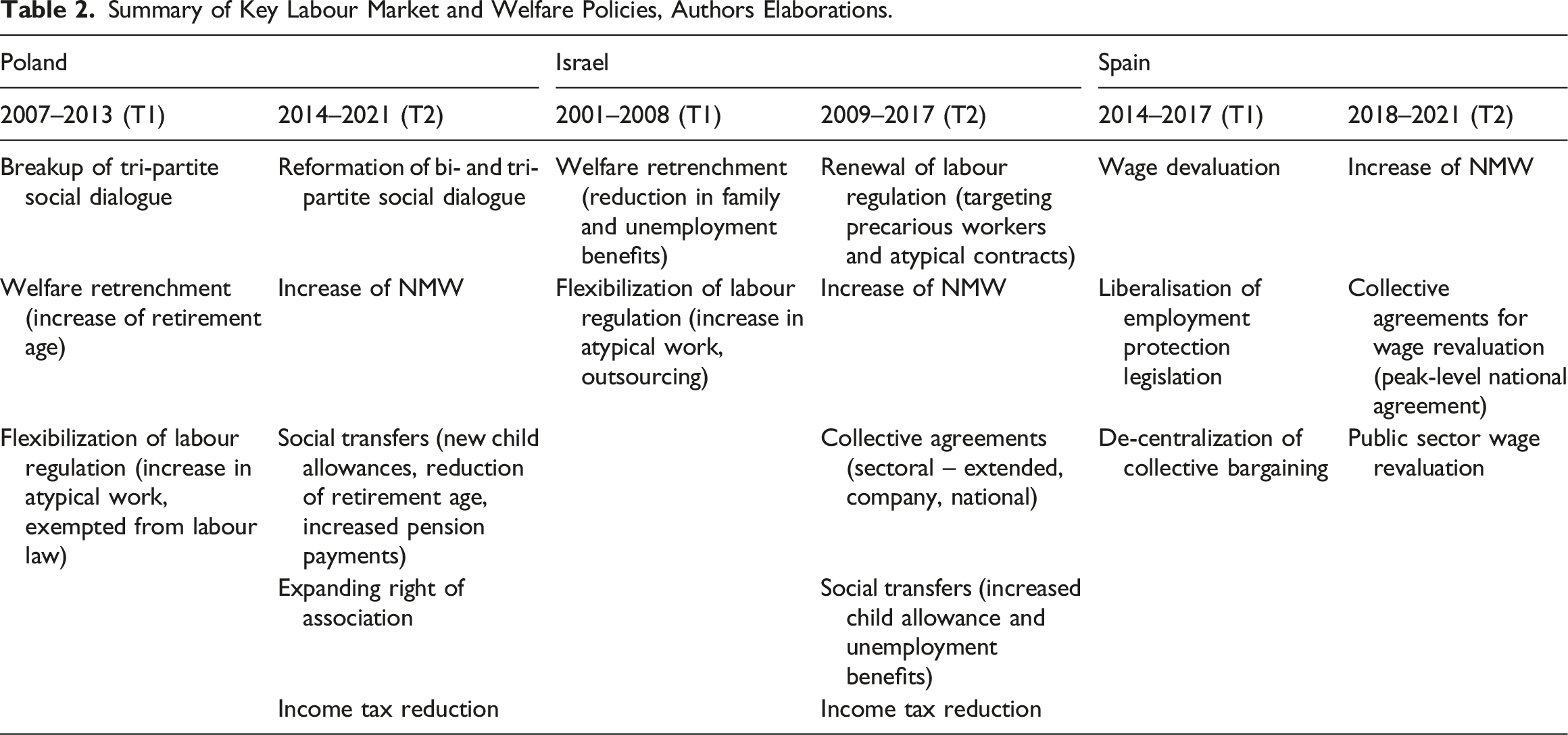
Poland exemplifies an electoral settlement, where due to the tradition of central state authority and a long-lasting institutional weakness of societal actors, partisan actors align with labour as part of a political strategy to gain power in the parliamentary realm, outside of institutionalized corporatist arenas. This pathway leads to the implementation of wage-boosting policies mostly controlled by the state – social transfers, nationalizations, and state-led minimum wage increases – that support the stability of the expanded growth coalition but do little to reinstate labour’s autonomous power resources. Israel exemplifies instead a corporatist logic of political exchange between the government and organized interests in the industrial relations arena. Based on labour’s institutional power that allowed for centralized concertation, this strategy strengthens organized labour through various concessions granted by the government, which translate into the gradual accumulation of wage gains, especially in the lower ends of the income distribution, as well in the strengthening of labour’s institutional power resources in collective bargaining. Finally, Spain exemplifies a hybrid path, where governments pursue a politicized version of centralized social concertation as the main channel of political exchange with weakened unions. Partisan actors in government use social dialogue agreements strategically to include labour and reap benefits in the electoral arena by appeasing labour’s constituencies through policies that boost wages and aim to reinstate labour’s power in collective bargaining. The process was government-led, yet it contributed to shoring up labour’s legitimacy and institutional power resources. These differences in policy outcomes matter because, unless temporary wage gains resulting from political exchange are somewhat institutionalized and accompanied by a re-constitution of labour-autonomous power resources, they are likely to remain fragile and easily reversible.
Our findings underscore the importance of actors’ political agency and contingent political opportunities in shaping growth strategies, even in highly constrained macroeconomic contexts. Our analysis also stresses the importance of necessary scope conditions, mainly the relaxation of structural constraints that provide the necessary political and economic space to enact wage-boosting policies. While the relaxation of structural constraints is often an outcome of shifts in the global macroeconomic environment or unexpected global events such as the COVID-19 pandemic, they can also be relaxed due to government agency. One example discussed here is the role of industrial and innovation policies in helping states ‘move up the value chain’ and shift from a reliance on price-sensitive to price-insensitive exports. The politics of GM change, in short, might be more open-ended than normally assumed, and labour might have a greater role to play in it than other strands of GM scholarship have suggested thus far.
We should also stress that our analysis does not rule out that similar mechanisms leading to wage re-evaluation might also emerge in core economies, including non-export-led ones. Indeed, there is nothing exclusive about advanced peripheral economies neither for what concerns the possibility of wage-boosting policies being implemented in response to legitimation issues and the ensuing social contestation that liberal economic policies can generate; nor about some of the exogenous contextual conditions that we identify which allow for the ‘relaxation’ of extant policy/macro-economic constraints to wage re-evaluation. As we explained above, our decision to focus on advanced peripheral economies was due to their particularly constrained macroeconomic environment which provided a ‘hard test’ for our theory.
Our case selection allows us to rule out alternative explanations that might account for the emergence of wage-boosting policies. First, labour re-incorporation in the dominant growth coalition could be associated with government partisanship – particularly left partisanship. However, Poland, Israel, and Spain in the period under consideration display ideological diversity among governing parties: labour reincorporation takes place under both governments of the right (such as in Poland and Israel) and the left (as in Spain), thus showing that partisanship alone does not explain such shifts, but that a more nuanced view of the diverse composition of the social blocs underpinning different partisan governments is necessary. Second, labour reincorporation could be seen as conditional on class power, proxied for example by union density. However, our case studies show that union density is not a key predeterminant of the broadening trajectory. Indeed, as detailed in the case studies, union organizational power resources were weakened across all three cases before the broadening pathway took shape – showing that declining union density does not irremediably lead towards labour marginalization (Culpepper and Regan 2014). Despite their organizational weakness, in all three cases, unions were able to pursue political exchange as part of their support for weakened governments. Nonetheless, the importance of organizational power appears crucial for coalition maintenance, as the Israeli case demonstrates. Indeed, without organizational power, the durability of such an exchange seems to be at risk of policy reversals. Third, our case studies demonstrate that business–political elite linkages are also not necessary conditions for the orientation of growth strategies. At least in the Polish and Spanish cases, wage-boosting policies took place despite employer preferences. Although sometimes employers were consenters to policy changes (when they stood to gain from them), their consent was not a necessary precondition.
One follow-up question emerging from our analysis, which our case studies cannot fully address, concerns the constraints to the depth and durability of such policy re-orientations, especially for advanced peripheral economies. In all three cases, the shift in the thrust of economic policy towards wage-boosting policies materialized relatively recently, and hence it is hard to fully assess the sustainability of this pathway besides temporary contingency. There are reasons to believe that some ‘hard’ structural constraints to rebalancing remain present, to a different extent, in all these countries. For the Spanish case, its peripheral position within the Eurozone political economy poses potential constraints to the long-term sustainability of the wage revaluation strategy. Concerns around mounting inflation in 2022 and the prospect of a tightening in the ECB’s monetary policy stance might yet change the macroeconomic constraints, making the long-term viability of these policies uncertain – although wage growth has remained, to date, fairly robust. In Poland and Israel, which are not part of a currency union and thus maintain currency sovereignty, there appears to be more leeway for wage-boosting policies without incurring the same hard constraints. Especially in Israel, given that the structure of exports and the incentives for FDI attraction are not sensitive to labour cost variation, there seems to be more room for manoeuvre on the macroeconomic front to boost domestic demand. This suggests that upgrading the composition of exports could be an important facilitating condition for paving the way for wage-boosting policies. However, the political vulnerabilities of such strategies remain relevant even in such cases. Future work shall focus on exploring systematically the varying constraints to rebalancing that different political economies face depending on the composition of their export structures, the different current account constraints they face and their position of incorporation in global value chains and vis-a-vis external creditors and supranational institutions. Finally, as our analysis mainly relied on secondary sources to identify growth drivers, future scholarship would benefit from more detailed econometric studies that could directly test the relevance of wages as a growth driver in relevant cases and historical periods.
Footnotes
Acknowledgements
For their encouraging comments and critical feedback on previous versions of this article, we wish to thank the participants of the research workshop on ‘The Politics of Growth, Stagnation, and Upgrading in Advanced Peripheral Economies’ hosted by the Max Planck Institute for the Study of Societies (MPIfG) in Cologne, July 2022. We are also grateful to Mischa Stratenwerth for providing us with the import-adjusted growth composition analysis and to Adam Mrozowicki, Guglielmo Meardi, and Maciej Olejnik for their supportive advice with the Poland case-study. Finally, we wish to thank Lucio Baccaro, Fabio Bulfone, Aldo Madariaga, Andreas Nölke, Philip Rathgeb, two anonymous reviewers, as well as participants at the annual meeting of the Society for the Advancement of Socio-Economics (SASE) in Amsterdam (June 2022), the Party Politics and Political Economy workshop at the University of Edinburgh (December 2022), and the EPCI Seminar at Paris School of Economics (March 2023) for their generous and insightful feedback. All remaining errors and shortcomings are entirely our own.
Declaration of conflicting interests
The author(s) declared no potential conflicts of interest with respect to the research, authorship, and/or publication of this article.
Funding
The author(s) received no financial support for the research, authorship, and/or publication of this article.

Notes
Appendix
Growth contributions of GDP components for Poland, Israel, and Spain. Source: elaborations on the OECD harmonized Input-Output tables and the OECD Trade in Value Added (TiVA) database. The Authors are grateful to Mischa Stratenwerth for providing us with these calculations. For an explanation of the import-adjusted approach to the decomposition of GDP demand components, see: Baccaro and Pontusson (2021).