




Abstract
This paper broadens the scope of the Growth Model (GM) research agenda beyond the study of ‘core’ business elites by investigating the influence of (oft-neglected) non-core business actors and sectoral interests in determining growth strategies. To do so it looks at a crucial case in the GM debate: Ireland. Ireland’s robust recovery from the eurozone crisis has set it apart from the rest of the eurozone periphery. For GM scholarship, Ireland’s recovery has been driven by its long-established multinational/export sector, which is relatively indifferent to the effects of austerity and internal devaluation. Why, then, was internal devaluation a central plank of Ireland’s crisis response and Economic Adjustment Programme (EAP)? Drawing on 10 original interviews with Irish business elites and policy makers and documentary evidence, this paper shows that domestic, not multinational, business elites played a key role in framing conditionality related to competitiveness and labour market reform in the Irish EAP. This challenges the concept of ‘dominant growth coalitions’ and argues that an exclusive focus on ‘core’ business elites neglects the ability of other fractions of business power to determine growth strategies. Looking beyond ‘core’ business elites makes it possible to identify transformation behind more obvious patterns of continuity.
Keywords
Introduction
For EU and Irish political elites, the 2011–2013 Troika Economic Adjustment Programme (EAP) was ‘relevant, appropriate and effective’ and ‘widely recognized as being a success’ (European Commission 2015b). For Comparative Political Economy (CPE) scholarship, in contrast, the Irish programme was largely irrelevant. Brazys and Regan (2017, 2018) have shown that Ireland’s recovery has little, if anything, to do with its successful compliance with the EAP. Rather, recovery was driven by the successful attraction of Foreign direct investment (FDI) from Silicon Valley and beyond. The high-tech, relatively high-wage export-led growth this has driven is ‘relatively indifferent to austerity-induced cost competitiveness’ (Brazys and Regan 2017: 421). Put simply, the internal devaluation contained within the EAP was immaterial to Ireland’s export-led recovery (Brazys and Regan 2017).
Why, then, was internal devaluation a central plank of Ireland’s crisis response and EAP? Ireland was required to implement structural reforms aimed at internal devaluation, such as reducing the national minimum wage level, the reform of sectoral wage-setting arrangements as well as employment ‘activation’ measures (European Commission, 2013: 6). Not only were such reforms demanded but they were framed in the text of the Memorandum of Understanding (MoU) (European Commission, 2011) and its predecessor, the National Recovery Plan (NRP) (Oireachtas, 2011) as necessary to foster export-led growth, even though, curiously, they were primarily targeted at non-exporting sectors (Roche, 2016: 195). Herein lies the puzzle, if structural reforms were largely irrelevant to Ireland’s fiscal and financial crisis, and to the interests of its major exporting sector, why were they included as conditions in the first place?
Answering this question requires focus to be placed on Irish business elites outside the FDI sector, and on the ways in which they attempted to politically influence the content of conditionality in Ireland’s bailout agreement. While structural reforms may have been irrelevant to Ireland’s economic recovery, they were not irrelevant to low-paid and unemployed workers now facing new dynamics of discipline. The EAP moved Ireland moved from a relatively ‘passive’ work activation regime, to a ‘work first’ activation regime (Murphy, 2017). Unemployed workers became subject to new and stringent ‘employment seeking’ conditions (European Commission, 2015a: 81; Mercille and Murphy, 2015: 29). The reform and abolition of certain sectoral wage bargaining systems put additional pressure on already low paid workers. It was businesses in these sectors, rather than the export-oriented multinationals, which were interested in these structural reforms.
Empirically, the paper makes the following contributions. Through 10 original interviews with representatives from Irish business, trade unions, government, and the Troika, it confirms that multinational elites were not interested in internal devaluation. Domestic business elites, mainly in sectors such as retail and hospitality, on the other hand, did lobby for sectoral wage bargaining reform and minimum wage reduction, and succeeded in influencing the government in including them in their NRP 2011–2014, the blueprint for the Irish bailout programme.
Focusing on business elites outside Ireland’s FDI sector makes it possible to contribute to theoretical debates within CPE on the politics of growth models. Specifically, this paper draws on and develops the concept of dominant growth coalitions (DGC) (Baccaro et al., 2022; Hopkin and Voss, 2022). This concept focuses on coalitions of ‘core’ and ‘subordinate’ producer groups with policy makers and the ways in which these groups influence macroeconomic policy. As a peripheral economy with a structural dependency on FDI from US multinationals, it would be expected that foreign capital would dominate the politics of Irish growth. I complicate this expectation by arguing that the DGC concept is analytically predisposed to downplay the agency of ‘subordinate elites’ in the political determination of growth models. While dominant growth coalitions are hierarchical, the agency of subordinate business elites matters because it can have growth model relevant implications both by producing unintended shifts in aggregate demand (as during Ireland’s property bubble) and by shaping dynamics of inequality and the discipline of labour.
This argument is developed in three parts. The following section reviews existing Growth Models (GM) scholarship on the politics of growth models. The paper’s central argument is then developed, showing the potential of a GM framework that assigns more analytical importance to subordinate business elites and ‘secondary’ policy issues. The final section applies this framework to Ireland’s bailout programme. By taking seriously the agency of business elites outside the multinational sector, I show how internal devaluation in the Irish programme was not straightforwardly externally imposed but lobbied for by certain sectors of Irish business.
The domestic politics of growth models
Existing literature has focused on how interest group and voter preferences shaped the design and outcome of eurozone crisis responses (Iversen et al., 2016; Polyak, 2022; Tassinari et al., 2022). Walter et al. (2020) argue that distributive concerns, both within debtor countries and between them and creditor countries, should be front and centre in analysis of the politics of European Union-European Central Bank-International Monetary Fund (EU-ECB-IMF) conditionality (22). As such, this section begins with a review of recent debates within Growth Models scholarship on the domestic politics of growth models which focus precisely on the agency of such social groups. Baccaro et al. (2022; see also Hopkin and Voss, 2022) chart a middle path through the debate on the ‘electoral turn’ (Amable and Palombarini, 2009; Beramendi et al., 2015) and ‘elite studies’ (Culpepper, 2011). After outlining three key analytical steps of their approach, I show that GM scholarship has not yet paid enough attention to the agency and impact of ‘subordinate’ business elites within dominant growth coalitions.
The political determinants of growth models
The GM perspective (Baccaro and Pontusson, 2016; Baccaro et al., 2022) has become increasingly prominent as an approach to studying European capitalist diversity. In explicit contrast to the supply-side analysis of Varieties of Capitalism (VoC) (Hall, 2018), Baccaro and Pontusson (2016, 2019) alongside Blyth (Baccaro et al., 2022) draw on Post-Keynesian and Kaleckian macroeconomics to develop a demand-side approach to comparative political economy. Economic growth is understood as driven by different components of aggregate demand in different countries and there is a diversity of resultant growth models, such as export-led growth in Germany, or consumption-led growth in the UK. Existing literature has also analyzed ‘balanced’ growth models, FDI-led models, stagnant growth models, and the various forms of peripheral growth models explored in this special issue (see also Baccaro et al., 2022: 54; Dooley, 2023).
The major contribution of the GM perspective that this article focuses on is its emphasis on the political determinants of capitalist diversity. Governments actively direct growth models through the macroeconomic policies they pursue which benefit certain sectors and classes over others (Baccaro et al., 2022: 84). Focusing on the political underpinnings of capitalist diversity makes it possible to pose a number of questions largely neglected by supply-side CPE, including, how and why do we end up with the growth models we have, how are growth models democratically legitimated, what sources of political instability are baked in, and how are the distributional conflicts between different sectors and class fractions managed?
‘Dominant growth coalitions’ and Ireland
There are three recent approaches to thinking about these kinds of questions. First, the ‘electoral turn’ (Beramendi et al., 2015) accepts that there is limited public and party-political contestation on the fundamentals of macroeconomic and industrial policy and focusses on the role of voter preferences and party competition in determining the politics of labour market regulation and welfare policy. Second, and in contrast, Culpepper (2011) focusses on the structural power of business in shaping the ‘quiet politics’ of macroeconomic and industrial policy (Morgan and Ibsen, 2021). Third, this article focusses on a significant intervention by Baccaro et al. (2022) which charts a middle path between these two perspectives. Their approach posits that the politics of growth models are shaped by two domains of politics: (1) the politics of interest-group lobbying and influence and (2) the politics of democratic legitimation. Baccaro et al. (2022) argue that a growth model is supported by various organized producer group interests in a coalition with elected and unelected government policy makers. This cross-class and cross-sectoral coalition of social forces with policy makers is labelled a ‘dominant growth coalition’ (DGC). This coalition is in turn united behind a central policy agenda known as a ‘policy paradigm’ which is a ‘set of propositions about how the economy works and what the overarching goals of government policy should be’ (Baccaro et al., 2022: 54–55). The DGC uses the state to ensure public policy is shaped according to their requirements (May et al., 2022: 3). This domain of politics, thus, is all about the construction and maintenance of a coalition between different producer groups around a common policy paradigm. Baccaro et al. (2022) also argue that electoral politics can constrain policy options for governments but doesn’t determine the key macroeconomic policies that form the common agenda of elites. Rather, electoral politics are about selling the growth model to public at large and, in some circumstances, to pre-empt or deflect popular discontent. Here, I identify three key analytical steps to this approach and show how the literature on Ireland’s growth model has applied them to date.
First, DGCs, crucially, are not ‘coalitions of equals’. They include a core of key firms from the leading sector or sectors, their owners, executives, managers, and skilled workers. They also include subordinate class segments from different economic sectors (Baccaro et al., 2022: 54). Certain business elites are at the top of the hierarchy due to their importance in delivering economic growth and employment, and their related ability to ‘sell’ their own sectoral interests as ‘national interests’ (Baccaro and Pontusson, 2019: 4). Dominant business elites have asymmetric power resources, including access to the state, which they use to influence public policy to their advantage (Baccaro and Pontusson 2019). Subordinate social groups may be disadvantaged by a particular policy paradigm and can either be bought-off, integrated, or marginalized by policymakers/dominant business elites (Hopkin and Voss, 2022: 568).
The dominant growth coalition which supports Ireland’s growth model comprises of state-business elites, namely, Multinational Enterprises (MNEs), the state and its agencies, and the relatively privileged workers in the FDI sector (Regan and Brazys, 2018). Ireland is an example of a late industrializing peripheral economy that has managed to upgrade to the core of advanced capitalism (Dooley, 2023). As Bohle and Regan (2022: 494) note, Ireland upgraded by acting as a link in a global wealth chain spanning from ‘Silicon Valley via Ireland to the EU, Asia and further afield’ (ibid 502). It is typically understood as an FDI-led growth model because its leading exporting firms, specializing in high-tech services and pharmaceutical goods, are foreign owned (Bohle and Regan, 2021: 82). Subordinate business elites are primarily those from domestic non-tradeable sectors, but also include Irish exporters in the agri-food sector. Due to their importance for employment, GDP growth, and tax revenue, FDI business elites in Ireland have considerable structural power to influence public policy (Bohle and Regan, 2021: 80).
Second, core and subordinate groups negotiate with policymakers over primary and secondary policy issues. Primary policy issues are rarely called into question and reflect the macroeconomic policies comprising the policy paradigm, or in the words, those foundational policies which underpin the fundamental ‘growth strategy’ of an economy (Baccaro et al., 2022: 53–54). Secondary policy issues then, by definition, are macroeconomic policies that don’t call the fundamental growth strategy into question, typically relating to redistribution via welfare or labour market policy (ibid 54). For the GM perspective, only core business elites have agency to influence primary policy issues. Subordinate business elites may seek and secure policy agendas in the secondary policy space as side-payments or as mitigation against negative distributive consequences of the primary policy agenda of core business elites.
The exact content of these two policy areas will differ on a case-to-case basis. For Ireland, primary policy centres around regulation, skill formation, certain tax arrangements, political stability, stable industrial relations, access to the EU single market for trade and skilled labour, and support from ‘Industrial Development Agency’ (IDA Ireland), a semi-state agency responsible for attracting and supporting FDI into Ireland (Bohle and Regan, 2021: 81). Interviews conducted for this paper have shown that secondary preferences of subordinate business are highly sector-specific, mostly related to labour market regulation, product regulation, and other kinds of sector-specific issues.
Third, dominant growth coalitions can be broader or more ‘inclusive’ than others – which means some have a larger support base of ‘winners’ than others (Hopkin and Voss, 2022: 568). A broad coalition will have a stronger claim to legitimacy but hypothetically could be united behind a less coherent policy paradigm because of there being voices from more and diverse sectors at the table. A narrow coalition will have a more coherent policy paradigm, but potentially face a more challenging domain of political legitimation. Ireland’s coalition can be described as broad and highly integrated. There is widespread public legitimacy for the sectoral interests of the FDI sectors, and a distinct absence of party contestation. Subordinate business elites have been primarily ‘integrated’ rather than ‘bought off’ or ‘marginalised’ by the dominant business elites. No employer representative that was interviewed for this paper would identify points of tension or policy trade-offs that existed between domestic and multinational business. Instead, employer representatives from across multiple sectors view their interests as complementary with those of the multinationals, due to the latter’s contribution to economic growth, consumer demand, tax revenue, and indirect employment.
Taking these three conceptual aspects of ‘dominant social blocs’ together with existing GM scholarship on Ireland leads to three critical conclusions. First, because dominant growth coalitions are hierarchical and made up of core and subordinate business elites, understandably the main focus of the Irish GM literature has been on so-called ‘core’ business elites in the FDI sectors (see Bohle and Regan, 2021; Brazys and Regan, 2017). As valuable as such literature is, there exists an empirical gap in the GM scholarship on Ireland which has tended to privilege the agency of core business elites, and focus less on subordinate business elites.
Second, this is more than just an empirical gap. The twin focus on core business elites and ‘primary’ policy preferences injects a strong degree of structural continuity into the GM perspective. Because core business elites are the only ones that can influence primary policy preferences, subordinate business elites can’t really influence the direction of a growth model in any theoretically significant way, except during critical junctures. This could result in a potential misinterpretation of business power as a function of electoral politics, when theoretically at least, subordinate business elites can also exercise ‘quiet power’ and secondary policy can have unanticipated and profound consequences for aggregate demand as well as for the discipline of labour and distributive conflict.
Third, the fact that Ireland has a broad and strongly integrated dominant growth coalition means that there is very little contestation around Ireland’s policy paradigm. But we should not automatically assume that a lack of policy contestation is the same thing as strong policy coherence. Taken together, these three points open up the space for taking the political agency of ‘subordinate’ business elites more seriously than existing GM scholarship on the Irish case has so far.
Theoretical approach
This section elaborates on the above three critical points and proposes two theoretical modifications to the DGC concept. First, ‘subordinate’ business elites and so-called ‘secondary’ policy making matter for the politics of class conflict, distribution, and inequality. Second, GM theory can and should pay more attention to the politics of secondary policy making because such policy can sometimes influence dynamics of aggregate demand.
Reprioritizing ‘secondary’ policy
The theoretical distinction between pluralist approaches to coalitional politics (e.g. Gourevitch, 1986) and the Gramscian focus on hegemony adopted by Baccaro et al. (2022) means that the DGC concept is pre-disposed to view ‘subordinate’ business elites as somewhat epiphenomenal. This doesn’t mean that it views subordinate business elites as having no agency. As shown in the previous section, if they are not excluded, subordinate groups can be integrated into the core, benefitting from the dominant sector policy paradigm. If they are less integrated they can secure payoffs in some shape or form. They can even successfully lobby governments for ‘secondary’ policy demands. But, by definition, these policies cannot change the growth model. Theoretically speaking, except in moments of crisis where the dominant growth coalition breaks down, subordinate business elites don’t matter for the central policies underpinning a growth model. As such, it is not surprising that existing GM literature on the Irish growth model has privileged the quiet business power of the MNE sector in its analysis.
Yet, GM scholarship can and should pay more attention to the politics of ‘secondary’ policy making within dominant growth coalitions. Even if secondary policy change doesn’t impact on the macroeconomic policy paradigm and therefore on the components of aggregate demand driving a growth model, it can still matter for inequality and the discipline of labour, and therefore potentially, for the long-term politics of legitimacy. For instance, in one sense, Ireland’s growth model, centred on a policy-paradigm catered to requirements of the MNE sector, has not changed in the aftermath of the eurozone crisis (Bohle and Regan, 2021). Yet, this story of continuity can be complicated by Critical Political Economy literature on Ireland. Mercille and Murphy (2015) show through detailed case studies of the privatization of state assets, the underfunding of the healthcare sector, use of austerity taxation, unemployment activation policy, and radical reforms of the labour market, that the Irish programme was used as an opportunity by EU and Irish political and economic elites to deepen ‘neoliberalism’, defined as the intensifaction of already existing mechanisms of corporate power, relative to labour power (see also Allen, 2012). The authors criticize CPE accounts for being ‘deficient’ by failing to place such public policy decisions ‘centre stage’ in analysis of Ireland’s growth model (2015, 19; see also Allen, 2012: 433). Recognizing this requires no real theoretical modification to the DGC concept. Baccaro et al.’s framework is designed precisely to focus on these kinds of issues. However, as shown in the previous section, most existing research on Ireland’s growth model has focused on primary policy making and the agency of core-business elites, and thus, focusing on subordinate business elites and secondary policy fills an important gap.
Ireland’s property bubble and subordinate business elites
Even if subordinate business elites are not able to challenge primary policies within the paradigm, there is nothing stopping them adding policies to the paradigm that are complementary, or at least, not contentious to the interests of core sectors. Lack of contestation over primary policy does not necessarily equate to overall policy coherence. Here, the distinction between narrow and broad dominant growth coalitions matters. Broad coalitions (especially if highly integrated, as in Ireland) will represent more diverging interests through the inclusion of organized interests beyond core actors (Bondy et al., 2022: 4–5). Coalitional politics should not be viewed too rigidly as a game of trade-offs, where if a government gives one sector what it wants, another sector loses out. There is a difference between competing preferences and distinct preferences. The high-tech services sector may want different macroeconomic policy than the construction sector. The government might be able to respond to both without having to trade anything off. But all of that macroeconomic policy adds up, and governments responding to multiple distinct preferences of different sectors can steer growth models in ways that they wouldn’t have otherwise. Once we recognize that governments respond to non-competing demands from different sectors, it becomes clear that within the domain of interest-group politics, the policy paradigm underpinning the growth model can be reshaped without undermining its essential foundations – taking it in unexpected directions.
This point can be greater illustrated by turning to the literature on Ireland’s 2000s property bubble and crash. For existing GM scholarship on Ireland, despite economic turmoil, the FDI model has proven remarkably stable (Bohle and Regan, 2021: 76). Nevertheless, Bohle and Regan have highlighted how secondary policy preferences, driven by the interests of subordinate business elites can result in ‘temporary’ or ‘partial’ change to growth models, as was the case for Ireland during its property bubble. Yet if this is indeed the case, a degree of arbitrariness is evident within the core of the DGC concept more broadly. If ‘subordinate’ groups can, albeit temporarily, change the components of aggregate demand driving Irish growth, and if the policy vehicles through which these changes are delivered are secondary, to what extent can we really describe these actors as subordinate, or these policies as ‘secondary’?
Ireland experienced ‘two distinct growth stages’ before the property crash (Honohan, 2009: 3): ‘The Celtic Tiger’ export-led model of growth of 1994–2001, and the debt-led growth of the 2003–2008. Although Ireland had been constructing the institutional foundations of FDI-led growth since the 1960s, the scale of the 1990s export boom, facilitated by the completion of the Single Market, was unprecedented (Dooley, 2019). During this phase, Ireland became one of the richest countries in Europe, reversing decades of stagnant growth, high unemployment, and adverse public finances. Exports rose rapidly throughout the 1990s and were driven, most notably, by high-tech sectors (Central Bank of Ireland, 1996: 97).
Between 2003 and 2007 drivers of Irish growth ‘shifted sharply’ (Honohan, 2009: 3) as debt-fuelled domestic demand overshadowed export-led growth. This can be seen quite clearly in Figure 1. While net-exports increased as a share of GDP throughout in the Celtic Tiger period, they fell by over twice as much in the property bubble period. By 2006 construction related activity amounted to 20% of GNP (Kelly, 2014). Average property prices tripled between 1994 and 2006, driven by excessive bank lending (Ó Riain, 2015: 40). As is well known, the collapse of house prices, combined with the impact of the 2008 Global Credit Crunch, brought Ireland’s debt-led model of growth to a catastrophic halt between 2006 and 2008. Average annual change in components percentage contribution to GDP growth. Source: IMF.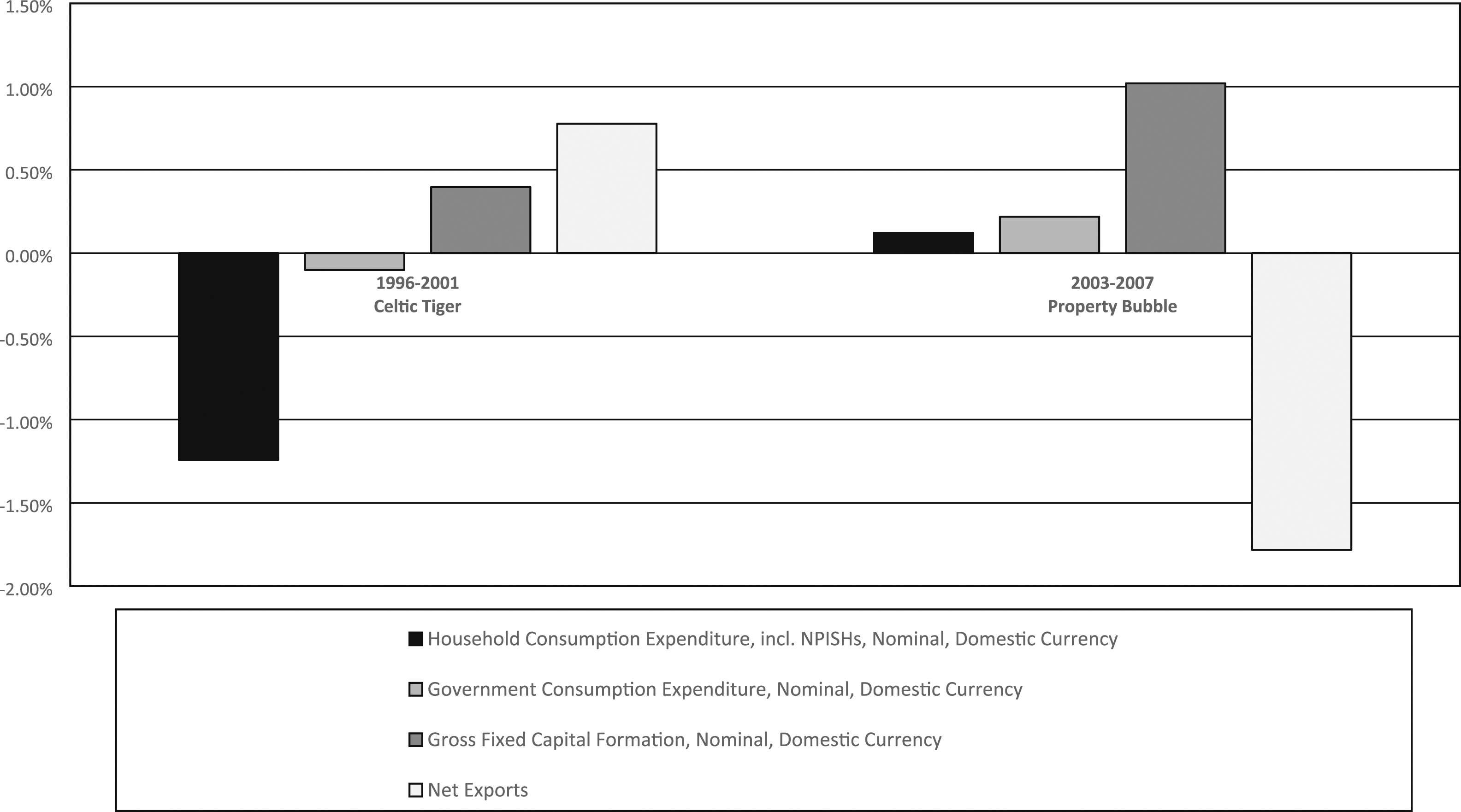
The influence of ‘subordinate’ business elites can be seen in Ireland’s dramatic transformation from export-led to debt-led growth in the 2000s. Fianna Fáil-led governments between 1997 and 2008 were, as Bohle and Regan argue, ‘historically anchored’ within domestic business sectors, including property development and banking, and their public policy during the bubble period was influenced by their close links to these interests (2021: 32–33). As Dellepiane-Avellaneda et al. also show, following EMU, inflows of cheap capital from abroad helped generate ‘new electoral coalitions of interest’. A construction boom, fuelled by cheap credit, created new opportunities for banks and developers. Governments benefitted from increased exchequer returns from this sector, economic growth, and high employment. Many voters benefitted from rising property values and employment (Dellepiane-Avellaneda et al., 2022). The consequences of this are shown by numerous pieces of evidence heard at the 2016 Oireachtas inquiry into the Irish banking crisis. The inquiry report notes that the construction sector ‘played a major role in lobbying the Government on taxation policy, public capital spending and other issues affecting the construction sector’ (Oireachtas, 2016: 92). Numerous policies and tax reliefs were introduced by Fianna Fáil-led governments during this time ‘which greatly benefitted developers’ (Oireachtas, 2016: 92), including a reduced tax rate between 2000 and 2007 on ‘the sale of land for development purposes’ (Oireachtas, 2016: 92). The Banking Inquiry report also suggests that a former Minister for Finance ‘rejected Department of Finance advice to end property tax reliefs’ in the early 2000s because he was allegedly ‘persuaded by representations’ from developers ‘that some of the schemes should continue’ (Oireachtas, 2016: 181). All of this evidence supports a well-established consensus that ‘official policies…seriously exacerbated Ireland’s credit and property boom’ (Regling and Watson, 2010: 6), that these official policies benefitted domestic elites in the property and construction sector, and that Fianna Fáil had close and established connections with these same business elites (Clarke and Hardiman, 2012: 10). All of this was possible without any undermining of the primary policy preferences of core business elites, and as Bohle and Regan correctly identify, the fundamental policy paradigm of FDI-led growth survived this temporary detour. But temporary or not, the debt-led growth of the 2000s shows the agency of subordinate business elites and the impact of ‘secondary’ policy on the components of aggregate demand.
In sum, the political agency of subordinate business elites can matter for both primary and secondary policy making. In the following section, I will apply this argument to the case study of the politics of structural reforms in Ireland’s troika bailout. Methodologically, I substantiate my argument based on 10 original interviews, conducted in the summer of 2022, with representatives from Irish business, trade unions, government, and the Troika (see online appendix). Those interviewed were asked questions about the extent to which Irish business is able to get its voice heard with government, how they lobby government, and to what extent they engaged with the process of formulating the NRP and EAP. Interview material is supplemented with survey data from the European Social Survey, IDA annual reports, and publicly available evidence where available.
The politics of the Irish bailout
This section first focuses on the EU-IMF-ECB EAP Ireland and the conditionality required of Ireland. In doing so, I pay particular attention to structural reforms centred on the internal devaluation via reforms to Irish labour. Second, I show how Irish business gains access to Irish policymakers in general, and to the policy elites responsible for producing the NRP 2011–2014 and Irish EAP specifically. Third, I show how this access translated into influence by certain sectors of Irish business, mainly in low wage sectors, over the content of the structural reforms included in the Irish EAP.
The Irish programme
On 24 November 2010, following months of preparation, the Irish government published its National Recovery Plan 2011–2014. This was four days before technical agreement on emergency financial assistance was reached with the Troika (European Commission, 2011). The Irish government’s NRP served as ‘a basis for the policy conditionality’ of the Irish EAP (European Commission, 2011). The EAP committed Ireland to implementing specific conditionality related to fiscal, financial, and structural reforms (Mercille and Murphy, 2015: 64–65). Financial measures first focused on resolution and shrinking the size of the Irish banking sector (European Commission, 2011: 23). Second, measures focused on bank recapitalization and deleveraging (Clarke, 2016). Third, the Central Bank received new supervisory powers and introduced new macroprudential regulation (Central Bank of Ireland, 2014: 2). Fiscal reform mandated the government tackle its excessive deficit through almost €30 billion of cuts and tax increases (European Commission, 2011: 26–27; Robbins and Lapsley, 2014: 5). Structural fiscal reforms included the establishment of the independent Fiscal Advisory Council, a balanced budget rule, binding ceilings on expenditure and a correction mechanism, strengthened medium term budget planning, and the transposition of the Fiscal Compact (European Commission, 2013: 33).
The EAP also contained structural reforms focused on improving Ireland’s competitiveness through labour market reform and internal devaluation. A 12% reduction in Ireland’s National Minimum Wage was proposed and an overhaul of sectoral wage bargaining arrangements was implemented (European Commission, 2015a: 81; Mercille and Murphy, 2015: 29). Requirements aimed at internal devaluation had little to do with the central aims of the programme, namely, addressing the banking and fiscal crisis. It was widely acknowledged that Ireland’s labour market was already flexible (European Commission, 2011: 21), and internal devaluation was irrelevant to the multinational exporting sectors (Brazys and Regan, 2017). As controversial and as consequential as fiscal and financial conditionality was, there was a clear logic to their inclusion in the Irish programme. It is far less obvious why measures aimed at achieving internal devaluation of non-exporting sectors were included. Focusing on the political agency of Irish business elites can explain why such measures were included in the first place.
Business elites and political determination
Within the Irish Dominant Growth Coalition, how do ‘subordinate’ business elites influence public policy? As an Irish Congress of Trade Unions (ICTU) representative put it, ‘whatever the multinational sector wants it gets. Any serious chief executive of a multinational company could pretty much turn up unannounced at the door of the Taoiseach or the Minister for Enterprise and Employment any time and get a hearing’ (Interview 9). 1 However, interviews made it clear that the government is also highly responsive to ‘subordinate’ business interests (Interview 1). ‘Subordinate’ business elites in Ireland can influence policymakers due to a combination of structural, electoral and instrumental power.
First, business elites in sectors such as construction and hospitality have structural power as they account for a large proportion of employment, even if they contribute less to GDP than core business (FDI) sectors. If we focus on the period of the Irish recovery (2013–2019). There were estimated 467,600 new jobs created (see Figure 2). Of the total, about 62,000 (over 13%) of these were in construction, over 56,000 (just under 12%) were in the accommodation and food service sector. Using IDA annual reports (various years), it is estimated that a total of 84,114 jobs (or about 18% of total new jobs) were created in the FDI sector between 2013 and 2019. The IDA calculates that jobs created in its sector have a significant multiplier effect, taking the figure up to about 150,000 or about 32% of new jobs when ‘indirect employment’ is added (IDA, 2019). This is hugely significant, but it does mean that, at least, 68% of new jobs created since 2013 are not a result of IDA supported enterprises, directly or indirectly. Total new jobs created in Ireland 2013–19 (Thousands). Source: CSO, authors calculations.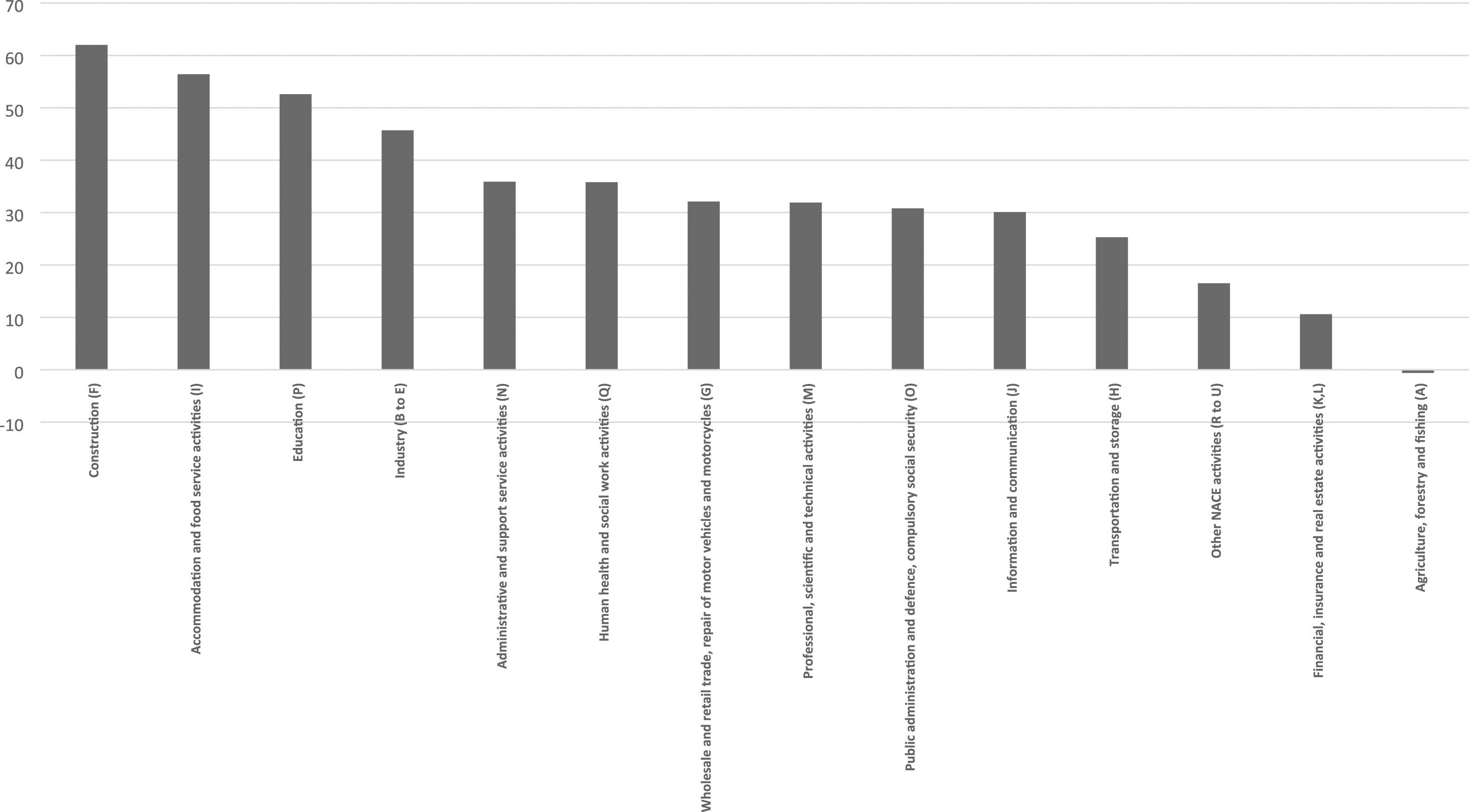
Second, as Figure 3 shows, small business owners and small-employed professionals and employers (15% or so of the electorate, and about one quarter of the electorate if managers are included) are significant not only as interest groups, but as a sizeable portion of the electorate. As such, Beremendi et al. (2015) are correct to argue such occupational classes are large enough to have electoral power and that their distinctive policy preferences must be taken on board by politicians concerned with the formation and maintenance of electoral coalitions. Where this paper differs from Beremendi et al., (2015) and concurs with Baccaro et al. (2022) is to emphasize that electoral politics is just one way in which growth models are politically determined by such occupational groups. The structural power of business and the instrumental power of their interest groups and employer associations remain essential. Size of social classes as percentage of electorate in Ireland. Source: ESS Waves 1–9. Total N = 18,025. Post-stratification and design weights applied.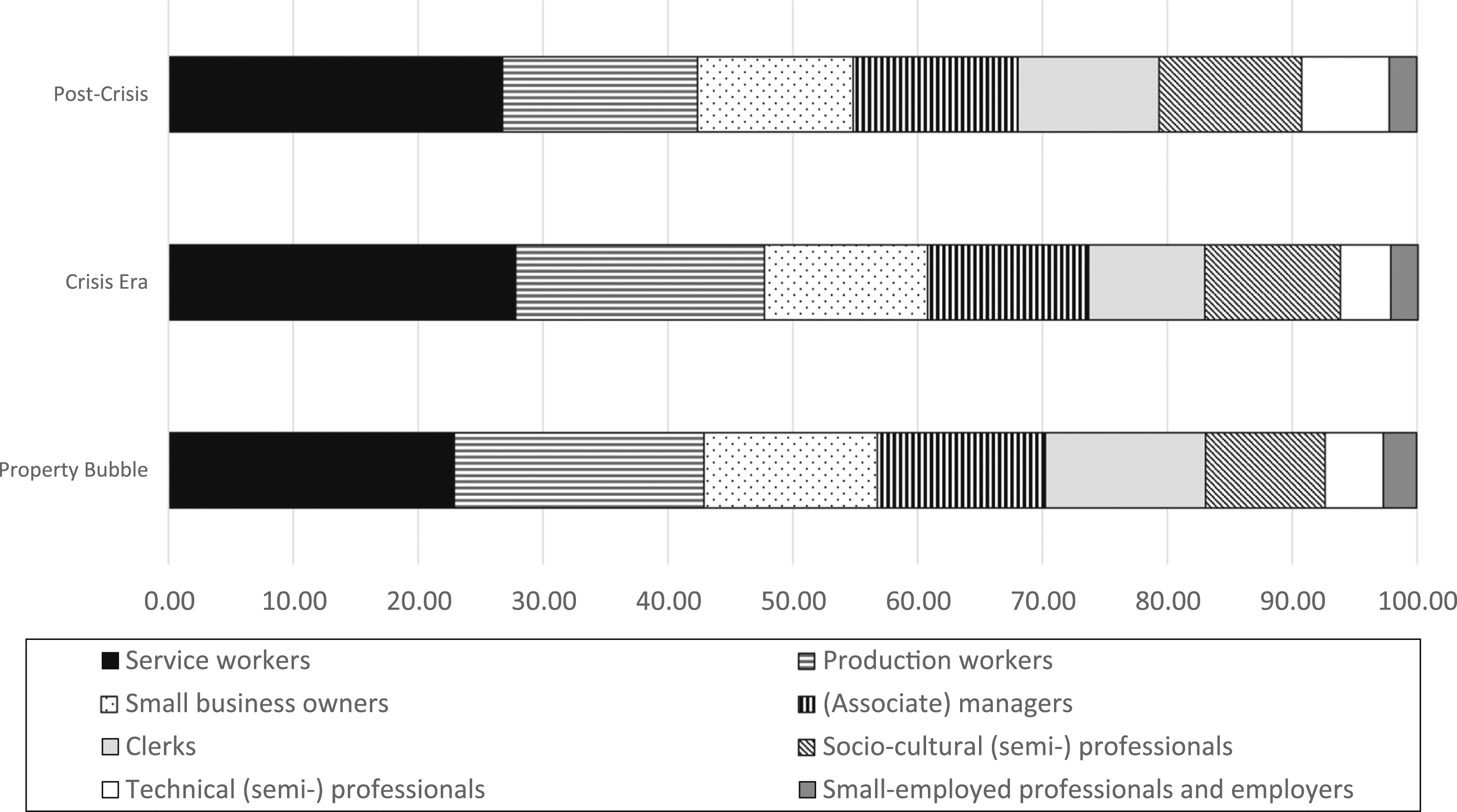
Third, Irish employers work hard to establish close personal relationships with policymakers (Interview 10). An Irish Business and Employers Confederation (IBEC) representative stressed that ‘I don’t think anyone could say that we don’t have access to the corridors to the power, relatively, very easy access to ministers’ (Interview 6). Ireland is ‘a very small country which makes access easier’ and has a ‘political culture’ that is very ‘pro-business’ (Interview 6). As one employer representative put it, ‘you just don’t start from scratch. You’ve to build up a reputation and credibility’ (Interview 2). As one business representative elaborated, ‘I would… make a point of knowing the Finance Minister, knowing the Secretary General of the Department of Finance… and meeting and talking with them regularly’ (Interview 3). Both employer representatives and policymakers stressed that such interaction shouldn’t be misinterpreted as ‘undue or extra influence’ (Interview 3) and as an IBEC source put it, ‘we [don’t] get everything we want by any stretch’ (Interview 6). Nevertheless, such relationships are vital and effective in ‘giv[ing] the industry’s point of view’ (Interview 3).
Ireland also has a very well-developed infrastructure for formal engagement with business and government (Interview 10). Although the system of ‘social partnership’ in existence from 1987 to 2008 has collapsed, tripartite discussions remain important, for instance, through the Labour Employment Economic Forum (LEEF) which is a top-level meeting chaired by the Taoiseach, Tánaiste, two Finance Ministers, ICTU, IBEC, Construction Industry Federation (CIF), and a number of other producer group representatives (Interview 3). Outside of tripartite bargaining, most sectors have easy access to the Department of Finance and the Department of Public Expenditure and Reform (Ireland’s two Finance Ministries), and the Ministry of Enterprise, Trade, and Employment. Irish Business and Employers Confederation has 40 sectoral trade associations, and these all have access to the relevant policymakers in government both through ministries and consultative committees as well as various other ad-hoc fora (Interview 10). Finally, numerous respondents emphasized the importance of annual ‘pre-budget’ meetings for getting their public policy preferences across to government.
Interviews with domestic Irish business confirmed that there was ‘extensive engagement’ with both the government and the Troika ‘before the Troika programme on that National Reform [Recovery] Plan’ (Interview 10). Business and Trade Union groups met with the Troika on a quarterly basis for the duration of the programme. According to an IMF source, the purpose of these meetings was to ‘listen to what their concerns were. And to… explain what we in the Troika could do or could not do’ (Interview 5). The same IMF source confirmed that ‘obviously IBEC and the unions had their agendas, things that they would like to see done and they would ask us… could we put this in the programme or could we push the authorities to do this and that and the other’ (Interview 5).
A former Fine Gael Minister cautioned that none of this should be interpreted as ‘suddenly business interests were calling the shots’ (Interview 8). As an IMF official recalls, ‘to the extent that we could take those views and concerns into account we would. Could we handle all of them? There’s… no wish list… it’s just not practical’. (Interview 5). Rather, interviewees stressed the importance of long-standing, routine consultations with ministers in relevant sectors (Interview 4) and civil servants for ensuring their preferences on the NRP and EAP were taken into consideration (Interview 3). In other words, the government already had a pretty good idea what business wanted through its regular contact with lobby groups. One respondent emphasized ongoing talks in 2009 around labour market reform, which were aimed at reaching a new Social Partnership Agreement (2007–2016) as the reason for the increased salience of debates on sectoral wage bargaining reform (Interview 9). Overall, due to longstanding and intimate links with Fianna Fáil, Fine Gael, and the Labour Party, both employer groups and ICTU had easy personal access to politicians who knew them, and their preferences, very well.
Reduction of the national minimum wage
For certain sectors of Irish business, one such preference was a 12% reduction of National Minimum Wage (NMW), which ended up in the texts of both the NRP and EAP (European Commission, 2011: 63; Oireachtas, 2010a: 36). Within these documents, the minimum wage is framed as unjustifiably inflated, a relic of ‘the good times’, as an obstacle to competitiveness, job creation and even the ongoing viability of many Irish enterprises (European Commission, 2011: 35; Oireachtas, 2010a: 36).
Interviews suggest that the NMW reduction was not imposed by the Troika. The proposal first appeared in the Irish government’s NRP and was later transposed into the EAP. A Fine Gael TD
2
recalled from a meeting with former European Commissioner Olli Rehn that the NMW reduction ‘was not his idea but had obviously been put into his head by the Minister for Finance and other Ministers’ (Oireachtas, 2010b). Indeed, the Troika were divided on the NMW reduction. Some of those interviewed contended the European Commission had an ‘ideological’ commitment to internal devaluation (Interviews 7) while the IMF tended to favour a ‘narrower’ programme for Ireland that didn’t include such structural reforms (Interview 5 and 9): We at the IMF had pretty much zero interest in structural reforms… in the labour market… zero… to the extent that the Irish wanted to do that and stick that into… the Commission side of the programme, you know, we weren’t going to object. But this was not something that we were pressing for (Interview 5).
Interviews also confirm that Multinationals did not lobby the government for a reduction in the minimum wage (and see Brazys and Regan, 2017: 419–420). But a more surprising finding from interviews was that IBEC and the Construction Industry Federation (CIF) also did not lobby for it (Interviews 3). As a senior IBEC respondent recalls Interestingly we had never sought the cut in the minimum wage. And you know, I do remember some of the conversations around it obviously once it had been proposed by government, we weren’t against it, right? (Interview 10).
In 2010 only 4% of workers were on the minimum wage, and these workers are concentrated in sectors such as retail and hospitality (Oireachtas, 2010b). Irish Business and Employers Confederation does represent employers from these sectors, but they are primarily represented by other business groups including the Restaurants Association of Ireland (RAI), and the Irish Hotels Federation (IHF). Thomas Broughan, an independent TD claimed in 2010 that ‘some of the loudest calls for reductions in the minimum wage came from elements within the fast-food industry’ (Oireachtas, 2010b). Outside of IBEC, employer organizations representing firms with lower waged workers told me that they had lobbied the government and ‘started to look for a cut in the minimum wage’ (Interview 2). It was reported in 2009 that the RAI called for an 18% cut in its pre-budget submission to the government that year (Mitchell, 2009).
Electoral politics also mattered. Without Fianna Fáil pushing for it, interviews suggest it is unlikely that the NMW cut would have made it into the EAP and clearly, the election of Fine Gael and Labour was crucial to reversing it (Interview 7). Whitston argues that the Labour party’s presence in government was especially important, and a former Labour junior minister argued that without Labour in government ‘you would be dealing with the cuts to minimum wage… my own experience was that [reversing] it was not a priority for… [Fine Gael]. Put it like that’ (Interview 7). The reversal was not resisted by the Troika. As an IMF interviewee put it, ‘we didn’t object in the first instance when Fianna Fáil wanted to do it and we didn’t object in the second instance when it was reversed. It wasn’t central to the issue’ (Interview 5). Former ministers interviewed from Labour and Fine Gael indicated that once the ‘books were balanced’ (Interview 7), accepting the reversal was a price the Troika were willing to pay for government stability (Interview 8).
Sectoral wage bargaining system reform
Labour market regulation in the private sector was further, and more successfully, reformed through the restructuring of Joint Labour Committees (JLCs). Joint Labour Committees were designed to protect vulnerable workers in low pay sectors with little or no collective bargaining, and their recommendations were made to the Labour Court about rates of pay or conditions became binding as Employment Regulation Orders (EROs) (see Whitston, 2014). These had long been unpopular with domestic business elites. The NRP argued that higher pay rates for Sunday work, seemingly arbitrary geographical differences, and the inflexibility of wage adjustment were particularly ‘problematic from a competitiveness and job creation perspective’ (2010, 47). Employers’ associations had attempted reform and abolition of these agreements long before the programme. For instance, a legal challenge was launched, but ultimately withdrawn, by the IHF in 2007 (Maccarrone et al., 2019: 320).
Like the NMW reduction, these structural reforms were ‘uploaded’ from the NRP. In fact, the Troika didn’t know about these arrangements before consulting with Irish policy makers and producer groups. In an interview conducted by Colfer (2018) a civil servant is quoted as recalling ‘I found myself re-explaining [to the Troika] …what JLCs and REAs [Registered Employment Agreements] were over and over again’. Once again, the Troika disagreed on these reforms. For the IMF, JLC reform was an unnecessary waste of time, ‘we did not see those as central to the problems and it would have taken too much time to design the right policies to address those’ (Interview 5).
Similarly, multinationals were not actively lobbying the Irish government or the Troika over JLC reform. This is not surprising as IDA supported industries do not tend to operate in sectors covered by such arrangements. However, unlike the NMW reduction, reform of sectoral wage bargaining was clearly targeted by a broader coalition of Irish business. Irish Business and Employers Confederation labelled the JLC system as ‘antiquated’, ‘an anachronism and should be abolished’ (IBEC Agenda, 2011b). They argued that ‘the inflexibility of the current system has contributed to jobs being lost and is an ongoing impediment to job creation’ (IBEC Agenda, 2011a). The troika mandated review into the JLC system reports ‘anecdotal evidence’ from domestic business elites who argued that many workers are prepared to accept rates of pay and conditions of employment less favourable than those prescribed by EROs so as to safeguard their employment but that employers are prevented by law from accepting these offers (Duffy and Walsh, 2011: 48).
Another employers’ association, Retail Excellence Ireland, suggested that the abolition of the JLC system would save over 40,000 jobs from being lost and create over 30,000 more (Doherty, 2012: 104). Prior to its publication, IBEC made a submission to the ERO/REA review where it ‘called for the ERO system to be abolished immediately and for the REA system to be fundamentally reformed’ (IBEC Agenda, 2011a) as did other employer groups such as the Irish Tourist Industry Confederation (Turner and O’Sullivan, 2013: 198).
An interview confirmed that frustrations had been growing for years over sectoral wage agreements and that the ‘bailout programme and the Troika process gave an opportunity to reassess some of those’ (Interview 10), or as an IMF source put it, some of it was coming from Irish business yes. And you know to the extent that they had the governments ear… as you well know, the saying goes “you should never waste a crisis”. So, when you are in a crisis you have a little bit more leeway to do a few things that you’ve been meaning to do… and when the government pushed forward on those, you know, you talk about sectoral wage agreements” (Interview 5).
However, interviews made it clear that there wasn’t universal opposition to sectoral wage agreements, and certain sectors, such as construction, can be quite supportive of JLCs, often because established companies view higher wages as a barrier to entry for new operators (Interview 3). As a Labour Party former junior minister recalls ‘that they weren’t as big a concern for IBEC as they would have been organizations representing smaller firms… you find that some of the more fly-by-night operations, they’re the ones often who are behind the challenges’ (Interview 7). Like with the NMW reduction, employer representative groups outside IBEC were most hawkish in lobbying for JLC and ERO reform. Once again, the hospitality sector appears to have been relatively active. An ICTU official interviewed argues that ‘small businesses, generally fast-food outlets’ had been ‘leading the charge’ and they ‘lobbied extensively Fianna Fáil backbench TDs against it’ (Interview 9). Like the NMW, opposition to JLCs had been growing in the run up to 2010 due to recent negotiations on the 2016 Social Partnership Agreement and Employment Law Compliance Bill (2009). As an ICTU source involved in those negotiations put it, these were ‘long and tortuous negotiations’ which led to a ‘huge campaign’ by such businesses against sectoral wage agreements (Interview 9).
These structural reforms were considerably more successful than the reduction of the national minimum wage. As mandated by the MoU, a review into EROs and REAs was conducted, and reforms were begun. The report recommended the radical reform of the JLC system but stopped short of abolishing the arrangements, something that disappointed many domestic business employers (Journal.ie, 2014). However, in 2012 a high court challenge by an employers’ representative group ‘Quick Service Food Alliance’ was successful in finding that ERO setting wages relatively higher than minimum wage was unconstitutional (O’Kelly, 2019). REAs were next abolished following a Supreme Court challenge brought by electrical industry contractors.
EROs were subsequently re-introduced under the ‘The Industrial relations (Amendment) Act’ 2012. REAs were replaced by Sectoral Employment Orders (SEO)s under a 2015 Act. However, the re-instated EROs, at the time of writing, cover less than half of the industries they did before, and ‘agreements are much more limited in scope’ (Maccarrone et al., 2019: 320). As Maccarrone et al. (2019: 320) note, employers have secured certain opt-outs, and JLCs must consider the impact of wage rises on employment and competitiveness when forming agreements (Maccarrone et al., 2019: 320) and crucially, an inability to pay clause for employers (Hickland and Dundon, 2016: 18). The upshot of all this is that EROs and SEOs cover very few industries, and at the time of writing are not extended to the retail or hospitality sectors (Maccarrone et al., 2019: 320). As an ICTU source puts it they’ve managed to deconstruct that sectoral negotiating pay determination system. Quite effectively. And… only gradually has it been restored to the present day and even now, elements of it are constantly legally attacked… Even though the legislation was re-enacted [it was] made much more tight… and difficult to use. …[T]here is this kind of constant chipping away at it by certain sectors of the economy (Interview 9).
Finally, political parties were instrumental in the shape and scope of reform. The Fine Gael and Labour government was instrumental in ensuring that sector wage agreements were reformed rather than abolished. Once again, the Labour Party was active in introducing legislation such as the 2012 and 2015 Industrial Relations Act which reinstated JLCs and SEOs, albeit in a far more limited form. Finally, a Labour Party former minister interviewed suggested that there was a degree of ideological sympathy in Fianna Fáil with business groups lobbying for the abolition of these arrangements, a ‘rump of Fianna Fáil’ who were perhaps ‘influenced by the ideologues in the Progressive Democrats who believed that these mechanisms were outdated, they were anachronisms from the past and they had no place in a modern market economy’ (Interview 7).
The analysis presented here contributes to the literature on the distributional effects of Ireland’s FDI-led growth model (Regan and Brazys, 2018) which has recognized the ways in which the costs of Irish recovery have been borne unevenly (Regan and Brazys, 2018). Labour market reforms are significant as they have impacted the pay, conditions, and protections of workers in the precise sectors that tend to relatively ‘lose out’ from Ireland’s FDI-led model (see Regan and Brazys, 2018). Moreover, sectors covered by the JLC system such as retail, hospitality, and construction account for about 25% of Ireland’s total employed workforce (CSO, 2022). Tourism alone generated about two thirds of (pre-COVID) employment outside urban centres (Oireachtas, 2022: 13). The reform, and for many sectors, the dismantling of the JLC system has meant that low paid workers, a large proportion of whom are workers outside urban centres, women, and migrant workers (Unite, 2021: 20) have lost an important avenue to bargain for improved conditions and to make pay claims (Oireachtas, 2022: 24). Indeed, a Think-Tank for Action on Social Change (TASC) report finds that since the crash, increased casualization and uncertainty over hours are a common feature of hospitality, while ‘bogus self-employment’ via the use of sub-contractors is a feature in aspects of the construction industry (Wikcham and Bobek, 2016).
Growth Models, as a perspective, is centrally concerned with distributive conflict, inequality, legitimacy, and the ‘winners and losers’ of specific growth models. Looking beyond core business elites reveals that while those who lose most from the Irish model may be outside the FDI sector, we shouldn’t presume that one group is losing because the other is winning. Structural reforms to labour markets were targeted primarily, and in the interests of certain (but not all) sheltered, non-tradeable sectors, rather than sectors relying on foreign demand for price insensitive goods (cf Baccaro and Pontusson, 2019). As such, even in FDI-led growth models, distributive conflict within sectors can be just as important as inequalities between sectors.
Conclusion
This paper has shown that conditionality aimed at achieving internal devaluation in Ireland’s bailout programme originated from the lobbying efforts of domestic business elites. It wasn’t the Troika or multinationals that were pushing for reform of sectoral wage bargaining systems or a reduction in the National Minimum Wage, but domestic Irish businesses in low wage sectors. These findings contribute to existing scholarship which shows that the terms of EAPs should not be understood simply as the ‘diktat’ of the Troika; as Moury and Standring show for the Portuguese case, many structural reforms were inserted at the behest of domestic actors (Moury and Standring, 2017: 671). The paper thus contributes to the GM literature on dominant growth coalitions by making a call to take the political agency of ‘subordinate business elites’ more seriously.
This paper also contributes to existing understandings of the politics of growth in peripheral economies. The most salient aspect of Ireland’s peripherality is its role as a small country servicing the interest of foreign capital via its insertion into US dominated global wealth chains and it would be expected that business elites from foreign capital would therefore dominate Ireland’s policy paradigm (see Bohle and Regan 2021: 99). While this paper has not disputed their influence, it has complicated this expectation. It shows that even in a peripheral setting, characterized by the unmistakeable structural power of MNEs, domestic business elites are still able to exert considerable influence on public policy in specific circumstances. Certainly, as Moury and Standring (2017) argue, periods of crisis can empower such domestic actors to secure preferred reforms that would perhaps be more difficult to achieve in less extreme periods. Nevertheless, interview material emphasizes the long-standing instrumental power of domestic business elites.
GM scholarship can and should move beyond a narrow focus on the ‘primary’ policies of growth strategies. In the case of Ireland at least, a focus on subordinate business elites can explain institutional change and shed light on more granular and nationally specific patterns of distributive conflict and inequality. While the EU-IMF-ECB EAP did not have any significant impact on drivers of growth, structural and fiscal reforms were far from insignificant. The agency of so-called ‘subordinate’ business elites matters because it can produce (sometimes unintended) macro-structural change to growth models in the medium term. This suggests that future research on other bailed-out countries, such as Greece and Portugal, where the conditionality of programmes was more stringent, could further establish the importance of subordinate business elites for post-crash growth models.
Supplemental Material
Supplemental Material - The politics of structural reform in Ireland: Dominant growth coalitions, domestic business elites, and internal devaluation
Supplemental Material for The politics of structural reform in Ireland: Dominant growth coalitions, domestic business elites, and internal devaluation by Neil Dooley in Competition & Change
Footnotes
Acknowledgements
First and foremost, I thank all who agreed to be interviewed as part of this paper, which could not have been written otherwise. I would especially like to thank Arianna Tassinari, Fabio Bulfone, and Aldo Madariaga for their generous and valuable feedback on multiple drafts of this article, and for organizing the MPIfG research workshop on The Politics of Growth, Stagnation, and Upgrading in Advanced Peripheral Economies in Cologne, July 2022. I would also like to thank participants at BISA 2019 and at the ‘Return of Intervention? Industrial Capacity and the State after the Financial Crisis’ workshop at King’ College London for helpful comments on an early draft of this paper. I would finally like to thank Tom Dooley and Jenny Mc Guill for valuable assistance during the writing of this article. All remaining errors and shortcomings are entirely my own.
Declaration of Conflicting Interests
The author(s) declared no potential conflicts of interest with respect to the research, authorship, and/or publication of this article.
Funding
The author(s) received no financial support for the research, authorship, and/or publication of this article.
Author contributions
Neil Dooley is a Senior Lecturer in Politics in the Department of Politics at the University of Sussex and Co-Director of the Sussex European Institute.
Ethical approval
This project received ethical approval from the University of Sussex Code: ER/ND206/2

Notes
Supplemental Material
Supplemental material for this article is available online.
References
Supplementary Material
Please find the following supplemental material available below.
For Open Access articles published under a Creative Commons License, all supplemental material carries the same license as the article it is associated with.
For non-Open Access articles published, all supplemental material carries a non-exclusive license, and permission requests for re-use of supplemental material or any part of supplemental material shall be sent directly to the copyright owner as specified in the copyright notice associated with the article.
