



Abstract
Prior studies on physical appearance-related norms, particularly for women, have demonstrated that expectations and standards of the ideal body type – thin and slender – have converged with a normatively healthy and athletic body ideal. Various scholars have concluded that women face inconsistent expectations where they are often supposed to perform physical work and remain cautious about not being labelled as vain. Although considerable progress has been made in this field of research, studies regarding the normative acceptability of appearance-based exercises are limited. This study highlights the norms and attitudes towards appearance-based exercise and the extent to which these attitudes are gendered. It uses an experimental split-ballot design with a population-based survey conducted in Finland in 2016 (N = 1600). The findings suggest that women are more critical than men when evaluating women practising appearance-based exercise. This study uncovers the group-level double standards of appearance-related norms between men and women, that is women are more critical of appearance-based exercise than men. Women face the ‘double bind’ of trying to submit to either feminine or fitness norms and condemning other women for performing the same actions. The study opens new perspectives to the literature on physical appearance as a precarious resource for women.
Keywords
Introduction
Physical appearance has become more important today than ever before. People implicitly engage in appearance-related work to meet the prevailing standards, which, in sociological studies, are deemed context-dependent and heavily gendered (Gimlin, 2007; Kwan and Trautner, 2009; Mears, 2014; Sarpila et al., 2020). These standards of physical appearance and evaluation of beauty and morals have generated a new era in which appearance is controlled more than ever before (Kuipers, 2022). This appearance control has been conceptualised as ‘appearance work’ and ‘beauty work’ (Kukkonen, 2021; Kwan and Trautner, 2009), both linking to wider inequalities in physical appearance through the debate of aesthetic labour; the ‘practice of screening, managing and controlling workers based on their physical appearance’ (Mears, 2014: 1330).
Sociologist Giselinde Kuipers argues that a culture focused on appearance has emerged as a ‘beauty regime’ (2022), establishing new standards for behaviour, for example around fitness and body modification (Smith Maguire, 2007). These regimes are rooted in societal norms regarding beauty, with appearance-related practices referred to in sociological research as ‘body work’, ‘beauty work’ and ‘appearance work’ (for a review, see Gimlin, 2007; Kukkonen, 2021; Kwan and Trautner, 2009). However, defining these practices is complex. Beauty work often describes traditionally feminine practices like makeup, hairstyling and cosmetic surgery (Kwan and Trautner, 2009). In contrast, body work refers to more gender-neutral efforts, such as personal hygiene, dressing – and exercising (Gimlin, 2007). Gimlin (2007) describes body work as unpaid labour; yet, it is motivated not only by demands in the labour market but also broader social and cultural expectations of appearance (Mears, 2014). In Finnish research, Kukkonen (2021) and Kukkonen (2019: 83–84) highlight the role of appearance work in self-expression and social integration, also noting that the it constitutes daily investments of time, money and energy, blurring the line between personal choice and obligation. In today's visual consumer culture appearance work encompasses efforts to enhance and maintain good looks, also outside the labour market. Although under-researched, this appearance work plays a critical, gendered role in social life (Elias et al., 2017; Sarpila et al., 2021c). In this study, the term ‘appearance-based exercise’ is used to describe physical exercise that is primarily aimed at modifying the body size, shape, and weight to align with socially idealised beauty standards. Thus, appearance-based exercise (i.e. body/appearance work) is a conceptual umbrella term for beauty work, as not all practices related to appearance focus solely on achieving beauty and some are intended to convey professionalism or express femininity or masculinity by focusing on the size and shape of the body.
Practices related to appearance and norms are gendered (Kwan and Trautner, 2009; Wolf, 2002). Also, norms – the ‘grammar of society’ (Bicchieri, 2005) – concerning women and men have differed as women are evaluated differently from men for the same behaviour (Foschi, 2000). Women face stricter norms, for example in ageing and in the labour market (Åberg et al., 2020; Barrett and Von Rohr, 2008; Kukkonen et al., 2018, 2024), and must navigate the ‘female double bind’ of balancing surrounding beauty and fitness norms (Anthony et al., 2016; Hutson, 2016). On the one hand, engaging in exercise can be seen as a socially acceptable way for women to enhance their appearance, which aligns with societal norms of health and fitness (Smith Maguire, 2007), and on the other hand, women who conform to these specific beauty standards, promoting feminine ideals of thinness, are condemned vain and may reinforce negative feminine stereotypes (Kukkonen, 2021; Kwan and Trautner, 2009).
Limited attention has been paid to attitudes towards appearance-based exercise and how this appearance work is evaluated differently for men and women by men and women. Previous studies found no double standards at the population level when using questionnaire versions as an independent variable, meaning that respondents were randomly assigned to answer questions focused either on men or women (Sarpila et al., 2020). Moreover, the study by Sarpila et al. (2020) highlighted that practices like exercise and everyday grooming did not face the same level of societal disapproval as other ‘artificial’ appearance-related practices, such as plastic surgery. On the contrary, this study suggests that women have stricter judgements towards other women's appearance-based exercise when examining respondents' gender. The findings align with the concept of a ‘double bind’, where women are implicitly compelled to navigate between feminine beauty standards and being fit. Engaging in exercise can be seen as a socially acceptable way for women to change their appearance, which aligns with prevailing norms of being healthy and fit.
Finland is considered a highly egalitarian country (EIGE, 2020). Hence, it presents an interesting research perspective for appearance-related norms and appearance work. For instance, Finns are stereotypically considered modest in behaviour and appearance. Finnish sociology has highlighted that Finns accentuate, for example, consumption, rationality, modesty and prudence. Hence, Finland's egalitarian nature and the so-called ‘modesty of appearance’ can influence how appearance is perceived in Finnish society and is likely to affect attitudes towards appearance (Sarpila et al., 2021c: 10–11). Using a unique population-based survey conducted in Finland (N = 1600) and linear regression, this study investigates gendered appearance attitudes among Finns. The findings suggest that Finnish women experience a ‘double bind’ of balancing feminine and fitness norms, while also condemning women who engage in similar appearance-related practices.
The article is structured as follows. First, it presents the concept of aesthetic capital, its theorisation in the sociology of beauty studies and work and how it is linked to discussions of appearance. Second, it engages in a feminist literature discussion on appearance-related norms, conceptualised as double standards. After discussing and reviewing the relevant literature, the article presents research questions, data and methods. Finally, the article discusses the results, which have implications for future studies.
Literature review: Appearance-based exercise as part of the gendered experiences of socially constructed female beauty ideals
Appearance as a resource: The accumulation of aesthetic capital
Prior research argues that appearance-based exercise focuses on cultivating the body in a neoliberal economy where bodies are perceived as individual projects (Coffey, 2015; Gimlin, 2007; Mears, 2014). In this context, exercise becomes a tool for managing appearance as ‘aesthetic capital’, where individuals accrue social value through visible traits like a thin and toned appearance (Anderson et al., 2010; Holla and Kuipers, 2015). Holla and Kuipers (2015) explored how achieving and maintaining a good physical appearance has become part of contemporary society's – mainly Western – rulebook. Following Anderson et al. (2010), they distinguish good looks as a form of capital; it is a convertible resource and very social. That is, it is mainly valued in social relations. Aesthetic capital is a combination of physical appearance-related qualities, such as facial features, body shape and size, and different grooming styles, such as clothing and hairstyle (Anderson et al., 2010; Holla and Kuipers, 2015). Consequently, good looks bear advantages and disadvantages and are modulated by context; thus, gender, age and race (Elias et al., 2017; Holla and Kuipers, 2015; Sarpila et al., 2020).
The research argues that, alongside beauty, body shape and size are culturally significant markers of identity (Bartky, 1988; Wolf, 2002) and class (Bourdieu, 1984; Vandebroeck, 2017). Particularly, exercise for women is often tied to achieving a socially preferred appearance rather than merely enhancing health. However, it is difficult to recognise whether health is the by-product of changed appearance or vice versa (see, e.g. Smith Maguire, 2007). As sociologist Beverly Skeggs noted, ‘Bodies are produced as expressions of value: as embodied value or lack of value in the market-oriented professional workplace’ (2011: 503). Appearance-based exercise, thus, becomes a strategy for cultivating aesthetic capital, in which slenderness and a toned body are implicitly valued as professional and social assets. As such, appearance-focused exercise highlights the societal standards that evaluate specific physical attributes, which contribute to defining an individual's worth (Calasanti and Slevin, 2001: 53). For women especially, maintaining a slim and toned body through exercise is encouraged as a marker of self-discipline and femininity, with implications that their bodies are investments towards social and economic rewards (Mears, 2014).
Within this framework, different forms of appearance work are normatively categorised. While cosmetic surgery may be viewed as ‘vain’, exercising to manage weight and body shape is often socially acceptable, since it is often perceived as natural and part of one's responsibility (see, e.g. Gimlin, 2000; Sarpila et al., 2020). Consequently, social acceptability and norms of different appearance work practices depend on when, where and who does this work. Research also notes that a slim, fit figure – particularly for women, but to a great extent for men too – can offer socioeconomic advantages, reflecting that society associates appearance with professional and personal success (Hamermesh, 2011; Holla and Kuipers, 2015). However, critics argue that these benefits are mediated by other factors, such as gender and class, and note that the perceived value of body shape and fitness is deeply embedded within broader social and power structures (Mears, 2014).
Appearance work focused on the body is intertwined with social constructs of femininity and masculinity. Women, particularly, are conditioned to view a slim, toned body as essential to femininity, while muscularity is generally perceived as masculine. Moreover, cultural beauty standards have been observed to condition women to perceive good looks as a responsibility to be achieved (Kuipers, 2015; Mears, 2014). This gendered socialisation pushes women to engage in exercise as a form of body management, while men may view it through a lens of strength and functionality (Widdows, 2018). Further, exercising primarily for appearance varies by gender, as a larger share of men than women go to the gym for visible muscles and women are typically more focused on weight management (Vandebroeck, 2017). Hence, this reflects the sociocultural pressures on women to conform to beauty standards that promote thinness and a fit body and, thus, illustrates a paradox: while appearance-based exercise is promoted as empowering, it often reflects and reinforces existing patriarchal standards.
Appearance, as an investment metaphor, has been contested in sociological studies. It is argued to represent a gendered ideology wherein the achieved socioeconomic gains are similar for both genders (Kukkonen et al., 2024). However, women face greater societal condemnation than men when taking advantage of their appearance (Kukkonen, 2021; Sarpila et al., 2020). Although Kukkonen (2021) first indicated that men and women alike held the belief in the importance of beauty, she found that women who held this belief engaged in appearance work more than men (Kukkonen, 2021: 50). Some feminist scholars argue that women's accrued aesthetic capital holds less value for them compared to men and argue that heteronormative ideals of females and their bodies impact their marginalised position. Mears (2015), in her ethnographic study of VIP parties, observed that men benefit more from women's aesthetic capital than the women do themselves. Gayle Rubin's work on the traffic of women and the politics of sexuality argued that men control and profit from women within social systems. Rubin critiqued sexual stratification and the political nature of sexuality, including how heteronormative body ideals are tied to societal expectations of the ‘correct’ way of embodying femininity (1975, 2007). These dynamics reflect inequalities in the labour market. Employers often favour specific female body types as feminine attributes represent a distinction. For example, tall and thin women are perceived as adding significant value, enhancing the image of luxury hotels (Otis, 2012). Hence, women's bodies serve as a form of value for men, reinforcing the heteronormative ideals of beauty.
If women's beauty does not bring value to them, it is paradoxical that they are implicitly and explicitly encouraged to work on their appearances. While appearance-based exercise may be framed as a choice, feminist scholars argue that it reflects gendered expectations that reinforce patriarchal norms (Markula, 1995; Wolf, 2002). Rather than offering true agency, exercise as a form of body management aligns with neoliberal ideas that prioritise a self-managed, ‘disciplined’ body that adheres to socially accepted standards of beauty. The neoliberal ideas and ideals go beyond ‘choice’ and ‘agency’, highlighting that neoliberal citizens practice self-care, and thus, appearance work (Fahs, 2017: 93). This perspective argues that appearance-based exercise, though ostensibly about personal choice, is embedded in social structures that condition individuals to view their bodies as projects of continuous improvement.
The gendered double standards and the female double bind
Generally, attitudes towards appearance have been researched from the perspective of norms. Norms are rules that, formally and informally, regulate individual behaviours (Portes, 2010). Thus, they are the ‘grammar of society’ (Bicchieri, 2005), within the limits of which individuals work for the sake of beauty. Therefore, beauty and good looks are socially constructed (Widdows, 2018) and not necessarily an innate quality that all individuals can develop to succeed in life, as has been argued in economics (Hamermesh, 2011).
Scholars, focusing on appearance, norms and inequalities, have argued that beauty is normatively regulated in society (Gimlin, 2000; Wolf, 2002) and is a heavily gendered phenomenon (Kuipers, 2015; Mears, 2014; Sarpila et al., 2020; Widdows, 2018). In consumer culture research, appearance is seen as a part of a broader social norm where individuals are expected to keep up with these norms (Featherstone, 1991; Sassatelli, 2010; Smith Maguire, 2007). However, these studies have not taken into account the fact that appearance – and appearance work – is an intersectional concept. Thus, it is strongly intertwined with age, social class, race and gender (Wood, 2021).
Gendered appearance norms that regulate appearance work are reflected not only in the different forms of appearance work (such as dressing up and working out) but also in how society values different forms of this work. Appearance-related norms shape everyday expectations around appearance work, influencing which types are considered more or less acceptable, and by whom (Åberg, 2020). Double standards of norms mean different evaluations of the same behaviour by different groups of people. These groups can be based on different characteristics, such as gender, ethnicity or socioeconomic background (Foschi, 2000). Double standards have increasingly been studied in the field of physical appearance research from the perspective of aging. Research in this stream argues that women are perceived as old at an earlier age than men (Barrett and Von Rohr, 2008), and this argument extends to class too, as ageing working-class women feel less confident about their appearance than other classes (Åberg et al., 2020).
In two Finnish studies, the direction of double standards was context-dependent. Kukkonen et al. (2018) examined women's double standards in Finland regarding the exploitation of physical appearance. Their findings implied that women disapproved of other women exploiting their appearance, that is taking advantage of their looks to benefit in a particular situation. Similarly, Sarpila et al. (2020) examined how gendered double standards varied by context – an accumulation (e.g. gaining aesthetic capital) received more approval from women while utilisation (e.g. taking advantage of appearance) received more disapproval. In Finnish culture, enhancing one's physical appearance is perceived as ‘external’ or ‘vain’, even if society is moving towards a more appearance-oriented direction (Sarpila et al., 2021b). Furthermore, in Finland, the belief that physical appearance matters more for women than for men pushes women to engage in appearance work. This is particularly true among women who believe that appearance matters for success in life (Kukkonen, 2021).
As argued, societies expect their members to actively engage in appearance work, to transform their bodies ‘from the “natural” state to one that is more explicitly “cultural”’; however, the demands are not equal for men and women since appearance work is primarily expected of women (Gimlin, 2007: 355; Kwan and Trautner, 2009). However, men have increasingly experienced the complexity of appearance work (Hervik and Fasting, 2016) and are actively engaging in intensive appearance work to reshape their physical appearance and gain a masculine (muscular) appearance (Coffey, 2015). Johansson et al. (2017) implied that appearance work done through team sports, which are considered masculine, enforces the idea of masculine norms and promotes the fit body as viable for management. However, this ‘managerial athleticism’ has been gendered since women ‘seek to overcome abjection with de-feminisation and hyper-feminisation’ (2017: 1160).
However, the motives for engaging in exercise are vast and complex and, thus, extend beyond the scope of this study. Health motives are inextricably intertwined with appearance motives. Generally, activities like exercise and eating, for example, are perceived as health promoters and often considered primary motives for body work (see, e.g. Coffey, 2015; Smith Maguire, 2007). Additionally, in long-distance running, the desire for health and fitness is negotiated through body work, wherein the body ‘becomes an expression of the self and self-esteem’, highlighting that the ideals of a healthy and fit body are internalised by runners (Shipway and Holloway, 2016: 93). Furthermore, in a non-Western context, Ren (2024) found that during hiring processes, recruiters value job candidates’ physical activity, manifested in appearance-based exercise, regardless of gender. Regarding body work among female personal trainers, Kim et al. (2024) highlighted that enhancing physical appearance is vital because it allows them to enter (and re-enter) the labour market. By accumulating aesthetic capital, these trainers can convert it into economic capital. Although concepts of beauty and appearance have a visceral feminine notion, these examples suggest that by engaging in appearance work, individuals are simultaneously negotiating and balancing the prevailing ideals of heteronormative bodies, which blur the lines between feminine and masculine appearances.
Indeed, women are in a ‘double bind’ of normative expectations. For instance, engaging in negotiating feminine appearance has been explored in a study by Grogan et al. (2004). They discovered that women bodybuilders experienced appearance pressures within the body-building circles amidst a ‘double bind’. The women they interviewed expressed that, on the one hand, they enjoyed gaining muscle while, on the other, they wanted to keep a feminine look, ‘not looking like a man’ (2004: 55). Additionally, Hutson argued in his study of personal trainers and gym clients that men can use their bodily capital to their advantage better than women and women must forego either feminine appearance or fitness norms, highlighting ‘a double bind of femininity and fitness’ (2016: 66). The double bind of feminine ideals resonates with the comparison and competition with other women. Anthony et al. (2016) interviewed college-aged women who agreed they should work to meet certain societal feminine standards. In this sense, competition (the feminine rivalry) derives from comparison and reinforces the social hierarchy between women in which they negotiate feminine ideals (Anthony et al., 2016: 312). This negotiation has been observed in research on young female athletes, whereby all women agreed that the female beauty ideal is a balancing act between a slender and toned appearance (Walseth and Tidslevold, 2020). In light of these studies, this article argues that gendered norms and societal expectations influence appearance-based exercise in Finnish society and double standards might exist.
Against this background that highlights gendered perceptions of appearance, appearance work and exercise, the following research questions are asked: how do attitudes towards appearance-based exercise (i.e. norms surrounding appearance work) manifest within Finnish society (RQ1)? What specific gender differences exist in the perceptions of appearance-based exercise, and who is more likely to view such exercise favourably (RQ2)?
Materials and methods
Data and sample
This analysis used original survey data collected in Finland in 2016 (Sarpila et al., 2016). The survey was distributed using simple random sampling among 4000 Finns aged 15–74. The sample was selected from the Digital and Population Data Services Agency of Finland, which upholds the national register of Finnish citizens. The respondents completed the survey questionnaire online and could also deliver their answers by mail. The survey used a split-ballot research design in which half of the respondents were randomly assigned to answer questions concerning women and the other half concerning men. The survey methodology tackles the issue of social desirability bias (Koivula et al., 2019; Krumpal, 2013). Social desirability bias signifies desirable behaviour, the habit of overstating positive and understating negative opinions in survey responses and is often linked to sensitive topics. People lie in surveys to avoid negative emotions, such as shame and embarrassment (Koivula et al., 2019). With the split-ballot design, it is possible to avoid bias where respondents who answer the same questions could give similar answers (Rijken and Merz, 2014). The final sample consisted of 3994 Finns, excluding those who could not be reached. In the sample, young men were underrepresented, while older women were overrepresented. Weights were used in the final analyses to correct these biases in the representation of the Finnish population. A total of 1600 Finns responded to the survey, indicating a 40% response rate, which is considered moderate because it follows the current trend of declining survey responses (Koivula et al., 2016; Sarpila et al., 2016, 2020).
Measurements
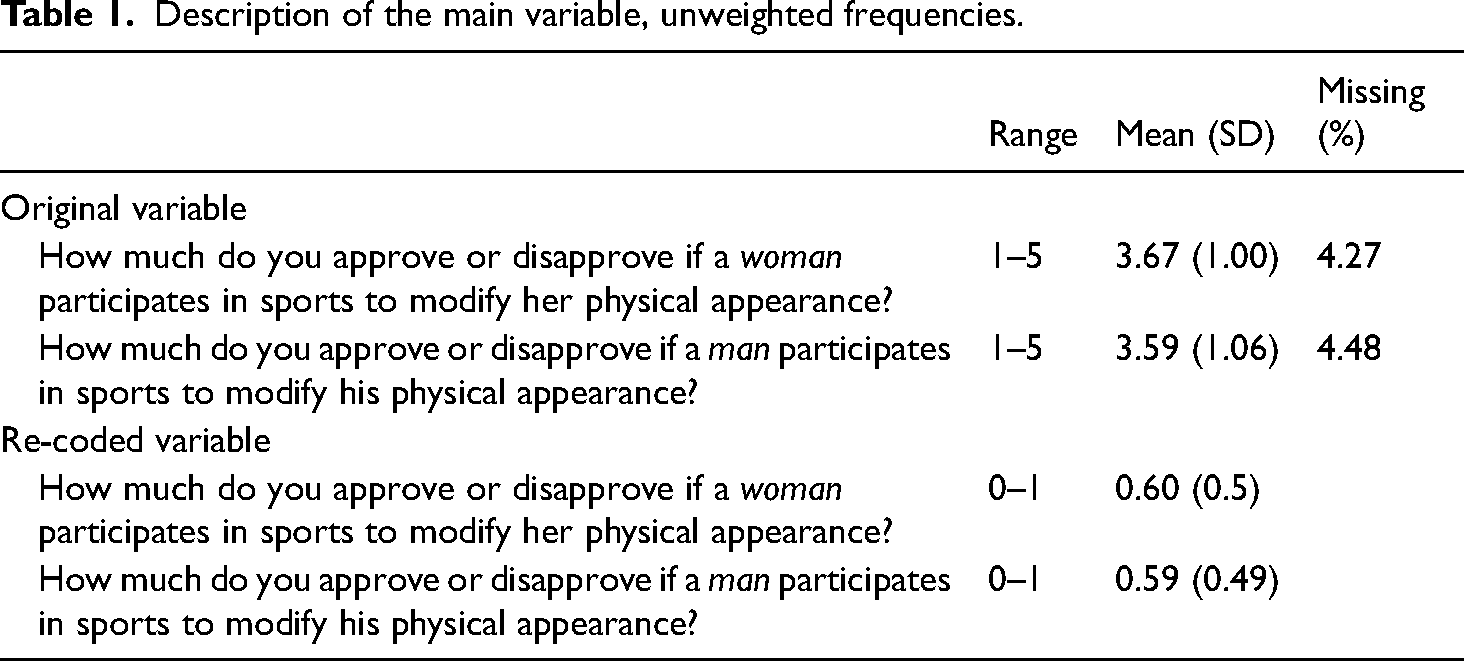
The primary variable was attitudes towards appearance-based exercise, measured using the question, ‘How much do you approve or disapprove if a man/woman participates in sports to modify his/her physical appearance?’ Responses were measured on a five-point Likert scale, where 1 was ‘definitely disapprove’ and 5 was ‘definitely approve’. The dependent variable was collapsed into a dummy variable where the original values of 4 and 5 were coded as 1 (approval) and values 1–3 were coded as 0 (disapproval). Therefore, respondents who chose value 3 on the Likert scale, did not indicate their explicit approval/disapproval of appearance-based exercise. As this study focused on the approval of appearance-based exercise, binary classification was selected as the dependent variable.
The focal independent variable was the ‘respondent's gender’, coded as 1 = women and 0 = men. Several covariates were added to the models being studied to have an association with attitudes towards physical appearance. For instance, cultural sociologists have presented, following sociologist Bourdieu's footsteps, physical appearance as an attribute of social class (Bourdieu, 1984; Vandebroeck, 2017). Hence, physical appearance is perceived as an independent category of social inequality since not everyone has the same resources to ‘accumulate’ this aesthetic capital. Accordingly, the respondents’ ‘perceived social class’ (upper middle class, lower middle class, working class or other) was included. Additionally, several control variables were added to the models that, in prior studies, had been associated with appearance-related norms and attitudes (Sarpila et al., 2020). Consequently, ‘respondents’ age’ (15–74 years, measured as a continuous variable), ‘education’ (comprehensive school level, upper secondary, bachelor's degree or master's degree or higher) and ‘relationship status’ (1 = in a relationship; 0 = otherwise) were added to the models.
Concerning previous research on physical appearance and exercise, two additional variables that measured respondents’ interest in physical exercise were added to the analysis. The variables were measured as follows: ‘I do strength training as a hobby’ and ‘I participate in sports because I want to look good’ (respondent's engagement in appearance-based exercises). The answers were provided on a five-point Likert scale – 1 = completely disagree, 2 = somewhat disagree, 3 = do not disagree nor agree, 4 = somewhat agree and 5 = completely agree. Both variables were coded as dummy variables, where 1 indicated that the respondent did strength training as a hobby and performed appearance-based exercises (original values 4 and 5) and 0 suggested that the respondent neither did strength training nor appearance-based exercise (original values 1–3).
Tables 1 and 2 present the distributions of the dependent, independent and control variables. As shown in Table 1, some responses are missing. The missing answers were eliminated and the analysis focused only on those with valid scores for the dependent variable (‘approval of’ appearance-based exercise).
Description of the main variable, unweighted frequencies.
Description of the independent and control variables; unweighted frequencies.
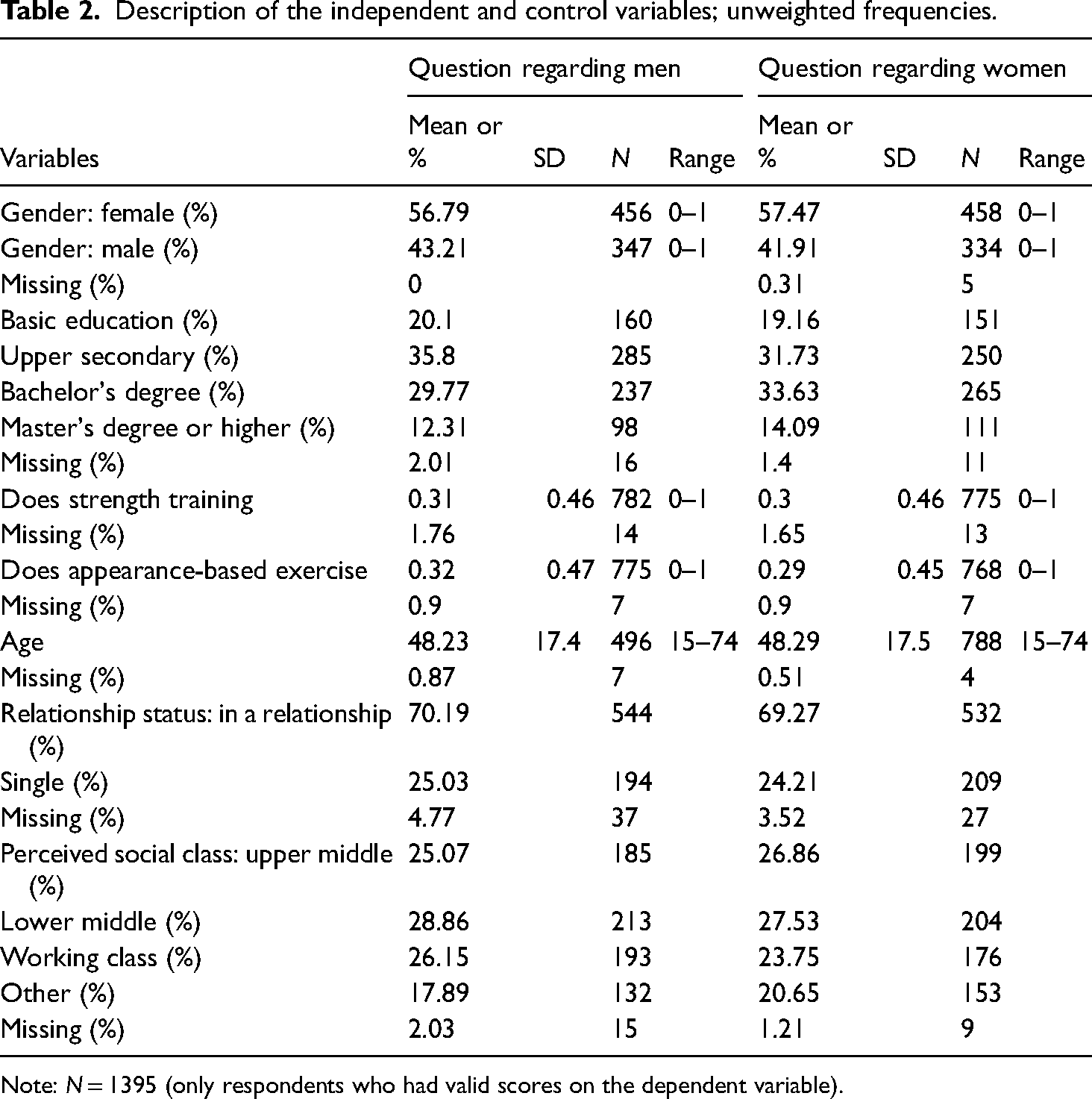
Note: N = 1395 (only respondents who had valid scores on the dependent variable).
Analysis strategy
A linear probability model (LPM) was used to examine the relationship between attitudes and background variables. The purpose was to explore the probability of acceptance of appearance-based exercise among Finnish women and whether it varied between different demographics, primarily between genders. Classifying positive and negative attitudes towards appearance-based exercises, the LPM's coefficients can be interpreted directly as the marginal effect on the probability of acceptance; a positive coefficient implies that a particular variable increases the probability of acceptance by a certain magnitude when other factors remain constant. Furthermore, the LPM is considered a good method for comparing models to interpret the confounding and mediating effects of different background variables (Breen et al., 2018; Stock and Watson, 2015).
Recoding the dependent variable as a dummy variable may result in a fairly rough parameter for the study. Additionally, a dummy variable may result in a loss of variation and statistical power (e.g. Cohen, 1983). However, this study provides an overview of Finnish attitudes towards appearance-based exercise, focusing on the respondent's positive attitudes towards men or women engaging in such exercise. To facilitate statistical analysis and interpretation, a dichotomous variable is used to group the original 5-point variable, allowing for a more precise examination of preferences. All statistical analyses were performed using the statistical software Stata version 18. The full models used in this study are listed in Tables 3 and 4.
Respondents’ attitudes towards men's appearance-based exercise; results of a linear probability model.
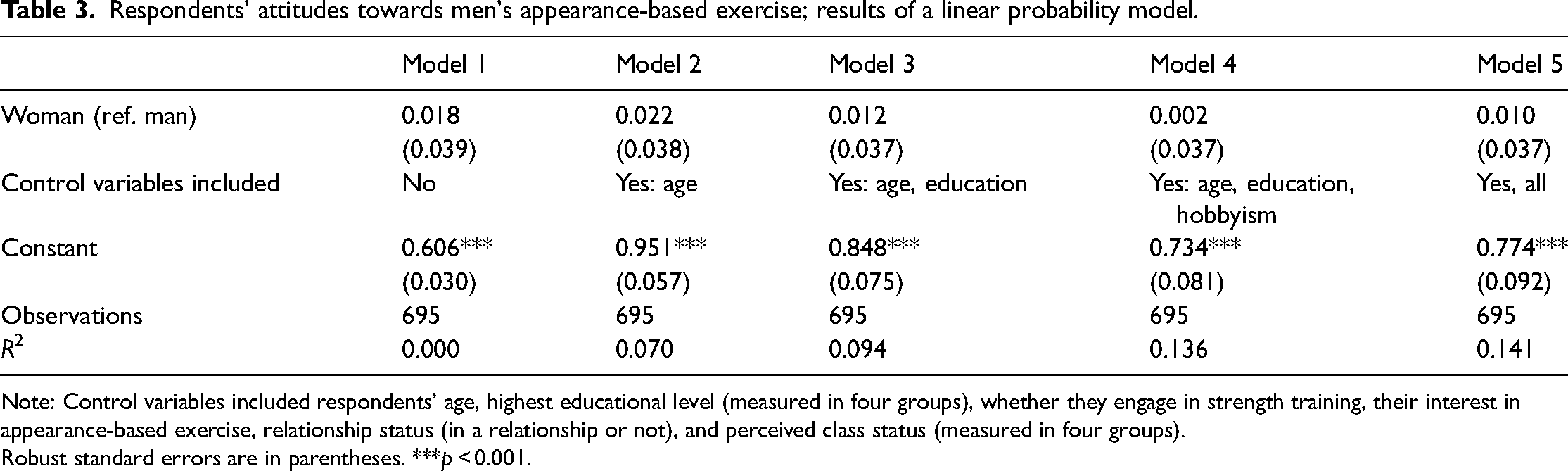
Note: Control variables included respondents’ age, highest educational level (measured in four groups), whether they engage in strength training, their interest in appearance-based exercise, relationship status (in a relationship or not), and perceived class status (measured in four groups).
Robust standard errors are in parentheses. ***p < 0.001.
Respondents’ attitudes towards women's appearance-based exercise; results of a linear probability model.
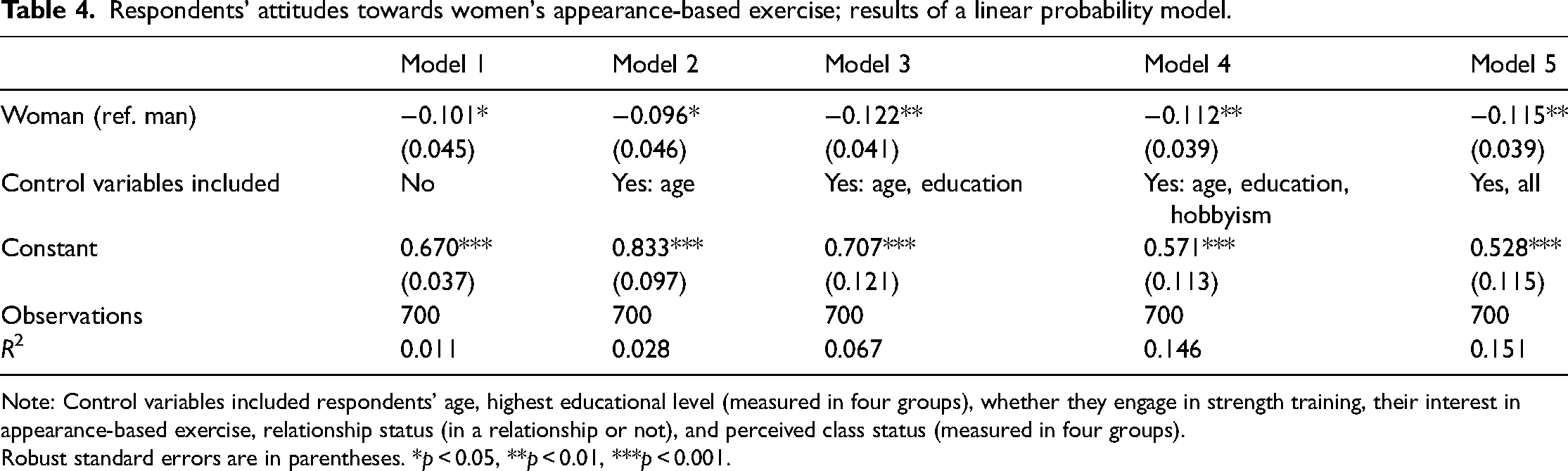
Note: Control variables included respondents’ age, highest educational level (measured in four groups), whether they engage in strength training, their interest in appearance-based exercise, relationship status (in a relationship or not), and perceived class status (measured in four groups).
Robust standard errors are in parentheses. *p < 0.05, **p < 0.01, ***p < 0.001.
Results
To answer RQ1, the dependent variable was examined using a weighted descriptive analysis. Figure 1 shows the proportion of each category of the original independent variable (Likert scale: 1–5). In general, the levels of approval and disapproval were relatively similar for both women's and men's appearance-based exercise. A total of 23.6 and 21.3% of the total respondents ‘definitely approve’ of women and men performing appearance-based exercise, respectively. However, 2 and 4.9% of respondents ‘definitely disapprove’ of women's appearance-based exercise and men's appearance-based exercise, respectively.
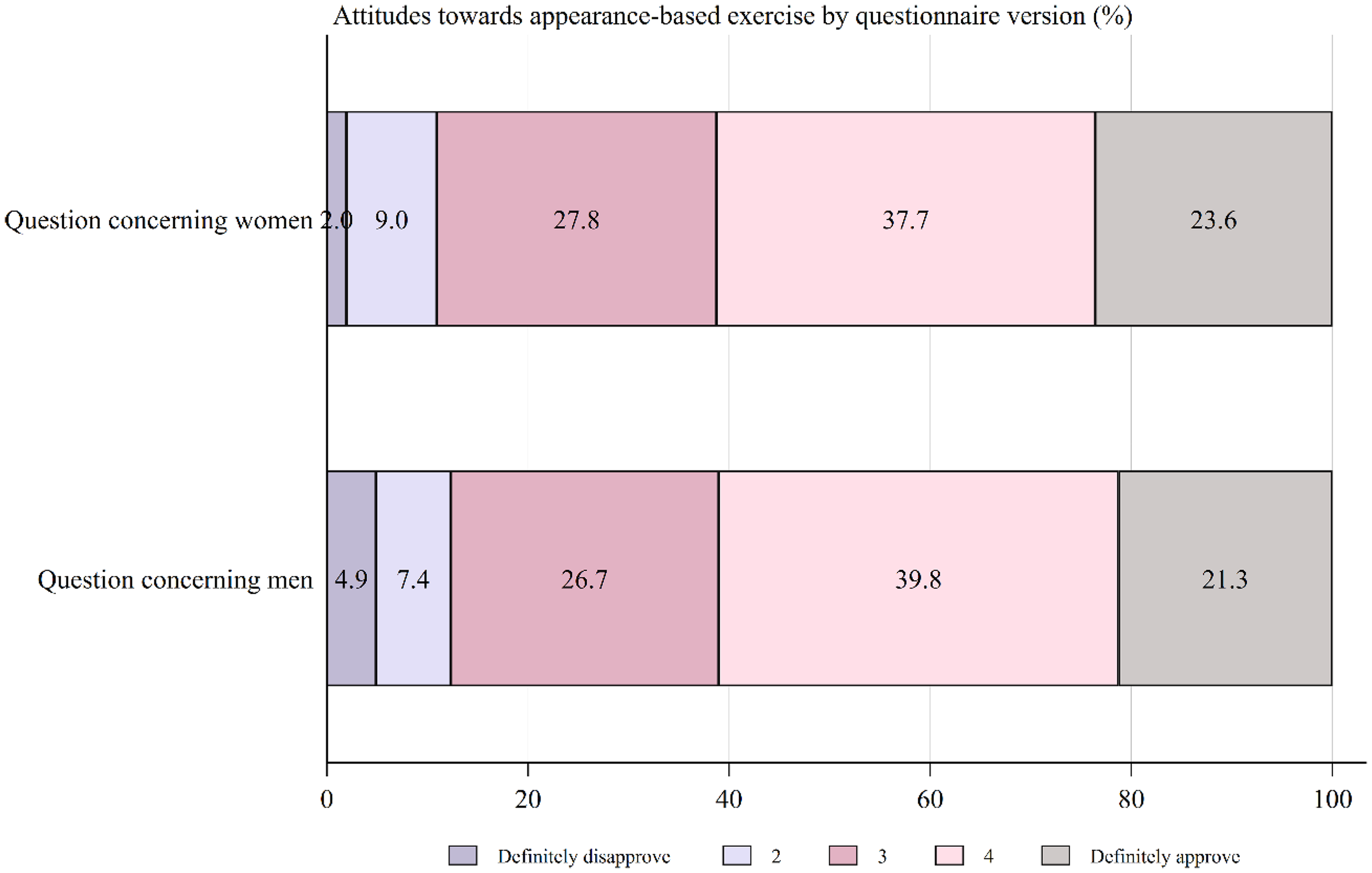
Respondents’ attitudes towards appearance-based exercise (%) (‘How much do you approve or disapprove if a man/woman participates in sports to modify his/her physical appearance’).
The distribution of the original dependent variable was examined separately for men and women and for the questionnaire version (question concerning men/women) (Figure 2). From those who answered the question concerning men, 9.5% of men ‘definitely approve’ of men's appearance-based exercise. Of women respondents, 12% definitely approve of men's appearance-based exercise. Only 2.9% of male respondents ‘definitely disapproved’ of men's appearance-based exercise. Similarly, the share of female respondents in the disapproval is 1.7%. Overall, the results between questionnaires seem similar. However, there are minor differences.
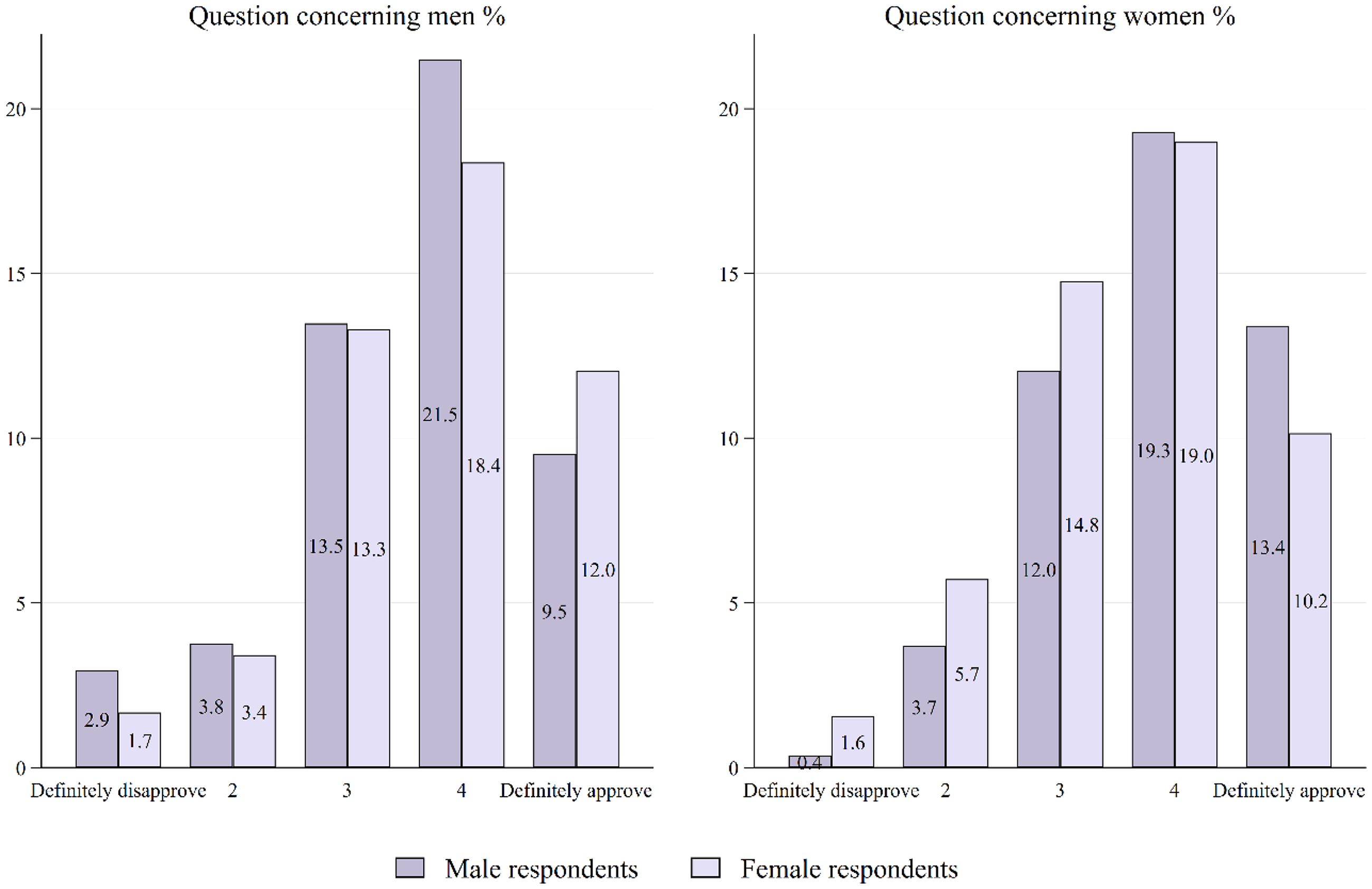
Respondents’ attitudes towards appearance-based exercise by questionnaire version and gender (%) (‘How much do you approve or disapprove if a man/woman participates in sports to modify his/her physical appearance’).
Regarding whether there was a statistical significance between the questionnaire versions and respondents’ gender, the models were analysed stepwise to determine how the coefficients changed when additional covariates were added to the model. Tables 3 and 4 present the LPM for the question regarding men and women, respectively.
Table 3 presents the LPM estimation results regarding men's appearance-based exercise with different control variables. When all the control variables are included, the difference between the probability of male and female respondents’ approval was negligible (b = 0.010, p = 0.784), and no statistically significant differences were found between male and female respondents in any of the models in Table 3.
Table 4 presents the LPM estimation results for women's appearance-based exercise. Regarding RQ2, in Model 5, when all the independent (respondents’ gender) and control variables were included, the coefficient for female respondents was negative, that is women approved of women's appearance-based exercise with a lower probability than men (b = −0.12, p = <0.01). The statistical significance did not change substantially between models. However, the coefficient seemed more negative.
As a robustness check, additional analysis was conducted using ordered logistic regression. The dependent variable had the original values from 1 to 5. As hypothesised, the results were qualitatively the same as those of the LPM.
Discussion
This study explored the gendered perceptions of appearance work, conceptualised in this study as appearance-based exercise. The article examined the extent to which gender differences exist in attitudes towards appearance-based exercise, and who is more likely to view such exercise positively. Using a unique split-ballot survey design conducted in Finland, the study's findings reveal notable differences between male and female respondents’ attitudes towards women's appearance-based exercise. Specifically, female respondents displayed more critical attitudes towards other women who engage in appearance-based exercise, while attitudes towards men's appearance-based exercise implied no significant gender differences. The findings reflect the perspective that appearance work is a form of capital accumulation for women and men (see Kukkonen, 2021). Women who focus on appearance-based exercise may be criticised for being overly concerned with their looks and how they engage in appearance work. This study adds to the sociological understanding of appearance-related norms by highlighting the role of double standards and positioning appearance as a resource that is both valuable and highly regulated. Despite the extensive body of sociological research on appearance work and norms, the question of how gender shapes the acceptability of appearance-based exercise has remained a relatively unstudied subject. These findings imply that the norms of appearance-based exercise are complex and contradictory: while the emerging and expanding beauty regime (Kuipers, 2022) encourages individuals to modify their appearances to align with ideal beauty standards, the existing gendered norms continue to define what is acceptable or unacceptable (Sarpila et al., 2020, 2021a). This study thus contributes to a deeper understanding of gendered appearance-related norms, revealing the nuanced ways in which societal expectations shape attitudes towards appearance-based exercise.
The results also align with the broader discussions in the sociology of work and beauty (Kukkonen, 2021; Mears, 2014), revealing that while appearance work is often expected of women, it is frequently done ‘incorrectly’, leading to penalties. Contributing to debates in feminist literature, this suggests that appearance-based exercise serves as yet another normative standard for women where beauty works against women, although paradoxically, women are taught at a very young age that good looks are a woman's most important trait (see, e.g. Kukkonen et al., 2024). Furthermore, appearance-based exercise is often associated with masculinity, adding to the historical burden on women by complicating the expectations surrounding their engagement in it. Female athletes, for example, have long been criticised for excessive muscularity, especially in media portrayals and social media (Dworkin and Wachs, 2009; Widdows, 2018). The demarcation between femininity and masculinity – rooted in a deeply ingrained gender ideology – is both hierarchical and sexist, with societal structures reinforcing heteronormative ideals and specific gender norms. Notably, appearance work is not a matter of personal choice; instead, it is heavily shaped by broader gender norms that dictate what is considered beautiful or acceptable (for a critique, see Rubin, 1975). 1
Contrary to studies that argue that appearance is a beneficial trait for women (e.g. Hamermesh, 2011), this result is in line with research that discusses that the benefits of women's appearance are largely context-specific and, in fact, negligible. Societal demands are manifested explicitly in women's bodies (Kwan and Trautner, 2009; Mears, 2014). However, women do not reap the benefits and face more penalties than men (Elias et al., 2017; Kukkonen et al., 2024; Mears, 2014; Otis, 2012), especially if they use their appearance to their advantage, such as in the labour market (Kukkonen, 2021; Sarpila et al., 2020). This article reflects on the concept of appearance-based exercise through the concept of aesthetic capital, which asserts that the accumulation of aesthetic capital is not a straightforward process from which every person benefits (Holla and Kuipers, 2015). Kukkonen (2021), for instance, theorised appearance as a form of capital that is deeply gendered in Finland and illustrated how appearance work is marked by gender norms and beliefs about appearance. In light of this study's findings, appearance cannot be considered a universal resource as it depends on the context and varies according to the available time and resources for appearance-based exercise, including social, economic and cultural surroundings, which influences its norms and opportunities.
Indeed, the findings reflect the ‘double bind’ of societal expectations, significantly affecting women's self-perception and societal roles. They highlight its importance as a critical area of study in sociological research. For instance, Walseth and Tidslevold (2020) described how young women constructed their perceptions of a valued body and discovered that the prevailing appearance discourse balanced two beauty ideals – the feminine slender ideal and the toned athletic ideal. However, the space between these ideals was minimal. Although the present article does not examine the kind of appearance pursued in appearance-based exercise, the findings followed a ‘female double bind’ where women face stricter norms for gaining an advantage through accumulated bodily capital, as stated by Hutson (2016: 66–67). Within this study, the double bind faced was how they were evaluated differently from men by women. Furthermore, the findings echo the feminine rivalry interpretation of Anthony et al. (2016), in which societal standards implicitly force women to compete against each other and strive for feminine perfection – to be better than other women. However, the women in the study additionally argued that they acknowledged external appearance-related pressures, which were undeniably unattainable. Women faced the double bind of trying to submit to either feminine or fitness norms and simultaneously condemning others performing the same action. The concept of ‘the impossible bind’ (Berry, 2016: 8) links the discussion to impossible beauty standards that women try to achieve with appearance work, that is the dissatisfaction with appearance will continue despite the work they do.
Relatedly, in a Westernised and consumeristic culture – as in Finland – a fit body conveys strong morals, self-discipline and self-respect. A fit individual is well suited to be a member of society because fitness requires focused consumerism. Specifically, Roberta Sassatelli (2010, 2017) observed how, in the history of fitness, the ideal of the female commercialisation of fitness culture – appearance-based exercise – becomes a market-driven activity where individuals seek to acquire ‘capital’ to convert it to other forms of capital. As such, ‘neoliberalism makes us all “aesthetic entrepreneurs”’ (Elias et al., 2017: 5), apparent in the hyper-visual era encouraged by social media and the persistent exhortation of making oneself look good. Against this backdrop, prevailing ideas of appropriate feminine and masculine appearances continue to permeate societal structures. The expression ‘Strong is the new skinny’ (Tiggemann and Zaccardo, 2018), which emerged in the 1990s, corroborates the ideals of athleticism and femininity, yet women continue to be subjected to expectations that they ought to look a certain way.
Nonetheless, the results can be interpreted from an alternative perspective. It can be similar to feminist literature's remarks (e.g. Kukkonen et al., 2018; Markula, 1995; Wolf, 2002) that women are protesting a patronising society that reduces their value to physical appearance. Therefore, women are critical of other women performing appearance-based exercises because they feel solidarity towards one another and want to support other well-proven exercise motives rather than appearance-based motives. The question of female agency is essential to acknowledge since engaging in appearance-related labour is, to some degree, a choice. Kukkonen (2021) problematised this by implying that, overall, the importance of appearance in consumer societies, such as Finland, has contributed to increasing appearance work. The politics of appearance work remains a crucial issue in feminist literature and sociological debates on questions of agency versus cultural domination (e.g. Elias et al., 2017).
Naturally, this study's method and findings have certain limitations. While this survey design has uncovered possible double standards (e.g. Rijken and Merz, 2014; Sarpila et al., 2020), a potential problem relates to classical survey item understanding. For instance, the survey utilises a split-ballot design that forces people into a hypothetical situation to answer a specific survey item. Given that the literature on this topic is primarily heteronormative, as well as the data this article exploits, the question it addresses is somewhat simplified. Also, he article aligns with previous research that advocates for more intersectional approaches to aesthetic capital and appearance work (Holla and Kuipers, 2015; Kukkonen et al., 2018). Further, the survey question measuring the attitudes towards appearance-based exercise leaves room for interpretation. There is a need for further studies to address the motivations for engaging in such exercise. Furthermore, since the findings are based in Finland, the results should be interpreted carefully in the context of other countries and cultures. Since prior research on double standards has argued that the strength of gendered double standards is similar between Nordic countries (Rijken and Liefbroer, 2016; Rijken and Merz, 2014), it couldbe cautiously generalised to Nordic countries, although it requires further studies. Moreover, since the study does not account for the types of exercises people engage in, distinguishing between different activities will require further research to answer the following questions – What is the role of appearance work in so-called aesthetic sports (e.g. competitive body building) and how is appearance-based exercise perceived in such sports? Additionally, as this study was based on a survey, interview data would enhance it and create a deeper understanding of the phenomena.
This study contributes to discussions about the precarious nature of appearance as a resource for women and the heightened scrutiny women face regarding their behaviour, particularly from other women. The old mantra, ‘pretty is as pretty does’, holds some truth here (see, e.g. Berry, 2016), as it implicitly reinforces that appearance-based exercise becomes yet another societal demand for women. Therefore, appearance work is part of the beauty regimes (Kuipers, 2022) and beyond, as appearance-related norms are context-dependent. Good looks are often considered to be associated with success in life; however, these outcomes stem less from appearance itself and more from ‘human judgements that are embedded in normative cultural frameworks specific to our day and age’ (Kuipers, 2022: 222). Within the beauty regime, appearance-based exercise emerges from a hyper-visual, consumer-driven, neoliberal culture in which fit and feminine ideals consistently move the finish line. Consequently, appearance-based exercise becomes yet another layer of women's beauty standards, adds to existing appearance work and reveals how women are both participants in and enforcers of these standards.
Footnotes
Acknowledgements
I wish to thank the reviewers for their helpful and constructive feedback, which improved this research substantially. I am incredibly grateful to my inspiring supervisors, Aki Koivula and Outi Sarpila, for giving valuable feedback throughout this research. I would like to thank Editage ( ) for English language editing.
Declaration of conflicting interests
The author declared no potential conflicts of interest with respect to the research, authorship, and/or publication of this article.
Funding
The author disclosed receipt of the following financial support for the research, authorship, and/or publication of this article: This work was supported by Turku University Foundation and University of Turku Graduate School UTUGS.