



Abstract
The UEFA Women's EURO 2022 and the FIFA 2023 Women's World Cup set new attendance records, thereby reflecting the growing popularity of women's football. In this context, social media platforms have become critical tools for women athletes offering opportunities for sponsorship and activism. This study focuses on the Instagram activity of five individual players from the Norwegian national team during the UEFA Women's EURO 2022. It examines the following research questions. (a) What type of content did the players post throughout the UEFA Women's EURO 2022 Championship period? (b) How did content type and posting frequency vary throughout the championship period? (c) How did audiences engage with the various types of content posted on Instagram throughout the championship period? Methodologically, this article is based on a quantitative content analysis of posts, stories and comments shared by the players during the championship period. Our findings reveal a diverse content sharing pattern that is indicative of strategic impression management. Players predominantly shared sports-related content to enhance their profiles as committed athletes; a tactic aligning with audience expectations. Their posting frequency peaked around matchdays, reduced post-loss and indicated a strategic approach to maintain a positive online presence. Post-elimination, players diversified their content by incorporating business and personal aspects, thereby indicating a shift to a more multifaceted self-presentation. Audience engagement was largely positive, with interactions showing support and encouragement, which reinforced the effectiveness of sports-focused content in garnering positive reactions. However, the posts relating to LGBTIQA+ activism prompted a notable amount of negative feedback, which highlighted the challenges and potential backlash when engaging in social media activism.
Introduction
Women's football has experienced a surge in popularity, as evidenced by the unprecedented attendance figures at the UEFA Women's EURO 2022 (UEFA, 2022). This growth not only reflects an increasing global interest in women's football but also signifies a shift in how women players are presented and marketed, where social media is a vital platform for athletes. These platforms offer women players unique opportunities to establish their professional identities, engage in personal branding, fan engagement and secure sponsorship (Li et al., 2021). Given the tendency of mainstream sports media to marginalise women athletes’ voices (Cooky et al., 2015), social media serves as an alternative avenue for bypassing traditional media gatekeepers. It enables women athletes to achieve visibility on their own terms and present themselves in diverse ways (Turtiainen, 2021), thus allowing them to take control of their public personas and challenge gender norms.
The increased media attention on women's football in major events like the UEFA Women's EURO 2022 creates a unique window into the dynamics of social media engagement among women athletes. During these periods of elevated public interest and viewership, athletes increase their social media activity to connect with a broader audience. Such surges in digital interaction offer an insightful context for analysing how women athletes utilise social media to craft their public personas, engage with fans and navigate the complexities of digital self-branding. With the UEFA Women's EURO 2022 serving as a focal point, our investigation seeks to unpack the nuanced strategies employed by football players in their social media practices. Specifically, we pose the following research questions:
RQ1: What type of content did the players post throughout the UEFA Women's EURO 2022 Championship period? RQ2: How did content type and posting frequency vary throughout the championship period? RQ3: How did audiences engage with the various types of content posted on Instagram throughout the championship period?
We examine the Instagram content of five players from the Norwegian national team throughout the championship period with a view to exploring the intricacies of the social content they created. Additionally, our investigation goes beyond the content creators to include the audience, recognising that in the age of social media proliferation audiences are not mere observers but active participants. Therefore, their interactions, engagement patterns and reactions to the athletes’ posts are crucial for understanding the broader implications for sport, gender and social media dynamics.
The next section reviews research on women athletes’ self-presentation on social media, alongside studies of athlete activism, gender and social media. We then introduce our theoretical framework, which is grounded in Goffman's (1959) dramaturgical concepts of impression management and self-presentation, coupled with Toffoletti et al.'s (2018) conceptualisations of postfeminist sporting femininities. These provide the foundation for our analysis. The following discussion explores how these theoretical perspectives illuminate the complexities of female athletes’ online self-presentation and audience interaction within the contemporary digital landscape.
Transitioning landscapes for women in sports media
The evolution of digital media significantly impacts how women athletes are represented. Studies have shown that women's sports are under-represented in the sports media, and that traditional media often focuses on the aesthetic or personal attributes of women athletes (Bruce, 2015). For instance, men athletes are typically portrayed as powerful and dominant, while women athletes are more frequently associated with family life, as mothers or wives (McGannon et al., 2012). Moreover, the coverage of women athletes often centres on sports regarded as ‘gender-appropriate,’ like beach volleyball and gymnastics (Coche and Tuggle, 2018), and tends to emphasise passive actions or sexually suggestive imagery, rather than athletic achievements (Bruce, 2016). Overall, the sports media continues to underplay the athletic accomplishments of women, thus perpetuating a male dominated narrative in professional sports (Bruce, 2016).
Digital media is now challenging such traditional sports media narratives. Digital platforms provide a personalised and direct way for athletes to communicate with their audience. They serve as tools for self-presentation to increase visibility, build personal brands, and foster fan-athlete interactions (Pegoraro, 2010). These platforms provide women athletes with opportunities to craft public personas and brands independently of mainstream media constraints (Geurin-Eagleman and Burch, 2016; Lebel and Danylchuk, 2012). In this way, digital media has a feminist potential to enhance the visibility of women athletes and challenge dominant representational regimes (Antunovic and Hardin, 2012; Toffoletti and Thorpe, 2018b).
While social media has provided women athletes with increased agency in constructing their public images and personal brands (Li et al., 2021), the landscape of digital self-representation is both complex and challenging. Toffoletti (2016) and Pocock and Skey (2022) highlight how online self-representations of women athletes can be superficial and sexualised and fail to challenge the structural gender dynamics in professional sports. Toffoletti and Thorpe (2018b) argue that the transformative potential of digital media to present new narratives of femininity is limited, especially in sports dominated by masculine perspectives. Moreover, Sanderson (2013) warns that social media can perpetuate sexist commentary, while La Voi and Calhoun (2014) question whether digital platforms truly enable women athletes to break free from the constraints of traditional media. This dichotomy is evident in how women athletes portray themselves on platforms like Instagram, where interactions with fans are heavily influenced by gender norms rooted in a postfeminism and consumer culture. Toffoletti and Thorpe (2018b) find that fan feedback significantly shapes athletes’ online personas and emphasises empowered femininity and personal intimacies as part of crafting an appealing personal brand. Still, women athletes’ self-representation online often adheres to established gender norms. While men athletes typically showcase themselves in athletic action, women athletes frequently display characteristics aligning with traditional femininity, such as smiling or engaging in submissive gestures (Emmons and Mocarski, 2014; Gainor, 2017). This underlines the ongoing tension between the empowering potential of digital media and the entrenched gender norms influencing athletes’ self-presentation online.
Despite the persistence of conventional gender norms in athletes’ social media representations, scholars have identified trends towards more progressive depictions of women athletes on social media, with a growing emphasis on athletic prowess (Xu et al., 2023). For instance, Smith and Sanderson's (2015) analysis of professional athletes on Instagram revealed that women athletes predominantly feature in active, athletic roles. This is further exemplified in a study by Santarossa et al. (2019), which found that while ESPN's Body Issue often portrays women athletes in non-sporting contexts, these athletes tend to depict themselves on their personal Instagram accounts in ways that highlight their athletic capabilities and achievements. Furthermore, studies indicate that women athletes are increasingly steering clear of self-sexualisation in their social media narratives (Ni and Liu, 2020; Xu and Armstrong, 2019). These findings suggest a trend amongst women athletes to reclaim and redefine their online self-presentation by focusing on athletic achievements.
Gender and personal branding in sports
Athlete branding plays a crucial role in professional sports and is closely linked to the changing dynamics of consumer culture and digital media. Branding extends beyond athletic performance to encompass the broader marketability and public persona of athletes (Horne, 2006). Studies have highlighted the intricate ways in which sports celebrity culture intertwines with commodity culture, with notable attention given to men sports stars and their affiliations with major corporations (Smart, 2005; Andrews and Jackson, 2002). The work of scholars like Marwick (2015) and Click et al. (2013) has shed light on how sports celebrities make use of social media platforms to forge direct, albeit often illusory, relationships with fans. This dynamic demonstrates a broader trend in how public figures navigate the ‘attention economy’ of social media by engaging in strategic self-promotion.
However, the intersection of brand culture with gender adds another layer of complexity, especially for women athletes. Feminist researchers have explored the nuances of how women engage with brand culture in digital media (Banet-Weiser, 2012, 2015; Sadeghi and Leng, 2021; Toffoletti and Thorpe, 2018a, 2018b). Banet-Weiser's concept of ‘economies of visibility’ is particularly salient here and suggests a shift from a struggle for visibility to a marketplace in which visibility is itself a commodity. This marks a departure from traditional feminist struggles for recognition and representation towards a new paradigm, where visibility is intricately tied to market forces and consumer culture (Banet-Weiser, 2012). This is also connected to postfeminism and neoliberalism, as discussed by Rottenberg (2014). The emergent neoliberal feminist subject is one who is acutely aware of gender inequalities yet navigates these inequalities within the constraints of market-driven, individualistic approaches. This phenomenon is an important component in understanding the online self-representation of women athletes, who often negotiate their public personas in a landscape that values marketability, individual entrepreneurship and personal branding.
Furthermore, the use of social media by women athletes for activism and advocacy, particularly in the areas of gender equity and LGBTIQA+ rights, introduces additional layers of complexity (Gallagher et al., 2022; Moyer, 2022). While social media offers a platform for initiating important conversations and potentially contributing to societal change, there are risks involved. Women athlete advocates of gender diversity on social media often face backlashes, especially those who are not global celebrities (Kitching et al., 2022; Turtiainen, 2021). This backlash, fuelled by factors like social media trolls and bots, can lead to ostracisation within their sport. The complexity of this situation highlights a broader dilemma in the sports world, where the empowerment and visibility offered by digital platforms come with a nuanced set of challenges. Women athletes navigating this terrain have to balance their roles as public figures, role models and activists and at the same time deal with the entrenched gender norms and societal expectations in both the physical and digital realms of sports culture.
Theory
In order to analyse Instagram content and audience responses, we use concepts from Goffman's (1959) work and combine them with perspectives on the gendered implications of self-representation, with a focus on constructions of postfeminist sporting femininities.
Goffman's (1959) term impression management outlines how individuals express identity through verbal and non-verbal forms of self-presentation with the aim of displaying the most credible image to others (i.e. the audiences). Goffman (1959) highlights that impression management and self-presentation consist of both frontstage and backstage performances. While frontstage performances are characterised by a guarded and cautious presentation of the ‘self’, backstage performances are less filtered and scripted. A frontstage performance adheres to conventions that have meaning to the audience (Goffman, 1959). When analysing women tennis players on Twitter, Lebel and Danylchuk (2012) classified frontstage messages as including interactions with fans, initiating conversations and self-promotion, while backstage messages included behind-the-scenes stories.
Athletes often blur the lines between backstage and frontstage when social media platforms enable them to present their private lives and use them as marketing tools (Pate et al., 2015). Seeking to control the blurring of frontstage and backstage has led to what Lebel and Danylchuk (2014) call ‘focused backstage performance’, where presenting backstage content is part of a social media strategy. Goffman (1959) also details how audience segregation affects and enables performance. Segregation of the audience refers to an individual ensuring that those present when performing a certain role are not the same audience as when performing different roles in other settings. Difficulties in impression management arise when audience segregation fails and outsiders experience a performance that is not meant for them.
While Goffman engages in analyses of the representation and perception of women in some of his work (Goffman, 1963; 1971), his conceptualisations fall short in our endeavour to unmask the gendered implications of self-representation on social media for the Norwegian women's team. Feminist scholars Toffoletti, Francombe-Webb and Thorpe (2018: 6) advocate for a ‘deeper engagement with postfeminism in the study of sport, … subjects and bodies’ and call for critical engagement with digital leisure and sporting practices from a feminist perspective. We take this to heart and find their perspectives on postfeminist sporting femininities particularly fruitful for our examination of content production and audience responses to the Norwegian women's team during the UEFA Women's EURO 2022 Championship period.
Toffoletti et al. (2018: 4) describe ‘postfeminist times’ as being characterised by an emphasis on women's empowerment and independence, and the centrality of consumption to women's acts of bodily maintenance and transformation. This era also is marked by an increased emphasis on expressions of hetero-sexy femininity. Toffoletti et al. (2018: 4) understand these developments in the context of a burgeoning media culture and as closely tied to neoliberal and consumerist ideologies. Within this framework, the concept of personal ‘choice’ has emerged as the primary narrative through which gender ‘equality’ is interpreted (Genz and Brabon, 2012; Toffoletti et al., 2018). Hence, postfeminist perspectives influence the enactment of gendered identities and contemporary understandings of gender relations. This includes the constructions of femininity and athleticism on social media platforms.
Connecting Goffman's (1959) theories of self-representation with Toffoletti et al.'s (2018) perspectives on postfeminist sporting femininities, enables us to understand why the Norwegian women players were able to manifest postfeminist and neoliberal values on Instagram during Women's EURO 2022 by curating content that emphasised their self-empowerment and independence intertwined with a consumerist ethos. This could involve showcasing their personal branding efforts, partnerships with fitness and fashion brands and entrepreneurial ventures framed within narratives of self-improvement and personal choice. Such content would highlight their dedication to bodily excellence and aesthetic femininity, but also reflect a neoliberal emphasis on individualism, market-driven self-care and the commodification of their athletic and gender identities. A reinforcement of postfeminist and neoliberal narratives that celebrate autonomy in self-presentation and success implicitly endorses the idea of achieving gender equality through individual effort and consumer participation.
Methods
According to Gratton and Jones (2010), content analysis is an unobtrusive and systematic method for analysing visual, written and audio data, in that it focuses on collective themes rather than individual participants’ experiences. We consider this approach to be fruitful for our study, especially as Instagram is a visual platform that makes it challenging to anonymise the individuals behind the published content.
Sampling and data collection
Instead of examining a larger sample of players, we emphasise the value of depth and quality in our analysis (Losh, 2015). A purposive sample of five players from the Norwegian squad for the UEFA Women's EURO 2022 was selected based on three criteria: (a) frequent activity on Instagram, (b) public accounts as professional football players and (c) fan popularity.
We systematically collected Instagram posts, stories and comments every morning (CEST) over the course of the scheduled championship period from July 6th to July 31st. Additionally, we wrote descriptive field notes about their posts and stories (e.g. context, time and date) and included accompanying text and other descriptive markers (e.g. caption, emojis, use of tags (@) and hashtags (#) in our field notes.
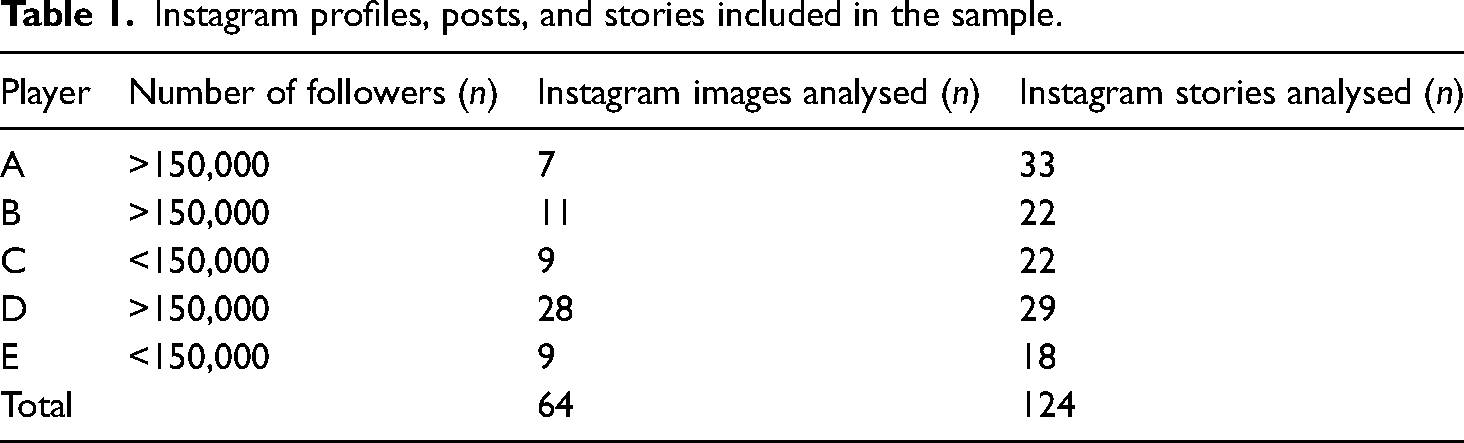
A total of 24 feed posts including 64 images and 124 stories were obtained during the 26-day data collection period (n = 188). These posts generated substantial audience engagement. A total of 3400 comments were also analysed. An overview of the Instagram content included in the sample is presented in Table 1.
Instagram profiles, posts, and stories included in the sample.
Coding procedures
The unit of analysis was each image or video shared by the players in their posts (n = 64) and stories (n = 124). Each unit (n = 188) was analysed separately. A codebook and coding protocol was developed based on Turtiainen's (2016) and Geurin-Eagleman and Burch's (2016) approaches to studying women team sports athletes’ self-presentations on social media. This included analysing the content according to five thematic categories: (a) sports-related, (b) private life, (c) business, (d) activist and (e) supporter-related (Table 2).
Content categories with descriptions.
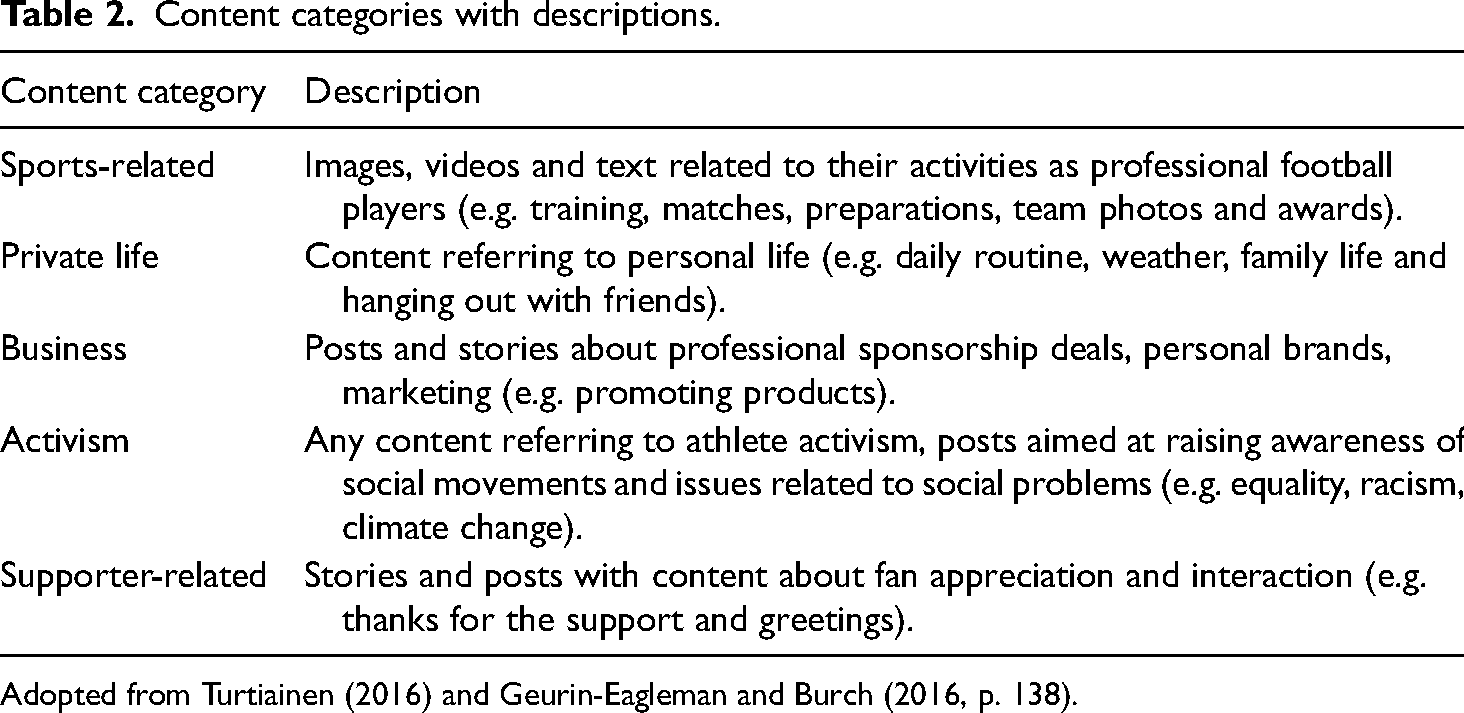
Adopted from Turtiainen (2016) and Geurin-Eagleman and Burch (2016, p. 138).
The coding was done by two of the authors in a two-step process. First, each author independently immersed themselves in the data through an initial coding of the 188 posts and stories. This meant analysing the appropriate thematic category based on the content of the images. In step two, a comprehensive and cooperative coding process took place. SPSS Statistics 27 was used to perform the data analysis. Any uncertainties or disagreements from phase two were resolved in discussions between all four authors.
In addition to coding content categories, we extended our coding process to include the 3400 comments on the posts, classifying them into three categories: positive, negative and neutral. Notably, a significant portion of these comments were in Norwegian, highlighting engagement from a local audience. Nonetheless, comments in other languages, such as English and Spanish, were also observed, suggesting the players’ appeal to an international audience. To ensure a thorough analysis, the comments in languages other than Norwegian were translated. This step was crucial for accurately classifying comments into positive – reflecting expressions of support, encouragement and appreciation, negative – containing critical or unfavourable remarks and neutral – characterised by less expressive sentiments or passive observations. This comprehensive approach to coding enabled us to delve deeper into audience engagement and the responses to the various content categories.
Ethical considerations
During our analysis of social media content, we faced ethical dilemmas related to informed consent, confidentiality, anonymity and the blurred lines between public and private spheres online. Lyon (2018) highlights how social media has shifted what was once private into the public domain. Echoing Carlèn and Maivorsdotter (2017), we note a concerning lack of discussion about ethical considerations amongst social media researchers, thus pointing to a gap in the understanding of how to conduct empirical studies in online spaces ethically. Although the Norwegian National Committee for Research Ethics in the Social Sciences and the Humanities (NESH, 2019) deems data from public profiles of professional athletes as publicly accessible, we opted for a cautious stance. Given that the public nature of players’ Instagram accounts suggests an expectation of widespread viewership, and McGannon et al. (2022) suggest a lower risk of sensitivity, our priority was to uphold ethical integrity above legal permissibility. We therefore refrained from disclosing players’ names or directly republishing images, captions and comments from their Instagram accounts. This decision underlines our commitment to ethical research practices and acknowledges that public profiles do not diminish the individuals’ right to privacy and respect. This cautious approach also helped us to avoid any potential stigmatisation or unwanted attention from direct identification. Furthermore, our research aimed to identify broader trends and patterns in the social media engagement of professional football players, rather than focusing on individual contributions. By anonymising the players, we ensured that our study emphasised collective behaviours and thematic analysis, thereby safeguarding the dignity of the individuals involved.
To further align with these ethical considerations, we collaborated with a local artist to create graphic illustrations that represented the content in each of the thematic categories we identified. This approach enabled us to present our findings in a manner that respected the players’ privacy, while still providing a vivid representation of our data. The illustrations allowed us to depict the essence of the players’ social media content without directly republishing any sensitive material. This collaboration not only adhered to our ethical framework, but also added a unique and creative dimension to our presentation of the results. Through these measures, we sought to balance the ethical implications of our research with the need for a comprehensive and insightful analysis, thus ensuring that our study was conducted with the utmost respect for the individuals involved and the ethical standards of our field.
Results
During the Women's EURO 2022 the players published 188 posts (n = 64) and stories (n = 124) on their Instagram accounts. The posts received a total of 3400 comments during the first 24 hours after publication. All the posts, stories and comments were included in our analysis. The posts and stories (n = 188) were coded into five content categories: (a) sports-related content, (b) private life content, (c) business content, (d) activist content and (e) supporter-related content. Table 3, below, illustrates the types of content published by the players throughout the championship. As demonstrated, most of the posts and stories were published in the days before and after the opening match (July 7), which Norway won. Subsequently, there were respectively two and three days without any published content after Norway lost the next two matches (July 11th and July 15th) and was ultimately eliminated from the championship. Towards the end of the month, the posting activity picked up slightly again.
Quantitative analysis of content categories and publication dates.
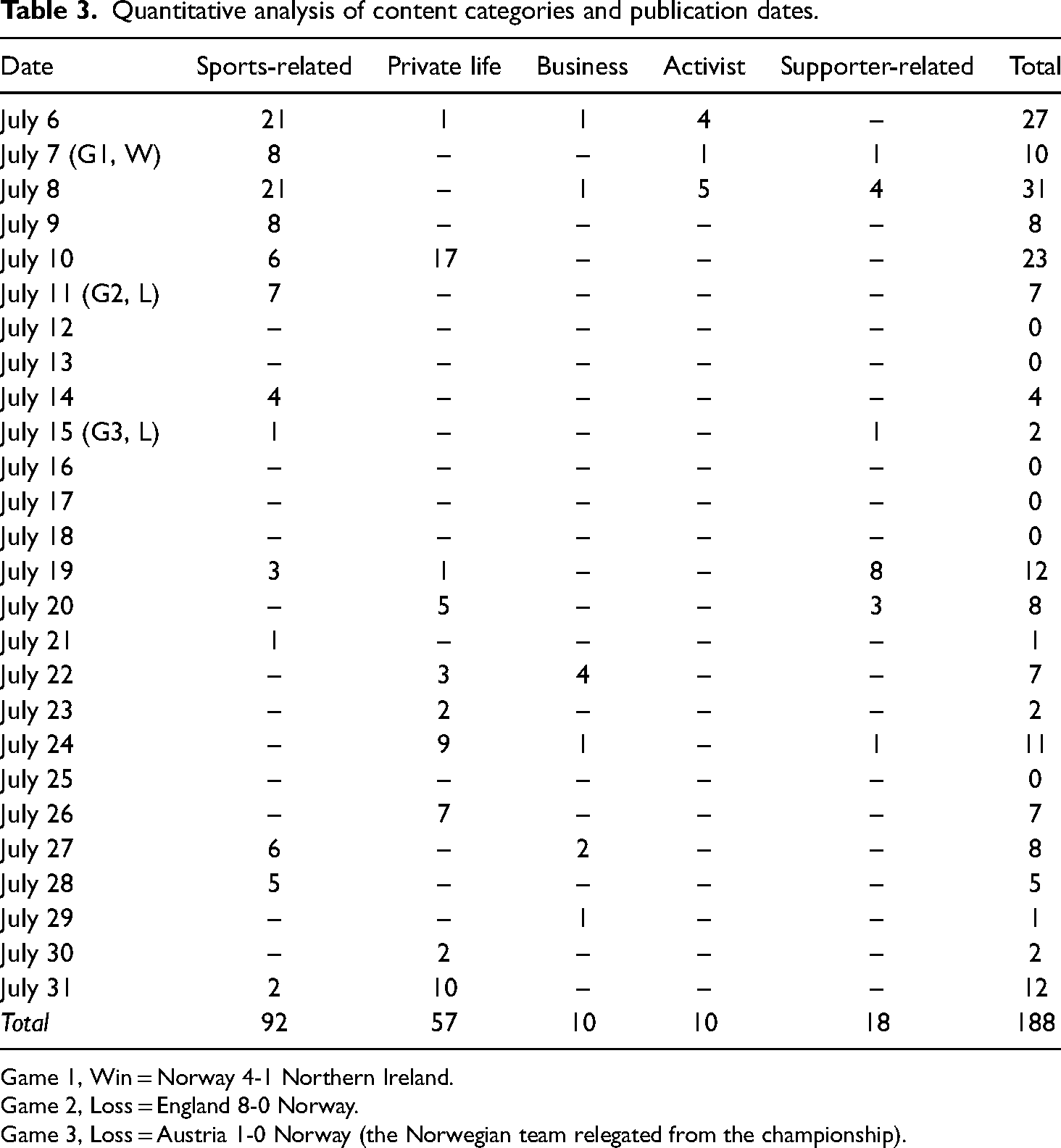
Game 1, Win = Norway 4-1 Northern Ireland.
Game 2, Loss = England 8-0 Norway.
Game 3, Loss = Austria 1-0 Norway (the Norwegian team relegated from the championship).
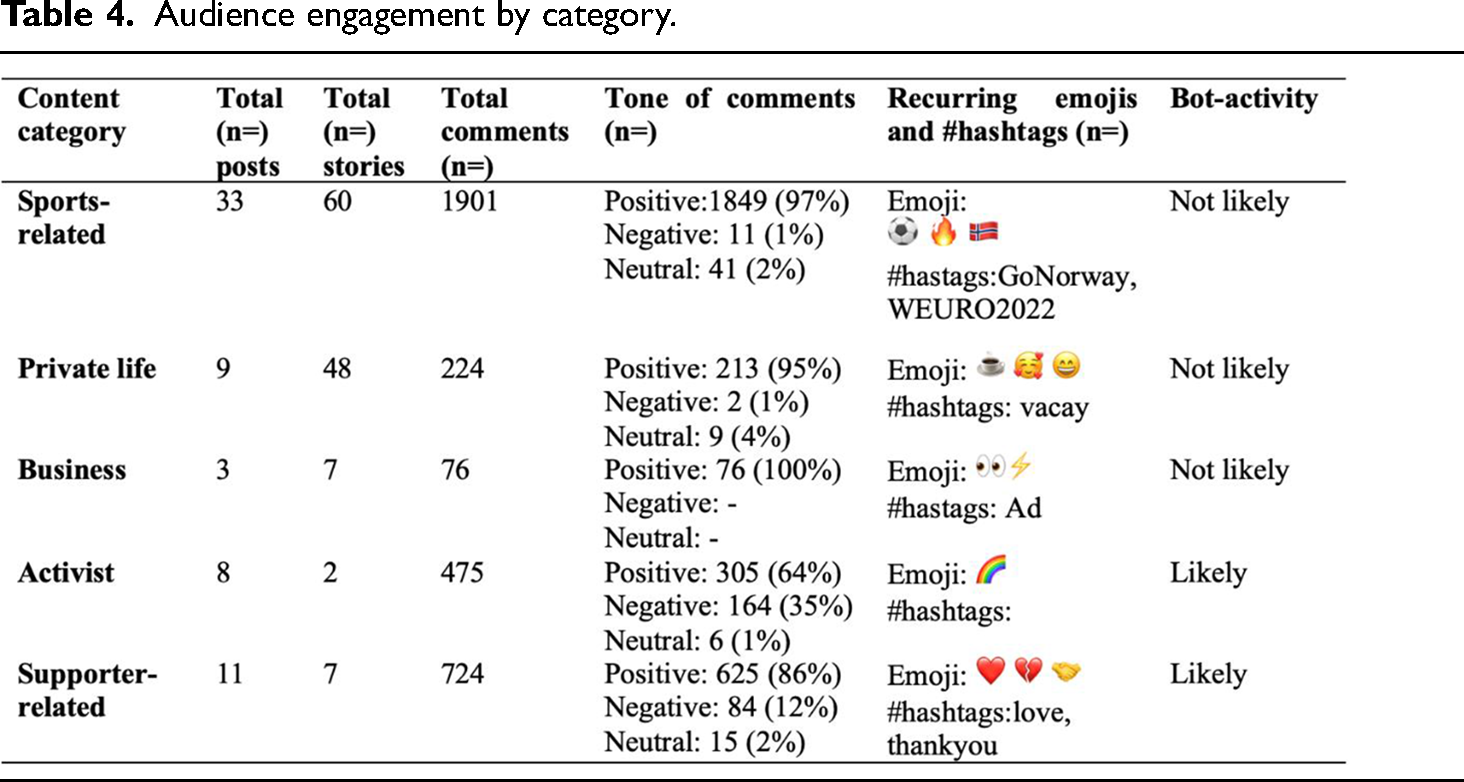
We classified the comments into three categories. Of the total comments analysed, 90% (n = 3067) were coded as positive, indicating a generally favourable response from audiences. On the other hand, 8% of the comments (n = 261) were coded as negative, indicating a critical or unfavourable tone. Lastly, 2% of the comments (n = 71) were coded as neutral, representing comments that did not exhibit a clear positive or negative sentiment. Table 4, below, illustrates the distribution of comments across content categories, recurring emojis and hashtags and whether there are repeatedly identical comments that raise suspicion of bot-activity.
Sports-related content
The sports-related content showcases a variety of themes related to the players’ football careers, including training sessions, matches, travel experiences, preparations, restitution, team and player portraits and awards. Figure 1 is an example of a typical image included in a post or story of the sports-related content category, depicting a match situation with the player in action. These posts and stories often had captions to rally excitement (‘Let's go!!’), show commitment to the team (‘stronger together’), emojis of the Norwegian flag ( ) and the use of the hashtag #WEURO2022.
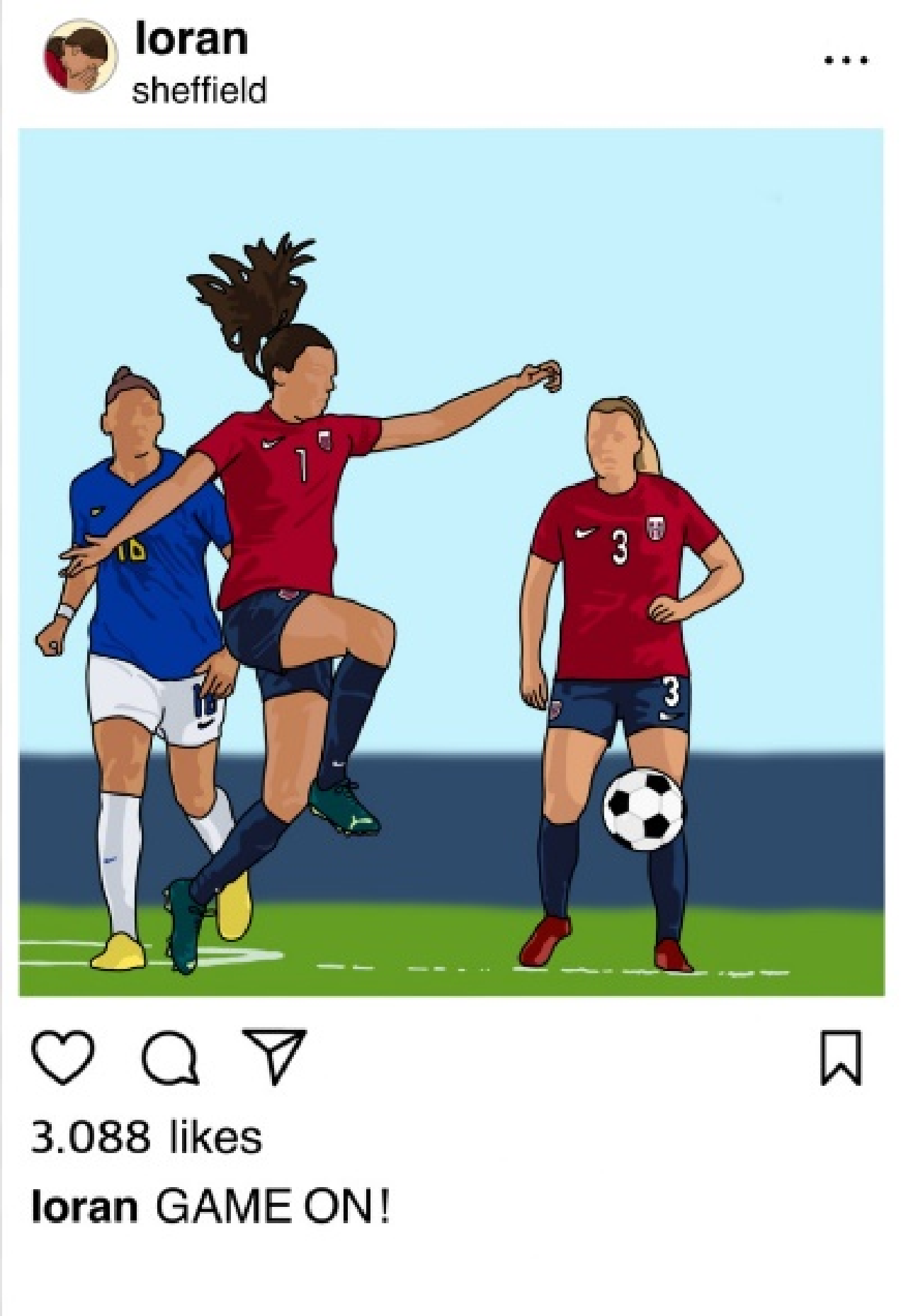
Example of sports-related content.
Sports-related content was the most prominent among the five identified categories, comprising 49% (n = 92) of the posts (n = 33) and stories (n = 60) in our sample. The higher number of stories compared to posts may suggest that athletes used stories for more immediate, dynamic, or in-the-moment sharing of sports-related activities. The content in this category received a total number of 1901 comments of which 1849 were perceived positive, 11 negative and 41 neutral (Table 4). Sports-related content was most dominant during the early stages of the championship, particularly in the days before and after the opening match.
Private life content
The private life content centres around different aspects of the athletes’ personal lives outside football and provides a glimpse into their day-to-day activities by capturing moments from their routines, vacation activities and relationships with family members and friends. Figure 2 illustrates an athlete enjoying a vacation with friends, representing a typical post or story within this category. Captions within the private-life category often relate to the various activities the athlete engaged in (‘Enjoying life on vacation’, Figure 2), (‘Back home to family dinner’), (‘Out eating lunch’) and a frequent use of emojis expressing happiness and love ( ).
).
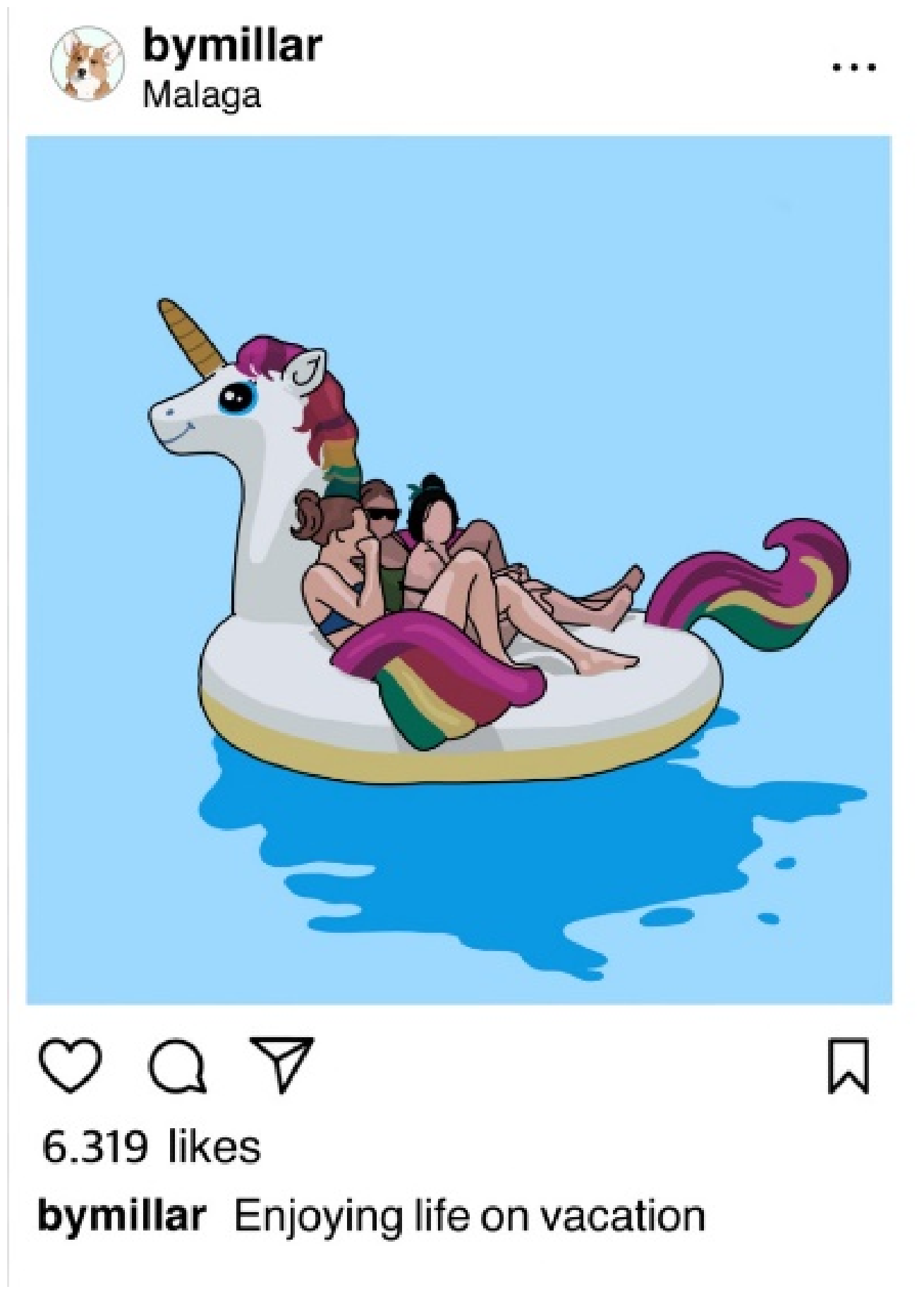
Example of private-life-related content.
Private life was the second largest category and consisted of 30% (n = 57) of the posts (n = 9) and stories (n = 48) in our sample. The heavy distribution of stories over posts could indicate that players prefer to share personal life moments in a more ephemeral format, possibly to maintain a level of privacy or to provide a more authentic, unedited glimpse into their lives. The posts in this category received a total of 224 comments, of which 213 were considered positive, 2 negative and 9 neutral (Table 4). We observed the highest proportion of private-life-related content after Norway's elimination (Table 3).
Business content
Business content offered insights into the commercial side of the athletes’ careers, highlighting partnerships with sponsors and their efforts in promoting products. Figure 3 illustrates the typical content in this category of an athlete showcasing sponsored products. These posts often include captions describing the sponsored product (Figure 3) and showing gratitude to the company sponsoring them (‘Thank you (company) for the new shoes’). In some posts, athletes also tag their sponsor's account or share links where followers can buy the products.
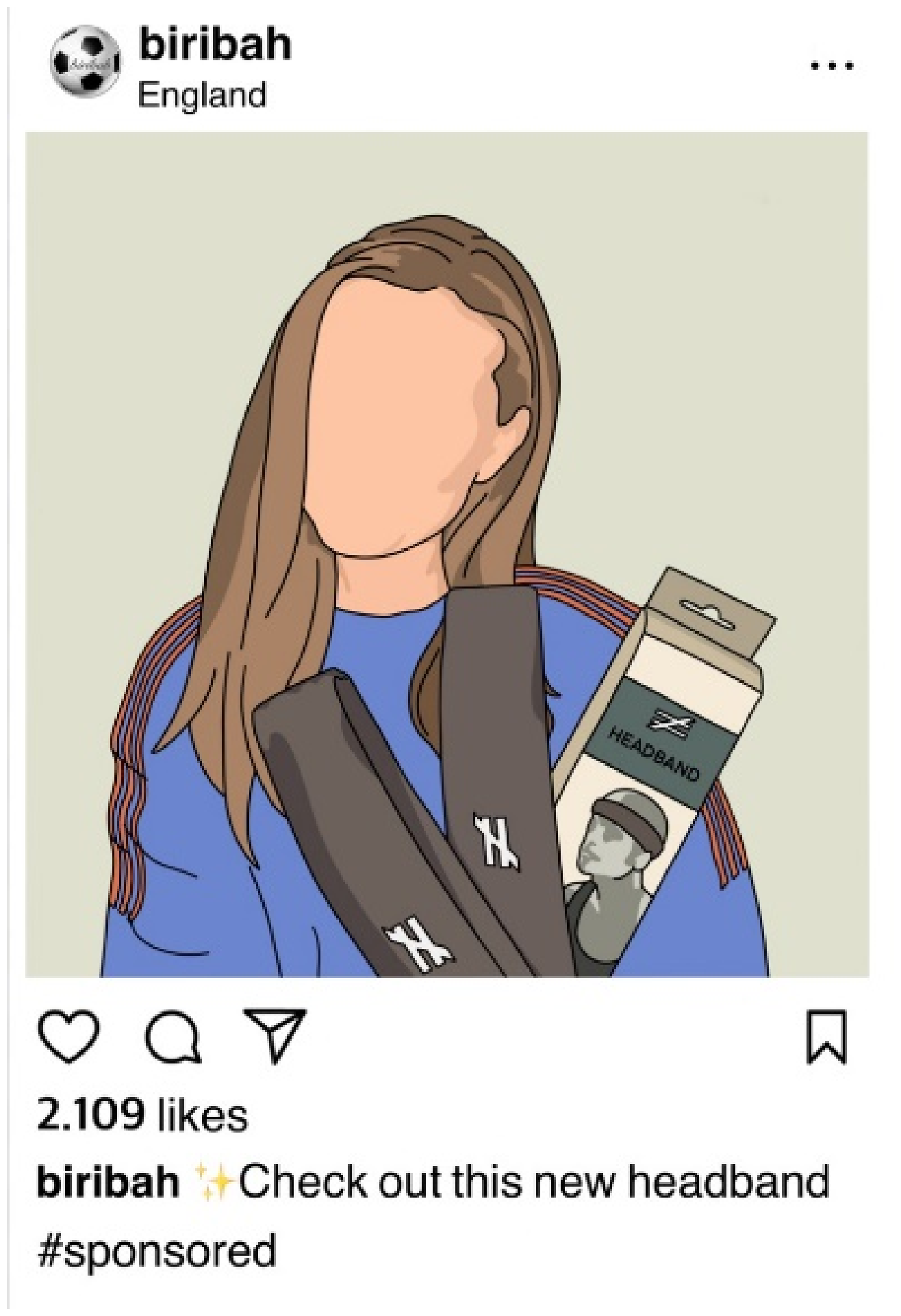
Example of business content.
Business content comprised 5% (n = 10) of the posts (n = 3) and stories (n = 7) in our sample. The relatively balanced distribution between posts (3) and stories (7) could imply a strategic use of both formats for brand endorsements or sponsorships, possibly utilising posts for more permanent brand-related content and stories for short-term promotions. Posts in this category received a total number of 76 comments, all of which were perceived as positive (Table 4). Similar to the private-life-related category, business-life-related content was primarily published after Norway's elimination (Table 3).
Activist content
This content category includes athletes’ advocacy work and initiatives directed towards making a positive impact on social issues related to racism, gender equality and sexual diversity. Figure 4 illustrates a typical post or story in this category of an athlete wearing a rainbow-coloured captain's armband to support LGBTIQA+ rights, while taking the knee as a symbol against racism. Activist content with captions featuring the rainbow flag emoji or the rainbow emoji in support of LGBTIQA+ rights was most prominent in this content category. The captions were often confusingly similar to those in the sports-related category, featuring Norwegian flag emojis and hashtags like #GoNorway, while captions in the activist category commonly included a subtle use of rainbow emojis and words like love. Based on the comment analysis, it appears that some of the audience perceived such elements as a support for queer love, which triggered a negative response from some audiences.
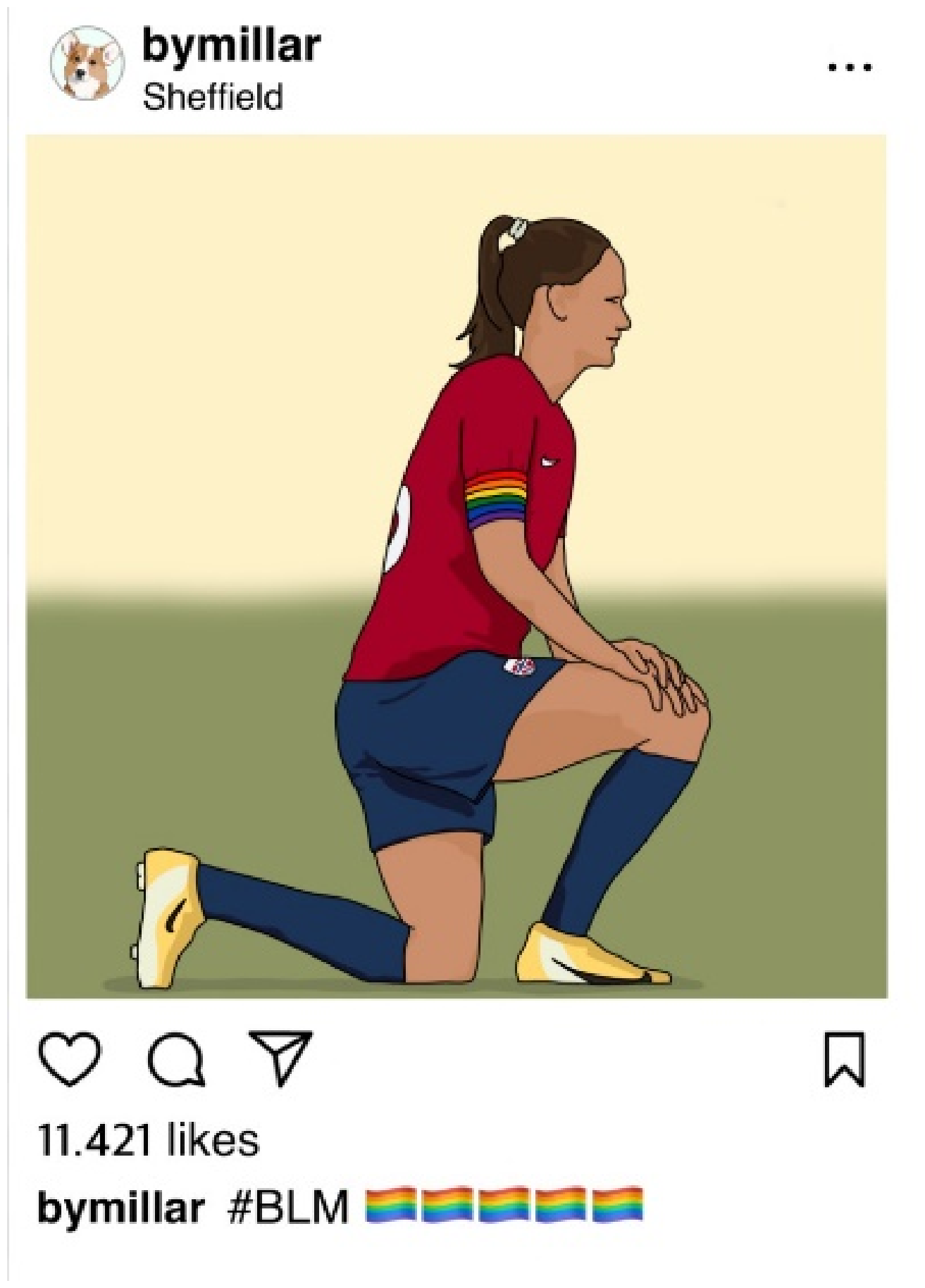
Example of activist content (colour online).
This strategic approach in social media advocacy takes on added significance considering Norway's progressive stance on LGBTIQA+ rights, as evidenced by its high ranking in ILGA's (2023) Rainbow Index (ILGA-Europe, 2023). This is especially relevant given the social climate in Norway; notably the 2022 terrorist attack during the Oslo PRIDE celebrations shortly before the Euro 2022 tournament (CNN, 2022). This event sparked discussions and demonstrated increased support for LGBTIQA+ rights and safety. However, the backlash faced by Norwegian football star Ada Hegerberg, who encountered significant social media criticism for her advocacy through an Instagram photo featuring a rainbow-coloured captain's armband, underlines the ongoing societal challenges and resistance for public figures advocating these rights.
Activist content comprised 5% (n = 10) of the posts (n = 8) and stories (n = 2) in our sample. The higher number of posts over stories could potentially signify a more deliberate and permanent approach to advocacy content. The posts in this category received a total number of 475 comments, of which 305 were perceived as positive, 164 negative and 6 neutral. Despite being one of the smallest categories, activist content received 63% of all negative comments (n = 261) in our sample (Table 4). Here are some examples of such negative comments from our data material: ‘GayPride Woman Bullshit’, ‘Fuck LGBT Propaganda’ and ‘Fuck you LGBT girl’.
Supporter-related content
Supporter-related content showcased various aspects of the athletes’ fan appreciation and interaction. Figure 5 shows an example of content in this category, where a player is captured taking a photo with supporters after a game and expressing gratitude for their support. Captions would often thank supporters and fans (Figure 5) or promise them to perform better in the future (‘We will come back stronger’). Moreover, various versions of the heart emoji were often included in the captions of supporter-related content.
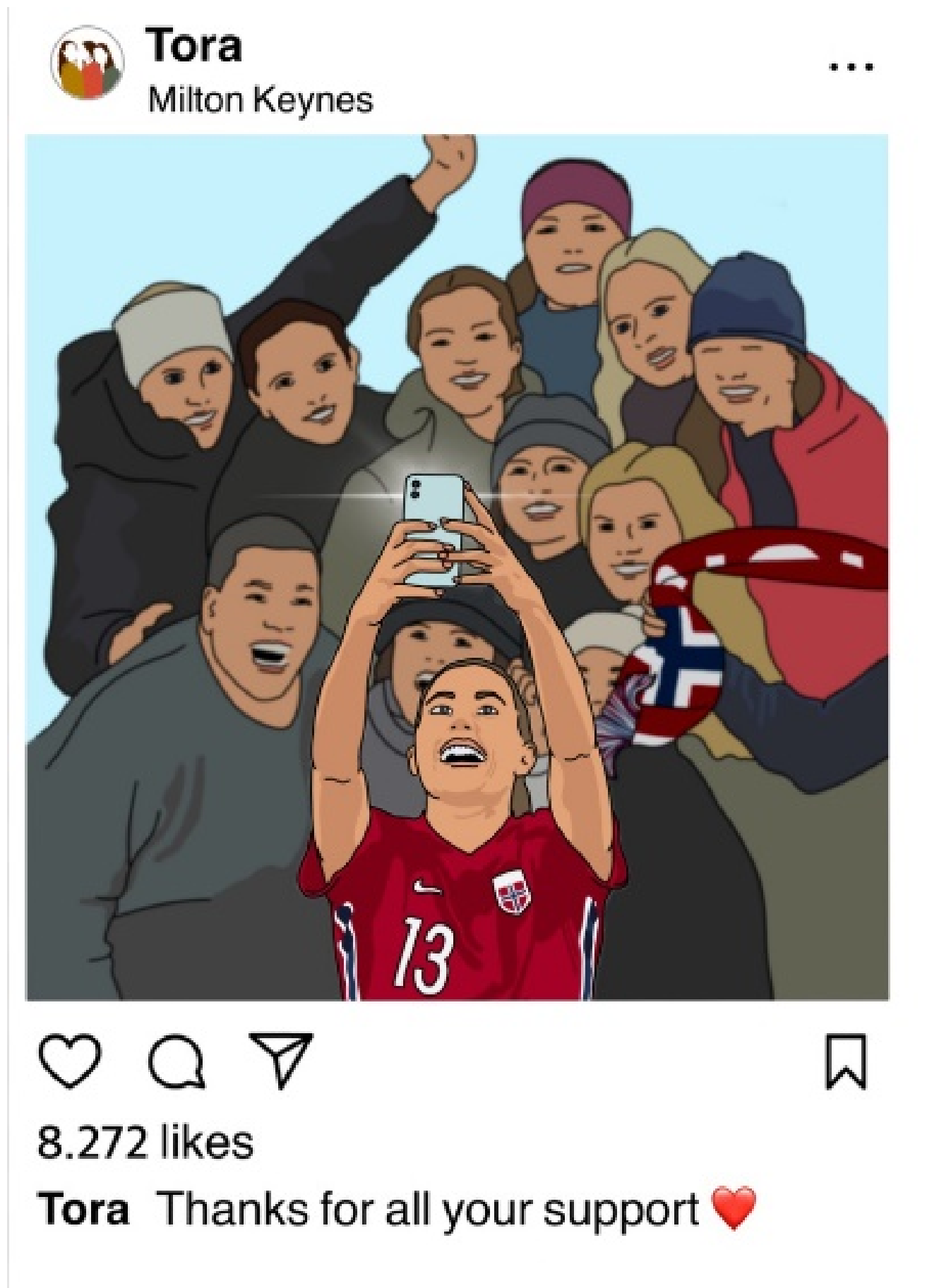
Example of supporter-related content.
The supporter-related content category comprised 10% (n = 18) of the posts (n = 11) and stories (n = 7) in our sample (Table 3). The slightly higher number of posts compared to stories in this category could indicate a possible preference for using posts to acknowledge and engage with supporters, perhaps due to the more lasting nature of posts. Interestingly, following the team's heavy loss against England and subsequent elimination from the championship, the players ceased all social media activity. Despite the absence of new content during this critical time, the posts in this category received a total number of 724 comments, of which 625 were considered as positive, 84 negative and 15 as neutral (Table 4). The content posted following the players’ pause from social media did not show any increase in negative comments, thus indicating that supporters largely retained a positive or neutral stance despite the disappointing outcome. The pausing of social media content possibly contributed to this stability in sentiment, as it limited the opportunity for immediate reactionary comments in the aftermath of the losses.
Discussion
The first part of the discussion focuses on the types of content shared by the players and the variations in content type and posting frequency throughout the championship (RQ1 and RQ2). The second part examines how audiences reacted to and engaged with the various content types published throughout the championship period (RQ3).
Content types and posting patterns
Our analysis of the players’ posts and stories during the Women's EURO 2022 Championship uncovers a diverse pattern of content dissemination, which reflects Goffman's (1959) concept of impression management. The dominance of sports-related content, serving as a frontstage performance, includes depictions of training sessions, matches, awards and team portraits. A strong focus on sports-related content may be interpreted as a strategy of meticulously shaping their online personas to align with audience expectations, or a frontstage performance (Goffman, 1959). As they present themselves as dedicated professionals, the players influence public perception and enhance their commercial appeal (Romney and Johnson, 2020). Beyond the sports category, the distribution of content types illustrates the diversity of athletes’ social media engagement. For instance, private life content highlights the players’ efforts to share more personal aspects of their lives and a glimpse into their off-field experiences and interests, thus adding depth to their public personas. Furthermore, the strategic sharing of business-related content suggests an attempt to integrate commercial partnerships in their social media narratives without overwhelming audiences with promotional content. Activist content represents a smaller portion of the overall content and reflects a conscious effort to use their platform for social change. This further complicates the interplay between public and private personas by introducing elements of personal conviction and societal engagement into their online presence, which resembles the strategic approach found in business-related content. Lastly, supporter-related content highlights the importance of fan interaction as part of the players’ social media strategy, thereby fostering a sense of community and support around their athletic endeavours.
The temporal dynamics of the players’ social media activity, marked by increased activity around match days and quieter periods after losses, reflect a strategic approach to impression management and public perception. This pattern, which is aimed at building anticipation and underscoring professionalism before matches, shifts to a more cautious engagement after losses, can be understood through Goffman's (1959) concepts of frontstage and backstage performances. Such strategic timing reveals players’ control over their self-representation and aligns with postfeminist and neoliberal values of autonomy and individual agency (Tofoletti et al., 2018). By selectively choosing when and what to share, they navigate public perceptions, enhance their marketability and actively participate in shaping the discourse around women athletes.
Our findings highlight the postfeminist dynamics at play in the social media content shared by the players during the championship, showcasing a deliberate blend of sports-related and personal content. This blend not only serves as a strategic form of self-representation but also actively engages with postfeminist ideals of empowerment, independence and bodily autonomy. Specifically, the dominance of sports-related content alongside significant personal life shares highlights how players navigate and challenge traditional gender norms within sports. The athletes showcase strength, professionalism and femininity, thereby contesting stereotypical portrayals of female athletes and embodying the postfeminist emphasis on women's agency and the strategic negotiation of gendered identities within neoliberal frameworks (Toffoletti and Thorpe, 2018b). The strategic incorporation of business and activist content into their social media narratives reflects a manifestation of neoliberal values. Personal branding and the commercialisation of success, observed through the players’ engagement with sponsorship deals, and advocacy for social issues like LGBTIQA+ rights, underline the complex interplay between individualism, market-driven self-care and the commodification of personal achievements. This nuanced self-branding strategy, which is intricately linked to broader neoliberal ideals, presents both opportunities and challenges for women athletes, especially considering the gender disparities in commercial value and sponsorship deals. Our analysis thus reveals a sophisticated engagement with these dynamics, where athletes leverage their social media presence not only to enhance their visibility and marketability but also to navigate and potentially reshape the landscape of gender and market forces in sports (Toffoletti et al., 2018).
In this context, women athletes’ social media content does not only serve as a tool for personal branding, but also forms a platform for advocating for broader social change and balancing audience appeal with advocacy goals (Gallagher et al., 2022). Social media content, as both a personal branding tool and a medium for social advocacy, underscores the players’ navigation of postfeminist and neoliberal narratives and highlights autonomy in terms of self-presentation and success (Banet-Weiser, 2012). By leveraging social media to emphasise both their professional achievements and personal beliefs, the players illustrate a sophisticated engagement with impression management strategies (Pate et al., 2015). This reflects a broader societal shift towards recognising the complexity of gendered identities in the digital age (Moyer, 2022). Their subtle activism, often symbolised by rainbow-coloured captain's armbands and emojis interlaced with national flags and sports imagery, resonates with the postfeminist awareness prevalent in sport. This strategic symbolism not only seeks to connect broad audience engagement with advocacy objectives, but also underlines a refined orchestration of public and private self-presentations (Pate et al., 2015). Through ‘focused backstage performance’, the players skilfully leverage social media to unfold personal convictions alongside sustaining their professional persona. This careful curation and presentation strike a crucial balance, employ social media as an instrument for social transformation and conscientiously reflect the diverse viewpoints of their audience.
Audience engagement and reactions
The analysis of audience reactions to the content shared by players during the Women's EURO 2022 Championship unveils a predominantly positive engagement, with 90% of comments reflecting encouragement, thus highlighting the players’ ability to cultivate a strong online community even amidst the team's challenges. This positive feedback, which is especially pronounced in sports-related content (97%), signifies the audience's appreciation of the players’ performances and resonates with findings showing the favourable reception of athletic achievements (Lebel and Danylchuk, 2014). Similarly, personal- and business-related content also received overwhelmingly positive responses, thus indicating a broad appreciation of authentic insights into the players’ lives and integration of sponsored content. As Marwick (2015) suggests, audiences value authentic insights into athletes’ lives, which aligns with neoliberal ideals of individualism and market-driven self-care. The athletes demonstrate a sophisticated understanding of how to balance personal authenticity with commercial imperatives, which enhances their marketability without compromising the perceived authenticity that engenders audience support. However, the presence of negative feedback (8%), although limited, sheds light on the challenges that athletes face in navigating gender norms and societal expectations within professional sports and social advocacy. These critical remarks often relate to the team's performance or contest the players’ advocacy efforts, thereby reflecting the intricate balance that women athletes need to find to shape their online personas amidst gendered expectations and neoliberal ideals (Toffoletti and Thorpe, 2018a). Within the framework of neoliberalist ideals, these mixed reactions highlight the complexity of maintaining and reworking normative gender identities in sport while navigating the expectations of online self-presentation (Toffoletti and Thorpe, 2018a). This suggests that women athletes may face specific gendered challenges in shaping their online personas in the light of these ideals.
The players’ engagement with activist content, particularly advocating for LGBTIQA+ rights, exemplifies their broader role as agents of social change and extends their influence beyond sporting achievements (Gallagher et al., 2022; Moyer, 2022). This shift aligns with postfeminist theories that valorise empowerment and independence; aspects that Toffoletti and Thorpe (2018a) highlight as integral to athletes’ advocacy on social media. However, the backlash received, including derogatory comments and suspected bot activity, shows the societal friction between the pursuit of gender equality and the persistent resistance against such progress (Kitching et al., 2022; Turtiainen, 2021). It also raises concerns about the influence of trolls and bots in exacerbating these negative dynamics. Trolls, by nature, engage in disruptive online behaviour, while bots can significantly amplify such effects, making the athletes’ advocacy efforts seem more contested than they are (Yang et al., 2019). In analysing our data, a particular pattern emerged on posts utilising rainbow emojis, where we noted a significant increase in negative commentary and suspected bot involvement. This suspicion was further supported by the repetitive nature of certain comments, such as ‘Just Play Football and Stop your fucking LGBT Promotion’, which appeared over 20 times. Although these patterns suggest involvement of bot activity, it is important to acknowledge the inherent challenges in identifying bots. To strengthen our analysis, we examined the profiles from which these repetitive comments originated and found them to often lack content, followers or followings, which hinted at their inauthentic nature. However, absolute certainty about bot involvement remains elusive and demonstrates the opaque nature of online interactions.
The backlash encountered by players in their advocacy efforts highlights the challenges of athlete activism. It also indicates a misalignment in audience expectations, with some followers perceiving activist content as a deviation from the players’ focus on sport. The observed range of audience reactions unveils the intricate balancing act between gender norms, social media dynamics and athletes’ navigation through postfeminist and neoliberal ideologies. Moreover, by actively participating in advocacy, the players challenge the neoliberal narrative that prioritises individual success and market-driven self-promotion. Their willingness to risk potential backlash for advocating social issues signifies a departure from purely neoliberal self-branding strategies. This approach not only embodies postfeminist ideals of empowerment, but also confronts neoliberal expectations using their visibility to advocate for inclusivity and diversity. Consequently, women athletes embody dual roles – as competitors and activists – when navigating the evolving landscape of gender dynamics within sports and digital arenas; a challenge that is magnified by the potential for audience segregation failures as described by Goffman (1959). Through this sophisticated online engagement, athletes aim to amplify their impact beyond their athletic achievements by contributing to wider societal debates on gender equality and social justice, thereby navigating and potentially reshaping the landscape of societal norms and expectations.
Conclusion
In this study we delved into the Instagram content of five Norwegian football players during the UEFA Women's EURO 2022 Championship period with a view to unravelling the nuances of their social media engagement through the lens of three pivotal research questions. (a) What type of content did the players post throughout the UEFA Women's EURO 2022 Championship period? (b) How did content type and posting frequency vary throughout the championship period? (c) How did audiences engage with the various types of content posted on Instagram throughout the championship period? Our findings reveal a rich tapestry of content dissemination that adeptly navigates the principles of impression management as proposed by Goffman (1959), while also engaging with postfeminist and neoliberal ideologies.
The players’ focus on sports-related content, which forms a substantial part of their social media output, resonates with previous studies emphasising its critical role in developing successful athlete social media profiles. This curation of an online persona, aimed at aligning with audience expectations, exemplifies a form of impression management in conjunction with neoliberal ideologies. It illustrates the athletes’ efforts to not only fulfil their roles within the sports domain, but also to commodify their personal brand in a market-driven landscape. The temporal dynamics of posting patterns – characterised by heightened activity around match days and a strategic withdrawal following losses – further exemplify a sophisticated form of impression management that showcases the players’ adeptness at enhancing marketability and navigating public perceptions. By managing these dynamics, the athletes in our study effectively utilise their social media platforms as tools for professional showcasing and to engage with and influence their audience in a neoliberal context that values individual branding and market appeal.
The players’ engagement with advocacy in promoting LGBTIQA+ rights marks an extension of their roles beyond the athletic realm. These actions embody postfeminist ideals of empowerment and challenge neoliberal narratives of individual success. Despite facing potential backlash and online harassment, the athletes’ commitment to social advocacy highlights a deliberate departure from commodified self-branding strategies.
Audience reactions to this diverse content spectrum were predominantly positive, with a notable appreciation of both the players’ professional achievements and their personal convictions. However, a significant number of negative reactions to activist content underline the challenges and unease associated with women athletes stepping beyond their traditional roles to engage in social advocacy. These reactions point to ongoing challenges of balancing multiple audience expectations and identities online, thus reflecting the evolving landscape of gender dynamics within sports and digital spaces.
For women athletes, our findings underscore the complexity of sustaining an authentic online presence that truly reflects their values, including their commitment to broader social issues. While the positive reception to both their professional achievements and personal insights indicates that authenticity is valued by their audience, the significant negative feedback encountered in their advocacy efforts reveals the challenges they face. This backlash, particularly against their engagement with social issues, emphasises the necessity for athletes to develop robust strategies to manage online negativity. In navigating this landscape, athletes confront the imperative to not only maintain their authenticity, but also to engage thoughtfully and proactively in social discourse, armed with approaches that safeguard their well-being and uphold their commitment to making a difference. Future research should extend beyond the temporal scope of a single championship to explore the long-term social media engagement strategies of women athletes, particularly in relation to their advocacy work and its reception across different cultural contexts. Investigating the impact of such engagement on gender norms within sports, audience perceptions of women athletes and the broader social implications of their online presence will provide deeper insights into the gendered power dynamics at play.
Footnotes
Declaration of conflicting interests
The author declared no potential conflicts of interest with respect to the research, authorship and/or publication of this article.
Funding
The author received no financial support for the research, authorship and/or publication of this article.
