




Abstract
Background
Doxorubicin (DX)-induced cardiotoxicity involves dose- and time-dependent myocardial injury driven by oxidative stress, mitochondrial dysfunction, and disrupted topoisomerase IIβ signaling, leading to progressive left ventricular dysfunction and heart failure risk. Despite the growing literature in this field, no comprehensive bibliometric investigation has yet mapped the intellectual structure, research frontiers, and thematic evolution of this domain, creating a gap in synthesizing the knowledge landscape of DX-induced cardiotoxicity research (DCTR).
Purpose
The objective of this study was to fill this gap by exploring research frontiers, co-word analysis, theme integration, and thematic developments related to DCTR using a bibliometric network examination from 1974 to 2024.
Materials and Methods
The analyzes were executed in four sequential stages: (a) collection of data-driven studies from the Scopus database, (b) preprocessing and refining of the dataset, (c) construction and visualization of networks, and (d) analysis and elucidation of the dataset using Visualization of Similarities Viewer (bibliometric network mapping software) (VOSviewer) and Bibliometrix applications. An investigation was conducted using descriptive analysis, bibliometric network analysis, and full quantitative analysis.
Results
The 6,135 keywords extracted from 4,782 abstracts were used to determine the intellectual and thematic framework of the studies on DCTR. Prominent frontiers were identified, along with their corresponding effect measures. Three themes were identified to characterize the evolution of keywords in the structure over a period of 50 years: “Chemotherapy Theme,” “Breast Cancer Theme,” and “DX Theme.” Current emerging topics in this field include pyroptosis, ferroptosis, molecular docking, network pharmacology, and the NOD-, LRR-, and pyrin domain-containing protein 3 (NLRP3) inflammasome.
Conclusion
The findings of this study offer significant perspectives for studies pertaining to the DCTR. These data may assist physicians in summarizing future research in this field.
Keywords
Introduction
Doxorubicin (DX) is an anti-biotic obtained from Streptomyces peucetius. Since the 1960s, it has been widely used as a chemotherapeutic agent.1, 2 DX belongs to the anthracycline class of chemotherapy drugs, which also includes daunorubicin, idarubicin, and epirubicin. 3 DX is frequently used as a therapeutic medication for solid tumors in both adult and pediatric patients. 4 DX is indicated for the treatment of soft tissue and bone sarcomas as well as breast, ovarian, bladder, and thyroid malignancies. 5 The liposomal version of DX is Food and Drug Administration (FDA)-approved for treating ovarian cancer in individuals who have not responded to platinum-based chemotherapy, as well as for treating acquired immunodeficiency syndrome (AIDS)-related Kaposi sarcoma and multiple myeloma.6, 7
DX primarily acts by intercalating deoxyribonucleic acid (DNA) base pairs, resulting in the fragmentation of DNA strands and the suppression of DNA and ribonucleic acid (RNA) production. 8 DX hinders the activity of topoisomerase II, resulting in DNA damage and the initiation of apoptosis. When mixed with iron, DX induces oxidative damage to DNA by the action of free radicals, thereby restricting DNA synthesis. Dexrazoxane and other iron chelators can inhibit the production of free radicals by restricting the interaction between DX and iron.9, 10
Some of the negative effects associated with the chemotherapeutic drug DX include fatigue, nausea, cardiac toxicity, and increased risk of developing secondary malignancies. Acute cardiac toxicity, which affects approximately 11% of the population, can lead to left ventricular failure, arrhythmias, and reversible myopericarditis.4, 11 Approximately 1.7% of cases of chronic cardiac toxicity develop irreparable cardiomyopathy and congestive heart failure, which can have a fatality rate exceeding 50%. It is essential to use echocardiograms or multigated acquisition (MUGA) scans to evaluate heart function, both before and after treatment. 8 Management of cardiomyopathy caused by DX is limited. Beta blockers, diuretics, and heart transplants are possible tactics. An iron chelator, dexrazoxane, can lower the risk of heart damage but can also increase the likelihood of myelosuppression. It uses a multidisciplinary healthcare team approach involving primary care physicians, oncologists, specialized nurses, chemists, and other experts to maximize patient outcomes and minimize side effects related to DX therapy.2,6,10–13
Bibliometric analysis is a systematic use of computer-assisted review techniques to find fundamental research or authors and their interrelationships by encompassing all publications pertaining to a certain topic or field.14–16 Prior bibliometric studies on DX-induced cardiotoxicity research (DCTR) are non-existent, so this work addresses a research gap, and its findings will contribute to the knowledge of this topic in terms of bibliometric analytic applications.17, 18 The objective of this study is to provide a comprehensive intellectual framework of the current research landscape on DCTR by conducting a bibliometric network analysis of published articles. Additionally, this study examines popular research topics and their temporal development. The findings of this study not only describe the overall conceptual framework of the DCTR but also offer an overview of the periodic developments in this scientific field. Moreover, this study emphasizes the chronological progression during which this field of research embraces sophisticated molecular and clinical aspects.
Materials and Methods
Database and Search Criteria
The Scopus database was selected for its comprehensive coverage of peer-reviewed literature. To ensure conceptual consistency, search terms for “cardiotoxicity” were informed by the Medical Subject Headings (MeSH) database (MeSH ID: D066126), although Scopus does not use MeSH indexing. The search strategy included documents with the terms “cardiotoxicity,” “cardiac toxicity,” or “cardiomyopathy” in combination with “DX” in the title field. The initial query was as follows: TITLE-ABS-KEY (cardiotoxicity OR “cardiac toxicity” OR cardiomyopathy) AND TITLE (DX). This search yielded 6,225 records, including 5,618 research articles, 331 reviews, 81 conference papers, 77 letters, 43 errata, 35 notes, 31 editorials, 17 book chapters, 12 short surveys, 6 retracted articles, and one book, with no language limitations. To enhance specificity and relevance, the results were refined to include only original research articles (DOCTYPE (ar)) published in English (LANGUAGE (English)). This refinement resulted in 4,782 documents that were deemed eligible for inclusion in the bibliometric analysis. To validate the completeness and relevance of the dataset, a pilot retrieval was conducted using alternative search combinations and broader terms (e.g., “anthracycline-induced heart failure” and “cardiac dysfunction”). The selected query demonstrated optimal specificity to DCTR. The final dataset was exported in both comma-separated values (CSV) and BibTeX formats to ensure compatibility with bibliometric software tools, including Visualization of Similarities Viewer (bibliometric network mapping software) (VOSviewer) and Bibliometrix for subsequent co-word and thematic analyzes.
Data Analysis and Visualization
VOSviewer (version 1.6.20) and Bibliometrix (version 4.0.0) were employed to analyze and visualize the extracted bibliographic data. Bibliometrix, an R-based package, supports advanced scientometric and bibliometric analysis, including co-word analysis, thematic mapping, and trend evaluation. VOSviewer specializes in constructing and visualizing bibliometric networks based on co-authorship, citation, or keyword co-occurrence. It also includes text-mining features for building co-occurrence maps of terms extracted from titles, abstracts, or keywords. 19 In VOSviewer, author keywords were used for co-occurrence analysis. A minimum threshold of 15 occurrences was applied to include only relevant terms. Association strength was used as the normalization method, and modularity-based clustering was performed using the default resolution setting (1.00). Co-citation analysis of sources was conducted using VOSviewer (v1.6.20) with a minimum citation threshold of 500. Clusters were generated using the default modularity-based algorithm to identify influential journals and visualize the intellectual structure of the research field. Two primary weight attributes were generated:
Links: the number of direct connections a node has with other nodes.
Total Link Strength (TLS)
The cumulative strength of these connections indicating the object’s influence in the network. For example, in co-authorship networks, TLS reflects the strength of a researcher’s collaborations with peers; in country-level analyses, it shows the intensity of a country’s international research ties.
In Bibliometrix, thematic mapping was conducted using co-word matrices derived from author keywords. Clusters were identified using the Walktrap algorithm, and themes were positioned within a two-dimensional map based on Callon’s centrality and density. Research topics were categorized into four quadrants:
Motor themes (high centrality, high density) Niche themes (low centrality, high density) Basic themes (high centrality, low density) Emerging or declining themes (low centrality, low density). These settings ensured rigorous and transparent network generation and thematic classification, improving the reliability and interpretability of the visualizations.
Results
Research Trends: A Descriptive Analysis
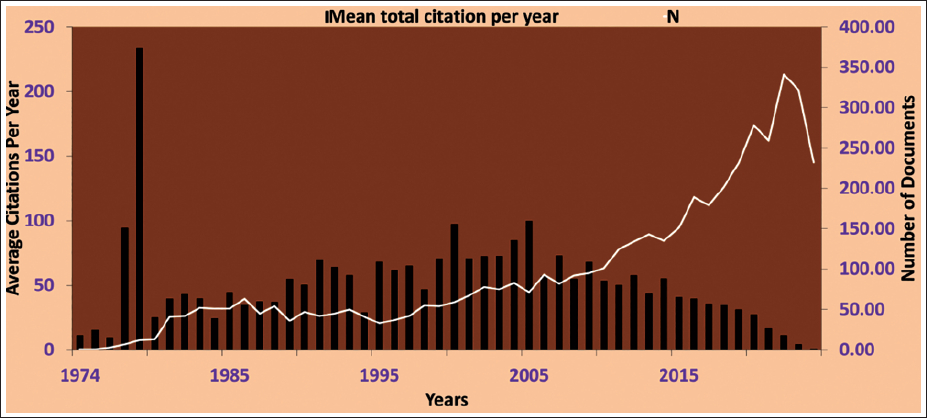
According to the analyzed data, research pertaining to DCTR vastly expanded from 1974 up to 2024, especially noting that 4,782 DCTR-related documents were examined (Figure 1). Attaining an average annual growth rate of 11.51% shows that research output for this specific field of study has increased consistently year by year. From the average age of the documents pertaining to this field, which stood at 13.5 years, the area of study remains considerably relevant and intriguing. Each document was, on average, highly cited, with the citation per document figure standing at 39.86. Mentions per document highly indicate the research area for which they were published. Remarkably, the decade period from 2015 to 2024 was the most productive, with 1,695 documents constituting about 35% of the documents analyzed, indicating that research output during this period was highly abundant.
The Bars Represent Mean Total Citations Per Article, While the White Line Corresponds to the Number of Documents (N) Over the Years 1974–2024, Showcasing the Growth and Citation Trends in Research-related to Doxorubicin-induced Cardiotoxicity Research (DCTR). X-axis: The Years Since the First Article Published on the Topic of This Paper.
Top Sources
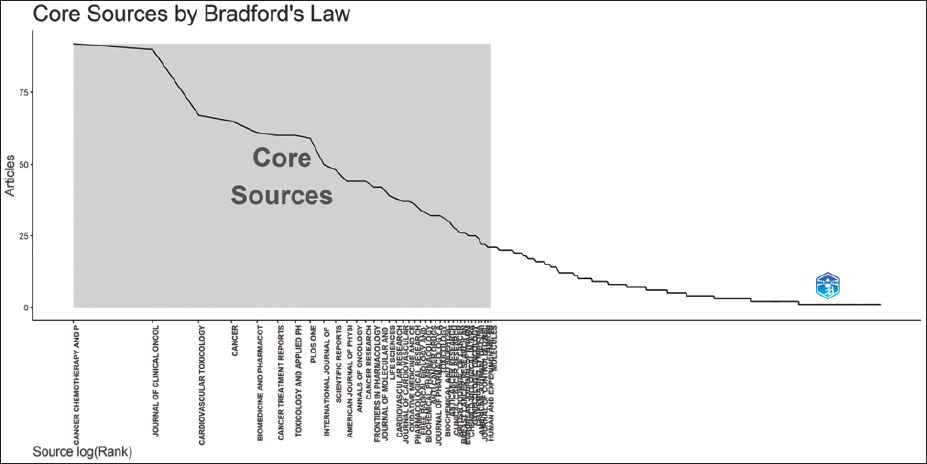
Bradford’s law is a principle in library and information science that describes the uneven distribution of scientific productivity among journals and authors. It states that the research literature on a specific subject can be divided into a core of journals that publish the majority of articles on that topic, followed by a smaller set of journals that publish the next largest number of related articles, and so on, creating a pattern of diminishing returns. In essence, a small number of journals (the “core”) typically account for a large portion of published research on a particular topic, while a larger number of journals account for the rest, following a predictable distribution pattern. Bradford’s law is often used in information retrieval and bibliometrics to help prioritize search strategies and understand the landscape of scientific research output within specific fields. 20 The results (Figure 2) offer a ranking of journals based on the article frequency in research on cardiotoxicity, cardiomyopathy, and DX. Noteworthy journals, such as Cancer Chemotherapy and Pharmacology and Journal of Clinical Oncology, stand out with high article counts, closely followed by other significant journals. Zones, according to Bradford’s law, categorize these journals by their contributions to the overall research output in this field. The data shed light on the distribution of research across various journals, highlighting the varying levels of prominence and impact within the domain of cardiotoxicity and related topics.
Bradford’s Law. Bradford’s Rule is a Pattern That Quantifies the Exponentially Decreasing Returns of Looking Up References in Scientific Publications. It was Initially Introduced by Samuel C. Bradford in 1934.
Global Production and Collaboration Mapping
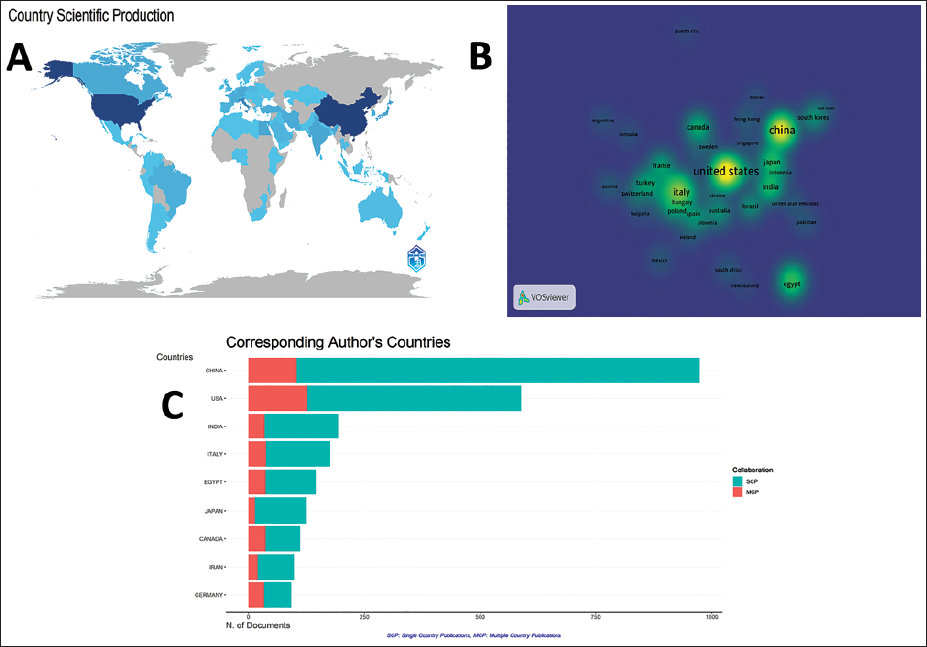
The US publishes the most documentations in the DCTR field, having 1,312 publications, while China comes second with 1,052 publications, followed by Italy, India, and Japan with 395, 251, and 216 publications, respectively. Other important contributors include the UK, Canada, and Germany. Among the continents, Asia was the most productive, contributing as much as 57.98% to the total world data. Other major contributors include Italy, Germany, and the UK. These data point to the important role of Asian countries concerning the DCTR. Based on the 82 documents, the author was the only author on the document. The average documents also had 7.15 co-authors, showing high collaboration. There was also significant international collaboration, accounting for 17.55% of co-authorships, demonstrating active engagement in cross-border research.
The VOSviewer collaboration mapping analysis (Figure 3B) revealed the strength of co-authorship relationships between countries, as denoted by the TLS attribute. Leading the collaborative efforts in the USA with a TLS of 512, followed by China at 204, the UK at 195, Germany at 176, Italy at 168, Canada at 156, and France at 151. These values reflect the depth of collaborative partnerships in research endeavors, illustrating the significant global networks established among countries in the scientific community. Countries such as Mexico, New Zealand, and Vietnam demonstrate relatively lower levels of collaboration in research, as indicated by their TLS values of four each. Figure 3C summarizes the publication data for several countries, showing their single country publications (SCP), multiple country publications (MCP), and MCP ratios. Germany had the highest MCP ratio (0.37), indicating extensive international collaboration in research. Canada and Egypt follow closely, with MCP ratios of 0.333 and 0.255, respectively. In contrast, Turkey had the lowest MCP ratio (0.043), suggesting limited engagement in collaborative research efforts. These data underscore the varying levels of international research collaboration across the listed countries.
(A) Distribution of Research Output by Country. This Figure Presents the Distribution of Research Output-related to Doxorubicin-induced Cardiotoxicity Research (DCTR) by Country. Countries with a Dark Blue Color are the Most Productive. Countries Outside the Blue Category have not Made Any Contributions to Research in This Particular Area. The US Leads with 1,312 Publications, Followed by China with 1,052, Italy with 395, India with 251, and Japan with 216, Among Others. (B) The Figure Reveals the Strength of Co-authorship Relationships Between Countries Using Total Link Strength (TLS) Values. A Co-authorship Network Among Countries was Analyzed Using Visualization of Similarities Viewer (Bibliometric Network Mapping Software) (VOSviewer), Where Countries were Represented as Nodes and Collaborations as Links. The US Leads with a TLS of 512, Followed by China at 204, the UK at 195, Germany at 176, Italy at 168, Canada at 156, and France at 151. This Visualization Illustrates the Significant Global Networks Established Among Countries in the Scientific Community. (C) This Figure Summarizes Publication Data for Several Countries, Showing Their Single Country Publications (SCP), Multiple Country Publications (MCP), and MCP Ratios. Germany Leads with the Highest MCP Ratio of 0.37, Indicating Extensive International Collaboration in Research. Canada and Egypt Follow Closely with MCP Ratios of 0.333 and 0.255, Respectively. Turkey has the Lowest MCP Ratio at 0.043, Suggesting Limited Engagement in Collaborative Research Efforts. The Data Underscores Varying Levels of International Research Collaboration Across the Countries Listed.
Frontiers
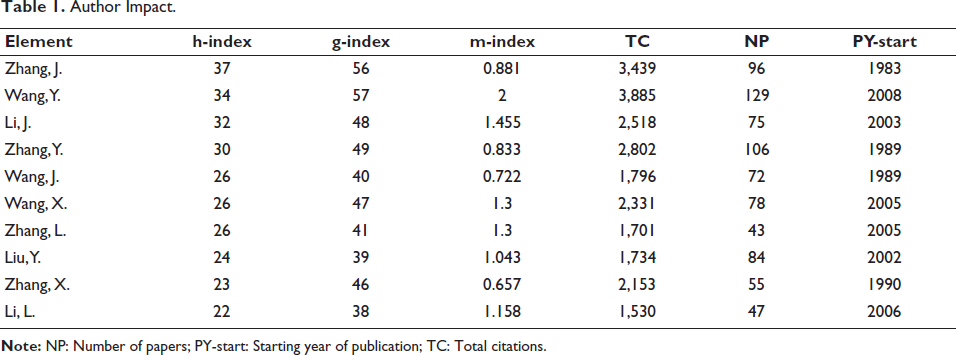
Author-level metrics refer to the measures of citations that quantify the bibliometric influence of individual scholars. The h-index provides a quantitative assessment of the productivity and influence of a scientist’s or scholar’s written literature. An index h is assigned to a scientist if at least h citations are recorded for each of their Np articles, whereas the remaining (Np – h) articles have no more than h citations. The G-index is a modified version of the h-index, which assigns credit to publications with the highest number of citations in a given dataset. An alternative form of the h-index, the M-index, presents the h-index categorized by year since its initial publication.17–19Table 1 presents author-level metrics, including the h-index, g-index, and m-index, used to gauge the bibliometric impact of individual authors. Among the listed authors, Zhang stands out with an h-index of 37 and a g-index of 56, having published 3,439 citations since 1983. Wang followed closely with significant impact metrics, including a g-index of 57 and an m-index of 2, starting in 2008 with 3,885 total citations. Other authors like Li, Zhang, and Wang also demonstrated notable impacts, each with their own unique set of metrics, reflecting their scholarly contributions and influence within their respective fields. These metrics provide a quantitative assessment of individual authors’ academic output and impact within the scholarly community.
Author Impact.
Impactful Publications
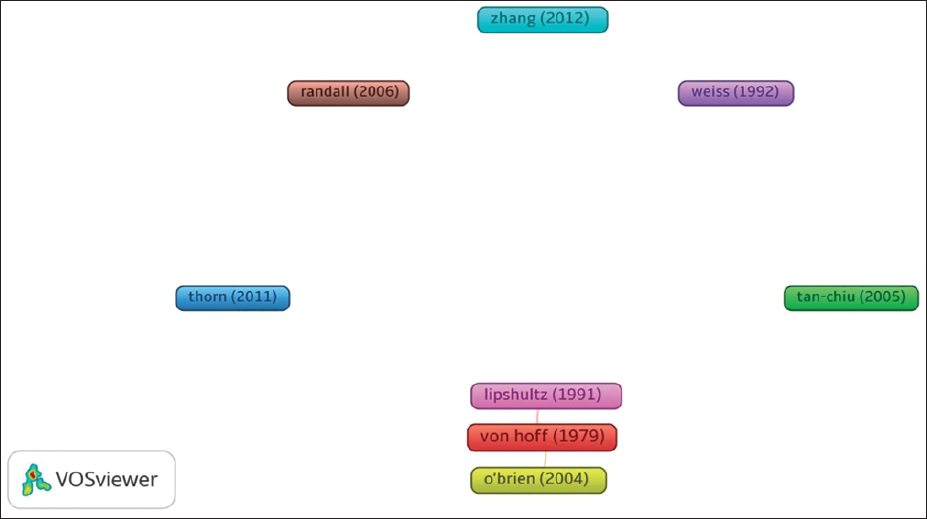
The top-cited documents3,4,7,10–13,21–23 investigated various crucial aspects of DX and its cardiotoxic effects, covering topics such as the long-term cardiac impacts of DX therapy in childhood leukemia, risk factors such as female sex and higher drug doses for late cardiotoxic effects in cancer patients, the comparative efficacy and reduced cardiotoxicity of pegylated liposomal DX in metastatic breast cancer treatment, treatment modalities for advanced endometrial carcinoma, congestive heart failure incidence in DX-treated individuals, assessment of cardiac dysfunction in breast cancer therapy, DX pharmacodynamics and adverse effects, risk factors for DX-induced heart failure, future directions in anthracycline therapy, and molecular mechanisms underlying DCTR. These publications collectively contribute valuable insights into the complexities of DX-related cardiotoxicity and provide critical knowledge for improving treatment strategies and patient outcomes in oncology and cardiology. Among the cited works (Figure 4), von Hoff’s et al. 4 publication stands out, with a substantial 2,164 citations and four links, indicating its profound impact and relevance in the field. Following closely, Swain’s et al. 22 article has accumulated 1,880 citations and includes one link, suggesting a significant contribution to scholarly discourse. O’Brien’s et al. 7 publication, with 1,210 citations and one link, also holds importance within the academic community. Similarly, Lipshultz’s et al. works from 1991 and 1995 received notable attention, with 674 and 1,449 citations, respectively, each containing one link. In contrast, Tan-Chiu et al., 23 Thorn et al., 10 Weiss, 3 Zhang et al., 11 and Randall et al. 21 have garnered varying citation counts ranging from 701 to 1,440, but do not feature any links between them.
Visualization of Similarities Viewer (Bibliometric Network Mapping Software) (VOSviewer) Analysis of Top-cited Articles and Their Links. Nodes Represent the Number of Total Citations.
Co-word Analysis and Conceptual Mapping
The dataset’s author keywords revealed a diverse range of terms, with “DX” leading significantly (2,354 occurrences), followed by “cardiotoxicity” (1,228). Other frequently occurring terms included “apoptosis” (462), “oxidative stress” (352), and “anthracyclines” (213). Additional keywords of note were “cardiomyopathy” (193), “breast cancer” (172), “chemotherapy” (168), “anti-oxidant” (140), and “cardioprotective” (138). Also prominent were “heart failure” (131), “cardiomyocyte” (108), “DX-induced cardiotoxicity” (104), “mitochondria” (103), “inflammation” (101), “liposomal DX” (95), and “pegylated liposomal DX” (89), along with terms such as “heart” (82), “rats” (79), “reactive oxygen species (ROS)” (70), and “toxicity” (69).
As shown in Figure 5A, a co-occurrence network map of the top 85 keywords (occurrence ≥15) was generated using VOSviewer. Node sizes represent keyword frequency, and colors indicate clusters reflecting conceptual proximity. This visualization highlights the density and distribution of interconnected research themes within the literature on DX-induced cardiotoxicity. Central nodes such as “DX,” “cardiotoxicity,” and “apoptosis” reflect core topics with strong linkages to peripheral but related terms like “oxidative stress,” “mitochondria,” and “cardiomyocytes.”
(A) Most Frequent Author’s Keywords were Visualized Using Visualization of Similarities Viewer (Bibliometric Network Mapping Software) (VOSviewer) and Comma-separated Values (CSV) File. The Most Frequent 85 Author’s Keywords with a Minimum Occurrence of 15 were Mapped. (B) Conceptual Structure. In Thematic Maps, Research Topics are Categorized into Four Quadrants According to Their Centrality and Density, Which Indicate Their Significance and Progress. This Diagram was Created Using the Bibliometrix Software and the BibTex Dataset.
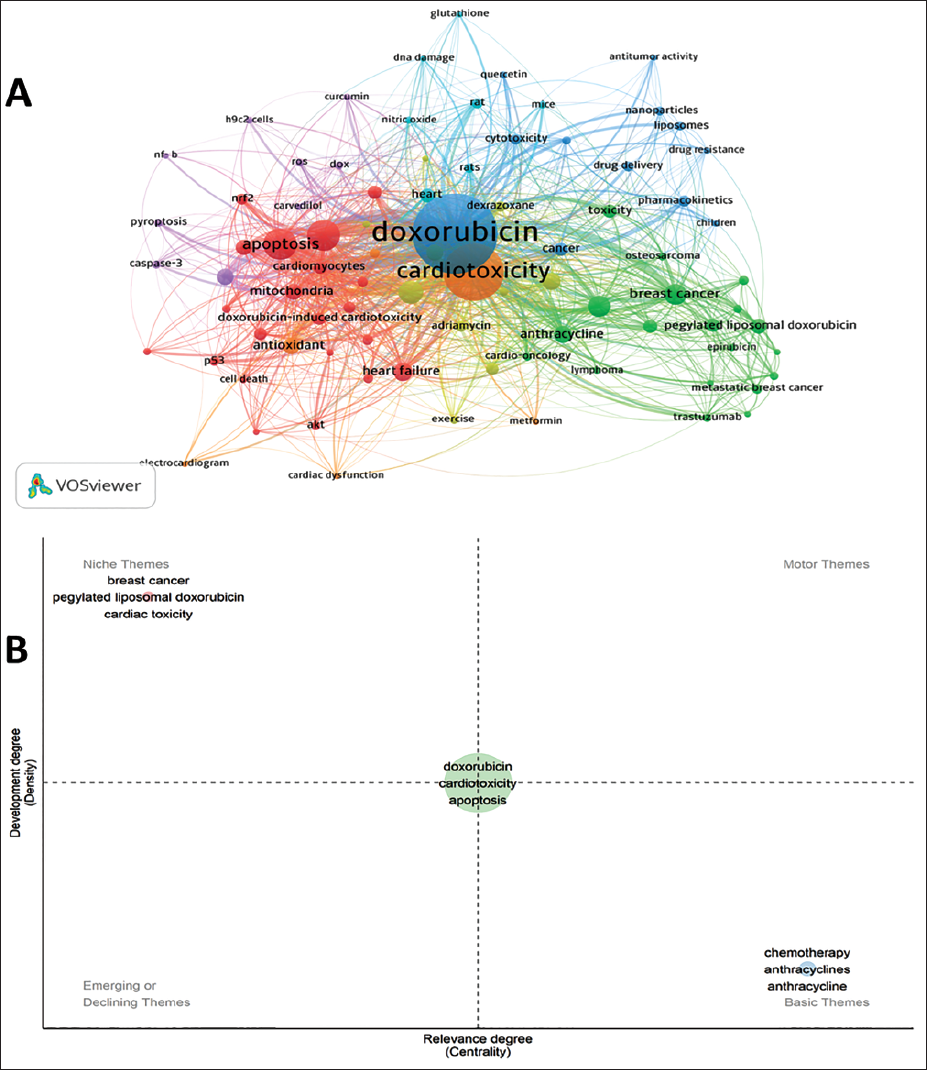
Figure 5B presents a thematic map categorizing clusters into four quadrants based on centrality (relevance to the field) and density (development within the field): Motor themes (upper-right): Well-developed and essential to the field (none appeared in this quadrant in our map). Basic themes (lower-right): Such as “chemotherapy” and “anthracyclines,” fundamental to the field but still developing. Niche themes (upper-left): Including “breast cancer” and “pegylated liposomal DX,” highly developed but with narrower relevance. Emerging or declining themes (lower-left): No keywords in this quadrant, suggesting stability in the current knowledge landscape.
Overall, the combination of Figure 5A and 5B provides a comprehensive view of the thematic structure, intellectual foundations, and evolving focus areas in DCTR.
Thematic Evolution of Research Focus (1974–2024)
As illustrated in Figure 6, the thematic evolution of research on DX-induced cardiotoxicity from 1974 to 2024 reveals distinct shifts in scholarly focus across three major time periods. During the early period (1974–2008), research primarily emphasized broad oncology-related terms such as “chemotherapy” and “DX,” reflecting a generalized exploration of the drug and its therapeutic context. In the intermediate period (2009–2019), the thematic focus became more refined, highlighting specific domains including “breast cancer,” “cardiomyopathy,” “cytotoxicity,” and “DX-induced cardiomyopathy.” This shift indicates a growing interest in understanding targeted side effects and disease-specific implications of DX.
Thematic Development. The Year 2008 and 2018 Marked Pivotal Moments in the Evolution of the Primary Subjects. This Figure was Created Using the Bibliometrix Software and the BibTex Dataset.
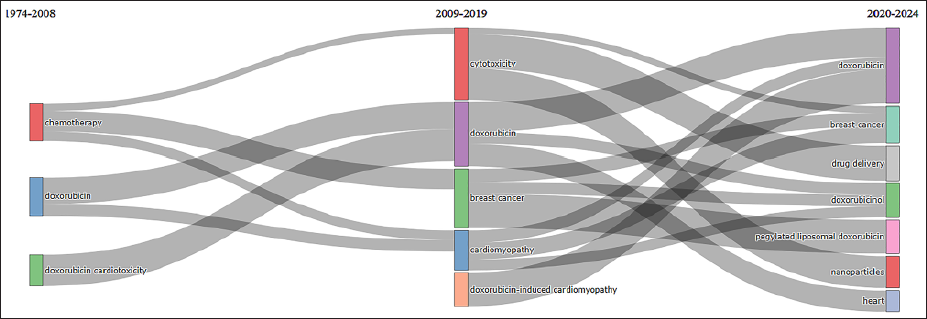
In the most recent period (2020–2024), the field has witnessed further specialization. Keywords such as “pegylated liposomal DX,” “drug delivery,” “nanoparticles,” and “doxorubicinol” have emerged, signaling a focus on advanced drug delivery systems and metabolic profiling. Meanwhile, “breast cancer” continues to be a central theme, and cardiovascular-related keywords such as “heart” reflect a sustained interest in cardiotoxic effects. The increasing presence of technology-driven and precision medicine-related terms highlights a trend toward more targeted, mechanism-specific, and translational research in the intersecting fields of oncology and cardiology. This thematic progression underscores the field’s dynamic nature and its movement from broad therapeutic discussions to highly specialized and clinically relevant investigations.
Emerging Topics in DCTR
As illustrated in Figure 7, the visualization presents trending research topics identified through Bibliometrix analysis, offering valuable insights into both the frequency and temporal evolution of key terms. Each term is represented by a circle, with the circle size proportional to term frequency, while the horizontal bars denote the active publication span or “shelf life” of the topic over time.
Analysis of Emerging Themes Within the Past Decade. This Graph Illustrates the Temporal Extent of the Study Subject, with Horizontal Lines Denoting the Length and Blue Circles Showing the Frequency of the Phrase. This Figure was Produced from Datasets from Bibliometrix and BibTex.
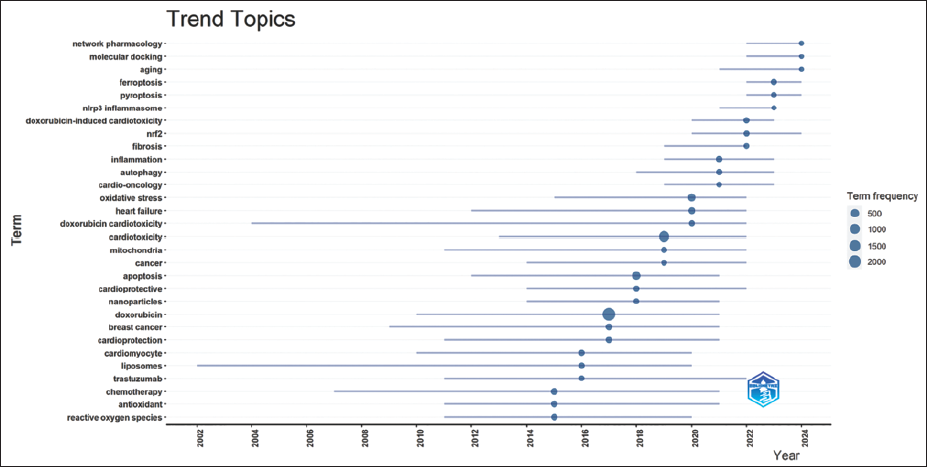
The most recent and emerging research themes include network pharmacology, molecular docking, ferroptosis, pyroptosis, and the NOD-, LRR-, and pyrin domain-containing protein 3 (NLRP3) inflammasome, reflecting a growing focus on mechanistic and systems-level approaches to understanding DX-induced cardiotoxicity. Other recently trending concepts, such as nuclear factor erythroid 2-related factor 2 (NRF2), fibrosis, inflammation, and cardio-oncology, highlight interest in molecular signaling pathways and the intersection between cancer treatment and cardiovascular outcomes.
Foundational but still active themes such as oxidative stress, autophagy, heart failure, mitochondria, and apoptosis continue to play a central role in the field, demonstrating sustained scientific attention. In contrast, earlier terms like chemotherapy, trastuzumab, and liposomes show long-term relevance but are gradually being complemented by more targeted and advanced topics. Overall, the figure reflects a clear shift toward precision medicine, biomolecular mechanisms, and multitarget therapeutic strategies, underscoring the evolving complexity and depth of research in this domain.
Co-citation Analysis
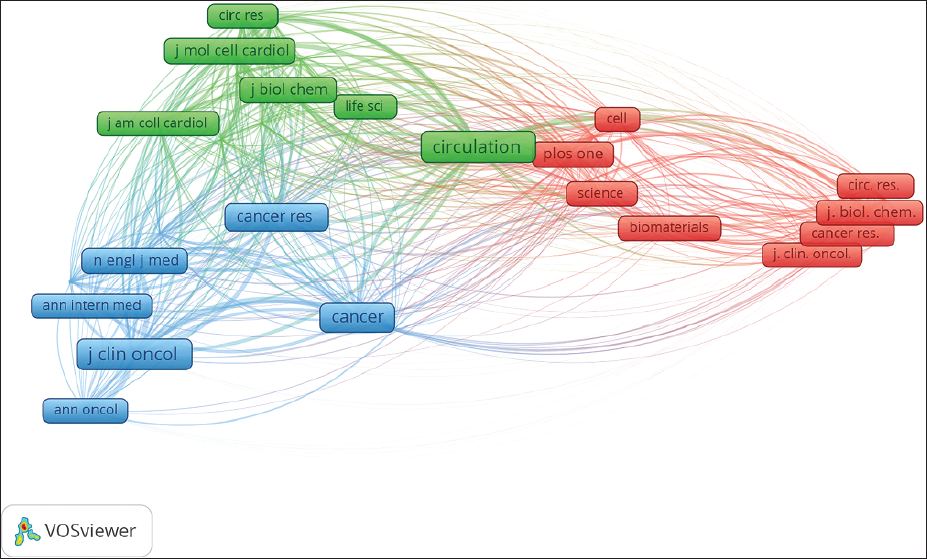
A co-citation analysis of sources was performed using VOSviewer (v1.6.20) with a minimum threshold of 500 citations, identifying 33 key sources out of 23,721. As shown in Figure 8, these were grouped into three main clusters. The green cluster represents cardiovascular and molecular biology journals, including Circulation, Journal of Biological Chemistry, and Journal of Molecular and Cellular Cardiology, which are central to mechanistic studies on oxidative stress and apoptosis. The blue cluster comprises oncology and clinical medicine journals such as Cancer Research, Journal of Clinical Oncology, and The New England Journal of Medicine, reflecting the clinical relevance of DCTR in oncology. The red cluster includes multidisciplinary, high-impact sources like PLoS One, Science, and Biomaterials, highlighting cross-cutting innovations in nanomedicine and drug delivery. Together, these clusters outline the intellectual structure and interdisciplinary nature of DCTR literature over the past five decades.
Co-citation Network of Sources in Doxorubicin-induced Cardiotoxicity Research (DCTR): This Figure Displays the Co-citation Network of the Most Influential Sources in DCTR Literature, Based on a Minimum Citation Threshold of 500. Node Size Represents the Total Number of Citations Per Source, While Link Thickness Indicates the Strength of Co-citation Relationships. Colors Denote Clusters Generated Using Visualization of Similarities Viewer (Bibliometric Network Mapping Software) (VOSviewer)’s Clustering Algorithm: the Green Cluster Includes Cardiovascular and Molecular Biology Journals (e.g., Circulation, Journal of Biological Chemistry), the Blue Cluster Comprises Oncology and Clinical Medicine Journals (e.g., Cancer Research, Journal of Clinical Oncology), and the Red Cluster Represents Multidisciplinary and Translational Journals (e.g., PLoS One, Biomaterials, Science). This Visualization Highlights the Disciplinary Structure and Intellectual Foundations Shaping DCTR Over the Past Five Decades. An Interactive Version of this Figure is Available at https://tinyurl.com/238agrqt .
Discussion
This study aims to investigate and characterize the present direction of study in the subject of DCTR. Through a thorough investigation of co-occurring words, this study aims to identify subject clusters, integrate these themes to grasp the links across research fields, and construct a rational floor for the evolution of knowledge in this specific sector. Crucially, the study concentrated only on original research publications, omitting reviews and other types of materials, thereby guaranteeing the main scientific study of the issue. Data-driven research is recommended for knowledge mapping studies. 24
With 4,782 articles examined, the data analysis showed a significant and steady increase in the DCTR from 1974 to 2024. With an average yearly growth rate of 11.51%, research production has been steadily rising over time. The 13.5-year average document age points to ongoing relevance and interest in this topic. With an average of 39.86 references per document, research in this field is clearly valued and influential. With 1,695 articles from 2014 to 2024, about 35% of all the articles examined, the increase in research activity over the past 10 years is especially remarkable. This rise highlights the growing attention on DCTR in recent years, thereby indicating a period of major research progress and interest in this important field of study. The surge in DCTR can be attributed to the significant attention given by scientists to the toxicity of this medication, as is well-documented in other cancer chemotherapy therapies. 25 Cardiotoxicity induced by DX is characterized by a decrease in the left ventricular ejection fraction of above 10% to a level below 53%. This occurs in as many as 9% of the patient population undergoing DX treatment, contingent on the cumulative dosage administered. 26
The dominance of DCTR publications from developed countries—such as the USA, China, and European nations—reflects stronger research funding, infrastructure, and collaborative networks. A country-level co-authorship network revealed limited contributions from low- and middle-income regions, highlighting a disparity in global research capacity. Enhancing international collaborations could help bridge this gap and promote equitable scientific advancement.
Bradford’s rule, initially described by Bradford in 1934, quantifies the incremental decline in the benefits of searching for references in scientific publications. Bradford’s law quantifies the abundance of fundamental publications within a specific discipline or subject and has since been extended to the domain of neurosurgery. The aim of this work was to apply the currently recognized formulations of Bradford’s law to identify fundamental journals associated with the subject matter of this review. 20 Bradford’s law of dispersion has been applied to characterize major journals in the fields of nursing, rehabilitative medicine, physical and physics, physical therapy, occupational therapy, and science.19, 20
This study emphasizes how research output on DCTR is distributed worldwide; China and the USA dominate in publications. Emphasizing different worldwide efforts, Asia particularly helps this sector the most. Strong collaborative research networks abound; nations, including the USA, China, and Germany, dominate co-authorship links. Different degrees of international cooperation exist, with some countries exhibiting great participation and others showing minimal involvement, which underlines the need for worldwide research alliances and cooperative efforts to develop knowledge on DCTR. Previous bibliometric studies have revealed the dominance of the USA and China in chemotherapy-related toxicity.27, 28
Graphing the most common keywords (Figure 5A) with node widths proportional to the frequency of each term can offer a thorough summary of the thematic focus and distribution in the academic material. The keywords with the highest frequency can be classified into three main research themes: the “Breast Cancer Theme” which includes breast cancer, metastatic breast cancer, and trastuzumab; the “Chemotherapy Theme” which includes chemotherapy, anthracyclines, drug delivery, and associated terms such as DX-induced cardiotoxicity and liposomal DX; and the “DX Theme” which especially emphasizes keywords such as DX, cardiotoxicity, oxidative stress, and mitochondria. The thematic divisions in Figure 5B illuminates the dominant study fields related to breast cancer (niche theme), chemotherapy approaches (basic theme), and the particular medication DX, therefore revealing the interrelatedness of various subjects within the dataset.
Based on the topic trend shown in Figure 6, the DCTR began to concentrate on nanoparticles during 2009–2019. Along with cytotoxicity, cardiomyopathy, and breast cancer, there has been a clear shift toward new drug delivery systems, such as using nanoparticles in drug delivery. Within the larger framework of cancer and cardiotoxicity investigations, this period represents the beginning of nanoparticles as a major topic of interest. Cardiotoxicity triggered by ROS production significantly restricts the therapeutic usage of DX. 29 Hence, the utilization of nanocarriers has emerged as a crucial method because it enables the targeted delivery of medications to defined targets, thereby mitigating the adverse effects induced by anti-cancer agents on healthy cells. Liposomes and nanoparticles possess large surface areas and remarkable capacities to traverse biological barriers, making them suitable for drug delivery applications. Moreover, recent studies have shown the remarkable efficacy of DX administration in conjunction with magnetic nanoparticles for the eradication of breast cancer cells.6, 7, 29
As depicted in Figure 7, the visualization of trending topics highlights a clear shift in research toward emerging mechanistic frontiers such as pyroptosis, ferroptosis, molecular docking, network pharmacology, and NRF2. These areas represent a natural evolution from earlier oxidative stress and apo. 30 Pyroptosis is a caspase-dependent, pro-inflammatory form of regulated cell death characterized by membrane rupture and the release of cytoplasmic contents. This mechanism is increasingly recognized in DX-induced cardiotoxicity, where inflammation plays a critical role. Notably, exosomes derived from embryonic stem cells have been shown to inhibit DX- and inflammation-induced pyroptosis in muscle cells, highlighting their translational potential as a therapeutic target. 31
Ferroptosis, another emerging mechanism, is iron-dependent and driven by lipid peroxidation. It interacts with autophagy pathways and contributes to cardiomyocyte damage, positioning it as a key candidate for targeted cardioprotective strategies. Studies have also linked both pyroptosis and ferroptosis to broader cardiovascular pathology, reinforcing their relevance in DCTR. Furthermore, molecular docking and network pharmacology are increasingly employed to explore multitarget interactions and drug repositioning. These computational approaches enable the identification of bioactive compounds that may inhibit cardiotoxic pathways, including the NLRP3 inflammasome and NRF2 signaling, both of which are critical in modulating inflammation and oxidative stress responses. Together, these emerging topics reflect a maturing research landscape that integrates mechanistic insight with translational promise, guiding the development of novel therapeutic strategies for mitigating DX-induced cardiotoxicity.
The limitations of this study include its reliance solely on the Scopus database, potentially overlooking pertinent publications in the DXTR, and the absence of manual verification of author names and affiliations, which could compromise author performance metrics. Emphasizing quantitative analyses, this research excludes qualitative evaluations of the impact of research on clinical practice or patient outcomes. Thematic evolution determined through co-word analysis may oversimplify the development of research themes, indicating the need for complementary qualitative methods. Covering publications from 1974 to 2024, this study risks overlooking changes in publication practices and molecular advances. Furthermore, excluding non-English publications may introduce bias towards English-speaking entities. Future studies should address these limitations by incorporating diverse databases, verifying author details, and integrating quantitative and qualitative approaches to understand the field comprehensively.
Conclusion
From 1974 to 2024, research on DCTR has shown a consistent upward trajectory, underscoring its growing clinical and scientific relevance. By applying Bradford’s Law, we identified core journals that have centralized knowledge dissemination in this field. The analysis also revealed that most research output originates from developed countries, reflecting disparities in global research capacity and collaboration. Thematic analysis uncovered three major themes—centered on chemotherapy, breast cancer, and DX toxicity—that have shaped the field’s evolution over five decades. In recent years, a shift toward more specialized and mechanistic investigations has emerged, with growing attention to cutting-edge topics such as pyroptosis, ferroptosis, molecular docking, network pharmacology, and the NLRP3 inflammasome. These themes not only reflect scientific advancement but also offer promising directions for future therapeutic strategies. Importantly, the bibliometric insights presented in this study can help researchers and clinicians prioritize key areas for experimental validation, design hypothesis-driven mechanistic studies, and identify influential sources and collaborators. The observed knowledge gaps—particularly in underexplored mechanisms and translational approaches—highlight the need for interdisciplinary collaboration integrating cardiology, pharmacology, oncology, and systems biology. Such approaches will be critical in accelerating the development of targeted, effective interventions to mitigate DX-induced cardiotoxicity and improve patient outcomes.
Footnotes
Abbreviations
Acknowledgments
The authors thank the respective departments for their support of this research.
Authors Contribution
All authors contributed to the manuscript, either in the planning process, actual work, collecting data, evaluating it, or encompassing all phases; were involved in writing, editing, or providing a critical assessment of the manuscript; approved the final draft of the manuscript before submission to the journal; reached the submission of the manuscript to a particular journal; and gave warranty for the manuscript or any part of it.
Availability of Data and Material
If necessary, please reach out to the corresponding author for reasonable requests pertaining to the datasets from the current study.
Declaration of Conflicting Interests
The authors declared no potential conflicts of interest with respect to the research, authorship, and/or publication of this article.
Ethical Approval
Ethical approval is not required for this study.
Funding
The authors received no financial support for the research, authorship, and/or publication of this article.
Informed Consent
Not applicable.
