




Abstract
The increasing pressure on academic faculty to balance teaching, research productivity, publication impact, and ethical integrity amidst stringent institutional and global academic expectations poses significant challenges. The role of academic faculty has evolved beyond teaching to encompass research and scholarly publishing as fundamental aspects of career advancement. Increasingly, stringent criteria for academic appointments emphasize publication quality and citation impact. A strong publication record enhances individual and institutional reputations. Upholding research ethics ensures credibility, transparency, and integrity in scientific inquiry. Moreover, funding support, research output, citation metrics, and international collaboration significantly influence global university rankings. Interdisciplinary and research collaborations have become vital for fostering innovation, advancing knowledge, and addressing global challenges. These collaborations provide access to diverse expertise, funding opportunities, and advanced methodologies, thereby strengthening academic standing. In this evolving setting, faculty members must balance teaching, research, publishing, and global engagement while maintaining the highest ethical standards. By doing so, they contribute to their professional growth and the broader advancement of science, education, and society. This report sheds light on the challenges and strategies that academic faculty employ to balance teaching, research productivity, publication impact, and ethical integrity within the context of evolving institutional and global academic expectations.
Keywords
Introduction
Faculty members must uphold the highest ethical standards while balancing teaching, research, publishing, and worldwide involvement in the dynamic academic environment. In addition to improving individuals’ career development, successful research and scholarly contributions also improve an institution’s reputation. Academic staff contribute significantly to advancing science, education, and society by encouraging global collaboration and upholding research integrity. The Office of Research and Development, in association with the Department of Biotechnology and the Institution’s Innovation Council at Periyar Maniammai Institute of Science & Technology (Deemed to be University), Thanjavur, India, organized an interactive 1-day international symposium on February 1, 2025, with the theme “Research Methodology: Hypothesis to Citation.” Teaching faculty, postdoctoral researchers, Ph.D. research scholars, and students pursuing engineering, pharmacy, computer science, biomedicine, science, social science, and the arts were the target audience for this symposium. Since 2004, our team has collaborated with distinguished experts in India and abroad to organize and deliver workshops, symposia, and lectures on this subject in different parts of India. At the request of scientific societies, colleges, and universities, our team organizes such programs to promote academic quality, facilitate the interchange of knowledge, and improve research-professional development. Our primary goals in these engagements are to advance research and teaching, encourage multidisciplinary research, and offer insightful information.1–6
Since postgraduates (PGs), pre/postdoctoral students, and aspiring teacher-researchers often lack comprehensive exposure to critical research practices, particularly the systematic development of research protocols and high-quality scientific articles for publication, a structured framework and routine training in these areas are essential. Such training equips emerging scholars with the necessary skills to formulate robust research questions, apply appropriate methodologies, and interpret data with scientific rigor. Moreover, mastering the art of scholarly writing, peer review, and ethical research conduct is fundamental to producing impactful publications that contribute meaningfully to the scientific community. We emphasize that individuals must undergo thorough and multidisciplinary training in scientific research methodologies and effective communication before pursuing a career in research or academia. This foundation not only enhances the quality of research output but also fosters critical thinking, innovation, and the ability to engage in collaborative and cross-disciplinary work, qualities that are indispensable for personal and professional development and the broader advancement of science and education. Therefore, we meticulously conducted this symposium at the Periyar Maniammai Institute of Science & Technology to provide participants with essential knowledge, research skills, and expert guidance in these critical areas.
Dr. Gowraganahalli Jagadeesh (former Senior Expert Pharmacologist from the U.S. Food and Drug Administration, USA), Dr. Hema Subramonian, Murugan Thangiah (Taylor’s University, Malaysia), Dr. Saravanan Pandiaraj (King Saud University, Saudi Arabia), Dr. Shubhada Nagarkar (Savitribai Phule Pune University, India), Dr. Arasu Chellaiah (University of Maryland, USA), and Dr. P. K. Srividhya and Dr. Balakumar Pitchai (Periyar Maniammai Institute of Science & Technology, India) spoke at this international symposium. These distinguished speakers delivered comprehensive presentations, systematically addressing the fundamental principles of scientific research, scholarly writing and publishing, research ethics, patenting, citation impact, funding opportunities, international collaborations, and the influence of research on global academic rankings. The symposium was systematically organized and attracted approximately 250 participants from various institutions within and beyond the region. It provided an invaluable platform for researchers to deepen their understanding of high-quality research practices, enhance their scholarly communication skills, explore funding avenues, engage in international collaborations, and contribute to the global academic standing of their institutions. The objective of this report is to explore the challenges faced by academic faculty in balancing teaching responsibilities, research productivity, publication impact, and ethical integrity while navigating evolving institutional and global academic expectations, as discussed in the international symposium held at Periyar Maniammai Institute of Science & Technology on February 1, 2025.
Following the inaugural session, Professor V. Ramachandran, Vice-Chancellor, delivered a compelling address, highlighting the critical role of research in advancing scientific knowledge and driving societal progress. His remarks underscore the rising demands on academic institutions to uphold the highest ethical standards while significantly contributing to research and innovation. This was followed by a special address from Mr. V. Anburaj, a member of the Executive Council at Periyar Maniammai Institute of Science & Technology, India. He emphasized the importance of academic research, securing research funding, fostering international collaboration, and enhancing institutional research output to achieve global academic excellence, highlighting the importance of interdisciplinary research and strategic partnerships in addressing complex global challenges.
Institutions must cultivate a research-intensive ecosystem to enhance their global standing and attract leading talent. Fostering innovative and high-impact research advances institutional prestige and provides researchers with valuable opportunities for academic growth, collaboration, and groundbreaking discoveries.
Academic Research: A Pillar of Societal Growth and Transformation
Following the above insightful addresses, Professor P. K. Srividhya, Registrar of the Periyar Maniammai Institute of Science & Technology, delivered the first lecture of the symposium on the above topic. Academic research is a cornerstone of societal progress, driving innovation, addressing global challenges, and shaping informed policies. It is crucial for expanding knowledge, leading to groundbreaking advancements in science, technology, and medicine. Research fuels economic growth by fostering innovation ecosystems, supporting startups, and enhancing global competitiveness. Public health research contributes to biomedical breakthroughs, new therapies, and improved healthcare systems, ultimately increasing life expectancy and quality of life.
Additionally, academic research informs evidence-based policymaking in critical areas such as education, climate change, and public health, ensuring sustainable and practical solutions. It supports environmental sustainability by developing eco-friendly technologies, renewable energy solutions, and waste management strategies to mitigate climate change and conserve resources. Research enhances teaching methodologies and curricula in education, equipping students with advanced knowledge and critical-thinking skills. Furthermore, it promotes social equity by identifying and addressing systemic inequalities, fostering inclusivity, and social justice. International collaborations in research facilitate partnerships to address global issues such as pandemics, food security, and cybersecurity. Humanities and social science studies inspire cultural transformation, ethical awareness, and a deeper appreciation of diversity. The speaker concluded that academic research is essential for advancing knowledge and shaping a more sustainable, equitable, and innovative future (Box 1). Investing in research and fostering collaboration are imperative for addressing the complex challenges of the modern world and ensuring long-term societal progress.
Why Does Academic Research Matter?
Drives societal progress through knowledge creation.
Solves real-world problems and inspires innovation.
Addresses global challenges and improves the quality of life.
Creativity and Thinking Paradigms in Formulating Research Questions and Designing Hypothesis-driven Research Proposals or Protocols
In the next lecture, Dr. G. Jagadeesh (formerly, U.S. Food and Drug Administration, Silver Spring, MD, USA) spoke on the above topic. In the realm of scientific endeavors, formulating research questions and hypotheses is a critical step that shapes the trajectory of investigations. This presentation explored the intersection of creativity and thinking paradigms in the development of research questions and hypotheses-driven research proposals or protocols. An understanding of creativity (as a result of creative thinking), critical thinking, and logic is important for all researchers (be they novices or established). These are essential for the generation of new concepts and ideas in the process of problem-finding and problem-solving. The idea is the product of creativity and critical thinking that should bear fruit. The basis for generating novel idea(s) arises from in-depth knowledge related to the subject or thesis topic. It emanates from strength in the review of the literature (Figure 1).
Elements of a Research Project or Protocol.
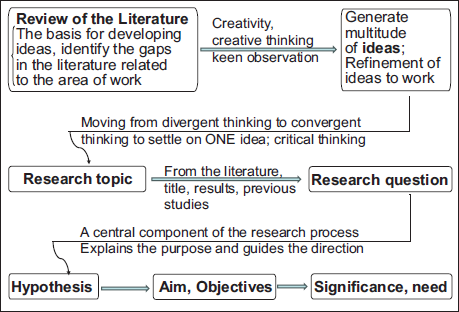
Several modes of thinking are required for successful research: creative thinking, critical thinking, divergent thinking, and convergent thinking. Identifying a problem requires creative thinking, often as an extrapolation exercise from an antecedent knowledge base. Selecting a research topic involves moving between divergent (considering many possibilities) and convergent (closing in on a few possibilities and the most feasible to study) thinking to settle upon an idea from a selection of ideas. By harnessing the creative aspect of problem identification, critical thinking can generate hypotheses and objectives on the basis of a tangible set of concepts. Therefore, critical thinking is a form of convergent thinking and a component of creative and analytical thinking. Using reason and logical choices before making a final decision is judgmental. A mentor usually assists with this process. Successful research incorporates all identified thinking paradigms, deployed sequentially and in parallel. By embracing creativity and diverse-thinking paradigms, student researchers can develop robust and impactful research questions and hypotheses. These paradigms have led to some of the most famous scientific discoveries.
In research (e.g., PG and above), the idea (first-tier or second-tier) should be followed by an enumeration of research questions and the generation of hypotheses, followed by the formulation of aims and objectives (Figure 1). Second-tier concepts are not entirely original. Examples include the improvement or enhancement of existing concepts, modification of the existing method, alternate methods of synthesis of a drug substance, and others. Some of these ideas are “imitated” or “plagiarized,” which is the recycling of previous work by substitution or replacement, leading to copycat research. Most of them might be non-publishable and receive fewer or no citations. The lecture equipped participants with strategies for blending these skills to frame their research questions and hypotheses in innovative, methodologically sound, and impactful ways. The speaker finally emphasized that a well-structured research protocol should comprehensively address key questions to ensure clarity, originality, and academic significance (Box 2).
Research Protocol Should Address the Following Questions.
Study design and approach: What is the research framework, and how will the study be conducted?
Existing knowledge base: Which fundamental studies have already been conducted in this field?
Literature review insights: Which previous studies have explored this topic, and what are their key findings?
Research justification: Is the proposed study meaningful and valuable in the current academic and practical context?
Novelty and contribution: What distinguishes this research from existing studies, and how does it advance knowledge in the field?
Theoretical and practical impact: What unique perspectives or innovations does this study present?
Originality and significance: Is this research just a reiteration of other work, or does it make a unique contribution?
Methodological framework: What research methodologies, strategies, techniques, and analytical tools will be used to ensure rigor and validity?
Creating well-crafted research questions, hypotheses, aims, and objectives is essential, as they guide the investigation and help focus the study. Additionally, the researcher should write a few lines on the rationale and justify the need for the proposed research. The speaker illustrated these measures with a few examples of engineering, technology, and biomedical sciences, as the attendees were from interdisciplinary schools. Box 3 describes the development of a research proposal or protocol on the basis of the five main elements discussed above, with an example from a biomedical sciences study.
The Structured Approach of the Research Protocol.
Research topic: Effect of compound X on paracetamol-induced liver damage in rats. Research questions: Drugs can alleviate liver damage through various mechanisms, each targeting different aspects of liver injury and promoting healing. Thus, the research questions could focus on antioxidant activity, anti-inflammatory effects, and apoptosis inhibition. A few examples include: a. What biochemical parameters indicate liver injury? b. What mechanisms enable drugs to alleviate liver damage? c. Which major endogenous inflammatory molecules are involved in hepatotoxicity? d. Does reducing oxidative stress or the antioxidant effect protect against liver damage? e. How does compound X influence antioxidant enzyme activity in the liver of paracetamol-administered rats? f. How does the hepatoprotective efficacy of compound X compare to that of standard therapeutic agents in liver injury models? g. What histopathological changes occur in the liver with compound X administration in the model of paracetamol-induced toxicity? Hypothesis: Compound X treatment exhibits hepatoprotective activity by enhancing antioxidant enzyme activity, reducing the expression of inflammatory mediators such as interleukin-6 (IL-6) and tumor necrosis factor-alpha (TNF-α), and preventing histopathological damage in paracetamol-induced liver toxicity in rats. Aim: To investigate the antioxidant, cytoprotective (regenerative), and hepatoprotective effects of compound X against paracetamol-induced liver damage in rats. Objectives: The study design comprises control, compound X-treated (with varying doses), and reference or standard drug-treated groups (e.g., silymarin), with at least n = 6 rats per group. a. Antioxidant enzymes safeguard against cell damage caused by free radicals. These catalytic proteins are responsible for metabolizing and stabilizing reactive oxygen species. To evaluate the antioxidant enzyme activity of compound X, determine superoxide dismutase, glutathione peroxidase, glutathione reductase, catalase, and oxidative stress markers such as malondialdehyde production. b. Assess compound X’s anti-inflammatory activity by analyzing the expression of pro-inflammatory cytokines and mediators, including IL-6 and TNF-α. c. Determine liver function enzymes: serum glutamic-oxaloacetic transaminase (SGOT), serum glutamic-pyruvic transaminase (SGPT), alkaline phosphatase, and total bilirubin. d. Conduct a histopathological assessment of the liver using scanning electron microscopy. e. Additionally, to determine the therapeutic potential of compound X, compare its efficacy with a standard hepatoprotective drug (e.g., silymarin). Significance of the study or need for the proposed research: Paracetamol is an analgesic and anti-pyretic medication; however, at very high doses or its prolonged use, it causes severe liver toxicity due to oxidative stress and hepatocyte damage. Compound X (may be an isolated natural compound) has been reported to exhibit potent antioxidant and anti-inflammatory properties in several experimental studies. However, its hepatoprotective effects against paracetamol-induced liver toxicity are not known or have been less explored. This study aims to investigate whether compound X can alleviate liver damage through antioxidant mechanisms and reduce the progression of inflammation, providing a natural and potentially safer alternative for liver protection. The findings could contribute to developing novel therapeutic strategies for liver diseases associated with oxidative stress and drug-induced hepatotoxicity in clinical settings.
Experimental Research: Expecting the Unexpected
The next session featured an insightful and thought-provoking presentation on Experimental Research: Expecting the Unexpected, which explored the unpredictability of scientific inquiry and its potential for groundbreaking discoveries. The lecture was delivered by Dr. Arasu Chellaiah (University of Maryland, Baltimore, USA), who provided valuable perspectives on embracing unforeseen outcomes in research.
Experimental research serves as a fundamental approach in scientific exploration, enabling researchers to determine cause-and-effect relationships by designing independent variables and assessing their impact on dependent variables. This structured methodology ensures precise and reliable findings across diverse fields, including medicine, engineering, psychology, and environmental sciences. Although experiments are typically designed to test specific hypotheses, their most fascinating aspect is the potential for unforeseen discoveries that challenge established theories and drive innovation.
Pioneering breakthroughs, such as penicillin and X-ray discoveries, among others, arose from unexpected results, underscoring the significance of serendipity in scientific progress. Such unanticipated outcomes often lead to the refinement of hypotheses, the identification of new research avenues, and paradigm shifts that redefine entire disciplines. To harness their full potential, researchers must cultivate scientific curiosity, conduct thorough data analyses, validate findings through replication, and engage in interdisciplinary collaboration. The author cited examples from his own experiences. Sometimes, the independent variables may not be what the experimenter intended to establish. The methodologies must be made sure they are what the experimenter originally intended. While working in a transplantation immunology laboratory, the author screened the lambda-phage complementary deoxyribonucleic acid (cDNA) library using a monoclonal antibody to isolate a gene coding for a minor-histocompatibility antigen. However, he obtained a unique human homologue of the Escherichia coli DNA coding for the J heat shock protein. This was an unexpected result. 7 However, this started a new avenue to be pursued in the laboratory. The author enlightened the audience with a few of his own experimental examples of expecting unexpected but meaningful experimental results.
Experimental research must strike a balance between methodological precision and adaptability, allowing for alternative interpretations and novel insights. By remaining open to the unexpected, scientists continuously expand the frontiers of knowledge, driving transformative advancements that shape scientific understanding, technological innovation, and practical applications. The speaker highlighted the challenges faced by experimental research and stressed the need for greater investment in this area. He emphasized that fundamental research serves as the foundation for applied research, and without it, scientific advancements and practical innovations would be significantly hindered.
Best Practices in the Literature Search and Data Collection Using Artificial Intelligence/Machine Learning: Ensuring Quality and Integrity in Scientific Research
The next session featured a presentation by Dr. Murugan Thangiah from Taylor’s University, Malaysia. He delivered an insightful talk on the above topic, emphasizing the role of artificial intelligence (AI) and machine learning (ML) in enhancing research accuracy, efficiency, and ethical standards. AI and ML have transformed the setting of scientific research in various fields, especially in terms of literature review and data acquisition. These technologies provide creative methods for accessing, analyzing, and organizing extensive datasets, substantially improving research efficiency, quality, and precision. This presentation examined effective practices for implementing AI/ML tools, with a focus on maintaining high standards of quality, integrity, and ethical compliance in scientific research methodologies. In the realm of literature exploration, innovative AI platforms such as SciSpace, Research Rabbit, Consensus, and Scite Assistant, among others, are crucial in contemporary literature search methods. SciSpace enhances the accessibility of academic articles and improves understanding through AI-generated explanations, whereas Research Rabbit offers an engaging interface for navigating citation networks and identifying emerging research trends. Consensus provides data-driven insights by condensing key findings from various studies, whereas Scite Assistant assesses citations within their context, clarifying how studies are applied, thus promoting a better understanding of research significance and impact.
To optimize data collection, various tools, including Roboflow, Labelbox, Google Dataset Search, and Amazon SageMaker Ground Truth, play pivotal roles in simplifying the acquisition and preparation of datasets intended for AI and ML initiatives. It is essential to follow best practices, which involve validating data, addressing potential biases, and instituting ethical protections such as anonymization and compliance with data privacy standards. By employing these tools, researchers can ensure that their data maintains high levels of accuracy, consistency, and ethical compliance throughout the entire research lifecycle. The speaker highlighted the importance of combining AI and ML tools with traditional research methodologies, ensuring that literature searches and data collection processes are efficient and methodologically robust. At the end of this lecture, participants acquire practical knowledge on leveraging these technologies to improve their scientific endeavors’ reproducibility, reliability, and significance, ultimately fostering improvements in research quality and integrity.
Crafting a World-class Manuscript: How to Avoid Desk Rejection of Your Manuscript
In the last pre-lunch presentation, Professor Balakumar Pitchai (Periyar Maniammai Institute of Science & Technology, India; Consulting Editor, Pharmacological Research-Elsevier; Adjunct Professor of Pharmacology, School of Pharmacy, Taylor’s University, Malaysia) spoke on the above topic, addressing key strategies for enhancing the quality of scientific writing, adhering to journal guidelines, refining research presentation, and overcoming common pitfalls that lead to immediate rejection by editors, the so-called “Desk Rejection.”
A well-structured research process begins with a thorough literature search to identify gaps in existing knowledge and justify the need for a study. Using databases and online search engines, researchers can systematically gather relevant sources. The snowballing technique, involving backward reference tracking and forward citation tracking, helps refine the literature review and strengthens research foundations. Scientific writing is essential for disseminating and publishing findings in indexed journals (Science Citation Index Expanded (SCIE), Social Sciences Citation Index (SSCI), Arts and Humanities Citation Index (AHCI), PubMed, Scopus) to ensure credibility. Journals are classified into Q1, Q2, Q3, and Q4 on the basis of the impact factor. In his presentation, Dr. Balakumar enlightened the participants with tips on structuring a world-class manuscript to be published in Q1 journals, as summarized below (Box 4). In addition, his presentation covered some of the most common reasons for desk rejection and efficient ways to avoid them (Box 5).
Key Sections of a Research Article.
Title page: Provide a concise yet informative title (avoid jargon, abbreviations, and unnecessary words), list author names and affiliations, and state corresponding author details (email, ORCID, and others).
Abstract (structured/unstructured): Provide background (what problem you are addressing), the aim and objectives of the study, methods, results (most significant findings), conclusion (based on the key findings), and keywords (not exceeding six relevant keywords).
Introduction: Define the research problem, review prior work based on the existing published literature, justify the study’s importance, state the research questions, write the hypotheses, and state the aim and objectives.
Methods: Provide sufficient detail for reproducibility, including study design, ethical approval if applicable, methodology, data collection, and statistical analysis techniques.
Results: Present findings logically using tables, figures, and concise explanations without interpretation.
Discussion: Start by stating the study’s major findings, interpret the results, compare them with previous studies, highlight strengths and limitations, and suggest future research directions.
Conclusion: Summarize key findings, emphasize significance, and propose real-world applications or future studies.
Publishing in top-tier Q1 journals requires a well-structured, concise, and impactful research manuscript. The title page should include a clear and informative title, a list of authors with their institutional affiliations, and the contact details for the corresponding author. The abstract, whether structured or unstructured, must effectively summarize the study’s background, objectives, methodology, key results, and conclusions, along with a maximum of six relevant keywords to enhance visibility. The introduction should provide a strong foundation by explaining the research problem, identifying the knowledge gap, outlining the study’s hypotheses and objectives, highlighting its novelty and significance in the field, proposing research questions, and mentioning the aims and objectives of the study. The materials and methods section must offer a transparent and reproducible account of the study design, ethical approvals, participant selection criteria, experimental protocols, and statistical analyses, ensuring clarity and replicability. The results section should objectively present key findings using well-organized tables, figures, and descriptive text without interpretation. The discussion should critically evaluate the findings in the context of the literature, explore potential mechanisms underlying the results, highlight the study’s strengths and novel contributions, acknowledge limitations, and propose future research directions. The conclusion must succinctly summarize the study’s main findings and broader implications for research, clinical practice, or policy. The manuscript should also include an acknowledgment section to recognize funding sources and contributions, a conflict of interest statement, a CRediT author statement, a properly formatted reference list adhering to journal-specific citation guidelines, and tables and high-quality figures to support the findings. Supplementary materials may be included for additional data, extended methodologies, or supporting analyses. To maximize the likelihood of acceptance in Q1 journals, researchers should carefully select a journal aligned with their study’s scope, maintain clarity and conciseness in writing, rigorously follow submission guidelines, ensure originality by avoiding plagiarism, seek professional proofreading, and respond to reviewer comments with well-reasoned and constructive revisions.
Common Reasons for Desk Rejection and Ways to Avoid It.
Not within the scope of the journal: Carefully review the journal’s aims, scope, and recent publications to ensure alignment with your study.
Poorly written manuscript: Use clear, precise, and professional language, avoiding grammatical, typographical, and syntax errors.
Poor abstract and introduction: Clearly define the research problem, highlight its significance, and emphasize how the study advances the field.
Incoherently structuring the article: Follow the IMRaD style (Introduction, Methods, Results, and Discussion) with a logical flow and highly relevant citations.
Lack of novelty: Demonstrate how your research fills a gap or provides new insights rather than being a second-tier or “me-too” study.
Ethical concerns: Adhere to research integrity guidelines, avoid plagiarism, properly cite references, and ensure originality to avoid sentence similarity issues.
Inconsistent data presentation: Clearly present tables, figures, and statistical analyses to support your findings. Ensure data consistency and a precise legend.
Failure to follow journal guidelines: Strictly adhere to submission requirements, including formatting, word count, and referencing styles.
Inadequate citations: Cite recent and relevant literature, demonstrating familiarity with existing work while avoiding excessive self-citations (not more than 5%).
Poor cover letter: Write a compelling cover letter explaining why your research fits the journal and how it contributes to the field advancements.
Response to reviewers: Address reviewer comments thoughtfully in resubmissions.
Truth and Transparency in Responsible Science: Ethics in Scientific Research and Scholarly Publishing
In the post-lunch session, Dr. Shubhada Nagarkar (Savitribai Phule Pune University, Pune, India) delivered a lecture on the above topic, emphasizing the importance of integrity, transparency, and ethical considerations in scientific research, and highlighting issues such as plagiarism, data fabrication, authorship ethics, and the responsible dissemination of scholarly work (Table 1).
Various Types of Scientific Misconduct.
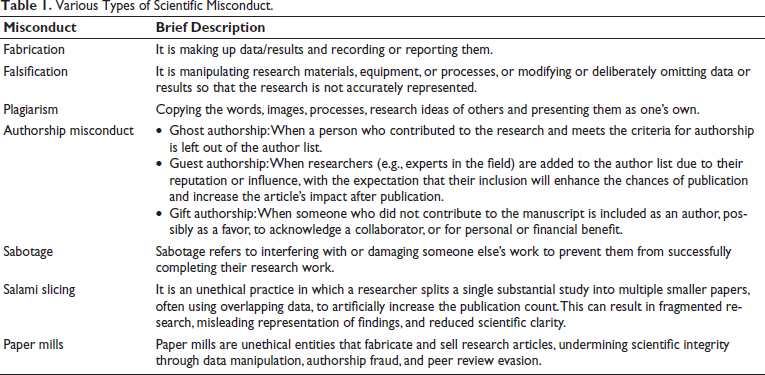
Ethical integrity is fundamental to responsible scientific research and scholarly publishing, serving as the foundation for credibility and public trust. This presentation examines the alarming prevalence of unethical practices in research, including fabrication, falsification, plagiarism (FFP), selective reporting, failure to obtain informed consent, and undisclosed conflicts of interest. These violations compromise the quality of science and diminish its societal impact. The talk addressed unethical behaviors such as predatory publishing, authorship, and citation misconduct; the manipulation of journal impact factors; reliance on paper mills; and increased paper retractions. The modus operandi of predatory publications, including their various types and deceptive practices, was discussed. Additionally, participants were cautioned about the unethical use of chatbots in research publications, emphasizing the potential risks these pose, especially to human health.
The talk highlighted several global and national initiatives aimed at addressing these challenges. Organizations such as the Committee on Publication Ethics (COPE) and the World Association of Medical Editors (WAME) provide ethical frameworks to guide researchers and publishers. Campaigns such as “Think. Check. Submit” to educate authors on identifying legitimate journals, whereas efforts such as Jeffrey Beall’s list of predatory journals and India’s University Grants Commission–Consortium for Academic and Research Ethics (UGC-CARE) initiative actively combat predatory publishing by maintaining credible journal databases. The session finally emphasized the adoption of transparent and ethical research practices and provided participants with practical tools, such as criteria for identifying predatory journals. This talk aimed to empower researchers to maintain integrity, contribute responsibly to the scientific community, and restore public confidence in science by raising awareness of these challenges and offering actionable solutions.
Shaping Tomorrow’s Academia: The Evolving Metrics of Publications, Citations, and University Rankings
Dr. Hema Subramonian (Taylor’s University, Malaysia) delivered a subsequent lecture on the above-mentioned topic. The session focused on the dynamic background of academia, highlighting the importance of scholarly impact and its role in shaping university rankings.
Academic scholarly impact or influence plays a significant role in university rankings. Scholarly impact is a multidimensional concept. The scholarly influence metrics include quantitative (number of publications, impact factor, CiteScore, citations, h-index, g-index) and qualitative (contributions to theory, practice, society, policy) metrics. Lately, there has been an extensive emphasis on knowledge production (publications) and its influence on other researchers (citations). Notably, citations are crucial in determining a university’s global ranking, as they reflect its research output’s impact, quality, and visibility. Higher citation counts indicate that a university’s research is recognized, influential, and widely used by the global academic community. Several key ranking systems, such as the Quacquarelli Symonds (QS) World University Rankings, Times Higher Education (THE) Rankings, and Academic Ranking of World Universities (ARWU), incorporate citation metrics as a primary evaluation criterion.
AI is now challenging academics, who are grappling with questions about the role of human intelligence in an AI-integrated world. This talk reminded the audience of the evolution of universities, the role of academics, and the measures of scholarly impact. This talk also examined the transition of universities and scholarly influence during the periods “up to the 15th Century CE,” between the 15th century and the pre-Internet era and the “post-Internet but pre-AI era.” During major societal and technological shifts, universities have gone through transformations beyond trends on the basis of past data. Therefore, foresight studies are suitable for understanding AI scenarios. Using shallow foresight as guidance, this talk discussed the current scenario in which AI is used and possible future scenarios. The talk concluded that the core functions of universities may remain; however, the role of academics might undergo a fundamental transformation that goes beyond technological adaptation. The transformation is mainly related to how knowledge is created, validated, and shared (Box 6). The scholarly impact or influence metrics may become dynamic and adaptive with real-time tracking.
Academics of the Future Will Be Able to Create Scholarly Impact if They Are.
Flexible to accept, adapt, and manage AI.
Creative with enquiring skills.
Able to recognize and solve societal issues.
Able to nurture students in a holistic manner.
Willing to embrace new technologies.
Able to collaborate and engage with multiple stakeholders.
Carefully prioritize academic integrity concerns.
Catalyzing International Collaboration: Strategies for Achieving High-impact Academic Research Outcomes
The symposium concluded with a presentation on the above topic by Dr. Saravanan Pandiaraj from King Saud University, Saudi Arabia. The session emphasized the significance of global research partnerships, effective collaboration strategies, and their role in enhancing academic research quality, visibility, and impact.
In academic research, the need for impactful outcomes is more pressing than ever. This presentation addressed the crucial role of international collaboration in achieving high-quality publications that advance knowledge and innovation. As global challenges become increasingly complex, fostering international partnerships emerges as a strategic imperative for researchers seeking to intensify their work’s significance. This presentation explored effective strategies to catalyze international collaboration, focusing on three key areas: establishing shared research agendas, enhancing communication frameworks, and promoting cultural competencies. Scholars can harness diverse expertise, aligning research objectives across institutions and leading to groundbreaking insights that drive scientific progress. The presentation also highlighted the importance of digital tools that facilitate real-time collaboration and knowledge sharing, making it easier to navigate geographical barriers.
Additionally, this presentation discussed the impact of joint funding initiatives and collaborative grant writing, which can unlock resources for ambitious projects that single institutions may struggle to fund. Case studies from successful international research teams were illustrated during the presentation, and how these strategies can lead to high-impact publications was discussed, as evidenced by increasing citation rates and higher journal rankings. Furthermore, the presentation proposed actionable guidelines for institutions to cultivate an ecosystem that supports international partnerships, including mentorship programs and interdisciplinary workshops designed to strengthen collaborative skills. In conclusion, this presentation aimed to inspire researchers and institutions to embrace international collaboration as a pathway to increase the quality and reach of their academic contributions.
Concluding Remarks
Publishing research articles is a fundamental aspect of academic careers, facilitating the dissemination of findings while significantly contributing to career progression, academic recognition, and research-funding opportunities. A strong publication record establishes researchers as field experts and supports securing grants. Additionally, the impact of published research and technological advancements through innovations plays a vital role in determining institutional rankings at both the national and global levels. The selection of an appropriate journal and the manuscript preparation process is critical for successful publication. Research articles should be classified on the basis of their type, novelty, significance, and intended readership. When choosing a journal, factors such as the impact factor, indexing status, publication frequency, and target audience must be carefully evaluated, whereas predatory, cloned, hijacked, and non-indexed journals should be strictly avoided, as they undermine research integrity. Rejections and revisions are an inherent part of the publication journey, reinforcing the need for perseverance in research and scholarly publishing. This symposium report includes a curated list of recommended resources for further reading and enhanced understanding.1–6, 8–10
Taken together, the symposium provided participants with comprehensive knowledge of key aspects of research, covering topics such as research methodology, protocol writing, AI-driven literature search/review, publication ethics, and global partnerships. Attendees explored the latest advancements in research methodologies across disciplines, refined their academic writing skills, and learned effective strategies for communicating research findings. Additionally, the sessions on publication ethics addressed critical issues such as authorship, plagiarism, and peer review. Overall, the participants found the symposium highly beneficial for their research and dissertation work. Several attendees recommended organizing such events more frequently and extending them to a two-day format to allow ample time for practical, hands-on training. Furthermore, many attendees expressed interest in attending similar symposiums in the future.
Footnotes
Acknowledgments
The authors sincerely appreciate the invaluable support provided by Mr. V. Anburaj, Executive Council Member, and Professor V. Ramachandran, Vice-Chancellor of Periyar Maniammai Institute of Science and Technology, India. Additionally, the authors extend their heartfelt gratitude to Professor S. Kumaran, Dr. K. Geetha, Dr. P. Ilangovan, A. Ashok Kumar, Dr. C. Arun, Dr. V. Sivaranjani, Dr. Anbarasu Kumar, Dr. Ms. A. Sangeetha, Ms. P. Mala, Ms. S. Keerthana, Ms. R. Ramya, Mr. S. Arunmurugan, Mrs. R. Sakthi, Ms. M. Dhivya, Ms. V. Thenmozhi, and Ms. G. Priyadharshini of Periyar Maniammai Institute of Science and Technology, Thanjavur, India, for their contributions to the successful completion of this international symposium.
Declaration of Conflicting Interests
The authors declared no potential conflicts of interest with respect to the research, authorship, and/or publication of this article.
Funding
The authors received no financial support for the research, authorship, and/or publication of this article.