



Abstract
Background
Rice varieties enriched with potential bioactive compounds are poised to make a significant contribution to global health. It is anticipated that edible medications made from rice seeds will lead to novel therapeutics.
Objectives
High-yielding popular pigmented and nonpigmented rice varieties were selected for in-depth analysis of bioactive contents. Nutraceutical potential of high-yielding rice varieties often goes underexplored compared to low-yielding specialty rice varieties. This study addresses the gap by metabolomic profiling of popular rice varieties to uncover bioactive compounds with significant pharmaceutical and nutritional benefits.
Materials and Methods
Untargeted metabolomic profiling of the brown rice of pigmented and nonpigmented varieties was conducted by Orbitrap-high-resolution liquid chromatography and mass spectrometry, and primary and secondary metabolites were identified and annotated. 2,2-Diphenyl-1-picrylhydrazyl (DPPH) free radical scavenging (RS) assay was carried out to identify the variety with superior antioxidant activity. Correlation analysis by using Metaboanalyst software identified major metabolites with RS potential. Over-representation analysis was performed for the Kyoto Encyclopedia of Genes and Genomes (KEGG) pathway enrichment, and major pathways were identified for metabolites with nutraceutical potential in pigmented rice.
Results
Major metabolites with antioxidant, anti-inflammatory, and anticarcinogenic properties were identified from rice varieties. Bioactive compounds detected from brown rice included choline, didodecyl-3,3-thiodipropionate, conjugated linoleic acid, oleic acid, 13(S)-HOTrE, monoolein, nicotinic acid, pantothenic acid, isoquinoline, trigonelline, corymboside, ferulic acid, and 2,4-quinolinediol. The DPPH RS assay revealed superior antioxidant activity in the pigmented rice, with differential metabolites from the pathways of phenylpropanoid biosynthesis, arginine and proline metabolism, and biosynthesis of unsaturated fatty acids showing a significant correlation (p < .01) with RS potential.
Conclusion
Catechin, (–)-epicatechin, (±)12(13)-DiHOME, 4-guanidinobutyric acid, and 5-methoxysalicylic acid are key metabolites that emphasize the antioxidant potential of red-colored rice as a functional food with significant health benefits. The study highlights the therapeutic promise of pigmented whole-grain rice.
Introduction
Cultivated rice (Oryza sativa L.) stands as one of the essential crops worldwide, sustaining nearly half of the global population. Recent advancements in metabolomics revealed rice’s potential in promoting health and preventing chronic diseases. Noncommunicable diseases are leading causes of global mortality, and modifiable factors such as diet play a critical role in reducing the risk of such lifestyle diseases. Rice, especially pigmented varieties, has garnered attention for its chemopreventive properties, owing to its bioactive phytochemicals, which are concentrated in the bran and pericarp layers.1, 2 These compounds exhibit significant antioxidant, anti-inflammatory, and anti-proliferative properties, contributing to the rice’s functional food status. Several studies have reported “rice bran as a food ingredient with global public health opportunities.” 1 It is anticipated that medications made from rice seeds would lead to novel therapeutics. Rice varieties show substantial differences in nutrient makeup, with many of them offering higher medicinal values, but are often underutilized because of their lesser grain yields. This study seeks to bridge this gap by metabolomic profiling of popular pigmented and nonpigmented varieties to identify bioactive compounds with significant pharmaceutical potential.
Materials and Methods
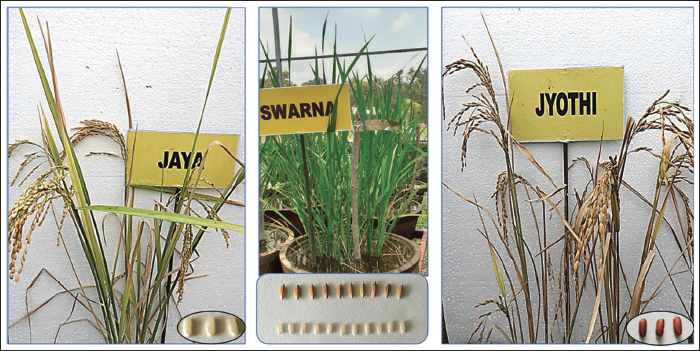
High-yielding pigmented and nonpigmented rice varieties were selected for in-depth analysis of bioactive contents. Jyothi, Jaya, and Swarna varieties are well-known for their adequate yield and excellent quality characteristics, making them popular throughout India. Jyothi is a pigmented variety with a red kernel, whereas Jaya and Swarna are nonpigmented with a white kernel color (Figure 1). The varieties were cultivated under the net house facility at the Regional Agricultural Research Station in Pattambi during Kharif 2021. The pure seeds were soaked overnight and kept for germination in petri plates. After germination, they were transferred to a nursery in trays. The net house facility was used to control the environmental factors as uniformly as possible. The 15-day-old seedlings were transferred to pots, and uniform conditions were provided to all the plants with regard to soil, nutrients, and irrigation water in the net house. The grains were harvested at maturity, dried to 12% moisture, cleaned, and pure seeds were sorted for metabolomic analysis.
Plant and Grain Characteristics of the Varieties Under Study.
Metabolomic Profiling of Brown Rice
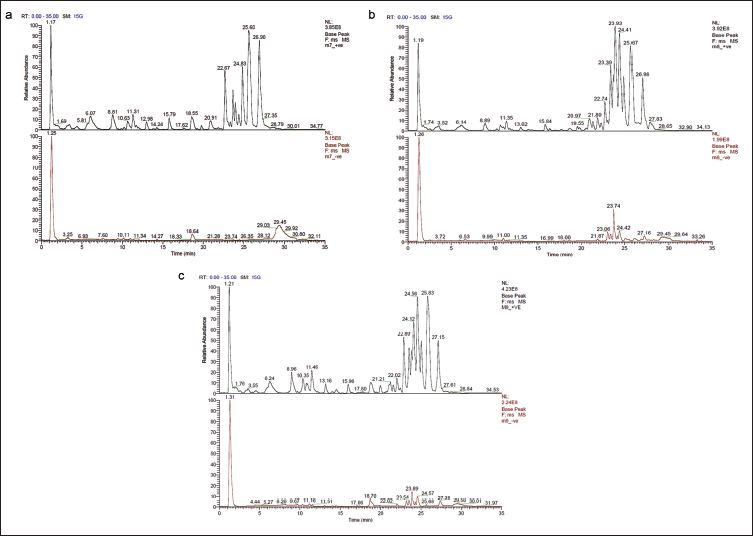
The untargeted or widely targeted metabolomic profiling was carried out to detect the metabolites present in the methanolic fraction of brown rice. Brown rice of the three varieties was prepared by manually dehusking the cleaned and dried pure grain samples. Ten grams of finely powdered individual brown rice samples were weighed out to a conical flask and extracted three times with 50 mL of 98% methanol by shaking for 24 hours in a rotary shaker. The supernatants of each extraction were combined and lyophilized using a rotary evaporator (Heidolph®), reconstituted with methanol to 1 mL, and stored at –20°C. Orbitrap-high-resolution liquid chromatography and mass spectrometry (HRLCMS) was conducted at the Indian Institute of Technology Bombay. Solvents used for the mobile phase were 0.1% formic acid in Milli-Q water (A) and methanol (B), and Hypersil Gold 3-micron 100 × 2.1 mm column (Thermo Scientific®) was used for separation. The total running time was 35 minutes, at a rate of 0.3 mL/min with an injection volume of 5 µL. The resultant chromatographs are presented in Figure 2. Data were processed using Compound Discoverer 3.2 SP1 (Thermo Fisher Scientific®). Relative abundance was calculated from the area of chromatographic peaks of each metabolite. Metabolite data were screened against databases, and metabolites with full match and high similarity scores in mzCloud, ChemSpider, and predicted composition libraries were annotated. Metabolite information was collected from online databases such as Chemical Entities of Biological Interest (ChEBI), PubChem, Wikidata, and Kyoto Encyclopedia of Genes and Genomes (KEGG).
Chromatogram of Rice Varieties: (a) Jyothi, (b) Jaya, and (c) Swarna.
Evaluation of Antioxidant Potential of Rice Varieties
Brown rice samples were estimated for antioxidative activity using the 2,2-diphenyl-1-picrylhydrazyl (DPPH) radical scavenging (RS) assay.
3
A traditional pigmented rice variety, Erumakari, was tested as a control along with high-yielding varieties for detecting RS capacity. The DPPH solution (0.1 mM) was made by dissolving 4 mg of DPPH into 100 mL of methanol. Brown rice extract (5 mg/mL) was taken in appropriate concentrations (10, 20, 50, 100, and 200 µL) and made up to 3 mL with methanol. DPPH solution (1 mL) was added to each sample and kept in the dark for 30 minutes at room temperature. The absorbance was computed with a UV spectrophotometer at 517 nm. Ascorbic acid standard (2 g/mL methanol) was used as a reference. All reactions were carried out in triplicate. The RS percentage was calculated as:

Statistical Analysis
The data were analyzed using one-way analysis of variance (ANOVA), and significant differences among means were determined using Duncan’s test at a significance level of p < 0.05. Over-representation analysis was performed for pathway enrichment and graphically presented with one-tailed p values. The analysis was carried out using the MetaboAnalyst platform (
Results
Bioactive Compounds in Methanolic Fraction of Brown Rice
Metabolomic analysis by Orbitrap-HRLCMS revealed 135 metabolites from methanolic extracts of brown rice samples of three varieties: Jyothi, Jaya, and Swarna. These bioactive compounds were classified into eight primary and eight secondary metabolite classes using in silico analyses. The primary metabolite classes included 28 derivatives of amino acids (JJS AA), 16 carboxylic acids (JJS CA), 22 fatty acids (JJS FA), 11 sugar derivatives (JJS SU), 4 vitamins (JJS VM), 13 nucleotides (8 purines, JJS PU; and 5 pyrimidines, JJS PY), and 1 sphingolipid (JJS SL). The secondary metabolites were 4 alkaloids (JJS AL), 6 flavonoids (JJS FL), 4 indole derivatives (JJS IN), 12 polyphenols (JJS PP), 7 quinoline derivatives (JJS QL), 5 terpenoids (JJS TP), 1 heterocyclic compound (JJS HC), and 1 piperidine derivative (JJS PI). Unique metabolites were identified in Jyothi (17), Jaya (18), and Swarna (16).
Metabolite abundance and key metabolites with nutraceutical properties were identified in each variety. Information from databases such as ChEBI, PubChem, and KEGG provided insights into the biological processes, functions, and pathways of the identified metabolites. The analysis highlighted the nutritional value and health-promoting properties of these metabolites. Many primary and secondary metabolites detected were thoroughly researched for antioxidant, anti-inflammatory, anti-proliferative, anticancer, hepatoprotective, cardioprotective, and neuroprotective properties, which underline the potential of whole-grain rice as a source of nutraceuticals. The pigmented variety Jyothi exhibited a higher abundance of most of the major secondary metabolites than nonpigmented types (Supplementary Table 1 in the supplemental material).
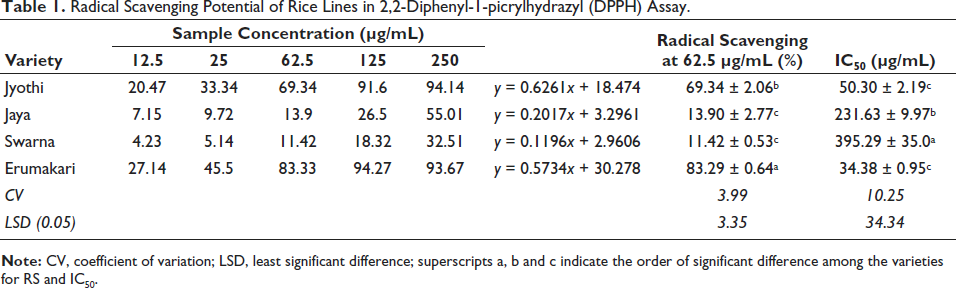
Radical Scavenging Potential of Rice Lines in 2,2-Diphenyl-1-picrylhydrazyl (DPPH) Assay.
Antioxidant Capacity of Rice Varieties
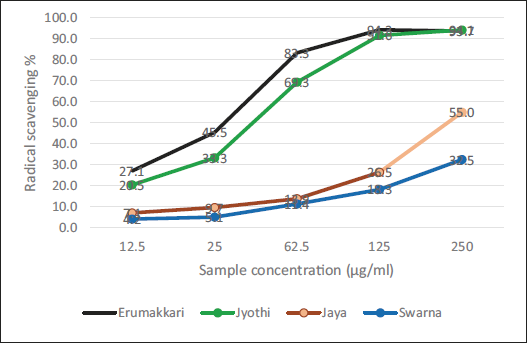
DPPH is commonly used as a substrate to assess the RS potential of bioactive compounds in plant extracts due to the simplicity as well as the reliability of the assay. 3 A traditional pigmented rice landrace, Erumakari, known for its nutraceutical potential, was used as a control for the assessment of RS capacity. The mean RS percentage was calculated for three replications at different sample concentrations (Table 1). Erumakari exhibited the highest RS (62.5 µg/mL) of 83.3% and the lowest IC50 value of 34.4 µg/mL, followed by Jyothi (69.3% and 50.3 µg/mL, respectively). Jaya (13.9% and 231.6 µg/mL) and Swarna (11.4% and 393.3 µg/mL) exhibited low RS capacity (Figure 3). One-way ANOVA showed that the RS capacity of Erumakari and Jyothi is significantly higher compared to Jaya and Swarna. Erumakari and Jyothi were on par with each other in IC50 value.
Performance of Rice Varieties in 2,2-Diphenyl-1-picrylhydrazyl (DPPH) Assay.
Discovery of Unique Metabolites in Pigmented Rice
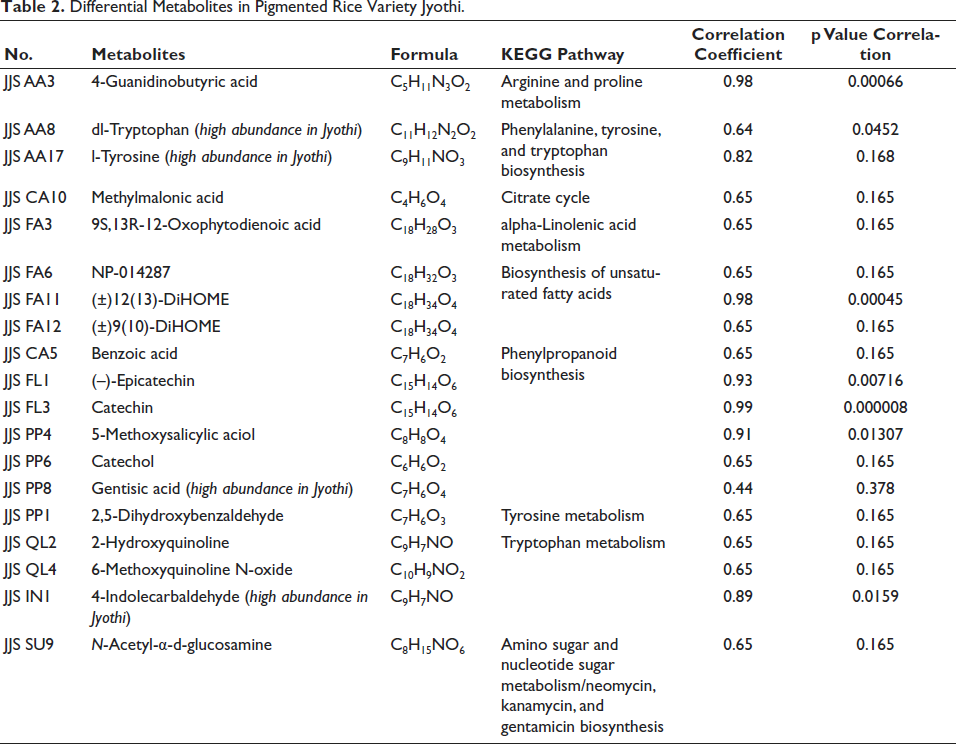
Eighteen metabolites were differentially expressed in the pigmented Jyothi rice variety with the highest antioxidant potential (Table 2). The KEGG database identified the major pathways of differential metabolites as arginine and proline metabolism (4-guanidinobutyric acid); phenylalanine, tyrosine, and tryptophan biosynthesis (tryptophan, tyrosine, 2,5-dihydroxybenzaldehyde, 2-hydroxyquinoline, 6-methoxyquinoline N-oxide); phenylpropanoid biosynthesis (benzoic acid, 5-methoxysalicylic acid, (–)-epicatechin, catechin, catechol, gentisic acid); citrate cycle (methylmalonic acid); alpha-linolenic acid metabolism (12-oxo-phytodienoic acid (OPDA); biosynthesis of unsaturated fatty acids (8-hydroxyoctadeca-9,11-dienoic acid (8S-HODE), (±)12(13)-DiHOME, (±)9(10)-DiHOME); and amino sugar and nucleotide sugar metabolism/neomycin, kanamycin, and gentamicin biosynthesis (acetyl-α-
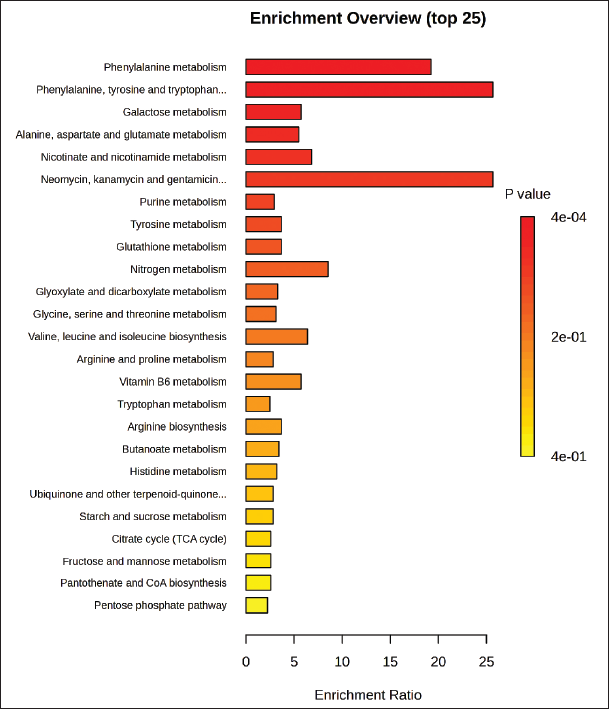
Pathway Enrichment in Jyothi Variety.
Differential Metabolites in Pigmented Rice Variety Jyothi.
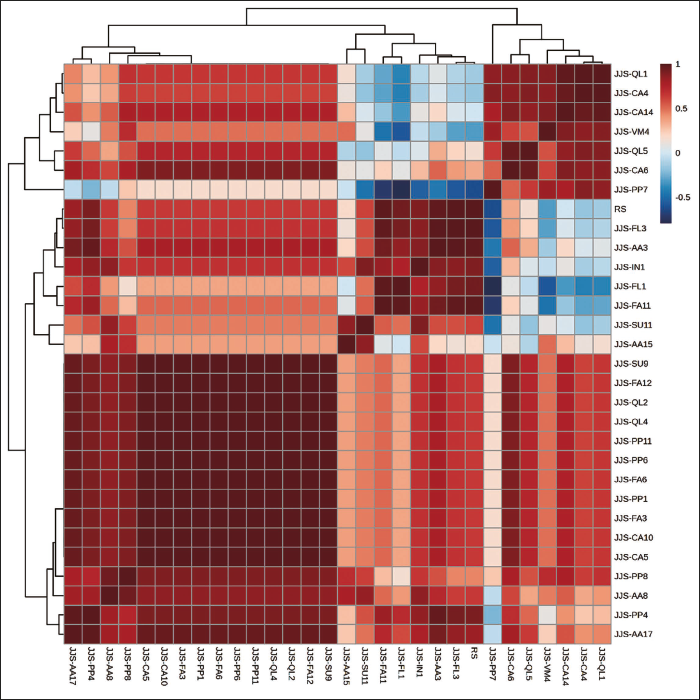
A correlation analysis was conducted to examine the association of RS with 29 significant metabolites. The correlation heatmap (Figure 5) revealed two major clusters, clearly distinguishing seven metabolites with low association to RS, forming a small cluster, and a large cluster including all differential metabolites displaying varying degrees of positive association with RS. Seven bioactive compounds, JJS AA3, JJS FA11, JJS FL1, JJS FL3, JJS IN1, JJS AA17, and JJS PP4, exhibited significant (p < .05) association with RS in rice, out of which JJS AA3, JJS FA11, JJS FL1, JJS FL3, and JJS PP4 were observed to have a very high association (p < .01), which provides valuable evidence for the strong antioxidant capacity of these bioactive compounds present in the brown rice. Conversely, metabolites like azelaic acid, didodecyl-3,3-thiodipropionate (DLTDP), 2,4-quinolinediol, and pantothenic acid exhibited low or no association. Interestingly, ferulic acid exhibited a negative correlation (statistically non-significant) with RS (Supplementary Table 2 in the supplemental material).
Correlation Heatmap of Radical Scavenging Capacity and Differential Metabolites in the Pigmented Rice.
Discussion
Exploring Bioactive Compounds: Unlocking Therapeutic Potential in Rice
Exploring the biological function of primary and secondary plant metabolites is crucial for understanding their potential implications for human health. The diverse metabolites identified with proven health benefits in managing conditions like inflammation, cancer, hypertension, oxidative stress, and diabetes, as evidenced by the pharmacological and toxicological studies, indicate the nutraceutical relevance of whole-grain rice.
Amino Acid and Derivatives
Amino acids showed the highest diversity among the rice varieties tested. Stachydrine (proline betaine) is an anti-inflammatory compound with anticancer properties that decreases inflammatory factors and induces apoptosis. 4 Nonpigmented rice showed a greater abundance of gamma-aminobutyric acid (GABA), arginine, proline, pipecolinic acid, pyroglutamic acid, and diisopropylethylamine, mostly involved in stress signaling.5, 6 GABA is a potent antioxidant and neurotransmitter that has a key role in reactive oxygen species (ROS) regulation. 5
Carboxylic Acid and Derivatives
Among carboxylic acids, antioxidant DLTDP was detected in high abundance. Azelaic and malic acid are dicarboxylic acids with anti-inflammatory and antioxidant potential, whereas, citric acid, a tricarboxylic acid, confers stress tolerance.7–9 Methyl dihydrojasmonate has anti-cancer properties by induction of redifferentiation through mitogen-activated protein kinase (MAPK) activity and ROS-induced apoptosis. 10 Jyothi exhibited the highest abundance of most of these metabolites.
Fatty Acid and Derivatives
Among fatty acids, conjugated linoleic acid has been intensively researched because of its capacity to affect cancer, cardiovascular disease, obesity, immune system functioning, and diabetes in various pharmacological clinical studies. 11 Phyto-oxylipins, formed by the oxidation of linolenic and linoleic acids (polyunsaturated fatty acids (PUFAs)), are important compounds in defense mechanisms. 12 A metabolite of α-linolenic acid, namely, 13(S)-HOTrE (hydroxy octadecatrienoic acid), is anti-inflammatory in action by inactivating the NOD-like receptor protein 3 (NLRP3) inflammasome complex via peroxisome proliferator-activated receptor-gamma (PPAR-γ) pathway. 13
Sugar and Derivatives
Sorbitol and its derivatives, such as bis(4-ethylbenzylidene) sorbitol, function as reserve carbohydrates and accumulate in plant cells during abiotic stress. Sorbitol and mannitol play a crucial role in osmoregulation and stress tolerance mechanisms. 14 Acetylglucosamine is a nucleotide sugar that has a role in stress response and is used to treat autoimmune illnesses. 15 Maltol glucoside (dianthoside) is an anti-inflammatory sugar derivative detected in Jyothi and Swarna.
Vitamins
Vitamins detected from brown rice mainly belonged to B vitamins. Nicotinic acid and niacinamide function to protect the cell against DNA damage by taking part in stress signaling and are neuroprotective agents.16, 17 Vitamin B5 (pantothenic acid) was detected abundantly, whose primary function included coenzyme-A synthesis, acyl carrier protein production, and anti-stress mechanism. 18
Alkaloids
Alkaloids were relatively higher in abundance among secondary metabolites. Trigonelline possesses neuroprotection, cognitive improvement, and antitumor properties by mechanisms related to the modulation of β-cell regeneration and ROS scavenging. 19
Flavonoids
Corymboside, a flavonoid glycoside and biomarker for cereals,
20
was present profusely in all varieties. Methoxy peurarin, a neuroprotective isoflavone,
21
and tricin-5-O-β-
Indole Derivatives
Indole acts as an important signaling molecule and is a precursor for tryptophan, auxins, and melatonin, which regulates circadian rhythms. 28 Tryptophan derivative 4-indolecarbaldehyde has anti-proliferative and apoptotic effects on cancer cells. 29 An indole derivative detected in nonpigmented varieties, hydroxyindoleacetic acid (5-HIAA), activates auxin signaling and is a biomarker for Alzheimer’s disease and autism. 30
Polyphenols
Polyphenols are a large group of secondary metabolites with diverse nutraceutical properties. Phenolic compounds detected comprised phenolic acids, stilbenes, and coumarins. Ferulic acid possessed cardioprotective and anticancer potential through the upregulation of cytoprotective enzymes such as heme-oxygenase-1, 31 and gentisic acid owned antirheumatic properties through RS activity. 32 Salicylamide, a phenolic acid amide with anti-inflammatory function, 33 was detected in nonpigmented varieties. Longistylin C, a neuroprotective stilbene with an antidepressant effect, 34 was found in all varieties investigated. Coumarin derivative, 5-methyl-coumarin-4-β-glucoside, is a promising anticancer agent via acting as cyclin-dependent kinase (CDK)-specific ATP-competitive inhibitors. 35
Quinoline Derivatives
Quinoline was detected mainly in Jyothi and Swarna. All varieties contained 2,4-quinolinediol, known for its anti-inflammatory, antioxidant, and anticancer properties, 36 as well as quinolin-2-ol (2-hydroxyquinoline), which has antidiabetic effects by inhibiting α-glucosidase and α-amylase. 37 Two quinoline derivatives with anticancer properties detected in Jyothi were 6-methoxyquinoline N-oxide and 8-hydroxyquinoline (oxine), with the latter having identified with anti-neurodegenerative, antioxidant, antimicrobial, anti-inflammatory, and antidiabetic properties. 38 Kynurenic acid and xanthurenic acid are metabolites of the kynurenine pathway with a major role in neuropsychiatric disorders. Anticonvulsant kynurenic acid was detected in Jyothi and Swarna, whereas xanthurenic acid was uniquely detected in Swarna. The kynurenine pathway has been widely accepted as being the main mechanism in major depressive disorder. 39
Terpenoids
Swarna was uniquely identified with monoterpene citral and kaurene diterpenoid 6,18,19-trihydroxytrachyloban-2-one, with antioxidant, anticancer, anti-inflammatory, antimicrobial, and antidiabetic properties.40, 41 Ursolic acid is a pentacyclic triterpenoid with anticancer properties, detected uniquely in Swarna. These five-membered ring triterpenoids have a wide spectrum of medicinal actions by modulating pathways of transcription factors [nuclear factor-kappa B (NF-κB)], inflammatory cytokines, and growth factors. 42
Antioxidant Potential: Comparative Study of Pigmented and Nonpigmented Rice Varieties
The comparison of different varieties highlighted the superior antioxidant activity of pigmented varieties Erumakari, a traditionally used medicinal rice variety for respiratory disorders, 43 and Jyothi, a popular high-yielding variety in India. The radical scavenging potential of rice varieties was observed as Erumakari > Jyothi > Jaya > Swarna. The findings indicate that the pigmented varieties exhibit a clear superiority in antioxidant capacity through RS when compared to the nonpigmented varieties, as also observed in earlier studies.44, 45 The in-depth untargeted metabolomic study revealed that the differential metabolites in the pigmented variety Jyothi span a wide range of chemical classes, each contributing uniquely to the nutritional and health-promoting properties.
Metabolomic Insights into Pigmented Rice
The high antioxidant potential of the Jyothi variety was reported earlier, 46 yet a deeper insight into its metabolome was unavailable. Jyothi was detected to have numerous bioactive compounds with considerable nutraceutical potential in its metabolome. The health advantages of brown rice, particularly pigmented rice, can be credited mainly to phenolic compounds, which are gaining popularity due to their high antioxidant qualities and are related to a lower incidence of chronic illnesses. 47 Several phenolic compounds with significant nutraceutical value were noted in Jyothi under the present investigation. The observations on pathway enrichment analysis (Figure 4) highlighted the relevance of the phenylalanine pathway in Jyothi. Jyothi was detected with the highest levels of the antimicrobial gentisaldehyde, the allelochemical 5-methoxysalicylic acid, 48 and the antibacterial allelochemical catechol. 49 Gentisic acid is abundant in antioxidant, antirheumatic, anti-inflammatory, hepatoprotective, neuroprotective, and antibacterial activities. 32 The flavan-3-ol compounds (–)-epicatechin and catechin, detected uniquely from Jyothi, are potent antioxidants that help reduce oxidative stress and inflammation. 50 Flavonoids have excellent antioxidant properties that make them suitable for use in antioxidant therapy through nanoformulations, and catechins have been shown to be among the finest antioxidants investigated. 50
Pigmented Rice as Bioactive Resource for Pharmaceutical Innovation
Significant correlations suggested that catechin, (–)-epicatechin, (±)12(13)-DiHOME, 4-guanidinobutyric acid, and 5-methoxysalicylic acid are the key metabolites that contribute to the antioxidant properties of red-colored Jyothi, with most of these compounds associated with the phenylpropanoid pathway. Proanthocyanidins, particularly the monomer units—catechin and epicatechin, are recognized as potent natural antioxidants, especially in red-hulled rice, due to their high degree of polymerization and galloylation.51–53 Epicatechin has been shown to lower blood glucose levels in diabetic patients and exhibit anticancer effects attributed to its antioxidant and antiangiogenic activity. 54 Additionally, catechins enhance the absorption and efficacy of bio-cosmetics and functional foods, 55 while potentially interacting synergistically with other natural antioxidants. 50 Flavonoids inhibit inflammatory mediators such as nitric oxide (NO) and ROS by modulating the arachidonic acid pathway. They also regulate the activity of key inflammatory enzymes COXs and inducible nitric oxide synthase (iNOS). 24
The presence of these metabolites in Jyothi highlights its potential as a functional food with significant health benefits, warranting further targeted metabolite profiling of each of these potential bioactive compounds. Targeted metabolomic profiling (HPLC-DAD) of the flavanol compounds (catechins) in rice varieties was attempted to validate these findings (Supplementary Figure 1 in the supplemental material). Future research should focus on unraveling the precise mechanisms of action, optimizing bioactive compound extraction, and exploring their therapeutic applications in clinical settings.
Conclusion
The comprehensive profiling highlights the rich diversity of bioactive compounds in whole-grain rice and underlines its potential as a source of nutraceuticals. Extensive research has conclusively proved the pharmaceutical potential of these metabolites as antioxidant, anticancer, anti-inflammatory, antidiabetic, and neuroprotective properties, emphasizing their health-promoting roles. The pigmented variety Jyothi exhibited superior RS activity, largely attributed to key metabolites such as catechin, epicatechin, (±)12(13)-DiHOME, 4-guanidinobutyric acid, and 5-methoxysalicylic acid. These findings highlight the potential of pigmented rice varieties as functional foods, offering a promising avenue for nutraceutical innovation and the prevention of chronic diseases.
Footnotes
Abbreviations
Acknowledgments
The authors acknowledge the assistance of the technical staff of Pesticide Residue Testing Lab, KAU and RARS, and Pattambi for the study’s lab field works.
Authors’ Contribution
Faseela K. V.: Data collection, analysis and interpretation of results, and manuscript preparation; Berin Pathrose: Study conception and design; Jaydeep A.: Interpretation of result; Biju S. and Jiji Joseph: Study conception and supervision; Abida P. S. and Deepu Mathew: Supervision.
Declaration of Conflicting Interests
The authors declared no potential conflicts of interest with respect to the research, authorship, and/or publication of this article.
Funding
The authors disclosed receipt of the following financial support for the research, authorship, and/or publication of this article: The PhD research funding of KAU is greatly acknowledged.
Supplemental Material
References
Supplementary Material
Please find the following supplemental material available below.
For Open Access articles published under a Creative Commons License, all supplemental material carries the same license as the article it is associated with.
For non-Open Access articles published, all supplemental material carries a non-exclusive license, and permission requests for re-use of supplemental material or any part of supplemental material shall be sent directly to the copyright owner as specified in the copyright notice associated with the article.
