




Abstract
Background
Lumbar radiculopathy refers to the compression of a nerve root as it exits the lumbosacral column. The word “radiculopathy” describes symptoms that develop when the lumbosacral nerve roots are compressed. This comprises varying degrees of radiating pain, numbness or tingling, weakness, and irregular gait. The patient was treated with Panchakarma procedures and Ayurvedic oral medications, resulting in satisfactory outcomes with no reported side effects.
Purpose
The study aimed to evaluate the effectiveness of Panchakarma and Ayurvedic oral medications in treating lumbar radiculopathy.
Methodology
A single case study of a 21-year-old male suffering from pain in the lumbar region radiating to the right leg, restricted movement, and difficulty walking and standing for nine months. He was treated with Panchakarma, including local massage, Katibasti, Matravasti, Niruha Vasti, and Patrapottali Sweda, followed by oral medications. Treatment was continued for 14 days.
Results
The patient’s symptoms have been monitored for 14 days. The outcome was satisfactory, and the patient’s quality of life significantly improved.
Conclusion
Interventions stated earlier give significant relief in the management of lumbar Radiculopathy.
Introduction
Lumbar radiculopathy, marked by compression of nerve roots in the lumbar spine, is a significant cause of disability in developed countries, contributing substantially to annual healthcare costs. Epidemiological data indicates a lifetime prevalence of low back pain in the general population ranging from 60% to 90%, with 5% to 10% of individuals experiencing radiculopathy.1, 2 Clinical manifestations typically include pain along a dermatomal pattern in the lower back, extending into the lower limbs, often accompanied by symptoms such as numbness, muscle weakness, and diminished reflexes. Notably, the absence of these neurological signs does not rule out the diagnosis of lumbosacral radiculopathy. 3 Ayurveda, an ancient medicinal system, offers a holistic approach to managing lumbar radiculopathy, focusing on restoring bodily equilibrium through herbal remedies, dietary adjustments, physical therapies, and lifestyle modifications. Ayurvedic medicines like Panchakarma, which involves detoxification and rejuvenation, are commonly used in treatment. Specific techniques include Abhyanga (oil massage), Swedana (herbal steam therapy), and Basti therapies such as Katibasti, Niruhabasti, and Anuvasabasti. 4 Herbal treatments in Ayurveda for lumbar radiculopathy often incorporate anti-inflammatory and analgesic herbs such as Guggula, Shallaki, and Ashwagandha. A case report illustrates the use of Ayurvedic treatment in a patient diagnosed with lumbar radiculopathy, involving a comprehensive management plan encompassing Panchakarma procedures and oral herbal therapy.
Patients Information
A 21-year-old male patient of Hindu religion, residing in Wardha, presented to the Panchakarma Outpatient Department at Mahatma Gandhi Ayurveda College, Hospital & Research Center (MGACH&RC), Salod, Wardha. The patient reported a history of chronic lumbar pain radiating to the right leg, along with pain in multiple joints, restricted mobility, difficulty in ambulation and sitting, and generalized weakness. Despite previous allopathic treatment, his symptoms have progressively worsened, leading to his current consultation. The patient is a student from a middle socio-economic background.
Clinical Findings
A 21-year-old male patient presented to the Outpatient Department (OPD) of Panchakarma with a significant history of lumbar pain radiating to the right leg, multiple joint pain, restricted movements, difficulty in walking and sitting, and generalized weakness. The patient was experiencing severe pain, requiring assistance with ambulation, and was in visible distress, seeking urgent relief. The patient was in good health until nine months prior, when he began experiencing lumbar pain that radiated to his right leg. This prompted him to seek treatment at the Panchakarma OPD. Over the last month, the intensity of the pain worsened, rendering the patient unable to walk without support.
For the preceding nine months, the patient had been on a regimen of analgesics as prescribed by an allopathic physician. While these medications provided symptomatic relief, the symptoms recurred following cessation of the oral intake. The severity of the symptoms remained elevated whenever the analgesics were withdrawn. Consequently, he was admitted to the hospital for further treatment.
The patient’s family history is not significant. He reports associated symptoms, including intermittent fever, weakness, and loss of appetite. On general examination, his vital signs were as follows: pulse rate of 82 beats per minute, blood pressure of 130/90 mm Hg, respiratory rate of 17 breaths per minute, and temperature of 98.0°F. His physical measurements include a height of 174 cm, a weight of 65 kg, and a body mass index (BMI) of 21.5 kg/m2.
Timeline
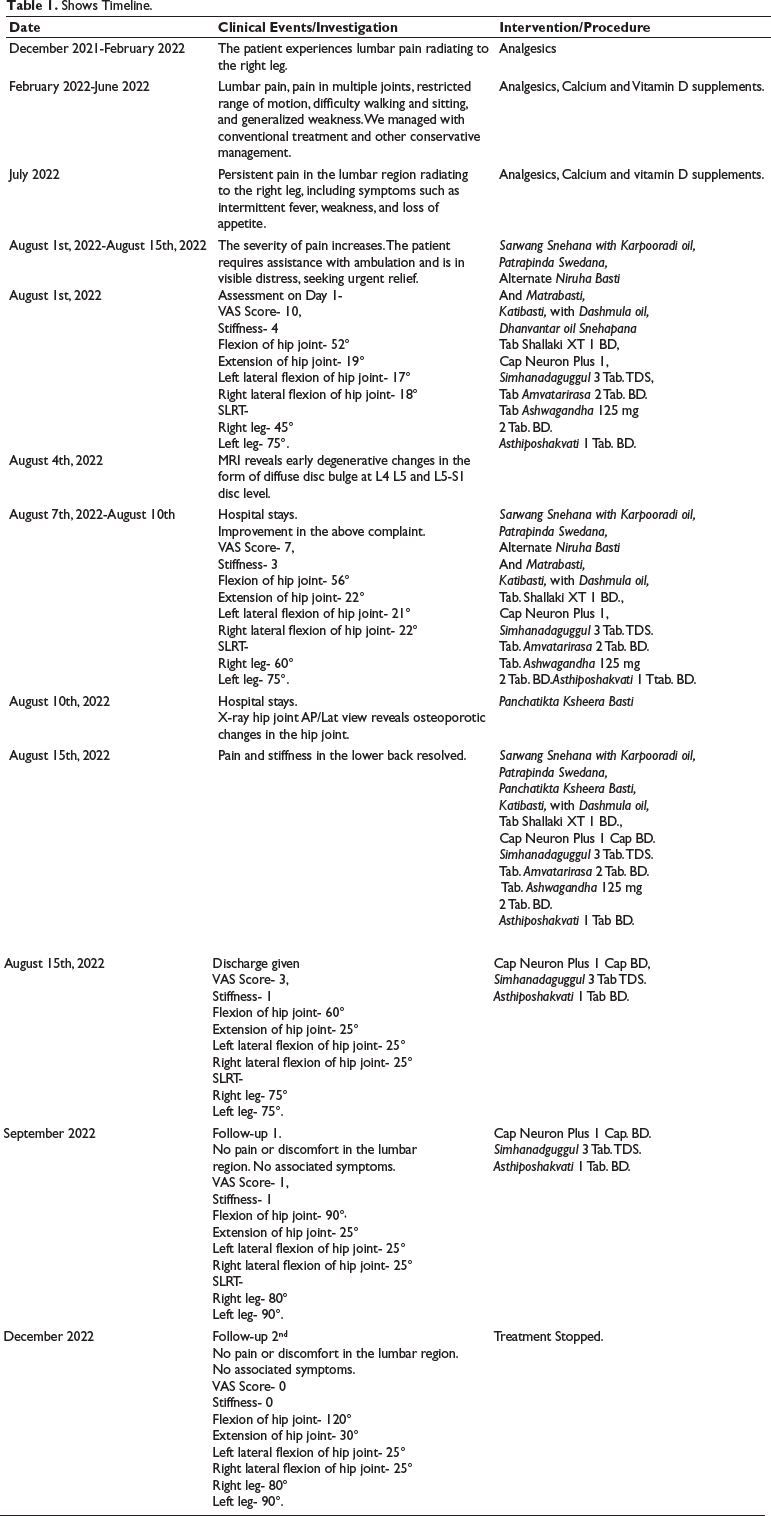
Table 1 details the duration of clinical events, Investigations, Interventions, and procedures throughout the treatment.
Shows Timeline.
Diagnostic Assessment
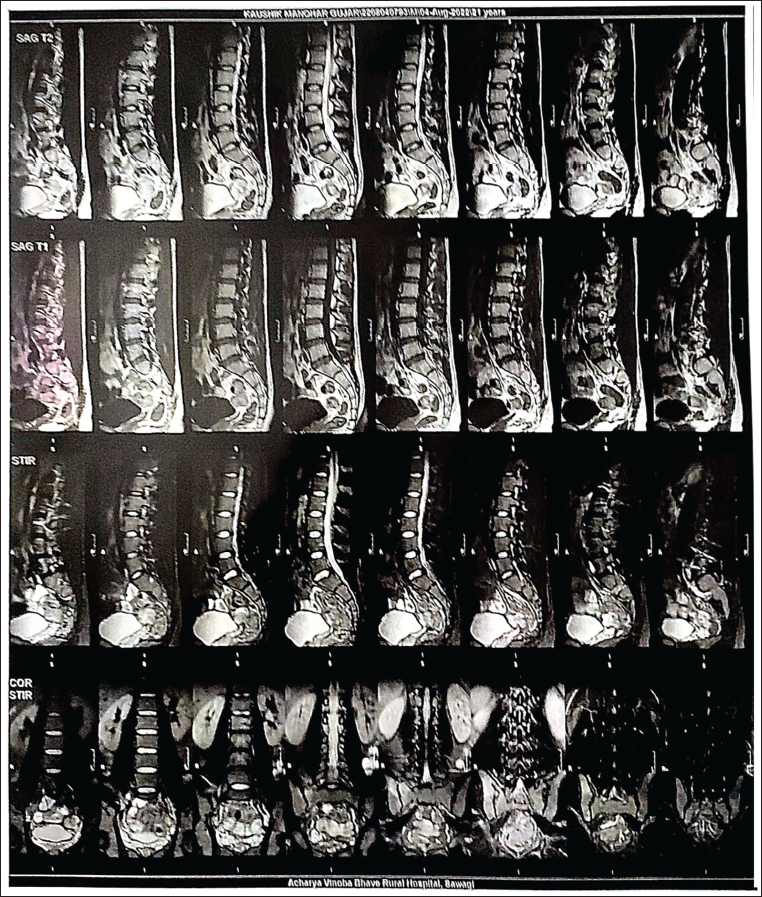
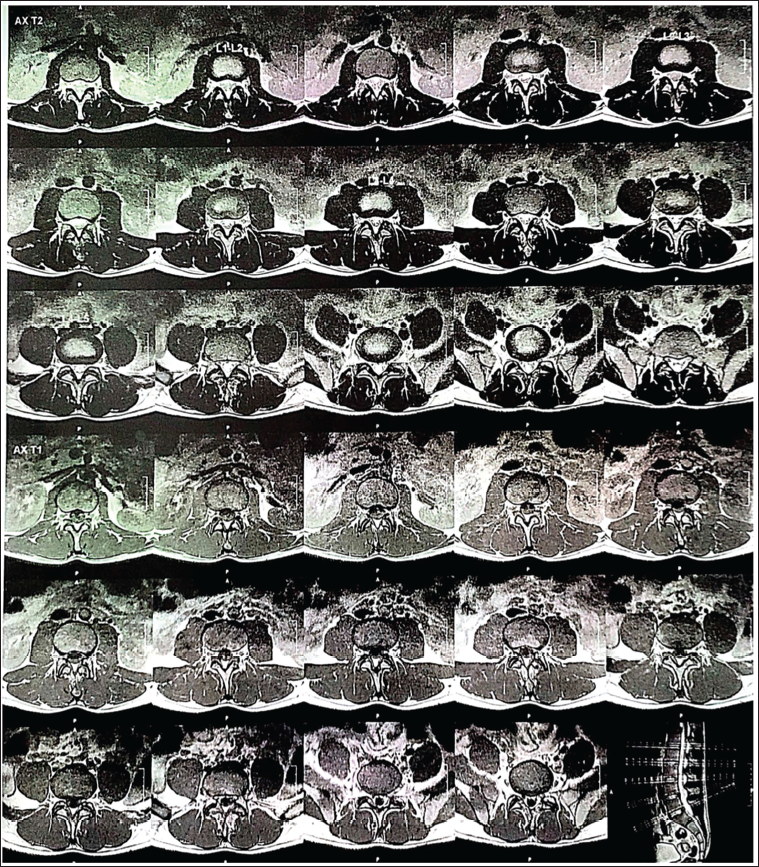
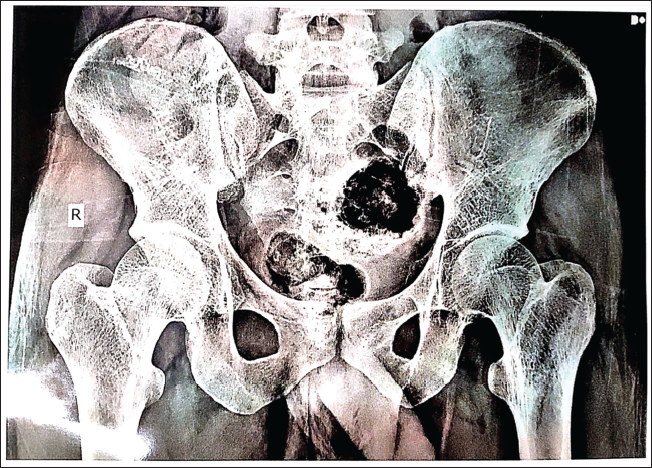
On physical examination, alterations in the Straight Leg Raise Test (SLRT) and reduced hip joint range of motion, indicative of lumbar radiculopathy, confirm the diagnosis. The diagnosis was made based on clinical symptoms and MRI findings. In Ayurveda, this condition is analogous to Gridhrasi. In Figure 1, MRI of the Lumbar Spine revealed a diffuse disc bulge at the L4-L5 and L5-S1 disk levels, while in Figure 2, an MRI of the Lumbar Spine shows early degenerative changes in the form of a diffuse disk. There were no indications of fractures, benign or malignant tumors, or anatomical or congenital deformities on MRI. In Figure 3, an X-ray of the hip joint (AP/Lat view) showed osteoporotic changes, excluding these factors from the differential diagnosis.
MRI Lumbar Spine Shows—The Bulge at L4-L5 and L5-S1 Disk Level seen in MRI Lumbar Spine.
MRI Lumbar Spine Shows—Early Degenerative Changes in the Form of Diffuse Disk.
X-ray Hip Joint Shows Significant Osteoporotic Early Degenerative Changes.
Therapeutic Intervention
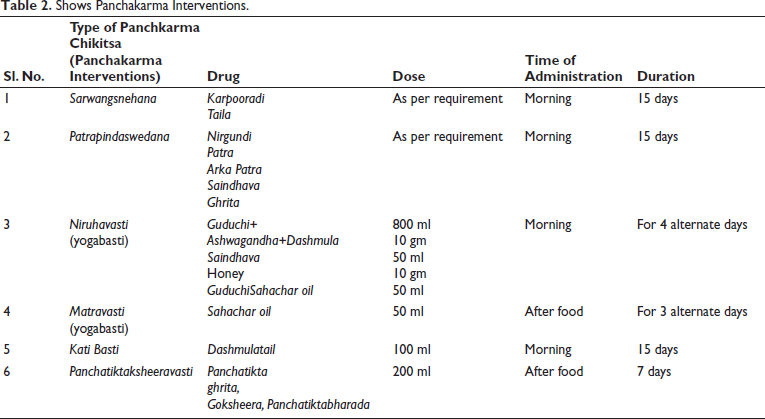
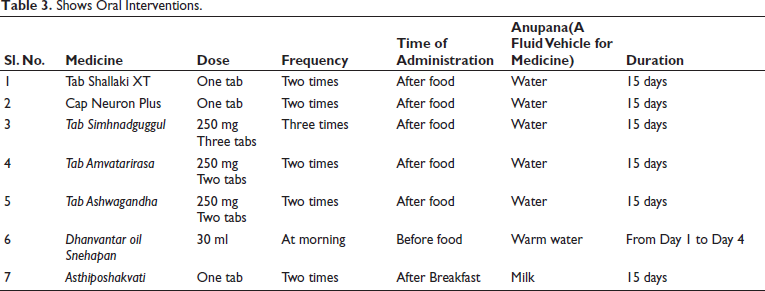
In this case, the treatment of lumbar radiculopathy involves a multifaceted approach integrating Ayurvedic therapies (Panchakarma interventions), as outlined in Table 2 and oral medications as detailed in Table 3. Sarwangsnehan and Patrapindaswedana are employed to alleviate pain and inflammation through oleation and herbal fomentation. Niruhavasti and Matravasti, administered as Yogabasti, alongside Panchatiktaksheeravasti, provide targeted enema therapies to detoxify and nourish the body. Kati Basti offers localized treatment to the lumbar region, enhancing relief. Additionally, the patient is prescribed Tab Shallaki XT, Cap. Neuron Plus, Tab. Simhnadguggul, and Tab. Amvatarirasa to address inflammation and joint health. Tab. Ashwagandha supports systemic strength and immune function, while Dhavantaram oil is used for Snehapan (internal oleation), and Asthiposhakvati aids in bone nourishment. This comprehensive regimen aims to manage symptoms, improve mobility, and promote overall well-being.
Shows Panchakarma Interventions.
Shows Oral Interventions.
On discharge, the patient is prescribed the treatment regimen for lumbar radiculopathy as outlined in Table 4. Cap Neuron Plus, one capsule twice daily (BD); Simhanadguggul, three tablets three times daily (TDS) and Asthiposhak Vati, one tablet twice daily (BD). This combination of medications aims to manage pain, reduce inflammation, and support joint and bone health.
Shows the Discharge Medication.

Follow-up and Outcomes
Subjective parameters assessed throughout the hospital stay are shown in Table 5. On the day of admission, the patient reported a pain level of 10 on the Visual Analog Scale (VAS) and a stiffness score of 4. By Day 7, the pain level had reduced to 7 and stiffness to 3. Further improvements were noted on the day of discharge (Day 15), with the pain level decreasing to 3 and stiffness to 1. At the first follow-up, the pain level was reported as 1, and stiffness remained at 1. By the second follow-up, pain and stiffness had been resolved entirely, with scores of 0 for both parameters. These clinical improvements correlate with the management of lumbar radiculopathy, where the reduction in pain and stiffness indicates relief from nerve root compression and inflammation in the lumbar spine. The progressive decrease in symptoms aligns with the typical treatment outcomes for lumbar radiculopathy, reflecting the efficacy of the therapeutic interventions used during the patient’s hospital stay.
Assessment of Subjective Parameters. 5

0: No pain
1-3: Mild pain (Pain is present but does not interfere with daily activities)
4-6: Moderate pain (Pain interferes with daily activities, may require medication)
7-9: Severe pain (Pain significantly interferes with daily activities and requires strong pain relief measures)
10: Worst possible pain (Pain is incapacitating, preventing any daily activities)
0: No stiffness
1: Mild stiffness (Occasional stiffness, minimal interference with daily activities)
2: Moderate stiffness (Frequent stiffness, moderate interference with daily activities)
3: Severe stiffness (Persistent stiffness, significant interference with daily activities)
4: Very severe stiffness (Constant stiffness, significantly limits daily activities)
5: Incapacitating stiffness (Stiffness prevents any daily activities)
The progressive improvements in flexion, extension, lateral flexion, and SLRT test results over the 15-day hospital stay and two consecutive follow-ups, as shown in Table 6, indicate effective management of lumbar radiculopathy. These improvements demonstrate reduced nerve root compression and inflammation, increasing mobility and decreased pain, confirming the treatment protocol’s efficacy.
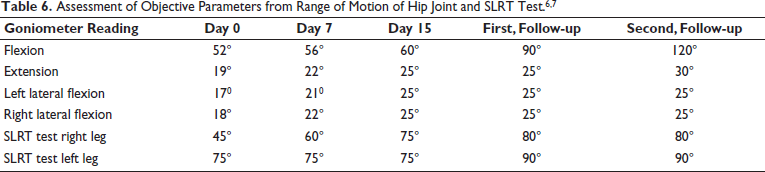
The Normal Range of Motion (ROM) for the hip joint is as follows:
Flexion and Extension
Flexion: 0 to 120 degrees
Extension: 0 to 30 degrees
Lateral Flexion (Side Bending)
Right Lateral Flexion: 0 to 25 degrees
Left Lateral Flexion: 0 to 25 degrees
Standard Range - The SLRT is 0 to 90 degrees commonly used to assess for lumbar radiculopathy, particularly in cases of suspected disk herniation causing nerve root irritation. The usual range of motion for the SLRT is as follows:
Discussion
The progressive onset of lumbar pain, exacerbated in the morning, with restricted movement and mobility issues, indicates lumbar radiculopathy. Ayurvedic treatments provide a multifaceted approach to manage this condition effectively. Medications provide analgesic effects, improving the patient’s quality of life and functional capacity. Therapies aimed at reducing stiffness and improving joint function, restore mobility and enhance physical function. Targeted physical therapies and exercises improve lumbar spine flexibility and hip joint range of motion, reducing mechanical stress on the spine. The holistic Ayurvedic management plan, including dietary modifications and lifestyle changes, promotes overall well-being, supporting natural healing processes and preventing recurrence. This comprehensive approach alleviates acute symptoms and fosters long-term recovery and spinal health maintenance.
In Ayurveda, a massage known as Abhyanga (Sarwanga Snehana) involves a focused application that increases blood flow and offers numerous health benefits, including easing physical and mental fatigue, strengthening the musculoskeletal system, reducing body heaviness and stiffness, and imparting a sense of lightness. 8 Sarwanga Snehana with Karpooradi Taila, an Ayurvedic formulation with camphor (Karpooram) as the principal ingredient and coconut oil as the base, effectively reduces muscle soreness through its nutrient-rich composition that penetrates deeply into the skin. Camphor (Cinnamomum camphora) also serves as a topical analgesic, antibacterial, antispasmodic, anti-inflammatory, expectorant, and cold suppressant and possesses stimulant, diaphoretic, thermogenic, and fragrant properties.9, 10 Patrapinda Sweda, a type of Sweda, uses Vatahara drugs like Nirgundi Patra and Arka Patra, roasted with salt and oil and formed into a bolus tied in a cloth. This warm bolus is gently massaged over the painful area, improving blood circulation, resolving Dosha imbalances, strengthening muscles, aiding toxin release, reducing inflammation, promoting muscular tone, and enhancing tissue functionality. 11 Niruhavasti, incorporating Ashwagandha, Dashmula, Guduchi, Saindhav, honey, and Sahachar oil, utilizes tikshna, ushna, vyavayi, and oshadha to expel vitiated doshas from the body, functioning uniquely by transmitting the Veerya of Basti throughout the entire body, akin to water nourishing a plant. 12 Matravasti with Sahachar oil, a frequently used traditional oil in Panchakarma, maintains neuromuscular health through its soothing and calming phytochemicals on muscles and ligaments, providing anti-inflammatory and pain relief benefits. 13 Panchatikta Ksheerabasti delivers the impact of Anuvasanvasti, nourishing Asthi dhatu, which has an affinity for Tikata rasa; combined with milk and ghee, it rectifies pathophysiology and enhances bone development. 14 Kati Vasti with Dashmula Taila involves retaining oil in the lower back area, reducing back discomfort, relieving numbness from nerve compression, and strengthening back muscles to maintain the spine’s natural curve in bone tissues. 15
Tab Shallaki XT is recommended for musculoskeletal disorders, gout, and spondylitis. Its primary component, Boswellia serrata, is well known for reducing inflammation, stiffness, and joint discomfort. The other ingredients include Erandmool and Guduchi, which effectively treat autoimmune illnesses, reduce inflammation, and decrease joint pain. 16 Cap. Palsineuron contains herbal-mineral ingredients that improve metabolic function, enhance the functionality of the central and peripheral nervous systems, readily activate neuromuscular communication, improve tissue oxidation, and regulate blood supply in related areas. 17 Tab Simhanada Guggul, also known as Vatari Guggul, is primarily used to treat and manage various joint aches, swelling, stiffness, and inflammation brought on by gout and rheumatoid arthritis, possessing powerful anti-rheumatic, detoxifying, anti-toxin, antimicrobial, anti-pruritic, depurative, laxative, anti-gout, and demulcent properties. 18 Tab Amvatarirasa contains naturally calcium-rich and anti-inflammatory herbs that strengthen bone structure, lower inflammation, ease joint discomfort, increase flexibility, remove toxins, and provide long-lasting treatment for aching joints. 19 Tablet Ashwagandha helps with atonic nerves, fainting, giddiness, and insomnia, being a calming and nervine tonic. It has received extensive research for its wide range of pharmacological effects, including antioxidant, anxiolytic, adaptogen, memory-improving, anti-venom, anti-inflammatory, anti-cancer properties, cardiovascular protection, antibacterial activity, and immunomodulation. 20 Tab Asthiposhakvati, denoting the Poshaka of all Dhatus, is an anti-stress, antimicrobial, anti-inflammatory, antioxidant, and immuno-modulator nutritional supplement. 21 Dhanwantaram Taila is an excellent nervine tonic that prevents nerve irritability and can calm Vata and Pitta. It also aids in reviving atrophied muscle conditions because it includes alkaloids with regenerative properties. It contains the sympathomimetic medication ephedrine, and Sidacordifolia has anti-inflammatory effects and raises pain tolerance. 22
Conclusion
This single case study highlights the potential effectiveness of Ayurveda in managing lumbar radiculopathy. The holistic approach of Ayurveda, which includes herbal medications, therapeutic procedures, and lifestyle modifications, demonstrated significant improvement in the patient’s symptoms and overall quality of life. The reduction in pain, increased mobility, and enhanced functional capacity observed in this case support the integration of Ayurvedic treatments in managing lumbar radiculopathy.
Patient’s Perspective
“The Ayurvedic treatment plan prescribed to me included herbal medications, regular therapeutic massages, and specific lifestyle and dietary changes. While the regimen required discipline, the gradual reduction in pain and improved mobility were encouraging. The holistic nature of Ayurveda not only addressed my physical symptoms but also improved my overall well-being”.
“The personalized care and attention I received from my Ayurvedic practitioner made a substantial difference. This approach has given me a new perspective on managing my condition and provided a sustainable recovery path. I am grateful for the improvement in my quality of life and the empowerment I feel in managing my health through Ayurveda”.
Footnotes
Abbreviations
Acknowledgments
We would like to express our sincere gratitude to Datta Meghe Institute of Higher Education and Research Wardha, Mahatma Gandhi Ayurveda College Hospital and Research Centre, Salod, Wardha, Maharashtra, for providing us with the necessary resources and access to information that was crucial for our study. Special thanks to the Department of Panchakarma for their assistance in data collection and analysis.
We are also grateful to the participant of our study, who generously shared their time and experiences, making this research possible. His contributions were vital in providing a comprehensive understanding of the case.
Declaration of Conflicting Interests
The authors declared no potential conflicts of interest with respect to the research, authorship and/or publication of this article.
Ethical Approval
Not applicable.
Funding
The authors disclosed receipt of the following financial support for the research, authorship, and/or publication of this article: Datta Meghe Institute of Higher Education and Research Wardha, Mahatma Gandhi Ayurveda College Hospital and Research Centre, Salod, Wardha, Maharashtra.
Informed Consent
I have been informed about the nature and purpose of the case report on lumbar radiculopathy. I have had the opportunity to ask questions and have received satisfactory answers. I understand that my participation is voluntary and that I can withdraw my consent at anytime without affecting my medical care.
