




Abstract
Background
Anxiety disorders, bipolar disorder, and depression are prevalent mental health issues that have a substantial impact on both individuals and the community. Many people continue to have symptoms and do not get the right kind of relief from their existing drugs, even after trying conventional therapy methods. Therefore, to enhance the current treatment modalities and patient results, new therapeutic alternatives are required. In recent years, there has been an increase in interest in N-acetylcysteine (NAC) because of its many biological benefits, including its ability to modulate glutamate levels and its antioxidant and anti-inflammatory properties. According to studies, NAC has encouraging anti-depressant properties and may help treat bipolar disease by stabilizing mood and reducing the risk of relapses. Furthermore, through lowering oxidative stress and modifying neurotransmitter networks, NAC has been shown to lessen the symptoms of anxiety. The preclinical and clinical research examining the efficacy of NAC in depression, bipolar disorders, and anxiety are thoroughly analyzed in this review.
Methodology
Books were reviewed and medical and scientific literature found in MEDLINE and PubMed were analyzed for an assessment of NAC’s therapeutic potential in psychiatric illnesses such as anxiety, depression, and bipolar disorder.
Conclusion
NAC exhibits potential as a therapeutic agent for psychiatric problems such as anxiety, bipolar disorder, and depression. Performing a thorough clinical study will facilitate proper understanding its efficacy, safety and mechanisms of action.
Introduction
N-acetylcysteine (NAC) is a sulfhydryl-containing drug that was first prescribed for medicinal purposes in 1967. It was initially patented in 1960. 1 Since 1969, NAC has been utilized clinically in cystic fibrosis, 2 and its application has grown to encompass chronic obstructive pulmonary disease and acetaminophen overdose; its clinical significance continues to grow. The World Health Organization (WHO) and the Food and Drug Administration (FDA) have both designated NAC as an essential medication. 3 NAC is typically sold as an over-the-counter nutritional supplement with antioxidant qualities in several countries, including the USA, Canada, and Australia. 4 Clinical applications of NAC have grown in tandem with our growing understanding of its activity. Apart from its well-established medicinal applications, there has been a surge in interest lately in the application of NAC in the management of neuropsychiatric disorders such as anxiety, depression, and bipolar disorder. 5
NAC is a possible adjunctive treatment option for people with psychiatric disorders since it is a precursor to the antioxidant glutathione and has been demonstrated to control glutamate levels, reduce inflammation, and improve overall brain function. 6 The use of NAC in psychiatric diseases has been the subject of numerous research, which has highlighted both its neuroprotective and neurotrophic qualities. The potential effectiveness of NAC in treating diseases such as bipolar disorder, schizophrenia, OCD, drug use disorders, and generalized anxiety disorder has been studied. 2 Studies have demonstrated that NAC supplementation may benefit people with psychiatric disorders by lowering symptoms, enhancing cognitive function, and improving treatment outcomes. 7 The NAC complex and its multiple mechanisms of action in psychiatric diseases include antioxidant effects, modulation of inflammation, improvement of neuroplasticity, and regulation of glutamate neurotransmission. 8 NAC is a viable option for the treatment of several psychiatric conditions due to its diverse neuroprotective qualities.
Millions of individuals worldwide suffer from depression, and while many are helped by modern anti-depressants, a sizeable fraction either do not get better or have unbearable side effects. NAC possesses anti-inflammatory and antioxidant qualities, which have demonstrated potential therapeutic benefits in treating depression. 9 Another difficult psychiatric illness that needs appropriate long-term therapy is bipolar disorder. Mood stabilizers are frequently used to treat repeated manic and depressive episodes that bipolar disorder sufferers experience. These medications may not always work well and may have negative consequences. As an additional or alternative treatment for bipolar disorder, NAC has demonstrated promise. This may lessen the intensity and occurrence of manic and depressive episodes by regulating glutamatergic circuits that are dysregulated in the illness. 10 Among the most prevalent mental health issues globally are anxiety disorders, for which benzodiazepines and selective serotonin reuptake inhibitors (SSRIs) may not be the best or most appropriate treatments for some individuals. Anxiolytic effects of NAC have been demonstrated in preclinical and clinical investigations. It could function by lowering oxidative stress and modifying glutamatergic neurotransmission. 11 This review article aims to provide a comprehensive overview of the current evidence supporting the use of NAC in the management of depression, bipolar disorder, and anxiety, including recent clinical studies evaluating its effectiveness and safety in patients with these conditions. By synthesizing and critically evaluating the existing literature, this review seeks to shed light on the potential therapeutic applications of NAC in addressing the unmet needs of individuals suffering from mood and anxiety disorders.
Methodology
Books were reviewed and medical and scientific literature found in MEDLINE and PubMed were analyzed for an assessment of NAC’s therapeutic potential in psychiatric illnesses such as anxiety, depression, and bipolar disorder. Using the key terms “NAC,” “N-acetyl-
Mechanism of Action
NAC is a thiol that functions as an acetylated precursor of the amino acid
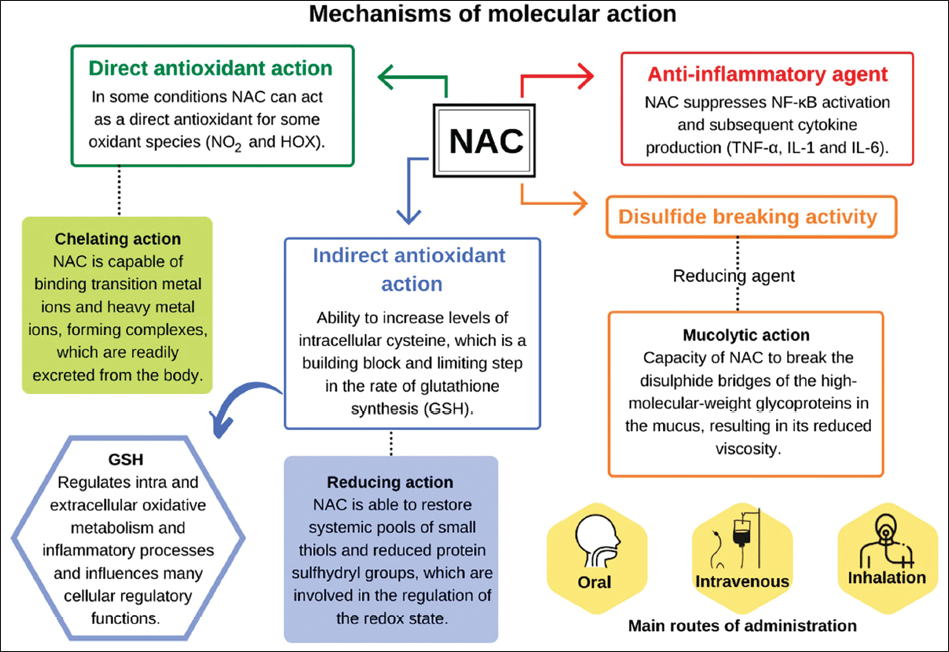
There are questions regarding the significance of NAC’s direct antioxidant capacity against RONS under physiological conditions because of its generally lower reaction rate when compared to other enzymatic and non-enzymatic antioxidants and other substrates, especially when taking into account other factors such as its endogenous concentration and location (cellular or extracellular).
16
NAC may, however, have direct antioxidant action against some oxygen species, such as NO2 and hypohaloacids (HOX), depending on its relative content of other thiols.
16
Experimental research indicates that NAC, like other thiols, can bind with its free thiol to active redox metal ions, including heavy metals such as lead (Pb2+) and mercury (Hg2+) and transition metals such as copper (Cu2+) and iron (Fe3+), forming complexes that the body can easily eliminate.
13
There have been few clinical trials examining NAC’s chelating abilities, even though it can lower metal ion levels in toxicity.
17
The potential of NAC as a chelating agent remains to be determined, as does the extent to which its effects as an indirect antioxidant stems from its ability to enhance the intracellular tripeptide (
The most prevalent non-protein thiol in the body, GSH is one of the most significant antioxidants that keep cells in their proper redox state. Apart from directly reacting with reactive chemicals, GSH also serves as a cofactor or substrate for other antioxidants. 16 Because cysteine has a lower intracellular concentration, it acts as a rate-limiting factor for the manufacture of GSH. This characteristic clarifies NAC’s function as a prodrug of intracellular GSH and cysteine. 19 Because NAC can raise intracellular cysteine levels, which raises GSH levels, it is significant as a potent antioxidant. 19
As a result, NAC is one of the most essential drugs to prevent oxidative stress–induced damage in diseases linked with xenobiotic poisoning, such as paracetamol or GSH insufficiency. 13 Furthermore, NAC can break down thiol proteins, including cysteinylated extracellular proteins, which release free thiols, which are more potent antioxidants and improve the synthesis of GSH. NAC’s reducing capacity is connected to another process that contributes to its indirect antioxidant activity. Low molecular weight (LMW) thiol ubiquitous groups and decreased protein sulfhydryl groups implicated in redox state modulation can be restored by NAC. 20 The ability of NAC to alter protein structure and/or function has also been reported in experimental studies. 21 This includes changes in the tumor necrosis factor (TNF-α) receptor’s affinity for cytokines, reduction of angiotensin II receptor binding in vascular smooth muscle cells, and reduction of transforming growth factor beta 1 (TGF-β1) upon binding to beta-glucan of the transforming growth factor receptor type III (TβRIII).22, 23 Lastly, NAC also reduces inflammation by blocking nuclear factor kappa (NF-κB), the light chain enhancer of activated B-cells, which is essential for the inflammatory cascade and the immunological response linked to the oxidative response. NAC suppresses nuclear activation and translocation of NF-κB, a transcription factor that controls the expression of genes that promote inflammation. 24 It has been demonstrated that NAC prevents lipopolysaccharide-activated macrophages from releasing the inflammatory cytokines TNF-α, interleukin (IL)-1β, and IL-6. 25
Potential Mechanism of N-acetylcysteine in Psychiatric Disorders
NAC has a complex mode of action that includes anti-inflammatory effects, oxidative stress reduction, and glutamate modulation. These outcomes add to the medication’s therapeutic advantages in treating a range of psychiatric illnesses. The following are some important pathways via which NAC works in mental illnesses:
Modulation of glutamatergic neurotransmission: Glutathione is a powerful antioxidant that is essential for preserving redox balance and shielding neurons from oxidative damage. NAC functions as a precursor to glutathione.
6
NAC can influence glutamatergic neurotransmission by elevating glutathione levels, namely, through controlling the cystine/glutamate antiporter system (xC−) and reestablishing the equilibrium between extracellular glutamate and cystine levels in the brain. This may lessen the neuroinflammation and excitotoxicity linked to mental illnesses.
6
Anti-inflammatory effects: NAC possesses anti-inflammatory qualities that may aid in the reduction of neuroinflammation associated with mental illnesses. It prevents pro-inflammatory cytokines including IL-1β and TNF-α from being produced as well as the activation of NF-κB.
6
Redox regulation: NAC reduces oxidative stress and shields neuronal cells from harm by acting as a scavenger of reactive oxygen species (ROS) and reactive nitrogen species (RNS). In psychiatric diseases, NAC can enhance cellular resilience and prevent oxidative damage by boosting antioxidant defenses and replenishing glutathione levels.
6
Neurotransmitter system modulation: It has been demonstrated that NAC alters the activity of several neurotransmitter systems, such as glutamate, serotonin, and dopamine. NAC can alter neuronal signaling pathways linked to psychiatric diseases as well as synaptic transmission by influencing neurotransmitter release and reuptake.
26
It has been established that NAC may be used as a therapy approach for mental illnesses such as bipolar disorder, anxiety, and depression. The method by which NAC modulates the symptoms of psychiatric diseases is explained by its influence on decreasing oxidative or inflammatory cytokines. 27 According to a review based on available data, disruptions in brain energy metabolism, mitochondrial functions, and redox balance linked to environmental and genetic factors are responsible for the genesis and progression of psychiatric disorders. 28 These disruptions are not only clinically linked to disease-specific symptoms but also alter an individual’s circadian rhythm and metabolic rate. Antioxidant activity, decreased cytokine activity, modulation of dopamine release, reversal of mitochondrial dysfunction, reduction of apoptosis and ferroptosis, anti-inflammatory effects, increased neurogenesis, and increased glutamate release are just a few of the numerous significant roles that NAC plays. 29
Its antioxidant impact, which is mediated through multiple mechanisms, is arguably the most significant of them in the treatment of psychiatric diseases. By promoting glutathione synthesis, elevating glutathione S-transferase activity, scavenging free radicals, and activating group II metabotropic glutamate receptors to decrease glutamate turnover, NAC functions as an antioxidant.
30
The primary endogenous antioxidant in the brain is glutathione. Glutathione in the brain is increased when
An imbalance between tissue redox defense and ROS, including superoxide, peroxynitrite, and hydrogen peroxide, is known as oxidative stress. Increased ROS, compromised antioxidant defenses, or unrepaired oxidative damage could be the cause. 31 ROS induce DNA changes, peroxidation of cellular lipids, and inactivation of significant respiratory chain enzymes. 31 Superoxide dismutase, glutathione reductase, and peroxidase are examples of antioxidant enzymes that convert ROS into less harmful molecules and shield the brain from oxidative stress–related damage. 31 By boosting the production and storage of glutathione disulfide, which results in export and extracellular hydrolysis, protein S-glutathionylation, and the development of glutathione-dependent humans, severe long-term oxidative stress can cause glutathione depletion. 32 It has been demonstrated that NAC can prevent mitochondrial malfunction, which is linked to oxidative stress. 33
Role of N-acetylcysteine in Psychiatric Diseases
Depression
Unipolar depression is linked to multiple oxidative disruptions, such as oxidative harm in red blood cells, elevated antioxidant enzyme levels (primarily superoxide dismutase) in peripheral tissues that are decreased by anti-depressant therapy, and bio-oxidative stress in the frontal cortex of depressed individuals’ brains during coping. 34 It is believed that NAC’s ability to reduce oxidative stress by raising glutathione levels contributes to its anti-depressant effects. 35 Because of its anti-inflammatory qualities and elevated extracellular glutamate levels, NAC may also have depressive effects. 36 Treatment-resistant depression may benefit greatly from NAC’s anti-inflammatory properties. 37
In one animal study, it was observed that NAC shortens rats’ periods of immobility during forced swimming tests in animal experiments. 35 Chronic administration of NAC produced effects akin to imipramine in male Wistar rats that had their bulbs removed, a paradigm used to study depression. 38 Results from clinical investigations have been inconsistent. NAC (2,000 mg/day) demonstrated indications of larger effects for more severe depression (MADRS scores > 24) in a large RCT with 269 participants, finding a modest but substantial improvement in MADRS scores at 16 weeks of follow-up (the intervention terminated at 12 weeks) compared to placebo. 39 Additionally, the study discovered a more efficient longitudinal interview and notable advancements in the Longitudinal Interval Follow-up Assessment of Impaired Functioning Range Tool (VIVO-RIFT) and Longitudinal Interval Monitor-up Assessment (SLICE)-LIFE. 39
Higher levels of glutamate-glutamine and N-acetylaspartate and lower levels of myoinositol were predictive of whether a patient was in the NAC therapy group, according to the MR spectroscopy of a subset of the research. 6 Reduced oxidative stress was predicted by higher glutamate-glutamine and N-acetyl aspartate levels. 40 The impact of NAC on enhancing anti-depressant medication in patients with treatment-resistant depression is presently being examined in a sizable RCT. 37 NAC was found to significantly enhance function in a meta-analysis of seven RCTs that looked at NAC as an additional treatment for unipolar depression. On the Clinical Global Impression Severity Scale, this was discovered to be a substantial norm (CGI-S) not on other performance measures (such as the LIFE-RIFT, SLICE-LIFE, and Social and Vocational Functioning Assessment Scale (SOFAS)) when contrasted with a placebo. 40 To sum up, one RCT looked just at NAC in cases of unipolar depression and found a small but noteworthy outcome. Furthermore, more thorough and productive research is required before it may be suggested for therapeutic usage.
Bipolar Disorder
The body of research on bipolar disorder (BD) points to mitochondrial dysfunction as a potential pathophysiological factor. Therefore, treatments that impact mitochondrial activity might help BD patients clinically manage their depression symptoms. In individuals with BD and depressive symptoms, a randomized, placebo-controlled clinical trial with 181 participants was unable to show the benefits of 2,000 mg/day NAC supplementation either alone or in conjunction with other antioxidants. 41 NAC (2 g day 1; 24 weeks; n = 75) was administered as an adjunct to the usual medication in a 24-week double-blind, multicenter, randomized controlled trial of patients with BD in the maintenance phase. The trial had a four-week washout period and found that NAC improved the majority of secondary scales and depressive symptoms. 42
During the randomized controlled experiment, participants with BD (n = 24) were assigned to receive aspirin (1 g day 1), a combination of aspirin and NAC (1 g each), or a placebo. 43 Following an initial eight-week therapy phase, patients receiving a placebo and those receiving NAC in addition to aspirin showed a roughly 70% chance of receiving a good treatment response. NAC and aspirin combined therapy produced a higher chance of a treatment response (67%) after a 16-week treatment period compared to placebo (55%), NAC (57%), and aspirin (33%). IL-6 and CRP levels were unaffected at either 8 or 16 weeks. 43
When NAC was given orally at 1,000 mg/day to a small sample of patients (14 subjects), Magalhães et al. exhibited interesting findings, with the treated group’s manic and depressive symptoms of BD II completely resolved. 44 Furthermore, NAC was assessed as an adjunctive treatment for BD and MDD by Kishi et al., who carried out a systematic review with a meta-analysis of clinical, randomized, and double-blind trials. 45 They found that while NAC was able to lower the Global Clinical Impression Severity Score Scale, no discernible improvement in symptoms was seen. The clinical effectiveness of NAC supplementation in MDD patients is being studied, as well as any possible impact it may have on oxidative stress and inflammation (IDClinicalTrials.gov NCT02972398).
Anxiety Disorder
Neuroinflammation, glutamatergic hyperactivity, and oxidative stress are linked to anxiety disorders. 46 It is unknown if NAC’s glutamate, antioxidant, or antioxidant-modifying qualities are what cause its anxiolytic effects. Greater oxidative stress and anxiety-like behavior were found to be connected with greater microglial activation, which includes phagocytosis, inflammation, disruption of the blood–brain barrier, and increased synthesis of 2-OH-estradiol, according to a preclinical investigation done on mice. 46 In rat offspring from an experimental model of autism induced by valproate, a 10-day NAC (150 mg/kg; i.p.) treatment reversed the duration and frequency of social interaction deficits and anxiety-like behaviors. These effects were blocked by the administration of the mGlu2/3 receptor antagonist LY341495 into the amygdala, indicating the involvement of a glutamate-related mechanism. 47
Sprague-Dawley rats treated with NAC (100 mg/kg; i.p.) and morphine for 14 days showed improvements and a decrease in anxiety-like behaviors. This resulted from changes in oxidative stress markers that were anxiogenic in nature, specifically a drop in malondialdehyde (MDA) levels and a rise in GSH and nitrite/nitrate levels in the hippocampal regions. 48 The anxiety-like behaviors associated with nicotine-induced withdrawal in mice were evaluated 18–24 hours after continuous drug administration, and a single dose of NAC (15, 30, or 120 mg/kg; i.p.) did not affect them. 49 After consuming alcohol, rats received four days of NAC treatment (60 and 90 mg/kg; i.p.) to reduce anxiety caused by alcohol withdrawal. This prevented the decrease in peripheral and total crossings, rearing, and total activity in the open field test, as well as the increases in leptin (90 mg/kg) and corticosterone levels (both doses) that resulted from alcohol withdrawal. 50 In the open field, light/dark, hole table, social interaction, stress-induced hyperthermia models in mice, and the light/dark test in zebrafish, NAC decreased anxiety-like behavior. 51 The behavioral and physiological effects of 14 days of chronic stress were reversed in zebrafish after seven days of NAC therapy. 51
Cisplatin, which is frequently used in cancer, has neurotoxic anxiolytic effects that are mediated by elevated oxidative stress. 52 NAC supplementation of cisplatin decreased oxidative stress and cisplatin-induced apoptosis in the hippocampus. 52 NAC did not, however, lower assessed oxidative stress from peripheral sources in an RCT involving 57 patients (28 in the NAC group and 29 in the placebo group) receiving cisplatin augmentation for head and neck cancer. 53 It is important to acknowledge that, in contrast to other studies that have demonstrated favorable outcomes, the NAC dose and treatment duration in this research were modest, and anxiety was not measured as an end point. The results of the study indicate that NAC did not reduce the antitumor efficaciousness of cisplatin, indicating the safety of further cancer research. 53 A case study describing the addition of NAC (2,400 mg/day) to sertraline in the treatment of a 17-year-old male patient with social anxiety disorder and generalized anxiety disorder has been reported. 54 The patient’s CGI-S score decreased from five to two in just eight weeks. In conclusion, no controlled studies have looked into the use of NAC in the treatment of anxiety disorders, despite some preclinical evidence and theoretical explanations for its possible application.
Safety Profile and Adverse Effects
Excellent safety characteristics characterize NAC. Up to 10 × 2,800 mg of oral medication was tested for safety in a clinical trial, and no serious adverse effects were noted. 55 NAC is an oral medication that is well tolerated and does not have any serious side effects, according to all large systematic reviews. 56 The most frequent adverse effects documented in clinical trials using NAC were digestive, including nausea, vomiting, diarrhea, bloating, cramps, minor stomach discomfort, and heartburn. 57 Aside from these general adverse effects, other people have suffered headaches, rashes, elevated blood pressure, dry mouth, exhaustion, muscular soreness, insomnia, runny nose, nasal congestion, restlessness, and dizziness. Nevertheless, these are anecdotal instances, and there have been no reliable reports of major side effects from NAC therapy. 57 As an adjuvant therapy, NAC has been shown to guard against the negative effects of mental drugs. 58 Glutathione, anticancer medications, and paracetamol may interact with NAC. It also amplifies the effects of comparable medications, such as nitrate vasodilators, increasing the risk of hypotension. 57 NAC should therefore be used cautiously in individuals who are taking these drugs.
Discussion
NAC has demonstrated encouraging therapeutic benefits in a range of psychiatric disorders by reducing oxidative stress, exhibiting anti-inflammatory properties, modulating glutamatergic neurotransmission, and modifying neurotransmitter systems, all of which help to alleviate symptoms and neuropathologies. 6 According to research, NAC helps lessen symptoms of anxiety, bipolar disorder, depression, obsessive-compulsive disorder, schizophrenia, and drug use disorders. 26 Additionally, it has been demonstrated to improve cognitive performance in patients with certain psychiatric diseases and increase the efficacy of traditional treatments. 59
When treating psychiatric diseases, the recommended daily amount of NAC is usually divided into two or three doses, ranging from 1,200 to 3,600 mg. Depending on an individual’s response and the severity of the symptoms, higher doses can be required in some situations. 6 Preclinical and clinical research on depression, anxiety, and bipolar disorder have demonstrated the behavioral efficacy of NAC. It has been demonstrated to lessen obsessive behaviors, elevate mood, and lessen anxiety. 60
The effectiveness of NAC as an adjuvant treatment for patients with major depressive illness was examined in a 2019 study by Berk et al. The findings demonstrated that these individuals’ overall functioning and depressive symptoms were both improved by NAC supplementation. 61 Supplementing with NAC reduced anxiety symptoms in patients with generalized anxiety disorder, according to a randomized controlled experiment conducted by Sarris et al. According to the study, those taking NAC experienced much lower levels of stress and anxiety than the placebo group. 62
Overall, these recent clinical studies demonstrate the potential effectiveness of NAC as an adjunctive treatment in patients with depression, anxiety, and bipolar disorders. Further research is needed to confirm these findings and elucidate the underlying mechanisms of action of NAC in these psychiatric conditions. Based on recent studies, there is strong evidence that NAC is a novel and successful treatment for anxiety, bipolar disorder, and depression. More research is required because many of the RCTs and preclinical studies that have been discussed have provided only basic information about the efficacy of NAC in therapy. On the other hand, NAC seems to be a promising therapeutic target and provides a therapeutic option in a field where other treatments are inadequate or ineffective. Evidence points to NAC’s potential anti-depressant benefits, which may stem from its anti-inflammatory and antioxidant qualities as well as how it affects glutamate and dopamine neurotransmission. 9 Because of its capacity to control glutamatergic pathways and possibly lessen the severity and frequency of manic and depressive episodes, NAC is a viable alternative or complementary treatment for bipolar illness. 10 Furthermore, NAC has demonstrated anxiolytic benefits, potentially through lowering oxidative stress and modifying glutamatergic neurotransmission. 11 Even if the data is encouraging, more extensive and well-designed research is still required to fully understand the clinical effectiveness of NAC in these conditions. It is noteworthy that a lot of recent research exclusively examines NAC as an adjuvant treatment. NAC monotherapy clinical trials are necessary to accurately ascertain the drug’s therapeutic potential. While oxidative stress appears to be a fairly non-specific finding in several psychopathologies, glutamate dysregulation and inflammatory pathways have also been widely reported. 11
NAC’s apparent lack of specificity in early studies is intriguing and suggests that it may target pathways common to different diseases. It is possible that some places are more beneficial than others as the body of evidence grows. Because glutamate, the most widely distributed neurotransmitter, interacts with other neurotransmitters, such as serotonin and dopamine, people suffering from diseases such as bipolar disorder and depression may benefit from indirect manipulation of these pathways through modifications in glutamatergic activity. 12 Since oxidative stress is altered in the majority of these conditions, there may be a common link to therapy efficacy. In a similar vein, the advantages from NAC administration might be attributed to the regulation of inflammatory pathways. Most research has focused on the connection between inflammation and depression. 63 Further research is necessary to determine the ideal dosage and long-term safety profile of NAC. Furthermore, the precise dosage of NAC is yet to be established. Studies on dose finding may demonstrate the same efficacy at lower doses or increased efficacy at higher levels. Research is necessary, nonetheless, considering the great safety profile of NAC and the possible advantages demonstrated in a number of clinical trials and uncontrolled studies. NAC is used to treat anxiety, bipolar illness, and depression. 57 This improbable therapeutic instrument presents novel pathways as potential targets for therapy. This opens the door for the creation of additional logical, hypothesis-driven therapies. NAC’s apparent safety, tolerability, affordability, and accessibility all contribute to its allure.
Conclusion
The potential therapeutic uses of NAC in the field of psychiatry are highlighted in this review study. An affordable and easily accessible substance, NAC has demonstrated encouraging effects in treating a number of mental illnesses, such as anxiety, bipolar disorder, and depression. To enhance patient outcomes, however, more funds and resources for research should be invested in examining NAC in larger clinical trials. This will give clinicians access to evidence-based therapy alternatives. To sum up, NAC exhibits potential as a therapeutic agent for psychiatric problems such as anxiety, bipolar disorder, and depression. We can improve our understanding of the efficacy and safety of this medication by performing thorough clinical studies and broadening our understanding of its mechanisms of action. This will ultimately lead to better management and treatment of patients with psychiatric disorders.
Abbreviations
Footnotes
Declaration of Conflicting Interests
The authors declared no potential conflicts of interest with respect to the research, authorship, and/or publication of this article.
Funding
The authors received no financial support for the research, authorship, and/or publication of this article.