



Abstract
Background:
Rubella infection poses significant risks during pregnancy, including miscarriage and Congenital Rubella Syndrome (CRS). This study assessed the knowledge, attitudes, and practices (KAP) regarding Rubella vaccination among female medical students.
Methods:
A cross-sectional, questionnaire-based study was conducted in June 2018 among 150 female MBBS students at a tertiary care centre in South India. Data on demographics, knowledge of Rubella and its vaccine, vaccination history, and willingness to promote Rubella awareness were collected.
Results:
Among the 150 participants, 60 were final year, 50 pre-final, and 40 pre-clinical students. Most were from urban areas and middle-income families. While all students recognised Rubella’s complications in pregnancy, detailed knowledge of the vaccine (type, dosage, route) varied by year. Vaccination coverage was 82%, but only 58% had completed the full schedule. Among unvaccinated students, 95% were willing to get vaccinated. Nearly all participants expressed a positive attitude towards Rubella prevention and showed readiness to engage in awareness and surveillance activities.
Conclusion:
Although general awareness about Rubella was high, detailed vaccine knowledge and full coverage need improvement. Targeted educational interventions are recommended to strengthen vaccination practices and advocacy among medical students.
Introduction
Rubella, a predominant childhood viral infection, presents with mild fever and maculopapular rash. It is one of the most contagious diseases spreading through droplet infection. It is a self-limiting disease with mild infection among the paediatric age group. Hence complications of Rubella are very rarely encountered in this age, but if it affects adults, complications can be relatively more seen in the form of arthritis, encephalitis and hepatitis.[1]
Rubella acquired during pregnancy in a non-immune woman can end in miscarriages and also severely affect the organogenesis of the developing foetus, leading to a constellation of birth defects. The latter is often described as Congenital Rubella Syndrome (CRS), which includes unilateral or bilateral cataracts, nerve deafness, cardiac defects such as Patent Ductus Arteriosus, Valvulardefects and other developmental signs like degenerative brain disease.[2]
Chronicity[3] is the most distinctive feature of congenital Rubella. Once infected, this virus persists in foetal tissue even after delivery, and this persistence is responsible for the ongoing tissue damage and reactivation. Of the 1,10,000 children born with CRS every year globally, an estimated 40,000 cases occur in India alone.[4] All these tragic consequences can be prevented by an effective vaccination, and Rubella is one of the vaccine-preventable diseases.
The Measles-Mumps-Rubella (MMR) vaccine given in two doses can help to prevent Rubella, along with protection against Mumps and Measles. The first dose of the MMR vaccine is given at 12–15 months; the second dose is given at 4–6 years. Live attenuated vaccine Rubella vaccine RA 27/3 is propagated in human diploid cells and is more immunogenic. The RA 27/3 strain is most widely used for vaccination and is administered subcutaneously. This induces seroconversion in 95% of recipients.[5] These vaccines are given by paediatricians and general practitioners. General public persons may at times meet these clinicians for some ailments. The history of Rubella vaccination, as well as its importance, should be inquired into and discussed by the practitioners with the accompanying parents.[6] Health care workers’ knowledge of vaccines also plays an important role in improving vaccine coverage through proper communication and interaction with parents.
In Rubella vaccination, the first priority should be given to women of reproductive age group in order to reduce the complications of CRS, followed by children (1–14 years). In India, CRS is estimated to occur in 120–130 children per 100,000 live births. A sentinel surveillance done during 2016–2018 in India recorded nearly 650 suspected CRS infants from five health facilities; about 137 (21.2%) were classified as laboratory confirmed CRS, followed by 8 (1.2%) as congenital Rubella infection, and 38 (5.9%) as clinically compatible cases.[7]
Vaccine hesitancy[8] is the major drawback in implementing vaccination programmes. Some of the reasons are due to religious beliefs and practices, while others are due to inadequate knowledge and fear of adverse effects encountered either by themselves or by others. This study aims to assess the level of knowledge and attitude about Rubella vaccination among medical college students, to evaluate their practices on Rubella vaccination and to create awareness about Rubella and CRS among them. The study will also explore the existing knowledge gaps and provide evidence for planning interventions.
Materials and Methods
Study Design
This study was designed as a cross-sectional, questionnaire-based interventional study to assess the knowledge, attitudes, and practices (KAP) related to Rubella vaccination among female medical students.
Study Structure
The structured questionnaire was divided into two parts:
Part I captured socio-demographic details, including age, year of study, place of residence (urban/rural), family income, and number of siblings. Part II assessed:
Knowledge about Rubella virus infection, global burden, complications in adults and pregnant women, features of CRS, vaccine availability, type of vaccine, number of doses, route of administration, and benefits of vaccination. Attitude toward Rubella vaccination through questions on self-reported vaccination history, willingness to receive the vaccine (if unvaccinated), perceived side effects, and belief in vaccine effectiveness against CRS. Practice-related behaviours such as willingness to test for anti-Rubella IgG, counsel pregnant women, participate in Rubella surveillance programmes, and update knowledge on Rubella prevention strategies.
Study Setting and Duration
The study was conducted at a tertiary care centre, Medical College, located in South India. Data collection was carried out over one month in June 2018.
Sample Size and Participants
A total of 150 female MBBS students were included in the study. Participants were recruited from the pre-clinical, pre-final, and final years of the MBBS programme.
Inclusion and Exclusion Criteria
Inclusion: All female MBBS students in pre-clinical, pre-final, and final years.
Exclusion: All male students and female students in the first year of MBBS were excluded from participation.
Ethical Considerations
The study was conducted following the ethical principles outlined in the Declaration of Helsinki for research involving human subjects. Approval was obtained from the Institutional Ethics Committee in a tertiary care centre (IEC Approval Number: 1402/2018). Written informed consent was obtained from all participants. Confidentiality and anonymity of responses were strictly maintained throughout the study.
Results
Part A: Demographic Profile of Participants
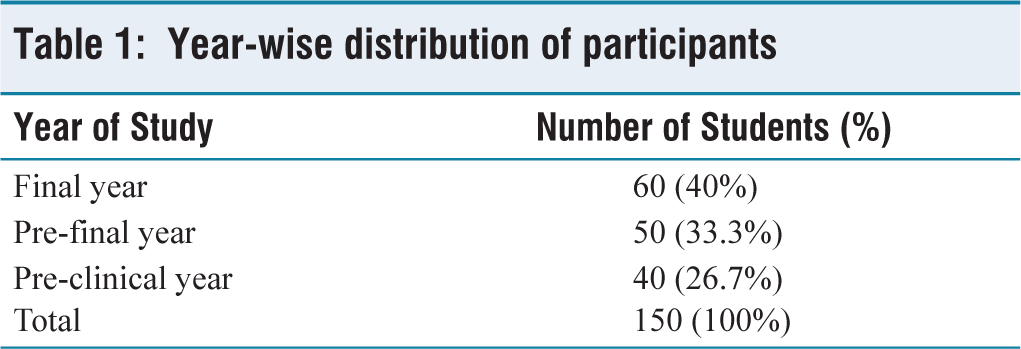
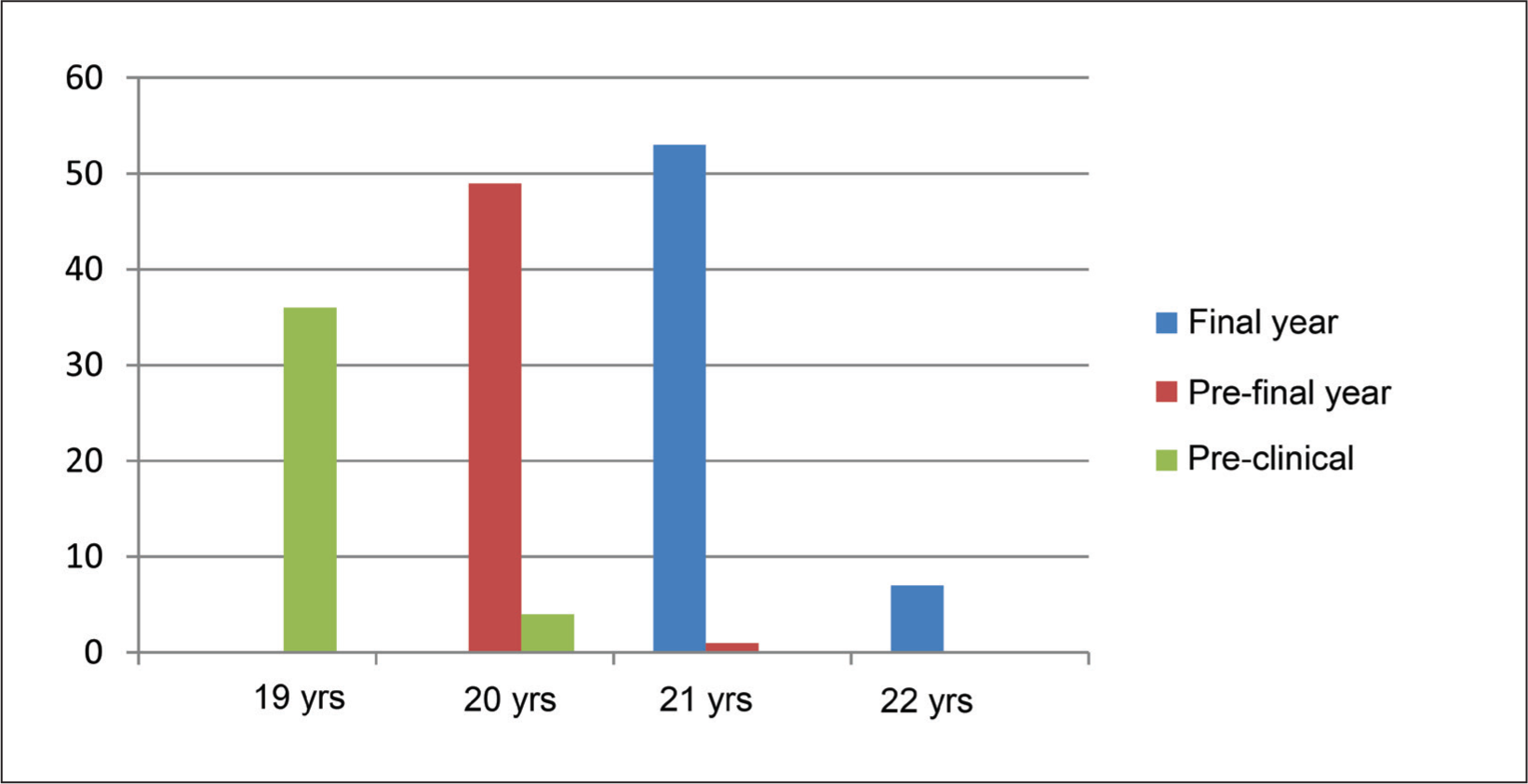
A total of 150 female medical students participated in the study. Of these, 60 (40%) were from the final year, 50 (33.3%) from the pre-final year, and 40 (26.7%) from the pre-clinical year [Table 1]. The age distribution was as follows: 36 (24%) were 19 years, 53 (35.3%) were 20 years, 54 (36%) were 21 years, and 7 (4.7%) were 22 years old [Figure 1]. A majority of the students, 128 (85.3%), were from urban areas, while 22 (14.7%) hailed from rural backgrounds.
Year-wise distribution of participants
Year-wise distribution of participants
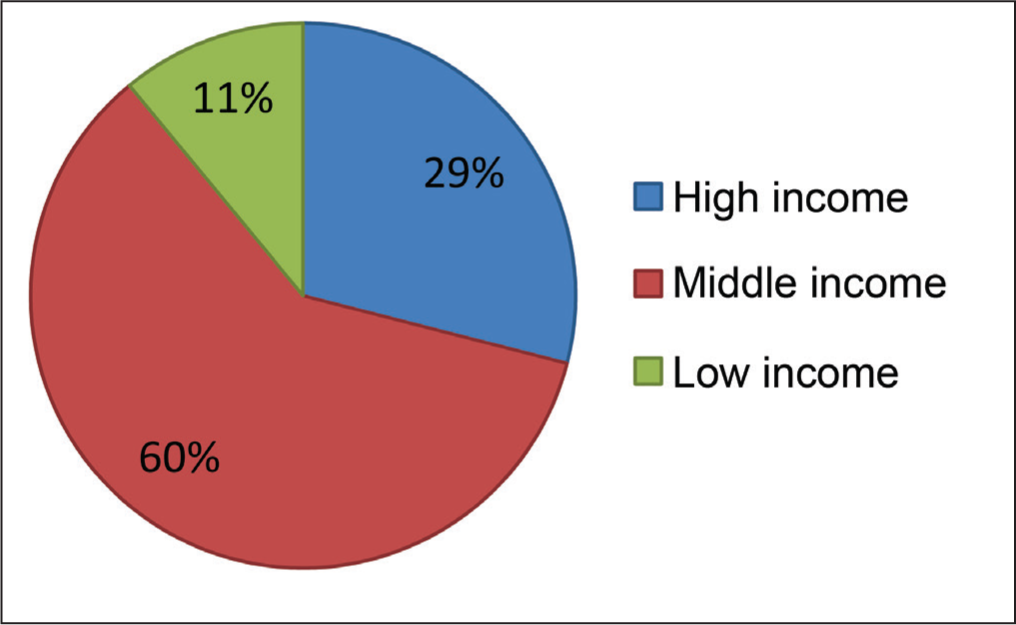
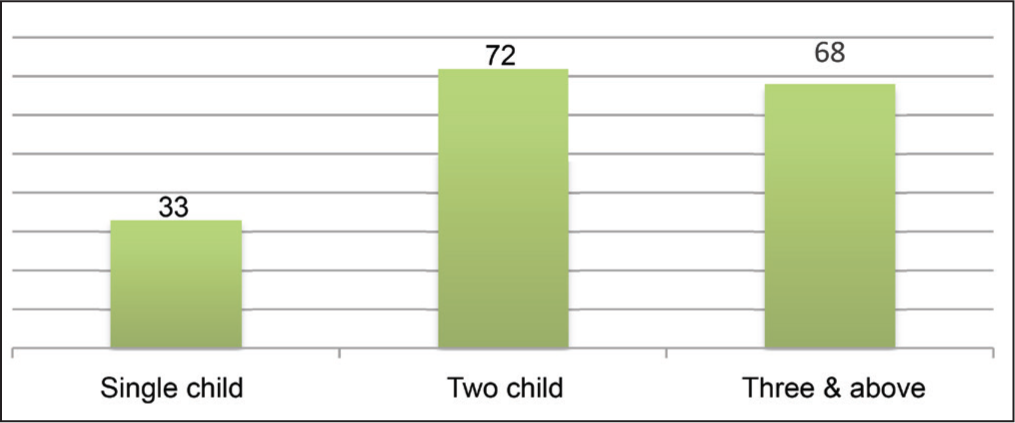
Regarding socioeconomic background, most students (60%) belonged to the middle-income group, followed by 29% in the high-income group and 11% in the low-income group [Figure 2]. In terms of family structure, 33 students (22%) were single children, 72 (48%) had one sibling, and 45 (30%) had two or more siblings [Figure 3].
Details of the economic status of among study group
Details of siblings in the study group
Part B: Knowledge, Attitudes, and Practices
Most of the students belong to the middle-income group, followed by the high-income and low-income groups in the ratio 60:29:11.
Siblings of the students were also recorded, as awareness creation is a part of the study. Thirty-three students were single children, 72 students had one sibling, and 68 of them had two siblings in their family.
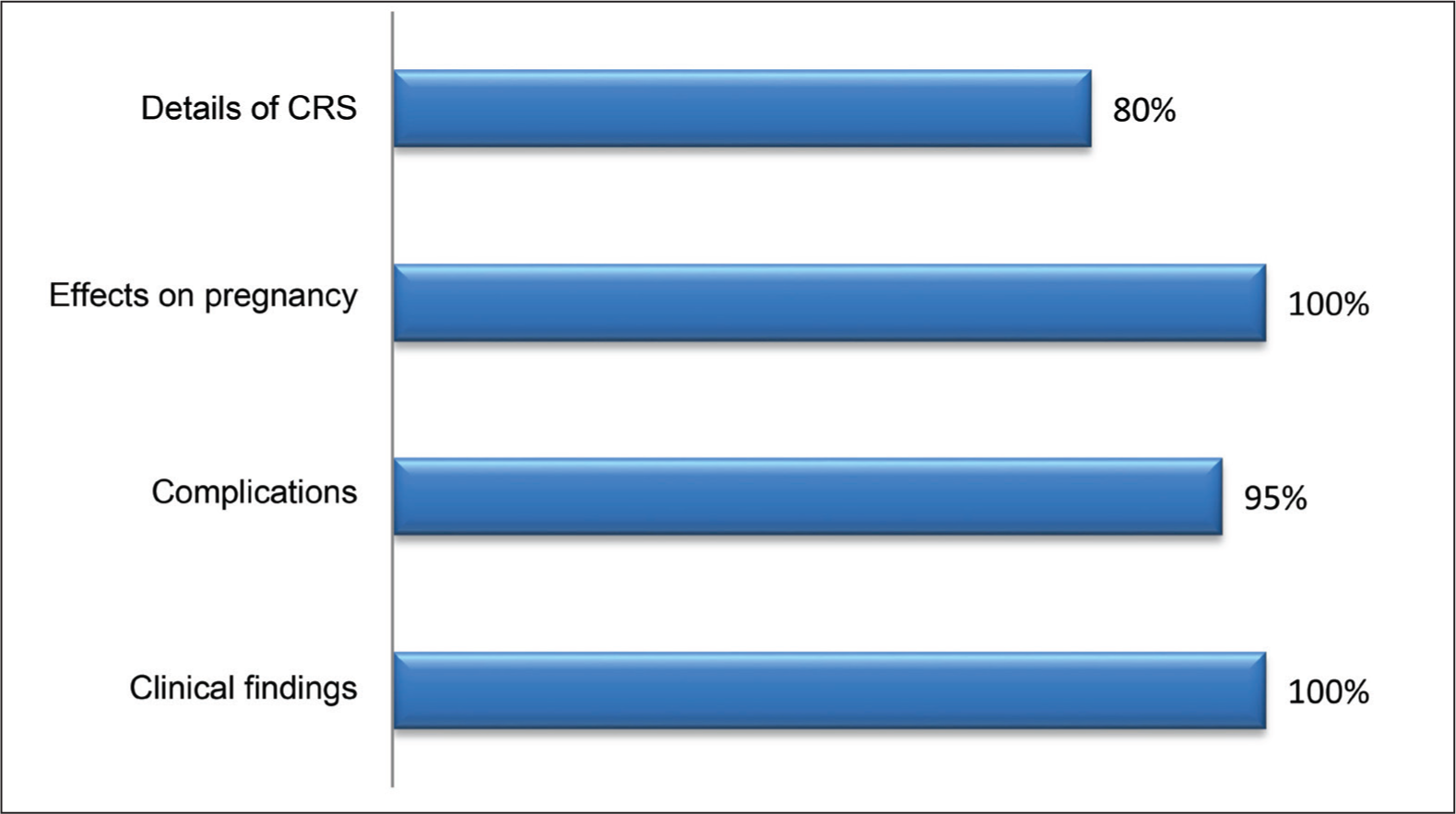
All the students correctly responded that Rubella is a viral infection of childhood presenting with fever and rash. 95% of the students accepted that Rubella infection in adults can cause complications, while 5% were not sure of it. All the 150 students documented that Rubella infection in pregnant women would lead to miscarriages and foetal complications, but only 4/5th of them were able to describe CRS [Figure 4].
Knowledge of Rubella infection
Knowledge About Rubella Infection and Vaccination
All participants (100%) correctly identified Rubella as a viral illness of childhood associated with fever and rash. 95% recognised that Rubella infection in adults can cause complications. All participants were aware of the adverse outcomes in pregnancy, including miscarriage and CRS, although only 80% could clearly describe CRS manifestations.
Knowledge of the Rubella vaccine type significantly differed by year of study. All final year students (100%) and 90% of pre-final year students correctly identified it as a live attenuated vaccine, compared to only 57.5% of pre-clinical students. This difference was statistically significant (χ² = 24.37, P < .001), highlighting the impact of clinical exposure on vaccine literacy [Figure 5].
Knowledge of the Rubella vaccine
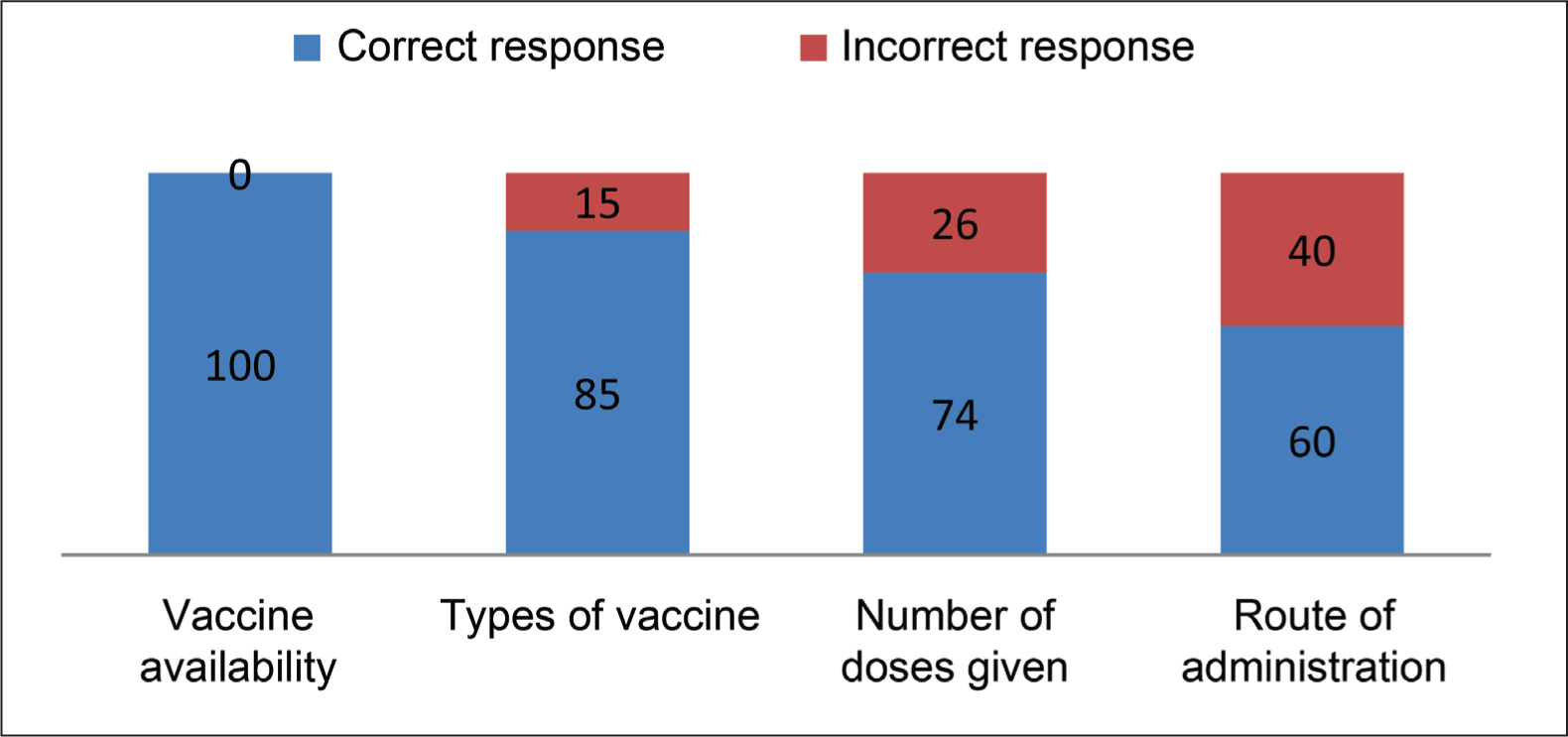
When asked about the number of doses, 111 students (74%) responded correctly, but only 90 (60%) identified the correct route of administration (subcutaneous). Differences across academic years in knowledge of dose and route were not statistically significant (P = .09 and P = .08, respectively).
When asked about the benefits of vaccination, 120 students (80%) responded positively, while 30 (20%) expressed uncertainty due to fear of side effects.
Vaccination History and Attitudes
Out of 150 students, 123 (82%) reported having been vaccinated (either full or partial doses), and 27 (18%) reported not being vaccinated. However, only 87 students (58%) could confirm having received both recommended doses. Notably, none of the students recalled receiving the Rubella vaccine as a standalone formulation [Table 2].
Vaccination status by year of study

A Chi-square test revealed no significant association between year of study and vaccination status (χ² = 1.14, P = .56).
Among the 27 unvaccinated students, 95% (n = 26) expressed willingness to get vaccinated immediately, while one student preferred to delay. No significant association was observed between year of study and willingness to vaccinate (Fisher’s Exact test, P = .38), indicating a uniformly positive attitude across groups.
Attitude Toward Vaccine Safety and Effectiveness
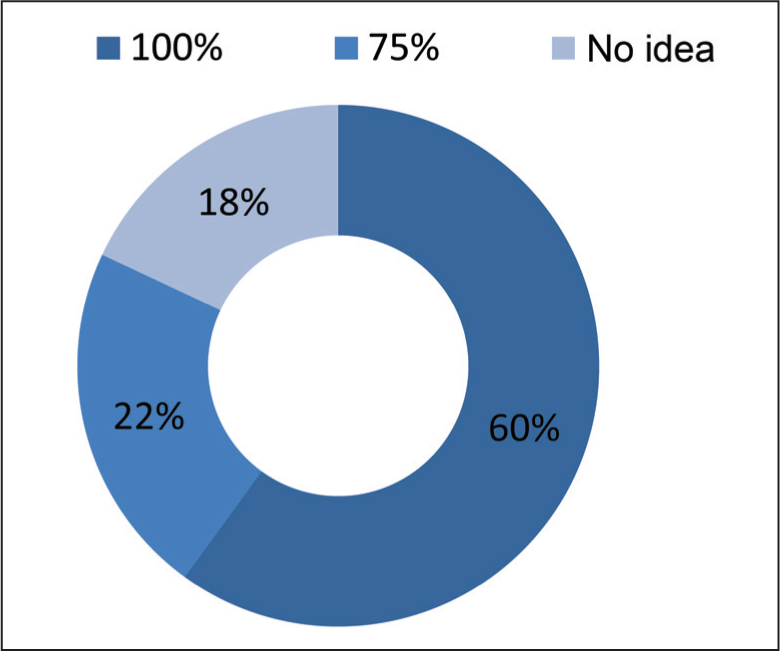
Regarding vaccine safety, 90% of the participants agreed that the Rubella vaccine causes only mild side effects. When asked about its effectiveness, 60% of the students believed that the vaccine provides 100% protection against Rubella, while 22% believed it offers about 75% protection; the remaining students were unsure about its exact efficacy [Figure 6]. There was no statistically significant difference in perceptions of side effects or vaccine effectiveness across the different academic years (P > .05).
Vaccine protection
Practices Toward Rubella Prevention
All students expressed their willingness to evaluate their own anti-Rubella antibody levels, counsel pregnant women regarding Rubella risks and the importance of vaccination, and actively participate in Rubella surveillance and public awareness campaigns. They also affirmed their commitment to stay updated with recent advances in Rubella vaccination. Since every participant responded positively to these practice-related questions, statistical comparison was not applicable.
Out of 150 participants, only 123 had been vaccinated, but 87 of them received full vaccination. The remaining 36 students were not sure of two doses, as the students cannot recollect the number of doses taken, and 27 of them had not received the vaccine. None of the students had taken the Rubella vaccine alone, and not even sure of its availability in India. Positive responses were recorded by these 63 students to receive the Rubella vaccination. Sixty students (95%) were ready to receive immediately, while 3 (5%) remaining assured to receive the vaccine later.
All the students were willing to evaluate the presence of their anti-Rubella antibodies in due course. All the students shared their willingness to take part in counselling and screening of pregnant women. In addition, they assured to propagate the importance of the Rubella vaccine to the general public they come across. They accepted their responsibility in updating the knowledge on the Rubella vaccine and their active participation in Rubella surveillance.
Discussion
Rubella infection, although often mild in children, can result in severe congenital anomalies when contracted during pregnancy. Vaccination with the Rubella or MMR vaccine is the most effective way to prevent CRS. Understanding the level of KAP among medical students—particularly future female healthcare providers—is critical for long-term disease elimination goals.
In our study, general awareness regarding Rubella infection and its consequences was notably high, with all participants recognising it as a viral illness and a threat during pregnancy. However, only 80% could clearly describe CRS, and fewer were confident about the specifics of the vaccine, such as the type, schedule, and route of administration. This mirrors findings by Gupta et al. in Central India, who reported that although awareness about Rubella was reasonably good among medical students and professionals, it did not always translate into positive attitudes or preventive behaviour, indicating that knowledge alone is insufficient for action-driven outcomes.[9]
The vaccination rate in our study was 82%, yet only 58% of students were confident about receiving the full two-dose schedule. This suggests a gap in immunisation documentation and recall, especially as none of the students reported receiving a standalone Rubella vaccine or being aware of its availability. Prasad et al. similarly found that only 49.2% of healthcare workers in Bihar reported being vaccinated, and many could not specify whether the vaccine was part of MMR or administered separately, underlining confusion in vaccine-specific knowledge even among trained professionals.[10]
In a recent study from Kerala by Pai et al. although school children showed moderate awareness about the Measles-Rubella vaccine, gaps remained in understanding its benefits and appropriate timing—further supporting the finding that early health education alone may not ensure full comprehension of vaccine importance.[11] Meanwhile, Gupta et al. emphasised that structural gaps, not just awareness, hinder vaccine acceptance in healthcare settings—paralleling our finding that 18% of medical students were not vaccinated despite good theoretical knowledge.
International studies reflect similar challenges. In Saudi Arabia, Aldali (2025) reported that while female participants had high knowledge scores regarding Rubella, their actual preventive behaviours, including vaccination uptake, were suboptimal due to social and informational barriers.[12] A study in Yemen by al-Abd et al. (2020) found that preparatory year students had a fragmented understanding of Rubella and its prevention, and highlighted the lack of institutional screening or targeted Rubella immunisation campaigns.[13] These findings reinforce the need to bridge the gap between theoretical knowledge and actionable behaviour—particularly among youth and healthcare students.
In terms of attitude and practice, our participants demonstrated promising responses. Ninety-five percent of unvaccinated students expressed willingness to receive the vaccine, and the majority accepted that the Rubella vaccine causes only mild side effects. This openness is consistent with the positive behavioural intent observed by Aldali et al. and al-Abd et al. who noted a high readiness to vaccinate if proper recommendations and access were ensured.[12,13] Additionally, all students in our study were willing to engage in Rubella prevention activities, including antibody testing, counselling of pregnant women, and active participation in Rubella surveillance—indicating strong public health orientation among future medical professionals.
This study has a few limitations. First, the vaccination history was self-reported, which may introduce recall bias, especially among participants unsure of the number of doses received. Second, the study was conducted in a single government medical college in Tamil Nadu, limiting the generalisability of the findings to other regions or private institutions. Third, the study did not include laboratory confirmation of Rubella immunity (e.g., anti-Rubella IgG testing), which would have provided objective data on immunisation status. Additionally, the exclusion of male students and first-year MBBS students may have limited a broader understanding of KAP levels across the entire student body.
Based on the findings of this study, several recommendations can be made to enhance Rubella vaccination awareness and coverage among medical students. First, Rubella and other vaccine-preventable diseases should be more thoroughly integrated into the undergraduate medical curriculum, particularly in community medicine and obstetrics. Second, institutional vaccination drives should be organised regularly to ensure all medical students, especially females of reproductive age, are fully vaccinated. Third, a system of routine screening for Rubella immunity (e.g., anti-Rubella IgG testing) may be considered during admission or annual health check-ups to identify and immunise non-immune students. Fourth, awareness campaigns using seminars, peer-education models, and digital platforms can help reinforce the importance of complete vaccination. Finally, similar studies should be extended to male students and other healthcare trainees to ensure broader awareness and protection across the healthcare workforce.
Conclusion
Our study found that the KAP of the medical students towards Rubella vaccination were high. All the students were ready to undergo the IgG anti-Rubella antibodies assay and promised to receive vaccination.
The study participants were from a medical college, so we do not know how much awareness there will be in non-medical institutes and their vaccination status, too. In order to achieve 100% immunisation coverage, the health care system involving primary health centre doctors, health care supervisors and nurses should be frequently trained and educated on vaccination. Private practitioners also play a crucial role in this aspect by checking the children’s vaccination history through their parents. In addition to this, public awareness should also be increased through social media propaganda.
Footnotes
Acknowledgements
We acknowledge the involvement of all participants in sharing their knowledge, which is the cornerstone of this study’s achievements.
Declaration of conflicting interests
The authors declared no potential conflicts of interest with respect to the research, authorship and/or publication of this article.
Funding
The authors received no financial support for the research, authorship and/or publication of this article.
Institutional ethical committee approval number
IEC Approval Number: 1402/2018.
Informed consent
Informed consent for participation and publication was provided by all of the participants.
Credit author statement
Suganya Selvarajan: Made a substantial contribution to the concept, design of the work; acquisition, analysis and interpretation of data.
Nalayini Samidurai: Drafted the article, revised it critically for important intellectual content and the version to be published.
Prarthana Prathaban: Drafted the article or revised it critically for important intellectual content, and the version to be published.
Data availability
All the data pertaining to this study are available within this article itself.
Use of artificial intelligence
Not utilised.