




Abstract
Introduction:
Deceased organ donation rates in India are alarmingly low. While healthcare workers have the potential to advocate for organ donation within society, their knowledge, attitudes, and practices concerning organ donation have not been extensively studied. Thus, the present study aimed to evaluate the knowledge, attitudes, and practices related to deceased organ donation among healthcare workers, including doctors, nurses, and paramedical staff, by using a pre-structured questionnaire.
Methodology:
This prospective observational study was conducted using a questionnaire designed to assess the knowledge, attitudes, and practices of healthcare professionals working at a tertiary care centre in Hyderabad. The study included a total of 350 participants.
Results:
The analysis of questionnaire responses showed that the majority of participants were female (77.4%) and included doctors, nurses, and paramedical staff. Overall, 50.1% of respondents had adequate knowledge about organ donation (scoring above 5), while 49.9% had inadequate knowledge (scoring below 4). Younger respondents (under 40) and males generally scored higher in knowledge. Additionally, 55.6% of participants had a positive attitude towards organ donation, while 44.4% had a negative attitude.
Conclusions:
Insufficient awareness is impeding the community’s positive attitude towards organ donation, necessitating extensive education and media initiatives to support successful donation and future research.
Introduction
Organ donation is the act of giving an organ or tissue from one person to another to save or improve the recipient’s life. Organ donation provides a crucial opportunity for people suffering from severe organ failure to have life-saving transplants. India ranks second worldwide in live donor transplants,[1] but the percentage of deceased organ donation is remarkably low, at only 0.26 per million individuals. This shortage contributes to the deaths of 500,000 individuals annually due to the lack of available organs.[2] The significant disparity in India’s organ donation rates is attributed to several factors, including insufficient public awareness,[3] prevailing superstitions or religious beliefs, and stringent legal regulations.[4] Additionally, a lack of system readiness and poor inter-institutional coordination creates a substantial gap between potential donors and the families of deceased individuals willing to donate.[5] Consequently, the number of patients on transplant waiting lists vastly exceeds the number of available deceased donor organs, leaving thousands in desperate need each year.[6] The cadaveric organ donation programme in India remains underdeveloped, primarily due to limited understanding of brain death among both medical professionals and the public, along with religious, organisational, legal, and ethical concerns. Incidents of organ trafficking have also fuelled opposition and negative perceptions towards organ donation, despite efforts to address these issues. The Government of India enacted the Transplantation of Human Organs Act (THO) in 1994 and issued further regulations in 2014 to expand the scope and promote cadaver organ donation.[5] It is critical to increase awareness among healthcare professionals, who play a vital role in the organ donation procedure, in order to motivate the general public. This study seeks to assess and examine the levels of awareness among healthcare professionals.
The objective of this study is to engage experts in the field of organ donation in order to develop effective ways for enhancing public awareness and willingness to give organs. The stark contrast in donation rates is largely due to a lack of knowledge and awareness among healthcare workers and the general public. Systemic issues such as inadequate awareness and inter-departmental connectivity further exacerbate the problem. Healthcare professionals play a critical role in the organ donation chain. Enhancing comprehension and consciousness regarding organ donation is crucial for augmenting donation rates. Currently, healthcare professionals are seeking to better understand the barriers to donation and transplantation to balance the number of harvested organs with demand. Therefore, this study aims to investigate the awareness and knowledge of healthcare professionals at a tertiary care centre in Hyderabad.
Methodology
Aims and Objectives
To assess the knowledge, attitude, and practice about organ donation among healthcare professionals from a tertiary care hospital in Hyderabad.
Type of Study
This is a prospective observational study.
Location of the Study
This study was done in Apollo Health City Jubilee Hills, Hyderabad.
Inclusion Criteria
The study was conducted among all health care professionals, including doctors, nurses, and paramedical staff working at Apollo Hospitals, Jubilee Hills, Hyderabad, who are willing to participate in the study.
Exclusion Criteria
The study respondents who are not willing to participate will be excluded from the study.
Sample Size
The awareness level regarding organ donation among healthcare professionals was 69% in the previous study.[7] Considering the 95% level of confidence interval (Z = 1.96) with 5% precision (d = 0.05). The minimum required sample for the study is 329. However, we have taken 350 study respondents into the study. The study was conducted from August 2023 till December 2023.
Study Tools
Pre-designed questionnaires were circulated among all healthcare professionals working in the hospital. A questionnaire was prepared, including a socio-demographic profile and questions related to knowledge, attitude, and practice, as well as willingness towards organ donation. The questionnaire was structured using the organ donation study done by Chandrsekhar et al. and from the website of the National Organ & Tissue Transplant Organisation (NOTTO).[7,8]
Results
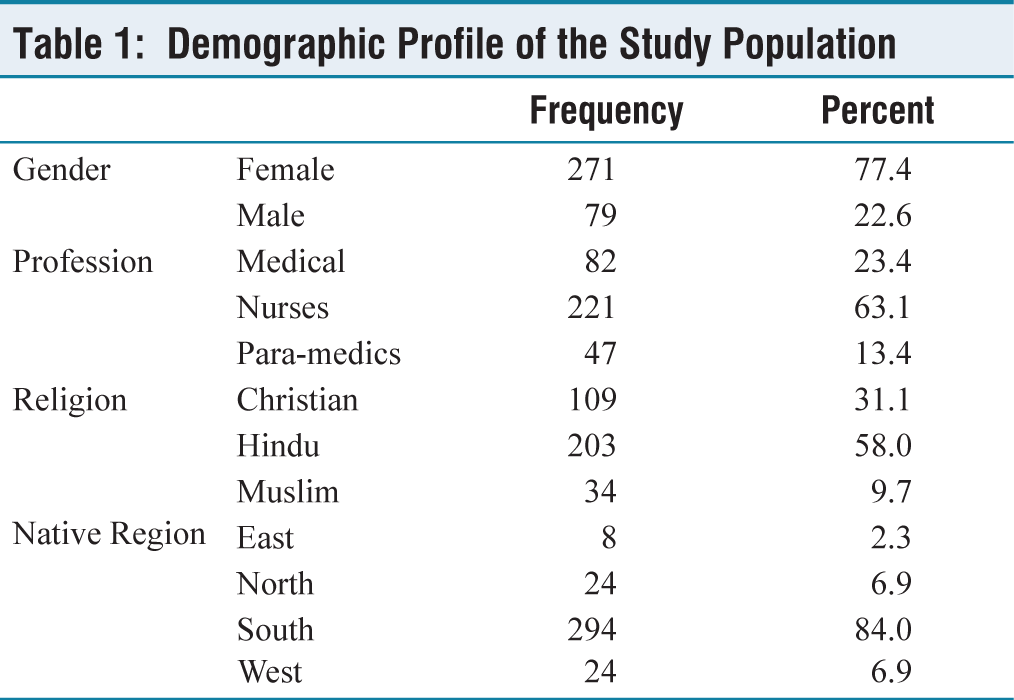
A total of 350 healthcare professionals from Apollo Jubilee Hills participated in the study. Of these, 271 (77.4%) were female and 79 (22.6%) were male. The participants included 82 (23.4%) doctors, 221 (63.1%) nurses, and 47 (13.4%) paramedical staff. In terms of religious affiliation, 109 (31.1%) were Christians, 203 (58%) were Hindus, and 34 (9.75%) were Muslims. Geographically, 294 (84%) were from the South, 24 (6.9%) from the West, 24 (6.9%) from the North, and 8 (2.3%) from the East of India. Table 1 represents the demographic profile of the study population.
Demographic Profile of the Study Population
Among the respondents, 190 (54.3%) believed that the minimum age for organ donation should be set at 18 years. Additionally, a significant portion, 152 (43.4%), were confident that there is no maximum age limit for organ donation. An impressive 298 (85.1%) of the participants were aware of the existence of an organ donation registry, which allows individuals to express their desire to donate organs. Furthermore, 273 (78%) of the respondents were knowledgeable about the legal prohibition against the sale or purchase of organs, as stipulated by the THO.
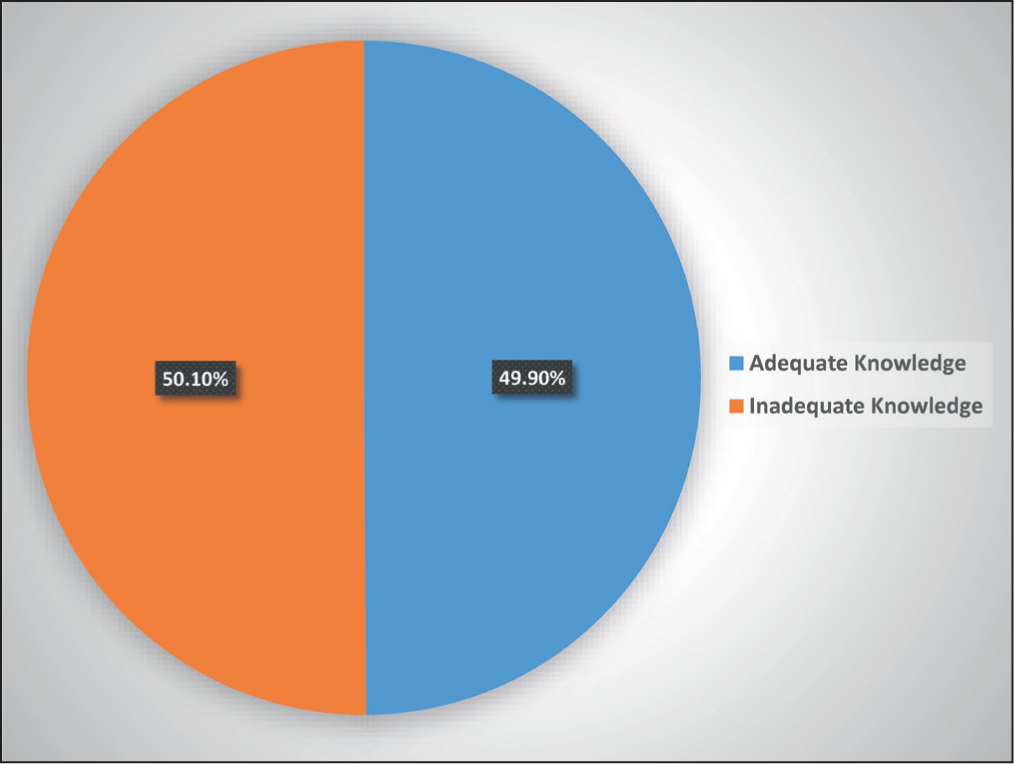
In order to interpret the knowledge, responses from questions were evaluated, and a score of 7 was considered the highest possible score for knowledge. A score more than 5 is considered adequate knowledge, while a score lower than 4 is considered poor knowledge. The survey revealed the overall knowledge levels about organ donation, with 50.1% of respondents demonstrating adequate knowledge with a score more than 5 and 49.9% showing inadequate knowledge with a score less than 4. Figure 1 represents the knowledge score of the study population, representing both adequate knowledge in 174 (49.9%) and inadequate knowledge in 175 (50.1%) of the study population [Table 2].
Knowledge Score of the Study Population
Responses Regarding the Knowledge Scores within the Study Population
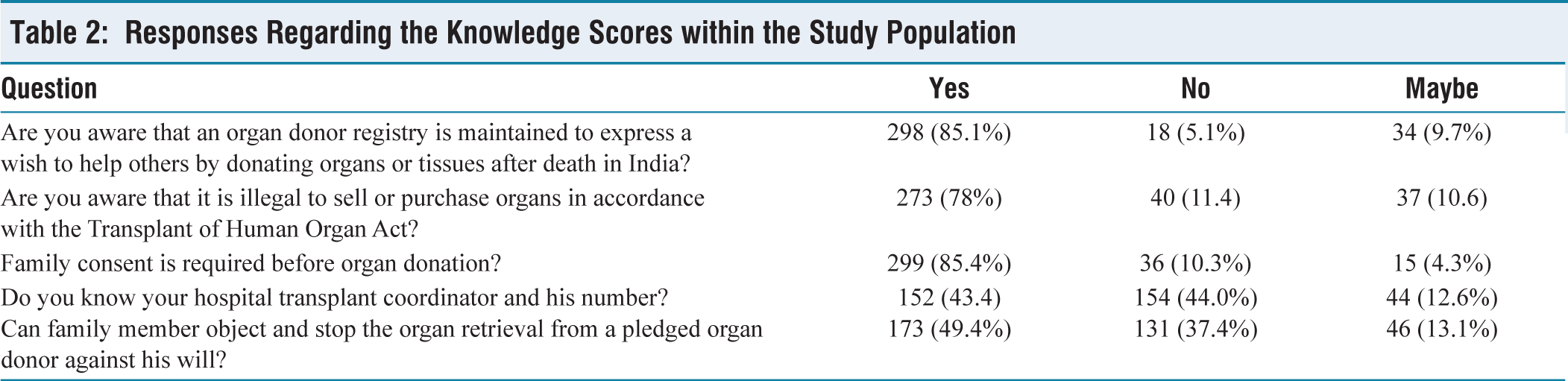
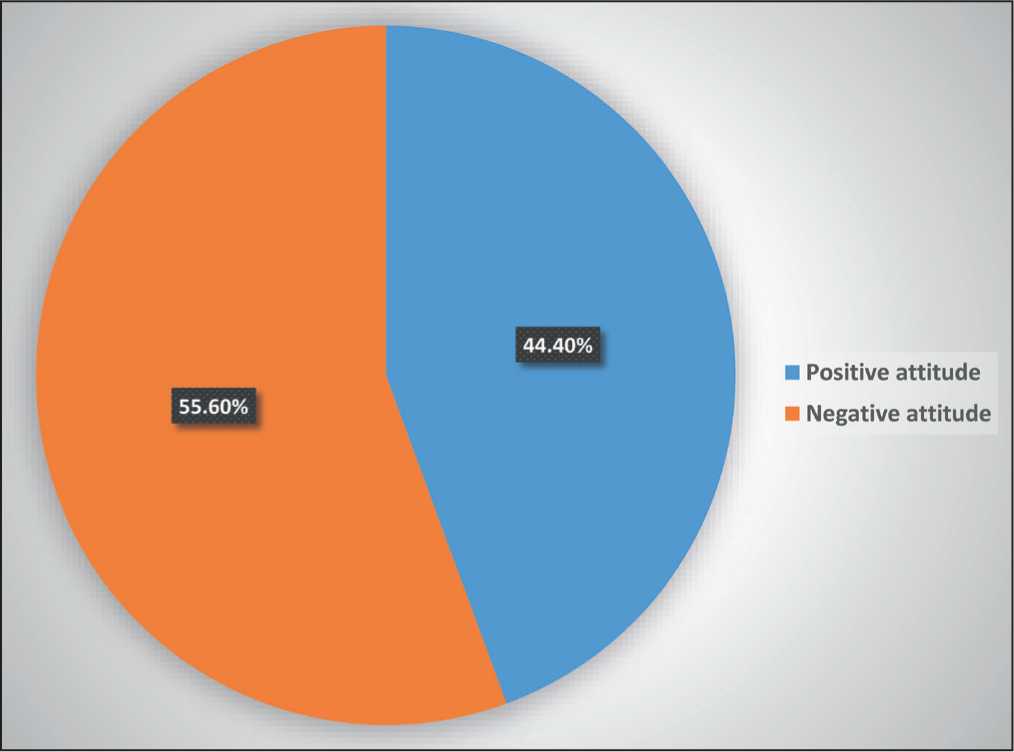
A significant 299 (85.4%) of respondents are aware of the need to obtain consent before proceeding with organ donation. However, only 152 (43.4%) know the contact number for the hospital transplant coordinator. To interpret the attitude levels, respondents’ answers were evaluated, with a score of 6 indicating the highest score of attitude. Scores above 4 were deemed a good/positive attitude about organ donation, while scores below 3 indicated a negative attitude towards organ donation. Among the respondents, 195 (55.6%) possess adequate and positive attitudes towards organ donation, while 155 (44.4%) have a negative attitude towards organ donation. Figure 2 represents the score for attitudes among the study population representing positive and negative attitudes towards organ donation.
Encouragingly, 286 (81.7%) of the study group expressed strong support for organ donation, though a small minority of 10 (2.9%) of healthcare workers still oppose it. It’s promising that 192 (54.9%) of respondents are willing to donate their own organs. Additionally, 201 (57.4%) have discussed organ donation when it was necessary.
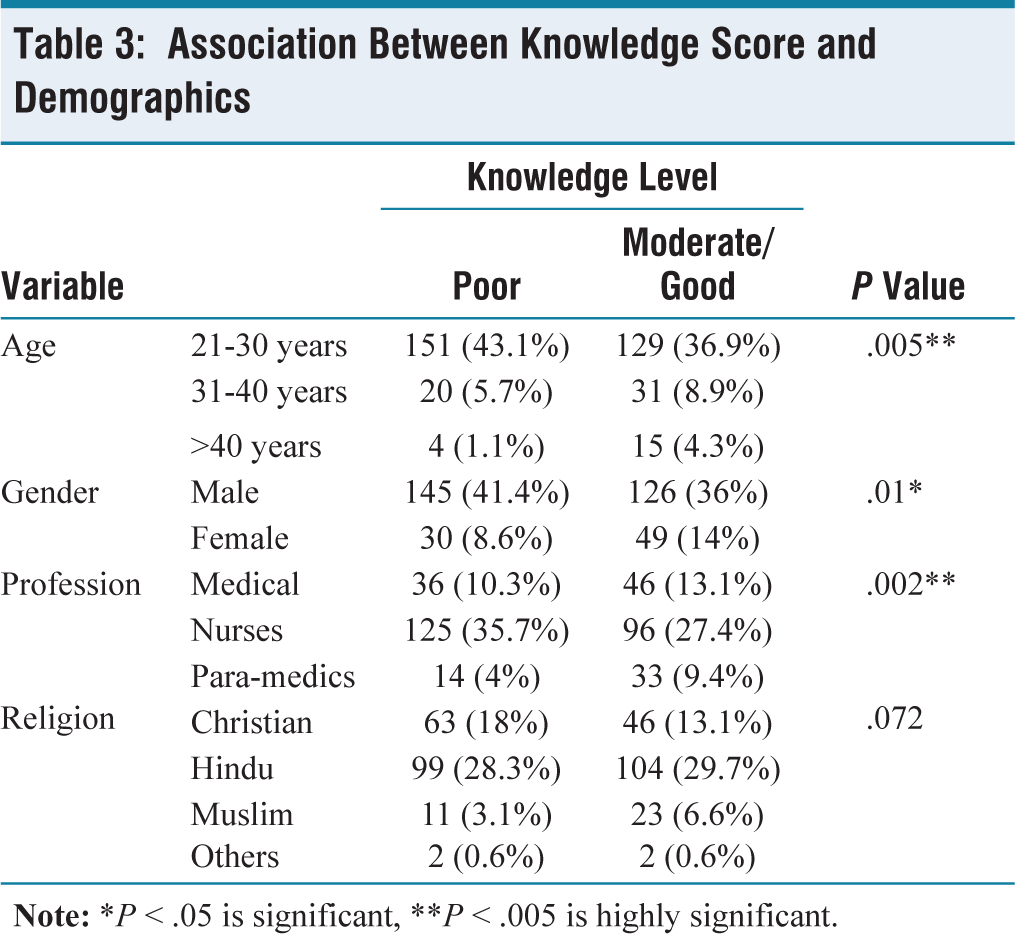
We analysed the association between knowledge scores and demographics, finding a significant correlation between age and knowledge score, with a P value of .005. Respondents under 40 years of age demonstrated higher knowledge compared to those older. Additionally, there was a significant association between gender and knowledge score, with a P value of .01, showing that males had higher knowledge levels than females. The study also revealed a significant association between the medical profession and knowledge level, with a P value of .002. Nurses and doctors had the highest knowledge scores compared to paramedical staff such as physiotherapists, nutritionists, and technical personnel [Table 3].
The Attitude Score of the Study Population
Association Between Knowledge Score and Demographics
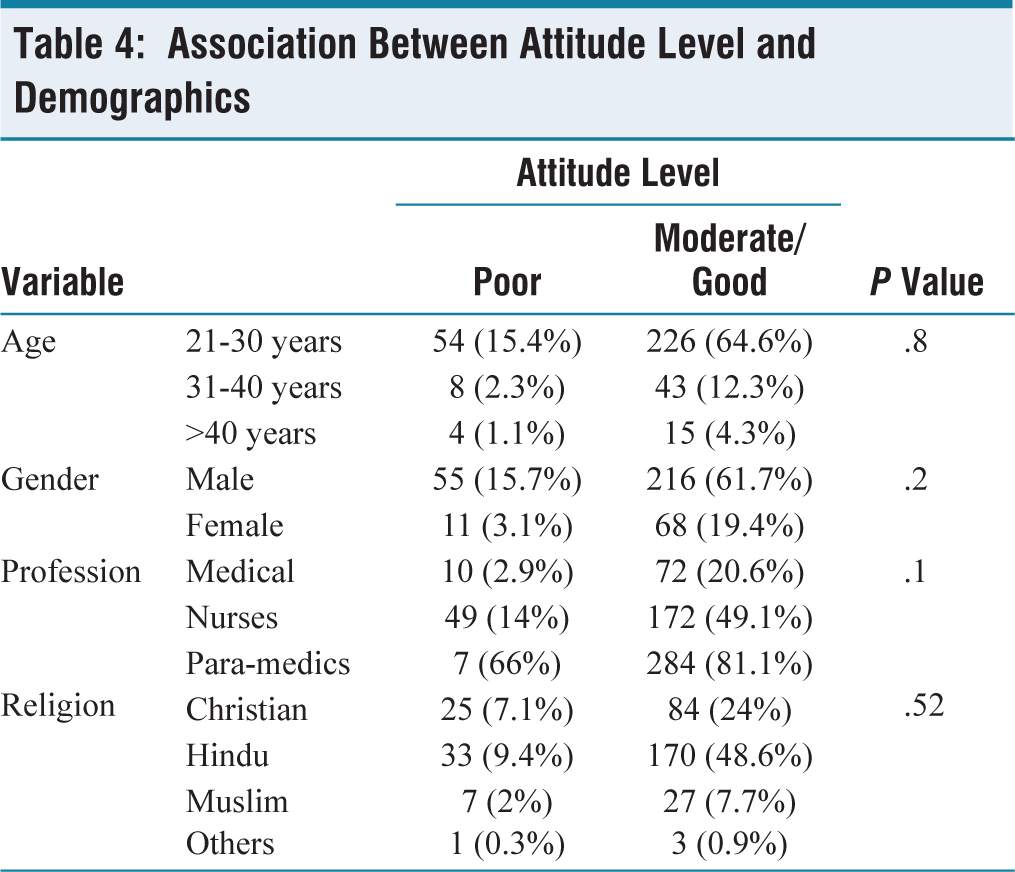
We analysed the association between attitude score and demographics [Table 4]. We did not find a significant correlation between demographics and attitude scores.
Association Between Attitude Level and Demographics
Discussion
Organ and tissue donation and transplantation provide a renewed chance of survival to many people and have become a vital part of the advanced healthcare system in all nations. Transplant recipients not only benefit from the donation, but the family and relatives of the donors also get a sense of satisfaction, knowing that it has either saved or improved someone’s quality of life. In the end, the society also gains an advantage from this selfless act.
Over the past three years, significant numbers of liver and renal transplants have been conducted in our centre. For liver transplants, a total of 25 procedures were performed in 2022, comprising 10 live donor and 15 cadaver donor transplants. In 2023, there were 20 transplants, including eight live donor and 12 cadaver donor cases. Renal transplants have also seen substantial activity, with 80 procedures performed in 2022, including 29 living donor and 51 deceased donor transplants. In 2023, there were 57 renal transplants, comprising 28 living donor and 29 deceased donor cases. These figures highlight the ongoing efforts in organ transplantation.
Despite numerous studies addressing organ donation awareness, there remains a gap in both the general population and healthcare professionals, contributing to insufficient knowledge even among medical personnel. To address this, we conducted a study involving doctors, nurses, and paramedical staff, administering a structured questionnaire to evaluate their responses. We then analysed these responses to gauge both knowledge and attitude scores within the study population. The response rate of our current study was 100%, which is quite promising given the significance and rarity of the topic.
The awareness level in our study was 69%, which is comparable to findings by Tamuli et al. (79.17%),[9] a survey by the Times of India (94%),[10] and a study by Deepthi et al. (97.6%).[11] The differences in awareness levels across these studies could be due to variations in geographical location, sample size, and the professional backgrounds of participants. Specifically, our study’s population consisted of 23.4% doctors, 63.1% nurses, and 13.4% paramedical staff, whereas the other referenced studies focused on medical students in medical colleges.
Approximately 299 (85.4%) of the participants expressed the view that obtaining authorisation from the family members of the brain-dead individual before organ donation is a necessary need. Furthermore, as indicated by 173 (49.4%) of participants, the relatives of the deceased person possess complete authority to halt the organ donation procedure, even if the deceased individual had previously registered for organ donation. In India, the involvement of family members in decision-making is significant. Therefore, the donor does not have exclusive authority over the decision to donate organs. In their study, Vincent et al.[12] found that 65.3% of the nursing participants and 56.8% of the medical students concurred with the same statement. Consistent results were observed in subsequent investigations, indicating that 60%-80% of the participants held similar perceptions.[13-15] Our study observed a similar outcome, with 299 (85.4%) showing the same result. This illustrates the favourable opinion of the study participants towards seeking agreement from family members for organ donation, as well as the need of gaining family permission before retrieving organs.
Attitudinally, 194 (55.6%) had a positive outlook towards organ donation, while 156 (44.4%) did not. With a minimum attitude score of 1 and a maximum of 6, the study population has a mean attitude score of 4.45.
Furthermore, 286 (81.7%) supported organ donation, although 10 (2.9%) opposed it. This percentage is comparable to previous studies conducted in Kolkata (84.5%)[16] and Faisalabad (86%),[17] but significantly lower than a study conducted in Kerala (97%).[18] The difference can be attributed to the varying demographics of the study populations. The study conducted in Kerala[18] focused on rural areas, whereas our study involved healthcare workers from a tertiary care setting. Promisingly, 192 (54.9%) were willing to donate their own organs, and 201 (57.4%) had discussed organ donation when necessary.
Approximately 286 (81.7%) of the study participants expressed a willingness to donate organs in the future, though none had actually donated an organ to date. Studies by Dasgupta et al. in Kolkata,[16] Khan et al. in Faisalabad,[17] Saleem et al. in Pakistan,[19] and Annadurai et al. in Chennai[20] reported similar outcomes. Additionally, several studies have noted a significant correlation between age, gender, and increased understanding of organ donation. This finding is similar to our study as we have found a significant correlation between the knowledge score and the age, gender and profession of study respondents.
According to the National Organ and Tissue Transplant Organisation (NOTTO),[7] although there are 12 organs that can be donated, participants were generally aware of only three, with the eye being the most frequently mentioned. Our study also found that most respondents recognised the eye as the most commonly donated organ. Other research has echoed these findings. A limited number of studies have provided information on other organs that can be donated. Besides the eye, most respondents identified the lung, liver, and heart as the next most commonly donated organs.
Over 280 (80%) of participants believed their spouse or family members would authorise organ donation after their death, consistent with previous studies. About 146 (41.7%) of respondents suggested that covering treatment costs by the recipient’s hospital could motivate people to donate organs.
The study highlighted a significant knowledge gap among healthcare professionals in India regarding organ donation. It suggested that organ donation should be included in healthcare training, with mandatory awareness programmes implemented in all hospital service areas, ICUs, and emergency zones.[21] Addressing societal biases and misconceptions about organ donation is crucial. Medical professionals should be involved in these efforts, and the organ donation registration process should be streamlined. However, the study’s focus on healthcare professionals from medical and paramedical fields limits its generalizability. Strategies such as prioritising employment and education for the relatives of deceased organ donors could enhance their willingness to donate organs.[22]
The study did not reveal a significant correlation between knowledge about organ donation and the willingness to participate in it. This suggests that although organ donation is a known concept in the region, a lack of comprehensive understanding may impede successful donation efforts. Factors such as inadequate awareness, societal and regional biases contribute significantly to this limited understanding and adoption of organ donation in their original practice.
Future Research & Recommendations
Conduct multi-centre studies for broader insights.
Develop hospital-based awareness programmes targeting all service areas.
Engage media and policymakers to address societal biases.
Include organ donation topics in medical and paramedical curricula.
Simplify the donor registration process to encourage participation.
Conclusion
This study highlights the critical role of healthcare professionals in bridging the organ donation gap. By fostering knowledge, addressing misconceptions, and advocating for systemic reforms, healthcare practitioners can significantly impact organ donation rates. Collaboration between NGOs and healthcare providers is essential to promote awareness and streamline organ donation procedures.
Footnotes
Acknowledgements
We would like acknowledge Ms. Khamarunnisa for actively partcipating and helping us for the data collection.
Declaration of conflicting interests
The authors declared no potential conflicts of interest with respect to the research, authorship and/or publication of this article.
Funding
The authors received no financial support for the research, authorship and/or publication of this article.
Institutional ethical committee approval number
After obtaining Institutional Ethics Committee approval (IEC Number AHJ-ACD-005/02-23), this study was done.
Patient consent
Ms. Khamarunnisa is the Medico Social Worker who helped in data collection. She is not a patient.
Credit author statement
Hima Bindu Kotamarthy – Study Concept and Design, Definition of Intellectual Content, Literature Search, Clinical Studies, Experimental Studies, Data Acquisition, Analysis, and Statistical Analysis, Manuscript Preparation, Editing, and Review, Guarantor.
Sudeep Sirga – Study Concept and Design, Definition of Intellectual Content, Literature Search, Clinical Studies, Experimental Studies, Data Acquisition, Analysis, and Statistical Analysis, Manuscript Preparation, Editing, and Review, Guarantor.
Somasekhar DA – Study Concept and Design, Definition of Intellectual Content, Literature Search, Data Acquisition, Manuscript Preparation, Editing, and Review, Guarantor.
K Subba Reddy – Study Concept and Design, Definition of Intellectual Content, Literature Search, Experimental Studies, Data Acquisition, Manuscript Preparation, Editing, and Review, Guarantor.
Niranjan Panigrahi – Study Concept and Design, Definition of Intellectual Content, Literature Search, Clinical Studies, Experimental Studies, Data Acquisition, Analysis, and Statistical Analysis, Manuscript Preparation, Editing, and Review, Guarantor.
Rajkumar Jupally – Study Concept and Design, Definition of Intellectual Content, Literature Search, Clinical Studies, Experimental Studies, Data Acquisition, Analysis, and Statistical Analysis, Manuscript Preparation, Editing, and Review, Guarantor.
Karunakar Gunnampati – Study Concept and Design, Definition of Intellectual Content, Literature Search, Data Acquisition, Manuscript Preparation, Editing, and Review, Guarantor.
Data availability
Nil.
Use of artificial intelligence
QuillBot has been used to check the plagiarism in the article.