




Abstract
Background and Aims:
The integration of artificial intelligence (AI) is expected to revolutionise healthcare, compelling forthcoming healthcare professionals to arm themselves with essential knowledge and skills. Given this, understanding medical students’ (future healthcare providers’) perspectives and readiness is vital for achieving full integration. This study aimed to assess the knowledge, perspectives, and readiness perceived by medical students at Nnamdi Azikiwe University.
Methods:
This cross-sectional study conveniently recruited 340 medical students. A pretest self-structured questionnaire was utilised for data collection among students who were already in the clinical phase of their study programme. The Statistical Package for Social Science (SPSS) was used for the analysis of the results.
Results:
The vast majority of the respondents (99.4%) had heard of AI, but only 3.2% were very familiar with its real-world applications. Most participants (96.8%) lacked formal education or training in AI, and few (7.4%) regularly followed AI-related news. Concerns about AI integration included data privacy (39.4%) and the potential loss of human touch in patient care (70.9%). Job displacement (72.1%) and misuse of AI (55.9%) were common fears. Despite these concerns, more than half of the respondents (55.6%) were interested in AI research, and many expressed openness to collaborating with AI systems (34.1%) and acquiring additional AI-related skills (67.9%).
Conclusion:
There was a lack of AI knowledge among the respondents, coupled with widespread scepticism about its integration. However, there is a notable interest in AI-related research and projects, indicating a willingness to explore its potential benefits.
Background
The healthcare system of our contemporary world is undergoing a significant shift towards a more complex era referred to as the era of artificial intelligence (AI).[1] AI has already become an integral part of healthcare delivery, encompassing decision-making, administration, and even surgery, among other aspects.[2] The emergence of AI is anticipated to significantly transform healthcare, necessitating future healthcare professionals to equip themselves with the necessary knowledge and skills to effectively manage data, supervise AI tools, and make informed decisions on the basis of AI-driven insights.[3]
The ability of AI to emulate human reasoning and function was highlighted by Paranjape et al., who emphasised its role in reducing human error.[3] It has diverse applications in healthcare, including diagnostic support, image interpretation, rapid or automated data capture, and disease management.[4] Current studies explore AI’s potential in primary care for decision-making and treatment management, addressing chronic conditions such as cardiovascular disease, mental health, and diabetes care.[4] The transformative potential of AI extends to medical decision-making, diagnosis, and treatment, particularly in image-based diagnosis across various specialties, genome interpretation, clinical prediction, biomarker discovery, and robot-assisted surgery.[4,5] The widespread adoption of AI in healthcare requires healthcare professionals to develop digital competencies and incorporate AI learning into their curriculum.[6]
Physicians face challenges in embracing AI because of their lack of preparedness for clinical practice transformation, accompanied by concerns regarding displacement and doubt regarding the accuracy of machine learning forecasts.[7] Malerbi et al. identified additional hurdles in AI integration, including the lack of widespread digital healthcare teaching in curricula, cultural unreadiness among fully trained healthcare professionals, and a gap between early adopters and late adopters.[8] Furthermore, the vulnerability of AI systems to cybersecurity attacks raises concerns about the misclassification of medical information by algorithms, highlighting the need to ensure safe and secure implementation in healthcare settings.[3]
The integration of AI into the healthcare system has led to transformative changes, promising improved healthcare delivery and outcomes. However, this transition requires overcoming challenges related to preparedness, knowledge, curriculum, and cybersecurity, ultimately empowering healthcare professionals to harness the potential of AI for the benefit of patients and the healthcare industry as a whole. However, research conducted on medical students’ perceptions of the integration of AI in health care has revealed that the majority of the students believed that the knowledge and experience possessed by AI could not match that of doctors, as shown in other similar studies[2,9]; hence, there is a need for increased research in this area.
Methods
The research utilised a cross-sectional study design, focusing on medical students at Nnamdi Azikiwe University who are 18 years old or older and have commenced their clinical postings. A convenient sampling technique was employed to recruit students from their classes and muster points across the various departments. Only the students who consented to participate were issued the printed research instrument (questionnaire).
Sample Size
The sample size was calculated as follows:

where:
n = required sample size Z = 1.96 p = 0.759 q = 1 – p d = 0.052 = 0.0025 n = (1.962 * 0.75 * 0.25)/(0.052) n = (3.8416 * 0.1875)/0.0025 n = 0.7203/0.0025 n = 288.12
The calculated minimum sample size is approximately 288.
Procedures for Data Collection
A self-structured questionnaire adopted from relevant studies was used for this study. Ethical approval was obtained from the Ethical and Review Committee of the Anambra State Ministry of Health. Before its actual implementation, the structured questionnaire underwent a thorough review by experts and pilot testing to ensure its effectiveness and reliability. Written informed consent was obtained from the students before the questionnaires were administered. The Statistical Package for Social Science (SPSS) was used for the analysis of the results. The data are presented as the means ± standard deviations (SDs).
Results
Sociodemographic Characteristics of the Respondents
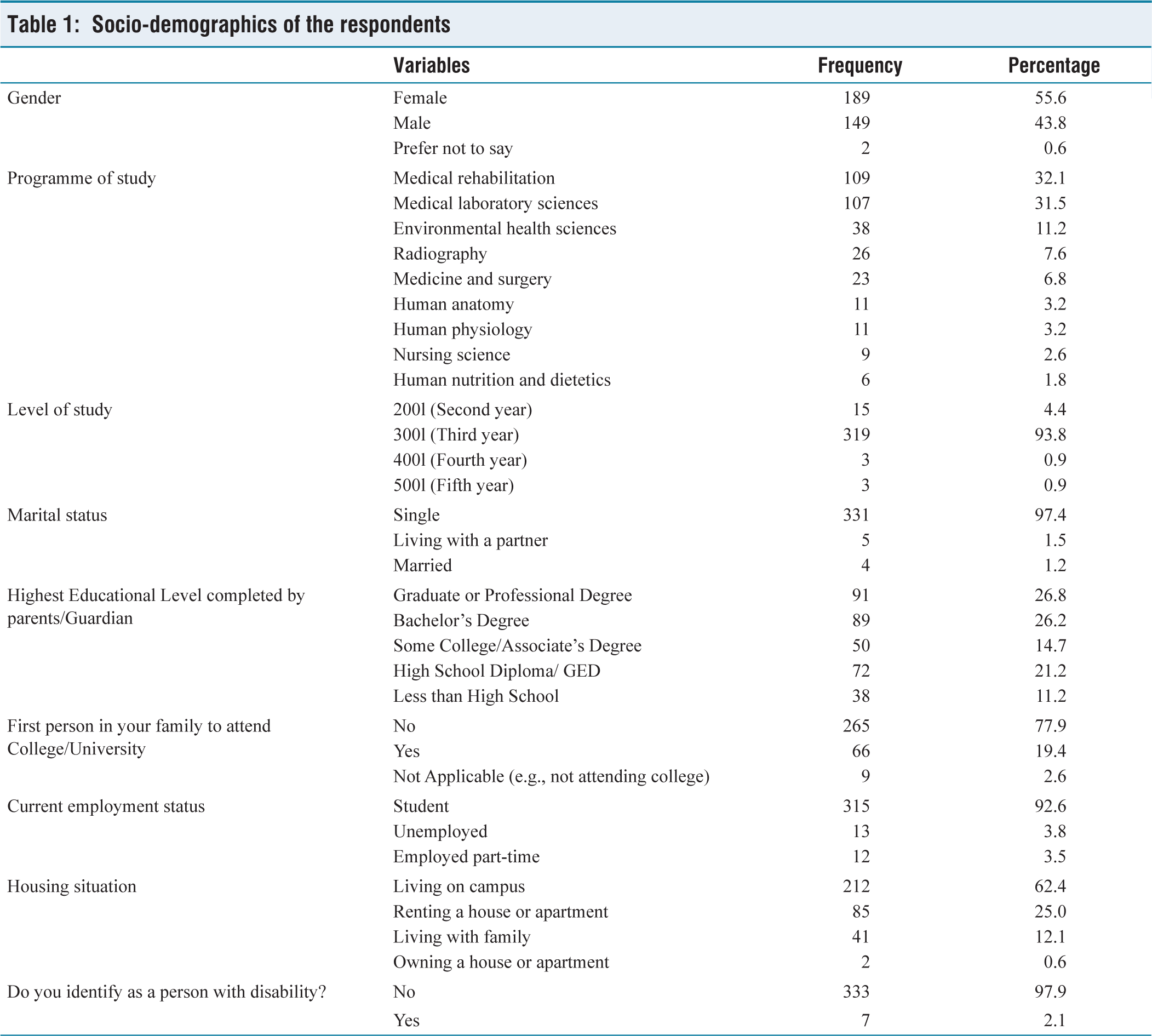
A total of 340 medical students (55.6% females and 43.8% males) participated in this study. Regarding the department of study, the majority were from medical rehabilitation (32.1%), and the majority were in their third year of study (93.8%). With respect to marital status, the majority were single (97.4%). The parents’ highest educational level varied, with 26.8% having a graduate degree or professional degree [Table 1].
Socio-demographics of the respondents
Knowledge of Respondents about AI
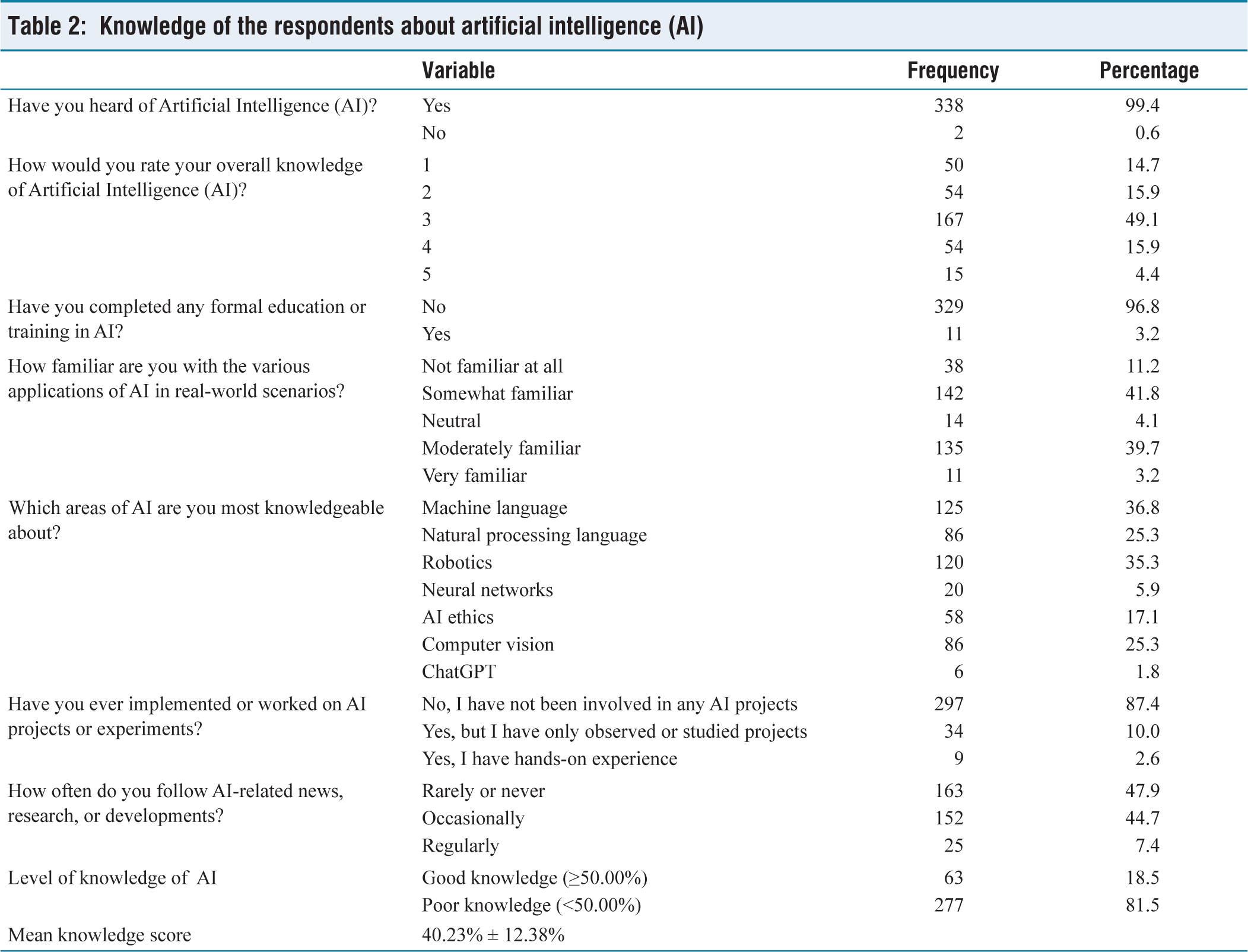
The vast majority of respondents (99.4%) reported having heard of AI, 96.8% reported not having completed any formal education or training in AI, and 3.2% were very familiar with various applications of AI in real-world scenarios. With respect to practical experience with AI projects or experiments, the majority (87.4%) reported not being involved in any projects, and only 7.4% indicated that they regularly followed AI-related news, research, or developments [Table 2].
Knowledge of the respondents about artificial intelligence (AI)
Perception of Respondents Towards the Integration of AI into Healthcare
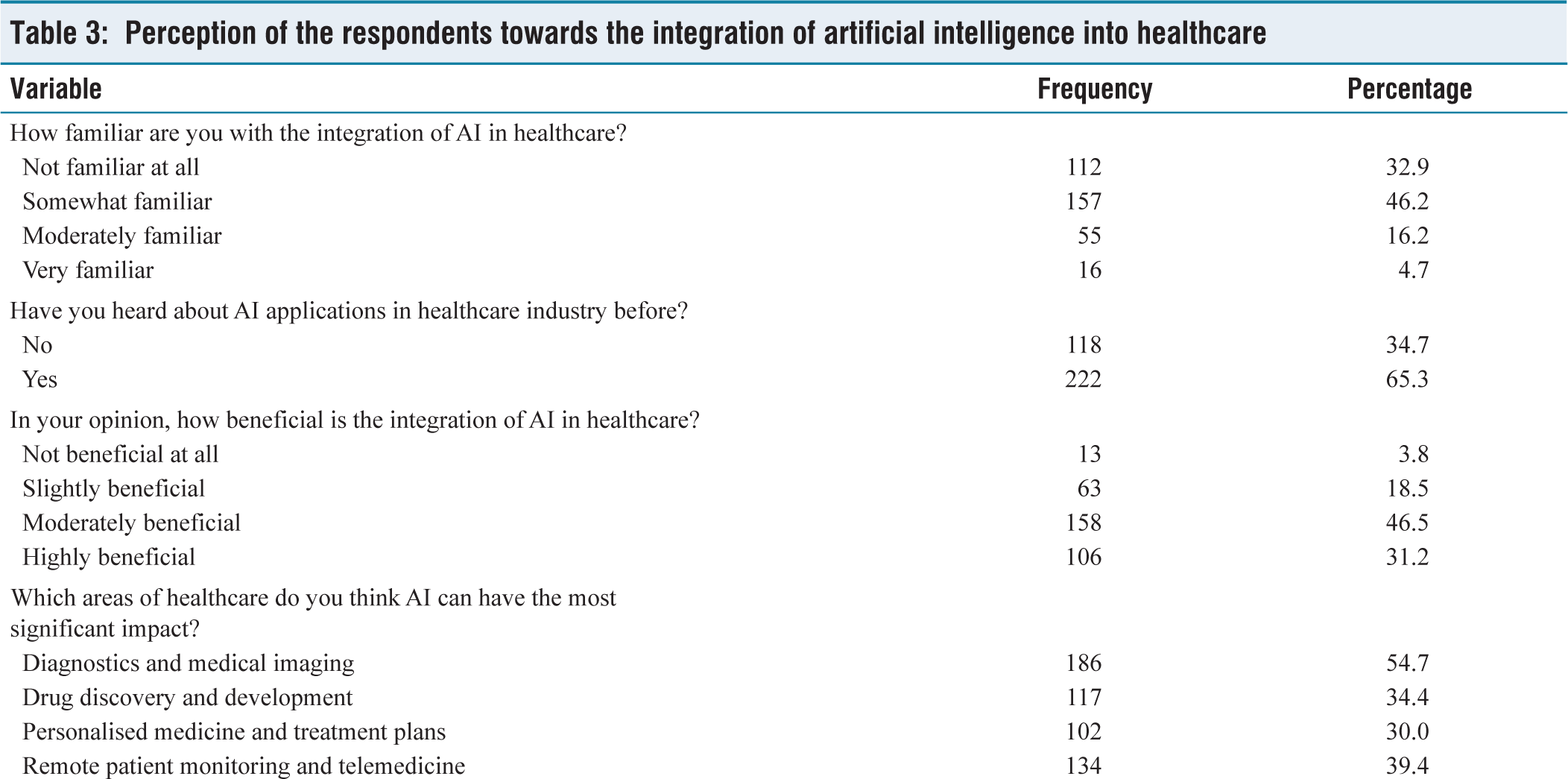
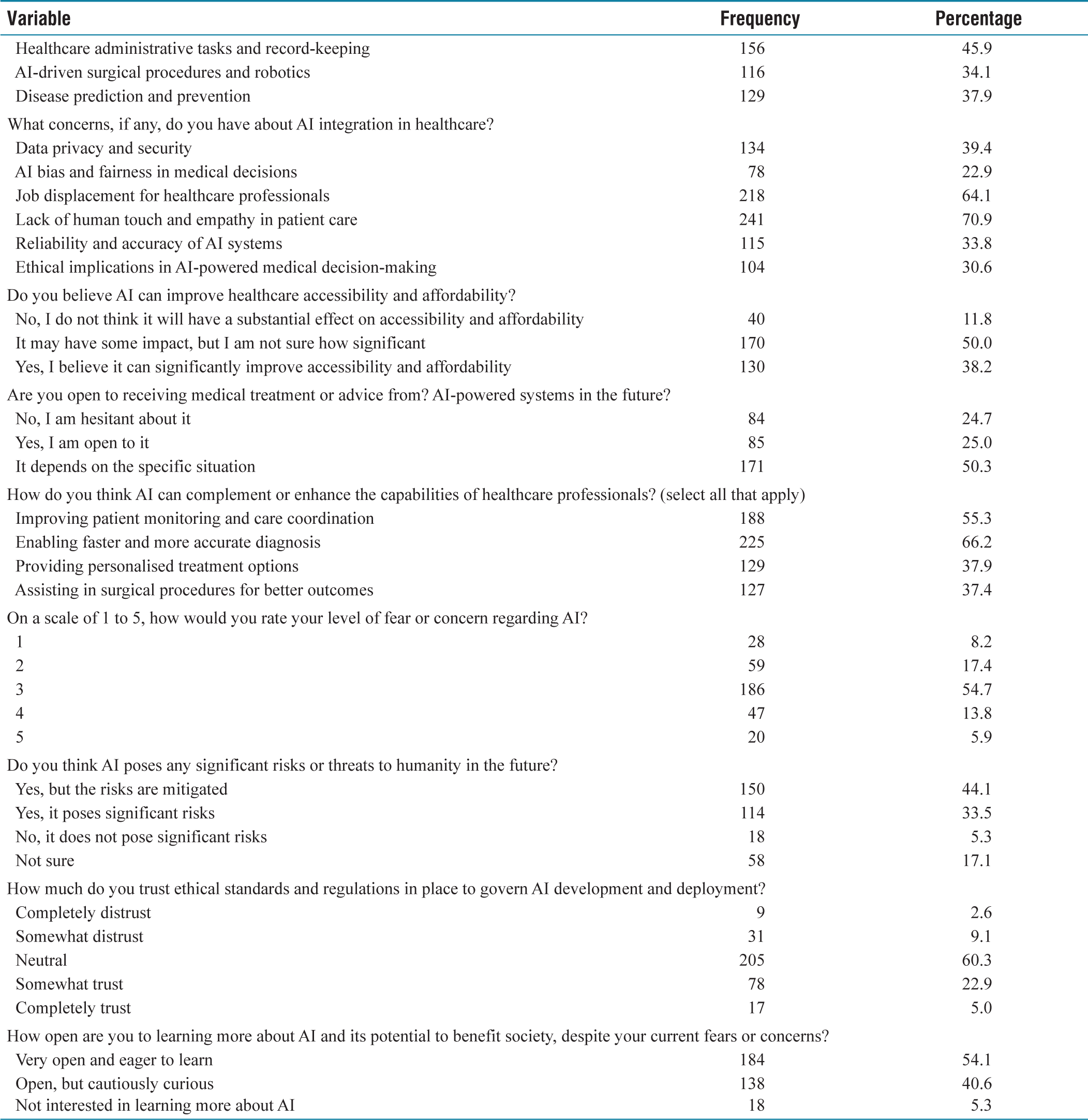
The respondents’ familiarity with the integration of AI in healthcare varied, with only 4.7% being very familiar. The majority (65.3%) reported having previously heard about AI applications in the healthcare industry, and 31.2% perceived AI integration in healthcare as highly beneficial. More than half of the respondents responded that AI can have the most significant impact on diagnostics and medical imaging (54.7%). Concerns about AI integration in healthcare varied, with data privacy and security (39.4%) and a lack of human touch and empathy in patient care (70.9%) being the most frequently reported. The specific aspects of AI technology that made respondents feel apprehensive or fearful varied, with job displacement and unemployment (72.1%) and potential misuse or malicious use of AI (55.9%) being mostly reported [Table 3].
Perception of the respondents towards the integration of artificial intelligence into healthcare
Readiness of the Respondents Towards the Integration of AI into Healthcare
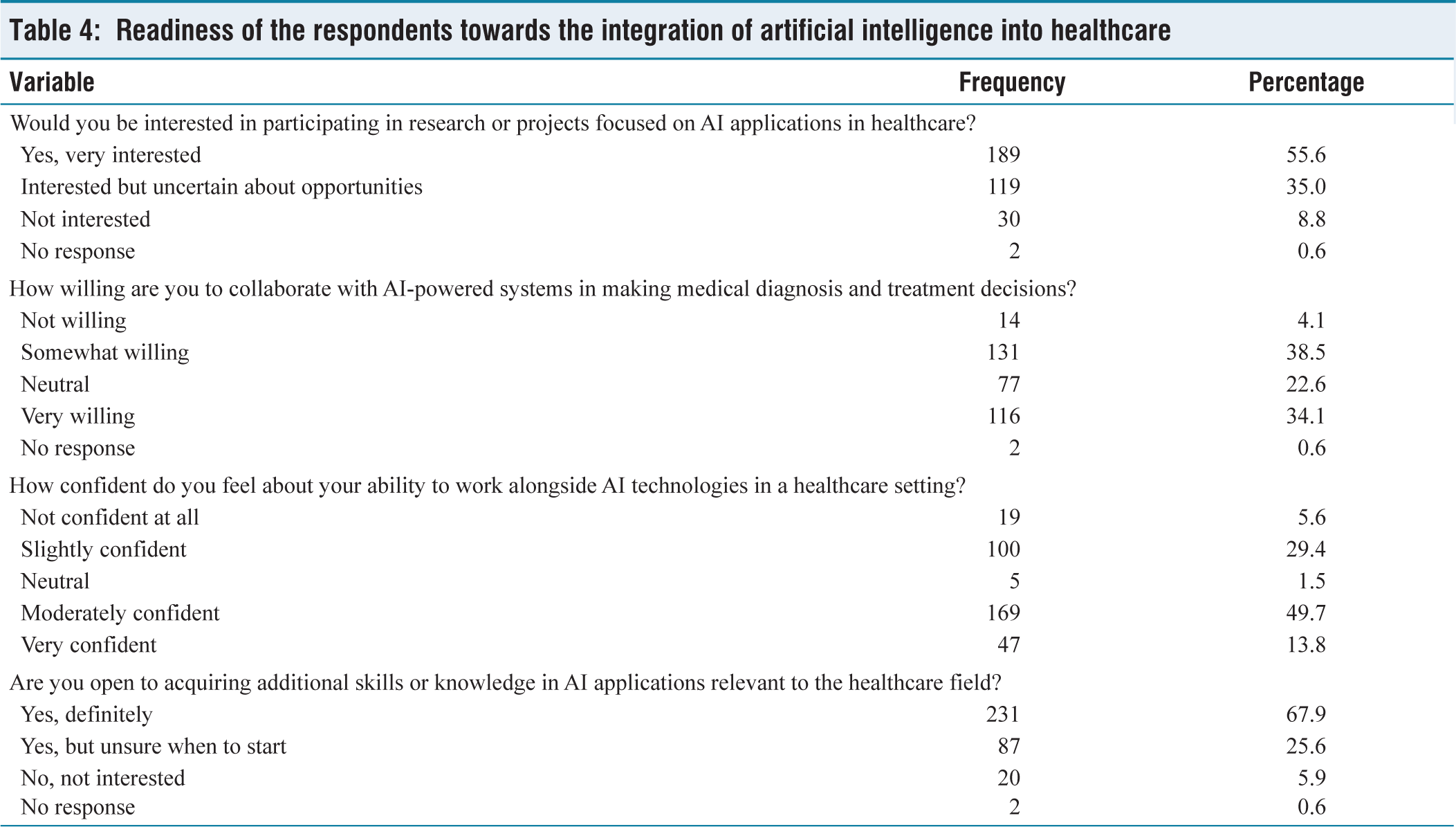
More than half of the respondents (55.6%) indicated interest in participating in research or projects focused on AI applications in healthcare. Additionally, 34.1% were very willing to collaborate with AI-powered systems in making medical diagnoses and treatment decisions, 13.8% were very confident in their ability to work alongside AI technologies in a healthcare setting, and 67.9% indicated that they were open to acquiring additional skills or knowledge in AI applications relevant to the healthcare field [Table 4].
Readiness of the respondents towards the integration of artificial intelligence into healthcare
Discussion
This study examined the knowledge, perceptions, and readiness of medical students at Nnamdi Azikiwe University regarding the integration of AI into healthcare. The findings indicated a lack of knowledge about AI among respondents, with the majority having no formal training in the subject. Various demographic factors have been identified as potential contributors to this knowledge gap. Additionally, the study revealed widespread scepticism regarding the integration of AI into healthcare, as many respondents briefly expressed fears of job displacement by AI. Moreover, there was a general lack of trust in AI judgements among respondents, who indicated that their willingness to take advice from AI would depend on the specific circumstances.
The respondents in this study reported a low level of knowledge of AI (81.5%), which aligns with findings from similar studies conducted in Kazakhstan and Pakistan[10,11] as well as with the study by Teng et al.,[12] but in contrast with the moderate level of knowledge observed in a study conducted in Jordan.[13] This lack of expertise may be attributed to the fact that the participants had not received formal education or ever implemented/worked on AI projects or experiments. While it was not surprising for respondents to report being very familiar with machine learning and robotics compared with other applications of AI, this familiarity may be attributed to exposure to social media, where these terms are frequently used. However, a significant number of studies rarely follow up on AI-related news. Furthermore, a high percentage were only somewhat familiar with the integration of AI into healthcare, which may also be due to a lack of follow-up on AI-related news, and a low number (2.6%) had hands-on experience with AI, which is not in line with a study conducted at a university in the United States,[14] where 71% of respondents had hands-on experience with AI technology.
While this study highlights the low level of AI knowledge among medical students, it fails to explore the underlying reasons for this lack of expertise and the specific factors contributing to students’ limited knowledge of AI, such as the adequacy of educational resources or institutional support for AI education, which could provide valuable ideas for improving AI curriculum development and implementation. In a study with comparable observations regarding the absence of formal education on AI, a notable portion of respondents indicated that they learned about AI through self-directed learning.[15] Regrettably, our study did not address this aspect, as it focused solely on students’ means of learning through formal education.
The perception of this population towards AI can significantly influence its integration in healthcare. If medical professionals have a low level of knowledge and familiarity with AI, they may be hesitant to adopt AI technologies in their practice.[16,17] Despite the poor knowledge and poor practical experience observed in this study, a substantial percentage expressed a positive perception regarding the benefits of AI integration in healthcare, particularly believing that it would have a moderate impact. Similar findings were also reported in studies among pharmacy students.[18] Respondents agreed that the most significant impact would be in diagnostics and medical imaging (57.1%), as well as in healthcare administrative tasks and record-keeping. Some of the respondents (64.1%) who held a positive perception that AI would be beneficial also expressed concerns regarding potential job displacement for healthcare practitioners. This finding is consistent with a study conducted among similar populations[18,19,20] but contrasts with the study by Civaner et al., where respondents believed that AI would be a partner tool and not a job displacement tool.[21] Additionally, the findings of this study are inconsistent with those of Banerjee et al., who trained doctors across a range of hospitals in London, UK, where they believed that AI could free up doctors’ time for educational activities.[22]
The lack of human touch and empathy, data privacy, and security, as well as the reliability and accuracy of AI, were among the major concerns reported by this population and reflect a significant concern among this population. This finding is consistent with previous research, such as the study conducted by Ahmad et al., which highlighted similar apprehensions among Chinese healthcare professionals.[23] Traditionally, healthcare has been deeply rooted in human interaction, empathy, and the establishment of trust between patients and healthcare providers.[24] The introduction of AI technologies into healthcare settings hoped that more free time for healthcare professionals would lead not only to more trustworthy and empathetic care for patients but also to less stress for and burnout of healthcare providers.[25] However, concerns about whether these fundamental aspects of care could be compromised have been raised. AI technologies, while offering tremendous potential for efficiency and accuracy in diagnosis and treatment,[26] may inadvertently lead to a perceived depersonalisation of care.[27] Automated processes and algorithms, devoid of human emotions and intuition, could create a sense of detachment between healthcare providers and patients. Patients may feel that their experiences, emotions, and concerns are not adequately understood or addressed by AI-driven systems.
While it is commendable that our respondents expressed these concerns, it is crucial to recognise that the successful integration of AI into healthcare necessitates striking a careful balance between capitalising on technological benefits and maintaining the essential principles of compassionate, patient-centred care. Thus, addressing issues related to human touch, empathy, data privacy, and algorithmic reliability is paramount to fully realising the integration of AI in healthcare.
Furthermore, a substantial proportion of respondents demonstrated a keen interest in acquiring further skills or knowledge in AI relevant to their respective fields, showing the importance of implementing targeted AI education programmes tailored to specific fields. This finding is reinforced by research conducted in Canada, where medical students expressed a desire for AI integration into their curriculum, as well as findings from other studies.[12,28] Given that the majority of respondents have not received formal education or training in AI (96.8%), there is an urgent need for swift action to incorporate AI learning into educational curricula, as emphasised by researchers in Saudi Arabia. The inclusion of comprehensive modules on AI fundamentals, applications in healthcare, ethics, and data privacy in educational curricula is recommended. These modules should provide hands-on training opportunities and real-world case studies to ensure practical understanding and application of AI concepts in healthcare settings.
In a study by Ahmer et al., the majority of respondents (83.8%) overwhelmingly agreed that AI is highly beneficial in healthcare, indicating a strong belief in the substantial advantages of AI integration in this field.[29] However, in our own research, the respondents expressed a more moderate stance (46.5%) regarding the benefits of AI integration in healthcare. They cited advantages such as expedited and precise results, enhanced patient monitoring, improved care coordination, and increased accessibility and affordability of healthcare. Participants believe that AI can increase healthcare accessibility and affordability through increased diagnostic accuracy and early disease detection and intervention, thereby reducing the necessity for costly and invasive treatments.[14] Additionally, the results revealed a more neutral attitude (60.3%) towards the ethical standards and regulations in place to govern AI development and deployment in healthcare.
Moreover, some level of readiness for the healthcare industry was observed among this population. We observed a significant interest among the respondents in participating in research or projects focused on AI applications within the healthcare sector to acquire additional skills or knowledge in AI applications relevant to the healthcare field and to collaborate with AI-powered systems in making medical diagnoses and treatment decisions. These keen interests can be attributed to the high perception observed among this population and the growing recognition of the potential benefits that AI technology can bring to healthcare, such as improved diagnostic accuracy, enhanced treatment outcomes, and increased operational efficiency. Medical students may view participation in AI research and projects as an opportunity to contribute to advancements in their field and to be at the forefront of innovation. This strong willingness highlights the progressive mindset of this population toward embracing new technological solutions. It reflects a proactive approach towards staying informed and involved in the evolution of their field. It also signals a positive outlook towards AI integration, suggesting readiness to explore and harness the potential of AI technology to improve patient outcomes and streamline healthcare processes.
However, a varying level of confidence was observed in their ability to work alongside AI technologies in a healthcare setting. While a majority of the respondents reported at least moderate confidence, a significant proportion expressed either slight or no confidence. This was not surprising since the majority of the respondents lacked formal education or engaged in related news. This finding highlights the need for targeted training and support initiatives to increase healthcare professionals’ confidence in the use of AI tools effectively. Confidence plays a crucial role in healthcare professionals’ willingness to adopt and effectively utilise AI-powered systems. A lack of confidence may lead to underutilisation or ineffective use of AI tools, limiting the potential benefits they can offer in improving patient care and operational efficiency.
Conclusion
In conclusion, the findings reveal a concerning lack of AI knowledge among respondents, coupled with widespread scepticism about its integration. Despite this, there is a notable interest in AI-related research and projects, indicating a willingness to explore its potential benefits. However, varying confidence levels in working alongside AI technologies highlight the importance of targeted training initiatives. Addressing concerns while promoting comprehensive AI education programmes tailored to specific fields is crucial for successful integration.
Supplemental material
Supplemental material for this article is available online.
Footnotes
Acknowledgements
The authors are thankful to all the participants in this study.
Declaration of conflicting interests
The authors declared no potential conflicts of interest with respect to the research, authorship and/or publication of this article.
Funding
The authors received no financial support for the research, authorship and/or publication of this article.
Institutional ethical committee approval number
Ethical approval was obtained from the Directorate of Medical Sciences, Ministry of Health, Anambra state, Nigeria (MH/AWK/M/321/502).
Informed consent
Written informed consent was obtained from all the participants before they responded to the questionnaire.
Credit author statement
SO conceptualized this study.
IO, MU, and CI wrote the initial manuscript and assisted in data collection.
GE analysed the data.
PA and CO assisted in data collection and manuscript writing.
SIO and EO supervised the study.
All the authors read and approved the final version of this work.
Data availability
Data for this study are available and can be obtained from the corresponding author.
Use of artificial intelligence
No form of AI was used in the preparation of this work.
References
Supplementary Material
Please find the following supplemental material available below.
For Open Access articles published under a Creative Commons License, all supplemental material carries the same license as the article it is associated with.
For non-Open Access articles published, all supplemental material carries a non-exclusive license, and permission requests for re-use of supplemental material or any part of supplemental material shall be sent directly to the copyright owner as specified in the copyright notice associated with the article.
