




Abstract
Background and Aims:
Monitoring and a continual improvement of turnaround time (TAT) in urine examination and reporting is essential for improved management of laboratory quality as well as ensuring patient satisfaction. TAT can be impacted by multiple factors, some of which appear to be beyond the control of laboratory, especially the preanalytical phase of urine examination such as specimen collection, transportation and sample preparation. The aim of the study was to compare the preanalytical variables like TAT for transportation and incidences of spill between our current urinalysis workflow process and the new urinalysis workflow process using a pneumatic chute-compatible closed urine collection system.
Materials and Methods:
This observational prospective study was conducted on 4/9/23 from 9 am to 4 pm at the laboratory of Apollo Main Hospital, Chennai. Pneumatic chute compatible closed urine collection cup was given to the patients in Group-A and normal screw cap containers which we are currently using were given to the patients in Group-B. Once the urine samples were collected in the respective containers, they were transported to the laboratory using pneumatic chutes for Group-A samples and manual carry for Group-B samples. Analysis of transportation time using the new collection method (Group-A) when compared with the current method of practice (Group-B) was done. The incidence of spillage was also monitored.
Results:
A significant improvement was noticed in the transportation process and spill incidence with closed collection devices through the pneumatic chute.
Conclusion:
To conclude, the implementation of pneumatic chute compatible closed collection tubes for urine improves the transportation and processing time, eliminates the manual carry of urine samples, eliminates the incidences of leakage and spillage, reduces errors and reduces the exposure of urine to healthcare workers, thereby leading to significant improvement in patient care, patient experience and staff satisfaction.
Introduction
Laboratory medicine not only aids in making an evidence-based diagnosis but also facilitates therapeutic monitoring and prognostication of the disease. It is the backbone of the efficient healthcare system. Driven by technological advancements, Laboratory medicine is rapidly transforming healthcare delivery by improving the pre, post and analytical areas. Amongst of the advancements happening in laboratory medicine, urine examination though extremely contributory to patient care, still is an ignored entity in terms of preanalytical automation and advancements. Even though urine analysis is a commonly performed laboratory test, for a long time, preanalytical focus has been on improvement in blood collection alone and urine collection and processing have lagged behind significantly.[1,2]
Monitoring and a continual improvement of turnaround time (TAT) in urine examination and reporting is essential for an improved management of laboratory quality as well as ensuring patient satisfaction. Clinicians consider TAT as a therapeutic TAT which is the time from the ordering of the test to reporting of results, whereas laboratory professionals usually use intra-laboratory TAT which is calculated from the receive of samples in the laboratory to reporting of results.[3] TAT can be impacted by multiple factors, some of which appear to be beyond the control of laboratory, especially the preanalytical phase of urine examination such as specimen collection, transportation and sample preparation.[4]
Our centre is a 600-plus bedded quaternary care referral hospital with an average receipt of 500 urine samples per day in the clinical pathology department. Despite the presence of pneumatic chutes, all the urine sample containers were transported manually as they were not pneumatic compatible. This leads to the increase of preanalytical TAT which in turn affecting the overall TAT. So, this created a need for us to look for solutions (pneumatic compatible urine collection tubes) which can reduce the preanalytical TAT. So, the aim of the study was to compare the preanalytical variables like TAT for transportation and incidences of spill between our current urinalysis workflow process and the new urinalysis workflow process using a pneumatic chute-compatible urine collection system.
Materials and Methods
Study Design & Objective
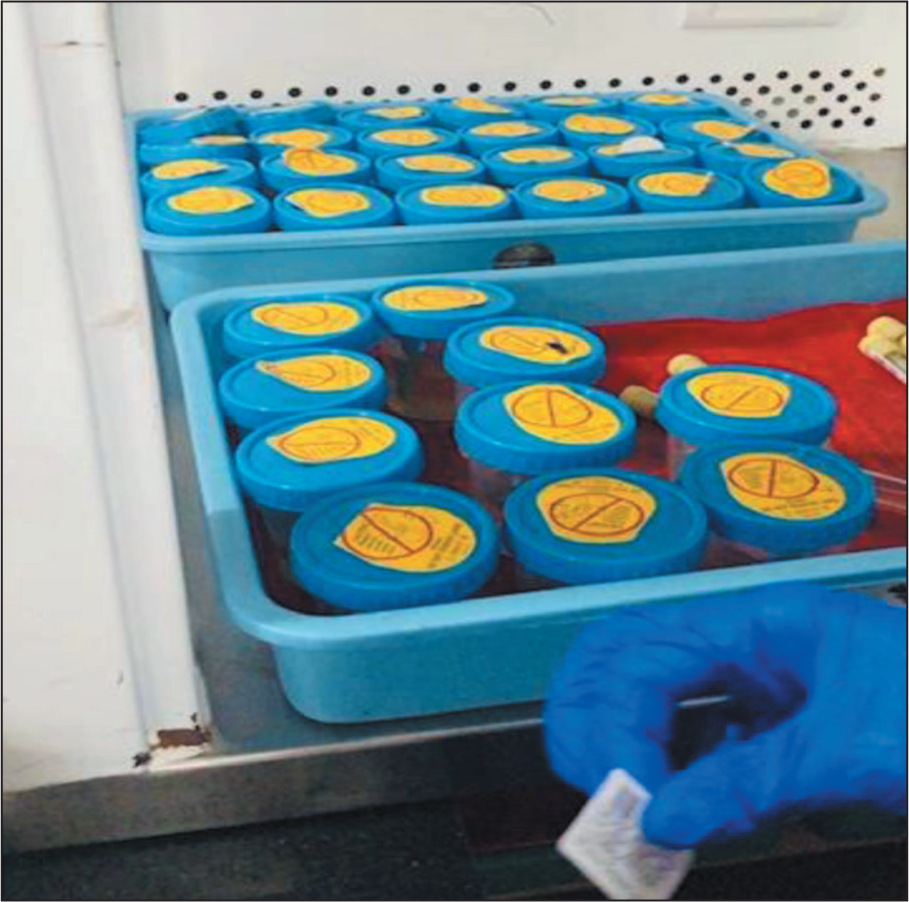
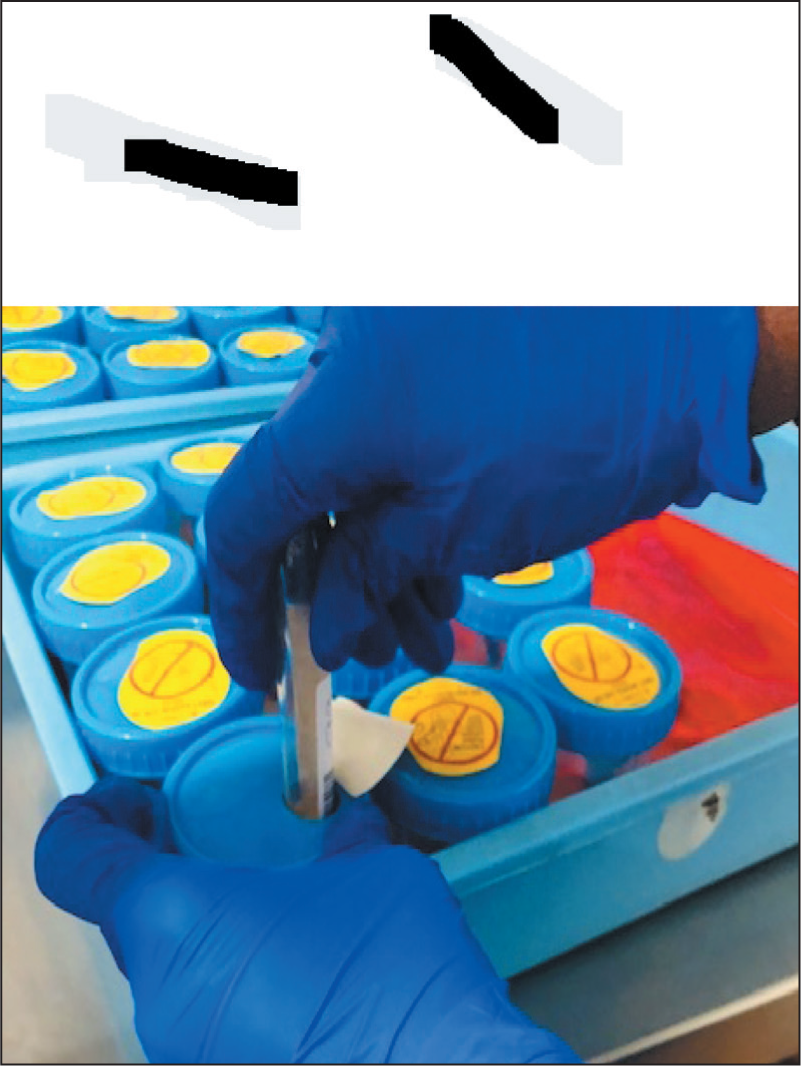
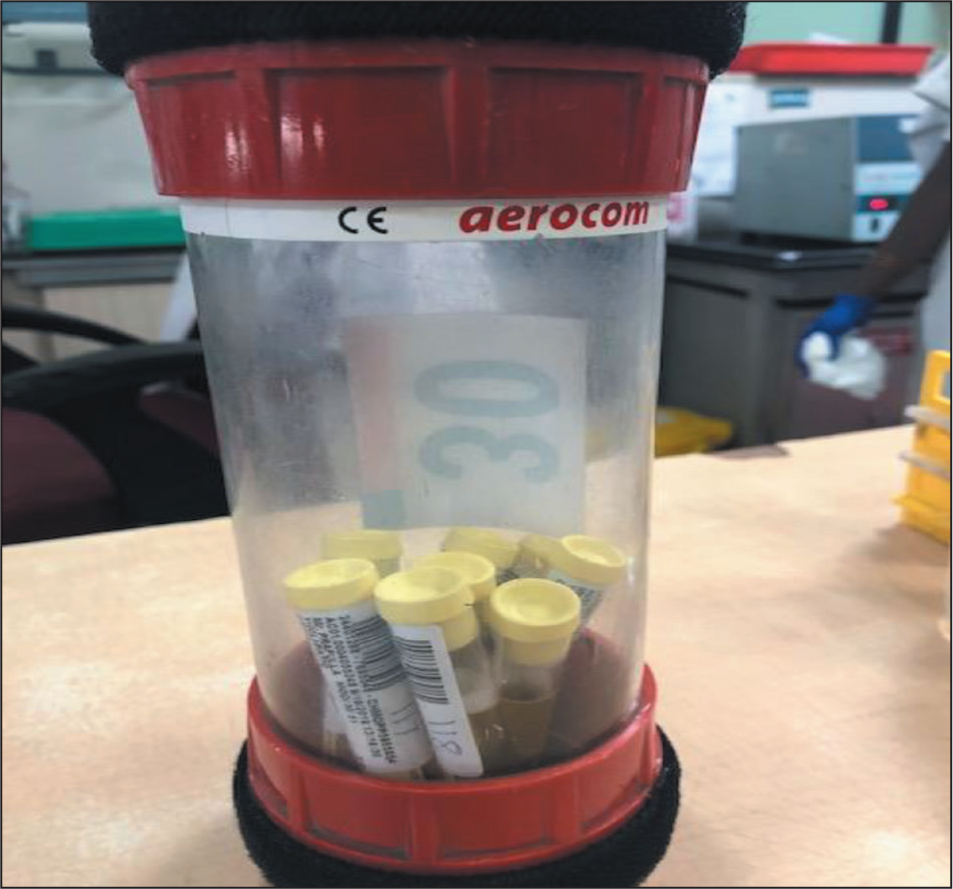
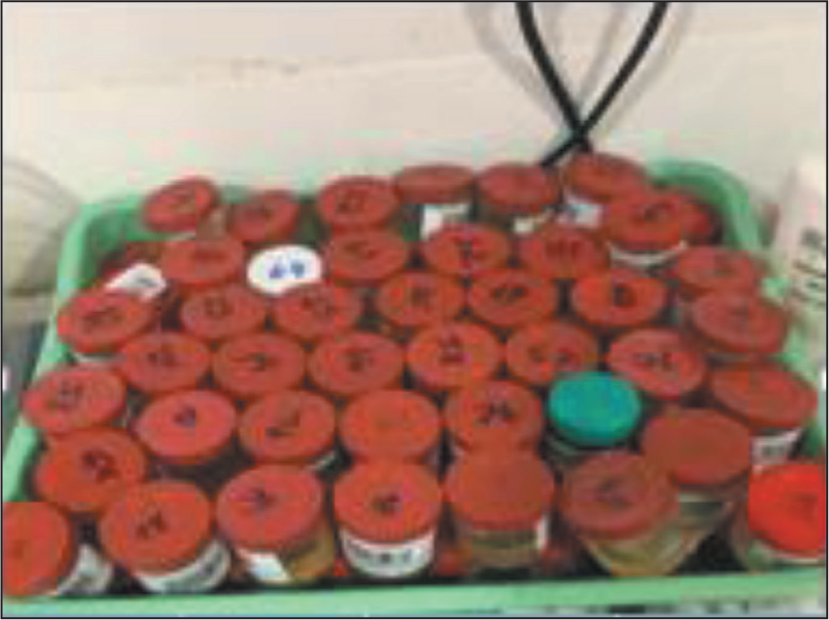
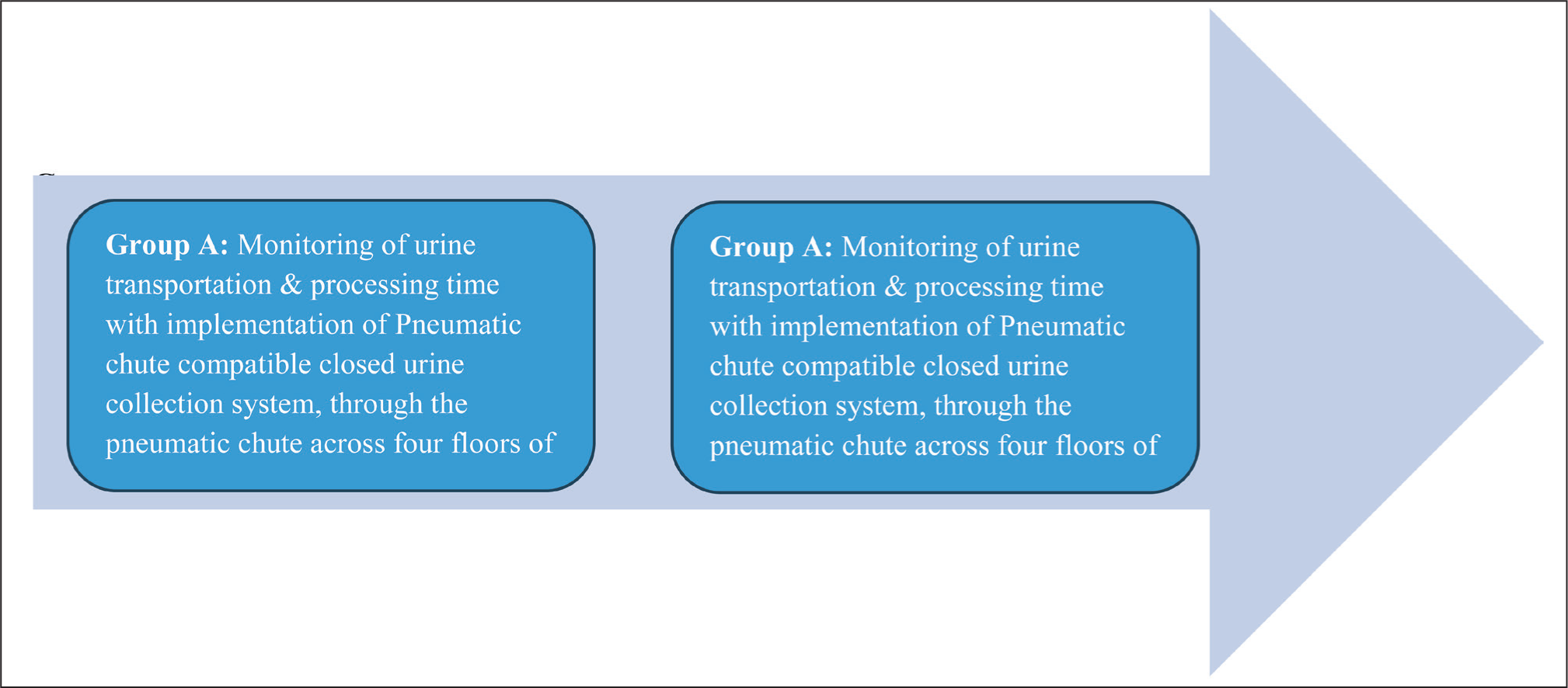
This observational prospective study was conducted on 4/9/23 from 9 am to 4 pm at the laboratory of Apollo Main Hospital, Chennai. The patients who had approached the OPD to give the urine sample for routine analysis were divided into two groups (Group-A & B) of 150 each (n = 300). Manual transportation happened in a batch of 20. The pneumatic chute-compatible closed urine collection system was given to the patients in Group-A and normal screw cap containers which we are in use currently were given to the patients in Group-B patients. Once the urine samples were collected in the respective containers, they were transported to the laboratory using pneumatic chutes for Group-A samples (Figures 1–4) and manually carried for Group-B samples (Figure 5). Comparison of transportation time and incidence of sample spillage using the new collection method (Group-A) when compared with the current method of practice (Group-B). was done (Figure 6).
Urine Collection Cups Collected From Group-A Patients
Barcode Stickers on the Collection Container & Tubes
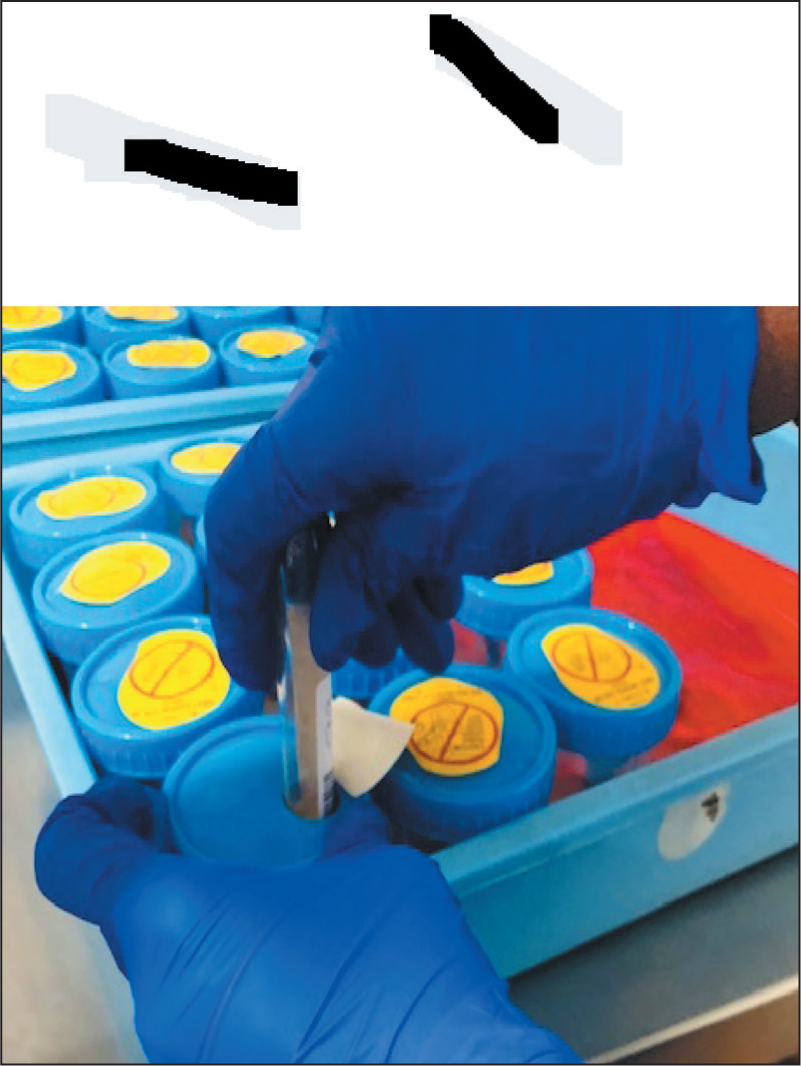
Vacuum Aspiration of Urine Sample From Collection Cup to the Tubes
Tubes Ready to be Transported Through the Pneumatic Chute and Further Analysis in the Lab
Urine Collection Cups Collected from Group-B Patients
Study Design
Description of the Study Device
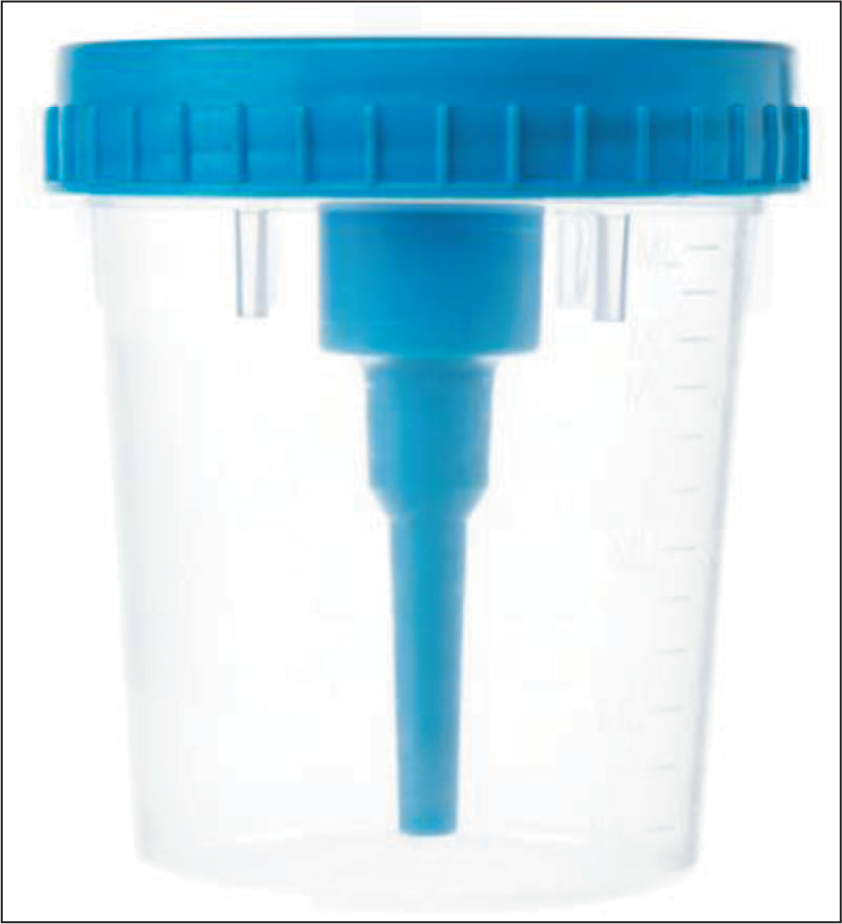
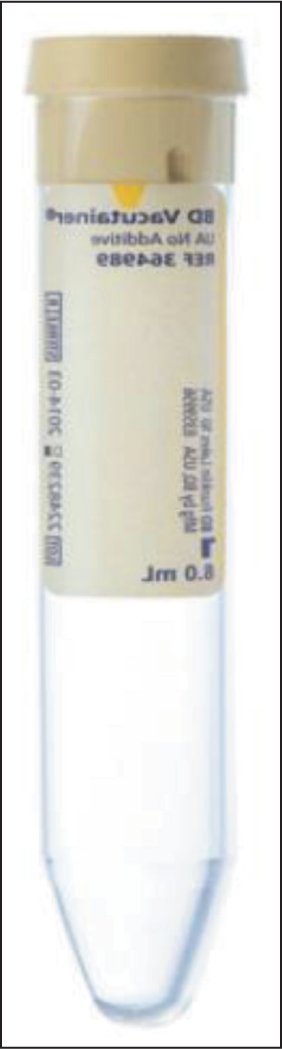
The study device was a newly developed BD Vacutainer→ Urine Collection Cup with an Integrated transfer device (Figure 7) and BD Vacutainer→ Plus Plastic urine analysis conical bottom evacuated tube without preservative (Figure 8). The urine collection cup is a sterile, plastic cup graduated to indicate a volume of 4.5 oz or 120 mL of urine with a screw cap to minimise the risk of leaking and contamination.
Urine Collection Cup[5]
Urine Analysis Tube[6]
Inclusion Criteria
Only urine routine analysis samples and the samples received in the study period were included in the study.
Exclusion Criteria
All the urine samples other than routine analysis and which were received outside the study period were not included in the study.
Data Collection Procedure
For Group-A
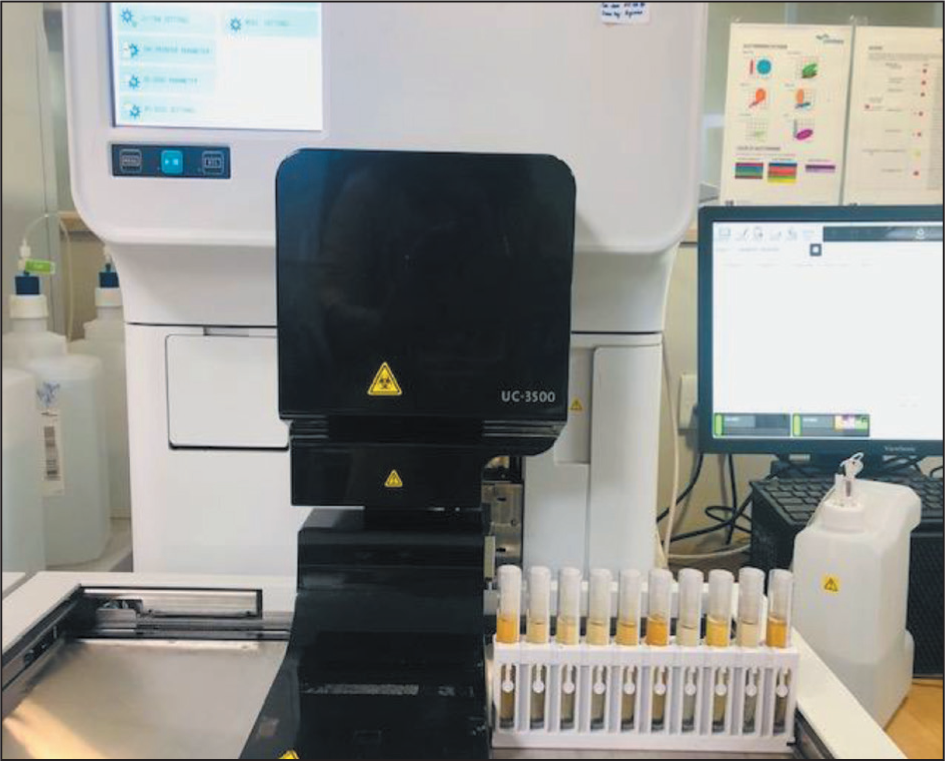
Once the patient approaches the OPD to give the urine sample, the healthcare professional generates two bar codes, one for the collection cup and one for the evacuated tube (Figure 2). One barcode was placed on the collection cup and instructed the patient to void the urine in the cup and cap it. Following that, the health care professional numbered both the collection cup and evacuated tube, and the urine was transferred by placing the evacuated tube on the cavity of the collection cup (Figure 3) and there was no requirement to open the cap of the collection cup. The transfer time was noted at this point. Post the transfer, the evacuated tube was transported through pneumatic chutes (Figure 4). Once, the tubes were received in the laboratory, the receipt time was noted, and the tubes could be placed directly on the automated urine analyser for the analysis (Figure 9). The process of transfer and labelling of secondary glass tube is not required saving time, incidence of spillage, health hazards and an error which could happen due to relabelling.
The Tubes were Placed Directly on the Automated Urinalysis System Upon Arrival in the Lab, Eliminating the Need to Manually Transfer the Sample from the Collection Cup to the Analysis Tube
For Group-B
Once the patient approaches the OPD to give the urine sample, the healthcare professional had generated single barcode, and it was placed on the collection cup and instructed the patient to void the urine in the cup and cap it. Following that, the health care professional handed over the sample to the transport boy for manual transportation. The time was noted at this point. Once, the urine containers were received in the laboratory, the receipt time and the condition of samples were noted. Upon receipt, the laboratory technician transferred the urine sample from the container to a disposable glass tube and these tubes were placed on the automated urine analyser for the analysis. The process of transfer and labelling of secondary glass tube was involved here which is time-consuming and can also cause spillage, health hazards and errors.
Results
Transportation time was recorded for 20 batches of urine samples across four floors in the laboratory. We used our laboratory information system to compute and analyse preanalytical TAT of urinalysis for both groups, and those results were compared.
Group-A
Transportation time through the pneumatic chute was negligible (Table 1).
Group-A: Samples Transportation Time – Pneumatic Chutes

Incidence of spillage was NIL.
Group-B
When transported through the stairs, the average transportation time was 16.75 minutes with a minimum of 15 minutes and a maximum of 19 minutes (Table 2).
Group-B: Samples Transportation Time – Manual

When transported manually through the lift, the average transportation time was 13.25 minutes with a minimum of 10 minutes and a maximum of 17 minutes (Table 2).
This was subjective to the weight of the transport box, availability of staff and availability/waiting time of the lift.
Spillage was noticed in four of the 20 batches.
So, a significant improvement was noticed in the transportation process and incidence of spillage with closed collection devices through the pneumatic chute.
Discussion
Authenticity, precision, TAT and result accuracy are the four most significant aspects of an efficient laboratory. Laboratories sometimes overlook TAT as an important factor and they focus the resources more on the other aspects of sample processing. Whereas most clinicians consider TAT as the most crucial indicator for benchmarking a laboratory’s performance.[7] Timeliness of reporting is crucial to ensure adequate and timely therapeutic intervention as well as monitoring and prognostication of the disease. Hence, it is our prerogative to ensure the timeliness of reports. We understand that the pre- and postanalytical phases are equally important for the laboratories more so where TAT is concerned.[8] Scope for improvement in turn around time is huge if we control these factors.
In the current method of practice, the urine containers should be transported manually as they are not pneumatic compatible. This leads to an increase in preanalytical TAT. Our study has proved that, with the implementation of pneumatic chute-compatible closed urine collection system, the preanalytical transportation was reduced drastically (Table 2) which in turn helps to improve the overall TAT.
In general, there is a high chance of sample leakage and spills during the transportation of urine samples. With the use of pneumatic chute-compatible closed urine collection system, the sample leakage challenges will be reduced drastically as these tubes are spill-proof and pneumatic compatible. Recent CLSI recommendations also stated that high-quality urine samples can only be delivered by appropriate urine collection tubes (made of clear plastic and with conical bases for microscopic analysis of urine sediment) and leak-proof containers.[9]
The common urine tests comprised of urine routine analysis, culture & sensitivity. Routine urine analysis specimens should be collected in clear, dry, chemically clean containers with tight-fitting lids. For culture & sensitivity, the lab cannot use the routine analysis sample as the container is not sterile and patient must collect in another sterile container.[10] In the current method of practice, the patient must collect the urine samples in multiple containers (for routine analysis, culture etc.). During the collection, there is a high chance of urine soiling the exterior of containers and this was a huge discomfort for the patients to handle the soiled containers. With pneumatic chute compatible closed urine collection system, the patient can void the sample in only one container, as these are sterile containers. This reduces the patient discomfort. This practice was also an environment friendly as it reduces the plastic waste.
In the current method of practice, upon receipt in the laboratory, the technician transfers the urine sample from the container to a disposable glass tube and these tubes are placed on the automated urine analyser for the analysis. This can lead to the increased processing time, errors which could happen during relabelling, spillage and exposure to urine aerosol to the HCW’s. It is extremely risky during a pandemic situation like COVID-19.[11] With the implementation of pneumatic chute-compatible closed urine collection system, the urine tubes which are used for transportation can be used for centrifugation & analysis thereby reducing the TAT, errors and exposure of urine to HCW’s.
Conclusion
To conclude, the implementation of pneumatic chute compatible closed collection tubes for urine improves the transportation and processing time, eliminates the manual carry of urine samples, eliminates the incidences of leakage and spillage, reduces errors and reduces the exposure of urine to healthcare workers, thereby leading to significant improvement in patient care, patient experience and staff satisfaction.
Footnotes
Declaration of conflicting interests
The authors declared the following potential conflicts of interest with respect to the research, authorship, and/or publication of this article: Author Mamta Soni is a member of the Editorial Board of Apollo Medicine. The author did not take part in the peer review or decision-making process for this submission and has no further conflicts to declare.
Funding
The author received no financial support for the research, authorship and/or publication of this article.
Informed consent
Not applicable.
Credit author statement
Study conceptualized, designed, conducted, manuscript written and revised by Dr. Mamta Soni (author).
Data availability
Available.
Use of artificial intelligence
Nil.