




Abstract
Analysis of school curricula in Vanuatu, the world’s most disaster-prone nation, shows that in-depth learning about disasters, and climate change does not occur until the end of secondary education, when only 13% of primary level 1 children are still in school. Furthermore, such education in resilience is confined to optional subjects. We demonstrate that this situation does not match the objectives of Vanuatu’s policies on resilience and sustainable development, the Framework for Resilient Development in the Pacific, nor key international policies, and argue for the inclusion of suitable learning materials at earlier curricular levels.
Introduction
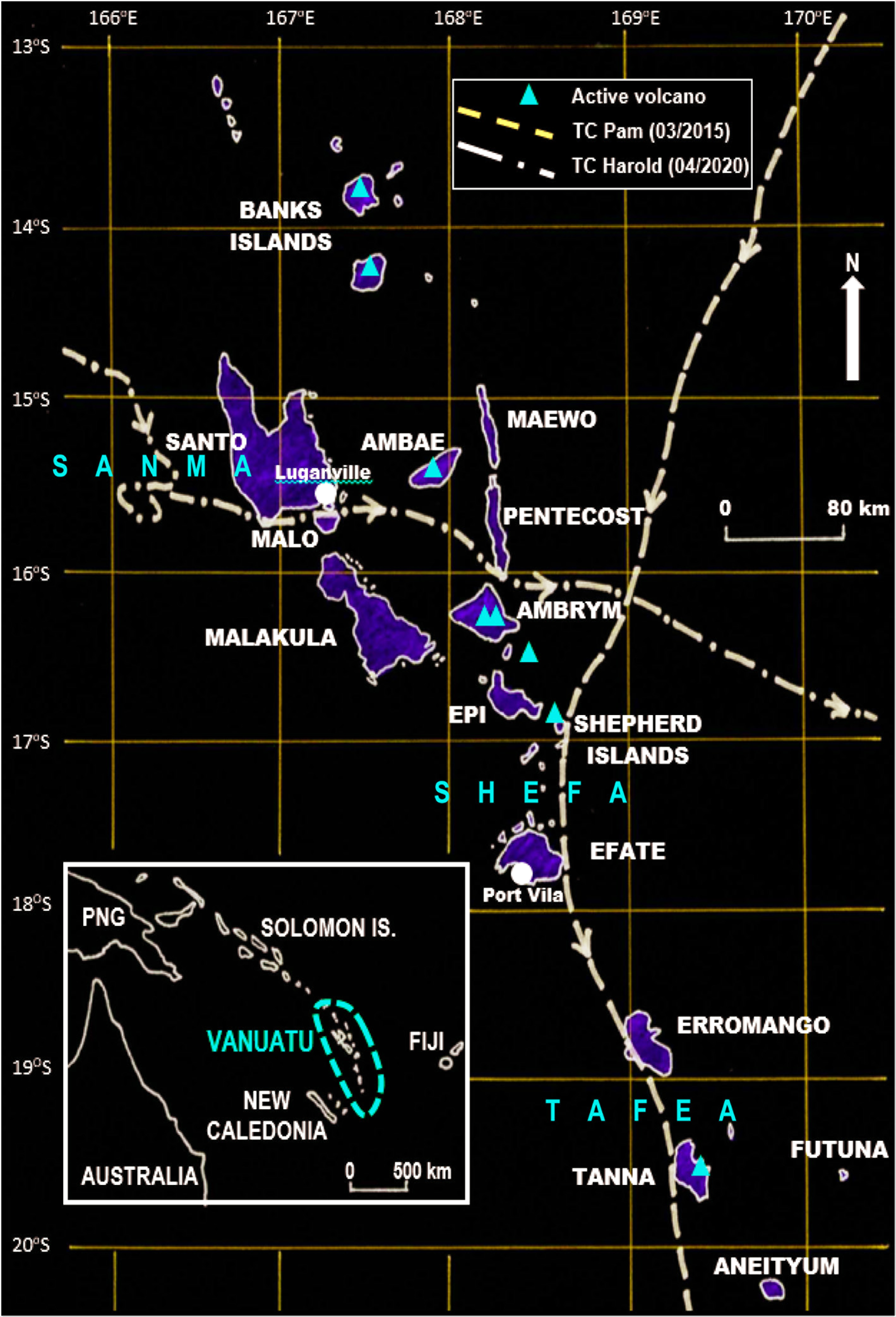
Vanuatu, an archipelago of over 80 islands in the south-west Pacific (Figure 1), is the planet’s most at-risk country to natural hazards. The 2019 World Risk Index, calculated for 180 countries on the risk of disasters arising directly from earthquakes, cyclones, floods, droughts and sea-level rise, multiplies the values of two dimensions—exposure and vulnerability. Vanuatu’s index for 2019 was 56.71, almost double that of the next country, Antigua and Barbuda (30.80) (Bündnis Entwicklung Hilft, 2019, p. 56). In August 2020, Vanuatu had an estimated population of 308,089 (World Population Review, 2020), of whom an estimated 32% live in the two main urban areas of Port Vila and Luganville (Trundle et al., 2018, p. 57).
The Ministry of Climate Change (MCC), one of the first in the world, was established in December 2013 (MCC, 2015, p. 12). Since then, public education on disaster risk reduction (DRR) and climate change adaptation (CCA) has strengthened, largely through the efforts of this Ministry, the Vanuatu Meteorology and Geo-Hazards Department (VMGD), the National Disaster Management Office (NDMO) and non-government organizations such as Care International, Save the Children, Oxfam, Red Cross, World Vision and Wan Smolbag. However, formal school education on disasters and climate change has not kept pace.
This article examines the extent to which education on disasters and climate change is taking place in primary and secondary schools in 2020 and compares this with the objectives for formal education stated in resilience policies at the national, regional and international levels.
Methods
For information on educational matters, the authors analysed documents from the Curriculum Development Unit (CDU) in Vanuatu’s Ministry of Education and Training (MOET): the National Curriculum Statement and National Timetabling Policy; new syllabi for primary years 4–6 and senior secondary years 11–13 in geography, earth science and development studies; teacher’s guides for science and social science for primary year 5; and social science text books for junior secondary years 7–10. They consulted educational statistics from the MOET for 2007 and 2019 and utilized data supplied by officers in the MOET and the deputy principal of Vanuatu’s leading English-medium secondary school. For details of national, regional and international policies on formal education for CCA and DRR, including a review of progress towards the attainment of the 2030 Agenda goals in Vanuatu, online sources were examined.
Results
Education on Disasters and Climate Change in Primary and Secondary Schools
The formal education sector has a key role in combatting the impacts of climate change (CC) and disasters, exploring strategies for adaptation and mitigation, and promoting carbon-neutral, sustainable lifestyles (Anderson, 2012, p. 193; Kagawa & Selby, 2012, p. 210; Mochizuki & Bryan, 2015, pp. 7–8; Vize, 2013, p. 223). Investment in universal primary and secondary education, especially in developing countries, is regarded as the most effective strategy for enhancing the adaptive capacity to CC (Lutz et al, 2014; Striessnig et al., 2013, p. 1). Highly educated individuals and societies have better preparedness and response to disasters, suffer lower negative impacts and can recover more quickly (Muttarak & Lutz, 2014, p. 1). It is within this context that we look at Vanuatu.
In Vanuatu, education on CC and DRR is delivered through national curricula in 479 primary and 111 secondary schools in either English or French, as of 2019 (MOET, 2020, p. 8). All curricula have been in the process of revision since the MOET formulated the Vanuatu National Curriculum Statement in 2010 to undertake a major review of existing programmes and ensure that English- and French-medium schools would offer common content in their syllabi from primary to senior secondary level (years 1–13).
Primary Level
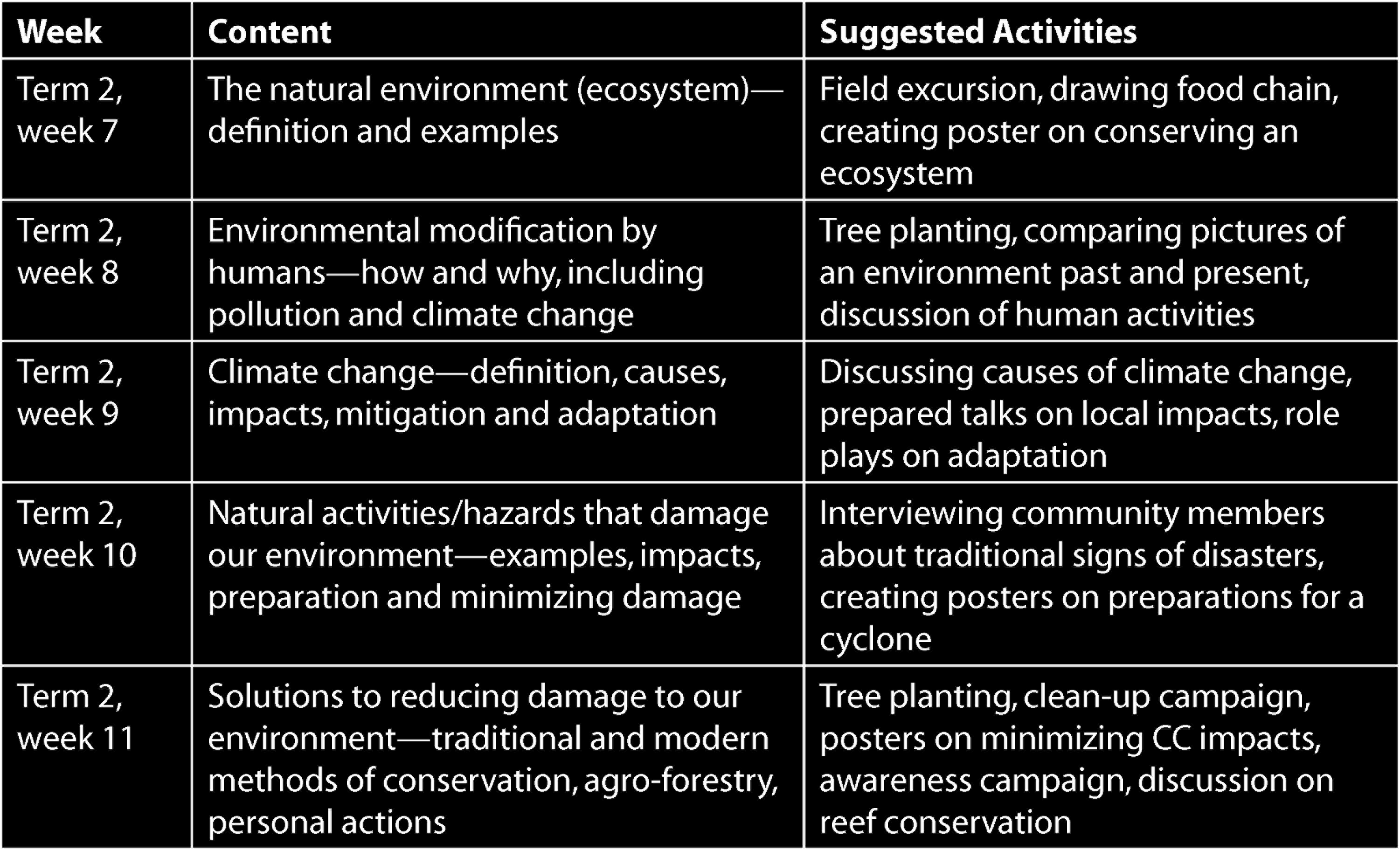
In the revised curricula for primary schools (years 1–6), aspects of resilience are covered in social science and science during years 4–6 (CDU, 2013) and are already being taught in 2020. In social science, CC and DRR are included in the sub-strand caring for our environment, principally in years 5–6, but total teaching hours are just 22 (11%) of social science’s 198 hours for the 3-year period. Table 1 exemplifies how resilience issues are taught in year 5, covered over a 5-week period in Term 2, with 2 hours per week (MOET, 2019a).
Content and Activities in Caring for Our Environment, Year 5
In science, CC topics (causes, adaptation and mitigation) and DRR are taught in the sub-strand our changing earth (CDU, 2013, p. 144), with total teaching hours of only 11 (5.5%) of science’s 198 hours in years 4–6 (MOET, 2019b).
In summary, important issues about CC and DRR are raised at upper primary level, with useful practical activities for the learners, but the allotted teaching hours over years 4–6 are minimal—11% of total social science time and 5% of total science time. The Ministry of Education requires schools to provide primary students with 28 hours of ‘contact time’ per week over three 11-week terms per year (MOET, 2015, p. 6). Thus, the total teaching time for all subjects amounts to 2,772 hours over a 3-year period. Teaching about resilience takes up just 33 hours, or 1.2% of this time.
Junior Secondary Level
Revised curricula for the junior cycle of secondary education (years 7–10) are still under development. Currently, schools rely upon pre-2010 content in which fairly limited coverage of CC and disasters is provided through basic science and social science. In social science, for example, global warming and cyclones are briefly covered in the last unit of year 10—Our Changing Society.
To enhance learning about CC at junior secondary level, initiatives were taken in 2011 by several donor agencies to develop an educational resource for use across curricula in five Pacific countries—Fiji, Kiribati, Samoa, Tonga and Vanuatu. The resource, Learning about Climate Change the Pacific Way, comprises a set of 16 colourful pictures and a comprehensive country-specific teacher’s guide aimed at teaching students about CC and how they can become more resilient to its impacts (SPC & GIZ, 2014). In Vanuatu, picture sets and teacher’s guides were distributed to all junior secondary schools during 2013–2015, with teacher-training workshops held on their use. However, the subsequent deployment of this valuable resource seems to have stalled, for several reasons—destruction of schools and materials during Tropical Cyclone (TC) Pam, frequent transfer of teachers between schools, and pressures to focus on the content of official textbooks so as to guarantee greater success in the Year 10 Leaving Examination. As a result, investigations by the authors in 2019–2020 reveal that many science and social science teachers are unaware of the resource or of how to use it.
Senior Secondary Level
Education on resilience (CC and DRR) falls within the context of education for sustainable development. As such, curricula should ‘equip students with the knowledge, understanding, skills and attributes needed to work and live in a way that safeguards their environmental, social and economic well-being, both in the present and for future generations’ (Leal & Pace, 2016, p. 2).
Resilience education, particularly at senior secondary level, requires learning that is interactive, experiential, reflexive, creative and participatory (Kagawa & Selby, 2012, p. 214; Stevenson et al., 2017; UNICEF, 2012, p. 29), with curricula, teachers and pedagogies promoting an understanding of the climate challenge to the extent that it leads to greater national action and commitment to the attainment of a country’s nationally determined contributions (NDCs) under the Paris Agreement on Climate Change (UNESCO, 2020a, p. 6). Within this context, we analyse the new curricula for the senior cycle of education in Vanuatu.
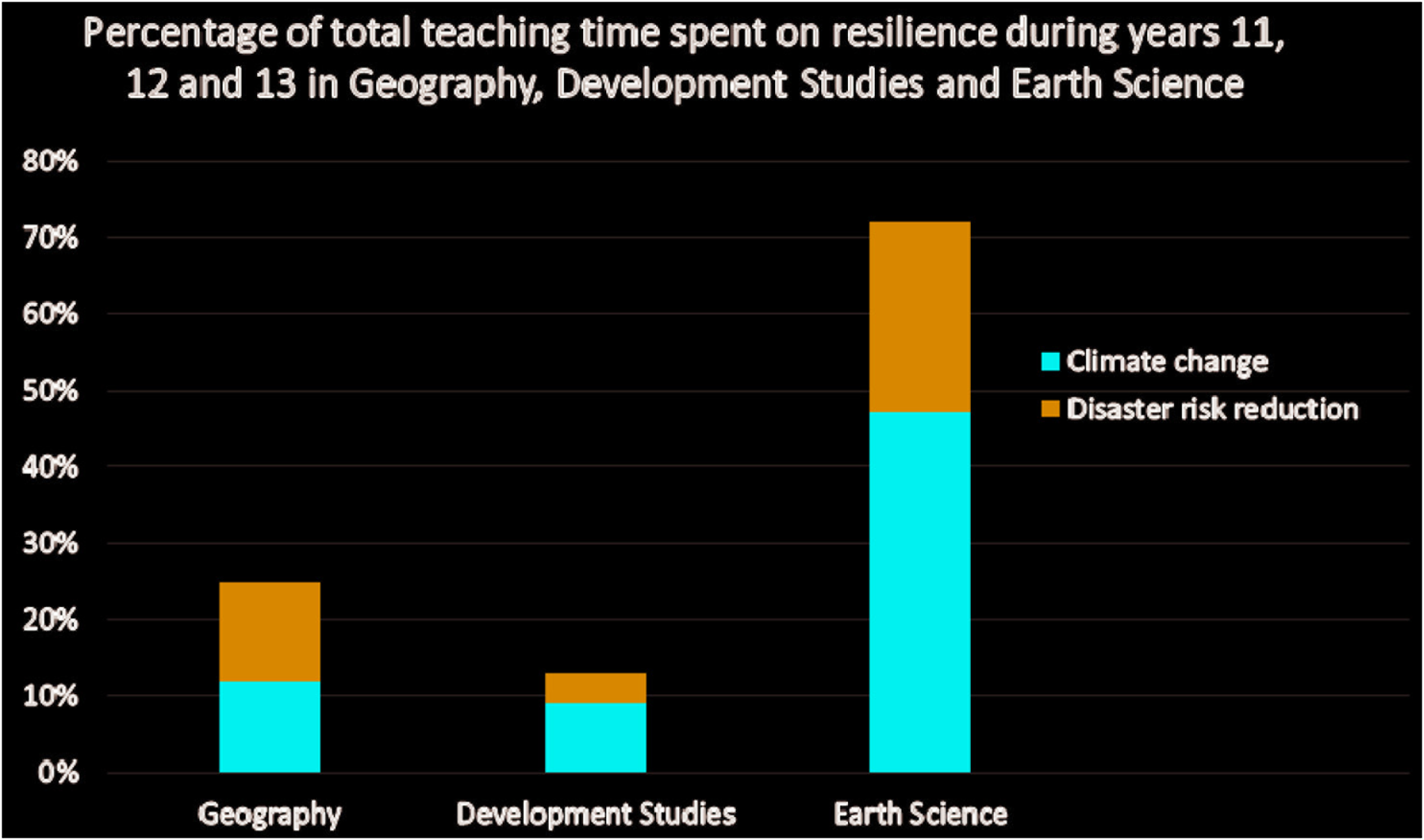
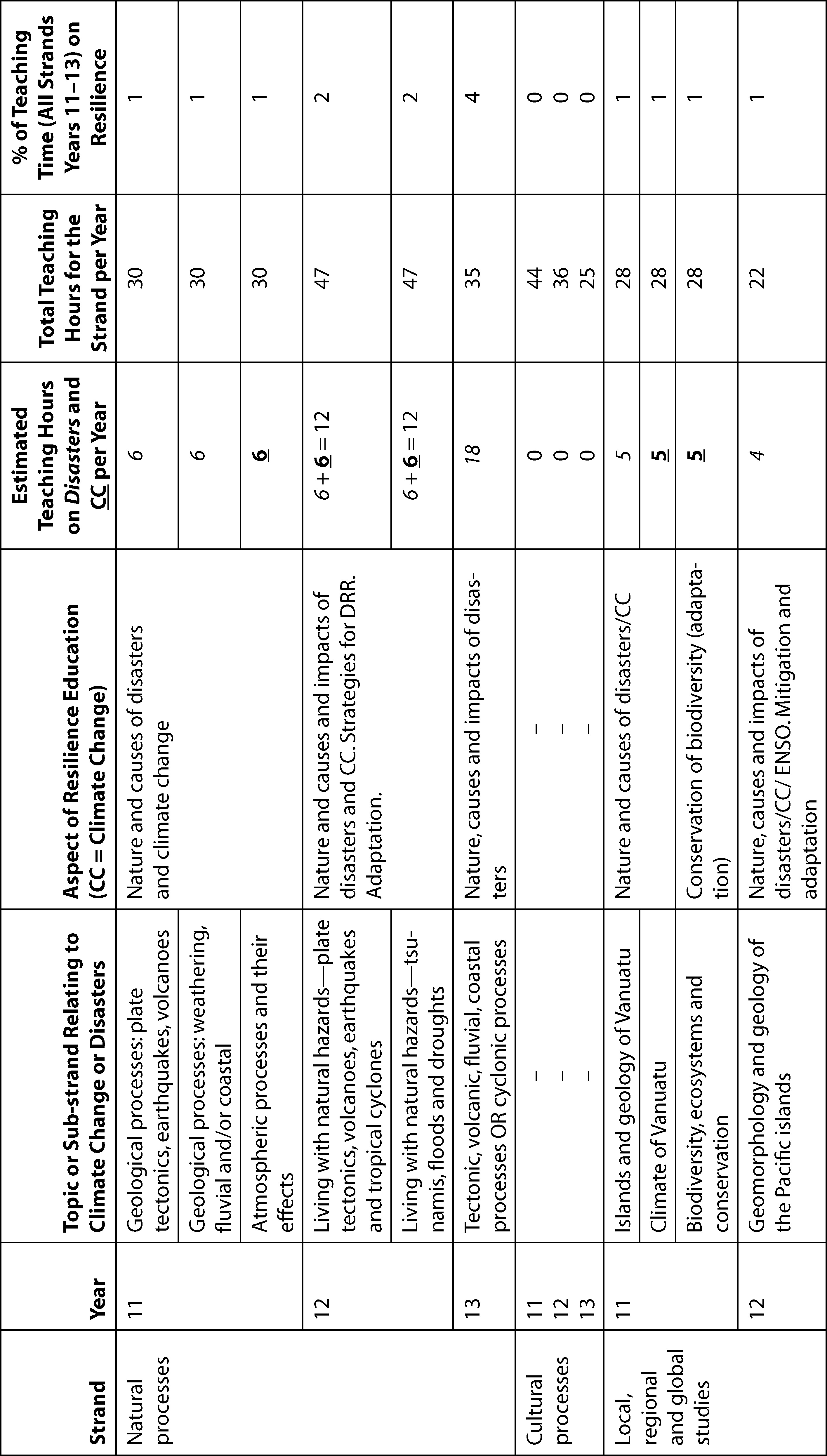
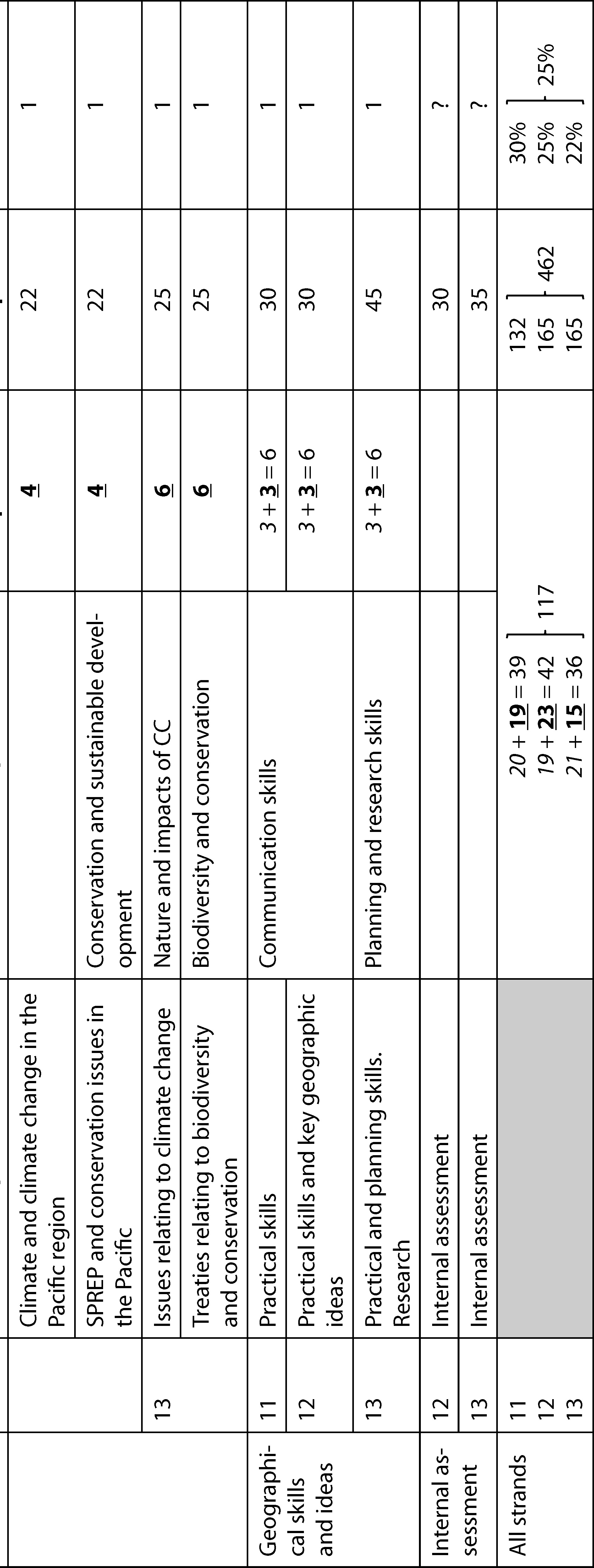
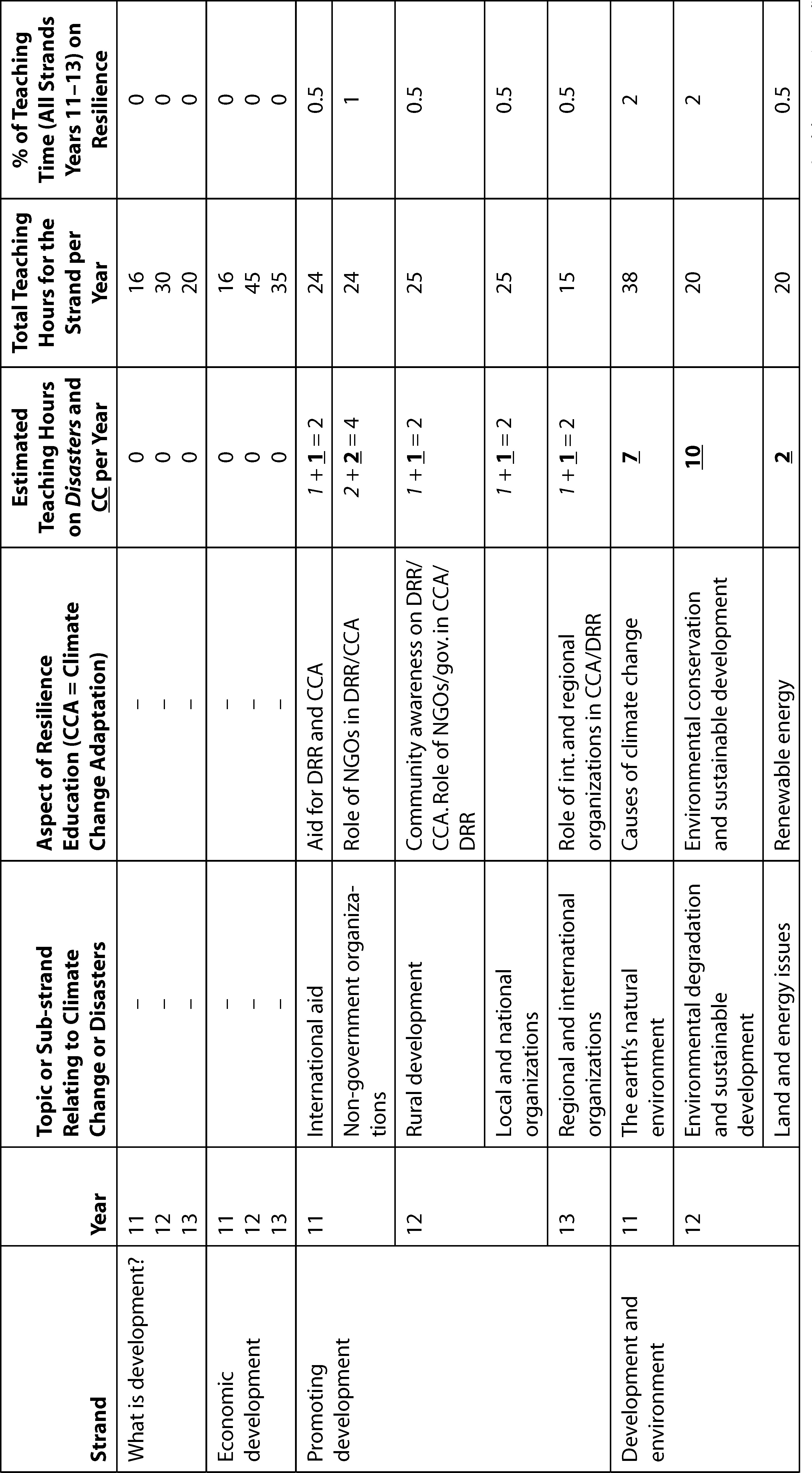
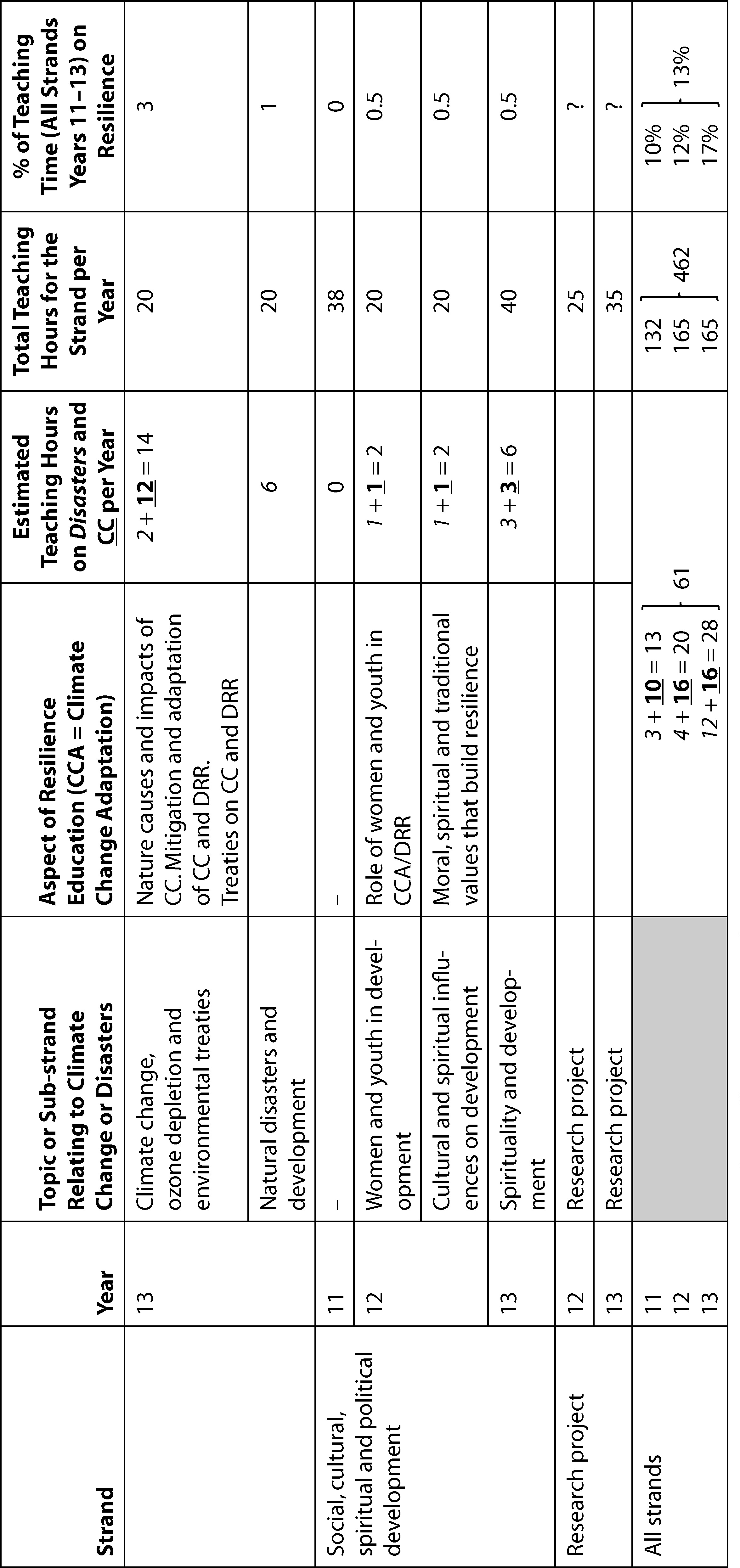
The revised curricula were first implemented at the start of 2019 at Year 11 level, and will not be completely in place until 2021. Resilience issues feature in the curricula for geography, development studies and earth science through strands that are delivered in increasing complexity through the 3 years of the senior secondary course (CDU, 2018). Figure 2 compares the three subjects in terms of total teaching hours spent on resilience, while Tables 2, 3 and 4 show the importance of resilience issues within their overall syllabi.
Importance of Resilience in the Year 11–13 Syllabus: Geography
Importance of Resilience in the Year 11–13 Syllabus: Development Studies
Importance of Resilience in the Year 11–13 Syllabus: Earth Science
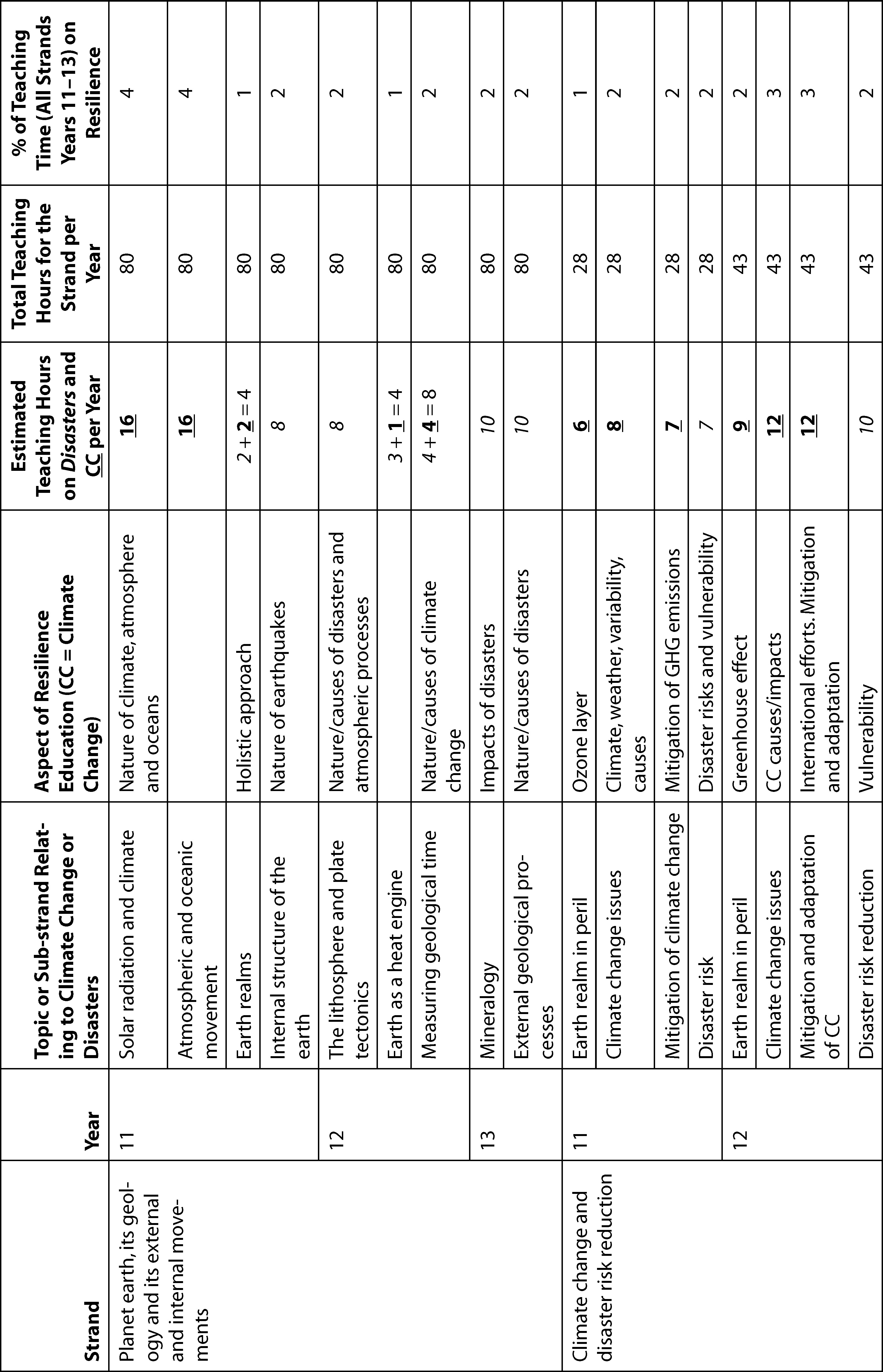
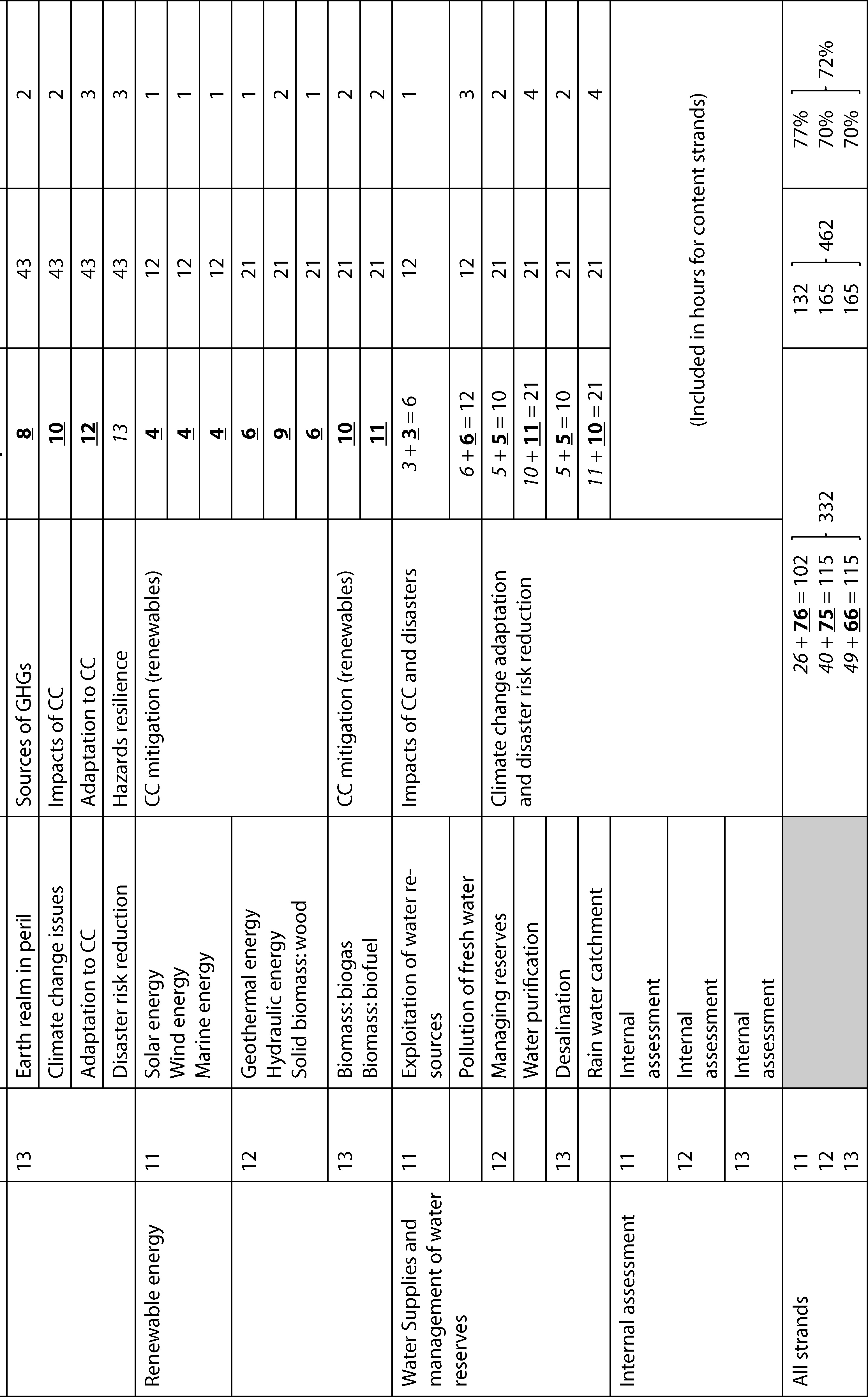
Students who choose geography spend 25% of their time on resilience issues, almost equally divided between CC and DRR. Those who opt for development studies spend only 13% of their time on resilience, largely on CC. But those who study earth science spend 72% of their time on resilience, of which two-thirds is on CC. Thus the most comprehensive treatment of resilience issues is in earth science, which has a heavy emphasis on climate science and geology but also examines mitigation, adaptation and vulnerability in some detail and gives students a valuable technical background in renewable energy and the management of water resources. Development studies has the least amount of teaching hours on resilience, and most of them occur in years 12 and 13; CC and DRR are placed within the framework of sustainable development, and there is some acknowledgement of the ethical and traditional values involved in resilience education. Geography gives adequate time to resilience but focuses on geological and hydro-meteorological processes, their features, distribution and impacts rather than on mitigation and adaptation. In none of the three syllabi is there explicit mention of fieldwork or practical training on strategies for CCA or DRR.
If we look in more detail at geography in more detail, the most popular of the three optional subjects, we find three principal knowledge strands and a fourth strand devoted to generic geographic skills and ideas. A student who completes years 11, 12 and 13 is exposed to 462 teaching hours of geography, of which 89 hours (19%) cover the nature, causes and impacts of disasters and climate change, and 28 hours (6%) are on mitigation and adaptation—with half of that time on conservation and sustainable development. Ethical principles involved in CC—prevention of harm, equity and justice for the most vulnerable, sharing of knowledge and technologies (UNESCO, 2019, pp. 13–15)—are not addressed. Also lacking are specific skills such as risk mapping and fostering of community awareness, attitudes such as avoidance of consumerism (Kagawa & Selby, 2009, p. 241) and environmental responsibility (Wahlstrom, 1998, p. 65), and the promotion of behaviours such as CC advocacy and environmental care. Pedagogical approaches are not promoting the kind of participatory, field and affective learning needed to engage with communities and build proactive citizenship (UNICEF & UNESCO, 2012, p. 8). Thus many aspects emphasized in Vanuatu’s two key environmental policies—the Climate Change and Disaster Reduction Policy 2016–2030 and the National Sustainable Development Plan 2016–2030—are missing. Contrast the specific outcomes for the geography sub-strand that contains the fullest treatment of CC (Table 5) with the goals of the two key policies (Table 6).
Specific Learning Outcomes in Geography for the Sub-strand 13GEO3.2 on Issues Relating to Climate Change
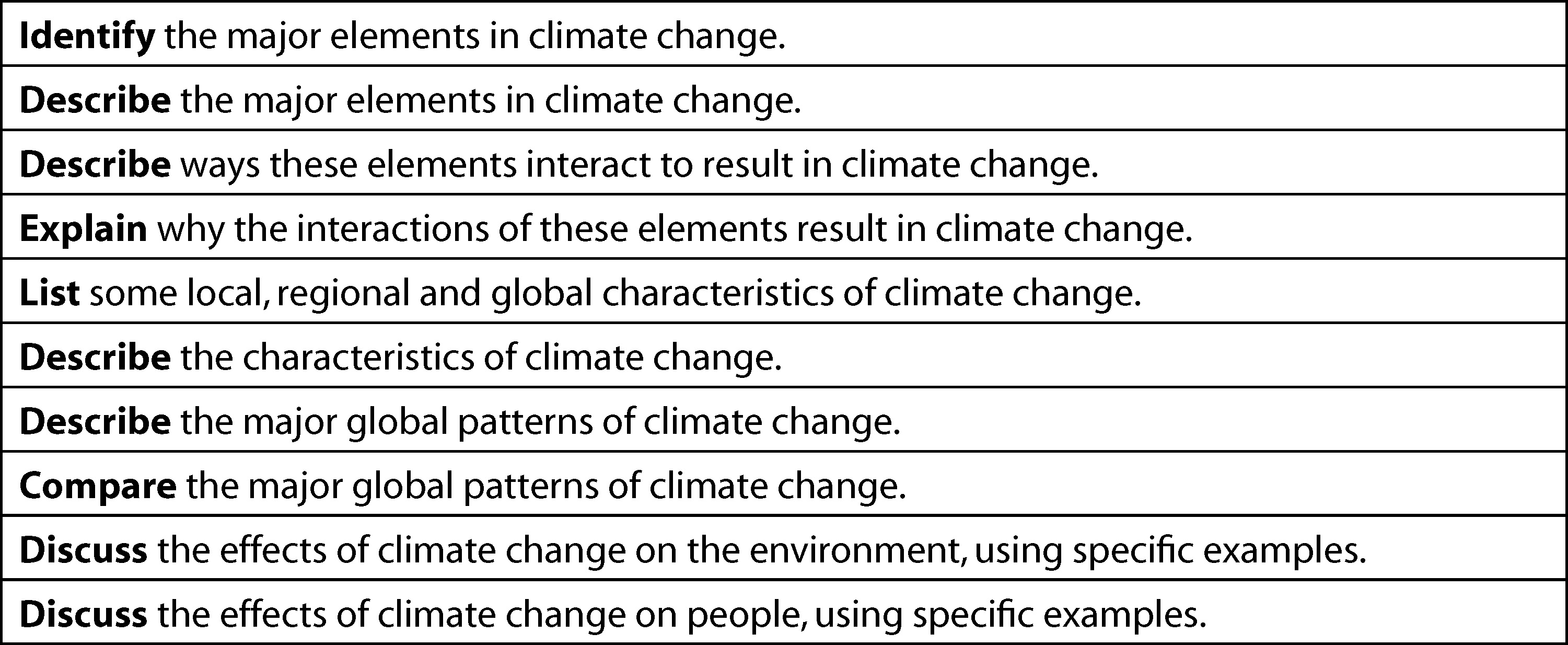
Goals of Vanuatu’s Two Current Policies on Resilience
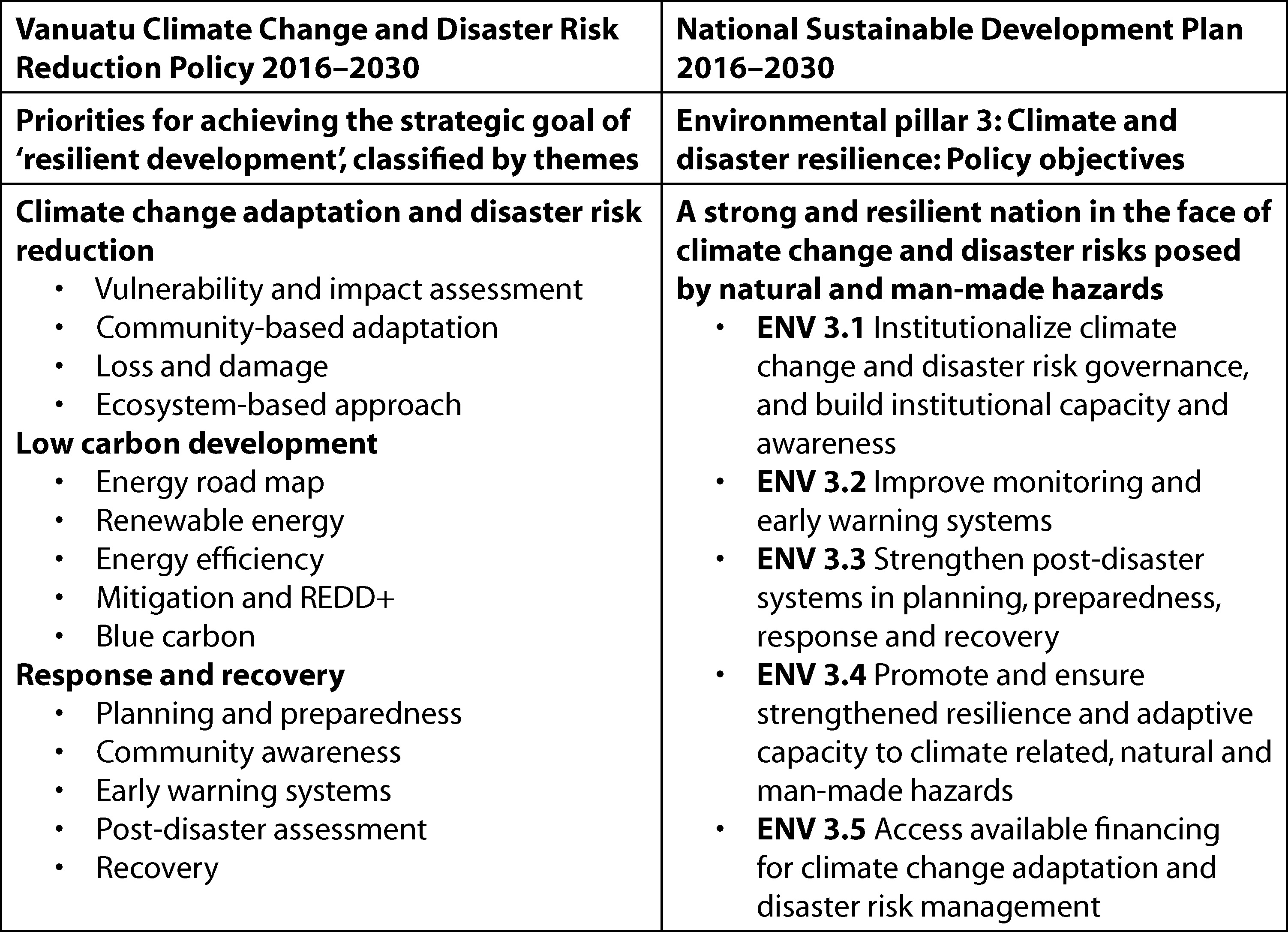
A comparison of Table 6 with the development studies syllabus for year 13 (Table 7) shows a greater degree of correspondence, and with earth science year 13 (Table 8) much more so, but even in these two subjects, practical work on CCA and disaster mitigation is minimal.
Specific Learning Outcomes in Development Studies for the Sub-strands 13DST4.3 and 13 DST4.4 on Climate Change and Natural Disasters
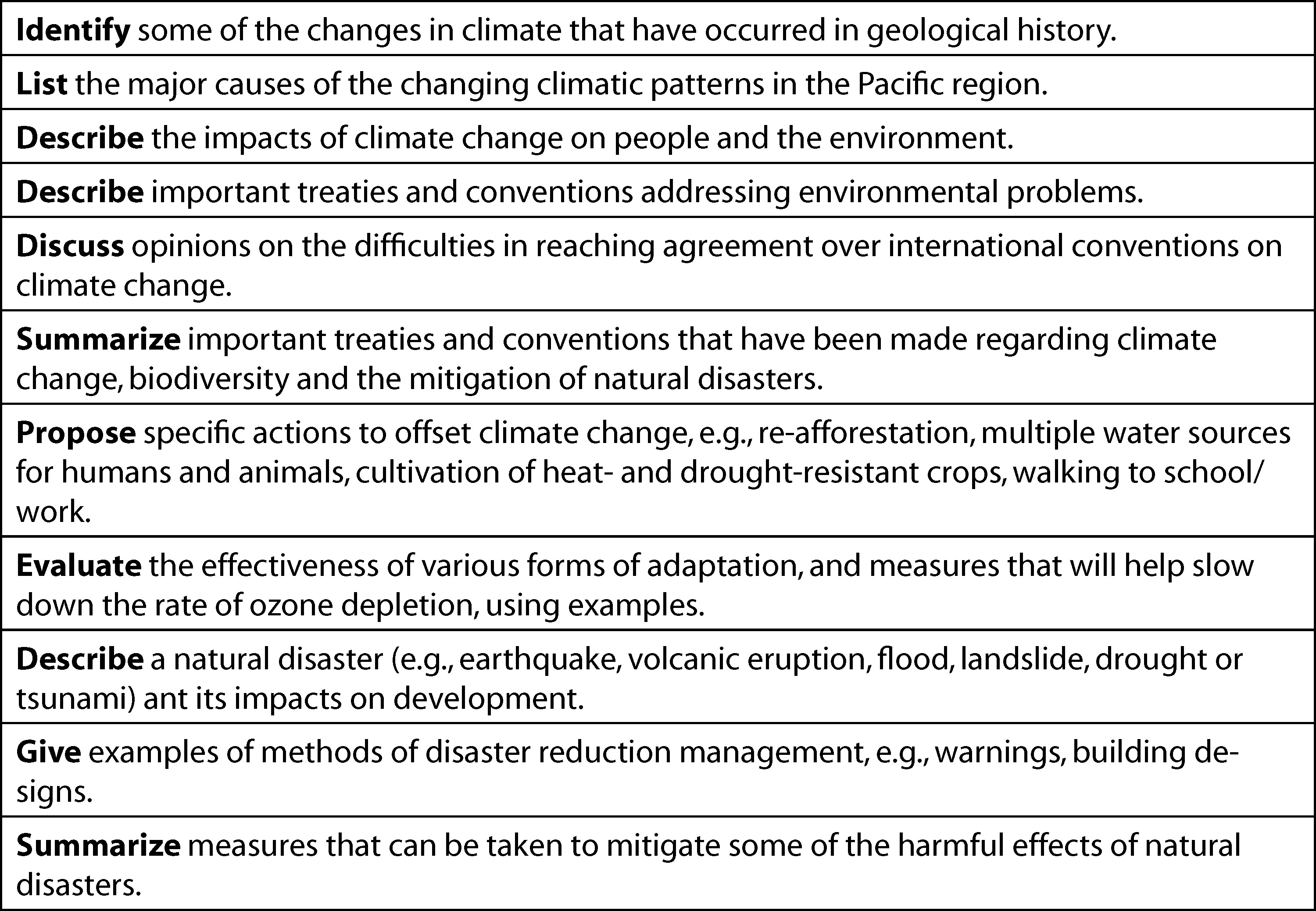
Specific Learning Outcomes in Earth Science for the Sub-strands 13ESC2.1, 13ESC2.2, 13ESC2.3 and 13ESC2.4 on Earth Realms in Peril, Climate Change Issues, Climate Change Adaptation and Disaster Risk Reduction
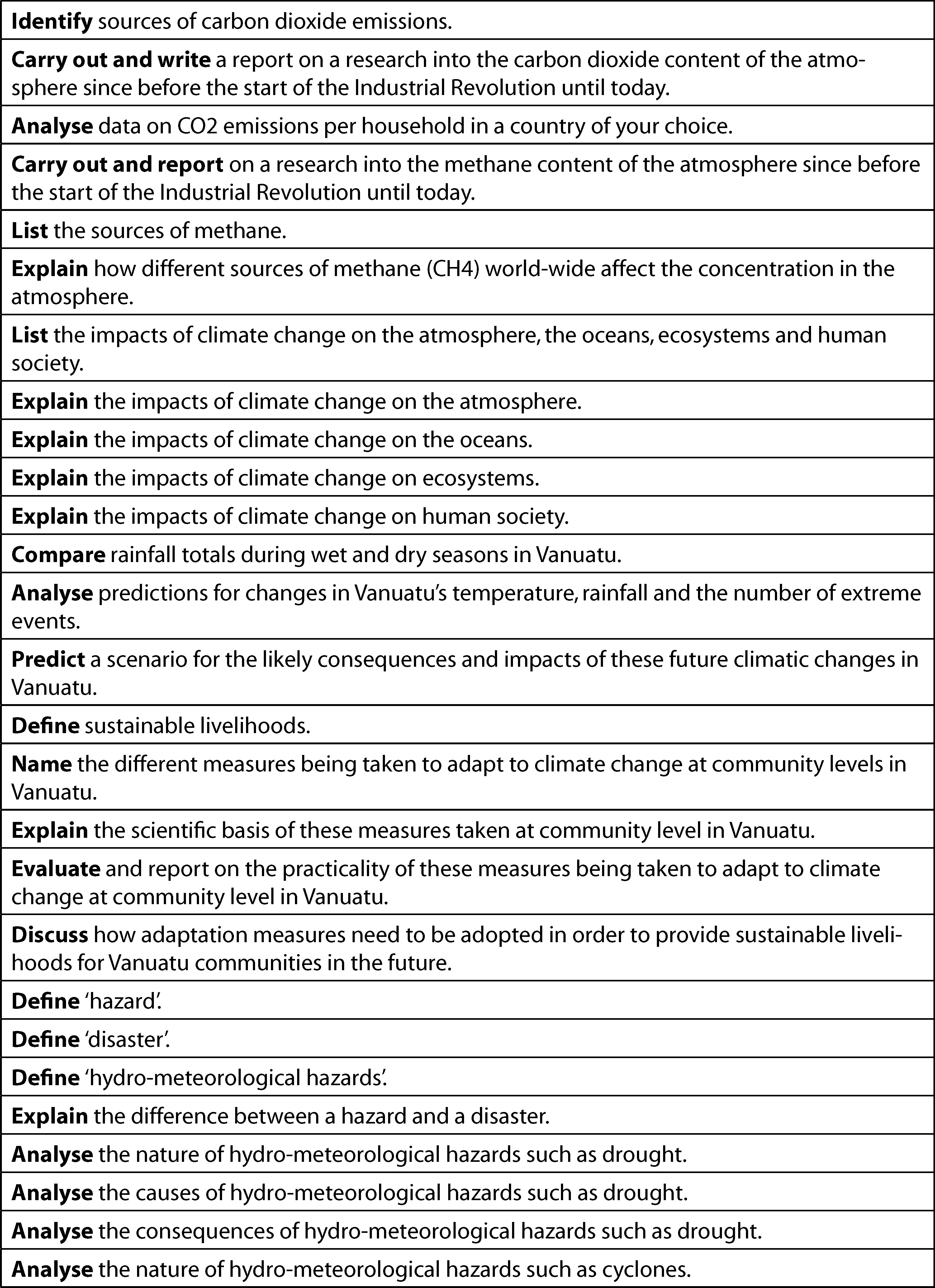
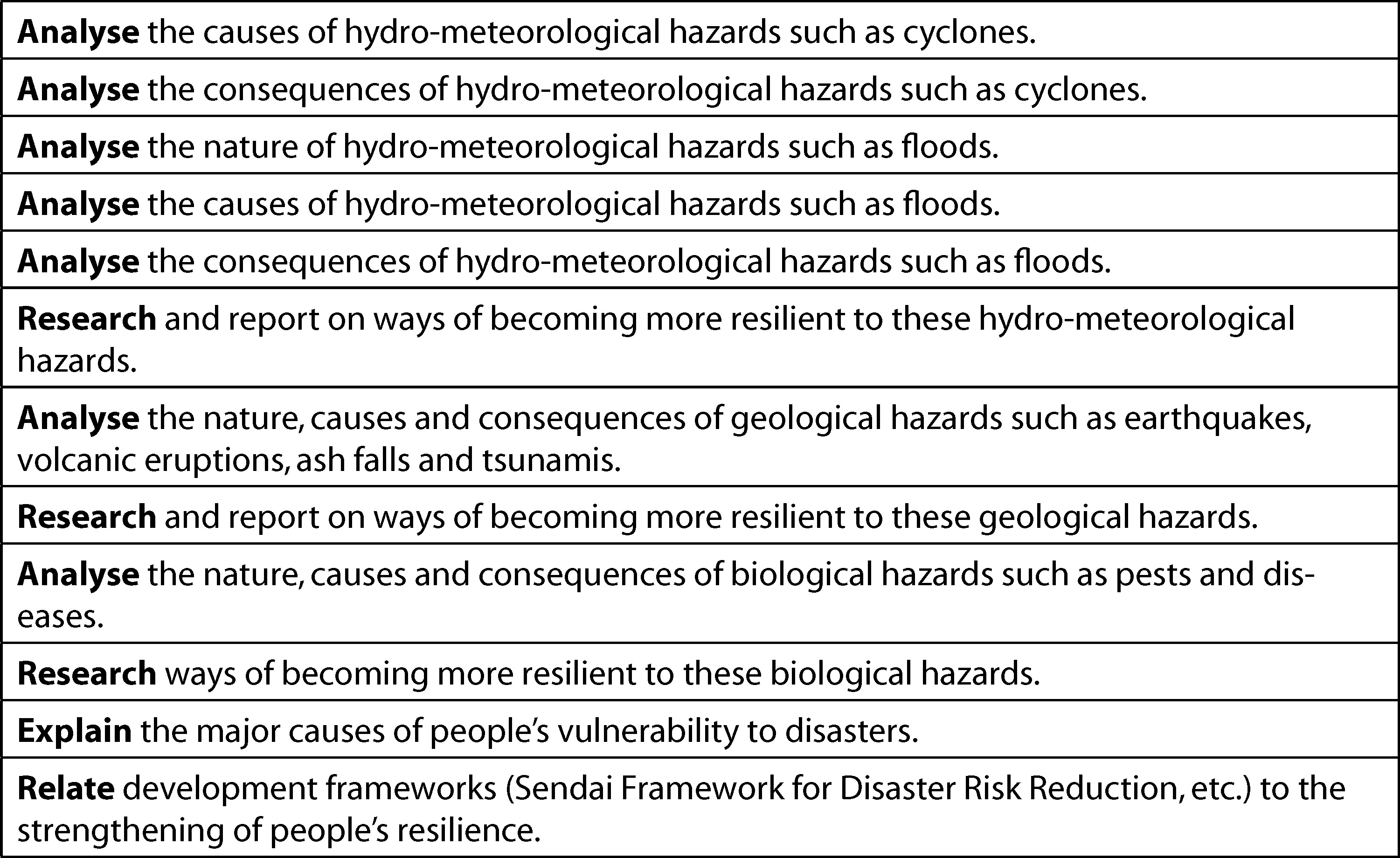
On a broader scale, we praise the inclusion of resilience issues in these three school subjects, but question whether any of them will have done enough to promote behaviours that can create ‘a more sustainable future in terms of environmental integrity, economic viability and a just society for present and future generations’—the goal of the United Nations Decade of Education for Sustainable Development (UNESCO, 2020b, p. 1).
Student Attrition and Resilience Education
Education is not compulsory in Vanuatu, but the Government subsidizes school attendance. Tuition fee grants are provided to all children at pre-primary level and to pupils at primary and junior secondary levels (years 1–10) in government and government-assisted schools. For senior secondary pupils (years 11–13/14), a smaller ‘operational grant’ is given, but because of the restricted number of schools at this level, such students can no longer live in their home villages and must meet additional travel and boarding costs. This is one factor accounting for the high rate of student attrition in the country (Table 9). Another relates to national examinations at the end of years 8, 10 and 12, which permit only those with higher grades to continue. In practice, 84% of year 8 primary students continue on to year 9, and 61% of year 10 students move on to year 11. In 2019, there were only 1,864 students who had reached year 11 and 1,064 who were enrolled in year 13, as compared with 10,367 in year 1 (MOET, 2020, p. 17): this represents attrition rates of 82% and 90%, respectively. More accurately, statistics for 2007 reveal that when the current year 13 students were in year 1, they numbered 8,150 (MEYDT, 2007, p. 25): thus the exact attrition rate between years 1 and 13 is 87%.
Total Students in Vanuatu Schools Enrolled in Each Level, 2019

bYear 14 only exists in French-medium senior secondary schools. It is being phased out as the new Vanuatu National Curriculum for years 1–13 is implemented, and will be discontinued after 2021.
Regarding the numbers of students learning about resilience through the three optional subjects, an example can be given from Malapoa College, the nation’s leading and largest English-medium secondary school. In 2020, there are 347 students enrolled in year 11. All take English, mathematics and various optional subjects, but only 133 (38%) study geography, 91 (26%) take development studies and 64 (18%) learn earth science. Out of the 266 students in year 12, the percentages are similar—32% for geography, 16% for development studies and 25% for earth science (Obed, L. personal communication, October 23, 2020).
Since most learning about CC and DRR only takes place in the senior cycle, especially in years 12 and 13, and is restricted to three optional subjects, the vast majority of young people in Vanuatu are not benefiting from formal exposure to resilience education. In 2020, the most effective in-depth study of CC and disasters occurs in all three years of earth science and in year 13 of development studies, but these two courses are taken by a minority of those students who managed to reach year 13, who themselves represent just 13% of those who began in primary level 1 in 2007.
Policies and Frameworks on Resilience
Vanuatu’s Climate Change and Disaster Risk Reduction Policy (VCCDRRP) 2016–2030 has been developed within the context of international policies such as the Sendai Framework for Disaster Risk Reduction 2015–2030, the Paris Agreement of 2015 and the United Nations Sustainable Development Goals 2015–2030, and of regional policies such as the Framework for Resilient Development in the Pacific (FRDP) 2017–2030 (Government of the Republic of Vanuatu & SPC, 2015. p. 3). The broad goals of the relevant policies are summarized in Table 10.
Broad Goals of National, Regional and International Policies on Resilience
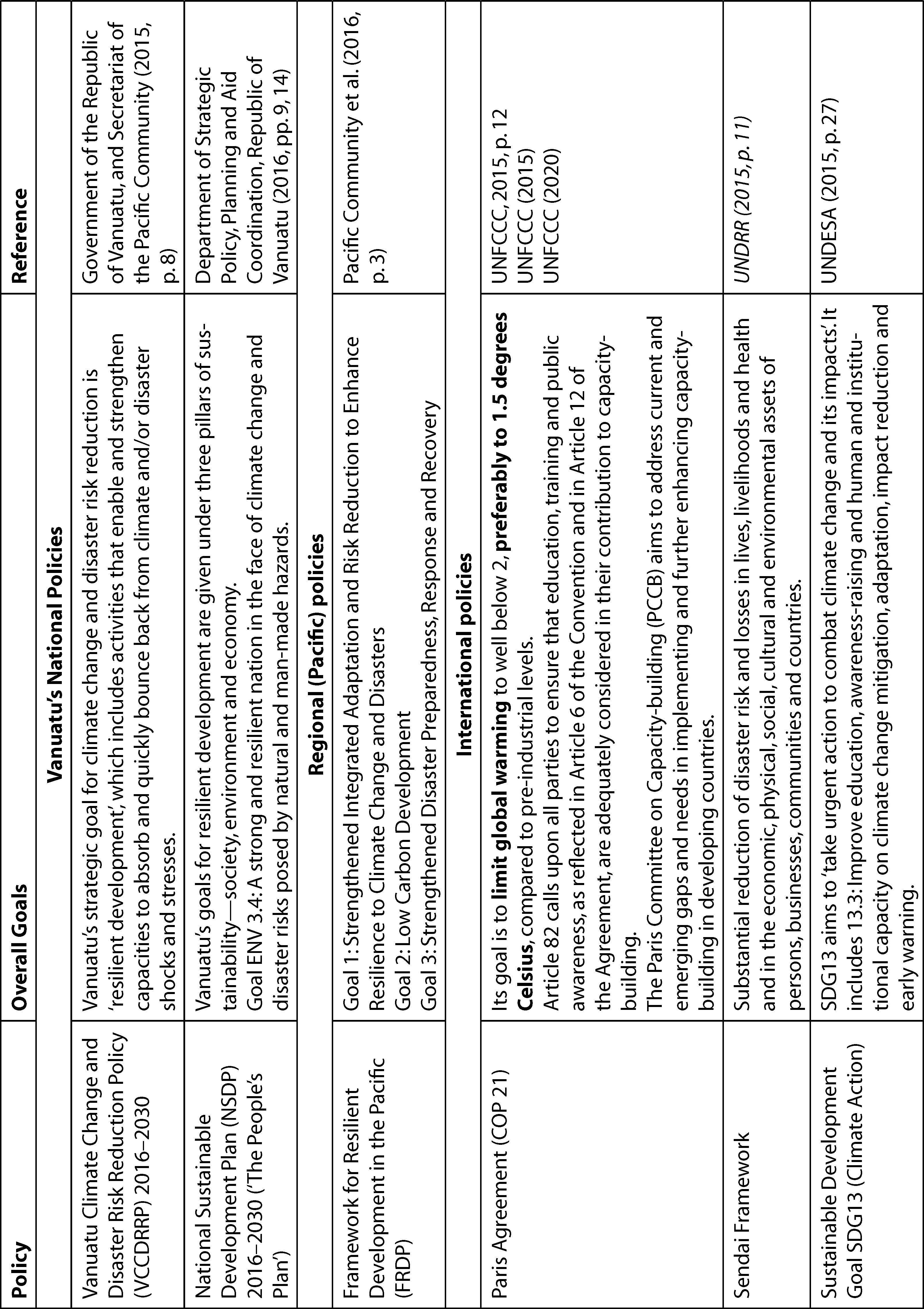
The vision of the VCCDRRP is that ‘Vanuatu is a resilient community, environment and economy’. Its implementation involves the mainstreaming of CCA and DRR into all sector policies, plans and strategies (Government of the Republic of Vanuatu & SPC, 2015, p. 5), including the Vanuatu National Curriculum Statement (VNCS). However, the VNCS was published in 2010, well before any of the above policies were produced; there is no specific mention of DRR, and CC is only cited briefly in the context of environmental education for sustainability (MOE, 2010, p. 44). The VCCDRRP itself makes only a few specific references to capacity-building for resilient development through formal primary and secondary education (Table 11). Similarly, Goal 3 of the National Sustainable Development Plan’s (NSDP) environmental pillar refers to climate and disaster resilience (Table 6), but there is no reference to formal school curricula.
References in the VCCDRRP to Capacity-building in Schools
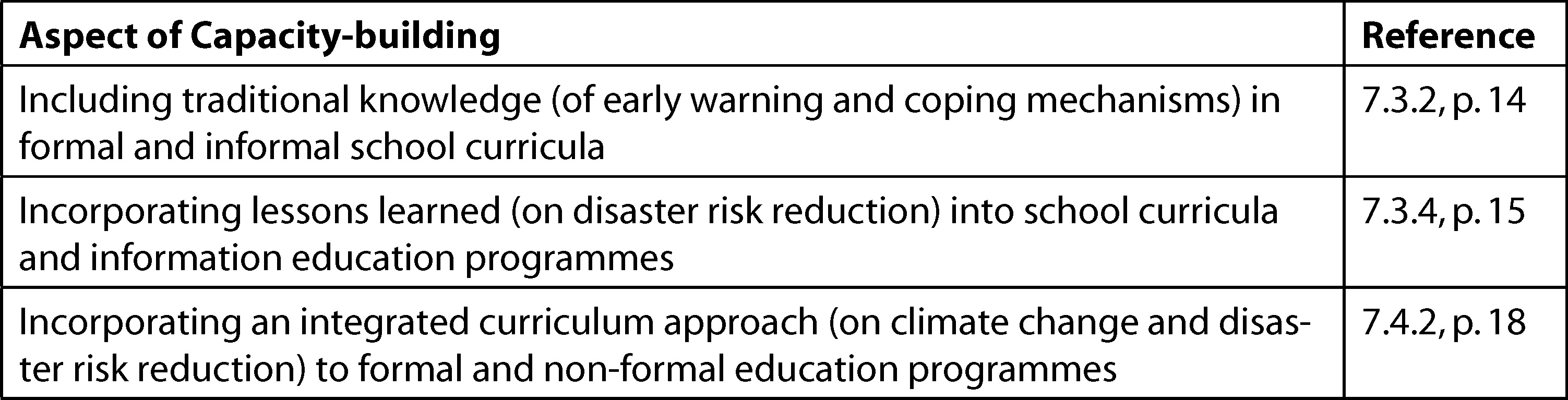
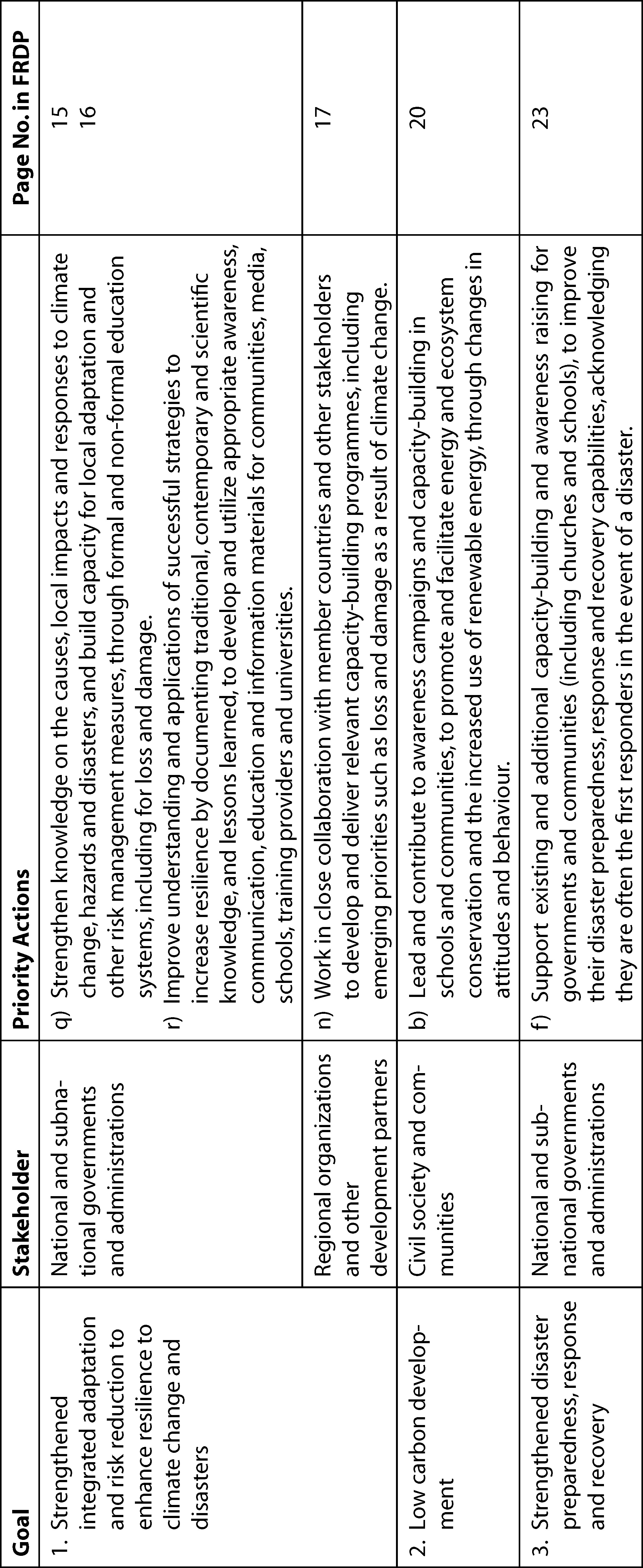
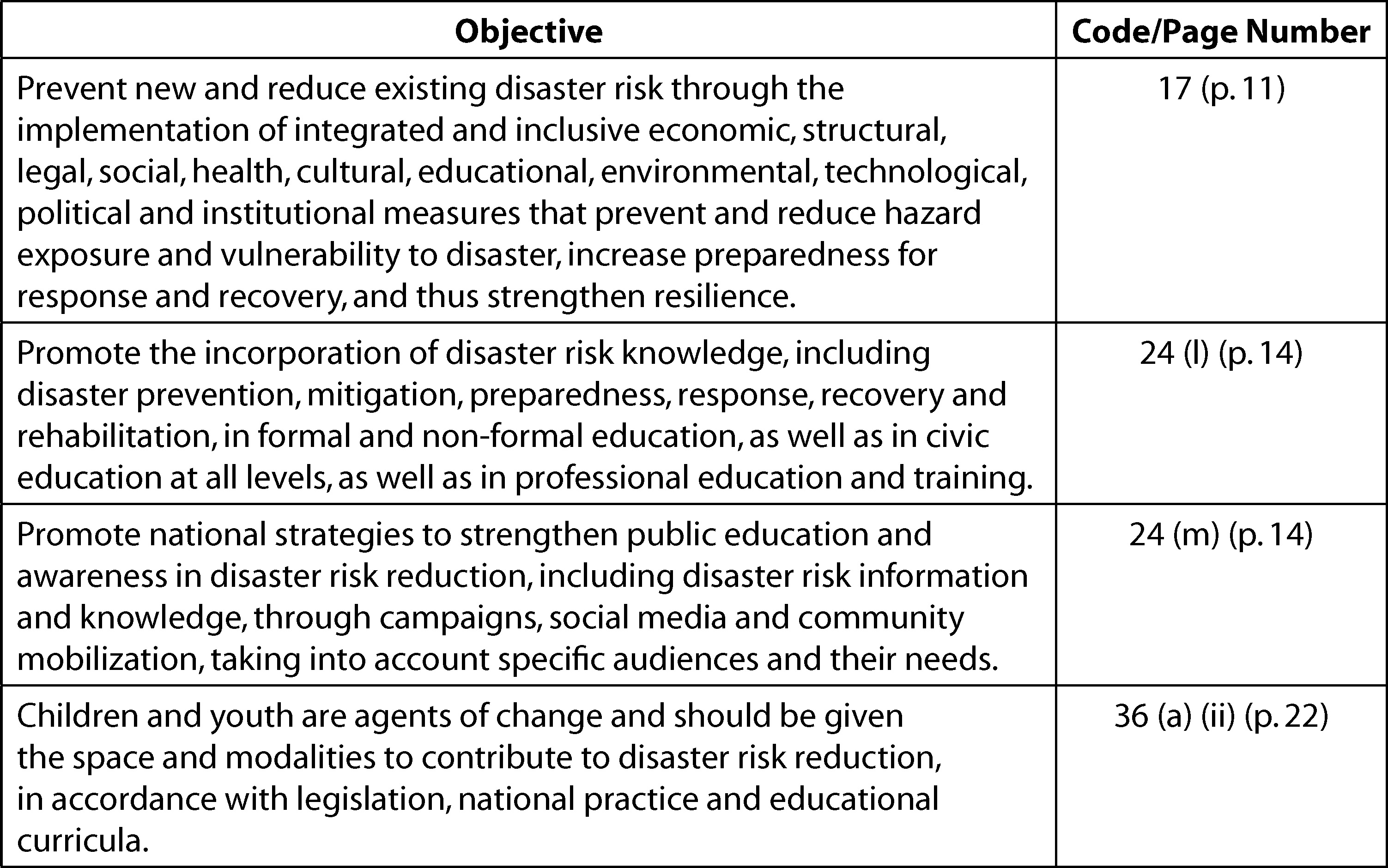
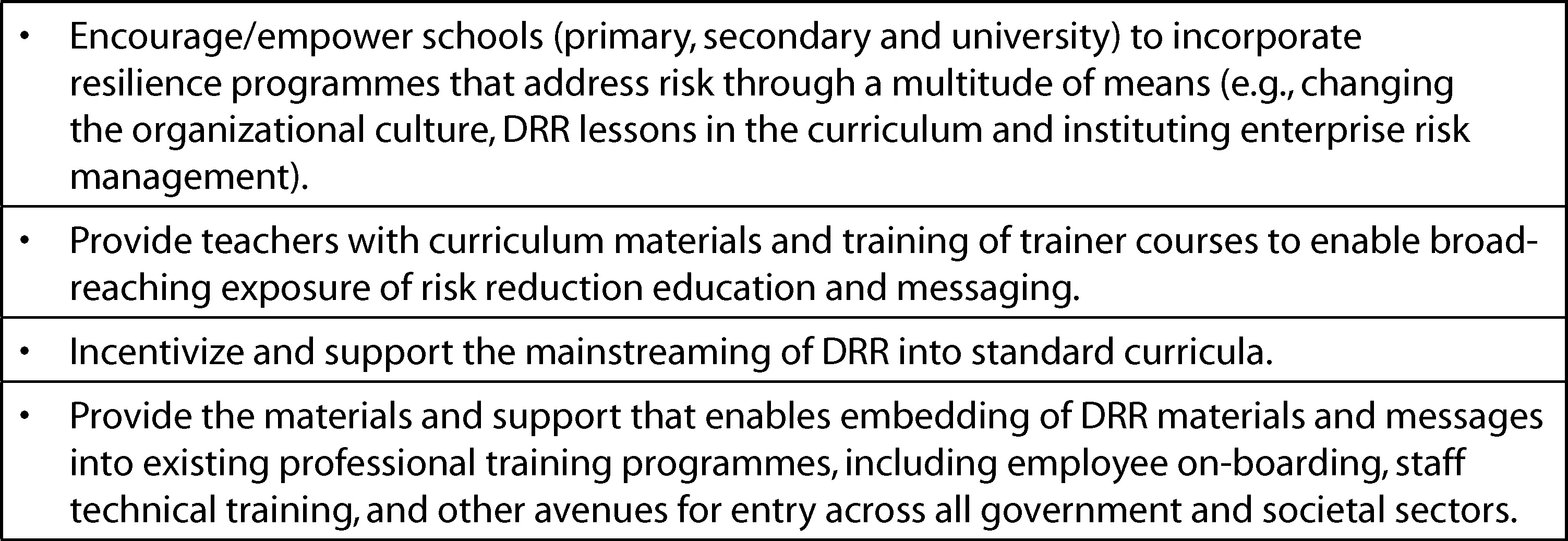
This lack of specific guidance on resilience education in national policies contrasts with the objectives of regional and international policies. There are clear references to capacity-building through formal school education in the FRDP (Table 12), the Sendai Framework (Table 13) and the document Strategic Approach to Capacity Development for Implementation of the Sendai Framework (Table 14).
References in the FRDP to Capacity-building in Schools
Specific References to Formal Education on DRR in the Sendai Framework
Actions to Promote Capacity Development for DRR Through Education
Vanuatu, as a signatory to the Paris Agreement, made its first submission to the PCCB (Paris Committee on Capacity Building) in 2017, providing information on capacity-building activities for the implementation of its nationally determined contributions (NDCs) (Republic of Vanuatu, 2017). This submission focused on the first-ever post-secondary Technical Vocational Education and Training (TVET) course on climate change and disaster risk reduction taking place at the Vanuatu Institute of Technology. Efforts to teach school students about resilience were not mentioned. Vanuatu’s 2016 submission to the UNFCCC mentions the need for ‘awareness raising at all levels’, and ‘capacity-building, including institutional capacity’ (Government of the Republic of Vanuatu, 2016, pp. 6). However, there is no specific reference to resilience education.
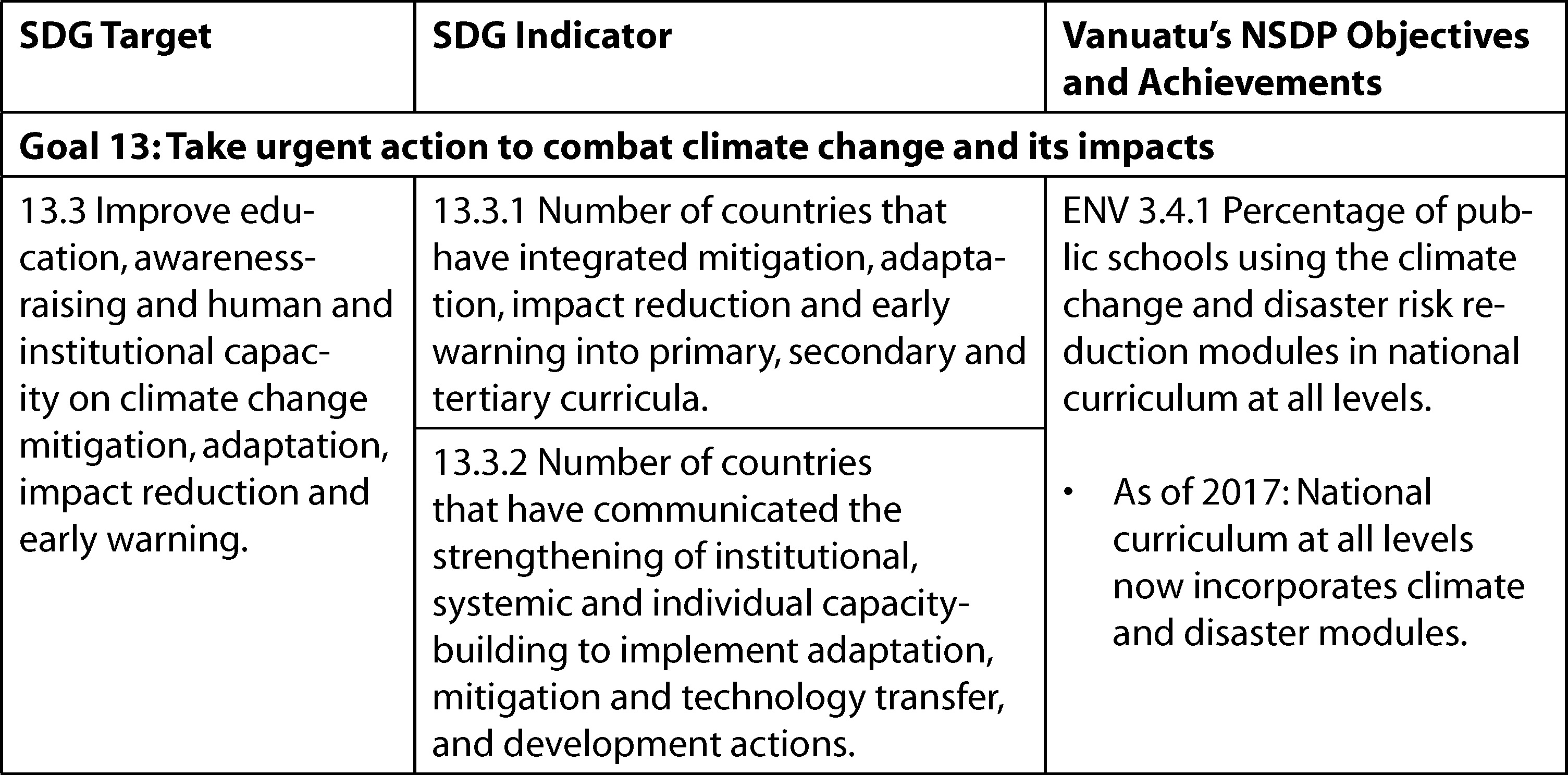
Vanuatu’s own set of 15 SDGs, outlined in its NSDP, are aligned with the United Nations 17 SDGs and the 2030 Agenda for Sustainable Development. SDG 13 is expressed as policy objective ENV 3.4 (Table 10). A review of the implementation of the 2030 Agenda (Republic of Vanuatu, 2019) states that ‘steady progress’ has been made with the implementation of SDG 13 (Republic of Vanuatu, 2019, pp. 22–23). Regarding resilience education, Table 15 summarizes the findings from this review (Republic of Vanuatu, 2019, pp. 77–79), indicating that ‘as of 2017, the National Curriculum at all levels now incorporates climate and disaster modules’.
Vanuatu’s NSDP Policy Objectives on Resilience Education Aligned to SDG Targets and Indicators
Discussion
Article 82 of the Paris Agreement of 2015 calls upon all parties, including Vanuatu, to ensure that education contributes to capacity-building for resilience to CC. The Sendai Framework urges the incorporation of disaster risk knowledge in formal and non-formal education, encourages primary and secondary schools to incorporate resilience programmes that include DRR lessons in the curriculum, advocates the provision of curricular material to teachers, and reminds us that children and youth are agents of change who should be given the space and means to contribute to disaster risk reduction. The 2030 Agenda for Sustainable Development includes Target 13.3 to improve education, awareness-raising and human and institutional capacity on CC mitigation, adaptation, impact reduction and early warning, stating that this will be indicated when a country has integrated those aspects into primary, secondary and tertiary curricula.
On a regional level, the Framework for Resilient Development in the Pacific urges the strengthening of knowledge on causes, impacts and responses to CC, hazards and disasters, as well as capacity-building for adaptation and risk management measures, to take place through formal and non-formal education systems. It asks for capacity-building on the use of renewable energy and ecosystem conservation to occur in schools and communities, and it emphasizes the key role of training and education in building resilient communities.
Within the context of these international and regional policies on resilience, Vanuatu has developed its VCCDRRP and NSDP, each setting objectives for the 15-year period to 2030. The VCCDRRP asks for school curricula to adopt an integrated approach to CC and DRR and to include traditional knowledge of early warning and coping mechanisms and lessons learned on disaster risk reduction. The NSDP includes resilience education under its objective ENV 3.4, stating that the objective is for public schools to use CC and DRR modules in the national curriculum at all levels.
Thus there is clear evidence that key international and regional policies stress the importance of educating students at all levels about resilience issues—mentioned also by Mochizuki and Bryan (2015, pp. 7–8) and Reid (2019)—and that this is echoed in general terms by Vanuatu’s own policies on climate change, disasters and sustainability. However, a closer look at what is actually happening in Vanuatu schools in 2020, 5 years into the lifespan of these policies, reveals that the reality on the ground is different. Four reasons are suggested.
Firstly, although the VCCDRRP says that CC and DRR have been mainstreamed into the National Curriculum Statement (NCS), this statement pre-dates the VCCDRRP: thus DRR is not cited, and CC is only mentioned briefly. All current primary and secondary curricula are being developed on the basis of the NCS, and the guidelines for curriculum writers on resilience issues are minimal. The 2019 review of progress towards Vanuatu’s implementation of SDG and NSDP goals states that the National Curriculum has since 2017 incorporated climate and disaster modules at all levels of schooling. This is not correct, since even in 2020 these modules only exist or are planned for years 5, 6, 11, 12 and 13.
Secondly, the implementation of revised curricula is slow. In 2020, new primary curricula are being rolled out as far as year 5 level, junior secondary curricula are still being written, and senior secondary curricula are only being taught in years 11 and 12, without any official teaching resources (Obed, L, personal communication, October 23, 2020). Thus while students in years 5, 11 and 12 are learning about CC and disasters, those in other years are dependent on out-of-date curricula in which resilience issues have minor significance. Effective learning resources introduced in 2014–2015, such as Learning about Climate Change the Pacific Way, have been largely forgotten.
Thirdly, the most effective education on CC and disasters appears in curricula at senior secondary level, by which time most students are no longer in school: statistics from 2019 show that students in year 13 are just 13% of the number who started in year 1 in 2007. Furthermore, such education is confined to three optional subjects—geography, earth science and development studies—each taken by one-third or less of all who reach this level. Thus the number of students benefiting from the most effective resilience education is only a minor proportion of the total.
Fourthly, the content of curricula on resilience education, in terms of knowledge, skills, attitudes and behavioural traits gained, must also be questioned. While years 4, 5 and 6 curricula in social science and science teach basic knowledge and involve skill-sets and field experience, the number of teaching hours over this 3-year period is only 1% of the total time spent in the classroom. At the upper end of secondary school, learners in the three optional subjects have more learning hours on resilience issues, but the syllabi make no mention of fieldwork or practical training on adaptation or mitigation strategies. Indeed, none of the syllabi include teaching approaches that promote participatory, field and affective learning, nor attitudes such as the avoidance of consumerism, a holistic approach to the environment and the value of traditional knowledge, nor behaviours such as climate change advocacy and environmental stewardship. Further, the effectiveness of resilience education at all levels depends not only upon the amount of curricular time, but also on materials used, pedagogy, teacher enthusiasm and commitment, and student motivation—factors that are not being analysed in the present article.
We have demonstrated that in 2020, there is a mismatch in Vanuatu between formal school education on resilience and the policies that advocate such education. As far as the Vanuatu government is concerned, its 2019 review of progress towards the objectives of the nation’s sustainable development goals states that modules on CC and disasters are being taught at all levels of school education. In reality, they are not.
Conclusion and Recommendations
Vanuatu’s revised school curricula do not fully reflect the requirements for formal school education on resilience contained in national, regional and international policies—a situation that is inconsistent with the nation’s status as the world’s most disaster-prone country. Furthermore, implementation of the new syllabi has been slow, so that in 2020, 10 years after the launching of the NCS, modules on resilience are not yet being taught in all years of primary and secondary education, contrary to the government’s statement that the national curriculum has since 2017 ‘incorporated climate and disaster modules at all levels of schooling’.
At present, the most effective delivery of education on climate change and disasters occurs in years 12 and 13, by which time the vast majority of students have already left school. Furthermore, such delivery only takes place in three optional subjects that are taken by a minority of those who do reach these higher levels.
In order to reach the majority of school-age students, we recommend that more intensive learning about resilience takes place at upper primary and junior secondary school levels. The following approaches are suggested:
Those currently writing the junior secondary syllabus can be asked to ensure that the content of social science and science courses addresses the most up-to-date issues on CC and DRR and includes hands-on and field experiences that engage the learners. Requests can be made to donor partners to fund the printing of suitable learning resources to be used across the curriculum at junior secondary level. Examples are the 16-picture toolkit and its accompanying teacher guide. Funding will also be needed to run short teacher-training courses on these new materials. Teachers involved in the senior cycle need to have appropriate teaching and learning materials for their students. At present, they rely on internet resources, and there is considerable variation from teacher to teacher. The Vanuatu Institute of Technology is already teaching accredited certificate courses on CC and DRR at TVET level, and the unit learner guides and workbooks from these courses can be adapted for use in years 11–13. Specialist writers must be recruited to do this, and funding found for the production of resources. Staff from the Department of Climate Change, the National Disaster Management Office and non-government organisations can be approached to assist with running relevant short courses for all secondary teachers, particularly those in key subjects.
Teachers in Vanuatu are ready to help their students contribute towards the nation’s vision of being a ‘resilient community, environment and economy’. They need to be given the tools—materials and in-service training—to be able to do so.
Disclosure Statement
The lead author was involved in the writing and translation of the Vanuatu National Syllabi for Earth Science and Development Studies at senior secondary level (years 11–13) during 2012–2014, while working in Vanuatu as a lecturer at the Vanuatu Institute of Teacher Education. He has 35 years of experience in educational institutions in Vanuatu.
The second author was the lead contributor to Vanuatu’s submission to the UNFCCC-PCCB in 2017 (Republic of Vanuatu, 2017).
Footnotes
Declaration of Conflicting Interests
The authors declared no potential conflicts of interest with respect to the research, authorship and/or publication of this article.
Funding
The authors received no financial support for the research, authorship and/or publication of this article.