



Abstract
Flooding events are set to worsen in rapidly urbanising Pacific Islands.(1) Most Pacific Island cities and towns are in low-lying areas vulnerable to more severe tropical cyclones and rising sea levels. Approaches to disaster response and recovery need to improve. This article uses four principles drawn from area-based approaches (ABAs) – people-centred responses, adaptive processes, multi-sector collaboration and reflective practice – to review urban disaster recovery efforts in Fiji, Solomon Islands and Vanuatu. Information was gathered through key informant interviews and a literature review. The research found positive examples of collaboration, locally tailored social protection mechanisms and community leadership. It also found challenges, including bypassed community structures and traditional adaptation techniques, duplication of efforts and weak coordination. The article concludes with a call to localise ABA approaches further, to strengthen people-centred disaster recovery and locally owned resilience.
Keywords
I. Introduction
When it comes to the impacts of climate change, Pacific Island countries (PICs) are some of the world’s most vulnerable.(2) The Intergovernmental Panel on Climate Change (IPCC) warns that current once-in-a-century extreme sea level events in the region may become annual events by 2050.(3) The impacts will be severe in low-lying cities in tropical regions, particularly when coupled with increased heavy rainfall and more severe tropical cyclones.(4) Sea level rise across the Pacific is variable,(5) but in the tropical western Pacific, rates of up to four times the global average have been reported,(6) with regional sea level rise projected to be more than 1 metre higher than at present by 2100 in the IPCC RCP8.5 worst-case scenario.(7) Pacific Island countries have cause to be very concerned; scientific reports suggest that sea level rise is occurring faster than previously predicted.(8)
The climate-related issues in PICs are extensive, complex and interconnected. The Boe Declaration,(9) endorsed by Pacific Island leaders, identifies climate change, including global warming, sea level rise, changing weather patterns and extreme weather, as the greatest threat to the region. Additional social, economic and environmental development issues – including impacts on food and water systems, human health, and wildlife and ecosystems – are major climate-related threats in the Pacific region. These will critically challenge local economies, livelihoods, human health, critical infrastructure and mobility, including internal displacement and migration.(10)
Given the frequency of disasters, disaster preparedness in PICs is a priority. In recent years activities have included the establishment of National Disaster Management Offices (NDMOs) such as in Fiji and Vanuatu, and the strengthening of hydro-meteorological early warning systems.(11) A number of civil society organisations (CSOs) are active in building preparedness, such as those of national Red Cross societies.(12) At a community level, traditional knowledge has played a key role in preparedness. Fletcher et al. identify several common strategies employed in PICs, including the importance of traditional governance and leadership, religious beliefs, and involvement in family life and community life.(13)
a. Rapid urbanisation
Most PICs are urbanising quickly, with population growth at globally high levels. Of the 14 PICs covered in the Asian Development Bank’s Pacific Urban Update 2020, seven have a majority of the population living in urban areas. The most rapidly urbanising cities, Honiara (Solomon Islands) and Port Vila (Vanuatu), are likely to double their urban populations by 2040. Apart from the Cook Islands and Samoa, all PICs are experiencing urbanisation.(14) As in other contexts, understandings and descriptions of what denotes “urban” vary, and are often contested.(15) Concerning PICs, much of the literature comprises social, economic and physical descriptions of what constitutes the urban. For example, Jones’s paper on urbanisation in the Pacific notes, “urbanisation in PICs can be viewed as the spatial translation of the production structure of their economies across varied geographical island settings”.(16) Jones also notes the interconnectedness of urban and rural areas: “As both rural and urban areas remain economically and socially connected it is not possible to understand the situation in urban areas without understanding the economic and social underpinnings of rural areas, and vice versa.”(17) For the purposes of this article, therefore, we follow Jones’s understanding of urban, i.e. that “urban” expands to beyond administrative or physical boundaries, and includes settlements that are closely associated, socially and economically, with PIC towns and cities.
Rapid urbanisation, much of which is unplanned, increases risk. Urban planning and management are struggling to keep up. Areas of vulnerability are increasing and levels of service provision are proving inadequate.(18) The IPCC predicts with high confidence that the combination of rapid urbanisation, coastal development, an absence of climate adaptation, and more intense cyclones and precipitation will increase the extent of annual flood damage up to two to three times by 2100 in low-lying islands.(19) All capital cities in PICs are coastal and include settlements in low-lying areas. Their vulnerability is not just because of sea level rise or cyclones, but is also related to shoreline development that has removed protective mangroves and other vegetation, urban development that adversely affects drainage, poorly defined governance arrangements and responsibilities, and the politicisation of disaster response.(20) Climate change is exacerbating development weaknesses.
On the one hand, cities may offer greater economic opportunity, increased access to healthcare and education, and more formal systems of governance. On the other hand, they may increase social and economic vulnerabilities, including poverty, gender-based violence, food insecurity, and inadequate access to safe and clean water and sanitation.(21) Especially vulnerable to climate risks are informal settlements with limited services. The population of Fiji’s informal settlements was estimated at 90,000–100,000 in 2016, with approximately 60 per cent living in Greater Suva.(22) In Port Vila (Vanuatu), more than 30 per cent of the population live in informal settlements.(23) Honiara (Solomon Islands) is the most rapidly growing city in the Pacific Islands, with the urban population increasing at almost twice the rate of national population growth, mostly in informal settlements. If these rates persist, the urban population will double in about 16 years.(24)
In many PICs, there is inadequate and poorly planned critical infrastructure that could enhance urban resilience, livelihoods and security. There is sparse attention to changing climatic conditions and their implications for building standards and settlements.(25) As well, rapid urban growth, coupled with limited formal access to land and affordable housing, has led to an increase in informal settlements. These new settlements are frequently established along coasts and rivers, further increasing vulnerability to cyclones, storm surges, coastal and river erosion, landslides and sea level rise.(26) The poorly defined administrative boundaries of urban centres and their peripheries result in unclear responsibilities, with consequent neglect of basic services and infrastructure critical to resilience.(27) In these environments, tropical cyclones and floods can have both short- and longer-term impacts because of increases in the incidence of waterborne diseases, malaria and dengue (from pooling water), critical infrastructure destruction, and the contamination of groundwater from saltwater or sewage intrusion.
As the severity of cyclones increases, cities cannot recover from one crisis before the next occurs. In areas with limited resources and small economies, recovery times can be long and per-capita costs high. For example, following Tropical Cyclone (TC) Pam in 2015 in Vanuatu, it was estimated that recovery took over five years and cost 61 per cent of Vanuatu’s gross domestic product in that year. In 2020, Fiji was hit with two severe cyclones in one year (TC Harold and TC Yasa), making it impossible to recover from one event before the next hit. At times, two crises can occur concurrently, most evident recently when TC Harold hit Fiji, Vanuatu and Solomon Islands shortly after COVID-19 forced border closures. As climate and socioeconomic pressures intensify, the importance of local responsiveness and resilience is key.
b. Area-based approaches
Recent experiences of disaster recovery in cities outside the Pacific have underscored the need for approaches that are geographically focused, multi-sectoral and highly participatory.(28) These aspects are epitomised by area-based approaches (ABAs), which the Global Shelter Cluster,(29) in particular, has been advocating. ABAs are rapidly gaining favour among humanitarian actors as an effective way of working in complex urban contexts (Figure 1).
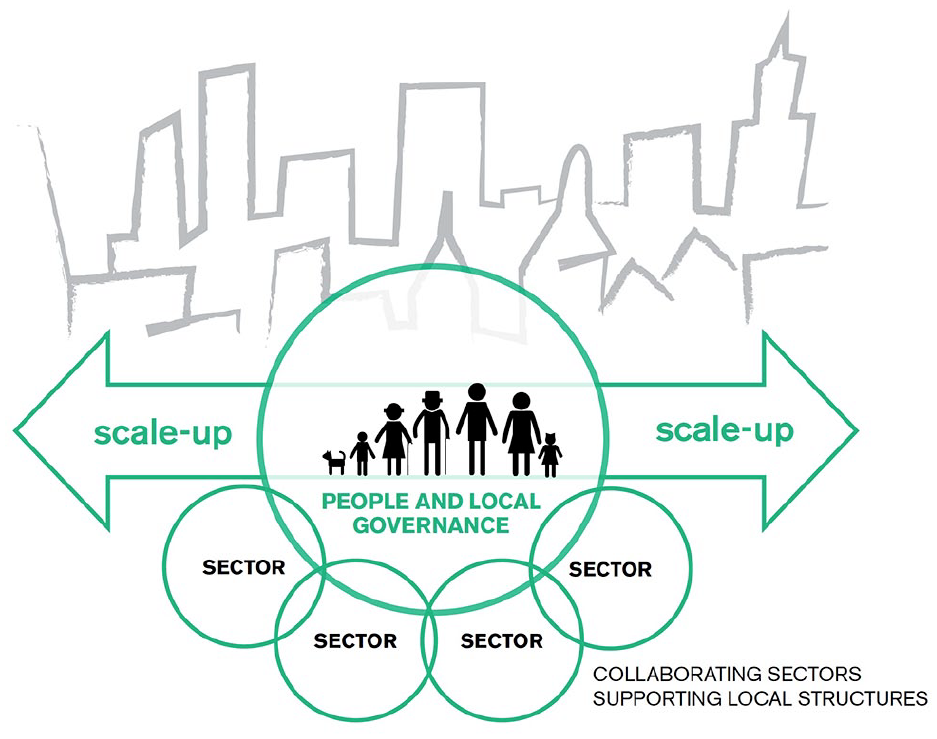
Collaboration sectors supporting local structures
Area-based approaches are defined as actions that, according to Sanderson and Sitko, “support people after a disaster in a specific location to transition effectively from relief to recovery”.(30) ABAs apply lessons from development approaches by planning for longer timeframes, considering long-term outcomes, exploring opportunities for wider application and scale, and focusing on collaborative, people-centred approaches.(31) Often referred to as settlement or place-based approaches, ABAs are increasingly being explored as an urban-specific approach to disaster recovery.(32) As Figure 1 illustrates, good ABAs are about taking a people-centred approach, where the role of external humanitarian response is to support local actions and local governance structures. People-centred also implies respect for local knowledge and traditional practices. While ABAs can be complex and challenging to implement, this reflects the complexity of disaster response efforts, particularly in urban settings.(33)
In 2020, the humanitarian network Sphere endorsed ABAs in its urban guide. The guide notes, “Successful ABAs promote local ownership to the extent possible through all stages of the project management cycle.”(34) Elements of ABAs such as this have been adopted by local Pacific agencies, for example the Fiji Council of Social Services through the District Councils of Social Services.(35) In many PICs, national Red Cross societies have also embedded ABA principles into their programmes.(36)
II. The Focus of This Article
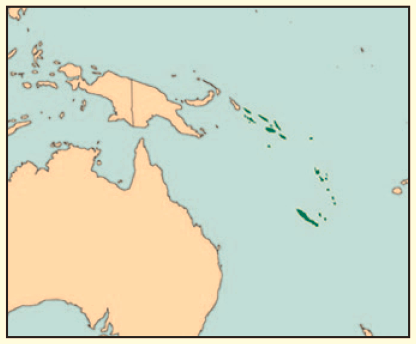
This article presents findings from research undertaken in Fiji, Solomon Islands and Vanuatu exploring how the core components of ABAs are implemented in each location as part of post-disaster recovery activities undertaken by communities, government authorities, local and international non-governmental organisations (NGOs), and others, such as faith-based organisations. Our focus is on urban settings. Previous Pacific-focused research has indicated that this is a neglected area – planning for climate change in cities is limited and there are only patchy studies of urban disaster responsiveness.(37)
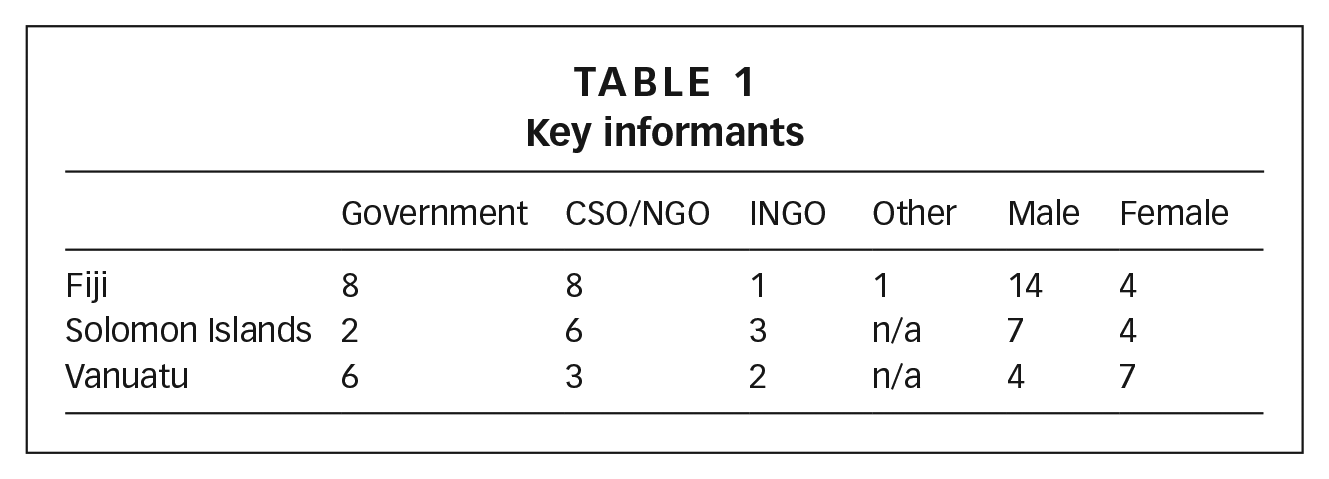
The research comprised a literature review and in-country key informant interviews. For the literature review, several leading databases and key agency websites were searched using combinations of keywords. Sixty-four papers and reports were selected and reviewed. In-country research comprised 40 key informant interviews across the three countries – 18 in Fiji, and 11 each in both Solomon Islands and Vanuatu (Table 1). These interviews were conducted in-country by local researchers (one in each country). Interviewees included professionals and practitioners with extensive experience of working in disaster risk reduction and response. They comprised representatives from local and national government (including NDMOs), international NGOs, the Red Cross and Red Crescent movement, local non-government and civil society organisations, and the private sector. Key informants included those with the titles of Director, Executive Director, NGO Country Director and NGO National Programme Director. The overwhelming majority of key informants were nationals with ongoing community ties, and all of whom have extensive “lived experience” of disasters and recovery. A summary of key informants is given in Figure 2. Interviews typically lasted 40 to 90 minutes. Each researcher worked to a list of open-ended questions. The research was overseen by a steering committee made up of experts and practitioners working for the Australian National University, University of New South Wales, International Federation of Red Cross and Red Crescent Societies, and Australian Red Cross.
Key informants
Research findings for each country were compiled into draft country reports that were reviewed and refined by the interviewees. Findings across the three countries were organised into four common themes: people-centred localised responses; adaptive processes; multi-sector collaboration and assessment; and reflective practice (Figure 2). Discussion papers were produced and made available.(38) A video of the findings and the researchers’ perspectives was also produced.(39)
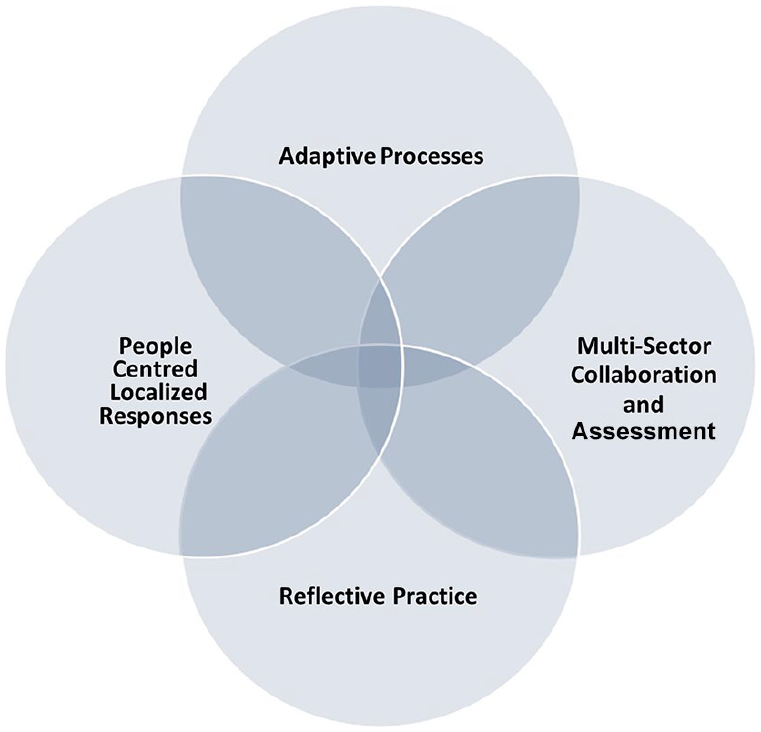
Four common themes of ABAs
As with all research there were limitations to this. The COVID-19 pandemic greatly reduced the mobility of researchers in-country (more interviews would have been undertaken otherwise, as well as an extensive number of community focus group discussions), and internationally (a series of joint workshops within and across countries was originally planned).
III. Findings
a. People-centred localised responses
All three countries showed an overarching commitment to disaster management, with an extensive set of national laws and policies concerning disaster preparedness, risk reduction and response. As the complexity of disaster management increases, incorporating more government agencies, NGOs, CSOs and other actors, there are also increasing challenges of local inclusion and coordination across multiple sectors and stakeholders. Across the three countries an improvement in national disaster response, particularly coordination among agencies at the national level, was attributed to national disaster management plans and supporting clusters.(40)
Rapidly growing urban populations have intensified the need for stronger disaster response mechanisms. In Fiji it was noted that the hierarchical system of disaster recovery, with assessments and coordination taking place at a national level, frequently led to insufficient genuine representation from the local level. This is proving to be an especially urgent issue in informal urban settlements as there can be uncertainty about who is in charge. In the Solomon Islands, basic information vital to some assessments may be missing. As one government key informant stated, “communities in Honiara are overpopulated. We do not have registered streets and communities. Overseas they have streets and numbers. For example, if we say Kukum [a local neighbourhood], we do not know where it starts and where it ends. So, we do not really know the size of a community.”
Most interviewees commented that local control of disaster responses and projects was dependent on formal recognition of local governance, including whether an area was defined as “a recognised community”, which includes an identifiable (and preferably elected) leader, formal local governance structures and a recognised degree of land tenure – informal (or squatter) settlements rarely meet these criteria. The issue of politicisation of disaster response was raised, particularly for situations where the distribution of funds is controlled by those with vested interests. Across all three countries, respondents expressed concern about resources frequently moving through channels for the benefit of political or economic interests, and not necessarily based on need. As one respondent from Vanuatu observed, “strong political influence tends to govern and dictate the recovery efforts including where funding should be spent”.
In urban settings, local inclusion is a challenge. According to several key informants, local and often traditional forms of governance mechanisms are eroding in urban contexts, sometimes resulting in a “vacuum” of governance and local engagement. An NGO employee in Fiji reflected on the challenges in urban engagement, stating, “We find [that] closer to urban centres, communities are a lot less engaged. … Informal settlements are a whole different culture. It is almost individualistic.” In Vanuatu, respondents mentioned the importance of using existing community structures, both social and physical, for evacuation centres.
One senior government official explained that the Vanuatu NDMO was trialling more locally integrated approaches to disaster response. Instead of establishing separate evacuation facilities for people displaced or otherwise affected by disasters (the “Western model”), a more effective approach involves supporting the host community to extend its pre-existing health, housing and education services to people in search of temporary assistance. In the medium to long term, this approach builds community relationships, rather than creating rivalries and resentment about unequal resource allocation between the host community and disaster-affected migrants.
b. Community engagement in recovery
There was much consensus across the three countries on the importance of community representation and participation for both disaster preparedness and recovery. All key informants mentioned the importance of community ownership, local resourcing and mobilisation, and traditional knowledge and practice. As one government respondent from the Solomon Islands noted, During the [recovery] processes, communities are the key responders within their own setting. … One thing that the community can participate in is to provide information regarding impacts it has on their community. In Honiara there are different ethnic groups and settings and the community can be involved in leading assessment teams.
Recognising local ownership is also a practical imperative in the Pacific, given the remote and dispersed settings of Pacific Island communities, which means that local people are often the first responders to disaster. External assistance from government and other organisations can take days or even weeks to arrive. This can be the case in urban as well as rural areas.(41)
Communities in the Pacific Islands have established strategies to adapt to disasters. For example, in Vanuatu, Community Disaster Climate Change Committees coordinate support for disaster risk reduction, including training local residents to recognise, assess and mitigate risks in their community. These committees were vital following TC Pam,(42) as they helped communities to obtain recovery support more effectively and quickly.(43) The committees are not present or active in all parts of Vanuatu, but interviewees commented that local community members were frequently able to provide similar services, such as verifying information and training volunteers on survey assessments. These types of mechanisms were reported in the Solomon Islands and Fiji as well.
In Fiji, several organisations are seeking to bolster local response capacity. The NDMO is training youth volunteers on post-disaster assessment and relief work, for its pilot project on a “Community-based Disaster Risk Management Training Manual”. The Red Cross Committees also support residents, in both urban and rural areas, to actively contribute to disaster recovery. Committees are composed of youth, female, male and LGBTQI+ representatives, selected by the community, and trained in early warning, early action, disaster response and first aid. Each committee meets each month with the Turaga ni Koro(44) to discuss local disaster-related projects.
Some of the best buffers against hardship after disasters are savings and support groups organised through families, churches, or networks of women’s or youth organisations.(45) This was evident during market closures related to COVID-19. A women’s savings group in West Guadalcanal, Solomon Islands had pooled nearly SBD 140,000 (about US$ 17,500). They were able to create their own stimulus package, which provided up to SBD 25,000 (about US$ 3,000) per household to deal with problems including unemployment. Community-organised savings and support groups respond swiftly to disaster impacts, but often lack support from humanitarian assistance networks to develop their reach, responsiveness and capacity. These community networks benefit from shared resourcing approaches and locally adapted coping mechanisms. They can generate resilience pathways and better integrate formal and informal institutional actors at the city, sector and ward levels.
c. Weak governance structures
In Fiji, weak coordination among the numerous international and local NGOs that support the various informal settlement populations was reportedly contributing to a disjointed response with unnecessary duplications and gaps. When we conducted the interviews in July 2020, the Fiji Council of Social Services was working to implement a new CSO Directory and Protocol that aimed to promote localisation and disaster risk reduction coordination through a series of guidelines. The guidelines are intended to help address some of the urban settlement response issues. In Vanuatu, it was noted that an absence of urban Community Disaster Climate Change Committees is being addressed by the NDMO that is working with partners to train and introduce the concept of the community-based committees in more localities.
This apparent disconnect between international and local structures was pointedly summarised by one government respondent from the Solomon Islands: “Localisation – I am having difficulties, not really to have something bad to say about internationals coming in, but when people say localisation, I say: localisation for who?” For some international NGOs, localisation means consultations about predetermined interventions; for locals and this government respondent it should rather mean a partnership whereby external engagement processes adjust to local values, priorities and needs – “bottom-up” planning. There were also concerns expressed by respondents in Vanuatu and in Fiji that dual/multi-track systems can emerge when international NGOs rush to help communities and bypass local coordination institutions like the NDMO.
Several interviewees noted that support for risk reduction and longer-term projects was disproportionately allocated to rural areas. Rural policy biases have been noted in other research.(46) This view was reinforced by a government respondent in the Solomon Islands: In disaster work in Honiara City, an issue is that bigger disaster projects … always go to the provinces and not Honiara. … Honiara has a lot of populated areas and it has a different setting, different ethnic groups and everything depends on money. So, when a disaster happens in Honiara, people are more affected than those in the rural area because of its cash economy. When there is no food, there is basically no food, unlike in the rural areas where they will still have access to food.
Despite challenges with urban community engagement, steady progress appears to be occurring. In Solomon Islands, one respondent stated, “Most of our NGOs have their catchment communities’ areas where they already implement most of the activities. They have good linkages and networking within the communities, but perhaps the resources are still too limited to reach all communities where developments are needed.” The Red Cross Committees’ initiative established in several informal urban settlements has been extremely effective in response to TC Harold and the COVID-19 pandemic. For instance, via the committee network, the Red Cross made contact with 83 communities in a month, 38 of which were in the Greater Suva Urban Area. Volunteers had limited skills that were directly related to the health needs of COVID-19, but following their training they were successful at identifying post-cyclone damage and community needs.
Disaster response complexities arising from differences in power and representation were acknowledged as a concern across the three countries. In Fiji, the dichotomy that exists between Fiji’s government administration and the longstanding chief leadership contributes to differing preferences for disaster response approaches. In general, most felt current assessments and coordination mechanisms were often highly bureaucratic, resulting in a gap of genuine representation at a local level. Similarly, in Solomon Islands concerns were raised around the politicisation of disaster response and the dispersal of assistance being influenced by MPs, resulting in certain members of the community benefitting more than others.
d. Traditional knowledge and practices
Traditional knowledge and practice are key, but are often overlooked, especially by international humanitarian actors. As one key informant from Fiji wryly noted, “TC Winston(47) invited a lot of humanitarian actors. Some from overseas with experience from Syria, from Iraq and they all applied the same context to Fiji. But in Fiji, it’s completely different.” For example, in Pacific Island cities most households have gardens and many sell food in markets as part of their livelihoods. Support to re-establish urban gardens and markets is important for nutrition, livelihoods and recovery.(48) The use of traditional housing materials (often available within-country) also supports livelihoods and the re-establishment of climatically appropriate housing – for example, thatched roofing, which is less hazardous in cyclones than tin roofs. Traditionally trusted sources of information, such as chiefs, church elders and weather forecasters, can also hold more sway than unfamiliar sources of warning and instruction.(49)
The Post-Disaster Needs Assessment carried out by the Vanuatu government, UNESCO, the EU and the World Bank found traditional leadership structures and local knowledge to be key to Vanuatu’s disaster resilience after TC Pam.(50) In 2013, the Nikoletan Island Council of Chiefs issued Vanuatu’s first traditional authority declaration on climate change. This was the result of meetings with representatives of government departments and civil society and faith-based organisations. The declaration drew attention to the benefits of traditional adaptation responses together with scientific approaches, such as the important role of tupunas (local weather forecasters) in strengthening agricultural production and food security following a crisis, and the need for government recognition of this role.(51) For adaptation to long-term climate change, a combination of modern and traditional knowledge is likely to be most effective, e.g. locally managed marine areas combine local knowledge of ecosystems and disaster recovery with scientific insights into climate change, and Kastom Gaden Associations (a charitable trust focused on improving food security) similarly combine traditional knowledge about food plants with science to support resilience. Both science and traditional knowledge are applicable to urban and rural livelihoods. Traditional networks that can support knowledge transmission and behaviour change are also essential for adaptation, including the Council of Chiefs and faith-based organisations referred to above.
One result of urbanisation has been the erosion of traditional knowledge and practices regarding climate change and disaster resilience.(52) All three countries had examples of social, economic and environmental instability in cities that was linked with the breakdown of traditional practices. Examples are the diminution of traditional/chief authority, an uptick in illegal squatting, changes to food sharing and security, and reduced preparation for impacts of adverse weather on urban environments. The three countries have identified a need to integrate resilience as a core development action objective across sectors, scales and regions. But what has not been clearly established is the means to better account for cultural resilience and traditional knowledge, particularly as second- and third-generation urban dwellers lose this knowledge and the attendant ability to respond to and recover from disaster.(53)
e. Multi-sectoral collaboration and assessment
Sector-based recovery efforts (such as those focused on shelter, protection or education) can be dependent on single-sector assessments and single-sector implementation that can be siloed and that capitalise insufficiently on multi-sectoral opportunities.(54) In urban areas this can result in wasted investments and duplicated efforts. Positive experiences of collaborative partnerships were identified across the three countries. For instance, in Fiji one NGO respondent stated, “over the last three years since [TC] Winston . . . there has been a level of trust that we have built between partners and so the sharing of information I have experienced this time around was much easier than it was previously”. In the Solomon Islands, most interviewees appreciated the collaboration across sectors and agencies which they said had improved markedly since 2010. Especially notable was the formulation and adoption across governmental and non-governmental agencies of the National Disaster Management Plans as a guiding document covering all disaster projects and assistance, as well as the establishment of coordinating committees for key functions (e.g. shelter, water and sanitation) representing relevant agencies.
Stakeholders considered the Australian Humanitarian Partnership (AHP) (55)an effective mechanism for collaboration and strategic coordination. This partnership fosters collaborative partnerships across governments, local NGOs and community service organisations. The flexibility of the AHP encourages better coordination and collaboration, enabling partners to identify agencies best able to respond to each disaster – across government bodies and NGOs, and possibly including joint response efforts. One key informant in Fiji praised the collaborative partnership with AHP, noting “we are trying to work with our AHP [Australian Humanitarian Partnership] partners because we know our reach is limited. We cannot be in all communities but the partners work in different areas, so for us, [partnerships] are transforming our work from status quo to transformative.”
Several interviewees noted that coordinated and collaborative responses can weaken following the initial response and into recovery efforts. Additionally, while there is improvement in collaborative practices, sectors continue to be siloed, with government institutions collaborating only with other government institutions, and NGOs working solely with other NGOs. A Fiji NGO respondent stated: “I think the approach toward coordination can still be improved . . . it’s about getting out to [affected communities] as quickly as possible but in a coordinated manner so that we are not replicating, and there’s a lot of inefficiency that takes place”. This weakness in the system can be exacerbated when international agencies adopt “one-size-fits-all” approaches or implement unsolicited activities, which can create friction, as noted earlier.
f. Post-disaster assessments
Post-disaster needs assessments have lacked systematic and efficient approaches across countries. In Fiji and Vanuatu, the post-disaster assessment process was considered by several respondents to be cumbersome and inefficient. Assessment duplication, a lack of centralised and standardised data and assessments, and gaps in learning from previous disasters all contribute to post-disaster assessments that are weaker than they otherwise might be. In Fiji, despite government agencies coordinating detailed assessments, organisations still sometimes undertake their own assessments using separate forms, leading to assessment duplication and disparities in data. This can also place more pressure on affected communities. In Fiji, one government respondent noted that, “Sometimes the communities get overwhelmed with the assessment that is going on. The first group they come in and do the assessment, then another group they come and do different assessment. And then they are looking out . . . waiting for assistance.”
In Solomon Islands the assessment process has benefitted from the widespread use of a local common assessment tool and shared online database for multi-agency use across government and NGOs. The tool is coordinated by the Solomon Islands’ NDMO and used by the NDMO, Red Cross and the Australian Humanitarian Partnership as well as local NGOs and CSOs. Vulnerability and capability assessments with a local focus have been important. Local staff and communities have ownership of the process and influence future actions and assistance. For example, the Fiji Council of Social Services encouraged the participation of the Rainbow Pride Foundation (RPF) in a joint assessment in Kadavu, along with the Fijian government, following TC Harold. This marked the RPF’s first collaboration on a multi-sectoral assessment with the Fijian government, as the foundation had previously conducted its assessments through community networks. The collaboration, facilitated by the AHP, has helped improve data collection tools that include information on sexual orientation, gender identity, gender expression and sex characteristics.
The need for more cross-sector sharing of experiences and responses was raised by a few respondents. Following TC Harold, the AHP organisations and district officers in Fiji found positive cases of collaborative multiagency assessment, whereby partner organisations targeting specific community groups were able simultaneously to share and support the assessments of other community groups. For example, the Fiji Disabled People’s Federation shared its assessment findings with the NGO Live and Learn, which was working on recovery actions for persons with disabilities. Likewise, in the Solomon Islands, larger international NGOs and CSOs are working together to train smaller community-based organisations in how to use the localised common assessment tool so that local actors can contribute to common data collection during disaster assessment and response. Community-focused assessments jointly conducted by the government and NGOs have also helped to target and distribute post-disaster assistance, including food packages, cash, seeds and seedlings. For example, the Adventist Development and Relief Agency International was able to distribute seeds to communities in high need across the Pacific Islands – many in cities continue to garden to meet basic needs and to supplement household income through urban food market vending. In the absence of locally focused assessments, seeds might not have been distributed at all, or there might have been a blanket distribution, including to those without the need.
g. Adaptive processes
Recovery programmes can take years, potentially extending beyond the conventional recovery timeframes of some organisations. Several key informants from the Solomon Islands noted that government responses are often delayed due to the distance or difficulty of transport between Honiara and some disaster-affected areas; these delays were evident across all study countries. One Solomon Islands government respondent stated, “Sometimes people demand things to be done immediately. But it all depends on the government’s processes which are different to people’s opinions. … Somehow people expect responses to be immediate and mainly right after a disaster and they thought that it is an easy task, where the next day after a disaster, supplies arrive.”
Given limited resources, a high degree of self-reliance and preparedness is required to quickly address food and water shortages. Many communities need to lead on this and execute their own strategies to improve preparedness and long-term recovery. There is evidence that NGOs and CSOs operating in-country (with local staff and offices) are modifying how they approach engagement, to consider longer timeframes and durable response mechanisms, both of which contribute to sustainable development. The Red Cross National Societies in the three countries studied have all moved away from short-term project-based funding and approaches to longer-term programming initiatives. The IPCC report on small islands noted, “Adaptation to climate change generates larger benefit to small islands when delivered in conjunction with other development activities, such as disaster risk reduction and community-based approaches to development.”(56)
The rigidity of international NGO timeframes continues to be a challenge, however, with pressure to exhaust funds and complete activities within donor-set timeframes. This was experienced in the three case study locations with the recent economic downturn following the double hit of COVID-19 and Tropical Cyclone Harold. One NGO officer in the Solomon Islands noted that the first round of funding received by the NGO was small and intended to be short-term. The second phase of funding was longer, around 18 months, yet even these timeframes are not long enough to change practices and outcomes related to food security and livelihoods. One Fiji NGO respondent stated, “Funding opportunities should allow for some flexibility. Flexibility in design. Events can occur that can require us to re-programme and I think that flexibility needs to be allowed for in humanitarian programmes.”
This long-standing tension between timeframes is recognised in ABA approaches, which often take much longer than “traditional” recovery programmes. Successful ABA programmes need to have realistic timeframes and need to be adaptive to local context and feedback.(57) The Fiji Red Cross implemented a shelter response after TC Winston, which is an example of flexible and agile programming that adapted to local challenges and unanticipated complications. The Red Cross began constructing permanent shelters; however, the complexities around obtaining approval and land brought the project to a halt. In response, the Red Cross turned to shelter kits, and supported communities to rebuild with the support of construction materials and skills development. The Red Cross now works with other stakeholders in the Shelter Cluster, including Habitat for Humanity and the Ministry of Housing, on disaster recovery.
Government responses need to be able to adapt to the changing needs involved in each disaster. In response to TC Harold and COVID-19, Vanuatu’s Provisional Emergency Operations Centres, which were established following the cyclone as part of the decentralisation of disaster management, were modified in light of the lack of international engagement because of pandemic-related border closures. The NDMO sent staff to regional centres, which reportedly improved coordination, efficiency and transparency of response efforts. In the absence of international actors, representatives of national and community service organisations could take on greater leadership roles, becoming the core agents of coordination.(58)
Other adaptive and innovative initiatives identified include cash transfers, which were first introduced as a funding mechanism in the region in Fiji following TC Winston and provided a mechanism for impacted communities to allocate funds as needed, using pre-existing institutions. Cash was distributed using existing social welfare protection mechanisms to respond quickly and efficiently to impacted communities. After TC Winston, the Fiji National Provident Fund allowed its members to draw on their superannuation plans. Over 9,000 members withdrew money during this period.(59) A similar programme was offered after TC Harold and COVID-19, including a government top-up.
The Solomon Islands, via the Australian Humanitarian Partnership platform, is piloting cash vouchers to support disaster-affected people and prioritise local purchasing. This pilot comes in response to evaluation and feedback after other disasters, which indicated that cash-based programmes had been successful.(60)
h. Reflective practice
Reflective practice allows for collaborative learning, planning and action.(61) According to respondents in all three countries, the process of evaluation and lessons learned following several large disasters has contributed to the National Disaster Management Plans and Cluster system. In Solomon Islands, a workshop series after the 2007 tsunami reviewed disaster assistance and helped develop the National Disaster Management Plan. This was cited as substantially influencing national preparedness and responsiveness, as it was followed by funding for the plan, establishment of the cluster committee structure, and other enhancements of coordination, strategic decision-making and implementation.
In Fiji, evaluations following Category 4 and 5 cyclones have been one driver behind the Australian Humanitarian Partnership’s enhanced technical and financial support to build the capacity of its 12 partner organisations in monitoring and evaluation. After recent cyclones, a baseline study was conducted and joint forums held. The Partnership gave funding to the Fiji Council of Social Services to develop a community service protocol for accountability. This will be shared with government and other community service organisations to set a consistent standard for interventions, and to establish a common reporting framework to inform how these organisations work in humanitarian settings. There is also pressure to better integrate assessment processes, from the international scale to the local.
Many of these reforms target better community inclusion. When projects do not adequately involve communities, evaluations become “just for the donor”. In such a case, the evaluation exists more to meet externally set aims and outcomes, than to improve sustainable community resilience. One key informant from Solomon Islands reported that high-level evaluations by government ministries and other organisations (such as UN agencies) made good recommendations, but these generally were not accompanied by funding to implement change across the sector. An informant working on disaster response described a situation where the evaluation was conducted by international donors, but the report was never seen by local stakeholders. This showcases some of the challenges of evaluation processes and outcomes that are not sufficiently integrated into local response systems.
IV. Discussion
As noted earlier, this research has limitations, as all research does. The COVID crisis added severe limitations of access and travel. Planned in-country and regional workshops involving all team members to test and discuss the findings were not possible. Larger focus group discussions, in particular within communities, were also not possible. More consultation with a greater number of civil society organisations and faith-based groups would also undoubtedly have added value. Our research was also limited to Melanesia. Some of the implications might be relevant for PICs in Polynesia and Micronesia, but there are differences in circumstance and culture that would necessitate caution.
Despite these limitations, we believe that this research is timely. Undoubtedly, the Pacific will continue to face large-scale disasters and rapid urbanisation. Urban areas, and the people who live in them, can only become more resilient if they are integrally engaged in disaster preparedness and response. Disaster responses and associated aid interventions need to “urbanise”: they need to be better tailored to urban contexts, to embrace urban complexity, and above all, to put people first. This article has found that ABA principles, in name or approach, are yielding positive benefits, but also could be improved.
The Pacific has relevant practice to share in relation to localised responses, multi-sectoral engagement, adaptive practice and reflective processes, as outlined above. But there is still room for improvement. Our review of the international ABA literature revealed some relevant insights that could strengthen the response to current challenges in the Pacific related to limited and restricted resources, recognising and fostering local and informal response mechanisms, and embedding and brokering traditional knowledge and practice into more formal systems both nationally and regionally.
While undeniably interconnected through culture, geography and environmental risk, the “Blue Pacific” is also diverse and complex across the various small island states. This is evident in the variability of access to disaster preparedness and response resources and capacities across the region.(62) While individual PICs may not have the capacity to respond, this does not mean that that the region does not. The current humanitarian response practices, driven by international NGOs, the UN, donors and others, typically see goods and services (including human resources) flown in from great distances. Not only does this create a significant strain on global resources, it does little to support local economies, and often does not adequately recognise the specific needs of local systems, communities and individuals.(63) While progress has been made to reduce this “outsider-based” response to need, more can be done. Positive evidence is emerging relating to recent disaster response efforts in the wake of the COVID-19 pandemic and subsequent international border closures. Albeit not perfect (but what disaster response is?), the locally led recent response efforts demonstrate how by leveraging local and regional resources, knowledge and capacities, with necessary technical and funding supports being imported when required, sovereign states are empowered to define and lead their own response efforts.(64)
As in other low- and middle-income countries, including small island developing states, community-based structures and initiatives are almost always the first responders following a disaster.(65) It is critical that these channels of localised action are properly resourced, upskilled and empowered to lead the response to disasters.(66) While the rhetoric of localised approaches to humanitarian response is strong, the practice continues to lag.(67) Decades of international aid and top-down approaches to disaster response have resulted in many Pacific Island communities believing that solutions must be driven by external aid.(68) In an effort to assess and increase local adaptation and climate resilience, Pacific and international communities are strengthening local response mechanisms through community-based action models,(69) establishing communities of practice for coordinated communication(70) and using community-based adaptation assessment to determine the level of local capacity to build resilience.(71) The success of these initiatives lies in the recognition that local people have the knowledge and capacity to drive their own recovery. ABA principles, and in particular geographically focused and people-centred approaches, align to the localisation agenda, acknowledging that long-term sustained resilience must be driven and owned from the bottom up.
Cultural traditions and indigenous knowledge in the Pacific are influential and important. While often acknowledged as a critical factor in engaging with and learning from Pacific Island communities, traditional practices, skills and values are not always referred to or leveraged when reflecting on how communities prepare for and respond to disasters.(72) Local knowledge and traditional practices however could be gathered and shared through research, cataloguing and dissemination.(73)
ABAs are not a panacea, but they build on evidence of what works in urban settings, and thus deserve attention and examination as an effective approach to urban disaster recovery. The ABA principles provide an alternative framework to support locally owned disaster recovery in the Pacific that is contextually focused, leveraging existing structures, and promoting increased sector and agency collaboration and coordination. As well, ABAs promote the adoption of agile and adaptive response mechanisms and emphasise more sustainable and developmental outcomes. National governments, aid providers and other stakeholders cannot afford to ignore the urgent challenges of urban disaster recovery, especially at a time of worsening climate-fuelled disaster threats, and should consider promoting approaches such as ABAs in their policy, practice and funding.
This research, supplementing existing evidence, supports the compelling argument for the Pacific to adopt a localised version of ABAs as a complementary approach to disaster recovery. ABAs offer a useful framework for local adaptation to include local and indigenous practices with a view towards increasing resilience in the context of unprecedented risk and disasters.
Footnotes
5.
6.
18.
21.
37.
See e.g. Sanderson and Bruce (2020);  .
.
40.
This refers to the globally recognised humanitarian cluster system. Clusters are groups of humanitarian organisations, both UN and non-UN, in each of the main sectors of humanitarian action, e.g. water, health and logistics. They are designated by the Inter-Agency Standing Committee (IASC) and have clear responsibilities for coordination. See .
42.
TC Pam was a Category 5 cyclone that struck the Pacific Islands, most significantly Vanuatu, in March 2015. Considered one of the worst disasters for the Pacific, TC Pam affected more than 188,000 people, wiped out 96 per cent of agricultural crops, and displaced 65,000 people from their homes.
44.
Turaga ni Koro is the title for the head of a village, who is usually elected or appointed by villagers. Similar to a city administrator, they play a key role in the modern Fiji government structure and are paid a small government allowance.
47.
TC Winston was a Category 5 cyclone that struck Fiji in February 2016, causing widespread damage and impacting more than 540,000 people, or 60 per cent of Fiji’s total population.