




Abstract
Background:
Fatigue has a significant negative impact on individuals with Rheumatoid Arthritis (RA). Fatigue Severity Scale (FSS) is the most widely used tool to assess fatigue severity which is a common problem in RA. Availability of FSS in local vernacular language could add more value and the study aims to construct the Tamil version of the FSS and validate it among patients with RA.
Methodology:
The study was conducted in 2 phases. In phase I, the English version of FSS was translated into Tamil by following the Linguistic Guidelines by mapi eprovide. In Phase II – Validation of Tamil version of FSS was carried out in 50 patients of RA by establishing; Test-retest reliability, Internal consistency, Content validity; and Convergent validity in comparison with HAQ-DI and SF-12
Results:
The initial testing between Tamil FSS with English version revealed an intraclass correlation coefficient (ICC) (0.821) and α(0.902). The content validity was established by Cohen’ kappa agreement k which is >80% with a significance <0.004, which shows Good substantial agreement between raters. FSS showed strong positive correlation with HAQ-DI (>0.0005) and negative correlation with SF-12 (>0.0005). The scale demonstrated excellent internal consistency (α = 0.972) and test-retest reliability (ICC = 0.93).
Conclusions:
The validated Tamil version demonstrated excellent content validity as well as good internal consistency and test-retest reliability, would be a useful instrument for clinical practice and research. It can be recommended for the assessment of Fatigue severity among Tamil-speaking population with RA.
Introduction
Rheumatoid arthritis (RA) is defined as a chronic systemic inflammatory disorder characterised by symmetrical polyarthritis deforming of varying extent and severity, associated with synovitis of joints, tendons sheaths, articular cartilage loss, and erosion of Juxta-articular bone. 1 RA is one of the most common autoimmune diseases of connective tissue. It is characterised by a chronic inflammatory process that causes progressive destruction of the Osteoarticular system and organ changes. The first symptoms of the disease usually appear between the ages of 20 and 50. Currently, about 1% of the human population is affected by this disease, and the incidence in women is twice as high as in men. 2
The American College of Rheumatology (ACR) and European League Against Rheumatism (EULAR) criteria were usually considered to establish the presence of RA, especially during its remission period. 3 The prevalence of RA in India is 0.75% 4 and the worldwide prevalence of RA in overall population is 0.8% approximately; among them, adults accounts for 0.5%–1%. 5 Women are up to five times more likely to get RA than males, and those over the age of 40 have the highest prevalence rates.
Fatigue is typically characterised as a state of exhaustion and weakness accompanied by a sense of weariness, drowsiness, and irritability, as well as a cognitive component. Physiological exhaustion that occurs after strenuous physical exertion provides a signal to the body to stop the activity to favour recovery and replenishment of expanded energy. 6 Fatigue can have a wide range of effects on patients ‘daily function and was considered a key outcome measure in various clinical studies conducted among RA population. 7 Fatigue is definitely a sign of rheumatic diseases and Outcome Measure for Arthritis Clinical Trail (OMERACT) considers fatigue as a major source of anxiety, equivalent to pain, as overpowering, uncontrolled, and mostly unaddressed by physicians. Significantly fatigue affects upto 70% of RA patients, bringing down their quality of life, and is identified as an unmet need among RA patients. 8 It affects their ability to perform daily self-care and socially relevant tasks, influencing physical, mental, social well-being and personal satisfaction.9,10
Fatigue is a common and dominant complaint among patients with RA, as an extra-articular symptom of the disease leading to exhaustion and decreased capacity for physical and mental work. 11 Piper defines chronic fatigue as unpleasant, unusual, abnormal or excessive whole-body tiredness, disproportionate to or not related to activity or exertion and present for more than 1 month. 12 Evaluation of fatigue indices in RA is recommended depending on the intensity of physical activity during the short term. 13 Dr Lauren Krupp developed Fatigue Severity Scale (FSS) in the year 1989 and is a valid tool to assess fatigue severity. The FSS is a nine-item instrument designed to assess fatigue as a symptom of a variety of different chronic conditions and disorders. The scale addresses fatigue’s effects on daily functioning, querying its relationship to motivation, physical activity, work, family, and social life. 14
This scale has been translated into several languages, including Arabic, Dutch, and Finnish, and is widely used in clinical practice and research. As far as Indian languages are concerned, formerly adaptations and translations in Gujarati, Punjabi, Hindi, Kannada and Bangla languages were done. FSS has been used in different populations and clinical settings such as Systemic Lupus Erythematous, Multiple Sclerosis, fibromyalgia, post-polio, amyotrophic lateral sclerosis, cancer, brain injury, Parkinson’s disease, insomnia, chronic neck pain, stroke, and among HIV-infected patients. In populations with different disease, the psychometric features of the FSS demonstrated good validity, reliability, and high internal consistency. 15
Tamil is a commonly spoken language in Tamil Nadu and south-India, the FSS was not available in this local vernacular language. It was well established from the above research that fatigue is a common problem in RA and the evaluation of the same is well recommended by national and international agencies. The FSS scale, if available in regional Languages would increase its clinical usage, related evaluations & applications and would enhance clinical care for patients and favour research. The aim of this study is to carry out the translation and validation of the FSS for Tamil-speaking population, and secondarily, to validate this version in RA population.
Methodology
This cross-sectional study was conducted at Department of Rheumatology and Clinical Immunology of a tertiary care teaching medial hospital. The study period was from June 2023 to November 2023. Ethical approval was obtained from the Institutional Ethical Committee and registered with Clinical Trial Registry of India.
Patients who could read write and understand both Tamil and English having a diagnosis of RA aged between 20 and 65 years were considered for inclusion after obtaining written informed consent. Participants who had co-morbid medical illnesses that could cause fatigue were excluded from the study. The sample size for the study was set at 50 as per Linguistic Validation guidelines from Mapi Eprovide Organisation. (
The original English version of FSS was developed by Dr Lauran Krupp, the primary author is contacted and Permission to use, translate, and validate the study was obtained. The study was conducted in 2 phases as below:
Phase I: Translation and Construction of FSS Questionnaire into Tamil Language
It was accomplished in six stages as follows:
The forward translations were performed by two Tamil scholars. One of the translators was informed about the components of the questionnaire, while the other translator was not informed. The First (T1) and Second Translations (T2) were considered for synthesis of the questionnaire.
Two translated versions of Tamil FSS (T1) and (T2) were accomplished. The Final version of Tamil FSS (T) was synthesised.
Translated Final version of the Tamil questionnaire was back translated into English by one translator who had a doctorate in English Literature and backward English version of FSS was synthesised.
This committee consisted of a methodologist from the Department of Physiotherapy, and three language professionals, three translators (Two Forward and One Backward Translators). The Committee Reviewed and verified the two forward translations of Tamil questionnaire (T1 and T2), synthesised version (T); One Backward Translation (BT) of the synthesised version (E) to English version, and all corresponding reports. The Final version of Tamil questionnaire was developed.
A total of 15 patients were included for the Pilot study, from the Department of Rheumatology and Clinical Immunology after discussion and finalisation of the study’s methodology.
The subjects were given the Final Tamil questionnaire, which contained nine items of FSS scale and their responses were noted. After two days’ time the same group of RA patients was administered the English version of FSS and their responses were noted. The Tamil FSS and English FSS overall score was evaluated using an intra-class correlation coefficient.
All the written reports were given to the guide and co-guide, and they verified whether the recommended stages were followed and reasonable translation was achieved. After checking and understanding the Final version of Tamil FSS. The questionnaire’s Tamil version was created.
Phase II: Validation of Tamil Version of FSS Among RA
The validation of the FSS among RA population was carried out by establishing
Test-retest reliability Internal consistency Content validity; and Convergent validity
The second phase involved testing the Final Tamil version of the FSS questionnaire for validation among RA population. The content validity indices were assessed by nine rheumatologists and each expert rated every question as either (a) not relevant (b) somewhat relevant (c) quite relevant (d) highly relevant. Subsequently, the Tamil version of the FSS with appropriate content validity was served in 50 patients with RA. The convergent validity was tested by the correlation between the FSS and the HAQ-DI, SF-12 administered among the same group of RA patients. The Test-Retest Reliability was tested by administering the FSS Tamil version to 15 participants, 14 days following the initial assessment. The FSS overall score and item-by-item scores ‘test-retest reliability using intra-class correlation and multiple correlations were evaluated to determine validity, reliability and internal consistency.
Statistical Analysis
To describe the data, descriptive statistics was used. Frequency analysis, percentage analysis was used for categorical variables and the mean & SD was used for continuous variables. The content validity was established using Cohen kappa with 80% substantial agreement. The Test-Re test Reliability of the FSS Total Score and Item-level Scores was assessed by intraclass correlation coefficient (ICC). Internal Consistency was measured by Cronbach’s Alpha. Spearman’s Rank Correlation Coefficient was used to assess the correlation between FSS Tamil and Health Assessment Questionnaire-Disability Index (HAQ-DI) Tamil, FSS Tamil and Short Form Health Survey – 12 (SF-12): Physical and Mental Component Summary Tamil (MCS and PCS) in individuals with RA.
Results
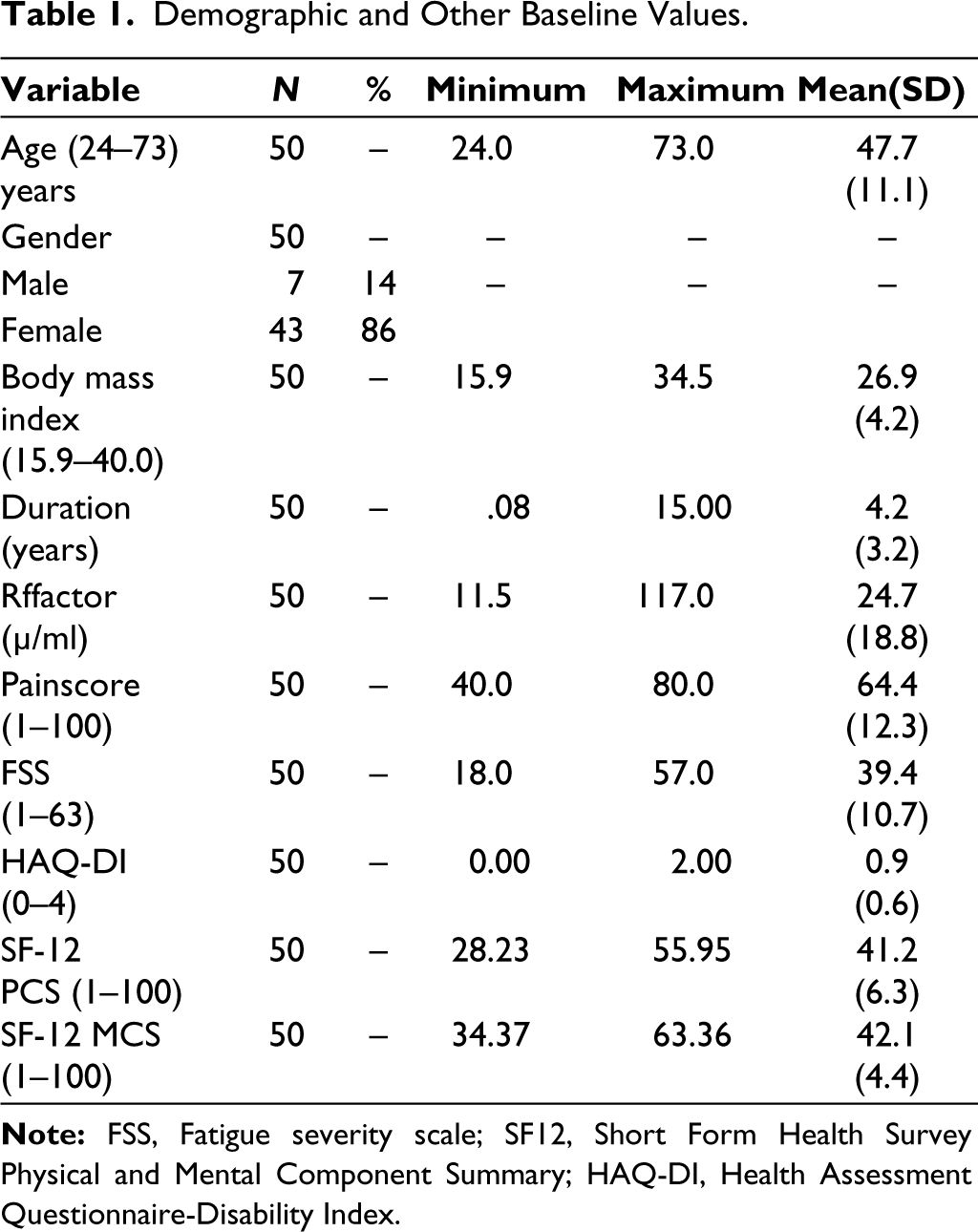
The collected data were analysed with IBM SPSS Statistics version 29.0. In this study data from 50 participants diagnosed to have RA were analysed. The baseline characteristics and other baseline values are presented in (Table 1). The Content Validity was assessed using the Cohen kappa agreement. The content validity indices were assessed by nine rheumatologists & each experts rated every questions as either (a) not relevant (b) somewhat relevant (c) quite relevant (d) highly relevant. Cohen’s kappa correlation obtained in this study was 0.800 with the significant level 0.004 which shows good substantial agreement between the raters (Table 2).
Demographic and Other Baseline Values.
Cohen’s Kappa Agreement Value for Content Validity.

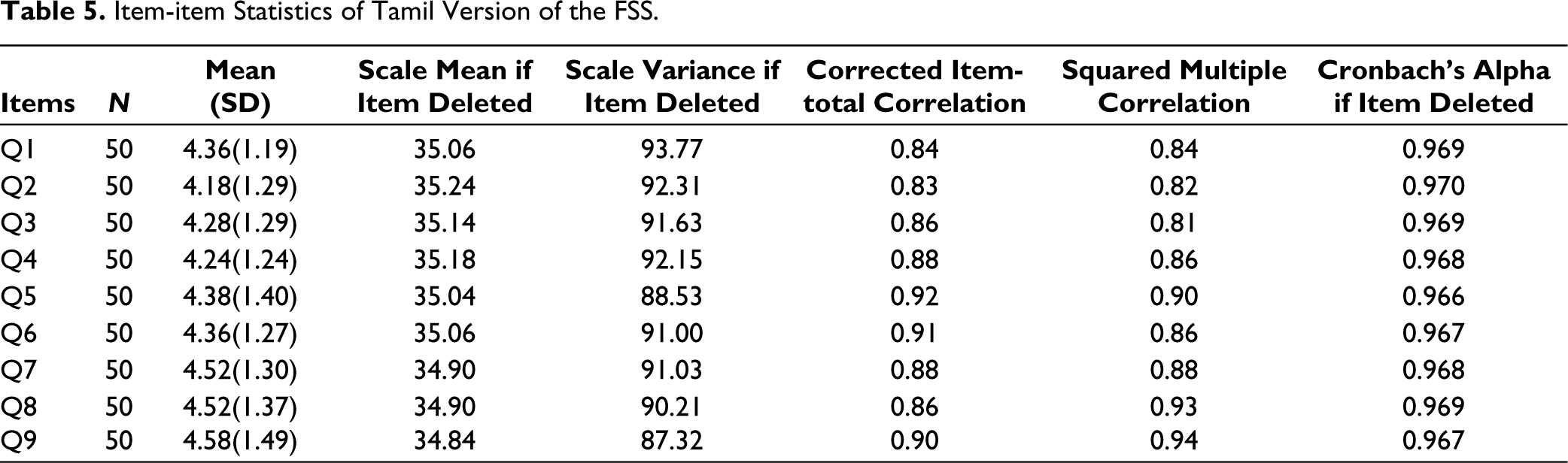
The Test-Retest Reliability was measured by ICC and the value for individual questions obtained was >80%, with a significant level 0.02 which indicates good reliability with 95% confidence interval. (Table 3). Internal Consistency was assessed using Cronbach’s Alpha for Tamil version of FSS and the total score obtained is 0.973 which demonstrated excellent Internal Consistency (Table 4). The Item-Item statistics of Tamil version of the FSS was assessed using Cronbach’s Alpha and a significant level between 0.966 and 0.970 was obtained in the current study (Table 5).
Shows the Test-retest Reliability was Measured by Intra-class Correlation Coefficient (ICC).
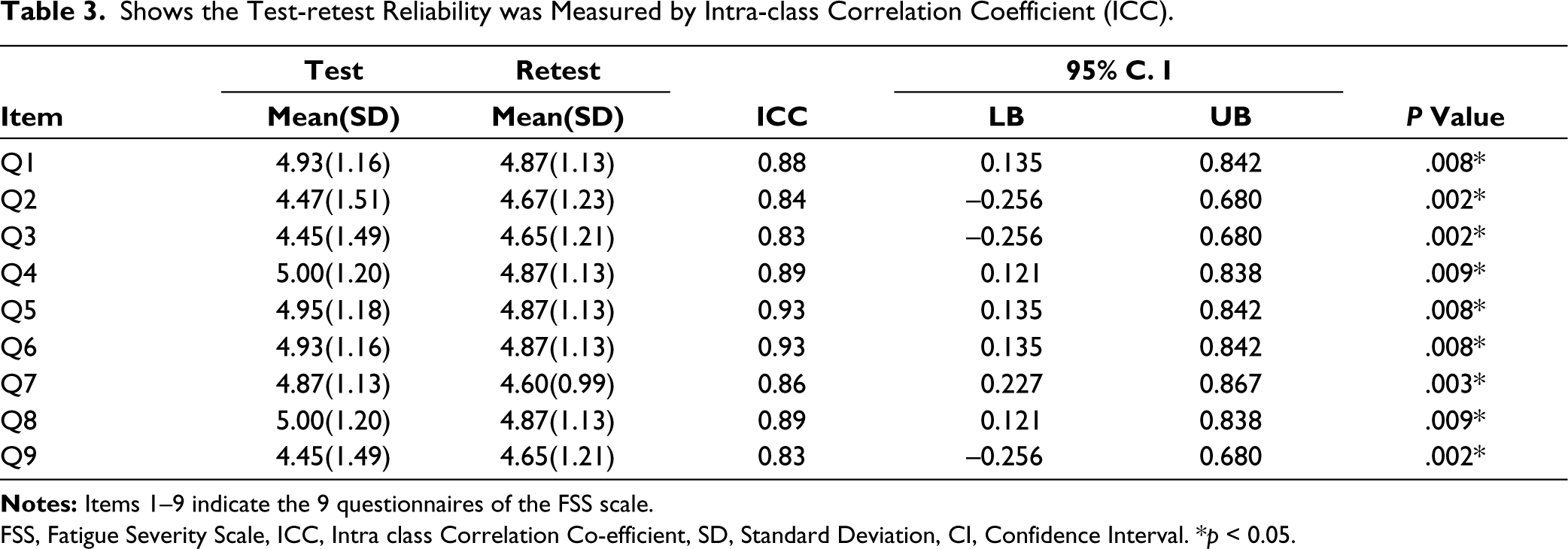
FSS, Fatigue Severity Scale, ICC, Intra class Correlation Co-efficient, SD, Standard Deviation, CI, Confidence Interval. *p < 0.05.
Shows Cronbach’s Alpha Reflecting Internal Consistency.
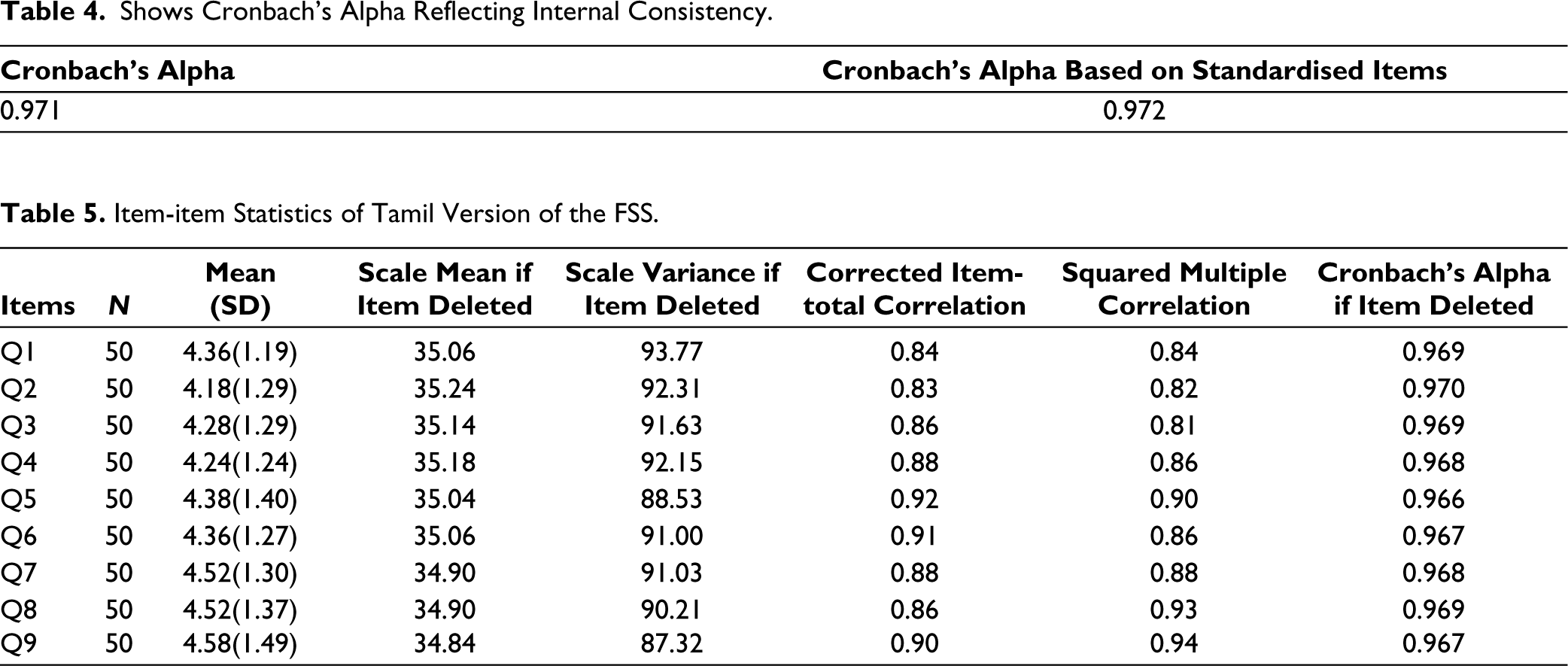
Item-item Statistics of Tamil Version of the FSS.
The convergent validity was assessed using Spearman’s rho Correlation Coefficient. The Spearman’s rho correlation between FSS Tamil and HAQ-DI Tamil is 0.582 with the significant level 0.0005 it shows a moderate positive correlation, FSS Tamil and SF-12 Tamil MCS is –0.530 with the significant level 0.0005 and SF-12 PCS is –0.523 with the significant level 0.0005 it shows a moderate negative correlation all of which was statistically significant (Table 6).
The Convergent Validity Analysis Using Spearman’s Rho Correlation Coefficient.

Discussion
Fatigue is a common problem among individuals with RA and the evaluation of the same is an important component as recommended by many researchers. 16 The FSS has been used in different population and clinical settings 17 ; one such measure was not available till date for RA patients and was successfully completed in the current research. Translation and validation of the FSS questionnaire have been performed into many languages but till now, it has not been translated and validated into Tamil language, which was also accomplished in the current study.
This study aimed to carry out the translation and validation of the FSS for Tamil-speaking population, and secondarily, to determine the psychometric properties of this version in RA patients. It included the process: Analysis of its Content Validity, Test-retest reliability and internal consistency. The convergent validity of Tamil FSS with HAQ-DI and SF12 considering PCS and MCS subdomains was also completed in this research.
In the pilot testing of the Tamil version of FSS conducted among the 15 subjects of Tamil-speaking patients with RA clearly showed that the items within the scale were easily understandable, comprehensible and reliable & had good internal consistency. The Internal Consistency Cronbach’s Alpha score for Tamil version of FSS obtained in this study is 0.972 which is nearly similar to the values obtained for other languages; Bangla version 0.930, 18 Kanada version 0.902, 19 Finish version 0.95 20 and Turkish version 0.94. 21
The translation process was systematic and rigorously conducted to ensure that the Tamil version must be equivalence to the English version when established. Translation and Validation were performed following standard MAPI guidelines and recommendations 22 among 50 subjects of the Tamil-speaking population. This ensured that the scale is relevant, predictable and understandable by Tamil-speaking individuals.
In Bangla version, Content Validity was assessed by the item-level content validity index (I-CVI) and scale-level content validity index (S-CVI) obtained from four rheumatologists. The Content Validity indices of Bangla version (I-CVI) were found to be 1 for each item & (S-CVI) was 1 by the averaging calculation method. 18 Consequently, in the current study for Tamil version the content validity was assessed by nine rheumatologists & the Content Validity indices was assessed using Cohen’s kappa agreement. The Cohen’s kappa value obtained for Tamil version is 0.800 with the significant level 0.004 which shows good substantial agreement for the Tamil version of FSS.
The ICC for the translated Tamil version of FSS achieved a good reliability (ICC = 0.92) similar to the Finnish version (ICC = 0.89), 18 Bangla version (ICC = 0.93) 16 and Kannada version (ICC = 0.92) 17 with 95% confidence interval. High internal consistency reflects higher congruity of the items in the Tamil version of FSS. It also had excellent test-retest reliability (ICC > 80%) consistent with the findings from other language versions of the FSS in Kannada, Bangla and Finnish.18,19,20
In this present study application of Tamil FSS among RA population has resulted in good Item-item score correlation and squared multiple correlation, which ranges between 0.83–0.91 and 0.81–0.94, respectively. Our results are in line with the previous observation made by Eija Rosti-Otajärvi et al., for Finnish version and Imam Gazzali et al., for Bangla version of FSS.
In previous research conducted in Bangla translation the convergent validity was assessed by correlating FSS with HAQ-DI and SF-12 and the same procedure was followed in the current study. The spearman rho obtained for Tamil version of FSS and HAQ-DI Tamil & Tamil version of FSS and SF-12 Tamil - PCS and MCS subcomponents is 0.482, –0.523 and –0.530, respectively, with a significance >0.0005. The results of convergent validity are in line with the study done by Imam Gazzali et al., the FSS scores, and HAQ‑DI 0.74, P < .001, between FSS Scores, and SF-12 MCS was 0.76, P < .001, SF-12 PCS was 0.72, P < .001. 18
The findings of the present study complemented the results of previous studies done in India, for Kannada version by Dr Manikandan et al., 19 and in Bangladesh by ImamGazzalietal. 18 The current study demonstrated excellent content validity as well as good Internal consistency and test-retest reliability for the FSS Tamil version which was well evident with above values. In addition, the scale’s validity and reliability testing demonstrated that the measurements performed are reliable, thus rendering it a suitable tool to quantify fatigue in Tamil-speaking patients with RA.
Limitations
Sleep disturbances are commonly reported by individuals with RA population; however, this information was not analysed. No correlation was made between fatigue severity and other clinical variables as it is not in line with this study objective. Other psychometric factors were not established for Tamil FSS other than translation and validation for RA. Future studies can be conducted addressing the above factors with large number of participants with RA population.
Conclusion
In conclusion, this study supported the validity and reliability of the Tamil version of the FSS in patients with RA. The scale appears psychometrically feasible and first of its kind to assess fatigue severity with local vernacular language among RA population. The validated Tamil version demonstrated excellent content validity as well as good internal consistency and test-retest reliability, would be a useful instrument for clinical practice and research. It can be recommended for the assessment of Fatigue severity among Tamil-speaking patients with RA.
Footnotes
Author Contributions
Conception of design, data analysis, and interpretation of data was conducted by all the authors. Data collection was performed by Mr J. Dhanish. Data analysis, drafting the article, and the critical revisions were carried out by Mr J. Dhanish, Professor K. Subbiah, Dr S. Rajeswari and Professor P. Antony Leo Aseer. Final version of the manuscript was approved by all the authors.
Declaration of Conflicting Interests
The authors declared no potential conflicts of interest with respect to the research, authorship and/or publication of this article.
Ethical Approval
Ethical approval was obtained from the Institutional Ethical Committee, Sri Ramachandra Institute of Higher Education and Research, India (IEC No. CSP/23/FEB/122/94). All participants gave written informed consent before data collection began. CTRI registration number: (CTRI/2023/06/053567).
Funding
The authors received no financial support for the research, authorship and/or publication of this article.
Provenance
Not invited. Peer reviewed.