




Abstract
Given the lack of research into the link between the individual cultural values of the millennial generation mediated by religious commitment (RC) and brand love (BL), this research intends to the following: (a) identify the individual cultural values of the millennial generation and (b) explain how these values influence BL when mediated by RC. A quantitative methodology with structural equation modelling is used. Data were collected from members of the millennial generation in Portugal by survey questionnaire. The main findings of the data analysis showed that independence, power and tradition are the predominant individual cultural values of Portuguese millennials. The results showed that the independence individual cultural value negatively influences intrapersonal and interpersonal RC; power and tradition positively influence intrapersonal and interpersonal RC; only interpersonal RC positively influences BL. The study concludes with some insights that managers might use to address consumer-brand communications. Guidelines for further research are presented.
Introduction
The millennial generation, also known as Generation Y, is those born between 1980 and 2000 (Nimon, 2007). This generation was born in the digital age and seems to have as common denominators a systematic connection to the world, a strong need for active participation in this world, and they undertake more creative activities (Redmond, 2017). Nevertheless, there seems to be no consensus about their distribution across the different segments, especially if we consider biological, psychological and social criteria (Derbaix & Leheut, 2008). In this study, we are particularly interested in young adults, that is, those between the ages of 15 and 35.
Adolescence constitutes a decisive stage of transition in the development of identity, when individuals confront the permanent conflict between the need to belong to a group, and to identify with its choices and, at the same time, to achieve autonomy, individuality and differentiation, which the literature recognises as a process of assimilation and individualisation (Gentina et al., 2016). The impact that brands, and making the right purchases at the right time, have on social acceptance and, consequently, on young people’s self-esteem, has been highlighted by several authors (Badaoui et al., 2012). Thus, brands, based on the congruence between the consumers’ self-image, and the image they associate with the brand, take a more leading role in brand-consumer relationships than do price, functionality, etc. Indeed, it has been shown that brand consumption has assumed a central role in the experience of young adults, through conditioning their values and attitudes (Shim et al., 2011). It has previously been observed that, in consumption, individual differences and emotional responses influence young people’s purchasing behaviour (Lin & Chuan, 2013). Despite the idiosyncrasies that characterise the millennial generation, many studies have recognised the role that cultural values exert in the choices made by consumers.
Cutright (2012) recognised the role that religious beliefs (and their intensity) have, particularly, in how individuals deal with the uncertainty and vulnerability which seems to impact on consumer choices. Underlying this approach is the concept of religious commitment (RC) proposed by Worthington et al. (2003), which they defined as the degree to which people adhere to, and behave based on, the values, beliefs and practices recommended by their religion. Several lines of evidence have suggested religiosity influences individual behaviour; for example, Morgan and Lewis (2017) analysed how the treatment of moral issues in the media influenced individual creativity, and found that morally ambiguous stories decreased the creativity of individuals with a high creativity trait, thus refuting the logic that ‘witnessing moral ambiguity will aid in divergent thinking by priming individuals to perceive grey areas between categories’ (p. 7). Garner (2015) also shed light on the subject by examining the level at which farmer-customer relationships, community ties and morality related to commodification. Consumers often connect themselves to brands in the same way that religious followers relate to their religions (Sarkar & Sarkar Juhi, 2017; Wang et al., 2018). This consumer-brand relationship can exist on different levels, from brand satisfaction to brand passion, and from brand love (BL) to brand addiction (Albert & Merunka, 2013; Daniels et al., 2020).
Thus, this study addresses two major research questions: (a) which individual cultural values (ICV) prevail in Portuguese millennium consumers? and (b) how do these ICV, mediated by RC, influence BL. To the best of the authors’ knowledge, no previous studies have explored the relationships between RC, ICV and BL.
The remainder of this work is organised as follows. First, we review the relevant literature on the principal constructs and develop the hypotheses. Then, we describe the methods and measures used to test the conceptual model. Finally, the findings, discussion, limitations and future research directions are presented.
Conceptual Background
Individual Cultural Values of the Millennial Generation
Cultural values are key in terms of how individuals see themselves, and others, and in how individuals treat each other (Banerjee, 2008). The theory of social identity and self-concept theory (Markus & Kitayama, 1991) suggest that it is likely that, when a person sees himself as a member of a particular culture, which has become an extended part of his/her self-concept, this culture will have a strong, persuasive impact on his/her beliefs.
Few studies have paid attention to research into the new cultural dimensions, although Hofstede’s (1991) controversial cultural values’ model, still widely used, has been found useful because it classifies and compares countries. Schwartz (1994) identified seven cultural value dimensions: conservatism, intellectual autonomy, affective autonomy, hierarchy, egalitarian commitment, mastery and harmony. House et al. (2004) identified nine individual cultural value dimensions: performance orientation, assertiveness orientation, future orientation, humane orientation, institutional collectivism, family collectivism, gender egalitarianism, power distance and uncertainty avoidance. More recently, Sharma (2010) attempted to conceptualise Hofstede’s five cultural dimensions in ten cultural orientations: interdependence (INT), independence (IND), power (POW), social inequality (IEQ), risk aversion (RSK), ambiguity intolerance (AMB), masculinity (MAS), gender equality (GEQ), tradition (TRD) and prudence (PRU).
Consumers’ self-construction differs between the IND and INT individual cultural values (Bond, 1988; Markus & Kitayama, 1991). IND has been defined as the personal cultural orientation associated with acting independently, with having a strong self-concept, a sense of freedom, autonomy and personal fulfilment. INT was defined by Sharma (2010) as the personal cultural orientation associated with the following: acting as part of one or more groups, having a strong group identity, having a sense of belonging, relying on others and giving importance to the group’s objectives and collective achievements rather than individual goals. POW is the extent to which people accept differences in the power held by different members of, or organisations in, a society. IEQ has been defined as the degree to which individuals accept inequalities in society (Taras et al., 2009). POW defines how people relate to authority, while IEQ relates to hierarchy versus egalitarianism (Schwartz, 1994). RSK measures the extent to which individuals are reluctant to take risks or make risky decisions. AMB measures the degree to which individuals can tolerate ambiguity and uncertain situations (Sharma, 2010). MAS captures assertiveness, self-confidence, aggression and ambition. GEQ measures the extent to which individuals perceive equality between men and women in terms of social roles, capabilities, rights and responsibilities (Schwartz & Rubel-Lifschitz, 2009). TRD has been defined as the personal cultural guidance related to respect for traditional values, including hard work, non-materialism, benevolence, social conscience, morality and respect for one’s own cultural heritage (Bond, 1988). PRU has been defined as the personal cultural guidance that translates into planning, perseverance, thrift and future orientation (Puri, 1996).
Much literature has been published on the differences between generations. Jorgensen (2003) discussed generational differences in the organisational context. While a popular characterisation describes Baby Boomers as valuing recognition and a materially rich existence, and Generation X as being more concerned with achieving a work-life balance that fits their individual needs, and Generation Y as being information and ‘media savvy,’ adhering to a work ethic, and comfortable with change, Jorgensen disputed the notion that the generations are distinct and suggested that further research is needed. Millennials have been described as being a disruptive generation as their values and attitudes differ substantially from previous generations (Mangold & Smith, 2012). As Lu et al. (2013) suggested, these consumers are environmentally conscious, and value collaborative relationships and being involved with ‘good causes’ and non-profit organisations as ways to improve business and society as a whole, and feel empowered and able to influence others (Peretz, 2017).
Thus, the question that emerges from the first part of this study is what are the ICV of the millennial generation?
Religious Commitment
In addition to the role that values acquired in a particular context can play in behaviour, namely, in consumer choices, belonging to a religion can equally be a source of adherence to fundamental beliefs and values. However, little work has been done to understand the relationships between the beliefs and values of particular religions and consumer behaviour (Mathras et al., 2016). In fact, religion plays an important role in various societies, due to its influence on the construction of beliefs and values, both individual and collective (Choi et al., 2010).
Choi et al. (2010) examined the effective levels that religiosity had on consumers’ choices about the information sources they use in relation to the products they consume. The results showed that subjects with high levels of religiosity make informed consumer decisions based more on the opinions of individuals who belong to the same religious community than those with lower levels of religiosity. Mathras et al. (2016) developed a conceptual model in which, taking a multidimensional approach to religion, they characterised religion’s influence on consumer behaviour through four fundamental dimensions: beliefs, rituals, values and community. However, the authors pointed out that more informal dimensions of spirituality, which are associated with relational consciousness, are present among millennials, especially when humanistic values are involved.
There is evidence that expression of RC may extend beyond the religion itself, that is, highly religious individuals tend to exhibit commitment in many aspects of their life, including family, relationships and consumption behaviour. Based on the Religious Commitment Inventory-10 (Worthington et al., 2003), Cutright (2012) found a relationship between one’s level of life control, level of religiosity and consumer choices. This author concluded that people with high levels of religiosity and low levels of context control tend to need fewer products.
In terms of level of religiosity, Worthington et al.’s (2003) model examined two kinds of RC—the intrapersonal and the interpersonal. The authors defined RC as ‘the degree to which a person adheres to his or her religious values, beliefs, and practices, and uses them in daily living’ (p. 85). Intrapersonal RC relates to the cognitive level on which people adhere to the values, beliefs and practices recommended by their religion, while interpersonal RC focuses more on the behavioural component. Vauclair (2009) argued that to understand human behaviour, it is important to see each individual as an expression of their culture, and that a possible way to analyse the manifestation of ICV could be through the concept of morality. As RC is linked with the perception of individual morality and social consequences, we expect the following: INT, PRU, GEQ and RSK will have a positive effect on RC.
On the other hand, RC has been related to different characteristics, such as dogmatism (Saroglou, 2002), ethnocentrism (Ahmed et al., 2013) and prejudice (Ramsay et al., 2014). Thus, we expect that IEQ, AMB and MAS will have a negative effect on RC.
As Oyserman et al. (2002) suggested, ‘attaining personal goals, happiness and personal control is assumed central to well-being within independence’ (p. 33). We expect the IND value to show a negative relationship with RC, both intrapersonal and interpersonal. Schwartz (1994) in his original theory described TRD as a basic value, and emphasised the importance of the ‘respect, commitment, and acceptance of the customs and ideas that one’s culture or religion imposes on the individual’ (p. 44). Therefore, it is expected that there will be a positive relationship between this value and intrapersonal and interpersonal RC. Sharma (2010) argued that cultures with high power distance are more predisposed to accept power hierarchies, that is, they ‘expect and accept that power is distributed unequally’ (Hofstede, 2001, p. 98), are more tolerant of lacking autonomy, and accept tight control, and sometimes discrimination based on age, gender, social class and employment status (Yoo & Donthu, 2005). Thus, it is expected that POW will positively influence intrapersonal and interpersonal RC. On this basis, we will test how ICV affect RC. The following hypotheses are posited:
Brand Love
Research has shown that consumers establish emotional connections with brands, similar to the relationships they develop with other people. Thus, the importance of BL has increased, especially in recent years as it has been shown to promote the competitiveness of products and brands and to better explain consumers’ attitudes towards brands. Moreover, feelings and emotions enhance consumers’ acceptance of, and solidify, brands in their minds (Albert & Merunka, 2013; Albert et al., 2008; Batra et al., 2012) in terms of commitment to the brand (Hwang & Kandampully, 2012).
Carroll and Ahuvia (2006, p. 5) defined BL as ‘the degree of passion and connection that a satisfied consumer has with a brand’. However, theorists have found it difficult to define what kind of love a person feels for a brand. Nonetheless, all agreed that BL exists, because some brands attract a higher degree of loyalty than other brands (Batra et al., 2012). BL has also been defined as the degree of emotional attachment that a satisfied customer has for a particular brand; this attachment leads to the creation of consumer-brand relationships characterised by loyalty and positive word of mouth (Reimann et al., 2012). It has been shown that self-identification (Albert et al., 2008), sense of community with other brand users (Bergkvist & Bech-Larsen, 2010), perceived quality and anthropomorphism (Rauschnabel & Ahuvia, 2014) are important antecedents of BL.
While BL has been extensively researched, no studies have examined the effect of RC on the emotional connection of consumers with brands. On the basis that millennials have been described as the best educated and most culturally diverse generation, and as extremely tolerant and open-minded towards different lifestyles (Noble et al., 2009), and that they grew up with economic and social uncertainty which has made them disillusioned, pragmatic and sceptical (Hennigs et al., 2012), RC is expected to influence the building of emotional relationships with brands. However, we do not expect that intrapersonal and interpersonal RC will have the same effect on consumers’ BL. Ahuvia (2015) argued that ‘nothing matters more than other people’; thus, when the individual perceives a brand as very important, and capable of having several meanings, then it is possible that interpersonal RC will have a positive effect on BL. This happens because interpersonal RC is more focused on the behavioural component and on interpersonal relationships, which are fundamental to what it means to be human (Ahuvia, 2015). On the other hand, modern society is characterised by the depersonalised nature of its institutions, which have come to mean less to individuals (Ahuvia & Izberk-Bilgin, 2011), which leads us to posit that intrapersonal RC will have a negative effect on BL, as intrapersonal RC is more focused on how individuals adhere to the values, beliefs and practices recommended by specific institutions, that is, religious institutions. Thus, we posit the following hypotheses:
The Mediation Effect of Religious Commitment
As mentioned previously, extensive research has shown the importance of emotion: in the establishment of consumer-brand relationships in various contexts, in increasing the functionality of brands, in highlighting the role of consumers’ self-expression (Daniels et al., 2020) and in religion (Sarkar & Sarkar Juhi 2017). Furthermore, as Shachar et al. (2011) suggested, brands and religion can both help individuals experience a sense of confidence and self-worth. However, little research has evaluated the effect of RC on the relationship between individual values and BL. Thus, we propose the following hypotheses:
Method
Design
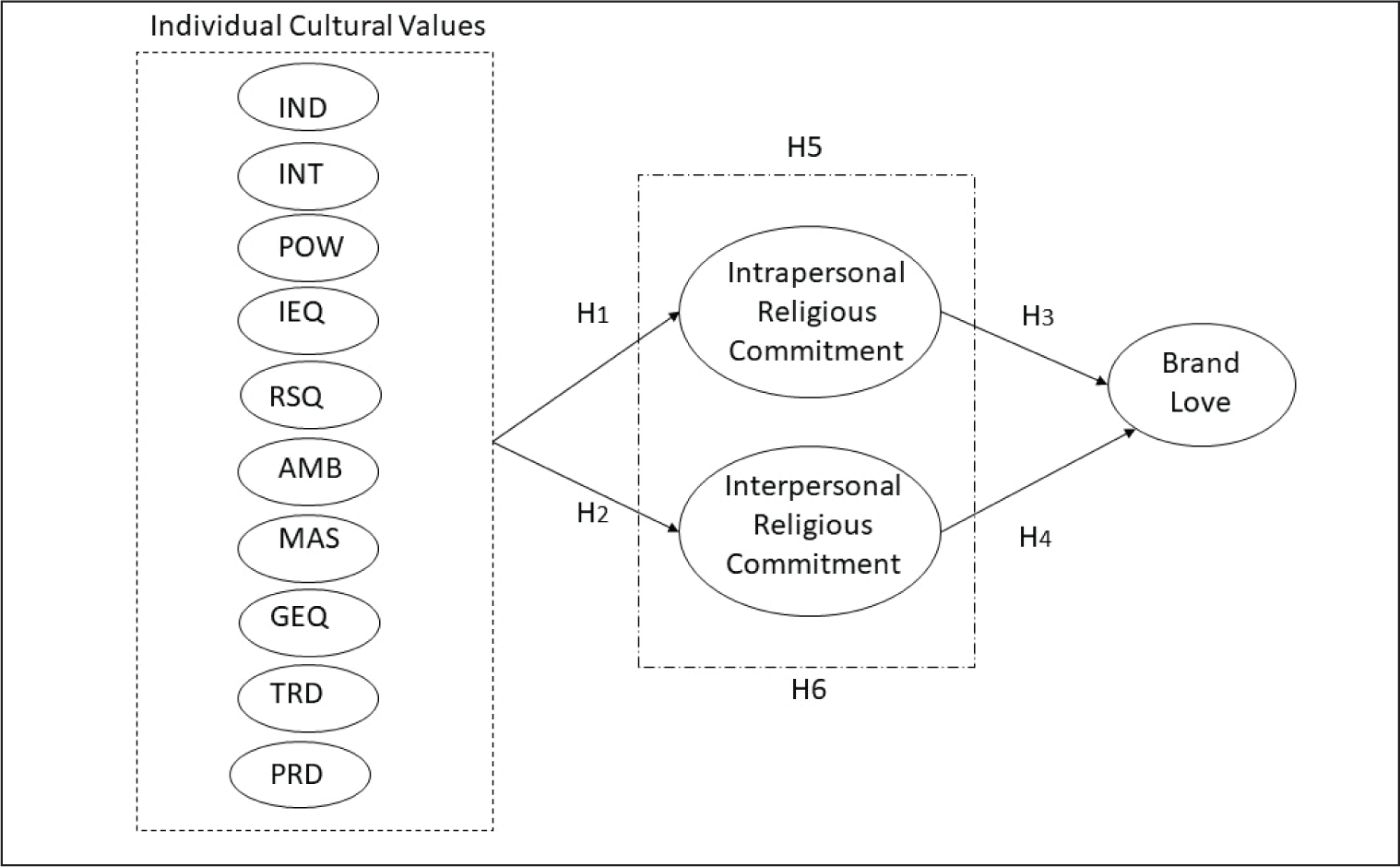
A quantitative methodology was employed in this research. A questionnaire was used to assess the relationships between ICV and BL mediated by RC. An email survey was chosen because this is the fastest and most effective method of data collection, they have a large geographic coverage and they ensure respondents’ anonymity. The study followed the two-step methodology recommended by Anderson and Gerbing (1988). In the first phase, the measurement model was developed based on the constructs proposed in the theory, and thereafter, the model was estimated to examine its causal relations to validate/reject the hypotheses. Figure 1 shows the conceptual model used to analyse simultaneously the series of dependent relationships (Hair et al., 2010).
Sample
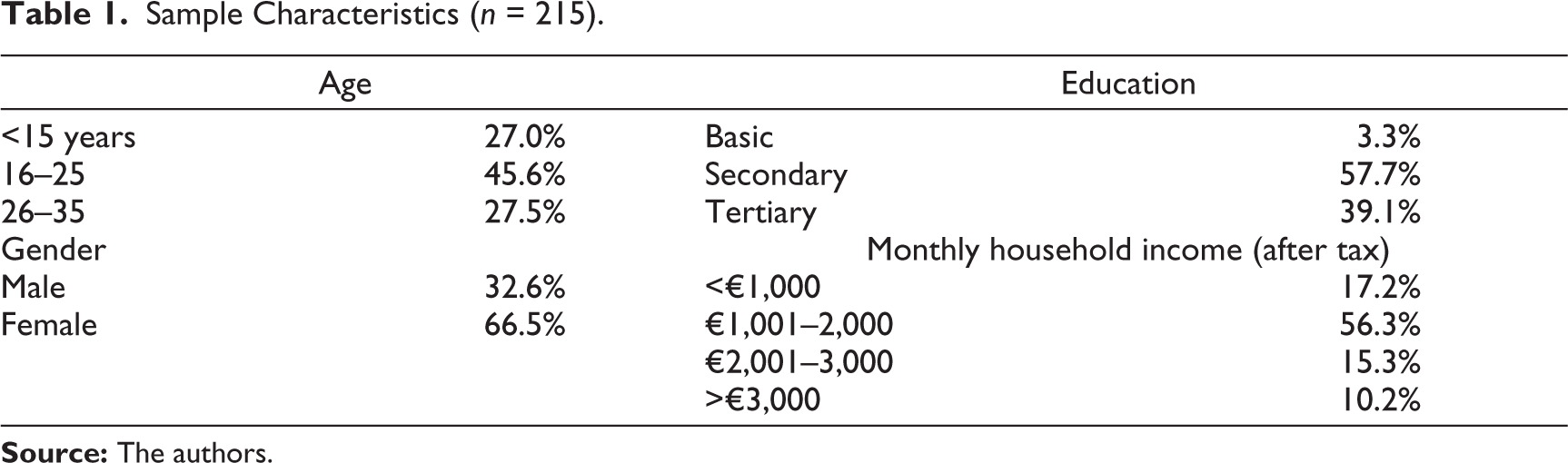
The data were collected between May and June 2018 through an online survey using convenience sampling (n = 215). In April 2018, we conducted a pre-test with 104 university students; the participants were asked to identify a brand for which they had a strong emotional attachment, from a set (Adidas, Levi’s, Nike, Abercrombie, among others). These brands were chosen because they are identified in the literature as relatively representative and transversal to several styles (Badaoui et al., 2012). The Levi’s brand was selected in the pre-test and use in this study. Table 1 shows the sample profile.
Sample Characteristics (n = 215)
Measures
The relevant constructs in the theoretical model were operationalised with measures adopted from the existing literature, as advocated by Podsakoff et al. (2003) as a procedural method to reduce common method bias. The items were measured using five-point Likert-type scales ranging from ‘strongly disagree’ to ‘strongly agree.’ We measured ICV using 30 items developed by Sharma (2010), RC using the 10-item scale proposed by Cutright (2012) and BL using the 6-item short scale developed by Bagozzi et al. (2017). Exploratory and confirmatory analyses were conducted to assess the reliability and validity of the variables.
Data Analysis and Hypotheses Testing
The dataset was first screened for missing data. We also checked the multicollinearity, linearity and normality assumptions for each variable. A Harman’s single-factor test was performed to verify the absence of common method bias (Podsakoff et al., 2003). The result indicated that 32.46% (<50% cut-off point) of the total variance was explained by a single constrained factor, which suggested that the instrument is free from significant common method bias effects. To assess multicollinearity, we ran a series of regression models on the various constructs to calculate the variance inflation factors (VIFs); the VIF values ranged from 1.174 to 2.132, which can be considered unproblematic given the cut-off value of 5.0 (Kleinbaum et al., 1988). To verify data normality, we assessed the skewness and kurtosis values for all constructs. The skewness values were within the suggested range of –2.00 to +2.00, and the kurtosis values were within the suggested range of –7.00 and +7.00 (Curran et al., 1996). The data analysis showed that the skewness and kurtosis values were within these ranges.
Thereafter, to achieve a more parsimonious understanding of the measured variables, we performed an exploratory factor analysis (EFA); this enabled us to identify the structures behind the correlations between the different factors and address the first research question. We carried out an oblique rotation on all the measured items, checked the data for cross-loading items and for communalities of less than 0.5. The results of the EFA are presented in Table 2. The Cronbach’s alpha coefficient (CB’s α) showed acceptable reliability (α = 0.780).
Initial EFA of Individual Cultural Values
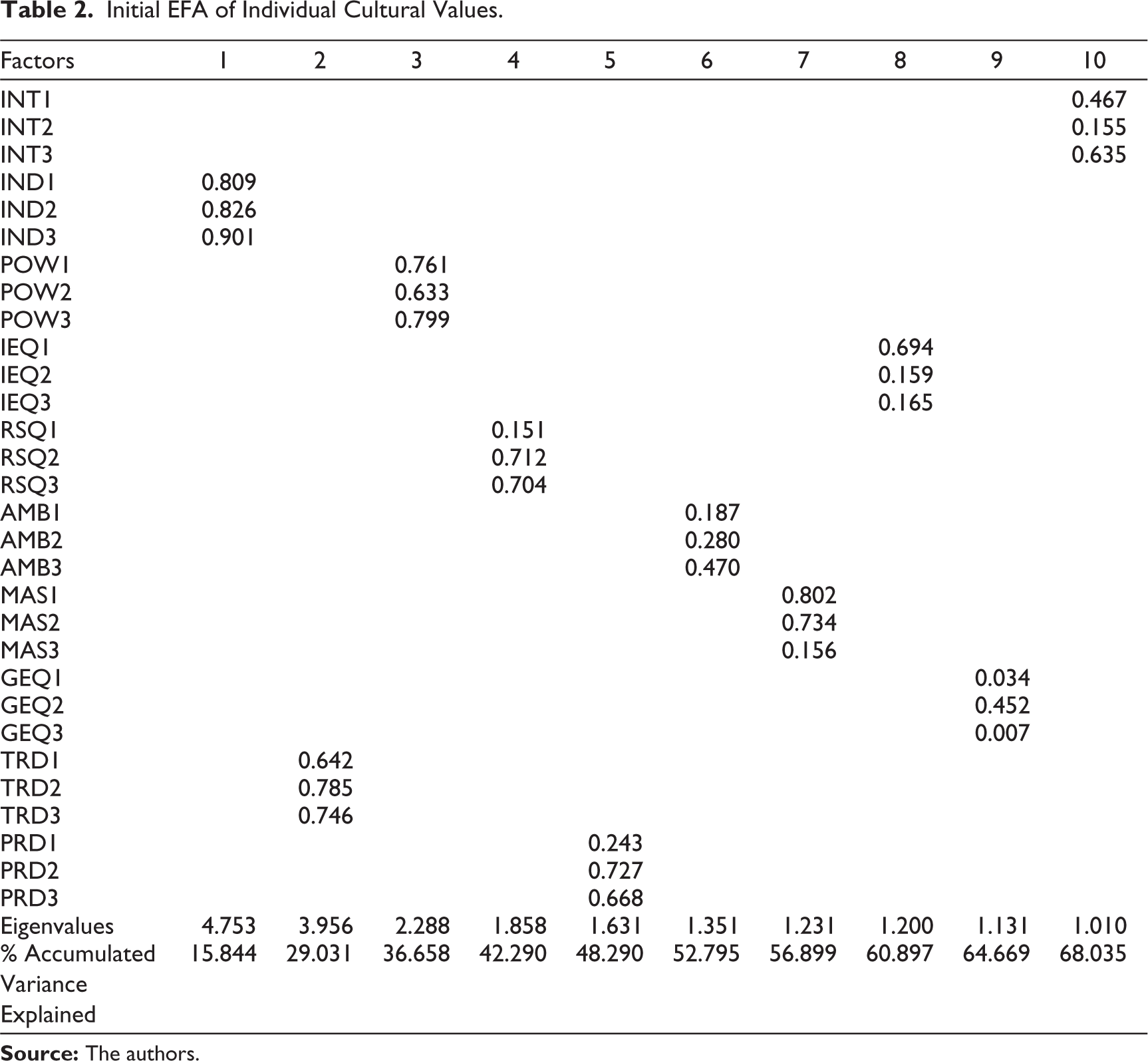
The EFA results based on the factor loadings and scree plot confirmed that 10 factors in the individual cultural values’ scale explained 68.035% of the total data variance. Three factors emerged that explained 65.868% of the variance extracted, namely, factor 1 (independence = 22.577%), factor 2 (tradition = 21.724%) and factor 3 (power = 21.568%). These are the three ICV examined in the structural model.
The RC scale was confirmed by the extraction of two factors, where intrapersonal RC explained 36.025% of the variance extracted and interpersonal RC accounted for 35.629%. The BL scale explained 67.76% of the variance extracted (see Figure 2, the conceptual model and the hypotheses testing).
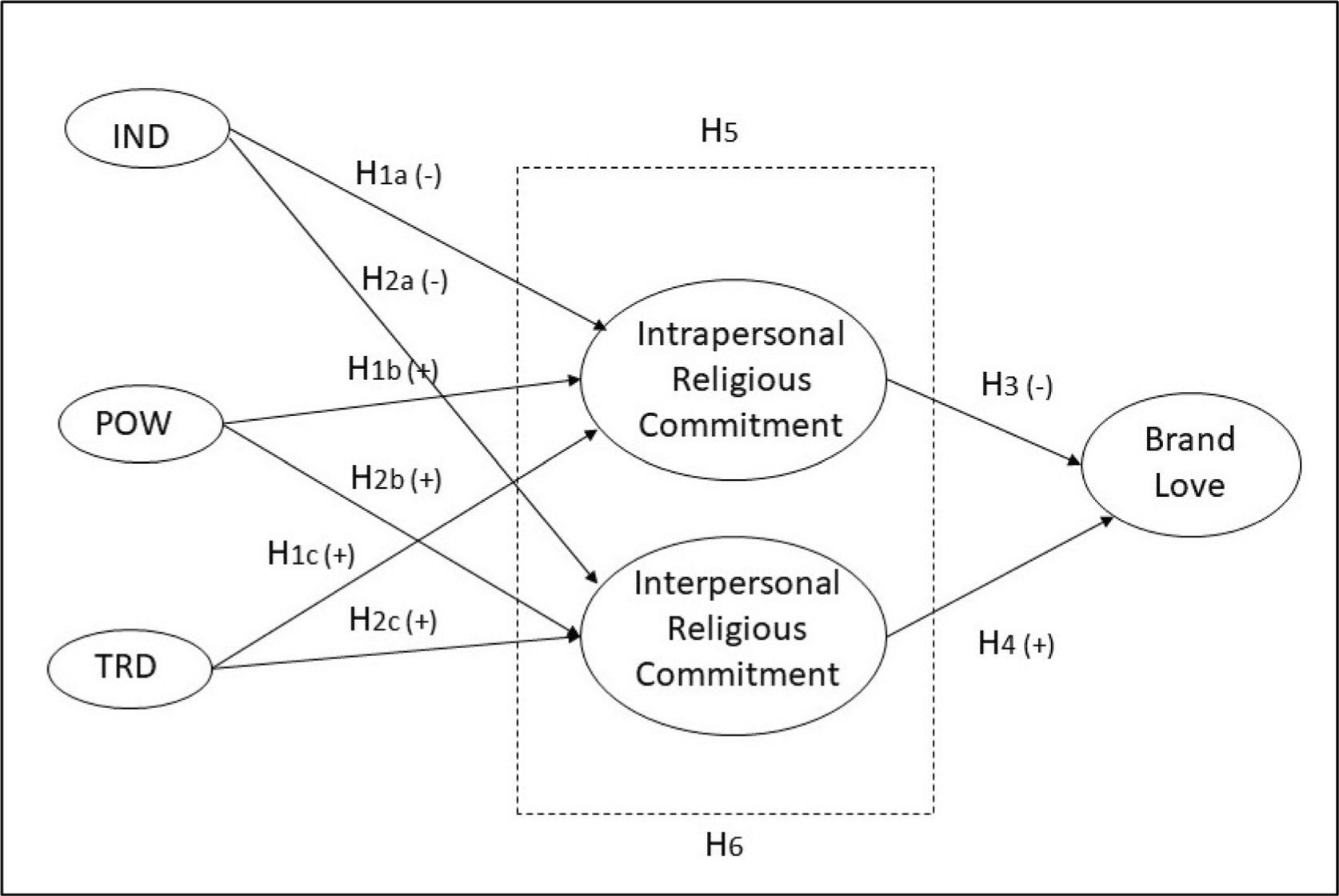
The measurement model was subjected to a confirmatory factor analysis (CFA), through the maximum likelihood estimation method, to guarantee construct reliability, validity, and the robustness of the normality conditions (Hair et al., 2010) (using AMOS 22.0 software). Appendix A shows the scale items used.
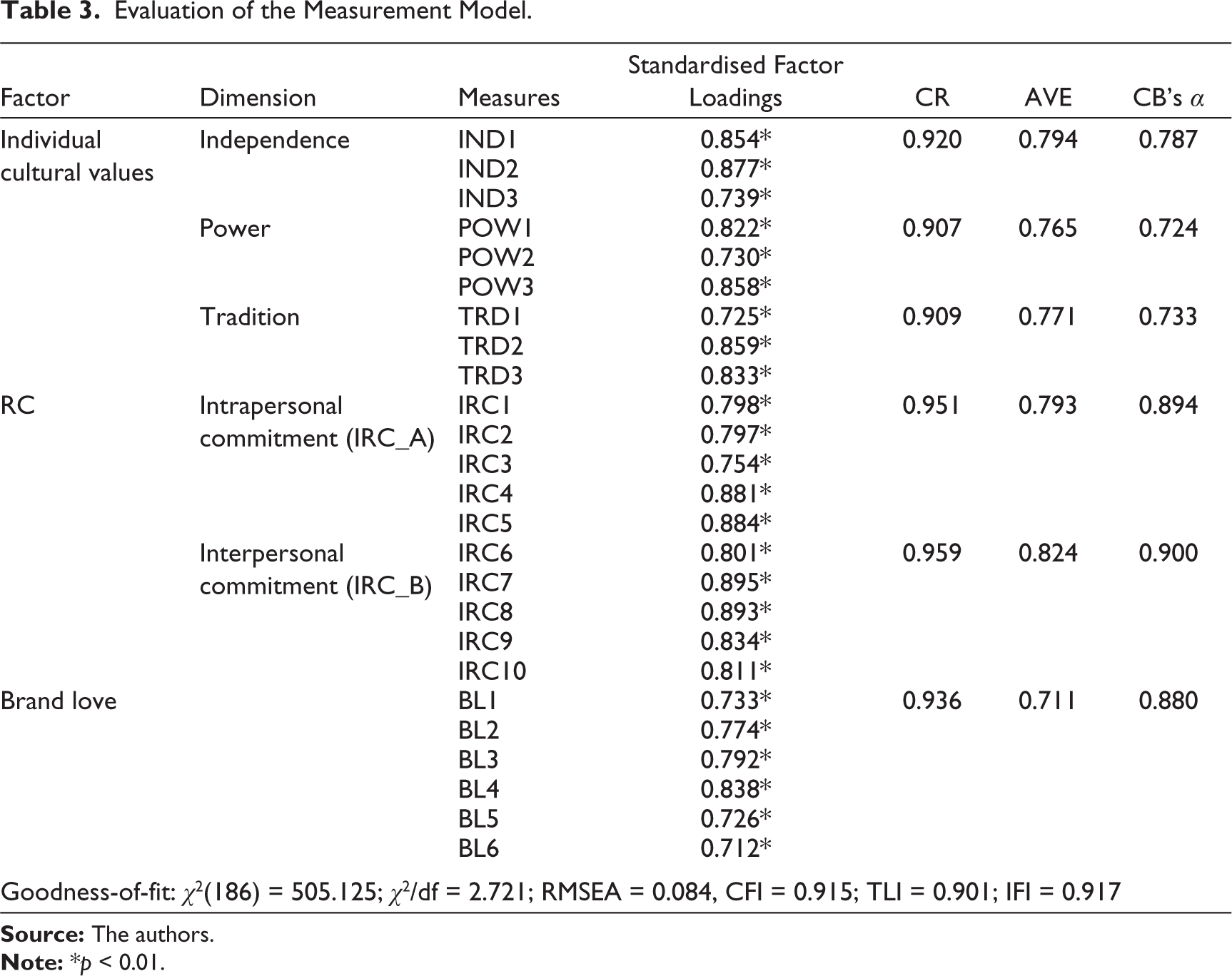
The chi-square for the model was 505.125 (df = 186, p < 0.001). Given that the chi-square statistic is sensitive to sample size, the following fit indices were also applied: comparative fit index (CFI = 0.915), incremental fit index (IFI = 0.917), the Tucker–Lewis fit index (TLI = 0.901) and the RMSEA (0.084). These showed suitable goodness-of-fit as all values were within the acceptable ranges (Hair et al., 2010): χ2/df < 3, RMSEA < 0.1 and CFI, TLI and IFI all greater than 0.9. CB’s α was used for each construct to measure reliability. Following the procedures suggested by Fornell and Larcker (1981), we also tested the convergent and discriminant validity of the dimensions. The average variance extracted (AVE) and the composite reliability (CR) values showed that there was convergent validity in all the constructs. Similarly, for all constructs, CB’s α was above 0.724, and the CR values were greater than 0.907. All standardised regression weights were significant at p < 0.01 (Table 3).
Evaluation of the Measurement Model
Discriminant validity was assessed using the criterion proposed by Fornell and Larcker (1981). The criterion was met as the AVE of each construct exceeded the square roots of the inter-construct correlations (Table 4).
Discriminant Validity Assessment
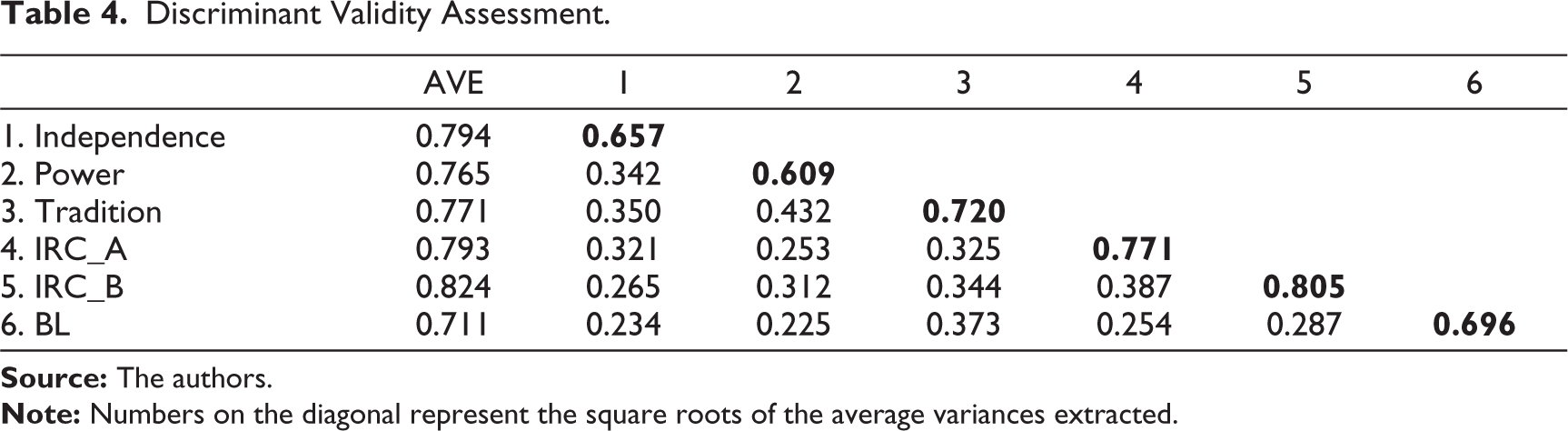
The squared correlations between constructs did not exceed the AVE in any case, indicating that the model met the criterion for discriminant validity among latent variables. Thus, we concluded that all the latent variables had convergent and discriminant validity. Structural equation modelling (SEM), using the maximum likelihood estimation and bootstrapping methods, was conducted to test the validity of the model and the hypotheses. The structural model’s psychometric values were χ2/df = 2.281; RMSEA = 0.066; CFI = 0.923; TLI = 0.909 and IFI = 0.925, which allow us to conclude that the model fit is good. Table 5 presents the results of the structural model on the study’s hypotheses, the path between each dimension of ICV and dependent variables and the results obtained.
Results of the SEM
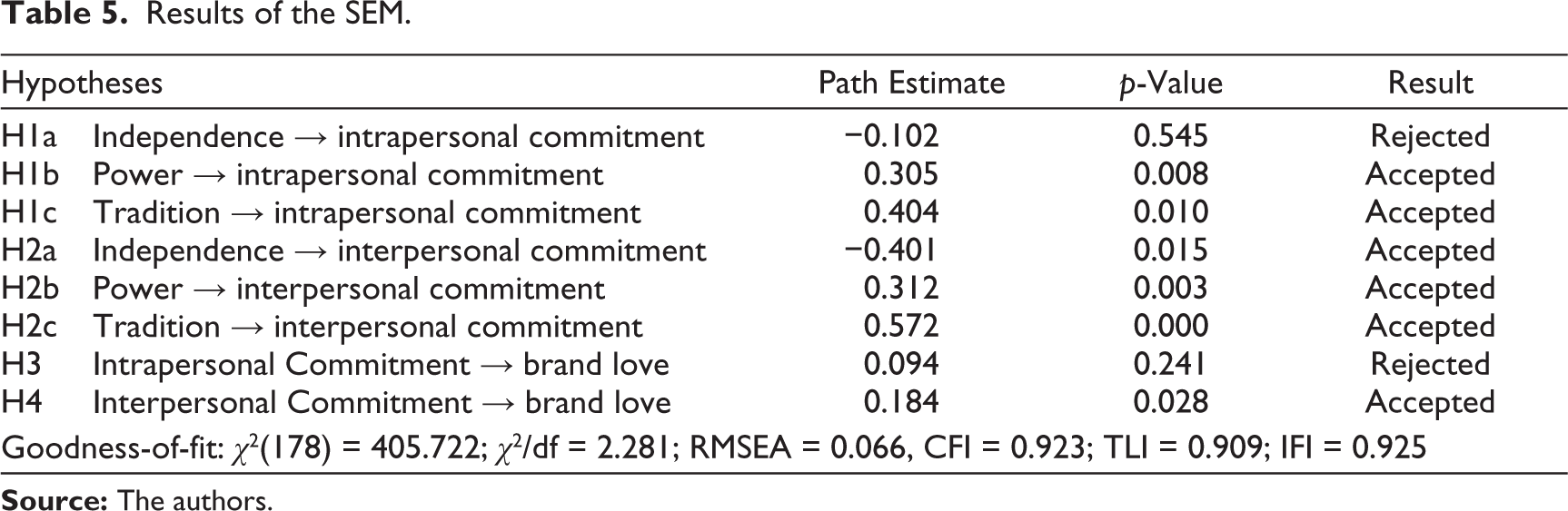
The results obtained in the estimation of the proposed conceptual model showed that only independence had no statistically significant negative effect on intrapersonal RC (β = −0.102, p = 0.545), as expected, which leads us to partially accept H1. Regarding the ICV of independence, power and tradition, the results showed that independence negatively influenced interpersonal RC (β = −0.401, p = 0.015), as expected, and power and tradition positively affected interpersonal RC (β = 0.312, p = 0.003; β = 0.572, p = 0.000, respectively), as expected, which leads us to accept H2. The results showed that intrapersonal RC did not negatively influence BL (β = 0.094, p = 0.241), as expected, which leads us to reject H3. Interpersonal RC positively influenced BL (β = 0.184, p = 0.028), confirming H4.
To investigate if intrapersonal and interpersonal RC mediate the effects between the three ICV—independence, power and tradition—and BL, a test was performed using the process suggested by Hayes (2018). We tested each interaction using the bootstrapping procedure, and performed the mediation analysis by applying Hayes’ PROCESS SPSS macro (model 4) to 5,000 bootstrapped samples. The means of each construct were calculated using the model items. In the regression, using the Hayes (2018) method, the variables were introduced separately (Table 6).
Mediation Effects of Religious Commitment
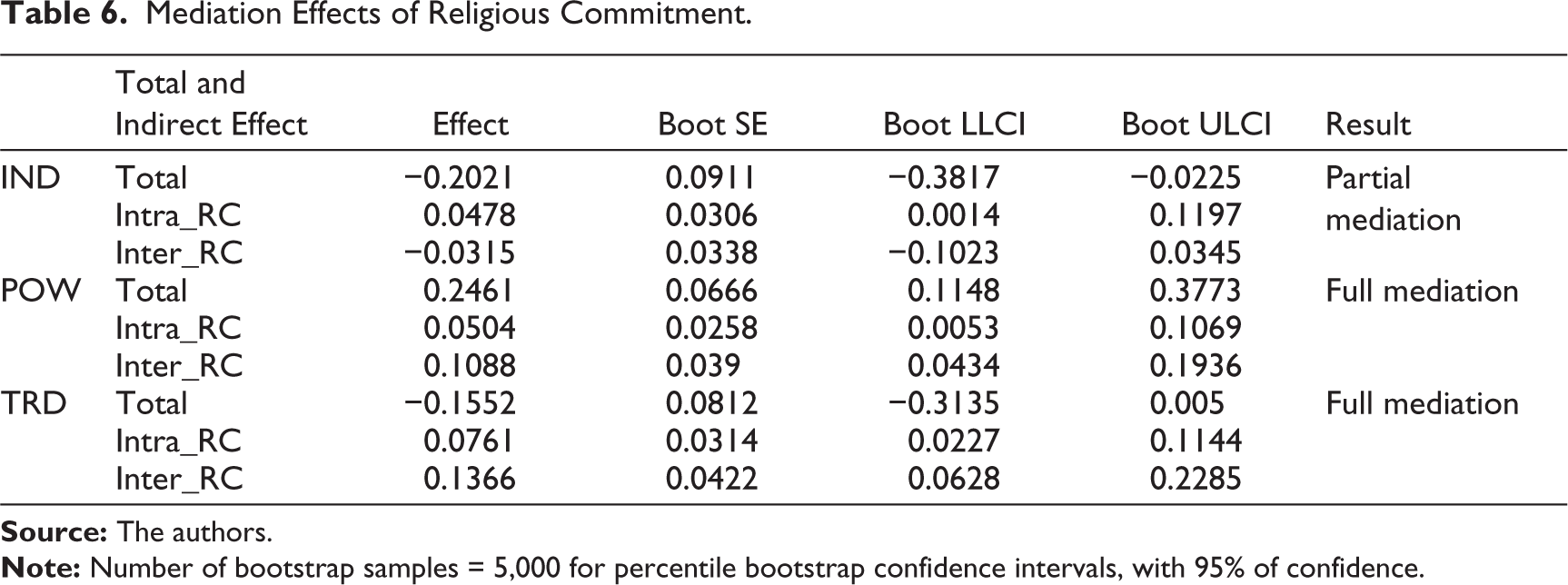
The results showed that interpersonal RC is not a mediator of the relationship between independence (individual cultural value) and BL; however, the other results supported the hypotheses that both forms of RC mediate the relationships between the ICV—independence, power, and tradition—and BL.
Discussion
Religion has always been considered to be an important cultural influence in the market that needs to be acknowledged and researched in marketing (Muhamad & Mizerski, 2010). Although religion has always been considered an important element in consumer behaviour, its influence has been perceived as a taboo topic in marketing research (Turner & Kinnally, 2010). There seems to be a lack of knowledge regarding the influence of religion on the relationships that consumers establish with brands, given that religion is a key contributor to consumers’ core values, which contribute to their consumption and voting decisions, reactions to pro-social messages and public policy, and to their donating behaviour.
Prior studies have emphasised that religion is essential for the establishment of sameness and coherence in the development of individuals’ identities (Erikson, 1968). Thus, as de Bruin-Wassinkmaat et al. (2020) suggested, RC is fundamental for the promotion of a coherent identity, a positive recognition of the self, and others, and helps people to better understand the purpose of life, a question which often arises during adolescence. Despite this post-modern subjectivism, in which the norm seems to be non-commitment and openness to everything, young people strive to identify who they are and find a purpose and meaning in their lives. Thus, commitment to a religion may contribute to the individual’s stability and promote trust in organisations, enterprises, products and brands, and act as a protective factor against identity diffusion. Given the influence of RC on the identity development of young consumers, analyses should be undertaken into how to communicate with them and how this commitment influences their brand choices.
If we examine different countries using Sharma’s (2010) values, it would seem easy to find a link with the values prevalent in dominant religions. In the Portuguese case, the predominant cultural values of the millennium generation are independence, power and tradition. Given that IND is defined as the personal cultural orientation associated with acting independently, it was expected that its influence on RC would be negative, both in the intrapersonal and interpersonal aspects. The results showed that, in fact, the influence of IND on RC is negative. The cultural values POW and TRD were expected to have a positive influence on RC, given that both are linked to acceptance and respect for traditional values. Ilhéu and Almeida (2009) also identified TRD as one of the traits best able to describe the Portuguese population. This outcome is consistent with the findings of Burcio et al. (2014), who identified religion and tradition as being the country-based personality traits most associated with Brazilians. As to the individual cultural value POW, it should be noted that Portugal has high power distance, which means that the Portuguese accept that some people hold powerful positions in society (Hofstede et al., 2010).
On the other hand, because intrapersonal RC is more related to the cognitive level at which individuals adhere to religion, it was expected that this would lead to less interest being shown in brands, which would have a negative effect on BL. The results did not support this hypothesis. This is, probably, because the millennium generation is extremely tolerant and open-minded towards different lifestyles (Noble et al., 2009).
Given that interpersonal RC has been shown to be more behaviour oriented, it was expected that it would positively influence individuals’ emotional relationships with brands; this was confirmed by the results. Thus, in the context of Portuguese millennials, it is possible to affirm that RC mediates the relationship between some ICV and BL.
Previous research has shown that RC is a significant predictor of consumer shopping behaviour (Swimberghe et al., 2009), and this study extends this knowledge by identifying dimensions of ICV that influence RC and BL. The results of the mediation effects of RC suggest that company managers should analyse how they communicate with millennium consumers. For example, do they respect millennials’ religious beliefs in their marketing actions or, on the other hand, support causes and have company policies which are contrary to their beliefs? Overlooking these aspects could lose businesses the commitment of young adults to their brands, and compromise their recommendation behaviour to others, over time.
Conclusions, Implications and Limitations
No previous study has investigated this topic, and the results contribute to the existing literature (Ahuvia, 2015) by proposing a model that further specifies the effects of the RC construct and its relationship with ICV and BL.
Given the positive relationship shown between interpersonal RC and BL, which focuses on individuals’ behavioural components, brands should embrace a multicultural perspective and communicate specific messages that take into account their consumers’ varied spiritual backgrounds. On the other hand, the absence of a significant relationship between intrapersonal RC and BL might be explained by intrapersonal RC’s cognitive and introspective nature (Worthington et al., 2003), and the fact that Generation Y is more aware, and able ‘to see through advertising tactics’ (Noble et al., 2009, p. 618), while paying more attention to finding themselves.
This study offers some important managerial and practical contributions for managing ICV, RC and brand relationships in the context of the millennial generation. As markets become more competitive and more innovative, managers may see the potential value of consumer RC as a market segmentation tool through which to promote expressive relationships with their customers. Moreover, given the value of Generation Y to marketers, these results might provide a useful guide for marketing decision-making, on the basis that they specifically assess of ICV, and the role played by religion, as predictors of the level of involvement and BL of young adults. Another practical implication for advertising managers is that they should take account of the ICV and the level of RC of these millennials when they are developing their advertising campaigns, and choosing the best channels through which to communicate in the marketplace.
Notwithstanding the contributions of this study, we recognise that it has some limitations that provide avenues for future research. In terms of limitations, we used convenience sampling. Ashraf and Merunka (2017, p. 306) argued that students represent a ‘user friendly convenience population’ and, although the results should be analysed with caution, to reject this important asset might compromise scientific development. Although the brand was not chosen randomly, it is limited to Levi’s. Future research should extend the empirical study to other brands and sectors to see if different results are found.
Moreover, a natural progression of this work would be to analyse the influence of ICV on intrapersonal and interpersonal RC across different generations in different countries. The findings of this study should help company managers better understand and communicate with their public through specific, targeted marketing messages.
Footnotes
Declaration of Conflicting Interests
The authors declared no potential conflicts of interest with respect to the research, authorship and/or publication of this article.
Funding
This work is supported by national funding's of FCT - Fundação para a Ciência e Tecnologia, I.P., in the project UIDB/04005/2020.