




Abstract
There is limited research on how sports fashion brands should develop their strategies to enhance customers’ virtual level of connectedness with companies, taking advantage of the recent expressive growth in social network users. Thus, a new structural model is proposed to analyse the drivers and outcomes of cognitive online brand identification (COBI). This study intends to explore in the sports fashion context (a) the effect of brand prestige and lifestyle congruency on cognitive brand identification, (b) the direct effect of cognitive brand identification on brand advocacy and (c) the indirect effect through brand love. Data were collected using a prolific panel from the United Kingdom and considering individuals that use at least one social media platform to search for and purchase sports fashion clothes (n = 304). The findings indicate that online brand prestige and lifestyle congruency are related to COBI and its outcomes. Although the direct relationship between online brand identification and brand advocacy is not significant, brand love mediates this relationship. Thus, a sports fashion customer is able to forgive any mistake and recommend the sports brand to others, and love towards the brand should be part of the process.
Introduction
The consumption of sportswear is increasing, and according to Statista (2021), the market share of this fashion segment is mainly focused on North America, with Europe being the second largest consumer. The United Kingdom was one of the top 11 European countries with the highest expenditure on apparel and the 7th country in the world in 2020 with the highest social penetration rate (Statista, 2021). Sports apparel is mostly used in amateur sports and professional athletics. Although there are countless sportswear retailers across the globe, the biggest companies control most of the market and some of the most valuable brands are Nike, Gucci and Adidas, with Nike and Adidas having the highest sales revenue and Nike leading with over 50% of the market share. There has been steady growth of this category in the last decade helped by the internet, and after 2020 with the appearance of COVID-19, this sector registered the strongest online traffic performance after grocery retail.
At a time of great consumer scepticism towards brands, along with the depreciating value of traditional media marketing, shifting to more virtual and two-way communication, questions concerning consumer-brand identification have become even more relevant for brand management (Bilro et al., 2018). Concerning its relevance, academics argue that the consumer identification process exerts a great influence on individual consumer behaviour, and can mould their buying decisions, brand preferences, loyalty, commitment, satisfaction, and repurchase intention, and can encourage positive word-of-mouth (WOM) (Bilro et al., 2018). Thus, to generate a valuable and sustainable relationship with a particular brand that can evoke strong emotions such as arousal or passion, consumers have to experience a previous identity connection with that brand. This connection or identification that can occur with a product, company, or with its community members, greatly influences the brand perception and emotional commitment of other members to the brand (Palazon et al., 2018).
As a valuable relationship-building and extremely globalised tool, social media emerges as a powerful mechanism to promote and encourage this identification phenomenon. Allied with this, in a digital environment, individuals are naturally prone to engage in relationships and interact with others with identical interests. Hence, for a firm to be able to strategically build this online identification process, it must understand the factors that lead consumers to a state of connectedness and identification, as well as the potential outcomes and benefits that might arise for the firm.
Previous studies in sports fashion point out the relationship between brand identification and WOM (Cayolla & Loureiro, 2021) and loyalty (Stroebel et al., 2021), but there is a lack of studies analysing the relationship between brand identification and brand advocacy. Although a brand’s prestige can lead a consumer to purchase its products, the way consumers perceive their lives and the congruency between lifestyle and brand identity can be factors that contribute to explaining consumer online identification (Chetioui et al., 2020). While identifying with a brand is relevant to connect with it, it may not be enough to continue the relationship so that consumers become brand advocates. Thus, brand love can be the key to reinforcing the relationship and making consumers more willing to support, forgive mistakes and recommend a brand.
Brand love can develop the relationship between the brand and the fashion sportswear consumer. This love relationship is more than a feeling, being a ‘mental prototype’ (Batra et al., 2012, p. 2) as the consumer experience goes beyond brand attachment (Thomson et al., 2005), including different cognitions, emotions and behaviours. Consumers who love a brand are more likely to maintain their engagement over time (Ahuvia, 2005).
In the sports fashion context, this study intends to explore (a) the effect of brand prestige and lifestyle congruency on cognitive brand identification, (b) the direct effect of cognitive brand identification on brand advocacy and (c) the indirect effect through brand love. This article deepens the knowledge of brand love and brand advocacy in the context of sports brands. A model is proposed, the framework is analysed and the theoretical and managerial implications are discussed.
This study is expected to contribute to the marketing literature by uncovering the mechanism by which fashion sportswear consumers tend to advocate a brand. More specifically, how identification with a brand is a function of prestige and lifestyle, and at the same time, trace the love relationship leading a consumer to advocate in its favour.
Theoretical Background and Hypothesis Development
Social Identity Theory
Having effective communication can motivate customers’ identification with corporate brands (Ma et al., 2021). This type of identification that a customer can develop with a company can be examined through Social Identity Theory (SIT), first introduced by Tajfel (1978). This perspective proposes that all individuals are motivated to achieve and sustain a positive self-concept. To do so, people assemble aspects of their personality by classifying themselves according to a social category (brand) or a social group (other users of the same brand), wherein they sustain a personal identity—distinctive individual characteristics (e.g., achievements and qualities)—and a social identity—salient group characteristics that are recognised as being part of the self (Wilk et al., 2018). The theory suggests that people who consider themselves part of a specific group frequently recognise that the group’s performance influences their personal self-esteem.
Ma et al. (2021) argue that a firm can modify consumers’ behaviour by transforming and shaping their self-concept towards that brand. When this brand identification happens, consumers tend to feel like a member of the social group, triggering behaviours of defence and advocacy towards that specific brand (An et al., 2019). Such behaviours might include promoting the brand, recommending it to others on different social media platforms and spreading positive electronic WOM (Langano et al., 2019). Hence, understanding what drives online brand identification (OBI) contributes to having individuals more involved emotionally with a certain brand.
Cognitive Online Brand Identification (COBI)
Brand identification is broadly regarded as ‘a unique set of brand associations that the brand strategist aspires to create or maintain’ (Aaker, 1996), being the way a company aims to identify or position itself or its product (Kotler & Keller, 1998). Brand identification is an internal construct that emanates unilaterally from the organisation (Aaker, 1996). Despite being characterised from the company’s internal perspective, it allows the consumer to differentiate the brand from competitors, based on external characteristics, such as colour, design, logo, symbols, or personality (Bilro et al., 2018). So, consumers appropriate the meaning and the identity of brands as they build their self-identities (Escadas & Bettman, 2005).
The term customer–brand identification (CBI) can be defined as the consumer’s psychological state of perceiving, feeling, and valuing belongingness with a brand (So et al., 2018, p. 2). It can be described as perception of the degree to which one defines oneself by the same attributes held by the brand, which is a true and powerful manifestation of a person’s search for identity and fulfilling value in the marketplace of brands (Stokburger-Sauer et al., 2012). For Kucharska (2017, p. 17), online brand identification differs from offline. This means that the act of identifying the brand on social networks does not require great expenditure to make it visible, and only requires easy access to a page with a ‘click’. As a multidimensional construct, CBI suggests that consumers can develop a strong connection with a brand based on their level of identification with that specific brand (So et al., 2018), experiencing the companies’ achievements and failures as their own (Mael & Ashforth, 1992). Coelho et al. (2018) claim that CBI has an essential role in converting consumer–brand community interactions into consumer–brand relationships.
COBI, however, expresses what a brand provides and stands for (Keller, 2007) and it satisfies far more of the consumer’s symbolic needs than their functional needs (So et al., 2018). Rather et al. (2018) mention that functionality is not an isolated requirement at the moment of purchasing a good, as the meaning a brand adds to customers’ lives exerts great influence throughout their decisional path. COBI is based on a consumer decision whether or not to define their ‘self’ through incorporating a brand into their ‘self-concept’. It is perceived emotion of union and connection with a corporate brand as a commonly shared symbol of a group (Tuškej & Podnar, 2018). Hence, COBI is established in direct interaction between the consumer and the firm, bearing in mind their own projected identity (Stokburger-Sauer et al., 2012). Given that consumers tend to link their purchasing objects and respective brands to their own identity, this indicates that brands can actually represent a considerable part of consumers’ self (Tuškej & Podnar, 2018).
Brand identification produces a mutual benefit for both parties. While customers use the brand products and their symbolic properties to communicate part of their identities, the organisation profits greatly from the exposure, recommendation and customers’ willingness to pay a premium price. Individuals’ consumption experience is highly regarded by their close reference groups (Josiassen & Assaf, 2013). Thereby, consumers are constantly trying to upgrade or firmly stick to their social self-esteem based on the image of their own social identity modelled by their consumption habits (So et al., 2018).
COBI can also be grouped into a cognitive category, including three distinct factors: (a) the extent to which customers have a similar personality to a certain brand (brand-self similarity), (b) whether or not customers perceive a brand to be unique or distinctive (brand distinctiveness) and (c) if the brand is considered prestigious or not (brand prestige) (e.g., Mael & Ashforth, 1992).
Drivers of Cognitive Online Brand Identification
Online Brand Prestige
Brand prestige reflects a product’s high position, unique performance, assured quality, and as a consequence, higher price. Prestige represents the consumer’s rational or emotional perception of a brand and it differs from consumer to consumer depending on their social and economic condition (Mansoor & Paul, 2022).
Vigneron and Johnson (1999) claim that customers’ assessment of brand prestige can be examined through five factors, depending on social and individual criteria. Considering the first one, three elements were proven to affect people’s perception of prestige based on a social impact, which are: (a) the individual’s wealth and social status, (b) brand or product rareness and (c) social perceived value based on company membership in certain social groups. Concerning the individual impact, this construct might vary depending on the consumer’s (d) perceived enjoyment value regarding a psychological and emotional state and (d) the perceived brand quality value.
Aligned with these five factors is the nature of the human being who manifests a common need for self-enhancement and to see themselves permanently in a positive light (Marbach et al., 2019). This aspiration is partially met through customers’ identification with prestigious social corporations, inciting a clear relationship between brand prestige and CBI (Stokburger-Sauer et al., 2012). Similarly, this behaviour is concomitant with the concept of the extended self in which the individual incorporates specific products into their sense of self that will positively affect the owner (Mirbabaie et al., 2021). Thus, perception of a brand’s prestige is expected to influence cognitive identification with that brand (Tuškej & Podnar, 2018). Founded on SIT, we argue that people aspire to maintain a positive self-image and thus strive to link their identities with social categories that can satisfy this need. Therefore, it is hypothesised that brand prestige is a driver of CBI (see Figure 1).
Proposed Model.
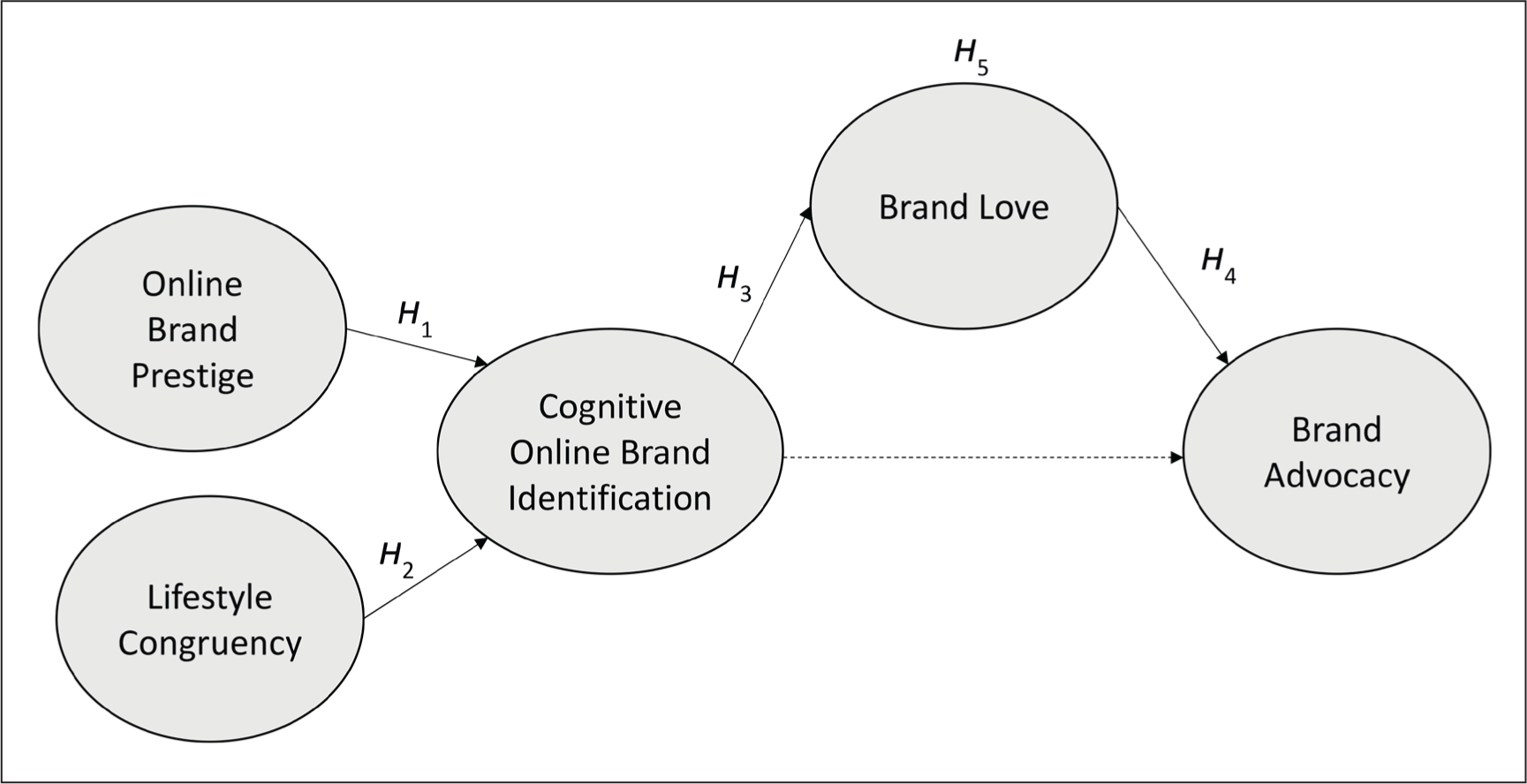
H1: Online brand prestige is positively associated with consumers’ COBI.
Lifestyle Congruency
The concept of lifestyle concerns beliefs, attitudes and aspirations towards life, representing consumers’ psychological preferences and an indicator of their behaviour (Solomon, 2015). The most important information in predicting customers’ purchasing behaviour is not their demographic characteristics, but the way of measuring their lifestyle. Lifestyle expresses a consumption pattern that dictates the amount of time and money a consumer spends, revealing their identity as well as their everyday needs and wants. In this perspective, brands work as a mechanism that allows consumers to pursue a certain desired lifestyle, based on their activities, interests and opinions (Akdevelloglu et al., 2021). According to this view, lifestyle congruency (LC) is defined as the extent to which the brand supports its consumers’ way of living and helps them express their values and customs in their social environment.
A brand can reflect status, improve the consumer’s image and project their lifestyle in such a way that ownership or use of the brand exerts great value over the individual. According to Alnawas and Altarifi (2016), consumers develop emotions such as loyalty to brands that convey a similar behaviour and lifestyle. Indeed, the closer the overlapping of the brand image with the consumer’s personal lifestyle, the greater their identification with a product or brand. This can be explained by the consumer’s tendency to identify with and develop personal attachments towards a company that reflects their desired lifestyle. Büyükdağ and Kitapci (2021) mention that brands that follow a self-congruity principle—focusing on a match between consumers’ self-concept and the user image of a given product or brand—manage to affect the consumers’ self-image and behaviour positively, as well as their level of identification, connection and self-expression.
In the light of SIT, congruence between the self-concept and a desired identity standard is a personally relevant goal. Inherently, individuals desire to achieve alignment with identities that they deem important (Alnawas & Altarifi, 2016). Hence, we argue that brand lifestyle congruency exerts an influence on consumers’ identification with a company and the following hypothesis will be examined empirically:
H2: Lifestyle congruency positively influences consumers’ COBI.
Outcomes of Cognitive Online Brand Identification
Brand Love
The construct of brand love can be defined as the degree of passionate and emotional attachment that a consumer nurtures for a brand, which is dependent on the relationship ties not only with the brand itself (self-brand connection) but also with other brand consumers (sense of brand community) (Palazon et al., 2018).
Batra et al. (2012) claim that the term ‘passion’ refers to a strong desire for a particular brand, regularly representing higher arousal emotions. These researchers defend that individuals can develop feelings of brand love according to distinct brand/product attributes such as high quality, intrinsic rewards, self-identity, emotional bonding, a sense of natural fit, positive affect, or through recurrent use and thinking about the brand. Brand love helps brands to predict more effectively key variables such as repurchase intentions, positive WOM and resistance to negative information, increases consumers’ willingness to pay a premium price, and facilitates forgiveness for brand failures (Thomson et al., 2005).
For Alnawas and Altarifi (2016, p. 7), the more a brand develops strategies to help customers relate their identity with the brand, the greater the passion and affection towards that brand will be, since they will experience positive emotions from satisfaction at the lower-intensity end to joy and pride at the higher-intensity end of positive emotions. On a social platform (liking, commenting, sharing), users become more active when they recognise high levels of entertainment and when they get a great experience from it, resulting in a favourable attitude towards the corporation. Ultimately, this can be expressed through a strong emotion—Brand Love (Palazon et al., 2018).
Consumers can love the brand not only for reasons related to self-expression, self-image, or self-esteem, but also for social identity motives. Social identity represents a significant basis for the development of consumer–brand–affective relationships, particularly in online network-based communities, where participants can identify themselves as members of the community (Fujita et al., 2018). Social identity represents an important pillar for the development of effective consumer–brand relationships, particularly in network-based online communities. Social identity is relevant when it leads to consistent cognitive attitudes and behaviours. Even specific aspects of a social identity can (temporarily) influence consumers to develop positive brand preferences and attitudes.
According to David (2019), it is through brand identification that a person can be ready and willing to be affiliated or associated with a brand. It enables a person to develop very strong emotional links that prompt brand love. Thus, we argue that there is a positive association between consumers’ online identification and brand love, which can be hypothesised as follows:
H3: COBI is positively associated with brand love.
Brand Advocacy
Brand Advocacy emerges in the literature as the penultimate stage of the customer engagement cycle in converting customers into fans (Wilk et al., 2018). Brand advocacy can be perceived as the consumer’s willingness to try new products or services, recommend the company to others, and particularly, the willingness to forgive any mistake made by the brand (Bilro et al., 2018). It has also an analogous meaning as positive WOM or recommendations from highly involved consumers (Wilk et al., 2018).
Advocacy occurs when delighted consumers establish interaction with others through their social networks to broadcast their positive experience, saying positive things to endorse the brand (Stokburger-Sauer et al., 2012).
Customers who proactively recommend the brand are referred to as advocates, customer champions and WOM evangelists (Becerra & Bordrinarayanan, 2013). To benefit from this behaviour, managers need to focus their marketing efforts on developing a relationship with their audience, becoming advocates of their needs and giving special importance to opinion leaders to activate them as future promoters of the brand (Wilk et al., 2018).
Consumers’ online opinions frequently predict their purchase attitudes (Cai & Qu, 2018). Product reviews and recommendations posted by users on social media are a key factor in incentivising consumers to proceed with their purchasing decision, since this exerts an influence on the decision-making of their friends or other potential consumers who might see the content shared. Therefore, brand advocacy emerges as the strongest force affecting the consumption decision. It is also recognised as the most influential source of information for being perceived as more trustworthy, honest and less biased than what is obtained on brands’ websites or advertisements.
Concerning this meaningful interaction, some researchers argue that one of the possible antecedents of brand advocacy can be consumers’ passion for a certain company. On social media, if a brand can engage its audience efficiently and show it cares for them, this is likely to reinforce customers’ perceptions of reciprocation, leading to brand love or evangelical behaviours (Junaid et al., 2020). When a brand love connection occurs, brands become an extension of their consumers. If consumers feel love for a particular brand, they will repurchase that brand over the years, speak positively about it and defend the brand in any circumstance. Consumers who consider themselves to be brand advocates generally love the brand and are engaged with it, recommending it to their friends and acquaintances, and are more likely to forgive or accept any wrongdoing by that brand (Bilro et al., 2018).
Brand advocacy is rooted in SIT, where individuals perceive themselves to be psychologically intertwined with a social group (a brand), and strong identification fosters actions and behaviours that support the group’s interests (Wilk et al., 2018). Thus, in light of SIT, if advocates are able to forgive the brand, it means there is a strong relationship between brand love and brand advocacy. Given these insights, it is possible to propose the following hypothesis:
H4: Brand love is positively associated with brand advocacy.
Firms develop their brand’s identity—congruent with their values and relevant to consumers—as a way to identify and differentiate themselves (Alvarado-Karste & Guzmán, 2020). The process whereby an online consumer identifies with a brand is the core to being competitive (Liao et al., 2021). One way to build customer loyalty to brands is to develop an appropriate brand identification, through which consumers can express themselves and differentiate themselves from competing brands. Brand advocacy, in turn, is a response to brand love from loyal customers who have grown emotionally attached to a specific brand. Advocacy can be achieved in many ways, such as repurchasing or freely recommending products to others. These actions not only add value to the brand but also increase its overall trustworthiness, as the public will witness the amount of love and support a group of people have for a brand without asking for anything in return. Advocacy is the ultimate test of a customer’s willingness to promote service to others including defending the service against detractors.
According to Stokburger-Sauer et al. (2012), consumers become ‘brand advocates’ when they are committed to, emotionally intertwined and psychologically unified with the brand. In the light of social identity, and considering the three components—cognitive (identification), affective (affective commitment) and evaluative (Gumparthi & Patra, 2020)—previous studies (Alnawas & Altarifi, 2016; Aro et al., 2018) found that brand identification and brand love have a relevant role in predicting brand acceptance, brand loyalty, or engagement in positive WOM and resistance to negative information (Batra et al., 2012). The strong ties in the consumer–brand relationship are expected to extend identification with the brand and lead to advocacy in its favour in good or bad times.
Therefore, we expect sports fashion consumers to advocate in favour of a brand when they identify with the brand and the relationship with it is so intense that they declare love. Based on the above, we propose the following hypothesis:
H5: COBI causes brand advocacy via brand love.
Methodology
Sampling Procedure and Data Collection
The data generated to address the aims of the current study and analyse the proposed model were collected through a Prolific panel from the United Kingdom (Peer et al., 2021). Data collection took place in April 2022. In order to verify the understandability and clarity of concepts or identify any language errors, the questionnaire was only released after carrying out a pilot test with a total of 10 participants. From the pilot test, only a few corrections were made to improve understanding. The target population of this study was individuals 18 years old or over who use at least one social media platform to search for and purchase sports fashion clothes. Of 412 responses received, only 304 were considered complete and valid, after excluding responses with missing values, inconsistent responses, or extreme multivariate outliers.
Following Hair et al. (2022), the minimum sample size for an R2 value of 0.10 in any of the endogenous constructs in the structural model for a significant level of 5% is 110, with 2 as the maximum number of arrows pointing to the construct. Thus, our sample is suitable for the proposed model. After collection, the data were transferred to SmartPLS 3.0 software to be analysed.
Measures
All the scales used to measure the five constructs under analysis were based on previous studies. Online brand prestige (OBP) was adapted from Tuškej and Podnar (2018), Lifestyle Congruency (LC) from Alnawas and Altarifi (2016), and COBI from Mael and Ashforth (1992). Brand Love (BL) was based on Batra et al. (2012) and Brand Advocacy (BA) by Bilro et al. (2018). A 7-point Likert-type scale from 1 (completely disagree) to 7 (completely agree) was used to measure the items.
The questionnaire was prepared to minimise recall and common method bias. Therefore, attention (e.g., what is the colour of the ocean? Please answer yellow for this question) and commitment questions (e.g., please read the questions carefully and answer conscientiously) and memory aids (e.g., asking to think about the sportswear brand they usually buy) were employed to assure the quality of the data.
Profile of Participants
The sample is composed of 304 individuals, balanced in terms of gender (58.2% female) and aged between 18 and 34, corresponding to a total of 266 participants (87.5%). It is composed mainly of highly educated people, with 157 individuals (50.3%) having a bachelor’s degree, followed by 74 participants (24.3%) with a master’s degree. The sports fashion brands with which respondents felt most identified are first Nike (49%), followed by Adidas, with a brand identification share of 42%.
Results
Measurement Model
Table 1 shows the psychometric properties of each construct. Every item with a loading lower than 0.70 was previously eliminated (see the items assuming a* on the loading column) and therefore the model was recalculated to improve the final path coefficients. Additionally, the measures demonstrate convergent validity since the average variance extracted (AVE) of all variables is above 0.50, which indicates that the constructs include more than 50% (in this case, more than 59.5%) of the indicators’ variance. Thus, variance convergent criteria can be validated.
Psychometric Properties of the Measurement Items.
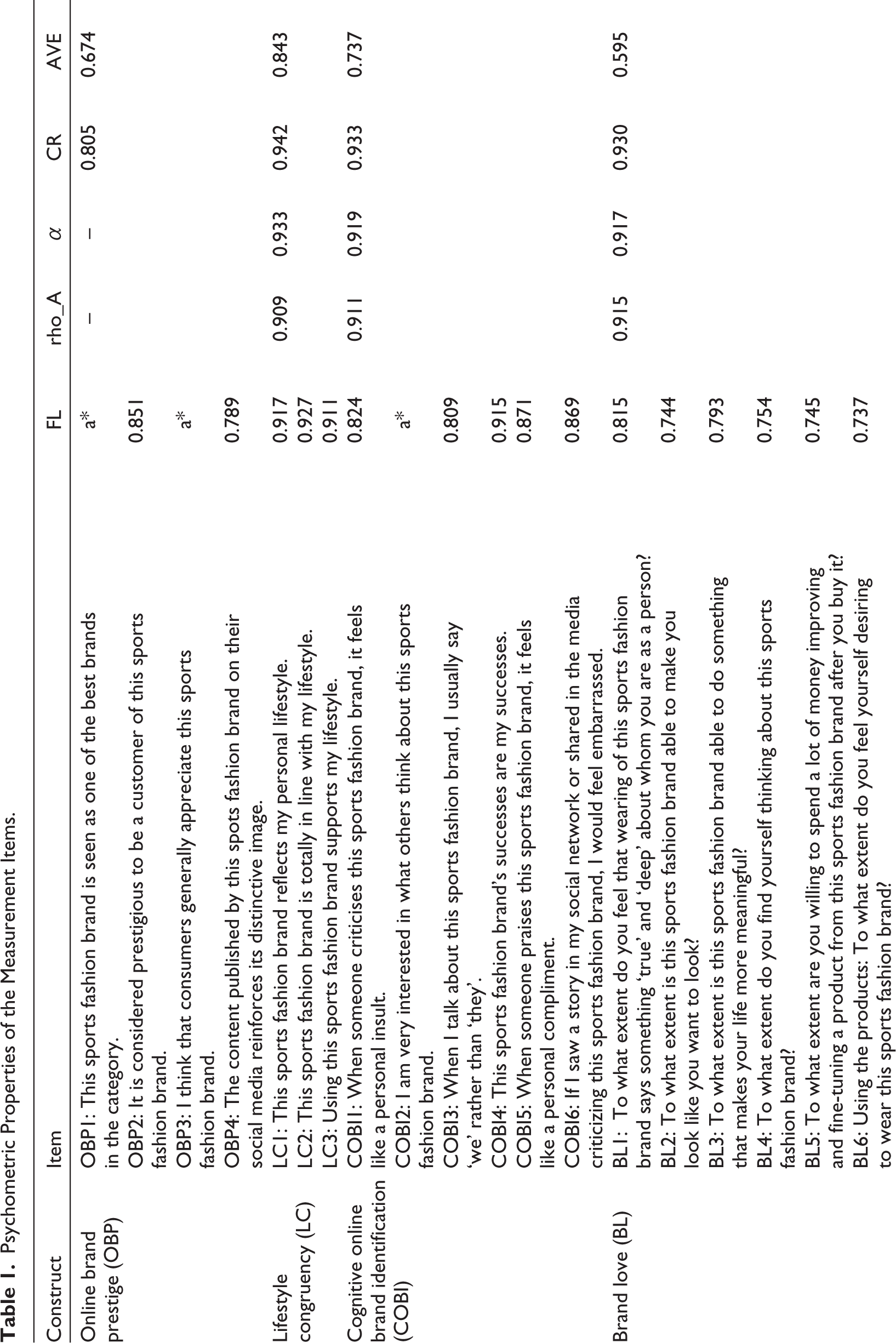
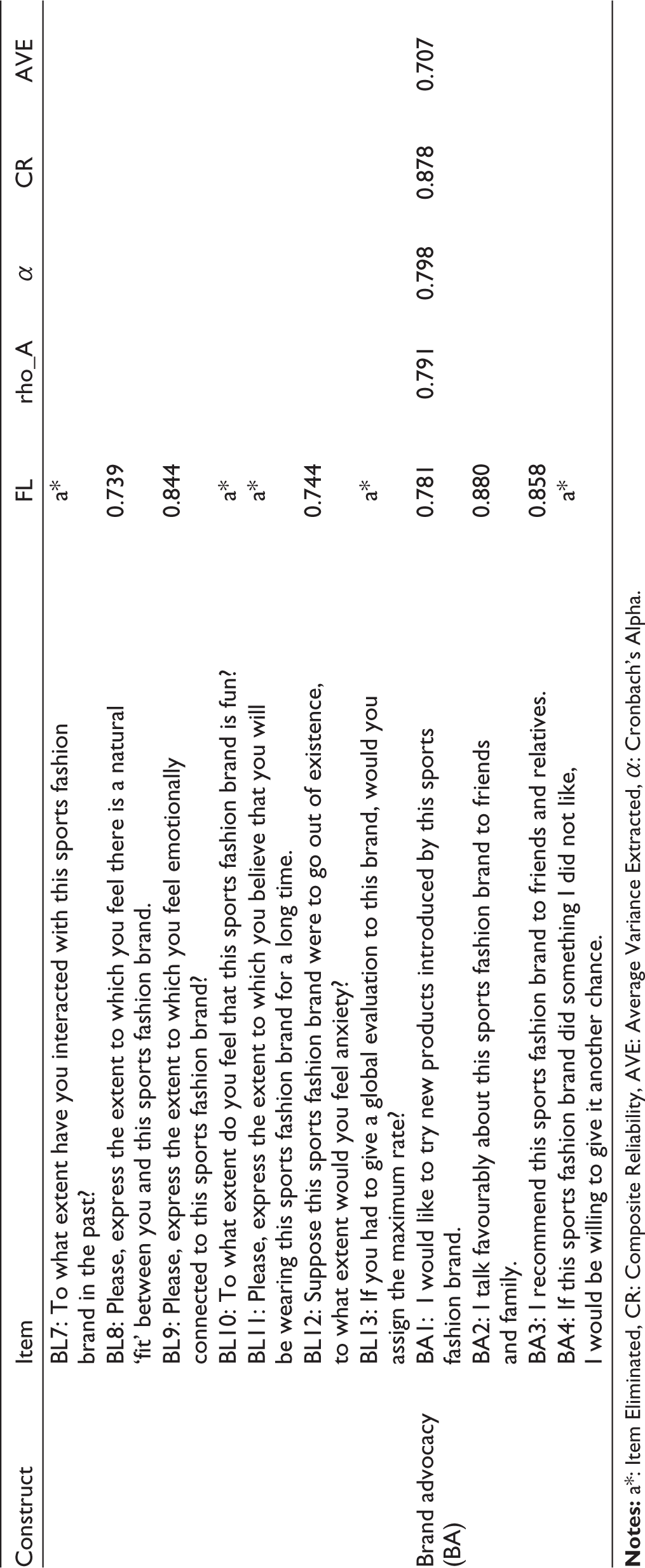
Internal consistency was measured through the following three criteria: (a) rho_A all item loadings should be higher than 0.70, (b) Cronbach’s alpha and (c) composite reliability should be above 0.60, the last two measures representing the lower (b) and upper bound (c), respectively. Concerning composite reliability, Table 1 confirms that all constructs are highly reliable and above the minimum threshold value. Regarding the other two criteria, rho_A and Cronbach’s alpha are also achieved for all variables, apart from the construct of online brand prestige. This is due to the model recalculation based on exclusively two items, given the need to eliminate the remaining ones to respect the minimum loading value of 0.70. Thus, when recalculation only concerns two items, Cronbach’s alpha and rho_A of the respective construct are a non-validated measure. Therefore, it can be assumed that the significance and relevance of indicator weights and communality (AVE) are accomplished, as well as the levels of internal consistency and reliability of the constructs, fully validating the model.
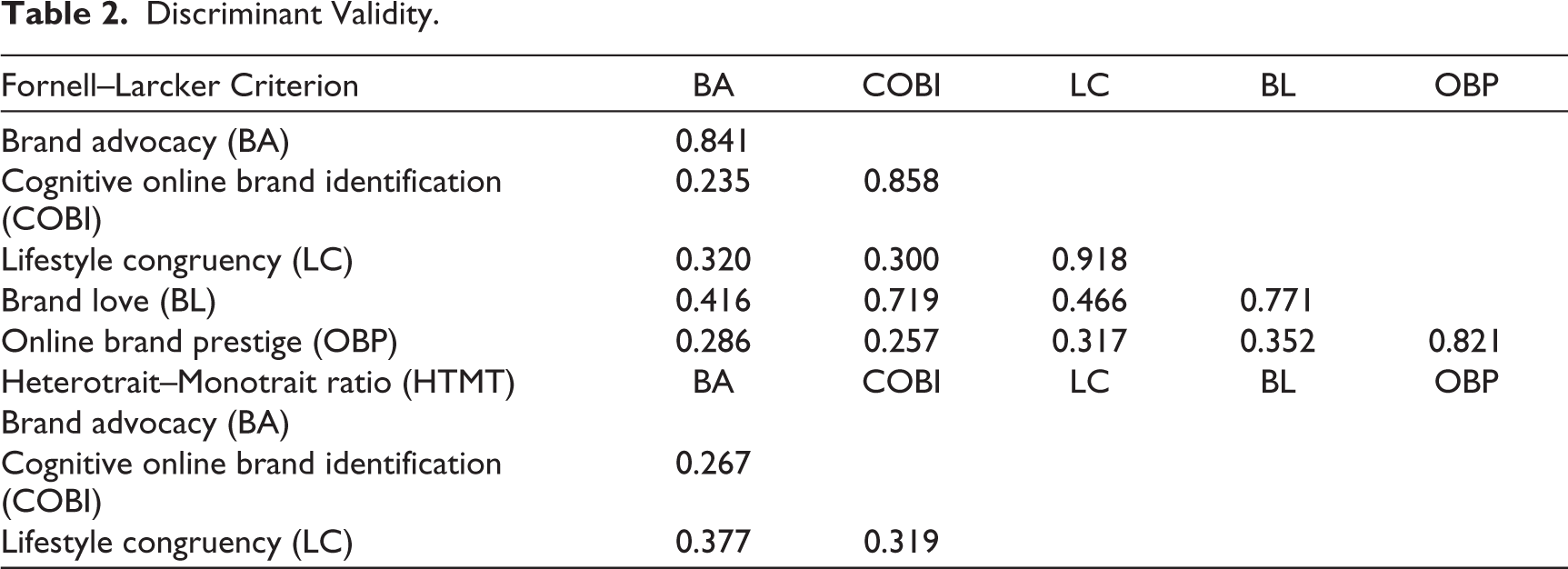
The measures demonstrated discriminant validity through two criteria: Fornell–Larcker criterion and the Heterotrait–Monotrait ratio (HTMT) of correlations. Regarding the former, the squared root of all constructs is higher than the correlations between constructs (see Table 2). Regarding the HTMT, all values are lower than 0.85.
Discriminant Validity.
Assessment of the Structural Model
A structural model represents the path model theories or concepts, and its assessment determines the model’s ability to predict the relationships (paths) between the constructs (Hair et al., 2011). In other words, a structural model specifies how the variables are related to each other, estimating the precision of the PLS to support the hypothesis or not. A structural model comprises two types of variables: exogenous variables, which are the constructs that explain other constructs in the model, namely, online brand prestige (OBP) and lifestyle congruency (LC); and endogenous variables, which are the constructs that are being explained in the model, represented by the remaining constructs—COBI, brand love (BL) and brand advocacy (BA).
Regarding the hypotheses, the two exogenous variables, lifestyle congruency (LC) and online brand prestige (OBP) significantly affect COBI. The findings seem to show that if a sports fashion brand assumes a similar lifestyle as its audience, it can lead to positive cognitive online identification with that trade name (² = 0.243, t = 5.871, p < .001). Likewise, if consumers perceive a brand is prestigious, this can influence favourably their level of identification with that brand (² = 0.180, t = 3.999, p < .001). Therefore, the hypothesised model antecedents, H1 and H2, are supported.
Second, concerning the significant effect of COBI on brand love, the results of this study corroborate the findings of Palazon et al. (2018) in an online context. The central construct is found to be significant in the formation of brand love, assuming the strongest relationship in the model (² = 0.719, t = 20.706, p < .001), which supports H3. Therefore, the current study demonstrates the important mediated role of COBI in establishing passion and affection towards a company based on the overlap of consumer–brand image and lifestyle.
Third, brand love has a positive and significant effect on brand advocacy (² = 0.511, t = 7.611, p < .001), supporting H4. By contrast, the direct effect of COBI on brand advocacy was not verified. Therefore, brand love exercises a significant role as a mediator in the relationship between COBI and BL. The specific indirect effect COBI → BL → BA is significant (see Table 3). Hence, according to Hair et al. (2022), brand love acts as a full mediator in the COBI → BA relationship, because the direct effect—in our case COBI → BA—is not significant, but indirect effects are significant, that is, COBI → BL and BL → BA. Thus, H5 is supported.
Predictive Validity and Model Fit
All values of R2 are higher than 0.1, demonstrating a good level of predictive power, and Q2 showed positive values, which indicates that the model also achieved predictive relevance. As can be observed in Table 3, online brand prestige and lifestyle congruency explain 11.9% of the variance in COBI, presenting relevance in the model (Q2 = 0.083). In turn, the exogenous latent variable, COBI explains 51.7% of the brand love variance and it was also found to be relevant (Q2 = 0.302). Lastly, brand love and COBI were found to explain 18.1% of the variance regarding brand advocacy, with a predictive relevance of 0.123.
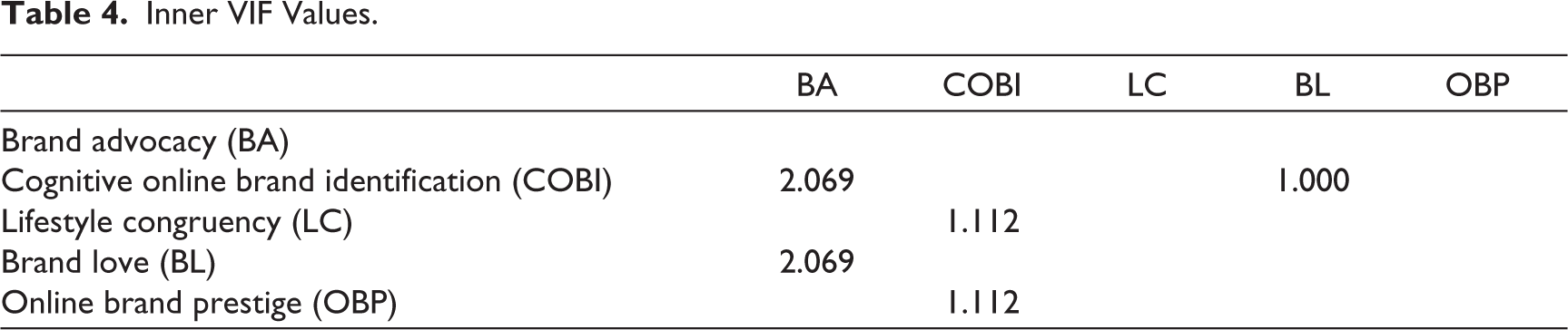
The model fit is measured by standardised root mean square residual (SRMR). SRMR is defined as the difference between the observed correlations and the expected model-implied correlations matrix, where a value of zero indicates a good fit. From the model in the study, the SRMS of 0.065 indicates a well-fitting model, since it is lower than the threshold considered by the conservative approach to a good fit. Finally, the variance inflation factor (VIF) score for each construct (see Table 3) was below 3.33 (Diamantopoulos & Siguaw, 2006), showing that there are no inner collinearity issues (see Table 4).
Structural Results.
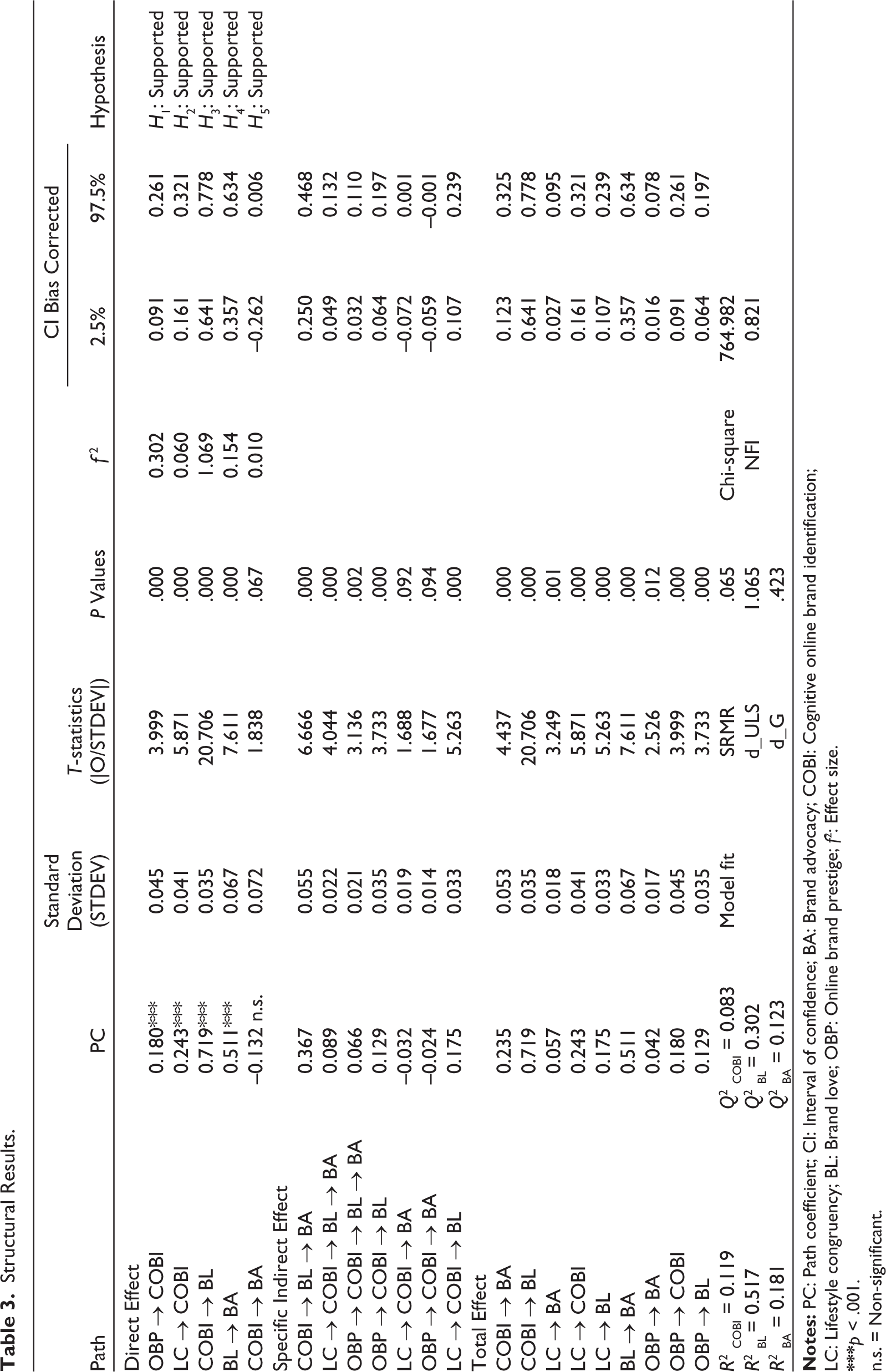
LC: Lifestyle congruency; BL: Brand love; OBP: Online brand prestige; f2: Effect size.
***p < .001.
n.s. = Non-significant.
Inner VIF Values.
Theoretical Contributions
First, from a theoretical perspective, this study makes an important contribution to the active sportswear industry and customer–brand identification literature in a digital context. Since relationship marketing has increased in importance over the years, some other concepts, such as online brand identification, have recently become more relevant topics to explore. Therefore, a gap in the literature was identified, since there is limited research on how sports fashion brands should develop their strategies to enhance customers’ virtual level of connectedness, taking advantage of the recent expressive growth in social network use. Thus, a new structural model was proposed to analyse drivers and outcomes of COBI.
Previous research by Stokburger-Sauer et al. (2012) analysed the effect of CBI on brand loyalty and brand equity in the context of six cognitive and affective antecedents of CBI—(brand-self similarity, brand distinctiveness, brand prestige, brand social benefits, brand warmth and memorable experiences), a moderator (product involvement) in the context of German household consumers (cell phones, athletic shoes, soft drinks and grocery stores). Their results provided convincing empirical support for their model being CBI less sensitive to household goods, concluding that more research is necessary in luxury product categories. Our study is based on the social identity framework (Gumparthi & Patra, 2020), where CBI is the cognitive element, the evaluative effect (brand equity) being moderated by the affected element (brand love), both enablers of long consumer relationships.
Second, we demonstrated that brand prestige and lifestyle congruency act as drivers of COBI. Consumers’ recognition of a prestigious brand is relevant to consumers cognitively perceiving whether they are identified with a sports fashion brand or not. Yet, it is lifestyle congruency that is key to affect positively cognitive identification with the sports brand. When a sports fashion brand is aligned with its consumers’ way of life and helps them to communicate their values, this is a huge step for cognitive consumers to feel identified with the brand.
Third, brand love is found to be a mediator in the relationship between COBI and brand advocacy, which is a unique contribution of this study. Identification with a sports brand may not be enough to make consumers advocate for the brand. Sports fashion brand consumers need to develop strong emotional bonds with the brand to be open to forgiving any mistakes and encourage others to actually buy the brand’s products.
Managerial Implications
This study reveals significant implications that should be taken into consideration by active sportswear brands and other apparel subcategories in general. It is a fact that how consumers present themselves to the world through their appearance and apparel choices expresses their personality and reflects their lifestyle. In the online environment, also the way users expose themselves and interact with others, including brands, can be seen as a social mirror or representation of who they are. From this point of view, individuals tend to use brands as a form of self-expression in which these trade names exert a great influence on how consumers perceive themselves and others around them. In order to access this identity connection, marketers should focus their efforts on deeply understanding their consumers’ character, needs and preferences, through their interests, habits, beliefs and attitude towards life, in order to adopt social media communication strategies accordingly. In line with this perspective, firms must also analyse their consumers’ actual and desired image/personality to be as close as possible to their ideal self, building and assuming an accurate representation of their idealised social self-expression. In a digital context, this identity process is significantly facilitated by the ease of contact between both parties and through the immediate interaction and direct feedback that can continuously work as a mechanism of permanent, accurate and updated customer data collection.
In this vein, to reinforce this online brand identification, companies should consider whether their customers’ assessment of brand prestige is in permanent consonance with the image consumers have associated with the brand, adopting procedures to regularly measure and analyse its conformity. Companies should use these social platforms as a broader and more intensified way of co-creation and revalidation before launching new products or introducing bolder campaigns (Scholz, 2021). This will not just enhance the audience-brand connection and identification levels, given consumers’ appreciation and sense of inclusion in brand decisions, but will also considerably improve the value provided by the company.
As verified during the research, by inducing online customer identification with sports fashion brands, companies can benefit from the development of a brand love connection and the conversion of regular consumers into brand advocates. These enthusiastic customers are considered a company’s most cost-effective tool and profitable asset, driving sales, and increasing positive awareness, able to behave loyally, support the brand, recommend it to relatives, forgive any mistake and ultimately work as the most sustainable and powerful workforce (Fuggetta, 2012).
Limitations and Future Research
As with any investigation, this study has some limitations that can be understood as possible future research opportunities. First, the study was conducted in the United Kingdom and so to allow greater generalisation, we recommend replicating the model in other countries and considering other cultural contexts.
Second, the fact that the study was based on a specific industry—active sportswear—as the results might change in other non-related categories. Indeed, the research was directed to a digital context, omitting considerations applying to face-to-face contact in physical stores. Thus, a study on brand identification that considers the antecedents and consequences in both channels, without restricting to a specific category, would also be interesting to explore.
Third, longitudinal studies would make it possible to analyse the evolution of the connection process between a sport fashion brand and the consumer. Brand love, and consequently, brand advocacy are constructs deeply associated with maintaining strong ties. Therefore, the proposed model should be analysed over time to better understand how the relationship between the brand and the consumer evolves.
Fourth, other antecedents can be considered, and future studies can analyse relative impact on cognitive online identification. For instance, brand credibility can rise when consumers consider that the claims of the brand are credible, and they can trust it. Brand values can also be relevant to consider because consumers’ personal values can be compared to those presented by the brand and this can drive cognitive evaluation of the brand’s identity. As for outcomes, we can suggest authentic pride. A consumer who feels proud to use a certain brand is expected to be more open to advocating in its favour (Arshad & Abdul-Talib, 2022).
Conclusions
The aim of the present research was to analyse (a) the effect of brand prestige and lifestyle congruency on cognitive brand identification, (b) the direct effect of cognitive brand identification on brand advocacy and (c) the indirect effect through brand love. Concerning the model antecedents, lifestyle congruency (LC) was found to be the strongest component influencing COBI, with a greater effect than OBP. Given the results obtained, it can be argued that firms should give special importance to their online reputation and continually monitor their consumers’ level of brand identification, ensuring the brands’ maximum overlapping with their consumers’ self-identification. Brand love is paramount in making sport fashion consumers feel so associated with the brand that they become brand ambassadors, excusing mistakes and encouraging others to buy.
Footnotes
Declaration of Conflicting Interests
The authors declared no potential conflicts of interest with respect to the research, authorship and/or publication of this article.
Funding
The authors received no financial support for the research, authorship and/or publication of this article.