




Abstract
Background:
There is a growing concern regarding excess screen time in children. It is unclear whether screen time exposure is associated with developmental delays. Thus, the purpose of the study was to assess the pattern of screen time, sociodemographic characteristics, and associated factors.
Materials and Methods:
The study is a cross-sectional descriptive study. Children below six years were recruited consecutively at the Child and Adolescent Psychiatry Outpatient Department. The study duration was from January to March 2023. Detailed assessment was done by consultant child and adolescent psychiatrists or psychiatrists and clinical psychologists. The study was approved by the Institutional Review Board. A semi-structured proforma and Vineland Social Maturity Scale were used to assess the children.
Results:
The sample included 118 children. Majority (77.8%, n = 91) of them were male and the mean age was 38.76 ± 12.33 months. Most common reason for visit was speech delay (92.3%) followed by decreased social interaction (35.6%). Ninety-six percent (n = 113) had history of screen time and 54.7% (n = 64) had screen time of more than 2 hours per day. Majority (89.7%, n = 105) of them were exposed to screen before two years of age. The main reason for screen time was “meal times” (53.4%) followed by “to do house hold chores” (52.6%). No significant associations could be drawn according to our results.
Conclusion:
The study highlights the early onset of screen exposure among children. Significant association could not be established between screen exposure and socialization and communication.
Introduction
Screen time (ST) is defined as “the time spent in sedentary behaviors such as viewing television, playing games, and using computer and smartphones.”1,2 It has been advised that parents restrict their children’s daily screen usage, with time limits for preschoolers and a general recommendation to do so for older kids and teenagers. The World Health Organization (WHO) guideline recommends no screen exposure to children less than two years old and not more than one hour of ST to children of two to four years of age. 3 With an ongoing rise in early screen exposure, studies have reported that excess ST is associated with adverse impact on child development. 4 There are some benefits of learning and interacting via the use of technology, but children with more than one hour of daily ST are more likely to be vulnerable in language and cognitive development. 5 Relationship between ST and speech and language development is complex, and there are multiple factors that should be taken into account. 6
Children exposed to screen during the early childhood developmental period were found to have lower performance scores on developmental screening tests supporting the directional association between ST and child development.6,7 In addition to adverse impact on child development, excess ST may lead to multiple adverse health (physical, mental, and psychosocial) consequences. Obesity, headache, back pain, ocular problems, and disturbed sleep are a few adverse health consequences due to excess ST. 4 Studies on ST and its effect on children’s mental health have been conducted in Western countries.4,8,9 A study done in Nepal among preschoolers aged two to five years found high prevalence of problematic screen exposure and 41.2% children having their first exposure before 12 months of age. 10 Another study done in Nepal among primary school students found that higher ST in children was significantly associated with behavioral problems. 11 In Southern India, two to six-year-olds spend 2.7 hours a day on screens; while 0-8-year-olds in the United States spend over two hours.12,13 In Australia, 40% of under-18-month-olds used screens longer than advised. 14
Considering the growing market of digital devices, easy accessibility, and increased use of screen media by families and society at large, there is a need to explore ST among Nepalese children. The studies conducted in Nepal regarding ST and children are very few and till date there is only one study on Nepalese children in this particular age range. 10 We hypothesized that preschoolers would be exposed to screen excessively and ST for more than two hours per day would be associated with lower communication and socialization. Our study not only explores the pattern of ST in preschool children but also looks into the reasons that influence daily ST and attempts to determine the association of ST with social and communication domains of development. Thus, our study is different to the already existing literature in Nepalese context and our findings could add more to the scant literature in Nepal.
Materials and Methods
The study was conducted at the Child and Adolescent Psychiatry (CAP) Outpatient Department (OPD), from January 2023 to March 2023, that is, 3 months. It was a cross-sectional descriptive study. Nonprobability sampling strategy, that is, consecutive sampling method, was used in this study. Inclusion criteria was that all children below six years of age visiting CAP OPD and whose parents or caregivers were willing to participate. A total of 118 children aged six years and below were consecutively recruited after taking informed consent from the parents/guardians. Detailed assessment and evaluation were done by consultant child and adolescent psychiatrists or psychiatrist and clinical psychologists. The unit has three child and adolescent psychiatrists who have had additional training in CAP and have specific expertise in working with younger population. However, the five psychiatrists in the unit are working with children and adolescents but do not have additional training in CAP. The study was approved by the Institutional Review Board, reference no: 1291.
A semi-structured proforma was used, during a one-to-one in-depth interview with parents, to collect details such as sociodemographic profile, the total duration of ST, maximum continuous ST, age of onset of screen exposure, and the reasons for ST. The semi-structured proforma used in this study was developed by the authors specifically for this research. It was designed to guide data collection in a systematic and consistent manner while allowing flexibility of the participant response. The proforma was created using the flowing steps: (a) literature review, (b) expert consultation with senior clinicians and experts in CAP, and (c) pilot testing of a preliminary version of the proforma was tested in a small sample and based on the feedback, necessary revisions were made to improve the comprehensive and ease of use. Vineland Social Maturity Scale (VSMS) 15 was used to assess development but only two domains of VSMS (out of 8) were assessed. VSMS is well-recognized psychological assessment tool used to measure adaptive functioning of the child and adolescent. VSMS was adapted initially in 1965 by A. J. Malin and which was later modified by Bharat Raj in 1992. It can be used for 0-15 years of age, has 89 items, which provides data in eight domains. VSMS has a good 0.80 correlation with intelligence.
Statistical Analysis
IBM SPSS version 16.0 was used for statistical analysis. 16 The sample was studied using frequency analysis and central tendencies. Comparison of the mean scores of social and communication domains of VSMS with the duration of ST was done using independent sample t test. Pearson chi-squared test was used to observe the association between other sociodemographic and clinical variables with ST.
Results
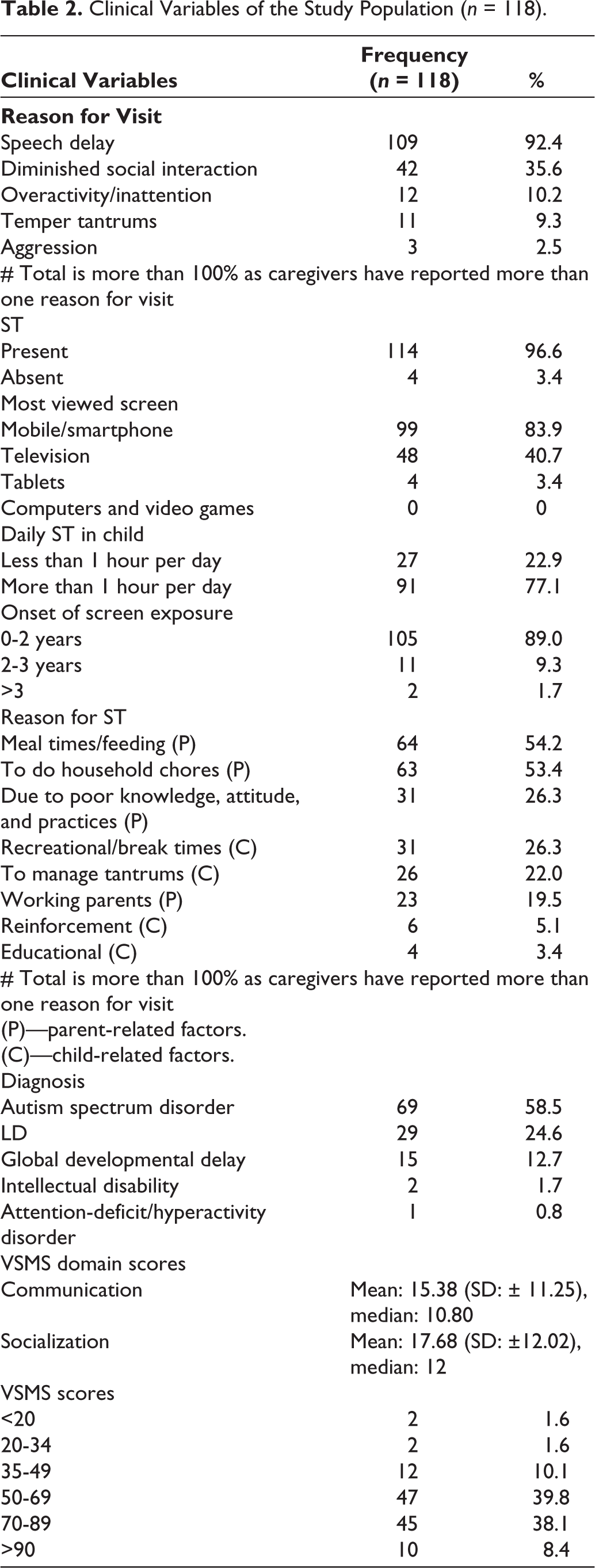
Screen exposure in the preschool children presenting in the OPD was 96.6%. Among the total patients assessed, 58.5% (n = 69) were diagnosed as having autism spectrum disorder (ASD), followed by 24.6% (n = 29) Language disorder (LD). Diagnosis is based on Diagnostic and Statistical Manual of Mental Disorders Fifth Edition. 17
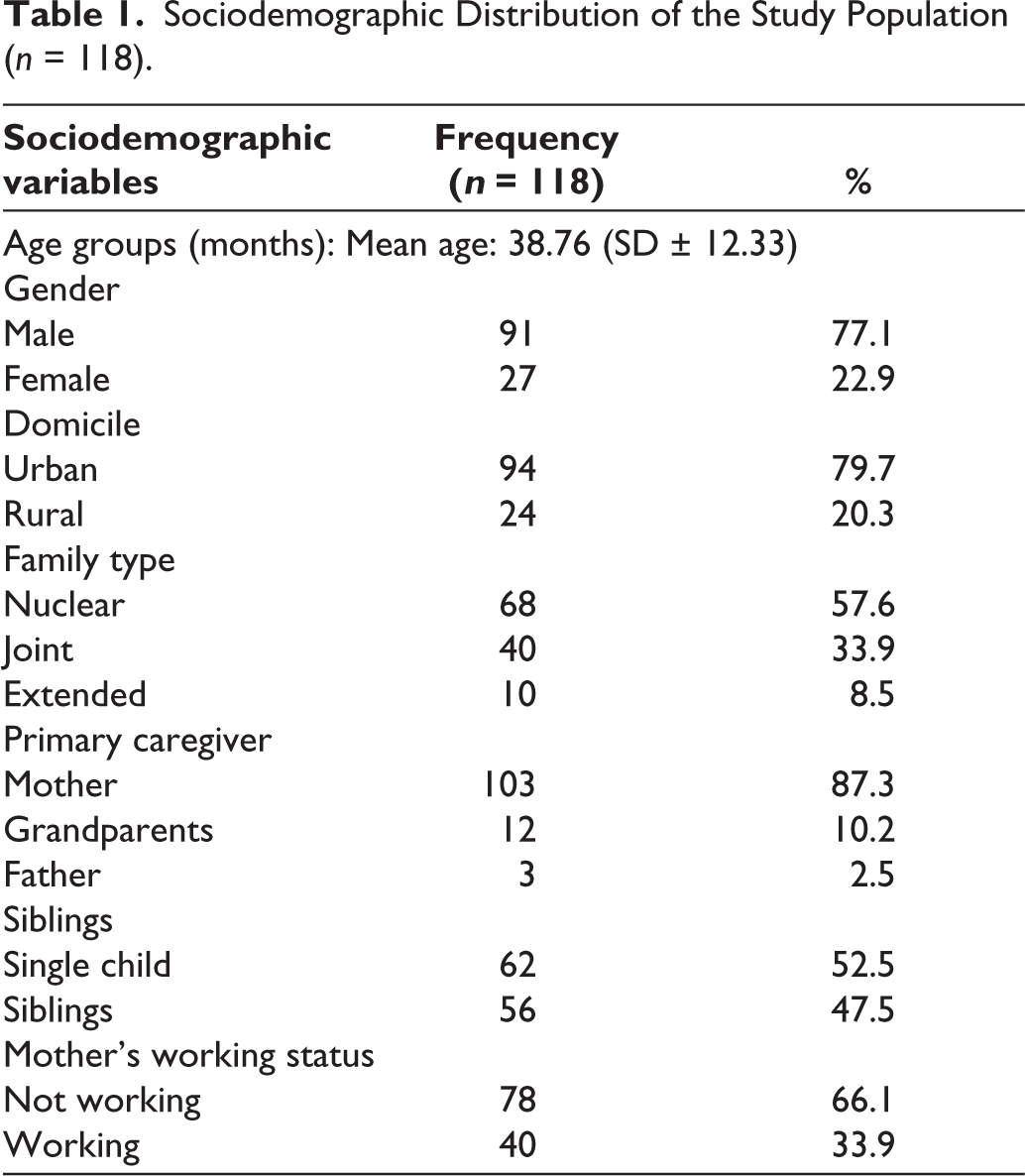
Sociodemographic Distribution of the Study Population (n = 118).
Clinical Variables of the Study Population (n = 118).
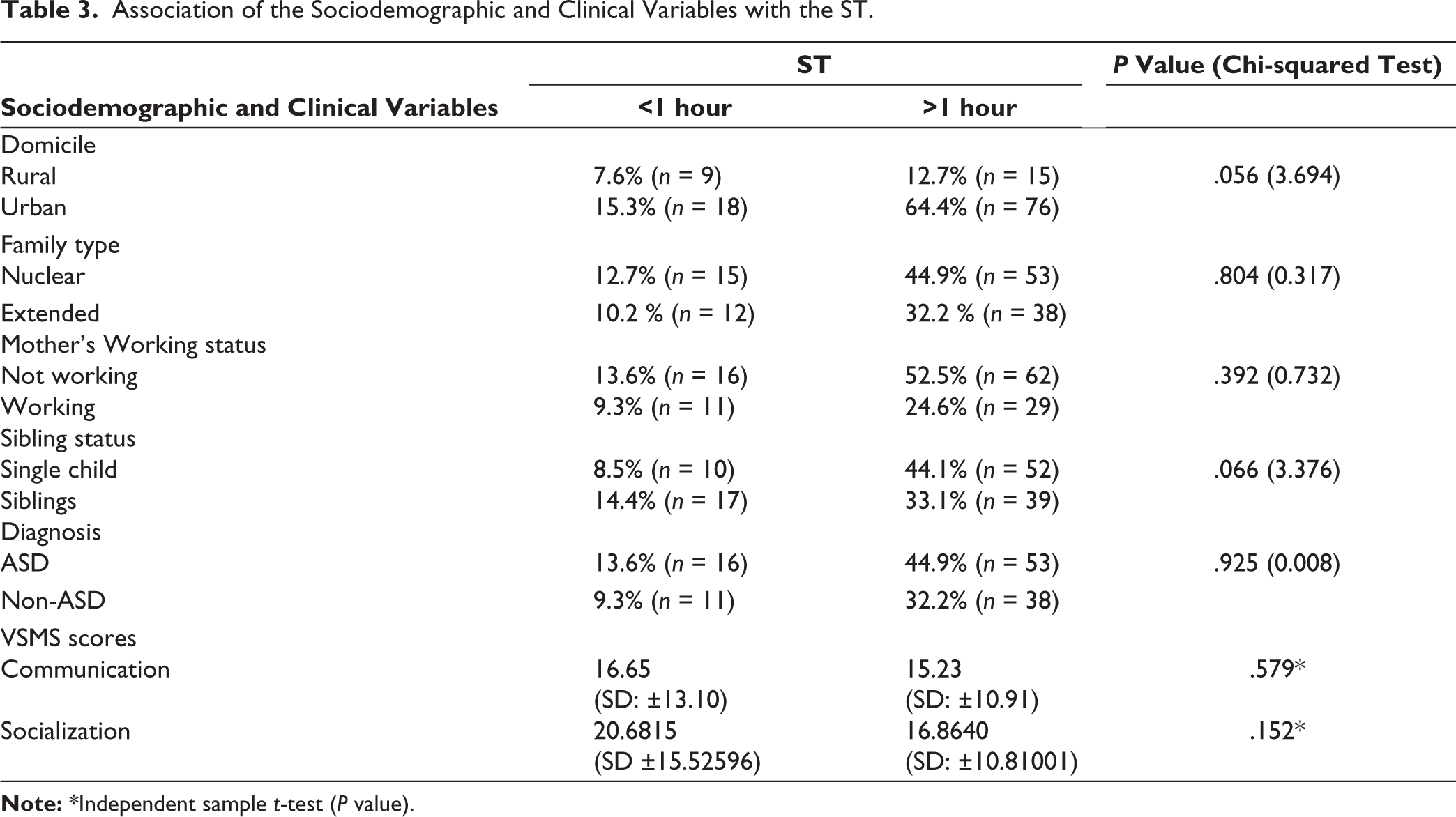
Association of the Sociodemographic and Clinical Variables with the ST.
Discussion
There are only a few studies examining the ST and corelates among children in Nepal.10,11 In addition to the pattern of screen exposure in children, our study also explored the reasons of daily ST and factors associated with ST and social and communication domains of development in preschoolers. Therefore, our study is different to the already existing literature in Nepalese context and our finding adds more to the limited literature in Nepal.
Sociodemographic Profile
The mean age of children was 3.2 years (38.76 months) with the youngest child being 15 months which is similar to a study done on preschoolers in Nepal where mean age was found to be 3.4 years. 10 Children with neurodevelopmental conditions usually present before six years of age and it was not surprising to have children presenting to us as early as 15 months of age. Earliest onset of screen exposure was at three months of age due to the mother being engaged in household chores. Maximum ST was found to be as high as eight hours per day.
The sample was overrepresented by boys (77.1%) which may be due to the clinical sample. Study done in the community have a more proportionate gender sample distribution. 11 The majority of participants in our study belonged to nuclear families, with mothers serving as the primary caregivers and most being non-working. These findings are consistent with a similar previous study conducted in Nepal. 10
Clinical Profile
Our study found that socialization and communication scores in VSMS were lower in children with more than one hour of daily ST compared to children less than one hour of ST but there was no statistically significant association. A study done in Canada among preschoolers showed that children with more than one hour of daily ST were more likely to be vulnerable in social competence, emotional maturity, and communication skills. 5 A study done in India among children aged less than five years found that increased ST was significantly associated with developmental delay, in particular, in the domains of language acquisition and communication. 12 The findings of association between ST in children and developmental outcomes are mixed. A systematic review and meta-analysis supports that there is no clear association between screen use and ASD. The findings in this review suggest that excess ST in preschoolers may pose developmental risks, but it requires further investigation. 18 In addition to the developmental risk due to excess ST, a study done in North India found moderate prevalence of emotional problems among children with excess ST which is quite concerning. 19
Smartphone (83.9%) and television (40.7%) were the most common modalities of screen exposure in our study sample which is similar to other studies.20,21 This indicates the easy availability and access of smartphones among Nepalese families. Interestingly parent-related reasons for ST such as meal times (53.4%) and to do house hold chores (52.6%) were more common than child-related reasons. Similarly an Indian study found that in children aged 2.5-6 years diagnosed with attention-deficit/hyperactivity disorder (ADHD), parent-related reasons for ST were more common than child-related reasons. 22 Another similar study found that most ST was used for watching entertainment programs and playing games indicating that child-related factors are implied mostly, which contrast with our finding that parent-related factors were more important for screen engagement. 20 The American Academy of Child and Adolescent Psychiatry (AACAP) specifies about both the amount and content of screen exposure recommending less than one hour of ST for two to five years old children and limiting the screen contents to video chatting in ages below 18 months old and educational programming in ages of 18 months and older. 23
In this study, ST was above the recommendations as per guidelines for majority (89.7%, n = 105) of them. The onset of screen exposure for most children was before the age of two years, which contrasts with the WHO recommendation of no ST during this period. 3 More than half (53.4%) of the sample had ST of more than two hours per day which is similar to a study done in Nepal, wherein the use of screen media exceeded two hours in 60.64% of children aged two to five years. 10 Likewise, a report by the centers for disease control and prevention (CDC) in 2020 indicates that 47.5% of children aged two to five years in the United States spent more than two hours of ST per weekday. 24 Thus, early screen exposure and increasing ST have been a growing issue among preschool children.20,25 The commonest diagnosis in our sample was ASD (58.5%) followed by LD (24.6%). Recent systematic review has pointed that earlier onset and longer duration of ST might lead to increased risk of developing ASD.26,27
In our study although the ASD group was found to have more ST and the communication and socialization scores were both lower in groups with higher ST, this was not statistically significant. Thus, our finding supports the complimentary hypothesis that children with ASD may prioritize screen activities to avoid social challenges. 18 Variables like domicile, family type, mother’s working status, number of siblings did not have statistically significant association with the duration of ST which is similar to the findings of other studies.20,25
Strengths and Limitations
It is one of the few studies done in this age group in Nepal. This study’s result of parent-related factors for excess ST might reinforce the role of parents and digital-media rules at home. There may be a selection bias as the study was carried out in a clinical setting and a recall bias as the data for ST was based on parental reports. As it is a hospital-based study, the findings cannot be generalized; however, they have clinical relevance. The study’s cross-sectional nature makes it challenging to determine the direction of causality between ST and developmental outcomes. The study does not account for the level of parental involvement or supervision during ST and parental ST which can significantly impact its effects on children. This study highlights that children are exposed to excessive ST during their early childhood.
Conclusion
Exposure to high level of ST is a growing concern among preschoolers. Further research with larger samples and comprehensive assessments is needed to better understand the potential effects of ST on these developmental aspects.
Future Directions
Further research with larger samples and comprehensive assessments is needed to better understand the potential effects of ST on these developmental aspects.
Footnotes
Data Availability Statement
The data supporting the findings of this study are easily available from the corresponding author, upon reasonable request.
Declaration of Conflicting Interests
The authors declared no potential conflicts of interest with respect to the research, authorship, and/or publication of this article.
Funding
The authors received no financial support for the research, authorship, and/or publication of this article.
Statement of Informed Consent and Ethical Approval
The study received Ethical Committee Approval vide Ethics Committee (Ethical Review Committee) No.1291 dated 27 January 2023. Written informed consent was taken from all the participants. The study was carried out in accordance with the principles as enunciated in the Declaration of Helsinki.