



Abstract
Introduction:
In the era of globalization, constant Internet access has led to problematic Internet use (PIU) among adolescents, negatively impacting their cognitive processes, emotions, and behavior. This qualitative study explores the effects of PIU among 15 self-identified male adolescents, aged 10 to 14 years (median age = 14.1), from northern Indian cities through the lens of transcendental phenomenological inquiry.
Material and Methods:
Through purposive sampling, homogeneous groups were formed, and data were collected via semi-structured interviews, which were analyzed using Giorgi’s method.
Results:
Four themes have emerged: antecedents of PIU (psychological vulnerabilities, social influence, and validation), PIU symptoms (cognitive and behavioral preoccupation and compulsive behavior), consequences of PIU (psychological, physical, interpersonal, academic, and positive impacts), and desire to change (recognition of negative impact, seeking support, and exploration of strategies).
Conclusion:
The study highlights the severe negative consequences of PIU and the need for urgent psychosocial interventions, and most adolescents expressed a desire to change their PIU.
Introduction
Internet use is beneficial in facilitating life, but its excessive and uncontrolled use has brought problems. 1
Problematic Internet use (PIU) is defined as the excessive or impulsive use of Internet leading to impulse control problems and impacting the biopsychosocial aspect of an individual’s life. 2 Problematic Internet use is characterized by using the Internet for longer periods than intended, experiencing withdrawal symptoms when unable to access the Internet, unsuccessful attempts to reduce excessive use, developing tolerance symptoms, and using the Internet to cope with negative situations. 3 Research has revealed a rising trend of adolescents’ Internet addiction (IA) and problematic Internet usage, which includes online gaming. 4 According to a study conducted in Aligarh revealed that male adolescents are more susceptible to Internet addiction than females. 5 A study 6 believes that the Internet is producing a “lonely crowd” in online spaces because it takes away time from family and friends. Intimate connections, such as family and friends, suffer as an individual neglect’s close relationships. Excessive Internet use increases loneliness, lack of family bonds, low self-esteem, and inability to socialize. 7
According to the World Health Organization, 8 adolescence is a period between 10 and 19 years characterized by psychological, social, and physical changes that turn a dependent child into a self-sufficient young adult. During this time, they experience concerns about identity, self-image, and autonomy. 9 They are also at the age of identity development, struggling to present themselves, and social media helps them do so. 10 Due to its accessibility and ability to provide limitless access to information and global connections, the Internet particularly appeals to male adolescents. 11 Studies found that more frequent Internet use was linked with less mature identity statuses and higher levels of social anxiety exclusively in males. 12 There is evidence that suggests that male adolescents who experience negative life conditions, such as parental conflict or scholastic failure, use the Internet more frequently. 13 They frequently use the Internet to divert their attention from negative thoughts. 14
Qualitative studies on the impact of PIU on adolescents reported using the Internet due to loneliness, boredom, and experiencing insomnia. 15 They also mentioned feeling happy and having fun when accessing the Internet but feeling sad and anxious when they could not. 13 These studies were conducted with nonclinical populations. It is believed that these studies do not sufficiently focus on adolescents’ perceptions of the Internet, their thoughts, and behaviors when they can and cannot access the Internet, which are important for shaping interventions for adolescents in school settings. Additionally, researchers suggest that more qualitative research is needed to understand PIU behavior in male adolescents better, to lay the groundwork for intervention studies, strengthen the conceptual framework, and to develop intervention models for PIU.
Understanding these experiences can contribute to the planning of preventive interventions, to guide diagnoses and practices, to improve the quality of care for adolescents, and to the conceptual framework of PIU. 16 School counsellors can screen for early diagnosis in schools or health institutions, identify the risk factors associated with PIU, educate parents and adolescents on PIU, improve adolescents’ coping and communication skills, and intervene in problems such as anxiety, family dysfunction, and fatigue caused by PIU. There is a paucity of studies about PIU that focus on behavioral aspects, the effect of usage, and self-control among male adolescents. This study aimed to explore PIU among male adolescents.
Methods and Material
This research was grounded in the interpretative paradigm, utilizing a descriptive phenomenological inquiry approach. This study followed an explorative research design and used a purposive sampling technique. Experiences of adolescents with PIU were gathered through semi-structured interviews.
In descriptive phenomenology, the researcher becomes the primary data collection tool, listening attentively to participants throughout the interviews. This method places less emphasis on the researcher’s interpretation and more on the detailed description of the participants’ experiences. Therefore, it is crucial for researchers to bracket their assumptions and perceptions regarding the phenomenon under investigation, ensuring that the descriptions remain as close to the participants’ own accounts as possible.
Before commencing the research, ethical approval was obtained from the Institutional Review Board. Verbal consent was obtained from all parents, and written consent was secured from the participants. The participants and their parents were informed about the research purpose, ensuring voluntary participation. Anonymity was guaranteed, with assurances that no names would be used in any reports or publications. The participants were informed that the interviews would be recorded and transcribed verbatim. All data collected would be kept confidential. Additionally, adolescents were assured that psychosocial support would be available as needed. During the interviews, the participants were informed of their right to stop or interrupt the interview at any point if they felt uncomfortable. The researcher avoided asking piercing or probing questions, prioritizing the comfort and well-being of the participants throughout the research process.
A purposive sample of 15 adolescents, who identified themselves as problematic Internet users, was enrolled at the school education level. The participants belonged to different cities of north India. The research was conducted in a government school in New Delhi, India. The school had a counselling room and a sports room, which were used for one-on-one interviews with the students. The potential volunteers were contacted and given information about the study upon identification. Confidentiality in this study was assured by protecting the participants’ identities in the collected data. The names of all the participants were coded (e.g., P1 for participant number 1) in all documentation, and only the researchers knew about the codes. The inclusion criteria were volunteering to participate in the study, aged 10–14 years, and self-identifying as problematic Internet users. The exclusion criteria were speech, hearing, and self-expression disabilities.
The researchers conducted the interviews in a quiet and empty room at the school, such as a counsellor’s room or a sports room. Each interview lasted 40–60 minutes and was recorded using a voice recorder. Data collection involved a personal information form and a semi-structured interview form. The personal information form included questions about the participants’ sociodemographic characteristics and Internet usage patterns. The researcher developed the semi-structured interview form after reviewing the related studies.
17
The following questions formed the basis of the interview:
Can you recall a day when you did not use the Internet? Please describe your experiences and activities on that day. How do your feelings, thoughts, and behaviors change when you use the Internet compared to when you do not? In what ways do you believe your life has been positively or negatively affected by Internet use? What does a world without the Internet mean to you? How would your life be different if you did not need to use the Internet daily?
In qualitative research, rigor is ensured through credibility, confirmability, transferability, and dependability. Credibility and confirmability ensure that the research process and results are presented clearly and consistently and can be verified by other researchers, thus maintaining objectivity. Three researchers independently coded the data, followed by discussions to reconcile similarities and differences in the codes and themes, culminating in their final form. Additionally, an external expert was involved during data analysis to ensure objectivity. Transferability was achieved by providing detailed descriptions of the setting and the participants, employing purposive sampling, setting clear inclusion and exclusion criteria, and thoroughly describing the data. Dependability was maintained by ensuring consistent research activities throughout the study. All researchers collaborated from start to finish, and comprehensive information about the creation of data collection tools, as well as the collection and analysis of data, is provided in this article.
To determine the appropriate number of interview participants, the researchers employed data saturation, a point at which no new codes emerged in the data. 18 After the data saturation, the research was completed with 15 adolescents. This approach ensured that the study had gathered sufficient data to form a valid understanding of the phenomenon.
The data were analyzed using Giorgi’s descriptive phenomenological psychological method that involves five steps centered on describing rather than interpreting the participants’ experiences. 19 This method acknowledges the uniqueness of individual experiences and allows the researcher to integrate these experiences while setting aside personal assumptions about the subject. In the first step, the audio-recorded interviews were transcribed verbatim using Microsoft Word, and these transcripts were read repeatedly to avoid personal judgment. In the second step, we adopted a stance of scientific phenomenological reduction, setting aside our assumptions and bracketing personal judgments during data collection and analysis. Direct and judgmental questions were avoided during interviews to ensure active listening without imposing personal values. Adhering strictly to the participants’ quotations, psychological meaning units—comprising phrases, sentences, and paraphrases—were identified by carefully reading the transcripts. In the fourth and fifth steps, these meaning units were classified according to similarities, and main themes and subthemes were formed to ensure the integrity of meaning without introducing additional opinions. 19
Results
The participants' demographic details, including their age, duration of Internet usage, and preferred platforms, are presented in Table 1.
Demographic Data of the Participants (n = 15)
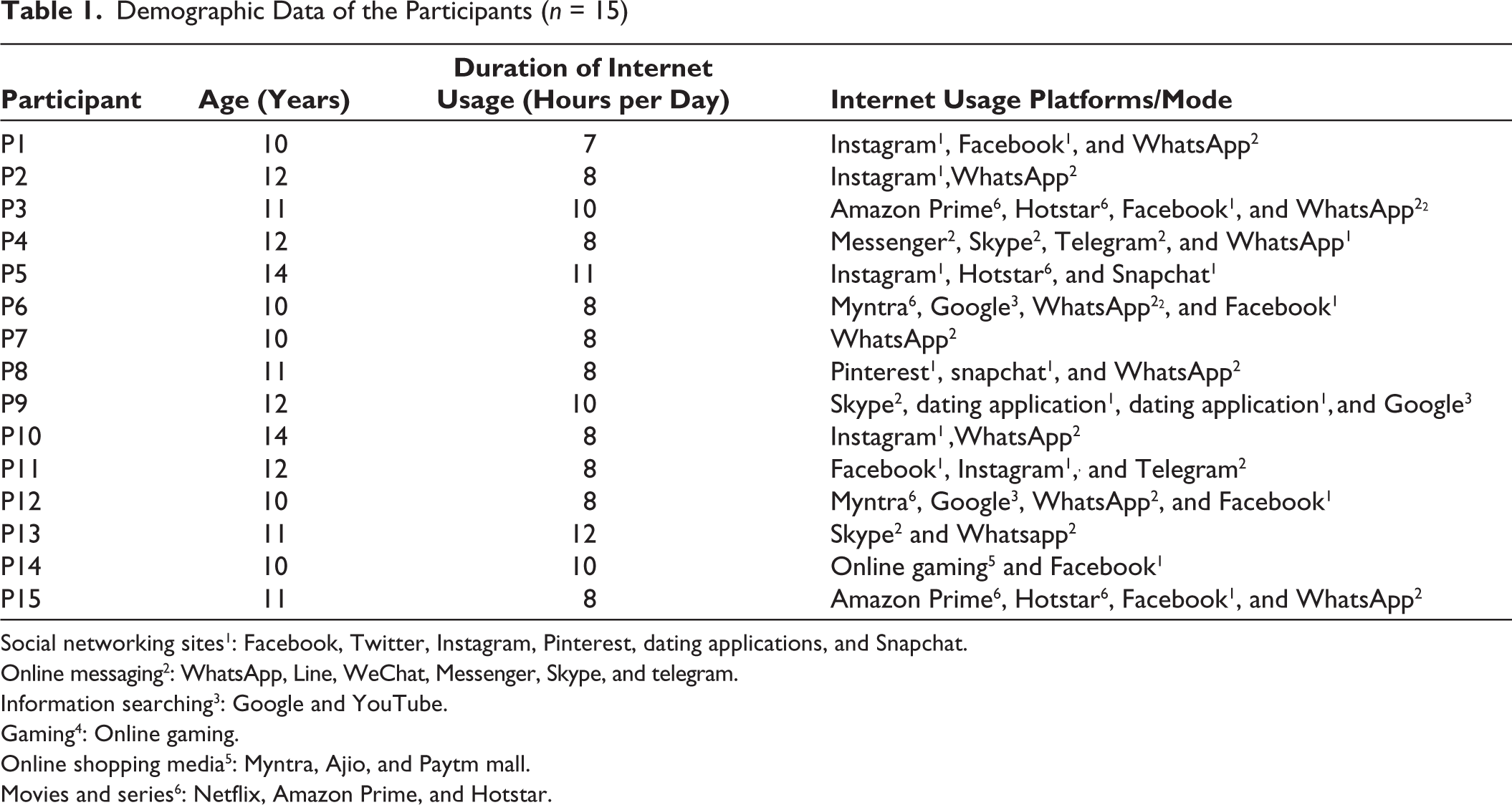
Social networking sites 1 : Facebook, Twitter, Instagram, Pinterest, dating applications, and Snapchat.
Online messaging 2 : WhatsApp, Line, WeChat, Messenger, Skype, and telegram.
Information searching 3 : Google and YouTube.
Gaming 4 : Online gaming.
Online shopping media 5 : Myntra, Ajio, and Paytm mall.
Movies and series 6 : Netflix, Amazon Prime, and Hotstar.
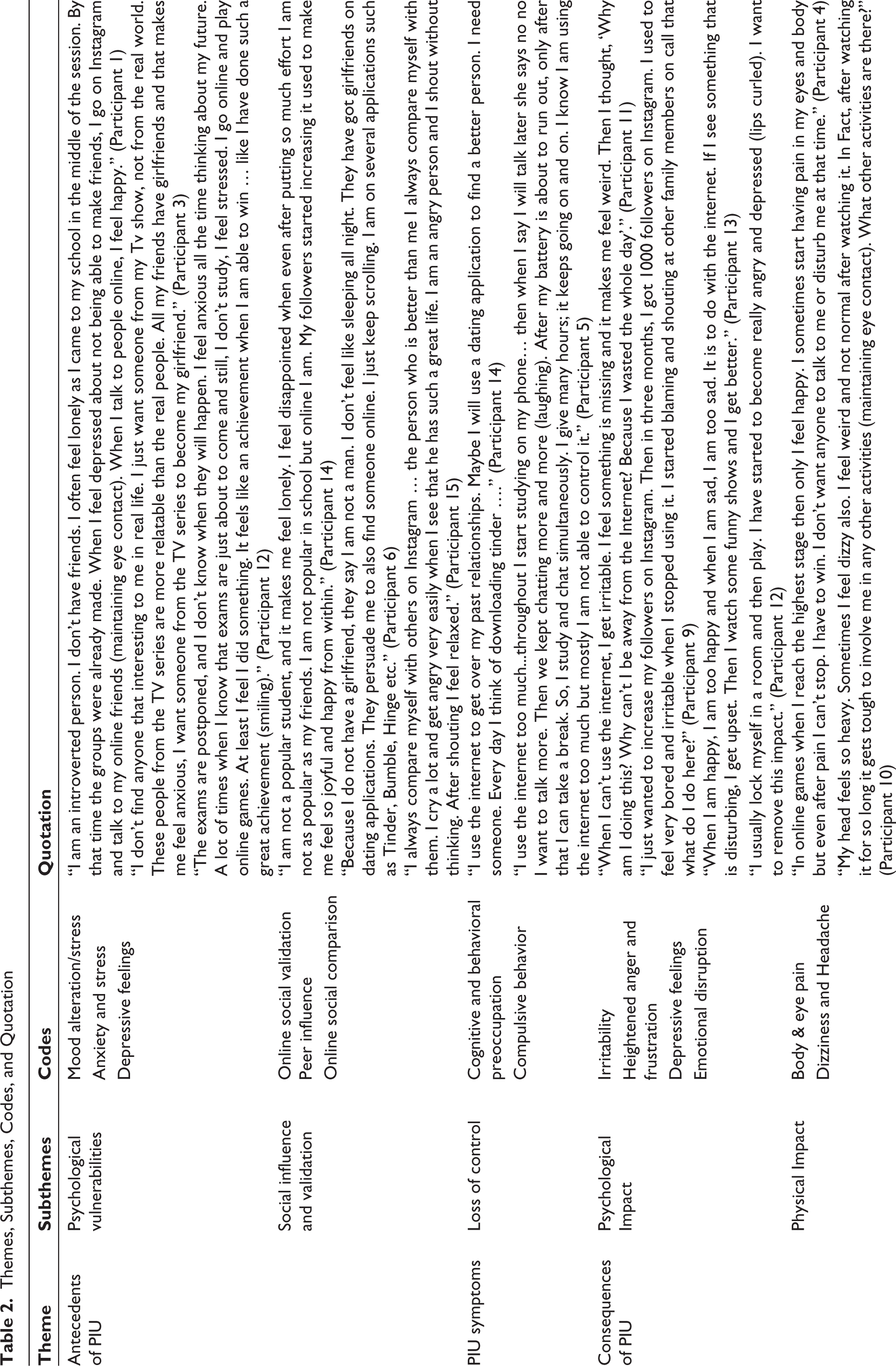
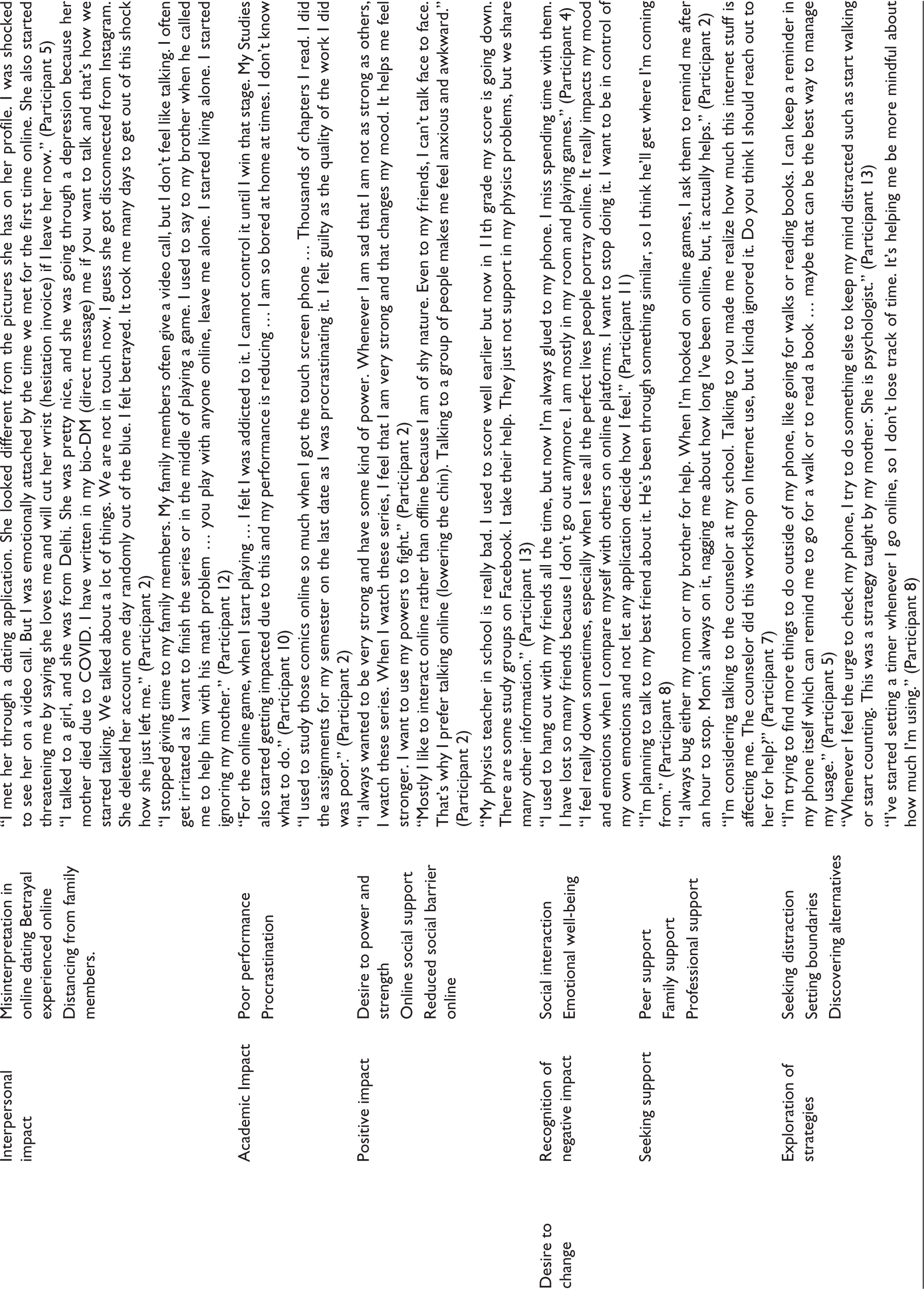
The data analysis revealed 4 main themes, 11 subthemes, and 30 codes. These include antecedents of PIU, PIU symptoms, consequences of PIU, and the desire for change, accompanied by relevant quotes and descriptions (Table 2).
Themes, Subthemes, Codes, and Quotation
Theme 1: Antecedents of PIU
The participants indicated that their increased Internet usage developed gradually because of frequent habitual use. Two factors that contribute to PIU have been identified: psychological vulnerability and social influence and validation.
Psychological vulnerabilities: These include the need for mood alteration, anxiety, stress, and feelings of depression, emerge as significant contributing factors to PIU among male adolescents. Total of five participants reported a drive to seek online engagement for regulating emotions and alleviating negative affective states.
Social influence and validation: Among the seven participants, social influence and validation emerged as significant contributors to PIU among male adolescents. This encompassed three main factors: online social validation, peer influence, and online social comparison.
Theme 2: PIU Symptoms
The research findings highlight PIU among adolescent males, with nine participants reporting experiences of cognitive and behavioral preoccupation, as well as compulsive behavior. This indicates that adolescent males commonly exhibit persistent thoughts and desires related to Internet use, alongside a strong compulsion to engage in online activities.
Cognitive and behavioral preoccupation: The persistent thoughts and desires to download and use dating applications, such as Tinder, reflect cognitive preoccupation with online dating.
Compulsive behavior: The participant describes a pattern of excessive Internet use, characterized by prolonged periods of simultaneous studying and chatting on their phone. Despite recognizing the excessive nature of their Internet usage, the participant struggles to exert control over it.
Theme 3: Consequences of PIU
The consequences of problematic internet usage reported by 10 participants out of 15 encompass several subcategories, including psychological impact, physical impact, interpersonal impact, academic impact, and positive impact.
Psychological impact: Problematic Internet use among adolescent males leads to psychological consequences such as irritability, increased anger and frustration, feelings of depression, and emotional disturbances. The participants reported feeling irritated and uncomfortable when they were unable to access the Internet. They also described experiencing a sense of incompleteness and questioning their identity during these times.
Physical impact: The physical impact of PIU among male adolescents encompasses eye, body pain, dizziness, and headaches. The participants reported experiencing discomfort, including pain in their eyes and body, particularly during intense gaming sessions.
Interpersonal impact: The interpersonal consequences of PIU among male adolescents encompass misrepresentation in online dating, betrayal experienced online, and distancing from family members. The participants report instances where individuals they meet online present themselves differently from their online profiles, leading to feelings of shock and disappointment upon meeting in person.
Academic impact: Academic consequences of PIU among male adolescents include poor performance and procrastination. The participants report becoming addicted to online gaming, prioritizing it over their studies, and experiencing a decline in academic achievement as a result.
Positive impact: Positive outcomes associated with PIU among adolescent males include desire to power and strength, online social support, and reduced social barriers. The participants express a longing for feeling strong and powerful, often seeking solace in online content like series or movies. They share how watching such content helps them cultivate a sense of strength and empowerment, positively impacting their mood.
Theme 4: Desire to Change
Four participants expressed a shared desire to change after encountering issues with their Internet usage. This inclination toward changes encompassed subthemes such as the recognition of negative impact, seeking support, and exploration of strategies.
Recognition of negative impact: The participants acknowledged the adverse effects of PIU, including its impact on social interactions and emotional well-being. They expressed regret over prioritizing their phones and online activities over spending time with friends, resulting in a loss of social connections.
Seeking support: Adolescents have recounted seeking assistance in response to the adverse effects of excessive Internet use, including seeking support from peers, family, and professionals. The participants expressed their intention to confide in their best friend, who has faced similar challenges, believing they will understand their situation.
Exploration of strategies: Exploring ways to decrease PIU among adolescents involves seeking distractions, establishing boundaries and discovering alternatives. For example, participants attempting to engage in activities outside of their phone, such as going for walks or reading books.
Discussion
The present study attempted to explore the lived experiences of PIU of male adolescents. The researcher intends to provide a rich and detailed description of participants’ experiences by directly quoting participants’ verbatims.
The first theme that emerged from the data highlights antecedents of PIU, namely psychological vulnerabilities, social influence, and validation. The previous literature supports that adolescents use the Internet as a coping strategy for negative psychological states, 3 experiencing unpleasant emotions consume media entertainment to improve or modify their mood, and get online acceptance that reinforces them to use the Internet more. It also makes them feel confident and helps in dealing with feelings of social inhibitions. 20
According to research, adolescents experiencing stressful situations such as exam pressure are more likely to use maladaptive coping strategies like excessive online surfing to avoid negative emotions. 21 Those who are shy and not able to make friends offline use the Internet to obtain peer membership and social validation 22 to mitigate the fear of nonacceptance. This can be described by understanding how crucial the need to interact with others is and how people influence each other daily through this interaction online. Individuals in a stressful situation find computer-mediated communication more appealing 23 as it gives greater control over how they show themselves; this control aids in developing one’s sense of security, allowing them to interact more online than in person. In addition, it provides a platform for an individual to say and express difficult things. People loosen up their restricted emotions and thoughts online due to dissociative anonymity, invisibility, asynchronicity, dissociative imagination, and minimization of online status and authority. 24 Online interaction becomes a secure home base offering nesting ground for individuals, a secure base that, in turn, increases Internet dependence.
The second theme includes PIU symptoms among adolescents, which includes subthemes of loss of control that supports dysfunctional Internet use behavior among participants. Our findings are in accordance with the previous research. 3 Problematic Internet use is associated with a range of symptoms, including a loss of control over online activities, withdrawal symptoms upon disengagement, and heightened cognitive and behavioral preoccupation. These features align with established criteria for addiction and dependence. 25
The reinforcing nature of the Internet for the participants in the present study developed a conditioned response for the immediate relief from the negative life experience. An explanation can be offered for the present study outcome from the theoretical perspective of the cognitive behavioral model. 26 The loss of control while using the Internet could be due to fewer personal resources, which leads to a loss of self-control and which may manifest as compulsive Internet use. Stressful situations deplete resources, resulting in poor self-control, which has been recognized as one of the leading causes of obsessive Internet use. 27 Perceived enjoyment that is related to Internet use is found to play an important role. The participants were found to alter the negative emotional state by going online.
The third theme emphasized the consequences associated with PIU that includes issues related to physical impact, interpersonal impact, and academic impact. Excessive Internet use may induce sleep problems, resulting in less exercise, body and eye pain, and difficulty in recovery. 28 Furthermore, it has interpersonal impact when users with PIU become preoccupied with and spend most of their time online because of which offline relationships suffer. 29 Others stop expecting anything from them, and they are left alone. Trying to cover their excessive Internet use by lying leaves them isolated from their environment. Further, they may also experience distress, anxiety, and symptoms of depression, 30 which negatively affect their relationship with friends at home and at school. Hence, excessive Internet use may have a detrimental impact on the interpersonal relationship of individuals. In the contemporary society, youth is seeking online romantic relationship and ignoring the real-life relationships. As Aderibigbe 31 noted a high incidence of deception in the realm of online dating, many participants have experienced being misled while using dating applications.
When students spend more time in cyberspace for nonacademic work, they neglect other academic-related activities, significantly impacting their school performance. The studies reported low grades and performance in school-going students due to digital distractions. 32 Thus, the researchers conclude that excessive Internet use tends to influence the efficiency and achievement of school-going students. The interesting finding of the present study is that the participants not just reported negative impact but also positive impact of Internet usage such as desire to power and strength, online social support, and reduced social barrier in online. The subtheme of desire to power and strength suggests that male adolescents, despite grappling with problematic internet use, experience a sense of empowerment through their online interactions. This empowerment may stem from the ability to control their online personas, engage in virtual activities where they feel competent, or assert influence within online communities. Previous research 33 found that user who use social media reported feeling empowered by their online presence, indicating that the online environment offers avenues for individuals to exercise agency and influence. Also, the provision of online social support emerges as a crucial factor in mitigating the negative consequences of problematic Internet use among male adolescents. The supportive networks formed through online platforms offer a space for individuals to seek guidance, share experiences, and receive validation from peers facing similar challenges. This aligns with the findings of a study 34 that demonstrated that online support groups can have a positive impact on individuals dealing with various forms of distress, including Internet-related issues. Moreover, the online environment appears to diminish social barriers that may impede traditional face-to-face interactions among male adolescents with problematic Internet use. Online communication platforms provide a level playing field where individuals can engage in social interactions without the constraints of physical appearance, social status, or geographical location. This reduction in social barriers fosters a sense of inclusivity and belongingness, which is particularly beneficial for adolescents experiencing social isolation in offline settings.
The fourth theme, “desire to change,” includes the recognition of negative impact, seeking support and exploring strategies. The theme of “desire to change” among male adolescents experiencing problematic Internet use encapsulates a crucial aspect of their journey toward recognizing, addressing, and mitigating the negative consequences associated with excessive online behaviors. The research findings reveal that among male adolescents grappling with PIU, only 4 out of 15 participants expressed a notable “desire to change.” Nonetheless, this underscores the pressing necessity to address PIU.
There are few limitations of the study acknowledged by the researcher, the location of the study is limited to Delhi NCR (metropolitan city). Study relies on the participant’s self-reflection and self-report, which is subjective.
Despite these limitations, the interview questions were open-ended and semi-structured, allowing the students to talk about what was important to them rather than what the researcher felt was important. Therefore, some of the themes that emerged were discussed by only a minority of participants. Further, this research provides participants’ self-reflection on the experiences of using the Internet and adds depth to the findings, providing results related to PIU in male adolescents, including the antecedents of PIU, PIU symptoms, consequences of PIU, and desire to change. The adolescents who were studied were empathetic about the harms they suffer due to the overuse of the Internet. Likely, the adolescents who are suffering from the problem of excessive Internet use in India receive no specific treatment intervention. By reporting rich, qualitative findings of the experiences of adolescents, teachers, parents, and at-risk individuals will be better able to recognize the potential manifestation of PIU, which may facilitate early interventions. The current research findings will stimulate further investigation in this emerging area.
Conclusion
This study provides a comprehensive understanding of PIU among male adolescents, highlighting its antecedents, symptoms, consequences, and the desire for change. The findings reveal that psychological vulnerabilities and social influences play a significant role in initiating and perpetuating PIU. Adolescents exhibit cognitive and behavioral preoccupations, compulsive online behaviors, and experience a range of negative consequences, including psychological distress, physical ailments, interpersonal difficulties, and academic challenges. However, the study also identifies positive impacts, such as feelings of empowerment and online social support. Notably, some participants expressed a desire to change their Internet usage patterns, acknowledging its adverse effects and seeking strategies to mitigate these behaviors. These findings can guide parents, educators, and mental health professionals in identifying PIU early and implementing preventive and remedial measures.
Problematic internet use (PIU) among adolescents leads to significant cognitive, emotional, and behavioral issues.
Four main themes of PIU emerged: antecedents of PIU, PIU symptoms, consequences of PIU, and desire to change.
PIU results in severe negative impacts across psychological, physical, interpersonal, and academic domains, with some positive effects noted.
Adolescents recognize the negative impacts of PIU and express a desire for change, indicating the need for urgent psychosocial interventions.
Footnotes
Acknowledgements
The authors express sincere appreciation to the participants of this study for their valuable contributions.
Declaration of Conflicting Interests
The authors declared no potential conflicts of interest with respect to the research, authorship and/or publication of this article.
Ethical Approval
The study was carried out after obtaining the necessary approval from the institutional ethical committee IEC Code No: 10/2023 dated 20.11.2023. The study was carried out in accordance with the principles enunciated in the declaration of Helsinki.
Funding
The authors received no financial support for the research, authorship and/or publication of this article.
Informed consent
Verbal informed assent was taken from all participants at the start of the interview which was recorded.