




Abstract
Objective:
This study used a sample of Korean adolescents to evaluate: (a) associations between problematic internet use and depression, bipolar disorder symptoms and suicidal ideation; and (b) whether mood disorders mediate the relationship between problematic internet use and suicidal ideation.
Method:
A total of 795 middle and high school students were recruited (538 girls; mean age, 13.87 ± 1.51 years). The Internet Addiction Proneness Scale for Youth–Short Form (KS-scale) was used to evaluate the presence and severity of problematic internet use. The frequencies of depression, suicidal ideation and probable bipolar disorder were compared between adolescents with and without internet addiction. The associations between the severity of problematic internet use and the severity of depressive symptoms, bipolar symptoms and suicidal ideation were also analyzed.
Results:
Seventy-five adolescents (9.4%) met the criteria for problematic internet use. The presence of problematic internet use was significantly associated with suicidal ideation (OR = 5.82, 95% CI = 3.30–10.26, p < 0.001) as well as depression (OR = 5.00, 95% CI = 2.88–8.66, p < 0.001). There was a marginally significant association between problematic internet use and probable bipolar disorder (OR = 3.05, 95% CI = 0.96–9.69, p = 0.059). In the path model, problematic internet use significantly predicted depressive symptoms (β = 0.296, 95% CI = 0.214–0.367, p = 0.005), which predicted suicidal ideation (β = 0.699, 95% CI = 0.631–0.751, p = 0.009). Problematic internet use also predicted suicidal ideation directly (β = 0.115, 95% CI = 0.052–0.193, p = 0.006). Conversely, depressive symptoms (β = 0.119, 95% CI = −0.005–0.219, p = 0.040) and suicidal ideation (β = 0.215, 95% CI = 0.089–0.346, p = 0.005) predicted problematic internet use.
Conclusions:
There is a complex transactional relationship between problematic internet use, depressive symptoms, bipolar symptoms and suicidal ideation, so these conditions must be assessed together during the evaluation of adolescents. Prospective studies are warranted to elucidate the causal relationships between problematic internet use, mood symptoms and suicidal ideation.
Introduction
In Korea, the internet is very accessible, with a penetration rate of over 80% of households (Korea National Statistical Office, 2008). Internet use has become a major part of daily life, especially for the children and adolescents of Korea. In 2010, Korean adolescents used the internet for an average of 10.8 hours per week, and 96.7% of adolescents used the internet daily (Korea Internet & Security Agency, 2010).
Problematic internet use is characterized by an individual’s inability to control his/her use of the internet, which results in marked distress and/or functional impairment (Ha et al., 2006; Mitchell, 2000; Pies, 2009). The Diagnostic and Statistical Manual of Mental Disorders, Fourth Edition, Text Revision (DSM-IV-TR) (American Psychiatric Association, 2000) has not yet completely settled on the definition and classification of the disorder. Furthermore, there is a debate over whether to include problematic internet use as a diagnosis in the Diagnostic and Statistical Manual of Mental Disorders, Fifth Edition. One of the central criticisms against considering problematic internet use as a stand-alone psychiatric disorder is that it does not seem to exist independently, but has been found to be highly comorbid with other psychopathological conditions (Byun et al., 2009; Shaw and Black, 2008).
The most well-known comorbid condition of problematic internet use is depression (Fu et al., 2010; Ha et al., 2007; Jang et al., 2008; Kim et al., 2006; Tsai and Lin, 2003; van den Eijnden et al., 2008; Whang et al., 2003; Yen et al., 2007). With regard to bipolar disorder, only one preliminary study exists (Shapira et al., 2000). In the latter study, 14 (70.0%) of the subjects had a lifetime diagnosis of bipolar disorder among the 20 subjects with problematic internet use. Patients with bipolar disorder have a higher prevalence of pathological gambling (Di Nicola et al., 2010; McIntyre et al., 2007; Matthews et al., 2009) and alcohol or other substance use disorders (Bizzarri et al., 2007; Wilens et al., 2008). Problematic internet use shares characteristics of substance dependence such as preoccupation, tolerance and withdrawal (Mitchell, 2000; OReilly, 1996; Wannan and Fombonne, 1998) as well as characteristics of pathological gambling, such as poor impulse control and compulsive behavior (Mitchell, 2000; Young, 1996); therefore, an association between problematic internet use and bipolar disorder may be expected. In addition, many symptoms of juvenile bipolar disorder, for example, difficulty in mood control, anxiety, attention-deficit and impulsivity, have been reported to be associated with problematic internet use separately (Jang et al., 2008; Tsai and Lin, 2003; van den Eijnden et al., 2008; Yen et al., 2007). However, no study has examined the association between juvenile bipolar disorder and problematic internet use.
One of the most serious adverse events of problematic internet use is suicide. Previous studies have found that symptoms of problematic internet use are associated with both depression and suicidal ideation (Fu et al., 2010; Kim et al., 2006). However, these studies examined the independent relationships between problematic internet use and both depression and suicidal ideation; they did not examine whether the association between problematic internet use and suicidal ideation persists when depression is taken into consideration at the same time, despite the well-known correlation between adolescent depression and suicide (Allison et al., 2001; Mazza and Reynolds, 1999).
Building upon previous research in this area, this study investigated: (a) the associations between problematic internet use and depression, bipolar disorder symptoms and suicidal ideation; and (b) whether mood disorders mediate the relationship between problematic internet use and suicidal ideation.
Materials and methods
Subjects
A total of 813 students in 7th and 10th grades (age range: 12–13 and 15–16 years old, respectively) were recruited from two junior high schools and one academic senior high school located in Seongnam City, South Korea. The target schools were volunteered. The academic senior high school was a girl’s school, whereas the two junior high schools were co-educational schools. After gaining approval from the school principals, investigators visited the schools, explained the purpose of the study to the students and teachers, gained consents, distributed the questionnaires, and then collected them after 3 days. The authors also sent letters to the parents indicating the objective of the study, giving a guarantee of confidentiality, and providing a contact telephone number and email address for the principal investigator should any questions and concerns arise, as well as the investigators’ intent that we would personally inform the parents of the results after the analysis. The letter also included a statement that parents were free to refuse to respond if they did not agree with the objective of the study. The study was approved by the institutional review board (IRB) for human subjects at the Seoul National University Bundang Hospital.
Eighteen study subjects were excluded because their responses were incomplete, leaving a total of 795 subjects (257 boys, 538 girls) in the analysis. The mean ± standard deviation (SD) age was 13.87 ± 1.51 years. All children reported that they currently used the internet.
Assessments
Internet Addiction Proneness Scale for Youth–Short Form (KS-scale)
Problematic internet use was measured using the KS-scale developed by the Korean National Information Society Agency (Kim, 2008). The KS-scale is a 20-item self-report to screen for youth who are prone to problematic internet use. Items are rated on a Likert scale (1 = never, 2 = sometimes, 3 = often, or 4 = nearly always). The KS-scale was developed based on a 40-item Internet Addiction Proneness Scale for Youth (K-scale) (Koh, 2007) and consists of six sub-factors: (1) disturbance of adaptive functioning, (2) addictive automatic thought, (3) withdrawal, (4) virtual interpersonal relationship, (5) deviant behavior and (6) tolerance.
The validity and reliability of the KS-scale was established for elementary school and junior and senior high school students, separately (Kim, 2008). The Cronbach’s alpha score for the elementary school students was 0.887 and the Cronbach’s alpha score for junior and senior high school students was 0.909. In the case of junior and senior high school students, definite internet addiction was defined by a total score above 53, or the presence of all of the following: a disturbance of adaptive function score above 17; a withdrawal score above 11; and a tolerance score above 13. Probable internet addiction was defined by the presence of one of the following: a total score between 48 and 52; a disturbance of adaptive function score above 15; a withdrawal score above 10; or a tolerance score above 12 (Kim, 2008). In this study, the problematic internet use group included both definite and probable internet addicts.
Beck Depression Inventory (BDI)
Participants were assessed for depression using the BDI. The BDI consists of 21 items for measuring the subjective severity of depression and emotional, cognitive, motivational, physiological symptoms of depression (Beck et al., 1961). Each question has a set of four possible answer choices, ranging in intensity, each answer being scored on a scale value of 0 (no symptom) to 3 (the most severe symptom). Accordingly, the total score ranges from 0 to 63 for 21 questions. The Korean version of the BDI was standardized by Han et al. (1986). The presence of depression was defined by scores of 16 and above based on a previous validation study in a general population of Korea (Shin et al., 1990).
Reynolds Suicidal Ideation Questionnaire (SIQ)
The SIQ, a 30-item self-report instrument developed by Reynolds (Reynolds, 1988), was used to assess the suicidal ideation of the participants. The respondent is asked to assess the frequency with which the specific thought about suicide and death has occurred in the past month. Responses are recorded on a seven-point Likert format scale ranging from 0 (I never had this thought) to 6 (I have this thought almost every day). The total scale score can range between 0 and 180. The Korean version of the SIQ was standardized by Shin et al. (1990). The presence of suicidality was defined by a total score of 43 and above based on a previous validation study in Korean high school students.
The Korean version of the Child Bipolar Questionnaire (CBQ)
The diagnosis and symptoms of bipolar disorder were assessed by the Korean version of the CBQ (Cheon et al., 2008). The CBQ is a parent report form that was developed to assist in the rapid identification of homogeneous subgroups of children with bipolar disorder (Papolos et al., 2006). The majority of the 65 items in the CBQ are drawn from the DSM-IV symptom criteria for mania and major depression, but symptoms of common co-morbid conditions, such as anxiety and behavior disorders, are also represented. Each item is rated on a four-point Likert scale (i.e. 1 = never, 2 = sometimes, 3 = often, or 4 = nearly always). The CBQ total score is the total number of CBQ items rated 3 (often) or 4 (nearly always). An elevated total score can indicate the presence of childhood bipolar disorder. The CBQ also has the screening algorithm to identify DSM-IV bipolar disorder cases (inclusive of bipolar I disorder, bipolar II disorder and bipolar disorder, not otherwise specified). In this study, the presence of probable bipolar disorder was determined by the screening algorithm for DSM-IV bipolar disorder of CBQ. The Korean version of the CBQ has demonstrated excellent reliability and validity in identifying subjects that meet a Kiddie-Schedule for Affective Disorders and Schizophrenia-Present and Lifetime Version (K-SADS-PL) (Kim et al., 2004) diagnosis of bipolar disorder (Cheon et al., 2008).
Statistical analysis
Group differences between the controls and the problematic internet users were computed using an independent t-test for a continuous variable and a chi-squared test for categorical variables.
To investigate the associations between problematic internet use and depression, suicidal ideation and probable bipolar disorder, odds ratios (ORs) and 95% confidence intervals (CIs) were derived from a series of logistic regression analyses. In these regression models, the outcome variables were the presence of depression, suicidal ideation and probable bipolar disorder, and the predictor variable was the presence of problematic internet use.
We used multiple regression analyses to investigate the correlations between problematic internet use and symptoms of depression, bipolar disorder and suicidal ideation. The KS-scale was used as the independent variable, and participants’ scores on the BDI, CBQ and SIQ were used as dependent variables after adjusting for age and sex.
We used the AMOS (version 18.0; SPSS Inc., Chicago, IL, USA) to conduct path analyses. All statistical analyses except the path analyses were performed using SPSS (version 17.0; SPSS Inc., Chicago, IL, USA), with the statistical significance defined as an alpha level < 0.05.
Results
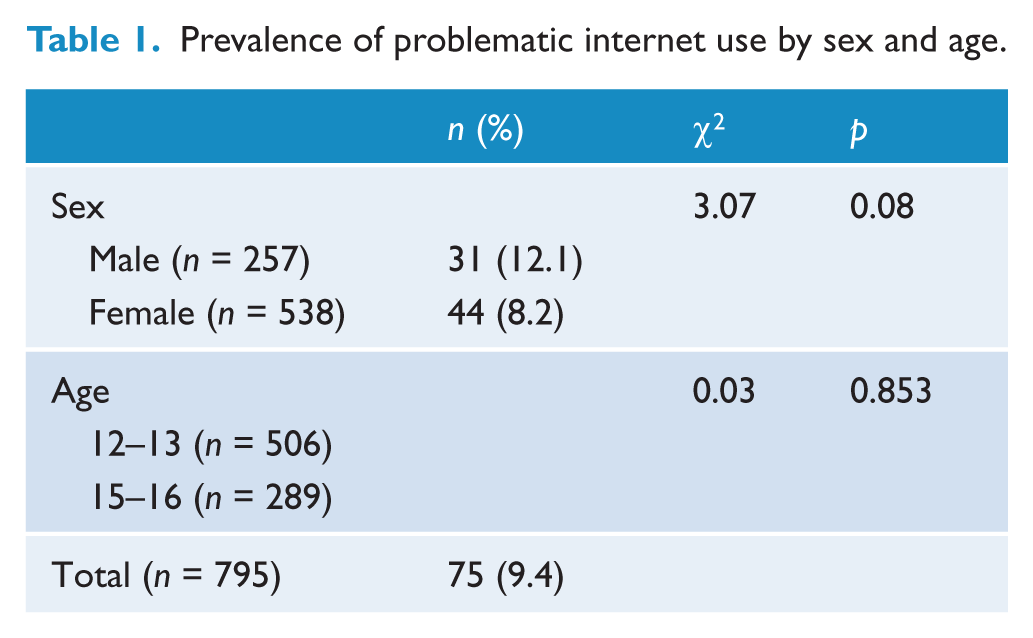
Six adolescents (0.7%) met the criteria for a definite problematic internet use, and 69 adolescents (8.6%) met the criteria for a probable internet addiction. Therefore, 9.4% of the sample (n = 75) were classified as the problematic internet users based on the KS-scale. There were no differences in prevalence of problematic internet use by age or sex (Table 1).
Prevalence of problematic internet use by sex and age.
The BDI, the SIQ and the CBQ scores were significantly higher in problematic internet users than controls (Table 2).
Comparison of adolescents with and without problematic internet use.
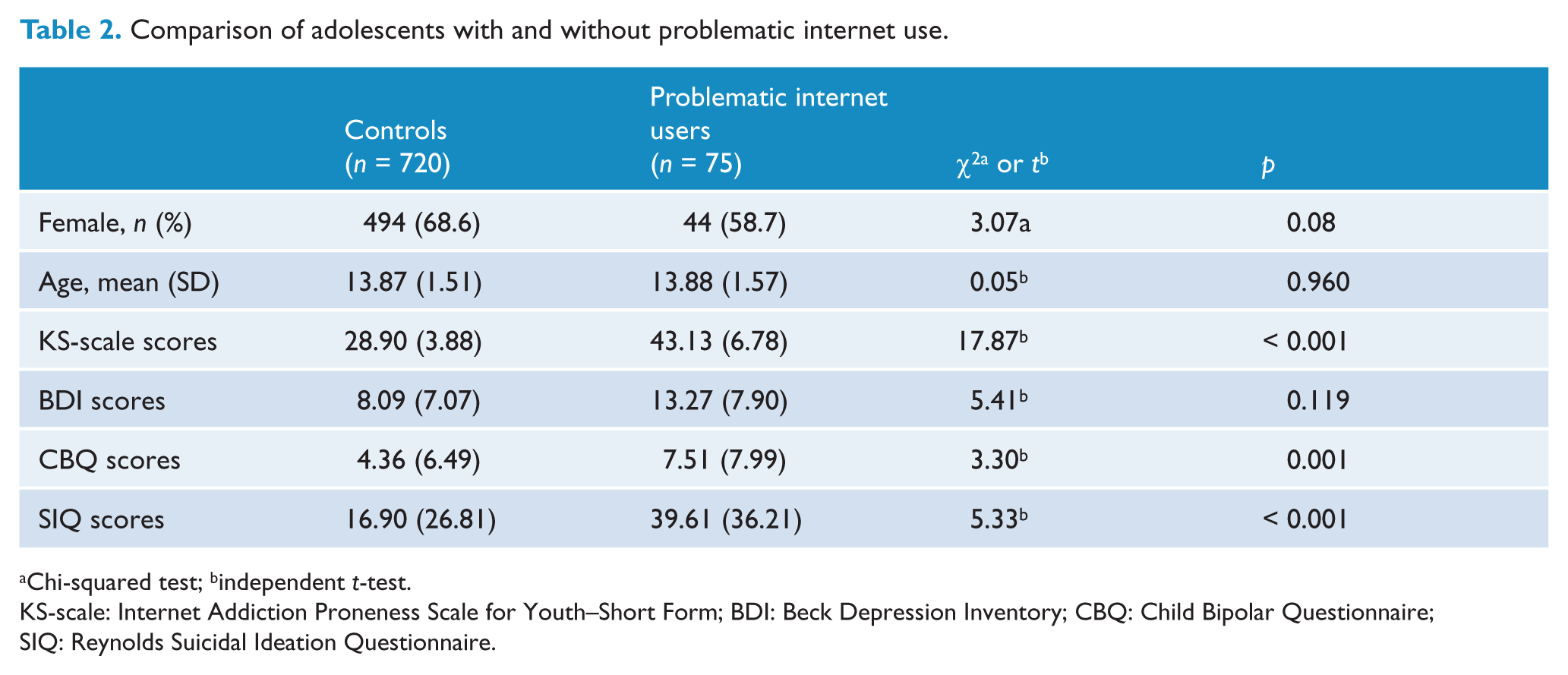
Chi-squared test; bindependent t-test.
KS-scale: Internet Addiction Proneness Scale for Youth–Short Form; BDI: Beck Depression Inventory; CBQ: Child Bipolar Questionnaire; SIQ: Reynolds Suicidal Ideation Questionnaire.
After adjustment with age and sex, the presence of problematic internet use was significantly associated with the presence of depression (OR = 5.00, 95% CI = 2.88–8.66, p < 0.001) and the presence of suicidality (OR = 5.82, 95% CI = 3.30–10.26, p < 0.001) and marginally associated with the presence of probable bipolar disorder (OR = 3.05, 95% CI = 0.96–9.69, p = 0.059) (Table 3).
Prevalence of and odd ratios for depression, suicidality and probable bipolar disorder of adolescents with and without problematic internet use.
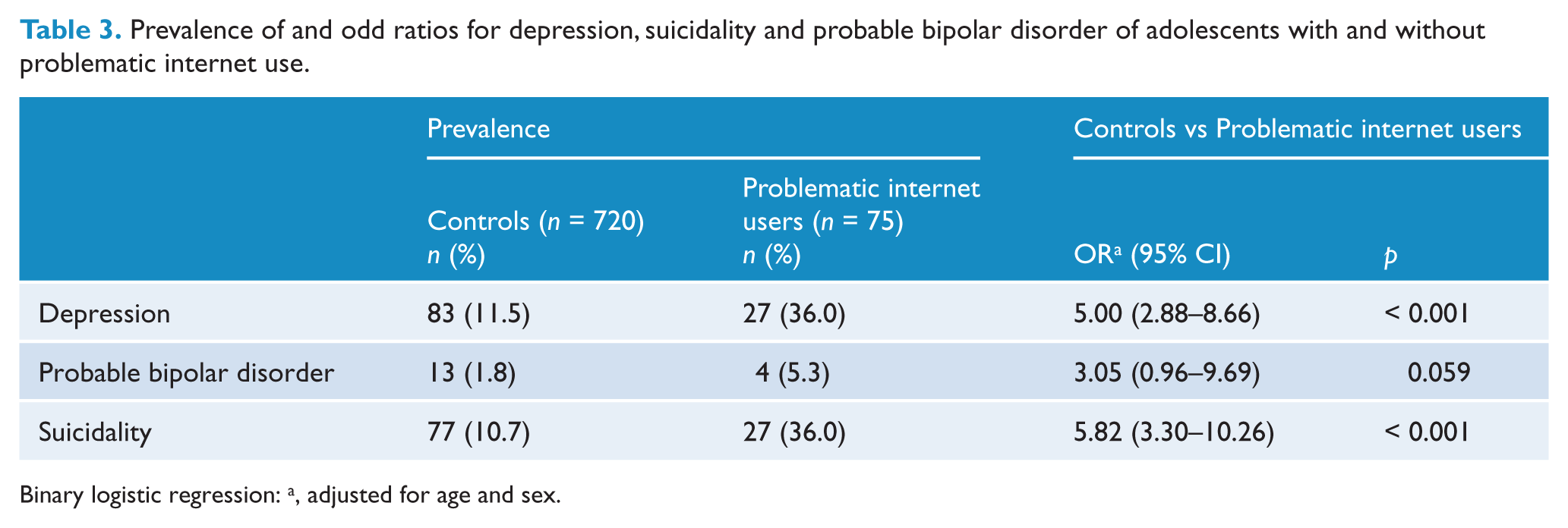
Binary logistic regression: a, adjusted for age and sex.
The KS-scale score was positively correlated with the BDI score (standardized β = 0.33, t = 9.71, p < 0.001), the SIQ score (standardized β = 0.37, t = 10.90, p < 0.001) and the CBQ total score (standardized β = 0.17, t = 4.86, p < 0.001) after adjustment for age and sex (Table 4).
Associations between the KS-scale score and the BDI, the SIQ and the CBQ scores.
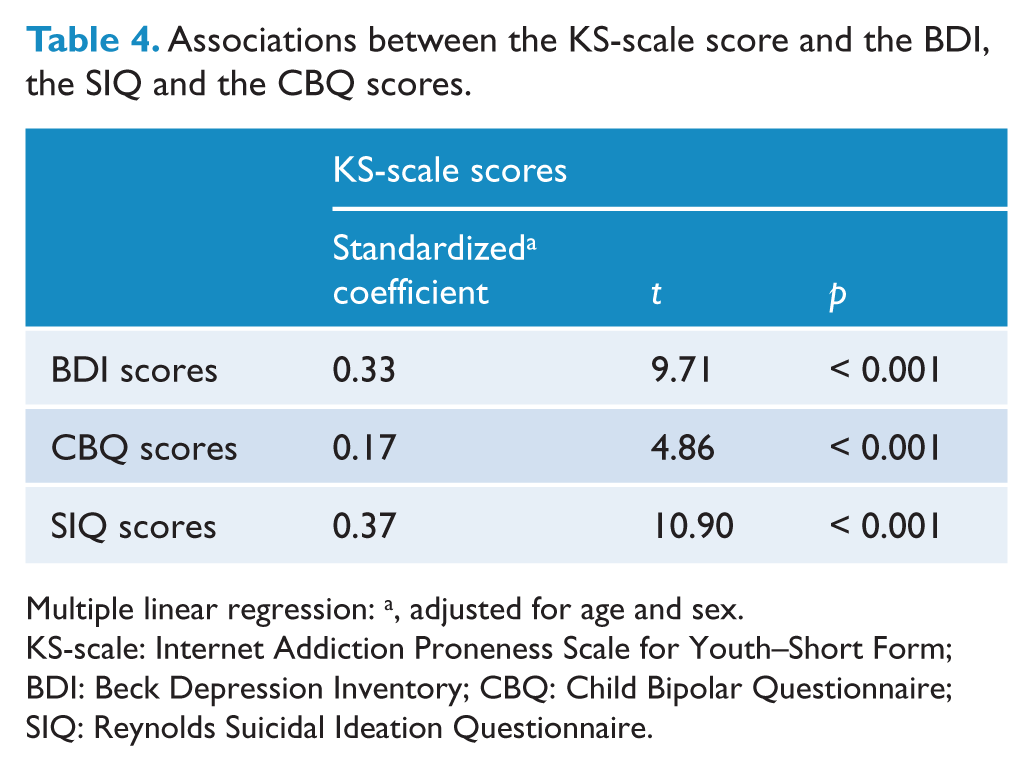
Multiple linear regression: a, adjusted for age and sex.
KS-scale: Internet Addiction Proneness Scale for Youth–Short Form; BDI: Beck Depression Inventory; CBQ: Child Bipolar Questionnaire; SIQ: Reynolds Suicidal Ideation Questionnaire.
To evaluate whether problematic internet use predicts depression, bipolar symptoms or suicidal ideation, or vice versa, we performed path analysis. We first ordered the variables as follows: problematic internet use → depression / bipolar symptoms → suicidal ideation. As shown in Figure 1, problematic internet use significantly predicted depressive symptoms (β = 0.296, 95% CI = 0.214–0.367, p = 0.005) and depressive symptoms predicted suicidal ideation (β = 0.699, 95% CI = 0.631–0.751, p = 0.009) and bipolar symptoms (β = 0.108, 95% CI = 0.023–0.213, p = 0.013). Problematic internet use also predicted suicidal ideation directly (β = 0.115, 95% CI = 0.052–0.193, p = 0.006), but did not directly predict bipolar symptoms (β = 0.05, 95% CI = −0.049–0.166, p = 0.326). Next, we tested an alternative model with a different order of variables. As shown in Figure 2, bipolar symptoms significantly predicted depressive symptoms (β = 0.289, 95% CI = −0.213–0.378, p = 0.005) and depressive symptoms predicted problematic internet use (β = 0.119, 95% CI = −0.005–0.219, p = 0.040). However, bipolar symptoms did not directly predict problematic internet use (β = 0.076, 95% CI = −0.003–0.173, p = 0.071). Suicidal ideation, which is predicted by both depressive symptoms and bipolarity, significantly predicted problematic internet use (β = 0.215, 95% CI = 0.089–0.346, p = 0.005).
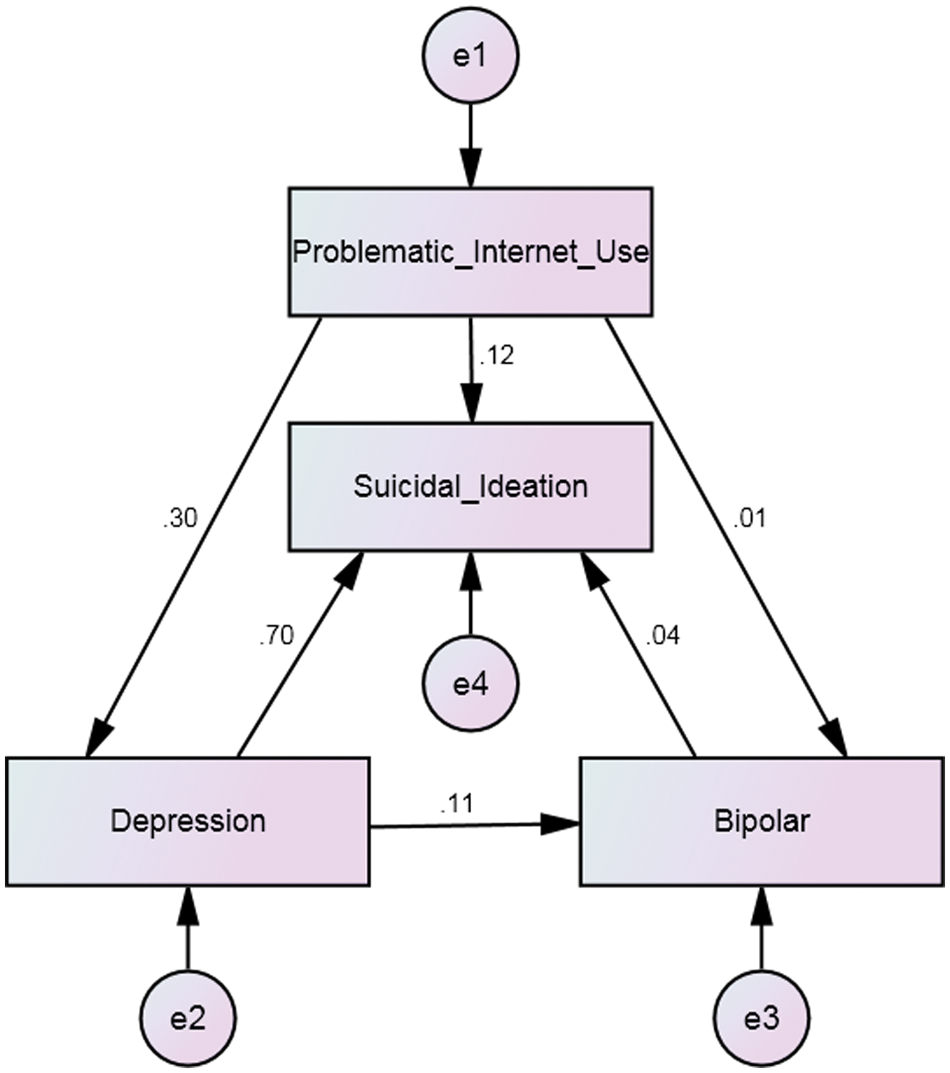
Path diagram showing the effect of problematic internet use on depressive symptoms, bipolar symptoms and suicidal ideation. All values are standardized regression weights.
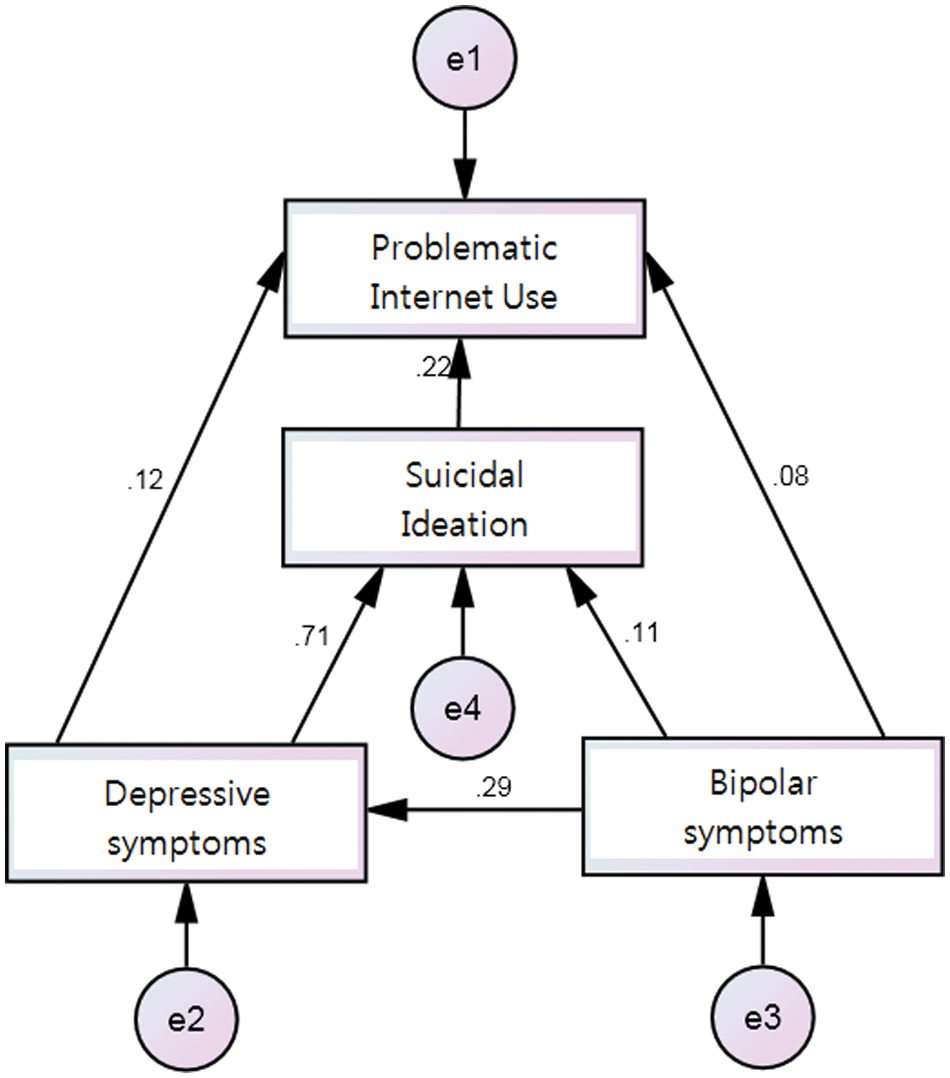
Path diagram showing the effect of depressive symptoms, bipolar symptoms and suicidal ideation on problematic internet use. All values are standardized regression weights.
Discussion
To our best knowledge, this is the first study to examine the association between problematic internet use and bipolar symptoms as well as depressive symptoms and suicidality in the community sample of adolescents. In our study, 75 (9.4%) of the total 795 students met the criteria of definite or probable internet addiction as measured by the KS-scale. This prevalence is lower than that reported in prevalence studies in that problematic internet use was encountered in 13.8–34.3% of Korean junior or senior high school students (Ha et al., 2006, 2007; Jang et al., 2008; Yoo et al., 2004). Some of the discrepancies across studies may be related to the different instruments used to assess problematic internet use. Previous studies used various Korean translated versions of Young’s Internet Addiction Scale (IAS) (Young, 1996), one of the most widely used scales to detect problematic internet use, whereas we used the KS-scale (Kim, 2008), a more recently developed scale. Both scales are 20-item self-report forms, but there are some differences in the domains that are measured. The IAS was developed by a modification of the DSM-IV criteria for pathological gambling, which is coded as an International Classification of Diseases (ICD) and examines internet-related behavioral problems and psychological distress problems. The KS-scale, however, was developed to fit into the realities of Korean society in that the internet is a part of the current lifestyle of the people, and most adolescents use the internet to excess; thus, the criteria focused on withdrawal, tolerance and functional impairment, which are characteristics of alcohol or other substance addiction (Kim, 2008; Koh, 2007). In the 2009 survey by the Korean Government on problematic internet use, which used the KS-scale, prevalence estimates of problematic internet use in adolescents was 12.8% (Ministry of Public Administration and Security, 2010), which is also higher than that of our study but closer to our result than to those of previous studies using the IAS.
In contrast to previous studies that reported a higher prevalence of problematic internet use in males (Ha et al., 2006, 2007; McIntyre et al., 2007; Yoo et al., 2004), we found that there was no difference between sexes. This result may reflect the recent rapid increase of internet use in females. In the 2010 survey of internet use (Korea Internet & Security Agency, 2010), the rate of internet use among males was 83.2%, up 0.8% from a year earlier, whereas use among females was 72.4%, up 5.5% from a year earlier.
Problematic internet use was significantly associated with depression and suicidal ideation, and only marginally associated with probable bipolar disorder. In addition, the severity of problematic internet use was positively correlated with the severity of depressive symptoms, bipolar symptoms and suicidal ideation. Consistent with our results, previous research has also found that problematic internet use is associated with depression (Ha et al., 2007; Kim et al., 2006; Tsai and Lin, 2003; Yen et al., 2007, 2009). In addition, previous studies have reported a greater frequency of suicidal ideation among participants in the problematic internet users than among the controls (Fu et al., 2010; Kim et al., 2006). However, these studies did not examine the effect of depressive symptoms on the relationship between problematic internet use and suicidal ideation. The results of our path analysis indicate that depressive symptoms only partially mediate the relationship between problematic internet use and suicidal ideation; and problematic internet use directly predicted suicidal ideation as well as depressive symptoms.
Our findings illuminate two potential processes: (1) problematic internet use may predispose adolescents to develop depression, probable bipolar disorder and/or suicidal ideation; or (2) adolescents with depression or suicidal ideation can develop problematic internet use as a coping strategy to elevate mood or to avoid stressful life events. Although our study was cross-sectional in design, making it impossible to identify temporal relationships between problematic internet use and depressive symptoms and suicidal ideation, results of path analysis support both causal relationships. Previous longitudinal studies indicate both temporal and casual relationships. For example, problematic internet use was found to increase the risk of depression in adolescents 6 months later (Kraut et al., 1998; van den Eijnden et al., 2008). Conversely, depression was found to predict the occurrence of internet addiction in adolescents 2 years later (Ha et al., 2006; Ko et al., 2009). Actually, there may be a complex transactional relationship between problematic internet use, depressive symptoms, bipolar symptoms and suicidal ideation because development of depression or suicidal ideation can cause problematic internet use, which in turn could worsen the depression and suicidal ideation, and vice versa.
Our study had several limitations. First, the research was cross-sectional in design, making it impossible to identify causal relationships between problematic internet use and depression, suicidal ideation and probable bipolar disorder. A prospective study is necessary to classify problematic internet use as a predictive factor for depression, suicidal ideation and probable bipolar disorder. Second, problematic internet use was assessed via participants’ self-reporting, and could have been under-reported. More structured clinical assessments are needed to more accurately diagnose participants’ problematic internet use. Third, the diagnosis of depression and probable bipolar disorder by clinical and/or structured assessments was not possible in this study. Finally, the target schools volunteered to participate in the study, and our sample was mostly composed of female students. Therefore, the findings may not be representative of all Korean adolescents, and future studies should include a larger, more representative sample.
Despite these limitations, this study extended the findings of previous research by examining the association between problematic internet use and bipolar disorder symptoms in addition to depression and by examining the mediating effect of depression on the relationship between problematic internet use and suicidal ideation. One clinical implication of this study is that it suggests that the treatment of problematic internet use should involve detailed patient assessment and possible concomitant treatment for depression, bipolar spectrum disorder and suicidal ideation.
Footnotes
Funding
This work was supported by the Korea Healthcare Technology R&D project, Ministry of Health & Welfare, Republic of Korea [grant number A101915].
Declaration of interests
The authors report no conflicts of interest. The authors alone are responsible for the content and writing of the paper.