




Abstract
Background:
This paper addresses the issue of court preparation in a lower middle-income country with recently enacted child sexual abuse (CSA) legislation and almost no precedence of standard child witness training packages or protocols.
Aims & methods:
Taking into consideration the potential impact of the adversarial system on children and the legal system’s concerns regarding the risk of contamination of evidence and based on assessment and analysis of children’s mental health concerns and consequent capacities for testimony, it describes a set of court preparation interventions designed for a group of vulnerable, sexually abused children from a childcare institution.
Results:
In recognition of the heightened challenges to their competency to testify in court, the paper highlights the importance of developmental and trauma-focused considerations, particularly in the context of children with adverse childhood experiences, and consequently the role of child mental health service providers in the practice of child forensic psychiatry in the context of CSA.
Conclusions:
It concludes by challenging established assumptions that tend to underlie court preparation programs for child witnesses and by making recommendations for additional considerations to be incorporated into child witness training in order to enhance child witness competency and child mental health and well-being and to augment victim-oriented procedural justice aspects for vulnerable witnesses in the adversarial justice system.
Keywords
Introduction
Children exposed to traumatic events are assisted by various child services, including health, mental health, education, child protection and welfare, and criminal justice systems. In accordance with ensuring care, safety, and the best interests of the child, these service providers are required to integrate trauma- informed care approaches in their interface with children. 1 One area that calls for the incorporation of such trauma-informed interventions is child witness testimony in the context of sexually abused children’s interface with criminal justice systems. 2 Prosecution of child sexual abuse (CSA) cases is complex because of the unique dynamics of CSA since the crime is committed in private and there are rarely any eyewitnesses.3,4 Unlike other crimes, in CSA multiple forms of persuasive evidence are often unavailable, 5 although a conviction “can be obtained based solely upon the credible statements and/or testimony of the child victim.” 6 However, the nature and usefulness of children’s testimony depends on their understanding and memory of the abuse incidents, their verbal abilities and descriptions of what occurred, their concerns about the consequences of providing testimony,7,8 and their mental health and emotional states following the abuse, that is, the traumatic experiences that led to the need to testify, and the negative impact of secondary trauma and re-traumatization of subsequent court processes. 2 Consequently, there can be tremendous pressure on the child witness to provide testimony. 9 Despite these challenges, there are also perceptions that testifying in court would enable children to regain a sense of control and feel empowered, if they are able to testify, and if the legal processes are sensitively conducted. 10 Thus, the increasing presence of child witnesses in the courtroom, and the associated challenges and dilemmas, 10 have created a greater role for mental health professionals in legal and judicial domains. 11 Consequently, there are heightened imperatives for the practice of child forensic psychiatry in the context of CSA, 12 as a subspecialty within the field of child mental health.
Vulnerable Child Witnesses and the Adversarial Criminal Justice System
CSA trials, like other criminal trials, are characterized by the adversarial criminal procedures: children are required to testify in the presence of the accused (albeit in-camera now) and to be cross-examined to verify the credibility of their testimony. Since adversarial criminal procedures do not take into account children’s (developmental) capacities, they tend to be perceived as being insensitive to the physical and psychological needs of child victims. 13 This also results in violating the rights of CSA victims to participation and protection in CSA trial processes as stipulated by the United Nations Convention on the Rights of the Child, 14 the Declaration of Basic Principles of Justice for Victims of Crime and Abuse of Power, 15 and the United Nations Guidelines on Justice in Matters Concerning Child Victims and Witnesses of Crime. 16
India, which is one of the few low- and middle-income countries (LMICs) to have a special law on CSA, has made considerable progress in recent years in CSA trials under the Protection of Children from Child Sexual Offences (POCSO) law. The law provides for the establishment of Special Courts to facilitate speedy trials for CSA victims, “child-friendly” procedures such as (i) nondisclosure of the child’s identity; (ii) allowing for the presence of parents/caregivers and assistance of special educators and interpreters as the child testifies; (iii) disallowing of aggressive questioning and character assassination of the child; (iv) use of videoconferencing where possible; (v) avoidance of the child needing to provide repeated testimony; and (vi) ensuring that the child is not exposed to the accused at the time of recording of evidence. 17 In other words, the Indian CSA law acknowledges the need to consider children as “vulnerable witnesses,” whom Caprioli and Crenshaw define as victims or witnesses (including children), as those who are “determined by the court to be unable to effectively communicate on the stand for reasons including but not limited to language, intellectual or emotional disability, anxiety, fear, intimidation, or age.” 18
Despite special provisions for vulnerable witnesses, however, the CSA law continues to be characterized by adversarial criminal procedures; like in other countries, CSA victims have to contend with the emotional stresses of legal proceedings. 19 These include hostile cross-examination processes and seeing the alleged perpetrator, 20 children’s lack of familiarity with courtroom spaces and procedures, 21 children’s feelings of shame and stigma, 22 of being blamed or even arrested for “making a mistake” or not being believed19,23—all of which contribute to “secondary victimization.” 24 Compounding these difficulties are lawyers’ use of “legalese” and their tendency to ask semantically and syntactically complex questions,25,26 phrased in ways that are beyond children’s levels of understanding; these methods often result in noncomprehension and miscommunication, and unreliable reports from children, 27 exacerbating their already compromised competence to provide testimony.
Imperatives for Court Preparation Interventions for Child Witnesses
Countries such as Canada, the United Kingdom, and the United States were among the earliest to seek to mitigate issues of stress and trauma for child witnesses participating in court proceedings, by developing court-preparation or witness-training programs. The Canadian Child Witness Project’s court protocol, 28 a US-based court preparation program in Tennessee, 29 and more recently the Kids and Teens in Court (KTIC) program 2 have in various ways aimed to alleviate the re-traumatization of child witnesses. They have attempted to do so by demystifying the courtroom through education, reducing the fears and anxieties of testifying in court, through stress management, and empowering children by providing emotional support and systems’ advocacy to reduce the imbalances in court between the accused and the child witness.2,29
The Indian CSA law and its subsequent implementation have, however, remained silent on court-preparation interventions for child witnesses and have made little attempt to emulate best practices from the abovementioned programs. One of the reasons why there are no systematic court- preparation programs for child witnesses in India is because legal personnel fear that preparation is akin to coaching or tutoring. 30 We acknowledge the legitimacy of this concern, as due caution must be exercised in order to avoid suggestibility and tutoring and consequent contamination of evidence. 31 There are, however, other imperatives to be considered, compelling us to view access to justice from a perspective of equity, rather than neutrality. Indeed, it is important to examine positions and practices of neutrality in the discourse of justice, 32 for, as Desmond Tutu famously said, “If you are neutral in situations of injustice, you have chosen the side of the oppressor. If an elephant has its foot on the tail of a mouse and you say that you are neutral, the mouse will not appreciate your neutrality.”
As contended by others working in the domain of child and law, all witnesses—adult, children, and expert witnesses—need to be prepared for providing court testimony 33 ; there is a need for children, especially, to be prepared for what may be a complex and stressful experience, so that they know what to expect and what role to play, in order to provide more accurate evidence, thereby enabling the court to arrive at the truth. 34 Such thought is also in line with Daly’s work on procedural justice in the context of institutional child abuse: highlighting elements of “participation, voice, validation, vindication, and offender accountability,” 35 she puts forth an important rationale for court preparation of child witnesses.
Witness training programs are predicated on the belief that courtroom questioning techniques can be confusing and so hinder the provision of accurate testimony in legal proceedings.36,37 Studies on child witnesses have found that preparation reduces barriers to their providing reliable testimony 34 (Saywitz et al., 1993),39,27 Promoters of witness training, in particular, argue that that pretrial preparation has a favorable impact on the ability of inexperienced witnesses, such as children, to understand lawyers “questions and provide accurate testimony.” 40 Pretrial preparation can reduce the stress of cross-examination by helping witnesses to understand the tactics defense lawyers use to discredit testimony, in particular, enabling witnesses to understand what defense lawyers are aiming to do, and to respond in ways that allow them to be in control of how their evidence is interpreted and assessed, so that their testimony does not get misrepresented. 41 Preparation programs include strategies such as listening carefully to the question posed and speaking up if the question was not understood, recognizing the deliberate attempts of defense lawyers to be belligerent during cross-examination and remaining composed, in order to provide accurate responses.42,43 Most critically, descriptions of the abuse episode, particularly the body mechanics of the abuse, that is, the nature, location, and extent of physical contact, body positioning, and removal of clothing, are all central to the child’s testimony and its credibility. However, children often struggle with this key aspect, owing to shame and embarrassment, their language abilities and spatial orientations, and associated difficulties with verbalizing bodily acts, which present barriers for recall and reporting of such physical mechanics. 44
In the light of the above, keeping in mind the requirements of the adversarial justice system, the rights of the accused to a fair trial in criminal proceedings, and the victim’s access to justice, the systemic challenges are fourfold: (a) to protect vulnerable (child) witnesses and their rights, that is, safeguard their interests in criminal proceedings; (b) to enable children to give voice to their subjective experiences so as to duly participate in decisions that pertain to their lives; (c) to accommodate the unique developmental needs and capacities of children in processes that elicit testimony; and (d) to minimize the impact of secondary trauma and re-traumatization in legal processes, as the justice system seeks to elicit the “truth” from them. The adversarial criminal procedures are unlikely in the foreseeable future to give way to alternative ones. Further, positions of neutrality in relation to vulnerable witnesses, who do not have the same skills and capacities as other witnesses, are not fair options. Thus, court preparation and child-witness training may offer a panacea, in an attempt to level this otherwise extremely unequal playing field, along with the preservation of children’s mental health and well-being.
Against this backdrop, the paper addresses the issue of court preparation, in a lower middle-income country, that is, India, which has relatively recently enacted CSA legislation, with almost no prior formal child-witness training packages or protocols. Based on an understanding of the potential impact of adversarial system on children, and on detailed developmental and mental health assessments to ascertain (individual) children’s capacities to provide testimony, the paper describes a set of court-preparation interventions that were developed and subsequently implemented with a group of vulnerable child witnesses. These interventions constitute one of the country’s first efforts to develop and deliver a systematic package of trauma-focused court preparation interventions for sexually abused child witnesses in a unique context, not only of being in a residential childcare institution but with multiple (other) adverse childhood experiences (ACEs).
Methodology
Case Description
The child witnesses, who were all girls between the ages of 11 and 18, were drawn from ACEs in a residential care institution, when they were sexually abused by the institution staff (and other unknown persons visiting the institution). They were from vulnerable family backgrounds characterized by low socioeconomic status, lack of schooling, parental marital conflict or single-parent families, family dysfunction, orphaned and abandoned, with experiences of physical, sexual, and emotional abuse and neglect, and discrimination, even prior to their experiences of abuse in the child care institution.
A key distinguishing feature of the context and their implications for evidence relates to the nature of sexual abuse. Each child had suffered multiple episodes of abuse, by multiple perpetrators (21 of whom were not only known persons such as the staff but also many unknown persons from outside the institution, of whom there was no count or record), over relatively long timeframes (ranging from 2 to 4 years). Furthermore, a large number of children were abused, and since the children shared a space, they were aware not only of their own experiences but also of others as they had witnessed incidents of abuse. They were therefore were expected to recount multiple experiences of abuse as part of the testimony, both as victims and witnesses of CSA.
Another distinguishing characteristic of this group of children was not only their individual but also their collective mental health status, and the latter’s influence on court testimony. The children’s experiences of complex and chronic deprivation, abuse, and trauma manifested in various emotional and behavioral problems and mental health problems, ranging from post-traumatic stress disorder (PTSD), mood disorders, anxiety, self-harm, withdrawal, and other forms of emotional dysregulation to aggression and oppositional behavior. Since one of the methods of CSA in the institution had been drug-facilitated sexual assault, it was challenging to persuade children to adhere to psychiatric medication and treatment regimens. Furthermore, the emotional state of one child continually influenced that of others, which was challenging as all children had to stay together until the completion of the court deposition. On multiple occasions, children’s individual emotional upheavals, impatience in children who had completed their testimonies and anxiety in those who had not, often disturbed the equilibrium necessary to ensuring the successful court testimony of the others.
A third issue with a potential to impact the legal processes pertained to children’s confinement in a childcare institution, before and during the trial processes, in the absence of family support or social networks. Despite orientation and training of state-appointed counselors/caregivers and security personnel accompanying the children to court processes, they remained largely insensitive to the children’s psychosocial and mental health concerns. This exacerbated the challenges for creating a supportive and holding environment for these children as they prepared for court testimony.
A further challenge for the trial was of displacement and relocation of the children. Since there was a better equipped child-friendly court in another state, and in order to ensure an impartiality in the trial, they were shifted from their home state to another state. This increased the number of displacement and relocation experiences they had already suffered since being rescued from the institution in which they were abused. They were housed in a state home for children for the duration of the trial, where they experienced further adjustment issues, including stigmatization by other children, that is, permanent residents of the home. Such factors made for a different challenge compared to abuse of a single child, from an intact family, with supportive family and social relationships and networks, or a single incident of abuse (or even multiple incidents) by a single perpetrator over shorter periods of time.
Finally, the children formed a large proportion of the prosecution witnesses, with the case primarily reliant on their experiences and narratives of abuse; although medical evidence was collected, given the chronic and long-standing nature of the abuse; and since much of it was discovered (following raid and rescue operations) long after many of the incidents occurred, it could only serve as corroborative evidence in some instances. Given that the abuse occurred within a childcare institution, with little to no access to outsiders, other (corroborative) eyewitness testimony was also relatively limited. Consequently, the children’s testimony was the most critical determinant of the outcome of the case.
Methodology for Court Preparation
Phase 1: Pre-intervention—Assisting Legal Teams with Child Interviews and Related Investigation Processes
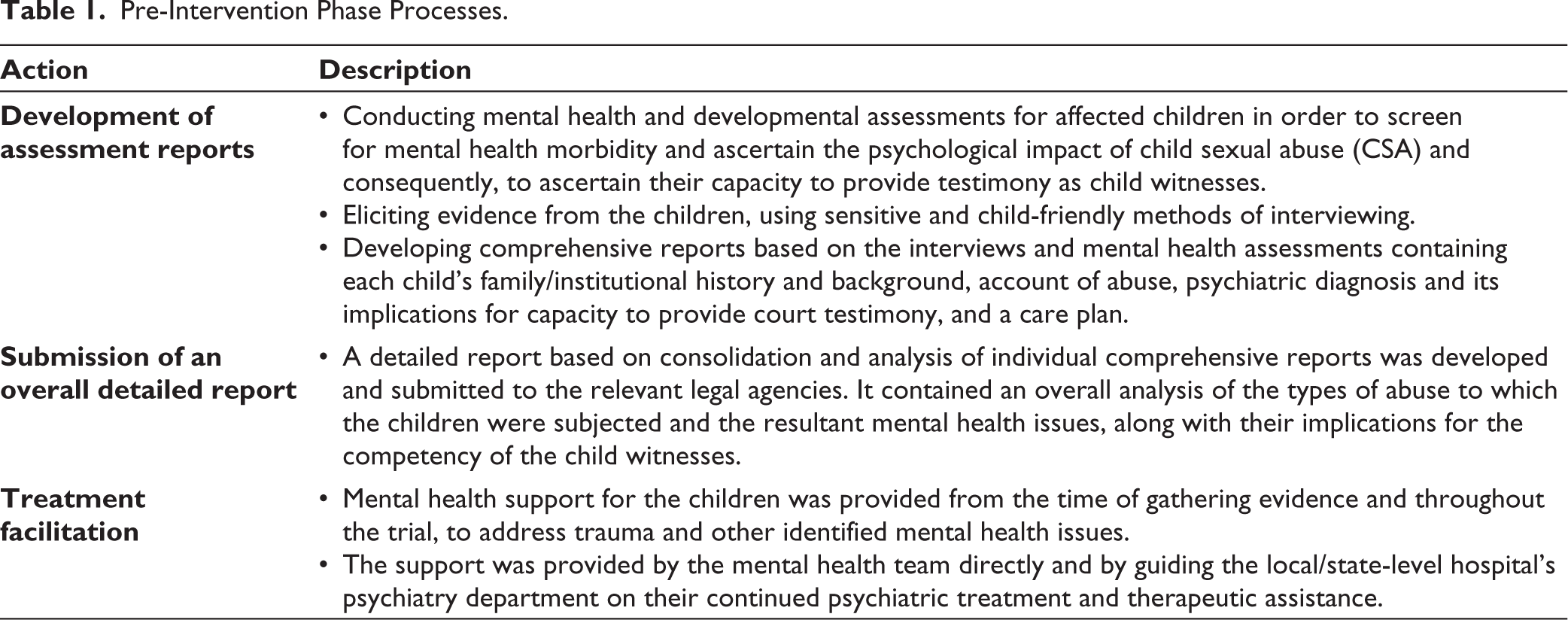
Following the directive of the country’s apex court, a team of mental health professionals (of psychiatrists, psychologists, and social workers), from a specialized department of child and adolescent psychiatry of a tertiary mental health facility, provided support to the relevant legal agencies on child interviews and related investigation processes, in the form of assessment and facilitation of treatment. These processes are summarized in Table 1.
Pre-Intervention Phase Processes.
Phase 2: Analysis of Children’s Mental Health Concerns and Consequent Capacities for Testimony
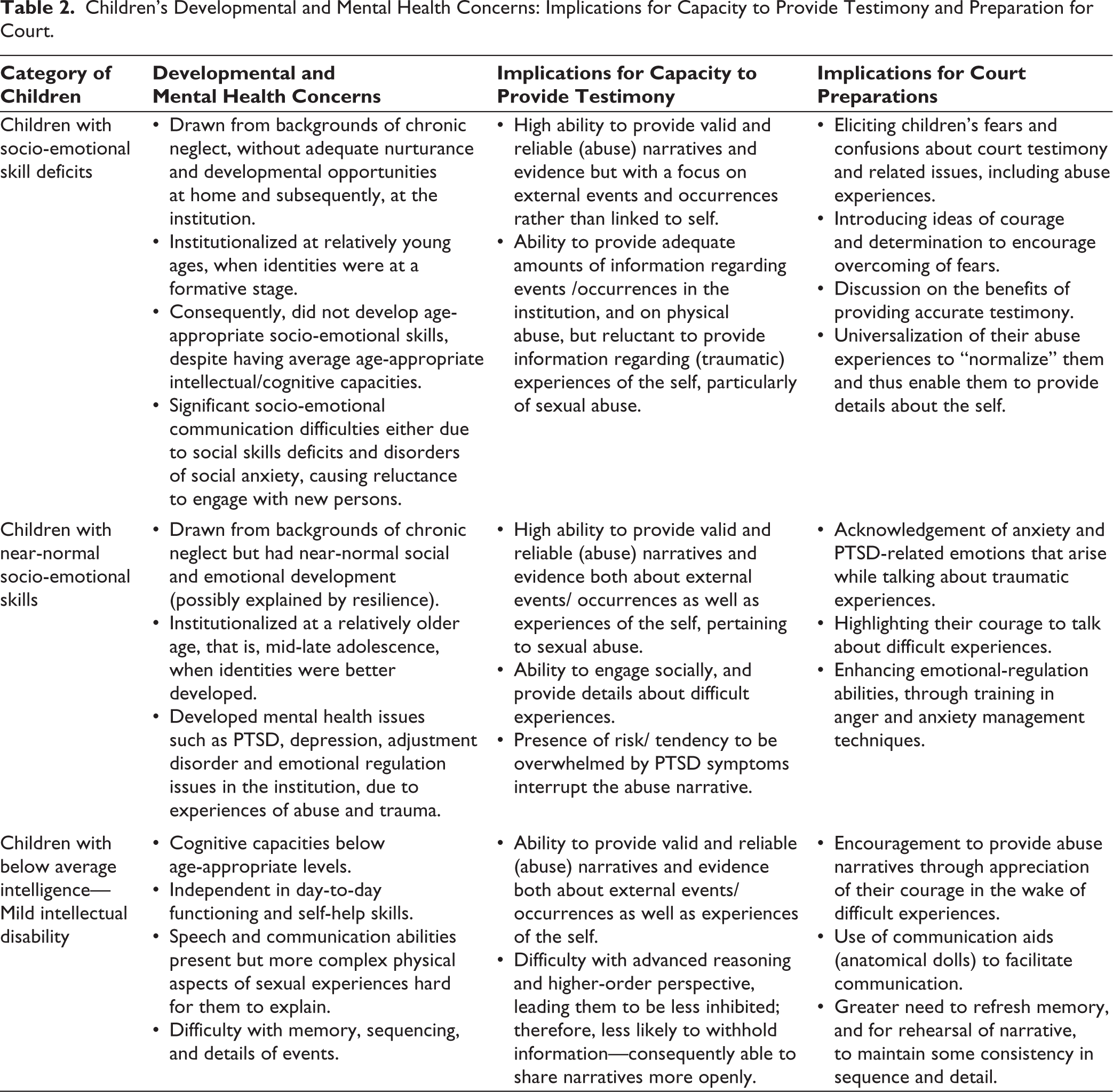
The mental health team analyzed the individual psychosocial and mental health assessment reports for each child, including the nature of the individual statements of the children that had been prepared by the investigative officers (all submitted to the court as part of the evidence). In this, due consideration was accorded, individually and collectively, to children’s vulnerabilities and adverse circumstances. Based on this analysis, the children were categorized into three subgroups, in terms of developmental and mental health characteristics; consequently, there were differential implications for each group’s competency to provide testimony, and for court preparation (see Table 2).
Children’s Developmental and Mental Health Concerns: Implications for Capacity to Provide Testimony and Preparation for Court.
Phase 3: Development of a Conceptual Framework and Approach for Court-Preparation Interventions
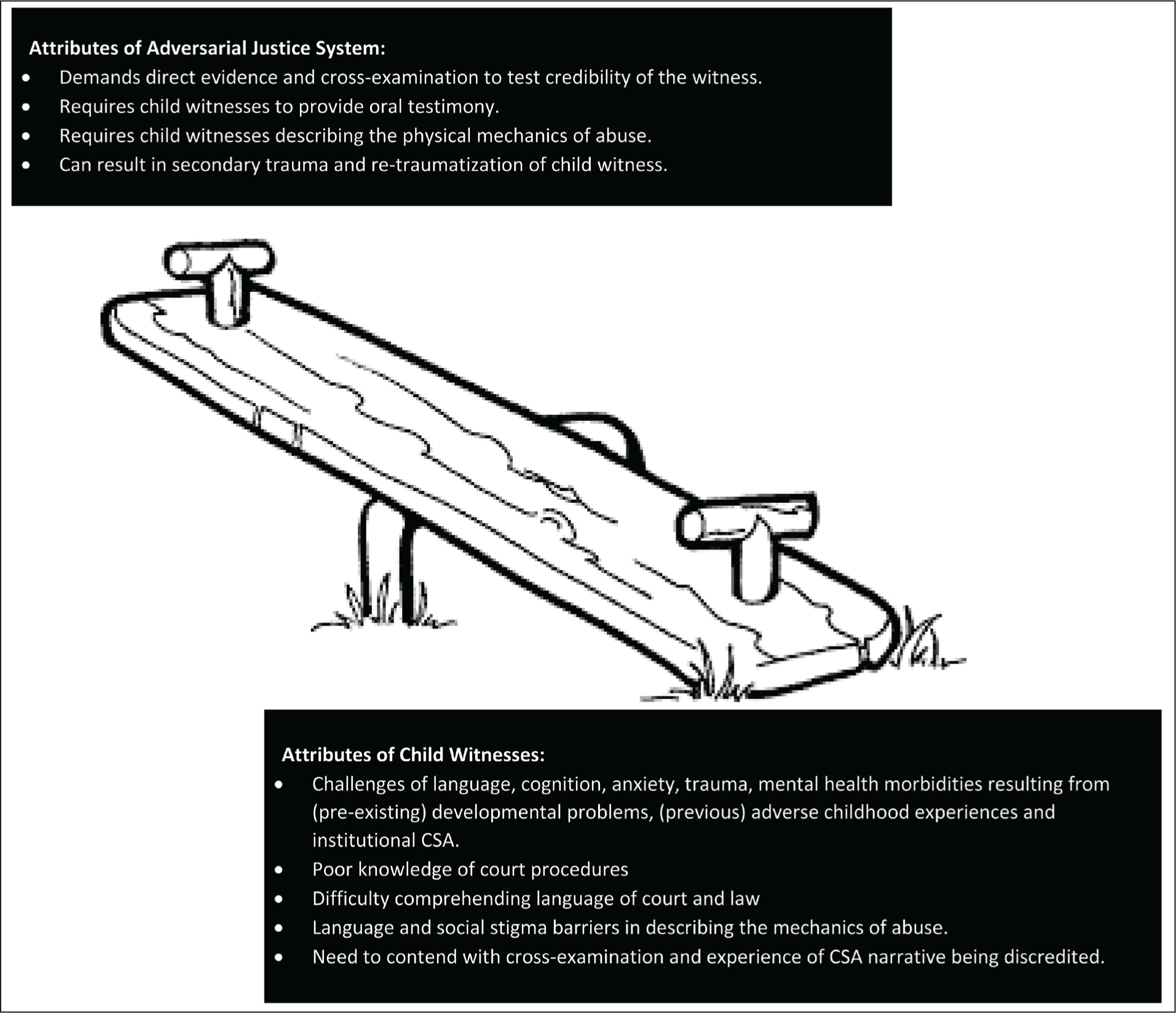
Following from the analysis of children’s mental health and developmental concerns, in the context of their experiences of adversity, including CSA, a conceptual framework was developed, outlining the tensions and challenges of child witnesses vis-à-vis the requirements of providing testimony in the adversarial justice system (see Figure 1). As reflected in the framework, children had to be equipped to navigate the legal system requirements, in order to be able to provide accurate testimony, with minimum harm to their mental health and well-being. Consequently, court-preparation interventions were then designed, in response to the challenges and tensions highlighted by the conceptual framework, and are based on
Information from the public prosecutor on what the trial process in an adversarial criminal justice system would entail, that is, how the deposition would be structured and possible areas of questioning by the prosecution and defense were also incorporated into the court-preparation activity design. Children’s developmental and mental health concerns, and competency levels, to enhance their capacity to provide testimony.
Phase 4: Intervention—Design and Implementation of Activities for Court Preparation for Child Witnesses
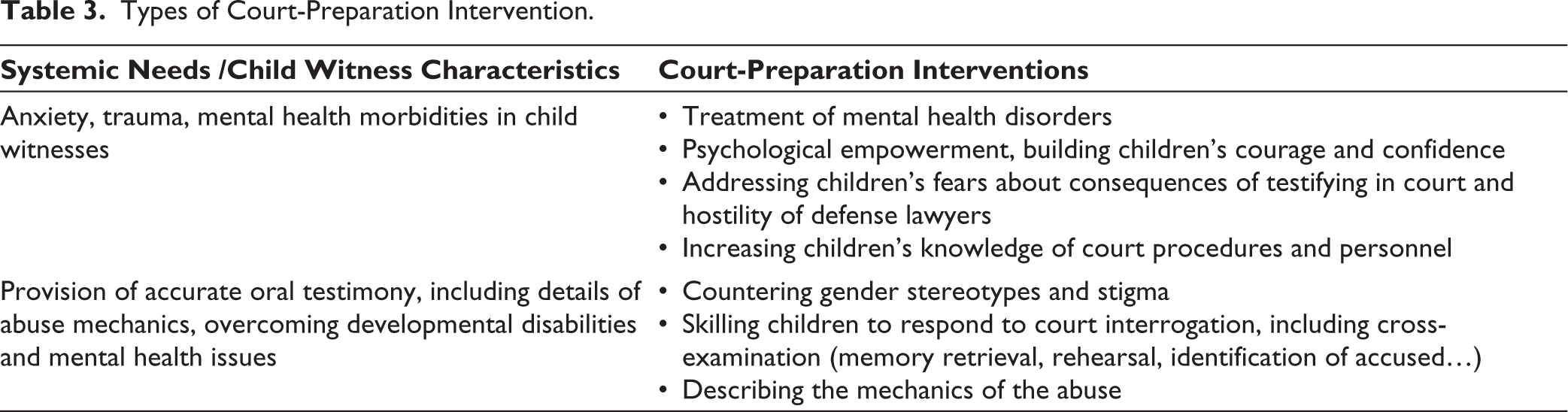
The objectives of court-preparation for child witnesses are to (a) enhance the competencies of individual child witnesses in accordance with their specific developmental and mental health needs and vulnerabilities; (b) help children to feel motivated and empowered in the courtroom, including to reduce shame and stigma associated with the abuse; (c) minimize the impact of re-traumatization experienced in recounting their abuse experiences, and facing the defense lawyers; and (d) enable children to be competent witnesses and provide accurate testimony in court, in particular, to describe the body mechanics of the abuse. In the light of these objectives, court-preparation interventions, namely creative, activity-based methods, were designed and implemented by members of the mental health team, at individual and group levels (as detailed in Table 3) to respond to systemic needs and child witness characteristics.
Types of Court-Preparation Intervention.
The interventions, described in detail in the Results section, were provided in three rounds—(1) a month before the trial procedures began for all children (group interventions); (2) a few days before a given child’s trial was scheduled (individual interventions); and (3) on the day before a given child’s trial (individual interventions).
Results
Interventions for Preparation of Child Witnesses for Court
The range of court-preparation interventions is described in terms of their (a) primary objectives; and (b) content, techniques, and manner of implementation. Where applicable, justifications are given on how a given intervention was careful to avoid contamination of evidence.
(a) Mental Health and Trauma-focused Interventions
Objectives:
To alleviate children’s distress, and enhance emotional regulation, in the wake of trauma and anxiety. To prime children for legal processes, by facilitating psychological empowerment, motivation, and confidence-building. To learn strategies to maintain composure and equanimity in order to enhance socio-emotional competencies for providing testimony.
Content and Techniques:
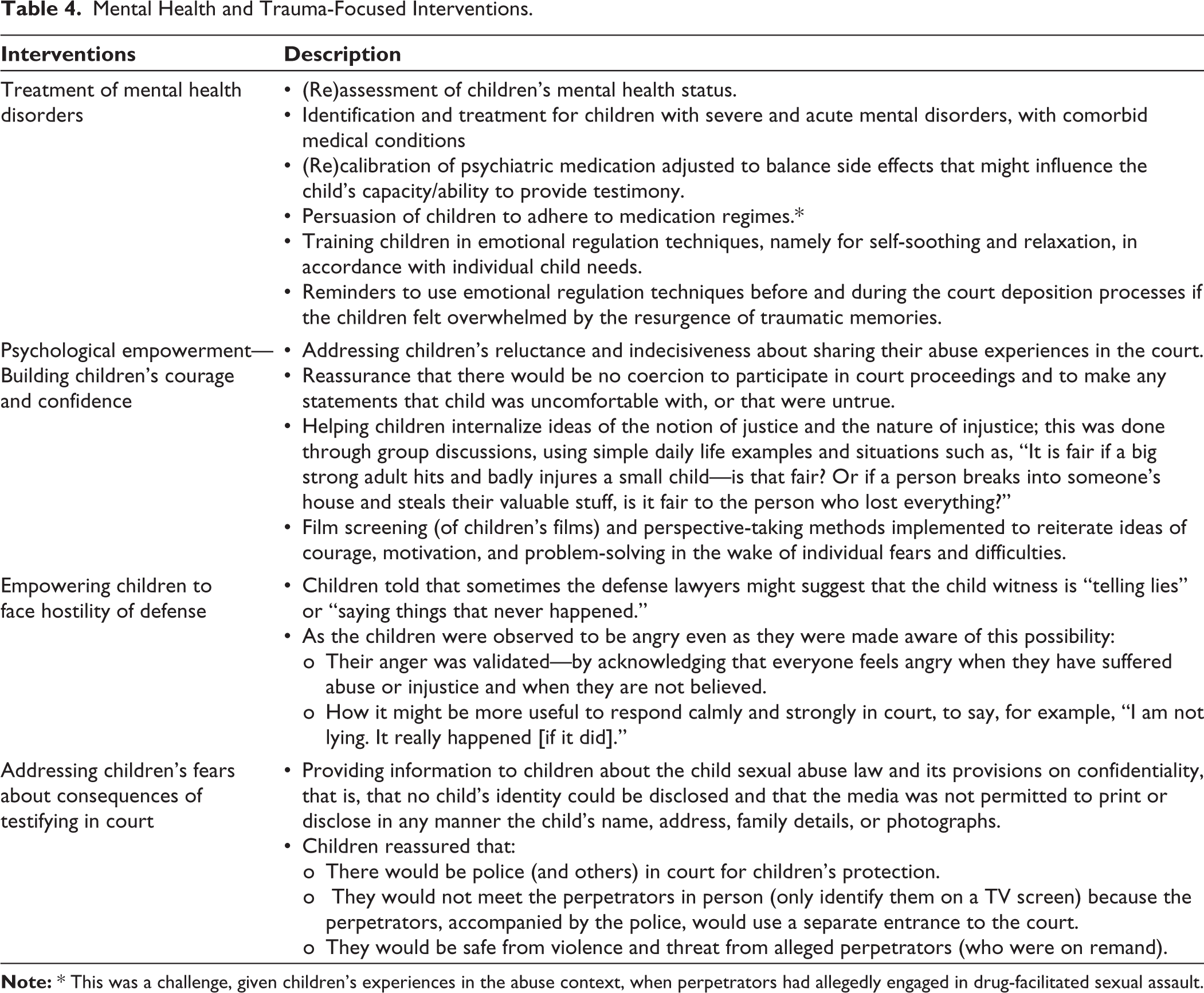
This range of interventions, initiated about a month before the trial processes, focused on treatment of mental health disorders and psychological empowerment, with a view to building children’s courage and confidence, equipping them to withstand the possible hostility of the defense, addressing their fears about the consequences of providing court testimony, and their worries about (gender-based) stigma and discrimination (as summarized in Table 4).
Mental Health and Trauma-Focused Interventions.
(b) Increasing Children’s Knowledge of Court Procedures
Objectives:
To make the court space less intimidating and more familiar to children, thereby reducing the anxiety relating to unknown spaces, persons, and procedures. To provide children with information on the geography and facilities available to them in court as well as on the court personnel.
Content and Techniques:
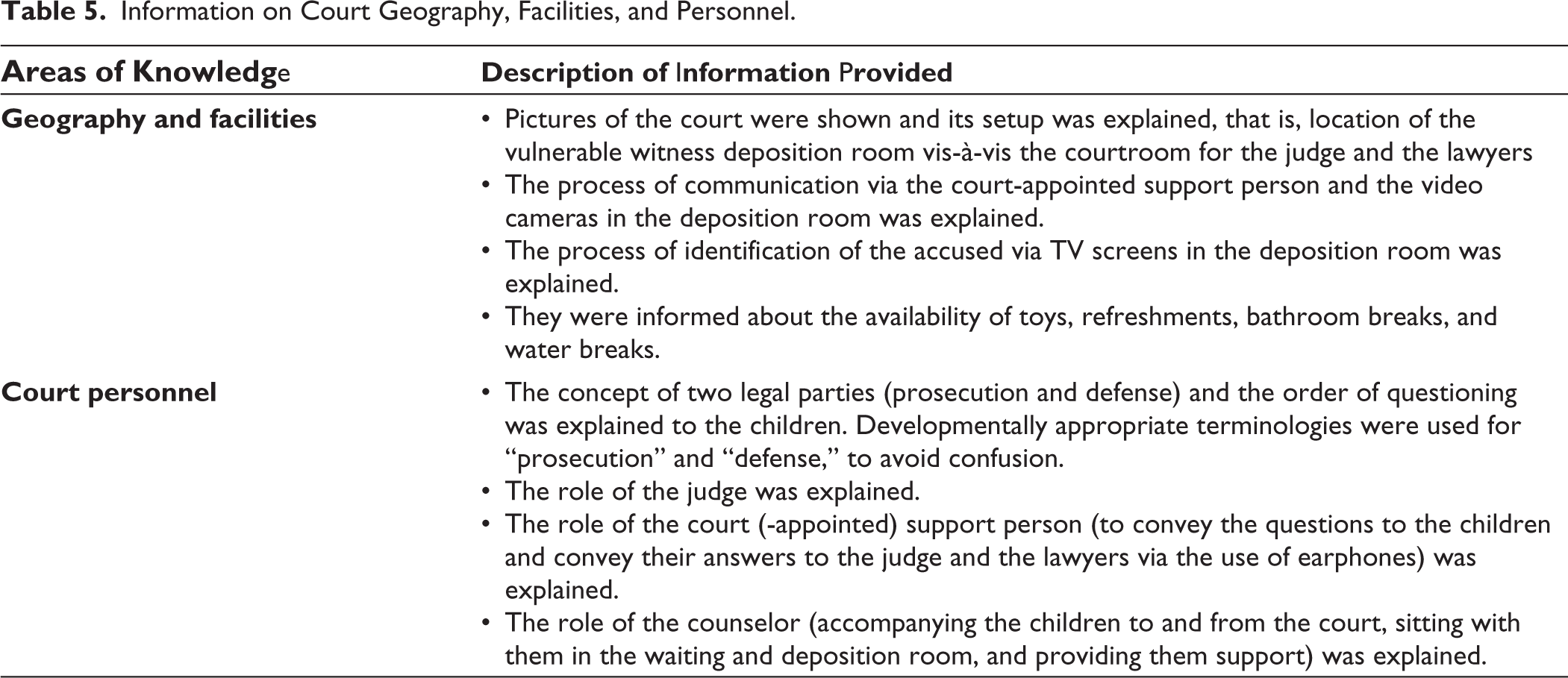
Table 5 summarizes the information provided to the children about the court geography, facilities, and court personnel.
Information on Court Geography, Facilities, and Personnel.
(c) Increasing Children’s Competency to Provide Reliable Testimony
Objectives:
To ensure greater accuracy in children’s testimony, especially given the relatively long periods of time that may have elapsed between the abuse incident(s) and the trial. To assist children with cues to refresh memory, rehearse their narratives, and identify alleged perpetrators, without contaminating the evidentiary processes through suggestibility and tutoring.
Content and Techniques:
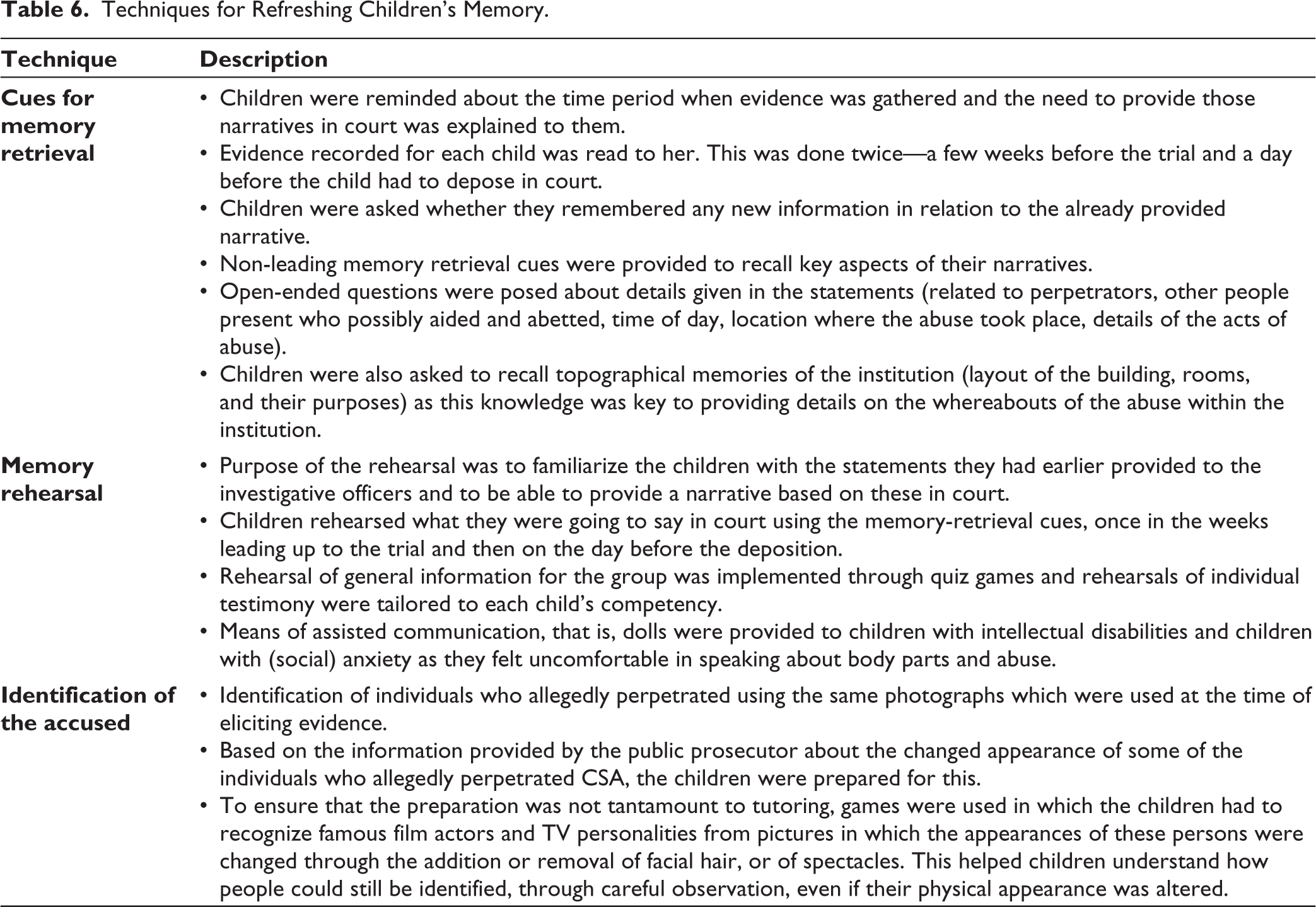
As summarized in Table 6, various techniques were used to help children refresh their memories in preparation for providing testimony. It is noteworthy that the Model Guidelines developed by the Ministry of Women and Child Development, Government of India, 45 for the implementation of the CSA law, permits the reading of the child’s statement to them in preparation for the trial. This refers to the child’s own statement, provided by her at the time of evidence eliciting. At the time of court preparation, open-ended questions were posed to her, largely comprising of “who-where-what” questions to provide a scaffolding for the child’s narrative and memory. There were no additions or embellishments by the supporting mental health professional, thus minimizing the risk of suggestibility or tutoring.
Techniques for Refreshing Children’s Memory.
(d) Skilling Children to Respond to Court Interrogation
Objectives:
To assist children with the difficulties in understanding “legalese” or the language of the court. To increase children’s competency, primarily their comprehension of questions put by the court, to avoid inaccurate responses.
Content and Techniques:
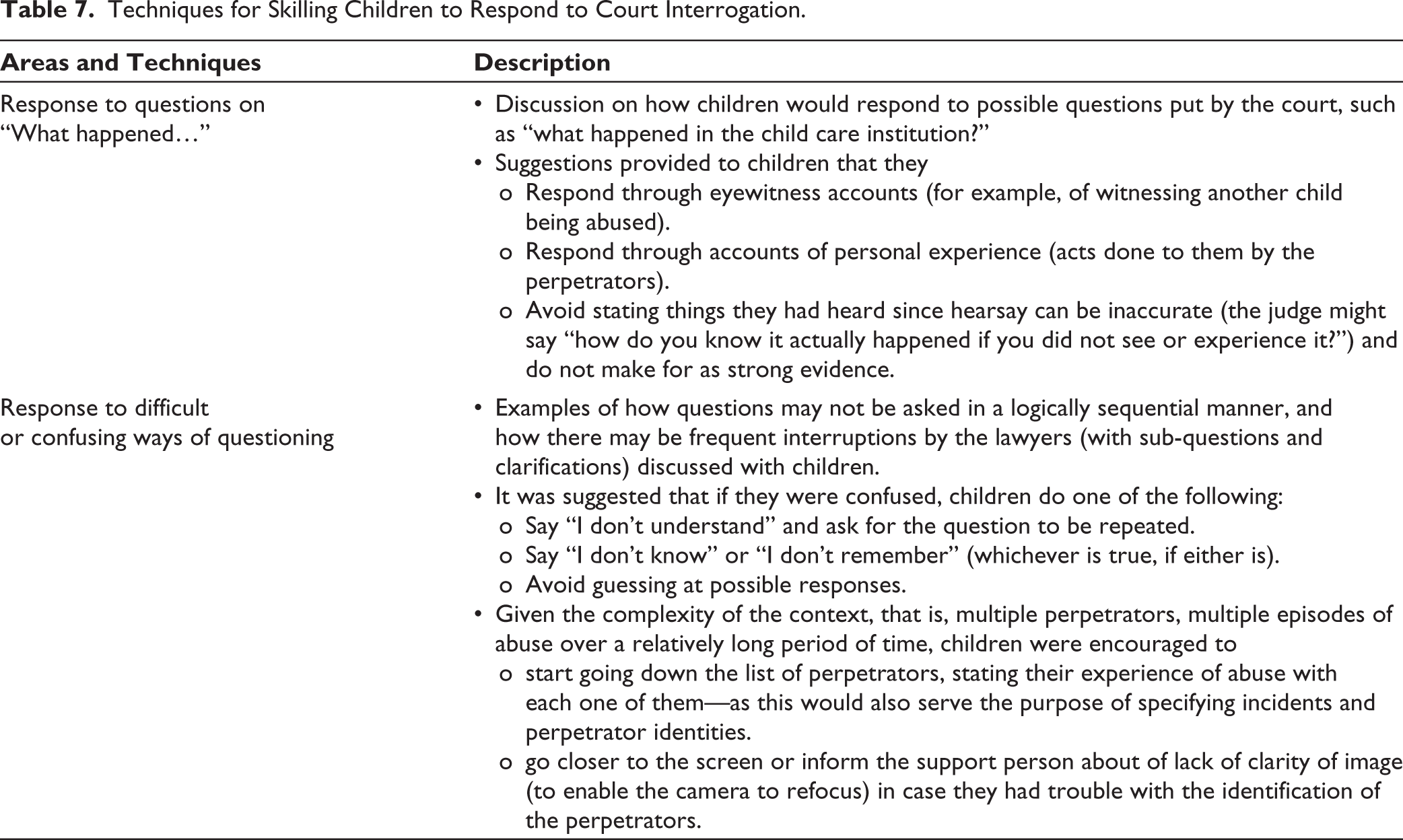
Table 7 details how children were provided with broad guidelines on how to respond to various types of questions posed by the court, with a focus on technique of response, not on actual content, thereby avoiding any risk of suggestion and tutoring.
Techniques for Skilling Children to Respond to Court Interrogation.
(e) Enabling Children to Describe the Body Mechanics of Sexual Abuse
Objectives:
To counter gender stereotypes and stigma, and overcome the taboos of discussing sexuality-related issues, which often results in descriptions of sexual offences that are vague and unspecific, consequently underplaying their nature and severity. To equip children with the language to name (private) body parts and therefore describe acts of abuse, in the kind of detail required by the court to decide on the degree of punishment.
Content and Techniques:
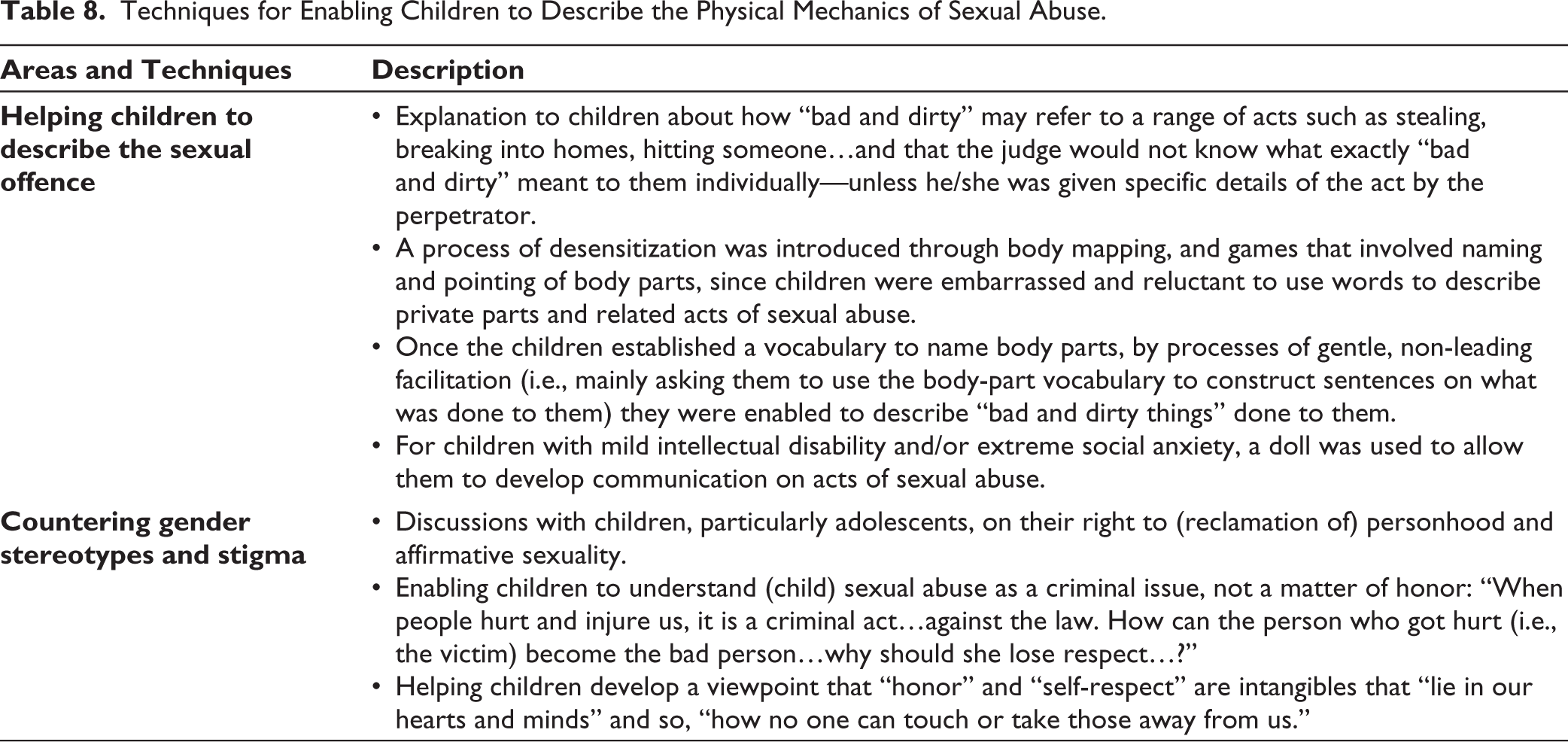
Conscious of the dangers of suggestibility and tutoring, body mapping techniques, along with other naming and pointing games were used solely to ensure that children had a language and vocabulary to describe acts of sexual abuse (refer to Table 8). Considering that the forensic interviewing processes for eliciting the primary evidence had been completed long before, such techniques, including dolls, were only used as aids to help the children be more comfortable with talking about their bodies, especially in cases of children with developmental and communication disabilities. Discussing social stigma and gender stereotypes relating to abuse formed the psychological counterpart to enabling children to talk about their bodies and related experiences.
Techniques for Enabling Children to Describe the Physical Mechanics of Sexual Abuse.
Outcomes of Court-Preparation Interventions
Based on children’s evidence, and the details provided on penetrative sexual assault, the court found nearly all the accused male perpetrators guilty of the offences of aggravated penetrative sexual assault under the POCSO Act, thereby handing down the maximum punishment of life imprisonment; female perpetrators were also punished for aiding and abetting CSA. Some of our key observations in regard to the helpfulness of the pretrial and court preparation interventions are as follows:
Children received the requisite support to maintain and enhance their mental well-being and competency to testify in the court. Children with severe PTSD were able to successfully testify by providing elaborate narratives of their personal abuse experiences, which prior to preparation, they found difficult to do. Children with intellectual disability were able to provide sufficient detail of their abuse to form critical evidence for conviction. Some of the children who remained silent throughout the preparation processes were unexpectedly vocal and articulate in during the trial. When one such child was asked about this, particularly as she had never previously disclosed her abuse experiences even in initial investigative and therapeutic interviews, said “I thought about it last night and just decided to tell them [the court] everything.” Another child referred to discussions in the preparation, stating “you said it was our big chance…so, I just decided [to tell].” Some said that they had discussed the decision to “tell or not to tell in court” with their peers—and how some of their peers had said that “we must tell.” Thus, it appears that children had been thinking about and processing the preparation interventions, including through discussions among themselves. Upon completion of their individual depositions, nearly all the children reported feeling more confident and empowered as they believed that they had played an important part in the process of obtaining justice.
Discussion
One of the limitations of this work lies in the fact that no objective measures were used to examine the effectiveness of the court-preparation interventions. This was because of the circumstances of the case, particularly because of the risks associated with including trauma-exposed children. 46 While we acknowledge, therefore, that the work is based on the authors’ observations of children’s testimony, we have attempted to overcome this limitation by presenting this work as a case study, to numerous judges and prosecutors across the country. During the course of the judicial education programs that some of the principal authors conduct on a regular basis on CSA, the officers, upon due consideration of the interventions, have consistently acknowledged that they contain no elements that could potentially result in contamination of evidence, by way of suggestibility or tutoring; they also conceded that there was no violation of the rights of the accused, and that there is indeed need for legal and mental health domains to collaboratively initiate such methodical child witness court-preparation programs.
The importance of this work is twofold: first, to the best of our knowledge, no other paper on court preparation for child witnesses describes interventions that provide a framework for mental health professionals and court personnel on how to prepare children for court processes; second, our work, at present, is the first and only (documented) attempt across low-to-middle-income countries to systematically prepare children for court processes. This is the only attempt, at present, to support children in ways that comprehensively take into consideration the many complexities that characterize child witness testimony and court preparation, namely: (a) judicial concerns about child witness suggestibility and tutoring; (b) the nature of the adversarial criminal justice system and its potential (negative) impact on vulnerable children; and (c) the trauma, mental health concerns, ACEs, and other vulnerabilities of children. In other words, it sets out methods and techniques to support children to provide accurate narratives of difficult experiences in court, thereby assisting the court in establishing the truth, and also providing a much-needed road map for mental health professionals and legal (support) personnel in the country on assisting child witnesses in court processes.
Second, while the approaches and interventions on court preparation undertaken here may corroborate existing ones, there are also some key differences: the Canadian court- preparation protocol, for instance, describes a stress-reduction component that includes working with children on relaxation techniques, cognitive restructuring, and systematic de-sensitization. 28 However, it does not include treatment of severe and acute mental health problems, such as PTSD and/or other mood and anxiety disorders that are common consequences of CSA. The traumatic experience of CSA relates more to PTSD than other anxiety disorders. 47 Linked with alterations in brain structures and possibly involved in attention, encoding, and consolidation of memory,48,49 PTSD can have varied effects during the process of children providing testimony. It could enable focus of attention on the main stressor, thus causing it to be well remembered, 50 or it could dampen the recall of specific, episodic memories of the abuse due to suppressing retrieval, to avoid the strong negative effect associated with the memories.51,52 In recognition of how child witnesses competency could be severely impacted by PTSD, our court-preparation program, perhaps only similar to that which was developed by the KITC program, 2 was founded on trauma-focused care, including clinical interventions for resultant mental health morbidities.
Another unique feature of our court-preparation interventions was that they specifically focused on preparing children to describe the physical mechanics of sexual abuse. This intervention was in recognition not only of children’s developmental, particularly linguistic abilities, and the consequent barriers to detailing acts of abuse, 44 but also of the social stigma and gender stereotypes associated with CSA in the Indian context, and their effects on the child’s testimony, including recantation. 53 The body mapping method that we employed is a well-known qualitative technique, used to facilitate storytelling and experience-sharing in vulnerable groups 54 and in contexts of young people’s sexual health, 55 and was used explicitly to enable children to provide accounts of their abuse experiences.
The use of anatomical dolls in forensic interviewing remains a contentious issue as it can compromise the accuracy of testimony by introducing suggestibility and tutoring risks.56,57 However, there is an alternative viewpoint that suggests that visual aids and dolls may be used for obtaining further clarificatory details on the abuse, that is, following the elicitation of primary information. 58 Our decision to judiciously use dolls in the court preparation processes was also predicated on principles of equity and procedural justice—according to which we endeavored to ensure the inclusion of meta-minorities within the child witness group, particularly those with developmental disabilities and communication impairments, in the processes of justice.
Furthermore, the inductive approaches applied in a particularly unique context of CSA of children in adverse circumstances have enabled many lessons (as discussed below), and that could be incorporated into future work on the development of child witness court-preparation packages, in accordance with the CSA law as well as in keeping with the sociocultural needs and realities of India. Our work highlights certain assumptions made in the literature on court preparation and child testimony and/or the judicial system, which do not always hold true in every situation of CSA and child testimony.
First, there is an almost invisible assumption in the literature that children who come to court have access to supportive families and social networks, and that families, apart from a beneficial impact, have little influence on the child’s testimony. As illustrated by our work, such children, in the absence of family and social networks, have little moral and psychological support to even tell the truth, thus exacerbating their fears and hesitations in providing testimony, thereby at least countering the judicial fear of tutoring. Also, violence and dysfunction in the family, power dynamics, awareness of the impact of testimony (on the family), and fragile social networks serve as barriers to CSA disclosure. 59 Interestingly, family hierarchies are reflected in childcare institutions, with children occupying the lowest rung of the ladder,60,61 thus having adverse effects on their decisions to disclose and report abuse. Additionally, in the case of children in institutions, and their dysfunctional relationships with families, contact with the latter is likely to adversely impact children’s disclosure and reporting. 62
A second assumption is about a broad nonspecific acknowledgement of child witness vulnerability and competency. Children’s ability to testify is viewed largely as their cognitive ability to comprehend simple questions, tell the difference between true and false, understand the moral obligation, to tell the truth, and have the skills to communicate the memories of the event in response to questions at trial. 63 However, this reductionist definition of children’s competency, tends to ignore the individual child’s emotional state, and how this affects memory and other cognitive functions necessary for testifying in court—and for which treatment for CSA trauma is essential. 19 Thus, in addition to age and developmental ability, there is a need to apply the childhood adversity lens to assisting vulnerable child witness in order to better understand how mental health affects socio-emotional and cognitive capacities required to testify in court.
Exposure to childhood abuse and neglect, at any stage of development, can have long-lasting consequences, associated with a marked increase in risk of psychiatric and medical disorders, particularly for mood disorders and suicide ideation. 64 Childhood adversities, namely physical and sexual abuse, neglect, and parental psychopathology are associated with increased risk of PTSD, 65 with low social support strongly influencing the association between childhood adversity and PTSD. 66 Furthermore, institutionalization itself may constitute an experience of early childhood adversity, 67 causing specific deficits in physical growth, cognitive function, neurodevelopment, and social-emotional health.68,69 Such vulnerabilities were present in nearly all the children in our intervention, even prior to their CSA experiences in the institution. They had been institutionalized for long periods, beginning in their middle childhood years or earlier, and had been subjected to multiple ACEs, ranging from physical and sexual abuse to family conflicts. Thus, as our court- preparation program attempted to do child witnesses require to be evaluated on (previous) adverse experiences, and their resultant psychosocial and mental health, in order for their CSA experiences to be contextualized and understood against the backdrop of other adversities.70,71 This establishes a more robust basis for court preparation, as individual experiences and their mental health and cognitive vulnerabilities, can be addressed and enhanced, in an effort to enhance child witness competencies. The use of the ACEs lens could also explicitly enhance the much-compromised competencies of children from difficult circumstances, and who are also often the most vulnerable to the negative impacts of CSA.72,73
In conclusion, with the ever-increasing (court) caseloads of CSA in India, but more critically, for any judicial system that aims to bring some parity to a largely unequal platform for dispensation of justice, it is imperative to reexamine its views on the preparation of vulnerable child witnesses. The judicial system in India, as in other LMICs, has yet to actively reflect on the tenets of victimology and to examine the psychological effects of crimes on the victims; they are yet to consider the interactions between victims and the criminal justice system and the need for incorporation of procedural justice, in ways that enable victims to navigate the complexities and uncertainties of the judicial system through receipt of appropriate information and enhancement of their capacities.74,75,76 Child witness training programs and court-preparation interventions serve as the foundation to developing more victim-centered approaches to justice.
Looking to the future, in order to develop more robust court-preparation programs, it may be important to delve more deeply into how children make decisions to provide testimony. Pretrial and court-preparation research have only to a limited extent taken into consideration children’s perspectives on court processes and provision of testimony. Why children who have been thoroughly prepared for the trial say very little in court, or those who remained silent throughout the preparation processes, and perhaps even during therapeutic interviews, suddenly find their voices in court, are some of the questions that emerged from our work and experience, and that require further study. Also, our experience of such children, especially of those who spontaneously gave evidence in court, without ever having disclosed their abuse experiences previously, tells us that children are not passive recipients of court preparation interventions. As opposed to largely viewing the experience of providing testimony in court as being one of anxiety, distress, and difficulty, research needs to also focus on what some of the empowering aspects of providing court testimony might be for child witnesses, including how they make decisions on framing their narratives, just before and during the trial. Such an understanding could be used to develop training packages, not only to help children understand their role as witnesses but also to create more equitable platforms for access to justice among the most vulnerable and marginalized subgroups. Denial of such support to sexually abused child witnesses, by using arguments in favor of the need for neutrality in legal adjudication, would be, as Archbishop Desmond Tutu said—“to be neutral when an elephant has its foot on the tail of a mouse….” Children would not then appreciate our neutrality, nor would the ends of justice be served.
Footnotes
Declaration of Conflicting Interests
The authors declared no potential conflicts of interest with respect to the research, authorship, and/or publication of this article.
Ethical Approval
The study was accorded Ethical Committee Approval vide Ethics Committee (mention Name and Institute) No. NIMHANS/EC (BEH.SC.DIV) Meeting/2022 dated 12th October 2022. The study was carried out in accordance with the principles as enunciated in the Declaration of Helsinki.
Funding
The authors received no financial support for the research, authorship, and/or publication of this article.
Informed Consent
This work was conducted in accordance with primary directives from the Hon’ble Supreme Court of India, and thereafter following directives from the State trial court. The article does not include any identifying details of the children, such as names, ages, or other child characteristics, or geographic locations.