




Abstract
Background:
From whichever culture a family belongs to, scientific evidence shows the role of family functioning and relationships on the child’s health and well-being. A family can either be a source of an issue or a resource for preventing the problem, especially in a diverse country like India. The foremost step to understanding these aspects is to develop an awareness of the transitional nature of family functioning in the new millennium.
Objectives:
The study proposes to explore the dynamics of family functioning from the conceptualization of parents of Generation Z and intents to analyze the subsequent outcomes on the health of children and adolescents, presenting it as qualitative network construction.
Methods:
Rich descriptive data was collected from 60 parents by a semi-structured interview schedule consisting of 4 predecided questions. The analyses were done by ATLAS.ti7 version 7.5.16, Computer-Assisted Qualitative Data Analysis Software (CAQDAS).
Results:
As an upshot, 2 structural networks were constructed. One network depicts the 3 aspects of family functioning, cohesion, flexibility, and communication, studied according to Indian families of the new millennium. The psychological, socioemotional, and physical impact of the functioning accumulated in the second network. The study revealed the underlying aspects, the level, and quality of all the 3 dimensions and the thought-provoking aftermath for Generation Z.
Conclusion:
The study offers intriguing information about the Indian family functioning of the new millennium and its descriptive association with the health of children and adolescents.
Keywords
Introduction
India is a culturally diverse, multireligious, and multilingual nation with a different pattern of the family system. Family plurality is the main feature of Indian society. Nuclear/Joint, extended, single-parent, and adoptive families have cohabited in India. 1 Therefore, many studies inquire about the nature and future of this system. Indian family nurtures patience, respect, love and affection, sacrifice, and care in children. For thousands of years, traditional Asian societies have thrived to preserve and ensure family values. 2 With the erosion of these values, Indian families are confronting the issues that families of developed countries face. 3
Concluding evidence suggests an array of changes in the Indian family system. 4 Starting from the disintegration of joint families into a nuclear family system, changes in authority structure, marital practices, dwindling of traditional family values, 5 negligence of elderly and children, 2 lessening of kinship bonds, to growing numbers of educated females, working mothers or single parents, and greater involvement of females in the decision-making process are some changes that can be generalized. Collective norms of relationship, rules, roles, and responsibilities among family members are progressively changing 6 and becoming more reciprocal and egalitarian. 3 Commencing the new millennium has bought transitions that develop anxieties, insecurities, and isolation for Indian families and their members. The family system is a critical factor in pathogenesis, 7 which means a poor- functioned family is associated with childhood adversity, 8 reduced roles of the family have led to antisocial tendencies in children, 9 and Juvenile delinquency in adolescents. 10 However, level and quality of nurturance 11 and good family functioning have defensive outcomes on youth mental health, like reduced suicidal behavior among teenagers with mood disorders, 12 general psychiatric morbidities in adolescents, 13 and have lasting effects on a child’s well-being. 14
Most of the studies that focus on transitions of Indian families have summed up the changes that have happened in family structure, patterns, and systems, but very few have discussed the functionalism of a family.10,15 These changes and their implications may vary from generation to generation, society to society, and even from family to family. 15 All studies of human behavior must begin by studying how people associate interactions with each other rather than treating individuals and society as separate beings. Humans constantly engage in mindful constructs or actions and negotiate the meaning of the situations. Society headed by young educated people in contemporary times is not a structure but a continual process of debating and reinventing social behaviors. To enhance awareness about the transitioned society from a socioconstructivist perspective, the first objective of the article purports to understand the functional aspect of young Indian families through the conceptualization of Generation Z’s parents. As the theoretical foundation of this descriptive report, the article considers the Circumplex Model of Marital and Family systems given by Olson, 16 which mainly embraces 3 dimensions, cohesion, flexibility, and communication. Flexibility/Control refers to the degree to which parents consistently enforce rules, provide structure, and demand compliance and self-control from their children, whereas cohesion/warmth reflects the degree to which parents provide emotional closeness, approval, and nurturance, and consistently attend to their children’s emotionality. 16 The second objective intends to explore the impact of the new millennium family functioning on children and adolescents, presented in the form of qualitative network construction.
Material and Method
Research Design and Procedure
This study uses the concept of the symbolic interactionist (SI) perspective, given by Blumer, 17 to decipher the present research work. Human beings act toward things based on language and meanings. People respond to the elements of their environments according to the subjective meaning they attach to those elements. SI, having its roots from phenomenology, is a theoretical framework of how societies are created and maintained through the recurring actions of individuals and their social behaviors. People understand their social world through communication, from the exchange of meaning through language and symbols. The source of knowledge for the present study is centered around the participants’ lived experiences and observational reports about changes in parent-child relationship dynamics and functional aspects of the new age families. The nature of this study demands rich descriptive work. Qualitative descriptive design is a prime choice when straightforward descriptions of phenomena are desired. 18 Therefore, the study was rooted from the interpretive phenomenological research approach as a design, 19 taking a center position and connecting the phenomenological perspective and the SI perspective, 20 providing a different angle of family functioning as a specific phenomenon.
In line with this approach, semi-structured in-depth interviews were conducted. The interview schedule, consisting of 6 questions was formed, after thorough retrospection via online databases involving Clarivate Analytics’ Web of Science, Scopus, Social Science Index, ScienceDirect, Google Scholar, and a manual search of books as offline archives. Pilot testing was done on 3 participants (5% of the total sample). The data were analyzed manually by transcribing the conversations. The researcher modified the language of the questions and added a question that intended to know the long-term effects of the transitions on children.
Participants’ consent form for participation and the recording for the preliminaries according to inclusive and exclusive criteria (mentioned further) was an utmost priority. Participants were clearly explained the purpose, procedure, and significance of the study. They were also explained their rights to decline, privacy, confidentiality, right to withdraw, maintenance of scientific work, and other ethical principles while receiving the consent. Interviewees agreed to the informed consent form which included the above information and filled the detailed preliminary form before the interview. The researcher recorded the conversations after the interviewee’s proper content for recording and converted the audio files into a compatible format according to the ATLAS.ti7 software and uploaded them in (P-Doc) Primary Document Manager for further analyses. Selecting a part from the audio is called “Quotations,” and naming them is known as “Coding,” so the researcher kept “decontextualizing” (explained further) the audios and assigned codes.
The “Code Manager” section is where the formulated codes are located. Similar aspects (codes) of a certain concept were merged under the family code in the “Code Family Manager” section. Formed codes and family codes were retrieved by right-clicking and selecting “Code Family Manager” whereas “Open Network View” for viewing the network of the codes that the software formed. Node colors, font, size, or structure of layouts were modified. After every successive interview recording, the researcher kept making links in the family code (a theme).
Sampling and Preliminary Detail
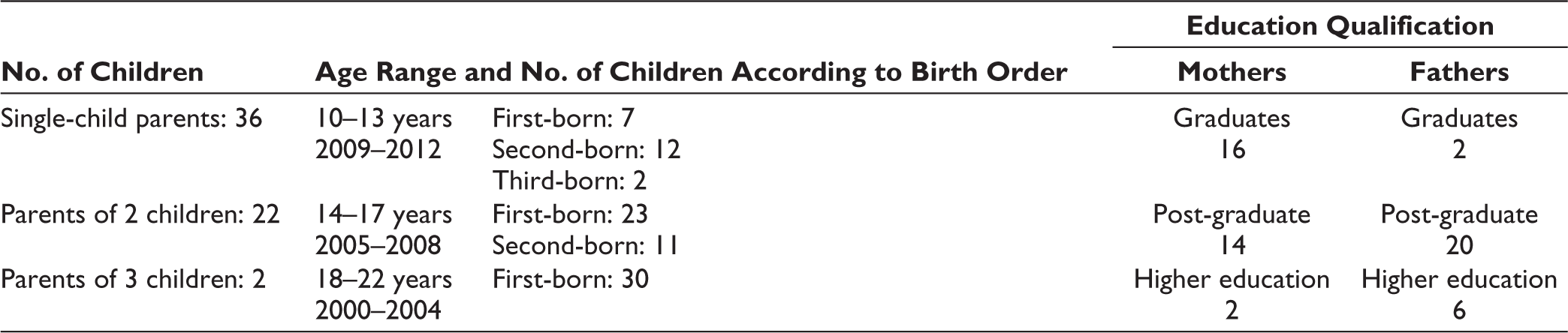
The researcher used purposive and snowball sampling for data collection. The study prioritized the age of the offspring as one of the main criteria for selecting the parent generation as interviewees. Parents of Generation Z, who were born between 1997 and 2012, are the sample size belonging from either Generation X, born between 1965 and 1979, or millennials (Generation Y) born between 1980 and 1995. 21 The sample included 60 parent participants, 28 fathers and 32 mothers. It was hard to schedule face-to-face meetings with fathers, so there has been gender discrepancy. As per the interview setting, the researcher noted the subject’s comfort and convenience well and therefore, 46 interviews were conducted at the participant’s residence, 12 interviews were regulated at some uncrowded airy café, and the rest 2 were executed over a video call because of the subject’s engaged schedule. As per the inclusive criteria, graduation as minimum education qualification, both parents working, nuclear family system, socioeconomic class as upper class, upper-middle-class, and middle class were considered. And the exclusion criteria included divorced parents or single parents and lower-economic class or uneducated parents. Table 1 represents the preliminary details.
Preliminary Details.
Measures and Tools
The semi-structured interview schedule for the purpose of interviewing as the method for data collection was predeveloped. The framework of the interview schedule revolved around 4 chief questions designed for all the participants and 2 optional questions (related to the study objectives indirectly) for the participants who were professionals dealing with children like child psychologists and special educator.
As per the objectives, the first question intended to understand the transitional nature of flexibility/control in a family, which was done by asking parents about the level of control each family member has in their life or the life of others; how open parents are to let their children do what they want. Probing was done to know the details of daily events that indirectly served the research purpose. The second question identified the level of closeness and emotional bond that millennial parents and children share. Probing was done to understand how intimate and supportive family members were. The third question was to understand the transitional nature of communication between both the generations. Every behavioral action reacts. Some reactions are instantaneous, while others are evident in later years of life. Most of the probing was required in the fourth question, which aimed at understanding the long-term impact of these functions on children and adolescents. The 2 optional questions were asked to 4 interviewees who had professional experience of working with children and adolescents. The questions were to get the awareness of the pattern of challenges that new-aged parents encounter these days and both positive and negative aspects of the level of cohesion and flexibility in the functioning of young Indian families, which helped the researcher to draw linkages between the codes and to understand what factors are responsible for mental health issues in children and adolescents.
Data Analysis
Method of analysis was Computer-Assisted Qualitative Data Analysis Software (CAQDAS), ATLAS.ti7 version 7.5.16.
The qualitative content analysis offers opportunities to analyze descriptive content, resulting in categories, and latent and interpretative content, resulting in themes. 22 Coding consists of short labels used to identify concepts, similarities, and conceptual reoccurrences in data. Theoretically, flooded categories are groups of related codes sorted into the same place. 23 As an outcome, each formed category after data analysis explains a concept. A theme is described as a unifying “common thread” running through the formed categories of data. 24 To illuminate such rich data of complicated phenomena, the way of analysis requires not only the formulation of descriptive categories but also the interpretation of latent content. 25
For content analysis, first, the data was broken into meaning units for assigning codes. 22 The quotations (verbatim) from individual audio were segregated based on their contextual notion of similarity and then studied distinctly. Then researcher combined the segregated content to form new patterns for unified understanding that was followed by abstracting them into categories or subcategories. 25 This method of breaking and rebuilding the context is called de-contextualization and re-contextualization, 26 respectively. This process involved simultaneous interpretation by making sense of the saying, reframing, and explaining.
Data collection and analysis were done concurrently, comparing response to response, one code to the other, from response to the codes, and codes to categories referred to as a constant comparative analysis. 27 The researcher used inductive reasoning as a part of the grounded theory method, along with constant comparative analysis. The code frequency of Code Manager in the ATLAS.ti7 at this step helped to validate code sections. 28
The study involved 3 types of coding techniques. First, open coding, which is more like a procedure proposed to identify a key concept or latent meaning (done by listening to the audio content repeatedly), 29 might help in understanding the context or phenomenon of interest. The second technique was in vivo coding, a procedure of selecting the exact word/s from the quotation of verbatims. This technique is comparatively a much easier technique to use.
The Axial coding, a final technique, was performed after going through the codes a second time. It’s a procedure to construct linkages between the codes, categories, and subcategories from participants’ verbatims, together as a concept. 30 For instance, the code “C have their life = P also detach for their own” (C = children, P = parents) has been associated with “< independence” (<= high) and the code “Parental involvement = perceived as parental invasion by Gen Z” was considered a causal factor.
Validity Analysis
Validity of the analyses means the precision and appropriateness of the procedure. Electronic audio recordings allow responses to directly go into a processor database, 31 aiding the researcher to code and analyze precisely in the CAQDAS program based on the audio recordings without the need for transcription. The analysis procedure maintained proper inferential, descriptive, and evaluative validity 32 since a majority of the codes were directly from the quotation in vivo. The category “Communication,” “Flexibility,” and “Cohesion” was formed based on the variables explained by Olson, 33 in the circumplex model of a marital and family system. The inclusion of such conceptualized category solved the complexity of measuring the validity of the concepts. 34
Results
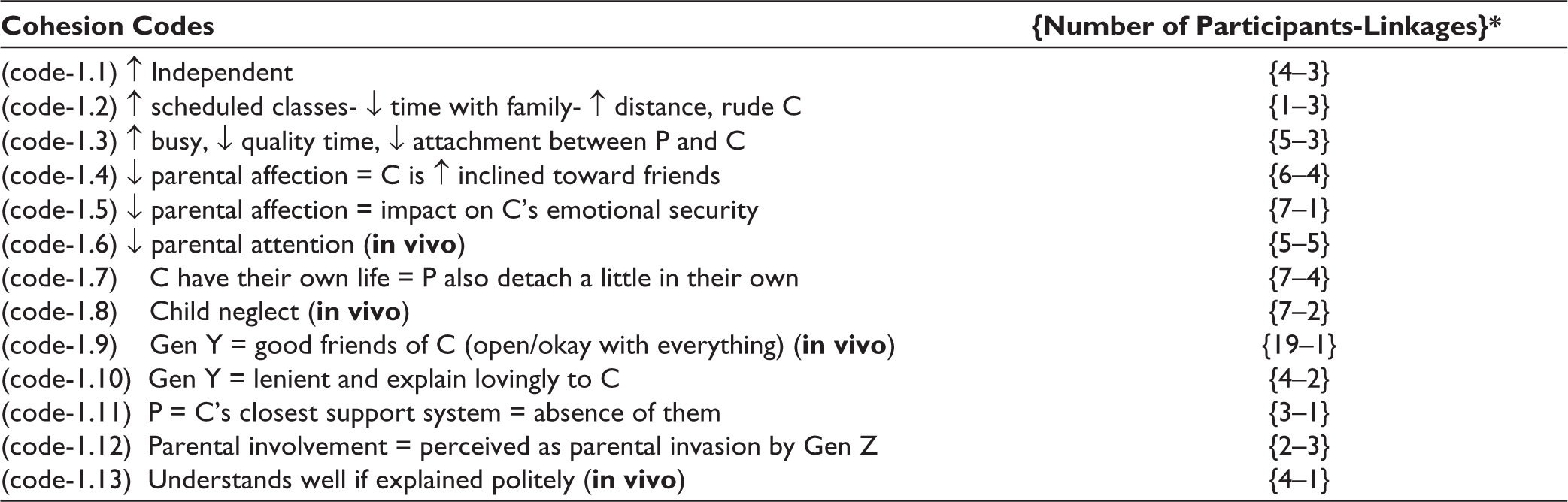
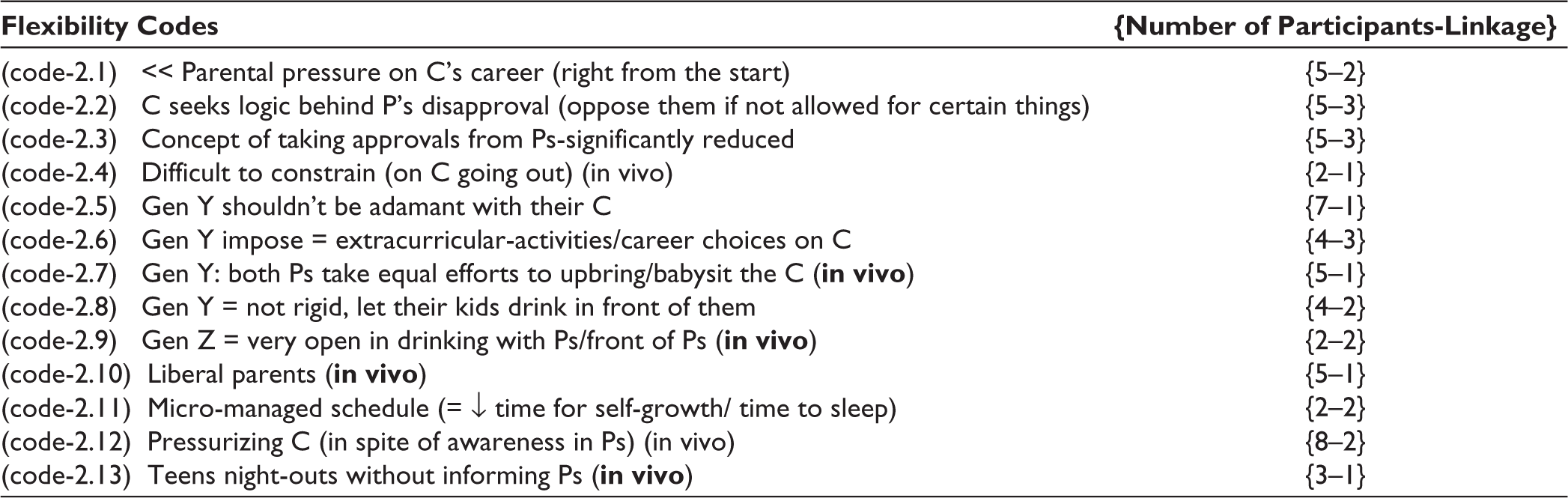
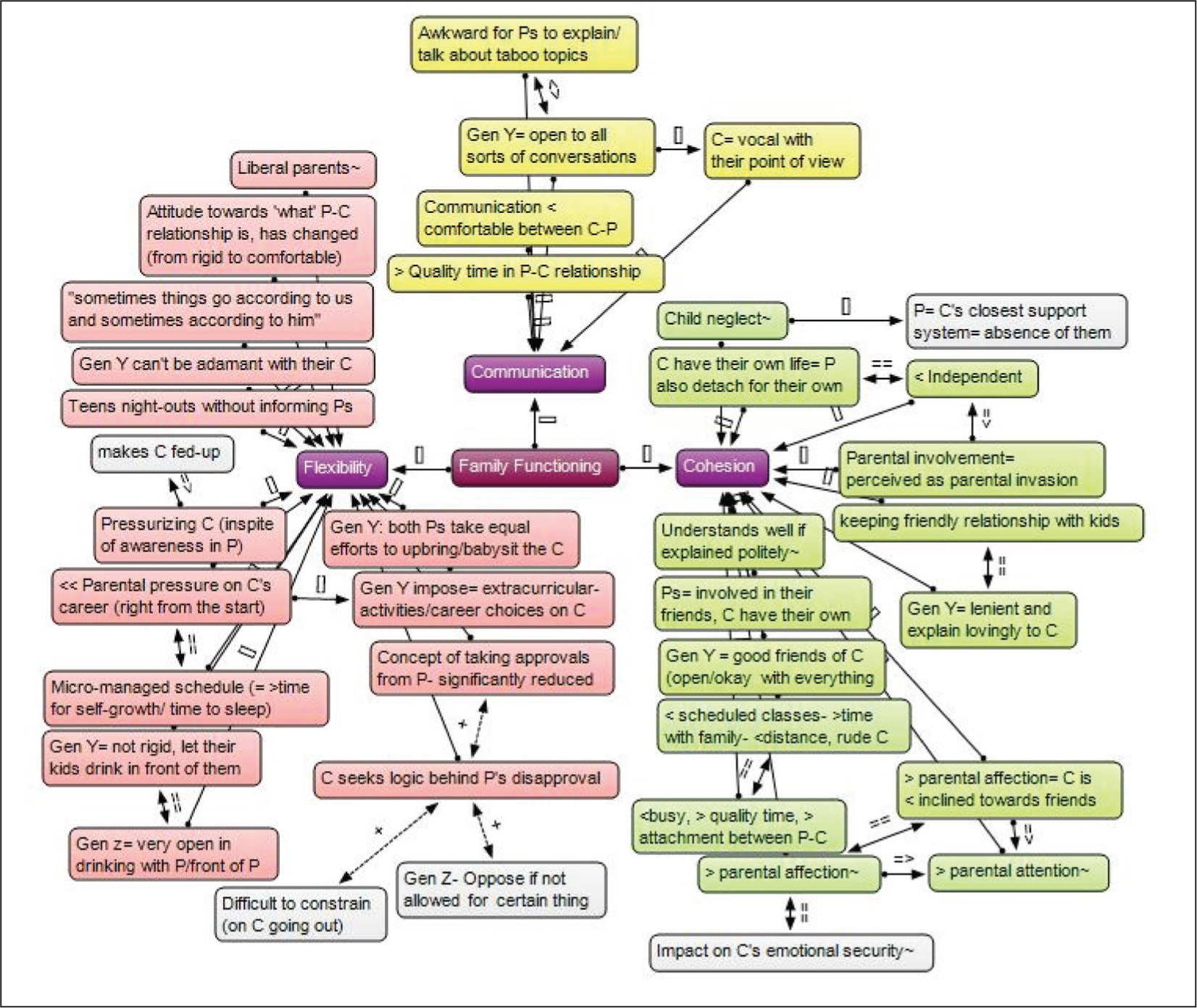
The family system is such a complex concept that it can’t be understood by the characteristics of members or family interactions. Instead, there are implicit and explicit rules and actions by members which monitor and govern each other’s behavior. The study outcomes depict 2 networking structures. The first network shows the nature of family functioning in the new millennium. Codes linked to the category flexibility, cohesion, and communication explaining the aspects of family functioning are presented in tabular form with examples of a few verbatims and in pictorial form for a better understanding of the linkages. For instance, “code 2.4 says that it’s difficult for parents to constrain their children from going out,” which was decoded by applying an “open coding technique” on the basis of 2 responses to understand the degree of flexibility among parents and their children. An illustration for 1 of the verbatim is, “My cousin is a Doctor, she had always left her kids with maids but now as a teenager, her daughter comes home by 1–2 or 3 and now my cousin shouts at her and also have problems with husband because of this. She was never there for the kids, they grew up themselves so now you can’t expect them to listen to you.” The cohesion and flexibility aspects are understood by 13 codes each and the pattern of communication has been explained by 5 codes, represented in Tables 2–4, respectively. All the codes have been formed on the basis of the subject’s verbatims (instances for the same are attached in the supplementary file). The tables also represent the number of responses for each code and the connections (linkages) between the codes. Figure 1 represents the pictorial form of the network view.
Cohesion.
Flexibility.
Communication.

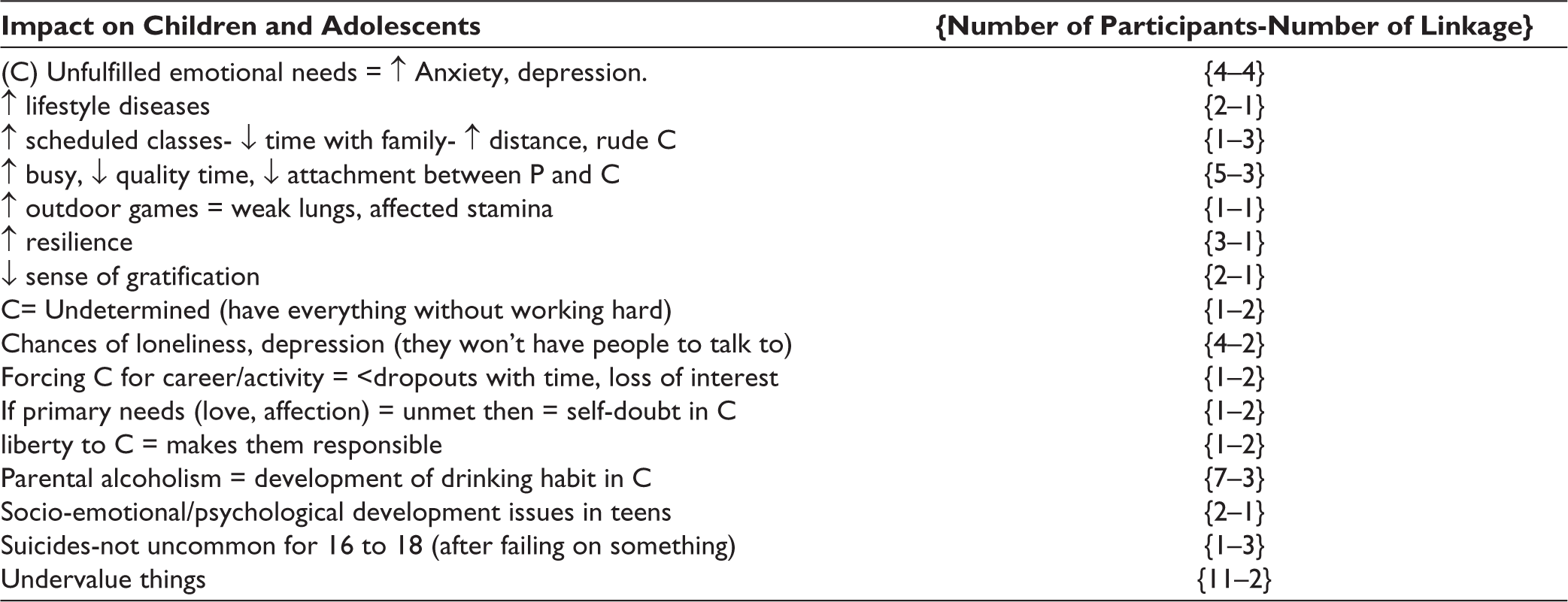
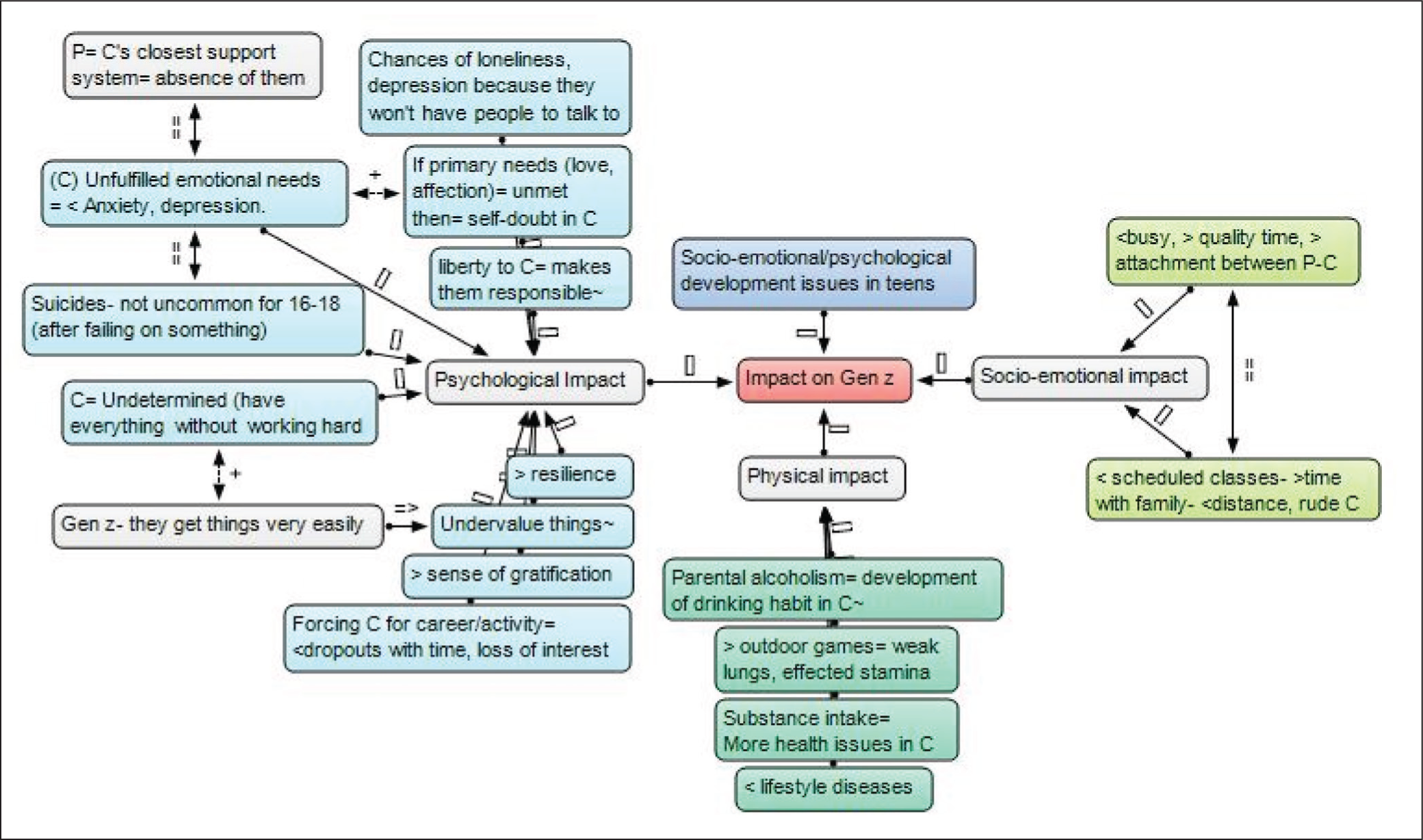
As the second outcome of the study, the psychological, socioemotional, and physical impacts of the changes are represented in Table 5, and clarity of connections can be drawn by Figure 2 which is a pictorial presentation of the impact network. For instance, under the psychological impact, code-4.1 says that unfulfilled emotional needs of children can lead to an increase in anxiety and depression-like symptoms. This code has been associated with 4 other codes that say that if primary needs like love and affection are not fulfilled then children may develop a sense of self-doubt (code-4.12) and that suicides are not uncommon for 16 to 18 years of teenagers after failing at something (code- 4.16) and, from the aspect of cohesiveness, parents who are considered as the child’s closest support system are mostly unavailable for them (code- 1.11), which has been considered the root cause for such psychological issues.
Health Outcome Network.
Discussion
According to the networking model formulated by subjective responses, family cohesiveness which signifies the emotional bond between parents and children was considered deep by the interviewees. A total of 19 (31.6%) participants believed that young 21st-century families may have depicted high cohesiveness because Generations X and Y are friendly with their children, receptive to their choices, and encourage them to be expressive and emotionally responsive. 35 As per 4 (6.6%) responses, Gen X and millennial parents are lenient and explain tenderly to their children, and also that Gen Z understands well if communicated respectfully. On the contrary, some participants differed with this observation of resilient cohesion. Parents and children nowadays spend less time together, which is different from older generations. 36 Five (8.3% of the total population) parents believed that the lack of quality time spent together is hampering the bond of the family. A total of 23% (14 participants) of interviewees highlighted that deprivation of parental affection in the early childhood developmental phase, and deficiency in parental attention (mentioned in 8.3% of responses) is the cause of weak cohesiveness in the new millennium families. Concerning this, a participant said that real-time interactions are decreasing, leading to loneliness among children. Adolescents in more cohesive families display higher levels of subjective well-being 37 and lower depressive symptoms. 38
One recent noteworthy aspect of parenting behavior is hovering around children or excessively shielding them and solving their problems. 39 During the interview, a mother participant mentioned that a school principal told her to stop helicoptering her children. Regarding this, parents (3.3%) shared that children misunderstand their involvement and perceive it as a parental invasion. Moreover, Dietvorst and colleagues 40 showed that children who perceive their parents as more intrusive, turn secretive about their personal life. Gaidhani et al, 41 in a comparative study, mentioned that Generation Z is a do-it-yourself generation. Gen Z indeed has a high sense of independence (stated by 6.6% of parents). Contrary to helicoptering children, 11.6% of responses highlighted the concern of neglectful parenting.
The responses concerning the flexibility among Generation Z children, Y, and X parents were intriguing. The family norms, roles, and responsibilities among new millennium family members have become more flexible and democratic 3 compared to the previous generations. Regarding this, 5 interviewees discussed that the concept of asking for approvals for making choices has significantly reduced. This was analyzed by a comparative statement that Gen Z doesn’t ask for approvals for everything like we as children used to ask. New-aged families show a scope of flexible negotiation between each other, noted in the citation, sometimes things go according to us, sometimes according to them. Flexibility in parenting techniques is considered a positive approach. 42 To meet the unpredictable demands of situations, parents engage in varied behaviors like being flexible or inflexible in their approach, for instance, parents (11.6%) believed that they should not be adamant with this generation of kids, and 3.3% of parents shared how difficult it is to constrain teenagers from letting them go out in odd hours (like for night-outs). Adding to this, 8.3% of participants cited a change that children are getting smarter, and they seek logic or explanation for disapproval of anything. From the above statements, it was inferred that willing or unwillingly, parents have become flexible and autonomous with at least some aspects of Gen Z’s living style.
Conversely, micro-managing and being inflexible concern- ing the child’s schedule is not uncommon for Generation Y and X parents, and pressurizing children into multiple activities or classes can be generalized. Furthermore, highly educated parents likely place great importance on education; Thus, they might push their children in academic and professional domains and want their children to outshine them in all areas of life. 43 Five parents agreed to the behavior of pressurizing their children, stating that our parents never pressurized us the way we pressurize our children, and 6.6% of the parents revealed how they impose activities and classes on their children. The researcher asked the interviewees if they knew the effects of pressurizing and unexpectedly, 13.3% of participants agreed to pressurize their children despite being aware of its detrimental effects. A special educator interviewee suggested that micro-managing is one of the best approaches for a single-child family, children with no friends, or too-busy parents. But some parents get overly involved with 1 aspect while ignoring the other. 39
Family processes, insecure attachment, and depressive symptoms in adolescents are interconnected. 44 The decoded analyses of the responses that micro-managing the schedule or helicoptering children has led to many socio-emotional issues in children. Moreover, studies have focused on the undesirable aspect of this “hyper-involved” parenting which may have been intended to protect the children from possible negative experiences but has caused more harm than good. Helicoptering parenting behavior is associated with psychological adjustment issues 45 like higher levels of depression and anxiety in children, 46 internalizing disorders, 47 and low self-efficacy. 48 Contrary to helicoptering, interviewees discussed how neglecting children and paying less attention to their unfulfilled emotional needs (like affection and warmth) might make children and adolescents vulnerable to feeling lonely, depressed, self-doubt, and anxious. Relationships shape health outcomes throughout the life course. 49
Regarding the communication category, the pattern has become more reciprocal, and families have become more comfortable (10% responses) in sharing and discussing personal issues compared to the previous generation of parents (baby boomers). Gen Z children are vocal with their opinions and outspoken 50 about their belief system, likes or dislikes, wishes, or desires (four responses). They want people to take their feelings seriously. Concerning openness in communication, 51 11.6% of parents emphasized its significance, and one of them compared this with the baby boomers generation and said that in our times we used to be scared to share with our parents but now we’re open to discussing things with our children. Keeping this good communication requires quality time, but 21.6% of interviewees shared the concern of spending less time with their children besides having a hectic schedule.
Millennial parents provide the best of everything to their children, which is probably an appropriate and expected way of functioning, but participants explained how getting everything (without working for it) at a young age is making children undervalue things, and for which they, in general, lack the expression of gratitude. Adding to this, a father said that if I am working hard and giving the best of facilities and everything that my child asks for, then he should at least try to excel in everything (not mentioned as code), as a thought behind this giving behavior. It can be inferred that the parent has high expectations from the child, which can be a part of conditional regard, a psychologically controlling parental behavior to promote a sense of achievement in children, well defined by Assor et al. 52
The oldest members of Gen Z are entering the workforce. Recent studies show that these kids are quick learners, have a high willingness to work hard yet are always anxious, 53 competitive, lack resilience yet 54 push themselves to prosper beyond their limits, have perseverance for their undertaken task, but they get bored somewhat easily. 55 According to an observational report by a participant, imposing career choices would make these children lose the zeal to function well and, to a certain degree, affect their ingenious minds.
Children these days are being shaped by technology, spending most of their hours surfing or playing virtual games whilst neglecting outdoor activities as a part of their lifestyle changes, which has detrimental effects on physical health. 56 Physical activity is the key to a healthy lifestyle. A parent shared how difficult it was to convince her son to enroll in basketball. Observational reports by responses state that inactivity in children leads to problems like weak lungs, affected stamina, and obesity.
Parents shared how open they were to drinking alcohol with their friends in front of their children or intaking alcohol regularly because of work stress and being all right with their 16-year-old drinking. Dishion et al, 57 in their cross-sectional study, revealed how drug use by parents is explicitly or implicitly related to young adolescent drug use instigated by parental modeling or with dwindled parental monitoring behaviors. Chassin et al, 58 in longitudinal research, discussed that parental alcoholism eventually influences a steeper growth of substance intake in adolescence over time. Generation X and Y parents have a laidback attitude regarding the drinking behavior of young teenagers, as per 4 responses. Parental support and responsiveness, affective bonds with them, and family cohesion are the variables that prevent behavioral problems like adolescent substance use. 59 Socio-emotional, psychological, and developmental issues in adolescence are increasing amid transitions in Indian culture and family system. Quality of nurturance and parental support have significant and persisting effects on health and well-being. 60
From stress to psychotic-like experiences, family functioning may contribute a vital role. 61 Researchers for the current study have noted some limitations that are described further. First and foremost, the target sample for the interview was parents of Gen Z who were discussing their family and children. The study neglected the expression of Gen Z. They might have a different perspective about their family functioning and parenting; yet, this research has only recorded the observational reports and experiential information from a parents’ standpoint. Second, concerning the demographic variables, the study strictly voided the participation of people from lower socioeconomic status and uneducated or less educated parents. The researcher assumed that in the past few decades, more and more people are getting educated but ignored the statistics that more than half of the Indian population still lives in the village and survives on manual labor. Third, the study has discussed the aspects of family functioning and some of its effects but has not recorded the antecedent factors responsible for such transitions like the precedent of contemporary lifestyle. Finally and above all, this study lacks knowledge of the situational factors that might have influenced certain aspects of cohesion and flexibility between parents and children. The limitations mentioned here in some way can be propositions for future inquiries that might revolve around the new millennium Indian families or parenting behaviors.
This study collectively has discussed a small segment of how urbanized and educated sections of millennial families function, with its noticeable impact on children and adolescents. In most parts of India, the scarcity of mental health professionals is high. 62 Understanding the family system, values, responsibilities, roles, and expectations from a socioconstructivist perspective of the transitional nature might be the first step to identifying the depth of issues. From a psycho-therapeutic notion, collectivistic Indian society might be an invaluable resource for treating mental health problems or the root cause of troubles. 63 It is, therefore, reasonable to accept that the family system as a whole might be the key to many issues that children and adolescents face. Collective alertness about the functioning and its consequences can be valuable for mental health professionals alongside parents. Modernized awareness might assist mental health professionals in considering and altering the techniques of the family-based interventions that have a more lasting and gratifying outcome in dealing with such problems. Furthermore, the study anticipates that comprehensive qualitative information on family functioning and new-age parenting would provide indicators about their parenting behaviors and may support the development of interview assessment measures for further exploration.
Supplemental Material
Supplemental material for this article is available online.
Footnotes
Declaration of Conflicting Interests
The authors declared no potential conflicts of interest with respect to the research, authorship, and/or publication of this article.
Funding
The authors received no financial support for the research, authorship, and/or publication of this article.
Informed Consent and Ethical Approval
Obligatory ethical clearances and informed consent were received and obtained respectively before initiating the study. The data was collected only after receiving the approval from the Institutional Ethical Committee.
References
Supplementary Material
Please find the following supplemental material available below.
For Open Access articles published under a Creative Commons License, all supplemental material carries the same license as the article it is associated with.
For non-Open Access articles published, all supplemental material carries a non-exclusive license, and permission requests for re-use of supplemental material or any part of supplemental material shall be sent directly to the copyright owner as specified in the copyright notice associated with the article.
