




Abstract
Background:
Obesity is a serious public health problem contributing to development of several diseases, including hyperlipidemia, hyperglycemia, and hypertension. The plant Eriobotrya japonica (loquat) has been used in traditional Chinese medicine to treat many ailments and traditional healers used it to reduce weight.
Objectives:
To examine the potential anti-obesity and hypolipidemic effects of ethanol extract of loquat in rats.
Materials and Methods:
Loquat leaves, fruits, or seeds were extracted with ethanol. About 96 Wistar male rats were fed either a normal rat diet (normal control group; group 1) or a high-fat diet (HFD) for 12 weeks (obese; groups 2−12). Obese rats were divided into11 groups as follows: (obese control: group 2) (obese positive control which received the hypolipidemic reference drug atorvastatin: group 3). Groups (4−6), (7−9), and (10−12) were given seed, leaf, or fruit extract, respectively, at 40,100, and 400 mg/kg. Body weight, serum glucose, lipid profile, creatinine, liver enzymes, albumin, and total protein were measured weekly.
Results:
HFD consumption significantly increased body weight and serum total cholesterol (TC), triglycerides (TGs), low-density lipoprotein (LDL), very-low density lipoprotein (VLDL), and glucose and decreased HDL compared to rats fed the normal diet. HFD also increased serum glutamic-oxaloacetic transaminase (GOT), gamma-glutamyl transferase (GGT), alkaline phosphatase (ALP) and creatinine but decreased serum albumin and total protein. Administration of E. japonica seed, leaf, or fruit extract significantly decreased body weight, TC, TGs, LDL, VLDL, glucose, liver, and renal enzymes but increased HDL, albumin, and total protein levels.
Conclusion:
E. japonica seed, leaf, and fruit ethanol extract regulates body weight gain, has hypolipidemic properties, and positively affects liver and kidney enzymes.
Introduction
Eriobotrya japonica (E. japonica) or loquat belongs to Pomades subfamily of the Rosaceae family. 1 Loquat was used widely as a traditional medicine in Japan and China. 2 Traditional healers have used loquat as a treatment for different diseases like cough, chronic bronchitis, phlegm, as well as for its anti-tumor, antiviral, antibacterial, and anti-inflammatory effects, and to protect against liver problems, nephropathy, and diabetes.3, 4 Moreover, local traditional healers used loquat to reduce weight. This wide spectrum of biological activity has been attributed largely to loquat contents of antioxidant compounds such as flavonoids and polyphenols, in addition to the presence of triterpenes, glycosides, and sesquiterpenes.3, 5 For example, several kinds of flavonoids, epicatechin, epicatechin gallate, methyl chlorogenate, cinchonain as well as quercetin, isoquercetin, quercetin-glycoside, and kaempferol glycosides have been isolated from loquat seed, leaf, and fruit. Ferreres et al. and others showed that loquat leaves, flowers, and fruits contain flavonoids and polyphenols and their contents exhibited a positive correlation with their antioxidant activity.6–8 The list of phenolic compounds and triterpenes in loquat parts is extensive and includes hydroxycinnamic acid derivatives such as chlorogenic acid, neochlorogenic acid, methyl-chlorogenic acid, feruloylquinic acid, caffeoylquinic acid, hydroxybenzoic acid, ferulic acid, and caffeic acids as well as 3-p-coumaroylquinic acid, quercetin-3-O-galactoside, quercetin-3-O-glucoside, quercetin-3-o-rhamnoside, oleanolic acids, d-oleanolic acid, ursolic acid, hydroxyursolic acid, gallic acid, caffeic acid, ellagic acid, and catechin.1, 9, 10
Owing to the antioxidant potential of bioactive compounds of loquat,10, 11 and the suggestion of their use as an alternative treatment for obesity, 12 we hypothesized that the use of E. japonica seeds, leaves, and fruits extract is beneficial in the treatment of obesity and hyperlipidemia. To the best of our knowledge, no thorough examination has explored this potential. This search may increase the availability of anti-obesity and anti-hyperlipidemic medicines. The search for additional alternative, safe, and low-cost treatments stems from the fact that despite the shift from herbal medicine to modern approaches of drug design and the new developments in research techniques in many fields like genomics, proteomics, biochemistry, and the use of computer tools, a large population of the world is still relying on the herbal medicine system. 13 This work describes the effects of E. japonica seeds, leaves, and fruit ethanolic extract on body weight, lipid profile, glucose level as well as liver and kidney enzymes.
Materials and Methods
Fruits, Leaves, and Seeds Collection and Extraction
E. japonica cultivars were taxonomically identified by a professor of plant taxonomy. A voucher specimen was deposited at the Herbarium of the Department of Biological Sciences under the number 216. The leaves and mature fruits of loquat were collected in May 2020. Fruits were cut open to separate the seeds. Seeds were separated from their coat. All parts were air-dried in the shade at room temperature then crushed, separately, into a fine powder using a grinder (Philips, India). About 500 g of powder of seed, leaf, or fruit pulp were immersed in 1.5 L of 70% ethanol in a glass container in the dark at room temperature for a week, and filtered through Whatman filter paper. This extraction procedure was repeated twice on the same plant sample. The filtrate was collected and evaporated using a Heidolph rotary evaporator (Laborota 4001, Heidolph, Schwabach, Germany) at 40°C. The final gummy extract was collected, weighed, the total phenolic and total flavonoid contents were estimated,14, 15 and then stored in a refrigerator until used. 16
Animals
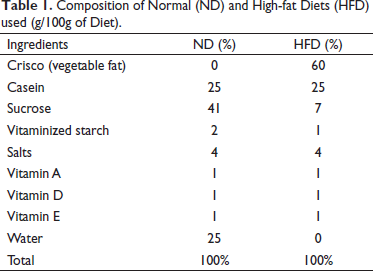
The study was performed on adult male Wistar rats weighing 125 to 150 g at the Experimental Animal Laboratory of the Department of Biological Sciences, School of Science; University of Jordan. Animals were left for 2 weeks to acclimatize, then group 1 was fed a normal rat chow diet (Hamouda Feed Factory, Amman) while groups 2 to 11 were fed a high-fat diet (HFD). HFD consisted of partially hydrogenated vegetable oils (Crisco), protein, sucrose, carbohydrate, and vitamins, while the normal diet consisted of the same ingredients in the indicated concentrations (Table 1). All the components mentioned above were fully mixed until homogenous, formed into a dough, rolled, and cut into small pieces and allowed to air dry at room temperature for 6 to 12 hours. 17 HFD was prepared daily and rats were given this diet for 6 weeks until they become obese. 18 Rat obesity was judged indirectly by comparing the weight of HFD-fed to ND-fed rats, and the extract of E. japonica was given for another 6 weeks.
Composition of Normal (ND) and High-fat Diets (HFD) used (g/100g of Diet).
Experimental Design
Ninety-six normal rats were randomly divided into 12 groups (8 animals each) as follows: group 1, as a negative control in which rats were fed a normal rat diet, group 2, as obese control in which rats were fed an HFD, group 3, as a positive control in which rats were fed an HFD but were given 20 mg/kg of atorvastatin (ATV), a reference antilipidemic drug.17, 19 Groups 4 to 6 were fed an HFD and were treated with 40, 100, and 400 mg/kg of seed extract, respectively. Groups 7 to 9 were fed an HFD and were treated with 40, 100, and 400 mg/kg of leaf extract, respectively. Groups 10 to 12 were fed an HFD and were treated with 40, 100, and 400 mg/kg of fruit extract, respectively. The doses of ethanol extracts were chosen based on previous experiments in our laboratory to cover a relatively wide range of doses.
Extracts were administered daily by oral gavages for 6 consecutive weeks. Body weight and the amount of food intake for each group were recorded weekly beginning with day 0 but the measurements of lipid profiles, glucose, hepatic, and renal function parameters would not be taken until the end of the third week of the experiment.
Blood Sample Collection
Animals fasted overnight; The blood was collected weekly through the retro-orbital plexus of the eye using plain capillary tubes. Blood was centrifuged for 10 minutes at a speed of 3000 rpm (Zentrifuge Heraeus Labofuge, model I HC122, Germany). Serum was separated and stored in 1 mL Eppendorf tubes at –20°C for analysis of biochemical parameters. 20
Biochemical Analyses
Estimation of lipid profile.
Serum total cholesterol (TC), triglycerides (TG), and high-density lipoprotein cholesterol (HDL-C) levels were measured enzymatically using commercial assay kits according to the manufacturer’s instructions (Human Diagnostic Worldwide, Germany). Low-density lipoprotein cholesterol (LDL-C) was calculated using the equations LDL = TC – (HDL+VLDL), whereas very-low density lipoprotein (VLDL) was calculated as TG/5.17, 21
Liver Functions Tests
Activities of glutamic-oxaloacetic transaminase (GOT), gamma-glutamyl transferase (GGT), and alkaline phosphatase (ALP) were measured enzymatically in the serum sample using commercial assay kits according to the manufacturer’s instructions (Human Diagnostic Worldwide, Germany). 17
Kidney Functions Tests
Activities of creatinine, total protein, and albumin were measured enzymatically in the serum sample using commercial assay kits according to the manufacturer’s instructions (Human Diagnostic Worldwide, Germany). 22
Statistical Analysis
Data are expressed as means ± SEM and are analyzed by one-way ANOVA followed by Fisher’s LSD test using Graph Pad Prism software version 7 (GraphPad, San Diego, CA). Normality descriptive statistics were run using Graph Pad software. Differences were considered significant when P < 0.05.
Ethical Approval
All applicable guidelines for the care and use of animals at The University of Jordan were followed. All experimental protocols were approved by the Graduate Studies and Research Committee of the School of Science at the University of Jordan, Amman, Jordan. An Institutional Review Board (IRB) approval (#104/2021, dated 7/10/2021) was obtained.
Results
Plant Extraction Yield
The yields of E. japonica dry weights parts were calculated
23
as:

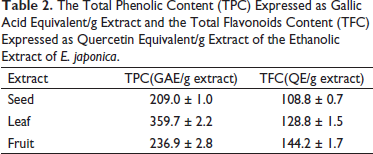
E. japonica fruits provided the highest yield of extract with 27.2% of the original dry weight followed by seeds with 18.1%, and the least yield was from the leaves with 17.4% of the dry weight. The extract of E. japonica seed had a light juicy brown color, with semi-viscous texture, while that of the leaf had a dark-greenish semi-hard sticky texture, and that of the fruit had a dark-brown honey color with a medium viscous texture. All extracts had a light cherry aroma and a pH of 6.3. The total phenolic content (gallic acid equivalent/ g extract; GAE/g) and the total flavonoids content (quercetin equivalent/g extract; QE/g) are given in Table 2.
The Total Phenolic Content (TPC) Expressed as Gallic Acid Equivalent/g Extract and the Total Flavonoids Content (TFC) Expressed as Quercetin Equivalent/g Extract of the Ethanolic Extract of E. japonica.
Effect of E. japonica Seed, Leaf, and Fruit Extract on Body Weight
Supplementary Figure 1 shows a difference in the pattern of food intake before and after treatment in all experimental groups. Food intake declined significantly throughout weeks 8 to 12 in animal groups fed the HFD and treated with E. japonica seed, leaf, or fruit extract or ATV.
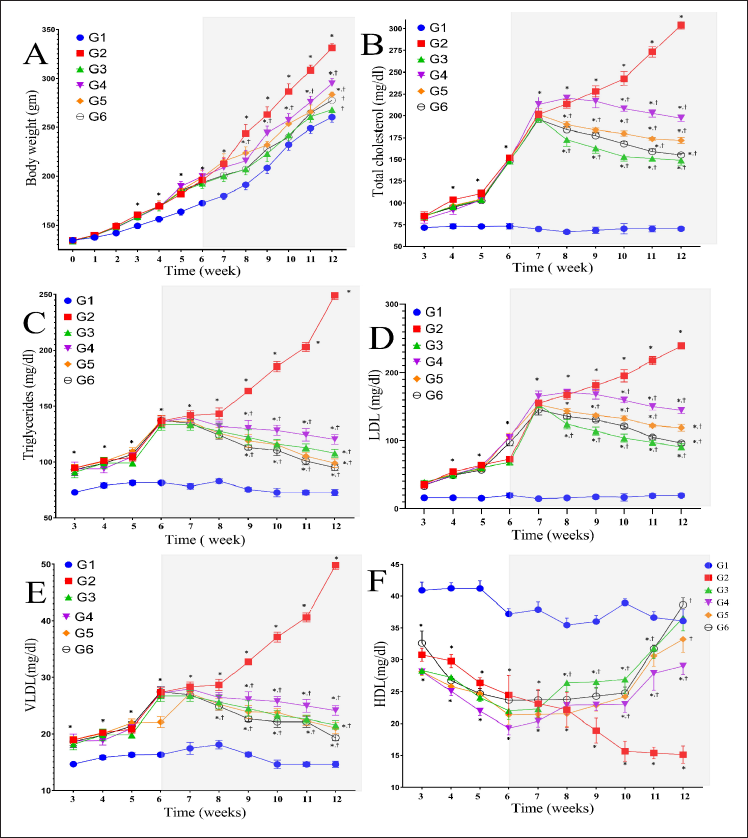
At the beginning of the study (week 0), no significant difference (P > 0.05) was observed in body weight among experimental groups (Figure 1A). Body weight increased gradually in all groups but the increase in body weight in groups fed HFD was significantly larger (P < 0.01) as compared to rats fed the normal diet (group 1). Body weight started to deviate significantly from that of the normal diet group beginning with week 3. After administration of increasing doses of seed extract, group 2 continued the same pattern of body weight gain whereas groups 3 to 6 showed a significantly (P > 0.001) blunted increase in the body weight as compared with the obese control group as of the eighth week. A similar pattern of change in body weight gain was observed when similar doses of leaf extract (Supplementary Figure 2A) or fruit extract (Supplementary Figure 3A) were administered to groups 7 to 9 or 10 to 12, respectively.
Effect of E. japonica Seed, Leaf, and Fruit Extract on Lipid Profile
Figure 1 illustrates the effect of three different doses of E. japonica seed extract on the serum lipid profile of hyperlipidemic rats. At the start of the experiment, TC, TGs, LDL, and VLDL were statistically similar (P > 0.05) in all experimental groups. After 3 to 4 weeks, animal groups that received an HFD (groups 2–6) exhibited a significant (P < 0.001) increase in their serum TC, TGs, LDL-C, and VLDL when compared to the group that received the normal diet. Beginning with the ninth week till the end of week 12, a significant decrease (P < 0.0001) in TC, TGs, LDL-C, and VLDL levels was observed in group 3 that received the hypolipidemic drug ATV, and in groups 4 to 6 that received 40, 100, or 400 mg/kg of seed ethanolic extract, when compared to the obese control group 2 that received HFD without any treatment (Figure 1B−E). In Figure 1F, the level of HDL-C was statistically lower (p < 0.05) in groups 2 to 6 than that of the normal diet group before treatment with seed extract but during the period of treatment (weeks 6–12), the level of serum HDL-C started to increase and to deviate significantly from that in group 2 by week 9 and after. In fact, by the twelfth week, animal groups that received higher doses of the seed extract (100 and 400 mg/kg) were not statistically different in their HDL-C from the control group that received the normal diet (P>0.05). A similar pattern of change in lipid profile was observed when leaf or fruit extract was used (Supplementary Figure 2F and Supplementary Figure 3F, respectively).
Effect of E. japonica Seed, Leaf, and Fruit Extract on Serum Glucose
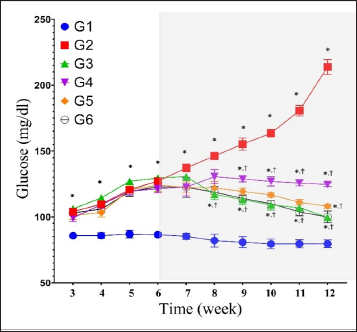
As of the third week of the experiment, HFD consumption significantly (P < 0.0001) increased serum glucose in groups 2 to 12 as compared to group 1 (Figure 2). Administration of 40, 100, or 400 mg/kg seed extract significantly decreased (P < 0.0001) serum glucose in all treated groups as compared to the obese control group (group 2). Leaf extract or fruit extract showed a qualitatively similar pattern of change in glucose level (Supplementary Figure 4A and B).
Effect of E. japonica Seed, Leaf, and Fruit on Liver Function
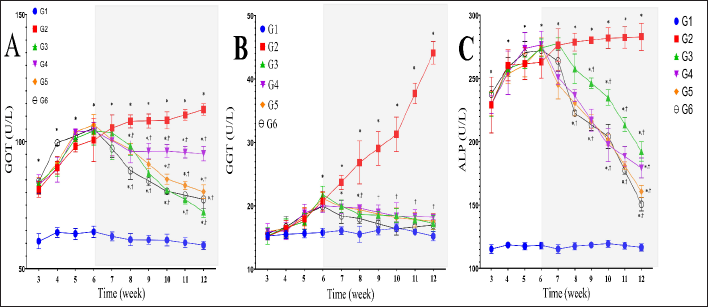
with 40, 100, or 400 mg/kg seed extract decreased the activity of GOT, GGT, and ALP (P HFD consumption for 6 weeks increased GOT, GGT, and ALP (P < 0.01) when compared to the normal diet control group (Figure 3A−C). However, treatment with 40, 100, or 400 mg/kg seed extract decreased the activity of GOT, GGT, and ALP (P < 0.05) when compared to those of the obese control group. Leaf and fruit extract induced a similar pattern of change in the profiles of GOT, GGT, and ALP (Supplementary Figure 5 and Supplementary Figure 6, respectively).
Effect of E. japonica Seed, Leaf, and Fruit Extract on Kidney Function
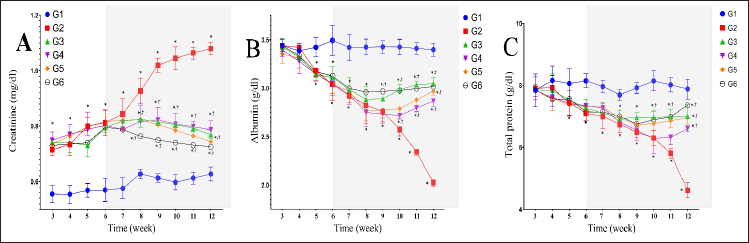
Figure 4 shows the effect of 40, 100, and 400 mg/kg of E. japonica seed ethanolic extract on the level of serum creatinine, albumin, and total protein in animal groups. HFD consumption caused elevation in creatinine and diminution in albumin and total serum protein levels in groups 2 to 6 as compared to those in the normal diet group (P < 0.0001). Administration of seed ethanolic extract significantly decreased creatinine, and increased serum albumin and total protein levels (P < 0.0001) in groups 3 to 6 as compared to the obese control group (group 2). Leaf and fruit ethanolic extract, in the same concentrations, caused a similar pattern of change in the kidney function parameters (Supplementary Figure 7 and Supplementary Figure 8, respectively).
Discussion
The use of complementary and alternative medicines is common in many countries around the world. 24 In Jordan, many herbalists believe that E. japonica leaves tea causes weight loss. The purpose of the present study was to determine the effect of seed, leaf, and fruit ethanolic extracts of loquat on weight, lipid profile, and glucose levels of obese hyperlipidemic albino rats, as well as to determine their effect on kidney and liver functions.
According to the results of the current experiments, loquat fruits gave a better yield of extract than seeds or leaves. This may be due to the higher amount of fibers in the seeds and the leaves compared to the fruit pulp. The better yield of extract from fruits and the higher total phenolic and flavonoids content (Table 2) could explain the relatively better activity of the fruit extract against total cholesterol and LDL when compared to the seed and leaf extract. The effect of the three extracts on body weight, HDL, VLDL, and glucose are not significantly different from each other. The seed and leaf extracts showed better reduction of triglycerides than that of the fruit at doses 40 and 100 mg/kg. This variation may reflect the type of polyphenols and flavonoids found in each extract type and their possible action on the metabolic pathways producing triglycerides. Nevertheless, different extracts of E. japonica tested (seed, leaf, and fruit) displayed qualitatively similar effects against obesity and many elements of the hyperlipidemic profile.
Obesity was developed in rats fed a HFD since the weight of these animals was 21.4% ± 2.2% greater than that in the normal-diet group at the same time period. A previous study revealed that a mixture of E. japonica and Nelumbo nucifera leaves extract caused a reduction in body weight gain and food intake compared to the obese control group. It was suggested that the mixture of E. japonica and N. nucifera was associated with the control of lipid metabolism including both adipogenesis and lipogenesis, increased the catabolism of accumulated lipids in adipose tissue resulting in a decrease in mean body weight. 25
Regulation of obesity involves neurological and hormonal processes that are linked with the regulation of appetite. The hypothalamus plays a central role in regulating appetite by communicating with the brainstem and other brain-rewarding systems. It senses the peripheral metabolic signals and controls food intake by regulating feeding behavior. Pro-opiomelanocortin (POMC) neurons are anorexigenic that can suppress appetite and cause weight loss by secreting α‐melanocyte-stimulating hormone (α‐MSH) through binding leptin to its receptors located on POMC. 26 As illustrated in Supplementary Figure 1, E. japonica extracts reduced food intake compared to the control HFD group and this may be attributed to less appetite or more satiety although food was available ad libitum. Song et al. cited examples of flavonoid-rich foods that were found to induce satiety and decrease weight gain. 26 Moreover, flavonoids have an inhibitory effect on digestive enzymes such as α‐glucosidase. This inhibition can prevent the body from absorbing excess glucose, thus controlling blood glucose level which proved to be a supplementary way to prevent obesity and diabetes. 26 Since many earlier studies have shown that E. japonica extracts contain flavonoids, the ethanolic extract in our experiment likely reduced weight gain in rats by inhibiting appetite and/or by a possible inhibitory effect on α‐glucosidase.6, 7, 8
Hyperlipidemia is a major risk factor associated with obesity. We have demonstrated that feeding rats HFD significantly increased TC, LDL, TG, and VLDL levels and decreased HDL level. These observations are consistent with many previous studies.17, 25, 27 The induction of HFD increased levels of lipids in the blood, including TGs, TC, and LDL. The higher TGs levels, compared to other lipids, have been attributed to the decreased lipoprotein lipase activity. 27 Also, the significantly higher levels of LDL than HDL in obese rats could be due to a shift in the lipoprotein distribution from HDL to predominantly LDL and that may happen by activation of cholesteryl ester transport protein (CETP) that decreases HDL and increases LDL levels as well as inhibition of lecithin cholesterol acyltransferase (LCAT). LCAT is a key enzyme for the production of cholesteryl esters in plasma and promotes the formation of HDL. 28
In the present experiments, we have demonstrated that E. japonica fruit, seed, and leaf extracts administration for a period of 6 weeks produced significant decrease in serum TC, TGs, and LDL along with a reduction in blood glucose levels with the onset of action in 2 to 3 weeks. Interestingly, fruit extract showed a more potent effect in reducing both TC and LDL than leaf and seed extract as illustrated in Supplementary Figure 3. The drop in TC levels were 66.6% ± 0.9%, 42.1% ± 2.1%, and 48.9% ± 1.1% for fruit, leaf, and seed extract, respectively, while the fall in LDL value was 81.3% ± 1.3%, 49.4% ± 3.0%, and 59.7% ± 1.1% for fruit, leaf, and seed extract, respectively. This differential effect of the extract types could reflect the better yield of extract from fruits and the higher total phenolic and flavonoids content (Table 2) and may explain the relatively better activity of the fruit extract against total cholesterol and LDL when compared to the seed and leaf extract. Serum HDL levels increased in animal groups fed E. japonica extract as compared to the obese control rats. A previous study indicated that ethanolic extract of E. japonica seed, fruits, and leaf have beneficial effects in alloxan-induced diabetic rat on blood glucose levels and on hyperlipidemia 29 whereas a mixture of E. japonica and N. nucifera had similar effects on hyperlipidemic mice. 25
The present experiments showed that the three doses of seed extract, increased levels of plasma HDL concentrations significantly beginning with the tenth week and after, suggesting that E. japonica extracts may protect against cardiovascular diseases that may result from hyperlipidemia. ATV also increased the level of HDL in consistence with previous work. 17 It is known that HDL carries cholesterol and cholesterol esters from the peripheral tissues and cells to the liver, where cholesterol is broken down into bile acids.30, 31 This pathway plays an important role in reducing cholesterol levels in blood and peripheral tissues and inhibiting atherosclerotic plaque formation in the aorta.18, 28, 29, 31
In the present study, serum glucose level increased in rats fed HFD and loquat seed, leaf, and fruit extract effectively suppressed the increase of blood glucose concentration. This observation is consistent with that of Tanaka et al. who showed that E. japonica seeds induced a hypoglycemic effect in type 2 diabetic rats and mice models by improving glucose tolerance. 32 These authors excluded a causative role for amygdalin, an ethanol-extractable component of the seed, or for dietary fibers of the seed in this effect but implicated a protective role for flavonoids against the development of diabetes due to flavonoids’ reduction of oxidative stress. Flavonoids are also strong inhibitors of α-glucosidase which inhibits glucose absorption in the small intestine, and they also stimulate the synthesis and the release of pancreatic insulin from β-cells. 33 Many publications also reported the hypoglycemic effect of 20 mg/kg of ATV which may reduce insulin resistance. 19 The anti-hyperglycemic potency of E. japonica extracts may be due to the flavonoid-rich extract of seed, leaf, and fruit. Other authors using flavonoid-rich extracts of different plants and different models of induced hyperglycemia showed similar antihyperglycemic effects for these extracts. 34 In the present work, the total flavonoid content was 108.8, 128.8, and 144.2 mg QE/g extract of seed, leaf, and fruit, respectively (Table 2).
Since liver is a primary organ for controlling vital functions such as digestion and detoxification of most compounds that enter the body, a lot of attention is now being focused on research involving the pharmacological applications of plant extracts and their effects on liver function enzymes. 35 Accordingly, and in consistence with other studies,14, 25, 36, 37 the current study showed that feeding rats an HFD increased serum liver enzyme but also showed that E. japonica extracts suppressed the increase in serum GOT, ALP, and GGT levels. These parameters may increase as a symptom of non-alcoholic fatty liver disease (NAFLD), which is considered one of the obesity-associated complications. 37
In our study, E. japonica fruit extract reduced ALP more than leaf and seed extracts to values similar to those in normal diet (Supplementary Figure 6C). We have found that E. japonica extract strongly decreased liver enzyme levels.
Serum creatinine, albumin, and total protein are usually measured to evaluate functional kidney damage. Our results demonstrated that induction of obesity using an HFD significantly reduced serum albumin, total protein but increased serum creatinine. Kilany et al. suggested that the reduction of serum albumin may be attributed to albuminuria, while the reduction of serum total protein may contribute to proteinuria, which is associated with renal damage induced by obesity. 38 Administration of E. japonica seed, leaf, or fruit extract significantly ameliorated the perturbed renal markers. These nephroprotective effects of E. japonica seed, leaf, and fruit extract may be attributed to the antioxidant capacity of the extracts owing to their flavonoids content. The antioxidant power of the ethanolic extract of these plant parts help maintain the integrity of the kidney and its functions as suggested by Shafi and Tabassum. 29
Obesity is newly acknowledged as an important independent risk factor for kidney disease. The consumption of an HFD in the present study increased significantly serum creatinine but E. japonica seed leaf and fruit extract generally reduced serum creatinine. This observation is consistent with those of Amin et al. who showed that an HFD-induced obesity is associated with oxidative stress and nitric oxide inactivation leading to renal dysfunction that was characterized by a high level of creatinine. 39
Conclusion
The present experiments demonstrated that loquat seed, leaf, and fruit ethanolic extract reduced body weight mostly by decreasing food intake, reduced serum glucose level and lipid profile, protected liver and kidney from damage induced by feeding an HFD, with the fruit extract has better effect compared to seed and leaf extracts. These beneficial effects appeared 2 to 3 weeks after daily administration of 40 to 400 mg extract/kg body weight to obese hyperlipidemic male rats. These effects are worthy of further investigations taking into consideration the consistent search for alternative, safe, and low-cost drugs.
Supplementary Material
Supplementary files are available online.
Supplemental Material for Ethanol Extracts of Eriobotrya japonica (Loquat) Seeds, Leaves, and Fruits Have Anti-obesity and Hypolipidemic Effects in Rats by Zainab R. Abdelrahman, Yasser K. Bustanji and Shtaywy S. Abdalla, in Pharmacognosy Magazine
Footnotes
Abbreviations
HFD: High-fat diet;
ND: Normal diet;
b.w: Body weight;
TC: Total cholesterol;
TGs: Triglycerides;
HDL-C: High-density lipoprotein cholesterol;
LDL-C: Low-density lipoprotein cholesterol;
VLDL: Very-low density lipoprotein;
GOT: Glutamic-oxaloacetic transaminase;
GGT: Gamma-glutamyl transferase;
ALP: alkaline phosphatase;
ATV: Atorvastatin;
POMC: Pro-opiomelanocortin;
α‐MSH: α‐melanocyte-stimulating hormone;
CETP: Cholesteryl ester transport protein;
LCAT: lecithin cholesterol acyltransferase;
NAFLD: Non-alcoholic fatty liver disease;
Acknowledgments
The authors are grateful to the Deanship of Research of the University for partial financial support.
Declaration of Conflicting Interests
The authors declared no potential conflicts of interest with respect to the research, authorship, and/or publication of this article.
Ethical Approval
Ethical approval is not applicable for this article.
Funding
This work was supported by a grant number 23197-2021 from The University of Jordan.
Informed Consent
There are no human subjects in this article and informed consent is not applicable.
Summary
This work investigated the anti-obesity and hypolipidemic potential of the ethanolic extract of E. japonica (loquat). When rats were fed a diet rich in fats, their weight increased as well as their total cholesterol, low-density lipoproteins, and other lipid parameters. When animals were given different doses of loquat ethanolic extracts of seeds, leaves, or fruits, their food intake became less, their weight decreased, their total cholesterol and LDL decreased, and their liver and kidney parameters were better than rats that were not treated. Since this effect appeared within 2 to 3 weeks of administration of the extract, there is a potential of using loquat extract or its purified ingredient to target obesity and high blood cholesterol.
References
Supplementary Material
Please find the following supplemental material available below.
For Open Access articles published under a Creative Commons License, all supplemental material carries the same license as the article it is associated with.
For non-Open Access articles published, all supplemental material carries a non-exclusive license, and permission requests for re-use of supplemental material or any part of supplemental material shall be sent directly to the copyright owner as specified in the copyright notice associated with the article.
