




Abstract
Adopting the perspective of practitioners, we analyse the case of farm ponds for supplemental irrigation built in Burkina Faso and Mali. We reflect on the ways in which climate technologies can contribute to smallholder farmers’ resilience to climate change, showing that in the different processes involved in the design and implementation of farm ponds as climate technologies, the distinction between infrastructure, equipment and machinery, on the one hand, and people, societies and communities, on the other, concealed the complexity of agricultural, agro-ecological and development practices. This ultimately hindered the potentially positive impacts of the technology and confirmed what the literature has already shown: that climate technologies should be approached as solutions that, regardless of their use of a particular piece of infrastructure or equipment, are always ‘socio-technical’.
Keywords
Introduction
The literature on climate technologies tends to distinguish between two different, even opposing, ways of characterising these technologies: ‘technical,’ referring to the infrastructure, device or equipment that makes the technology work properly, and ‘social,’ referring to skills, decision-making processes and, in general, what can be attributed to humans, their organisations and culture. In this article, which draws on the case analysis of on-farm ponds for supplemental irrigation in Burkina Faso and Mali, we interrogate this distinction. We do so by describing our experience as practitioners involved in development projects that include farm ponds, having faced the difficulties of practically implementing this climate technology. This article revisits our experience by reflecting on climate technologies through the technologies themselves: the objects, devices, pieces of equipment and infrastructure (Henare, Holbraad, and Wastell 2007).
We were puzzled by the fact that, while farm ponds increase crop yield and household revenues in controlled trials (Chander et al. 2019; Teshome, Adgo, and Mati 2010; Zongo et al. 2022), this does not necessarily happen in real development projects in practice. Drawing on the literature on both climate technologies and the socio-technical approach to irrigation, we examine the case of farm ponds as a piece of infrastructure that, in itself, cannot be analytically separated from the conditions of its construction, use and effects. After reviewing how farm ponds were implemented and used in different initiatives in both Burkina Faso and Mali, we conclude that, even the most micro-level climate change solutions—whether they are objects to be used in a farm or large-scale irrigation schemes—are always socio-technical.
Farm Ponds as Climate Technologies
Farm ponds are small reservoirs or tanks that store water. They may have different sizes and shapes and be made from different materials, but they share three characteristics: they are dug out or excavated by humans at surface level; they serve to collect and store runoff water during periods of rain; and they are intended to be used for irrigation purposes, even though they may be used in other ways. In arid and semi-arid zones, rainwater harvesting techniques, such as farm ponds, are seen to have great potential for reducing the vulnerability of rainfed agriculture (Biazin et al. 2012). Since rainfed crops depend on regular rain patterns, the availability of water in reservoirs filled during periods of rain can help palliate the negative impact of intra-seasonal dry spells, as this water can be used to irrigate crops—a practice known as supplemental irrigation. Besides, rainfed crop yields are lower than those obtained with irrigated crops, which suggests that supplemental irrigation, even without dramatic changes in rain patterns, can significantly improve crop yields and thus the food security and livelihoods of families that depend on them (Biazin et al. 2012). As a tool that allows farmers to better resist drought and dry spells, farm ponds can be classified as a type of adaptation technology. Development agencies have highlighted the potential of supplemental irrigation for rainfed agriculture, pointing out the significant marginal gains obtained from a relatively simple practice, thus encouraging authorities in the Global South to include farm ponds for supplemental irrigation in their development projects and programmes, along with other technologies such as drought-resistant seeds and fertilizers (Nangia et al. 2018).
Researchers have indeed quantified and created mathematical models to assess the potential benefits of farm ponds for supplemental irrigation. Taking different variables into account—from soil quality and texture to transpiration and infiltration of ponds, including the sizing of the pond, the irrigation strategy and the impact of a large number of reservoirs in the same area—these researchers have measured the effect of ponds on crop yields and household revenues. They suggest that on-farm ponds can successfully help farmers become more resilient to climate change. This kind of research has been carried out in very different contexts, all of them with similar promising results. As examples of recent scholarly work, see Teshome, Adgo and Mati (2010) in Ethiopia; Chander et al. (2019) in India and Zongo et al. (2022) in Burkina Faso. In short, these studies show that farm ponds, when used for supplemental irrigation, increase crop yield and household revenues.
Nevertheless, when farm ponds have been implemented as part of actual development programmes and projects, their results have not been as clearly beneficial as scientists’ analyses seemed to suggest. In Ethiopia, despite the fact that many development projects included household and on-farm ponds in their interventions in the 2000s, most of them did not work as planned, collapsing in the next rainy season (Eguavoen 2009). Lack of basic masonry skills, the amount of labour required to excavate, the pressure to meet quotas of ponds, the wrong selection of sites for locating the ponds and a shortage of building materials were some of the reasons for failure (Eguavoen 2009). Also in Ethiopia, Berhane (2018, 259) shows that, despite the potential of ponds in Tigray, ‘poor performance levels and insufficient impacts to local communities were widely observed in the study area due to inadequate site selection, absence of biophysical survey during design and construction, leakage and evaporation losses, and poor management of the ponds’. Finally, analyses of the implementation of ponds in Maharashtra, India, show that ponds negatively affected groundwater levels (because farmers were using groundwater to fill the ponds) and that inequities and conflicts arose between farmers who owned ponds and those who did not (Kale 2017; Singh et al. 2021).
What can explain the gap between, on the one hand, the results of controlled experiments in which farm ponds appeared as an effective climate technology and, on the other, those of development projects that included them in their intervention strategies? Some potential answers to this question are that despite the appropriateness and functionality of the technology, development projects failed in how they implemented it and their beneficiaries in how they used it; that its efficacy got lost in the bureaucracy of development projects and their deadlines and budget constraints; or that users were not adequately trained to implement or use the technology. In the case of certain development projects, these explanations might be true; in this article, however, through the analysis of our experience with farm ponds in Burkina Faso and Mali, we explore an alternative answer, closely linked to the definition of farm ponds as a climate technology themselves: that the differentiation between what was considered ‘technical’, on the one hand, and ‘social’, on the other, hindered the potentially positive impacts of the ponds.
Climate Change and Technologies
The United Nations Framework Convention on Climate Change (UNFCCC) defines climate technology as ‘the application of technology in order to reduce the vulnerability, or enhance the resilience, of a natural or human system to the impacts of climate change’ (UNFCCC 2010, cited in Traerup and Christiansen 2015, 100). This definition is generic and comprises a wide array of solutions, from dikes to protect coastal zones, carbon sequestration devices and drought-resistant seeds to capacity-building strategies and organisational arrangements, including insurance schemes, early warning systems and irrigation techniques. All can be considered as climate technologies as long as they contribute to ‘reduce vulnerability’ or to ‘enhance resilience’. According to the UNFCCC framework, then, both sophisticated devices and simple practices can fall within the category of climate technology.
Recognising the existence of different types of technologies, some authors, drawing on the organisational framework proposed by Dobrov (1979), distinguish between three categories of climate technologies: hardware, software and orgware (Christiansen, Olhoff, and Traerup 2011). This distinction involves the assumption that climate technologies function in ways that cannot be reduced to the performance of an object or a device and that people’s skills and organisations are as relevant as sophisticated engineering in the implementation of climate technologies. Some authors, however, have pointed out that hard technologies have received more attention than those falling into the other two categories, which could be detrimental to vulnerability reduction and eventually lead to maladaptation (Fida 2011). More than technologies, some authors refer instead to ‘adaptation responses’, generically alluding to actions that, regardless of their use of a specific object, device or infrastructure, improve communities’ capacities to adapt to the impacts of climate change (UNFCCC 2016).
Acknowledging the complexity of the ways in which climate technologies can improve communities’ resilience to climate change, frameworks for the evaluation of their impact emphasise the multiplicity of factors that have to be taken into account. Some of these factors are the effectiveness and robustness of the technology, its flexibility for adoption in different contexts, what the literature calls ‘low regrets’ (the fact that even with current climate and other climate scenarios, the technology brings benefits), its cost in comparison with its benefits, its coherence with other interventions in the same area, its legitimacy and its equity in the distribution of positive results (UNFCCC 2016). In contrast to mitigation initiatives, whose results can be more easily measured by levels of greenhouse gas emissions, adaptation responses do not lend themselves so easily to evaluation, since they can act in multiple ways, at different scales and along different time frames (Tanner and Horn-Phathanothai 2014).
Researchers interested in water management strategies, not necessarily those addressing climate change effects, have noted the importance of aspects considered ‘social’ or ‘cultural’ in the implementation and use of canals, dams, pipelines and irrigation and drainage networks. Drawing on actor-network theory and calling attention to issues of design, use and effects of technical artefacts, Kloezen and Mollinga (1992, 62) identified the need for a ‘vocabulary to actually translate social needs, possibilities, and objectives into technical choices, and vice versa’, inviting irrigation engineers to include how their artefacts, for example, are determined by bylaws, require their users to have certain skills or produce inequalities in the areas where they are installed. In his study on irrigation management among Balinese migrant settlers in Indonesia, Roth (2006) shows how institutional agendas for certain irrigation structures presupposed normative, technical and organisational consistency, which was challenged by the practices of farmers on the ground, who interpreted the rules differently from the way they were intended. According to this socio-technical approach to irrigation, questions of expertise and authority are as relevant as questions of physics and agronomy for the results of development programmes and projects, thus reinforcing the need for research that approaches irrigation policies from a socio-technical perspective. While this socio-technical approach to irrigation is usually applied to more complex irrigation management systems—where the social dimension of the intervention is more explicit—the key lesson from this literature is not to distinguish ‘the social’ from ‘the technical’, but rather to acknowledge that any irrigation system is necessarily the result of relationships that are, at the same time, of both types:
An irrigation system can be seen as a network of heterogeneous elements held together by a diverse set of relationships, and is both social and technical at the same time. This network is held together by people, who mobilise resources to link these elements and consolidate their control over them, through various forms of control acting together in the system and beyond it. It is here one can see the social interfaces and arenas. Thus the social and the technical act together. (Vincent 2001, 69)
Understanding how a particular irrigation system works therefore requires us to include in our analyses historical, social, cultural, institutional and many other elements that not only serve as a ‘context’ for the intervention but are also, in their own right, inherent to the irrigation system—or climate technology—itself. This perspective may seem counter-intuitive in comparison to ‘the standard expert discourses for the government of water’ (Mosse 2008, 940), but it can tell us what we need to know in order to better address issues of food security and rural development in Africa and the rest of the Global South (Kemerink-Seyoum et al. 2019; Mollinga 2000). This type of research is particularly relevant because the ‘technical trap’ (Nightingale et al. 2020)—where identifiable and external vulnerabilities to climate are supposed to be remedied through technical interventions drawing on ‘hard’ science—has made it difficult to examine the complex ways in which infrastructure, devices or objects can have an impact on climate resilience. For example, in their analysis of a particular object, the Bush Pump ‘B’ type in Zimbabwe, de Laet and Mol (2000, 226) found that what characterised an ‘appropriate technology’ was its ‘fluidity’, that is, ‘an object that isn’t too rigorously bounded, that doesn’t impose itself but tries to serve, that is adaptable, flexible and responsive’. In other words, the pump ‘worked’ because it was as much a hydraulic system as it was something installed by a community that promoted the health of families and reflected a national public policy. Other more recent studies have also shown that even the implementation of technologies considered more affordable and technically simpler needs to take into account variables that could be considered ‘social’, such as land tenure and beneficiaries’ vulnerability (see De, Hasan, and Iqbal 2022).
Methodology
This article originated from our own experience in development projects that have included farm ponds as one of the strategies for improving communities’ resilience to climate change in the Sahel. As practitioners, we were ourselves involved in development projects that included the installation of farm ponds, and, as such, we had participated in workshops with producers, engineers and agronomists who had praised their qualities; we had accompanied farmers and their families in their construction; and we had been involved in efforts to scale them up. And yet, we felt that we could not fully understand how they worked and how they benefited the farmers and their families. We thus decided to carry out an exploratory case study—‘a means to define the necessary questions and hypotheses for developing consecutive studies’ (Streb 2010, 372)—on farm ponds as a climate technology. We asked ourselves: to what extent is the proper functioning of the equipment, the infrastructure or the technological device enough for the technology to improve communities’ resilience to climate change? The case of farm ponds allowed us, therefore, to think about climate technologies in a way that does not focus either exclusively on the characteristics of the equipment and the natural resources to which this equipment is applied or exclusively on the characteristics of the people who are supposed to use it and benefit from it.
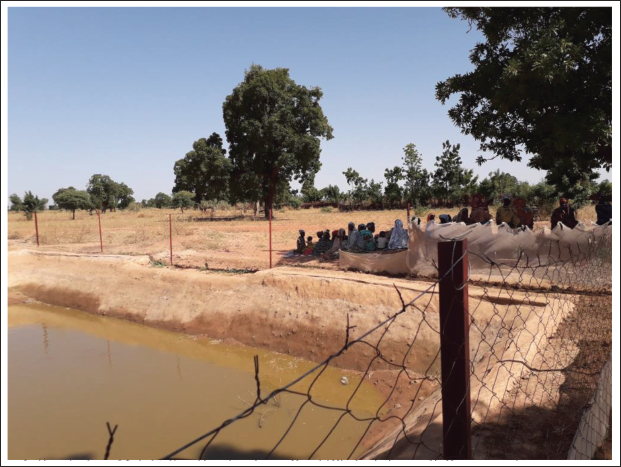
Rather than focusing on one particular development project, one particular version of the farm pond as a piece of infrastructure or one particular geographical area, we focus our analysis on the farm pond as a type of technology. We define farm ponds as water reservoirs that, regardless of their size, materials or method of management, are used to catch and store runoff water during the rainy season (Figure 1 shows a farm pond we visited in Mali). With that definition as our starting point, a team carried out field visits to four different sites where farm ponds had been built and more than 10 interviews in different areas of Burkina Faso (north-central region) and Mali (Ségou region) in 2019. Team members listened to farmers and representatives from non-governmental and local organisations; gathered documents; and, when possible, observed the ponds in situ. While the number of our visits was in no way exhaustive, we gathered information from at least five different development projects in each country. In January 2020, we conducted a survey of 27 families who had a farm pond in the province of Bam in Burkina Faso, with the help of a mobile application and the collaboration of community organisations.
Residents in Mali Gather Beside a Farm Pond (Photo Taken with Permission).
We did not aim to establish a quantitative sampling of farm ponds, neither did we try to carry out a comprehensive census of them in the contexts included in our study. Rather, we draw on the case of farm ponds in order to reflect on a policy problem: how farm ponds—the pieces of infrastructure—are designed and integrated, successfully or not, into broader strategies for climate adaptation. For this reason, since some of our findings could be interpreted as an assessment of the performance of specific development projects, we do not mention specific initiatives and instead refer to larger dynamics that could help shed light on the use of the ponds as a climate technology in general.
Results
How can farm ponds improve vulnerable communities’ resilience to climate change? In this section, we identify three different dimensions that played a significant role in the way farm ponds did, or did not, lead to more resilience to climate change for vulnerable communities.
Farm Ponds as a Piece of Infrastructure
Despite their relative simplicity, the ponds as pieces of infrastructure require certain characteristics to maintain low levels of infiltration and to resist the impact of runoff water, which could become very vigorous with abundant rain. Each project adopted different approaches to build the ponds, using different materials too, which resulted in the construction of ponds of diverse qualities and costs. With some exceptions, projects in both Burkina Faso and Mali relied on community labour for the construction of the ponds, particularly for the excavation of the basin, which in some cases had to be 13 m long, 10 m wide and 2 m deep. Most projects gave cash allocation to the farmers (usually 100,000 CFA francs [US$ 170]), which they could use to pay for labour, but it was always assumed that, in view of the magnitude of the task, this had to be completed with the help of families and neighbours who would help with the construction, most of the time in exchange for food.
In almost all development initiatives we included, the excavation was carried out by the farmers and their communities (a task that could last three months or even longer when the farmers got help from the community; one source estimated six months’ work with six workers). Meanwhile, the materials provided by projects to build and waterproof the pond (picks, shovels, plastic lining, polyvinyl chloride sheeting, rubble stones, clay), as well as those necessary for the irrigation process (hoses, manual or motor pumps), changed depending on the project. Ideally, a farm pond is surrounded by a grid that prevents people or animals from falling inside, but in many cases, they do not have one. Considering the diversity of construction configurations, the cost of a pond could also vary significantly. Depending on the approach and materials, a pond could cost as little as 150,000 CFA francs [US$ 300] or as much as 1,500,000 CFA francs [US$ 2,500], according to different estimates.
Most of the development projects that had included farm ponds among their intervention strategies did not attain their objectives regarding the number of functional ponds to be constructed. Many of the ponds were neither built according to schedule nor followed the minimal technical requirements to be functional, even when technical specialists provided assistance. Besides significant delays in their construction, project officers mentioned problems with selecting the location of the pond on the farm, the process of waterproofing it and, in general, the quality of the construction. As for the farmers, some reported that their pond was not functional after one season, while others stated that it required significant maintenance to remain useful, which could be costly for them. In the case of one project, the ponds were built by outside companies specialising in construction, with excellent results in their functionality. However, the cost of one pond was about 3,000,000 CFA francs [US$ 5,000], a largely unaffordable amount for farmers and even development projects. In this last case, the ponds were designed for collective use, not just for a single family.
Issues of infiltration, evaporation and maintenance that appear to be strictly technical in nature—type of soil, features of materials and design—cannot be treated separately from other factors, which have to do with the availability of materials, project procurement plans or community dynamics. Without proper construction, the technology simply does not work and therefore cannot contribute to communities’ resilience to climate change. What may seem extremely simple—the materials, tools and work needed to construct the ponds—cannot be separated from how the technology itself functions. Its cost, design and construction are inherent to its potential contribution to communities’ resilience. This may seem obvious, but as the case of the ponds demonstrates, the distinction between technology as part of the infrastructure, on the one hand, and its presumed impact on users’ livelihoods, on the other—as if the infrastructure (and its construction) could be dissociated from its results—makes it more difficult to see it as a climate technology. In other words, the construction of the ponds was as relevant as their use in order for the technology to be effective.
Although farm ponds seem simpler to implement than collective arrangements for water management—for example, water user associations (Kloezen 1998)—their character as an object or as a piece of infrastructure does not make them less ‘social’. When discussing the difficulties in constructing the ponds, our interviewees in Burkina Faso raised the question of comparing the ponds as a climate technology with other techniques used in the same regions that play a similar role (aimed at improving the resistance of crops to dry spells, among others, Zaï pits, demi-lunes and stone lines) and that require a certain amount of investment as well (e.g., stones for the lines and manure for the improved Zaï). Our interviewees expressed the need to include the construction and implementation of the ponds (their cost, the availability of materials and the knowledge needed to build them) when analysing their impacts, since these other techniques seemed less costly and more effective (Wolka, Mulder, and Biazin 2018), although perhaps less effective when facing long dry spells. Comparing ponds and other techniques such as Zaï seemed necessary since these techniques also help improve the quality of soil for further agricultural activities and for more than one season. The need for this comparison, directly pertaining to the characteristics of farm ponds as part of the infrastructure, shows that—even when only seemingly ‘technical’ issues are at stake—these characteristics matter both for farm ponds as climate technologies themselves and their expected outcomes and for other climate technologies used in the same region or addressing the same problem.
Farm Ponds as a Tool for Irrigation
Most farm ponds we included in our research were built with the purpose of providing water for supplemental irrigation of cereals, that is, as a way of dealing with the consequences of increasingly frequent dry spells on crops that are not usually irrigated. Throughout our fieldwork, however, this affirmation was a source of misunderstanding and confusion because there were different, even opposing, views on the proper use of ponds. For example, engineers and technical specialists insisted that farm ponds were an efficient, cost-effective and appropriate solution for the irrigation of cereals; by contrast, farmers and community organisers claimed unequivocally that irrigating cereals with water stored in a pond was either impracticable or a bad idea.
Who was right? To answer this question, we had to look beyond the pond itself and better understand the agricultural practices of smallholder farmers, which are closely linked to dietary choices, commercial strategies and land tenure issues. Our interviewees distinguished between the cereals cultivated during the rainy season (mainly sorghum and pearl millet) and the vegetables cultivated off-season, irrigated with water they obtained from wells or, in the case of Burkina Faso, from collective water reservoirs or small artificial lakes, called ‘boulis’ in the Moré language. This distinction is linked to nutritional practices because cereals are the staple food for families in these areas. Their cereal production during the rainy season is stored and carefully distributed throughout the year so it can feed the family; it is usually for domestic consumption. Irrigated vegetables, by contrast, are frequently bought and sold by producers at local markets. This distinction, moreover, pertains to the availability of land for agricultural production: while cereals are grown in greater quantities and on larger surfaces, irrigated vegetables are grown on smaller plots of land. For this reason, families often borrow or rent land to grow cereals, while vegetables are grown closer to their homes on their own land.
From the farmers’ perspective, therefore, not only would it be inefficient to use the water stored in the pond to irrigate larger surfaces of cereal crops, but in some cases, it would also be impossible given the distance between the pond, located on their land as designed by the development projects, and the field. Besides, in the context of water scarcity, farmers and their families constantly have to make sensitive decisions about the use of water, prioritising other activities that seem to bring more immediate benefits, such as vegetable gardening or giving water to animals. For the farm ponds that we visited, the most successful cases were those used for some kind of gardening, in off-season or during the season, depending on the area and the farmers’ preferences. Had any of them used the water from the pond to irrigate the sorghum, millet or pearl millet? No, this was not because they were resistant to change or had cultural reasons—as some interlocutors suggested, citing, for example, religious beliefs. Rather, it was because, from their perspective, doing this was not the best way of using the water provided by the pond.
Conversely, from the engineers’ and technical specialists’ perspectives, the ponds worked for irrigating cereals because what they considered a cereal was a specific type: maize. When researchers have quantified the effectiveness of supplemental irrigation on rainfed crops in arid and semi-arid areas, they have often focused on the culture of maize. It is a type of crop that needs more water than other cereals and is more vulnerable to dry spells (Epule et al. 2021), but it is also one that can be harvested before other cereals, has a good price when sold and is often grown closer to farmers’ homes. While maize is indeed a cereal, in the areas of Burkina Faso where we conducted this study, it is usually not cultivated in the same way as sorghum, millet or pearl millet. For example, when the Ministère de l’Agriculture et de l’Hydraulique in Burkina Faso launched a project supporting the construction of on-farm ponds, it was called Opération maïs de case, referring to the maize grown on the champ de case by families, that is, on their home fields or gardens, as opposed to the champ de brousse, the ‘bush’ fields or outfield, where they grow the other cereals. Besides, the pond is intended to irrigate a surface of 0.25 ha, which makes sense for maize but less so for sorghum or millet, since this surface would be too small to produce for domestic consumption year round.
This difference between the ways in which farmers and engineers thought about the ponds sheds light on the way in which social and physical realities are linked. There is no way the ponds can effectively reduce farmers’ vulnerability to climate change without a strategy to use them, whether for supplemental irrigation of cereals or not. This apparent misunderstanding reveals the extent to which the infrastructure alone—the pond, when functional—is not enough. Farm ponds can only effectively improve farmers’ resilience to climate change when there is a strategy to use the water collected in them, which is consistent with farmers’ agricultural practices. In fact, for many of the projects we included in this study, the users of the ponds decided how they wanted to use the stored water. However, they noted that for farmers and their families to be able to use the water, they also need the resources for the strategy they choose: a manual or fuel-powered water pump, a watering can or the necessary means to carry out horticultural activities irrigated with the pond water.
Farm Ponds as a Tool for Development
As an infrastructure device that facilitates irrigation, farm ponds need to have certain characteristics that make them functional and suitable for their intended role. The pond must be functional and located close to the area to be irrigated, and its users must be able to access equipment that will allow them to bring the water from the pond to the crop (a pump or a watering can, for example). The users of the pond must also be knowledgeable about how and when to irrigate the crops because, despite its apparent simplicity, to be efficient, supplemental irrigation requires adaptation to the type of crop and the time of the productive cycle when the dry spell occurs. When designed as a tool for development, however, other considerations must be taken into account as well. In our conversations with project officers and members of non-governmental organisations, issues such as security, land tenure policies and gender equality were brought up. According to them, tools or technologies to be included in programmes or projects aimed at improving climate resilience should be designed and implemented consistent with those issues.
In this sense, what was most concerning for them was the impact of the strategy privileged in most projects to build the ponds, which relied on community labour. As a result, those farmers who were already in better social and financial circumstances were the ones who could mobilise enough people and work to finish constructing the pond, whether by hiring workers or by recruiting enough help from the local community. In both Burkina Faso and Mali, the ponds we included in our study belonged to families who tended to be wealthier or had some position of authority in the community. Although some projects deliberately targeted widows or poorer farmers, their ponds were those that took longer to finish. As a result of the construction strategy adopted for the ponds, therefore, deeper inequality was felt in some communities, since ponds benefitted those farmers who were already less vulnerable. This issue had been raised in a recent study in Burkina Faso (Hien 2017), and in the case of the Sahel in general, irrigation schemes have sometimes exacerbated issues of access to land, gender equality and the capture of resources by elites (Cotula 2006). Furthermore, the implementation of farm ponds was closely tied to land tenure and land access issues. Farmers would not invest significantly in land that was not theirs and of which they would not be able to take advantage for more than one season, so only farmers with access to relatively secure land were able to have a pond.
In reflecting on how to convert on-farm ponds into a strategy that could benefit poorer farmers, interviewees often mentioned irrigated perimeters, which have been successfully implemented in both Burkina Faso and Mali. Irrigated perimeters are areas of varying size arranged to allow access to water for irrigation through a borehole, a well, access to a reservoir or river or in some other way. Those cited by our respondents were small, where traditional irrigation could be practiced with watering cans for gardening, often measuring a few hundred square metres. The beneficiaries of irrigated perimeters can be targeted—for example, women or youth—and they participate in their management, which adds complexity to the intervention but can also be combined with other types of training and support. However, infrastructure arrangements for collective use also come with their own problems, which projects and programmes to avoid, as some interviewees told us.
Most importantly, though, a simple technical reason made it difficult to think about the collective use of a pond. If it were to be used for supplemental irrigation of maize, the stocked water would not be enough for many users to water their crop during a dry spell. We returned, then, to the possibility of using the pond for horticulture gardening during the rainy season, but that could be done with a smaller pond located on each farm. In fact, one of the technologies we came across during fieldwork was a type of pond, implemented by the Association Zoramb Naagtaaba in Burkina Faso, made of concrete, capable of storing 300 m3, easier to excavate and intended to provide supplemental irrigation for seasonal vegetable production. This was, however, a pilot experiment that had so far proven successful.
Seeing farm ponds as tools for development means considering their impact on families, villages and even larger territorial units, both natural and social, beyond their potential for improving crop yields. In one case, a pond used successfully for vegetable gardening by the village women was appropriated by men in order to try a fish-farming experiment, which was ultimately unsuccessful. In another case, one farmer’s initiative to fill his pond with underground water raised questions about the overall impact of such activity on underground water levels for the community. In yet another case, the mechanisms and criteria used by a development project to select which farmers would receive support for the construction of their pond were not very clear to community members. These examples reveal how what seems to be exclusively an infrastructural intervention can have many effects on different areas of family and village life. They also show that the apparently simple implementation of a single physical infrastructure—as opposed to collective arrangements such as irrigated perimeters—is not exempt from complexities that could be interpreted as being of a ‘social’ or ‘cultural’ type.
Discussion and Conclusions
How should we understand the role of infrastructure, devices or objects in the context of climate adaptation initiatives? The case of farm ponds for supplemental irrigation in Burkina Faso and Mali that we discussed in this article shows how their inclusion in broader adaptation initiatives can produce a tension between different ways of thinking: engineers’ concerns about waterproofing, project officers’ concerns about equity and costs and farmers’ concerns about durability and practical use. Our findings confirm what the literature adopting a socio-technical approach to water management has already shown: that climate technologies should be approached as solutions that, regardless of their use of a particular piece of infrastructure or equipment, are always ‘socio-technical’.
Focusing their analysis on canals, dams, pipelines and irrigation and drainage networks—as well as on financial constraints, legal frameworks and cultural preferences—scholars interested in water management have shown the extent to which, in the practical implementation of irrigation interventions, it is impossible to completely dissociate issues of social relations, cultural beliefs and community organisation from issues more familiar to engineers, such as hydraulics, water delivery and crop resistance. Mainly focusing on large-scale irrigation systems, these authors inquire into what generally lies outside of engineers’ fields of knowledge and its impact on the results of irrigation interventions (Knegt and Vincent 2001; Oorthuizen and Kloezen 1995).
In this article, informed by the literature on both climate technologies and irrigation management, we adopted a socio-technical perspective to study one particular climate technology: farm ponds. In our analysis, we focus on the piece of infrastructure itself—the pond and its impact at the farm level—in order to follow its implementation in Burkina Faso and Mali. By opening ‘the black box’ of how technologies operate in practice (Benouniche, Zwarteveen, and Kuper 2014), we suggest that the case of on-farm ponds for supplemental irrigation sheds light on the complexity of an intervention when included in development projects that seek to improve communities’ adaptation to climate change. Although positively evaluated in randomised controlled experiments (Chander et al. 2019; Teshome, Adgo, and Mati 2010; Zongo et al. 2022), when they are applied to real-life contexts, their results differ. In other words, farm ponds are an excellent illustration of how a technology can work under laboratory conditions but not as well in real life, where development projects and programmes are implemented.
We observed three dimensions of the implementation of farm ponds, where the distinction between what was considered ‘technical’ and what was considered ‘social’ concealed the importance of factors or elements that were, at the same time, both. First, as part of infrastructure, farm ponds not only need to have certain characteristics regarding their quality (waterproofing, grid, depth, size, durability) but also need to be analysed as investments that farmers can make only on their own land. None of these elements are inherently ‘social’ or ‘technical’, but they must be understood jointly.
Second, thinking of farm ponds as a tool for supplemental irrigation (the rationale for their initial justification as climate technologies, i.e., Zongo et al. 2022) means understanding local irrigation practices in relation to cereal consumption practices and broader agricultural practices. Multiple factors must also be taken into account for people to adopt new technologies for irrigation, which are not exclusively mechanical (Songok et al. 2018). On-farm ponds for supplemental irrigation have been included in inventories of good practices (see, e.g., AGIRE-GIZ 2019), but it should be emphasised that their effectiveness and efficiency depend on the context.
Third, when seen as a tool for development, the case of on-farm ponds raises important questions about what a climate technology precisely is and in what ways and to what extent it differs from a development intervention in general. Trying to establish clear distinctions between adaptation and development initiatives has proven unproductive (McGray, Hammill and Bradley 2007), but as the case of farm ponds shows, it is imperative to understand how a given solution or technology helps to improve adaptive capacities and reduce vulnerability without neglecting to acknowledge that these phenomena are complex and cannot be strictly limited to the response to threats attributed to external natural systems (Eriksen et al. 2021; Nightingale et al. 2020). This means that we need to see such interventions as socio-technical solutions, that is, as complex interventions, which depend on and have an impact on many dimensions of people’s and communities’ lives and which cannot be readily classified as either exclusively ‘social’ or ‘technical’. Although farm ponds, as a piece of infrastructure, may be simpler to implement than collective irrigation schemes such as irrigation perimeters or water users’ associations, our research shows that even single objects used as climate technologies, despite their clear materiality and technical character, should be considered as socio-technical devices. Climate technologies should be seen as solutions that, regardless of their use of a particular piece of infrastructure or equipment, are always ‘socio-technical’.
Footnotes
Acknowledgements
The authors thank Rudolph Cleveringa and Juan Moreno for their help and guidance in conducting this research. They also thank the families in Burkina Faso and Mali who participated in the project and who contributed with their time and expertise in climate change adaptation.
Declaration of Conflicting Interests
The authors declared no potential conflicts of interest with respect to the research, authorship and/or publication of this article.
Funding
This research was funded by the International Development Research Centre (IDRC), Canada, project number 108903.
