




Abstract
Background
Physical, emotional, and behavioural symptoms that can significantly impact daily life are the hallmarks of premenstrual syndrome (PMS), a common illness affecting women of reproductive age. There are many different ways to manage PMS, and there is mounting evidence that physical activity may be helpful in reducing symptoms. With an emphasis on different exercise modalities such as weight training, yoga, and aerobic activity, this systematic review attempts to investigate how physical activity affects the management of PMS symptoms.
Summary
A systematic review of studies published between 2009 and 2023 was conducted, adhering to PRISMA guidelines. Articles from PubMed, Embase, and the Cochrane Library were evaluated based on inclusion criteria focusing on the effects of physical activity on PMS symptoms. The findings indicate that regular participation in exercises such as weight training, yoga, and aerobic activities significantly reduces fatigue, improves mood regulation, and alleviates physical discomfort associated with PMS. These results highlight the benefits of exercise as an effective, non-pharmacological intervention for managing PMS symptoms.
Key Messages
Incorporating regular physical activity into daily routines can serve as a practical and sustainable approach to managing PMS symptoms. Women suffering from PMS can experience improved physical and psychological well-being through diverse forms of exercise, including yoga and aerobic workouts. This underscores the role of exercise as a holistic and accessible intervention for enhancing women’s health.
Key messages:
Physical activity as therapy: Research suggests that regular exercise, especially yoga, resistance training, and aerobic exercises, can help reduce PMS symptoms naturally without the need for prescription drugs.
Benefits for holistic health: These exercises enhance mood, lessen physical discomfort, and cut down on exhaustion, all of which enhance mental and physical health.
Non-pharmacological approach: Exercise presents a strong substitute for medication-induced therapies, offering a natural means of managing PMS and enhancing women’s quality of life.
Keynote:
Premenstrual syndrome, Physical Activity, Exercise, Aerobic exercise, Yoga, Resistance training, Menstrual Health, Symptom management, Women’s health, non-pharmacological intervention.
Introduction
In the 1930s, Dr. Robert Frank 1 initially reported the cyclical occurrence of symptoms in women, leading to the diagnosis of premenstrual syndrome (PMS). The knowledge of PMS has developed throughout the years, drawing on knowledge from psychiatry, endocrinology, and gynaecology.
PMS is a group of symptoms that coincide with the menstrual cycle and include psychological, physical, and behavioural aspects. 2 According to studies, up to 75% of women may at some point in their lives experience PMS symptoms. 3 When women visit their primary care physician, they frequently bring acute PMS symptoms, decreased productivity at work, and marital problems. 4 Furthermore, there might be a relationship between PMS and diseases including depression and hypertension. 5
Numerous therapies are advised for managing PMS symptoms. Both the (National Institute for Health and Care Excellence) and the (Royal College of Obstetricians and Gynaecologists) suggest that exercise should be considered as a primary treatment, in addition to medications like selective serotonin reuptake inhibitors and the combined oral contraceptive pill. 6
Pharmacological treatments are frequently effective but carry the risk of side effects such as fatigue, nausea, and potential impact on pregnancy. Women may also actively seek alternative therapies. 7 Physical activity can elevate endorphin levels, assist in balancing progesterone and oestrogen production, and stimulate the body’s natural anti-inflammatory substance synthesis. Furthermore, exercising offers additional advantages like enhanced general health, chances for social interaction, and the possibility of alleviating feelings of depression and anxiety.8, 9
Thus, in conclusion on the basis of many reviews of literature the impact of physical activity on PMS symptoms. The revised version is concise and provides a clear understanding of how physical activity relates to PMS, along with the nuances involved in the research. It’s well-written and conveys the essential points from each study while linking them to the broader summary of PMS management through physical activity.
Methods
The purpose of this systematic review is to assess how well physical activity works to lessen premenstrual symptoms. This was performed through searches across key electronic databases, such as PubMed, Google Scholar, and Scopus (Figure 1). Research that examines the effects of any kind of physical activity intervention on the severity of PMS symptoms and includes women with a diagnosis of PMS or premenstrual dysphoric disorder will be considered.
PRISMA Flow Chart.
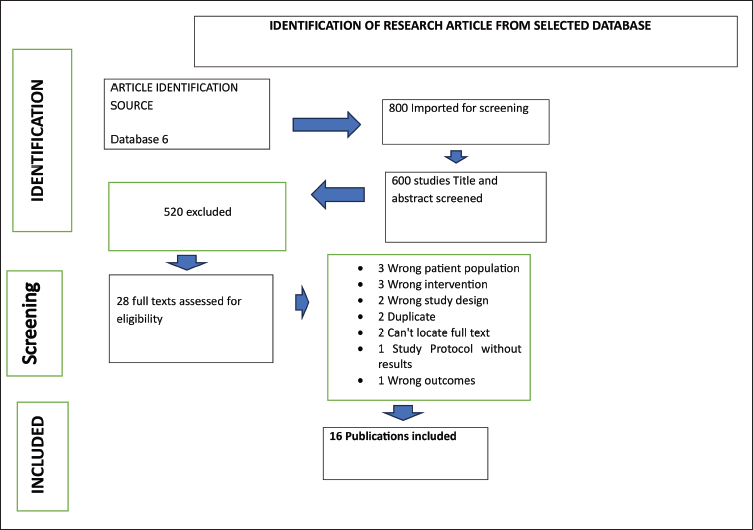
This study was operated through the guidelines of Preferred Reporting Items for Systematic Reviews and Meta-analyses (PRISMA) for reporting the systematic literature reviews of articles relating to physical activity and PMS. The outlined 27-item PRISMA checklist was followed for the planning, conducting, organising, evaluating, analysing, and reporting of the literature reviewed. The extracted reviews were analysed and organised using various sources such as Google Docs and Excel spreadsheets. The research articles were selected on pre-defined criteria. The study was conducted through the various stages discussed in the following sub-sections (Table 1).
Search Strategy and Formula Employed for Various Database.
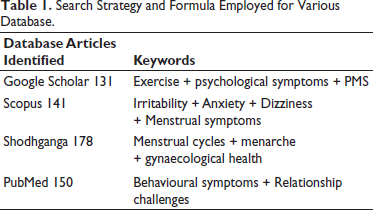
Organising the Review
A guide for doing a systematic review was developed using the PRISMA checklist paradigm, incorporating the recommendations made by Pascoe et al. To address the research topic within the allotted time frame, a meticulous design for the study was developed in compliance with the suggested 15-step process. The following information was documented in the draft outline:
Domain for the study: Role of physical activity in PMS. Objective of study: The focus of the study was premised on the exploration of the impact of physical activity on premenstrual symptoms. Implications: The investigation into the role of physical activity in PMS would highlight the interactional relationship between physical activity and psychological and physical symptoms among women.
Research Questions
RQ: Whether there would be any role of physical activity on PMS.
Inclusion criteria:
Studies published in peer-reviewed and indexed journals. Articles based on empirical evidence, qualitative inquiries, review articles, and mixed-method approaches. Studies focusing on the aetiology, diagnosis, or management of PMS. Research involving human subjects.
Exclusion criteria:
Studies not focusing on PMS. Non-peer-reviewed articles. Animal studies.
The articles underwent a final screening process that took into account both the inclusion and exclusion criteria. The articles’ titles and abstracts were assessed for informational value and substance in order to support their inclusion in the research. supporting their inclusion in the research. The database was cleared of duplicate research.
Conducting the Review
For the evaluation of reviews, all of the writers worked together to organise and filter the studies. In accordance with the proposed research questions, the articles were screened in two sections. One Excel sheet had the studies that reflected the context of PMS, while the other portion was used for studies on physical activity and PMS. Theses, dissertations, and research articles on the relevant context were included in the study. A total of 600 studies had their titles and abstracts assessed for relevancy. The analysis also included the abstracts of the articles for which the complete text was not available (Table 1). To reduce the possibility of bias, mistakes, and duplication, all the writers further validated the articles that had been screened for possible inclusion.
Results and Findings
The search strategy identified eligible studies, involving a total of 600. Physical activity shows a significant reduction in PMS symptoms such as slow walking, brisk walking, and mild stretching. The exercise interventions included a variety of modalities, such as aerobic training, resistance exercises, and yoga.
The search strategy identified 16 eligible studies, involving a total. The physical activity included a variety of modalities, such as aerobic training (e.g., brisk walking, jogging, cycling), resistance exercises (e.g., strength training with weights or resistance bands), and yoga (encompassing physical postures, breathing techniques, and meditation). The studies examined the impact of these diverse physical activity programmes on the severity of premenstrual disorder symptoms, including both psychological (e.g., mood changes, irritability) and physical (e.g., bloating, cramps) symptoms experienced by the participants.
The systematic review revealed a significant reduction in PMS symptom severity among women who engaged in physical activity. Subgroup analyses further suggested that certain types of exercise, such as aerobic training, may be more effective than others in alleviating PMS symptoms. Physical activity was found to be useful in reducing the intensity of premenstrual symptoms, including mood disruptions, physical discomfort, and behavioural changes, 23 according to a systematic review of the literature on the subject. The results have important implications for primary care professionals, who often encounter women presenting with acute PMS symptoms. By offering physical activity-based interventions, clinicians may be able to help their patients manage PMS without providing medications that carry the risk of side effects.
Discussion
This systematic review provides evidence that physical activity can effectively reduce the severity of premenstrual disorder symptoms. The findings support the recommendation by major clinical guidelines to consider physical activity as a primary prevention and treatment for PMS, alongside other management strategies.
However, the included studies were limited by small sample sizes and varying exercise protocols. Future research should aim to elucidate the optimal type, frequency, and duration of physical activity for PMS symptom relief. Physical activity has been found to have a significant impact on the management of PMS. Recent research suggests that engaging in regular physical activity can help alleviate the symptoms associated with PMS, including mood changes, physical discomfort, and cognitive difficulties (Table 2). 24
Studies have shown that physical activity can have a positive effect on mood, reducing symptoms of depression and anxiety that are often experienced during the premenstrual phase. 25 Additionally, physical activity has been found to improve sleep quality, which can be disrupted during the premenstrual period. 26 The release of endorphins and other hormones during physical activity can also help to reduce physical symptoms such as cramps, bloating, and headaches. 27
Furthermore, research indicates that different types of physical activity may have varying effects on premenstrual symptoms (see Table 2).
For example, a study found that aerobic exercise was more effective in reducing mood-related symptoms, while yoga and mindfulness-based activities were more beneficial for reducing physical symptoms.
Conclusion
The findings have important implications for primary care professionals in providing holistic, non-pharmacological approaches to managing PMS in their patients.
The review cites previous studies 2 to support the effectiveness of physical activity in reducing premenstrual disorder symptoms (Table 2).
Demographic Description of the Articles Included in the Review.
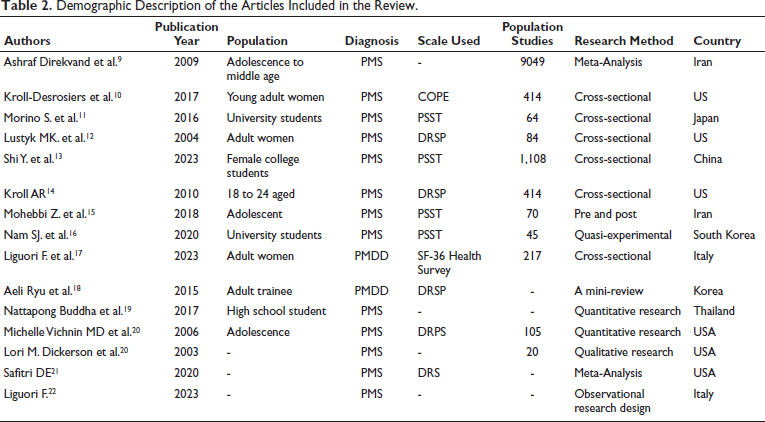
Physical activity can elevate endorphin levels, assist in balancing hormone production, and stimulate the body’s natural anti-inflammatory processes, all of which can contribute to alleviating PMS symptoms. Additionally, exercise provides broader benefits such as enhanced general health, opportunities for social interaction, and the potential to alleviate feelings of depression and anxiety that may accompany premenstrual disorders (see Table 2).
The review cites previous studies to support the effectiveness of physical activity in reducing premenstrual disorder symptoms. These studies indicate that physical activity can elevate endorphin levels, assist in balancing hormone production, and stimulate the body’s natural anti-inflammatory processes, all of which can contribute to alleviating PMS symptoms. Additionally, exercise provides broader benefits such as enhanced general health, opportunities for social interaction, and the potential to alleviate feelings of depression and anxiety that may accompany premenstrual disorders. By engaging in regular physical activity, women may be able to manage their PMS symptoms more effectively and improve their overall well-being, without relying solely on medication that can potentially cause unwanted side effects.
By engaging in regular physical activity, women may be able to manage their PMS symptoms more effectively and improve their overall well-being, without relying solely on medication that can potentially cause unwanted side effects.
The implications of these findings are particularly relevant for primary care professionals, who often encounter women presenting with acute PMS symptoms. By offering exercise-based interventions, clinicians may be able to help their patients manage PMS without resorting to medications that carry the risk of side effects.
During the premenstrual phase, women often experience cyclical changes in sex hormones, along with bloating and fluid retention. Exercise-induced muscle contractions help release the fluid that contributes to bloating and tenderness. This process, in turn, enhances circulation, which aids in the better absorption of excess fluid. Out of 10 studies that examined bloating and fluid retention, seven indicated that exercise led to noticeable improvements while three found no significant effects. Additionally, six studies specifically looked at breast tenderness associated with bloating and fluid retention, and all concluded that exercise effectively reduces breast sensitivity (see Table 2).
Limitations
The present study explored the extant literature for the research on physical activity on PMS. The study was conducted on the premises of PRISMA guidelines for systematic literature, keeping in view the intricacies of the procedure. Despite rigorous methodology, few limitations exist for the systematic review conducted. The limitations of the study could be capitulated as:
The review was conducted through open-access databases primarily; thus, it limited the domain of other published literature. The impact of physical activity on PMS was included in the study. The studies included in the review were in the English language only. Published literature in other languages could also be included in future research.
Footnotes
Abbreviations
PMS: Premenstrual Syndrome; PMS: Premenstrual symptoms; PMDD: Premenstrual dysphoric disorder; PMS COPE: Premenstrual Change Coping Inventory; PSST: Premenstrual Symptoms Screening Tool; DRSP: Daily Record of Severity of Problems.
Authors’ Contribution
All authors contributed to the study’s conception and design. Research conceptualization, data sorting, analysis, and duplication checks were performed. The first draft of the manuscript was written by SA Research conceptualization, data sorting, analysis, and duplication checks and MA and VS commented on previous versions of the manuscript. AA, Assisted in the preparation and formatting of the manuscript according to journal submission requirements. All authors read and approved the final manuscript.
Declaration of Conflicting Interests
The authors declared no potential conflicts of interest with respect to the research, authorship and/or publication of this article.
Funding
The authors received no financial support for the research, authorship and/or publication of this article.
ICMJE Statement
The manuscript complies with ICMJE guidelines.
Statement of Ethics
Ethical permission was not required for the systematic review research article.
