



Abstract
This study examines the factors influencing the adoption of artificial intelligence (AI) in small and medium-sized enterprises (SMEs) in Jordan, a key player in the growing Middle Eastern economy. Rooted in the Technology–Organization–Environment framework, we specifically focus on the role of technological capabilities and organizational dynamics in shaping AI adoption within Jordanian SMEs. A comprehensive survey involving 364 SME owner-managers in Jordan serves as the empirical foundation. Findings reveal the significant impact of employee IT knowledge, IT infrastructure, managerial commitment, training initiatives and well-designed reward systems in shaping SME owners’ or managers’ attitudes to AI. These findings provide valuable insights for SME leaders and stakeholders, guiding them in developing strategies to smoothly integrate AI technologies in line with Jordan’s societal needs. The article concludes by emphasizing the study’s contributions, implications and limitations while suggesting potential directions for future research in this field.
Keywords
Highlights
Examines artificial intelligence (AI) adoption in Jordanian SMEs using the TOE framework.
Surveys 364 SME owner-managers, focusing on technological and organizational factors.
Identifies key factors: IT knowledge, infrastructure, support, training, and rewards.
Offers insights for AI adoption in SMEs.
Introduction
In today’s fast-changing business landscape, artificial intelligence (AI) stands out as a transformative force across industries (Lu et al., 2022). Its versatility empowers organizations to achieve significant benefits, including improved decision-making, increased efficiency, agility, productivity, reliability and superior customer experiences (Dwivedi et al., 2021; Kopka & Fornahl, 2024). Notably, research suggests that smaller firms might even reap greater advantages from AI integration compared to larger ones (Kopka & Fornahl, 2024). However, despite the promise of AI for small and medium-sized enterprises (SMEs), significant barriers remain. These include cost, lack of expertise and scalability challenges (Dwivedi et al., 2021; Manyika et al., 2017; Oldemeyer et al., 2024). This limited accessibility is particularly concerning due to the lack of research on AI adoption by SMEs, especially in the Middle East (Kurniawanti et al., 2023). This study aims to bridge this gap by focusing on Jordan, a nation experiencing a significant surge in digitalization (Adaileh & Alshawawreh, 2021; AlAmayreh et al., 2023).
While SMEs play a crucial role in Jordan’s economy, not enough research has been done on their implementation of digital technologies (The Jordan Times, 2019). Jordanian SMEs contribute substantially to the national economy, constituting about 50% of the GDP and employing over 60% of the country’s workforce (Meii, n.d.). In many sectors such as manufacturing, food processing, technology, tourism and construction, these SMEs showcase entrepreneurial spirit, adaptability and resilience in the face of regional challenges (Leaders International, 2022).
The study of AI adoption in Jordanian SMEs is particularly critical for several reasons. First, AI technologies offer untapped potential for enhancing efficiency, competitiveness and innovation in these businesses (Arzikulov, 2021), thereby contributing to their viable growth. Second, there is a limited understanding of the specific factors influencing AI adoption in emerging market economies like Jordan as they grapple with issues such as resource scarcity and lack of innovation (Mashal, 2018). Studying AI adoption in Jordanian SMEs addresses the existing gap in research related to the contextual factors influencing the integration of AI technologies into this country’s economy and infrastructure. This study poses two critical questions: (a) what technological and organizational factors influence AI adoption within Jordanian SMEs; and (b) what role do demographic attributes play in shaping this context? Our methodological approach incorporates a comprehensive survey conducted with 364 SME owner-managers in Jordan, grounded in the Technology–Organization–Environment (TOE) framework (Alraja et al., 2022; Dadhich & Hiran, 2022; Muhic et al., 2023). This theoretical framework guides our investigation of the key drivers of AI adoption and provides a robust foundation for our empirical analysis.
This article makes a significant contribution by revealing the key determinants of attitudes to AI adoption in firms, utilizing the TOE framework to comprehensively examine what drives AI adoption in Jordanian SMEs (Masadeh et al., 2024). It validates the importance of technology-related factors like employee IT knowledge and infrastructure in shaping attitudes towards AI (Pan et al., 2022; Shahadat et al., 2023). Importantly, the study also examines the organizational factors such as managerial support, training and reward systems, providing empirical evidence for their substantial impact on AI adoption. This aligns with the TOE’s emphasis on organizational orientation and strategic alignment (Tornatzky & Fleischer, 1990). Also examined here are demographic factors like age, education, position and gender and their influence on AI adoption in SMEs. The relationships between attitudes and usage behaviour, highlighting the crucial role of a positive attitude in the adoption process, are confirmed here.
Beyond theoretical insights, this study offers knowledge for managers and policymakers to act on. For Jordanian SME owners/managers, it provides a validated model for identifying key elements driving AI adoption. Overall, this article provides a comprehensive perspective, addressing gaps in existing literature and offering insights for both academics and practitioners. In the following sections, we will analyze how these factors guide people’s attitudes to AI.
Literature Review
TOE Framework
The TOE framework is a widely recognized theoretical model that has played a pivotal role in elucidating the factors influencing technology adoption in many kinds of organizations (Aligarh et al., 2023; Alraja et al., 2022; Dadhich & Hiran, 2022; Muhic et al., 2023). Introduced by Tornatzky and Fleischer (1990), the TOE model draws its theoretical roots from Fred Fiedler’s contingency theory, categorizing common factors influencing technology adoption and innovation (Park & Kim, 2021). TOE provides a comprehensive framework for understanding the adoption of various information systems/information technology (IS/IT) products and services at the organizational level (Shahzad et al., 2020). Subsequently, the TOE framework has proven valuable for both researchers and practitioners in predicting and explaining the likelihood of adopting innovations at the organizational level (Kumar & Kalse, 2021; Muhic et al., 2023; Nguyen et al., 2022).
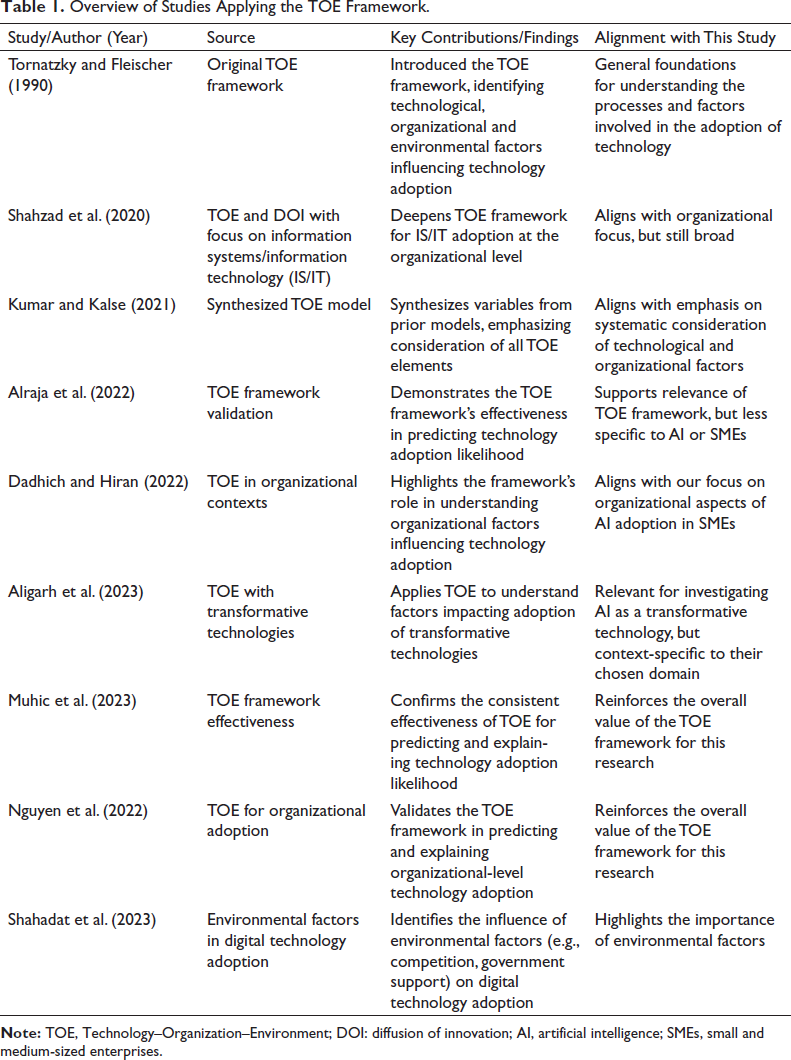
While acknowledging that environmental factors can play a key role in shaping technology adoption in organizations (Alraja et al., 2022), we intentionally omitted them from our study. Other research has delved into environmental factors, identifying competitive pressures and government support as pivotal in AI adoption (Mouloudj et al., 2024; Shahadat et al., 2023; Teixeira & Pacione, 2024). Instead, our research focuses on examining the technological and organizational aspects of AI adoption in Jordanian SMEs. This strategy enables us to explore the internal dynamics and specific factors in the organization that directly impact AI adoption. Table 1 summarizes the extant research on the topic of the TOE framework.
Overview of Studies Applying the TOE Framework
Overview of Studies Applying the TOE Framework
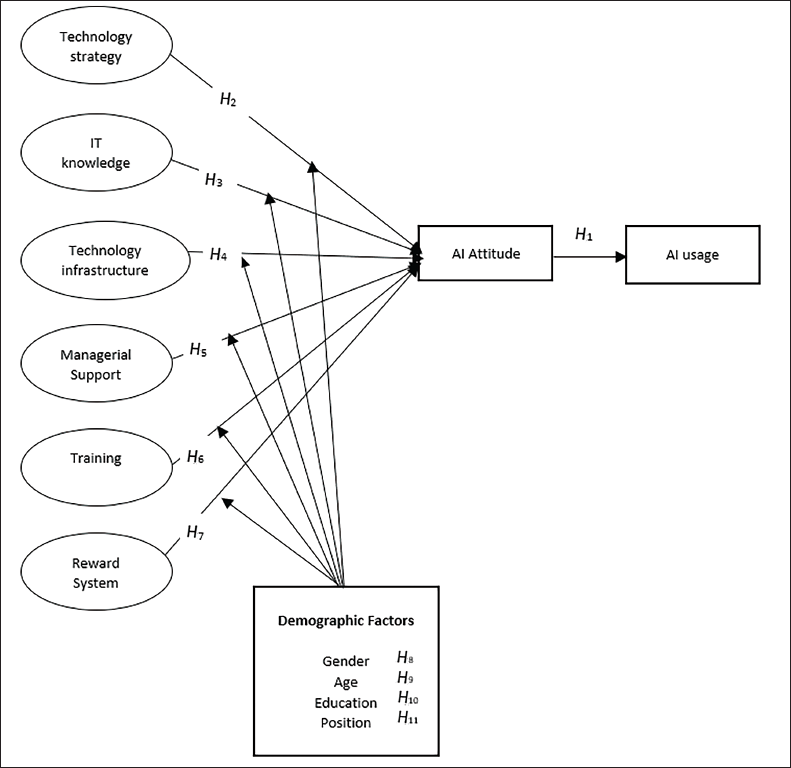
Drawing on the technological and organizational elements of the TOE framework, we propose the following conceptual framework depicted in Figure 1. The next section provides an overview of the hypotheses devised for this study.
Proposed Conceptual Research Framework.
Attitude to AI Applications
Users’ attitudes to digital technologies are significant in influencing their adoption behaviours (Chawla & Joshi, 2020). A positive attitude serves as a precondition for successful implementation and sustained usage (Koontz & Weihrich, 2010; Lam et al., 2007). Studies have consistently shown that an individual’s perception of a technological innovation directly dictates their willingness to embrace it (Talukder et al., 2022). This positive association extends to AI applications, where favourable attitudes are expected to translate into frequent and ongoing usage (Alsheddi et al., 2020; Creswell, 2013). Based on this argument we propose the following hypothesis:
H1: Attitude towards AI applications positively influences the usage of AI applications in Jordanian SMEs.
Technology Orientation
The pivotal role of technology in driving innovation in SMEs is undeniable, influencing decisions to embrace new technologies (Hasani et al., 2023). The technological context considers the IT-related features relevant to the firm and the overall industry or marketplace (Chau & Deng, 2018). For SMEs, a commitment to adopting technological innovations is critical, despite the apparent operational constraints (Lutfi et al., 2020; OECD, 2017). This article focuses on three key variables existing in the technological context: technology strategy, employees’ IT knowledge and technology infrastructure. These are explained more fully below.
Technology Strategy
In a world of rapid digital advances, carefully planning a digital strategy is crucial before diving into implementation of technology (Wielgos et al., 2021). Businesses, when navigating new economic trends and innovations, often prioritize their technology strategy and invest in innovation (Chege et al., 2020; Panda & Sharma, 2021). This involves selecting resources aligned with organizational needs, enabling goods and services to serve the business well so that it remains competitive (Yeow et al., 2018). Studies show that for AI to be successful, it needs to align with existing business plans; otherwise, it can hinder any further consideration of information technology innovations (Hasani et al., 2023; Selten & Klievink, 2024; Sweet & Scott, 2024). Prior research often looks closely at broader technological concepts, sometimes overlooking the specific impacts of individual components that constitute the technology strategy (Ahmad, 2024). In simpler terms, integrating technology into the overall business operations becomes a critical factor in increasing the chances of AI adoption, especially for smaller companies (Yu et al., 2023). Therefore, based on these insights we posit the following:
H2: Technology strategy positively influences attitudes pertaining to AI in Jordanian SMEs.
Employees’ IT Knowledge
The ever-growing importance of digital initiatives hinges on employees’ IT proficiency and ability to use a variety of applications (Verhoef et al., 2021). Continuous learning, training and team development are essential for acquiring the right skill sets. Beliaeva et al. (2019) argue that SMEs must understand the challenges brought about by rapid technological progress. By developing the necessary skills, enhancing creativity and fostering a supportive organizational culture, SMEs can fully leverage the opportunities presented by such growth (López & Yepes, 2024).
SMEs require a balanced combination of both hard and soft skills. Hard skills encompass proficiency in technology and data handling, while soft skills involve problem-solving, adaptability and opportunity identification (Sousa & Rocha, 2019). Prior research underlines that workers’ knowledge and abilities, including strategic thinking, problem-solving and network communication, are fundamental not only for digitalization in general and especially advanced technologies (Lutfi et al., 2020; OECD, 2017; Sousa & Rocha, 2019) but also for AI adoption specifically (Chowdhury et al., 2023). Referring to AI adoption, where user interaction and understanding are paramount, the role of employees’ IT knowledge becomes even more important (Bhatta et al., 2024). While the overall technological readiness has been examined in extant research, a notable gap exists in comprehending the influence of IT knowledge on AI adoption by SMEs (Tominc et al., 2024). Addressing this gap is crucial for developing targeted training and development programmes, and elevating staff members’ competencies in AI adoption. Building on this foundational reasoning, we posit that:
H3: Employees’ IT knowledge positively influences their attitude towards AI adoption in Jordanian SMEs.
Technology Infrastructure
A strong technological infrastructure is the bedrock for successful AI implementation. Melville and Kohli (2021) characterize it as a complex ecosystem encompassing diverse information technologies, processes, communities and capabilities. Such an ecosystem thrives on four pillars, as identified by Moore and Fodrey (2018): robust systems, clearly defined objectives, regular evaluation and skilled personnel. Missing any of these elements can jeopardize technology integration and hinder progress. Beyond its basic components, a well-designed infrastructure fosters innovation and fuels business growth. Fink and Neumann (2009) highlight its role in generating company value, while Kashada et al. (2018) emphasize its significance in encouraging the implementation of digital learning technologies. Furthermore, Lyver and Lu (2018) stress the importance of flexibility, emphasizing an IT infrastructure’s ability to adapt to changes in the market or industry, integrate with existing systems and accommodate a range of business needs. Crucially, this robustness and flexibility – linked to hardware capabilities, a strong network and sufficient data storage – lay the foundation for successful AI implementation (Anh et al., 2024; Chau & Deng, 2018; Tominc et al., 2024). Based on this scenario we hypothesize that:
H4: Technology infrastructure positively influences attitude towards in Jordanian SMEs.
Organizational Orientation
Organizational context and particularly management support and financial costs plays a critical role in an organization’s technology adoption (Chau & Deng, 2018; Park & Kim, 2021). Previous research on organizational factors influencing technology adoption has highlighted the importance of management support (Arnold et al., 2018; Wong et al., 2020). This study defines ‘organizational context’ as encompassing three essential elements: managerial support, training and a reward system (Diana et al., 2024; Tominc et al., 2024). It aims to bridge research gaps and offer a more comprehensive understanding of the factors influencing AI adoption in Jordanian SMEs. Each hypothesis focuses on a specific dimension of organizational orientation, recognizing the significant roles of managerial support, training and reward systems.
Managerial Support
Strong managerial support is anticipated to accelerate the adoption of AI, just as it does for other digital technologies like big data (Park & Kim, 2021). Ooi et al. (2018) define it as the level of understanding and commitment that managers/executives show towards new technologies. Talukder (2014) further emphasizes it as the extent to which management facilitates and motivates employees to take up digital innovations (see also Dubey et al., 2018). In lower-middle income countries, access to skilled managers for providing such support can be a challenge for SMEs (Engwa et al., 2021). Effective managers understand the influence of external factors like customers, competitors, vendors and regulations on information and communication technology (ICT) innovation trends and how these will affect their companies (Chege & Wang, 2020). As Masudin et al. (2021) emphasize, they should also consider creative approaches to manage business activities while actively supporting technological innovation. Managerial support here can also refer to the active endorsement and backing of AI initiatives by senior-level management. Such support is hypothesized as exerting a significant and positive impact on their attitude towards AI, so the following hypothesis is put forward for testing:
H5: Active managerial support has a significant and positive impact on the attitude towards AI adoption in Jordanian SMEs.
Training
Training is a critical factor in technology acceptance, as theory and research suggest that with adequate technical support and training, employee acceptance will greatly improve over time (Zaman et al., 2021). In an AI-driven workplace, employees constantly encounter new technologies as part of their tasks and workflows, requiring ongoing adaptation and learning, and a desire for employees to show readiness and competence, which is critical for SMEs (Chau & Deng, 2018; Wong et al., 2020; Yu et al., 2023). Given the complexity of AI, proper training becomes a key determinant of successful adoption (Selten & Klievink, 2024). While general discussions on training exist, this study concentrates on the specific role of training in shaping attitudes and behaviours towards AI adoption in SMEs. Based on the above argument we posit the following hypothesis:
H6: Targeted training programmes positively influence attitudes towards AI adoption in Jordanian SMEs.
Reward System
To give businesses the incentive to adopt AI, SMEs can offer rewards such as wage increases, better job security, bonuses or promotions (Al-Alawi et al., 2007; Alkandi et al., 2023). Tangible or intangible benefits can be provided by an organization to employees who actively embrace and use new technologies (Li et al., 2023). Dwivedi et al. (2013) highlight the importance of perceived value in influencing technology adoption decisions, while Adler (2013) suggests there is a link between efficient technology integration and improved organizational performance. Therefore, this study expects to find a positive relationship between a well-designed reward system and AI adoption in SMEs. Existing literature highlights the motivational impact of such systems in encouraging employees to embrace and actively participate in new technology adoption (Chau & Deng, 2018; Wong et al., 2020). We hypothesize that the presence of a structured and rewarding incentive system significantly influences the adoption of AI in Jordanian SMEs:
H7: A structured and rewarding incentive system positively influences attitudes towards AI adoption in Jordanian SMEs.
Demographic Characteristics
In exploring the factors influencing attitudes towards AI adoption in Jordanian SMEs, demographic characteristics emerge as crucial variables, impacting individuals’ beliefs and attitudes concerning technological innovations (Baabdullah et al., 2022; Eoma et al., 2016).
Gender
Understanding gender dynamics is essential since it significantly impacts human behaviour and decision-making, particularly in the context of SME leadership. Although Chalutz Ben-Gal (2023) contends that the impact of gender on technology adoption may not always be significant, most research points to evident gender-related differences (Talukder et al., 2023). Research suggests that men may exhibit increased involvement and enthusiasm with technological advancements (Eze et al., 2021; Liébana-Cabanillas et al., 2014). Thus, it is likely that men will shape and interact with critical organizational aspects such as technology strategy, employee IT knowledge and technology infrastructure, considering the prevailing gender gap in Jordan (Hattab, 2012). On the other hand, qualities typically associated with feminine values, such as a focus on community and a supportive work environment, may not directly lead to a robust drive for incorporating technology into organizations (Eze et al., 2021; Lee et al., 2013).
Empirical data support the existence of gender-specific trends in the adoption and use of technology. Studies by Tubadji et al. (2021) and Nouraldeen (2023) suggest that men are more predisposed to embrace AI technology, potentially influencing the alignment between organizational strategies and technological frameworks. Additionally, Liu and Tao (2022) and Jo and Park (2023) have identified a stronger correlation between men’s perceptions of the usability and utility of AI technologies. They also noted that men engage more with platforms like ChatGPT, indicating a greater amalgamation of technology in their organizational roles. These contrasting results highlight the complex nature of the relationship between gender and technology adoption, emphasizing the need for more comprehensive and context-specific studies to better understand the varied influences at play. Consequently, we hypothesize:
H8: Gender moderates the relationship between organizational technological factors and attitudes towards AI, such that men exhibit a stronger influence within these relationships.
Age
Age is a key demographic factor that substantially influences the adoption and acceptance of technological advancements (Venkatesh et al., 2003). Empirical studies confirm that age significantly affects individuals’ perceptions and interactions with digital technology (Hoque & Sorwar, 2017; Talukder et al., 2023). Generally, younger generations are more flexible and have more positive views towards AI compared to older individuals (Zhao et al., 2018). Older individuals may exhibit hesitation or doubt, often stemming from their lack of experience or perceived difficulties with new technologies (Shao & Kostka, 2023). Conversely, younger individuals, due to their increased exposure and adaptability to technological advancements, tend to demonstrate higher levels of excitement and receptiveness towards AI (Wirtz et al., 2022). This receptiveness can be attributed to being raised in an era with a greater emphasis on technology (Abdelkader, 2023). This study posits that this affinity for technology could enhance the effectiveness of organizational elements such as managerial support, training initiatives and reward systems, fostering an environment conducive to technology usage and adoption (Awa et al., 2011; Chuang et al., 2009). Moreover, the inherent technological proficiency of younger managers might render them more receptive to strategic technological efforts, better equipped to leverage IT expertise, and more adaptable to infrastructure changes that support innovation (Shiau et al., 2009). Based on the above, we posit the following hypothesis:
H9: Age moderates the relationship between organizational and technological factors and attitudes towards AI, such that younger individuals will exhibit more positive attitudes towards AI in these contexts.
Education
Academic qualifications stand out as an important variable shaping the adoption of technological innovations. Early adopters of innovation, often characterized by a higher education level and greater knowledge of technology, play a crucial role in driving change within business organizations (Ho & Lim, 2018; Porter & Donthu, 2006). The extant literature indicates that higher educational levels are often associated with a greater understanding and acceptance of new technological innovations (Hambrick & Mason, 1984). Individuals with advanced educational backgrounds are typically more exposed to diverse technologies during their academic training, enhancing their proficiency and comfort with these tools (Chuang et al., 2009). Drawing on the upper echelons theory (UET) by Hambrick and Mason (1984), this study argues that individuals with lower educational attainment might exhibit scepticism towards AI due to a lack of familiarity or understanding, which can stem from limited exposure to technological education. Acknowledging how education affects attitudes towards AI, we propose:
H10: The effect of technological and organizational factors on attitudes towards AI will be positively influenced by education, such that individuals with higher educational levels will exhibit a more positive influence on these relationships.
Position
The significance of one’s position in the workplace cannot be overlooked, as it directly influences the adoption of technological innovations. Senior employees, such as managers or executives who generally make overarching decisions, play a key role in shaping organizational strategies related to technology (Szopiński, 2016). For example, the attitudes of top-level managers are likely to be influenced by the organization’s technology strategy and how well it aligns with their values and cognitive bases (Hambrick & Mason, 1984). Top-level managers often have better access to IT knowledge and a more comprehensive understanding of the organization’s IT infrastructure, shaping a more favourable or strategic perspective towards new innovation (i.e., AI) (Awa et al., 2011; Chuang et al., 2009; Dwivedi & Lal 2007). Thus, it is logical to assert that top-level managers are responsible for providing direction and resource to facilitate the adoption of innovation within an organizational setting (Hsu et al., 2019). With workplace position in mind and considering the influence of organizational hierarchy, we propose:
H11: An employee’s position within an organization moderates the relationship between technological factors and organizational factors on attitudes towards AI. Specifically, higher-positioned employees will exhibit a more positive influence on these relationships.
Materials and Methods
Procedure
Given that SMEs constitute a significant 98% of businesses in Jordan, they play a vital role in economic growth (Moh’d AL-Tamimi & Jaradat, 2019; Zighan & Dwaikat, 2023). The research focuses on various types of SMEs registered with Jordan’s Chamber of Commerce, with a particular emphasis on AI applications that have been part of SMEs’ operations for some time. The issue of underutilization presents an area worth exploring, aiming to uncover the factors influencing acceptance and ultimately improve the integration of AI technology.
Measures
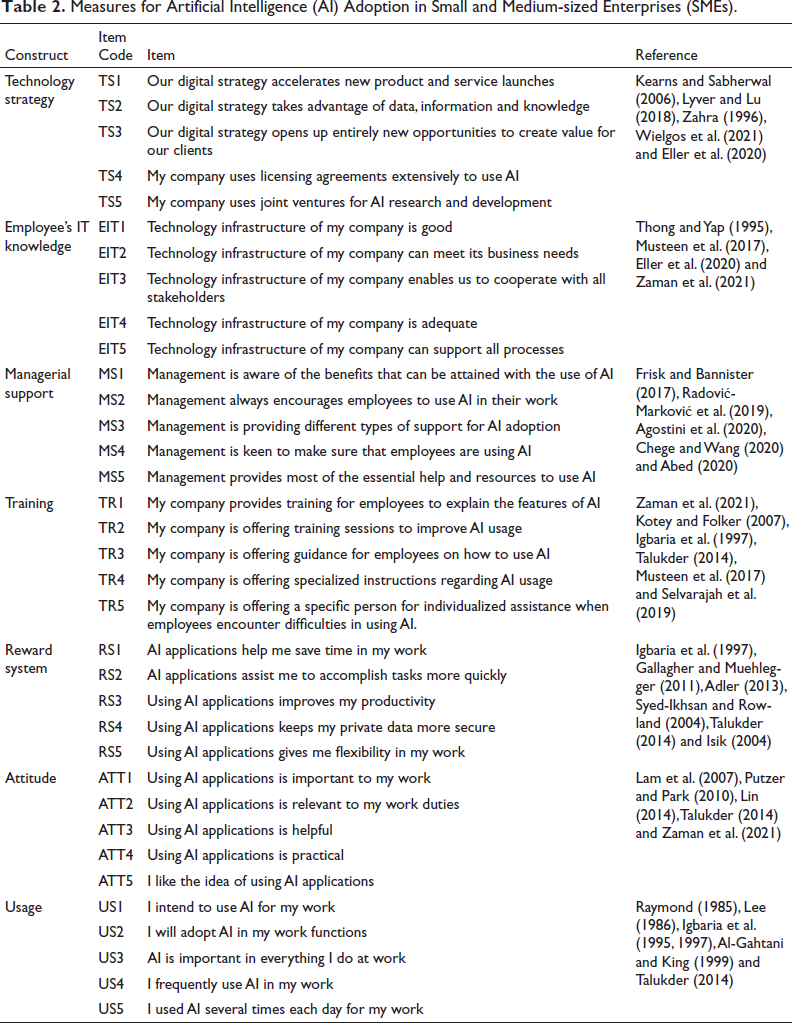
This research expands the well-established TOE framework which has previously been effective in studying technology adoption by firms of all sizes (Bag et al., 2023; wael AL-khatib, 2023). The measurement items include statements that are part of an online survey questionnaire that collects data on perceptions, attitudes and practices regarding AI adoption. The measurement items were sourced from the prior studies in similar domain and contextualized to fit the scope of the study. Experts reviewed the questionnaire to ensure that its coherence, logical flow, language suitability, alignment with the study’s context and inclusion of relevant technological considerations were evident. A pilot study was conducted prior to the main project, to address potential comprehension issues or unintended ambiguities that respondents might encounter. The questionnaire was based on a five-point Likert-type scale (1 = Strongly Disagree (SD), 2 = Disagree (D), 3 = Neutral (N), 4 = Agree (A), 5 = Strongly Agree (SA)), as this produces better quality results than other scales (Hassan et al., 2021). The measures used for this study are provided in Table 2.
Measures for Artificial Intelligence (AI) Adoption in Small and Medium-sized Enterprises (SMEs).
Measures for Artificial Intelligence (AI) Adoption in Small and Medium-sized Enterprises (SMEs).
The data collection process for this research aimed to gather comprehensive insights from a wide variety of SMEs in Amman, Jordan. The study selected 1,600 SMEs across different sectors to ensure a representative sample. A stratified sampling approach, categorized by industry classification, guided the selection process. To facilitate distribution, the research team partnered with the Amman Chamber of Commerce, which supplied verified email contacts for the target SMEs, enhancing both focus and efficiency. Subsequently, an online survey questionnaire was distributed to these SMEs. To boost participation rates, the research team implemented a reminder strategy, sending follow-up communications in the second and fourth weeks after initial outreach. This approach was designed to improve response rates while minimizing potential email fatigue among recipients.
After the survey period concluded, the team conducted a thorough evaluation of the responses for completeness and coherence. From the 388 completed questionnaires, 24 were discarded due to inadequate responses, leaving 364 for detailed analysis. This yielded a response rate of 22.75%, which, though modest, is in line with best practices for organizational studies in developing nations (Shamsuddoha, 2005). The final sample of 364 responses provided a solid basis for further analysis, representing a significant segment of Jordan’s SME sector and facilitating an in-depth investigation of AI perceptions and adoption dynamics.
Data analysis was conducted using IBM’s SPSS (version 27), with a focus on establishing measurement validity and reliability. The study employed a variety of multivariate statistical techniques, including descriptive statistics, correlation analysis, factor analysis and multiple regression analysis (MRA), to assess the variables’ reliability and validity.
Descriptive statistics offered foundational insights, employing frequency distribution and cumulative percentage analyses to explain respondent profiles. In-depth correlation matrix evaluations and internal reliability checks were performed, ensuring the findings’ robustness. Analysis of the correlation matrix included identifying and addressing multicollinearity to prevent significant overlaps in explanatory capabilities of the independent variables and ensured adherence to recognized methodological standards (Dielman, 2005; Hair et al., 1998). MRA was used to examine how various factors influence Jordanian SMEs’ adoption of AI. This approach, aligned with Hair et al.’s (1998) recommendations and supported by recent findings (Boonkaewwan et al., 2021), helped the researchers map the predictive relationships between these factors and AI adoption. Additionally, the study examined the R-square statistic to quantify how well independent variables explained variations in the dependent variables, confirming the theoretical model’s explanatory strength. Analysis of variance (ANOVA) and regression coefficients were then analyzed to determine the impacts of technological and organizational factors on attitudes towards AI technologies.
The research also proactively addressed potential biases. Using diverse response formats and reverse-coded items mitigated common method bias (CMB) (Jordan & Troth, 2020), confirmed by Harman’s single-factor test. E-mail reminders reduced non-response bias, and comparative analyses between respondents and non-respondents ensured data representativeness.
Demographic Information
The demographic variables of age, gender, education and workplace position were measured using interval variables and categorical representations. For gender, numerical values were assigned for analytical purposes, with 0 denoting male and 1 denoting female. Regarding age, a categorical representation was adopted, creating discrete groups or categories that align with age cohorts. The age categories include 20–29, 30–39, 40–49, 50–59 and ≥60. For education, participants were categorized based on their academic qualifications. The categories include primary, HSC, bachelor’s degree, master’s degree and PhD. Finally, participants’ positions in the organization were measured as an interval variable, with categorical representations for analysis. Categories include business owner, director, senior manager, manager and supervisor.
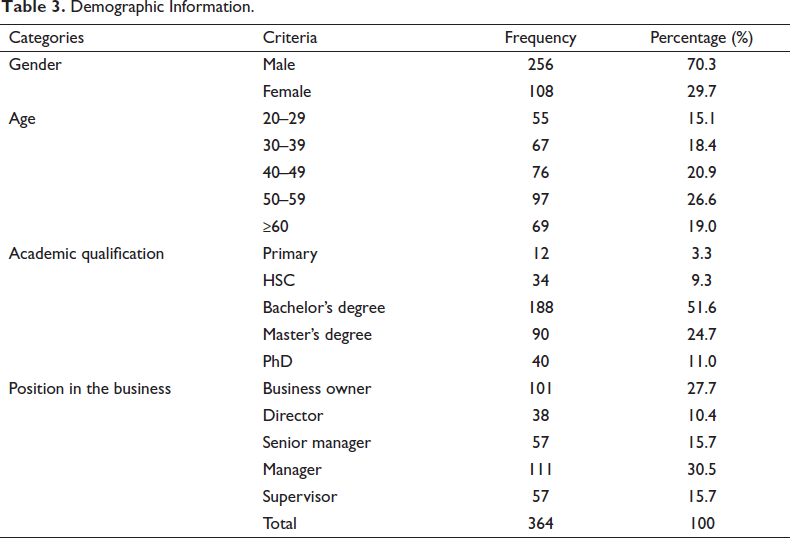
As depicted in Table 3, the gender distribution among participants reveals that 70.3% were male, with females representing 29.7%. Examining the age groups of respondents, the majority fell within the 50–59 range (26.6%), followed by 40–49 (20.9%), 30–39 (18.4%), 20–29 (15.1%) and 60 and above (19.0%). Notably, individuals up to the age of 50 seem to bear the responsibility of embracing digital technologies in Jordanian SMEs. This 20–49 age cohort constitutes 54.4%, predominantly occupying roles as owners/managers within SMEs.
Demographic Information.
Demographic Information.
Regarding education level/qualifications, a significant proportion of respondents held a Bachelor’s degree (51.6%), followed by those with a Master’s degree (24.7%). Approximately 9.3% possessed a higher school certificate, 11.0% had a PhD and only 3.3% completed primary school.
In terms of business positions, mid-level managers comprised the largest segment at 30.5%, followed by business owners at 27.7%. Additionally, 15.7% worked as both supervisors and senior managers. A combined total of 10.4% represented roles as directors.
Validity tests how well the study instruments interpret the data and refer to whether they measure what they have been reported to be measuring, as supported by evidence emerging in the investigated topic (Clark & Watson, 2019). Construct validation is based on the assessed variables’ theory (Chetwynd, 2022). To establish evidence of convergence and discriminant validity, an exploratory factor analysis was conducted using SPSS, and the factor loadings were utilized to compute the average variance extracted (AVE), along with reliability assessed through Cronbach’s alpha. This analysis also encompassed measures of convergent and discriminant validity to affirm the instruments’ validity.
As indicated in Table 4, all factor loadings ranged from 0.612 to 0.856, confirming this was sufficient for the study. According to established standards, both Cronbach’s alpha and composite reliability values should not fall below 0.70 and 0.80, respectively (Clark & Watson, 2019). Discriminant validity is deemed satisfactory when constructs exhibit an AVE loading greater than 0.50, suggesting that at least 50% of the measurement variance is captured by the constructs (Kim & Garrison, 2009). Table 4 also illustrates that all constructs demonstrated an AVE score surpassing the recommended minimum threshold of 0.50. Thus, it can be concluded that the instrument has achieved an acceptable level of discriminant validity.
Factor Loading, Reliability and Convergent Validity.
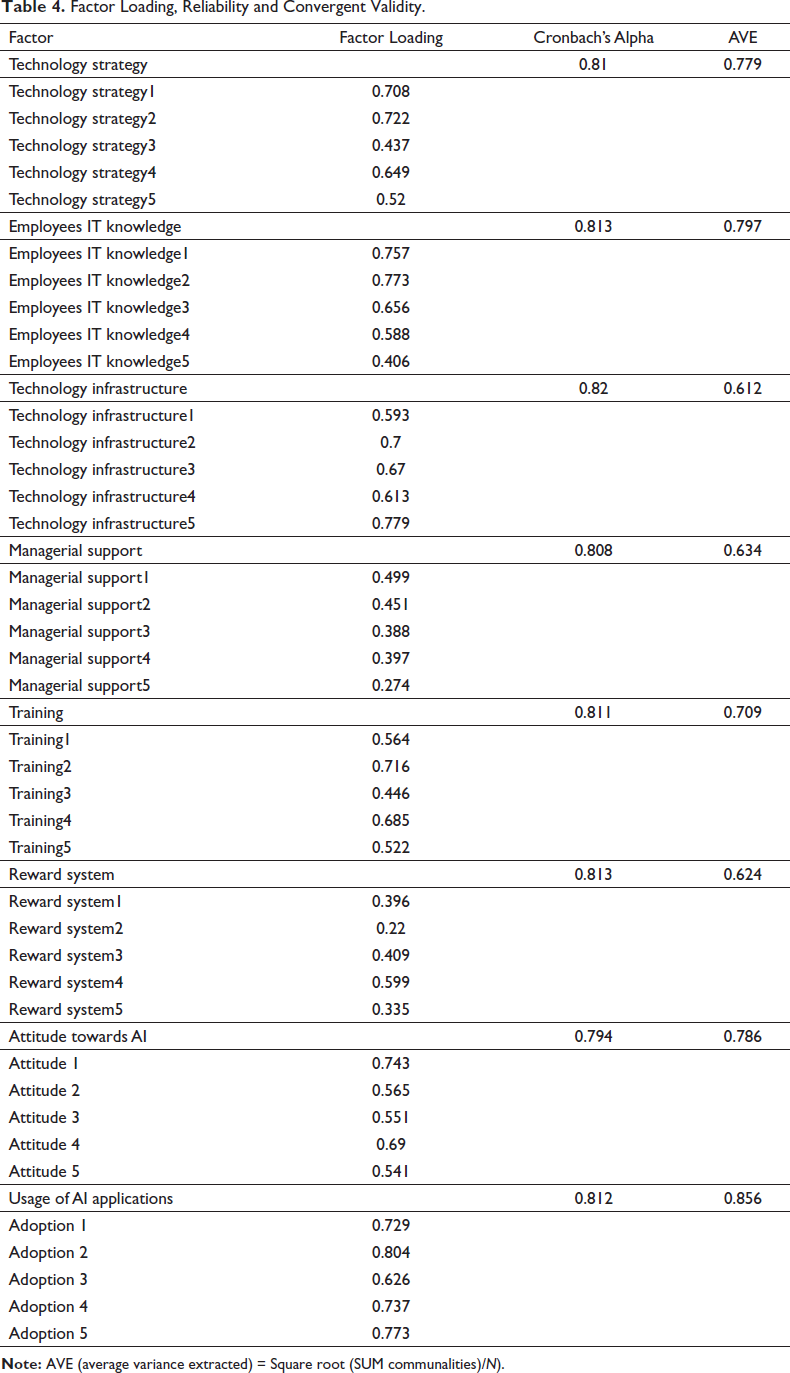
Factor Loading, Reliability and Convergent Validity.
This study sought to establish direct relationships between multiple model variables, laying the groundwork for subsequent analyses, including regression. The correlation analysis in Table 5 reveals significant Pearson’s correlation coefficients (r) at the 0.01 level. Moreover, the correlation matrix demonstrates substantial positive correlations between dependent and independent variables. In the desired 0.15–0.50 range, indicating both internal consistency and unidimensionality (Sheppard & Mills, 2002), the results showcase robust relationships. Specifically, attitude exhibits significant and positive associations with technological orientation factors: Technology strategy (r = 0.367, p < .001), employees’ IT knowledge (r = 0.397, p < .001) and technology infrastructure (r = 0.230, p < .001). Meanwhile, attitude shows significant and positive relationships with three organizational orientations: managerial support (r = 0.598, p < .01), training (r = 0.386, p < .01) and reward system (r = 0.423, p < .01). The data further reveal a significant and positive relationship between attitude towards AI applications adoption and AI usage (r = 0.341, p < .01).
Bivariate Correlations.
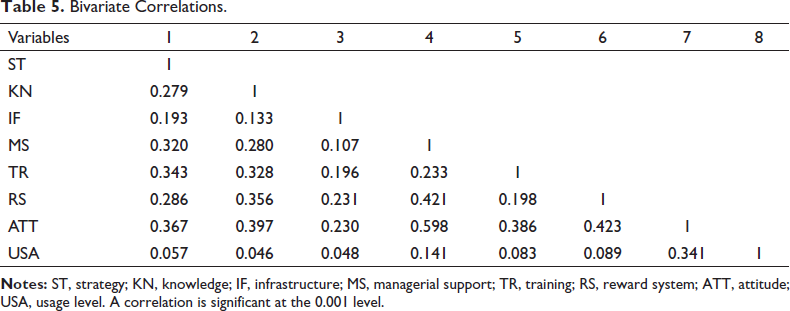
Bivariate Correlations.
The theoretical research model serves as the backbone of this study, forming the path model that underpins this study. Rigorous assessment of the measurements used is crucial when delving into the literature on a specific topic. It is imperative to provide detailed insights into reliability and validity to maintain research integrity (Dodgson, 2021). The questionnaire, built on validated items from prior studies, ensures the robustness of the measurement construct. With confirmed reliability and validity, the research model undergoes further scrutiny. Cronbach’s alpha, a widely accepted measure of reliability, attains a coefficient of 0.7 or higher, signifying reliability (Hair et al., 2006). Table 6 depicts the regression model.
Regression Model for Technological and Organizational Factors.
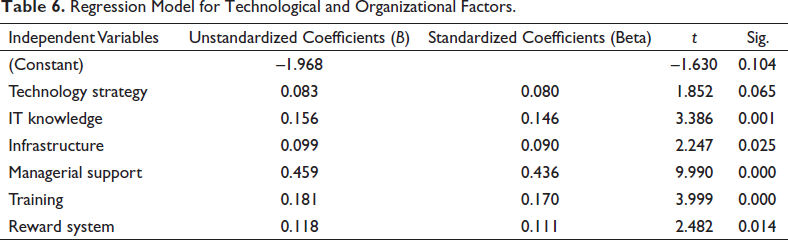
Regression Model for Technological and Organizational Factors.
The B-values in Table 6 explain the unique contributions of each predictor to the conceptual model, while the t-values denote the significance levels of the path coefficients. The structural model’s results in Table 5 unveil significant predictors of AI applications acceptance. Notably, employees’ IT knowledge (t = 3.386, p < .001), technology infrastructure (t = 2.247, p < .025), managerial support (t = 9.990, p < .000), training (t = 3.999, p < .000) and reward system (t = 2.482, p < .014) demonstrate notable impacts on the acceptance of AI applications.
In Table 7, an R² of 0.481 signifies that 48% of the variance in employees’ attitudes towards AI applications is explained by technological and organizational orientation, as shown by the correlation coefficient r-square. These findings align with established benchmarks, where an R² of 0.15 indicates moderate variance while 0.35 indicates a substantial amount (Cohen, 2013).
Summary of Results for Hypotheses.
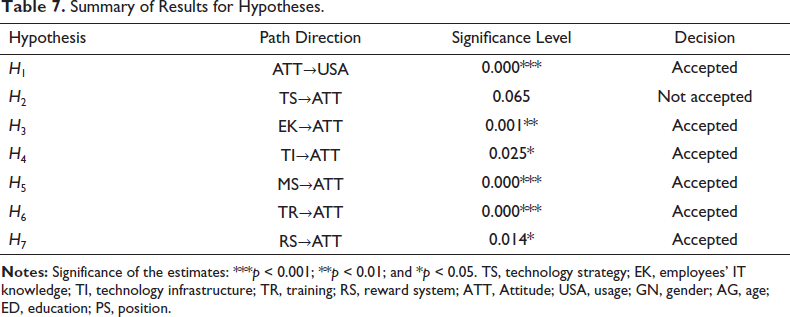
Results significant at ∗p = .001.
Model fit for attitude R² = 0.481.
The findings are generally consistent with the technological and organizational aspects of the TOE framework. It provides a comprehensive lens for understanding technology adoption in organizations.
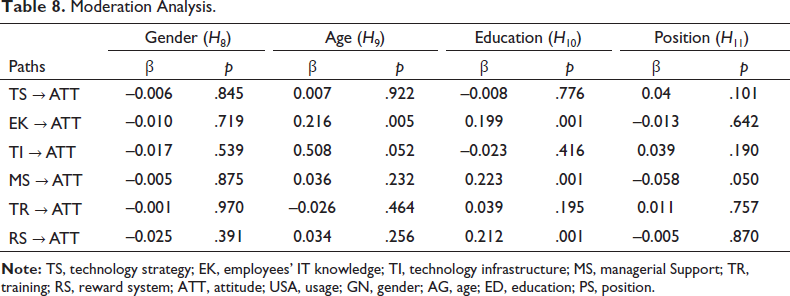
The moderation analysis in Table 8 indicates that no statistically significant moderation effects were observed for gender, age, education and position across the examined paths. Therefore, H8, H9, H10 and H11 are not supported. The absence of significant moderation effects suggests that the impact of the examined technology-related factors on employee attitudes remains consistent across different demographic characteristics, providing a valuable baseline for understanding the universal implications of these factors in the organizational context.
Moderation Analysis.
Moderation Analysis.
Impact of Attitude on Usage
The hypothesis focused on assessing the impact of employees’ attitudes on the adoption and usage of digital technologies. The results manifest a robust and significant relationship between attitude and usage behaviour (p < .001), validating earlier findings (AlAmayreh et al., 2023; Santiago et al., 2024). This attests to the pivotal role of attitude in the technology adoption process. A positive attitude, driven by perceived usefulness and ease of use, is a key precursor to embracing digital entrepreneurship in SMEs (Ajzen, 1985). The findings resonate with Koontz and Weihrich’s (2010) assertion that a positive attitude towards technology is a fundamental precursor to its acceptance. A decisive sign of readiness to embrace digital innovation in SMEs is a positive attitude towards digital technologies and an understanding of their strategic significance based on their perceived usefulness and simplicity of use (Chatterjee et al., 2022).
Impact of Technological Factors
The study examines the critical role of technology in driving innovation in SMEs, with a focus on how technological factors help shape attitudes and the adoption of AI applications. Three hypotheses were formulated, examining the impact of employees’ IT knowledge, technology infrastructure and technology strategy. The results indicate significant effects for employees’ IT proficiency (p < .001) and technology infrastructure (p < .001, β = 0.025) on owners’ and managers’ attitudes towards AI application adoption. These findings are consistent with prior studies that affirm the critical role of technology infrastructure in fostering AI acceptance in Jordanian SMEs, the bedrock being a skilled workforce equipped with strategic thinking, problem-solving and digital communication prowess (AlAmayreh et al., 2023; Hess et al., 2016; Moore & Fodrey, 2018). A robust and scalable IT infrastructure is indispensable for businesses wanting a competitive edge, creating substantial value for the enterprise (Fink & Neumann, 2009; Hmoud et al., 2023). Owners and managers in Jordan’s SMEs acknowledge the indispensability of proficient IT skills and robust technological foundations, deeming them catalysts for innovation adoption. Given the necessary financial, technological and motivational backing, Jordan’s SMEs exhibit a readiness to embrace AI applications, even without stringent mandates.
However, the relationship between technology and attitude was found to be insignificant (p > .05; β = 0.08). The finding challenges the traditional understanding that technology strategy plays an important role in shaping adoption of new systems (Dora et al., 2022). While prior research might have suggested a strong link between having a clear technology strategy and technology adoption (Duan et al., 2019), this study’s results indicate that – with specific reference to Jordanian SMEs and AI adoption – this relationship may not be as pronounced or significant as previously thought.
Impact of Organizational Factors
The organizational context, encompassing managerial support, training and the reward system, was examined to understand its influence on the attitude towards AI applications. The analysis, as shown in Table 4, demonstrates that managerial support (p < .001), training (p < .001) and the reward system (p < .005) have a significant impact, confirming the hypotheses. The findings are consistent with extant research documenting that managerial support fosters the integration of digital technologies, including big data and other information systems (Hmoud et al., 2023; Lyver & Lu, 2018; Masudin et al., 2021). The findings are also consistent with contemporary research confirming training plays a pivotal role in the adoption of new technologies (Selvarajah et al., 2019). Furthermore, prior research confirms that firms may give employees the incentive to embrace digital technologies if they are offered rewards such as goods, bonuses or other benefits (Adler, 2013; Talukder, 2014).
Moderation Influence of Demographic Factors
The absence of statistically significant moderation effects across gender, age, education and position in the moderation analysis implies that the relationships between technological and organizational factors (technology strategy, employees’ IT knowledge, technology infrastructure, managerial support, training, reward system) and attitudes are relatively consistent and do not significantly vary based on demographic characteristics. These findings may suggest a level of universality in stakeholders’ perceptions and responses to technological and organizational initiatives, irrespective of gender, age, educational background or organizational position. Previous research in the technology adoption context has produced varied results. For example, Chawla and Joshi (2018) found that gender and education have no moderating effect on attitude, while age and occupation exert a moderating influence. However, Ragheb et al. (2022) did not find any moderating role of demographic factors (gender and age) when investigating the acceptance of applying chatbot (AI) technology among higher education students in Egypt. Similarly, Parayil et al. (2023) also found that demographic factors do not moderate the relationship between drivers and the intention to adopt mobile banking technology. While the results suggest a general consistency in the impact of technology-related factors on attitudes, organizations should still focus on individual variations within demographic groups. Further exploration of specific demographic segments could provide additional insights for more targeted and effective implementation of technology-related strategies.
Overall, the study’s summary of hypotheses testing (see Tables 7 and 8) provides convincing evidence for the critical influence of technological and organizational drivers, as well as attitude, in shaping the adoption of AI applications in SMEs. These findings have significant ramifications for crafting effective strategies and interventions to promote technological integration in the SME sector.
Conclusion
In light of the TOE framework, the study investigated the impact of technological and organizational factors, as well as attitudes and demographic factors, on the adoption of AI applications in SMEs operating in Amman, Jordan. First, it confirms a significant relationship between employees’ attitudes and the use of AI technologies, emphasizing the foundational role of attitude in fostering innovative technologies within SMEs. Second, this study highlights the significant impact of employees’ IT knowledge and technology infrastructure and challenges conventional notions about the vital role of technology strategy in AI adoption within Jordanian SMEs. Third, organizational dynamics, including managerial support, training and the reward system, emerge as influential factors in shaping attitudes towards AI applications. Lastly, the absence of statistically significant moderation effects across demographic variables suggests a universal perception and response to technological and organizational initiatives, while highlighting the importance of considering individual variations within demographic groups. To sum it up, this study offers valuable insights for formulating effective strategies and interventions to facilitate successful AI adoption within Jordanian SMEs.
Theoretical Implications
This research extends the TOE framework by providing a comprehensive understanding of the adoption dynamics of AI applications by SMEs in Jordan. This study encompasses the critical influence of employees’ IT knowledge, technology infrastructure and technology strategy on AI adoption. The study also places significant emphasis on organizational dynamics, exploring the detailed impact of managerial support, training and the reward system in SMEs. Validated here is the relationship between attitudes and usage behaviour, highlighting the psychological aspects that guide the adoption process. Moreover, we incorporate demographic factors, including age, education, gender and organizational position, providing a perspective on the moderating role of individual characteristics’ role in shaping attitudes towards AI adoption. These enhancements increase the TOE framework’s adaptability and applicability in understanding the evolving landscape of AI adoption in SMEs, particularly in the Middle Eastern context.
Managerial Implications
This study goes beyond being a mere academic exercise; its findings carry substantial implications for managerial practices and policy considerations. The insights gained from this study offer actionable steps for managers, particularly those steering the course of SMEs in Jordan. The pivotal roles of employee IT knowledge, robust technological infrastructure (Alalwan et al., 2017; AlAmayreh et al., 2023) and well-structured training programmes demonstrate the necessity of investing in human resources and new technologies. Managers can leverage the validated model devised in this study as a strategic tool. This research model not only aids in identifying critical elements fostering AI adoption but also enables a focused approach to overlook the effects of AI usage so that managers can assess its value to the business accurately. It is vital for decision-makers looking to navigate the technological landscape, marking a transformative shift in business operations.
The findings of this study carry significant implications for a variety of industries, providing a roadmap for improved AI adoption practices. For instance, in the manufacturing sector, where automation and AI technologies are increasingly decisive (My, 2021), the emphasis on robust technological infrastructure and employee IT literacy becomes paramount. Based on the findings, manufacturing enterprises can strategically invest in technology, upskill their workforce and create an environment conducive to AI integration. Similarly, in the financial services industry, where data security and regulatory compliance plays a pivotal role (Truby et al., 2020), managerial support and continuous learning initiatives can guide organizations in navigating these challenges. By training managers on the benefits of AI while fostering a culture of encouragement, financial institutions can ensure a smoother and more compliant adoption process (Giraud, 2023). These examples highlight the versatility of our findings, offering actionable strategies that can be tailored to the unique needs and challenges of different industries, ultimately fostering more effective and widespread AI adoption in Jordan and elsewhere.
Finally, the lack of significant moderation effects of demographic factors highlights the need for organizations to adopt inclusive communication strategies that resonate with a diverse employee group. Training and awareness programmes can be designed to accommodate employees with varying demographic characteristics, ensuring that everyone receives relevant information and support to embrace AI technologies. This universal impact is valuable for organizational leaders and managers seeking to implement technology-driven initiatives to enhance employee attitudes, as they can anticipate a consistent positive influence regardless of demographic variations.
Policy Implications
The findings reported in this study offer some important insights for shaping policy initiatives to foster AI adoption in SMEs. To establish a conducive environment for AI integration, policymakers are advised to consider the following recommendations. First, prioritizing investments in IT education and training programmes is essential. The study shows that enhancing employees’ IT knowledge and practical skills positively influences attitudes towards AI adoption. Acknowledging the decisive role of technology infrastructure, policymakers should channel efforts into providing support and incentives for SMEs to build robust IT foundations. This support could encompass financial assistance, tax incentives or collaborative programmes with technology providers, ensuring SMEs possess the necessary basis for effective AI adoption.
Second, given the substantial impact of managerial support on the acceptance of AI applications, policymakers can advocate for or mandate organizations to implement support programmes. These programmes might involve training managers on the benefits and practicalities of AI, fostering a culture of encouragement, and providing resources for successful AI implementation. Based on the positive outcomes that reward systems for adopting AI can produce, policymakers are encouraged to design incentive structures, such as tax benefits or recognition programmes. These incentives can motivate employees and organizations to actively engage with AI technologies, fostering a more positive attitude towards them. Policymakers should also be mindful of demographic factors influencing AI adoption. Criteria like age, education and job position can be considered in policy and legislative formulations, tailoring strategies to address specific needs and challenges faced by different demographic groups.
Third and finally, recognizing AI adoption as a global phenomenon, policymakers should promote international collaboration and knowledge exchange. Facilitating partnerships, conferences and platforms for SMEs to share best practices and learn from global experiences can contribute to a more informed and dynamic AI ecosystem.
Limitations and Future Research
While this study provides valuable insights, it is crucial to acknowledge its limitations. The exclusive focus on Jordanian SMEs may limit generalizability of the findings to other technological and organizational contexts. Future research should expand data collection beyond Amman, encompassing SMEs throughout Jordan, and consider a qualitative research approach to produce deeper insights. Additionally, exploring diverse industry sectors, conducting comparative evaluations between public and private sector entities, and employing longitudinal designs could enhance the generalizability of findings. Future studies should also consider cross-cultural studies to understand how cultural nuances influence attitudes and adoption of AI in the Arab world and internationally. Extending the focus to the public sector for a comparative analysis, integrating qualitative methodologies, and including SMEs in different regions will contribute to a more comprehensive understanding of AI adoption patterns in these kinds of businesses.
Footnotes
Authors Contribution Statement
Ra’ed Almashawreh: Conceptualisation, literature review, data collection and analysis, writing original draft.
Majharul Talukder: Ceonceptualisation, data analysis, writing original draft.
Sarvjeet Kaur Charath: Conceptualisation, method, literature review and editing.
Md Irfanuzzaman Khan: Literature review, data analysis, review, writing and editing.
Declaration of Conflicting Interests
The authors declared no potential conflicts of interest with respect to the research, authorship and/or publication of this article.
Ethical Declaration
The authors abide by all the ethics involved in this academic work and have not submitted it to any other journal.
Funding
The authors received no financial support for the research, authorship and/or publication of this article.
