




Abstract
The current study attempts to explore and measure the multidimensional nature of Internet Addiction in India. Based on prior studies and respondent interviews, certain themes were developed. These themes were combined with items from Young’s Internet addiction test (IAT) to propose an initial 25-item questionnaire. The scale was first administered on a sample of 294 urban Indian adults and subjected to an exploratory factor analysis (EFA). This resulted in four factors, namely Internet compulsive disorder (ICD), Internet craving (IC), Internet obsession (IO) and addictive behaviour (AB). Eight items with loadings below 0.5 were removed. The obtained 17-item scale was validated on a new sample of 320 Internet users. Findings from the confirmatory factor analysis (CFA) further confirmed the four-factor structure. The goodness of fit indices were found to be within acceptable limits. The instrument had satisfactory construct validity and high reliability scores. The study makes a unique contribution towards measuring and evaluating Internet addiction as a multidimensional construct and is aimed at enhancing our understanding of the impact of Internet platform on human psychology and behaviours.
Keywords
Introduction
One of the most significant malaise of modern times is the increased preoccupation of humans with the Internet. Internet as a medium, today, is a platform for all kinds of online activities from work, to leisure, to purchase and socializing (Young, 1998). According to the Internet World Stats (2020), as on 30 June 2020, there were 4,833,521,806 Internet users across the world. In percentage terms, 62% of the world population have Internet access, while the Internet penetration rates in Asia, recognized for their younger demographics, is 58.8%. The issue of concern here is that these cyber inhabitants have increasingly got habituated and over a period addicted to the Internet. This malfunctional pathological condition has been equated by researchers (Griffiths, 1996; Young, 1998) to behaviour patterns that are almost identical to substance addiction and abuse (Kuss et al., 2014). The problem is not about the amount of time the person spends on the Internet, but the related anxiety and guilt associated with the usage (Morahan-Martin & Schumacher, 2000).
The phenomenon of over-engagement and obsession with Internet has been the focus of considerable attention from academicians, practitioners and policymakers alike. Young (1996) termed this obsession as Internet addiction (IA) and found that the phenomenon encompasses a wide spectrum of disturbed behaviour patterns—such as excessive obsession with the Internet, loss of mental control in using the Internet as well as demonstration of withdrawal symptoms if hindered from using the Internet. The problem was identified not as addiction to the Internet or excessive usage but deviant behaviour on the Internet (Griffiths, 1996) in the form of gaming, social networking and shopping on the Internet.
The concern takes on grave proportions when one considers its increasing prevalence across the globe. Wang et al. (2013) report that the young Chinese population was considered as the largest group of netizens in the world and exhibit alarming levels of IA. In a comprehensive meta-analysis conducted on over 31 countries, Cheng et al. (2013) found that the incidence of IA was highest in the Middle East and in regions with higher levels of traffic congestions, environmental pollution and dissatisfaction with life states in general. Another significant aspect of the phenomenon is that the incidence is highest among young individuals (Nalwa & Anand, 2003). Studies report that adolescents (Shaw & Black, 2008) and juveniles (Hur, 2006) are at maximum risk as they are not only more technology savvy but also spend a great deal of time on the Internet. The groups have a lower ability to control and are often trapped in their own cyber world. IA rates among European adolescents have been reported to be between 5% and 15.2% and are reported to be higher among the Asian adolescent between 2.5% and 26.8% (Kuss et al., 2014; Wang et al., 2016).
As is the case with most malignant behaviour, there have been numerous attempts to measure and diagnose the incidence and degree of IA. While the scales are robust and have been used across regions and population groups (Morahan-Martin & Schumacher, 2000), very few studies have attempted to test any of the well-established scales for their applicability or reliability in the Indian context. The exploratory current study was aimed at measuring IA among urban Indian adults and establishing whether it is a uni- or multidimensional construct. The authors believe that though certain phenomenon—including IA—may be universal in their occurrence, they are contextual in their manifestation and thus must be studied in their natural environment.
It is evident that with the exponential growth of Internet and mobile telephony in India, the time spent on Internet for personal and professional reasons would witness an unprecedented rise. The rapid adoption of Internet would lead to problematic Internet use with manifestations ranging from withdrawal, preoccupation, anxiety, anger, depression and impulsive behaviour. Against this backdrop, it would be worth exploring the multidimensional nature of IA and generate insights for academicians and practitioners.
An extant review of related literature is presented in the second section. The third section establishes the contextual argument for the study and presents the theoretical background basis, the issues and gaps in the existing literature. The fourth section discusses the research methodology and approach followed, which is further followed by the study findings. The fifth and final section concludes the article by indicating the theoretical and managerial implications of the study findings with a submission of the limitations of the study and future research directions.
Review of Literature
The use of the Internet, originally restricted to work and research purposes (Morahan-Martin & Schumacher, 2000), today, has widespread use among the general public across the globe (Kim et al., 2006). However, it was only in the 1990 that researchers established that overdependence on the Internet led to a maladaptive pattern, like drugs or alcohol addiction (Kircaburun & Griffiths, 2018; Spada, 2014). This condition has been coined and defined differently by various researchers.
Definition
Young (1999) defined it as IA and called it an individual’s inability to control his or her use of the Internet, resulting in psychological, social, academic, and/or work difficulties in life. It was postulated that excessive and continuous engagement with the Internet could result in significant changes on the brain structures as well as in the major cognitive processes (Dong & Potenza, 2014). Others (Davis, 2001) titled it as problematic Internet use (PIU). This was defined in terms of Internet use which causes a specified number of symptoms, including mood-altering use of the Internet, failure to fulfil major role obligations, guilt, and craving (Morahan-Martin & Schumacher, 2000). Though widely and extensively studied, the construct is yet to receive consensus among varied perspectives regarding the manifestation and causes of addiction (Pontes, 2017). It has been reported that those with high problematic Internet use report increased stress, anxiety, inability to concentrate and cravings when they are unable to go online (Eanes, 2017). Moretta and Buodo (2018) found that those with high IA exhibit a reduced ability to inhibit cravings and demonstrate lower heart rate variability.
Researchers have also attempted to establish the probable causes and antecedents to the problem. Wegmann and Brand (2016) found that personal factors and usage-based expectancies are responsible for variance in the incidence of the disorder. The relation of other internal factors like personality (Kircaburun & Griffiths, 2018) and lowered self-esteem (Ko et al., 2015) with IA has been extensively studied. Others have looked at intrapersonal and social factors like stressed social and parent–child relationship (Chen et al., 2015) or stressful life circumstances (Yadav et al., 2013). In a recent study by Dong et al. (2020), it was found that during the outbreak of COVID-19, excessive Internet use was prevalent among Chinese children and stress, depression and anxiety were the potential key factors affecting IA. IA has been found to be associated with self-esteem and academic aspirations—that is, the time spent on online activities is positively associated with IA, which, in turn, has a negative association with self-esteem and academic aspirations (Mo et al., 2020).
Recognizing the negative impact of the addiction to both individual lives and societal milieu, several researchers have attempted to comprehend and measure different components of the construct.
Internet Addiction: Measuring the Construct
IA is a construct still in its configuration and needs a consensus on its composition. Similarly, with regard to its measurement also, there is lack of agreement on whether it is a single construct or should be treated as one that has multiple dimensions. The most often used scale of IA is the 20-item scale by Young (1999). This recognizes it as a single construct. The scale has been successfully translated in French and Italian. Lai (2015) has also used it successfully on adolescent populations in Hong Kong, Japan and Malaysia. However, the scale has been used by others to validate the existence of multiple factors or dimensions. Tsai and Lin (2003) used it to reveal four factors, while Widyanto (2004) revealed six factors. Ferraro (2007), in the Italian adaptation, found the presence of six factors, and Fango (2010) found that it could be measured as composed of two factors.
IA in the context of online shopping in Asia has been studied by various researchers. Nagar and Gandotra (2016), in a sample of Indian consumers, conducted a study to examine the anxiety experienced by consumers while shopping online and reported that variety-seeking behaviour leads to shopping anxiety, which, in turn, leads to lower patronage intentions. Suresh and Biswas (2019) found that emotions such as loneliness, depression, low self-esteem and anxiety led to excessive Internet usage and addiction, which is related to online compulsive buying behaviour. Ali et al. (2020) using a sample of Chinese buyers to explore the relationship between hedonic shopping motivations and obsessive–compulsive buying on the Internet. The instant feeling of gratification with the convenience of anytime, anywhere shopping results in buyers often getting engrossed in online buying and getting addicted to the platform.
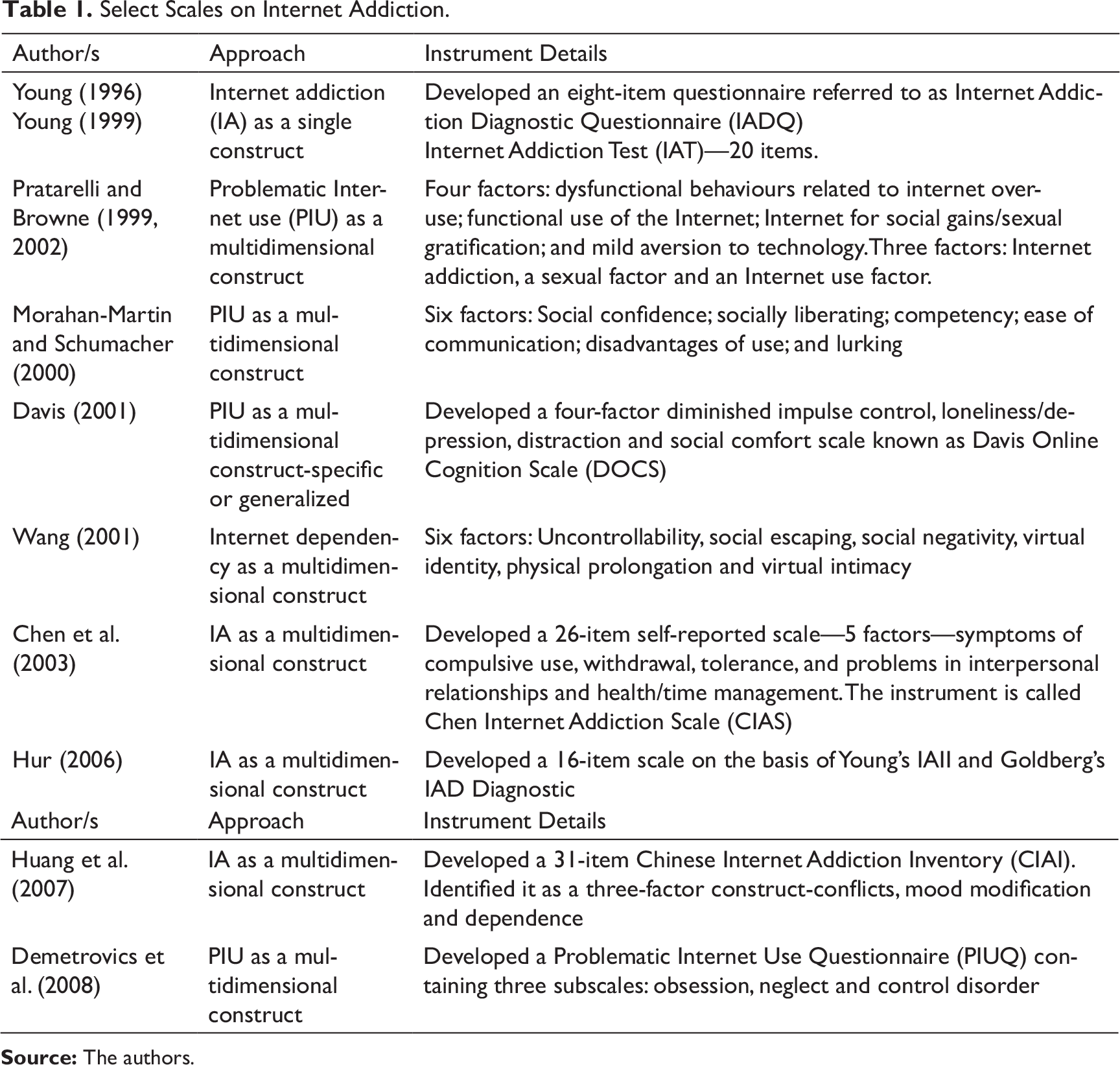
There are also other scales—Chen Internet Addiction Scale (CIAS) (Chen et al., 2003); Davis Online Cognition Scale (DOCS) (Davis, 2001) and Chinese Internet Addiction Inventory (CIAI) (Huang et al., 2007)—on problematic Internet use, which recognize that the complexity of the malaise can be best understood by recognizing it as a multidimensional construct, and considering it as unidimensional may be an oversimplification and therefore not very meaningful in either understanding or treating the construct. The above have been summarized in Table 1.
Select Scales on Internet Addiction.
Research Gaps and Objectives of the Study
As evident from the earlier discussion, there appears to be considerable merit in considering IA as a multidimensional phenomenon. First, majority of the researchers have tried to examine IA as a phenomenon and were more concerned about the factors that lead to the onset of the addiction. The authors believe that it would be important to explore the possibility of a multidimensional nature of IA and assess whether any socio-demographic and usage-based differences exist with regard to addiction. Second, IA has yet not been fully explored in the Indian subcontinent; thus, it was considered important to study the phenomenon in the Indian context. Third, it was considered important to develop an apt measurement tool that could help in assessing the state of IA among the Indian netizens. Further, post an extant literature on IA, the authors realized that the construct was of significance in a vast nation like India that is marked by close to 566 million Internet users in India (Economic Times, 2019).
Taking previous evidence into account, this study aims to examine the following two research objectives. First, to examine if IA is a multidimensional construct and comprehend the scope and incidence of IA among young Indian urban adult. Second, to construct and validate a comprehensive scale to measure the complex nature of IA.
Research Methodology and Analysis of Data
A three-step process was followed to meet the objectives of the study.
Step 1: Instrument Design and Scale Construction
As a first step, a review of literature was carried on IA based on which certain themes were identified, which were used for conducting semi-structured interviews with users. An interview template was prepared, and open-ended questions were asked related to the time spent online, nature of online activities, online experiences, etc. Ten semi-structured interviews were conducted with young urban students, who were studying business management course. These interviews were transcribed, and content analysis was performed with Nvivo software to generate five statements on online usage. For example, a few respondents shared how they get gripped by the Internet and how it is difficult to stop a session and how they are preoccupied with the thought of when the next session would take place. Some felt that they often neglected their daily obligation and rushed through their work in order to go online. These inputs from the students were converted into five items. These five items along with borrowed items from the Internet Addiction Test (IAT) by Young (1999) was used to develop a 25-item scale. This scale was shown to two experts—a psychiatrist and a de-addiction specialist for examining the instrument from three perspectives: representativeness, comprehensiveness and clarity. The adapted 25 items were found to be adequate in terms of construct scope as well as face validity.
Step 2: Pilot Study and Scale Refinement
The initial instrument was divided into three sections. The first section comprised questions on active hours spent online, number of smartphones, primary device for using Internet, type of Internet connection, IT proficiency level and Type of Internet services consumed online. The second section consisted of 25 statements on IA, examined using a seven-point Likert Scale, with answers ranging from 1 (strongly disagree) to 7 (strongly agree). The last section comprised of demographic questions.
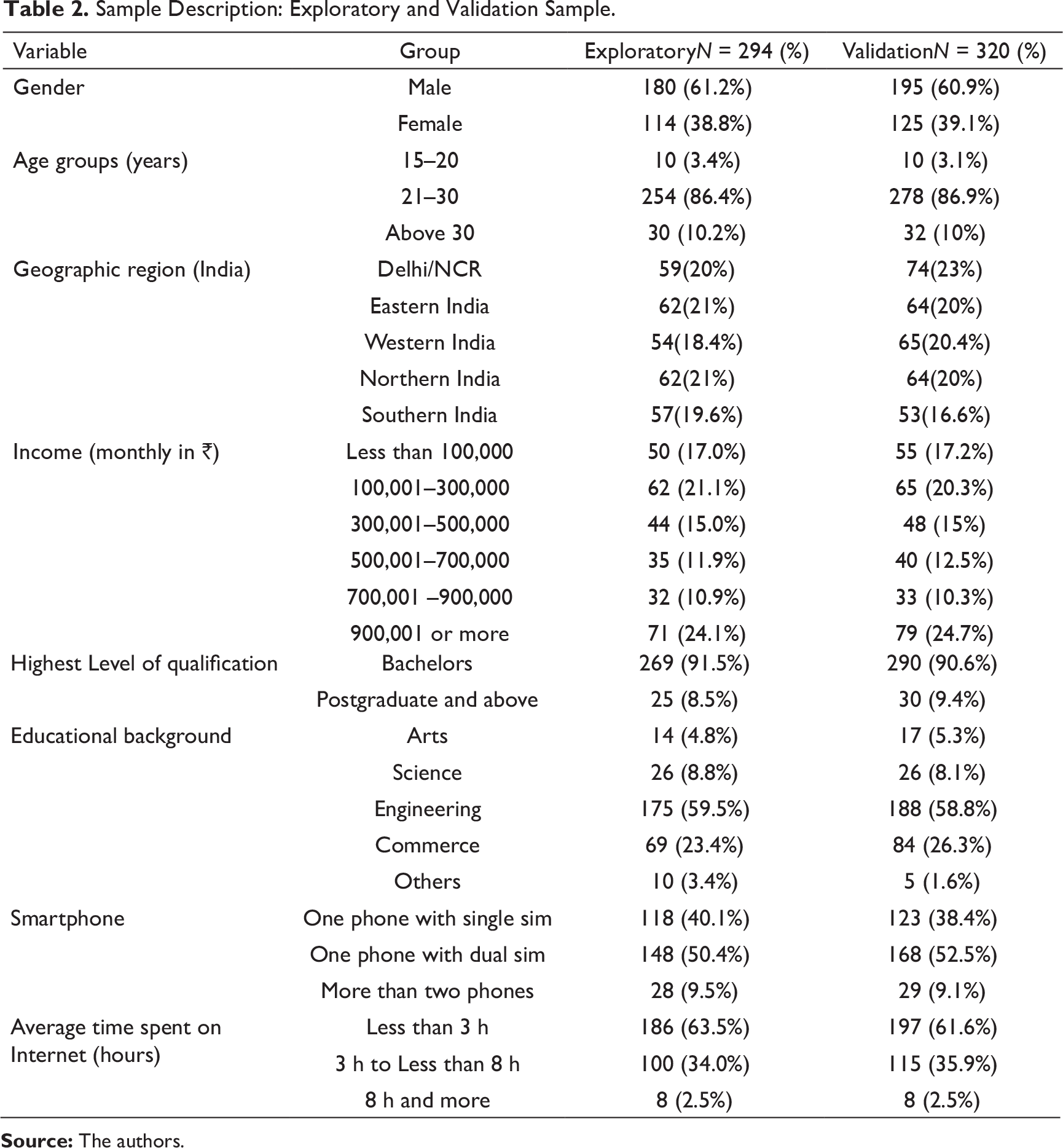
The authors adopted an online survey method for the pilot study; this was distributed across the Indian cities and towns to cover all the geographic regions. A total of 294 respondents filled the survey, which was open for a period of 8 weeks from 1 June 2018 to 1 August 2018. A convenience sampling technique was used to select the respondents. The sample comprised young urban Internet users. Among these, 61.2% (180) were males, and 38.8 percent (114) were females. Around 87% of the respondents were in the age group of 21 to 30 years; around 92% were graduates; and around 60% had completed their engineering. The geographic representation was also from pan-Indian regions with near-equal representation from National Capital Region (NCR), eastern (West Bengal, Bihar, Odisha, Meghalaya and Assam), western (Gujarat and Rajasthan), northern (Punjab, Haryana, Himachal Pradesh, Jammu and Kashmir and Uttar Pradesh) and southern (Maharashtra, Karnataka, Kerala, Tamil Nadu, Andhra Pradesh and Telangana. The detailed demographic profile is presented in Table 2.
Sample Description: Exploratory and Validation Sample.
The condition of sample adequacy was satisfied as the size of the sample (n = 294) size was five times more than the number of statements in the scale. To refine the scale, item-total correlation coefficient was computed for 25 items of IA and values lower than 0.5 as suggested by Nunnally (1978) were deleted. Seven items with item-total correlation less than 0.5 were omitted. Thus, the remaining 18 items were used for exploring if there existed an underlying factor structure within the remaining items of IA.
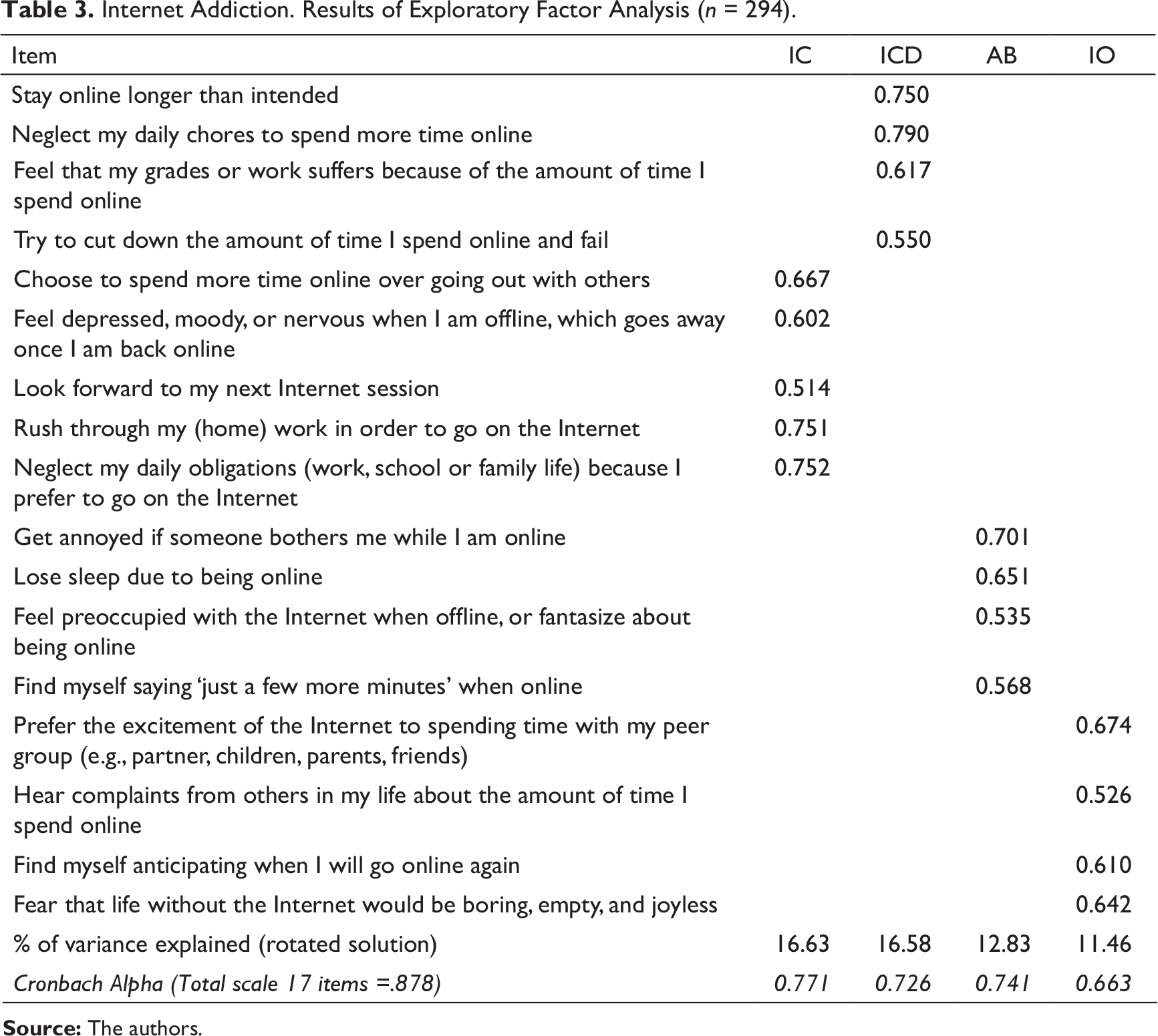
The next stage of scale refinement was to explore the dimensions of IA through an Exploratory Factor Analysis (EFA). EFA was conducted using IBM SPSS Statistics v20.0 with principal component analysis employed as an extraction method with varimax rotation. The Kaiser–Meyer–Olkin (KMO) measure of sample adequacy was found to be 0.871 and significant, which was considered as satisfactory. Four factors with an eigenvalue above 1 were extracted, and it was able to explain 57.497% of the variance.
A cut-off score of 0.50 was taken for identifying the variables that could be considered as explained by the factor. Based on the loadings, the factors were labelled as follows: Internet Craving (IC)—five-item factor; Internet Compulsive Disorder (ICD)—four-item factors; Addictive Behaviour (AB)—four-item factor; and Internet Obsession (IO)—four-item factor. One item did not load on any of the constructs and was thus omitted.
Next, the reliability analysis was carried out for the total scaled items (Cronbach alpha = 0.878). Additionally, the reliability scores for all three obtained factors were also calculated (Cronbach alpha range = between 0.663 and 0.771). The results of the EFA and the data on factor loadings for each of the obtained factors as well as the Cronbach alpha scores for individual factor is presented in Table 3.
Internet Addiction. Results of Exploratory Factor Analysis (n = 294).
Finalization of Instrument and Confirmatory Factor Analysis Using Measurement Model
Further, to validate the obtained structure, the final scale comprising four factors (17 items) was then administered on a new sample of 320 urban adult Internet users. The comparative sample compositions of the exploratory and validation sample are available in Table 2. It is thus evident that the sample profile of the pilot study (n = 294) and the confirmatory sample (n = 320) are well matched in terms of demographics.
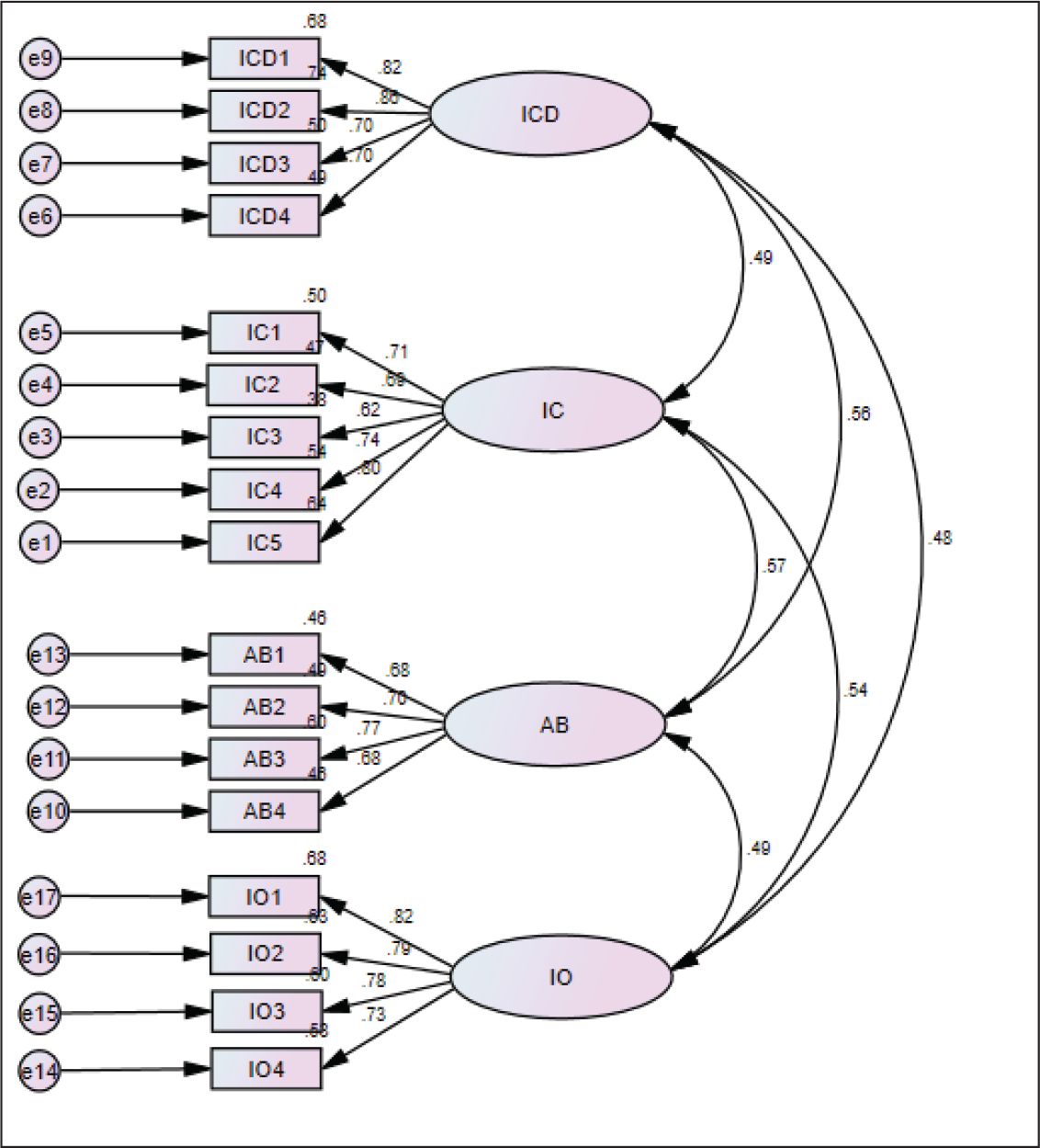
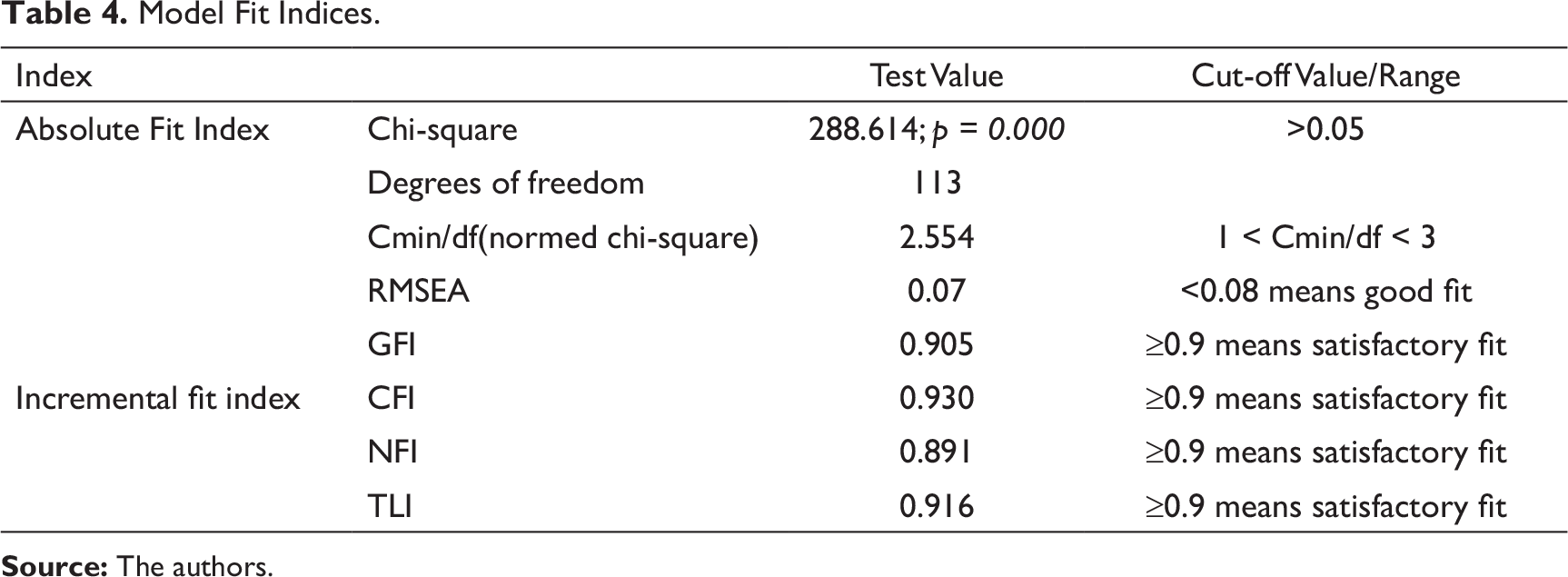
The authors made use of the covariance based structural equation modeling (CB-SEM) since the objective was to validate the causal relationships between latent variables and is preferred over partial least squares structural equation modeling (PLS-SEM) for investigating such relationships (Hair et al., 2017). In this study, CFA has been used to validate the factor structure in the context of IA. According to Mueller and Hancock (2001), CFA has emerged as a widely accepted and well-established tool for researches in the social and behavioural sciences domain. The technique not only allows for the investigation of causal relations among latent and observed variables in a priori specified, theory-derived models but also aids in bridging the gap between theory and observation. Confirmatory Factor Analysis (CFA) was carried out on the second group of 320 users, using AMOS software, in order to validate the four factors obtained by the EFA, and the maximum likelihood technique was used for model estimation. The path diagram and the standardized path coefficients are presented in Figure 1. Before model estimation, the data were checked for missing values and normality. No missing values were found in the data set. For establishing data normality, the authors examined the univariate skewness and kurtosis indices for the data. The absolute value for skewness is in the range from 0.081 to 1.600 (values should be less than 3), and absolute values for kurtosis values range from 0.066 and 3.178 (values should be less than 10), which is within acceptable limits (Kline, 2005). Thus, the data can safely be used for further analysis (Teo, 2009). Further, multivariate normality is tested using Mardia’s coefficient of multivariate kurtosis (Raykov & Marcoulides, 2008). In the current article, the number of variables (p) = 17 and the calculated index of multivariate kurtosis is 44.194, which is less than the expected value (calculated based on the formula p (p + 2)) = 306. Thus, the data are multivariate normal and suitable for further analysis. The next step in the scale development process was to assess the model fit. The standardized path loadings ranged from 0.618 to 0.861 (significant at the 0.001 level). Next, the initial chi-square was 288.614 and degrees of freedom was 113.The obtained Cmin/df was 2.554 (vale should be less than 3). Additionally, other goodness of fit indices were also considered (see Table 4). Values for RMSEA—0.07; CFI—0.930; TLI–0.916, fulfil the acceptance criteria and thus indicate a sound model fit (Hu & Bentler, 1998). The NFI value (0.891) is almost close to the cut-off value of 0.9 and thus maybe deemed as reasonably acceptable. Thus, the total measurement model was robust and confirmed as acceptable.
Convergent Validity
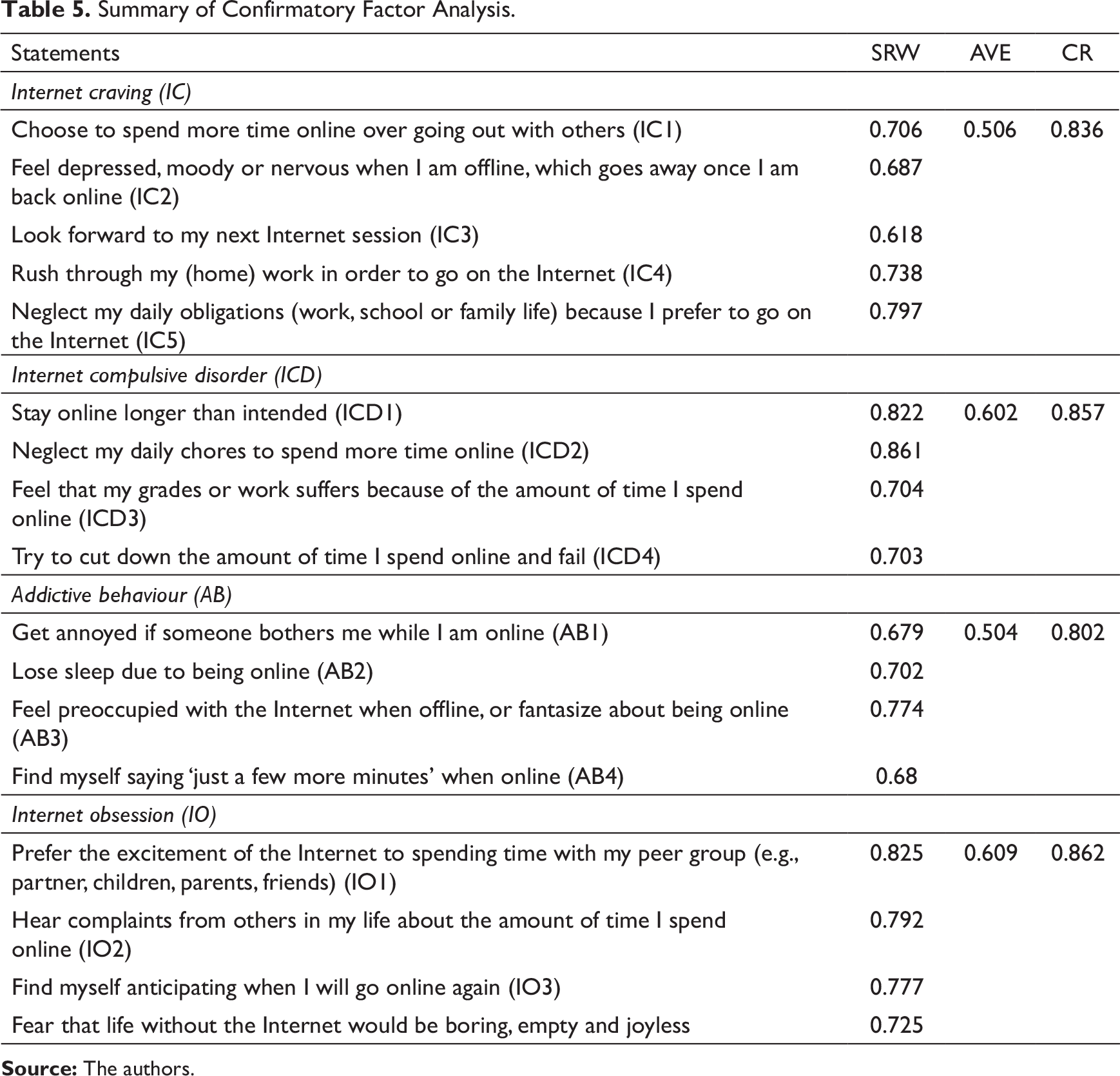
The results for testing convergent validity are presented in Table 5. For all the four factors, the average variance extracted (AVE) is more than 0.50 (Gefen et al., 2000). The standardized regression weights (SRW) are above the value of 0.5 (Gefen et al., 2000) and the composite reliability (CR) values for all factors are greater than 0.7 (Hair et al., 2006). Further, on examining the SRW, none of the statements had a value less than 0.5, which fulfils the condition for convergent validity. Thus, all necessary conditions for establishing the convergent validity are satisfied and the model is posited to have good convergent validity.
Discriminant Validity
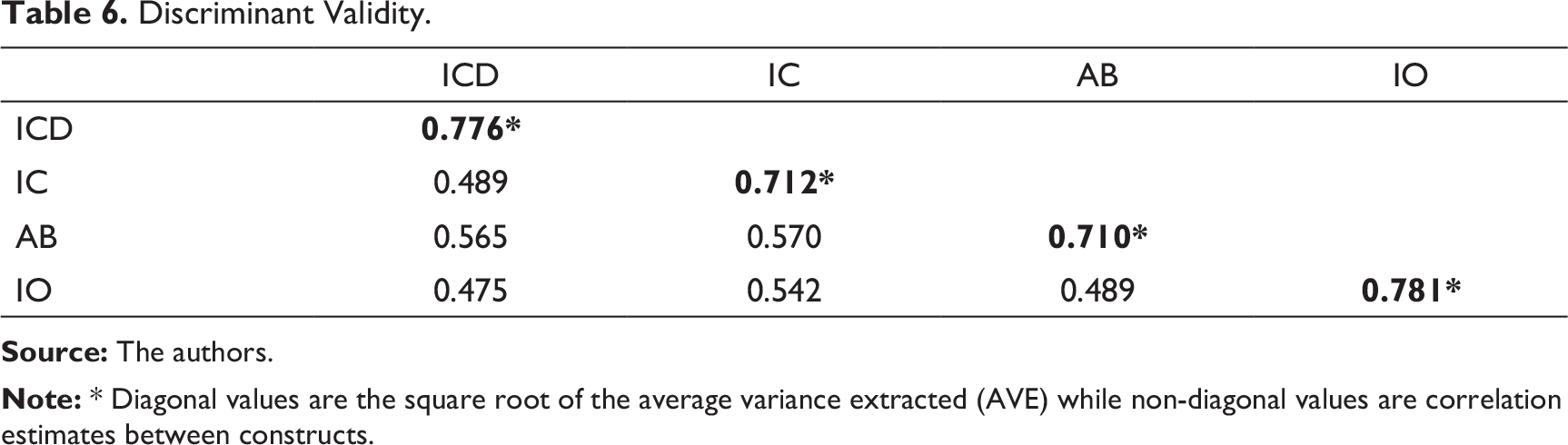
The final assessment of the designed instrument was to assess the discriminating nature of the four sub-constructs. This is accomplished by calculating the discriminant validity of the sub-factors/constructs. As can be observed by the matrix presented in Table 6, the AVE values for all the four factors were more than the squared inter-construct correlations. Thus, this indicates that each construct is unique and independent. Thus, the discriminant validity lends support for the fact that IA is a four-dimensional construct and the developed four-factor scale has the capability for measuring the multidimensional phenomenon.
Model Fit Indices.
Summary of Confirmatory Factor Analysis.
Discriminant Validity.
Findings and Implications
The exploratory study is aimed to developing a scale to measure IA and assess its psychometric properties using a sample of young urban Indian adults. The strength of the findings is that it is based on analysis of both qualitative and quantitative data. The results show that IA is a multidimensional phenomenon, which corroborates the findings of earlier researchers (Chen et al., 2003; Demetrovics et al., 2008; Hur, 2006; Huang et al., 2007; Morahan-Martin and Schumacher, 2000).
The authors designed a 25-item instrument to measure the multidimensional construct of IA. A pilot survey was designed, and 294 respondents completed the survey. An item analysis was conducted by calculating the product–moment correlation of every item with the total score. A cut-off of 0.5 was used to select the items. An EFA on the obtained data resulted in four factors that were labelled as IC; ICD; AB; and IO. The KMO value was 0.871, and the Bartlett’s Test of Sphericity came out to be significant. The four factors accounted for 57.497% of the variance. The instrument demonstrated high internal consistency as indicated by the Cronbach alpha values, which were found to be more than 0.7. Further, a CFA, on a validation sample of 320, confirmed the factor structure and the scale demonstrated satisfactory convergent and discriminant validity. Besides the above, the model fit indices were found to be satisfactory, indicating that the scale was valid and reliable to be used for future research.
This study has significant implications for both academic thought and management practice. The findings of the study establish IA as a multidimensional construct. The study also formalized and validated a four-factor scale to measure the phenomenon. The findings of the study can be used by academicians to further strengthen the understanding of IA among urban Internet users in India and other developing economies. The identification of these constructs may help in planning interventions to minimize the impact of IA.
While Internet offers opportunities for marketers, its addiction may lead to loss of productivity, reduced satisfaction with life and the compromised overall well-being. From the academic perspective, the study proposes a multidimensional perspective of IA, which can guide researchers in examining the specific scopes of IA rather than treating it as one.
Penetration of the Internet in India is lower compared to other developing countries. However, Internet adoption in India is going to grow with exponential growth in smartphones. With Internet increasingly becoming an integral part of daily life, its addiction is bound to become an area of concern. Thus, the multidimensional analysis of IA can guide parents, educators and policymakers in planning interventions to control and prevent the adverse effects of IA.
Besides theoretical contributions, the designed scale can be extremely useful for measuring the incidence and degree of the addiction. This can serve to help in the treatment and management of the malaise. It also helps parents and peer community to understand the risks associated with excessive Internet use and thus contribute towards the society at large.
Limitations and Scope for Future Research Work
Although the study is among the few which examines the multidimensional aspect of IA, the findings should be interpreted considering the following limitations: Samples were mostly collected from Internet-savvy users from large cities, and thus generalizations need to be made with caution. More studies need to be carried out with samples from smaller cities and towns to understand the level and variations in IA. Prior studies have found that demographic variables like gender, age, income, etc., moderate the degree of IA. The impact of moderating variable, for instance, demographic variables and cultural variables, should be examined.
Since IA varies across user segments, it would be worth exploring user segments based on the various constructs related to IA and profile them according to Internet consumption patterns and demographic variables.
Lastly, excessive Internet usage has various manifestations in terms of reduced face-to-face interactions, loneliness, depression, low self-esteem and decreasing well-being. Thus, exploring the relationship between the obtained IA constructs and well-being could be an area for future research.
Footnotes
Acknowledgement
The authors are grateful to the anonymous referees of the journal for their extremely useful suggestions to improve the quality of the article. Usual disclaimers apply.
Declaration of Conflicting Interests
The authors confirmed no potential conflict of interest with respect to the research, authorship and/or publication of this article.
Funding Sources
The authors have not received any kinds of financial support for the research, authorship and/or publication of this article.