




Abstract
This article examines the relationship between online hedonic shopping motivations and obsessive–compulsive buying of online buyers. The useable data of 503 respondents are analysed through structural equation modelling (SEM). The results indicate that online buyers exhibit adventure seeking and idea shopping, which have a positive effect on obsessive–compulsive buying, whereas role shopping and value shopping are found to be negatively significant to obsessive–compulsive buying. Surprisingly, gratification seeking and social shopping are found to be insignificant. The implications of the study for researchers and managers are discussed.
Introduction
Buying on the Internet allows consumers to receive 24/7 online shopping convenience and pleasure, such as instant connectivity, and prompts sensory motivation (Dimitrova et al., 2020a; Kwon & Jain, 2009; Lee & Huddleston, 2006) or immediate enjoyment (Elliott, 1994; van der Veen & van Ossenbruggen, 2015). The hedonic features of the online channels have given rise to shopping that contributes to the development of obsessive–compulsive buying, which stems from the fact that consumers with compulsive tendencies have continuous preoccupations with shopping and spending and use shopping as a means to decrease this anxiety (McElroy et al., 1994). Obsessive–compulsive buyers show signs of depression and mood disorder, too (Frost et al., 2002), and thus turn to shopping to improve their bad moods and feelings (O’Guinn & Faber, 1989; Suresh & Biswas, 2019). They are described as unrestrained and frequent buyers due to their inherent shopping urge (Kalla & Arora, 2010; Kukar-Kinney et al., 2012) and recurrent obsessions (i.e., thoughts, ideas, impulses or fantasies) (Crino, 1991; Kozak & Foa, 1994; Shoham & Makovec, 2003). These tendencies urge them to go shopping compulsively for hedonic reasons to escape from bad feelings and thoughts and enjoy the shopping experience instead (Rindfleisch et al., 1997; Roberts et al., 2006). Also, obsessive–compulsive buyers are found to pursue arousal and excitement (Bridges & Florsheim, 2008; Wang et al., 2019a), which may intensify in the context of online channels because of the unique and curiosity-driven characteristics of the Internet for shopping (Santini et al., 2019). Although research investigations on consumers with compulsive and impulsive tendencies have been much studied in developed countries, the associated and constituent elements of compulsive buying behaviour, such as obsessive–compulsive buying, have been understudied, and more so in developing and underdeveloped countries. There is evidence that obsessive–compulsive buying emerges in different settings, including online shopping channels (Dittmar et al., 2007). Considering the shopping opportunities for, and addictions of, online buyers that have been increasing fast recently, it is still unclear in the literature what types of hedonic motivations drive online buyers to shop on the Internet and how much each of them is likely to contribute to their obsessive–compulsive buying. Thus, in this article, we investigate the relationship between online hedonic shopping motivations and obsessive–compulsive buying of online buyers in a developing country to fill this gap.
Literature supports that consumers have a persistent motivation for hedonic experiences while shopping (Arnold & Reynolds, 2003). Prior studies indicate that some buyers, especially females, describe their shopping experience as a manifestation of love (Otnes & Mcgrath, 2001). Similarly, Batra and Ahtola (1991) highlighted that hedonic shopping motivations of buyers are described as gaining excitement and delight during a shopping activity. Additionally, attitudes, feelings and desires are found to be the critical foundations of motives leading to hedonic experiences in the shopping environment (Anderson et al., 2014; Rayburn & Voss, 2013). These shopping motivations are likely to drive buyers on the Internet towards stimulation and gratification (Babin et al., 1994; Kwon & Jain, 2009). Hedonic factors in the cyber world, such as imaginary and emotional influences, are the key drivers of shopping and consumption behaviours for online buyers (Hirschman & Holbrook, 1982; Kwon & Jain, 2009). The prior findings indicate that hedonic shopping motivations are likely to be pursued distinctively by online buyers with obsessive–compulsive tendencies (Kwon & Jain, 2009).
Furthermore, obsessive–compulsive buying has progressively become more an issue in non-Western societies, too (Sofi, 2018; Unger et al., 2014), suggesting that Western nations do not face this issue alone but that this trait has been prevailing across nations rapidly. Environmental and sociocultural features may play a part in producing different motivations for obsessive–compulsive buying behaviours in developing societies (Horváth et al., 2013). For example, according to Chun et al. (2006), culture has a substantial effect on how individuals cope with bad mood and anxiety. Additionally, features such as accessible means of online stimulation, entertainment and escape from monotonous activities and schedules, or the country’s overall affluence, may influence the drive and growth of obsessive–compulsive buying.
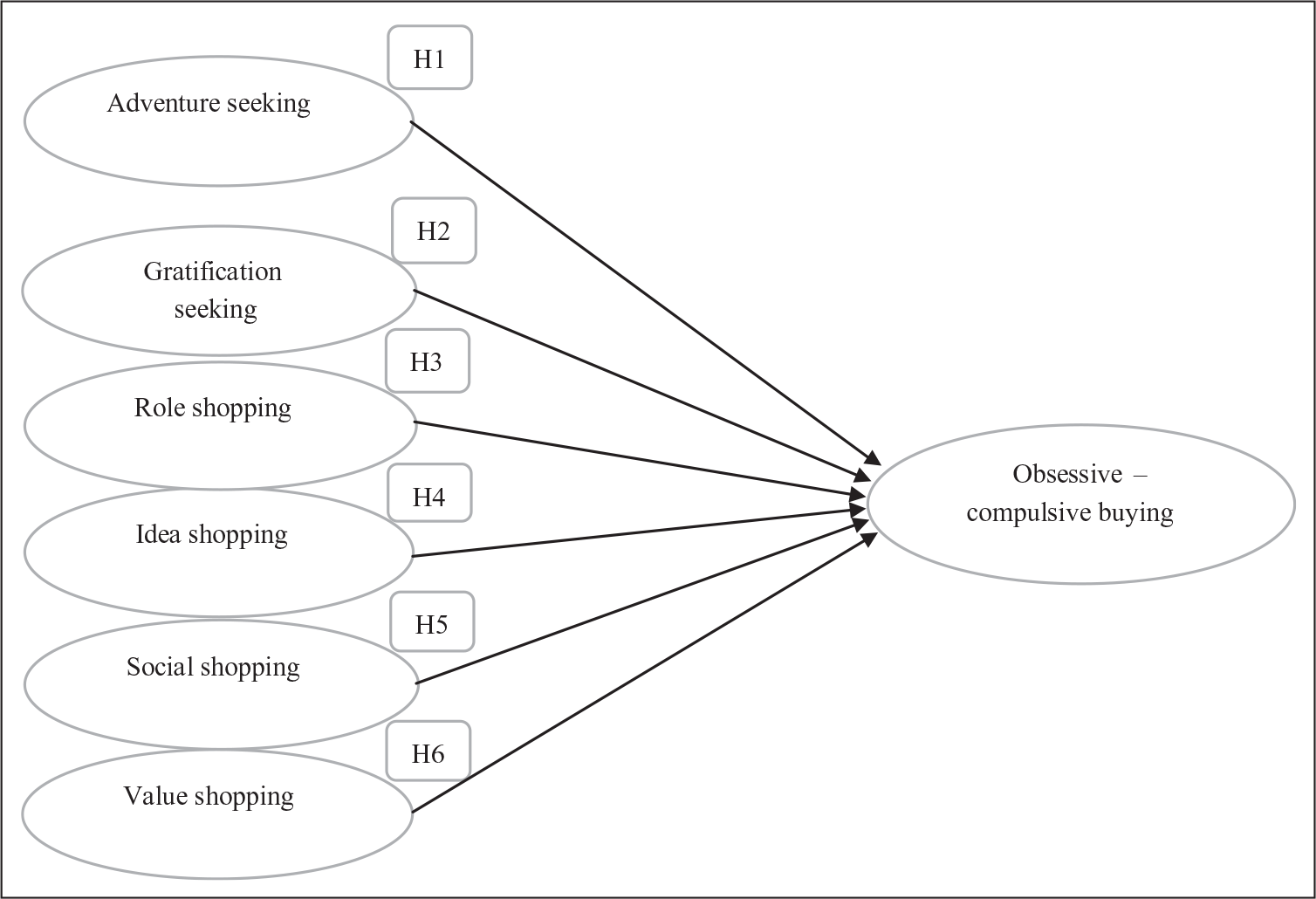
In this way, the present research contributes valuable consumer insights to the literature by examining the association between hedonic shopping motivations and the obsessive–compulsive buying behaviour of online buyers (see Figure 1). To the best of our knowledge, there has been no or little attention given to investigating obsessive–compulsive buying, both from hedonic shopping motivations and online shopping perspectives. Thus, the current study enhances prior knowledge on obsessive–compulsive buying behaviour by assessing this phenomenon among online buyers and the connection between obsessive–compulsive buying and hedonic shopping motivations through six hedonic shopping factors: gratification seeking, adventure seeking, idea shopping, role shopping, social shopping and value shopping. Also, we offer pertinent implications for business and marketing managers about this consumer segment who create a vast (Ridgway et al., 2008) and rising market (Neuner et al., 2005). Evidence implies that these buyers demonstrate different buying behaviours from general buyers (Horváth et al., 2015), indicating channel customization for this consumer segment.
This research is organized as follows. This first section is the introduction section. In the second section, we recapitulate the pertinent literature concisely on the notions and constructs that are under study and suggest solutions to fill the gaps in the literature, including stating the objectives and rationale of the study. The third section, discussing the methodology, expounds on the sampling and data collection techniques. The empirical results of the research are reflected in the fourth section, followed by a discussion. In the fifth section, we finally present our conclusion, practical implications and suggestions for future research.
Literature Review
Dimensions of Hedonic Shopping Motivations
Adventure Seeking
Adventure seeking is defined as shopping with a desire for exploration, marvel and stimulation while shopping (Horváth & Adıgüzel, 2018). It denotes the enthusiasm that buyers like to experience for innovation and delight during shopping (To et al., 2007). Obsessive–compulsive buyers in emerging countries exhibit proclivity to adventure shopping (Horváth & Adıgüzel, 2018). It produces a beautiful feeling of joy and makes buyers feel as if they are in a perfect world. Zuckerman (1993) linked obsessive–compulsive desires to lawful, economic and societal dangers, as this type of shopping arouses them to irrational behaviours, such as gaming and gambling (McDaniel & Zuckerman, 2003), exciting sports (Jack & Ronan, 1998) and lottery buying (George, 2002) on the Internet. Hence, adventure seeking while shopping is likely to be more pronounced in the obsessive–compulsive buying of online buyers who quite frequently hunt for thrilling experiences accompanied by pleasant music and attractive visuals on the Internet (Wang et al., 2019b).
Gratification Seeking
It is regarded as a primary desire of compulsive buyers who are ardently motivated by delightful attractions to release their anxiety and bad feelings and elevate themselves (Arnold & Reynolds, 2003). Rook and Gardner (1993) disclosed a connection between attitude and obsessive–compulsive buying, pronouncing that shopping instincts among these buyers have a weaker association with thoughtful decisions. Such buyers tend to face negative consequences resulting from their inadvertent shopping choices in their exploration for immediate pleasure (Hoch & Loewenstein, 1991), which may increase their vulnerability in the online shopping environment because of its limitless shopping facility (Dittmar et al., 2007). However, these consumers do not worry about the associated prices, costs and unfavourable consequences during shopping (He et al., 2018). The instant feeling of relief they obtain from gratification is their main implicit goal. Owing to the great convenience of the Internet in terms of 24/7 availability and accessibility, they are more likely to get engrossed in enjoyable experiences, regardless of how briefly they may be shopping (Jones et al., 2003; Rook, 1987).
Idea Shopping
Idea shopping refers to collecting information and ideas about products and trends during shopping (Horváth & Adıgüzel, 2018). Consumers enjoy searching for information, such that most of the shoppers stated that their pleasure of shopping is not to purchase the products but to gather information about new products and services in the shopping place and expressed that they are motivated to keep up with novel products and the latest styles (Arnold & Reynolds, 2003). Obsessive–compulsive buyers usually look for hedonic shopping experiences that cause pleasure and excitement, without allowing subsequent negative results from their shopping decisions to disrupt the ongoing shopping (Rook, 1987). Hence, they are easily charmed by internal and external drives in the form of information searches about the products they like (Maity et al., 2012; Rook & Fisher, 1995). It drives us to propose that their external motivations (i.e., sufficient information available on the Internet about various products) are more likely to generate consumers’ urge and escalate obsessive–compulsive buying behaviour online (Iyer, 1989).
Role Shopping
Role shopping refers to gaining pleasure when buyers purchase products for others (Horváth & Adıgüzel, 2018). For social image, obsessive–compulsive buyers often tend to find gifts for their friends and relatives during a shopping trip, with the belief that gifts improve their image and value in front of gift recipients (d’Astous et al., 1990; O’Guinn & Faber, 1989). They consider buying for others as maintaining a relationship and are reported to be bulky buyers of gifts (Lejoyeux et al., 2005) that are conveniently available on the Internet. However, we find inconsistent findings in the literature concerning motivations for purchasing for others. For example, some studies claimed that obsessive–compulsive buyers tend to show happy feelings when they search for gifts for others (Arnold & Reynolds, 2003). On the other hand, in developing countries, these buyers tend not to enjoy buying for others (Horváth & Adıgüzel, 2018), which is further confirmed by the study of Evanschitzky et al. (2014), who proposed that these buyers in collectivistic cultures are less likely to enjoy role shopping than those in individualistic societies, due to the binding nature of the gift exchange in developing and collectivistic cultures. Therefore, inferring from the fact that China is a developing and collectivistic country, buyers in this market follow the gift exchange tradition as a norm with complex rules of what gift to give, whom to give and when to give and are thus likely to receive little or no hedonic value from this binding custom (Green & Alden, 2010). Also, buying gifts or souvenirs for others is a complex process (Laroche et al., 2000). Accordingly, role shopping on the Internet is more a utilitarian value than a hedonic one for these buyers (Horváth & Adıgüzel, 2018).
Social Shopping
Social shopping refers to the delight that a buyer feels during shopping with family and friends with intentions to associate with others (Arnold & Reynolds, 2003). Online buyers use online links for social connections and product information exchange (Anderson et al., 2020; Filipowski et al., 2012). Past literature reports that this type of buyers typically like to shop alone: 74 per cent of this type of buyers are found to prefer buying alone (Black et al., 1998; Schlosser et al., 1994), because they consider shopping as an individual activity (DeSarbo & Edwards, 1996) and a cause of secretive pleasure (Woodruffe, 1997). They repeatedly lose track of their schedules owing to their over-engagement in shopping (Kellett & Bolton, 2009) and usually feel guilty, regretful or ashamed because of their repetitive shopping habits (O’Guinn & Faber, 1989; Zhang & Mick, 2019). Thus, they tend to shop single-handedly to avoid being observed by others (Kukar-Kinney et al., 2009) and look for methods to hide their shopping behaviour from other people (Ridgway et al., 2008). Online channels are rich in social groups and social contacts. Studies reveal that people often develop new relationships as well as maintain old contacts on the Internet (Lev-On & Lissitsa, 2015). Connecting the social aspects of the online channel with obsessive–compulsive buying traits, these buyers tend not to enjoy social shopping online as compared to other buyers.
Value Shopping
Value shopping is defined as hunting for discounts, bargains or sales while shopping (Horváth & Adıgüzel, 2018). Buyers’ perfect choice is to find quality products and purchase them on concession following an optimal channel selection (Kwon & Jain, 2009). They extend their effort to exchange for a discounted offer for an excellent product and consider availing a discount as a valued outcome, believing that shopping is an enjoyable game and winning a discount is a bonus (Arnold & Reynolds, 2003). However, due to less protection for consumers in developing countries (especially on the Internet) because of a weak regulatory system, past research study suggests that buyers in such societies are more likely to seek protection and thus prefer quality products and care little about discounts (Horváth & Adıgüzel, 2018). Buyers face higher risks on the Internet concerning the value of products (Erguncu & Yildirim, 2015) and hence associate price with quality (Diddi & Niehm, 2016). Moreover, they have less disposable income, and thus buyers in such societies tend to make sensible buying decisions to exploit value on their spent money (Pandey & Devasagayam, 2015). This concern may increase the mental effort by these buyers to search online for reasonable price discounts without any untoward product acquisition; thereby, it may reduce their hedonic value of buying products online on discount or on sale.
Objectives
Earlier studies provide empirical evidence of hedonic shopping motivations for compulsive and impulsive buying behaviour, particularly placing more emphasis on the findings from a physical store setting. Thus, our study focuses on the hedonic shopping motivations that drive the obsessive–compulsive buying behaviour of buyers on the Internet. Previous literature shows comparatively little information on this phenomenon, and therefore, with this study, we hope to contribute to the existing body of scarce literature on obsessive–compulsive buying behaviour from the perspective of shopping on the Internet.
The Rationale of the Study
This study serves its rationality in the following ways. First, it establishes the validity of the fact that online buying is studied and is limited in focus only on compulsive and/or impulsive buying, with little attention paid to obsessive–compulsive buying behaviour concerning hedonic shopping motivations. Second, there is a gap in literature between developed and developing markets—developing markets being understudied on this dysfunctional behaviour, this study uncovers insights that may be useful for online sellers or organizations at large which intend to develop their business in developing and emerging markets for an online consumer segment that has been growing recently. Finally, to understand in depth the complex buying behaviour of obsessive–compulsive buyers, this study may provide some basis for future researchers to distinguish buyers based on various psychological aspects, such as compulsive, impulsive, obsessive or general buyers.
Methodology
Sample Frame and Data Source
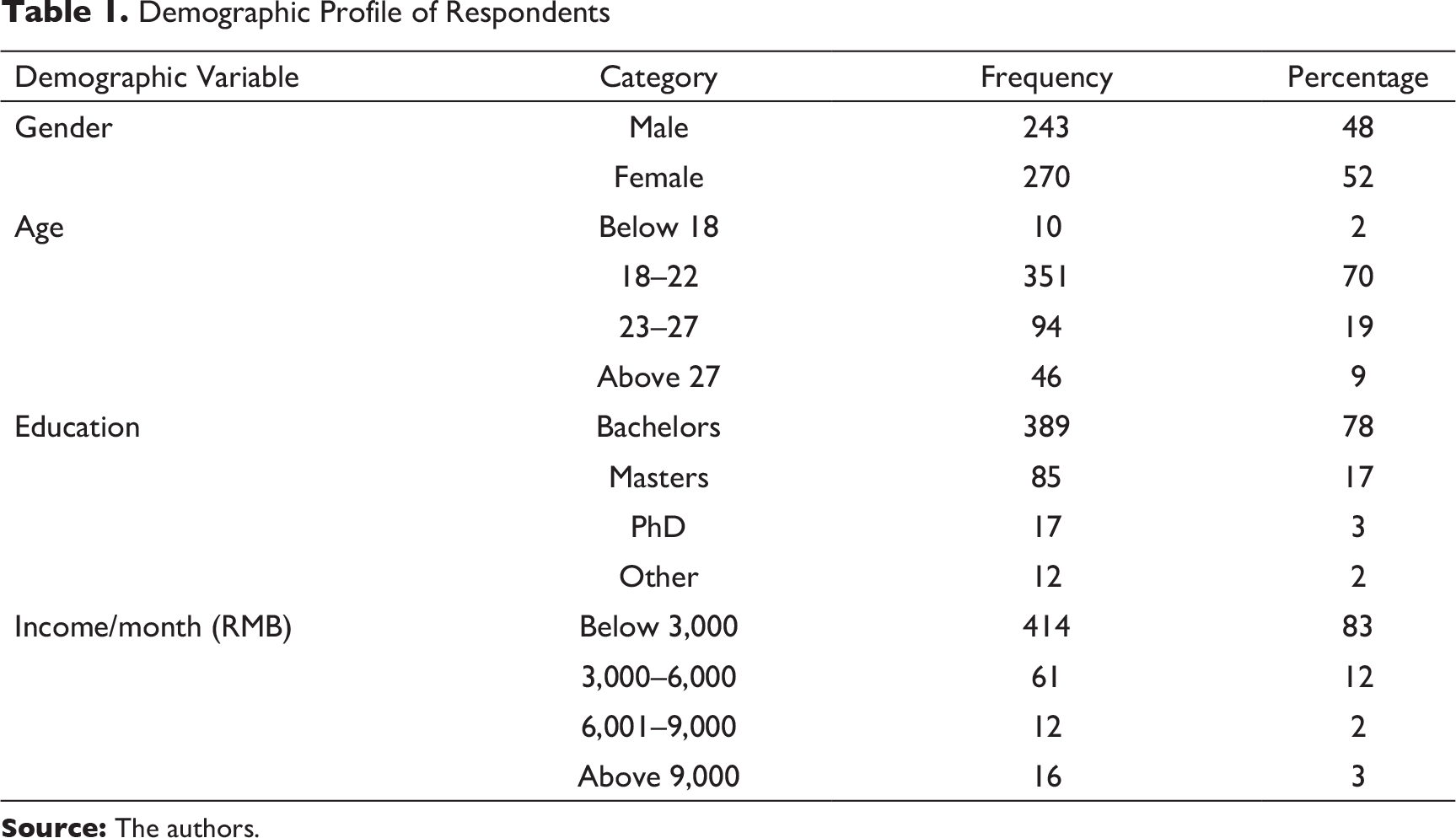
We studied various sources that categorize countries as developing (IMF, BRICS & Next Eleven, FTSE, MSCI, S & P, EM Bond Index, Dow Jones, Russell, Columbia University EMGP). We selected China because of its 86th position in the Human Development Index (HDI) rank in 2018, with a 0.72 HDI value, which determines its status as a developing country. Data were collected from Chinese buyers in March and April 2019, by circulating about 1,600 questionnaires in online selling groups and websites such as Jingdong and Taobao. After deleting the incorrect and irrelevant samples, we found 503 complete samples of online buyers to analyse the relationships in our research and generalize the results for our target population. Fifty-two per cent of the sample contains female buyers, with the average age of the total sample population being 22 years (see Table 1). The motivation behind focusing on young buyers in the study is that young buyers in China grow in better economic conditions and are likely to develop obsessive–compulsive buying habits on the Internet (Mangleburg et al., 2004; Prater et al., 2009). Also, they are likely to be risk-oriented and adopt innovative products and channels more promptly (Dayan et al., 2010). The questionnaires were filled using an online survey application, Sojump (
Demographic Profile of Respondents
Measures
We used a measure of obsessive–compulsive buying by Ridgway et al. (2008) and examined it using a three-item questionnaire (Lo & Harvey, 2011). For computing hedonic shopping motivations, measures for gratification seeking (GRA), role shopping (ROL), adventure seeking (ADV), social shopping (SOC), idea shopping (IDE) and value shopping (VAL) were taken from the study of Arnold and Reynolds (2003), using a five-point Likert scale for all variables—1 representing strongly disagree and 5 representing strongly agree. We modified the items to fit the online context (Abubakar et al., 2016; Chen et al., 2004) and then conducted a pilot test using a convenience sample of 30 respondents. We found no issues with the reliability and validity of the measures under study (Shen et al., 2016). Moreover, socio-economic characteristics such as the gender, age, income and education of respondents were controlled in our model for potential alternative effects (Dimitrova et al., 2018). First, the questionnaire was written in English, and then it was translated and back-translated into Chinese by two professionals to ensure content validity (Li et al., 2018; Silva et al., 2018).
Analysis
Data analyses were carried out through structural equation modelling (SEM), following the previous research (Liu et al., 2017). Smart-PLS 3.2.7 software was used in our research for regression analyses. Hair et al. (2011) proposed that partial least square structural equation modelling (PLS-SEM) processes its operations efficiently and minimizes smaller quantity and identification problems, especially when the range of the sample size is prevalent. Thus Smart-PLS was a suitable software for our study, with predictive competencies that would help us achieve the objectives of our research. We used outer model calculations through the PLS-SEM algorithm for the reliability and validity tests of the measures. We incorporated the bootstrapping process (5,000 subsamples) for internal model assessment.
Missing Values, Composite Reliability and Validity
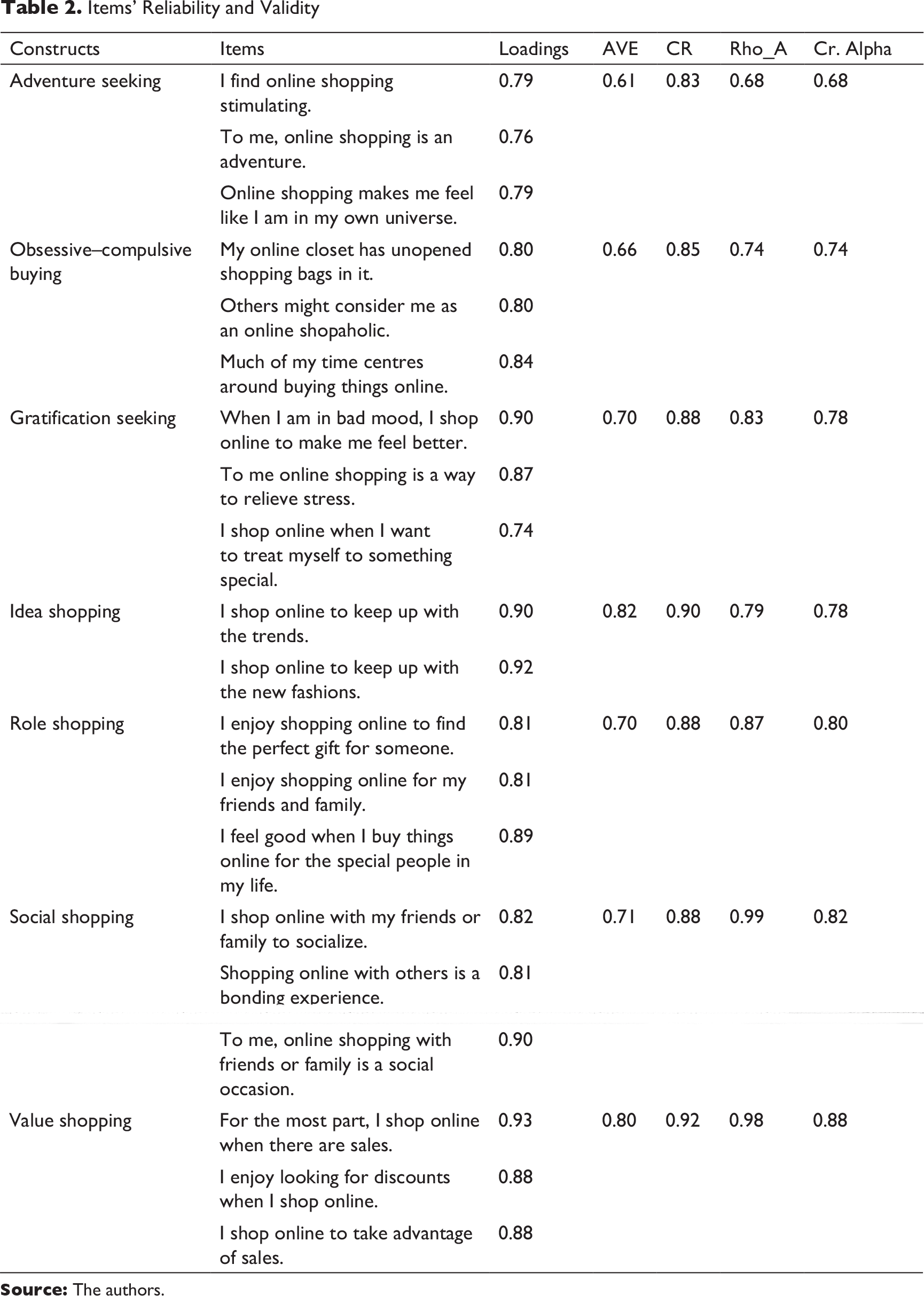
The constructs’ composite reliability values were found to be greater than 0.7, which is a minimum requirement for reliability (Fornell & Larcker, 1981a). These values are known as Dillon–Goldstein’s rho, and Cronbach’s alpha and were found to be greater than 0.7 for all the items except adventure seeking (see Table 2). This value was found to be very close to but below the desired standard value of 0.70 (Fornell & Larcker, 1981b). Since the other items’ values of composite reliability fulfilled the criteria for all the constructs, ‘adventure seeking’ was thus included in the study. Cronbach’s alpha and composite reliability values were evaluated at 0.60 as the lowest acceptable threshold in social sciences (Bagozzi & Yi, 1988), and the values of the average variance extracted were found to be more than 0.5, as shown in Table 2 (Bagozzi & Yi, 1988). Therefore, it confirms the reliability and convergent validity of the constructs.
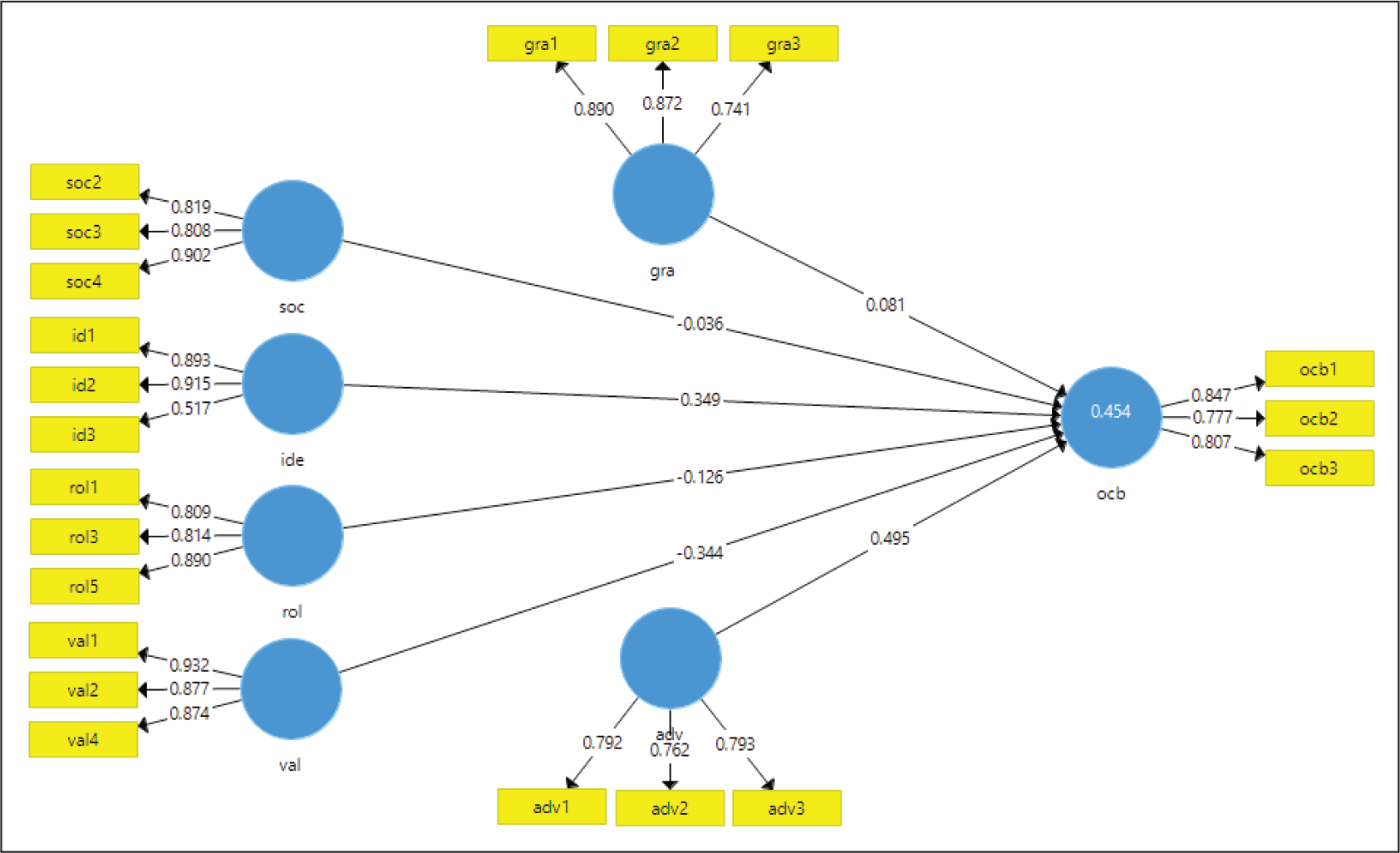
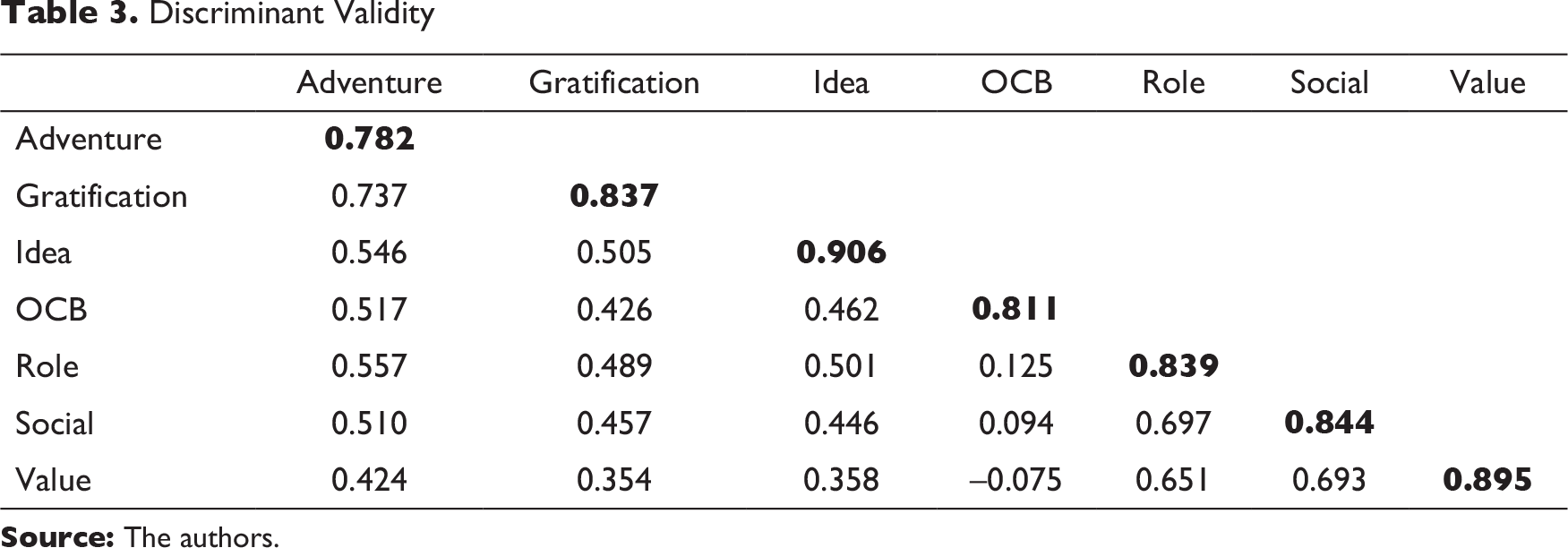
Similarly, discriminant validity values were also confirmed (see Table 3). There were no missing values found in the study. Thus, the study is free from bias errors, and the results are safeguarded against alteration effects. Variance inflation factor (VIF) values ensure that there are no multicollinearity issues in the research. Thus, the study meets all the requirements for research analyses, and the results can be generalized and applied for further studies (Hair et al., 2016). Next, following the underlying research assumptions, we measured the structural model (Li et al., 2018; see Figure 2). R-square value (0.458) explains the research results with a predictive precision at a significance value of up to 0.05 (see Table 4), which is quite substantial. All of the variable items in the model were found to be significant beyond the required measure of 0.708 (Hair et al., 2016). To reduce common method bias, we designed a questionnaire according to the guidance of Podsakoff et al. (2003). We also used post hoc tests and found no severe threats regarding common method bias (Swaminathan et al., 2018).
Items’ Reliability and Validity
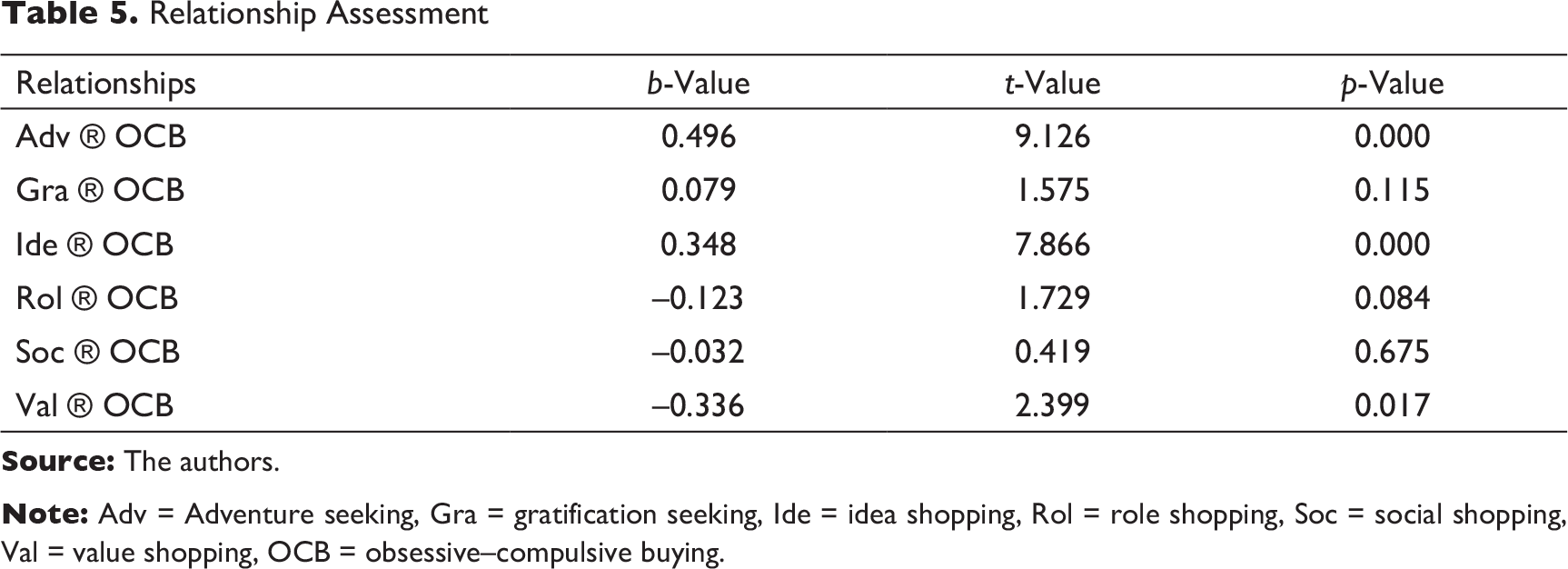
The estimated model shown in Figure 2 and Table 5 reveals that adventure seeking (b = 0.496; p < 0.000) and idea shopping (b = 0.348; p < 0.000) both have a positive significant effect on obsessive–compulsive buying. Among these two motivations, adventure seeking has a stronger effect. On the other hand, role shopping (b = –0.123; p < 0.084) and value shopping (b = –0.336; p < 0.017) were found to be negatively significant to obsessive–compulsive buying, as expected. Gratification seeking and social shopping were found to be insignificant to obsessive–compulsive buying for these buyers (see Table 5), which we will explain in the discussion part.
Discriminant Validity
R-square and Adjusted R-square Values

Relationship Assessment
Discussion
Today, with consumers’ increased exposure to online advertisements and marketing stimuli, the outcome of the positive effect of adventure seeking on obsessive–compulsive buying is consistent with the prior findings of Horváth and Adıgüzel (2018), who researched compulsive buying behaviour in developing marketplaces (Russia & Turkey). It indicates that obsessive–compulsive buyers share a lot more similarities with compulsive buyers in terms of excitements and adventures, and in developing countries, in particular. It further endorses the association of obsessive–compulsive buying preferences towards adventure seeking, as was exemplified by Indian consumers with recreational attributes (Khare, 2012). Adventure seeking on the Internet becomes more influential owing to the attractive ambience, unique design and engaging atmosphere that obsessive–compulsive buyers want and find pleasure in. It improves chances of their frequent visits to online sellers, thus contributing to obsessive–compulsive buying (Babin et al., 1994). Online buyers may not hunt for adventure during shopping as a primary goal, but it is perceived that these buyers express their joy and excitement indirectly through shopping, which fulfils their hedonic desires ultimately.
Idea shopping shows a positive contribution to obsessive–compulsive buying among online buyers, as shopping on online channels demonstrates the trappings of pleasure and attractions for these buyers and motivates them to shop directly and instantly on their advertisements and personalized or transactional websites (Cliquet & Voropanova, 2016). Because obsessive–compulsive consumers underestimate their social image and self-esteem, they are often driven by novel designs and the latest ideas to improve their confidence and stand out in society. This is consistent with Tauber (1972), who described that consumers tend to look for external cues and guidelines to observe the outside information and relate to their self (Diddi & Niehm, 2016). Such innovative ideas and product designs spread quite fast on the Internet and appeal to them, with their all-time-available and interactive service without any physical boundaries (Davis & Hodges, 2012).
Role shopping is found to be negatively significant to obsessive–compulsive buying among online buyers, as expected. We see this result being consistent with the prior findings of the study of Horváth and Adıgüzel (2018), in which role shopping was found to have a negative effect on compulsive buyers in developing countries. We infer from this finding that obsessive–compulsive buyers share common traits with regard to buying for others in developing societies. It may be due to the traditional nature of gift exchange in such societies that delivers less hedonic but more utilitarian values. China, as a developing country, holds the results of Green and Alden (2010) as well, who explicated that buyers in developing and collective societies feel utilitarian values while buying for others more than hedonic values. Thus, the binding nature of gift giving in these cultures tends to deliver little or no hedonic motivation to shop for others among online consumers, who tend to enjoy buying for themselves in excess.
Value shopping is found to be negatively significant to obsessive–compulsive buying, as predicted. As we earlier indicated, Chinese buyers, young buyers, in particular, are less inclined to receiving pleasure from sales and discounts in the course of their online buying. Because young buyers in China are experiencing a significant positive change in their living standards and living styles in present times, this subsequently reduces their hedonic feelings from deals and discounts and makes them associate discounts and sales with low quality of products and services (Horváth & Adıgüzel, 2018). Moreover, due to widespread sales promotions on the Internet, consumers tend to be sceptical about the quality of products. The chief purpose of obsessive–compulsive buyers is to receive pleasure from shopping, instead of fulfilling their basic product needs. This motivation endorses the finding in terms of their little concern over price reductions, discounts and sales.
Gratification seeking is found to be insignificant to obsessive–compulsive buying, against what we expected from online buyers. This outcome is surprising because, in a prior research study, it was found that song lyrics in an online shopping ambience created a positive influence on consumers with compulsive characteristics, compared to a motionless picture (Adelaar et al., 2003). Although gratification improves obsessive–compulsive buyers’ mood, as suggested by previous studies (He et al., 2018; Kukar-Kinney et al., 2009), in the online channel context, the two are unrelated, which indicates buyers’ ambivalence and latent insights on more investigation. We assume that obsessive–compulsive buyers like to go shopping in a real environment to improve their mood and feelings instead of the cyberworld, on the one hand. On the other hand, their peculiar personality to receive gratification feelings is demanding for hedonic joy with 24/7 online shopping facility on the Internet. As a result, the two opposite forces cancel out their effect on the phenomenon.
Finally, social shopping is also found to be unrelated to obsessive–compulsive buying among online buyers, against what we proposed. This result indicates that to avoid people’s criticism and perceptions about their excessive buying, obsessive–compulsive buyers may prefer online channels to buy in secret. But, at the same time, they want to show a high social image, through buying the latest products and fashions, in front of their friends and relatives. These contrasting effects ultimately turn out to produce an insignificant result for this predicted relationship. Chinese online buyers show little joy in shopping with family and friends. Although this result, in terms of similarities between obsessive–compulsive and impulsive buyers, is conflicting with the findings of prior research (Falode et al., 2016), in which engaging environments and social shopping stimulated the buying tendencies of consumers with impulsive tendencies (Mattila & Wirtz, 2008), it suggests that marketers should be cautious about investing much marketing budget on promoting their products during cultural festivals and rituals among obsessive–compulsive consumers. Similarly, we can infer that the latter are less interested in connecting with other online buyers while buying.
Conclusion
China, being an emergent online market, can be a platform for many local and foreign business organizations for more success. An average individual in China has been growing in purchasing power, and with various options of products being available on the Internet, it has thus become very important for marketers to understand the characteristics of online buyers—obsessive–compulsive buyers, in particular. These buyers are internet-addicted users and spend more time on online shopping as compared to general buyers. Therefore, marketers should focus on their idiosyncratic tendencies and design their marketing plans accordingly. Care should be taken when offering discounts to and promoting gift products among these buyers, while adventure and information display should be promoted to them.
Managerial Implications
This study offers an understanding of obsessive-compulsive buying on the Internet for marketers, such as innovatively developing an e-retail layout, innovative product assortment, and presenting product variety and information that will help online sellers a great deal to attract this type of consumer segment. However, special care should be taken while advising these buyers to purchase a gift for their family or friends and while offering a discount to them, which can be detrimental, because there are chances that these buyers might be less likely to accept the offer and might stop buying from the particular online store in future. Collective results reveal that they are more concerned about shopping for pleasure than about purchasing a gift for others or looking for discounts or sales. Simultaneously, marketers should keep in mind the shortfalls of how to appeal to online buyers for keepsakes and gifts.
However, firms may not build a stronger customer base with these buyers, as obsessive–compulsive buyers on the Internet easily switch to other brands and retailers (Horváth & Birgelen, 2015). Also, they tend to amass excessive debt (O’Guinn & Faber, 1989), which may result in them discontinuing shopping, ultimately. Obsessive–compulsive buyers on the Internet are susceptible consumers who are easily tempted by many marketing stimuli at first sight. These buyers encounter exciting shopping experiences, such as adventure, which makes them feel as if they have arrived in a new dreamworld with a customized ambience, authority and ideas through exhibiting new outlets and integral showrooms. Such a pleasurable activity leads them to engage in unique product styles and designs on the online channel. Gratification seeking and social shopping showed an insignificant relationship with obsessive–compulsive buying, suggesting that marketers should be cautious about spending budgets on social events and gratification measures on the Internet for obsessive–compulsive buyers. These insignificant relationships reveal the gaps of this study for further investigations to address using moderating variables of culture, channel designs and online buyers’ characteristics.
In the long term, obsessive–compulsive buyers are typically unstable customers, in terms of their loyalty to a specific retailer using extrinsic promotions (Labrecque et al., 2013). Therefore, marketers should pay ethical attention to not exploit the weaknesses of this vulnerable consumer segment on the Internet, as identified by a previous study, which revealed their adverse subsequent consequences (Faber & O’Guinn, 1992; Kwak et al., 2004), such as financial difficulties and stress (Horváth et al., 2015; Park & Davis Burns, 2005).
Limitations and Future Study
Although this research presents various novel contributions, it is not yet exempt from inadequacies and limitations. First, the sample is based on consumers who purchase products on the Internet from online retailers such as Taobao and Jingdong, who may not be entirely considered as consummate online buyers. However, the authors incorporated a screening test and successfully piloted the results to identify and distinguish online buyers from offline buyers to use in this research. Furthermore, the final samples are mostly young Chinese buyers, which restricts generalizing the findings for online buyers across the world belonging to different age groups.
For future investigations, we propose that experimental designs on this phenomenon should be considered, so that online buyers may be little affected by external influences while buying on the Internet. Gender differences can also be studied to offer insights on the distinctive shopping motivations of males and females. For example, men are found to seek information and convenience, while females tend to prefer product assortment for uniqueness and spend more time on web browsing (Noble et al., 2006). The comparison between obsessive–compulsive buying and impulsive buying can be of great interest and insightful investigation, in connection with hedonic shopping motivations for online shopping, to advance our understanding and knowledge of this complex buying trait.
Footnotes
Acknowledgement
The authors are grateful to the anonymous referees of the journal for their extremely useful suggestions to improve the quality of the article. Usual disclaimers apply.
Declaration of Conflicting Interests
The authors declared the following potential conflicts of interest with respect to the research, authorship and/or publication of this article: The authors have contributed significantly and agree to the content of the manuscript. To the best of our knowledge, there is no conflict of interest, financial or otherwise.
Funding
The authors received no financial support for the research, authorship and/or publication of this article.