




Abstract
Circular economy (CE) is impacting the contemporary supply chain via transforming the production system, delivery method and product life solutions. CE models of a supply chain are relatively new, and organizations are trying to adopt circular practices to shift towards a CE. The primary aim of this study is to identify and investigate key enablers that assist organizations in taking initiatives towards the implementation of circular practices. In order to accomplish this objective, the key enablers of circular initiatives are identified through a comprehensive review of the available literature and then finalized through experts’ opinions. This study identifies ten significant enablers of circular initiatives and evaluates them appropriately through grey DEMATEL. The adopted methodology is to develop causal relationships among the identified enablers of circular initiatives. Further, it also categorizes the enablers of circular initiatives into cause and effect groups. The findings suggest that consumer attitude, top management commitment, economic incentives, policies and legal frameworks are vital for the implementation of circular initiatives. This study identifies and analyses the enablers that are significant for the implementation of circular practices and assists the managers/policy planners who want to move towards a CE.
Introduction
In the current business scenario, organizations are revisiting management of their supply chains to decrease environmental pressures and lower the consumption of natural resources (Balon et al., 2016). The basis of the current economic model is ‘take, make and dispose’, which starts with the consumption of a product and ends with the disposal of the product after the end of its useful life (Niero et al., 2016). The current linear model generates more waste and causes ecological problems as it does not significantly consider the society and environment (Ness, 2008). Therefore, an alternate model, ‘circular economy (CE)’, seems to be a better option that considers the social and environmental aspects along with the economic dimension. CE tries to provide the continuous availability of raw materials that leads to sustainable profit generation in the long run.
Literature suggests that there is a growing interest of professionals and academia in a CE domain because it is seen as part of the solution for several environmental problems (Bag et al., 2020; Reike et al., 2018; Khan et al., 2020). CE enables the continuous flow of technical and biological materials through a circular design and new business models, resulting in the precious resources’ security and in restoring natural capital. It does not only consider the recycling of the materials but also focuses on other aspects such as reuse, refurbishment, remanufacturing, repair of product/component, etc. Further, it also emphasizes the use of sustainable energy resources such as wind, solar and biomass energy throughout the supply chain (Maqbool et al., 2020; Rashid et al., 2013). Unlike conventional recycling, CE encourages recycling of high-value materials instead of considering only low-value material for recycling (Ghisellini et al., 2016). Therefore, the concept of a CE is not limited to production but extends to sustainable consumption (Naustdalslid, 2014).
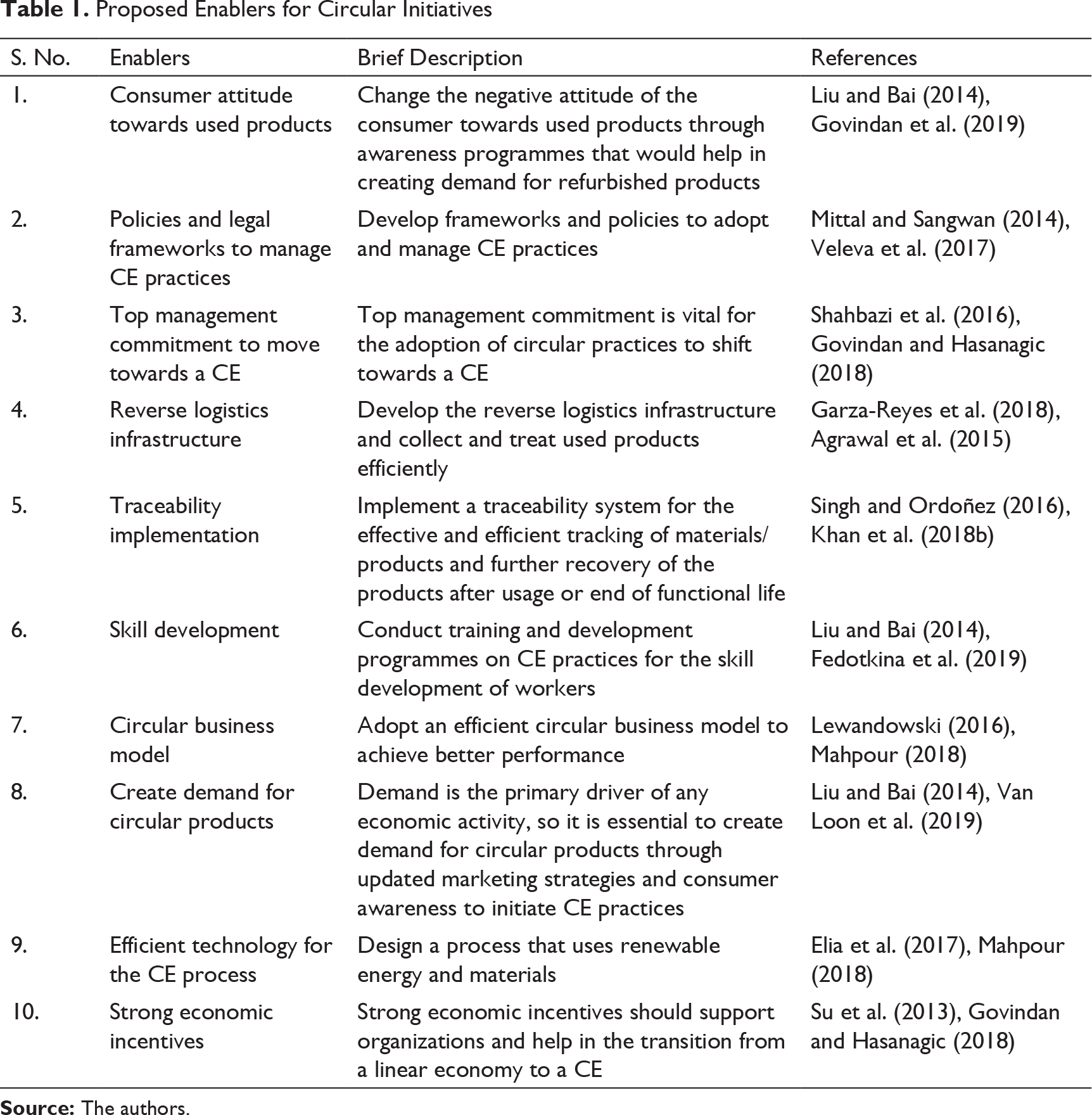
The adoption of circular practices is relatively challenging (Lieder & Rashid, 2016). Organizations are adopting circular practices by focusing on specific initiatives. Here, the initiatives positively contribute to the implementation of CE practices and are referred to as ‘circular initiatives’. Several key driving forces/enablers impact the adoption of circular initiatives (Sharma & Bhat, 2016). These enablers include ‘top management commitment’, ‘reverse logistics infrastructure’, ‘circular business mode’, etc., and these have a substantial influence on the adoption of circular initiatives. In this sense, this study has recognized the gaps in the literature that are related to the identification and analysis of critical enablers towards the implementation of circular initiatives. The identification of these enablers can assist an organization in assessing suitable strategies for moving towards adopting CE.
The article is organized into nine sections: the first section introduces the study; the second section provides a literature review related to CE and circular incentives; the third section presents the objectives of the research; the fourth section describes the adopted methodology; the fifth section deals with the data analysis; the sixth section presents the discussion and reports the significant findings; the seventh section provides the conclusions of the study discussions; the eighth section gives the implication of the research; and finally, the ninth section reports the limitations and scope for future research.
Literature Review
This section covers a literature review on CE and identifies the critical enablers of circular initiatives.
Circular Economy and Related Studies
The term ‘CE’ is a buzzword among the professionals and academia of supply chain management and sustainable development. The notion of CE utilizes closed materials streams, inexhaustible energy sources and a cascading type of energy streams (Singh & Ordoñez, 2016). Unlike the linear model of ‘take, make, dispose’, CE seeks to decrease the consumption of natural resources (both energy and raw materials) in the production of goods and services. A CE is understood as an effort to foster environmental protection and sustainability. However, the key difference between CE and sustainability is that CE emphasizes the maximum circulation of the content of end-of-life products, back to the point of production after use, in addition to dropping the ecological impact. The primary objective of a CE is to maximize the utility and value of products through the processes of repairing, reusing, refurbishing and recycling with minimum waste generation. (Merli et al., 2018).
Kirchherr et al. (2017) proposed a comprehensive definition of CE as:
an economic system that is based on business models which replaces the “end-of-life” concept, with reducing, alternatively reusing, recycling and recovering materials in production/distribution and consumption processes. Thus operating at the micro-level (products, companies, consumers), meso-level (eco-industrial parks) and macro-level (city, region, nation and beyond), to accomplish sustainable development, which implies creating environmental quality, economic prosperity and social equity, to the benefit of current and future generations.
This definition captures the notion of a CE holistically at three levels.
Govindan and Hasanagic (2018) reviewed the literature and identified the major barriers, drivers and practices that affect the implementation of a CE. Further, they proposed a framework to analyse the implementation level of the circular practices from a different perspective. Similar work was also carried by Mangla et al. (2018) who identified and analysed the barriers related to effective circular supply chain management in the context of an emerging economy. They observed that lack of environmental laws and tax policies and lack of preferential tax policies are the significant barriers. A business model for the implementation of a CE was discussed by Lopes de Sousa Jabbour et al. (2019). Elia et al. (2017) proposed a framework for monitoring the different phases of CE strategies. Further, they developed an index in order to measure the circularity of a system.
From the circular practices’ perspective, Dubey et al. (2019) proposed a framework to evaluate the effect of external pressures and top management commitment on supplier relationship management practices for a CE. Masi et al. (2018) identified the barriers and circular practices through a literature review and used the survey to investigate the shift towards a CE. Further, Garza-Reyes et al. (2018) extended this list of circular practices by adding some more circular practices. Kazancoglu et al. (2018) proposed a framework for the performance assessment of a green supply chain in the context of CE. Similar to this, Chiappetta Jabbour et al. (2020) proposed a research framework to assess the sustainable performance of the firm by considering the relations among stakeholder pressure and barriers to and motivators of the CE and CE business models.
Bhatia et al. (2020) identified and evaluated critical factors for the implementation of closed-loop supply chain practices in the Indian automotive sector. This study suggested that the economic and social benefit associated with the closed-loop supply chain is the major factor. Silvestri et al. (2020), through exploratory research, built two composite indicators to a static and dynamic evaluation of the CE performance of European regions. Guarnieri et al. (2020) studied the reverse logistics of packaging through addressing it in the Brazilian context, from the perspective of the transition towards a CE, using a case study. Morseletto (2020) systematically studied CE targets and analysed these targets to enable the transition towards a CE. Further, he proposed a framework based on ten common CE strategies to examine the identified targets. In this vein, Khan and Haleem (2020) identified ten strategies to implement circular practices and develop the contextual relationship among these strategies.
Škrinjarić (2020) assessed the result of the implementation of CE goals in European countries and developed a complex measure to compare the robustness of the results. Yadav et al. (2020) developed a framework to overcome challenges by providing solution measures of the automotive sector using a hybrid methodology. Singhal et al. (2020) identified and developed a causal relationship between critical factors of remanufacturing for a CE using the fuzzy DEMATEL method. This study reveals that proper collection strategy and management prescience are the influencing factors of remanufacturing.
Proposed Enablers for Circular Initiatives
Proposed Enablers for Circular Initiatives
Research Objectives
As discussed, the primary objective of a CE is efficient use of available resources with environmental protection and socio-economic benefits. These objectives can be achieved through the effective implementation of circular practices at the organizational level. In order to do so, certain circular initiatives are required to be adopted by organizations. These circular initiatives are affected by some key enablers which facilitate their adoption. Despite this, the literature suggests that there is a scarcity of studies related to CE, especially in the context of circular practices and circular initiatives. Therefore, the primary objective of this study is to identify the key enablers to implement circular initiatives. After the identification of the key enablers, the causal relationships among these enablers are explored.
Methodology
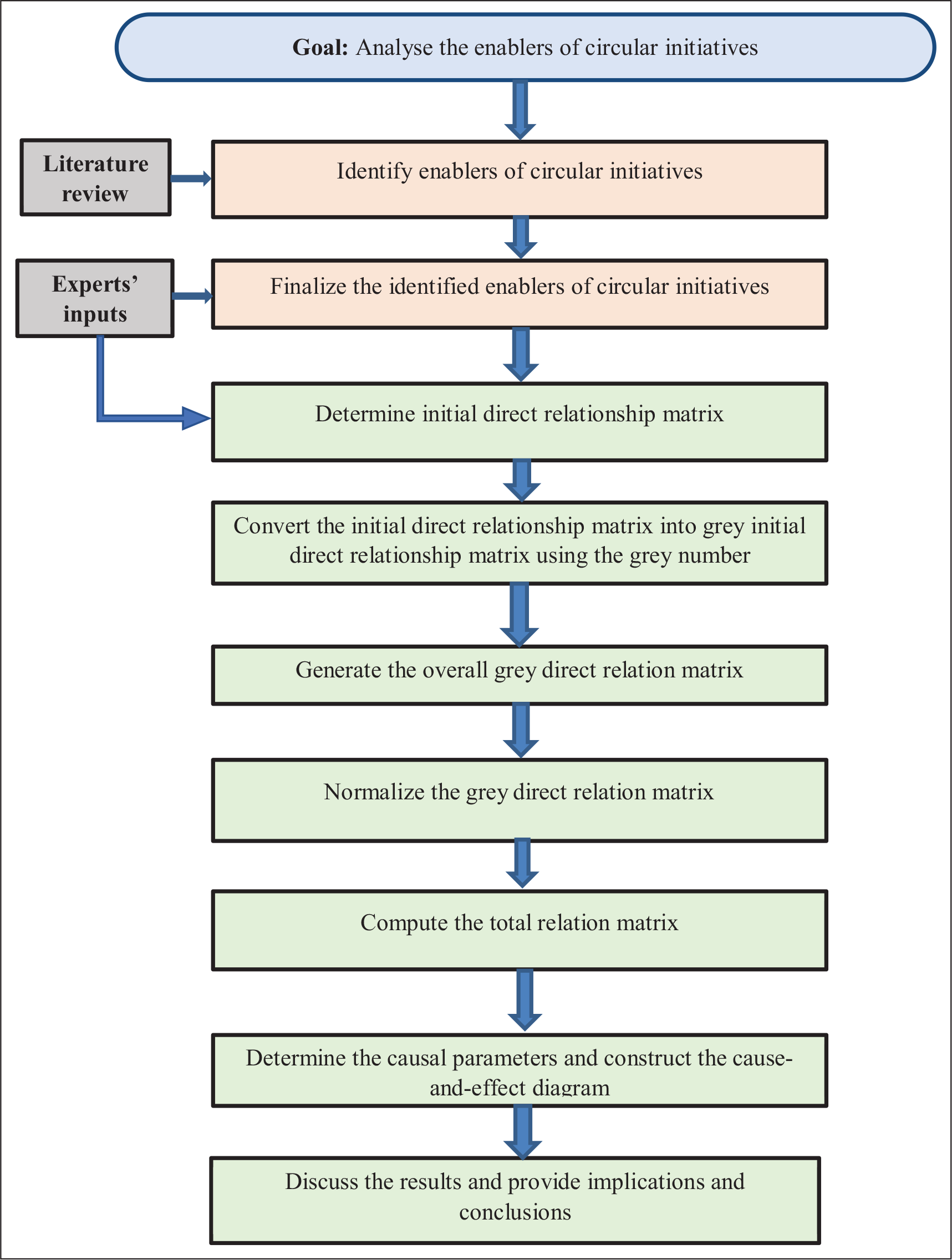
This study applies the integration of the literature review and grey DEMATEL to identify and evaluate the enablers of circular initiatives. Initially, the literature review is conducted to identify the key enablers for circular initiatives. These enablers are put in the front of expert’s panel for getting their views on the relevance of these enablers. The experts panel consists of five members working in prominent Indian organizations, and Appendix A details the experts panel. This experts panel has three members from Indian industries and two from academia. These experts are selected based on their work experience, and all the experts have more than 10 years of work experience. We assume inputs provided by our experts as reliable and have used them for this analysis. The identified enablers are evaluated as per the suggestions of the experts. After the identification of the enablers, the next step is to identify the causal relationships among them. Thus, to evaluate the causal relationships, numerous methods present in the literature, such as total interpretive structural modelling (TISM), interpretive structural modelling (ISM), DEMATEL and ANP (Katiyar et al., 2017; Ocampo, 2017) are used. Although ISM and TISM identify the structural relationships among the enablers, they do not provide any idea about the strength of the relationships (Sufiyan et al., 2019). The strength of the relationships can be evaluated using the DEMATEL method (Biswas & Gupta, 2019; Khan et al., 2018a; Vishvakarma et al., 2019). However, the conventional DEMATEL method has some limitations regarding the subjectivity and impreciseness of experts’ inputs. In order to eliminate these limitations, the grey theory can be integrated with the DEMATEL method (Haleem et al., 2019). Therefore, in this study, we used the grey DEMATEL to evaluate the causal relationship among the enablers of circular incentives. Figure 1 depicts the adopted methodology.
For the implementation of the grey DEMATEL, experts were asked to evaluate the causal relationships among the enablers. This evaluation is done by analysing the influence of one enabler over the other enablers using a linguistic scale (Khan et al., 2019). The direct-relation matrix for enablers is collected from the experts, and the subsequent steps of the grey DEMATEL technique are applied.
Grey DEMATEL
Grey DEMATEL is a combination of grey theory with a DEMATEL approach which can deal with the subjectivities and imprecisions present in the experts’ inputs. This method can also enhance the accuracy of the observations (Xia et al., 2015). The stepwise procedure of the grey DEMATEL is as follows (Bai & Sarkis, 2013; Haleem et al., 2019).
Linguistic Terms and Their Corresponding Greyscales
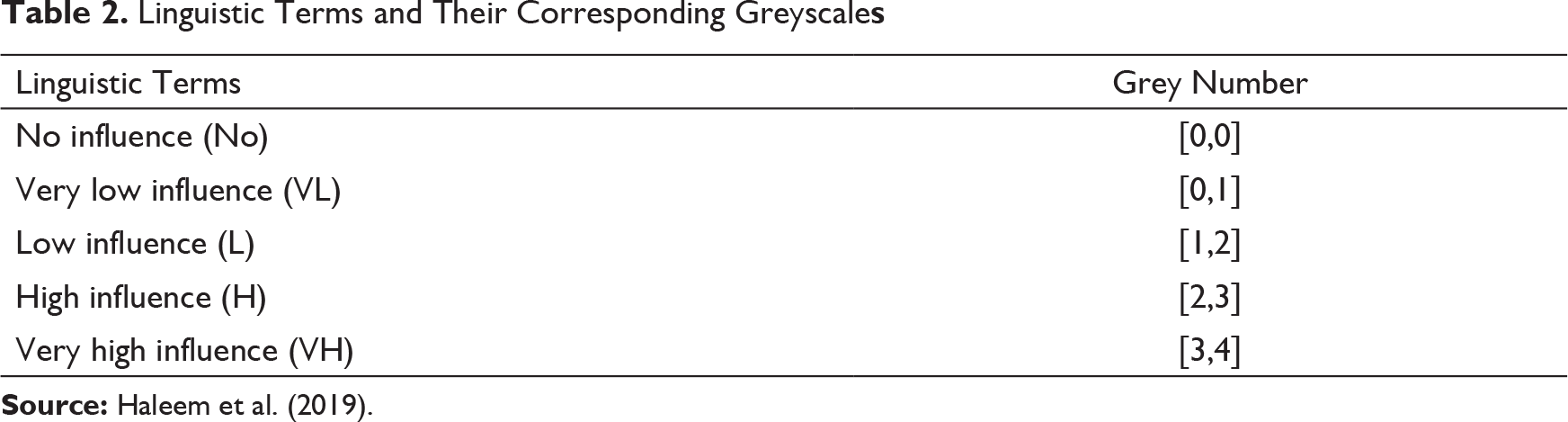
In order to develop the grey direct-relation matrix, initial direct relationship matrix is formulated using the evaluation of criteria c = {c i |i = 1, 2, …, n} by k experts through pair-wise comparisons using the linguistic scale. Table 2 shows the 5-point linguistic scale and their associated grey numbers.
This initial direct relationship matrix is converted into a grey initial direct relationship matrix by transforming the linguistic terms into the corresponding grey numbers. Hence, the k number of the grey direct relationship matrix
The overall grey relation matrix is formulated by combining all grey direct-relation matrices using Equation (1):

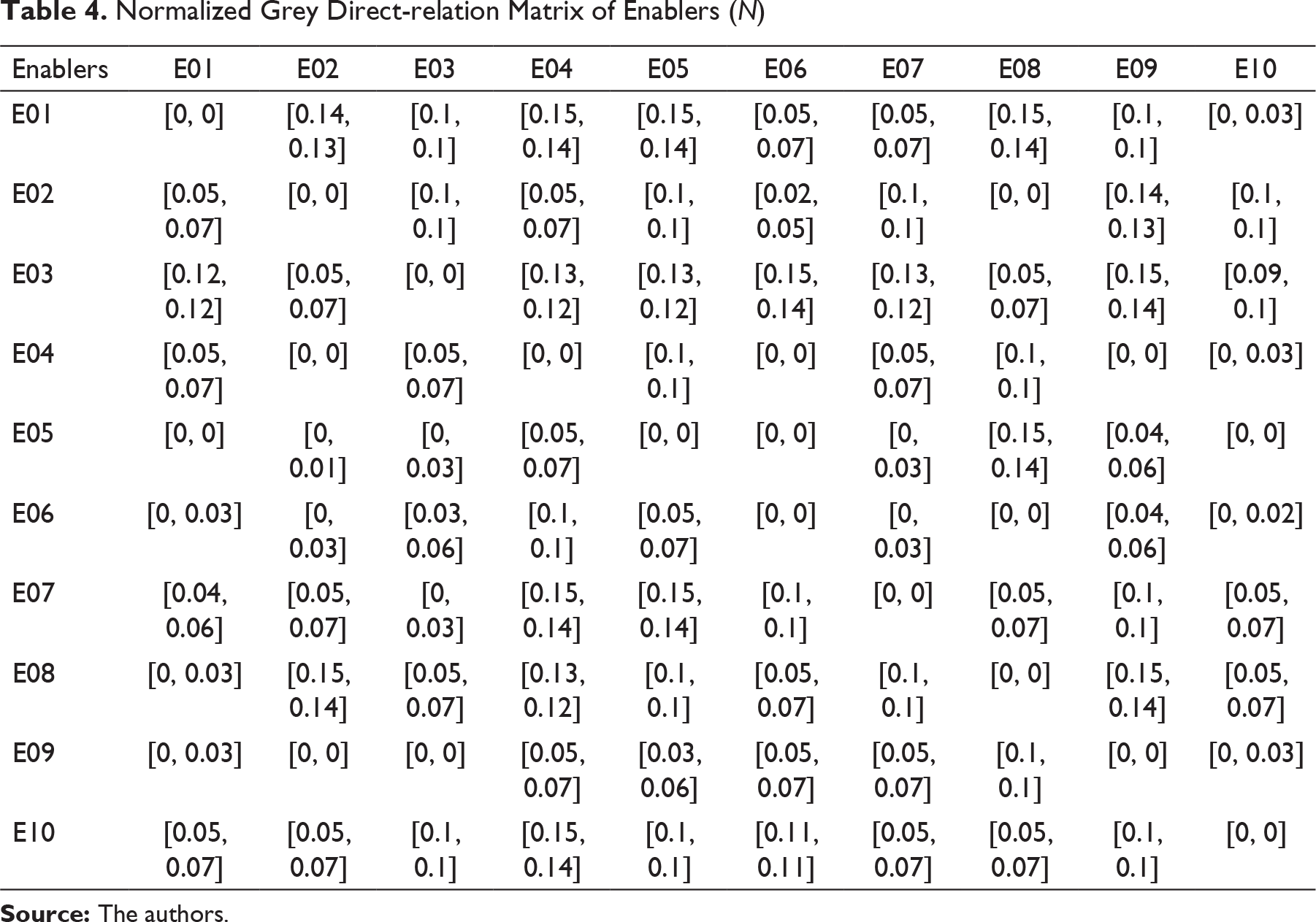
The overall grey relation matrix is transformed into the normalized grey direct-relation matrix N using Equations (2)–(4).



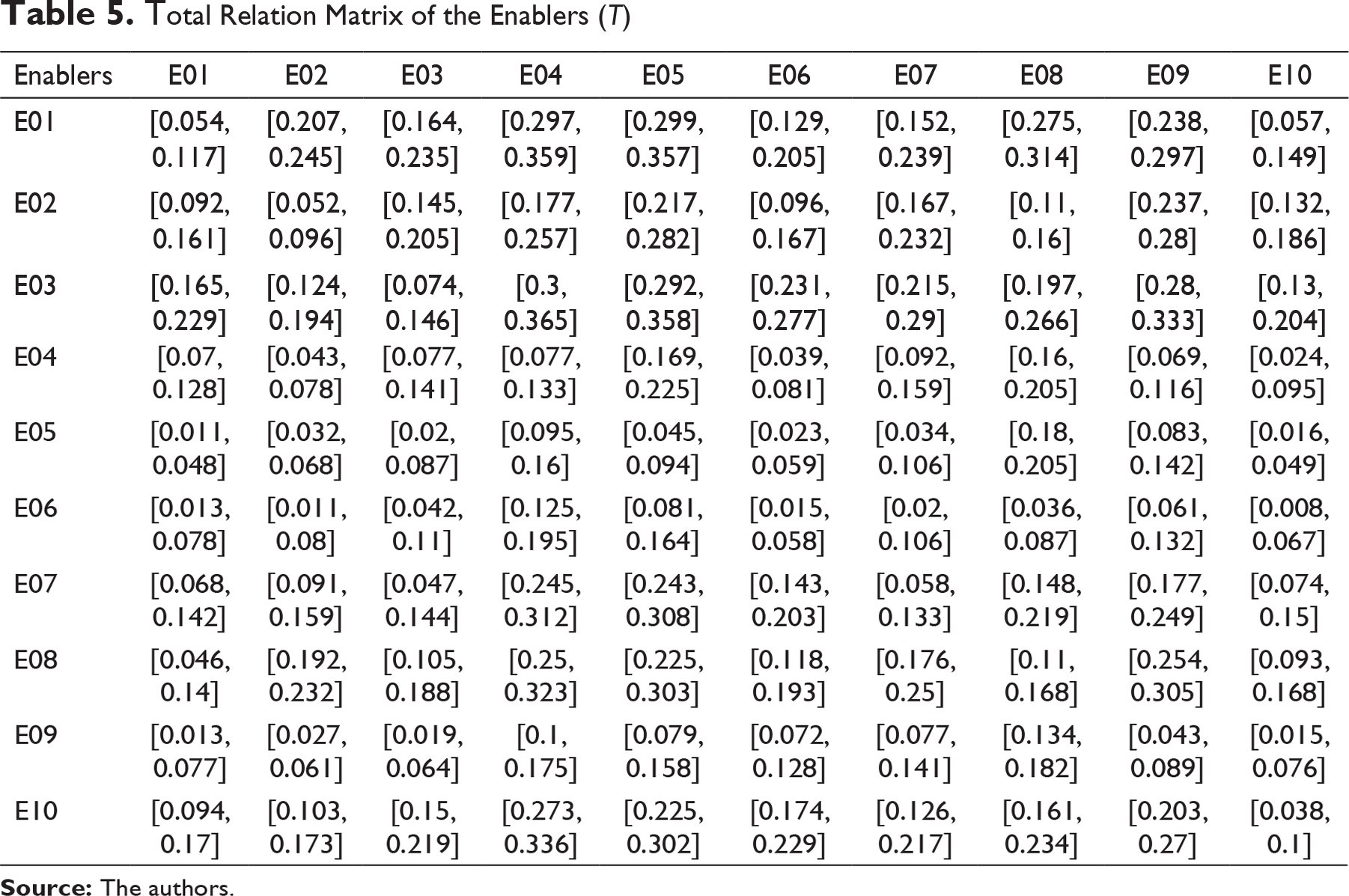
The total relation matrix T is determined by using Equation (5):

where I is the identity matrix.
The causal parameter is determined using Equations (6) and (7):


⊗R i represents the direct and indirect influence of the criteria (i.e., ‘enablers’ in this study) i over the other criteria (enablers), and ⊗C j represents the influence received by criteria j by the other criteria.
The prominence (P
i
) and net effect (E
i
) of the criteria (enabler) are determined using Equations (8) and (9):


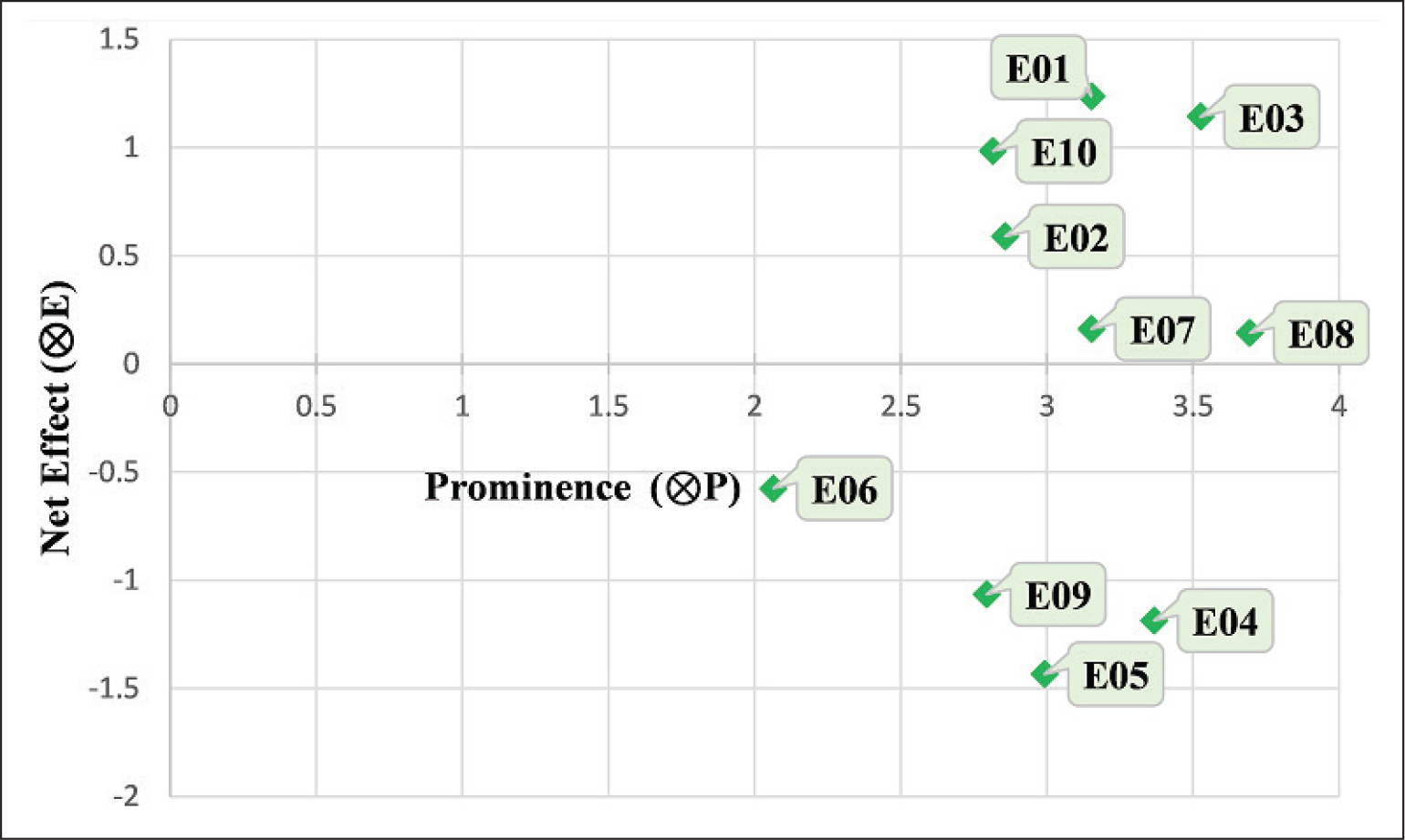
The causal relationship graph is developed using the net effect value (shown in Figure 2). A positive value of ⊗E i shows the net effect (cause) of the criteria (enablers) on the system and a negative value represents the net effect on the criteria (enablers) caused by the system.
Analysis
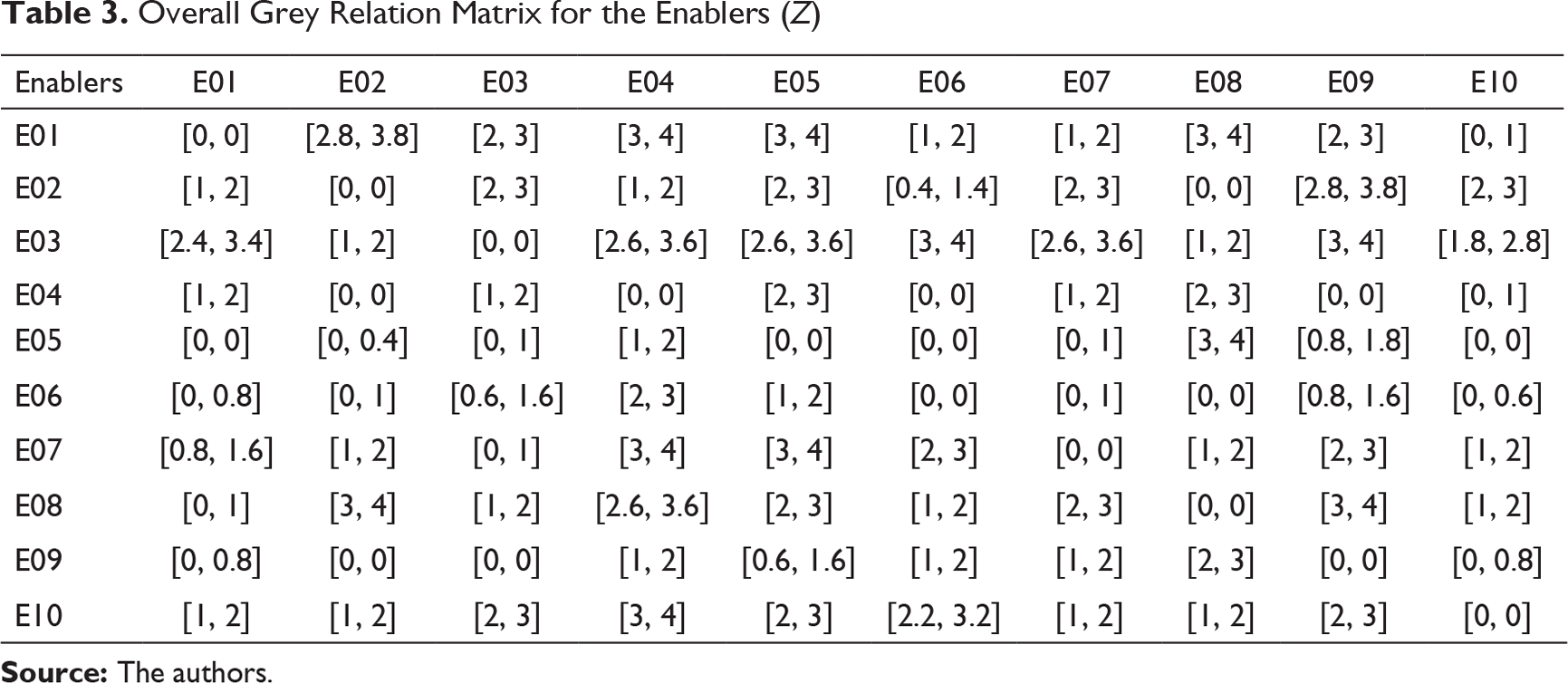
In order to assess the causal relationships among the enablers of circular initiatives, the grey DEMATEL method is applied. Initially, we provided a brief overview of the grey DEMATEL method to the experts for their better understanding of the methodology. Further, the experts were requested to provide their responses in the form of a direct-relation matrix using the linguistic scale. The obtained initial direct-relation matrices were transformed into grey relation matrices using the corresponding grey numbers. In this manner, five grey relation matrices were obtained. Table 3 presents the matrices as converted into an overall grey relation matrix.
Overall Grey Relation Matrix for the Enablers (Z)
Normalized Grey Direct-relation Matrix of Enablers (N)
Total Relation Matrix of the Enablers (T)
Prominence and Net Effect of the Enablers
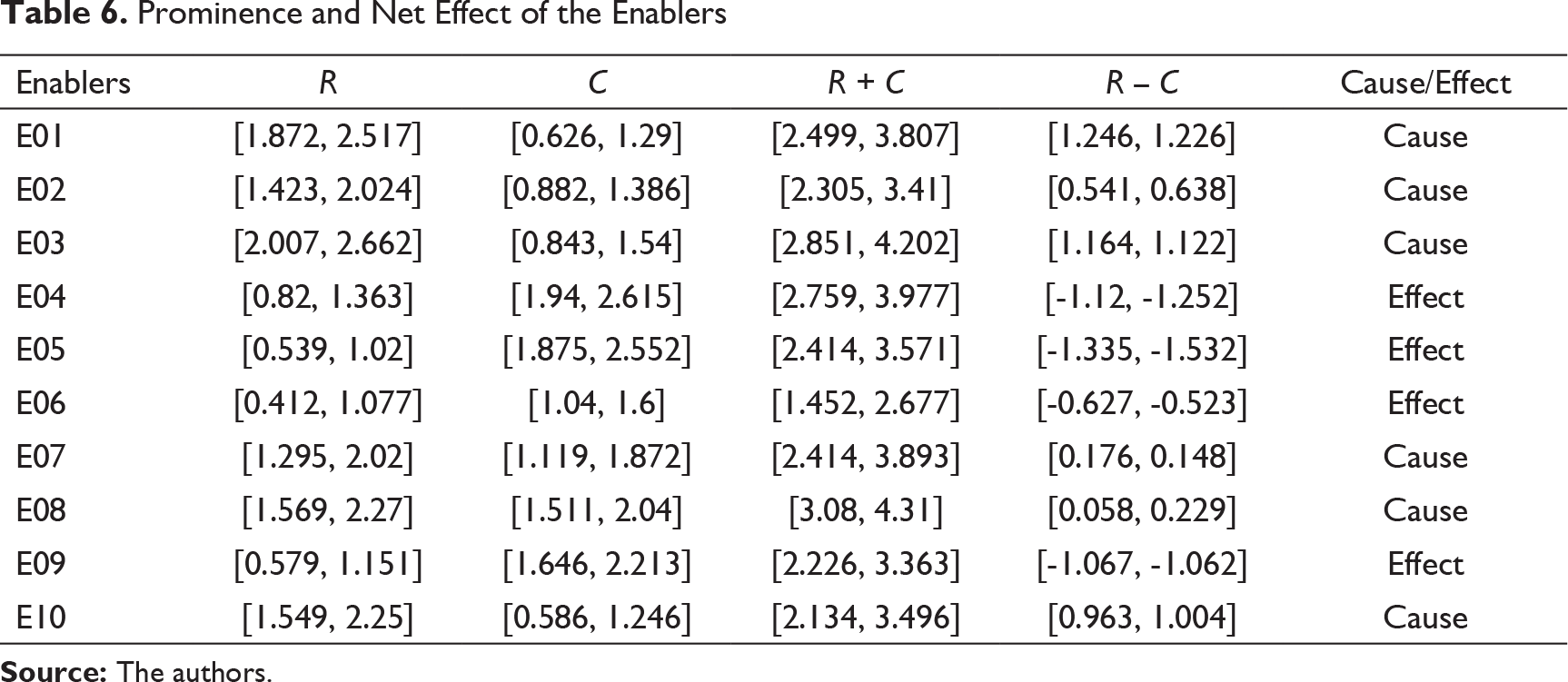
Based on the value of the total relation matrix, the causal parameters were calculated. The row-wise summation, using Equation (6), of the total relation matrix is represented as ⊗R i and the column-wise summation, using Equation (7), of the total relation matrix is shown as ⊗C i . The prominence (⊗P i ) and net effect (⊗E i ) are determined using Equation (8) and (9). The causal parameter is shown in Table 6.The value of ⊗R i represents the net effect of the enabler i on the other enablers, while the value of ⊗C i indicates the net effects on enabler j by the other enablers. The value of ⊗Pi determines the importance of the ith enabler. The value of ⊗E i represents the net effect of the ith enabler on the system. The categorization of the enablers depends on the sign (positive/negative) of ⊗E i : if the value of ⊗E i is positive, then the corresponding enabler belongs to the cause group, otherwise it belongs to the effect group. Based on the values of ⊗E i , cause and effect of the enablers are determined and presented in Table 6. Further, the causal diagram is developed by mapping the value of (⊗P i ) m and (⊗E i ) m , where (⊗P i ) m and (⊗E i)m are whitened mid-values of ⊗P i and ⊗E i . Figure 2 shows the obtained causal diagram.
Discussion
The identified enablers of the circular initiatives are analysed using the grey DEMATEL method. The result of the grey DEMATEL provides the importance of each enabler categorized into cause and effect groups. Based on the prominence score, the importance order of the enablers is: ‘create demand for circular products’ > ‘top management commitment to move towards a CE’ > ‘reverse logistics infrastructure’ > ‘circular business model’ > ‘consumer attitude towards used products’ > ‘traceability implementation’ > ‘policies and legal frameworks to manage CE practices’ > ‘strong economic incentives’ > ‘efficient technology for the CE process’ > ‘skill development’. The most important enabler is the ‘create demand for circular products’ that might motivate organizations and top management to adopt circular practices and shift towards the CE model.
Further, based on the value of net effect (⊗E i ), all enablers are categorized into cause and effect groups. Six enablers belong to the cause group (having a positive value of net effect), and four belong to the effect group (having a negative value of net effect). The enablers of the cause group influence the enablers of the effect group. Among the cause group enablers, the descending order of influence is ‘consumer attitude towards used products’ > ‘top management commitment to move towards CE’ > ‘strong economic incentives’ > ‘policies and legal frameworks to manage CE practices’ > ‘circular business model’ > ‘create demand for circular products’.
The most influential enabler is the ‘consumer attitude towards used products’ that plays a vital role in demand creation for circular products. Demand is one of the primary drivers of any organizational practice, and thus changing the consumer’s attitude towards used products motivates them to take up circular initiatives and helps the adoption of circular practices. The next most influential enabler is ‘top management commitment to move towards a CE’ that significantly influences the activities related to the circular practices. Management commitment plays a significant role in taking circular initiatives by setting the goals and formulating an action plan to achieve the same through efficient resource allocation. The third most influential enabler is ‘strong economic incentives’, which requires motivating organizations to take the initiative for the adoption of circular practices. The economic incentives also motivate organizations and governments to develop reverse logistics infrastructure and tractability implementation and adopt efficient technologies for circular practices. In this list, the next enabler is ‘policies and legal frameworks to manage circular practices’ that are essential for efficient adoption of circular practices and strategically managing these practices. The fifth most influential enabler is the development of a ‘circular business model’ that is in an emerging stage and gets the attention of various organizations and researchers. The business model might influence the various strategic and operational activities of the circular supply chain, and hence it will play a vital role in the success of a CE. The least influential enabler among the identified enablers is ‘create demand for circular products’ that motivates organizations to move towards a CE for enhancing the economic and environmental performances.
Among the effect group, the descending order of the influence of enablers is ‘traceability implementation’ > ‘reverse logistics infrastructure’ > ‘efficient technology for the CE process’ > ‘skill development’. The enabler with the highest influence is ‘traceability implementation’, and it depends on several other enablers and stakeholders. This can be the reason for its highest influence on the other enablers. The development of reverse logistics infrastructure is a significant enabler to adopt circular practices, and it also relies on various factors such as different partners of the supply chain, government regulations, environmental awareness, etc. The effect group enablers should be considered as crucial enablers because their strong dependence points out that they need all the other enablers to adopt circular initiatives.
Conclusion
This study emphasizes developing contextual relationships among the key enablers of circular initiatives in order to implement circular practices. Thus, to fulfil this objective, this study has identified 10 significant enablers of circular initiatives through a literature review and discussion with experts. Afterwards, the grey DEMATEL method has been used to evaluate the causal relationships among the enablers of circular initiatives. The importance of each enabler is also determined based on their prominence scores. Further, grey DEMATEL has been used to categorize the enablers into cause and effect groups. The cause group contains six enablers, namely ‘consumer attitude towards used products’, ‘top management commitment to move towards a CE’, ‘strong economic incentives’, ‘policies and legal frameworks to manage CE practices’, ‘circular business model’ and ‘create demand for circular products’. Among the cause group, the most influential enabler is ‘consumer attitude towards used products’, while the least influential enabler is ‘create demand for circular products’. The effect group contain four enablers, namely ‘traceability implementation’, ‘reverse logistics infrastructure’, ‘efficient technology for the CE process’ and ‘skill development’. The cause group enablers influence the effect group enablers; thus, the management has to focus more on the cause group enablers.
Managerial Implications
The findings of this study provide significant managerial implications. This study offers support to extend the understanding of the significant enablers of circular initiatives for the adoption of circular practices. The concept of enablers is instrumental in outlining process improvement, the role of people, practice adoption and new process designs in an organization. Therefore, the identification of key enablers is helpful for organizations to adopt circular initiatives and shift towards a CE. The contextual relationships among the enablers assist managers and policy planners while they formulate an action plan to adopt circular practices by primarily focusing on the cause group enablers. The findings of this study also assist practitioners in segregating important enablers to adopt circular initiatives for their organization and use their resources strategically. By considering the causal relationships of the enablers of circular initiatives, managers and practitioners can improve their organizational capabilities to adopt circular practices. Further, this study suggests that consumers’ attitude is the key enabler to creating demand for circular products, and this could be improved by creating awareness about the CE. This awareness could be created through organizing a seminar or event to promote the idea of a CE and circular practices.
Limitations and Future Research
Similar to other studies, this study also has certain limitations which provide opportunities for further research in this area. The first limitation of this study is that it only focuses on ten major enablers, thus, there is a chance to overlook some key enablers. We need to incorporate many more persons from industry and academia and even consultants in future studies. Further, the expert inputs are used to evaluate the relationships among the identified enablers of circular initiatives; these experts’ inputs might have sectoral, regional and professional biases. This limitation is reduced by using the grey theory with the adopted methodology, but there is still a chance of biases. From the future research perspective, the identified enablers of the circular initiatives can be prioritized using other multiple criteria decision-making (MCDM) techniques such as analytic network process (ANP), analytic hierarchy process (AHP), best–worst method (BWM) and technique for order of preference by similarity to ideal solution (TOPSIS). The hierarchal relationship among the enablers also can be developed through other modelling techniques such as ISM, modified ISM, TISM and structural equation modelling (SEM).
Footnotes
Appendix A
Acknowledgement
The authors are grateful to the anonymous referees of the journal for their extremely useful suggestions to improve the quality of the article. Usual disclaimers apply.
Declaration of Conflicting Interests
The authors declared no potential conflicts of interest with respect to the research, authorship and/or publication of this article.
Funding
The authors received no financial support for the research, authorship and/or publication of this article.
