




Abstract
Research on science, technology and innovation policy (STI policy) in Vietnam has mainly focused on the role of government and business—the two main groups of social actors shaping the development of the Government. From the cultural perspective of STI policy, the article analyses the interactions between four policy cultures representing four groups of social actors (academic, state, business and civil society) that affect the formation and development of STI policy in Vietnam through four stages of development. From there, the article provides a general picture of the role of four groups of policy actors involved in the policymaking process, considering aspects including: (a) the nature of the policy; (b) policy objectives; (c) policy makers; (d) policy instruments; (e) policy specificity and (f) group of agents representing policy culture. Next, the article analyses the formation and development of an innovation-based startup ecosystem that represents the concerns of a third policy culture—an economic policy culture. Finally, the article proposes some initial recommendations to promote the interaction between the components of the STI ecosystem, especially those related to the innovation-based startup ecosystem.
Introduction
Until recently, research on science, technology and innovation policy (STI policy) in Vietnam has mainly focused on the role of government and business—the two main groups of social actors that shape development of the STI policy in Vietnam and approaches it mainly from the perspective of public administration and economic growth. Recently, awareness of the role of culture in development has received political attention at the highest level and was emphasised at the National Scientific Conference with the theme ‘80 years of Cultural Outline. Vietnam (1943–2023)—Origins and development impetus’ co-organised by the Ministry of Culture, Sports and Tourism with the Central Committee for Propaganda, the Central Theoretical Council and the Ho Chi Minh National Academy of Politics on 27 February 2023 in Hanoi with the idea of ‘culture lights the way for the nation to go’. 1 In the context of the perception of the important role of culture in development, this article aims to provide some initial research on the theoretical and practical basis related to public policymaking in general and STI policy in particular in Vietnam by examining the role of four social actors representing four policy cultures (academic, civil service, economic and civic) and recognising the promotion of development of the innovative startup ecosystem as a representative policy of combining four policy cultures as well as practice promoting transformative innovation policy in Vietnam.
Theoretical Framework for Public Policymaking in the Field of Scientific Research, Technological Development and Innovation
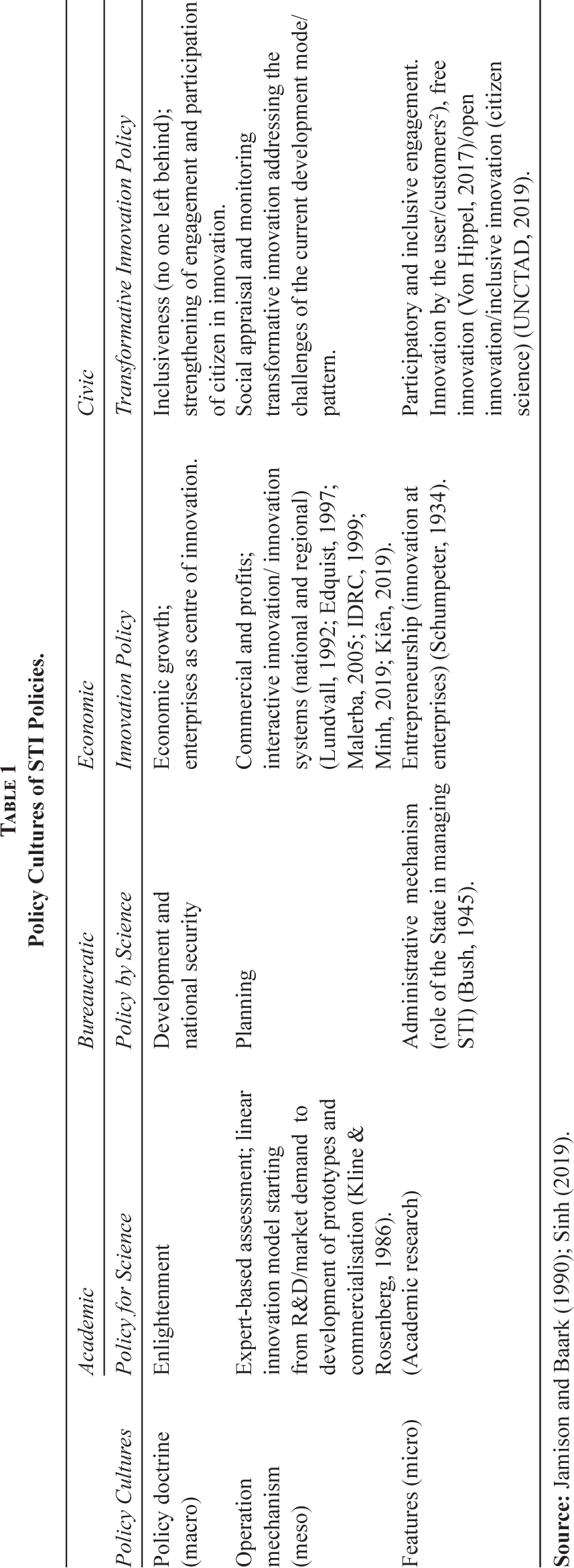
The policy culture approach to science and technology (S&T) policy was developed by Jamison, Baark and Elzinga (Elzinga & Jamison, 1995; Jamison & Baark, 1990) and continued to be developed and applied by Bach Tan Sinh. It is relevant for developing countries such as Vietnam (Sinh, 2019), is used to analyse STI policy transformation. According to this approach, ‘four policy cultures’ coexist—academia, bureaucratics, economics and civil society (see Tables 1 and 2). Policy cultures compete for resources and assert varying degrees of influence on STI development. The nature of STI policy differs depending on the relative degree of influence and the mode of interaction between the above policy cultures. The STI policy after being formed will affect the institutional framework in that country about the form of STI organisation in general and the mode of knowledge production in particular.
Policy Cultures of STI Policies.
Models of STI Policies.
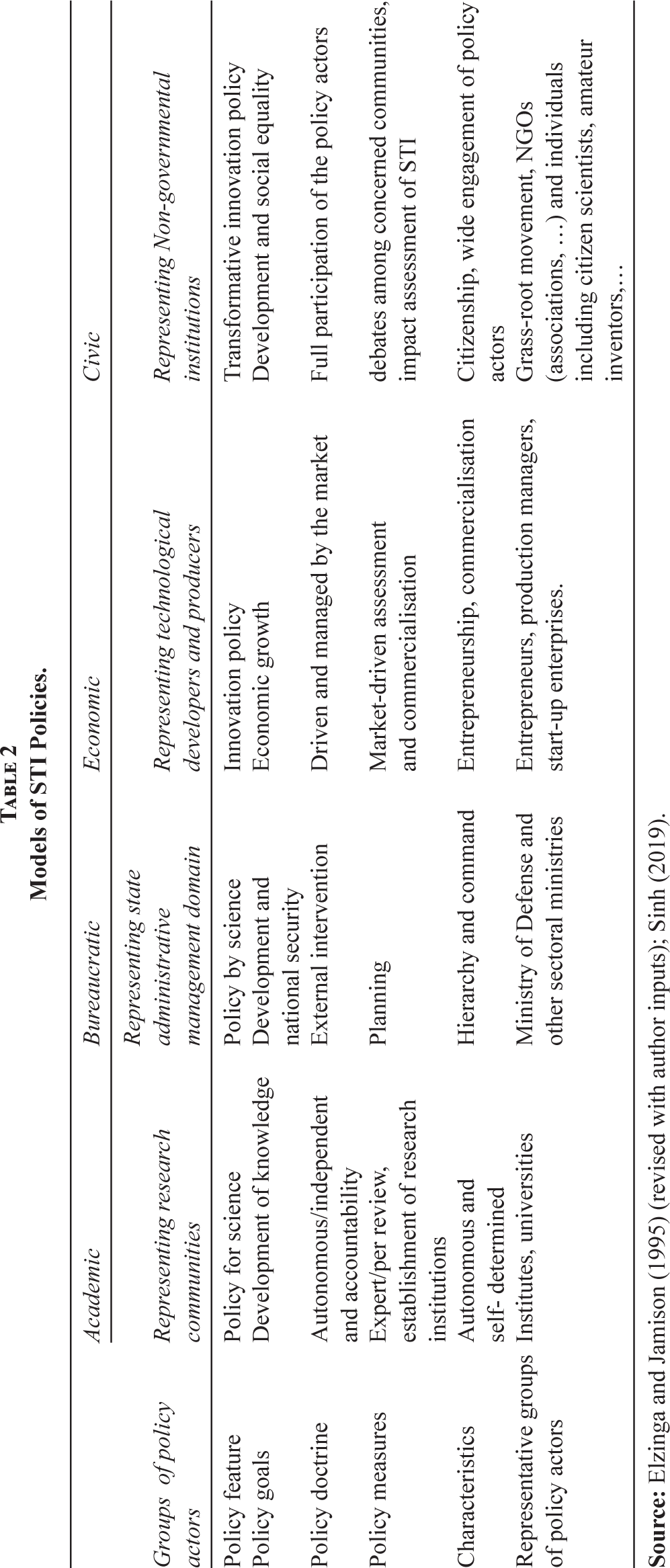
The first policy culture is an academic policy culture, formed primarily at research institutes and universities, where science is conducted as a professional activity, and creating scientific knowledge is considered an important factor for the development of humanity and civilisation, contributing to the human knowledge treasure. The STI policy of this policy culture is a policy for science, which is primarily concerned with the development of science as an objective in itself and wants to increasingly scale the development of research institutes. In the realm of this academic policy culture, respected scientists and politicians play an important role in determining the direction of a nation’s STI development.
The second policy culture, an administrative/civil service policy culture, in many countries dominated by the military forces, is formed on the basis of state management organisations, committees, council and advisory organisation. The concern of this policy culture is that the effective organisation and management of a national, scientific STI system must serve the development of society and have social use value. STI policy in this policy culture is policy by science.
The third policy culture—the economic policy culture—is primarily based on companies and firms where STIs are the vehicle for production development goals, contributing to wealth creation, material and economic growth. The concern of this policy culture is the use of knowledge (application and transformation into a commercially viable product and process). This policy culture is concerned with the policy of applying, adapting and disseminating technology, considering enterprises as the centre of innovation, as a place to create material wealth for society. The economic policy culture is influenced by entrepreneurial scientists, engineers and managers.
Finally, the fourth policy culture, the civic policy culture of STI policy, relies on the wide participation of STI organisations, being outside the public sector and the member of STI associations. The concern of this policy culture is the social impact of the STI rather than the effective generation and application of the STI results. This policy culture publishes its views through social organisations as well as social criticism on socio-economic development policies in general and STI policy in particular. The degree of influence of this policy culture depends on the strength of civil society in that country.
The next part of the article is to apply the policy culture approach to analyse the formation and development of public policy in the field of scientific research, technology development and innovation in Vietnam—from policy research to innovation policy.
From Research Policy to Innovation Policy in Vietnam
First-Generation Policy Framework—Linear Innovation Policy
First-generation policy framework—Linear innovation policy framework is demonstrated in Vietnam with the leading role of two policy cultures: (a) academic policy culture—policy for science and bureaucrative policy culture—policy by science in three decades (1960 to 1980). During a period when the academic policy culture had the greatest influence. Vietnam established a series of R&D organisations that were isolated, separate from the manufacturing sector and universities (Table 3). This organisation is the result of learning the model of building the S&T system of the former Soviet Union. These institutes were established mainly from the ideas of leading scientists who had been trained in the Soviet Union and the former socialist countries in Eastern Europe, including the S&T research institutes of the Vietnam—the Academy of Science and Technology (now the Vietnam Academy of Science and Technology) and a number of institutes belonging to a number of ministries/sectors (IDRC, 1999; OECD-WB, 2014; Sinh, 2018; Đàm, 2007).
Transformation of STI Policies in Vietnam in the Period 1960–2020.
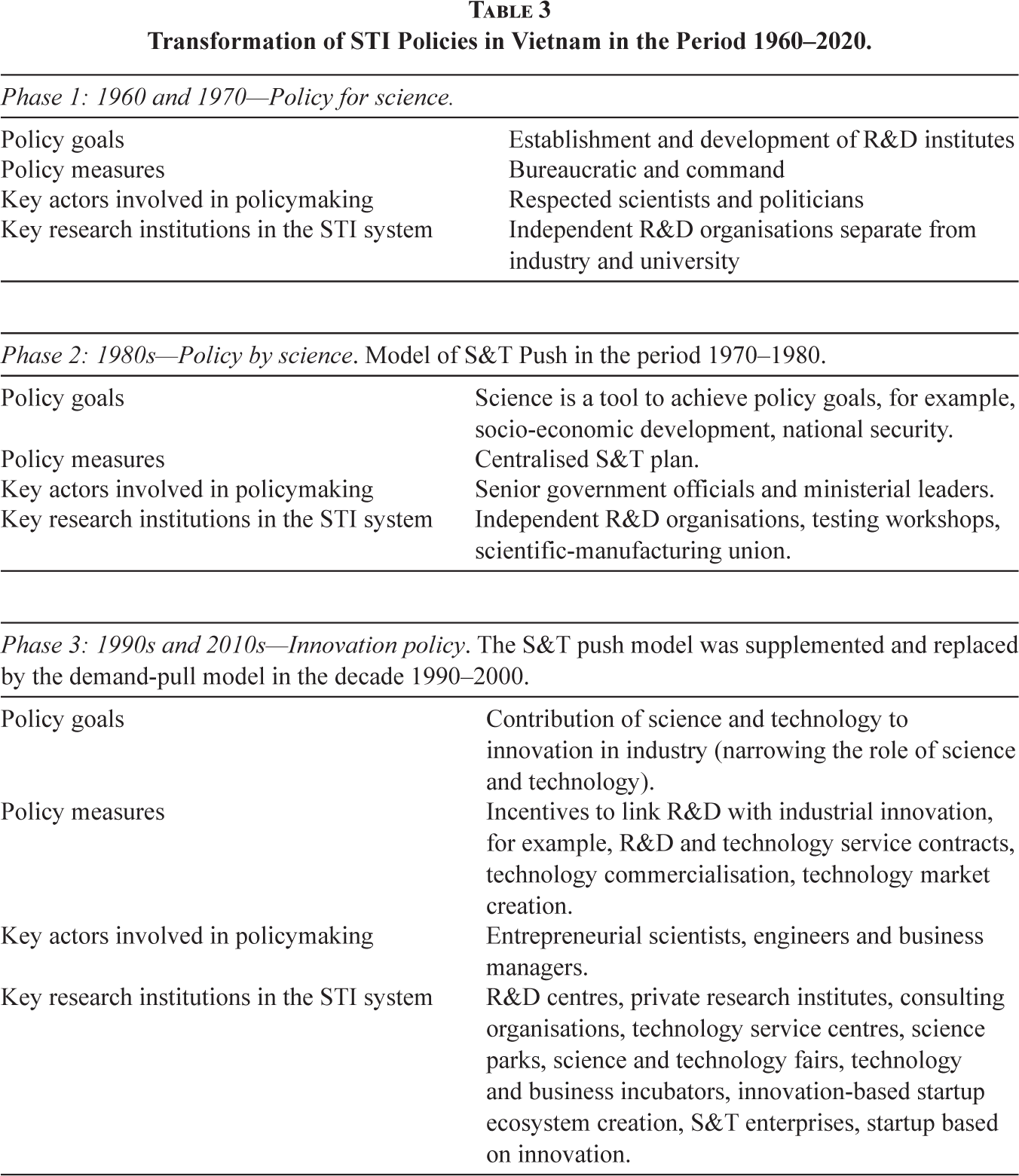
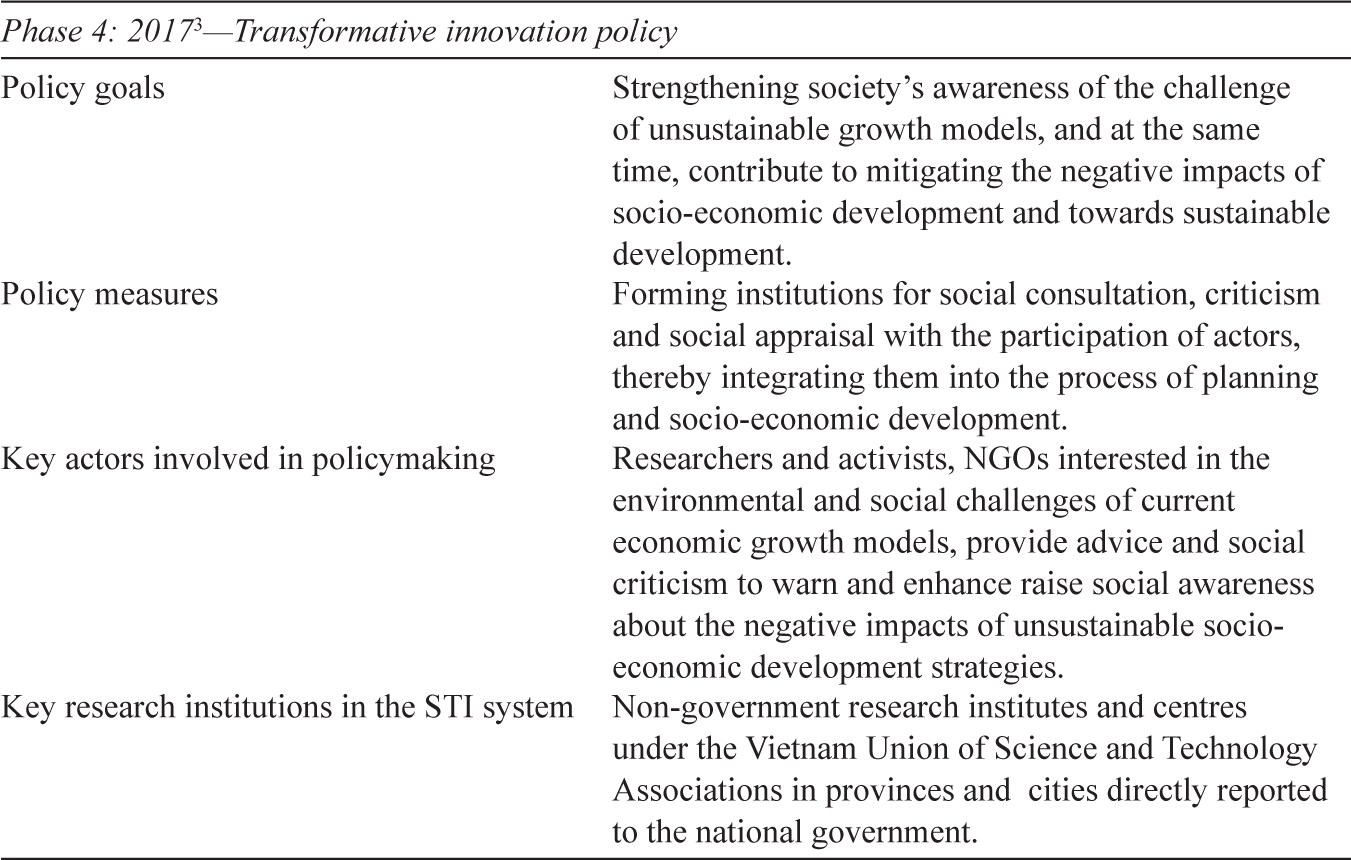
Along with the academic policy culture in the 1960s and 1970s, in the 1980s, the bureaucrative policy culture represented a gradual shift from policy for science to policy by science study (Table 3). The purpose of this policy is that science must become a means to achieve the goals of other policies, such as socio-economic development, national security, and others, rather than just focusing on development for science itself. Senior government officials and ministerial-level leaders are the main social actors involved in creating the bureaucratic/administrative policy culture of this STI policy (Đàm, 2007; Sinh, 2018).
Second-Generation Policy Framework—Interactive Innovation Policy
The second-generation policy framework—interactive innovation policy framework: the system of innovation has been implemented under the influence of the economic policy culture of STI policy during two decades (2000–2020). During these years, the broad goal of the policy by science to serve national development was transformed into a narrower goal of the technology innovation policy aimed at enhancing industrial innovation capacity and competitiveness in enterprises (Table 3). Incentives to link R&D with industrial innovation in this S&T policy include the establishment of technology transfer and consulting centres, technology incubators and S&T enterprise formations, S&T centres and parks, and recently the startup ecosystem and startups (businesses startup) (Hà et al., 2015; Sinh, 2005; Sinh, 2018).
Third-Generation Policy Framework—Transformative Innovation Policy
Addressing the challenges of inclusivity and sustainability in the context of the 2030 Agenda for Sustainable Development requires: (a) broaden the strategic focus of STI policy to mainstream social challenges into core content of the Programme; (b) mainstreaming the direct and indirect contributions of innovations to the economic, social and environmental aspects of sustainable development; and (c) promoting transformative innovations with the potential to replace existing unsustainable systems and practices (Học, 2020; Son, 2020; UNCTAD, 2019).
In the trend of transforming the mode of socio-economic development activities towards solving inclusive and sustainable challenges in the spirit of the 2030 Agenda for Sustainable Development which has been approved by the United Nations, Vietnam has soon committed to implementing the 2030 Agenda with 17 sustainable development goals (SDGs) of the United Nations (National Action Plan for the implementation of the 2030 Agenda for Sustainable Development) in Decision No. 622/QD-TTg dated 10 May 2017 of the Prime Minister. Accordingly, the development orientation of STI to serve ’Vietnam’s SDGs will be implemented through: (a) establishing a Committee on Science and Technology under the National Council on Sustainable Development and Strengthening National Competitiveness—in Decision No. 3663/QD-BKHCN dated 29 November 2018 of the Ministry of Science and Technology; and (b) National Action Plan for the implementation of the 2030 Agenda for Sustainable Development by the Ministry of Science and Technology—in Decision No. 1695/QD-BKHCN dated 20 June 2018 of the Ministry of Science and Technology. In addition, according to Decree No. 95/2017/ND-CP issued on 16 August 2017 by the Government defining the functions, tasks, powers and organisational structure of the Ministry of Science and Technology, innovation is regulated as follows: a new function in the management of S&T activities of the Ministry of Science and Technology.
The third-generation policy framework argues that, ultimately, we will need a transformative change in many socio-technical systems for food supply, energy use, social mobility, health care, water and information in a sustainable way. Such systemic change is not only a change in production, but also a change in distribution and consumption; therefore, it involves all actors in the economy and society, and thus has pervasive effects on the entire economy and society at large (Nguyen Van Thanh, Dao Thanh Truong and Philip Degenhard, 2020; Sinh & Dương, 2018). Accepting the coexistence of the three STI policy frameworks demonstrates the need to build a new relationship between the state, the market and civil society, 4 as well as new forms of the state in the role of the state, create the right institutions and create other infrastructure to support innovation-based entrepreneurship. The third-generation policy framework can also lead to a rethinking of the concept of innovation systems and related social/policy actors (Carayannis et al., 2018).
The policy of transformational innovation should be seen as a way to proactively respond to the unpredictable changes occurring in the transitional contemporary world (Schot et al., 2019; Sinh, 2019). One question is whether transformative change is too big of a goal for the S&T community, and the community of STI policymakers in Vietnam. On the one hand, the answer is clearly yes—such a change cannot be achieved by STI policies alone but requires the contribution of other policies (Ngân hàng thế giới và Bộ Kế hoạch và Đầu tư, 2016). Furthermore, it should be recognised that transformative change will not be brought about by new policies alone; it is a much longer historical process, in which many policy actors are actively involved. Even so, it is clear that the transformation is being strongly implemented in many different policies in Vietnam, including developing an innovative startup ecosystem with the central role of innovation-based startups considered as one of the key policy pillars to promote economic development.
The relative classification of the co-evolution of three generations of policies on scientific research, technological development and innovation (referred to as STI)—from the ‘policy culture’ approach (mentioned in Section 2) used to analysing the co-evolutionary transition of three generations/STI policy frameworks over the past 70 years contributes to clarifying the leading role of each policy generation in the STI policymaking process (presented in the third section). In fact, three generations of STI policy always co-exist, are parallel and interact to co-create/make STI policy with objectives, means and policy content at three levels (macro, medium and micro). In other words, STI policy is formed based on the interaction and mutual influence between policy actors representing four policy cultures (academic, bureaucratic, economic and civic) in the co-evolution direction (Schot, et al., 2019; Sinh, 2021).
The next section analyses the development of an innovation-based startup ecosystem that represents a third policy culture—the economic policy culture.
Innovative Startup Ecosystem
Innovative Startups and a Startup Ecosystem
Tripathi et al. (2019) has reviewed a number of different concepts of startup. The results show that startup is a ‘temporary organisation in search of a scalable, repeatable, profitable business model’. It can also be considered as ‘a human institution designed to create a new product or service under conditions of extreme uncertainty’. According to Blank in 2013, startups must be based on a new technology or create a new business form, build a new market segment, that is, must make a difference not only in country but with all the businesses in the world. Blank in 2013 argues that the characteristics of any startup include two contents: (a) A breakthrough business concept, that is, creating something that has never existed in the market or create a better value than what is already available, such as being able to create a new segment in manufacturing (such as smart devices measuring personal health), a business model completely new (like Airbnb), or a unique, never-before-seen type of technology (like 3D printing). (b) The growth value surpasses the traditional, the so-called startup will not put a limit on growth, and they have the ambition to grow to the greatest extent possible. They make a huge impact and can be seen as market pioneers.
In the new global economy, startup firms have been considered a key player in economic development. The reasons for their significance are their contributions to job creation and economic growth at the regional, national and industrial levels (Tripathi et al., 2019). Especially, according to Cohen (2006) and Carree and Thurik (2010), several breakthrough innovation and major businesses have been generated by startups. The output of a startup is often new products. Product development can be outlined in four life cycle stages (startup, stabilisation, growth and evolution) or six stages (concept, in development, working prototype, functional product with limited user, functional product with high-growth and mature product). However, the success of startups depends greatly on the startup environment. One of the hallmarks of startups is that they first test different business models to find the best one, so they need a suitable startup ecosystem (Shabangu, 2014). Silicon Valley is a prime example of such an environment, renowned for creating successful startups. In this situation, elements of the environment interact with each other as an ecosystem that can foster the creation of successful startups (Kenney & Von Burg, 2001).
According to Tripathi et al. (2019), a startup ecosystem consists of following elements: entrepreneurs, support factors, finance, demography, market, education, human capital, technology (Figure 1).
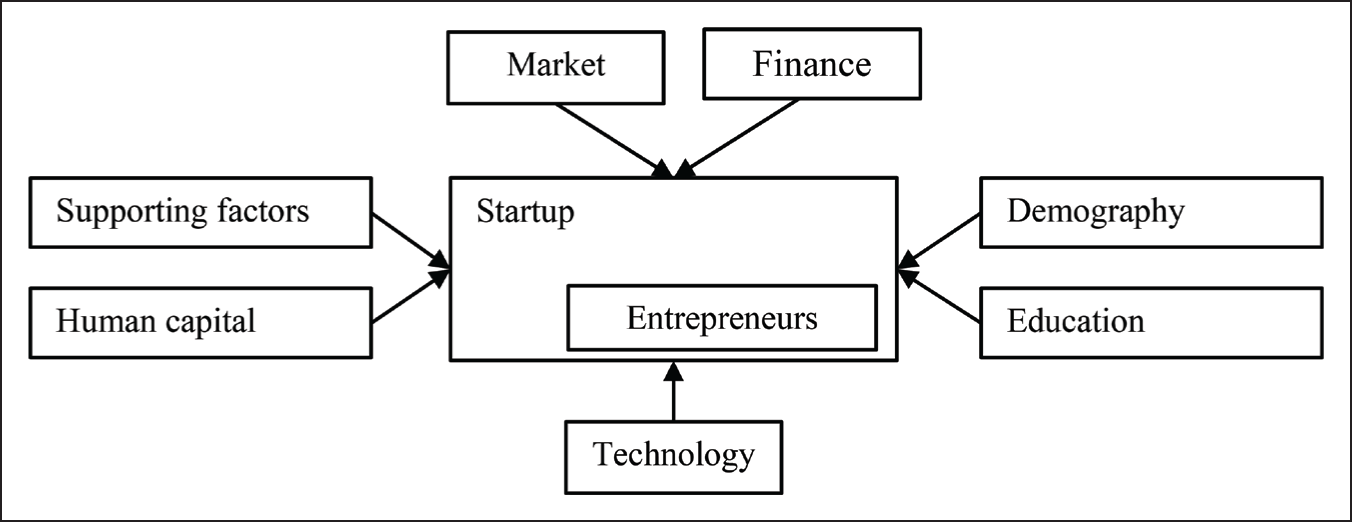
Based on the given definitions, Tripathi et al. (2019) came to conclusion that a startup ecosystem operates in the environment of a specific region. It involves actors that can act as stakeholders, such as entrepreneurs, investors and other groups of people who have some self-interest in the ecosystem. They collaborate with supporting organisations, such as funding agencies, governments and educational institutions. They establish organisations to create an infrastructure in which a common network that could support and build startups on a smaller scale is set up, as well as to increase domestic product development and the creation of new jobs in the country on a larger scale.
The Growth of Startups Over the Past Decade and the Role of the Government, Enterprises and Civil Society in Vietnam
The development of an innovative startup ecosystem with the central role of startups can be considered as one of the policies that represent the combination of four main policy cultures and an approach of transformative policy in Vietnam, in which the State plays an important role in promulgating mechanisms and policies, creating a favourable legal framework for successful building of the ecosystem. Specifically, the State provides a mechanism for generating and protecting intellectual property of all organisations and individuals, stipulating methods of technology transfer, licensing intellectual property rights, protecting the interests of investors, encouraging investment in R&D, allowing the establishment and creation of mechanisms to operate various types of venture capital and service organisations in the technology market. These can be shown in detail through the policies, regulations and the results achieved over the years.
Decision No. 844/QD-TTg dated 18 May 2016 of the Prime Minister approving the Project to support the national innovation startup ecosystem until 2025 (Project 844) and Decision No. 188/QD-TTg dated 9 February 2021 amending and supplementing a number of articles of Decision No. 844/QD-TTg with the aim of creating a favourable environment to promote and support the formation and development of enterprises with ability to grow rapidly based on exploiting intellectual property, technology, new business models, connecting and promoting interaction between components of the ecosystem, encouraging the participation of corporations, associations, universities, venture capital funds, and others, to connect and mobilise resources for startups. The issuance and implementation of the Decisions has contributed to shaping and promoting the development of ’Vietnam’s startup ecosystem.
The current policy also applies special incentives to encourage development for new investment projects on establishing innovation centres with a total investment capital of 3,000 billion VND or more; the investment projects on startups, innovation centres, research and development centres are the beneficiaries of investment incentives. 5 Preferential policies have also been issued to encourage the cooperation between enterprises and agencies, organisations and individuals to implement the investment projects on technological innovation and startups; incentives under the provisions of the tax law for technology incubators, organisations and individuals that invest in and support startups, and others, have also been promulgated. The definition of a startup enterprise has also been included in legal documents that has officially recognised a type of enterprise with the potential to make a great contribution to the economy.6,7
The Resolutions of the Government and the Action Programmes of the Ministry of Science and Technology all set the tasks of strongly developing the startup ecosystem, cooperating and connecting between universities, research institutes and industries, promoting the role of the system of spaces for innovative startup and for technology supply and demand connection to improve quality, increasing competitiveness, creating and developing markets for key products of each locality in the region; promoting value chain connectivity in industries, agriculture and services, in which large enterprises, digital enterprises and innovative startups play a central role in leading innovation activities, state management agencies play the role of creating the institutional environment. 8
With the implementation of the policies to support innovative startups, Vietnam has achieved positive results in the past 5 years. From 2016 up to now, Vietnam has risen to the fifth position in Southeast Asia, ranked 54 out of 100 countries in the ranking of the global startup ecosystem, 9 ranked 48 out of 132 countries on the global innovation index. 10 By the end of 2022, Vietnam has more than 3,800 innovative startups, 11 mainly concentrated in two big cities, Hanoi (43.3%) and Ho Chi Minh City (41.2%), more than 200 co-working spaces, 84 incubators, 35 business accelerators, 208 venture capital funds with 40 domestic investment funds. 12 Innovative startup support networks have been formed, typically as the Network of Innovation Researchers at Institutes and Universities, the National Advisory Council for Innovative Startups, Vietnam Angel Network (VAN), Vietnam Venture Capital Alliance, National Creative Startup Support Media Network, forming linkages between institutes, universities–enterprises–government; incubators–business accelerators–investment funds; local–national–international; public–private partnership.
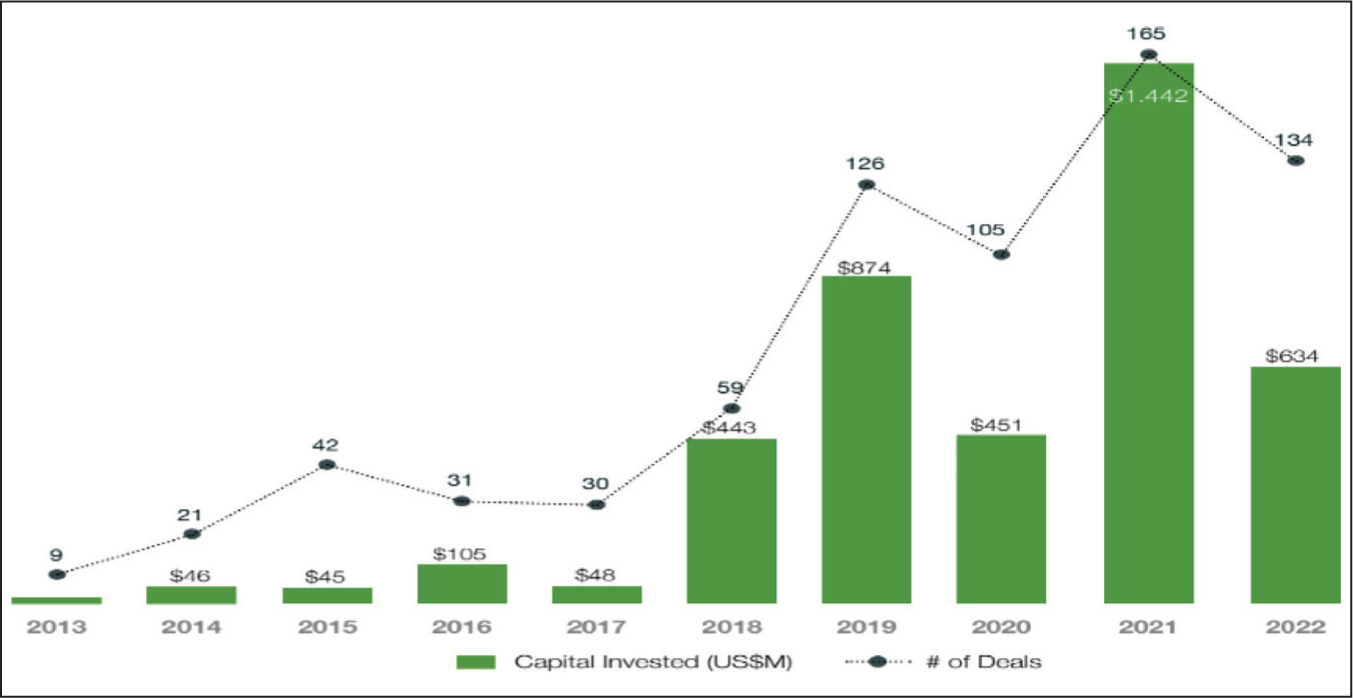
Year 2021 witnessed an incredible capital investment in startups (Figure 2). In 2022, due to some reasons, venture capital investment in Vietnam experienced a sharp decline of 56% compared to the previous year, despite an overall increase of 41% compared to 2020. The total deal count saw a slight decrease of 19% compared to 2021, whereas there was a 28% rise when compared to the figure of 2020. 13
Especially, TECHFEST, the biggest annual event of the Vietnamese startup community organised by the Ministry of Science and Technology, relevant ministries, localities, sociopolitical organisations, has attracted a great deal of attention and participation from domestic and international individuals and organisations. The first TECHFEST Vietnam 2015 took place in Hanoi with the participation of more than 1,000 participants, 50 investors, venture capital funds, incubators and over 50 startups; In 2022, this event was held in Binh Duong and attracted more than 7,000 attendees, 250 booths of innovative startup’s products and services, of which 80% displayed the technological products and business models of startups, and the rest showed new products of potential businesses. About 30 conferences and seminars on technology trends, investment connection, sharing experiences in developing innovative startup ecosystems were organised in TECHFEST Vietnam 2022, attracting nearly 20 representatives of international organisations such as World Bank, Asian Development Bank, UNDP, Startup Genome, 10 representatives of the Embassy/Consulate of India, Canada, Sweden, Switzerland, Finland, Italy, United Kingdom, and 50 international investment funds such as Techstars, Quest Ventures and many multinational corporations such as Qualcomm, Amazon, Niras Global, Samsung, Shinhan, and others.
Impact of Venture Capital on Innovative Startups
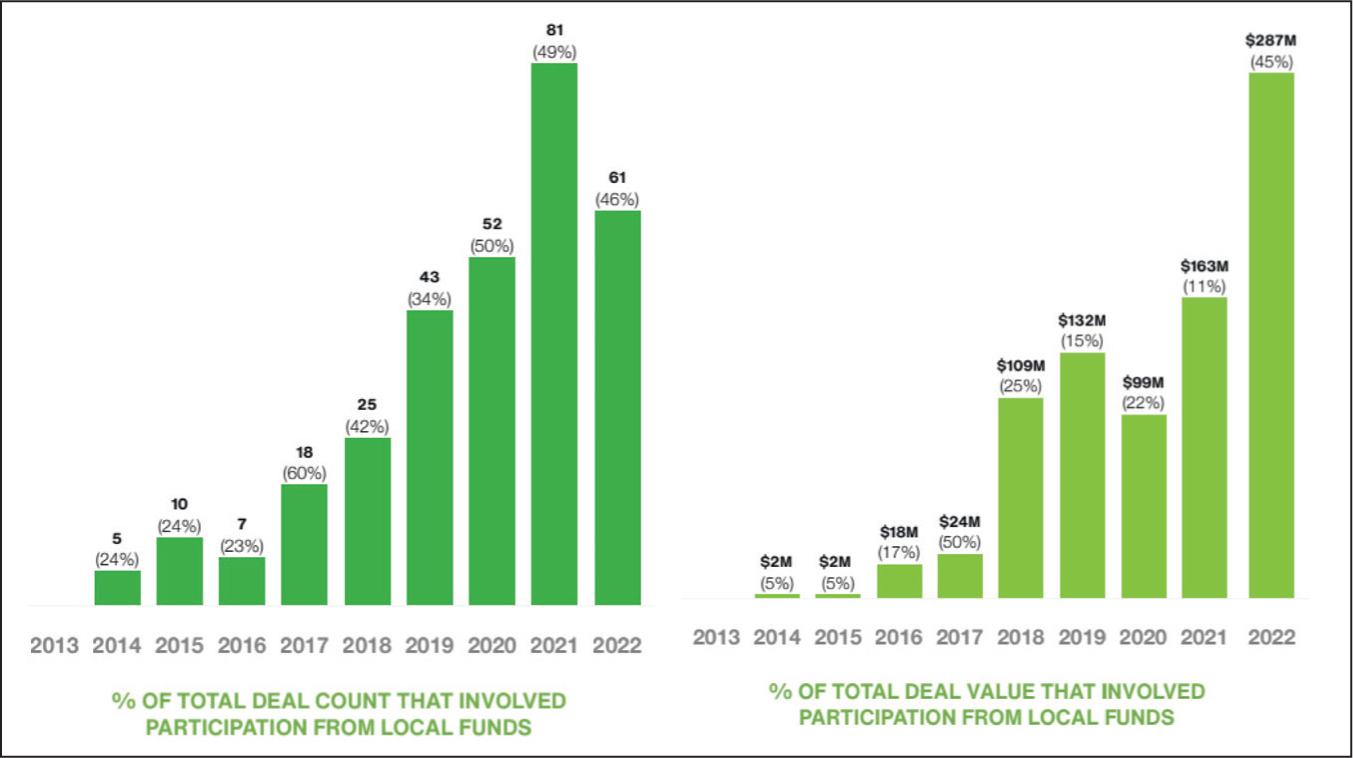
Local venture capital firms play an increasingly important role in the Vietnam startup ecosystem, as they provide funding to early-stage startups that may have difficulty attracting investment from more established foreign funds. There has been an increasing trend in both deal value and deal count with the participation of local funds. Notably, in 2022, the record high deal value of $287 million was made with the involvement of local funds. 14
Figure 3 shows the increasing participation of local venture capital firms in both deal value and deal count. Year 2022 witnessed the records high deal value of $ 287 M with the involvement of local funds. Report in 2022 by NATEC also indicated that if in 2016 there were only about 30 funds, by 2022 more than 208 investment funds for innovative startup have operated in Vietnam, including 40 domestic venture capital funds. Large corporations also actively participate in the ecosystem under models such as corporate venture capital funds such as FPT, CMC, NextTech, and others. Besides, some banks such as VPBank and TPBank offer preferential loan programmes for innovative startups, while VPBank and UP Coworking provide free facilities for eligible businesses. Viettel, the largest state-owned corporation in Vietnam, has run and sponsored many startup events such as Viet Challenge, IoT Hackathon and Viettel Advanced Solution Track. Another important source of funding for startups is from angel investors. The number of angel investors was not considered, but started to increase, more systematically and professionally, through connecting and forming a number of clubs and investment networks for startups. Some typical angel investment networks have been formed such as VIC Impact, Hatch! Angel Network, iAngel or Angel4us, VAN, etc. 15
National and Regional Innovation Centres
The infrastructure system to support startups has been strongly invested by the government, especially innovation centres and high-tech parks. The Ministry of Planning and Investment has decided to establish the National Innovation Centre (NIC), built in Hoa Lac Hi-Tech Park. A series of high-tech parks in major cities have been built such as the Ho Chi Minh City, Da Nang, Hanoi and regularly invest in developing and upgrading new facilities. These show the Government’s determination in seizing new opportunities and challenges in the latest trends of digitisation and the industrial revolution 4.0.
The National Innovation Startup Support Centre is planning to establish its sub-centres in Hanoi, Da Nang and Ho Chi Minh City. Some localities have been setting up entrepreneurship and innovation centres such as Ba Ria - Vung Tau, Can Tho, Da Nang, Hai Phong, Binh Duong,… connecting local and region for the ecosystem development. There have been 60 local governments promulgating plans or programmes to implement the Project 844; 39 localities have issued resolutions of the ’People’s Council which stipulate financial mechanisms for supporting innovative startups.
Entrepreneurial University and New Generation’s Mindset
Currently, about 170 universities/colleges organise innovative startup activities, of which 43 universities have established incubators, centres and clubs to support long-term entrepreneurship. Such actors play an important role in encouraging entrepreneurship and innovation among students and lecturers, supporting the technology transfer in the university, connecting the university with businesses and contributing to local economic development. 16
Incubation of startups is mainly carried out by incubators in the private sector. Incubators, innovative startup centres in universities mainly conduct activities to support their students to develop entrepreneurship projects, encourage them to participate in the startup competitions and promote entrepreneurship for students, and connect with companies, funds, mentors for students’ entrepreneurship projects. A few incubators, innovation startup centres in the university carry out incubation of startups, typically the Innovative Startup Centre of Vietnam National University Ho Chi Minh City, BK-Holdings of Hanoi University of Science and Technology, Korea Vietnam Business Incubator of the Department of Science and Technology of Can Tho.
Entrepreneurship support activities in universities take place strongly in the South (48%) with those of universities and their incubators and centres such as Vietnam National University Ho Chi Minh City (Innovative Entrepreneurship Centre—IEC), Ho Chi Minh City University of Technology (Technology Business Incubation Centre), Nguyen Tat Thanh University; in the North (31%) with centres under Hanoi University of Technology (BK-Holdings), Hanoi National University (Centre for Knowledge Transfer and Entrepreneurship—CSK), Foreign Trade University (Centre for Creation and Incubation—FIIS); and the central region (12%) be concentrated in Da Nang city such as the University of Danang, University of Information Technology (CIT-Lotus Hub). Supports for innovative startups in the universities in recent years has created a strong wave of entrepreneurship among students. Universities are active in connecting with domestic and international businesses to create a favourable environment to strengthen the connection between training–research–business, and at the same time, actively connect with the startup support organisations to incubate students’ ideas and projects or create an environment for students to interact with businesses during their practical internships. This plays an important role in encouraging entrepreneurship and innovation among students and lecturers, supporting the transfer of experience in the university, linking the university with local businesses and economic development. 17
Promote the Interaction of Actors of the STI Ecosystem, Especially Focusing on the Sub-component—The Innovative Startup Ecosystem
Vietnam’s GDP growth rate, although still high, has shown signs of slowing down; the traditional economic growth model, similar to developing countries—depending on cheap labour and non-renewable resources as the leading factors for economic development, has gradually hidden problems. Risks to the economy such as low productivity, quality and efficiency lead to low competitiveness of goods and services. Therefore, without breakthrough development solutions, especially based on science, technology and innovation factors, applying a knowledge-based economic growth model instead of the traditional model is no longer suitable. Vietnam is unlikely to escape the middle-income trap in the near future. Strengthening the interaction between different actors/components of the STI ecosystem, especially focusing on the sub-component, innovation-based startup ecosystem is one of the solutions to this problem. Specifically:
Solution 1. Promote close linkages between the State and scientists (of universities and research institutes) and investors, businesses, in which the State promulgates policies on promoting the connection between the two groups of institutes, universities and enterprises, investors as follows:
Adjust policies to ensure the interests of inventors when their research results are applied and transferred by research institutes and universities to the development units for business, bringing socio-economic efficiency. In addition, institutes and universities need to be operated under the mechanism of autonomy, self-responsibility and planning to build innovation centres to support the incubation and commercialisation of potential ideas into products and services for the needs of the market. Continue to implement policies on supporting innovation in businesses, development of S&T enterprises and innovative startups. In order for Vietnamese enterprises to hold positions that bring high added value chains, to conducting the deep processing stages instead of preliminarily processed products, and to creating specialisation and higher quality products, Vietnamese enterprises need to urgently shift their competitive advantage from the processing capacity to innovation and service capacity, with the priority of strengthening internal research capacity that requires skills in design, manufacturing, marketing, information technology and R&D in many enterprises . Issue policies to encourage private venture investment through specific tax and financial policies for domestic and foreign organisations and individuals investing in innovative startups and S&T enterprises; promulgate a special mechanism to relieve responsibility for preserving state capital for state funding and investment in innovative startups, and at the same time to develop the capacity of domestic entrepreneurship through education and training in educational institutions, develop a system of incubators and business accelerators. Issue policies on developing intermediary organisations to promote technology transfer, commercialisation of intellectual property and develop innovative startup projects under the public–private partnership model. These are central and local technology exchanges, innovation support centres, professional technology transfer organisations (TTO-TLOs), incubators and accelerators at the institutes, universities to support the commercialisation of research outcomes of scientists for the needs of businesses.
Solution 2. Creating a favourable legal environment for actors participating in the innovative startup ecosystem. Specifically, it is necessary to promulgate open regulations for the transfer of technology in the country as well as from the country to abroad and the import and reverse engineering of advanced and appropriate technology to be applied in Vietnam. In addition, it is necessary to recognise the types of intermediary organisations and individuals that invest in venture capital for S&T, innovative startups as venture capital, startup stock exchanges and crowdfunding platforms. In addition, it’s also needed to regularly conduct review current legal documents to identify issues that need to be resolved and propose amendments, supplements or new promulgation of specific mechanisms and policies in order to develop a favourable institutional environment for STI development and recommend the development of a Law on Innovation to issue specific regulations for STI activities.
Solution 3. Encouraging innovation through increasing financial resources and investment in S&T, budget expenditures need to define specific targets towards STI 18 development, ensuring that the increase in investment in S&T is faster than the economic growth rate. It is also necessary to define that the focus of policy in the coming years is to attract investment sources outside the state budget, especially business investment in S&T. 19
Conclusion
Applying the cultural dimension of ‘policy culture’ in STI and startup ecosystem in Vietnam provides an innovative way to examine the role of various policy/social actors involved in making the STI policies towards the transformative innovation policy more deliberative and inclusive to address the grand challenges Vietnam is currently facing especially in the context of uncertainties. In the course of its development, each individual group of policy actors play their role at different levels of influence. The current STI policy focussing on the establishment of startup ecosystem reflects the dominant role of the economic policy culture—promoting innovations with the central focus on the role of business sector in strengthening the completeness at various levels. This is considered that they are still in the second generation of policy framework—interactive innovation. To transform into the third generation of policy framework, transformative innovation policy, requires the participation of social actors representing the so-called civic policy domain in which the role of grass-root organisations and individuals, for example, citizen scientists and technologists, entrepreneurs, amateur investors, is being recognised as new emerging actors.
Footnotes
Declaration of conflicting interests
The authors declared no potential conflicts of interest with respect to the research, authorship and/or publication of this article.
Funding
The authors received no financial support for the research, authorship and/or publication of this article.