




Abstract
Today, startups are achieving innovation differently from traditional companies based on quick application of new technologies, promptness in decision-making, and active risk-taking. In this background, the startup innovation ecosystem (SIE) is defined as a system of innovation actors and influencing factors and their relationship, affecting innovation-based startup activities and their performance. SIE is distinct from the traditional national innovation system (NIS) and has an impact on NIS and government policy, co-evolving in the time. This study investigated how the Korean government, which is experiencing the R&D paradox of high R&D investment but low productivity, seeks to change the NIS by developing the SIE. According to our analytical framework of the SIE, Korea’s SIE is analysed in terms of startups, technology/knowledge, training/human capital, finance, infrastructure, and globalisation. In particular, the evolutionary process of startups-related policies is explained with several specific examples of policy programmes. It is found that Korea’s SIE has achieved unique development, with the government’s active supporting policy for startups, and has produced a big positive impact on Korea’s NIS.
Keywords
Introduction
In today’s economy, startup plays an important role in the rapid technological innovation era. For instance, R&D output can be commercialised directly from the laboratory without going through mass production, and technology can be transferred to the state of intellectual property. On the contrary, some technologies can be purchased from external sources and commercialised in the company. Startup enterprises are known to commercialise new technologies quickly and thus make the national innovation system (NIS) very dynamic, resulting in increased efficiency of R&D investments. In the case of the platform technology business, the speed of entry into the market is critical because the standard of the platform tends to be formed and completed with the early participation and reaction of market participants. There are many reasons why startup companies are faster in applying new technologies than traditional companies. Above all, they are young and do not have any organisational and technological legacies. They are also smaller in size, can make decisions quickly, and are willing to take risks.
South Korea (referred to as Korea hereinafter) is a country that has been developed with big investments in science and technology. Over the past decade, Korea has ranked high among OECD countries in terms of total R&D investment over GDP. However, there is also a Korean R&D paradox, where, even though the investment in R&D is high, the results are low in R&D productivity. In general, the R&D investment creates economic wealth through a complex process and there are many factors that affect the R&D productivity of a nation. Eventually, the efficiency and effectiveness of NIS determine the R&D productivity. In fact, startups can play an important role in enhancing the effectiveness of science and technology investment by utilising the results from R&D. The Korean government, being well aware of this fact, is also making a lot of efforts to increase the effectiveness of investment in science and technology through fostering of startups.
In this article, the Korean government’s startup policy and the innovation system are reviewed to examine the relationship among government policy, NIS, and startup innovation ecosystem (SIE). To this end, this study makes the following arguments.
There is an SIE that can be distinguished and uniquely applicable to the innovation of a startup company and that is regarded as the subset of the global innovation system (GIS) while partially overlapping NIS.
The NIS, SIE, and government policy interact with each other and will co-evolve. Thus, the NIS and SIE will affect the effectiveness of startup policies.
Analytical Framework: Startup Innovation Ecosystem
The objective of this study is to explore the impacts of the Korean government’s policies on startups and review the SIE. Therefore, this section intends to identify an analytical framework for reviewing and analysing the Korean experience.
Innovation Ecosystem
The term ‘national innovation system’ was first coined by Freeman (1987), who defined it as ‘a network of institutions in public and private sectors, whose activities and interactions initiate, import, modify and diffuse new technologies’ (Freeman, 1987). Lundvall (2010) further elaborated Freeman’s concept by defining the NIS as ‘the elements and relationships which interact in the production, diffusion and use of new, and economically useful knowledge’. The concept of the NIS was defined by Nelson and Rosenberg (1993) as ‘a set of institutions whose interactions determine the innovative performance of national firms’. In the meantime, Song et al. (2006) defined it as ‘a national system of organisations and their relationship influencing the creation, diffusion, and use of economically useful knowledge and information’.
There are numerous studies on the elements comprising the NIS, of which the Organization for Economic Co-operation and Development (OECD) study (1999) is the most frequently cited. According to the OECD model, a nation’s innovation capacity is influenced by its science system and the capabilities and networks of its research institutes, supporting organisations, and companies. In addition, regional or global innovation system (GIS) and industrial clustering are also important factors influencing the national innovation capacity. These elements of the NIS are also affected by such environmental factors as the macro-economy, regulations, training and educational system, product market conditions, and IT infrastructure and factor market.
In the meantime, the concept of ‘innovation ecosystem’ was first introduced by Moore (1993) to explain ‘the co-evolution of producers and users of new products contributing to the organisational achievements in a business ecosystem’ (Lim et al., 2021). Jackson (2011) adopted a broader concept of an innovation ecosystem that comprises two distinct economies, the knowledge economy and the commercial economy, and explained the innovation ecosystem as the combined outcomes of the two economies. Based on Jackson’s definition (2011), Valkokari (2015) explained the concept of the economy ecosystem as one comprising three different ecosystem types: business, knowledge, and innovation. According to Valkokari, the innovation ecosystem integrates the exploration (knowledge) ecosystem and the exploitation (business) ecosystem.
The categorisation of innovation ecosystem elements varies across scholars with different research objectives. Of studies exploring the elements of innovation ecosystems, a study by Rabelo and Bernus (2015) is often referred to as the representative one. Rabelo and Bernus (2015) reviewed previous studies on innovation ecosystems comprehensively. They identified a list of innovation ecosystem elements, such as actors, capital, infrastructure, regulation, knowledge, idea, interface, culture, and architectural principle, along with success and failure factors of innovation ecosystems.
Then, what distinguishes an innovation ecosystem from an innovation system? According to Jucevičius and Gramadaitė (2014), the innovation ecosystem theory stemming from the complex system theory is interested in describing the current state and exploring possible changes in the current system. In contrast, the innovation system theory is rooted in the system theory and therefore is focused on resolving the gap between an ideal state and a real system. Bessant et al. (2014) assert that the ecosystem theory is focused on the interactive relationship of the innovation system and is interested in the system dynamics, while the innovation system is relatively static and geographically limited (Lim et al., 2021).
Startup Innovation Ecosystem
Terms such as ‘startup ecosystem’ and ‘entrepreneurship ecosystem’ are often considered synonyms of ‘startup innovation ecosystem’, a key term of this study (Kim, 2019). A startup ecosystem is defined as ‘a society of founders with ideas and skills, young companies at early stages with talent, incubators with mentors and capital, early adopters and the media’ (Aleisa, 2013). As key elements of the startup ecosystem, Aleisa (2013) presented universities, funding organisations, service providers, research organisations, support organisations, and big companies, each of whom plays their respective roles in the specific developmental stages of the startup ecosystem.
Meanwhile, the concept of ‘entrepreneurship ecosystem’ was first introduced by Cohen (2006), who defined it as ‘a community formed by interdependent actors in a specific region exerting influence over the formation and procession of the community and the entire economy’. For Spilling (1996), the entrepreneurial ecosystem consists of ‘diverse actors and environmental factors that interact to affect the startup formation and the entrepreneurial performance in a region’. According to Stam (2015), an entrepreneurship ecosystem comprises ‘a set of interdependent actors and factors coordinated in such a way that they enable productive entrepreneurship’. The OECD study is considered a prime study of various studies exploring the elements of the entrepreneurial ecosystem. This study presents six domains of the entrepreneurship ecosystem, including policy, finance, culture, support, human capital, and markets, noting that the maturity of these domains determines the success and the virtuous cycle of the entrepreneurial ecosystem (Isenberg, 2011).
In summary, the startup ecosystem and the entrepreneurship ecosystem differ from each other in the following aspects. The startup ecosystem conceptually refers to an ecosystem related to startups, so it is a relatively broad concept covering both technology-based and non-technology-based businesses. In contrast, the entrepreneurship ecosystem emphasises the formation of an ecosystem mainly engaging entrepreneurs in starting up new businesses. Nevertheless, both terms have limitations in keeping pace with the era of the Fourth Industrial Revolution, where innovation serves as a prime source of economic growth, and the formation of innovation-based startups and the creation of their innovation ecosystem are increasingly becoming critical. Against such a backdrop, a movement has started emphasising the formation of an innovation-based ecosystem. For example, the European Union (2020) started to address the need to foster innovation ecosystems for startups. In 2020, McKinsey Digital highlighted the concept of ‘building startup innovation ecosystem’. Lee et al. (2018) also presented the concept of ‘an innovative startup ecosystem’ to explain the need for innovation-based startups. As a follow-up to Lee et al. (2018), Kim and Kim (2020) presented a list of elements comprising an innovative startup ecosystem, including entrepreneurship and startup activities, startups, finance, support organisation/infrastructure, technology/knowledge, training/human capital, policy/regulation, and globalisation.
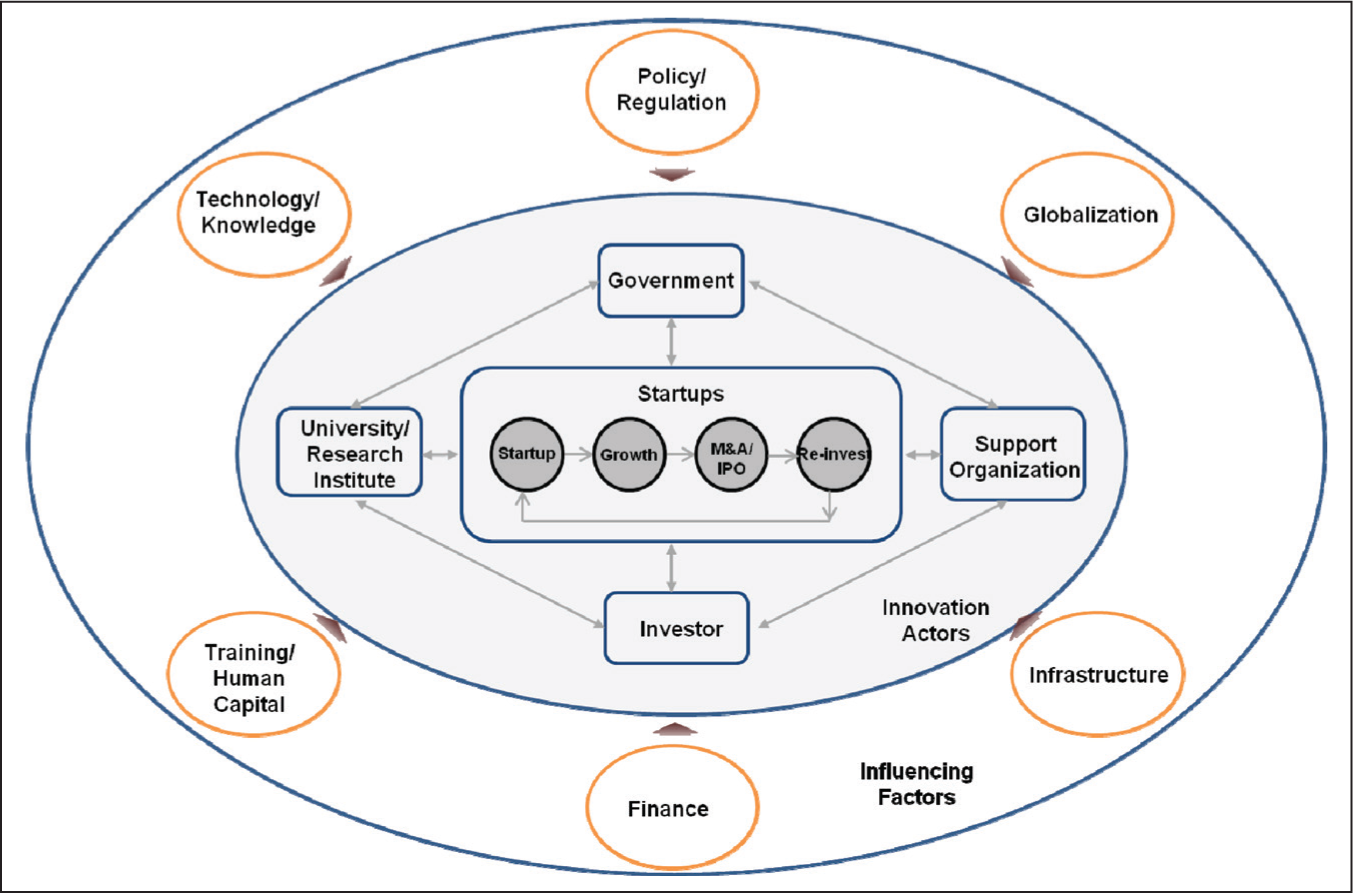
Considering the importance of creating innovation-based entrepreneurship ecosystems in the context of the imminent Fourth Industrial Revolution and the outbreak of the COVID-19 pandemic, this paper introduces the concept of ‘startup innovation ecosystem’. In this study, the ‘SIE’ is regarded as a subset of the GIS and partially overlaps the NIS. We define it as ‘a system of innovation actors and influencing factors and their relationship, affecting innovation-based startup activities and their performance’.
As shown in Figure 1, the SIE comprises innovation actors, key stakeholders of innovative startups, and influencing factors that facilitate or hinder innovation startups. Of various innovation actors, companies play a central role by creating a virtuous cycle of ‘startup, growth, M&A/IPO, and reinvestment’. Startups facilitate startup activities and outcomes through interactions with other innovation actors such as government, universities, research institutes, investors, and supporting organisations. These innovation actors are either facilitated or hindered by various influencing factors, such as policy/regulations, technology/knowledge, training/human capital, finance, infrastructure, and globalisation. This paper adopts an analytical framework presented in Figure 1 to analyse the Korean cases and draw their implications (Figure 1).
Analytical Framework: Startup Innovation Ecosystem.
Current Status of Startup Innovation Ecosystem 1
It is necessary to identify the current status of Korea’s SIE in order to see how the Korean government policy affects the SIE. This chapter provides an overview of the SIE in Korea using the framework provided in the previous chapter. 2
Startups
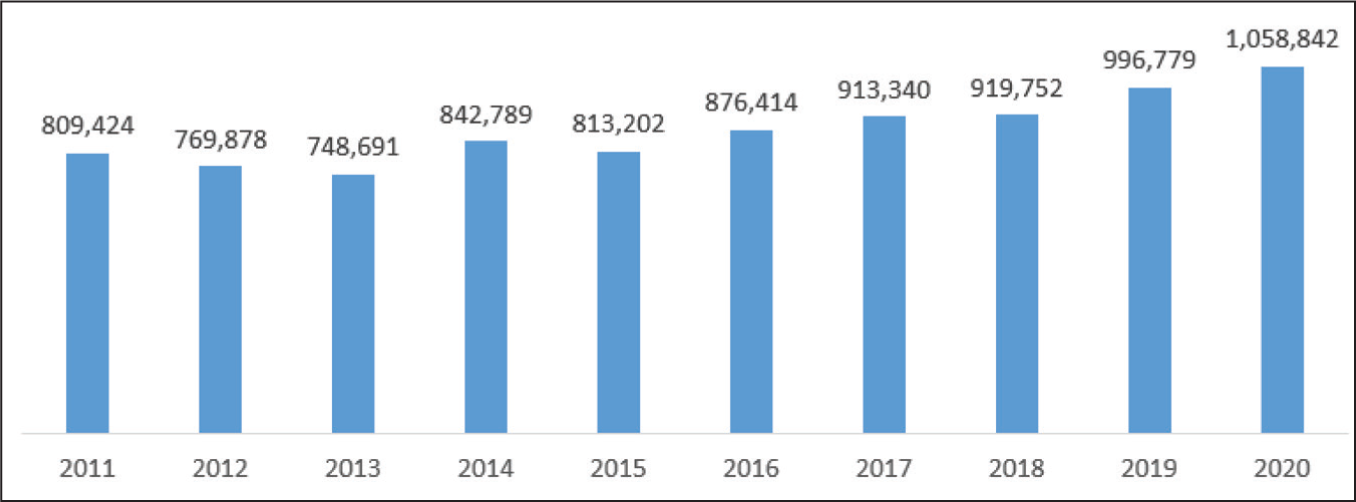
As of 2020, there are 1,058,842 startups in Korea, which greatly increased compared with the year 2010 (809,424 startups) (growth rate: 30.8%). 3 Significantly, in 2021, there were 239,620 technology-based startups, 4 which is 16.9% of all startups (Kim & Kim, 2022). Experts claim that startup activities in Korea have grown substantially because of the active startup support policies of the government and the growth of the private startup-supporting ecosystem. In particular, it is significant that the temporary decrease in startup activities that occurred in 2019–2020 due to COVID-19 was on a clearly recovering trend in 2021. In addition, considering that there is a greater increase in the number of large-sized corporate startups with particular expertise rather than private, small-sized startups and that there is a greater portion of technology-based startups, it can be stated that the startup activities in Korea have gone beyond the quantitative growth stage to enter a period of qualitative growth (Figure 2).
In terms of the growth of startups, the portion of innovation and technology-based startups increased. As a result, the long-term survival rate (5 years) of startups reached 32.1% in 2019, which is a great improvement compared with 27.5% in 2015 (Kim & Kim, 2022). Meanwhile, with the high-growth trend of leading startups and larger investment amounts, the number of unicorn companies, which means non-listed companies with a corporate value of US$1 billion or more, amounted to 12 as of March 2022. 5 This puts Korea in the top 10 list following startup powerhouses including the United States, China, and the United Kingdom and emerging countries with a large market size including India and Brazil (CB Insights, 2022).
Technology/Knowledge
Korea puts 4.2% of its entire GDP into R&D investment and has 461 patents per million people in the country, which is one of the highest ratios in the world (Kim et al., 2021). 6 However, the significant problem is the low level of R&D efficiency and effectiveness of universities and government-supported research institutes. Although Korea’s public R&D projects boast a success rate 7 of almost 96%, the commercialisation success rate is only 48%, which is much lower than those of the United States, the United Kingdom, and Japan, at 69.3%, 70.7%, and 54.1%, respectively. While the number of public technology transfer cases amounted to 9,055 in 2020, showing an annually increasing trend, the startup rates through public technology transfer 8 and technology transfer efficiency 9 were 3.54% and 1.51%, respectively. This is much lower than those of the United States, which are 11.44% and 4.14%, respectively (Kim et al., 2021).
This is partly due to the tendency to focus only on topics that are prone to success in public research. Also, public research institutions develop TRL 10 2–4 for technology maturity, which is much lower than the TRL 7–9 required by private companies. Therefore, for technology from the public sector to be used in the market, it could require additional R&D investment and time. Other reasons for the low efficiency of technology transfer in the public sector include a lack of human capital with expertise in transferring and commercialising technology developed by public research institutions and a lack of incentives for public research institutions to support technology transfer and commercialisation for private companies.
Training/Human Capital
Entrepreneurship and startup education in Korea started in the early 2010s, mostly with universities, when there was great political interest in popularising startups. They started to provide various entrepreneurship and startup programmes. In addition, a range of startup-friendly systems implemented at universities starting in the mid-2010s, including startup leave systems, startup credit systems, and startup scholarships, also contributed to encouraging students to start their own companies (Kim, 2021). As a result, by 2020, there was a total of 15,462 university courses related to startups, with 474,242 students enrolled in the courses. In addition, there were 20 departments related to startups, 65 majors, with 2,600 students (Kim & Kim, 2022).
However, according to a survey, only 18.8% of startup entrepreneurs have received education related to startups (Ministry of SMEs and Startups, 2020), a number which drops to 8.3% when the survey target was the general public (Ministry of SMEs and Startups, 2019). This means that entrepreneurship and startup education are still neither accessible nor universal at the lifelong education stage when people graduate from high school or university. According to a survey by the Korea Entrepreneurship Foundation (KoEF), only 20.6% of students in elementary, middle, or high school in Korea went through entrepreneurship education, which is lower than the 38.1% in Germany, the 35.6% in China, and the 27.1% in the United States (Korea Entrepreneurship Foundation [KoEF], 2015, 2016).
Finance
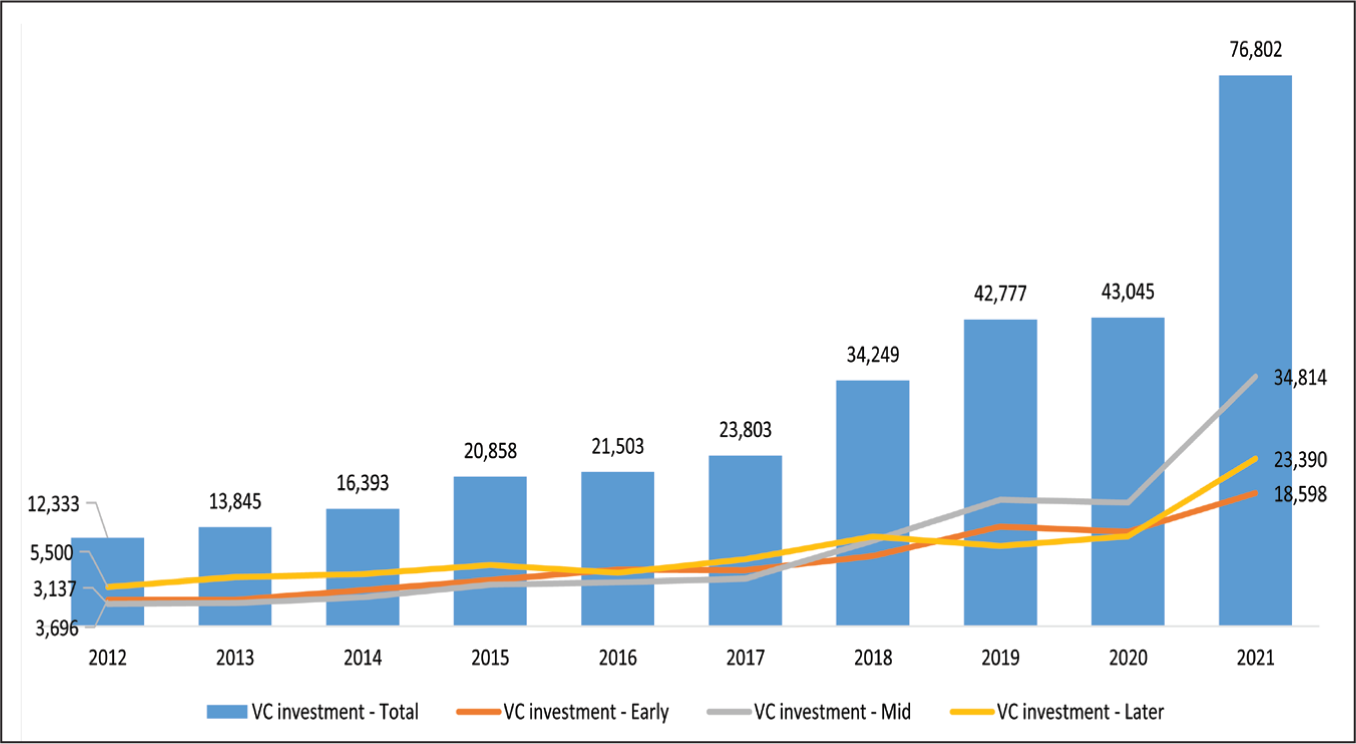
The private venture capital investment in startups in Korea is dramatically increasing year after year. In 2021, 2,438 venture capital companies invested a total of KRW 7.7 trillion, which is 6.2 times greater than that of the year 2012. By company growth stage, it can be observed that the proportion of VC investment in mid-stage startups has increased significantly compared with 10 years ago. Although COVID-19 has caused a slight slump in investments in 2020, investments in non-face-to-face and IT services have started to take place, leading to the highest growth rate in history in 2021. By sector, the proportion of investments in ICT services was quite high (32%) along with the bio and healthcare sector (22%) (Kim & Kim, 2022; Figure 3).
Angel investments, a type of investment that provides early-stage seed funds, amounted to KRW693.3 billion in 2020 and have shown a large growth rate over the past few years. This is due to some policy changes, including a larger income tax deduction for angel investments. Specifically, allowing individual investment associations to form corporate associations under the Venture Investment Promotion Act, expanding the income tax deduction for private investments, and increasing the number of associations for and amount of money in the fund of funds have greatly contributed to the growth of the angel investment ecosystem (Kim & Kim, 2022).
The Korean government’s fund of funds had a large role in the growth of capital investment for startups. The fund of funds provided capital needed by private venture capitals by matching the funds and greatly contributed to lowering the investment risk. However, there are also concerns in the Korean venture capital investment market regarding the great dependency on the fund of funds (Kim & Kim, 2020).
Infrastructure
Startup popularisation policies in Korea, which were officially implemented in the 2010s, led to more startup activities, as well as more startup-supportive ecosystems. Especially, accelerators that provide early-stage startup support services from successful entrepreneurs including investments and incubation have achieved remarkable growth. The Korean government defined startup accelerators under the law and encouraged them to register under the Support for Small and Medium Enterprise Establishment Act. Accordingly, accelerators serve as a substitute and partner of the government to implement various startup support policies. As a result, the number of accelerators registered in the Ministry of SMEs and Startups has continuously increased, reaching 363 as of January 2022 (Kim & Kim, 2022).
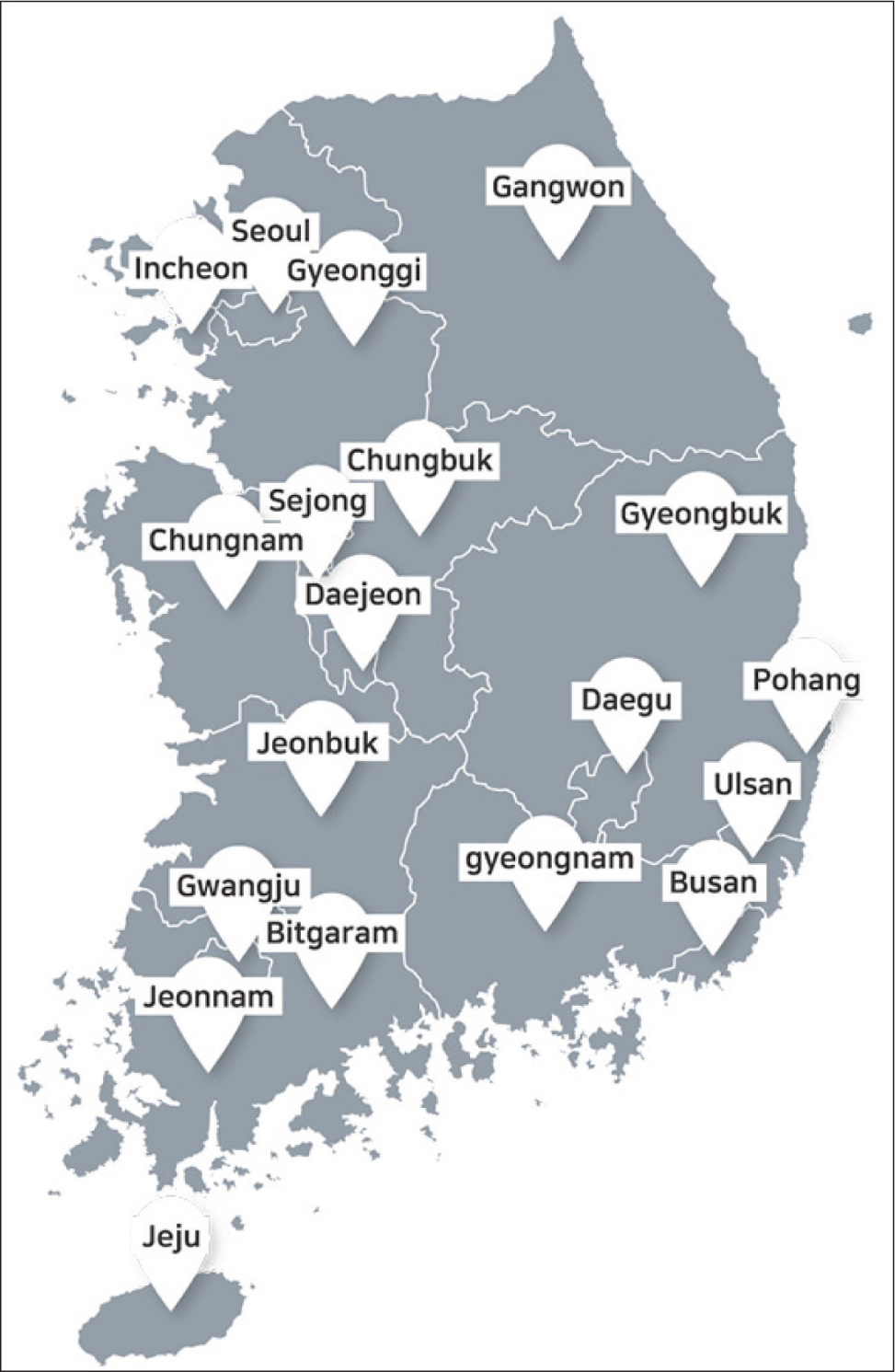
In Korea, startup support hubs were mostly in the Seoul Metropolitan area, including Gangnam, Mapo, Guro of Seoul; Pangyo in Gyeonggi-do; and Songdo in Incheon. Since 2013, when the first private startup ecosystem hub ‘D.CAMP’ was launched by the Banks Foundation for Young Entrepreneurs with private banks, there have been a number of private-led startup hubs including Maru 180 (Asan Nanum Foundation) and Google Campus Seoul. In 2014, the public sector also formed the regional startup support hub Center in 17 cities and provinces around the country to implement the government initiative of a ‘creative economy’. In 2015, the Tech Incubator Program for Startup Korea (TIPS) Town in Seoul was opened, for startups that took part in the TIPS programme run by the Ministry of SMEs and Startups. Now, there are various types of startup support infrastructures including the homes of private accelerators, which are the startup hubs run by large companies or the regional government; makerspaces, which are places for manufacturing and hardware startups and creators; the hubs of social venture companies; and the for-profit co-working space chain such as WeWork (Kim, 2017).
Globalisation
According to the Global Entrepreneurship Monitor (GEM), only 7.0% of Korean startups get more than 25% of their sales from overseas, which is lower than the percentage for startups in France (19.9%), the United Kingdom (18.9%), Germany (18.0%), Japan (17.2%), and the United States (9.5%). 11 According to a survey by the Ministry of SMEs and Startups, only 2.3% of startups in Korea had entered the foreign market (as of 2020). This showed that most Korean startups were doing business in the domestic market (Kim, 2021).
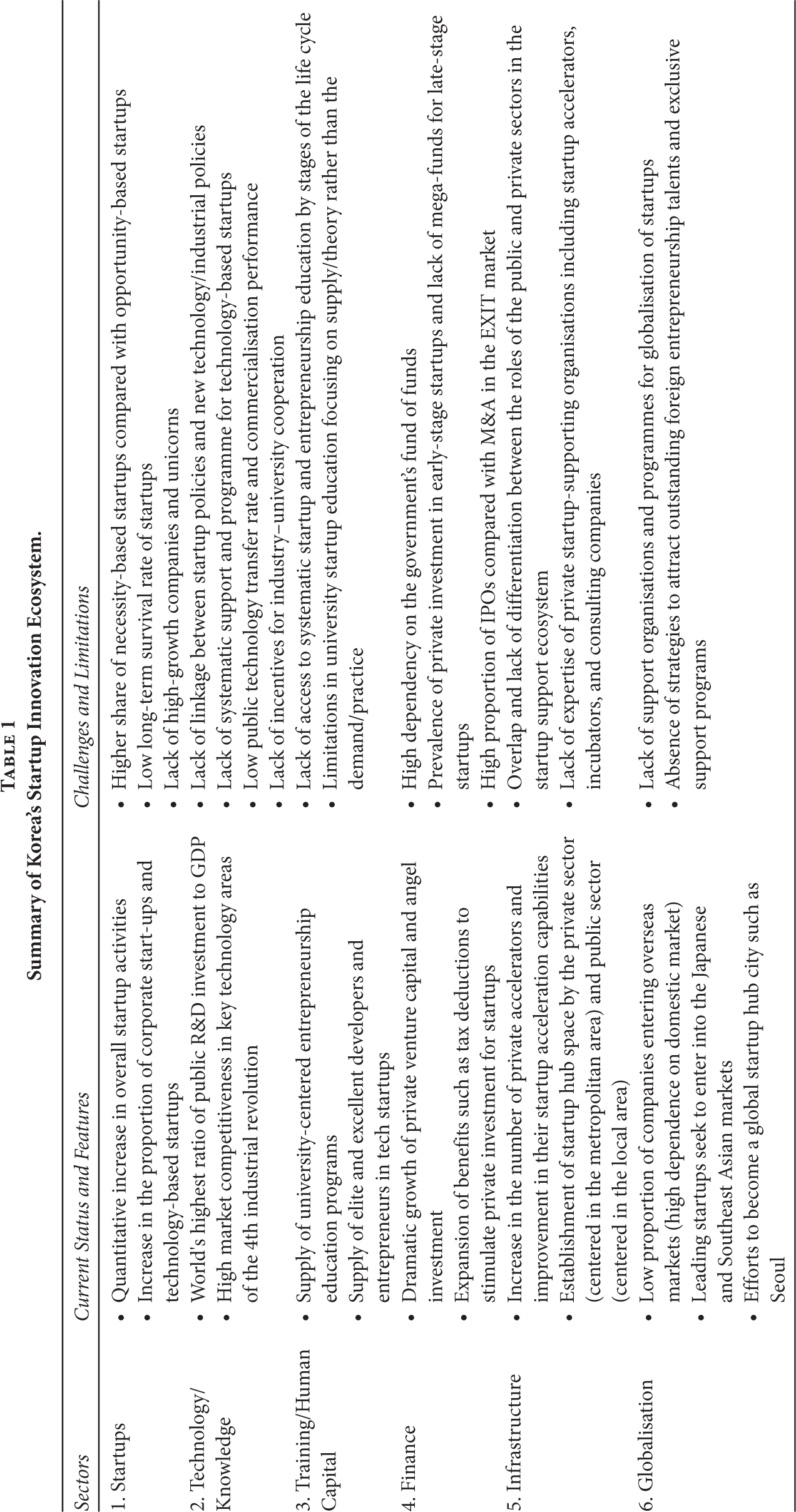
There are not that much foreigners who have founded their own companies in Korea, and it is difficult for them to do so. Although Korea received higher evaluations for its visa programme for foreigners seeking to found companies in Korea (Overall Assistance for Start-up Immigration System [OASIS]) than countries such as the United States, the United Kingdom, and France (Startups Without Borders, 2020), 12 in reality, only approximately 100 foreigners received technology startup visas. That is, there are institutional foundations that enable foreigners to receive startup visas by having an intellectual property, VC investment of KRW100 million or more, 3-year researcher visa (E-3), and completion of the OASIS programme. However, in reality, foreigners find it difficult to receive startup visas, and only a few actually sign up for the visa (Kim, 2021; Table 1).
Summary of Korea’s Startup Innovation Ecosystem.
Evolutionary Process of Startups-related Policies
Policy Development Process 13
Korean government officially started to develop startup-invigorating policies and made efforts to create an effective startup support ecosystem to find new engines for economic growth and job creation in startups alongside existing large companies after the global financial crisis at the end of the first decade of 2000. This was during the Lee Myung-bak, Park Geun-hye, and Moon Jae-in administrations.
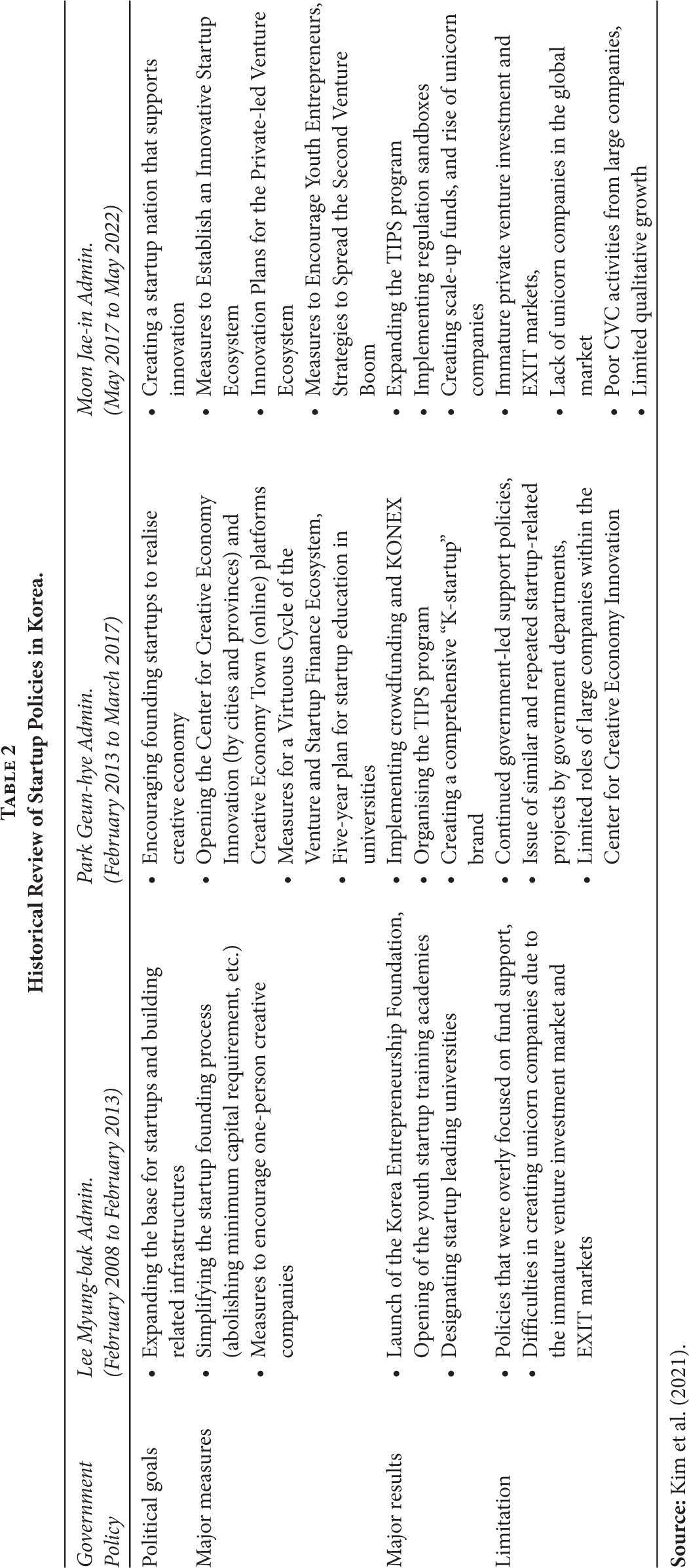
First, the Lee Myung-bak administration (February 2008 to February 2013) marked the start of a creative economy that aimed to focus on startups and entrepreneurship. The focus of startup policies was to enhance the technology innovation capacities of SMEs and startups to create jobs and help the economy grow and to build a startup infrastructure. First, by eliminating the rule on the minimum amount of capital needed to start a company, the administration alleviated the burden of processes and administrative issues of startups. In addition, by improving the joint guarantee system (May 2012), the administration aimed to eliminate the social stigma that came with business failure. Furthermore, by reorganising startup funds that were mostly focused on loan supports to be more focused on the government’s policy funds, it was possible to secure a foundation for encouraging venture investment. In addition, there were other attempts by the government to discover startup talents with startup-leading universities and youth startup training academies.
The Park Geun-hye administration (February 2013 to March 2017) set technology startups as a core priority in startup policies under the national policy goal of achieving a creative economy and made political efforts to encourage the founding of startups. The administration opened the Center for Creative Economy Innovation (CCEI) in 17 metropolitan cities and provinces with private–public cooperation between the government (local government) and large companies (in each region) to serve as an offline creative economy platform focused on systematic support for startups. This led to great advancements in creating a startup ecosystem and securing infrastructure at the national and regional levels. The administration also announced startup-related policies for establishing venture and startup ecosystems, easing regulations to encourage founding startups, encouraging investments, supporting investment finances for SMEs and startups, strengthening the startup support system, building a support system for startups in universities, and creating a fund support ecosystem. In particular, the ‘Measures for a Virtuous Cycle of the Venture and Startup Finance Ecosystem (May 2013)’ aimed to improve various tax benefits and ease regulations to make it easier for startups to attract investment. Furthermore, the launch of the KONEX market in July 2013 and the ‘Comprehensive Measures Against Re-challenge of SMEs’ announced in October 2013 contributed to building a virtuous cycle environment of ‘founding-growth-exit-re-challenge’.
The Moon Jae-in administration (May 2017 to May 2022) had a different political character than the previous two administrations. However, with regard to startup policies, rather than seeking great changes, the administration aimed to realise a greater vision of ‘Startup nation that supports innovation’ based on the existing startup ecosystem and infrastructure. In particular, keeping in line with the great external innovation trend of the Fourth Industrial Revolution, the Moon Jai-in administration made efforts to create an innovative startup-friendly environment in the new technology and industry sectors. To transform the government-led startup support ecosystem into one led by the private sector, the administration emphasised that the government should take an indirect role, by expanding the TIPS programme and implementing regulation sandbox. In addition, to ensure qualitative growth for the Korean startup ecosystem that had successfully grown quantitatively, the administration also focused on not only supporting startups but also supporting scale-ups, by providing funds for scale-ups and strengthening the support for startups to enter the global market. The period of the Moon administration can be described as a transition period from the quantitative growth of the startup (ecosystem) and building startup infrastructure, which was led by the two previous administrations, to the leap of startup (ecosystems) and qualitative growth (Table 2).
Historical Review of Startup Policies in Korea.
Characteristics of Major Policies and Programmes
The startup policies of the three previous administrations show that the government took the leading role in planning and implementing measures to popularise startups and develop the ecosystem; simultaneously, the government put a lot of political thought into building an autonomous startup ecosystem led by the private sector and the region.
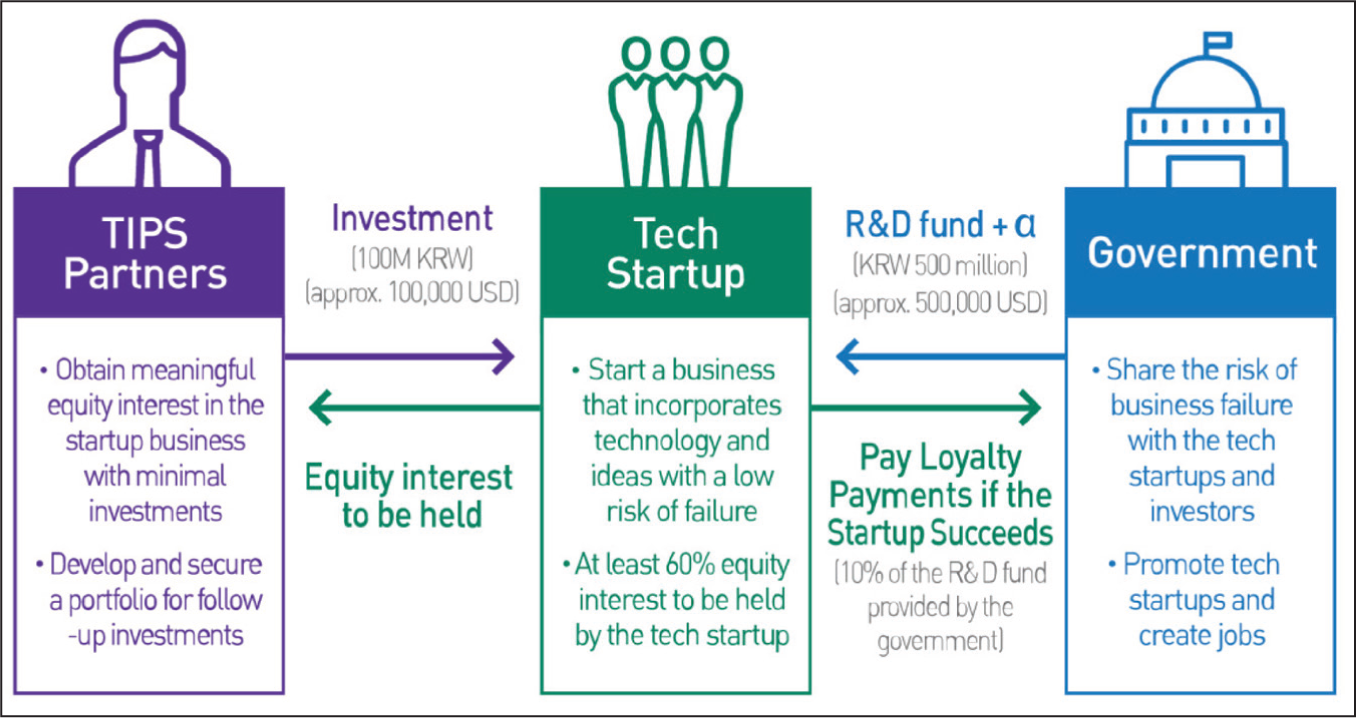
The most successful Korean government policy to build a private–public cooperating startup support ecosystem is the Tech Incubator Program for Startups, also known as TIPS. The core purpose of TIPS is to enable the private sector to identify and nurture high-quality startups with a certain amount of public funding instead of the government, which has limited ability to assess the business potential of startups. When startups that were selected for TIPS receive an investment of KRW100 million from TIPS partners, the startups will also receive a maximum of an additional KRW700 million from the government, including KRW500 million for R&D. Simultaneously, TIPS partners can receive up to 30% of the shares of the startups in accordance with the investment of KRW100 million. For TIPS partners, taking part in the TIPS programme is a great opportunity for them to acquire more shares and investment profit with a relatively small amount of investment. For tech-based startups, it is possible to attract more funds needed for technology development and commercialisation, and it is also possible to reduce potential losses regarding the stock shares of the entrepreneurs compared with the conventional venture investment. 14
A number of innovative startups in Korea and professional investment and startup-accelerating companies started to take part in the TIPS programme, as they were attracted to the effective private-public cooperating funding structure. As a result, TIPS was able to grow as a major startup support programme of the Korean government. As of the end of 2020, with a total of 67 TIPS partner companies, a total of 1,300 startups received a combined KRW287.1 billion in investments. While the government funded a total of KRW702.5 billion for these companies, startups that took part in the TIPS programme were able to attract an additional KRW4.8 trillion in investments, resulting in 6.8 times greater investments from the government, and 16.6 times greater investments from the TIPS partner companies (Figure 4). 15
The second example is the CCEI. A total of 19 CCEIs opened in 17 cities and provinces around the country from 2014. When CCEI was first launched as the base for the creative economy which is a political brand of the Park Geun-hye administration, the government asked large companies to play an active role in the outdated regional innovation startup ecosystem to grow. Therefore, the CCEI was designed to foster startups, with the goal of having large companies enter new businesses and new industries and link their supply chains with startups, by matching the 17 regional governments with large companies. The CCEI provides various startup support services for local entrepreneurs or startups including online and offline mentoring and consulting, commercialisation support, support to enter the market, attracting investment, and entering the global market.
The following Moon Jae-in administration clearly defined the center as a hub for the local startup ecosystem led by the public, emphasising the partnership among various stakeholders in the local startup ecosystem, including companies, universities, research institutions, and other organisations. Since its launch in 2020, the CCEI has supported a total of 9,845 startups by investing a total of KRW1.4 trillion. The startups recorded sales of KRW5.7 trillion and hired a total of 25,000 people (Ministry of SMEs and Startups et al., 2021; Figure 5).
The last example is Born2Global, which was launched in 2013, a public organisation that supports global market entry by innovative tech startups. The role of Born2Global as a professional support organisation for the globalisation of promising startups has also been important. When selecting member companies, Born2Global considers not only the preparedness to enter the global business world but also the product/market fit (PMF), the demand for the product or service in the foreign country, and the basic capabilities of the company. Selected member companies receive support for PMF to make sure their products and services fit the demands of the markets in the global market, as well as management consulting services to enter the global market, such as law, patent, accounting, marketing, and PR. In addition, the center provides technology match-up with development banks and global organisations including the Inter-American Development Bank (IDB), the World Bank (WB), Asia Development Bank (ADB), Africa Development Bank (AfDB), and the Green Climate Fund (GCF), as well as consultation services for multinational joint investments and other forms of joint ventures. Since it was launched, Born2Global has provided 16,000 cases of consultation services for over 1,000 innovative startups, with over 300 partners around the world. 16
Discussion and Conclusion
The startup innovation framework presented in this paper includes several influencing factors such as policy/regulations, technology/knowledge, training/human capital, finance, infrastructure, and globalisation. As technology/knowledge and training/human capital and infrastructure are affected mostly by other S&T policies, the evaluation is done for more appropriate factors such as finance, regulation, and globalisation. It is certain that the number and volume of startups have increased with the support of the Korean government. In this sense, the policy impacts on the whole SIE are discussed.
Startup Influencing Factors
Funds for startups have increased as a whole and seem to have become easier for startups to access. For instance, the volume of new venture capital investment in the year 2021 (KRW7,680.2 billion) is almost doubled compared with that of 2020 (KRW4.304.5 billion) (Korea Venture Capital Association, 2022). There are many reasons for the increase in venture capital investment. The Korean government supported the increase of funds by investing in fund of funds and attracted private money to promote the startups. In addition, the global money supply in the financial market has increased so much in the time of the COVID-19 pandemic and flowed into technology sectors such as non-face-to-face technology, vaccine-related biotechnology, electric vehicles, and other 4.0 industrial technologies. The Korean government has supported the startups to access to venture funds in various ways. In particular, early-stage startups can find a lot of support through programmes like TIPs, though the money supply to startup companies after initial growth period is affected more by the overall global financial market condition.
In general, regulations begin with a good intention to provide public safety and justice. However, laws and regulations often fail to accommodate the development of technology, making it difficult for companies based on new technologies to work—as in the case of Korea. For instance, online health care is a representative example. In health care industry, reliability, safety, stability, and responsibility are considered critically important. Online health care may be less safe than face-to-face treatment. Because of this, online treatment is allowed only for the patients in remote areas such as islands or ships where it is difficult to provide face-to-face medical services. The Korean government specifically allowed online treatment during the COVID-19 pandemic time, and it resulted in many positive effects. However, online health care service is not allowed for the public and is not being enacted in the National Assembly due to opposition from medical doctors claiming that it is not safe enough.
Another example is the sharing economy where excessive safety measures are required for sharing bicycles and kickboards, which leads to increased costs, so it is difficult for startup companies to run the mobility businesses. Similar things are happening in the data-related industry, legal-tax service industry, and so on. In principle, many experts say that the positive regulation system should be changed to the negative regulation system, but legislation is often not possible due to opposition from existing interest groups in the actual legislative process.
Regulations due to unique Korean cultural sentiment and opposition from existing interest groups are making it difficult for new startups to be born. In this regard, the Korean government is not successful in making technology-friendly regulations for new technologies and thus ensuring the growth of startups.
As seen in platform-based technology, if one technology becomes a kind of platform, it can be applied easily in other countries. For this reason, technology-based start-ups need to think and grow at the global level from the beginning. However, in the case of Korea, the competitiveness of the service industry is relatively weak compared with the manufacturing industry, and the global management capabilities of startup personnel are often insufficient. Recently, the global capability of startups seems to be increasing a lot with the government’s support and accumulated learning experiences in the global market.
In the past, most start-up companies focused only on technology and had relatively low management skills. This is because most CEOs are from science and engineering background and put more emphasis on technology than business management. Many startup CEOs lack the communication and marketing skills required in the global market. The lack of management skills has been resolved considerably due to the government’s support policy, such as the TIPs programme, which encouraged startups to secure management capabilities in the early stage. In addition, private venture funds support the development of management skills of startups. Thus, it appears that the government’s policy has helped startups improve their management skills by supporting technology-based startups in the early stage.
There is another important factor for the growth of startups in Korea. Large Korean IT companies such as Naver and Kakao have discovered and fostered startups from the beginning and provided technological and financial support. This trend is not limited to the IT companies. Traditional manufacturing companies like Hyundai Motors and big banks like Shinhan Bank have launched their own programmes to promote in-house startups or collaborate with outside startups. The role of big companies in SIE is growing by providing funds, investors, and in-house startup creators.
Government Policy, NIS and SIE
In Korea, various ministries are involved with startup policy. The main ministry is the Ministry of SMEs and Startups, which makes startup policy and implement various programmes. Other related ministries are the Ministry of Science and ICT, the Ministry of Trade, Industry and Energy, and the Ministry of Education. These ministries have also R&D and human resource programmes and deal with public research institutes and universities. The issue is not the contents of those programmes but whether all the various programmes are coordinated or not in a national innovation context. It cannot be said that all the government policies and programmes are aligned with each other properly in the context of startup promotion at the national level. Rather, it can be said that there are some misfits among various policies, but they are coordinated to some extent during the budgeting process which reflects the policy review and opinions of many experts concerned. In addition, various implementing agencies such as Korea Innovation Foundation, Techno Park, and Creative Economy Innovation Center are evaluated on their roles and functions so that overlapping activities do not occur in the implementation stage of the policies.
As we have discussed in the beginning of the article, there is a unique SIE that can be distinguishable from the traditional NIS. It has some distinguishable characteristics. First, the technological innovation in SIE is quicker; the organisations are younger, smaller, and more willing to take a risk than in traditional NIS. Second, it is to be more open and related to the global innovation environment. For startups to grow, it is somehow necessary to go and succeed in the global market. In addition, foreign venture capitals also affect domestic startups by investing in the shares when they grow.
In this context, SIE can be defined as the set of innovation actors and environment which contribute to the creation, growth, M&A/IPO, and reinvestment of startup and being subordinate to the NIS but expanded to GIS.
In the development of NIS of Korea, the role of government has been significant. The government policy plays a critical role in promoting startups even though the influence of the private sector is growing. First of all, the government’s policy shifted its focus to technology commercialisation and startup, affecting the behaviour of universities and public research institutes. It is worthwhile to note the TIPs programme influenced the beginning of the SIE in Korea. Before government promoted the creation of startups, but many startups did not grow well. It was because they were so much dependent on public support and not capable enough to survive in the real market. Therefore, the government decided to introduce market dynamics, and TIPs programme was born so that private partners could invest in startups and support them with their management knowledge as well.
In particular, with the increasing emphasis on the fourth industrial revolution, a lot of funding for startups has been introduced. For example, the government created BBIG (BIO, BATTERY, INTERNET, and GAME) funds and emphasised the BBIG sector in government R&D projects. Accordingly, companies also increased investment and the number of startups was increased in that field. In addition, many companies made IPOs and technological innovation was activated. In this atmosphere, private venture funds also increased significantly. In other words, in addition to the technology policy for the fourth industry, the capital market policy was combined to accelerate technological innovation in the same field.
However, it is difficult to say that the deregulation policy has been greatly successful. There have been many attempts in fields such as telemedicine, platforms, mobility, data, and the sharing economy, but they have not overcome the opposition of existing stakeholders who are expected to suffer damage due to the introduction of new technologies. Accordingly, some startup companies moved their headquarters overseas and expanded their businesses.
The NIS, the SIE, and the government policy seem to co-evolve while interacting with each other. Government policies have played a positive role so that it can set the direction in the early stage of startup promotion. It is important to see the SIE beyond NIS. For example, technology in the fourth industrial revolution age, which involves rapid economic and social changes, has to persuade existing stakeholders and needs proper regulations. However, these are not topics that have traditionally been dealt with importantly in the NIS. In this respect, the case of Korea shows that the scope of the SIE should be expanded to include a global innovation environment.
This study found that the unique SIE exists and government policies affect the SIE and co-evolve in the time. It is argued that the scope of the SIE should be viewed beyond NIS.
Finally, it is necessary to do further research to see whether the case of Korea can be applied equally to other countries. In addition, it is necessary to study the characteristics of each technology field in detail regarding legal regulations and opposition from stakeholders.
Footnotes
Declaration of conflicting interests
The authors declared no potential conflicts of interest with respect to the research, authorship, and/or publication of this article.
Funding
The authors received no financial support for the research, authorship, and/or publication of this article.