




Abstract
The systematic literature review (SLR) investigates Entrepreneurial Resilience (ER) in the context of recent global disruptions. Drawing on peer-reviewed literature, the study reframes ER as a dynamic capability influenced by psychological resilience, particularly self-efficacy, emotional regulation, and adaptability. It also explores the vital role of digital technologies in facilitating entrepreneurial adaptation and continuity during times of uncertainty. Two key contributions are presented: first, a reconceptualisation of ER that aligns with emerging research on global entrepreneurial demands; and second, a recognition of digitalisation as a core enabler of resilience. Building on these findings, the study introduces the ER model that integrates Emotional Intelligence (EQ), Cultural Intelligence (CQ), and essential entrepreneurial traits. The comprehensive model provides practical strategies for entrepreneurs operating in international and volatile markets. The research positions ER as a critical factor for sustainable growth and competitiveness in today’s rapidly changing global landscape.
Keywords
Entrepreneurial resilience (ER) has long been recognised as a pivotal capability that enables entrepreneurs to navigate and overcome challenges directly linked to their ventures, including market volatility, financial constraints, and operational crises (Fatoki, 2018; Franco et al., 2021; Isichei et al., 2024). Unlike psychological resilience, which focuses on individual recovery from setbacks, ER extends beyond the personal to include strategic, emotional, and behavioural responses that ensure business survival and growth. The proposed study examines ER in light of global disruptions, highlighting its critical role in fostering innovation, competitiveness, and recovery within entrepreneurial ecosystems (Dedehayir et al., 2015).
From a theoretical perspective, ER is closely tied to entrepreneurial traits and behaviours, such as adaptability, perseverance, and innovative problem-solving in response to crises and disruptions (Buang, 2012; Fatoki, 2018).
The entrepreneurial perception of the outcome of an event can be viewed as either within or outside personal control; however, since entrepreneurs typically attribute success or failure solely to themselves and their actions, understanding ER becomes crucial to grasping entrepreneurial drive (Fatoki, 2018). The investigation of resilience within the field of entrepreneurship is central to the evolution of the global economy, enabling entrepreneurs to continually introduce innovation, stimulate competitiveness, and positively impact economic growth and wealth across various countries worldwide. It is crucial to understand how entrepreneurs recover from failures or difficult events, as well as how they cultivate their ability to remain resilient and adapt to unplanned changes with a positive attitude. Gaining a more nuanced understanding of these aspects will enhance entrepreneurial success, not only during the ongoing recovery from the pandemic but also in the future, as it anticipates shifts in enterprise structures (e.g., innovative business models) and market patterns (Abubakar & Mitra, 2017; Fontanet-Pérez et al., 2022; Seetharaman, 2020).
The recent pandemic has significantly heightened the importance of ER, presenting a series of unprecedented challenges that require agility and a long-term vision from business founders. These challenges encompass economic downturns, evident in declining consumer demand, disrupted supply chains, and financing difficulties, and have particularly impacted sectors dependent on in-person interactions, such as retail and hospitality (Fubah & Moos, 2022; Thukral, 2021). At the same time, the rapid switch to remote work has necessitated the swift adoption of digital tools, highlighting the importance of productive virtual team management (Chaturvedi & Karri, 2022). Confronted with rising uncertainty, entrepreneurs have pursued novel responses, including digitalisation and pivots to new business models, alongside ensuring health and safety measures amid evolving consumer preferences and restricted access to capital (Sharma & Rautela, 2022; Stephan et al., 2023). The pandemic’s toll on mental well-being among entrepreneurs further underscores the centrality of resilience in turbulent periods (Harima, 2022; Stephan, 2018). Moreover, COVID-19 has prompted a re-evaluation of general retrenchment strategies to help businesses navigate crisis-induced challenges, marking the start of a transformative era shaped by significant technological, social, and geopolitical shifts spurred by rising protectionism that are redefining global commerce (Bai & Kao, 2022; Charpin et al., 2024; Scharbert et al., 2024; Zighan et al., 2022). Traditional notions of ER have grown obsolete in the volatile, uncertain, complex, and ambiguous (VUCA) environment, necessitating a new set of capabilities. This is vital for first-time entrepreneurs and experienced founders who must adjust long-standing practices to the disruptive VUCA landscape (Murugan et al., 2020).
The study highlights the need for an evolved concept of ER amid the multifaceted and shifting challenges of today’s global environment. Unlike earlier obstacles that might have been mitigated through conventional operational tactics, contemporary problems demand a broader perspective that accounts for the interwoven complexities of modern economies. The primary goal is to investigate how entrepreneurs cultivate and refine ER when confronted with these novel global changes, clarifying why resilience is indispensable in the current era. The study also explores how today’s environment can act both as a source of obstacles and opportunities, influencing not only entrepreneurs’ daily operations but also the adaptive strategies needed to address and overcome emerging barriers. Ultimately, it illustrates how resilience enables entrepreneurs not only to endure a complex global market but also to prosper amid ever-accelerating change. A systematic literature review (SLR) underpins the current study, addressing two central research questions. These questions aim to reinterpret ER in relation to high-impact challenges (Abd Hamid et al., 2023; Awotoye & Singh, 2017) and to investigate workable resilience strategies that enable entrepreneurs to flourish in today’s polarised environment.
Findings from the current investigation will reshape the notion of ER and introduce an innovative ER model based on four steps designed to enhance ER. By integrating principles of Emotional Intelligence (EQ) and Cultural Intelligence (CQ), this model establishes a comprehensive conceptual structure that equips entrepreneurs to adapt and excel amid ongoing global shifts.
Theoretical Background
Addressing the ER Research Gap
The current research delves into ER at an individual level, distinctly from general individual resilience. This focus is essential given the unique and recent high-impact challenges entrepreneurs face. Challenges such as navigating volatile economies, restricted access to capital, fierce competition, intellectual property risks, and changing political climates are more pronounced now (Abd Hamid et al., 2023; Awotoye & Singh, 2017). Additionally, it is emphasised that the increasing need for entrepreneurs to adeptly work across borders at the social level in response to the recent geopolitical tensions that have contributed to a more polarised world. This aspect of ER underscores the entrepreneur’s ability to navigate and adapt to diverse cultural and political landscapes, which is critical in the current global business environment. The need to reinforce the ER concept from this perspective is also discussed by Abd Hamid et al. (2023), referring to the ‘underdog dynamic’ in entrepreneurship. This refers to the challenging personal circumstances that entrepreneurs often face, including economic, sociocultural, cognitive, and physical/emotional factors, which are instrumental in the development of effective entrepreneurial skills (Pennetta, Anglani, & Mathews, 2024), as also noted by Miller and Le Breton-Miller (2017) and Yu et al. (2022). This dynamic plays a significant role in shaping the resilience and adaptability of entrepreneurs in today’s complex and demanding business world.
The current entrepreneurship literature predominantly centres on dissecting the individual traits of entrepreneurs, as explored in various studies (Anwar et al., 2021; Awwad & Al-Aseer, 2021; Busenitz & Barney, 1997; Carland et al., 1984; Cavada et al., 2017; Gonzalez-Perez et al., 2018; Hwang et al., 2020; Marques et al., 2019; Mayanja et al., 2024). This line of inquiry delves into understanding entrepreneurs as distinct individuals, characterised by unique attitudes and diverging significantly from other groups, such as managers or the general workforce (Pennetta, Anglani, Reaiche, et al., 2024). However, this focus on individual traits has its limitations. It falls short of effectively capturing the real-world experiences and specific behaviours of entrepreneurs. There is a discernible gap in the literature where the nuanced complexities of entrepreneurial experiences, especially in relation to the evolving global context, remain insufficiently explored and understood. This highlights a need for research that goes beyond mere trait analysis to encompass the dynamic and situational aspects of entrepreneurial behaviour. An advantage of this approach is acknowledging that entrepreneurs are also different from others within the same group, so studying them individually has multiple advantages. Other approaches within the entrepreneurial field have considered the psychological processes of entrepreneurs (Gartner, 1988; Mitchell et al., 2002; Shaver & Scott, 1992) and entrepreneurial cognition theories (Baron, 1998; Baron & Ward, 2004; Mitchell et al., 2002). Mitchell et al. (2002) aimed to answer the question of how entrepreneurs think. Like other scholars (Sánchez et al., 2011), they covered a broad range of issues, such as scripts, self-efficacy, heuristics and cognitive styles. While psychological resilience focuses on individual recovery from adversity, ER encompasses a broader set of capabilities. ER integrates psychological adaptability with strategic and emotional skills that enable entrepreneurs to innovate, pivot, and sustain their businesses in response to high-impact challenges. This broader scope makes ER particularly relevant to the complexities of today’s global business environment.
As outlined above, the significance of ER in entrepreneurship can be rearticulated more effectively through three key aspects. First, ER uncovers the cognitive mechanisms that enable entrepreneurs to confront and navigate challenges, demonstrating the mental agility and adaptability crucial for entrepreneurial success. Second, it identifies the underlying factors differentiating successful firms from those that falter, providing insights into resilience strategies that allow businesses to endure and thrive despite obstacles. Finally, research confirms that psychological resilience is not innate but can be developed, suggesting that ER, as a core component of entrepreneurial success, can be systematically cultivated and taught to prepare future entrepreneurs for the demands of an evolving business landscape.
Research Objectives
The current study seeks to reconceptualise ER considering the rapidly shifting global business landscape. Recognising that resilience is closely tied to the broader skill set of entrepreneurs—skills that are vital for establishing and sustaining enterprises (Lazear, 2004)—this work posits that resilience now constitutes far more than a mere competency (Pennetta, Anglani, Reaiche, et al., 2024); it has become a fundamental requirement. Such a perspective is especially pertinent given the mounting complexities of international business. Entrepreneurs must cultivate an ability to adapt to ongoing change, aligning with Salisu et al. (2020), who stress that adaptability stands as a core component of resilience. Furthermore, Santos et al. (2023) highlight the integral role of digital technologies in promoting ER. By enabling firms to adapt, maintain operations, and explore opportunities for innovation and competitive advantage, digital infrastructure and its broader societal impact serve as crucial drivers of resilience in today’s volatile, technology-oriented market environment.
In examining resilience within the entrepreneurship domain, the ongoing study focuses on how entrepreneurs respond to high-impact challenges and global disruptions, notably the COVID-19 pandemic. Specifically, it investigates the barriers encountered and strategies employed by entrepreneurs when confronted with these disruptions, with particular emphasis on the pandemic’s transformative consequences. Adopting an SLR (Moher et al., 2009, 2015), the research centres on key concepts that inform a reconceptualisation of ER. Through this lens, a dynamic, multi-stage model is proposed, aimed at equipping entrepreneurs to tackle future high-impact challenges effectively (Alshebami, 2023; Awotoye & Singh, 2017; Bernard & Barbosa, 2016; Castro & Zermeño, 2020; Chhatwani et al., 2022; Fernandes & Franco, 2021; Khurana et al., 2022; Nyikos et al., 2021; Pyrkosz-Pacyna et al., 2021; Yu et al., 2022; Zhao & Wibowo, 2021; Zighan et al., 2022).
Built around three central themes, this SLR proposes a new perspective on ER. The suggested model is intended to be adaptable, applicable to various stages of business development, and oriented toward enabling entrepreneurs to navigate forthcoming disruptions. Two guiding questions shape this research:
How can ER be redefined in times of global disruptions? How can entrepreneurs develop and strengthen their resilience?
By closely examining entrepreneurial responses to recent global challenges, the study generates insights into the role of resilience-focused strategies. These findings will inform the design of a model to assist entrepreneurs in confronting future disruptions and enrich ongoing conversations about how entrepreneurship drives economic recovery and growth.
Method
The analysis adopts an SLR as its principal methodological framework, leveraging the SLR’s meticulous procedures, dependability, and replicability to collate scholarly insights on entrepreneurship. In alignment with Moher et al. (2009), the SLR systematically locates, evaluates, and synthesises relevant research based on predefined criteria, thereby gathering evidence that sheds light on the evolving dimensions of ER (Page et al., 2021; Shamseer et al., 2015).
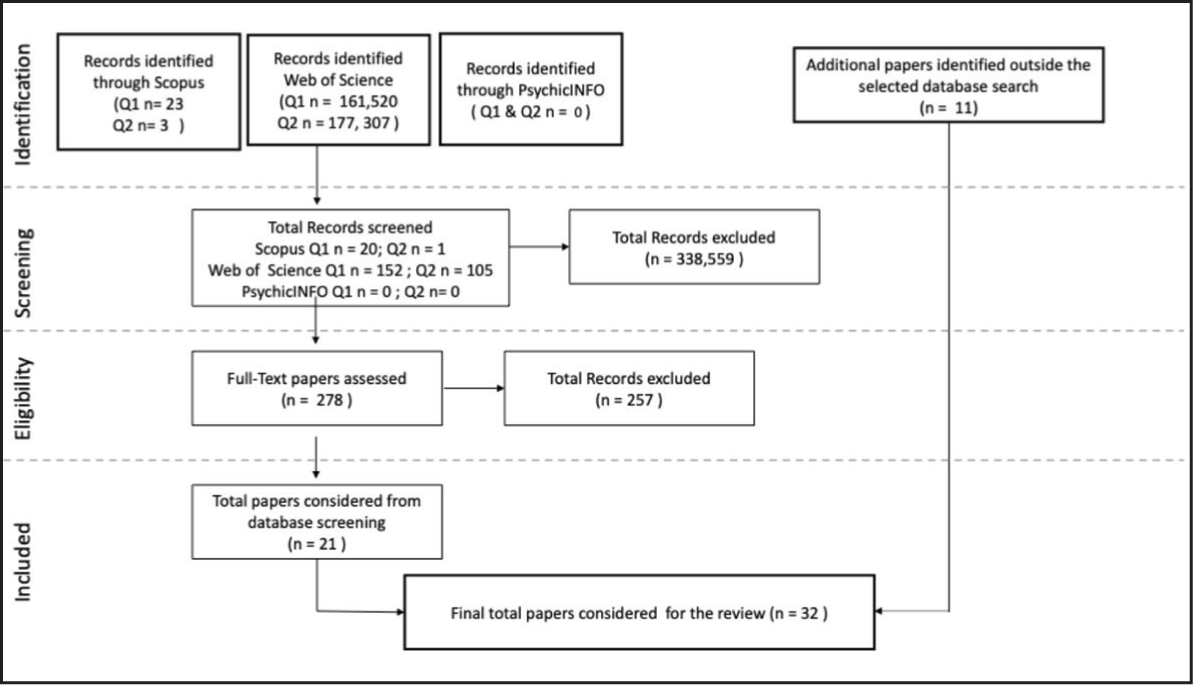
By prioritising transparency and reproducibility, this approach minimises selection bias and examines the significant effects of the pandemic on entrepreneurship, particularly new challenges and adaptive survival tactics. To enhance coherence and precision throughout the review, the Preferred Reporting Items for Systematic Reviews and Meta-Analysis (PRISMA) framework (Moher et al., 2015) was implemented. Its checklist (Figure 1) and flowchart guided each stage of documentation, ensuring a comprehensive aggregation of findings (Page et al., 2021).
PRISMA Flowchart to Guide the Literature Selection Process.
Additionally, the review integrates exemplary entrepreneurship studies (Ahmed et al., 2022; Stephan, 2018) and takes into account current methodological recommendations (Shepherd & Wiklund, 2020; Wee & Banister, 2016), thereby reinforcing its credibility and contributing a robust foundation for understanding ER within contemporary global contexts.
Through a preliminary analysis of various databases, the most relevant databases for this research purpose were identified, and specific research terms were chosen to explore ER during the COVID-19 pandemic, as well as challenges, strategies, and barriers. The databases identified for the investigation were Scopus and Web of Science, two of the most comprehensive and well-established databases used for business and social studies. The PsychINFO database was also considered one of the most trusted indexes of psychological science, containing more than five million interdisciplinary records covering a full spectrum of behavioural and social sciences, was also considered.
The search included two queries on Scopus and Web of Science as follows:
RQ1 ‘Entrepreneur* resilien*’ and ‘Covid-19’ or ‘Global Disruptions’ or ‘Challenges’ RQ2 ‘Entrepreneur* barrier*’ or ‘Entrepreneur* strateg*’ or ‘Covid-19’ or ‘Covid Pandemic’ and ‘Pandemic’
Multiple queries were also tested as search queries and terms in the PsychINFO database using the same keywords, but no relevant articles were identified for this research purpose. The terms applied in these searches included variations of ‘entrepreneurial resilience,’ ‘barriers,’ ‘strategies,’ and contextual keywords such as ‘COVID-19,’ ‘pandemic,’ ‘global disruptions,’ and ‘challenges.’ Despite using these combinations, the search yielded no additional studies that aligned with the scope and criteria of the review.
The considered interval range covers the last five years, specifically the period from January 2018 up to December 2024, which justifies using the SLR to investigate specific entrepreneurial barriers, challenges, and opportunities as catalysts for investigating ER. The keywords selected for the query had to be present in the title of the research article. The database allowed us to identify a total of 338,837 publications, which were subsequently filtered through automatic filters by title, research areas (Psychology, Business Economics, Sociology, Behavioural Sciences, and Cultural Studies) and the article as document type only. Only English language articles were considered; therefore, 338,559 records were excluded. This automatic filtering narrowed down the results to 278 eligible articles.
In the second step, a full-text analysis was performed to verify their eligibility based on the selection criteria based on a manual filtering process matching the following inclusion criteria: (a) relevance to the concept of ER, (b) focus on challenges and opportunities that arose specifically due to the COVID-19 pandemic, (c) examination of strategies implemented by entrepreneurs at the company level, and (d) publication in peer-reviewed journals only.
These criteria focus on articles that provide definitions of ER, discuss it in various entrepreneurial contexts, or identify relationships between resilience and other entrepreneurial abilities, including strategies for survival and potential barriers. This manual filtering excluded 257 out of 278 articles, narrowing the selection down to 21 eligible research articles for the proposed research purpose. At this stage, the number was further reduced, resulting in a remaining sample of 21 publications. Specifically, in Scopus, the first query (RQ1) narrowed the initial 20 potential research works down to eight final journal articles; with the second query (RQ2), only one eligible article was obtained. From the Web of Science database, RQ1 yielded only two eligible articles from an initial set of 152, while RQ2 resulted in the selection of 11 journal articles from 105.
An additional 11 articles were retrieved from external databases and included in the sample for 32 final articles. All the steps mentioned above follow the updated version of the PRISMA guidelines (Page et al., 2021), which consists of a 27-item checklist.
To minimise bias during the manual selection phase, a second author participated in the replication of the RQs through the rigorous selection process, as suggested by Moher et al. (2015).
Analysis and Results
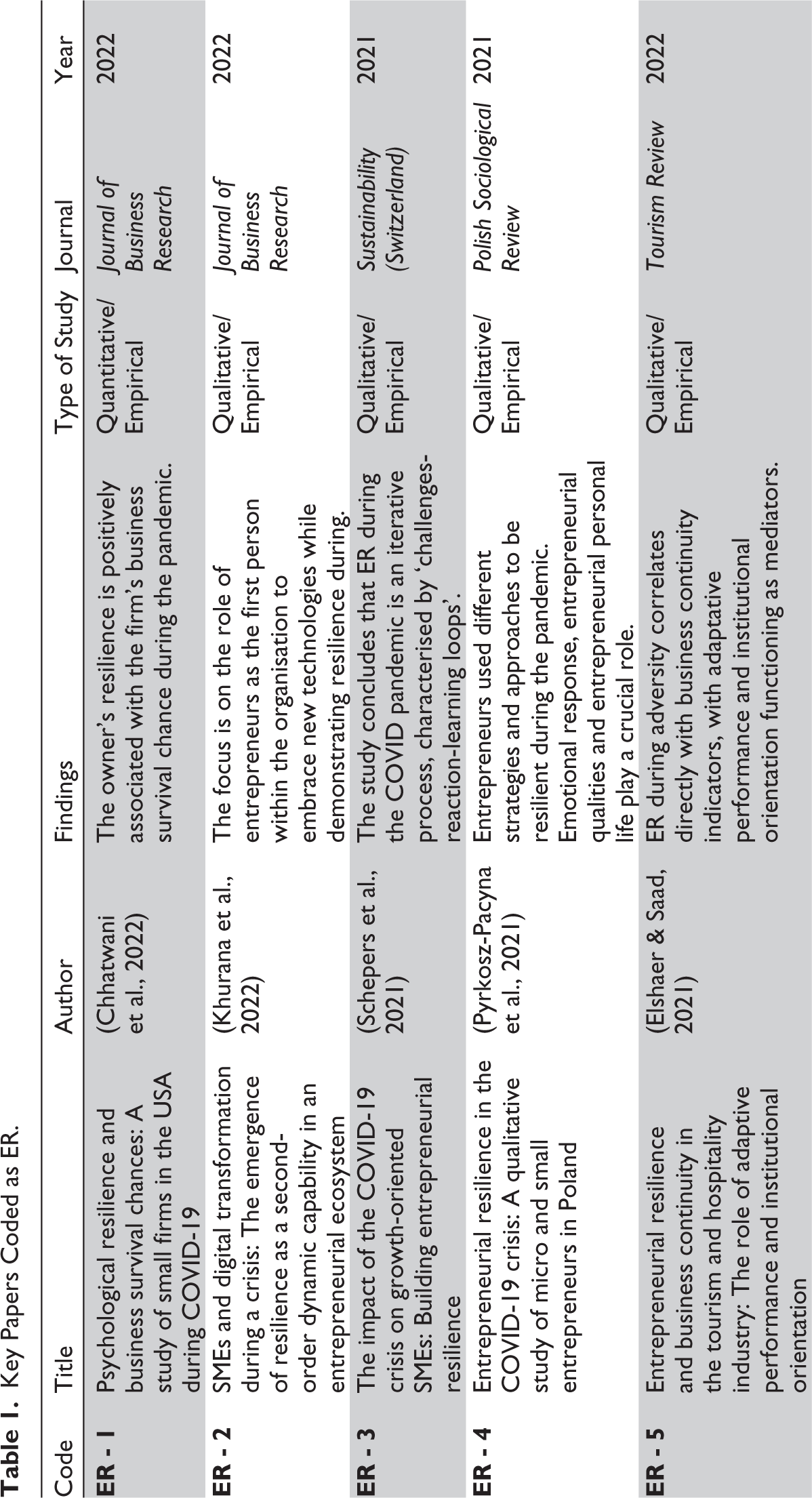
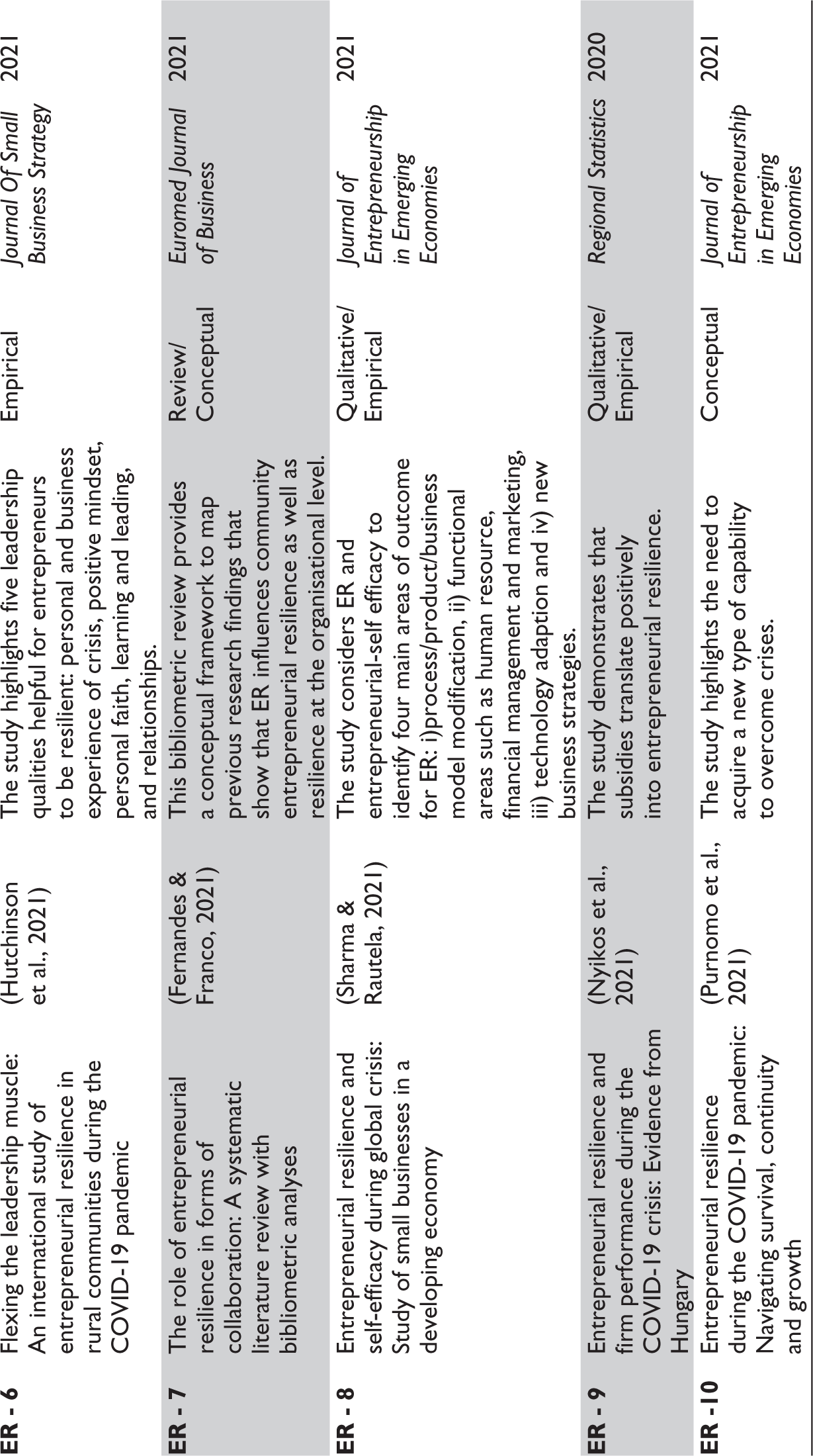
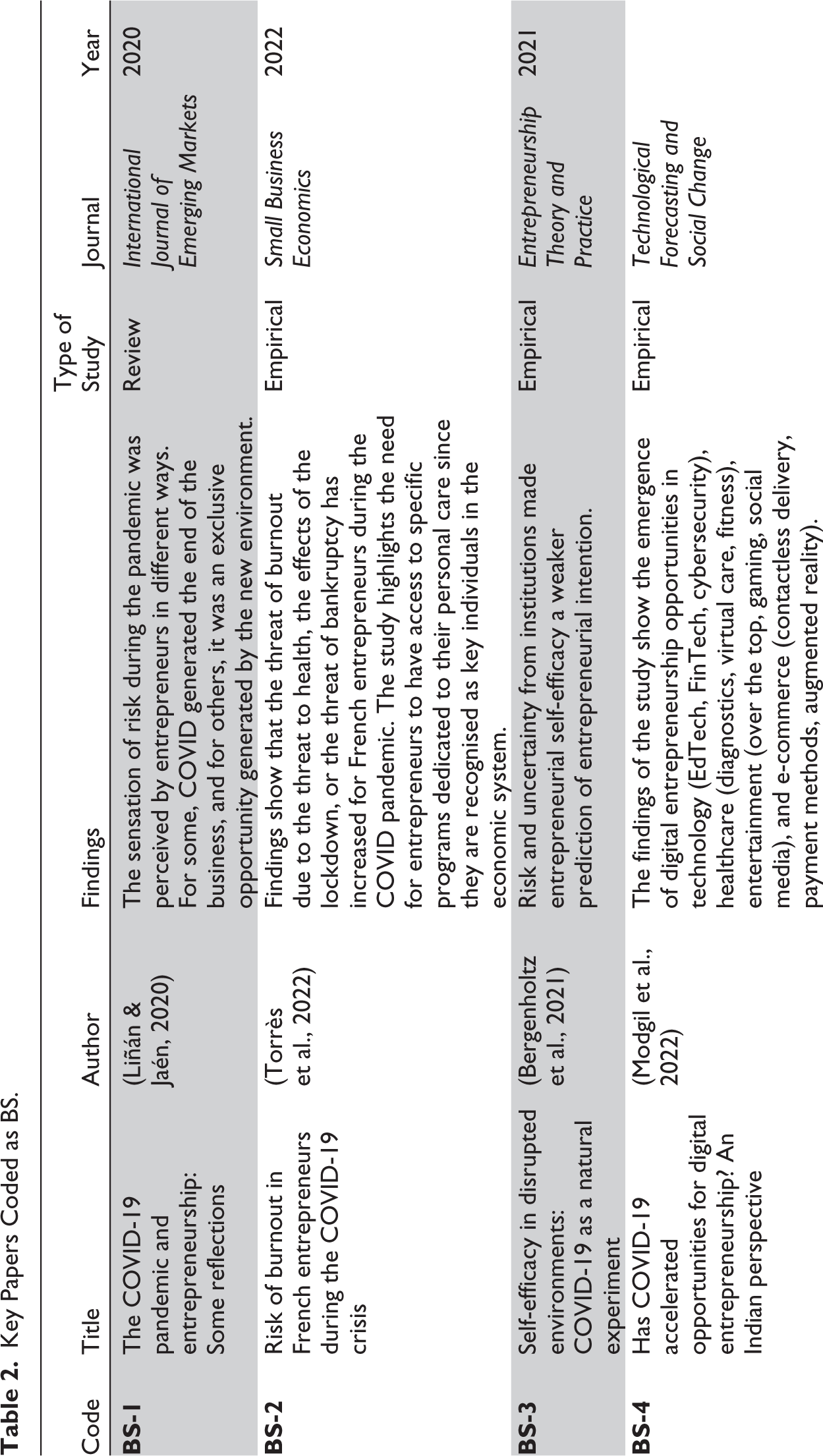
The selected articles were coded as ER for those discussing ER and BS for those examining barriers and strategies generated by the pandemic that affected entrepreneurial activities over the last few years. Table 1 presents the most relevant journal articles obtained from the selected databases coded as ER, Table 2 presents those coded as BS, and Table 3 presents the additional articles obtained through the external search.
Key Papers Coded as ER.
Key Papers Coded as BS.
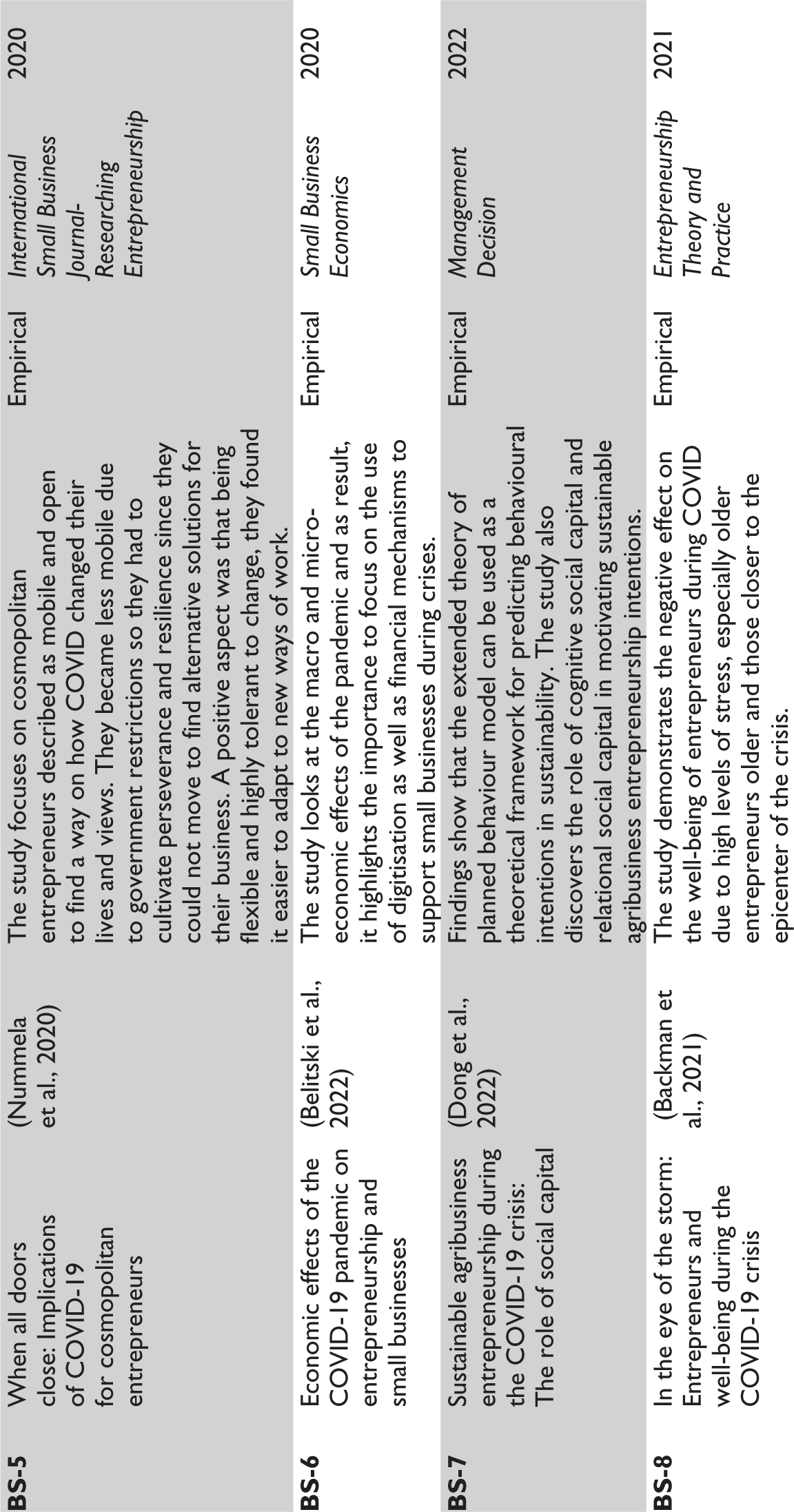
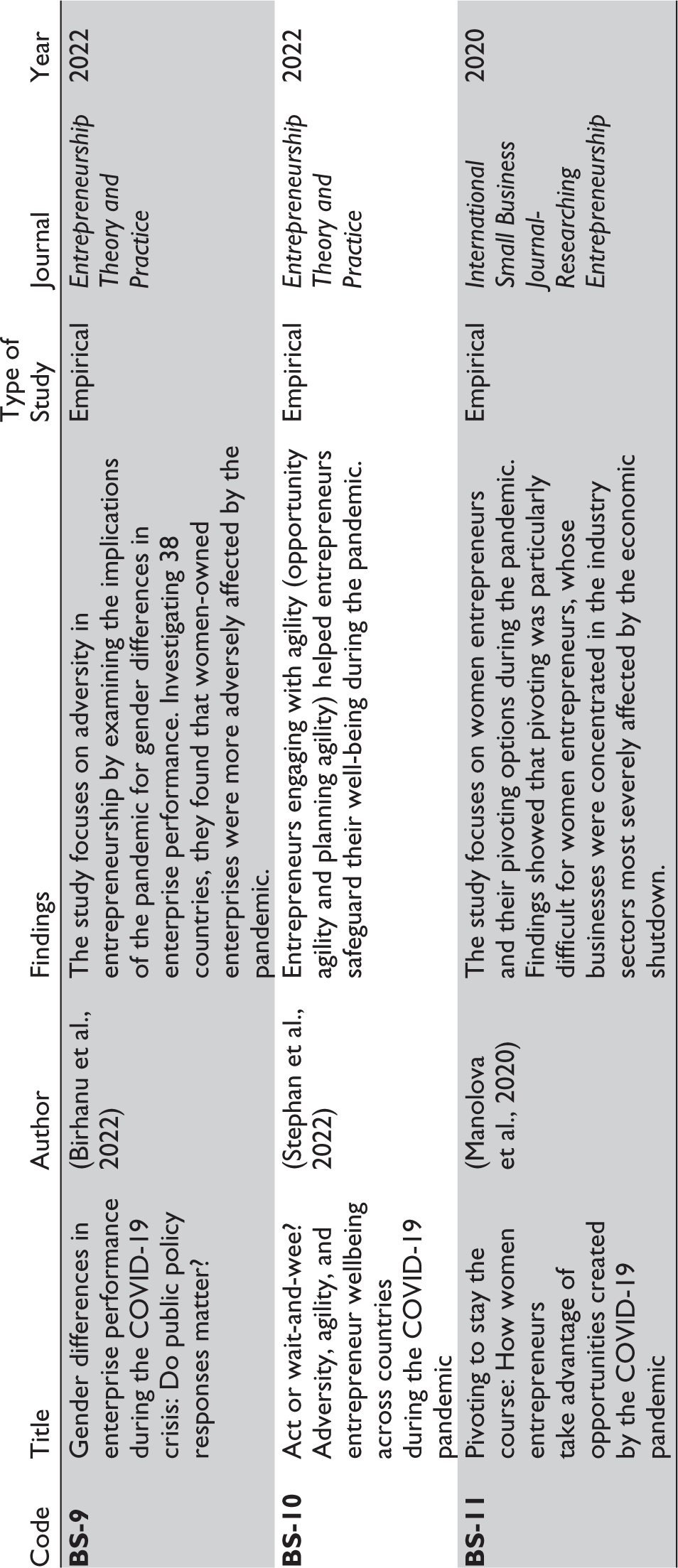
Additional Key Papers Identified Through External Databases Coded as ER and BS.
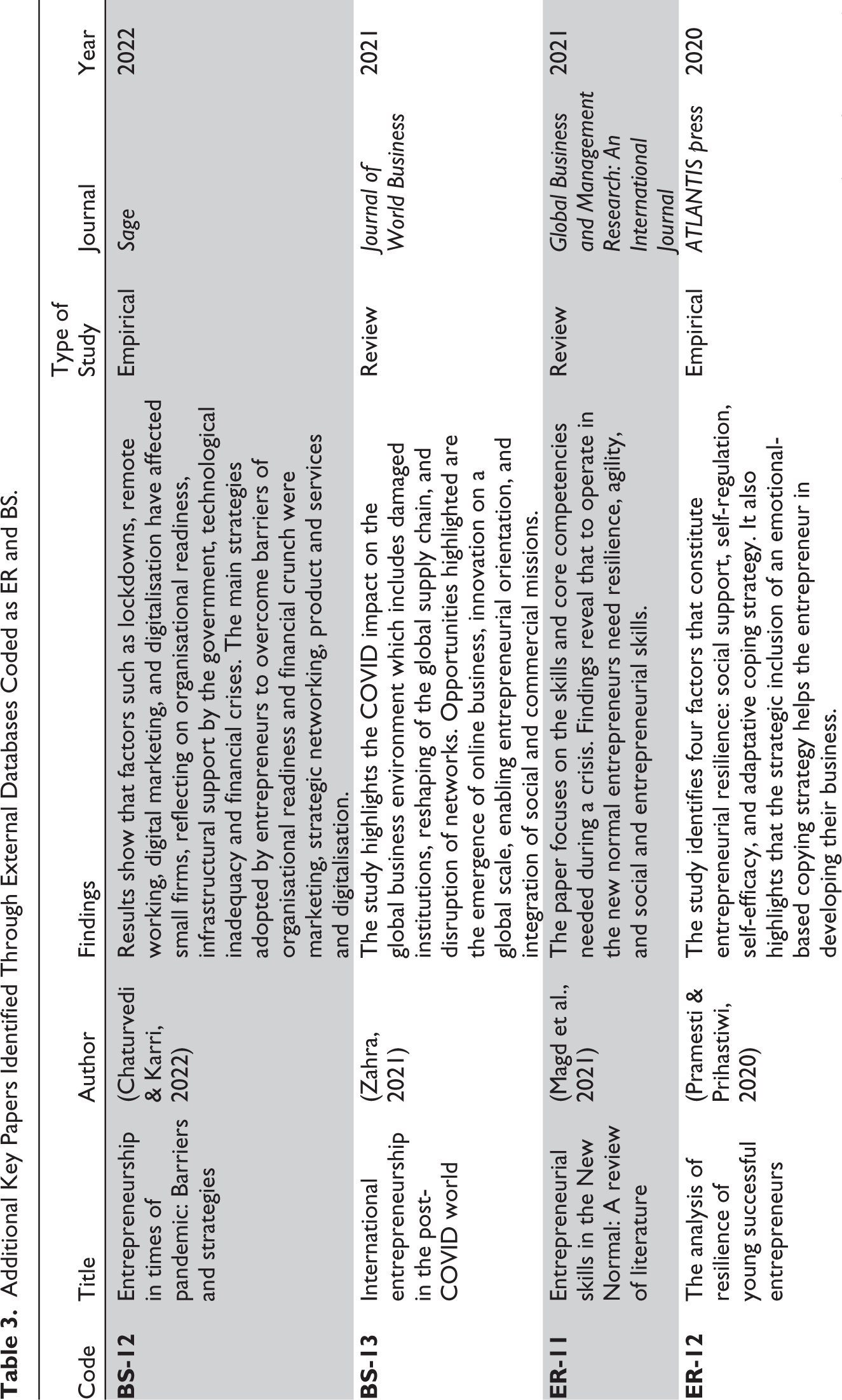
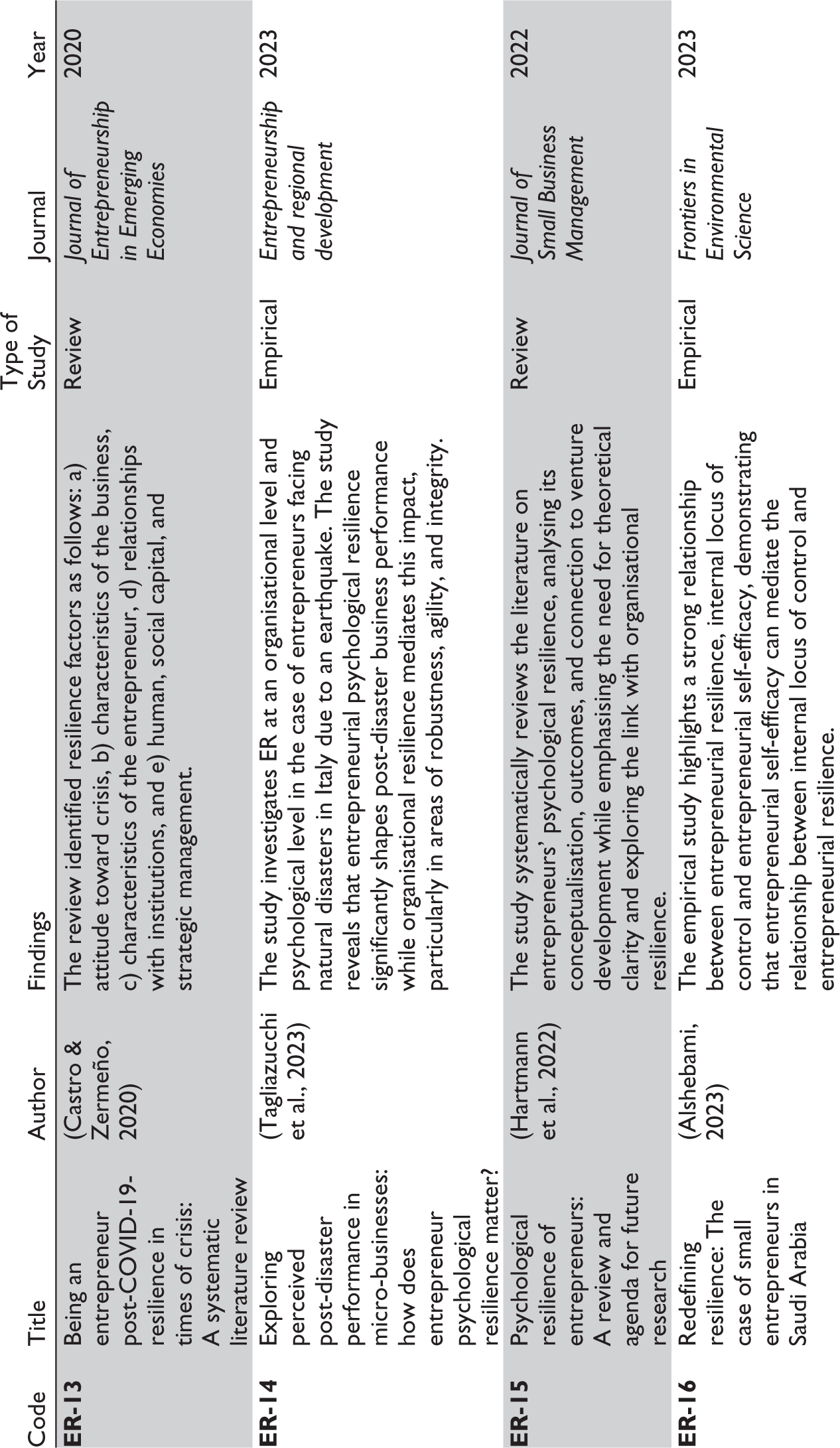
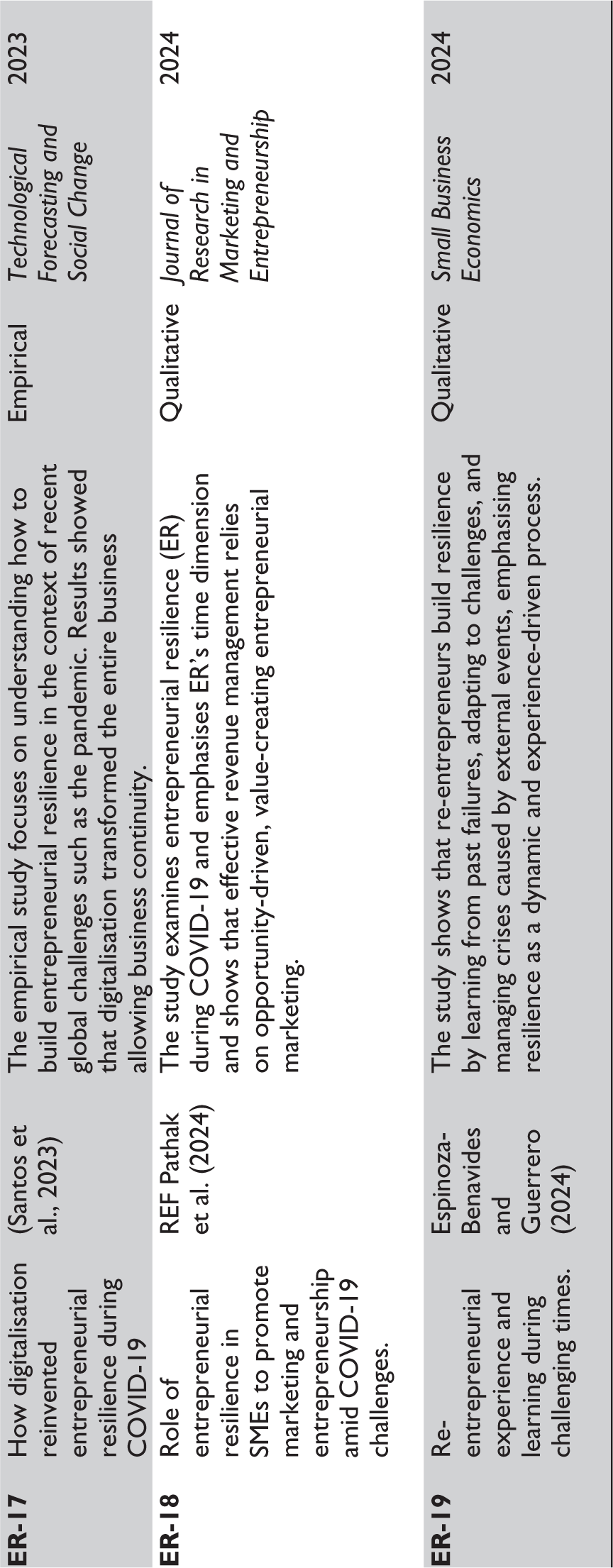
In conclusion, a total of 19 articles were coded as ER, and 13 were coded as BS.
What emerges from the review of the 19 articles on ER during the pandemic is that psychological resilience (Chhatwani et al., 2022) provides a broad repertoire of resources helpful for coping with depression and increasing the chances of business survival. Since social support and social contacts help to minimise depression (Cole & Milstead, 1989), policymakers should consider offering not only financial support but also socio-psychological resources. Pyrkosz-Pacyna et al. (2021) identified three aspects of the entrepreneurial response during COVID-19: the emotional state of entrepreneurs during the crisis, the manifested entrepreneurial qualities that are beneficial during a crisis, and how the crisis itself impacted the entrepreneurs’ personal lives. Schepers et al. (2021) acknowledged that building ER requires the need to refer to specific threats, but also the ability to look beyond perceived challenges. Their study describes ER as an iterative process, characterised by the ‘challenges-reaction-learning-loop’ that can help develop dynamic capabilities (Pennetta, Anglani, Reaiche, et al., 2024) to survive the global pandemic. Fernandes and Franco (2021) looked at ER as a form of collaboration, highlighting its impact on the whole organisation, in line with Elshaer and Saad’s (2021) study, which demonstrated how ER directly correlates with business continuity. Contextualising ER during the pandemic, Purnomo et al. (2021) highlighted the need to acquire a new capability to leverage emerging opportunities. The above-cited studies are all in line with Khurana et al. (2022) in which the entrepreneur is identified as the first person in charge of managing change, for example, through different uses of digital technologies (Anglani et al., 2023) when new business models were required to overcome the global crises.
The change in business model was also discussed by Hutchinson et al. (2021), where a few business practices have been suggested to exercise ER. These include personal and business experiences of crisis, a positive mindset, personal faith, learning and leading and relationships. Sharma and Rautela (2021) discussed the concept of resilience and self-efficacy as vital for handling business in times of crisis. They developed a model of the consequences of ER, which includes (a) modification of products, processes and business models, as well as (b) changes in business functional areas of human resources, finance and marketing where digital marketing becomes essential to service bringing change in the level of (c) technology adoption, and (d) identification of new strategies for the long and short term, including changes in procedures adopted. Nyikos et al. (2021) focused on the evaluation of ER in Hungarian companies with a specific focus on how subsidies helped entrepreneurs to be resilient in times of crisis. Magd et al. (2021) identified the skills and competencies needed during a crisis to demonstrate enough resilience to survive in the new normal era, as well as other abilities which include agility, social and entrepreneurial. Pramesti and Prihastiwi (2020) identified four factors that constitute ER, including social support, self-efficacy, self-regulation, and an adaptive and coping strategy. Castro and Zermeño (2020) identified resilience factors that contemplate the types of crises, together with the characteristics of the business and the specific entrepreneur. The study also considers the value of relationships and institutions, social and human capital. Two recent 2024 publications (Espinoza-Benavides & Guerrero, 2024; Pathak et al., 2024), ER-18 and ER-19, offer distinct provide perspectives on ER. ER-18 examines ER as a strategic tool for immediate crisis management, emphasising entrepreneurial marketing and time-based strategies during the COVID-19 pandemic. Conversely, ER-19 views ER as a dynamic, experience-driven process, highlighting how re-entrepreneurs learn from past failures and adapt to external crises. These studies present complementary approaches, with ER-18 focusing on short-term tactics and ER-19 emphasising long-term adaptability and growth.
The pertinent studies contribute nuanced perspectives on ER, thereby elucidating its pivotal role in confronting and mitigating adversities faced by entrepreneurs. Tagliazucchi et al. (2023) conducted an empirical investigation into post-disaster performance within the Italian entrepreneurial context. The proposed research reveals that the psychological resilience of entrepreneurs has a substantial impact on business performance in the aftermath of natural disasters, with organisational resilience acting as a mediating factor, particularly in terms of robustness, agility, and integrity. An exhaustive review was provided by Hartmann et al. (2022), methodically delineating the conceptualisation and outcomes of entrepreneurs’ psychological resilience. Emphasis here is placed on the imperative of theoretical lucidity and an exploration of the nexus between psychological resilience and venture development. ER-16, spearheaded by Alshebami (2023), adopts an empirical stance to underscore a robust correlation between ER, internal locus of control, and entrepreneurial self-efficacy. Notably, the study illuminates the mediating capacity of entrepreneurial self-efficacy in the relationship between internal locus of control and ER. Lastly, ER-17, ascertained by Santos et al. (2023) undertakes an empirical inquiry into the transformative impact of digitalisation on ER in the crucible of the COVID-19 pandemic. The findings underscore the transformative role of digital tools in ensuring business continuity amid global challenges. Collectively, these inquiries deepen the scholarly understanding of the multifaceted dimensions of ER across diverse contextual exigencies.
Through the analysis of the articles coded as BS, Liñán and Jaén (2020) outlined how in the same COVID-19 scenario, the perception of risk is measured in different ways by different entrepreneurs due to their individual characteristics, resulting in the end of their businesses for some and the beginning of new entrepreneurial activities for others. Moreover, as outlined by the study Bergenholtz et al. (2021), when risk and uncertainty are also generated by institutions, entrepreneurial self-efficacy becomes a weaker prediction of entrepreneurial intention. As highlighted by Torrès et al. (2022), it is important to support entrepreneurial mental well-being, especially for older entrepreneurs or those located in a place where the crisis registered a higher impact (Backman et al., 2021). In order to safeguard their well-being (Stephan et al., 2022) entrepreneurs had to engage with agile strategies for planning activities and also to engage with new opportunities. Being flexible and highly tolerant to change was also necessary in the case of cosmopolitan entrepreneurs (Nummela et al., 2020); due to the restrictions imposed by governments, they became less mobile and had to cultivate both perseverance and resilience. In light of the changes and limitations that emerged from the pandemic, such as damaged institutions, reshaping of the global supply chain and disruption to networks (Zahra, 2021), entrepreneurs had to develop new strategies to overcome barriers. Some of these strategies included marketing, networking, and the digitalisation of products and services (Chaturvedi & Karri, 2022). The importance of cultivating social and relational social capital was also evidenced in the case of sustainable business entrepreneurship (Dong et al., 2022). New opportunities arose in the digital entrepreneurship field (Modgil et al., 2022), such as the importance of focusing on the use of digitalisation (Belitski et al., 2022). Since the pivoting option was essential at some point during the crisis to survive, a study of women entrepreneurs (Manolova et al., 2020) showed that pivoting was more difficult for entrepreneurs whose businesses are concentrated in industry sectors most severely affected by the economic shutdown. In general, women-owned enterprises seemed to be more adversely affected by the pandemic (Birhanu et al., 2022).
These findings reinforce the conceptualisation of ER introduced earlier as a dynamic capability distinct from general psychological resilience. The review highlights ER as a combination of psychological traits, such as emotional regulation and self-efficacy, and strategic adaptability, which together enable entrepreneurs to overcome barriers and leverage new opportunities. The nuanced understanding aligns with the challenges introduced in the introduction, demonstrating ER’s role in enabling entrepreneurs to thrive during global disruptions.
It was possible to list contextual opportunities and challenges in the review. The four main opportunities identified were maximising the use of business online, generating innovation on a global scale, enabling entrepreneurial orientation through agility and resilience, and integrating social and commercial missions across international borders. Challenges evidenced include damaged institutions, the need to generate new business models, operating within a reshaped global supply chain, and disruption of networks.
In conclusion, considering all the challenges and barriers related to the COVID pandemic that emerged in the current review, it is understood that high-impact challenges can also generate opportunities if entrepreneurs are equipped with the psychological and behavioural capabilities necessary not only for business continuity but also for their own personal well-being.
Financial support from institutions can help entrepreneurs to survive for a short time, but it is not enough to guarantee business continuity. Instead, it is more crucial to develop new capabilities (digital, emotional, or in communications) in a situation where lockdown, closure, barriers, change of business models, and general retainment are in place. Furthermore, entrepreneurial self-efficacy is a fundamental component for entrepreneurs during global crises. Theories of EQ and CQ suggest that self-efficacy is a sub-component of both and allows an individual to improve this characteristic for social and business success. Previous studies have highlighted that ER can be cultivated through several approaches, particularly by enhancing psychological attributes like an internal locus of control and self-efficacy (Cazan & Dumitrescu, 2016; Gupta et al., 2018; Judge & Bono, 2001). Entrepreneurial self-efficacy is the extent to which individuals believe they can perform entrepreneurship-related tasks (Bullough & Renko, 2013; Bullough et al., 2014; McGee et al., 2009). Those with higher self-efficacy tend to have more confidence in their capabilities, which equips them to better handle challenges and perform more effectively than individuals with lower self-efficacy (Chen et al., 2001; Nisula & Olander, 2020). High self-efficacy also leads to more effective behavioural and motivational responses in stressful business situations, aiding in the development of resilience and recovery skills during difficult times (Bandura & Wessels, 1997; Bullough et al., 2014; Nisula & Olander, 2020). Consequently, self-efficacy is a critical component in forming and executing coping strategies in uncertain times, thus helping individuals manage tasks, control situations, and reduce anxiety (Alshebami, 2023; Bhattarai et al., 2021; Hamill, 2003; Zhao & Wibowo, 2021).
Based on what was discussed above, it is possible to conclude that Self-efficacy bridges ER with EQ and CQ, linking confidence in overcoming challenges to emotional and cultural adeptness. Moreover, resilience being a dynamic capability, it requires replanning since the same definition can become obsolete when a critical event such as the COVID-19 pandemic takes place, leaving entrepreneurs in a situation where different types of support are needed, which goes from financial to psychological.
Acknowledging that entrepreneurs have the role to bridge opportunities by connecting them with key resources and stakeholders at an individual level, communication abilities and emotion regulation are fundamental every day and even more in situations of high risks for business survival. This represents the gap identified in the literature, which is fulfilled by the identification of the new set of capabilities and the 4-step model as a dynamic process to update ER abilities.
Discussion
The recent global economic shifts have underscored the importance of ER, with successful entrepreneurs showcasing adaptability, agility, innovation, and a ‘positive growth’ mindset. These qualities are crucial for navigating the new international environment, identifying opportunities amidst change, and ensuring venture success. Resilience is key not just for business continuity but also for fostering employee well-being and societal advancement in the face of evolving economic dynamics. Several scholars (Maritz et al., 2020) have recently recognised a new type of entrepreneur that emerged with the COVID pandemic, known as a ‘necessity-opportunity entrepreneur.’ These new types of entrepreneurs who know how to seek opportunities and align with necessity will be the ones well-placed to accelerate the economic lift-off in the post-COVID era. The emerging type of entrepreneur justifies why it is essential to redefine the concept of ER, the global landscape has changed, and so has the concept of ER. In parallel, the review highlights that ER is increasingly embedded in strategic responses to crises and uncertainty. Identified studies (Chaturvedi & Karri, 2022; Nummela et al., 2020; Zahra, 2021) show that resilient entrepreneurs adopted new business strategies, ranging from digital transformation to market repositioning, as immediate responses to external shocks. These findings suggest that ER functions not merely as an individual psychological resource but as a strategic asset. By shaping how entrepreneurs evaluate risk, process uncertainty, and reconfigure their ventures, ER contributes directly to the formulation and execution of adaptive business strategies. For instance, digitalisation was not only a technological shift but also a strategic repositioning tool that allowed entrepreneurs to access new markets, communicate value differently, and maintain continuity despite institutional breakdowns.
Moreover, ER facilitated the behavioural agility needed to rapidly adjust planning cycles, reallocate resources, and engage with new forms of value creation. This was particularly evident among entrepreneurs operating across borders or within highly impacted sectors, where resilience became essential for negotiating supply chain disruptions and changes in consumer behaviour (Belitski et al., 2022; Dong et al., 2022). As such, ER complements Business Strategy by enhancing entrepreneurs’ ability to integrate emotional, cognitive, and contextual awareness into decision-making. The strategic relevance of ER underscores the need to rethink entrepreneurial success not only through traditional growth metrics but also through long-term adaptability and responsiveness to complex change.
The Proposed Model to Master ER for Entrepreneurial Agility
As a result of this review, it emerges that ER is a dynamic process of adaptation that allows entrepreneurs to continue to maintain an optimistic outlook despite constant exposure to challenging market conditions and disruptive events (Bernard & Barbosa, 2016).
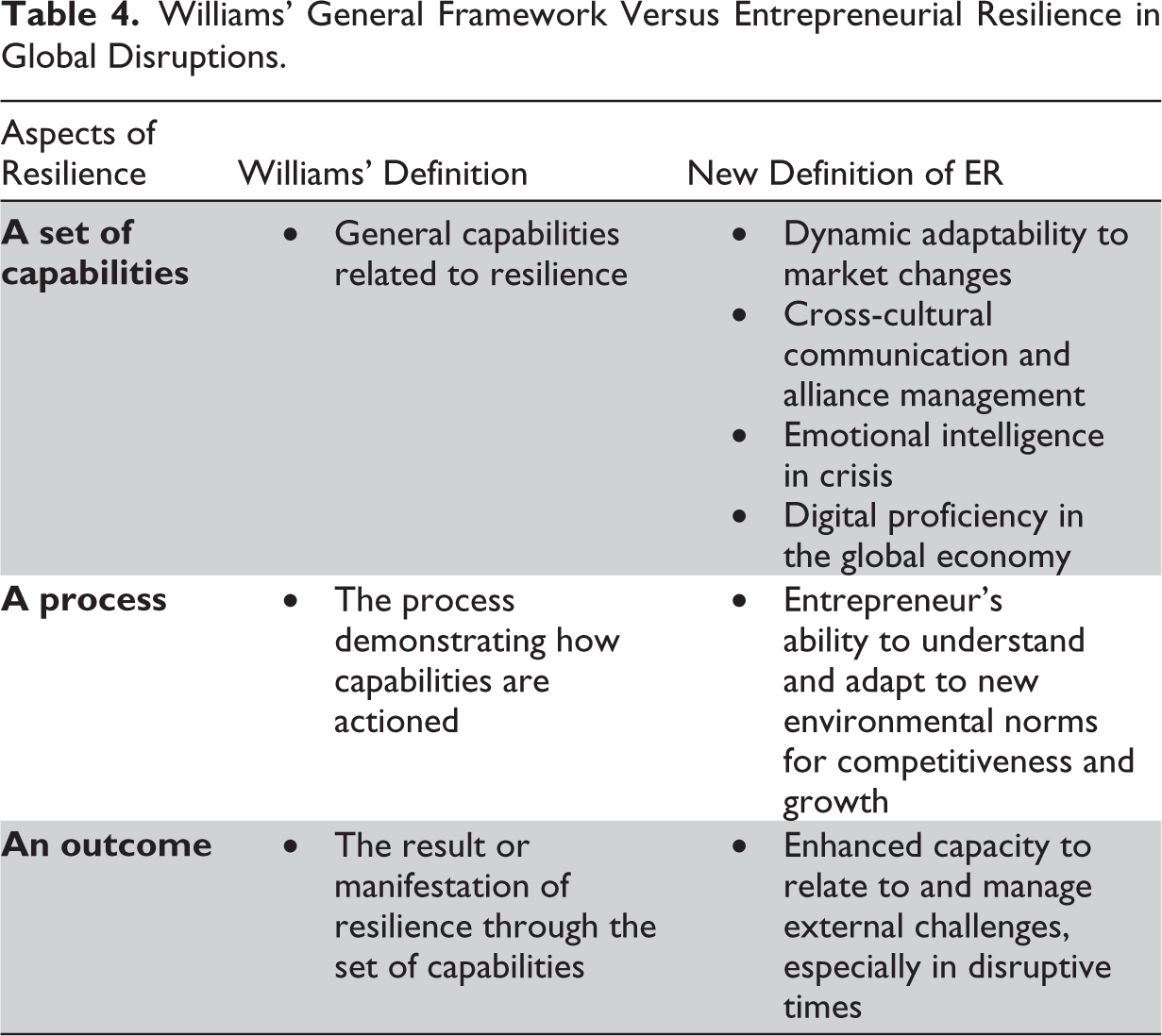
The ongoing research focused on individual-level resilience in the case of entrepreneurs. Although this discussion was tailored to the context of entrepreneurship, much of the background on resilience comes from the psychology literature applied to the entrepreneurial field. It adopted the definition of resilience provided by Williams et al. (2017), as the process an entrepreneur utilises to develop and deploy capabilities to adapt and respond to adversity encountered within the role. This definition was adopted because it acknowledges three ways in which resilience has been defined: (a) as a set of capabilities comprising psychological and behavioural capacities or tendencies helpful for individuals to overcome challenges (Tugade & Fredrickson, 2004), (b) as a process, demonstrating that those capabilities are in action when individuals encounter and then recover from a stressor or adversity (King et al., 2016), and (c) as an outcome, because it is contextualised as a lack of negative outcomes from an adverse or stressful event (Seery et al., 2010). When it is seen as an outcome, it is a result of a mix of behavioural and cognition elements (Masten, 2001) which involves psychological and physical functioning. Importantly, the pluralistic nature of this multifaceted definition does not need to be seen as problematic but as a strength because multiple studies acknowledge the various aspects of resilience while defining it.
Building upon Williams et al. (2017) definition, it was possible to define ER in times of global challenges and disruptions as a set of four specific capabilities and as a process and outcome. Consequently, a 4-step model was developed, allowing entrepreneurs to use and master their level of resilience when faced with high-impact challenges. To operate in times of emerging global challenges, it posits that the new concept of ER should include an expanded set of capabilities, as follows. Entrepreneurs should be:
dynamic, to adapt quickly to changes required by the markets. cross-cultural, to better read and strategise communication and manage new alliances across the globe, improving their overall network. emotional, to learn how to manage negative emotions in times of crisis and positively influence others to benefit business activities. digital, to be equipped with the technological knowledge required today to work in the global economy.
Based on the capabilities mentioned above, the entrepreneur’s ability to read and understand the new environmental rules is essential for remaining competitive, adapting, and growing. Furthermore, the capacity to better relate to external challenges or situations becomes crucial, particularly during difficult times when entrepreneurs are overwhelmed by various emotions and new business regulations are introduced. Building upon Williams’ conceptualisation of ER, it was possible to address RQ1. First, the concept of ER was expanded to encompass a set of capabilities. This includes being dynamic enough to swiftly adapt to market-driven changes, possessing cross-cultural acumen for effective global communication and alliance management, having EQ to navigate crisis-induced stress, and being digitally proficient to thrive in the modern global economy. Second, ER is viewed as a process, emphasising the entrepreneur’s ability to discern and adapt to evolving environmental norms. This process is crucial for maintaining competitiveness and driving growth in the face of constant change. Finally, ER is defined as an outcome reflecting the enhanced capacity of entrepreneurs to engage with and manage external challenges. In times of disruption, when emotions run high and new business regulations emerge, the ability to effectively navigate these complexities becomes a definitive measure of resilience. Thus, the current research redefines ER by incorporating and building upon Williams’ definition while presenting a more holistic, dynamic, and contextually relevant understanding of resilience, which is essential for entrepreneurs facing current global disruptions. Table 4 provides a comparative analysis of resilience definitions between Williams’ general framework and this tidy-specific ER concept in the current world of global disruptions.
To answer RQ2, it was essential to consider also other factors that impact ER, including personal experience, stage of business development, type and stage of the crisis, and the resources available, including the level of use as well as their suitability for that stage of crisis.
To master the level of resilience, different levels of intervention were considered, starting from the personal level (Figure 2).
Theories Used to Develop 4-step Entrepreneurial Resilience Model.
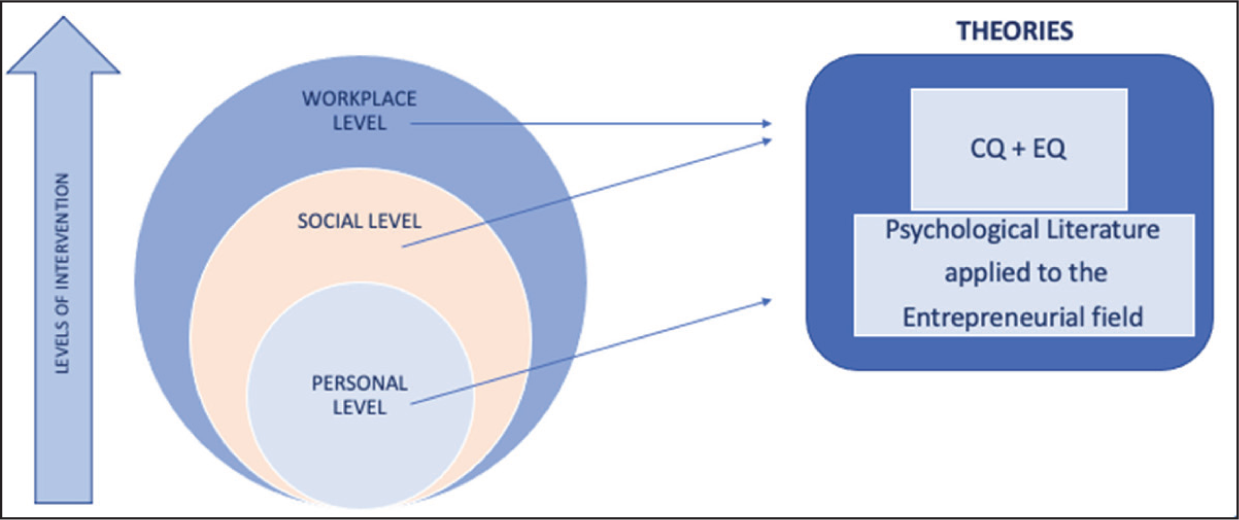
At a personal level, entrepreneurs should avoid looking at negative events or situations, such as failures or occasional barriers, and focus instead on the following goals: demonstrating perseverance and engagement with their business. Here, theories from psychology literature are directly applied to the entrepreneurial field to generate new ways of reacting at the personal level. At the social and workplace levels, EQ theories, together with CQ theories, will help entrepreneurs relate better to other individuals, stakeholders, or clients, overcoming cultural barriers that can translate into different expectations and perceived quality, but also trust between individuals in the workplace. Sharing issues, discussing strategies and family support are all recognised as crucial to recover from difficult situations and are important in helping to decrease stress or cope with uncertainty. All of these aspects were included in the 4-step model. CQ and EQ theories were also used to strengthen the new concept of ER for effectiveness in the global business area. EQ theories were incorporated because entrepreneurs are renowned for their ability to cope with and leverage uncertainty and risks (McMullen & Shepherd, 2006; York & Venkataraman, 2010). Extreme events can influence multiple aspects of an entrepreneur’s daily life and consequently, their entrepreneurial activities (Brück et al., 2011). For example, the threat of economic difficulties as a result of external events may force businesses to scale down operations, close activities or change business locations (Williams & Vorley, 2014). It can also generate positive effects, such as stimulating innovations that lead to the creation of new ventures (Pe’er et al., 2008). Disasters can also trigger entrepreneurial intentions and, in some cases, an individual’s professional strengths and tacit capabilities and lead to a new opportunity (Johannisson & Olaison, 2007). From a psychological perspective, extreme events can also lead to trauma and generate negative emotions such as rage, distress, worry and grief (Tedeschi & Calhoun, 2004). The notion of crisis and extreme events goes hand in hand with the concept of resilience as a ‘dynamic process encompassing positive adaptation within the context of significant adversity’ (Luthar et al., 2000). Entrepreneurs display resilience when they possess and handle emotional and cognitive abilities that allow them to bounce back after failures connected to their entrepreneurial initiatives (Bernard & Barbosa, 2016).
Bullough and Renko (2013) argued that self-efficacy and resilience play crucial roles in entrepreneurial motivation to engage in daily activities during challenging times. Folkman and Moskowitz (2000) argued that while it is common to associate crises or negative experiences with negative emotions (e.g., anger, sadness, anxiety), positive emotions, such as interest, love and gratitude, also exist to help shield individuals and allow them to thrive (Fredrickson, 2003; Fredrickson et al., 2003). Several studies have also demonstrated the relationship between entrepreneurial activities and the need for new entrepreneurial strategies to build resilience (Battisti & Deakins, 2012; Johannisson & Olaison, 2007; Kantur & İşeri-Say, 2012; Shepherd & Wiklund, 2020; Shepherd & Williams, 2014; Williams & Shepherd, 2016).
What emerged from the lessons learned through COVID (Purnomo et al., 2021) is that it is important to focus on entrepreneurial behaviour as well as the ability to navigate opportunities and adapt as the only way to succeed in the post-pandemic world. For this reason, the focus on CQ theories is to strengthen the model and allow global effectiveness despite the differences in values across people or countries. CQ builds upon and extends the foundations of emotional and social intelligence by equipping individuals with the capability to interpret, navigate, and adapt to diverse cultural contexts. Developed through experiential learning and reflective practice, CQ enables a nuanced understanding of how individuals and stakeholders operate across varying cultural environments, thereby supporting more effective and contextually appropriate interactions. Furthermore, the application of cultural values on top of emotional and social intelligence generates human understanding and culturally informed solutions within a specific context, which includes not only different cultural settings (Patrick, 2020) but also the idea of a dynamic model (Patel & Salih, 2018).
The inclusion of CQ in the model is essential due to findings related to the barriers generated by the pandemic, which highlight the need for entrepreneurial flexibility in thinking, adaptability in new workplaces, enhancement of trust, and leadership effectiveness. All these attributes are crucial for entrepreneurs to optimise overall profitability, productivity, and cost savings within their entrepreneurial operations. Including CQ within the new concept of ER will be a critical element for targeting and addressing the growing globalised market (Triandis, 2006). Recent studies have also revealed that CQ significantly enhances innovative problem-solving through intercultural engagement and, therefore, interpersonal trust in new workplaces (Stallter, 2009). Scholars such as Ang et al. (2007) and Rockstuhl et al. (2011) demonstrated that CQ consistently predicts performance outcomes over and above cognitive ability, as well as the Big Five personality dimensions, as highlighted by other scholars (Şahin et al., 2014). In particular, CQ has been found to be extremely important in cross-cultural interaction in the case of global managers (Janssens & Cappellen, 2015) and for developing trust-based interpersonal relationships, enabling a shared understanding, and conflict resolution when delivering projects, and even more critical during times of global business crises.
Livermore and Soon (2015) and Livermore et al. (2012) identified four capabilities that individuals can use to measure and develop their level of CQ. These capabilities work at the individual level and include (a) CQ drive, which measures the individual motivation to work across differences in cultural values; (b) CQ knowledge, which measures the knowledge about potential differences before interactions; (c) CQ strategy, which refers to the ability to strategise in a cross-cultural situation, and (d) CQ action, which is the ability to put into action the identified strategies for effective business interaction.
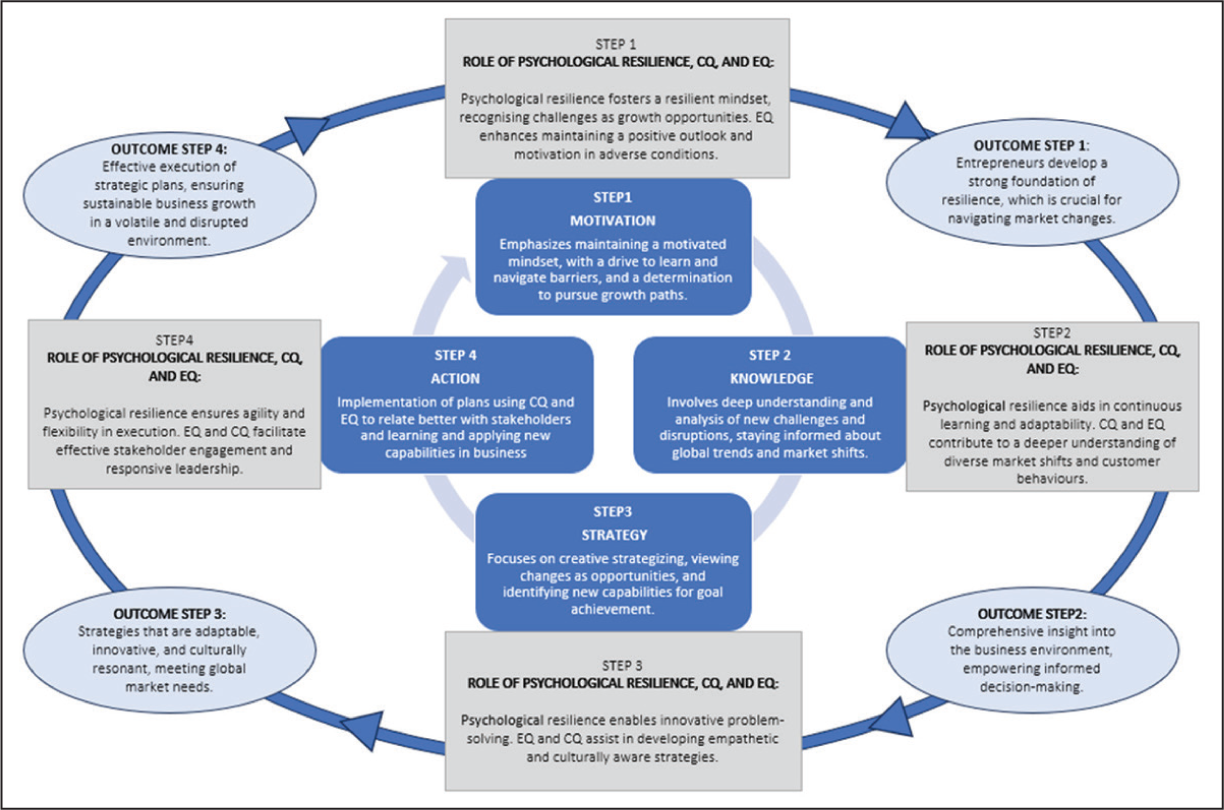
In Figure 3, a practical 4-step model is proposed to master ER in times of crisis, which encompasses the use of (a) EQ for emotion regulation to navigate high-impact challenges and crises and (b) CQ for the ability to adapt to changes in the market allowing better collaboration across stakeholders with different cultural values which is essential not only to work across borders but also to work across national level differences such as differences in background, generations, political orientation and everything that can translate in different individual values. Since ER is a dynamic process by nature (Fatoki, 2018), and in line with Williams et al. (2017), the generation of the dynamic model for ER is justified to ensure its effectiveness in addressing the dynamics of emerging global markets. This model is ‘dynamic’ because it is circular: the entrepreneur starts at step 1, goes through the four steps, and then restarts again to follow a loop that will allow them to constantly check and monitor and possibly adjust.
ER Model to Master Entrepreneurial Resilience in Times of Global Disruptions.
Williams’ General Framework Versus Entrepreneurial Resilience in Global Disruptions.
The four steps reflect the four CQ capabilities by (Livermore et al., 2012): Drive, Knowledge, Strategy and Action. Step 1, Drive, requires the entrepreneur to be constantly engaged with their business, which includes not only the ability to stay positive and optimistic but also to be highly motivated and open to changes. This can include upskilling or simply learning how to overcome barriers and stay open to evaluate alternatives in delivering business activities as a new path to grow, instead of seeing obstacles to the ordinary business model. Step 2 includes the ability to analyse any emerging challenge and think creatively about how to transform it into a new opportunity. Step 3 requires the ability to identify possible resources or new capabilities that need to be acquired to achieve a business goal. Step 4 includes the adoption of practical actions to cultivate cultural and entrepreneurial sensitivity when relating with partners and clients. An entrepreneur should be open to learning to strengthen areas of personal development through academia or other businesses. It is essential in this step to practically incorporate the newly identified capabilities in the daily routine to reach a new level of resilience and then restart again from step 1 for further improvement as the dynamics of the business evolve.
In times characterised by volatility and rapid global shifts, the ER model for enhancing ER offers a coherent and methodical approach that integrates psychological resilience with EQ and CQ. Designed to bolster entrepreneurs’ capacity for agility, this model equips them to confront the intricate challenges of a market increasingly defined by disruption and polarisation.
Central to this model is the concept of Motivation, which lays the groundwork for a resilient mindset by emphasising adaptability and proactive responses to potential disruptions. This initial phase is crucial for developing the psychological resilience necessary to anticipate and manage rapid market shifts. Incorporating EQ at this stage sustains team morale and engagement, while CQ enables a nuanced understanding of varied market conditions and geopolitical contexts. The second phase, Knowledge, centres on the swift acquisition and integration of global trends and technological breakthroughs. More than simply collecting information, this step leverages EQ and CQ to enhance comprehension of evolving market forces and customer behaviours. Entrepreneurs thereby draw on both analytical aptitude and emotional-cum-cultural awareness to form a holistic understanding of their operational environment. In the third phase, Strategy, entrepreneurs craft innovative and flexible approaches to business challenges. These strategies are designed not only for adaptability but also for resonance with particular market segments. By applying EQ, entrepreneurs maintain empathy and responsiveness to both team and customer needs, while CQ ensures cultural sensitivity and relevance in varied contexts. Lastly, the model culminates in Action, underscoring the urgency of swift, decisive execution in today’s fast-paced business climate. This final phase calls for heightened EQ to lead effectively through uncertainty, as well as CQ to engage a wide range of global stakeholders.
Overall, the proposed ER model offers a robust guide for cultivating resilience and agility, thereby empowering entrepreneurs to navigate the complexities of a rapidly changing business world and seize emerging opportunities. In reinforcing the practical applicability of the provided four-step model designed to enhance ER during crises, a comprehensive checklist (Table 5) was incorporated, accompanied by a rich selection of action examples.
Checklist of Suggested Entrepreneurial Actions as Support for the ER Model.
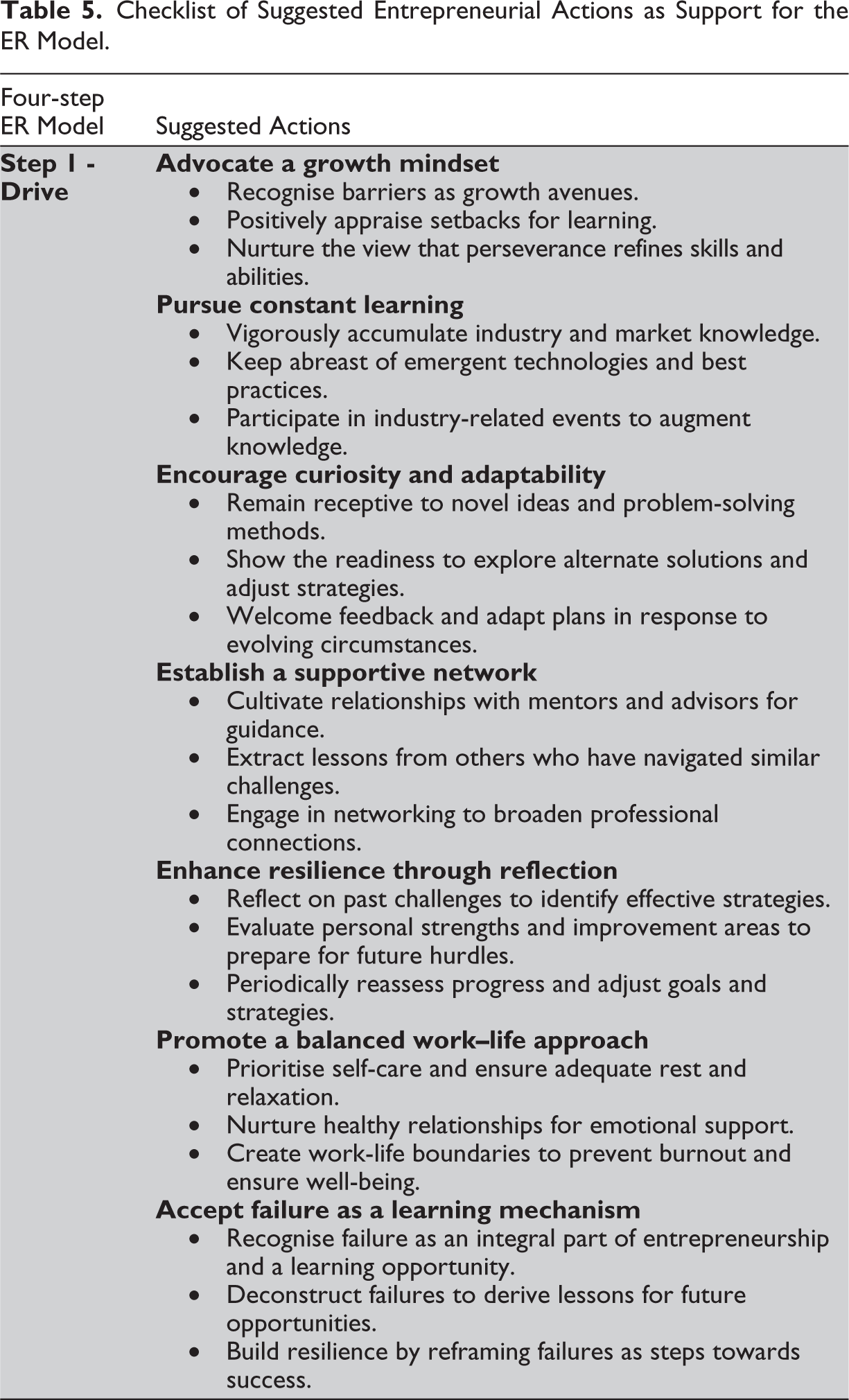
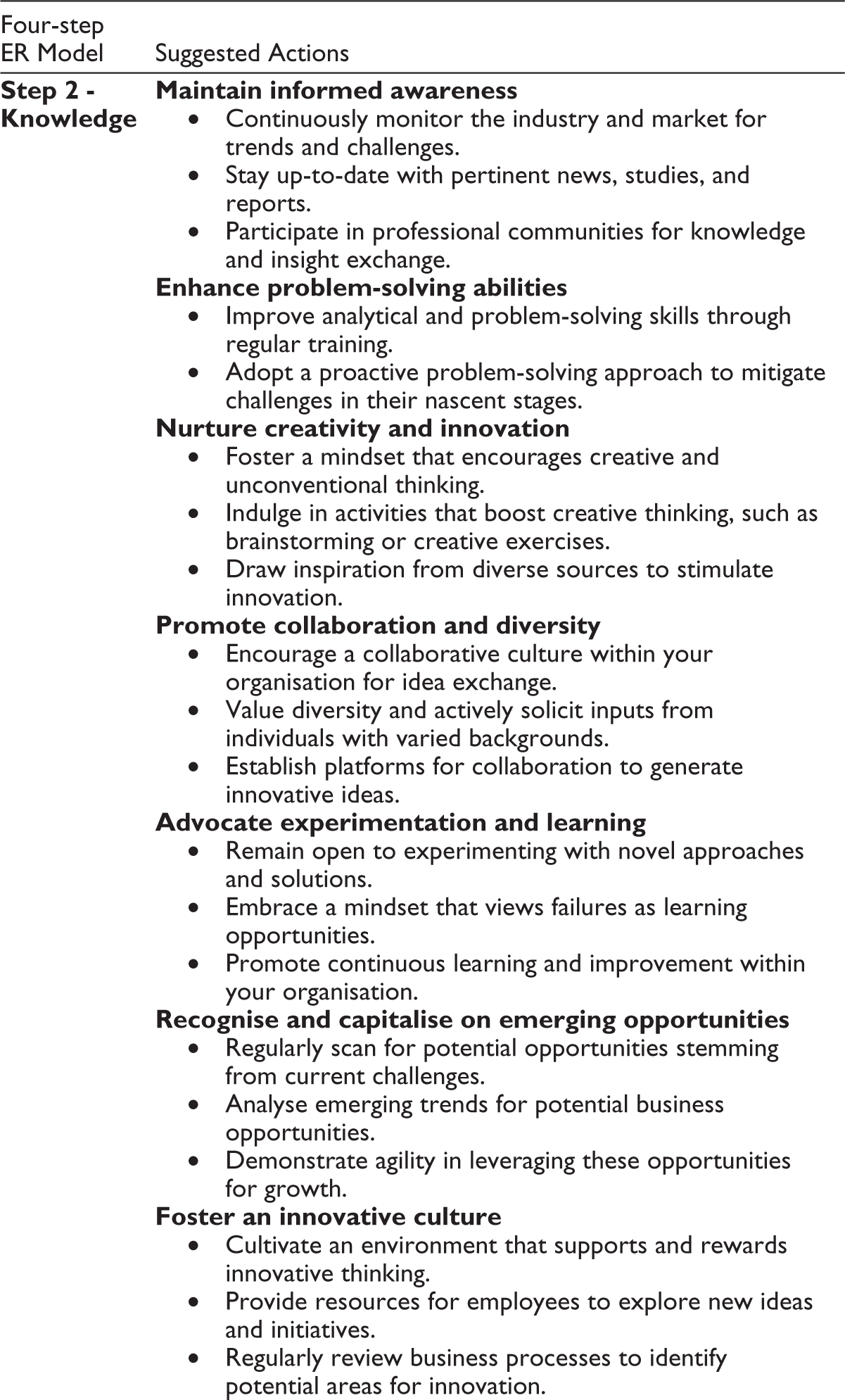
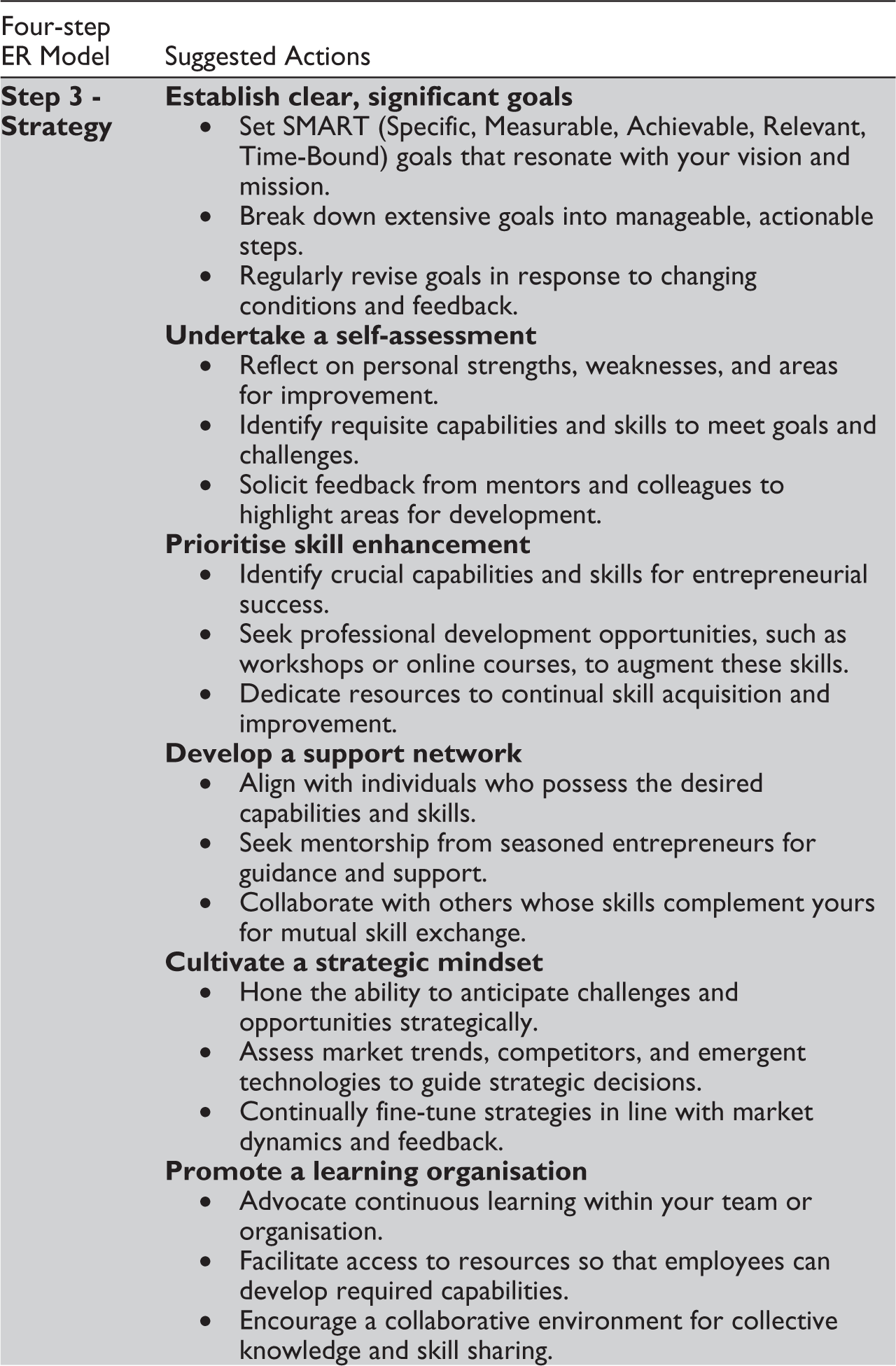
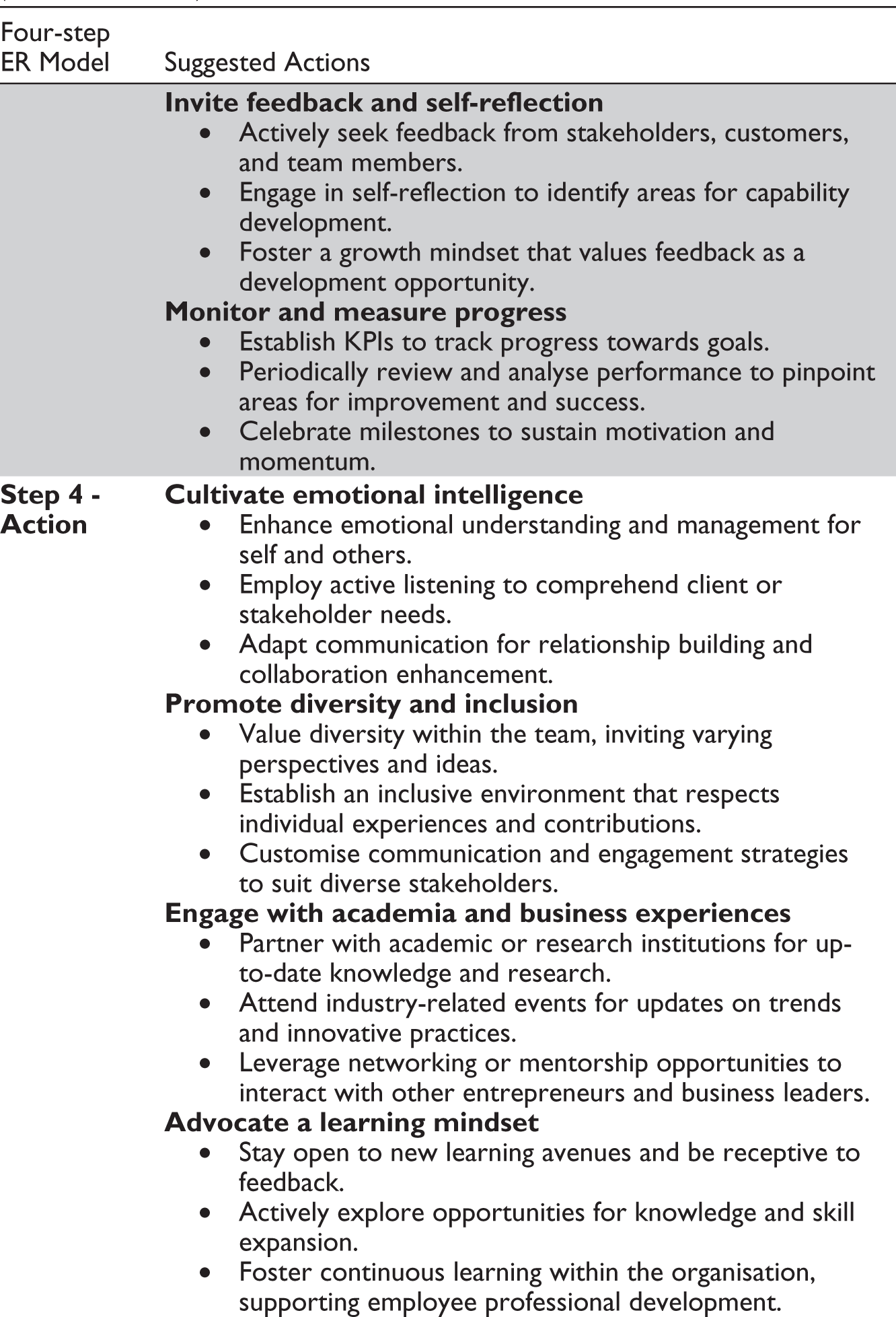
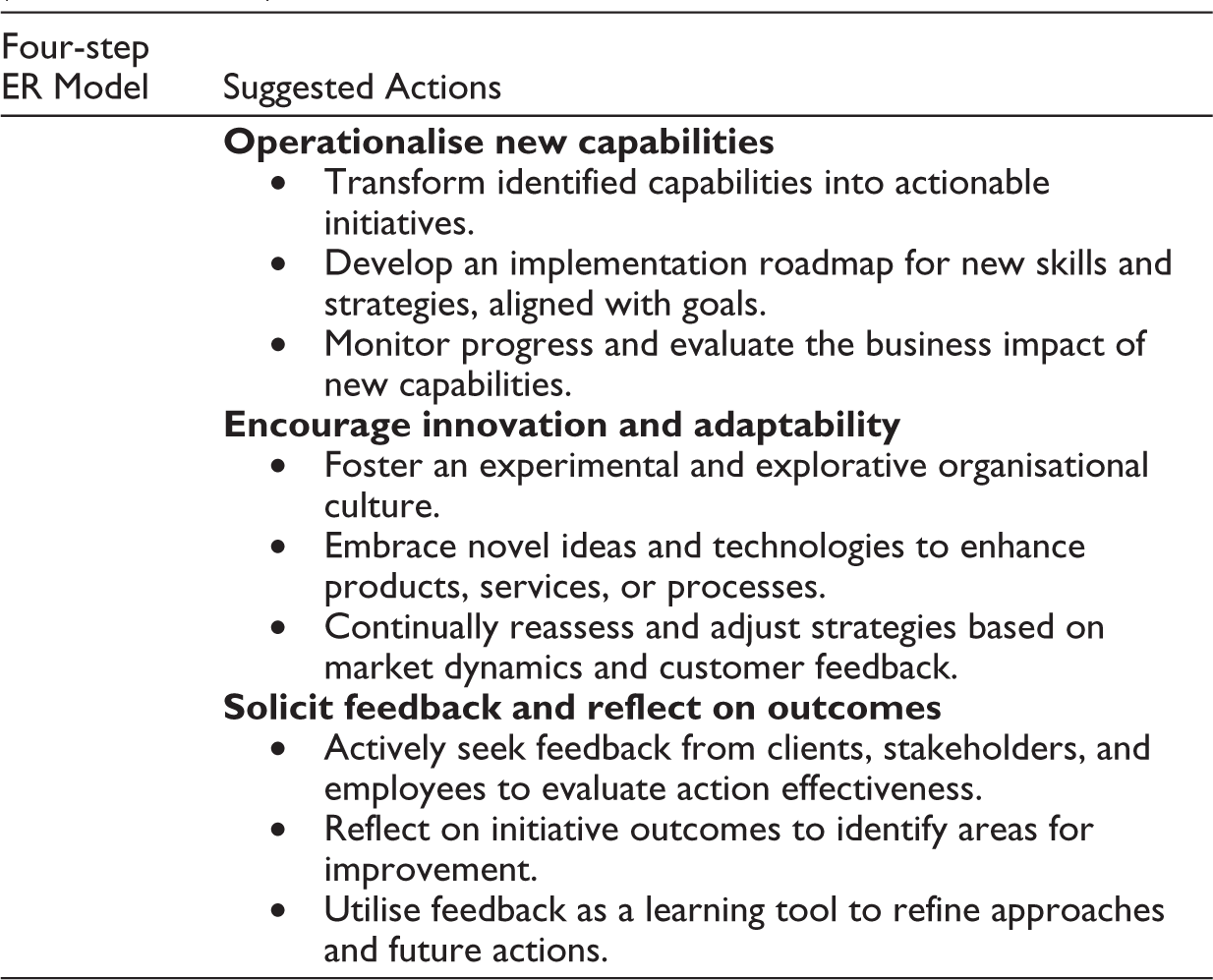
This adjunct has been developed to furnish entrepreneurs with a tangible guide, serving as a navigational tool for the application of the model, thereby supplying them with the means to address and adapt to unforeseen challenges effectively.
The supplementary checklist aims to offer concrete and pragmatic steps, thereby reducing the abstraction associated with theoretical constructs and bringing the theoretical model closer to real-world applicability.
Contribution
In the proposed study, two primary contributions enhance the understanding of entrepreneurship. First, ER is reframed as a dynamic capability that enables individuals to navigate the increasingly complex demands of global business environments. By focusing on entrepreneurial psychological resilience, the research identifies a crucial skill set, including self-efficacy, emotional regulation, and adaptability, which helps entrepreneurs to address and overcome disruptive challenges. This reconceptualisation aligns with emerging studies (Hartmann et al., 2022; Tagliazucchi et al., 2023), underscoring the need for a resilience model robust enough to address diverse international pressures. Second, the investigation highlights the transformative influence of digital technologies on ER, particularly in periods of heightened uncertainty such as the recent pandemic. The findings demonstrate how digitalisation propels adaptation, opens new avenues for opportunity, and sustains ongoing operations, indicating its relevance not only during crises but also as a core driver of resilience in the interconnected global economy.
Building on these insights, the study introduces a refined four-step ER model of ER that integrates EQ, CQ, and entrepreneurship-specific psychological traits. This comprehensive model illuminates the interplay of psychological and cultural adaptability with strategic actions, offering practical guidance for entrepreneurs aiming to succeed in increasingly competitive international markets. By equipping entrepreneurs with concrete strategies to address today’s unprecedented geopolitical and economic challenges, the current research delivers a sustainable growth model grounded in actionable insights. Ultimately, it positions ER as a pivotal element of success in the contemporary business landscape, ensuring that entrepreneurs remain resilient amid ongoing global transformations.
Implications and Study Limitations
The study acknowledges certain limitations while offering significant contributions to the ER field. A primary limitation is the focus on psychological resilience, prioritising individual factors contributing to ER over the broader aspects of new venture resilience, including processes and resources. This choice highlighted less-explored areas within ER literature, particularly the internal processes and personal characteristics enabling entrepreneurs to navigate adversity. Another limitation concerns the methodology, specifically the selection of keywords and search terms used in the database, which might not fully encompass the skills relevant to professionals in the current international business arena beyond those specific to entrepreneurs. Despite these limitations, the study introduces valuable theoretical and practical implications.
Theoretically, it revisits and updates the concept of ER, integrating EQ and CQ theories to offer a fresh perspective on resilience. This includes a dynamic four-step model representing a significant theoretical advancement, emphasising the need for entrepreneurs to possess cultural and emotional competencies critical for establishing trust and adapting to global and local market changes.
Practically, the model encourages entrepreneurs to adopt a flexible thinking approach, fostering continuous reflection on emerging challenges and strategic planning. It also suggests the potential for resilience to be developed through targeted programs in collaboration with academic institutions that reinforce entrepreneurial strategies across sectors. This approach not only aids in decision-making and adaptability but also opens new opportunities for entrepreneurs, highlighting the model’s specificity and utility in enhancing ER.
Conclusion
The proposed study redefines ER as a dynamic and multi-dimensional capability that is essential for navigating today’s complex and volatile global business environment. By integrating elements such as psychological resilience, EQ, CQ, and key entrepreneurial traits, the ER model comprises four strategic steps. This model not only advances theoretical understanding but also offers practical relevance. It emphasises the transformative impact of digital technologies on resilience and highlights the importance of adaptability, emotional regulation, and strategic thinking. While acknowledging limitations, such as a focus on individual characteristics and the scope of the methodology, the proposed research contributes a robust approach for fostering sustainable growth and competitiveness. Ultimately, it positions ER as a critical success factor not only during crises but also as a foundational capability for long-term entrepreneurial viability in an interconnected world.
Footnotes
Declaration of Conflicting Interests
The authors declared no potential conflicts of interest with respect to the research, authorship and/or publication of this article.
Funding
The authors received no financial support for the research, authorship and/or publication of this article.