



Abstract
The growing decline in the survival rate of most small-scale enterprises (SSEs) has remained a source of concern for stakeholders and the absence of an integrative model that explains the process through which resilience drives business survival has made for an unclear relationship. Hence, this article addresses the mediating effect of self-compassion on entrepreneurial resilience and business survival. A dataset of 260 entrepreneurs was analysed with the aid of SmartPLSv3.9. The study found that entrepreneurial resilience and self-compassion significantly affect business survival and self-compassion mediates the link between entrepreneurial resilience and business survival. The article provides an integrated model that accounts for the process through which entrepreneurial resilience influences business survival. Further, the article advances new knowledge on self-compassion by exploring its role in business survival. The study validates the Connor–Davidson Resilience Scale and Raes et al.’s (2011) higher-order factor scale of self-compassion.
The importance of small-scale enterprises (SSEs) as catalysts for economic growth and development cannot be disputed (Ayanda & Laraba, 2011; Preye, 2015). However, the success of SSEs is highly dependent on the entrepreneur who constantly seeks to grow the business. Entrepreneurs must continually devise strategies and means to ensure business survival before focusing on growth. Therefore, it is crucial to understand what motivates entrepreneurs to navigate the challenges they face while striving for business survival amid uncertainties and changing contingencies (Olawale, 2018). Understanding the internal drivers that contribute to business success is key to empowering entrepreneurs with the necessary resources to fuel their inner drive (Mberi, 2018).
Entrepreneurial resilience has been described as the ability to withstand and quickly overcome challenges, with a focus on the individual entrepreneur (Ogbumgbada & Onyemauche, 2023; Olawale, 2018). While scholars have debated whether entrepreneurial resilience should be studied through individual or organisational indicators, some studies have adopted both viewpoints (Branicki et al., 2018; Corner et al., 2017). This article aligns with the individual indicators approach because focusing on individual factors can better equip organisations through their individual managers, as these individuals make critical decisions and steer the organisation towards achieving its goals.
Moreover, it is widely agreed that entrepreneurial resilience is a key driver of entrepreneurial success (Amah & Eshegheri, 2017; Ayala & Manzano, 2014; Davidsson & Gordon, 2016), although some studies have yielded partially inconclusive results (Adeniran & Johnston, 2012; Fisher et al., 2016; Mcinnis-Bowers et al., 2017). The presence of consistently varying views indicates the need for a more critical examination of the underlying variables. Scholars have also neglected to unravel the processes and strategies through which resilience occurs in entrepreneurs and to identify the cognitive drivers critical to the entrepreneurial resilience process. The presence of cognitive drivers that precondition entrepreneurs to eventualities could act as a psychological mechanism, helping to build relative stability and aid recovery processes when faced with challenges. However, this aspect remains underexplored in the literature, highlighting the need to account for the influence of self-compassion as a mechanism that explains the relationship between entrepreneurial resilience and business survival.
In addition, scholars have predominantly viewed entrepreneurial resilience within the context of entrepreneurship alone, overlooking the effects of trauma and negative influences that may result from resilience in some individuals (Awotoye & Singh, 2017). For entrepreneurs to be resilient, they must develop coping mechanisms to deal with obstacles as they arise (Chadwick & Raver, 2018; Engel et al., 2019; Singh & Yu, 2010). Therefore, self-compassion is proposed as a mental buffer mechanism that helps prepare entrepreneurs and cushions the negative effects of failures and challenges on their mindset (Engel et al., 2019; Kelly & Dorian, 2017).
This research has become increasingly important, given the global crisis facing businesses, particularly due to the COVID-19 pandemic. While it may be less challenging for businesses in developed economies due to government support, the same cannot be said for developing economies, especially Nigeria, where little attention has been given to business growth during this period. Additionally, the survival of SSEs in developing economies, particularly in Nigeria, has been a source of concern, as most SSEs typically do not survive beyond 5 years (Agu et al., 2018). Therefore, entrepreneurs must develop the internal drive to support resilience for the continued sustenance of their business ventures. The subsequent sections of this article include theoretical and hypotheses development, the methodology, discussion of findings, conclusions, implications and limitations of the study.
Literature Review and Hypotheses Development
Over the years, scholars have developed an engaging interest in defining business survival and accounting for the factors that explain the survival or non-survival of firms in an environment (Geroski et al., 2009; Mata & Portugal, 2002). Amah (2017) stated that the survival of a business entails its continuity. Additionally, Geroski et al. (2009) posited that growth does not differ from survival, as it can be used to explain business survival.
Given the lack of consensus in defining this concept, this study proposes that business survival for small scale enterprises (SSEs) refers to the transgenerational existence and operation of a business, along with its ability to fulfil both internal and environmental responsibilities. The complexity of this phenomenon necessitates consideration of the elements that contribute to the transgenerational existence and operation of SSEs, particularly due to the inherent challenges they face in their environments. Studies have shown that SSEs, especially in emerging economies, often do not survive beyond 5 years (Agu et al., 2018).
Small and medium-sized enterprises (SSEs) are regarded as instrumental in promoting the economic development of both advanced and third-world countries. SSEs are noted for providing gainful employment to approximately 50% of employees in third-world countries (Ayyagari et al., 2014). However, in Nigeria, SSEs appear to be performing below expectations and are reported to have fallen short in their efforts to promote social, economic, and environmental performance (Adamu et al., 2020).
Despite being key players in driving economic growth and development in emerging economies, SSEs are the most exposed to threats arising from their internal and external environments. With the advent of free trade, SSEs in third-world countries have become increasingly vulnerable, as they struggle to compete fully with large firms and multinational corporations. Consequently, many SSEs have closed down within a few years of establishment, as they lack the resilience needed to maintain a competitive advantage (Isichei et al., 2023).
Entrepreneurial Resilience
Resilience has been described as a set of qualities rather than a specific characteristic in an individual (Mberi, 2018). Masten (2001) suggested that entrepreneurial resilience is not a personality trait, but some personality traits may be related to resilience, such as conscientiousness. Personality traits can sometimes be influenced by past experiences, social and cultural values, as well as age and gender. Thus, differences in context and levels of experience can significantly impact a personality trait.
Entrepreneurial resilience can be defined as an entrepreneur’s ability to develop and maintain an adaptive mindset and capabilities to confront and overcome the challenges associated with new business growth and survival (Ayala & Manzano, 2014; Pathak et al., 2023). It is also the capacity of an entrepreneur to effectively respond to unforeseen disruptive changes that may occur in their business (Amah & Eshegheri, 2017; Mberi, 2018). Entrepreneurial resilience can, therefore, be viewed as a mental tool that helps an individual keep their mind, body, and spirit intact throughout a challenging journey.
Several authors have acknowledged the existence of multiple dimensions of entrepreneurial resilience (Morisse & Ingram, 2016; Windle et al., 2011). However, the most commonly used measurement is the Connor–Davidson Resilience Scale (CD-RISC). Connor and Davidson (2003) posit that entrepreneurial resilience is a multidimensional construct, consisting of dimensions such as optimism, hardiness, and resourcefulness. These dimensions will be discussed further.
Relationship Between Entrepreneurial Resilience and Business Survival
Resourcefulness and Business Survival
As the term implies, entrepreneurs need to have access to the necessary resources required to achieve their goals. They must possess the intellectual skills and expertise required to navigate challenging circumstances. Therefore, they must be able to exert some level of control over certain events through adequate resources and be capable of thoroughly analysing situations to diagnose solutions to the problems they encounter. This resourcefulness equips entrepreneurs and instils confidence in them to effectively influence negative situations, allowing them to maintain a degree of control over the outcome (Ayala & Manzano, 2014).
A study by Sun et al. (2011) demonstrated that entrepreneurs who established resource-based ventures were three times more likely to align their resilience characteristics with their business type compared to those involved in risk-based or knowledge-based ventures. As Powell and Baker (2011) rightly noted, a resourceful entrepreneur believes in their ability to shape the course of events and their impact on the business. It entails acquiring and applying the necessary skills and competencies to facilitate the overcoming of obstacles. Consequently, it is argued that resourcefulness significantly impacts business survival.
Furthermore, resourcefulness enables an entrepreneur to maintain a high level of confidence and belief in the potential success of their business (Ayala & Manzano, 2014; Mberi, 2018). This confidence serves as a driving force during challenging times, bolstering entrepreneurial resilience because entrepreneurs believe they possess the requisite skills and capabilities necessary to steer their businesses towards success. Bullough and Renko (2013) and Ayala and Manzano (2014) both acknowledged resourcefulness as the most critical factor in predicting an entrepreneur’s success. Resourcefulness opens up better and more viable opportunities for entrepreneurs to explore (Bullough & Renko, 2013). Hence, this study proposes that:
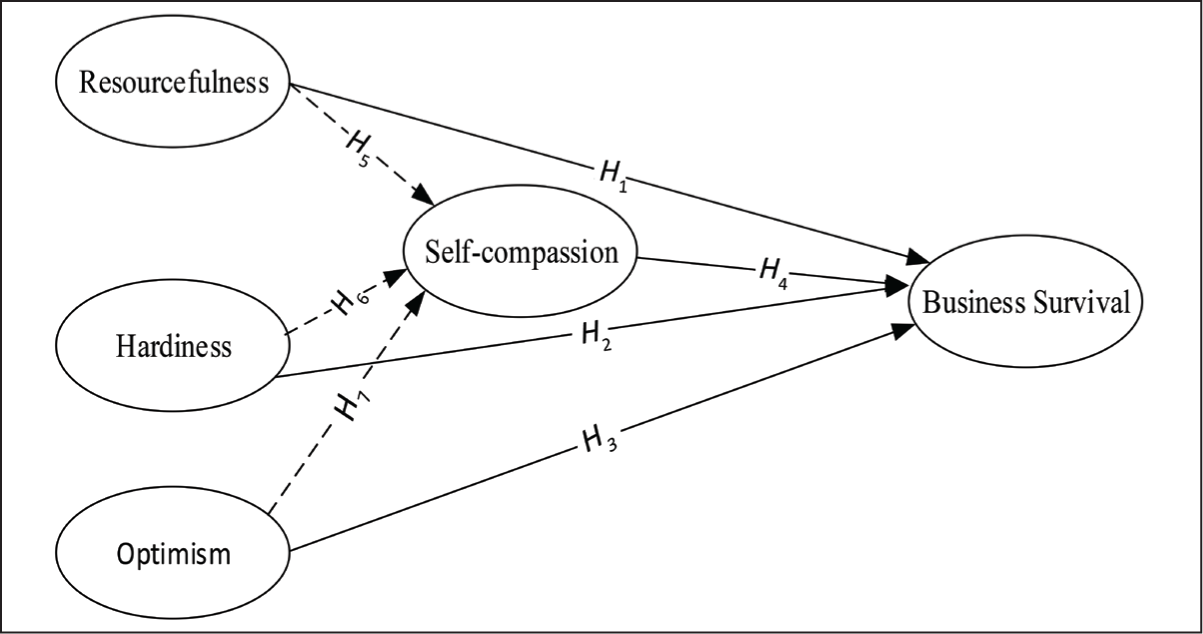
H1: The greater the extent of entrepreneurs’ resourcefulness, the greater the survival of its SSEs.
Hardiness and Business Survival
Hardiness refers to the willpower an individual possesses to influence or control themselves to carry out a challenging action or to endure an unpleasant situation or circumstance. It is primarily driven by the conviction that such action will yield a desirable result (Mberi, 2018). Individuals with hardiness are not easily discouraged when faced with challenging situations; instead, they can effectively manage and respond to such events using coping strategies, often capitalising on challenges to transform them into opportunities.
The trait of hardiness is unrelated to influencing the opinions or actions of others. This implies that entrepreneurs are not easily distracted and do not deviate from their goals due to challenges or failures (Ayala & Manzano, 2014). Hardiness solidifies an individual’s sense of purpose and their determination to overcome obstacles to reach their goals (Mberi, 2018). Such individuals set targets and milestones and are consistently driven by an inner need to achieve them.
Small and medium-sized enterprises (SSEs) can only attain growth and higher levels of competitive advantage when their managers demonstrate higher levels of hardiness. They consistently exhibit the ability to cope with management dilemmas and create self-motivation to ensure the attainment of necessary goals (Mberi, 2018). In turn, resilience equips entrepreneurs with self-confidence and belief in their abilities, which ultimately enhances their performance. This aligns with the perspective of Shane and Venkataraman (2000), who suggested that hardiness instils confidence in entrepreneurs by enabling them to master the necessary skills for achieving success in business.
Resilient entrepreneurs welcome change rather than resist it and exert significant effort to achieve their goals while effectively managing challenges. Additionally, resilient entrepreneurs possess a high tolerance for ambiguity. Resilience enables entrepreneurs to navigate an unstable and evolving business environment, which is crucial for propelling a fledgling business into its growth stage (Awotoye & Singh, 2017). Therefore, the presence of hardiness in an entrepreneur better equips them to persevere through the challenges of a startup until it achieves success. Hence, this study proposes that:
H2: The greater the extent of entrepreneurs’ hardiness, the greater the survival of its SSEs.
Optimism and Business Survival
Entrepreneurs must cultivate and maintain a consistently positive mindset when facing challenges. This positive mindset enables them to stay focused on their goals and perceive these challenges as stepping stones towards achieving their objectives, rather than insurmountable hurdles (Engel et al., 2019). It refers to an entrepreneur’s ability to maintain a positive attitude even in situations characterised by a high uncertainty regarding the outcomes (Ayala & Manzano, 2014). Entrepreneurs can learn from their mistakes and view them as opportunities for growth rather than failures.
Optimism among entrepreneurs leads to a shift in perspective regarding past mistakes and failures, allowing them to see these experiences as opportunities for learning and continuous self-improvement (Ayala & Manzano, 2014). Optimism serves as a crucial component of resilience because it provides emotional stability, reassuring entrepreneurs that the outcomes of uncertain events will ultimately be favourable. Consequently, entrepreneurs do not perceive past mistakes as failures but as chances to gain valuable insights and enhance their performance. It is worth noting that optimism exerts a more substantial influence on the success of businesses owned by female entrepreneurs compared to those owned by men (Ayala & Manzano, 2014).
In addition to having the necessary resources and capabilities to grow one’s business, it is widely recognized that in challenging economic conditions, entrepreneurs must possess the ability to adapt their plans to align with the prevailing economic situation (Garland et al., 2010). This entails proactively developing coping strategies for navigating tough times, and maintaining an open mind regarding possible outcomes and future scenarios (Lin et al., 2016). Essentially, this means that entrepreneurs interpret all challenges in a positive light, enabling them to approach hurdles objectively and successfully overcome them. Hence, this study proposes that:
H3: The greater the extent of entrepreneurs’ optimism, the greater the survival of its SSEs.
Self-compassion
The concept of self-compassion is related to the field of psychology. Though new, its application in business is not out of place given the fact that entrepreneurs are humans and faced with both personal and external challenges. Studies have shown that these challenges, when not properly managed, affect the business outcome. There is a common misconception that being self-compassionate makes an entrepreneur lazy (Chadwick & Raver, 2018; Engel et al., 2019). However, self-compassion lays the foundation for self-improvement because by not being too hard on oneself, the entrepreneur can realistically evaluate their strengths and weaknesses in order to make a good judgement of the situation.
Neff (2003) opines that self-compassion is an individual’s ability to manage their displeasure or challenges with a sense of comfort, connection and concern. Similarly, Bratt and Fagerström (2020) opined that self-compassion is the ability to show concern and care for oneself when in unfavourable life situations and how to endure them and share the same with others in similar conditions. Self-compassion also helps to boost the creativity of entrepreneurs, as by seeking to improve on weaknesses without destructive criticism, they come up with more innovative ideas to overcome obstacles (Yarnell et al., 2015).
Neff (2003) identified three major elements of self-compassion as kindness, humanity, and mindfulness. Kindness entails being self-supportive whenever one fails or makes a mistake. Humanity is the ability to remind oneself that to err is human, thus coming to accept that it is normal to face challenges and fail from time to time. Mindfulness means always ensuring that negative thoughts do not take over, thus paying more attention to set goals instead of current setbacks being faced. Raes et al. (2011) proposed and tested six components namely: self-kindness, self-judgment, common humanity, isolation, mindfulness, and over-identification to measure self-compassion. Though there is an absence of studies that have validated this scale from an emerging economy perspective, it remains the most commonly used scale for measuring self-compassion.
This study advances the literature on self-compassion by proposing that self-compassion is not just a post-crisis behavioural response process but rather a pre and post-one. The pre-crisis understanding that the entrepreneur holds about the potentiality of risk in business, stimulates a cognitive reaction, which leads them to be kind, human and mindful even in the face of crisis. The pre-crisis self-compassion is simply accepting that business and life have some level of risk. This is what triggers the ability to manage displeasures since there is already a psychological acceptance that it would be either favourable or unfavourable. This study proposes that:
H4: The greater the extent of an entrepreneurs’ self-compassion, the greater the survival of its SSEs.
Mediating Effect of Self-compassion on Entrepreneurial Resilience and Business Survival
Powell and Baker (2011) rightly stated that a resourceful entrepreneur believes in their ability to influence the nature of events and impact their business positively. This implies that the mind of the entrepreneur would also be resourceful in the resilience process, thus indicating that resourcefulness stimulates self-compassion, as it allows the entrepreneur to develop a sense of warmth that allows for effectively combining resources towards ensuring the survival of the business.
The expertise and resources build belief and confidence in the entrepreneur (Ayala & Manzano, 2014) and this confidence stimulates an internal feeling of calmness rather than self-judgement in the face of challenges. The belief leads to developing mindfulness, which is a component of self-compassion, that is having a balanced perspective of issues, thereby allowing for a logical decision that would positively influence the survival of the business (Manzano-García & Ayala-Calvo, 2013; Neff, 2003).
Also, Tugade and Fredrickson (2004) found that the acquisition and use of necessary skills and competence by an entrepreneur makes it easier to overcome obstacles. However, any misfortune of any kind in business can be devastating, which can mentally cause the entrepreneur to feel like a failure, doubt their own abilities, and question their skills and experience; thereby making it sufficiently difficult for the individual to recover and be able to re-start their business (Chadwick & Raver, 2018). When the entrepreneur can have self-compassion, it allows for focusing more on their strength (access to requisite resources) towards steering them to rejuvenate or continue the business despite the misfortune. Hence, this study proposes that:
H5: Entrepreneurs’ self-compassion mediates the relationship between resourcefulness and SSEs’ business survival.
Entrepreneurs with high levels of hardiness may face numerous challenges while running their businesses (Ayala & Manzano, 2014). The presence of self-compassion can act as a buffer against the emotional toll of these challenges (Raes et al., 2011), allowing entrepreneurs to acknowledge their feelings of frustration, disappointment, or failure without engaging in self-criticism or harsh judgment. Channelling hardiness through the mechanism of self-compassion enables entrepreneurs to persist in the face of adversity, as it strengthens their resolve not to give up easily. With emotional resources to cope with challenges and setbacks, they can maintain a strong sense of purpose.
Entrepreneurs who practice self-compassion are more likely to perceive setbacks as opportunities for growth and learning, rather than as personal failures (Engel et al., 2019). This shift in mindset serves as a foundation through which strong determination can be harnessed to achieve business sustainability and survival. The presence of self-compassion positions entrepreneurs to make clear, rational decisions even in the midst of difficult choices (Ayala & Manzano, 2014). They can approach decision-making with a balanced perspective, considering both their business’s needs and their personal well-being.
Furthermore, acting as a psychological bridge between hardiness and business survival for entrepreneurs, self-compassion helps them cope with the emotional challenges of entrepreneurship, learn from setbacks, maintain their well-being, and persist in the face of adversity. By nurturing self-compassion, entrepreneurs can leverage their hardiness to enhance the likelihood of their business not only surviving but thriving in a competitive and dynamic business landscape. Hence, this study proposes that:
H6: Entrepreneurs’ self-compassion mediates between SSEs’ hardiness and survival of their business.
The failure of a previous enterprise may have been opined to prompt resilience in an entrepreneur to start a new one (Corner et al., 2017). Also, some studies have shown that the ability to recognise better opportunities in a new venture and abandoning an old one with poor performance is not totally associated with failure (De Tienne & Wennberg, 2016). Still, the innovativeness and resourcefulness of an entrepreneur have been shown to be a great positive influence on the growth and survival of a firm (Coad et al., 2013).
The experience of positive emotions and thoughts in individuals has been known to bring about new creative abilities and skills that help individuals struggle through difficult times and survive harsh situations. The flexibility of thinking, open-mindedness and the ability to adapt to unique environments effectively have all been attributed to a positive mindset (Fredrickson & Levenson, 1998; Tugade & Frederickson, 2004). Positive emotions have been outlined as the foundation of psychological resilience in individuals (Tugade & Frederickson, 2004).
Liao (2004) acknowledged the need to focus on the personal characteristics of the entrepreneur, and how possible it would be to consistently interpret challenges and failures in a positive light. Therefore, even though the entrepreneur knows he is supposed to see every challenge as positive cues (Denz-Penhey & Murdoch, 2008), this does not alleviate the risk of setbacks bringing about emotional instability and disappointment from time to time (Engel et al., 2019). Hence, this study proposes that:
H7: The extent to which entrepreneurs’ optimism influences the survival of their business is mediated by the extent of their self-compassion.
Methods
Six states in the country were selected for the study and the basis for selection was states with the least number of SSEs following a 10-year report obtained from the small- and medium-scale development agency (SMEDAN). The choice of states with the least SSEs is because most studies on SSEs have over time been carried out in states with most SSEs. As such, there is a need for a balance in studies in order to have a reflective picture of the country’s SSEs. One state was selected from each geopolitical zone, thus allowing for generalising the study outcome. The selected states were Ekiti, Bayelsa, Enugu, Yobe, Niger and Katsina. To ensure the SSEs were entrepreneurs, the researchers ensured that only registered entrepreneurs with SMEDAN participated in the study, and also focused on small businesses that have operated at least for 5 years. This was because, during the 5-year life cycle of a business, most entrepreneurs would still have full control and management of the business. However, an effort was made to ensure there was no bias in sectors based on the need to have a model that could be generalised. A sample of 369 SSE entrepreneurs was conveniently selected. A partial least square structural equation model was used for the analysis of the data with the aid of SmartPLSv3.9 (see Figure 1 for theoretical model).
Theoretical Model on Entrepreneurial Resilience, Self-compassion and Business Survival.
Also, since the responses for the independent and dependent variables were both from a single respondent, effort was made to avoid bias in responses. First, the instrument was separated into sections and shared them separately. Next, Harman’s single-factor test was conducted. The result indicated the absence of bias as none of the variables accounted for more than 50% (Podsakoff et al., 2003).
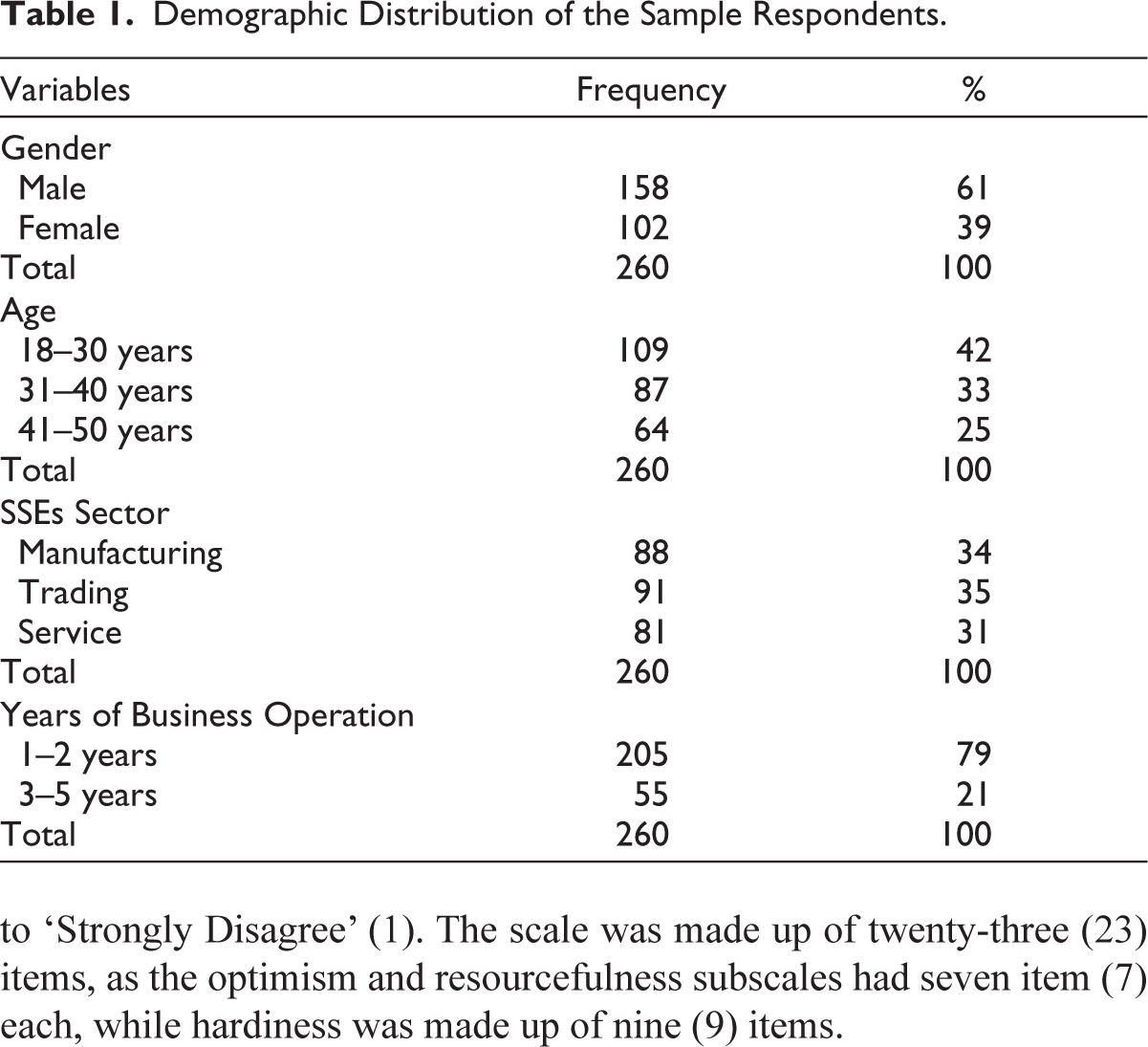
Two hundred and sixty (260) instruments were retrieved out of the 369 distributed, which represented about 70% of the total respondents. Preliminary analysis and data cleaning were conducted and it proved the instrument to be suitable for further analysis. To confirm the normality of the data, the Shapiro–Wilk test was conducted and the result indicated that p > .05, supporting that the data was normal. PLS-SEM is well-suited for this study because of its ability to handle complex models with several variables, both observed and latent (unobserved). (Hair et al., 2017). Further, a chi-square test for difference was carried out to determine whether there was any significant difference in the late and early response since all the data was collected in different states and some came early while others came late. The result showed there was no significant difference. Table 1 shows the demographic distribution of the respondents.
Demographic Distribution of the Sample Respondents.
Measures
Entrepreneurial Resilience
The study adopted the validated instrument of Manzano-García and Ayala (2013) to measure entrepreneurial resilience. The concept was operationalised as hardiness, resourcefulness and optimism. The scale was designed in a Likert scale format ranging from ‘Strongly Agree’ (5) to ‘Strongly Disagree’ (1). The scale was made up of twenty-three (23) items, as the optimism and resourcefulness subscales had seven item (7) each, while hardiness was made up of nine (9) items.
Self-compassion
This study adopted the short-form scale designed by Raes et al. (2011) to measure self-compassion, as a higher order formative construct. The scale consisted of twelve (12) items that covered six integrative components, which were self-kindness, self-judgment, common humanity, isolation, mindfulness and over-identification. However, the scale is a higher order factor model scale that allows for measuring self-compassion using the twelve items since the scores are found to be highly correlated. The scale was designed in a Likert format that ranged from ‘Almost Always’ (5) to ‘Almost Never’ (1).
Business Survival
Amah’s (2017) study instrument was adopted for measuring business survival. The instrument was designed in a Likert scale format ranging from ‘Strongly Agree’ (5) to ‘Strongly Disagree’ (1). The scale had eight (8) items.
Result and Discussions
Measurement Model
The variance in means was considerable, as entrepreneurial resilience was (M = 4.024, SD = 1.042), self-compassion (M = 3.101, SD = 0.143) and SSEs survival was (M = 3.001, SD = 1.074). This indicates the participants in this study differed largely in the extent to which they perceived that their entrepreneurial resilience, self-compassion and survival were strong or weak. Hence, the sample was suitable for testing the study hypotheses. Factor loading was assessed for the first- and second-order models. The study relied on the recommendation of Hair et al. (2017) to retain factors that are within the threshold of 0.60 and above. The result showed that all the factors satisfied these criteria of 0.60 and above, and the outer loadings were significant with t-values greater than 1.96 for all the loadings (see Table 2 and Figure 3).
Measurement Result.
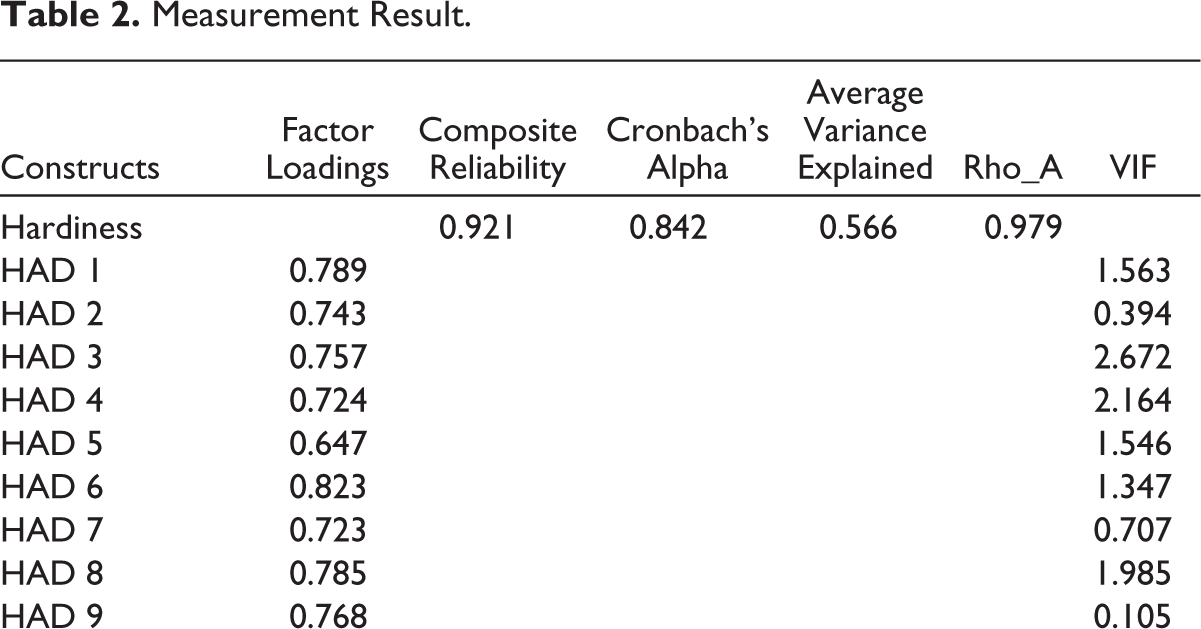
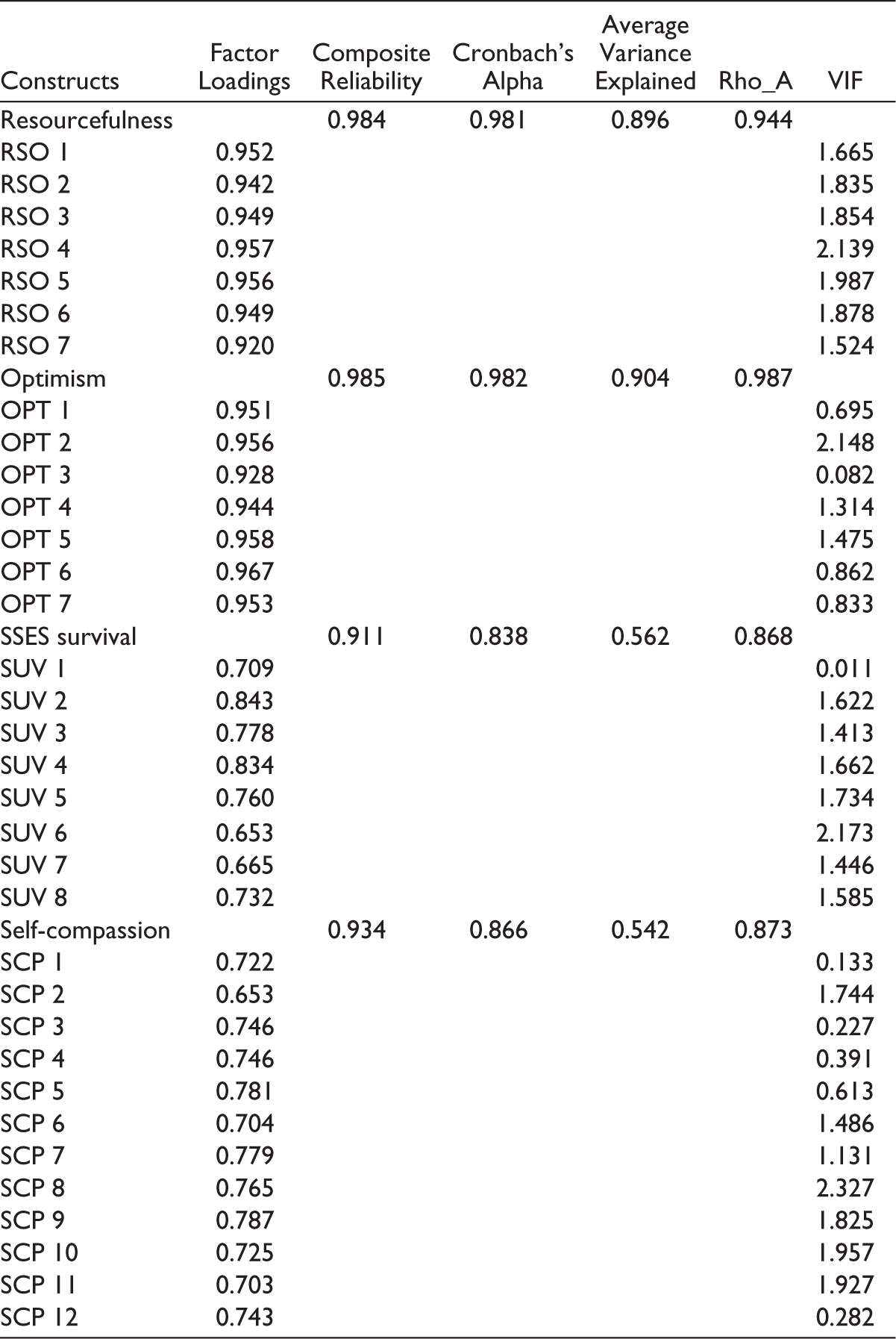
The outcome from the model test of reliability using Cronbach alpha, composite reliability and rho_A (all measures of internal consistency method) were within the threshold recommended of 0.70 and above (Chaouali et al., 2020), hence, indicating that the scale and the study model were reliable (see Table 2).
Also, the result from the average variance extracted (AVE) was used to confirm the convergent validity of the construct, as the threshold of 0.50 and above (Chaouali et al., 2020) was satisfied for the variables (see Table 2). Further, discriminant validity was assessed using the Heterotrait–Monotrait (HTMT) values and this was because it is a more robust measure for discriminant validity. The result as shown in Table 3 indicates that the HTMT values were statistically different from 1, as the entire confidence intervals did not include 1 (Henseler et al., 2015). Hence, discriminant validity was confirmed.
Heterotrait-Monotrait Ratio (HTMT).
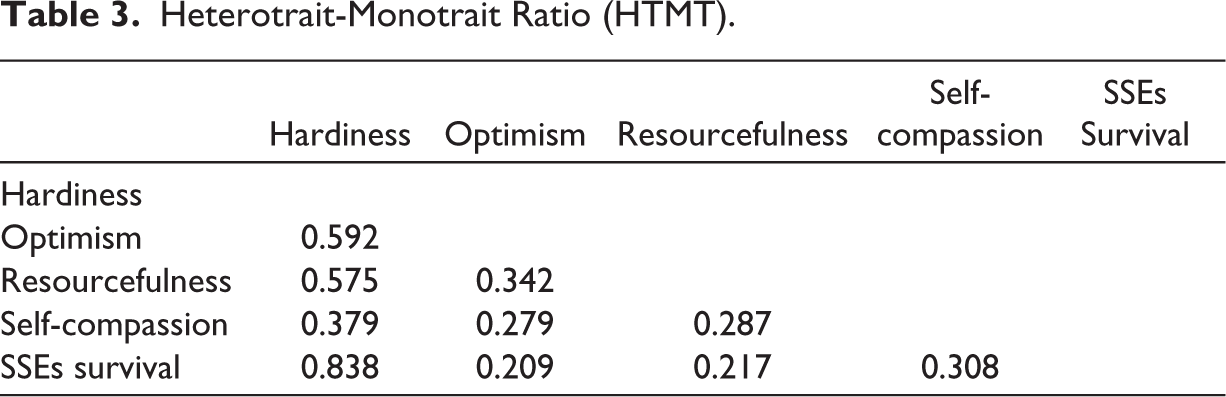
The PLS algorithm report showed the absence of a collinearity problem from the first-order construct, as the value of the variance inflation factor (VIF) for the constructs was within the benchmark of less than 5 (Hair et al., 2017) (see Table 2). The researchers made efforts to determine the influence of the first-order construct in producing the second-order construct most especially for entrepreneurial resilience and self-compassion. The weight and the significance of the first-order construct on the second were assessed and the result showed the entire first order was positive, which is in support of the existing theoretical proposition. The result confirms that there is a significant link between the first- and second-order construct, as such the first-order construct was instrumental to the formation of the second-order construct, most especially for self-compassion. Finally, since the scale reliability and validity were satisfied, none of the items were dropped.
Structural Path Model
Structural path coefficients of the study model showed the relationship between the variables. The result revealed a positive link among the study variables. Figure 2 represents the relationship between entrepreneurial resilience, self-compassion and SSEs survival. The link between entrepreneurial resilience and SSEs survival is positive, as evident with the beta value for the first-order constructs of resourcefulness (β = 0.316), optimism (β = 0.257) and hardiness (β = 0.304). The result confirms that self-compassion and SSEs survival are also positive (β = 0.495). Also, given the link between all the variables has a threshold above 0.2, it indicates that the relationship between the variables is moderate (Chin, 1998). The R-squares values, which show the model in-sample fit, show the coefficient of determination between the variables. The result indicates the model explains about 44.8% of changes in SSEs survival and about 39.1% of changes in self-compassion. Hence, following Henseler and Chin’s (2010) recommendation for interpreting R-square values (0.75 = strong, 0.50 = moderate and 0.25 = weak), it implies that moderate changes would be accounted for in SSEs survival and self-compassion.
Structural Path on Entrepreneurial Resilience, Self-compassion and SSEs Survival.
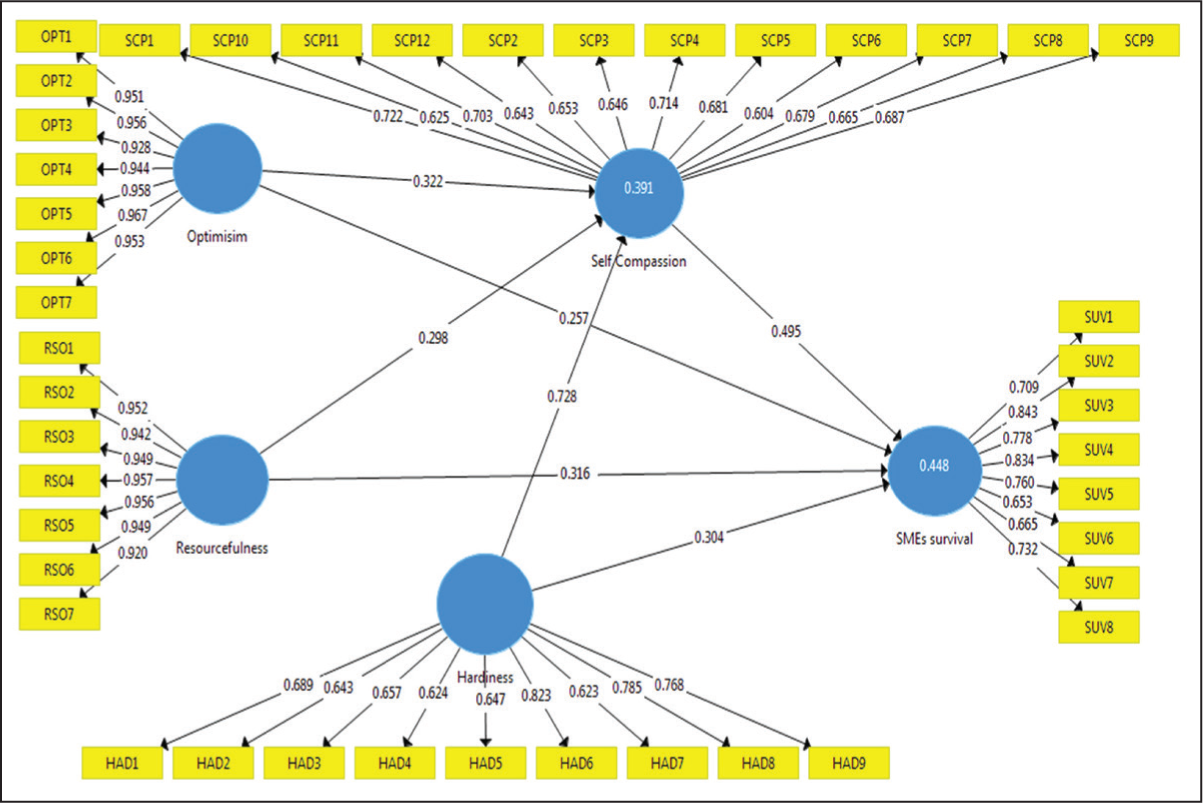
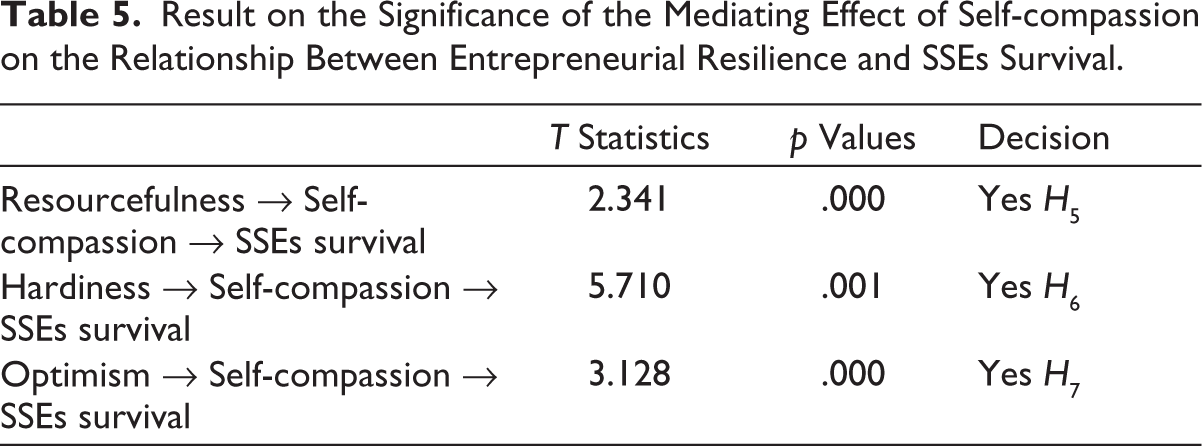
The structural path significance was assessed in line with the need to draw inferences from the study model. The result from the analysis showed that all the paths between entrepreneurial resilience, self-compassion and SSEs survival are significant. Figure 3 shows a diagrammatical representation of this result, while Table 4 is a broader summary of the result and the decision. As t-values were greater than 1.96, the hypothesis was accepted by Lind et al. (2013).
Significance Model Showing Entrepreneurial Resilience, Self-compassion and SSEs Survival.
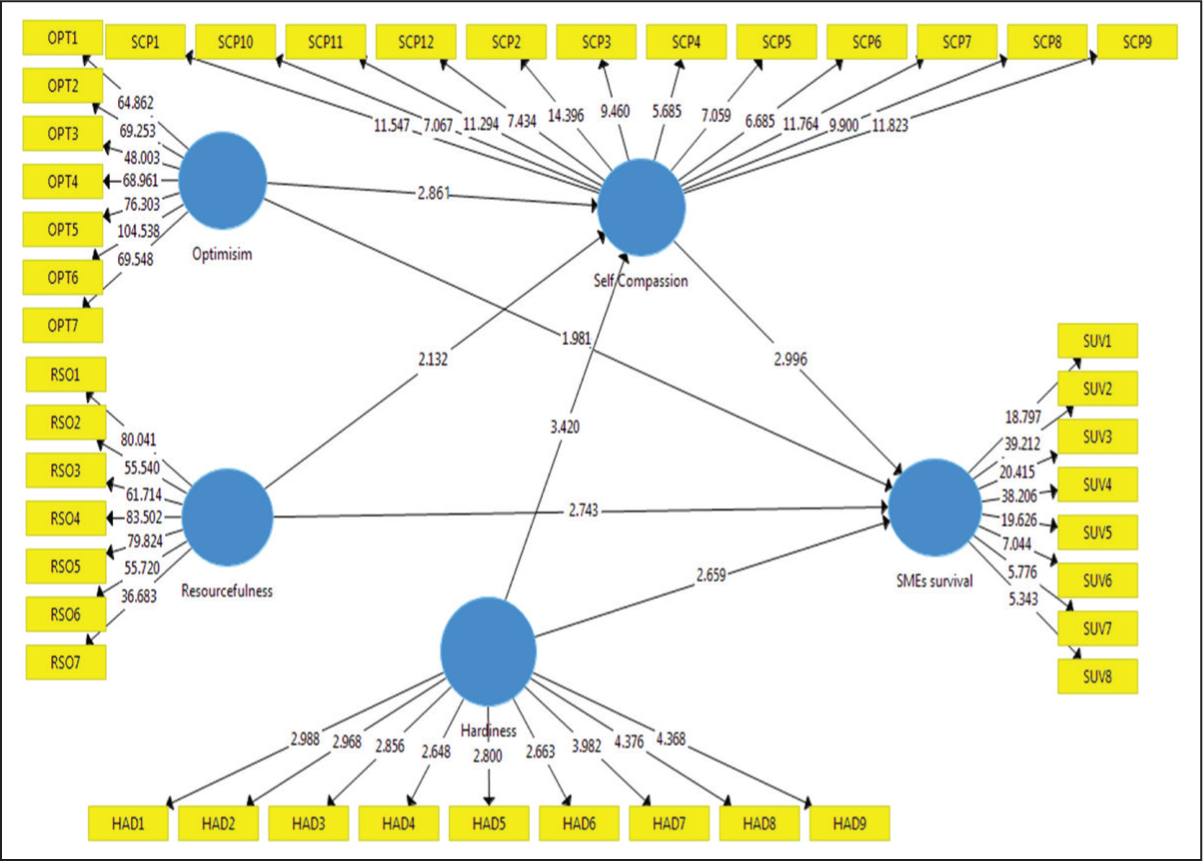
The bootstrap result indicates that the direct relationship between optimism and SSEs’ survival was significant as indicated by a t-value as 1.981, p < .05. The path between resourcefulness and SSEs’ survival was also significant as the t-value was 2.743, p < .05. The path between hardiness and SSEs’ survival was also found to be significant as the t-value (2.659, p < .05) was greater than 1.96. The result confirms that there is a significant relationship between entrepreneurial resilience and SSEs’ survival. Further, the result also confirms that self-compassion has a direct significant influence on SSEs’ survival (2.996, p < .05), as such, it can be concluded that entrepreneurial resilience and self-compassion are good predictors of SSEs’ survival. Tables 4 and 5 show the decisions on the hypotheses based on the outcomes.
Direct Significance of the Relationship Between Entrepreneurial Resilience and SSEs Survival.
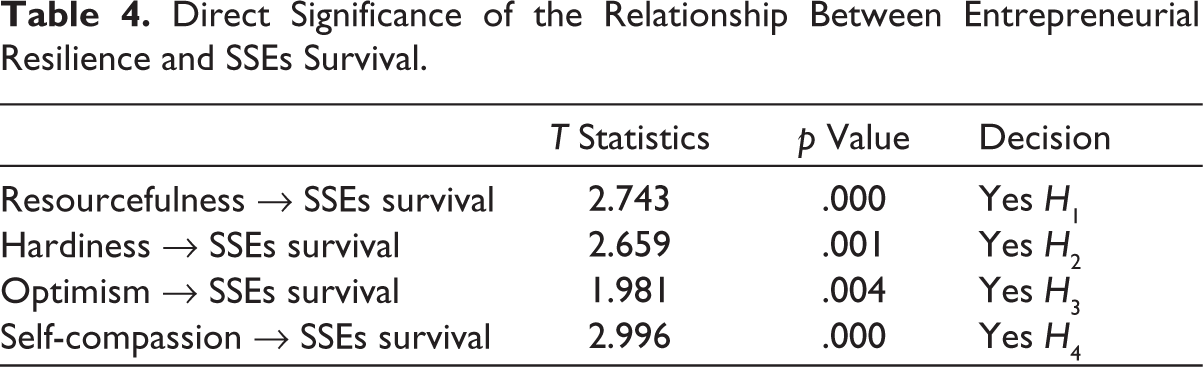
The indirect relationship between entrepreneurial resilience, self-compassion and SSEs survival was proved to be significant from the findings of the study. The link between resourcefulness, hardiness and optimism as measures of resilience all had t-values greater than 1.96 as indicated in Table 5. However, since the direct relationship is significant, it implies that self-compassion partially mediates the link between entrepreneurial resilience and SSEs’ survival.
Result on the Significance of the Mediating Effect of Self-compassion on the Relationship Between Entrepreneurial Resilience and SSEs Survival.
Further, the model fit was assessed using the standardised root mean square (SRMR) and the output indicates that the SRMR was within the given threshold output value of 0.02. This implies the model has a good fit, as it is in line with the recommendations of Henseler et al. (2015) who held that the SRMR should be <0.08 for model fit. Finally, the predictive relevance of the model was assessed following Shmueli et al. (2019) recommendation that a good predictive model is evident when the Q2 value is >0. The result indicates that the model has a good predictive relevance as the Q2 value was 0.204.
Discussion of Findings
The objective of the study guided the empirical analysis of the theoretical propositions made on the link between entrepreneurial resilience, self-compassion and firm survival, given the limited literature on the link between the variables. The sample showed a good spread of data and a balanced demographic distribution of participants, thereby covering gaps in earlier studies that have failed to take into consideration that managers of SSEs are not homogenous. The result showed a good model fit, thus indicating the study has successfully provided a model for future use.
The result supports previous studies that have indicated entrepreneurial resilience as a multidimensional construct (Ayala & Manzano, 2014; Duchek, 2018; Manzano-García & Ayala, 2013). It is also confirmed that self-compassion can be measured as a higher-order construct, thus validating the position of Raes et al. (2011). The link between optimism and SSEs’ survival was found to be significant and positive and this is consistent with the views of Engel et al. (2019) who also indicated that there is a positive link between optimism and a firm’s growth and survival. Further, the result indicates that resourcefulness significantly influences SSEs’ survival and this outcome aligns with the findings of Ayala and Manzano (2014) which also found a positive link between resourcefulness and business growth.
In addition, this research finds that hardiness accounts for increased SSEs’ survival and this result is consistent with the findings of Ayala and Manzano (2014) and Fatoki (2018) who also established a link between hardiness and firm performance. Thus, to ensure increased survival of SSEs, there is a need to ensure that entrepreneurs understand the relevance of being resilient in the face of challenges, as it is essential for the survival of their business.
Furthermore, it was also found that self-compassion mediates the relationship between entrepreneurial resilience and SSEs’ survival. This indicates that self-compassion and entrepreneurial resilience are good predictors of SSEs’ survival rate. This research result is supported by the views of Engel et al. (2019) and Fredrickson et al. (2008) who held that entrepreneurs’ resilience allows for understanding the reality of events and through this compassion for self is developed, which allows the individual make a consistent effort to sustain the business or retry again when faced with challenges. Consequent to these findings, this study contributes to entrepreneurship literature and helps entrepreneurs to be proactive in disasters and challenges.
Conclusion and Implications
This article advances the knowledge on the mechanism linking entrepreneurial resilience and SSEs’ survival by proposing an entrepreneurial resilience–entrepreneur self-compassion and SSEs’ survival model that holds that self-compassion mediates the relationship between entrepreneurial resilience and SSEs survival. The study addresses the fundamental questions of identifying what entrepreneurs do when responding to challenges and what enhances resilience when faced with dangers. It is concluded that entrepreneurial resilience is an effective response to challenges that help ensure that the business survives and self-compassion enhances resilience, which leads to business survival.
As a theoretical contribution, our article espouses a new perspective to entrepreneurial resilience literature, through the provision of an integrative model that captures the connection between an, essentially, internal discourse and the survival of the business venture, which is also influenced by the environment external to the venture, thereby providing a new ground for future theoretical development.
Further, our application of Raes et al. (2011) self-compassion scale and the Connor–Davidson Resilience Scale for measuring entrepreneur resilience, which are measures designed and earlier tested in other settings, to an emerging economy is another significant theoretical value of this study. Also, the theoretical relevance of the article hinges on the introduction of a cognitive response as an intervening activity, which is expedient in providing researchers and entrepreneurs with answers on how and under what condition entrepreneurial resilience is vital in ensuring the increased survival of SSEs. Our finding provides a theoretical justification that the relationship between entrepreneurial resilience and SSE survival can be further strengthened when entrepreneurial resilience is channelled through self-compassion.
Entrepreneurs need to be more concerned with developing behaviours that will keep them active in business irrespective of the challenges they encounter. The inner process of managing crisis is essential and the understanding that everything in life is a phase would better help the way in which disaster is managed. The complexity and unpredictability of the business environment demand that managers develop a pre- and post-crisis behaviour management and recovery mentality, as it is essential in ensuring that they successfully manage events to their advantage. As a practical implication, entrepreneurs need to build and nurture their individual hardiness, resourcefulness and optimism, while also having self-compassion, as an underlining coping mechanism in the face of business challenges.
Also, this study advances resilience and self-compassion as cogent factors that are fundamental in understanding the complexity of business survival. Our definition of business survival as a transgenerational phenomenon changes the way businesses assess the operation and management of their business, most especially from an individual perspective. Furthermore, training institutions and entrepreneurial hub bias of focusing on technical and practical skills would have to change because, beyond these skills, self-compassion and resilience are two elements required for business survival.
This article calls for a restructuring of the current policy and curriculum on entrepreneurial education in most emerging economies and in sub-Saharan Africa if the rising cases of failed businesses are to be ameliorated. This is because it does not take cognisance of fundamental psychological elements that would equip entrepreneurs to understand that failures are inevitable in business, and they can learn from them and use them as a springboard to create innovative opportunities that would lead to building sustainable transgenerational businesses.
Further, the study offers societal implications, and despite the focus of the study being on individual entrepreneurs, society can learn to develop the mechanism of showing understanding to self, and learning from their mistakes, which allows them to build or develop institutions that would help manage future occurrences. Finally, the study adds to scholarship on entrepreneurial resilience, as it provides a novel model portraying the connection between resilience and individual capacity to learn and cope faster through a broadened horizon that conceptualises its relevance when channelled through self-compassion.
Limitations and Future Directions
There are a number of limitations of the study that demand scholars’ attention despite the evident contributions of this research. First, the study was limited to a cross-sectional survey research design, hence, there is a need for future studies to adopt a longitudinal approach to have a trajectory of how resilience occurs. There is also a need for specific studies to be undertaken to understand the varying contexts in which resilience was applied, and by context, this means, threats or challenges. The use of convenience sampling is a limitation; future studies could adopt other probabilistic sampling techniques.
Also, the focus was on the survival of SSEs, which literature has indicated can be very difficult to measure due to the seeming lack of consensus on the construct and how it is to be measured. However, future studies can consider other organisational and environmental outcomes. Next, the research was conducted in a developing economy, Nigeria. Though justified, however, this limits the study findings’ generalisation to developing and emerging markets. Hence, the results should be taken with caution. Future studies can consider firms that have a global frame. There is also a need for future studies that account for large and nascent firms, as the outcome of the study may differ significantly.
Footnotes
Declaration of Conflicting Interests
The authors declared no potential conflicts of interest with respect to the research, authorship and/or publication of this article.
Funding
The authors received no financial support for the research, authorship and/or publication of this article.