




Abstract
This study explores the influence of consumer-brand co-creation behavior on brand trust and purchase intention. It proposes a model where experiential hedonic value acts as a mediator, while electronic word of mouth (eWOM) and corporate social responsibility (CSR) serve as moderators. The proposed hypotheses, grounded in the stimulus–organism–response (S-O-R) framework, were tested using partial least squares structural equation modeling on a sample of 400 social media users. Theoretically, this study refines the S-O-R and co-creation frameworks. Managerially, it highlights the importance of authentic CSR and emotionally engaging eWOM, while urging caution in assuming automatic synergy between co-creation and peer influence. Future research should examine longitudinal effects, cultural factors, and varying forms of eWOM and CSR.
Introduction
In the digital era, influencer marketing is a core component of brand strategy, providing an effective alternative to traditional ads by harnessing the trust, authenticity, and extensive audiences of social media personalities (Abidin, 2016; Lou & Yuan, 2019). Influencers exert a significant impact on consumer attitudes and behaviors, with a pronounced effect on brand trust, purchase intention, and loyalty (Ki et al., 2020). Although prior studies have demonstrated that influencer characteristics (e.g., influencer–product congruence and social presence) directly affect consumer outcomes (Jin et al., 2019; Lim et al., 2022), the mediating mechanisms that explain how these attributes shape behavior constitute a significant gap in the literature.
While marketing literature has broadly defined value co-creation (as content sharing, product feedback and community engagement; Ind et al., 2013; Pletikosa Cvijikj et al., 2018), its potential as a mediating variable in the mechanism of influencer marketing has not been extensively studied (Ind et al., 2013; Pletikosa Cvijikj et al., 2018). While the literature establishes electronic word of mouth (eWOM) and corporate social responsibility (CSR) as direct predictors of brand outcomes (Brown & Dacin, 1997; Cheung & Thadani, 2012; Fatma & Rahman, 2016), their potential role as moderators between influence outcomes and consumer-brand co-creation behavior (CBCB) remains poorly understood both theoretically and empirically.
Research (Berger, 2014) establishes a causal link between favorable eWOM, positive perceptions of CSR, and increased consumer trust and advocacy. Therefore, it becomes imperative to analyze how these variables moderate or mediate the effect of CBCB on the formation of behavioral intentions within social media ecosystems.
Within the stimulus–organism–response (S-O-R) framework (Mehrabian & Russell, 1974), this study conceptualizes influencer congruence and social presence as external stimuli, CBCB as the internal organism, and purchase intention and brand trust as behavioral responses.
The influence of CBCB on consumer outcomes is moderated by contextual factors, including eWOM and CSR, which can amplify or mitigate its effects (Fuentes-Blasco et al., 2025; Labrecque, 2014). The most recent research (Kilumile & Zuo, 2024; Nguyen et al., 2024) confirms the importance of the central role of CBCB in improving consumer engagement and brand loyalty. Its effectiveness is significantly enhanced by the integration of social influence The primary objectives of this research are threefold: (a) to investigate the mediating effect of CBCB in the relationship between influencer characteristics (i.e., congruence and social presence) and consumer outcomes (i.e., brand trust and purchase intention); (b) to examine the moderating effects of eWOM and CSR on the CBCB–outcome link; and (c) to develop and empirically test a conceptual model that integrates these constructs. Using partial least squares structural equation modeling (PLS-SEM), the model will be validated on data collected from 320 active social media users across platforms such as Instagram, TikTok, and YouTube. Measurement instruments are drawn from validated scales in prior literature (Hair et al., 2017; Itani et al., 2021; Lou & Yuan, 2019), ensuring the methodological robustness of the study.
By bridging gaps in influencer marketing theory and incorporating the ethical and social dimensions of consumer behavior, this research contributes to a more comprehensive understanding of how value co-creation, peer influence, and brand ethics collectively shape digital consumer decision-making. The findings will provide actionable insights for marketers, brands, and influencers seeking to foster trust-based relationships and drive long-term brand engagement through authentic and socially conscious marketing strategies.
Literature Review
Stimulus–Organism–Response Model
The S-O-R model was initially proposed by Mehrabian and Russell (1974). Our study is based on the S-O-R model, particularly in the context of digital and influencer marketing (Kilumile & Zuo, 2024; Labrecque, 2014). Building on previous research, the conceptual framework of this study uses the S-O-R model, established in digital marketing research. This S-O-R model is widely recognized and applied to understand the relationships between stimuli, internal cognitive processes, and behavioral outcomes. In this study, influencer congruence and social presence are conceptualized as primary external stimuli.
Furthermore, we classify eWOM and CSR as moderating contextual stimuli that influence how consumers process and respond to brand-related cues. We also conceptualize CBCB and experiential hedonic value (EHV) as organismic responses reflecting internal states of engagement, enjoyment, and involvement with the brand. Brand trust (BT) and purchase intention (PI) are considered final consumer responses resulting from the interaction between stimulus and organismic variables.
This model is extended to include eWOM and CSR as contextual moderators that may strengthen or mitigate the effect of CBCB on consumer outcomes (Fuentes-Blasco et al., 2025; Labrecque, 2014). By integrating the S-O-R model, this study provides a systematic and theoretical explanation of how influencer characteristics trigger internal psychological mechanisms (engagement and hedonic value), which then translate into BT and PI. Moreover, the moderating role of CSR and eWOM reflects the growing importance of social and ethical cues in influencing consumer perceptions, consistent with recent extensions of the S-O-R model in digital contexts (Kilumile & Zuo, 2024).
Consumer-brand Co-creation Behavior
Brand co-creation behavior (BCCB) refers to the active involvement of consumers in the creation of brand value. This participation is achieved through concrete actions such as product recommendations, co-design of brand experiences, content creation, and participation in feedback loops. BCCB represents a paradigm shift: from a transactional relationship to a symbiotic partnership where the consumer, now an active participant, directly contributes to the construction of the brand’s image and performance. This behavior is often influenced by various factors such as trust in the brand, the perceived quality of the product, CSR practices, and engagement with influencers (Pletikosa Cvijikj et al., 2018).
According to Pletikosa Cvijikj et al. (2018), the active involvement of consumers in co-creation processes (content, product development) strengthens their emotional attachment to the brand, which results in increased loyalty. A study by Hutter et al. (2013) showed that when consumers engage in co-creation activities, they are more likely to recommend the brand to others, both on the Internet and in everyday life.
H1a: Consumer-brand co-creation behavior positively affects brand trust.
H1b: Consumer-brand co-creation behavior positively affects purchase intention.
Experiential Hedonic Value
EHV refers to the emotional, sensory, and affective enjoyment that consumers experience when engaging with a brand, especially in contexts that involve entertainment, aesthetics, or social interaction (Chitturi et al., 2008; Holbrook & Hirschman, 1982). The era of influencers and digital technology is bringing EHV to the forefront. Thanks to their interactive and immersive nature, influencers cultivate hedonic experiences by mastering visual aspects, personalization, engaging narratives, and a polished aesthetic (Lim et al., 2022; Lou & Yuan, 2019).
When consumers participate in brand co-creation such as by sharing branded content, participating in influencer-led challenges, or offering feedback, they are not only contributing value but also deriving intrinsic enjoyment and self-expression, which heightens their emotional connection with the brand (Mathwick et al., 2001; Pletikosa Cvijikj et al., 2018). This hedonic gratification fosters a stronger sense of brand identification and trust (Chandler & Lusch, 2015), which has been shown to be a key predictor of behavioral outcomes such as loyalty and PI (Park et al., 2020; Zarantonello & Schmitt, 2010).
Recent research highlights the mediating role of added value in digital branding and influencer marketing. Kim and Johnson (2016) showed that hedonic pleasure derived from influencer content significantly improves brand-related outcomes, especially when consumers feel entertained and moved. Along these lines, Childers et al. (2022) showed that consumers who perceive high hedonic value in co-creative digital experiences are more likely to generate BT and engage in brand-promoting behaviors.
Given the importance of affective responses in consumer behavior, EHV acts as a psychological bridge between consumer participatory behaviors (CBCB) and their attitudinal and behavioral loyalty to the brand. By including it in the model, we discover that immediate pleasure of the senses and emotions is the keystone that ensures the transition from co-creation to solid trust
H2: Experiential hedonic value mediates the relationship between consumer-brand co-creation behavior and brand trust.
Electronic Word of Mouth
eWOM is a key component of marketing. It refers to all informal, non-commercial exchanges between Internet users about an offer, on online platforms such as social media, blogs, forums, and online review sites.
Unlike traditional advertising, the credibility of eWOM comes from the fact that it is a peer-to-peer exchange between consumers, based on direct experience with the product or service (Cheung & Thadani, 2012). Due to the virality of social networks, eWOM spreads at lightning speed and can impact the opinion of a large audience in record time.
According to research by Nguyen et al. (2024), eWOM is highly impactful in shaping consumer perceptions. Influencers and user-generated content, which are inherently personal and authentic, help increase the likelihood of messages being spread across consumer networks. A study by Cova and Pace (2023) elaborated on how consumers’ personal advocacy through eWOM influences brand equity and is strongly correlated with improved brand loyalty.
H3: eWOM reinforces the relationship between consumer-brand co-creation behavior and experiential hedonic value.
Consumers’ active participation in the co-creation process via eWOM (e.g., content generation, experience sharing) intensifies their emotional attachment to the brand. Empirical research (Hennig-Thurau et al., 2004) demonstrates a positive correlation between involvement in eWOM and the propensity to promote the brand, thus contributing to the strengthening of the BCCB.
Corporate Social Responsibility
CSR refers to a company’s efforts to integrate social, environmental, and ethical concerns into its business model. CSR activities, such as environmentally sustainable practices, fair labor policies, and charitable initiatives, not only contribute to societal well-being but also build consumer trust and enhance brand reputation (Iglesias et al., 2018). Research has shown that CSR initiatives significantly influence consumers’ purchasing behaviors, especially as more consumers prefer brands that demonstrate a commitment to social responsibility.
According to Sen and Bhattacharya (2001), CSR builds BT and builds deeper emotional connections with consumers, thereby improving their loyalty. A study by Kim and Ko (2024) showed that consumers are more likely to interact and advocate for influencers who promote socially responsible brands. This positions CSR as a powerful performance enabler for both influencers and brands.
H4: CSR strengthens the relationship between influencer congruence and consumer-brand co-creation behavior.
Consumer engagement in co-creation is directly influenced by a brand’s social responsibility image. Indeed, CSR acts as a catalyst for credibility (Labrecque, 2014) for the brand and its influencers, an alignment of values that encourages active participation and strengthens loyalty.
Trust in Brand
Trust is the essential foundation of influencer marketing. Influencers gain trust by being authentic and transparent, and aligning their values with their audience. According to Seifert and Kwon (2019), key drivers of this trust include consistent communication, high engagement, and the relevance of their endorsed products. Consumer trust in influencers translates directly into increased awareness, stronger engagement, and increased sales for brands.
A study by De Veirman et al. (2017) confirmed that expertise and authenticity are the main determinants of consumer trust and purchasing behavior. These authors added that the perception of expert credibility in a given field increases trust and promotes commitment. Kim and Ko (2024) found that when influencers disclose paid partnerships or sponsored content transparently, it positively impacts the level of trust their followers have, leading to greater consumer engagement.
H5: Brand trust positively influences purchase intention.
A study conducted by Kilumile and Zuo (2024) revealed that when an influencer inspires trust, they create an emotional connection that drives their community to take action for the brand, transforming followers into true ambassadors through generated content, testimonials, and recommendations. Consumer involvement in co-creation (content, feedback, campaigns) significantly strengthens their emotional connection with the brand. This engagement directly translates into stronger purchase intentions and lasting loyalty (Kilumile & Zuo, 2024) while increasing the perceived value of products and the customer experience.
Hypothesis Development
Based on this synthesis, we propose the following hypotheses:
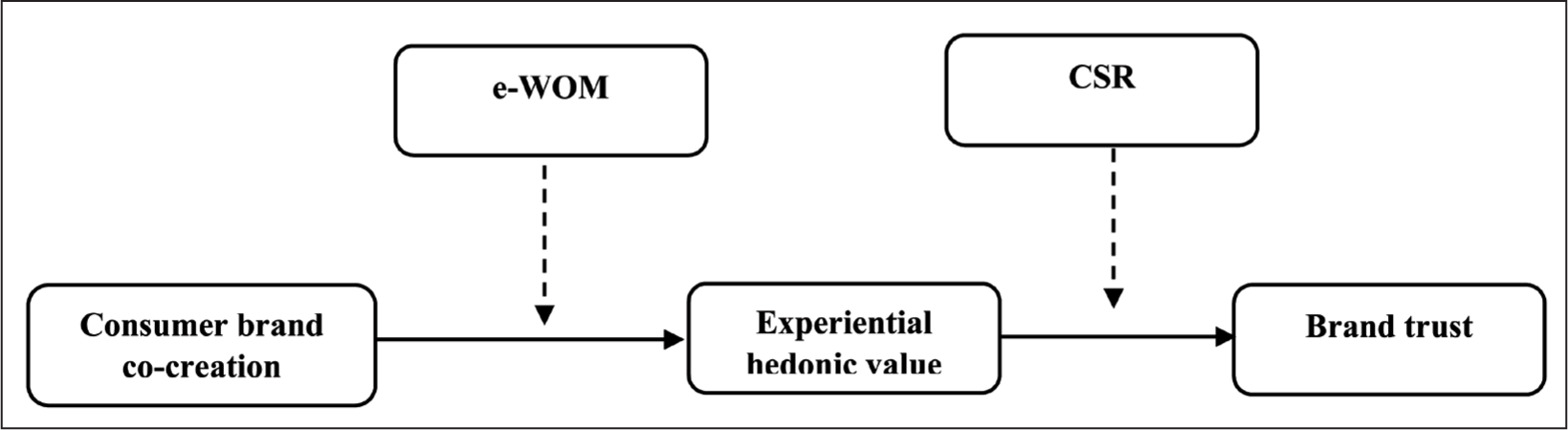
H1a: Consumer-brand co-creation behavior positively affects brand trust. H1b: Consumer-brand co-creation behavior positively affects purchase intention. H2: Experiential hedonic value mediates the relationship between consumer-brand co-creation behavior and brand trust. H3: eWOM reinforces the relationship between consumer-brand co-creation behavior and experiential hedonic value. H4: CSR strengthens the relationship between experiential hedonic value and brand trust. H5: Brand trust positively influences purchase intention.
Research Methodology
Sample
The sample for this study comprises 400 respondents, each of whom is an active consumer of influencer-driven content across major social media platforms such as Instagram, TikTok, and YouTube. To ensure diverse representation and minimize bias, a stratified random sampling technique was employed. Stratified sampling was chosen to ensure adequate representation across key demographic groups, including age, gender, and frequency of social media usage. By segmenting the population into strata based on these characteristics, the sample reflects the broader diversity of social media users, making the results more generalizable.
The respondents were categorized into age groups (18–24, 25–34, 35–44, etc.), genders (male, female, non-binary), and social media engagement levels (low, medium, high). This stratification not only enables an understanding of how different demographic groups respond to influencer marketing but also helps identify the varying effects of influencer congruence, trust, eWOM, and CSR across these groups.
Data Collection
Data for this study were collected through an online survey, which was designed to capture detailed consumer responses related to their engagement with influencer-driven content. The survey instrument was structured to measure the key constructs: CBCB, eWOM, CSR, BT, and PI.
The survey instrument included pre-validated measurement scales from established literature. Each scale was adapted for the context of influencer marketing to ensure relevance and clarity. Respondents were asked to rate their level of agreement with various statements about their experiences with influencers, their perception of brand CSR initiatives, their level of trust in influencers, and their purchase intentions on a 7-point Likert scale (1 = Strongly disagree, 7 = Strongly agree).
Survey Design
The survey contained five sections:
CBCB: This section measured the extent to which respondents engaged in behaviors that actively contributed to a brand’s value, such as product recommendations, content sharing, providing feedback, or participating in campaigns. eWOM: This section assessed the frequency with which respondents shared their opinions and recommendations about brands online, particularly via social media platforms, online forums, or review sites. CSR: Questions in this section explored how consumers perceive a brand’s efforts toward sustainability, ethical practices, and contributions to social causes, and how this influences their relationship with the brand. BT: This section evaluated the level of trust consumers place in influencers, considering factors such as the influencer’s perceived authenticity, credibility, and alignment with the brand they promote. PI: This section assessed the likelihood of respondents purchasing a product or service promoted by an influencer, based on their experiences and perceptions of the influencer and the brand.
Pre-test and Pilot Study
Before launching the survey, a pilot study was conducted with a sample of 50 respondents to assess the clarity, readability, and reliability of the survey instrument. Feedback from the pilot study led to revisions in the wording of some questions to ensure clarity and to address potential confusion. The reliability of the adapted scales was assessed using Cronbach’s α, ensuring that all scales exceeded the 0.7 threshold for internal consistency.
PLS-SEM Analysis
The data collected through the survey were analyzed using PLS-SEM. PLS-SEM is well-suited for exploratory research, particularly when dealing with complex, multi-construct models and non-normal data (Hair et al., 2017). PLS-SEM allows researchers to test the relationships between multiple independent and dependent variables simultaneously, making it an ideal choice for this study, where multiple constructs are hypothesized to influence consumer behavior.
Smart PLS 3.0 software was used to conduct the PLS-SEM analysis, as it offers robust tools for testing structural models and provides various diagnostic tests to evaluate the validity and reliability of the model. The analysis was performed in two stages: measurement model evaluation and structural model evaluation.
This study develops an integrated conceptual framework where CBCB acts as a mediator between influencer-related factors (congruence, social presence) and consumer outcomes (PI, BT). Additionally, eWOM and CSR are proposed as moderators of this relationship.
Measurement Constructs
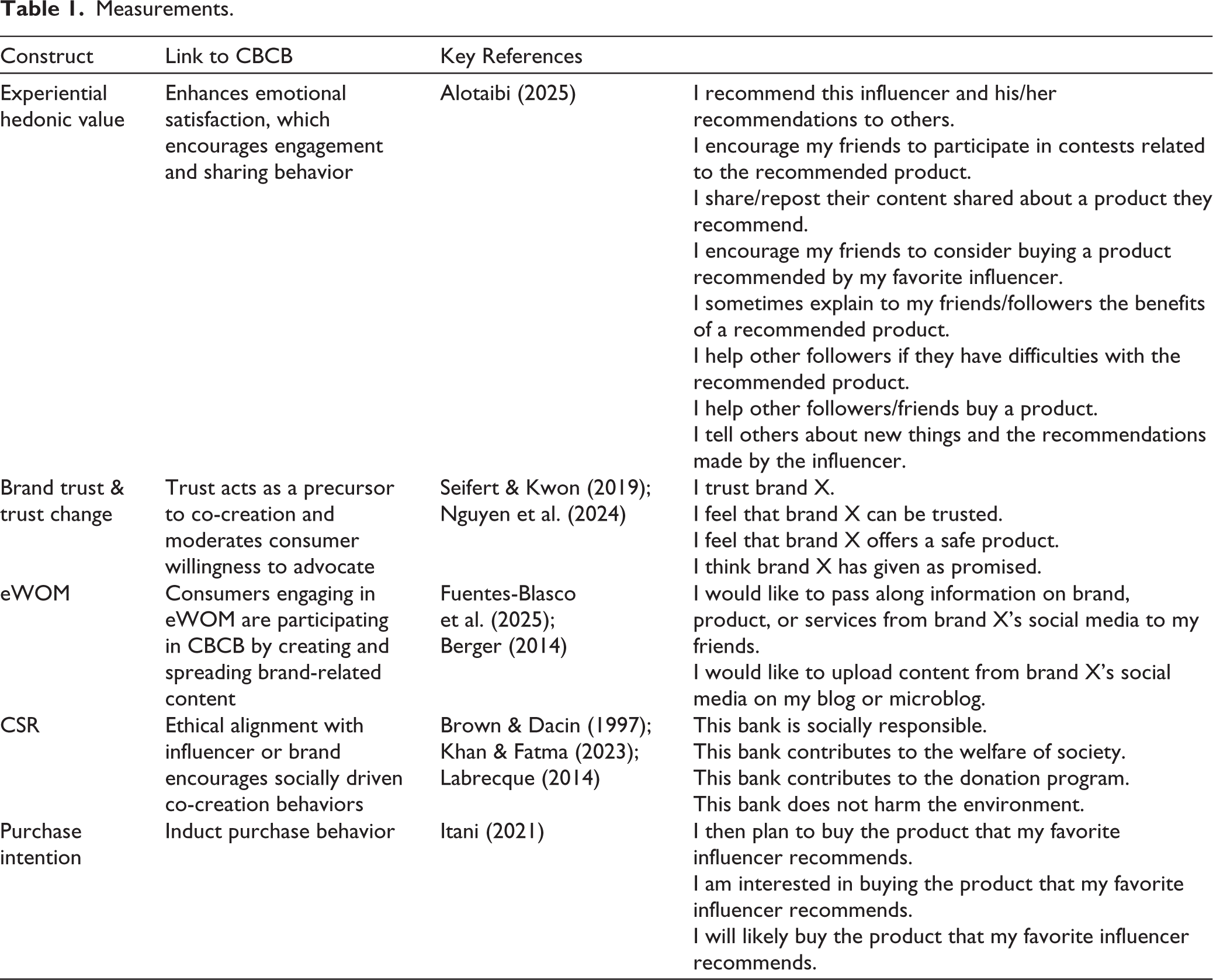
All the scales refer to the previous studies, and we used the 5-point Likert scale to measure the items.
Structural Model Assessment
Following the measurement model evaluation, the structural model was analyzed to test the hypothesized relationships between constructs using key indicators such as path coefficients, R², and effect sizes (f ²). Path coefficients assessed the strength and direction of relationships (e.g., the impact of CSR on BT), while R² values indicated how well the model explains variance in dependent variables. Effect sizes provided further insights into the relative importance of each predictor. Model fit was evaluated using PLS-SEM-specific indices, including the standardized root mean square residual, which was acceptable at values below 0.08, and the normed fit index, with values closer to 1 indicating a good fit. These assessments confirmed the model’s validity, reliability, and suitability for predicting consumer behavior within the context of influencer marketing (see Figure 1).
Research Model.
Results
Reliability of Measurements
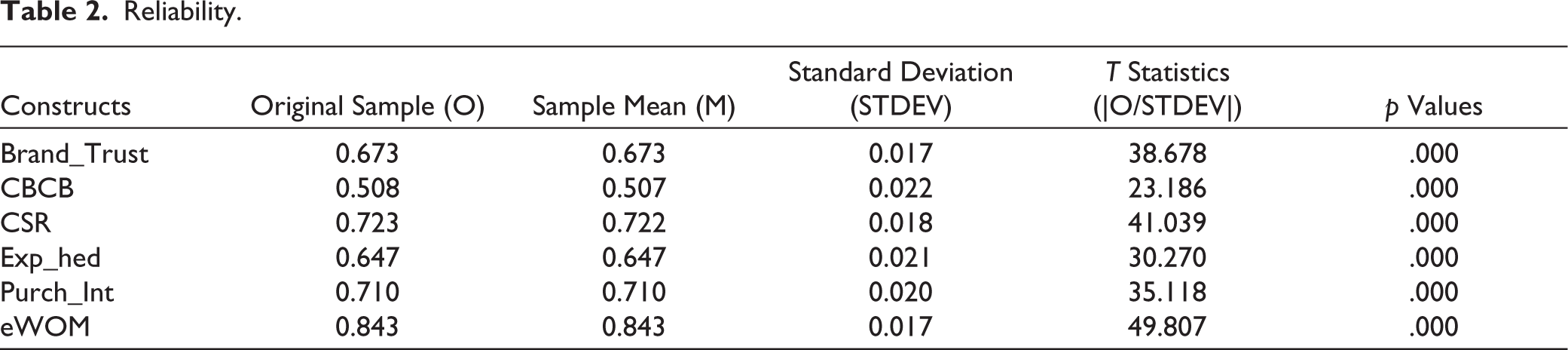
Ensuring the reliability and validity of measurement instruments is paramount in SEM. In our study, Cronbach’s α values ranging from 0.839 to 0.969 indicate excellent internal consistency of the constructs, adhering to Nunnally’s (1967) guidelines, where a Cronbach’s α of 0.8 or higher is deemed acceptable for applied research. Additionally, all composite reliability values exceed 0.894, suggesting that the constructs have high internal consistency.
The average variance extracted for all constructs surpasses the threshold of 0.5, meeting the requirement for convergent validity (Fornell & Larcker, 1981). This indicates that the measurement items adequately represent their respective constructs. Discriminant validity, which ensures that constructs are distinct from one another, was assessed using the heterotrait–monotrait ratio, with all values below the conservative threshold of 0.85. This confirms that the constructs in our model are sufficiently distinct and do not overlap significantly, further supporting the validity of our measurements (see Tables 1 and 2).
Measurements.
Reliability.
Direct Relationships
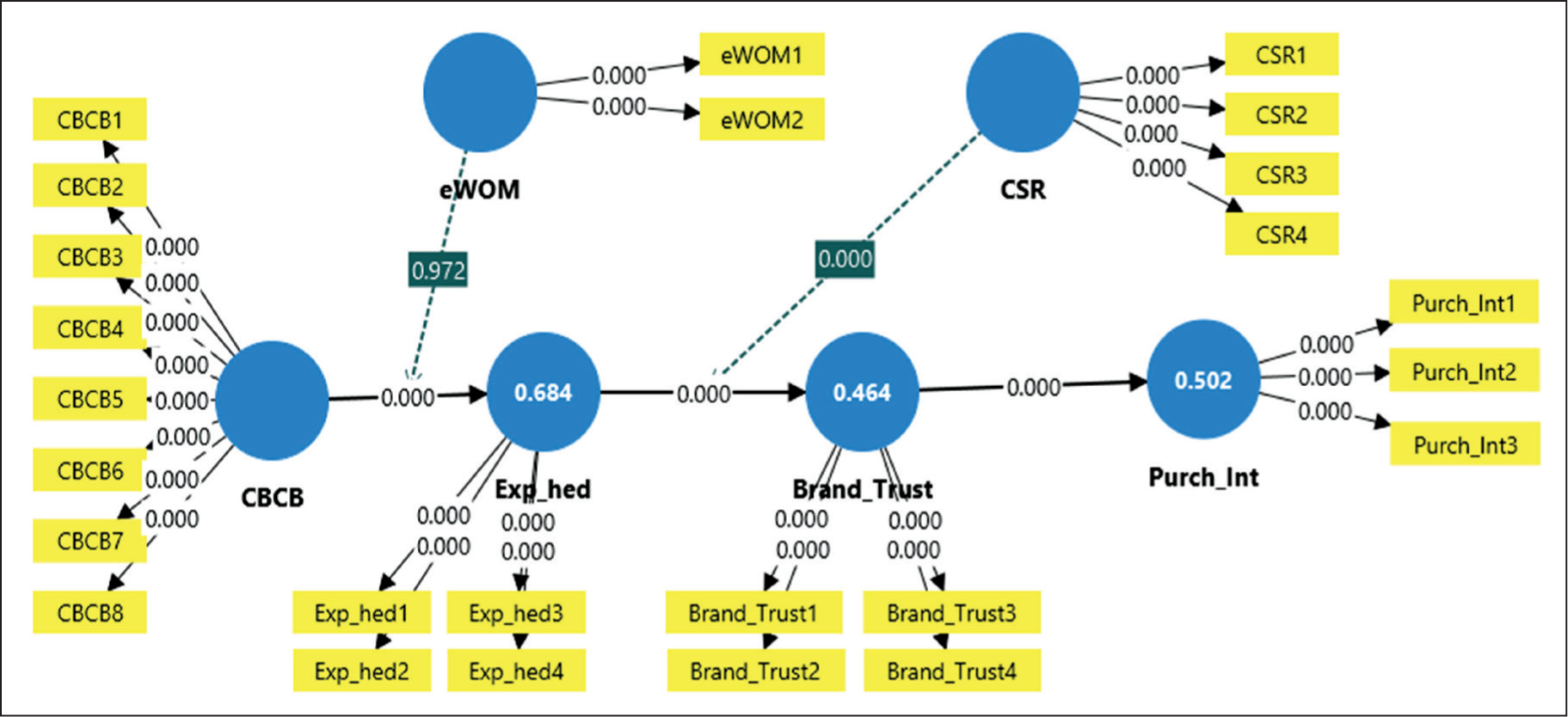
The analysis of direct relationships in the model reveals several statistically significant and meaningful associations that contribute to understanding consumer PI. BT emerged as the strongest predictor (β = 0.708), confirming its pivotal role in driving purchase decisions, consistent with Chaudhuri and Holbrook (2001). CBCB significantly enhances EHV (β = 0.436), while CSR strongly influences BT (β = 0.477) and PI (β = 0.338), echoing findings by Bhattacharya and Sen (2004) and Sen et al. (2006). eWOM also positively affects EHV (β = 0.491), supporting the notion that online interactions boost emotional engagement (Cheung et al., 2008). Furthermore, EHV positively impacts both BT and PI, albeit more moderately, reinforcing the importance of emotional experiences in brand relationships. While CBCB directly influences PI (β = 0.085), its effect is relatively weaker, suggesting its impact is more significant when mediated through other constructs. Overall, these findings highlight BT, CSR, and eWOM as central drivers of PI, aligning with previous theoretical frameworks (Batra et al., 2012; Keller, 2013) (see Table 3 and Figure 2).
Direct Relations.

Research Model.
Indirect Relationships
The analysis of indirect effects in the model reveals key mediating pathways that deepen the understanding of consumer behavior. Notably, CSR influences PI indirectly through BT (β = 0.338), highlighting trust as a crucial mechanism through which CSR initiatives drive consumer action (Sen et al., 2006). Similarly, EHV enhances PI via BT (β = 0.135), supporting the notion that emotional experiences with a brand foster trust and ultimately impact purchasing decisions (Batra et al., 2012). Furthermore, eWOM exerts an indirect effect (β = 0.095) through EHV and BT, affirming the role of social influence and digital engagement in shaping consumer intentions (Cheung et al., 2008). However, the interaction effect between eWOM and CBCB was statistically insignificant (β = −0.000, p =.972), suggesting that co-creation behaviors do not amplify the impact of eWOM in this context. These findings emphasize the mediating power of BT and EHV while calling for further investigation into conditions under which co-creation and social influence might interact more effectively (see Table 4).
Indirect Relationships.

Discussion of Results
This study offers robust empirical insights into the dynamic interplay between CBCB, EHV, eWOM, CSR, BT, and PI in a digital branding context. The findings largely corroborate prior theoretical frameworks while also revealing important nuances that extend and, in some areas, challenge conventional assumptions in digital marketing and value co-creation research. Our study confirms the theoretical postulate established by Chaudhuri and Holbrook (2001) and Morgan and Hunt (1994), who stipulate that BT is the strongest predictor of PI (β = 0.708, p <.001). In the context of influencer marketing, this result empirically validates the model according to which trust, and not only the influencer’s reputation, mediates the impact of their recommendations (De Veirman et al., 2017).
Consistent with stakeholder theory, CSR was found to significantly enhance BT (β = 0.477) and PI (β = 0.338), validating earlier findings that consumers perceive socially responsible brands as more credible and emotionally appealing (Bhattacharya & Sen, 2004; Iglesias et al., 2018; Sen et al., 2006).
CSR acts as both a rational and an emotional signal, strengthening relational bonds and behavioral intentions. The study also confirms that eWOM significantly improves EHV (β = 0.491), proving that peer-to-peer content enriches the brand experience on an emotional level (Cheung & Thadani, 2012; Lou & Yuan, 2019). In social digital spaces, consumers increasingly rely on emotional resonance, often fueled by relevant content, to shape their brand preferences (Nguyen et al., 2024). Consistent with co-creation theory, CBCB had a positive effect on EHV (β = 0.436) and BT (β = 0.120). This supports the idea that participatory behaviors not only empower consumers but also foster emotional bonds and brand identification (Chandler & Lusch, 2015; Pletikosa Cvijikj et al., 2018). These outcomes echo Holbrook and Hirschman’s (1982) proposition that hedonic and emotional dimensions of consumption are central to loyalty formation.
Specifically, the hypothesized interaction between CBCB and eWOM on EHV was statistically insignificant (β = −0.001, p =.972). This confirmation contradicts the work of Hennig-Thurau et al. (2004) and recent research by Cova and Pace (2023), which establish that participatory behaviors and peer influence act in synergy to generate emotional value. In digital environments, eWOM can be so rewarding in itself that it makes co-creation unnecessary. The effectiveness of co-creation in enriching the emotional experience would then depend on the authenticity of the message, the credibility of the influencer, and the involvement of the consumer (Batra et al., 2012; Berger, 2014). Furthermore, unless co-creation is visibly acknowledged or rewarded by the brand or influencer, its emotional resonance may remain latent or under-recognized. While CBCB had a positive direct effect on PI (β = 0.085), this relationship was notably weaker than its indirect effects through EHV and BT. This suggests that co-creation is a facilitator rather than a primary driver of purchase behavior. Its influence is most potent when embedded within emotionally rich and trust-based brand interactions, a finding consistent with Childers et al. (2022) and Park et al. (2020).
This study proposes a refinement of the S-O-R framework by demonstrating that CBCB, CSR, and eWOM act as stimuli that activate emotional (EHV) and relational (BT) responses, which then prompt the consumer to take action (PI). Furthermore, the results question the universality of the interaction effects postulated in this model. Practitioners must now consider CSR not as an accessory communication, but as the foundation of trust.
eWOM is a powerful lever for strengthening your brand’s storytelling and emotional impact. To harness it, encourage co-creation of content with your audience, provided that this approach is authentically enriching for them and that you respond to them visibly. However, this tactic should not be used in isolation. Its effectiveness is increased 10-fold when it is part of a broader marketing strategy, prioritizing building trust and continuously improving the customer experience.
Conclusion
This study significantly advances our understanding of how CBCB, EHV, eWOM, and CSR dynamically interact to influence BT and PI in digital branding environments. The findings corroborate existing literature emphasizing the pivotal role of CSR and eWOM as emotional and cognitive drivers that enhance consumer trust and purchase decisions in today’s digitally connected marketplace (Bhattacharya & Sen, 2004; Cheung & Thadani, 2012; Iglesias et al., 2018).
Crucially, the study reveals a non-significant interaction effect between CBCB and eWOM on EHV and PI, challenging the prevailing assumption that participatory consumer behaviors and peer influence synergistically amplify brand outcomes (Cova & Pace, 2023; Hennig-Thurau et al., 2004). This nuanced insight suggests that the interplay between consumer engagement and social influence is contingent upon contextual factors such as message authenticity, influencer credibility, platform affordances, and individual differences in motivation and involvement (Batra et al., 2012; Berger, 2014).
Theoretically, this research enriches the S-O-R framework by empirically demonstrating that CBCB, CSR, and eWOM function as distinct stimuli that independently activate emotional (hedonic) and relational (trust) organismic states, which in turn drive behavioral intentions (Mehrabian & Russell, 1974). This finding departs from traditional models that emphasize synergistic stimulus interactions and invites scholars to reconsider the additive and possibly parallel nature of these digital consumer engagement drivers.
Moreover, the findings refine co-creation theory by emphasizing the indirect influence of CBCB on PI, primarily mediated through affective and trust-based mechanisms rather than exerting a direct effect. This aligns with emerging perspectives that position co-creation as a vehicle for enhancing brand meaning and consumer identity, rather than a straightforward lever for purchase activation (Chandler & Lusch, 2015; Prahalad & Ramaswamy, 2004).
The study also underscores the strategic dual role of CSR as both an emotional connector and a credibility enhancer, consistent with stakeholder and signaling theories (Bhattacharya & Sen, 2004; Fombrun, 1996). This dual function reinforces the importance of authentic CSR initiatives as foundational elements for building consumer trust and fostering long-term loyalty (Luo & Bhattacharya, 2006; Sen & Bhattacharya, 2001).
Theoretical Implications
This study advances theoretical understanding in the domains of consumer behavior, digital marketing, and branding in several significant ways.
By empirically examining CBCB, CSR, and eWOM as discrete digital stimuli, and their influence on the organismic states of BT and EHV, this research extends the classical S-O-R model (Jacoby, 2002; Mehrabian & Russell, 1974). It demonstrates that stimuli in digital environments may operate independently rather than interactively, contesting traditional assumptions of synergistic effects (Eroglu et al., 2001; Holbrook & Hirschman, 1982).
The non-significant interaction effect between CBCB and eWOM on EHV and PI challenges the dominant belief in their synergistic influence (Hennig-Thurau et al., 2004). This suggests that contextual moderators such as consumer motivation, platform affordances, and message congruence may shape how co-creation and word-of-mouth impact consumer outcomes (Batra et al., 2012; Berger, 2014).
Contrary to earlier models positing a direct relationship between co-creation and behavioral intentions (Prahalad & Ramaswamy, 2004), this study positions CBCB as an indirect influencer, primarily affecting behavior through emotional value and trust mechanisms. This insight aligns with value co-creation literature that prioritizes identity, involvement, and meaning over immediate transactional outcomes (Chandler & Lusch, 2015; Füller, 2010).
The study affirms CSR’s dual function as an emotional engagement trigger and a cognitive credibility signal. It supports the integration of CSR within signaling theory and stakeholder theory frameworks, highlighting CSR’s ability to build BT and relational capital (Bhattacharya & Sen, 2004; Fombrun, 1996; Luo & Bhattacharya, 2006).
Given the limitations of a cross-sectional approach, the findings emphasize the need for dynamic, longitudinal, and experimental research designs that can better capture temporal evolution and context-dependent variation in trust and hedonic responses within digital brand ecosystems.
Managerial Implications
This research offers several actionable insights for practitioners operating in digital branding, content marketing, and customer engagement domains:
CSR as a strategic trust driver: CSR must be integrated into the core brand identity, not treated as an ancillary campaign. Transparent, authentic, and consistent CSR communication has a measurable impact on both BT and PI, particularly among ethically aware consumer segments (Fatma & Rahman, 2016; Sen & Bhattacharya, 2001). eWOM as a tool for emotional engagement: Beyond its informational role, eWOM should be framed as an emotional storytelling channel. Brands should amplify authentic consumer voices that align with their values to enhance EHV and deepen emotional attachment (Cheung & Thadani, 2012; Lou & Yuan, 2019). Design CBCB with emotional and relational value in mind: CBCB strategies should be embedded in ecosystems that promote emotional gratification and relational trust, rather than relying on co-creation as a standalone driver. Initiatives such as gamified interactions, user-generated content contests, and feedback-based participation, when paired with recognition and rewards, can significantly elevate brand engagement (Füller, 2010; Pletikosa Cvijikj et al., 2018). Avoid overgeneralizing CBCB–eWOM interactions: Marketers should be cautious in assuming that CBCB and eWOM naturally reinforce each other. The absence of a significant interaction effect in this study implies that message authenticity, relevance, and user context are essential to realizing potential synergies (Batra et al., 2012; Berger, 2014). Personalize engagement by segment and culture: Consumer reactions to CBCB, CSR, and eWOM vary by personality traits (e.g., openness, need for cognition) and cultural background. Brands should apply psychographic and cultural segmentation to optimize engagement strategies (Casaló et al., 2018; Hofstede, 2001; Steenkamp, 2001).
As digital marketing evolves with AI personalization, virtual influencers, and immersive technologies (AR/VR), managers must continually update their understanding of how these tools reshape emotional engagement and trust formation (Dwivedi et al., 2021; Lou et al., 2022).
Limitations of the Study
While this study offers significant insights into digital consumer behavior, several limitations warrant consideration:
Longitudinal or experimental studies are necessary to capture the evolving nature of emotional and cognitive consumer responses over time (Rindfleisch et al., 2008). Sample demographics and cultural context: The sample predominantly represents a specific demographic and cultural group, limiting the generalizability of results. Cultural factors such as individualism-collectivism or uncertainty avoidance may moderate responses to CSR and co-creation behaviors (Hofstede, 2001; Steenkamp, 2001). Self-reported measures and common method bias: Reliance on self-reported data may introduce biases such as social desirability and common method variance, potentially inflating correlations between constructs (Podsakoff et al., 2003). Generalization across CBCB types: The study treated CBCB as a unified construct without differentiating among specific types such as content creation, feedback, or gamified interactions. This aggregation may mask the distinct effects of various CBCB forms (Füller, 2010). Platform-specific effects: Digital platforms vary in user engagement patterns and content presentation, which can influence the effectiveness of CSR, eWOM, and CBCB activities. The study does not isolate platform-specific impacts, suggesting caution when generalizing findings across different digital environments (Dwivedi et al., 2021).
Future Research Directions
To build upon the current findings and address the identified limitations, future research could explore the following avenues:
Employ longitudinal and experimental designs: Adopting longitudinal or experimental methods would enable a deeper understanding of causal relationships and the temporal development of BT, emotional value, and PI (Rindfleisch et al., 2008). Cross-cultural validation: Investigating diverse cultural and geographic contexts would clarify how cultural dimensions influence consumer responses to CSR, eWOM, and CBCB, enhancing the external validity of theoretical models (Hofstede, 2001; Steenkamp, 2001). Disaggregate CBCB constructs: Future studies should analyze distinct CBCB forms (e.g., gamification, content co-creation, feedback participation) to uncover their specific impacts on emotional engagement and trust-building (Füller, 2010; Pletikosa Cvijikj et al., 2018). Explore moderating and mediating variables: Examining moderators such as influencer credibility, eWOM valence (positive vs. negative), and consumer personality traits (e.g., need for cognition, openness) could yield richer insights into when and how CBCB and eWOM influence consumer outcomes (Casaló et al., 2018; Liu et al., 2020). Mediators such as consumer-brand identification and perceived authenticity also warrant exploration. Platform-specific research: Considering the distinctive characteristics of digital platforms, research should investigate platform-specific effects on consumer engagement to tailor co-creation and eWOM strategies effectively (Dwivedi et al., 2021). Impact of emerging technologies: As AI, virtual influencers, and immersive technologies (e.g., AR/VR) continue to reshape digital marketing, future research should examine how these innovations influence CBCB, eWOM, CSR, and their relationships with BT and PI (Dwivedi et al., 2021; Lou et al., 2022).
Footnotes
Acknowledgements
The authors extend their appreciation to the Deanship of Scientific Research at Northern Border University, Arar, KSA for funding this research work through the project number “NBU-FFR-2025-2217-04’’.
Declaration of Conflicting Interests
The authors declared no potential conflicts of interest with respect to the research, authorship, and/or publication of this article.
Funding
The authors received no financial support for the research, authorship, and/or publication of this article.