




Abstract
Despite its increase in recent years, e-commerce is far from surpassing traditional trade, and the online purchase of travel arrangements is no exception. Using an integrated model founded in theory about consumers’ attitude and behaviour, we studied the behaviour intention of online purchasers of travel services, based on an online questionnaire and the responses of 251 respondents. The results indicate that loading time, security, and visual appeal have a positive influence on website quality and suggest that website quality, trust, and brand image explain behaviour intention. The mediation, moderation, and direct effect are studied, offering insights and both theoretical and practical implications.
Keywords
Introduction
It was only a few decades ago that the Internet was seen as something that filled the imagination of a few and that many others could not even understand. Today that situation has reversed and causes bewilderment to a much smaller percentage of the world’s population. According to ITU (2022) in 2021 about 4.9 billion people from developed and developing countries use the Internet, whereas 10 years ago the figures were only around 2.2 billion individuals. The same evolution is true for e-commerce (the trading of goods or services over computer networks such as the internet), which also shows very high growth. This is also quite natural for an increasingly higher percentage of the world’s population, especially in more developed societies, who buy many kinds of products and services online (Eurostat, 2022). Amongst these, the purchases of clothes occupy the first place in the set of goods and/or services most commonly purchased online. In second place is the online purchase of travel services - understood as the purchase not only of the tickets of the various means of transportation but also the reservation of hotels and other services such as excursions (Eurostat, 2018).
The volume of e-commerce sales growth 65% from 3.4 trillion USD in 2019 to 5.5 (estimated) trillion USD in 2022 (Statista, 2022), while the travel and tourism industry continues to be one of the hardest hit by the coronavirus pandemic, with global international arrivals in 2022 expected to remain 30% below 2019 levels (EIU, 2022). The COVID-19 pandemic crisis is a real reinforcement since it impacts human mobility and consumption habits immediately. Therefore, travel to broader destinations is rather limited. People stay closer to home (Abdullah et al., 2020). Expectations are that the travel industry supply chain will be shortened. In the traditional travel model, the various intermediary companies that ultimately handle one booking can add up. Due to the complexity, the promised security, even in crisis times, was poorly handled and the support in case of cancellation or refund turned out to be poor. The alternative is an online booking platform that has the possibility of connecting the traveller directly to a host in the destination (Robbins, 2020).
Amaro and Duarte (2015) noted the growing number of studies (52 studies between 2002 and 2011) concerning online travel shopping, which show us how important the topic of online travel is. Another literature review of online travel from Ukpabi et al. (2017) reports 63 studies published between 2005 and 2016. Zhou et al. (2021) identified 71 online travel research sources published between 2002 and 2020, indicating no sign of saturation of the online travel topic. Those studies do not share the same objectives, adopt different approaches, and use different research models, based on the various theories about human behaviour, the same theories that will also support the current research work.
Since online commerce has its own requirements, which do not always match those of offline commerce, our goal is to help determine the constraints and opportunities that online travel consumers face in order to provide sellers with guidance for an appropriate action toward consumers and for the success of their business. Thus, the main objective of the present study is to provide an explanation of the drivers that influence the purchase intention of online travel. An understanding of these factors can be used as a reference for distribution channels to implement or improve existing services.
With this research we expect to make relevant theoretical and practical contributions. We propose the following four-fold contributions. First, by including loading time, security, navigability, and visual appeal to understand the website quality, we expect to show how important the overall website quality is to capture online travel consumers. Second, website quality could enhance users’ trust and behaviour intention, as reported by Chang et al. (2014), who also noted that it is important to explain perceived trust. Third, brand image can create an image of trust and behaviour intention, leading users to use online travel (Lien et al., 2015). Four, trust can play a role directly, indirectly, or as a moderator of risk in behaviour intention. By measuring several different ways to connect the behaviour intention, we demonstrate the importance of triangulation to enrich the research model.
Literature review and hypotheses
Theoretical framework
Many studies concerning the consumers’ attitudes and behaviour are supported by either the theory of reasoned action (TRA), the theory of planned behaviour (TPB) (Ajzen, 1991), the technology acceptance model (TAM) (Davis, 1989), the innovations diffusion theory (IDT) (Rogers, 2010), and/or by models combining several of these theories. All of these theories, which have emerged in the last 50 years, seek to explain human behaviour. The TRA, developed by Fishbein and Ajzen (1977), is one of the most important theories about human behaviour and was complemented by these and other authors in the following decades. According to this theory, human behaviour depends on two main determinants. The first is the attitude of the person regarding the object or the behaviour. The second determinant consists of the individual’s perception of the social pressure that will affect him if or when he decides to behave or not behave in a given way or direction (subjective norms) (Fishbein and Ajzen, 1977).
An issue is that some behaviours are not voluntary or cannot be controlled by individuals. To address this, the TPB, an extension of the TRA, posited that the control over the behaviour is a condition for a person’s adoption of a certain behaviour (Ajzen, 1991). Therefore, the adoption of a certain behaviour by an individual depends not only on his positive attitude and subjective norm, but is also stimulated by the perceived behavioural control and that influence (Ajzen, 1991).
In the TPB model, the behavioural beliefs, the normative beliefs, and the control beliefs respectively influence the attitude, the subjective norms of the behavioural control (Ajzen, 1991). The TRA was also adapted by the TAM to evaluate a user’s computer acceptance, using it to measure the intention and weight of attitude, perceived usefulness, and perceived ease of use regarding the intention to use (Davis, 1989). The model was subsequently modified, and the attitude construct was eliminated (Venkatesh and Davis, 1996).
Figure 1 shows our proposed model, illustrating the hypothetical relationship between the website quality and its antecedents (visual appeal, security, navigability, and loading time factors), brand image, and product marketing activities toward behaviour intention and trust that, in turn, also hypothetically, has a direct influence on the consumer’s behaviour intention and plays a mediator role over the other constructs, having risk as a moderator. Research model.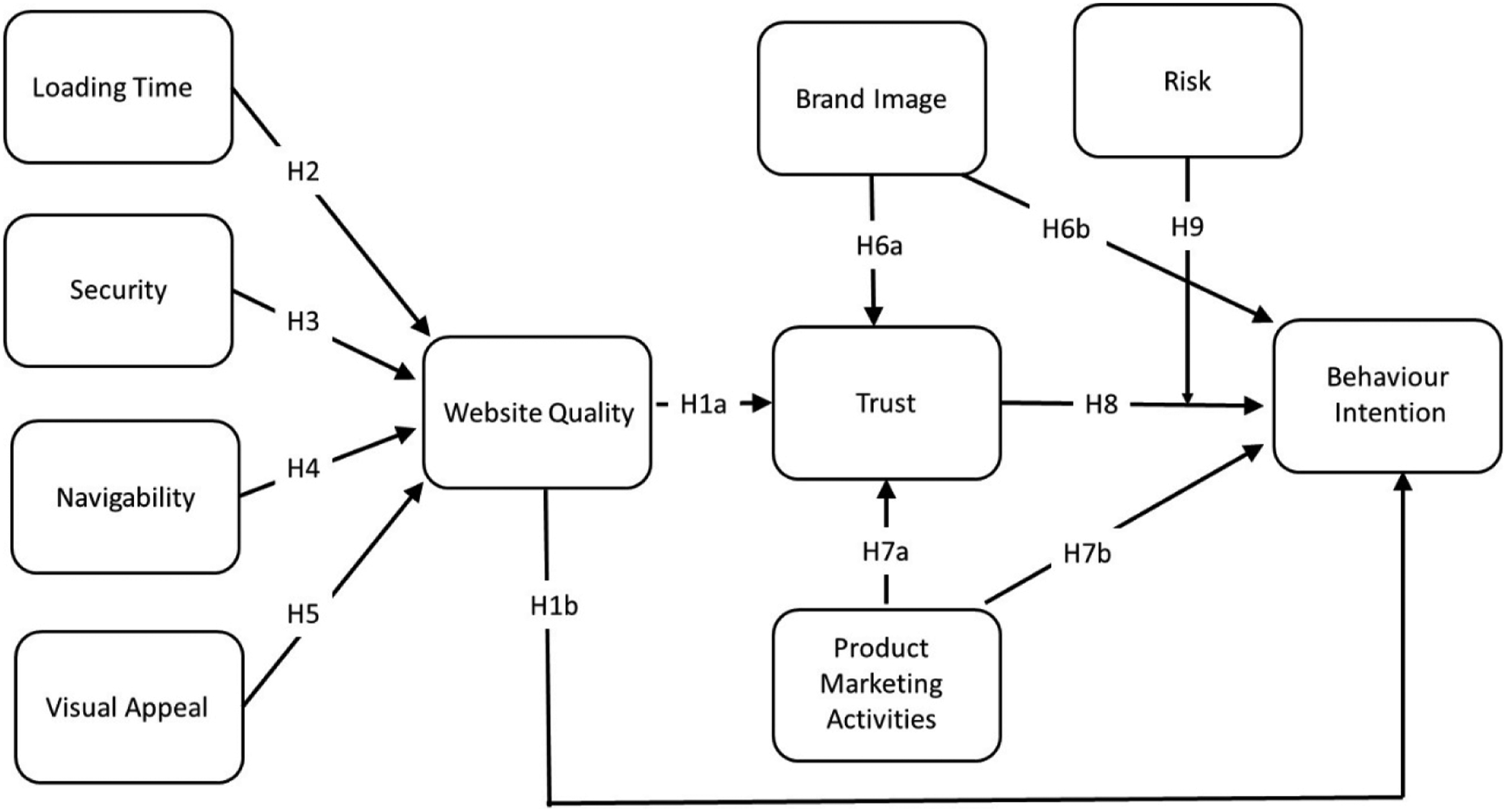
Website quality
Many other authors investigating website quality and online purchase intention point to the same mediating function of eTrust (Chang et al., 2014; Rahimnia and Hassanzadeh, 2013; Wang et al., 2015). Qalati et al. (2021) also considered eTrust as an intermediary factor when researching the relationship between website quality and individuals’ online booking use intention. Statistical data collected by them reveal that hotel website quality is a strong predictor of eTrust, and therefore leads to the same conclusion about the mediation role of eTrust. Wang et al. (2015) found that the characteristics of institutional hotel websites, in terms of security, privacy, ease of use, and functionality, are very important for consumer’s trust and that these affect their online booking intentions to a great extent. These findings support the belief that hotels can use their official websites to support their trust relationship with their clients (Chang et al., 2014) and that hotels should not base their competence strategies on the price alone, but also on their website quality, due to its importance to gain consumers’ trust and to increase online reservations (Li et al., 2017). Tam et al. (2022) found that customers are more likely to visit and purchase from websites of high quality. We posit:
H1a: Website quality of online travel platforms positively affect trust. H1b: Website quality of online travel platforms positively affect behaviour intention.
Loading time
Load time is considered by many authors as an important item to measure website quality. This is the case of Baraković and Skorin-Kapov (2017), who include it in the model they used to study the quality that users perceive when using mobile web browsers. Qi et al. (2010) point out that in the case of Chinese travellers, as well in the case of travellers from around the world, load time plays an important role in defining the usability of the website that is perceived by customers. Finally, in the survey they conducted concerning customer’s expectations about the quality of hotel websites, Hahn et al. (2017) found that the respondents living in Korea and Australia considered quick access to the website an important item to evaluate its quality. We therefore propose:
H2: Loading time positively affects perceived website quality.
Security
It is a fact that a growing number of persons use the Internet every day, but only a part of those users makes purchases online. This happens because many users, approximately 87%, do not feel safe and protected regarding their own privacy when purchasing online (Ray et al., 2011). Regardless of which variable each author considers as having more influence in the consumers’ perceived security, they all agree that the lack of perceived privacy and security protection in e-commerce is the main reason why many consumers choose not to shop online. Trust, therefore, plays an important role in online transactions (Ponte et al., 2015; Ray et al., 2011). In the internet domain, service quality or satisfaction highly depends on security (Prasongsukarn, 2009; Szymanski and Hise, 2000). Hence, we propose:
H3: Security positively affects perceived website quality.
Navigability
Navigability is highly important when measuring website quality, as visitors tend to quit if while searching they get lost or if they feel confused. In most cases, website quality is associated with good navigability (Kwak et al., 2019). It is worth noting that when searching online, consumers are alone and have no help from a shop assistant, as they do in physical stores. Providing high-quality information is not enough to attract customers’ attention if they feel frustrated by the difficulties they face in navigating to understand or to download the contents, if they feel insecure, or if they perceive that the services offered to them are not personalized, leading to leaving the website (McKinney et al., 2002). A website has a good navigability rate if it offers different interaction and navigation hypotheses (Marsico and Levialdi, 2004). Internet users depend on navigability to navigate without embarrassments and to achieve what is desired (Zeng, 2009). Kimiagari and Malafe (2021) found that navigability is a direct predictor of online impulse buying. Hence, we propose:
H4: Navigability positively affects perceived website quality.
Visual appeal
Websites with poor design do not attract the user’s interest (Perdue, 2002). According to a survey, two-thirds of the respondents consider that the website design is determinant for their decision to shop there, and the percentage is even higher among wealthy e-buyers (Elliott and Speck, 2005). Customers enjoy a website with a fine visual appeal, which can lead to improving their willingness to shop (Park et al., 2021). For that reason, companies have to concentrate on making their websites attractive, as well as useful and simple. In fact, attractiveness is not enough, but it greatly impacts perceived purchase intention. It is common to emphasize the importance of the first contact for evaluating objects and people (Tetlock, 1983). It is expected that visual appeal also affects the website quality and customer intention (Kirillova and Chan, 2018). We posit:
H5: Visual appeal positively affects perceived website quality.
Brand image
Saleem and Raja (2014) found that brand image reflects what a consumer’s memory retains about a brand. In other words, they posited that brand image is simply what the consumers think and feel when they see a certain brand, what the characteristics of a brand are that immediately come to a consumer’s mind when that brand is presented. Brand image can also be defined as a consumer’s perceptions regarding a brand (Sääksjärvi and Samiee, 2011) or as the image that the brand leaves with the consumer (Yu et al., 2013). In fact, the image that consumers have of a firm results from the interpretation of its identity (Sääksjärvi and Samiee, 2011), and that image, in a certain way, will determine consumer choices (Keller, 1993; Sääksjärvi and Samiee, 2011). Kwon and Lennon (2009) observed in their study that for some customers brand image is the result of the information they have collected about the seller from all channels they have tried, and another group of customers have various brand images and expectations depending on the different seller channels. Brand image may also explain users’ beliefs and behaviours to the continuance use (Tam et al., 2022). We posit:
H6a: Brand image positively affects trust.
H6b: Brand image positively affects behaviour intention.
Product marketing activities
Over time the consumer’s purchase behaviour has been changing in online shopping (Boer et al., 2001; Erlangga, 2022), perhaps due to the effect of marketing initiatives on the risks customers perceive regarding products and online channels, which are significantly higher than in offline shopping (Lee and Kotler, 2009). Consumers seem to search for products and web-sellers that provide high-level quality and reduced risk (Chiu et al., 2011), driving e-vendors to adapt their marketing initiatives, targeting the reduction of product and e-sellers’ risks (Chikweche and Fletcher, 2010; Chiu et al., 2011). Erdem and Swait (1998) pointed out the effects that promoting investments brands make, through different marketing techniques such as commercials, events, or social sponsorships that affect consumer trust. We posit:
H7a: Direct marketing activities (i.e. direct mail and e-mails) positively affect trust.
H7b: Direct marketing activities (i.e. direct mail and e-mails) positively affect behaviour intention.
Trust
Trust means that one person, the consumer, believes that another, the e-vendor, will fulfil his obligations in the way it is expected he should (Kim et al., 2008). Many authors have studied how trust influences a consumer’s behaviour. Alsajjan and Dennis (2010) emphasized the role of trust in influencing consumers’ attitudes and behaviour intentions. Other studies point out that trust has a significant importance in building success in the online domain (e.g. Corritore et al., 2003; Elbeltagi and Agag, 2016) and that adopting an integrative view to study how purchase intention can be affected by online trust and influences the intention to buy, in a positive direction (Mansour et al., 2014). As mentioned by Agag and El-Masry (2016), many other studies report a relationship between trust and purchase intention, in a positive way, and some other studies concluded that an individual’s positive attitude regarding an online service provider depends on the trust that the service provider deserves in the consumer’s eyes and that the greater that trust, the more the consumer is in the mood to repurchase (e.g. Agag and El-Masry, 2016; Amaro and Duarte, 2015; Tam et al., 2019). However, in a study about Taiwanese online hotel booking, Lien et al. (2015) found the reduced importance that trust has in defining purchase intentions, even though trust positively influences value. We posit:
H8: Trust positively affects behaviour intention.
Risk
The risk that is perceived by consumers results from the weighting between the losses that would result from an unfavourable act and the individual’s belief about the probability of the consequences being really unfavourable (Mitchell, 2001). The perceived risk is greater in products like tourism, which are intangibles (Laroche et al., 2004), and so the purchase of services presents a higher level of risk than the acquisition of products (Mitchell and Greatorex, 1993). The perceived risk even affects trust because according to Li et al. (2017), trust has a higher importance for online sellers than to offline dealers due to the circumstance that consumers cannot physically evaluate the product they want to buy. Therefore, its importance is crucial in determining people’s intentions to purchase online (Hong and Cho, 2011) and to make their buying choices (Buttner and Goritz, 2008). Pappas (2016) found various reasons for a greater risk perception by the online consumers if compared with the clients of traditional shopping: the impossibility of physically examining the good before buying it; the absence or the inefficiency of an after-sales service; the complexity or the language used to sell, which causes communication difficulties. This probably explains why online consumers often visit the stores where they can see and touch the goods they want to buy online (Kim et al., 2008), and when they cannot do that, due to the type of product or service they want to purchase, they search for all the information they can about it and talk about it with other consumers, especially about price and quality (Björk and Kauppinen-Räisänen, 2012).
H9: Risk moderates the effects of trust on behaviour intention, such that the effects are weaker amongst users with greater risk.
The mediating role of trust
When a construct intermediates the relationship between two others, we say it has a mediating role (Latan and Noonan, 2017). Many authors in various domains emphasize the possible mediating role of trust. It was found that it could intermediate knowledge transfer (Levin and Cross, 2004), or to serve, in some way, as a mediator in the relationship between industrial cluster involvement and knowledge acquisition (Alaarj et al., 2016), or to mediate the relationship between behavioural intentions and individual characteristics, online environments, and information technology (Alaarj et al., 2016; Gefen and Straub, 2004) in the online business domain. These examples lead us to consider the possible mediating role of trust on the relationship between brand image and product marketing activities to behaviour intention, and to expect the following hypotheses to be confirmed:
H10a: Trust positively mediates the relationship between brand image and behaviour intention.
H10b: Trust positively mediates the relationship between product marketing activities and behaviour intention.
H10c: Trust positively mediates the relationship between website quality and behaviour intention.
Methods
Measurement
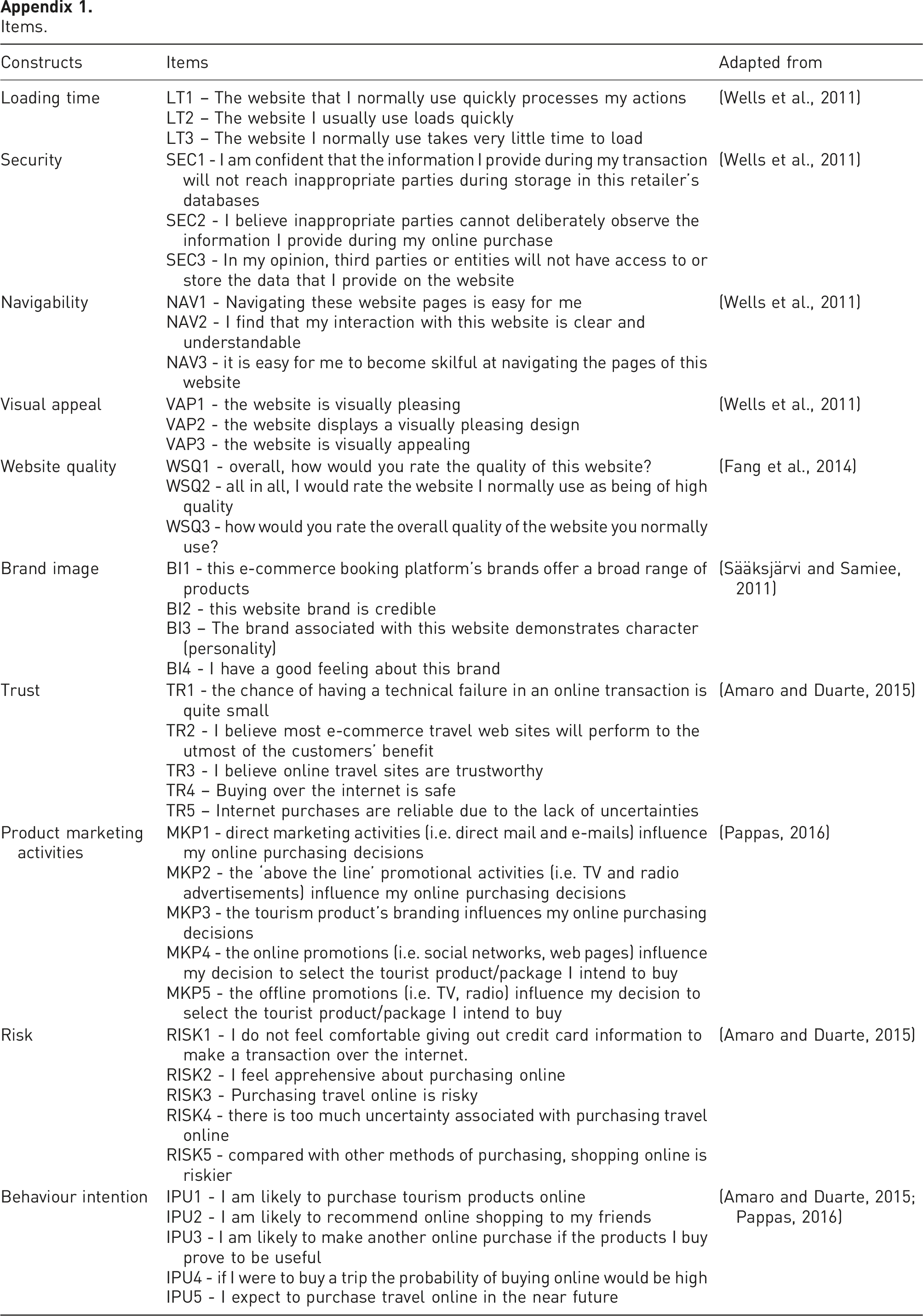
The questionnaire measurement items (Appendix 1) were based on those proposed without significant changes. In fact, the items related to security (SEC), loading time (LT), navigability (NAV), and visual appeal (VAP) are those mentioned by Wells et al. (2011); brand image (BI) by Sääksjärvi and Samiee (2011); website quality (WSQ) by Fang et al. (2014); product marketing activities (MKP) by Pappas (2016); trust (TR) and risk (RISK) by Amaro and Duarte (2015); and behaviour intention (IPU) by Amaro and Duarte (2015) and Pappas (2016). The Appendix 1 shows the items for all constructs.
Data
Data collection was made via survey monkey in Portugal, using a questionnaire that we developed in English and then translated to Portuguese, and that was thereafter directed to internet users (Brislin, 1970). To measure the items, we used a numerical scale anchored in strongly disagree (1) and strongly agree (7), as do most authors.
Prior to the data collection, between the 17th and the 20th May 2019, a test was held with a group of 27 individuals asked to answer the questionnaire. Their responses are not included in the final results. The questionnaire was available between the 20th of May and the 26th of June 2019. Eight-hundred emails were sent requesting a response via a link, and we obtained 251 valid responses, corresponding to a 31% response rate. To increase the survey response rate, we applied the “key informant” method to identify the target audience (Pinsonneault and Kraemer, 1993). A follow-up email was sent in the second stage to those who did not reply in the first stage. The final sample includes 251 valid and complete responses (154 respondents in the first stage and 97 respondents in the second stage). Comparing the first and second respondent groups, the results from the Kolmogorov–Smirnov (K–S) test indicate an absence of non-response bias (Ryans, 1974). We examined the common method bias by using Harman’s one factor test (Podsakoff et al., 2003). The eigenvalues of the correlation matrix correspond to the variance explained by each principal component/factor. As the first eigenvalue (the larger one) corresponds to 34.2% of the sum of all eigenvalues (total variance in the items), it is well below the threshold of 50%. This test detected no significant common method bias in our dataset. Additionally, to test for common method bias, the marker variable technique was employed (Lindell and Whitney, 2001; Malhotra et al., 2006). No significant common method bias was found in the data set.
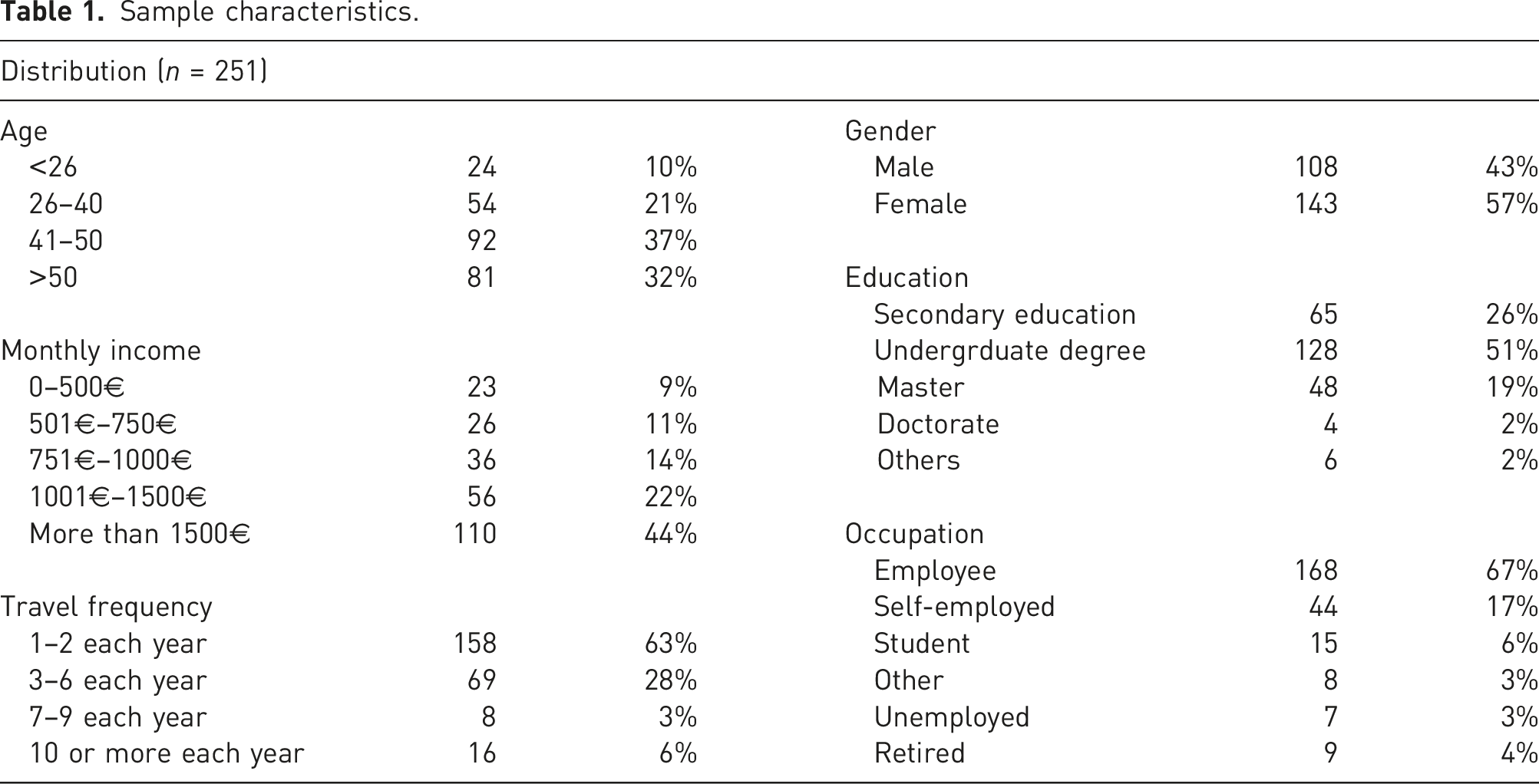
Sample characteristics.
Data analysis and results
The data analysis was carried out using partial least squares structural equation modelling (PLS-SEM). We estimate the model with PLS because (i) the PLS method’s purpose is prediction, making it suitable for this type of model (ii) none of the items require a normal distribution; (iii) the research model is considered to be complex (Henseler et al., 2009). SmartPLS 3.2.7 was used to examine our hypothesized model (Ringle et al., 2015). The assessment of the hypotheses established in SEM follows a twofold pre-analysis phase to both the measurement models and thereafter the structural model.
Measurement model
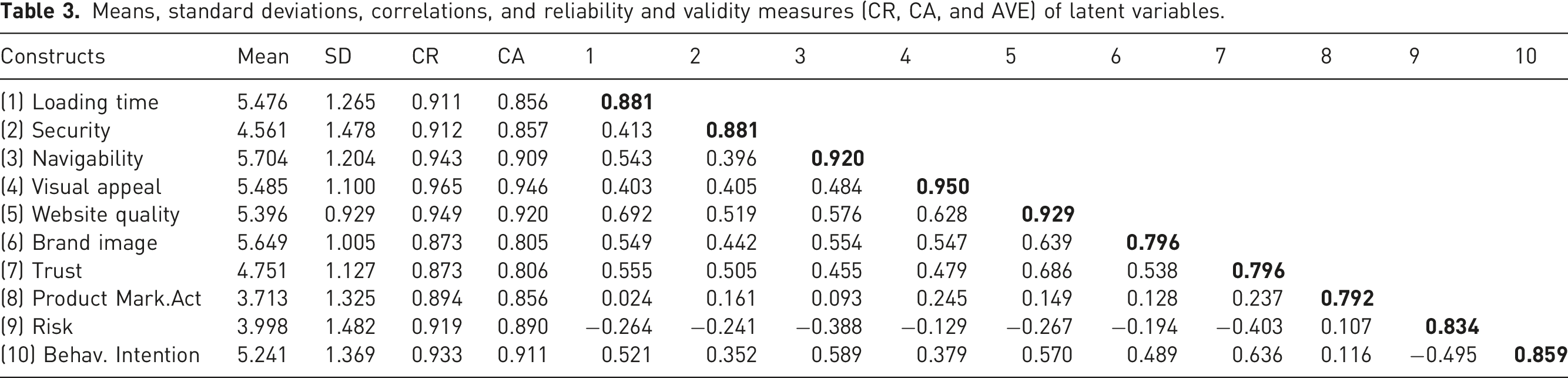
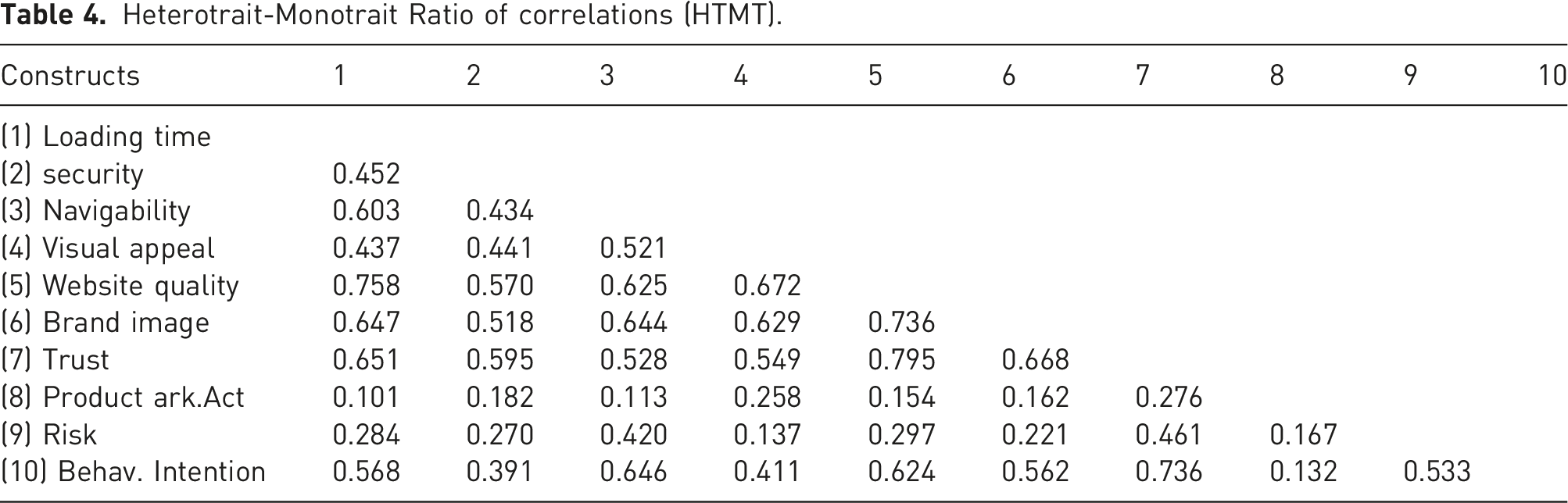
The effectiveness of the measurement model is revealed in the internal consistency, convergent validity, and discriminant validity. The internal consistency is measured by the composite reliability (CR) and Cronbach’s alfa (CA); the convergent validity is measured by the average variance extracted (AVE); and the discriminant validity by the relationship of loadings and cross-loadings, the square root of the AVE, and the Heterotrait-monotrait (HTMT) ratio of correlations, which should be checked (Matsuno et al., 2005).
Means, standard deviations, correlations, and reliability and validity measures (CR, CA, and AVE) of latent variables.
PLS loadings and cross-loading.
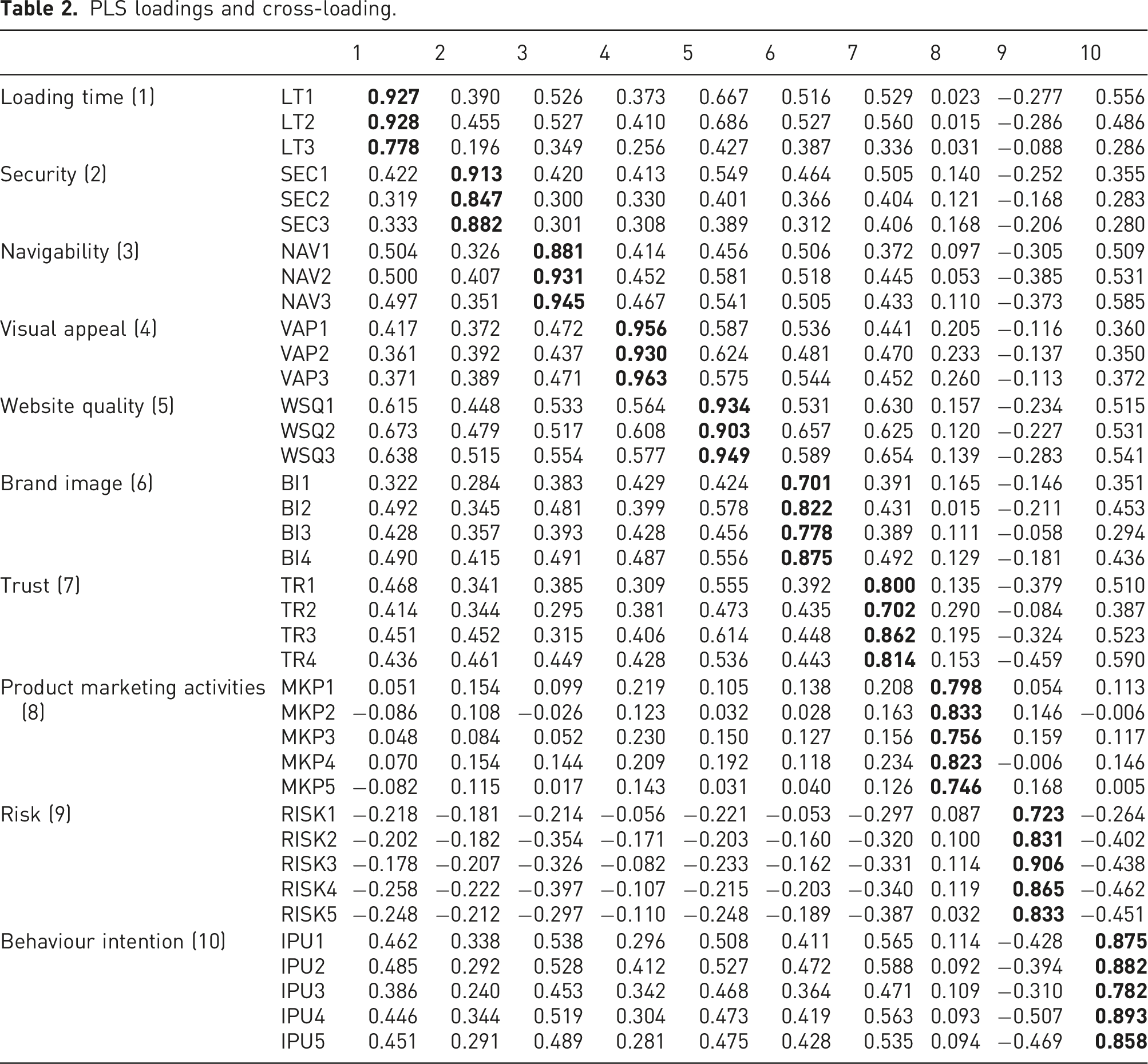
The discriminant validity states three factors. Firstly, the square roots of AVEs (diagonal elements - bold values) are higher than the correlations presented in the off-diagonal line (Fornell and Larcker, 1981). Secondly, to ensure the discriminant validity, the cross loadings criterion, it requires the item loading to be greater than all cross loadings (Götz et al., 2010; Grégoire and Fisher, 2006). In Table 2 the bold values reveal that the loadings are higher than the cross loadings, which meets the criterion. In Table 3, the square root of AVE (in bold) meets the criterion, as the values are higher than the correlation between constructs.
Heterotrait-Monotrait Ratio of correlations (HTMT).
Structural model
The values of the path coefficients and t-statistics, extracted from R2 bootstrapping based on 5,000 resamples, are in Figure 2. The sample distribution can be viewed as similar to the estimates of the coefficients resulting from a bootstrap distribution. It may also represent the parameter’s standard error in the population. Thus, the measurement of t-values serves to assess the importance of each indicator. Structural model results.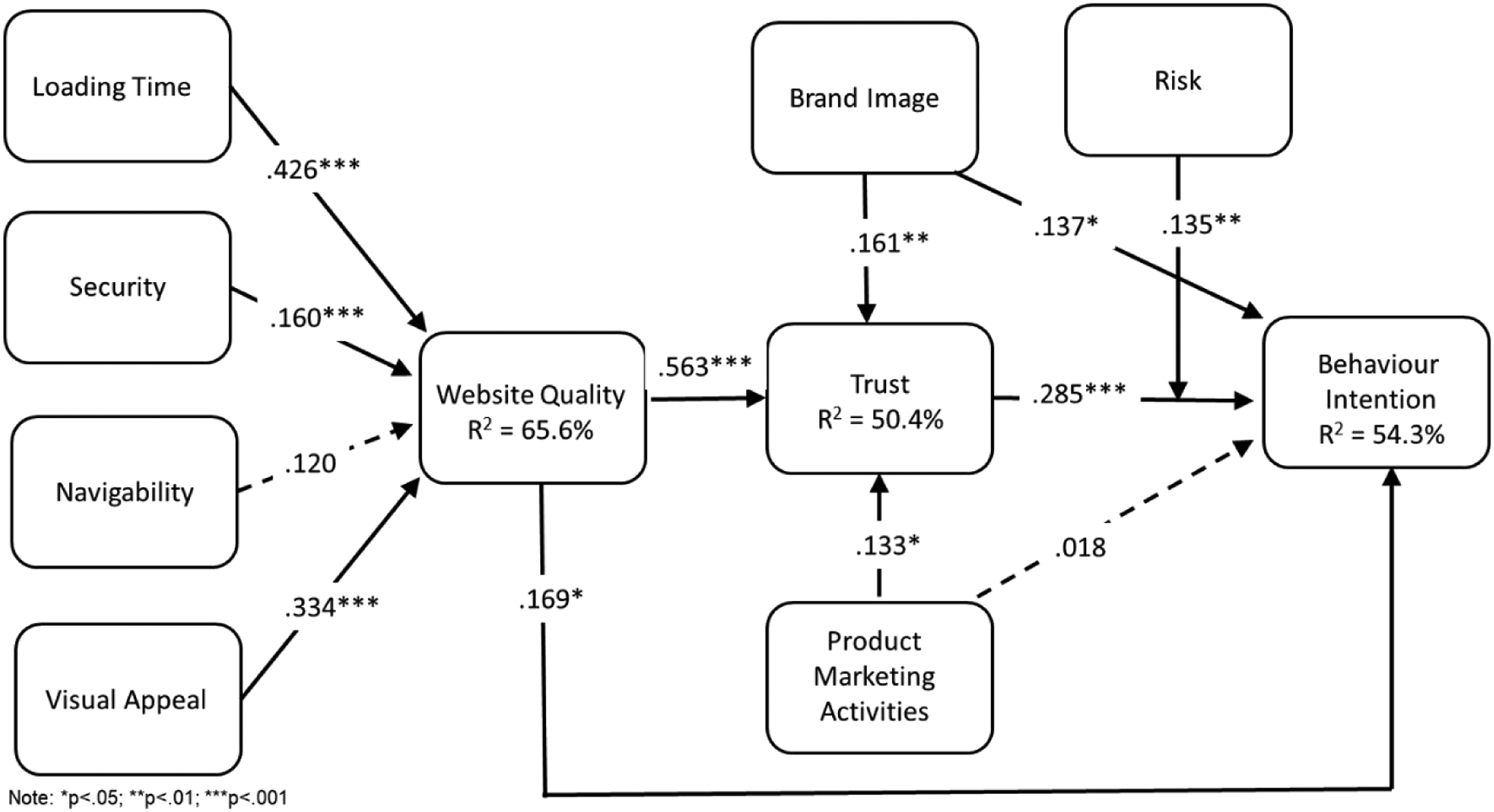
The model explains 65.6% of the variation of website quality. The loading time (β = 0.426, p < 0.001), the security (β = 0.160, p < 0.001), and visual appeal (β = 0.334, p < 0.001) are statistically significant, supporting H2, H3, and H5. The navigability is not significant in explaining website quality, and thus H4 is not confirmed.
The model explains 50.4% of the variation of trust. In fact, the website quality (β = 0.563, p < 0.001), brand image (β = 0.161, p < 0.01), and product marketing activities (β = 0.133, p < 0.05) are statistically significant, which confirms H1, H6a, and H7a.
The model also explains 54.3% of the variation of behaviour intention, given that the brand image (β = 0.137, p < 0.05), trust (β = 0.285, p < 0.001), and website quality (β = 0.169, p < 0.05) are significant, supporting H6b, H8, and H1b, although product marketing activities are not significant, leading to H7b not being confirmed. Finally, regarding the moderating effect of risk (β = 0.135, p < 0.01), our results show that it is statistically significant in moderating the relationship between trust and behaviour intention, which supports H9.
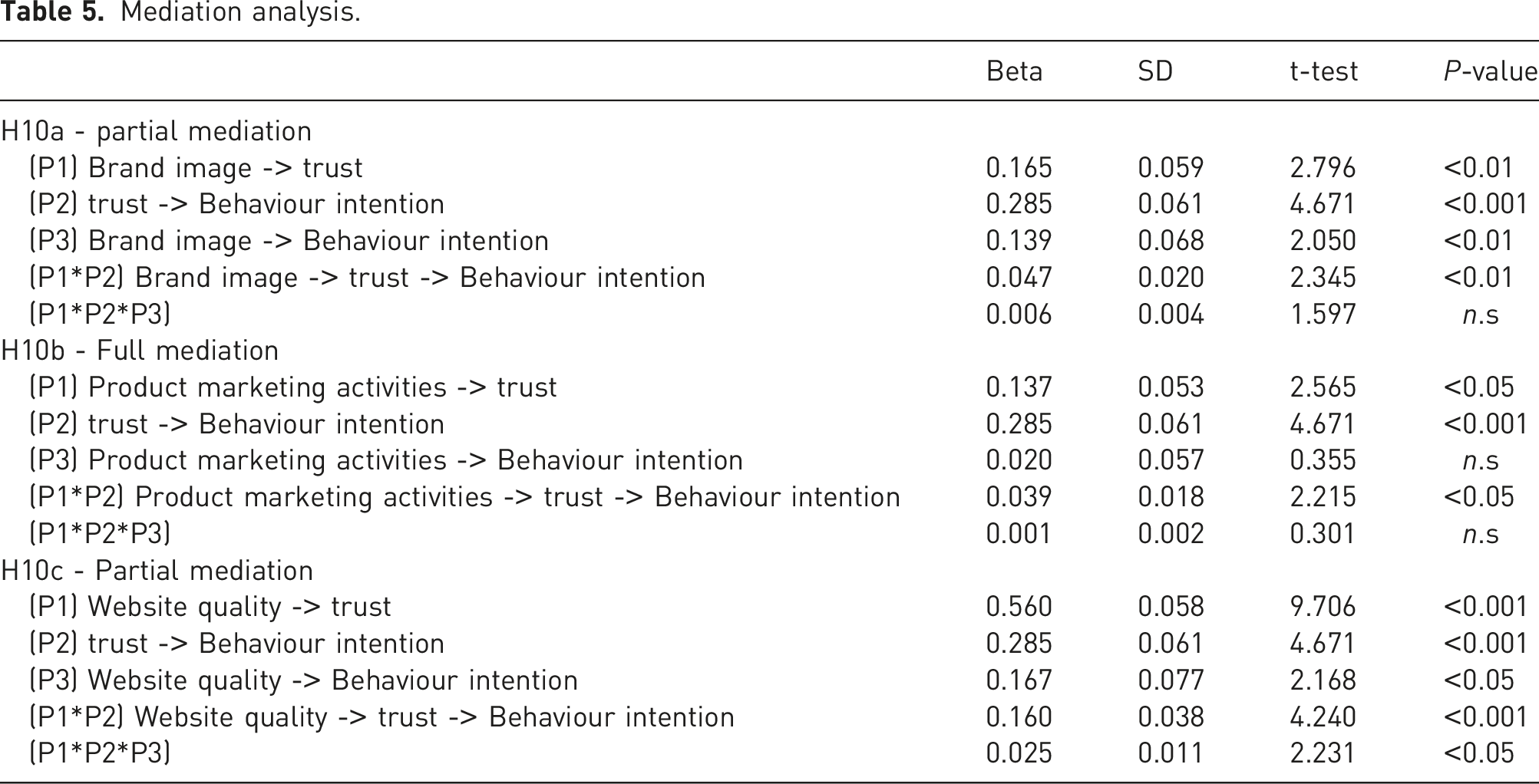
Mediator role of trust
Mediation analysis.
Moderator role of risk
Our results also provide evidence on the moderating role of risk (β = 0.135, p < 0.05) in the influence that trust has in the behaviour intention, which supports H9. This influence of the risk over trust to behaviour intentions is shown in Figure 3. For low-risk users, trust has little effect on the behaviour intention. However, in a situation in which the consumer feels a presence of high risk, trust influences the behaviour intention with greater impact. This confirms the conclusions of earlier studies (Hong and Cho, 2011; Li et al., 2017). Finally, and also corroborating previous studies, the data collected show that trust plays a mediating role in the relationship between brand image and product marketing activities (Chang et al., 2014). Moderator effects.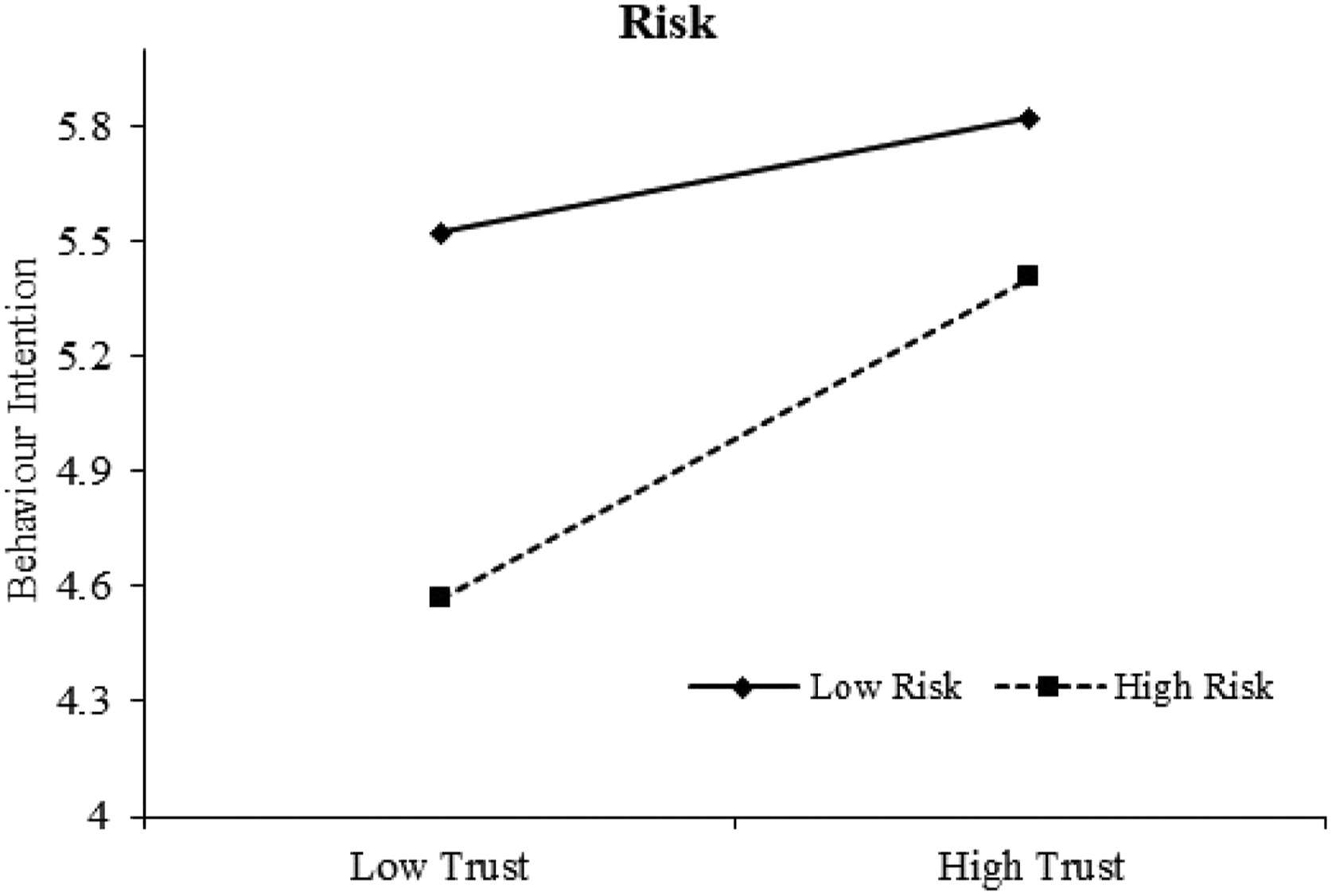
Discussion
The aim of this study is to understand which variables influence the purchase intention of online travel customers and to what extent. In order to achieve that purpose, we have chosen nine constructs, based on the results from the literature review, and 12 hypotheses were posited. Only two of the hypotheses considered were not supported by the results, so it can be said that the hypotheses we have selected were largely confirmed.
Theoretical implications
The factors influencing online travel purchase intention have already been the object of previous research. However, most of those studies did not approach the subject in an identical way, or even in a similar way, to the one we adopted. We have joined into one single model all of the main possible variables – website quality, brand image, and product marketing activities – as well as trust and its mediator role and risk as a moderator. By considering a holistic, useful, and comprehensive approach, we expect to make a valuable contribution to the literature in the online travel purchase domain.
Our study’s results largely confirm those of earlier studies that have analysed similar constructs, and so we can say that it has demonstrated the validity of the vast majority of the hypotheses we have considered in our effort to determinate which factors influence purchase intention of online travel consumers. Website quality explained by loading time, security, and visual appeal shows significant impact on trust and behaviour intention. Past studies showed us how website quality is associated with consumer behaviour (e.g. Wells et al., 2011). Brand image play a role in trust of online travel. There is a clear relationship between the strength of a brand image and the perceived quality of the product by consumers (Grewal et al., 1998) and their purchase intention (Yu et al., 2013). Besides influencing customers’ perceived quality, brand image significantly improves trust (Chiang and Jang, 2007) because a good brand image can diminish the risk of purchase (Chen and Chen, 2010; Chiang and Jang, 2007). Marketing product activities play a role in customer trust. In fact, Blattberg and Neslin (1989) highlighted the impact on consumer behaviour of sales promotion and Ashraf et al. (2014), mention that this effect can be the consequence of many factors, namely different kinds of marketing actions, such as price discounts.
Only two of our hypotheses were not confirmed: the one that asked if navigability was significant in explaining website quality (H4) and the one asking about the possible direct effect of product marketing activities on behaviour intention (H7b). In these two situations, the results of previous studies were not confirmed. These two cases of failure to confirm the hypotheses show the specific characteristics of the online travel purchase domain.
Concerning navigability, our study’s results show that online travel consumers give less importance to this factor than they give to the other factors affecting the perceived website quality, which contradicts the literature (Wells et al., 2011). Some studies identify navigability as an essential part of website quality (Kwak et al., 2019; Wells et al., 2011). Given the importance that is mentioned in the literature to navigability in evaluating website quality (e.g. Hu et al., 2017; Kwak et al., 2019), we consider that this is due to the fact that the quality factors are not perceived the same way in all e-business domains and also because, specifically in the online travel domain, consumers take it for granted regarding the features of the sites.
The specific characteristics of the online travel trade also explain, in our opinion, the fact that it was found that the effects of marketing strategies on purchase intention are not the same as those reported in most of the literature. The behaviour intention of online travel consumers seems to be less influenced by promotion techniques, which is consistent with the findings of Foster et al. (2020). One of the possible reasons respondents mentioned was that their privacy would be disturbed if contacted directly, meaning direct marketing no influence on behaviour intention (Koay et al., 2020).
Practical implications
In a society in which individuals consider traveling as one of their top interests and the use of the internet has become trivially commonplace, the practical implications of this study are obvious. E-commerce statistics show that the proportion of e-shoppers amongst the internet users is growing and is more significant in the younger age group (under 24–78%), but also in the next group, which ranges from 25 to 54 year of age (76%) (Eurostat, 2022). So, if service providers of online travel purchases wish to increase the use of the resources they offer to their customers, they should pay attention to some of the facts that our research highlights.
First, this study shows the importance that website quality has in improving trust, even though the respondents do not assign the same value to all factors that can explain the success or failure of a website. In fact, the results show that only navigability is not significant in explaining website quality. The other three factors we consider as being more important in evaluating the quality of travel websites - the downtime, the security, and the visual appeal - are significant, and the consumers' trust greatly depends on them. The fact that, for instance, payment security or privacy concerns are the second main reason (24%) for EU citizens not buying over the internet (Eurostat, 2022) corroborates this idea and strengthens the need to constantly improve the quality of travel websites, gaining consumers’ trust.
Second, we found that product marketing activities influence trust, but they have no similar direct effect on customers’ purchase intention. Nevertheless, regarding the importance of trust in forming the intention to buy, service providers must promote their products without forgetting the specific characteristics of internet trade, in which trust is a sensitive variable and can be easily impaired. If it is true that 65% of e-shoppers reported having no problem when purchasing online (Eurostat, 2022), we cannot forget that the other 35% of online buyers complain mostly about service providers failing to provide what they advertise
Thirdly, our study highlights the importance of the brand image in influencing consumer behaviour, directly and via trust, for what online retailers should do to build a trustful brand image. Because in the internet domain everything happens quickly, we suggest that companies seek to constantly update their brand images, in terms of the values they represent, because this increases customer trust and will never weaken their loyalty.
Our study shows that trust, which we choose to be the heart of our model, is really at the centre of the relationships established by the other constructs (website quality, product marketing activities, and brand image), all of which have a direct effect on trust that, in turn, performs a mediator role between them and the behaviour intention.
Conclusion, limitations, and future research
The goal of this research was to better understand what determines the purchase intention of online travel customers. For that purpose we created a model that combines different constructs, some proposed by traditional theories, and some that are the result of the conclusions of other studies. The model was tested in Portugal, via survey-monkey, using a questionnaire directed to internet users. The results show the importance that website quality has in improving trust, and that trust plays a significant mediating role between brand image and behaviour intention and between product marketing activities and behaviour intention. The study also highlights the moderating effect of risk in the influence that trust has in the behaviour intention.
These findings should be taken into account by service providers of online travel purchases if they wish to improve their sales, attract new customers, and retain those they already have. Given the importance of trust for the purchase intention, specifically, they should pay attention to the quality of their websites, their brand image, and the marketing actions they implement. In fact, these three factors are determinant, and it is demonstrated that they directly influence trust. The service providers of online travel purchases should also consider, in designing their websites, the definition of their marketing strategies and the actions promoting their brand, as well as the effects on online channels’ perceived risks.
Some limitations can be pointed out in our study. They are related to the demographic characteristics of the sample and the narrow temporal window of data collection. Beyond the fact that the data were collected in a single country, the vast majority of the respondents have an undergraduate degree or higher, which can explain the non-significance of navigability. We think that it could be interesting to determine if the results of our research would be similar in a different country or with a more heterogeneous sample in terms of education, age, or income. It certainly would be useful to undertake a longitudinal measurement of consumers’ perceptions over a longer period and to compare the results collected in different countries. Data collection was carried out in the pre-pandemic period, which may be a limitation to generalization. In the future, investigators can apply this model in different contexts and cultures and compare the findings. Despite these limitations, our research met its and the results of our work are significant and useful for future studies.
Footnotes
Declaration of conflicting interests
The author(s) declared no potential conflicts of interest with respect to the research, authorship, and/or publication of this article.
Funding
This work was supported by national funds through FCT (Fundação para a Ciência e a Tecnologia), under the project - UIDB/04152/2020 - Centro de Investigação em Gestão de Informação (MagIC)/NOVA IMS.
ORCID iD
Items.
| Constructs | Items | Adapted from |
|---|---|---|
| Loading time | LT1 – The website that I normally use quickly processes my actions | (Wells et al., 2011) |
| LT2 – The website I usually use loads quickly | ||
| LT3 – The website I normally use takes very little time to load | ||
| Security | SEC1 - I am confident that the information I provide during my transaction will not reach inappropriate parties during storage in this retailer’s databases | (Wells et al., 2011) |
| SEC2 - I believe inappropriate parties cannot deliberately observe the information I provide during my online purchase | ||
| SEC3 - In my opinion, third parties or entities will not have access to or store the data that I provide on the website | ||
| Navigability | NAV1 - Navigating these website pages is easy for me | (Wells et al., 2011) |
| NAV2 - I find that my interaction with this website is clear and understandable | ||
| NAV3 - it is easy for me to become skilful at navigating the pages of this website | ||
| Visual appeal | VAP1 - the website is visually pleasing | (Wells et al., 2011) |
| VAP2 - the website displays a visually pleasing design | ||
| VAP3 - the website is visually appealing | ||
| Website quality | WSQ1 - overall, how would you rate the quality of this website? | (Fang et al., 2014) |
| WSQ2 - all in all, I would rate the website I normally use as being of high quality | ||
| WSQ3 - how would you rate the overall quality of the website you normally use? | ||
| Brand image | BI1 - this e-commerce booking platform’s brands offer a broad range of products | (Sääksjärvi and Samiee, 2011) |
| BI2 - this website brand is credible | ||
| BI3 – The brand associated with this website demonstrates character (personality) | ||
| BI4 - I have a good feeling about this brand | ||
| Trust | TR1 - the chance of having a technical failure in an online transaction is quite small | (Amaro and Duarte, 2015) |
| TR2 - I believe most e-commerce travel web sites will perform to the utmost of the customers' benefit | ||
| TR3 - I believe online travel sites are trustworthy | ||
| TR4 – Buying over the internet is safe | ||
| TR5 – Internet purchases are reliable due to the lack of uncertainties | ||
| Product marketing activities | MKP1 - direct marketing activities (i.e. direct mail and e-mails) influence my online purchasing decisions | (Pappas, 2016) |
| MKP2 - the ‘above the line’ promotional activities (i.e. TV and radio advertisements) influence my online purchasing decisions | ||
| MKP3 - the tourism product’s branding influences my online purchasing decisions | ||
| MKP4 - the online promotions (i.e. social networks, web pages) influence my decision to select the tourist product/package I intend to buy | ||
| MKP5 - the offline promotions (i.e. TV, radio) influence my decision to select the tourist product/package I intend to buy | ||
| Risk | RISK1 - I do not feel comfortable giving out credit card information to make a transaction over the internet. | (Amaro and Duarte, 2015) |
| RISK2 - I feel apprehensive about purchasing online | ||
| RISK3 - Purchasing travel online is risky | ||
| RISK4 - there is too much uncertainty associated with purchasing travel online | ||
| RISK5 - compared with other methods of purchasing, shopping online is riskier | ||
| Behaviour intention | IPU1 - I am likely to purchase tourism products online | (Amaro and Duarte, 2015; Pappas, 2016) |
| IPU2 - I am likely to recommend online shopping to my friends | ||
| IPU3 - I am likely to make another online purchase if the products I buy prove to be useful | ||
| IPU4 - if I were to buy a trip the probability of buying online would be high | ||
| IPU5 - I expect to purchase travel online in the near future |
Author Biographies
Carlos Tam is an Invited Assistant Professor at NOVA IMS and IT Coordinator with over 25 years’ banking experience, 15 of which at a mobile and internet division. He holds a Ph.D. from NOVA Information Management School (NOVA IMS), Universidade Nova de Lisboa, in Information Management. His research interests include business intelligence, knowledge management, performance management, management information, and technology adoption. His work has appeared in Tourism Management, Information & Management, International Journal of Project Management, Computers in Human Behaviour, Information Systems Frontiers, Journal of Retailing and Consumer Services, among others.
Francisca Caetano Pereira has a degree in Economics in Católica Business School and a Master in ‘Information Management’, with specialization in ‘Marketing Intelligence’ in NOVA, Information Management School (NOVA IMS). Currently she’s working for Glintt - Global Intelligent Technologies - a multinational technology and consulting company.
Tiago Oliveira is an Associate Professor of Information Management, Associate Dean for Research and Doctoral Studies at the NOVA Information Management School (NOVA IMS), and Coordinator of the degree in Information Management. His research interests include technology adoption, digital divide and privacy. He has published papers in several academic journals and conferences, including Tourism Management, Information & Management, Decision Support Systems, Government Information Quarterly, Computers in Human Behaviour, Journal of Business Research, Information Technology & People, Information Systems Frontiers, International Journal of Information Management, Journal of Global Information Management, Industrial Management & Data Systems, Computers in Industry, among others. Tiago has authored more than 150 scientific articles in Journals and conference proceedings. Tiago has more than 7000 citations ( ).
).