




Abstract
Traditional vehicles emit harmful emissions, increasing the risk of respiratory and cardiovascular diseases. Electric vehicles (EVs) are considered a better alternative to conventional vehicles for reducing greenhouse gas emissions. Various governments are also promoting EVs, as they reduce the dependency on fossil fuels and carbon emissions. This study attempts to utilize Meta-Unified Theory of Acceptance and Use Technology with three additional factors: environmental concern, government support, and price, for predicting the adoption intentions of EVs. Data were gathered from 462 respondents, and the PLS-SEM technique was employed to test the hypotheses and research model. The results revealed that attitude is the strongest predictor of EV adoption intention, followed by social influence, price, and environmental concern. Attitude serves as a mediating variable linking environmental concern, facilitating conditions, government support, social influence, and price to adoption intention. In our study, performance expectancy and effort expectancy did not have a significant direct or indirect relationship with adoption intention, nor did they influence it through attitude. From a practical perspective, implications will be beneficial for government and automotive companies, potentially helping to expedite EV adoption.
Introduction
Air pollution and energy consumption are common problems faced by countries worldwide. Cities in developing countries like India are severely air-polluted. India has been ranked third globally with regard to the level of pollution (India Air Quality Index, IQAir, 2024). The average PM2.5 in India is more than 10 times the WHO’s acceptable limits. Further, the poor air quality in India is affecting the health of residents causing various respiratory diseases. Additionally, over the past decade, India’s dependency on imported oils has risen. In 2023–2024, the dependence increased to 89% of total consumption (MoPNG, 2024). The transportation sector is largely responsible for the world’s energy use and carbon emissions (He et al., 2021; Higueras-Castillo et al., 2019). The increase in the price of fossil fuels, as well as the environmental impact of their emissions, has prompted individuals to reconsider their modes of transportation (Khurana et al., 2020). The current literature on global electrification programs emphasizes the importance of transitioning to electric technologies to prevent climate change and reduce dependency on fossil fuels (Kumar et al., 2024). Electric vehicle (EV) adoption is essential to lowering environmental pollution and oil fuel usage. Studies have demonstrated that as compared to traditional vehicles, EVs offer greater advantages when it comes to energy conservation and pollution reduction (Jaiswal et al., 2021).
An EV is a vehicle that is powered entirely or partially by electricity. EVs are a viable technology to develop a sustainable transportation sector in the future because of their very low to zero carbon emissions, minimal noise, and great efficiency (Nanaki, 2021). An EV is a car that is quiet, easy to operate, and costs less to operate and maintain than a traditional vehicle (Pandey & Shalu, 2023).
Developing nations are investing enormous sums of money in developing e-vehicles and awareness-raising campaigns. Besides, awareness of EVs in the market potential is rising (Mukesh & Narwal, 2023). Although many people still have concerns about the overall benefits of EVs, many vehicle owners are aware of the benefits of adopting EVs (Hinnüber et al., 2019). To help the country embrace EVs, the Indian government has introduced various promotional initiatives in the preceding 10 years, including tax incentives, subsidies for EV owners, and the building of public EV charging infrastructure (e-AMRIT, 2025). By 2030, the government wants EV sales to make up 30% of private electric cars (Bhat & Verma, 2025) and 80% of two-wheelers (Hemalatha et al., 2024). However, without examining the factors that impact potential EV buyers, the goals of these policies seem difficult to achieve. Despite several government and industry initiatives, the uptake of electric cars has not yet reached the predetermined levels. Further, it has been seen that the factors that influence EV adoption differ across nations. A thorough research study is therefore crucial to comprehend the determinants that impact E-cars penetration in India.
Consumer perceptions, attitudes, and preferences are critical factors in the adoption of environment-friendly transportation options such as EVs (Bamberg & Möser, 2007).
Few research studies in the past have been done on EV adoption intentions because EVs are still a relatively new technology and EV adoption in India remains nascent (Gunawan et al., 2022; Higueras-Castillo et al., 2024). Studies with limited factors have been conducted to explain and predict consumers’ intention to adopt electric mobility in different cities in India (Bhat & Verma, 2022; Hemalatha et al., 2024; Khurana et al., 2020; Shalender & Sharma, 2021; Shetty & Rizwana, 2024). Further, these studies have employed factors related to the Theory of Planned Behavior (TPB) (Khurana et al., 2020; Sahoo et al., 2022; Shalender & Sharma, 2021), the Technology Acceptance Model (TAM) (Jaiswal et al., 2021, 2022; Shanmugavel & Micheal, 2022), and Unified Theory of Acceptance and Use Technology (UTAUT) factors as well (Alagappan & Shanmugavel, 2023; Bhat et al., 2022; Bhat, Verma, et al., 2024; Shetty & Rizwana, 2024).
Thus, unlike previous studies, this study attempts to examine the factors that influence electric car adoption intention by expanding Meta-UTAUT with the addition of three essential factors: environmental concern, government support, and price to make the model more effective. Utilizing Meta-UTAUT in the field of EV adoption becomes significant as it allows for a thorough understanding of consumer behavior in the context of technological innovations. Further, Meta-UTAUT has overcome the limitations of the conventional UTAUT model by adding attitude as a mediator in the model. Meta-UTAUT has not been explored much in the context of EV adoption. To the best of our knowledge, only one study has applied Meta-UTAUT in the EV context, and that was conducted in Spain (García De Blanes Sebastián et al., 2024). EV adoption differs in India and Spain due to variations in geographical location, infrastructure, policy support, and customer mindset. Considering this important phenomenon, limited research has applied Meta-UTAUT with context-specific external factors such as environmental concern, government support, and price in the Indian EV adoption context. These theoretical and contextual gaps require further research to better understand the mechanism of Meta-UTAUT in explaining EV adoption in the Indian context.
To address the above-mentioned gaps, the following objectives are framed for the research:
To examine the impact of Meta-UTAUT factors on the attitude and adoption intention of EVs. To investigate the influence of additional factors— environmental concern, government support, and price—on attitude and adoption intention of EVs. To assess the mediating effect of attitude between all the exogenous constructs and adoption intention.
Thus, this study is crucial, as it aims to add to the body of knowledge on sustainable transportation by analyzing how the identified factors interact. Additionally, it provides practical suggestions to government agencies and the EV industry involved in the shift to EVs.
Literature Review and Hypotheses Development
Background
To examine the adoption intention of EVs, prior research works have explored the TPB (Buhmann et al., 2024; Deka et al., 2023; Khurana et al., 2020), the theory of reasoned action (TRA) (Afroz et al., 2015; Tunçel, 2022), the TAM (Jaiswal et al., 2022; Jiang et al., 2023), and UTAUT (Jain et al., 2022; Manutworakit & Choocharukul, 2022). This study has expanded the Meta-UTAUT by Dwivedi et al. (2019) to investigate the EV adoption intention in India. Dwivedi et al. (2019) proposed a modified version of the UTAUT model by adding attitude as a mediator in the model and called it Meta-UTAUT to improve the predictive power of the model. The integration of attitude in Meta-UTAUT aligns with the TRA (Ajzen & Fishbein, 1980) and TPB (Ajzen, 1991). The TRA and TPB theories explain that if individuals possess a favorable attitude toward a behavior, it significantly increases the intention to perform that behavior.
Adoption Intention
Individuals with the willingness to accept new technology are those who have formed an adoption intention to purchase it in the years to come (Gunawan et al., 2022; Khazaei & Tareq, 2021). Adoption intention is a powerful predictor of actual purchase behavior (Chang & Wildt, 1994). Customers are more inclined to buy when they have a higher adoption intention (Huang & Ge, 2019). Adoption intention is proven to be an essential factor influencing a person’s subsequent behavior in numerous studies (Jain et al., 2022; Kim et al., 2018; Wang et al., 2017).
Performance Expectancy
Performance expectancy is defined as “the degree to which an individual believes that using the system will help him or her to attain gains in job performance” (Venkatesh et al., 2003, p. 447). In the EV context, performance expectancy is the level to which a person thinks switching to an EV would improve their performance over a traditional vehicle (Abbasi et al., 2021; Gunawan et al., 2022). Many researchers have found that performance expectancy is the significant factor influencing EV adoption intention (Hoang et al., 2022; Wang et al., 2023). Therefore, we propose that
H1: Performance expectancy significantly influences the adoption intention of EVs.
Effort Expectancy
Venkatesh et al. (2003) stated that Effort expectancy is defined as “the degree of ease associated with the use of the system” (Venkatesh et al., 2003, p. 450). It is the ease associated with utilizing an EV (Abbasi et al., 2021; Jain et al., 2022). The perceived ease of use of EVs has a considerable impact on consumers’ willingness to embrace them. Scholars Abbasi et al. (2021), Hoang et al. (2022), and Manutworakit and Choocharukul (2022) have found a substantial association between effort expectancy and willingness to adopt EVs. Therefore, we propose that
H2: Effort expectancy significantly influences the adoption intention of EVs.
Social Influence
Social influence is stated as “the extent to which consumers perceive those important others (i.e., family and friends) believe they should use a particular technology” (Venkatesh et al., 2003). An individual’s decisions to buy an EV are influenced by the behavior of society or peers within their social network (Khurana et al., 2020; Singh et al., 2023; Zhou et al., 2021). Previous research has shown that social influence has a major impact on adoption intentions (Manutworakit & Choocharukul, 2022; Wang et al., 2023). According to Khazaei and Tareq (2021), peer opinions have an impact on people’s propensity to purchase EVs.
Therefore, we propose that
H3: Social influence significantly influences the adoption intention of EVs.
Facilitating Conditions
Facilitating conditions are defined as “the availability of technology, organizational systems, and resources in terms of infrastructure, software systems, and experts that the organization has prepared to support the use of technology” (Manutworakit & Choocharukul, 2022, p. 4).
EVs include the infrastructure facilities, services, expertise, resources, and compatibility with other technologies that consumers still need (Gunawan et al., 2022; Singh et al., 2023). It has been found in previous studies that facilitating conditions have a significant impact on attitude and adoption intention (Dwivedi et al., 2019; García De Blanes Sebastián et al., 2024). Therefore, we propose that
H4: Facilitating conditions have a significant influence on the adoption intention of EVs.
Government Support
Potential customers’ attitude towards EVs would be positively influenced when the government offers support for them (Zhang et al., 2018). Incentives and subsidies play an essential role in encouraging the broad adoption of EVs in the coming years (Sierzchula et al., 2014). Government support, such as subsidies, exemption of road tax, and financial incentives, significantly influences EV adoption (Lai et al., 2015; Mukesh & Narwal, 2023). Therefore, it is proposed that
H5: Government support has a significant impact on the adoption intention of EVs.
Environmental Concerns
An individual’s awareness of environmental issues and readiness to take action to solve them are referred to as environmental concerns. According to various previous studies, customer adoption intentions are influenced by environmental concerns (Khurana et al., 2020; Pailwar, 2022; Zhang et al., 2022).
Earlier studies have discovered that Environmental concerns significantly impact adoption intention, as found by Ogunkunbi and Meszaros (2023) and Palmieri et al. (2023). Therefore, we propose that
H6: Environmental concerns significantly impact the adoption intention of EVs.
Price
Price acts as a crucial factor influencing adoption intentions and purchase behavior. The price includes the running cost, maintenance cost, and initial purchase price, which have a significant impact on the intention to adopt EVs among potential consumers (Hemalatha et al., 2024; Kothari, 2023). EVs reduce expenses on fuel as they use electricity to charge the battery. Further, EVs have fewer moving parts than conventional petrol and diesel vehicles, thereby reducing the expenditure on maintenance. The long-term benefits of EVs offset the expenses of high initial costs and influence informed potential buyers’ intention to embrace EVs (Gayathiri & Ahamed, 2025). These financial benefits of cost-effectiveness in the EV’s life span noticeably contribute to shaping attitudes and intentions toward EV adoption. The significance of price features in influencing EV adoption intention has been determined in various studies (Ali & Naushad, 2022; Bhat, Seth, et al., 2024).
Thus, we propose that
H7: Price significantly impacts the adoption intention of EVs.
Attitude
Attitude refers to a person’s overall favorable or unfavorable evaluation of performing a specific behavior (Ajzen, 1991). Attitude is a key factor predicting behavioral intentions in the theory of reasoned action (Ajzen & Fishbein, 1980) and the theory of planned behavior (Ajzen, 1991). Consumer attitudes have been investigated in prior studies to predict customers’ environmentally concerned behavior and use of environmentally friendly products (Ali & Naushad, 2022; Dash, 2020; Khurana et al., 2020). In the study of Buhmann et al. (2024), it has been discovered that attitude is the most potent factor influencing consumers’ adoption intentions for EVs. In Meta-UTAUT, it has been identified that attitude acts as a mediating variable between performance expectancy, effort expectancy, facilitating condition, social influence, and behavioral intention (Dwivedi et al., 2019). Attitude has been studied as a mediating variable in recent studies (Ali & Naushad, 2022; Jaiswal et al., 2022; Khurana et al., 2020). Thus, we propose that
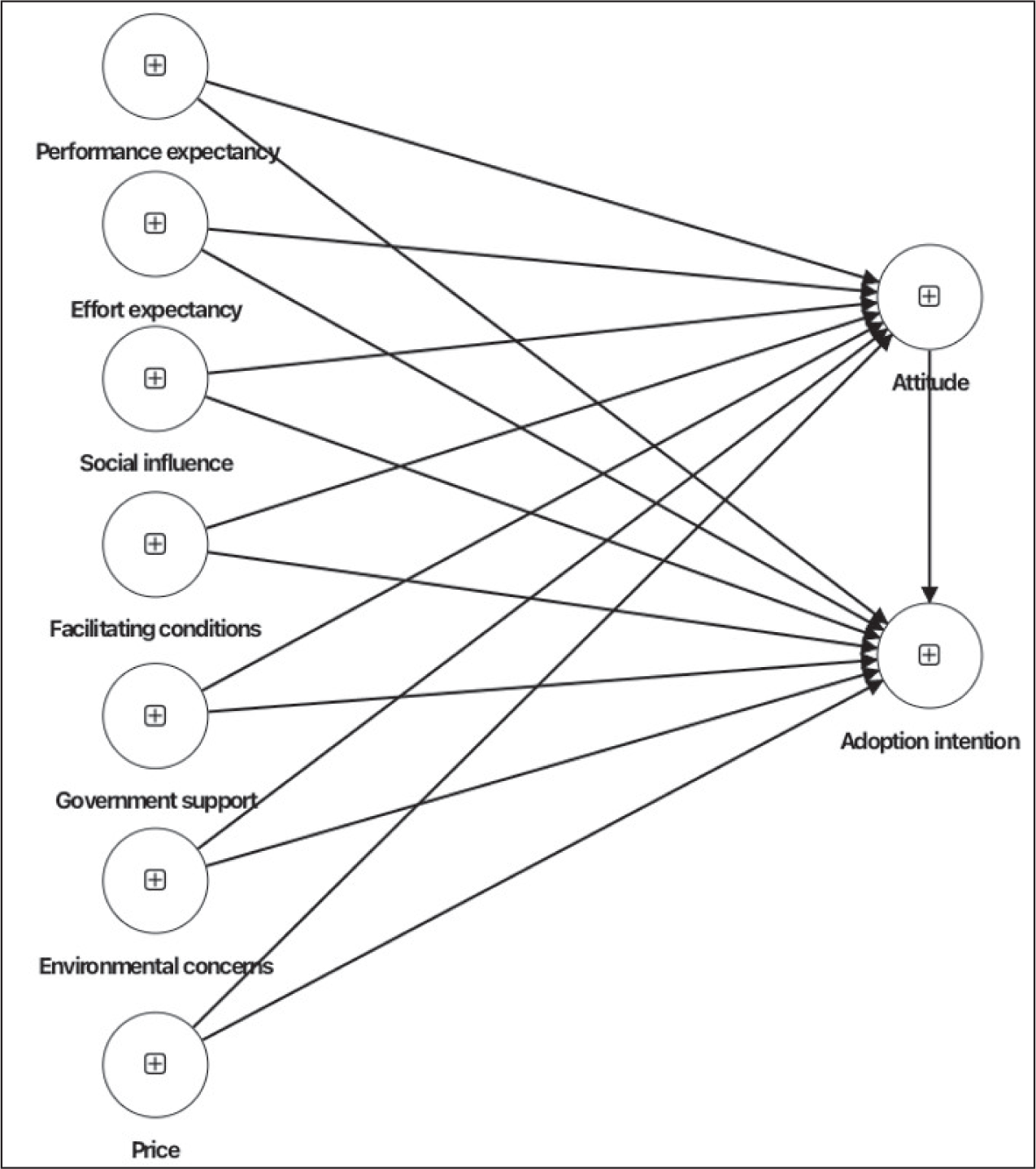
H8: Attitude significantly impacts the adoption intention of EVs. H8a: Attitude mediates the relationship between performance expectancy and the adoption intention of EVs. H8b: Attitude mediates the relationship between effort expectancy and the adoption intention of EVs. H8c: Attitude mediates the relationship between social influence and the adoption intention of EVs. H8d: Attitude mediates the relationship between facilitating conditions and the adoption intention of EVs. H8e: Attitude mediates the relationship between government support and the adoption intention of EVs. H8f: Attitude mediates the relationship between environmental concern and the adoption intention of EVs. H8g: Attitude mediates the relationship between price and the adoption intention of EVs.
Figure 1 presents the research model for this study.
Conceptual Model.
Research Methodology
Research Instruments
We have employed a 5-point Likert scale for developing the questionnaire because of its various advantages in gathering data from potential EV users. A structured questionnaire was created and distributed for a pilot study of 40 respondents from Delhi. Based on the inputs received from the pilot research participants, the questionnaire was modified. Potential customers may be surveyed to determine their intentions to adopt EVs, as it has been observed that EV adoption is lower in developing nations (Bhat & Verma, 2022). Since identifying all possible EV customers in Delhi-NCR who had a car would be challenging, expensive, complicated, and time-consuming, this study used non-probability/purposive sampling approaches to collect data from respondents. The purposive sampling method ensured that insights acquired were substantial and contextually relevant, aligning to obtain confined, high-quality, and meaningful information (Etikan et al., 2016).
Sampling
For suitable sample size determination, structural equation modeling (SEM) lacks a determined formula. The study followed the guidelines of Nunnally (1967), that is, 10 cases for each item as the thumb rule. For the study, we collected data from 487 potential EV users from Delhi-NCR, exceeding the minimum number (10 × 37 = 370). The National Capital Territory of Delhi (NCT) was chosen primarily because of its greater working population turnover rate, which almost encompassed representation from the whole country (Jaiswal et al., 2021).
Twenty-five non-serious responses were deleted in the process of data cleaning. Finally, 462 responses were employed in our study for further analysis. The targeted population included adults (18 or above) of Delhi-NCR who had an intention to buy a car in the future (Khurana et al., 2020).
Statistical Methods
Data analysis was carried out employing SmartPLS 4 software, which uses variance-based SEM, as explained by Ringle et al. (2022). PLS-SEM is a popular and appropriate tool for analyzing theoretical models from a predictive standpoint and clarifying important concepts, including the dependent variable (Hair et al., 2021).
Common Method Bias
To evaluate multicollinearity among the variables, the variance inflation factor (VIF) was computed. VIF values show the extent to which multicollinearity inflates the variance of an estimated regression coefficient. According to Hair et al. (2021), all of the VIF values were less than 5, indicating that CMB is not a problem in this study.
Data Analysis and Results
To assess the normality of our data, we calculated skewness and kurtosis. The skewness values for all items fell between –2 and +1, while the kurtosis values were between –2 and +1. Following established guidelines, acceptable skewness values fall between –3 and +3, and kurtosis values between –10 and +10 (Brown, 2006; Griffin & Steinbrecher, 2013). Given that Partial Least Squares Structural Equation Modeling (PLS-SEM) is a non-parametric approach, it is often recommended for handling data that may deviate from normality. However, recent literature advises caution when using PLS-SEM with highly non-normal data (Hair & Sarstedt, 2021). Our computed skewness and kurtosis values suggest that our data fall within acceptable ranges, mitigating concerns about extreme non-normality.
Demographic Profiles
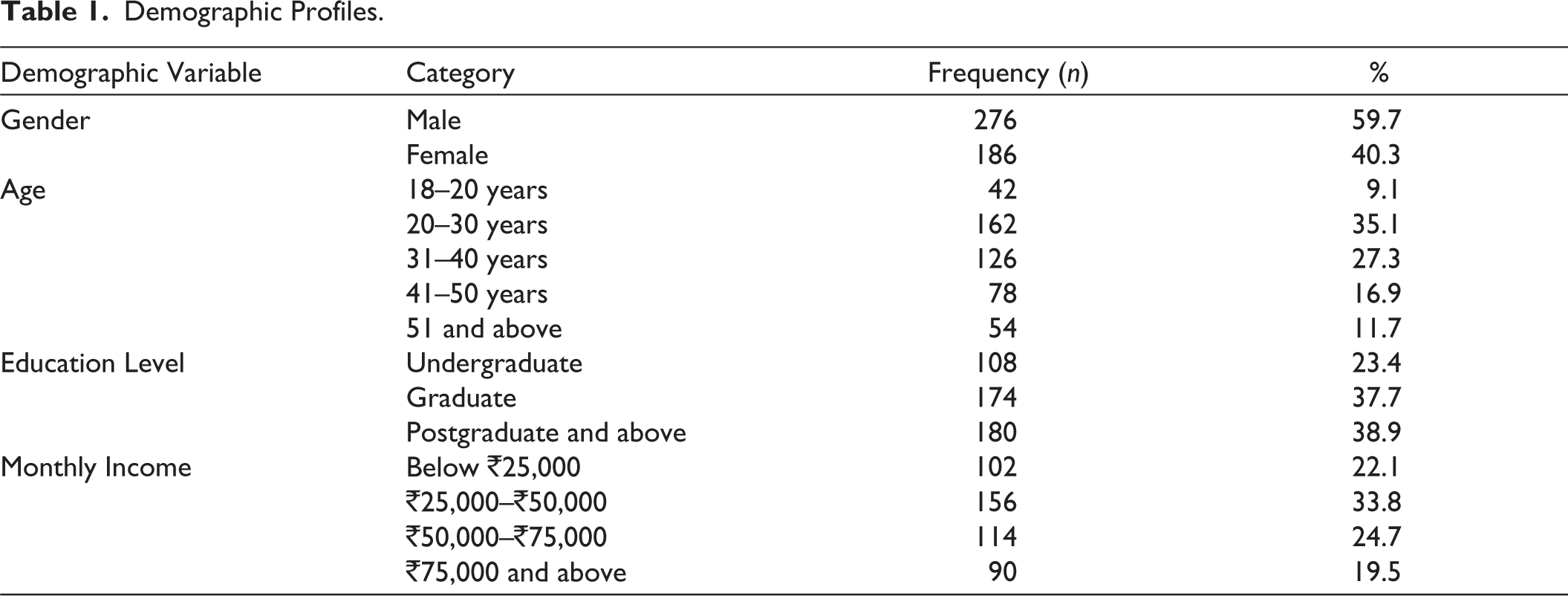
Table 1 presents the demographic details of the respondents. The demographic analysis reveals that 59.7% of the respondents are male and 40.3% are female. Among the age group, 9.1% of the respondents are below 20 years of age, 35.1% are aged between 20 and 30 years, 27.3% fall in the 31–40 years category, 16.9% are between 41and 50 years, and 11.7% are above 50 years. Regarding education, 23.4% are undergraduate, 37.7% are graduate, and 38.9% are postgraduate and above. In terms of monthly income, the below ₹25,000 group has a 22.1% share, the 33.8% respondents earn between ₹25,000 and ₹50,000, followed by the ₹50,000–₹75,000 group (24.7%) and the ₹75,000 and above group (19.5%).
Demographic Profiles.
Measurement Model
To assess the reliability, composite reliability and Henseler’s rhoA were computed for the constructs. The results are presented in Table 2. All the values were within the threshold limit.
Measurement Model.
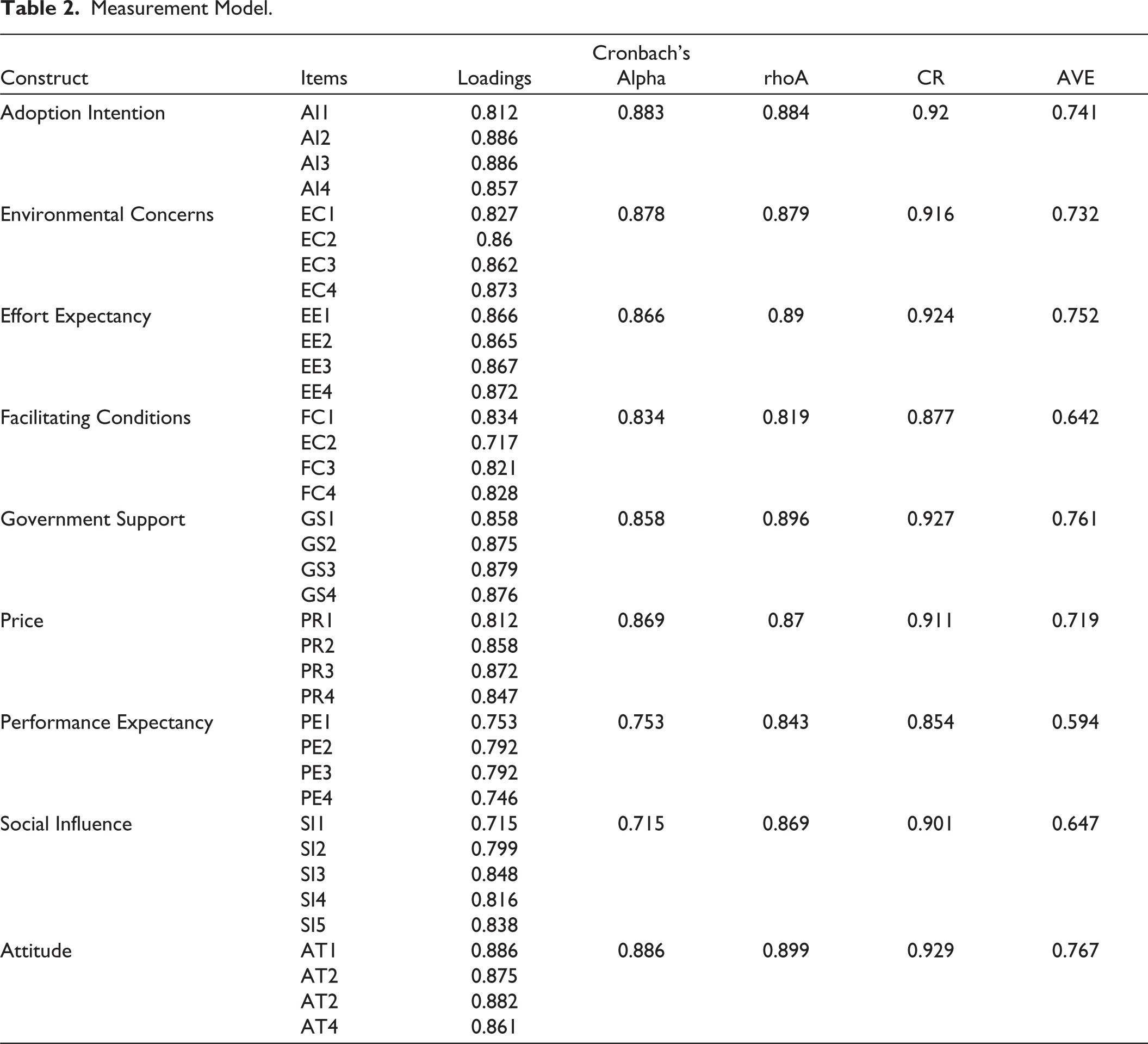
All the outer loadings surpassed a 0.708 threshold value, ensuring appropriate reliability (Hair et al., 2021). Composite reliability values were between 0.5 and 0.95 (Malhotra et al., 2020). The convergent validity was measured through AVE (average variance explained). According to Hair et al. (2017), the AVE values should be above 0.5. All the AVE values surpassed the threshold limit of 0.5 (refer to Table 2).
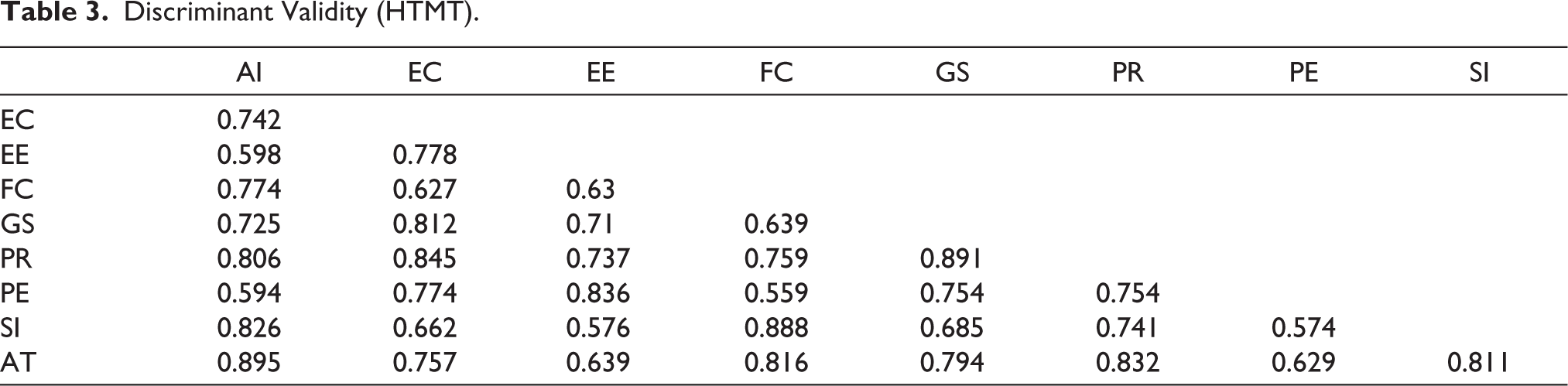
The discriminant validity was examined using the HTMT ratio of correlations. HTMT results are shown in Table 3. All the values were below the threshold limits of 0.85 and 9. Therefore discriminant validity was achieved in the measurement model.
Discriminant Validity (HTMT).
Structural Model
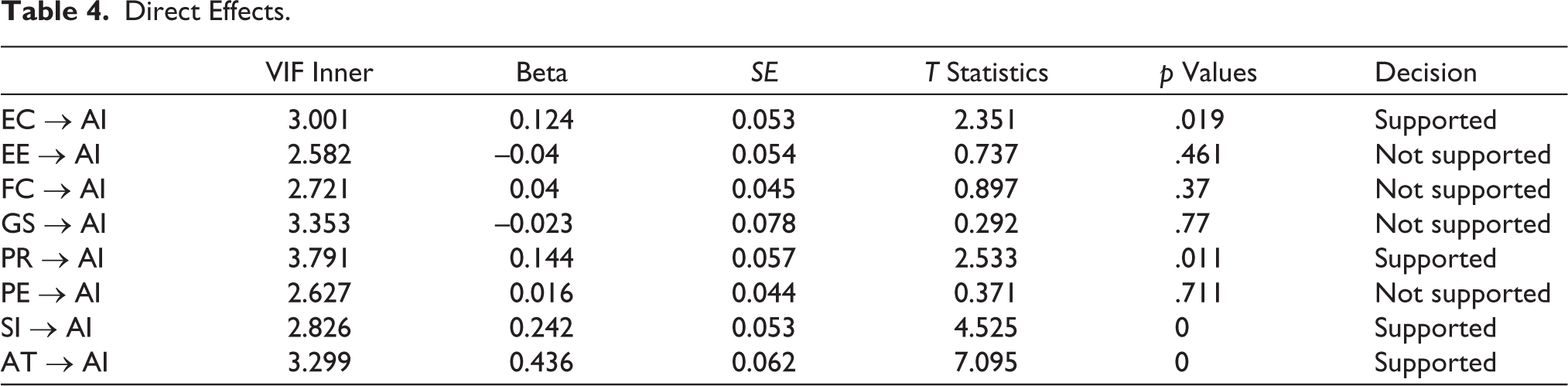
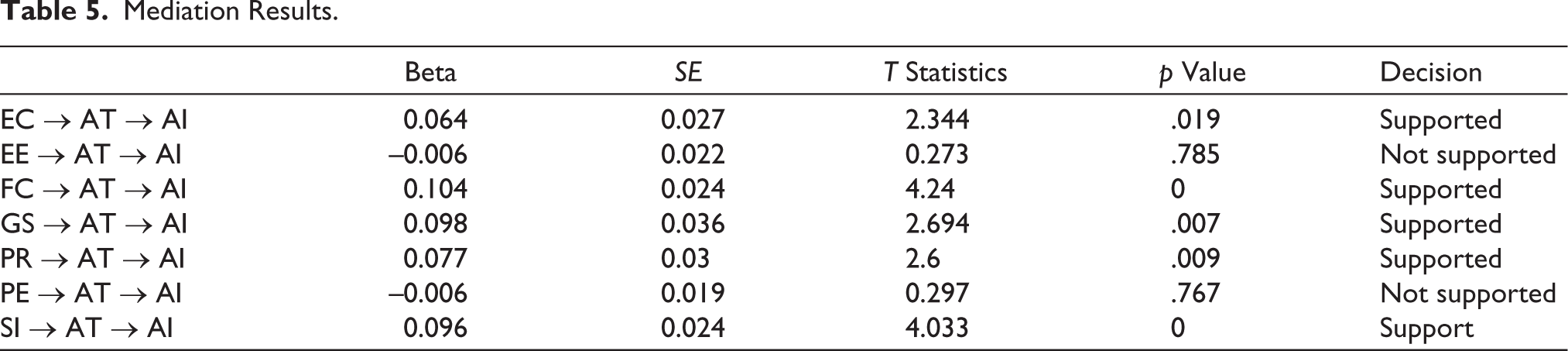
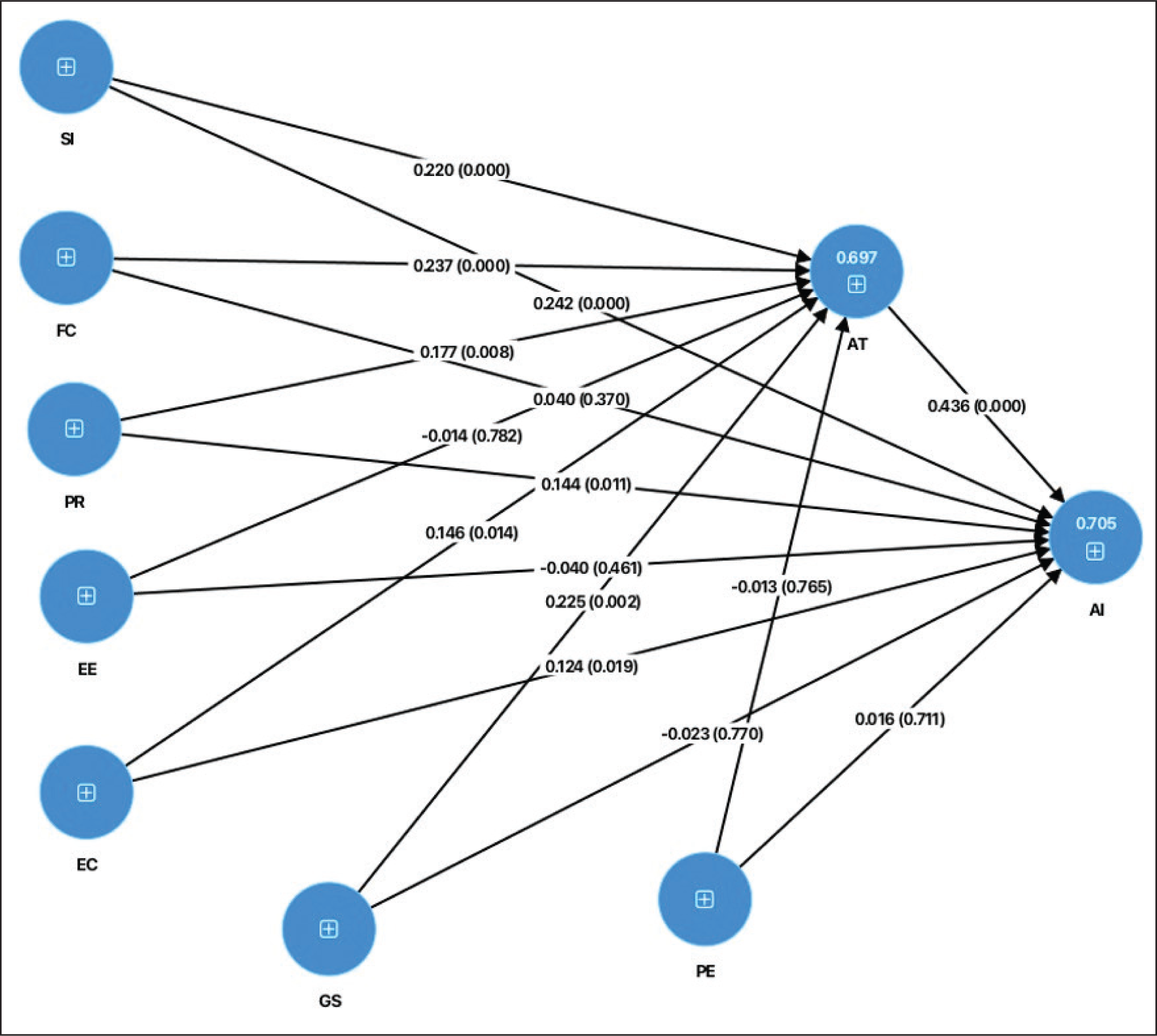
After establishing that the measurement model fitted satisfactorily, the structural equation model was derived using path analysis. The model’s R² values for adoption intention (0.705) show significant explanatory power, with the independent variables explaining the majority of the variation. Bootstrapping with 10,000 subsamples was employed to test and evaluate the hypothesized relationships (Hair et al., 2021). The direct effects and mediation effects are shown in Tables 4 and 5.
Direct Effects.
Mediation Results.
Mediation
Mediation is defined as when a third variable mediates or intervenes between two related constructs. The bootstrapping technique is appropriate for mediation analysis in PLS-SEM because it makes no assumptions about the statistics’ sampling distribution and may be used for small sample sizes (Hair et al., 2019).
The results of the path analysis (refer to Table 4) revealed that environmental concern (β = 0.124), price (β = 0.144), social influence (β = 0.242), and attitude (β = 0.436) significantly impact adoption intention. Therefore, H1, H5, H7, H8 are supported at the p < 0.05 significance level. But H2 effort expectancy (β = –0.04), H3 facilitating condition (β = 0.04), H4 (Government support (β = –0.023)), and H6 performance expectancy (β = 0.016) were not supported, as their β values were above 0.05. The graphical presentation of the structural model is shown in Figure 2. Results have shown that attitude has a major impact on adoption intention. Further, Table 5 shows the mediation effects. It has been revealed that H8a (β = 0.064), H8c (β = 0.104), H8d (β = 0.098), H8e (β = 0.077), and H8g (β = 0.096) are supported at a significance level of p <.05. Attitude mediates the relationship between environmental concern and EV’s adoption intention, facilitating condition and adoption intention, government support and adoption intention, price and adoption intention, and social influence and adoption intention. Additionally, attitude does not mediate the relationship between effort expectancy and adoption intention (β = –0.006) and performance expectancy and adoption intention (β = –0.006).
Structural Model Assessment Results.
Further, the results revealed that environmental concern, price, and social influence had partial mediation. Whereas, facilitating conditions and government support had full mediation.
Model Fit
The model fit was assessed using the Standard Root Mean Square Residual (SRMR), as recommended by Henseler et al. (2015) and Hu and Bentler (1999). A good match is indicated by a value below 0.8 (Hair et al., 2019; Hu & Bentler, 1998). The present research found that the SRMR value for the model was 0.063, which is less than the specified threshold of 0.08. It demonstrated the model’s robust and practical explanatory ability.
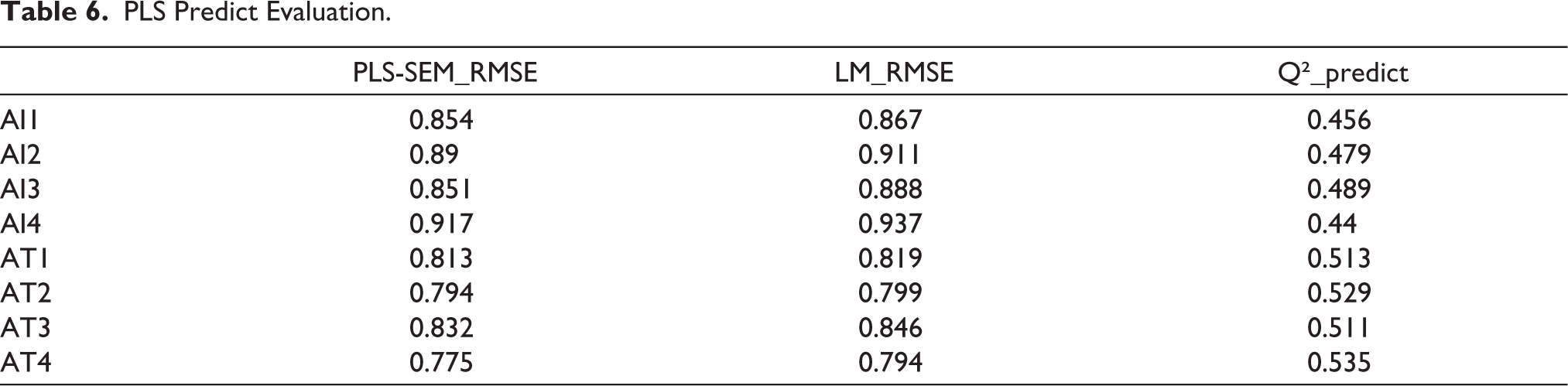
Predictive Relevance (Q2 _predict) Measurement
To evaluate out-of-sample prediction, we employed the PLS-predict approach. The predictive capacity of the model was evaluated using the out-of-sample PLS predict technique, and the findings revealed a strong predictive power to predict the items of EV’s adoption intention and attitude by evaluating the values of Q2. All the Q2 values were above zero, indicating the presence of predictive relevance. We compared the root mean squared error (RMSE) of PLS-SEM with the linear model (LM) (Danks & Ray, 2018; Shmueli et al., 2019). The LM value exceeds the PLS model values in all the cases, indicating high model prediction (refer to Table 6).
PLS Predict Evaluation.
Discussion
The direct path analysis revealed that attitude (β = 0.436) had the greatest influence on EV’s adoption intention. This result is similar to the findings of Khurana et al. (2020), followed by social influence (β = 0.242), price (β = 0.144), and environmental concern (β = 0.124). The results are partly similar to the outcomes of Buhmann et al. (2024), Khurana et al. (2020), Manutworakit and Choocharukul (2022). Surprisingly, effort expectancy and performance expectancy were found not to influence adoption intention. These findings are consistent with the findings of Krishnan and Koshy (2021), where perceived usefulness and perceived ease of use had an insignificant effect on adoption intention. Similarly, performance expectancy did not have a significant impact on EV adoption intention in the study of Abbasi et al. (2021). The possible reason for this could be a lack of personal experience and awareness about the performance benefits of EVs. Further, consumers might still feel that EVs are underperforming in comparison to traditional vehicles, which could lead to skepticism. Furthermore, the doubts regarding EV batteries such as battery life, performance degradation over time, and high replacement cost may weaken the confidence in EVs’ overall performance and effort expectancy. In the study of Jain et al. (2022) and Singh et al. (2023), effort expectancy did not significantly influence the adoption intention. This could be attributed to consumers’ unfamiliarity with EVs. For them, learning and operating an EV might seem difficult. Further, longer charging times in comparison to fuel refueling may be perceived as inconvenient and complex by consumers.
Further, the findings confirm that consumers are more likely to buy an EV if they have developed a positive attitude towards EVs. This finding is consistent with prior studies in the EV adoption context (Abbasi et al., 2021; Jaiswal et al., 2021; Mukesh & Narwal, 2023). Social influence is an important factor influencing intentions to adopt EVs. This finding is congruent with prior studies on EV adoption intention (Krishnan & Koshy, 2021; Manutworakit & Choocharukul, 2022; Wang et al., 2023).
The mediation results show that attitude partially mediates the relationship between price and adoption intention, environmental concern and adoption intention, and social influence and adoption intention. Price, environmental concern, and social influence had significant direct and indirect effects. However, the relationship between adoption intention and facilitating conditions, and adoption intention and government support is fully mediated through attitude. The study of Wang et al. (2021) had similar findings, where financial incentives did not influence attitude but had a significant influence on adoption intention. Khurana et al. (2020) found that social influence and environmental concern are key drivers of adoption intention through attitude. Thus, attitude plays a major role in shaping adoption intentions for EVs. These results are consistent with prior studies of Mukesh and Narwal (2023) and Khurana et al. (2020), where attitude emerged as a significant mediator between the independent constructs and EV adoption intention.
Implications
The study offers important theoretical implications. This study was intended to determine how the factors of the Meta-UTAUT model influenced attitudes and EV adoption intention with additional factors such as environmental concern, government support, and price in the Indian context. The findings expand the literature on the Meta-UTAUT. Including attitude as a mediator in this research has significantly improved the model’s explanatory power. It is evidenced by the model’s R² values for adoption intention (0.705), which indicates substantial explanatory power, as attitude and other independent factors account for a significant portion of the variance.
Additionally, the study provides various managerial implications. The results revealed that attitude is the most significant factor influencing EV adoption intentions. It acts as a key mediator between the independent constructs except performance expectancy and effort expectancy. Therefore, the EV producers and marketers should strive to change attitudes in a way that favors the adoption of EVs. Government support is also a significant factor that influences adoption intention. For instance, EV adoption may be boosted by financial incentives like subsidies, free or reduced tolls, parking, or priority in public areas. Automakers, on the other hand, can contribute by organizing test-drive events and exhibitions. Social influence is also a significant factor in EV adoption, particularly in a collective society like India. Engaging celebrities and influencers can build attitude and amplify the message, especially among the young generation. Strengthening loyalty by utilizing testimonials, success stories of existing EV users, and word of mouth will help in influencing EV adoption intention. By leveraging social influence through community adoption programs, user-generated reviews, social media platforms, and digital word of mouth, companies can shape consumers’ attitudes to accelerate EV acceptance. Facilitating conditions indirectly influenced the adoption intentions. Thus, the government and automakers should focus on building better infrastructure and deep rural penetration to shape attitudes towards EVs. If the demand for EVs increases, the need for proper EV infrastructure will facilitate better EV adoption. The results further revealed that environmental concerns significantly impact adoption intentions via attitude. Thus, marketers should design a communication strategy by linking environmental concerns with a favorable attitude in a way that consumers can connect emotionally, such as cleaner air, reduced carbon footprint, and sustainable living. In this study performance expectancy and effort expectancy failed to impact either attitude or adoption intention. These results suggest that the respondents may possess less performance expectancy for EVs in comparison to traditional vehicles. Further, this can be attributed to a lack of awareness among potential consumers about the benefits of EVs. Policymakers and EV manufacturers should actively raise environmental knowledge and awareness among consumers regarding the performance and benefits which will significantly enhance consumer inclination towards EVs. Furthermore, these insignificant results may also indicate a lack of personal experience with the EVs.
Marketers must focus on communication and raise awareness about the various benefits of EVs to improve attitudes towards EVs. The consumers must be informed about the driving range per charge, battery life, and battery disposal, which would facilitate the faster adoption of EVs. In addition, the study found that price has a substantial impact on attitude and EV adoption intention. The public and private sectors must work together to reduce the cost of EVs. By understanding these factors that drive EV adoption intentions, stakeholders can more effectively promote EVs, lowering emissions and supporting the transition to sustainable transportation.
Limitations and Future Scope
The study has a few limitations. Scholars can further research by investigating the actual adoption behavior of EV users and gaining first-hand knowledge from actual EV users. Longitudinal studies may be conducted in the future to gauge consumers’ attitudes and preferences for EVs over time. This would assist the industry players and policymakers with deeper and actionable insights. Further, future studies might include other independent variables like trust and perceived risks that impact EVs’ adoption intention. This study did not include a segment-wise analysis based on demographic characteristics (age, income, education) or vehicle preference (e.g., two-wheeler vs. four-wheeler). In further studies segment-specific patterns of age, income, education, incentives, and vehicle preference may be assessed. Finally, this study only employed the quantitative technique, the qualitative analysis technique may be utilized for a better understanding of factors of EV adoption.
Footnotes
Declaration of Conflicting Interests
The authors declared no potential conflicts of interest with respect to the research, authorship, and/or publication of this article.
Funding
The authors received no financial support for the research, authorship, and/or publication of this article.