




Abstract
Organizations worldwide are taking steps to enhance employee experience. Employers have started to explore the wholesome impact of various ways in which organizations interact with employees through employee experience. This study aims to understand the phenomenon of employee experience by focusing on the “Person” or “Employee” or “Individual” part of the experience along with the changing environment and suggest a comprehensive theoretical model of employee experience. This study tries to understand the interplay of perceived human resource (HR) practices, person-organization fit (PO Fit), employee experience, and job satisfaction using the PO Fit theory. The article adopts PRISMA methodology to shortlist 41 peer-reviewed journal articles, based only on specific keywords, from a collection of 198 articles from the Scopus database. This study proposes a theoretical model suggesting that perceived HR practices enable an individual to fit better within an organization, creating a pleasant employee experience that further leads to job satisfaction.
Keywords
Introduction
Steve Jobs said, “Life is about creating and living experiences that are worth sharing.” However, what is experience actually? A cold breezy wind felt on the face while walking down the street for work. Is it the proud feeling that we get after reaching our well-crafted workplace, or is it the feeling of accomplishment obtained after completion of a task, or the feeling of disappointment after an argument with our managers?
In 1999, employee experience became a topic of interest; however, it gained traction only in 2019 and has been a dominant topic of discussion ever since (The Economist Intelligence Unit, 2019). Employee Experience, however, has been defined in various ways by researchers. Dewey explained experience as a double-barreled concept that includes both the experienced and the experiencing (Dewey, 1958). Building upon the existing employee experience literature and authors’ previous work, employee experience can be defined as “the sum of interactions that are influenced by employees’ perceptions of the individual and the organizational factors within the workplace” (Grover & Chawla, 2022). The definition suggests that employees’ perception of the individual factors, such as career decisions, meaningful work, career goals, and experimentation and organizational factors such as recruitment and onboarding, skill and career development, compensation and benefits help shape their experience (Grover & Chawla, 2022). Existing literature also suggests that human resource practices (HR practices) such as relocation policy and change, family and medical leave policy, career satisfaction, diversity and inclusion practices, skill development, perceived salary growth, job crafting, flexible work environment, AI assisted HRM practices are antecedents to employee experience (Cañibano, 2019; Grosswald & Scharlach, 1999; Jones, 2021; Joshi, 2023; Kumar & Kumar, 2023; Malik et al., 2023; Masood et al., 2023; Mccallaghan, 2023; Mcdonald & Shakespeare-Finch, 2013; Mishra & Bhattacharya, 2021; Neill & de Klerk, 2023; Rothe et al., 2015; Rozkwitalska, 2019; Shah & Gregar, 2014; Sutton & Atkinson, 2023; Yildiz et al., 2020). Multiple bodies of research also talk about how employee experience leads to job satisfaction. Itam and Ghosh (2020) stated in their research article that HR strategies facilitate enduring employee experiences, leading to the formation of an emotional bond between the employee and the organization; this leads to increased job satisfaction, motivation, performance, and retention. Chen and Fulmer (2018) studied and tested the impact of employees’ experience on flexible work arrangements and job satisfaction. Soni et al. (2017), in their study, stated that a significant positive relationship exists between employee experience and job satisfaction.
Upon reviewing the existing literature on employee experience, the researchers found that even though many studies have already been conducted and others are still being conducted on the topic, major research gaps exist in the literature. These include an absence of “Person” or “Employee” or “Individual” part while explaining experience, an absence of a theory to explain employee experience and inconsistency in variables and constructs of employee experience. While some of the definitions of employee experience do consider the employee’s perception of the organization interaction as Employee Experience, the constructs, variables and factors used in the existing literature seem to miss the “Person” or “Employee” or “Individual” part of the experience and tends to only focus on the changing environment. While most of the studies existing in the literature have used Herzberg’s Motivation theory, Role Theory, Signaling Theory, and grounded theory, relatively less research has been conducted on employee experience using the person-organization fit (PO Fit) theory (Roald & Edgren, 2001; Saini & Jawahar, 2019; Santos & Garibaldi de Hilal, 2020; Tran & Smith, 2020). Most of the studies on employee experience show inconsistency in terms of explaining the variables and constructs used. Considering these gaps in the research, the following research questions were coined; first, what is the role of “person” or “employee” or “individual” or “the experiencer” in the phenomenon of employee experience; second, what is the role of PO Fit theory, when trying to explain employee experience; third, what is the role of perceived HR practices as antecedents and the role of job satisfaction as a consequence of employee experience. Considering the research questions, three research objectives of the study are, first, to showcase the role of “Person” or “Employee” or “Individual” in the phenomenon of employee experience and propose a theoretical model; second, to understand the role of PO Fit while explaining employee experience and third, to understand the relationship between perceived HR practices, employee, their organization, employee experience and job satisfaction. For this research, the researchers have referred to PO Fit theory from the domain of interaction psychology to understand the impact of an organization on an individual’s experience, establishing the need for contextualization of HR Practices to create a pleasant experience. Malik et al. (2020) used PO Fit theory to showcase the personalization of HRM Practices to enhance employee experience. In the present study, researchers have conducted a review of the literature on employee experience to propose a theoretical model that suggests that experience is an interaction of the person and his/her environment, which in this case is the organization. The researchers posit in their model that HR Practices used in an organization can lead to a better PO Fit, leading to positive employee experience and further job satisfaction.
The research article is broadly divided into the following sections: (1) Introduction, (2) Theoretical Basis, (3) Results, (4) Discussions, and (5) Conclusions.
Theoretical Basis
Methodology
The research was conducted in January 2024 using PRISMA methodology using the “SCOPUS” database. Scopus has an unparalleled collection of peer-reviewed literature that encompasses a vast array of disciplines. It has powerful tools that enable researchers to trace references effortlessly (Burnham, 2006).
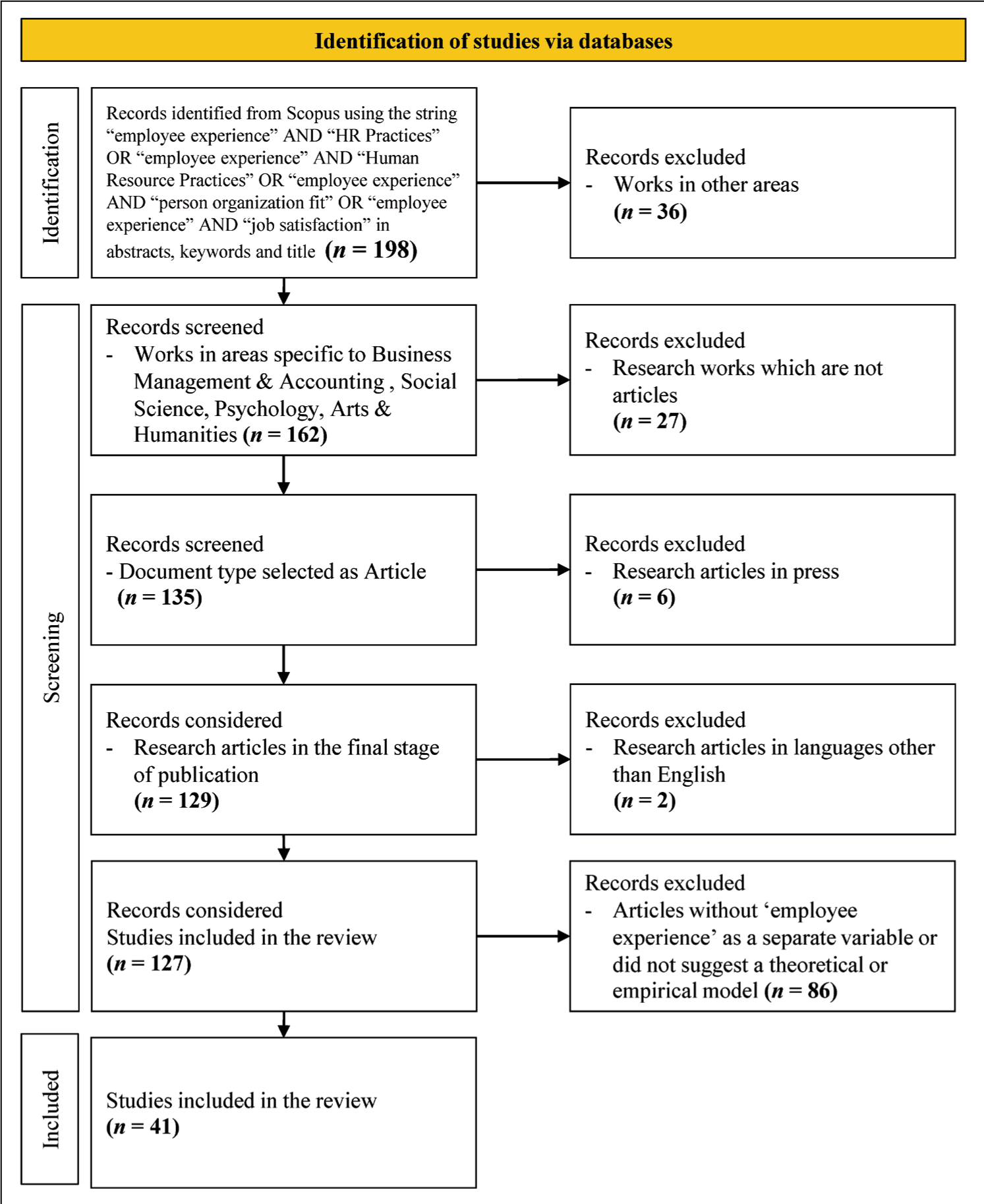
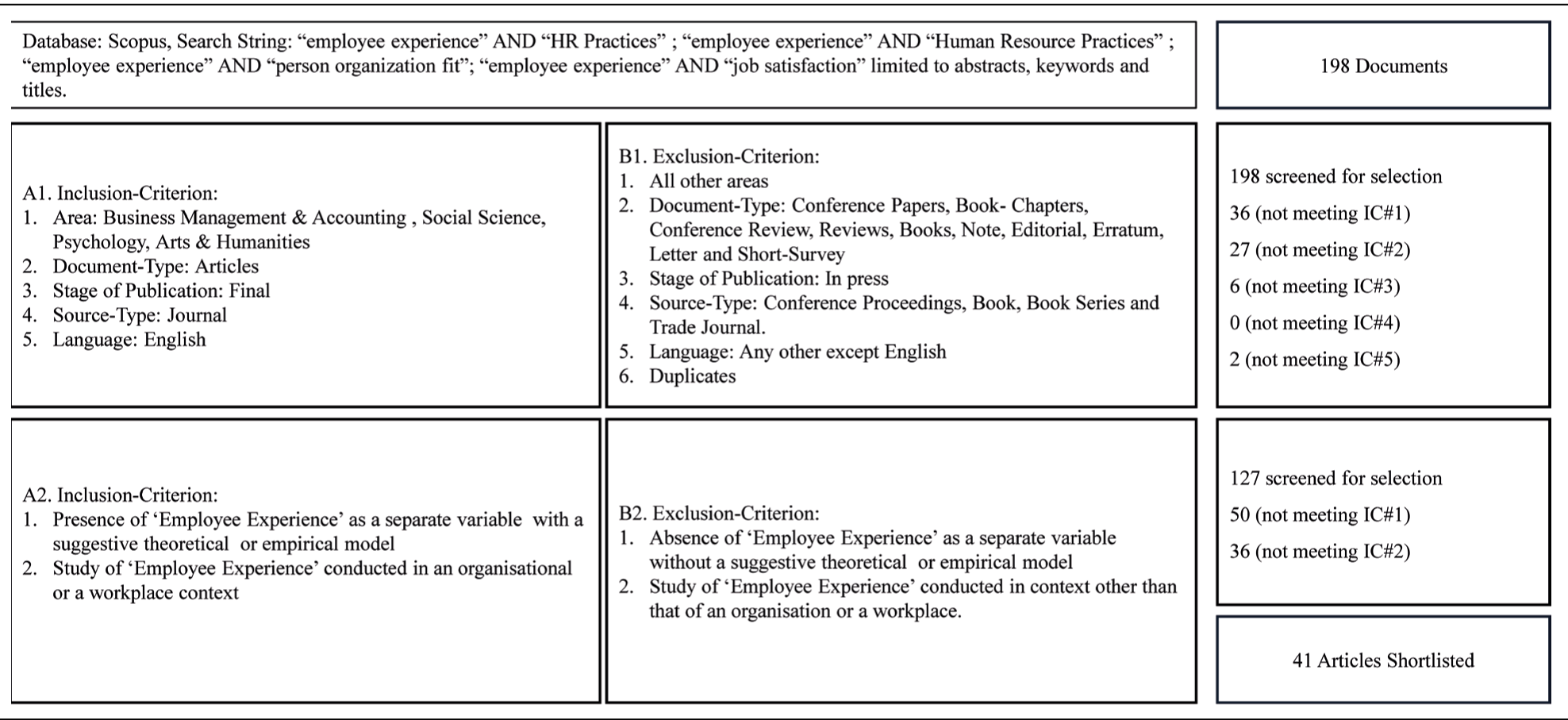
Overall, the articles were identified using independent string search of “employee experience” AND “HR Practices”; “employee experience” AND “Human Resource Practices”; “employee experience” AND “person organisation fit”; “employee experience” AND “job satisfaction” in abstracts, keywords and titles. In total, 198 studies were identified. With the subject area filter of Business Management & Accounting, Social Science, Psychology, Arts & Humanities, “peer-reviewed journal articles”, “final stage of publication”, and “English” language options enabled, a total of 127 publications were identified, and only those were considered. Through an in-depth analysis of the abstracts and research articles that did not study the concept of employee experience exclusively as a variable and suggested either a theoretical model or conducted an empirical study, 77 publications were selected. After excluding articles that were not studied in the context of organizations, workplaces, and companies, 41 eligible full-text English-language articles were studied. These articles included those that dealt with employee experience in the context of an organization or workplace and suggested either a theoretical model or conducted an empirical study. Figure 1 shows a PRISMA flow diagram. Relevant studies for academia and industry were selected using inclusion criteria A1 and exclusion criteria B1. This resulted in the robust screening of 127 articles. After screening the articles using selection criteria A1 and B1, the authors adopted a manual review process to extract relevant articles. An in-depth review of abstracts and consideration of article selection criteria A2 and B2 resulted in 41 eligible full-text English-language articles, which were finally studied. The inclusion and exclusion criteria are presented in Figure 2.
Review of Literature and Proposed Theoretical Model
Understanding Employee Experience
The authors found varying definitions from different articles and curated 3 different themes of employee experience (Grover & Chawla, 2022) These themes are (a) Employee Experience as a “Sum of Employee Perception about Workplace Interactions,” (b) Employee Experience as a “Connection, Meaning and Impact of Work in the Workplace”, and (c) Employee Experience as “Passion & Purpose, Two Way Contract & Impact via Technology”.
The most common definition of employee experience is coined in terms of the sum of employee perceptions about workplace interaction. This implies the collective perception that an employee forms with respect to their interaction with the people, practices, and platforms available within the organization. Plaskoff (2017) highlighted employees’ comprehensive views on their interactions across organizational touchpoints. McClane (2018) defined these interactions as colleagues, customers, leadership, physical environment, and systems. Yildiz et al. (2020) emphasized the importance of connection, meaning, appreciation, and impact within workplace interactions. Gheidar and Shamizanjani (2021) discussed digital employee experience as a holistic result of perceptions of the digital workplace. Batat (2022) defined employee experience as “employees” subjective and evolving perceptions of their cognitive, behavioral, and emotional states, along with their social interactions with the employing organization and its related social factors, whether they are internal (e.g., coworkers and managers) or external (e.g., suppliers and clients). These perceptions are derived from numerous encounters affecting the well-being of employees and their perceived value throughout their experiential journeys within organizations’ (Batat, 2022).
The second theme of definition for employee experience explains employee experience as “Connection, Meaning and Impact of Work in the Workplace.” Berson et al. (2017) suggest that experience extends beyond the growth opportunities an organization provides. Morgan suggested that there are three dimensions to experience, that is, Work Culture, Technology, and Workplace, which was used by Harlianto and Rudi (2023) for the purpose of their research study between employee experience and employee performance (Harlianto & Rudi, 2023). Vieira dos Santos (2018) described employee experience as empowering employees to influence their workplace, cultivate strong relationships and connections with employees, and foster ownership. Gustafsson et al. (2024) acknowledged Employee Experience as a “holistic and personal experience that evolves over time, shaped by tangible stimuli like digital platforms and intangible factors such as workplace culture and HR practices”.
The third theme of definition for employee experience refers to Employee Experience as “Passion & Purpose, Two Way Contract & Impact via Technology”. According to Dhingra et al. (2013), experience refers to organizations and their employees working together to create authentic, personalized experiences that ignite passion and tap into the purpose of strengthening individual, team, and company performance as employee experience. According to Vieira dos Santos (2018), Employee Experience is nothing but a two-way contract between employers and employees. Pangallo et al. (2022) wrote a research article in which they suggested that being treated with respect, strategic alignment, work-life balance, and growth and development are key themes driving employee experience.
The researchers coined their own definition of employee experience and defined it as the sum of interactions that are influenced by employees’ perceptions of the organizational factors and the individual factors within the workplace (Grover & Chawla, 2022). This definition explains that employee experience is not a one-way concept, but a summative two-way interaction between the employee and his or her organization and is dependent upon the employee’s perception of the surrounding organizational factors, whether it is the HR Practices, organizational values, beliefs, or culture. It is individual perception that formulates their experience.
Proposed Theoretical Model
The relationship between an individual and his organization can be explained through Interactional Psychology (Magnusson, 1990). The PE Fit theory reflects the relationship between an individual’s (P) characteristics and the environment’s (E’s) characteristics. PO Fit, a subset of PE Fit, is the compatibility an individual experiences with his or her organization that happens when (a) the needs of one entity are provided by another, (b) both entities share similar characteristics, or (c) both. This definition explains both supplementary and complementary perspectives simultaneously (Kristof-Brown & Guay, 2005). PO Fit can be defined as the congruence between the culture and value system of the organization and the value system of the individual (Bretz & Judge, 1994). PO fit occurs because individuals and organizations share similar fundamental values (Cable & Judge, 1997; Kristof, 1996; Kristof-Brown & Billsberry, 2013). PO Fit can also occur when one can supply what the other needs (Kristof-Brown & Billsberry, 2013). This implies that, in any organization, everyone has a unique experience of fit. This experience of fit results in individual-level outcomes (Kristof-Brown & Guay, 2005). Malik et al. (2020) used PO Fit theory to showcase the personalization of HRM Practices to enhance employee experience. Kristof-Brown and Guay (2005) suggested that positive experience is due to the fit or match between the individual and his/her environment, which in this case is the organization. According to a research study by Vancouver and Schmitt, PO Fit has a significant positive relationship with job satisfaction (Edwards & Cable, 2009; Vancouver & Schmitt, 1991). Many studies have researched the connection between the combination of several perceived HRM practices, PO Fit, and job satisfaction. HR practices have an impact on PO Fit and job satisfaction, as suggested by many studies (Boon et al., 2011; Gould-Williams et al., 2013; Mostafa & Gould-Williams, 2014). Boon et al. (2011) found that HR practices such as recruitment, selection, and performance appraisal communicate organizational values to employees, leading to a match between employees and their organizations. Therefore, employees who perceive the presence of HR practices in an organization are likely to have a clear view of the values, demands, expectations, and desired behaviors of the organization. This fit between the employee and the organization leads to the emergence of pleasant feelings of belongingness, happiness, and purpose (de Sousa & Porto, 2015; Ucar et al., 2021; Xu et al., 2024). According to the IBM Employee Experience Index and King et al., these pleasant feelings can be grouped under the term Employee Experience (IBM Smarter Workforce Institute, Workhuman Analytics and Research Institute, 2019; King et al., 2018). This group of positive feelings or positive employee experience enables employees to voluntarily take up more responsibility, making them content with their job, which in turn increases job satisfaction (Chen & Fulmer, 2018; Itam & Ghosh, 2020; Soni et al., 2017). Malik et al. (2020) used the PO Fit theory to showcase the personalization of HRM Practices to enhance employee experience. Kristof-Brown and Guay (2005) suggested that positive experience is a result of the fit or match between the person and his/her environment, which in this case is the organization.
This theoretical model contributes uniquely to the existing body of research by suggesting that experience is not just a mere one-way concept but a two-way interaction between the experiencer (employee) and the environment (organization). It is the perception of the environment by the experiencer which establishes the level of fit that the experiencer feels with their environment, leading to the emergence of pleasant feelings of happiness, belongingness, and purpose. Therefore, how an experiencer perceives his or her environment is specific to the individual and not generic to the environment. The emergence of these pleasant feelings in the context of an employment scenario enables the experiencer to feel more content with their job, which, in turn, increases job satisfaction.
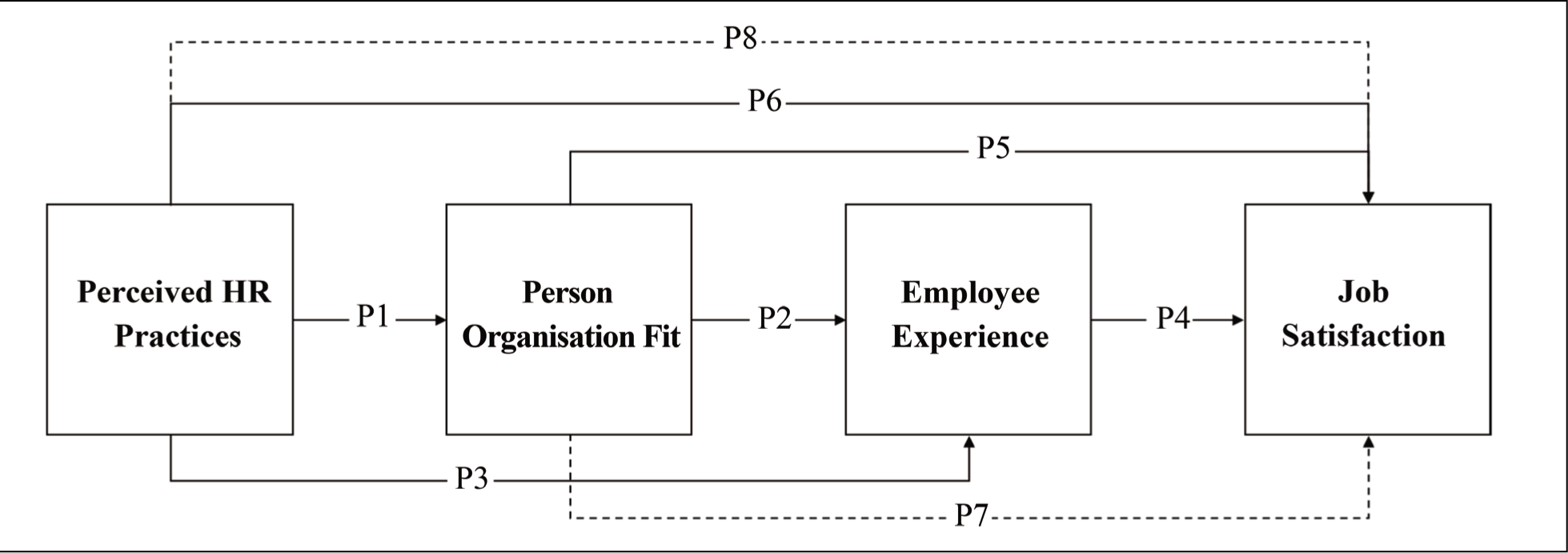
In our theoretical model, perceived HR practices are a collection of HR Practices carved around recruitment and onboarding, skill and career development, compensation and benefits and rewards, and recognition practices of an organization. PO Fit is the compatibility between an employee and his organization. It is what an employee experiences because of the similarity between an employee’s own values and beliefs and the values and beliefs of one’s organization. Employee experience is defined as the “sum of interactions that are influenced by perceptions of employees’ individual and the organizational factors within the workplace” (Grover & Chawla, 2022). Job satisfaction is defined as a phenomenon that determines how satisfied an individual is with their job. Figure 3 shows the proposed theoretical model.
Results
The propositions in the research are outlined as follows
Perceived HR Practices and PO Fit
Existing literature shows that HR practices are a way in which employees receive information about the organization (Rousseau & Greller, 1994). HR practices reflect an organization’s values and communicate important information about organizational characteristics, beliefs, values, goals, and desired employee behaviors to employees (Guzzo et al., 1994). Therefore, employees who perceive the presence of HR practices tend to have a transparent view of the expectations and desired behaviors of the organization (Kim et al., 2013). In addition, HR Practices provide opportunities for personal and skill development, which leads to the enhancement of employees’ perceptions of the fulfilment of their needs, an essential part of PO fit (Boon et al., 2011). Together, these qualities of exposure to HR practices enhance employees’ feelings of PO fit (Cable & Parsons, 2001). HR practices such as pay/compensation, promotion, prestige/recognition, job security, work-life balance, and skill development were seen as overlapping antecedents between PO Fit and Employee Experience (Boon et al., 2011; Gould-Williams et al., 2013; Venkatesh et al., 2017). According to Uppal (2020), HR Practices are positively and significantly related to PO Fit. Therefore, our first proposition suggests that P1: Perceived HR practices have a relationship with PO Fit.
PO Fit and Employee Experience
According to a thought leadership article by IBM Smarter Workforce Institute, Workhuman Analytics and Research Institute (2019), Employee Experience can be measured by taking into consideration five dimensions consisting of facets such as
Belonging—feeling part of a team, group or organization, Purpose—understanding why one’s work matters, Achievement—a sense of accomplishment in the work that is done, Happiness—the pleasant feeling arising in and around work and Vigor—the presence of energy, enthusiasm and excitement at work. (IBM Smarter Workforce Institute, Workhuman Analytics and Research Institute, 2019, p. 3)
This measure of Employee Experience was also used by King et al. (2018) in their research. According to the PO Fit theory, the behavior that an employee showcases at work is a result of interactional experiences, which are based on the compatibility of their values and goals with their organization’s work environment (Morley, 2007). PO Fit can also be explained as a sense of mutuality between an individual and its organization, such that it acts as an antecedent to their perceived exchange in the organization (Kim et al., 2013).
Han et al. (2015) argue that PO Fit makes individuals feel as though they are insiders and their organization is a comfortable home, contributing to employees’ sense of belonging. According to an empirical study by Rahmayanti and Ellya Kurniawan (2020), PO Fit is positively correlated with a sense of belonging to an organization and a sense of self-identity.
In another study, Sousa 2015 suggested that PO fit affects happiness at work. This study suggested that organizations with employees with values similar to organizational values tend to obtain higher levels of happiness at work. Hence, this research suggests that companies should focus on strategies that promote value fit to achieve higher levels of happiness at work. These could include initiatives such as socialization processes, employer, and building an employee value proposition (de Sousa & Porto, 2015).
A research study by Xu et al. (2024) stated that the compatibility between an individual and the organization lays the foundation for the emergence of a sense of calling or purpose. Only when employees sense a match between their values and that of the organization will they be more engaged and focused towards their work, and this, over a period of time, will translate into an inherent interest, leading to the emergence of a sense of calling or purpose (Xu et al., 2024). Hence, we propose the following: P2: PO Fit has a relationship with employee experience.
Perceived HR Practices and Employee Experience
Multiple studies have shown that HR Practices are significantly related to employee experience. Jones (2021) studied how career satisfaction impacts employee experience in cross-cultural scenarios and provides a basis for studying career-related employee experiences. McCallaghan (2023) examined the impact of diversity and inclusion practices on belongingness and acceptance in the workplace. Mishra and Bhattacharya (2021) suggested that human resource strategies used by a company are linked to the concepts of staffing, employee experience, and employer branding. Joshi (2023) suggested that not just skill development but employees’ perceived salary and growth play an important part in shaping employee experience. Rothe et al. (2015) studied the impact of relocation practices on employee experience. Various researchers have studied the impact of job crafting and skill development on employee experience (Kumar & Kumar, 2023; Masood et al., 2023; Rozkwitalska, 2019). Researchers have also studied how flexible working arrangements affect employee experience (Cañibano, 2019; Mcdonald & Shakespeare-Finch, 2013; Shah & Gregar, 2014).
Malik et al. (2023) showcased the impact of AI-assisted HRM on Employee Experience. Laiho et al. (2022) shed light on the role of employee perceptions in constructing a strong HRM climate; that is, employees’ shared perceptions of HRM leading to employee experience. Neill and de Klerk (2023) studied the power of team coaching as having the potential to enhance employee experiences. Many researchers have studied how employee perceptions of HR practices impact their experiences (Chacko & Conway, 2019; Hauff et al., 2020; Mcmullan et al., 2018; Monks, 2015; Murphy & Patrick, 2016; Santos & Garibaldi de Hilal, 2020). Sutton and Atkinson (2023) found that HR Practices, such as compensation and benefits, performance management, and training, influence organizational performance directly and indirectly via employee experiences of work. Hence, we can propose that P3: Perceived HR practices have a relationship with employee experience.
Employee Experience and Job Satisfaction
Itam and Ghosh stated that HR strategies such as benefits, career development and planning, rewards and recognition, and employee engagement are facilitators of enduring employee experiences, resulting in an emotional bond between the organization and employees. This leads to higher job satisfaction, motivation, performance, and retention (Itam & Ghosh, 2020). Chen and Fulmer (2018), in their research, tested the impact of employees’ experience of flexible work options and job satisfaction. Another study stated that if employee experience is adhered to, with the same level of focus as customer experience, the outcomes will be visible across the organization. Employees tend to be more satisfied, organizations experience higher retention, and customers receive better services (Yohn, 2016). In another research study, Soni et al. (2017) tested and stated that there is a significant positive relationship between employee experience and job satisfaction. Lee and Kim (2023) in their research confirmed that job satisfaction is affected by employee experience and stated that positive experience is an important factor in increasing job satisfaction. Porkodi and Ahmad (2024) empirically tested whether employee experience greatly affects satisfaction. Another study showed that employee experience has a positive and significant influence on job satisfaction (Dwidienawati et al., 2024). Meybodi et al. (2024) identified organizational commitment as one of the factors of employee experience. This commitment creates a feeling of pleasure and job satisfaction. Hence, we can propose that P4: Employee experience has a relationship with job satisfaction.
PO Fit and Job Satisfaction
Vancouver and Schmitt (1991) conducted a study of 356 principals and 14,721 teachers and found that PO Fit is positively related to job satisfaction. Verquer et al. (2003) reviewed 21 studies to understand the interplay between PO Fit and job satisfaction. Silverthorne (2004) empirically tested the connection between PO Fit and job satisfaction using a sample of 120 subjects in Taiwan and suggested that a significant relationship exists between the level of fit and the level of job satisfaction an employee experiences within the organization. Gould-Williams et al. (2013) found that if organizations intend to improve employees’ experience at work, then compatibility between employees’ values and organizational values is imperative. A study in 2009 stated that PO Fit enables Job Satisfaction (Edwards & Cable, 2009). Hence, we can coin proposition: P5: PO Fit has a relationship with job satisfaction.
Perceived HR Practices and Job Satisfaction
In 2008, Gürbüz (2009) studied the connection between job satisfaction and perceived HR practices and found a significant relationship between the two variables. In 2012, Jyothi and Ravindran conducted a study of 264 individuals from the ITeS industry in Bangalore and found a significant association between HR Practices and Job Satisfaction (Jyothi & Ravindran, 2012). Bhatt and Rana (2023) and de Klerk et al. (2020) suggest that flexible work practices enhance employee experience. Another study suggested that the presence of flexible work arrangements helps employees experience greater work enrichment, which in turn leads to higher job satisfaction (Mcnall & Masuda, 2010). Another study in 2016 examined the responses of 100 IT employees in India and found that a significant relationship exists between HR practices and Job Satisfaction (Pavan & Reddy, 2016). Another study conducted in 2022 suggested a relationship between HR Practices and job satisfaction (Amanda et al., 2022). Jha and Bhattacharya conducted a research studying a sample of 352 IT executives and found a significant association between HR Practices and Job Satisfaction (Jha, 2012). Analyses by Piening et al. (2013) revealed that changes in perceptions of HR systems are related to changes in customer satisfaction, transmitted through changes in job satisfaction. Hence, we formulate the proposition P6: Perceived HR practices have a relationship with job satisfaction.
PO Fit to Job Satisfaction Via Employee Experience
According to the existing literature, employee experience is a significant contributor to Job Satisfaction (Chen & Fulmer, 2018; Yohn, 2016) also, in the existing literature, PO Fit leads to job satisfaction (Edwards & Cable, 2009; Vancouver & Schmitt, 1991). As stated in the paragraphs above, the PO Fit contributes towards creating a feeling of belonging, happiness, and purpose (Ucar et al., 2021; Xu et al., 2024; de Sousa & Porto, 2015), all of which are components of employee experience (IBM Smarter Workforce Institute, Workhuman Analytics and Research Institute, 2019; King et al., 2018), therefore it can be interpreted that PO Fit positively relates to experience. Lewin’s field theory explains that the fit between a person and an organization can lead to various behaviors (Burnes & Cooke, 2013). A positive and meaningful environment for an individual enforces them to display positive outcomes in return; hence, it is correct to coin the proposition: P7: Employee experience mediates the relationship between PO Fit & job satisfaction.
Perceived HR Practices to Job Satisfaction Via PO Fit and Employee Experience
PO Fit suggests that the level of compatibility between an individual and his or her organization happens due to (a) the needs of one entity being provided by the other, (b) both entities sharing similar characteristics, or (c) both (Kristof-Brown & Guay, 2005). Research in the field of psychological contracts suggests that HR practices are methods and mechanisms adopted by organizations through which employees understand employment terms transparently (Rousseau & Greller, 1994).
The demands and supplies and the level of similarity are likely to be affected by the underlying characteristics of the organization (Kristof, 1996), which are communicated through HR practices (Bretz & Judge, 1994). An integrated set of HR practices is more effective than separate HR practices (Arthur, 1994). These practices are a collection of aspects such as skill development, incentive planning, and participation opportunities (Bailey et al., 2014). However, how each employee reacts to these HR practices depends on their experiences, values, preferences, and perceptions. Wright and Nishii’s (2014) model explains how employees perceive HR practices that affect outcomes.
Value and goal congruence with the organization creates a pleasant feeling for employees and generates a feeling of happiness, belongingness, and calling or purpose (de Sousa & Porto, 2015; Ucar et al., 2021; Xu et al., 2024), all of which are measures of employee experience (IBM Smarter Workforce Institute, Workhuman Analytics and Research Institute, 2019; King et al., 2018). This pleasant feeling also encourages employees to respond to the organization by taking initiatives without instructions and showcasing enthusiasm and loyalty to their employer, leading to job satisfaction (Chen & Fulmer, 2018; Itam & Ghosh, 2020; Soni et al., 2017). Hence, we can propose that: P8: Perceived HR practices have a significant relationship with job satisfaction via PO Fit and employee experience.
Discussions
The article comprehensively shares a review of the research conducted in the field of employee experience, establishes a theoretical model using perceived HR Practices as the antecedents of employee experience, and sheds light on job satisfaction as a consequence of employee experience. The article shows that perceived HR practices, such as recruitment and onboarding, compensation and benefits, skill and career development, and rewards and recognition, communicate the values of the organization to the employee. This enables an employee to find a match between their values and the organization’s values, making the employee feel like a better fit within the organization. This individual and organizational fit enables an employee to feel happy and have a sense of achievement and purpose at the workplace, leading to a pleasant and positive experience, in turn leading to a more satisfied feeling with their work, proving that the theoretical model establishes the relationship between perceived HR practices and job satisfaction correctly. This relationship is serially mediated by PO Fit and employee experience. This theoretical model shows that the contextualization of HR practices to individual needs enhances the fit between the employee and the organization, increasing the positive or pleasant feeling, leading to a feeling of satisfaction that an employee experiences with regard to their work. Hence, personalization of HR practices enhances the level of satisfaction an employee experiences with regard to their work. Malik et al. (2020) found that employees respond to their experience of receiving personalized and contextualized HRM practices with heightened behavioral and attitudinal responses, and the HRM function benefits from enhanced cost-effectiveness. The research also supports that personalized and contextualized HR Practices result in increased levels of job satisfaction, commitment, and intention to quit behaviors (Malik et al., 2020).
This article acts as a reference for future academicians and researchers, who will be conducting work on employee experience, and adds to the existing body of literature. This study elaborates on various HR practices as possible antecedents of employee experience, how employee experience can be measured, and what it can lead to. It also shows that HR practices impact the level of fit an employee feels within an organization, leading to a pleasant feeling and, in turn, enhancing their job satisfaction. While various studies in the past have used multiple theories to explain employee experience, that is, design thinking, role theory, signaling theory, service design, and Dewey’s experience theory (Bersin, 2016; Namita Savla, 2020; Plaskoff, 2017; Raia, 2017; Richards, 2019; Santos & Garibaldi de Hilal, 2020; Sinha et al., 2019; Tran & Smith, 2020; Williams, 2021), none of these theories discuss the fit between an individual and their organization and only take into context the environment or the organization. This study establishes a theoretical model of employee experience and considers the perception of an individual and their feeling of fit within the organization, establishing the fact that contextualization or personalization of employee experience is extremely important for an employee to be satisfied with their job.
In scenarios where a prospective candidate might be looking for a flexible work arrangement in an organization, which when communicated through the recruitment and onboarding practice, enables the candidate to understand that there is a match between their values and the values of the organization, creating a feeling of belongingness and, in turn, feeling satisfied with their choice of the employer. In certain cases, an employee might be looking for financial support to complete a certification or to develop his or her skills and capabilities. If the organization’s learning and development policy includes such a provision and allows the employee to develop their skills and capability, it would allow the employee to feel a match between the organization’s goals and their goals, oozing out a feeling of happiness and purpose, making him or her more satisfied with their choice of job and organization.
Contextualization of HR practices is possible by understanding the perceptions of employees at each stage of the employee life cycle through various methods such as surveys, focused group discussions, interviews, design thinking, and persona journeys. Sivathanu (2019) discussed the application of design thinking to various HR aspects of an organization through the involvement of employees. Horváth and Kenesei (2023) studied the step-by-step approach towards mapping the employee journey and included the identification of touch points and critical “pain points” in the development of proposed solutions. Mapping the pain points and moments of truth at each employee touch point is important to enable contextualization. Using these inputs to craft the minimum viable HR practices and policies and testing them with employees is key. Once the policies and practices are crafted for the organization, communicating them through specific change management and communication methodologies is important so that employees are not only aware but also have a positive mindset towards the usage of these policies and practices. Managers should act as brand ambassadors of these practices and should be aware of the correct usage of key HR practices to bring them to life for their team members. Once implemented and communicated, regular measurement of employee experience within organizations through the various functions of the HR team is imperative. This regular measurement keeps the employee perception measure in check and enables the HR team to understand where and what changes need to be in line with the industry practices and keep up with employees’ experience. We also need to empower people with opportunities to grow and instill a shared purpose that keeps them engaged (Wong, 2022). A better employee experience leads to the creation of a better experience for customers, which feeds back to enabling a more engaging employee experience (Pine, 2020).
As we evolve, it is imperative that the role of HR practitioners evolve as employee experience designers (Mahadevan & Schmitz, 2020). Airbnb is a company that has been a forerunner in advocating the idea of Employee Experience as their operating philosophy and has also created an Employee Experience department to address the aspects of the entire employee life cycle (Yadav & Vihari, 2023).
Conclusions
This article concludes with the proposal of a theoretical model and draws, collates, and infers many frameworks and ideas from past research. This study illustrates the interplay of factors such as employee experience and PO Fit influencing the relationship between perceived HR Practices and Employee Outcomes.
The current study concludes the model using theoretical evidence available from secondary research and does not empirically test the model, however, the model is still viable, as it is based on previously conducted empirical research. Rothe et al. (2015) in their study explored how relocation policies and changes influence the experience of employees in the organization. Another article (Grosswald & Scharlach, 1999) studied how family and medical leave policies, and their communication had an impact on employees’ experience. Yildiz et al. (2020) pointed out that human capital development is one of the key factors influencing the employee experience of an organization. This included training opportunities, openness to experimentation, career goals, and empowerment. Itam and Ghosh stated in their research article that HR strategies such as employee benefits, career planning and development, rewards and reinforcements, and other employee engagement strategies facilitate providing enduring experiences to employees, resulting in emotional bonding and a stronger psychological contract formed between them. This ultimately results in higher motivation, job satisfaction, performance, and retention (Itam & Ghosh, 2020). Soni et al. (2017) tested and stated that a positive relationship exists between employee experience and job satisfaction.
For future research, various factors such as specific HR Practices, that is, recruitment practices, compensation and benefits practice, learning and upskilling and their impact on employee experience can be tested; empirical testing of the proposed model can establish the significance of relationships between perceived HR practices, employee experience, job satisfaction and person-organization; the serial mediation effect of employee experience and PO Fit on HR practices and job satisfaction can be tested empirically; the model can be tested in different environments, that is, in a work from home setup/hybrid setup and work from office set up to show how employee experience is strengthened or weakened in a particular environment; the model can be tested in various industries such as IT/Manufacturing/Services to showcase the relevance and need for contextualization of HR practices basis the industry. Other research questions, such as the impact of employee experience on organizational outcomes, that is, performance, customer satisfaction, brand presence, can be tested. Future researchers can also discuss the various implications for policies created around enhancing employee experience.
Footnotes
Acknowledgements
Not applicable.
Availability of Data and Materials
Not applicable.
Consent for Publication
Not applicable.
Declaration of Conflicting Interests
The authors declared no potential conflicts of interest with respect to the research, authorship, and/or publication of this article.
Ethics Approval and Consent to Participate
All authors have participated in (a) conception and design or analysis and interpretation of the data; (b) drafting the article or revising it critically for important intellectual content; and (c) approval of the final version. This manuscript has not been submitted to, nor is under review at, another journal or other publishing venue. The authors have no affiliation with any organization with a direct or indirect financial interest in the subject matter discussed in the manuscript.
Funding
The authors received no financial support for the research, authorship, and/or publication of this article.