




Abstract
This empirical study delves into the connections among consumer environmental awareness, social pressures, and prior sustainable practices in relation to intentions to purchase sustainable apparel in India. Drawing from a sample of 518 respondents, the research explores how price consciousness moderates these intentions. Employing Structural Equation Modeling and Regression analysis, the study reveals that environmental knowledge (EK) and past sustainable behavior significantly influence consumers’ intentions. Notably, price consciousness positively moderates the relationship between past sustainable behavior, EK, and purchase intentions. However, social influence was not found to be moderated by price in its impact on sustainable apparel purchase intentions (SAPI). These findings contribute theoretical and practical insights into understanding consumer behavior in sustainable apparel purchases, potentially informing policy development for promoting sustainability in the apparel industry.
Keywords
Introduction
The emergence of industrialization and globalization has fostered economic advancement, driving a rapid expansion in consumption patterns alongside a surge in environmental challenges. This shift in consumption dynamics has exacerbated environmental issues such as pollution and climate change (Chen & Chang, 2013). Heightened awareness of environmental problems, coupled with an increasing environmental consciousness and adoption of sustainable attitudes, has fueled a growing demand for sustainable products (Chen & Chang, 2013). Sustainable products are those that contribute to ecological well-being, promote economic prosperity, and prioritize human health and environmental integrity throughout their lifecycle, from raw material acquisition to the finished product. The present generation is increasingly gravitating toward sustainable products owing to their potential to reduce carbon emissions, conserve natural resources, and mitigate waste accumulation in landfills.
The rationale behind selecting Indian consumers for this study stems from several key factors: the rising income levels, the proliferation of e-commerce platforms, and the rapid urbanization observed in India. The apparel sector plays a significant role in the economic development of developing countries like India. Projections indicate that per capita apparel expenditure is set to increase to ₹8,000 by 2025 from ₹3,100 in 2015. According to Amed (2021), overall Indian apparel expenditure is anticipated to surge to ₹11.7 Lakh Crores by 2025, positioning India as one of the most lucrative apparel markets globally, following China and the USA. However, the growth of the apparel sector has also led to adverse ecological effects, including resource depletion, increased greenhouse emissions, and a rise in the carbon footprint per garment, making the apparel industry a significant source of pollution (Hubacek et al., 2007). To address these environmental impacts, various stakeholders, including governments, companies, NGOs, and consumers, are collaborating to raise awareness and promote the adoption of sustainable apparel. Sustainable apparel manufacturing emphasizes processes that are environmentally sustainable and conserve natural resources (Henninger et al., 2016). This growth trajectory is largely fueled by a growing awareness of the importance of adopting environmentally friendly practices, such as green fashion, for sustainability (Mello, 2024). Despite the increasing popularity and awareness of environmental issues and sustainable apparel, actual consumption of sustainable apparel in India has not witnessed a significant rise (Rathinamoorthy, 2019). Indian consumers often harbor doubts about sustainable apparel, perceiving it as lacking variety, quality, durability, and being expensive (Sandhya & Mahapatra, 2018). Therefore, it is crucial to understand the factors influencing purchase intentions of sustainable apparel.
While some studies on Indian consumers have explored the impact of demographic profiles on sustainable buying intentions (Mishal et al., 2018; Srean et al., 2016), others have delved into the significance of attitudes, social norms, consumption values, and behaviors on sustainable purchasing behavior (Joshi & Rahman, 2017; Yadav & Pathak, 2017). However, these investigations have not examined the influence of social influence, environmental knowledge (EK), and past sustainable behavior on purchasing intentions specifically concerning sustainable apparel among Indian consumers. The present study builds upon prior literature by investigating the influence of these variables on the purchase intentions of sustainable apparel among Indian consumers.
Despite their environmental friendliness, sustainable products often come with a higher price tag. In developing countries, consumers tend to be particularly price-conscious, meaning that pricing can significantly influence intentions to purchase sustainable products. While the influence of price consciousness on consumer behavior and purchase intentions has been extensively studied in Western and developed nations (De Mooij & Hofstede, 2011; Erdil, 2018; Ghali-Zinoubi, 2020), research on this topic in India remains limited. Studies have shown that the higher price of sustainable products can diminish the relationship between EK and concern, impacting Indian consumers’ intentions to purchase sustainable products (Tudu & Mishra, 2021). However, a recent study by Khaleeli et al. (2021) challenges these findings, suggesting that price may not act as a moderator for the purchase intentions of sustainable apparel. Therefore, further exploration of the moderating role of price consciousness on the purchase intentions of sustainable apparel may yield valuable insights.
As consumers become more environmentally conscious, there is a growing demand for sustainable apparel. However, various studies indicate that the intention to purchase sustainable apparel differs across online and offline platforms. According to the MOA framework developed by Hasbullah et al. (2022), consumers’ personal motivation, concern for the environment, availability and accessibility of sustainable products, and their knowledge and economic capability are strong indicators of sustainable purchase intentions. Digital platforms such as social media websites, digital influencers, and word-of-mouth through online platforms impact consumers’ decisions and behaviors (Qalati et al., 2024).
Online platforms excel in providing information and accessibility. Compared to offline stores, they can engage in one-to-one interaction and boast immediate product availability. In offline stores, consumers get real-time experiences that can influence their purchase decisions. Retailers on offline platforms have opportunities to interact with customers, provide knowledge about sustainable products, and encourage responsible consumption patterns (Bălan, 2021; Purcărea et al., 2022).
Given the significant potential for the sustainable apparel market in India, it is imperative to investigate the factors and moderators influencing purchase intentions in this sector.
The research aims are:
To understand the factors influencing purchase intentions for sustainable apparel. To investigate how price consciousness moderates the purchase intentions of sustainable apparel.
Theoretical Background and Hypotheses
The Theory of Planned Behavior (TPB) is an extension of the Theory of Reasoned Action (TRA). According to the TRA, an individual’s behavior is based on their behavioral intentions, which are influenced by their attitudes and subjective norms (Ajzen, 2002; Fishbein & Ajzen, 1977). The TRA has been widely utilized in marketing studies and consumer behavior analysis (Lam & Hsu, 2004; Lee, 2005; Sheppard et al., 1988). The framework developed for this study posits that certain factors lead to the intention to purchase sustainable apparel online. According to the TPB, knowledge plays a significant role in influencing the key components that determine an individual’s intention to perform a behavior and, ultimately, the actual behavior. Product knowledge helps consumers process information more efficiently and accurately, allowing them to better evaluate the benefits and drawbacks of a product, leading to more informed and favorable attitudes. With relevant knowledge, consumers are confident in their evaluations, leading to positive attitudes toward the product (Ajzen, 1991; Ajzen et al., 2011; Pavlou & Fygenson, 2006).
In addition to knowledge, past experience plays a significant role in shaping consumer behavior within the TPB framework. It influences consumer attitude, perceived behavioral control, and even subjective norms to some extent. It is argued that future behaviors are determined by past behaviors rather than by reasoning. For each behavior, initial behavior is the strongest predictor of later behavior (Hersey & Iverson, 1987). Positive past experiences with a product or service can reinforce favorable attitudes, while negative experiences can lead to unfavorable attitudes (Fishbein & Ajzen, 2010). Repeated past behaviors can lead to habit formation, making future behaviors more automatic and less deliberative (Ouellette & Wood, 1998).
Social influence reflected in the TPB component of subjective norms, affects consumer attitudes, intentions, and behaviors. Social influence shapes normative beliefs, which are perceptions of what others think about a particular behavior, thus shaping individual attitudes (Ajzen, 1991). The attitudes of friends, family, and peers can significantly influence individual attitudes toward products, services, and brands (Fishbein & Ajzen, 2010). Consumers’ decisions are shaped by the desire to gain acceptance and avoid disapproval from their social network (Cialdini, 2001). When consumers see others performing a certain behavior, they are inclined to perform the same behavior. Encouragement from peer groups and other social groups leads to the performance of certain behaviors (Bandura, 1986).
A growing body of research in developed countries has examined how individual characteristics, experiences, and social pressures influence consumer behavior toward sustainable products (Chaudhary & Bisai, 2018; Dangi et al., 2020; Fraj & Martinez, 2006; Lasuin & Ng, 2014). Similarly, the impact of societal influences on the desire to purchase sustainable products has also been explored (Panda et al., 2020; Srean et al., 2016). This study aims to shed light on the factors influencing Indian consumers’ willingness to buy sustainable clothing. Specifically, it explores the influence of EK, peer pressure, and past sustainable behavior on purchase intentions. Additionally, it examines how price sensitivity interacts with these relationships. This focus on the Indian market and the context of sustainable apparel represents a unique contribution to the existing literature. The following section will discuss the variables employed in this research.
Environmental Knowledge
This study examines the influence of EK on consumer choices regarding sustainable clothing. EK refers to a consumer’s awareness of environmental issues like pollution caused by hazardous chemicals, dyes, and greenhouse gases used in garment production (Ali et al., 2020). While some research suggests a positive link between EK and sustainable purchasing behavior, with environmentally conscious consumers demonstrating a stronger preference for sustainable products (Aman et al., 2013; Bamberg & Möser, 2007; Chen, 2013; de Medeiros et al., 2016; Hanson-Rasmussen & Lauver, 2018; Mei et al., 2014), other studies by Henning and Karlsson (2011) contradict these findings. This inconsistency highlights the need for further investigation into the relationship between EK and sustainable apparel purchasing decisions.
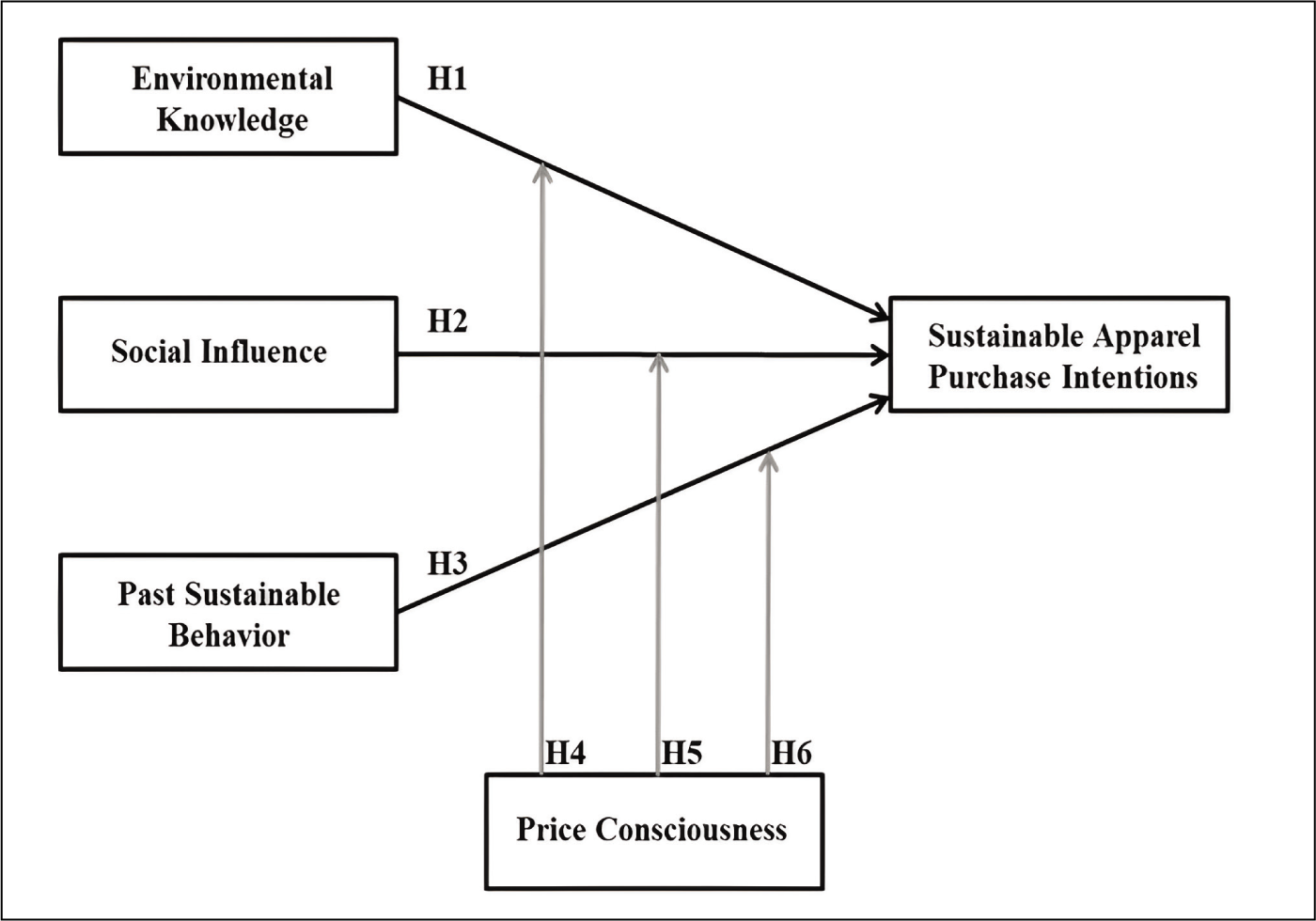
H1: Environmental knowledge has a significant impact on sustainable apparel purchase intentions.
Social Influence
The impact of social influence on consumers’ sustainable buying behavior has been elucidated in various studies. Cheah and Phau (2005) highlighted how interaction with individuals and peer groups affects shoppers’ thoughts, feelings, and attitudes. Similarly, Jansson et al. (2010) identified social acceptance, peer influence, and environmental awareness as key factors shaping sustainable purchasing decisions. Hafez et al. (2017) further emphasized the role of relatives, friends, salespersons, and celebrities in inspiring sustainable buying behavior. Lee et al. (2009) corroborated these findings by establishing social influence as a significant predictor of sustainable buying behavior among adolescents. Conversely, while some research supports the pivotal role of social influence in driving sustainable buying intentions, others such as Stephens (1985) and Yamoah and Acquaye (2019) have contested this notion.
H2: Social influence has a significant impact on sustainable apparel purchase intentions.
Past Sustainable Behavior
Previous behavior refers to an individual’s actions or reactions to stimuli, whether internal or external, in preceding situations (Sommer, 2011). Past purchasing behavior encompasses the habitual and routine actions undertaken by consumers in their daily transactions (Sommer, 2011). The historical engagement in sustainable product purchases is likely to shape consumers’ propensity to buy sustainable apparel. Research conducted by Lanzini and Thøgersen (2014) indicates that individuals who have previously participated in pro-environmental actions are more inclined to engage in similar behaviors in the future. Furthermore, Norum and Ha-Brookshire (2011) discovered that consumers’ prior experiences with sustainable products across different categories influence their willingness to purchase sustainable apparel. D’Souza et al. (2006) demonstrated that shoppers’ past encounters with sustainable products significantly impact their future decisions regarding sustainable purchases.
H3: Past sustainable behavior has a significant impact on the sustainable apparel purchase intentions.
Price Consciousness
Price significantly influences consumers’ product evaluations and purchasing intentions, as highlighted by Chen et al. (2016). Within marketing literature, price consciousness is defined as consumers’ preference for lower prices over higher ones, as articulated by Lichtenstein et al. (1993). This concept emphasizes sensitivity to price discrepancies and serves as an internal threshold for consumers’ spending limits. Notably, sustainable apparel typically commands higher prices compared to conventional alternatives (Byelaws & Grębosz-Krawczyk, 2021). High-price-conscious consumers exhibit a tendency to engage in price comparisons more frequently than their low-price-conscious counterparts, as observed by Alford and Biswas (2002). Collectively, this body of literature suggests that price plays a pivotal role in influencing consumers’ intentions to purchase sustainable apparel.
The consumers from emerging economies are generally price-conscious. The price of sustainable products is generally much higher as compared to traditional products. Thus, based on this assumption, price is a key factor in making a purchase decision of sustainable product. Some earlier researchers have tried to study the moderating role of price on sustainable buying intention (Chekima et al., 2016; Khaleeli et.al., 2021). However, there are limited studies done in India. The study by Chaudhary and Bisai (2018) showed that readiness to shell out more moderated the association of sustainable product buying intention. The study by Tudu and Mishra (2021) found that although consumers had EK and concern, price was a barrier while buying sustainable products. Considering the immense market potential for sustainable apparel in India it is important to study impact of price consciousness as a moderating variable.
Previous research examining the role of price as a moderator for sustainable product purchase intentions has yielded inconclusive findings. Hsu et al. (2017) observed that price sensitivity positively influences the relationship between purchase intentions of sustainable skincare products. Similarly, Wang et al. (2020) found that price moderates the intentions to purchase green-trust and green-merchandise. Conversely, Chekima et al. (2016) concluded that higher prices do not serve as a moderator or barrier for purchasing sustainable products. Given the conflicting outcomes of these studies, a comprehensive investigation is warranted.
H4: Price-consciousness moderates the association among environmental knowledge and purchase intentions of sustainable apparel.
H5: Price-consciousness moderates the association among social influence and purchase intentions of sustainable apparel.
H6: Price-consciousness moderates the association among past sustainable behavior and purchase intentions of sustainable apparel.
Based on these hypotheses the conceptual framework was formulated (Figure 1).
Conceptual Framework.
Other than the factors depicted in conceptual framework, sustainable apparel purchasing decision is significantly influenced by how the manufacturer communicates the product’s sustainability. Key factors include transparency and authenticity, detailed product information, recognized sustainability certifications and standards, storytelling and brand values, effective marketing and advertising, consumer education, and engagement and interaction (Hasbullah, et al., 2022).
However, the primary aim was to examine the impact of EK, past sustainable behavior, and social influence on sustainable apparel purchase intention (SAPI), with price consciousness as a moderating variable. These parameters were chosen based on their direct relevance to our research objectives, which seek to understand the behavioral and social drivers of sustainable consumption. The parameters of EK, past sustainable behavior, and social influence directly align with our research questions and hypotheses. These factors are well-documented in literature as significant predictors of sustainable behavior. The study aims to fill gaps in existing literature by focusing on the interplay between these parameters and price consciousness, which has not been extensively explored.
Approach
Sample
A preliminary investigation involving 125 respondents was conducted, following which the final questionnaire was developed through pilot testing. Subsequently, the questionnaire was distributed online to 610 individuals in India using purposive sampling techniques. Participants who embraced a sustainable lifestyle and purchased sustainable products were specifically targeted, taking into account their qualifications and financial statuses. Care was taken to ensure that the selected respondents were representative of the Indian population. Upon screening, 518 responses were deemed suitable and valid, resulting in a response validity rate of 86%, which is deemed adequate for statistical analysis (Hair et al., 2010).
Measures
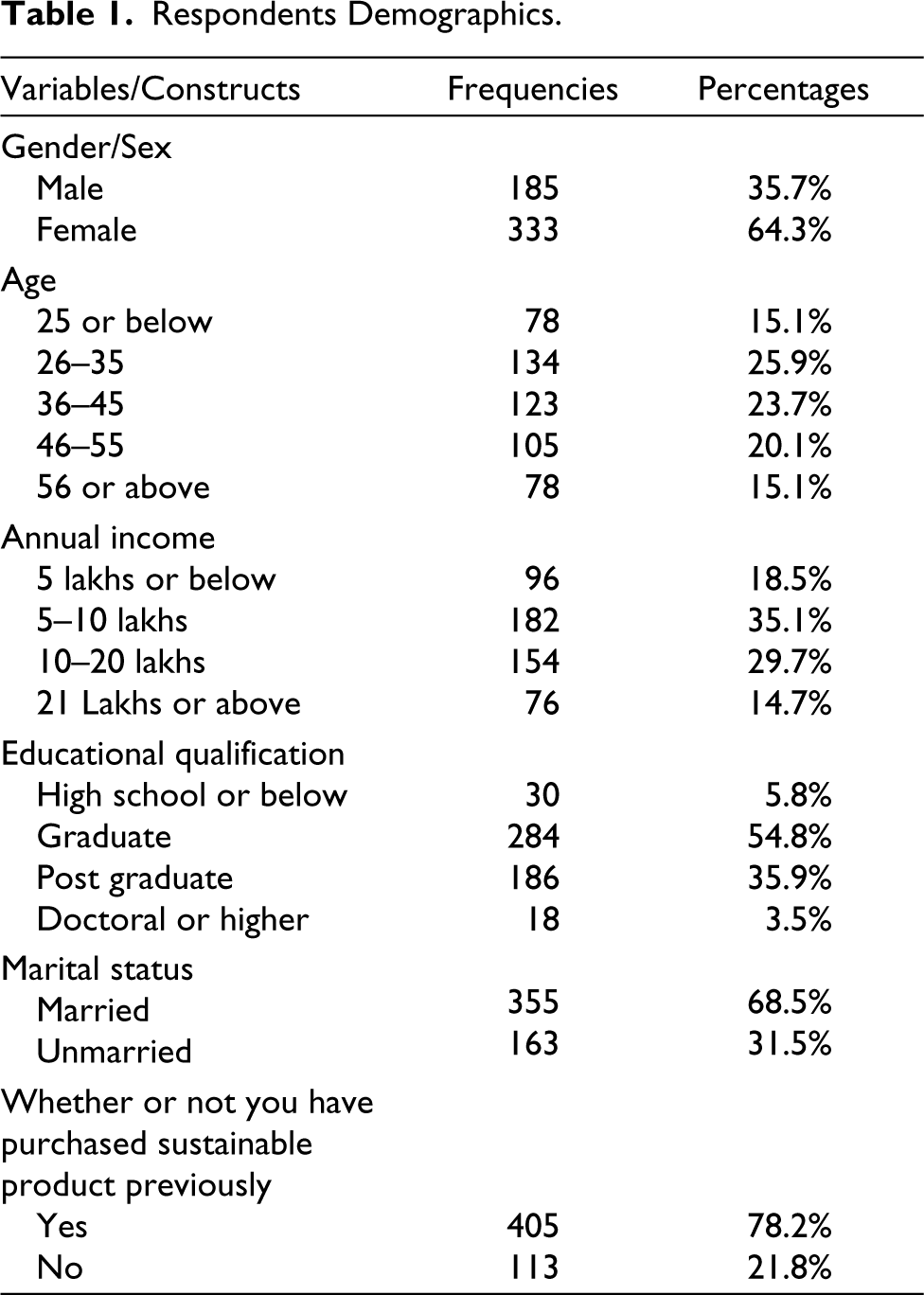
In the first section, demographic information including age, gender, annual income, and education level was collected. The second section comprised 18 measurement instruments assessing respondents’ EK, social influence, past experience, price consciousness, and intentions to purchase sustainable apparel. The questionnaire items related to consumers’ EK consisted of six questions. Subsequently, four items were dedicated to evaluating respondents’ social influence, while five items were allocated to measure the impact of past sustainable behaviors. Three questions/items were utilized to assess the intention to purchase sustainable apparel. The measurement items were adapted from various sources: EK (Kim & Damhorst, 1998), social influence (Lee et al., 2009), past experience with sustainable products (Pickett-Baker & Ozaki, 2008), price consciousness, and intentions to purchase sustainable apparel (Nam et al., 2017). A 5-point Likert scale ranging from 1 (strongly disagree) to 5 (strongly agree) was employed.
Data Analysis
Models Used for Measurement
Scales used were pretested to ascertain reliability of constructs. The quantitative investigation consisted of confirmatory and exploratory factor analysis for cleansing each scale. An SEM was proposed to evaluate the effect of EK, social influence, past sustainable behavior, on sustainable apparel buying intentions with price as a moderator. Multiple regression analysis and SEM were deployed to check the moderating effect in the hypothesized model. The SPSS ver 25 and SPSS AMOS ver 22 were used for data analysis.
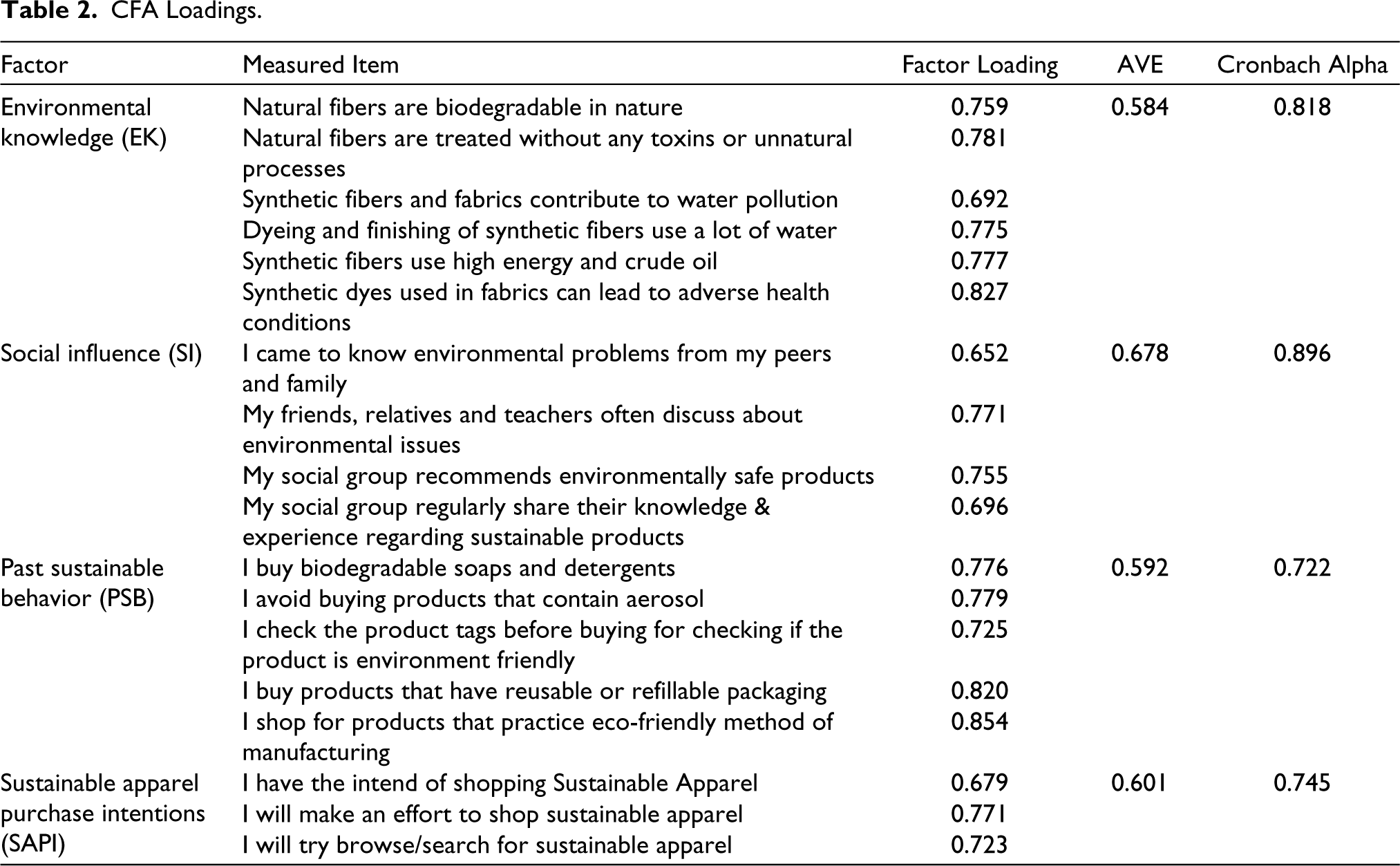
After the pretest, two items from EK (i.e., (a) ‘Natural fibers are good for skin’ (b) ‘Natural fibers are recyclable’) and three items from past sustainable behavior (i.e., (a) ‘I do not buy products from the companies that are not environmentally responsible’, (b) ‘I refuse plastic bags while buying vegetables and groceries’, (b) ‘I avoid buying products that contain harmful chemicals’) were removed as they were below the desired 0.5-factor loading for internal consistency of scale development. All scales exhibited significant factor loadings (p = .000) of 0.6 and above. Cronbach’s alpha ranged between 0.722 and 0.896 and thus was according to the recommended standard of 0.7 and above. The factor loadings and Cronbach’s alpha value are given in Table 2. An acceptable fit was seen in the initial model. The discrepancy was checked using modification indices. Postmodification the final model showed a good fit: Normed χ2 = 1.874; GFI = 0.934, AGFI = 0.896, IFI = 0.965, TLI = 0.946, CFI = 0.965 and RMSEA = 0.053. These values of fit indices met the recommended levels (Byrnne, 2001).
Respondents Demographics.
CFA Loadings.
Construct Validity
The CFA loadings, AVE and CR values were deployed to establish convergent validity. The convergent validity was established as the factor loadings were >0.6 for all scales. The CR values of the factors must be above 0.7 to confirm the convergent validity (Hair et al., 1998). The values of composite reliability for the constructs were between 0.748 and 0.901. AVE values for the factors were from 0.584 to 0.678. As these AVE values >0.5 convergent validity was suggested. The squared root of AVE of the factors surpasses the correlation between that construct and other constructs establishing the discriminant validity (Table 3).
Discriminant Validity of Constructs.

Structural Model
The structural model was used to test hypotheses. The moderating role of price consciousness was not ignored at this stage. The SRMR of the model was 0.052 indicating good model fitness. The structural model showed a good fit: Normed χ2 = 1.974; GFI = 0.944, AGFI = 0.887, IFI = 0.954, TLI = 0.946, CFI = 0.914, and RMSEA = 0.056. The summary is given in Table 4. EK had a positive significant (β = 0.569, t = 6.589, p = .000) and past sustainable behavior had a negative significant (β = –0.258, t = –2.177, p = .007) influence on purchase intentions. The impact of social influence on purchase intention was insignificant (β = 0.108, t = 1.256, p > 0.05).
Hypotheses Test Results.
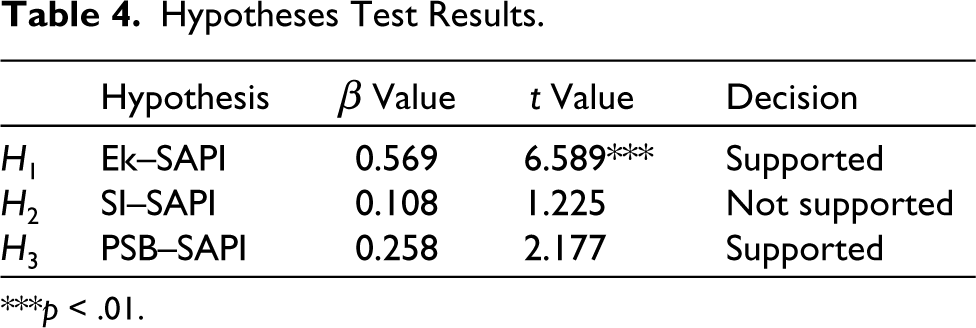
***p < .01.
Moderating Effects of Price Consciousness
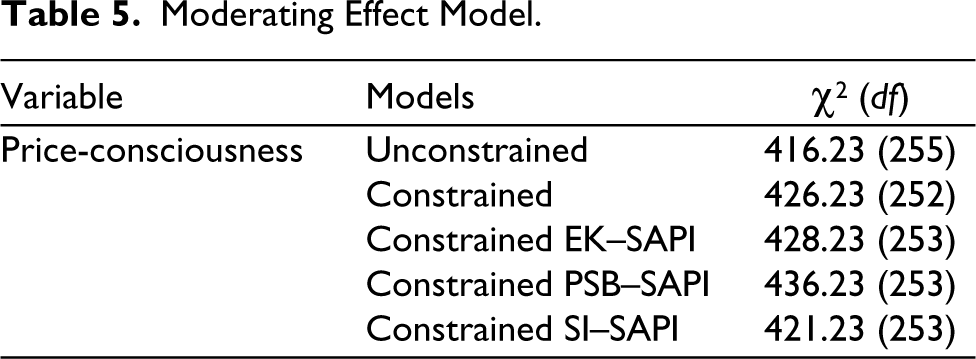
The multi-group analysis in SEM was applied for testing moderating effect. The complete sample was grouped (median-split) into two subgroup samples of low (n1 = 232) & high (n2 = 286) price consciousness to analyze the moderating effect. The model fit was verified for the unconstrained structural multigroup model: χ2 = 438.642, df = 254, p = .000, Normed χ2 = 1.651, TLI = 0.938, IFI = 0.952, RMSEA = 0.046, CFI = 0.931. These values were within the standard range (Byrnne, 2001). For checking the invariance in the high/low groups, a fully constrained model was designed. Chi-square difference (Δχ2) was applied to find if unconstrained/fully constrained model differed between low/high groups. The groups differed (Δχ2 = 17.314, Δdf = 3, p = .001). As the groups differ, all structural paths were constrained to find how the groups differ across the structural path. The analysis shows that the relationship between EK and SAPI differs significantly (Δχ2 = 4.625, Δdf = 1, p < .05) for high (β = 0.436, t = 2.713, p < .01) and low (β = 0.622, t = 4.633, p < .01). The impact of PSB on SAPI also differs significantly (Δχ2 = 3.981, Δdf = 1, p < .05) for high (β = –0.211, t = –2.697, p < .05) and for low (β = 0.064, t = 0.569, p > .05). It was observed that the high group exhibited a negative significance (p < .05) among PSB and SAPI. No significance was observed for the low group for the impact of PSB on SAPI (p > .05). Further, SI had a positive significance relationship with SAPI for high group (β = 0.243, t = 2.128, p < .05) but it was insignificant for low group. The groups did not differ significantly (Δχ2 = .981, Δdf = 1, p > .05).
Findings and Discussions
The aim of this study was to analyze the factors influencing SAPI with price consciousness as a moderator. To achieve the objective, initially quantitative analysis was done using CFA. The CFA results with corresponding factors are shown in Tables 2–6. The factors impacting SAPI were examined. In the next step, an investigation was done to analyze whether price consciousness moderates these associations. The results revealed that EK had a positive significant (β = 0.569, p < .05) and PSB also had a positive significant (β = 0.258, p < .05) impact on SAPI. Thus, in this work, the H1 and H3 were validated. However, hypothesis H2 was not validated as social influence did not influence SAPI and the path was insignificant (β = 0.109, p > .05). EK and PSB were found to be significant in forecasting SAPI.
Moderating Effect Model.
Moderating Results.
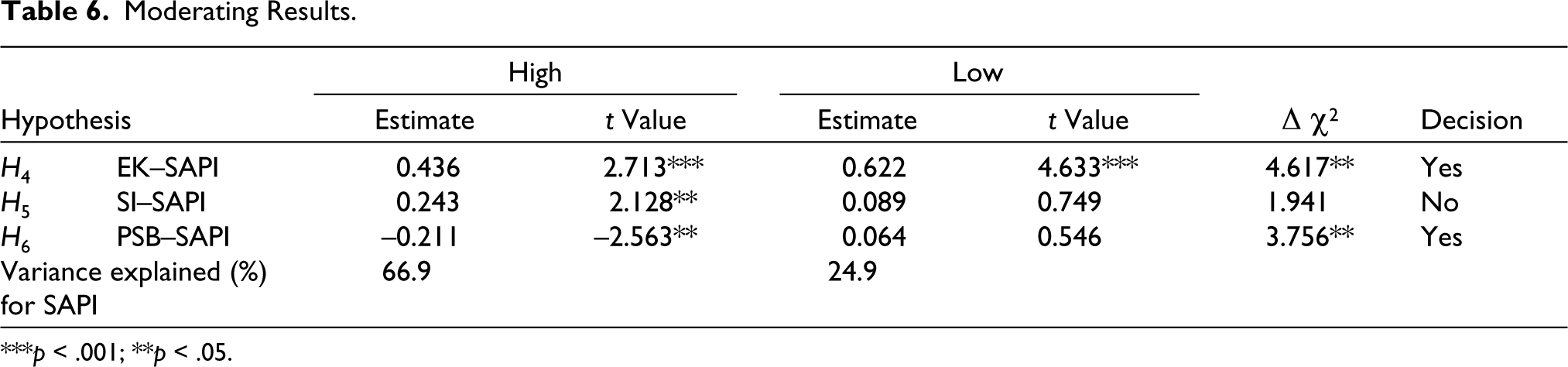
***p < .001; **p < .05.
The positive association between EK and SAPI was found to be in line with some of the previous findings (Liu et al., 2020; Rezai et al., 2012; Wahid et al., 2012; Wang et al., 2020). These results propose that consumers who have EK and are concerned about environmental problems will make sustainable purchase decisions. Consumers who are eco-conscious believe that if they buy sustainable products, their commitment will help to protect the environment (Moser, 2015; Schlegelmilch et al., 1996). The belief that their pro-environmental purchase decisions reduce the impact on environment, will motivate them to purchase sustainable products (Moser, 2015; Pickett-Baker & Ozaki, 2008).
However, SI had no influence on SAPI. This is not in tandem with earlier research, which has reported social influence as an important predictor (Hafez et al., 2017; Hoyer & MacInnis, 2004; Lee et al., 2009). The result confirms some earlier research in India which suggests social influence is not an important predictor (Varshneya et al., 2017). Consumer’s social influence may differ with changes in cultures, countries, age, gender, education, income level, etc., which may lead to different results across various studies.
The results of H3 support earlier researchers’ findings which have proposed the significance of past sustainable behavior in influencing purchase intentions of sustainable apparel (Norum & Ha-Brookshire 2011; Pickett-Baker & Ozaki, 2008; Rahbar & Wahid, 2011). Past exposure, awareness, knowledge and consciousness about sustainable products are the key motivators for sustainable purchase intentions. Consumer’s personal sustainable habits such as recycling products, using green fuels, and buying sustainable products helped them in understanding the benefits of sustainable apparel, which increases their inclinations toward acquiring sustainable apparel (Khare & Sadachar, 2017; Kumar et al., 2021).
The moderating influence of price consciousness was inspected. It was found that price consciousness moderated the association among EK-SAPI and PSB-SAPI validating H4 & H6. The results coincide with earlier results in which price consciousness moderated the association between EK and SAPI (Qomariah & Prabawani, 2020). For low-price consciousness, the association among EK and SAPI showed stronger coefficient (β = 0.622) when compared to high-price consciousness (β = 0.423). Consumers having high price sensitivity may have lower SAPI when compared to low price sensitivity consumers as they identify sustainable apparel to be costly. Higher EK may not necessarily result in higher SAPI as Indian consumers are price-conscious in nature, thus price is a major predictor for purchase intentions of sustainable apparel. Interestingly, PSB had a negative significance (β = –0.211) on SAPI for high price-sensitive consumers; conversely, the association was not significant for low price-sensitive consumers. Also, SI showed a positive significant impact on SAPI for high price-sensitive group; but, the association was not significant in low price-sensitive group.
Contribution and Theoretical Implications of the Study
This study aimed to explore the factors influencing SAPI, focusing on EK, social influence, and past sustainable behavior. A key finding revealed that only EK and past sustainable behavior significantly impact intentions to purchase sustainable apparel. Given the significant market potential for sustainable apparel in India, this research also investigated the moderating role of price consciousness on Indian consumers’ SAPI. A novel aspect of this study was the examination of price sensitivity as a moderator in the Indian context. The proposed model confirmed price consciousness as a moderator for the relationships between EK and SAPI, as well as past sustainable behavior and SAPI, while rejecting its moderating effect on social influence and SAPI. This study contributes to a deeper understanding of these dynamics, addressing existing research gaps. The scales used to measure the moderating effect of price consciousness were originally developed and applied in Western countries by Meng (2011). This study advocates for their application and comprehensive analysis within the Indian context, thereby enriching the existing literature.
The present study holds various theoretical implications. Primarily, it sheds light on the relationship between EK and SAPI. In recent years, there has been a growing emphasis among researchers and marketers on environmental issues. The research findings suggest that individuals with a higher level of EK express concerns regarding the environmental impact of their purchasing decisions. Consequently, their SAPI is elevated due to their perception that sustainable apparel is both environmentally safe and beneficial for their health. This finding corroborates earlier research (Cowan & Kinley, 2014; Hamzah & Tanwir, 2021) indicating a positive association between EK, concern, and consumers’ intentions to purchase sustainable apparel.
Second, several researchers have emphasized the role of social influence as a crucial factor in determining sustainable product purchases (Ramayah et al., 2010; Tanford & Montgomery, 2015; Wang, 2014). However, the results of this study challenge the conclusions drawn in previous research. It was found that social influence had little to no effect on the purchase intentions of Indian consumers regarding sustainable apparel. Indian consumers typically make buying decisions based on their own values and beliefs rather than succumbing to external social pressures. This finding is notable as it presents a novel perspective that diverges from existing literature.
Third, the findings of the study are consistent with existing research indicating that consumers’ past engagement with sustainable products serves as a significant predictor of their future intentions to purchase sustainable apparel (Norum & Ha-Brookshire, 2011; Pickett-Baker & Ozaki, 2008; Rahbar & Wahid, 2011). Consumers who have previous experience with sustainable products typically exhibit a heightened concern for environmental conservation, thereby leading to elevated SAPI. These individuals may have encountered benefits such as improved health outcomes and product longevity in the past, which could drive their inclination toward purchasing sustainable apparel.
Fourth, price consciousness emerged as a moderator in the relationship between EK and SAPI. This finding mirrors earlier research findings in the realm of sustainable products (Prakash et al., 2018; Rana & Paul, 2017; Wang et al., 2020). The attitudes of the high-price-conscious demographic toward environmental issues, product quality, and their intentions to purchase sustainable products may be heavily shaped by-product pricing, as they view price as a primary determinant in their purchasing decisions. In contrast, low-price-conscious consumers may not base their perceptions and decisions on price considerations. Instead, they prioritize product quality and environmental concerns, thereby opting for sustainable apparel. Our findings highlight the significant role played by price in shaping consumers’ SAPI.
The fifth hypothesis indicates that social influence plays a noteworthy role in shaping the purchase intentions of sustainable apparel among consumers with high levels of price consciousness. Typically, consumers characterized by high price consciousness display hesitance toward purchasing sustainable products due to their perception of elevated costs. However, under the influence of social factors, they may be swayed to reconsider their stance and choose sustainable apparel. Conversely, individuals with low price consciousness are less influenced by social groups, as price is not a primary consideration for them.
The sixth hypothesis indicates that price consciousness serves as a moderator in the relationship between past sustainable behavior and purchase intentions of sustainable apparel. Among consumers exhibiting high levels of price consciousness, an increased history of past sustainable behavior may not correspond to heightened intentions to purchase green apparel, as they prioritize price considerations. On the contrary, for consumers with low levels of price consciousness, the relationship between past sustainable behavior and purchase intentions of sustainable apparel remains unaffected by price factors.
Managerial Implication
Retailers have the opportunity to enhance consumers’ environmental awareness through various channels such as advertisements, news articles, short films, and documentaries. This increased understanding of the attributes of sustainable apparel can lead to improved buying intentions among consumers. Given the widespread sharing of information on social media platforms by consumers, retailers can effectively utilize these platforms to promote and influence potential buyers. Collaboration with government bodies, NGOs, and other social institutions involved in consumer education about environmental issues can further aid retailers in promoting sustainable apparel. Since consumers are primarily influenced by personal traits such as environmental concern, hygiene, family security, and sustainability rather than societal influences, marketers should tailor their promotional efforts accordingly. Leveraging past experiences of sustainable purchases as a predictor, marketers can implement innovative strategies such as promotional messages, advertisements, and social media campaigns featuring experienced users sharing their insights. These strategies have the potential to motivate potential consumers and foster a positive attitude toward sustainable products, thereby increasing their purchase intentions. Consumers exhibiting pro-environmental attitudes and sustainable buying behavior are prime targets for the promotion of sustainable apparel. Marketers can incentivize purchases by offering discounts, enabling consumers to gain firsthand experience with sustainable products and potentially leading to future purchase intentions. Recognizing the differing behaviors of high-price-conscious and low-price-conscious consumers, marketers should emphasize the benefits of sustainable apparel products to justify their higher prices for the former group. For the latter group, retailers should focus on maintaining product performance and reliability to ensure continued loyalty and repeat purchases, along with ongoing innovation in design and style.
Design is a crucial aspect that retailers cannot overlook when it comes to sustainable apparel. Even if apparel products are environmentally and socially responsible, without good design, they may struggle to attract buyers. Retailers must actively market their sustainable apparel to their target audience. Employing storytelling techniques combined with contemporary communication methods is essential for retailers. Digital storytelling, utilizing multimedia tools like video, blogs, vlogs, podcasts, and fashion shows, can effectively bring stories to life. Messages directed at consumers should be communicated in a direct, clear, and consistent manner, avoiding any irrelevant expressions. Incorporating words such as “green,” “eco-friendly,” and “sustainable” into the messaging can be particularly appealing to consumers. Retailers should strive to involve their customers in sustainability conversations and make them feel like integral parts of their journey and solutions. Social media platforms can be utilized to encourage consumers to share their sustainability ideas, including how to use, wear, and recycle sustainable apparel. Employing creative imagery, branding, and storytelling strategies, retailers can effectively market their sustainable apparel to a wider audience. Furthermore, retailers should prioritize obtaining certifications to enhance the credibility of their sustainability claims, as consumers are more likely to be attracted to well-known sustainability credentials such as GBB, LEED, ISO, among others.
Limitation and Future Directions
Several limitations were identified in this study. First, the use of purposive sampling method may introduce bias and limit the representativeness of the sample, as it relies on the subject knowledge of the authors. Additionally, the sample used in the study was skewed, with females comprising 64% of the participants, and it was confined to a specific geographical area. Moreover, important demographic variables such as annual income, educational qualification, and marital status were not taken into account. Furthermore, the study only utilized one out of the seven sub-scales developed by Lichtenstein et al. (1993), specifically focusing on price consciousness. A more comprehensive analysis could have been achieved by incorporating all seven sub-scales. The study also examined only three variables to elucidate SAPI. Finally, only the moderating effect of price consciousness was considered, while other potential moderators were overlooked.
For future investigations, it is recommended to expand the sample size by employing simple random sampling techniques, ensuring each member has an equal chance of participation. Equal representation of both genders is also advised. Additionally, future studies should explore various demographic profiles, as these factors may significantly influence intentions to purchase sustainable products. Further research could explore the impact of price consciousness on a broader range of sustainable products, such as cosmetics, vehicles, electronics, and books, beyond the scope of this study. While this study focused on three factors, future research could delve into additional variables such as sustainable brand recognition, peer influence, perceived economic risk, greenwashing, green advertising, and perceived aesthetic risk, which may also influence intentions to purchase sustainable apparel. In addition to the social influence construct, future studies could investigate social esteem and social congruency constructs to provide a more comprehensive understanding of consumer behavior in sustainable purchasing. Finally, it is suggested that future studies explore potential moderating effects of gender, age, qualification, and income to further elucidate the relationships between variables.
Footnotes
Declaration of Conflicting Interests
The authors declared no potential conflicts of interest with respect to the research, authorship and/or publication of this article.
Funding
The authors received no financial support for the research, authorship and/or publication of this article.