




Abstract
Purpose:
Unboxing is a relatively new social media occurrence, where a YouTube unboxer’s amateur video gradually unwraps and reviews a new product for the followers. The phenomenon has caught the attention of both the marketing industry and academia due to its potential to influence purchase intent. The present research focuses on the relevant unboxing literature with a special focus on source characteristics, purposive motives, and nonpurposive motives; hypothesizes a research model and empirically tests it to probe how the unboxing phenomenon influences purchase intention.
Design/Methodology/Approach:
The researchers conducted an online survey for data collection from 705 social media users and used structural equation modeling and moderation analysis for data analysis.
Findings:
The present research proposed and tested a model of unboxing using parasocial interaction (PSI). It found that PSI does influence purchase intent in unboxing and found support for six out of seven antecedents of PSI hypothesized in the model.
Practical Implications:
The findings of the study can help marketing organizations to understand the importance of YouTube influencer-induced PSI to design effective advertising campaigns through influencer marketing in order to drive purchase intent.
Originality/Value:
The present study aims to understand the unboxing phenomenon by analyzing the proposed model. This study contributes to the limited literature on the nascent YouTube unboxing in an emerging economy context and extends previous research in this field by incorporating new variables. Also, it studies the effect of gender as a moderator in an unboxing context for the first time.
Introduction
YouTube, the video-content-sharing platform, has given rise to the phenomenon of “unboxing” in the past few years (Marsh, 2015). Unboxing is a subset of social media entertainment (SME) where YouTube content creators/social media influencers (Neil & Mbilishaka, 2019)—adults or children with a large fan following—produce unboxing videos. The unboxer unwraps and informally reviews consumer products—smartphones, video game consoles, cosmetics, toys, etc. (Craig & Cunningham, 2017; Nicoll & Nansen, 2018) and aims to inform, educate, entertain, and influence their followers (Choi & Behm-Morawitz, 2017).
Presently, unboxing is a niche genre but it has been emerging as an emerging field of research (Neville, 2020). In 2021, viewers saw unboxing videos more than 1.1 billion times and spent 60 million hours watching these. Unboxing videos are significant from a marketing point of view, as a Google consumer survey found that 62% of consumers watched unboxing videos before buying a product (Singh, 2021).
Even though unboxing is a rising marketing trend and could be a potential source of competitive advantage, this form of social media-based entertainment is at present “poorly defined and understood” (Craig & Cunningham, 2017), and limited research is done in this field.
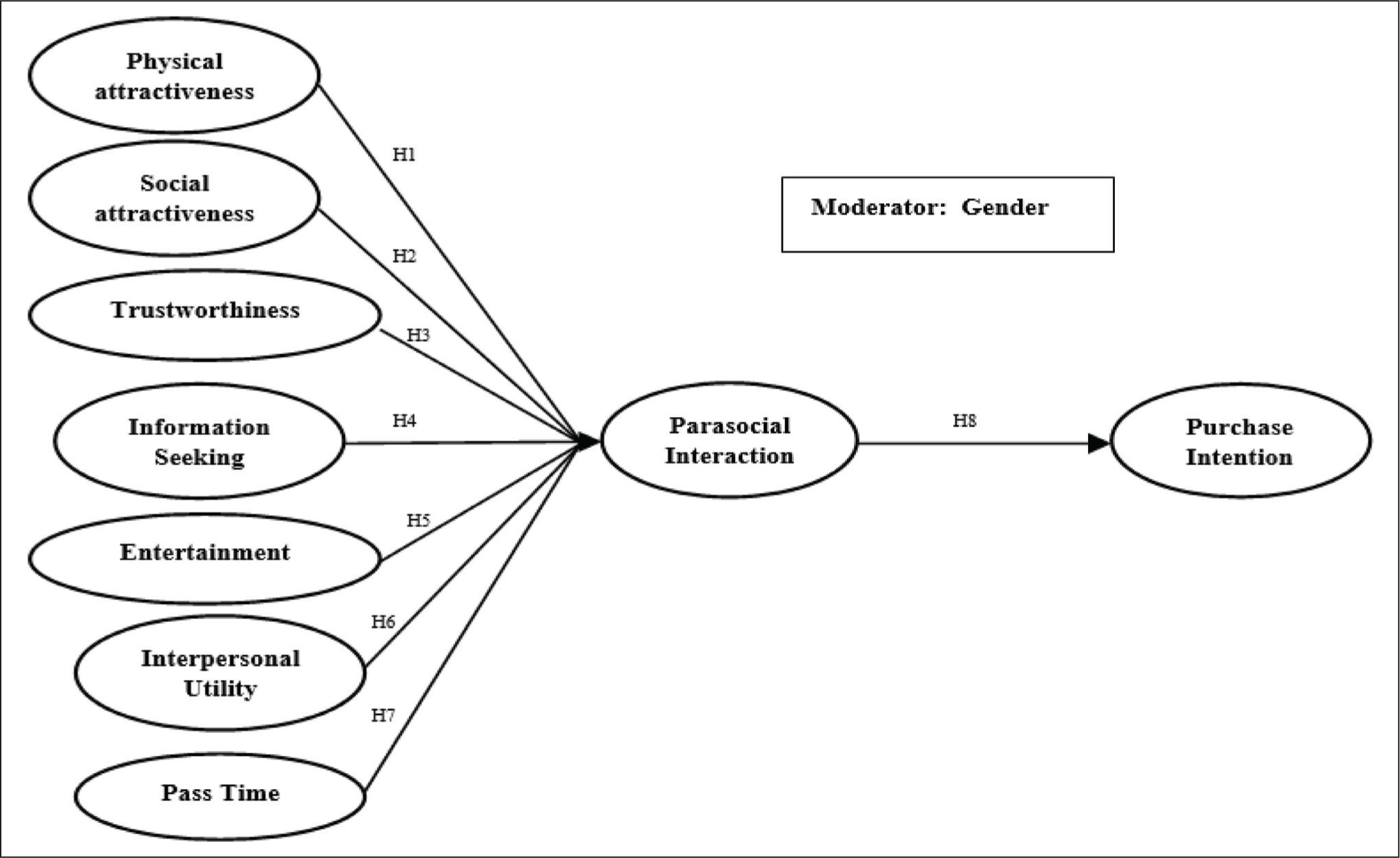
In this context, this research article aims to reduce the gap, thus contributing to the knowledge pool on this subject. In order to achieve this goal, this article proposes and tests a research model to explore the unboxing phenomenon. For this, the present research focuses on the construct of parasocial interaction (PSI), a “pseudo-intimate relationship” between the followers and the social media influencer with respect to unboxing videos. Based on the literature review, the research studies the effects of seven antecedents such as physical attractiveness, social attractiveness, trustworthiness, information seeking, entertainment, interpersonal utility, and pass time on the central construct of PSI along and also investigates how PSI impacts the outcome variable purchase intention. Also, the moderation effect of gender on the model is tested.
This research article is structured in the following sections: theoretical background, hypotheses development and theoretical framework, conceptual model and hypothesized relationships, research methodology, data analysis, general discussion of the results, implications for researchers and practitioners, and finally limitations and future research directions.
Unboxing Phenomenon
Unboxing had its roots in the early 2000s “shopping haul” videos (Silcoff, 2014) hosted by gadget-reviewing websites (Craig & Cunningham, 2017; Vanhamme & Snelders, 2003). But its growth phase came with the increase in popularity of YouTube when unboxing videos got more visibility, popularity, and growth, became a sub-genre of “Social Media Entertainment” (Craig & Cunningham, 2017), caught marketers’ attention, and eventually emerged as an “emerging promo-industry” (Cunningham & Craig, 2019) and perceived as a new channel for active customer engagement (Mowlabocus, 2020).
As the unboxer gradually unwraps a newly launched product along with a detailed commentary of the process, the unboxing experience creates a “…journey of discovery” for the viewer (Mowlabocus, 2020) and can lead to a range of positive emotions (Patrick, 2014) which included: an element of surprise, a sense of mystery akin to unwrapping Christmas gifts or birthday presents (Kim et al., 2018), enhanced expectation (Pantin-Sohier, 2009), emotional arousal (Dazarola et al., 2012), positive memory creation through multiple senses (Bae, 2016), entertainment, information seeking, curiosity, social influence (Treviño, 2021), surprise, regret avoidance, and stress relief (Yang & Ma, 2020).
Viewers watch unboxing videos for a few practical reasons too. First, they perceived the social media influencer as “one of them” and not a paid endorser—hence, more trustworthy. Second, the vicarious consumption of these videos, where the viewer is a “cyberflaneur” (Marsh, 2015), served as an escape from reality. Third, the viewer’s participation in an activity with like-minded individuals in a specific “shared affinity space” reflects viewers’ personal social interests and aspirations (Chesher, 2019; Marsh, 2015).
Theoretical Framework and Hypotheses Development
Influencer marketing, a paid partnership between the social media influencer and the brand, has the potential to influence the followers in terms of brand preference and purchase intention (Abidin, 2016). In this context, two key factor impacting the influencing power of social media influencers over their followers is source credibility (Chung & Cho 2017; Djafarova & Rushworth, 2017) which is based on source credibility theory (Hovland et al., 1953). According to this theory, the message source, in order to have persuasive power over the message receivers, should be attractive and trustworthy (Munnukka et al., 2016). Source attractiveness and trustworthiness are found to positively influence PSI, the manufactured, one-way relationship between the social media influencer and the followers (Chung & Cho, 2017; Yuan et al., 2016).
Social media interaction between the influencer and the followers is also explained by the uses and gratifications theory (Kim, 2020) which assumes the goal-directed audience consumes media to satisfy cognitive (information seeking) needs, affective (entertainment) needs, social integrative (interpersonal utility) needs, and tension-release needs (pass time) (Katz et al., 1973). Research has shown YouTube’s influencer-follower relationship is also governed by this theory (Haridakis & Hanson, 2009; Tolson, 2010), especially in the context of unboxing videos.
As unboxing videos promise a product review to its viewers, many view it for information seeking (Kim, 2020) which may influence purchase intention (Ko et al., 2012). Next, as a viral video is viewed and shared multiple times, people watch it driven by entertainment motive which may lead to positive brand evaluations (Shao, 2009). YouTube unboxing videos also create a “participatory culture” in a social context (Kim, 2020) which is aligned with the findings of previous uses and gratifications research which observed that media complements face-to-face interaction. Lastly, the tension-release or pass-time motive suggested by uses and gratification theory where the viewer is engaged with a media to reduce boredom (Papacharissi & Rubin, 2000) to escape reality (Rubin, 2009) is also applicable in social media contexts.
Against this backdrop, each of the variables of the study is explained below.
Physical Attractiveness
Research has shown that physical attractiveness is investigated as a PSI-antecedent (Lee & Watkins, 2016; Rubin & McHugh, 1987; Sokolova & Kefi, 2020) is found to influence brand attitude and purchase intentions (Liu & Brock, 2011). Physical attractiveness in the context of YouTube influencers refers to likable physical characteristics and pleasing personalities (Sokolova & Kefi, 2020; Sokolova et al., 2022). The physical attractiveness of the influencer implicitly points out positive personality traits like honesty, righteousness, candor, intellectual prowess, and emotional intelligence (Till & Busler, 2000). Also, information sources that are considered physically attractive and considered more socially desirable, lead to more fan following of the public persona’s social media content (Rubin & McHugh, 1987). These appeals positively influence followers’ perceptions and generate more attention and engagement (Gong & Li, 2017). Based on the present literature, present research hypothesizes that
H1: Physical attractiveness of the YouTube unboxer positively influences the unboxer-viewer PSI.
Social Attractiveness
PSI researchers have found that PSI, specifically with respect to brand promotion in social media (Colliander & Dahlen, 2011) is closer to reality in understanding social media-based communications (Ballantine & Martin, 2005; Kassing & Sanderson, 2009; Lueck, 2015) and social attraction is one of the most determining factors of PSI (Schmid & Klimitt, 2011). Such attraction is fueled by the “likeability” or social attractiveness of an information source (Frederick et al., 2012). Hence, social attractiveness is considered an antecedent to PSI in both traditional media and social media contexts (Ballantine & Martin, 2005; Kurtin et al., 2018; Lee & Watkins, 2016; Rubin & McHugh, 1987; Sokolova & Kefi, 2020). Perceived social attractiveness of an information source is felt by the followers due to the perceived similarity between the social media influencer and the viewers (Lee & Watkins, 2016) and can lead to more PSI (Ballantine & Martin, 2005; Eyal & Rubin, 2003; Frederick et al., 2012; Lee & Watkins, 2016). Hence, based on the extant literature, the present study hypothesized that
H2: Social attractiveness of the YouTube unboxer positively influences the unboxer-viewer PSI.
Trustworthiness
Whenever people choose to believe an opinion leader, the credibility of the information source is critical for message acceptance and intended action. Hence, perceived source credibility is also considered salient in marketing communication (Richmond & McCroskey, 1975).
One crucial dimension of perceived source credibility is source trustworthiness (McCroskey & Teven, 1999) which refers to the followers’ confidence in the social media influencer due to the display of characteristics of perceived sincerity, honesty, integrity, and believability by the influencer (Gong & Li, 2017; Ohanian, 1991; Rasmussen, 2018; Sokolova & Kefi, 2020). If an influencer manages these implicit expectations, followers will perceive her/him as more dependable and the influencer can positively influence message recipients’ attitudes and behavior (Petty & Wegener, 1998; Ohanian, 1991) including the buying intention of consumers (Gong & Li, 2017; Gunawan & Huarng, 2015; McGinnies & Ward, 1980). In an online context, source trustworthiness positively influences brand endorsement effectiveness (Chang et al., 2012; Chao et al., 2005; Gong & Li, 2017). Followers of social media influencers consume the information given by the influencers more favorably if the brand endorser enjoys high trust and credibility among the followers (Rasmussen, 2018). In sync with this literature support, this study hypothesizes that
H3: Trustworthiness of the YouTube unboxer positively influences unboxer-viewer PSI.
Information Seeking
As per the uses and gratifications perspective, which explains why people consume media (Rubin, 2009), individuals consume media their goal is directed to satisfy four needs: information seeking (cognitive needs), entertainment (affective needs), connection with others (social integrative needs), and to pass time and escape from reality (tension-release needs) (Katz et al., 1973; Kim, 2021). The information-seeking motive which makes customers more “active” (Kim, 2021) is found to positively influence purchase intention (Ko et al., 2005). In the social media context, the message value and credibility of the social media influencer influence consumer trust toward brands promoted on social media (Lou & Yuan, 2019). Since product review is an integral part of all unboxing videos, many individuals watch unboxing videos with an active information-seeking motive (Kim, 2021).
H4: Information seeking positively influences unboxer-viewer PSI.
Entertainment
Entertainment is a driving factor for people watching user-generated content (Tolson, 2010) and in advertising research, entertainment is also found to increase positive brand evaluations (Ducoffe, 1995; Kim, 2021). However, in the online shopping context, entertainment has no influence on purchase intent (Ko et al., 2005) and in the influencer marketing context, entertainment does not positively influence brand awareness (Lou & Yuan, 2019). In these apparently conflicting findings, authors feel that the effect of entertainment should be studied with respect to unboxing.
H5: Entertainment positively influences unboxer-viewer PSI.
Interpersonal Utility
Interpersonal utility or the motive to interact with other viewers is a driver for watching unboxing videos (Kim, 2021) and it enhances customer engagement (Mowlabocus, 2020) in user-generated videos’ participatory and interactive milieu. This is an extension of the face-to-face interaction of the past and aids in creating a sense of community for the YouTube generation (Tolson, 2010). The uses and gratifications perspective also considers media consumption as complementary to social interaction and media content consumers perceive the content creator as a part of their peer group (Horton & Richard Wohl, 1956).
H6: Interpersonal utility positively influences unboxer-viewer PSI.
Pass Time
Passing time, also known as tension-release needs from the uses and gratifications perspective, is a driver for entertainment media consumption in general and unboxing video consumption (Kim, 2021) in specific to reduce boredom (Papacharissi & Rubin, 2000) and/or escape reality (Rubin, 2009).
H7: Pass time positively influences unboxer-viewer PSI.
Parasocial Interaction
Unboxers are social media influencers who own their YouTube channels where they upload customized videos for their large fan following. They are perceived by the viewers as “someone like me” (Djafarova & Trofimenko, 2019; Jiménez-Castillo & Sánchez-Fernández, 2019; Kim, 2021; Sokolova & Kefi, 2020). In these videos, as they showcase the product functionality and display new features, they act as a telehost or a retail store sales representative (Kim, 2021) and the unboxer-brand relationship can be construed as a celebrity brand endorser (Mowlabocus, 2020). Research into influencer marketing and U&G perspective showed PSI influences brand engagement at the consumer level and PSI with media personalities is complementary to social communication and of the reasons for user motivation to use media (Rubin, 2009).
Social interaction is reciprocal, while PSI is one-sided and simulated. PSI focuses on creating an illusory sense of intimacy between viewers and the media personae (Ballantine & Martin 2005; Horton & Richard Wohl, 1956; Ko & Chen, 2020) to facilitate a one-sided psychological attachment by the viewer (Rubin & Step, 2000). In the teleshopping context, PSI with the hosts increases viewer attention, influences attitude and brand choice, and influences purchase behavior (Auter & Moor, 1993; Russell et al., 2006).
Social media is a facilitator of PSI too (Rasmussen, 2018; Rubin, 2009) for its participatory and interactive nature (Kim, 2020). YouTube influencers use strategic personality choice, self-disclosure, and other self-presentation strategies (Djafarova & Trofimenko, 2019; Ferchaud et al., 2018; Smith et al., 2012) to enhance PSI so that viewers have a nice experience and they perceive they are being treated nicely (Yuan & Lou, 2020). As a result, PSI in social media—which is more reciprocal and tangible compared to traditional PSI—is critical in viewers’ media consumption and viewers’ increased propensity to engage with YouTuber influencers’ sponsored content than with a branded promotion (Kim, 2020; Lou & Yuan, 2019). Based on the above below hypothesis is proposed.
H8: Parasocial interaction positively influences purchase intention.
Purchase Intention
Kim (2020) showed that social media, through the development of parasocial relationships influence consumer desires and can affect purchase decisions. Research on social media influencers in the fashion and beauty domain has shown that PSI between the influencer and her/his followers positively influences the purchase intention of the latter (Hwang & Zhang 2018; Sokolova & Kefi, 2020). In this context, purchase intention refers to “consumers’ willingness to buy a given product at a specific time or in a specific situation” (Morwitz, 2014) which is affected by social influence and source credibility through a change in customer attitude (Gunawan & Huarng, 2015). Experimental studies on luxury product-related vlogs have shown that the participants of the experimental group show more purchase intention compared with the control group (Lee & Watkins, 2016). Hence, for this study, purchase intention is considered the dependent variable.
Gender
Research has shown that gender influences purchase intention in online communication (Perju-Mitran & Budacia, 2015), online shopping (Zhang et al., 2007), and social media (Fan & Miao, 2012). Gender also influences PSI (Eyal & Cohen, 2006; Greenwood & Long, 2011; Kim, 2020, 2021; Laken, 2009; Theran et al., 2010; Wasike, 2018). Considering this evidence from the literature, the present research hypothesizes
Moderator Hypothesis: Gender has a moderation effect on the proposed research model.
Conceptual Model and Hypothesized Relationships
Figure 1 shows the proposed research model developed based on the literature review. The model under study consists of antecedents and outcome variables of PSI in a YouTube unboxing video context with the hypothesized relationships.
Conceptual Model.
Research Methodology
Survey Instrument and Measurement
Quantitative research was carried out to test the research model. For data collection, purposive sampling, also known as judgment sampling was used. Purposive sampling refers to the deliberate choice of a respondent group as the group members possess specific characteristics relevant to the research purpose (Etikan et al., 2016). Purposive sampling as a data collection approach is often used in online customer research (Martin et al., 2015; Rose et al., 2012) and in PSI research (Gong & Li 2017; Lee & Watkins, 2016; Rasmussen, 2018; Sokolova & Kefi, 2020; Xiang et al., 2016) context.
For this research purpose, the sampling frame referred to an Indian social media user who had been following one or more YouTube unboxer(s) at the time of response.
An online survey using Google Documents was conducted to collect data from respondents as it gives faster access to many potential respondents, speedy response, and low cost per contact (Ilieva et al. 2002).
Prior to the launch of full-scale data collection, a pilot study was conducted to analyze the respondents’ understanding of the online questionnaire. Based on the feedback, a few scale items were modified in order to facilitate respondent understanding. To screen the eligible respondents, a filtering question was used—“How many YouTube unboxer do you follow?” Respondents who opted for “none” were excluded from the subsequent stage of data analysis. For the final data analysis, 705 completed responses were used. The test for non-response (Armstrong & Overton, 1977) was carried out but did not show concern.
The scale items of the online survey questionnaire were adapted from past validated and established scale items with minor modifications to suit the context (Xiang et al., 2016). Physical attractiveness and social attractiveness scales were adapted from Sokolova and Kefi (2020) and Lee and Watkins (2016), the trustworthiness scale was adapted from Lin et al. (2021); information seeking, entertainment, interpersonal utility, pass time, PSI, and purchase intent were adapted from Kim (2020) study.
The survey instrument had 27 scale items. Except for purchase intention which was measured on the 1–7 semantic differential scale, the remaining eight constructs were measured on the 7-point Likert scale (where 1 = strongly disagree to 7 = strongly agree).
Data Analysis
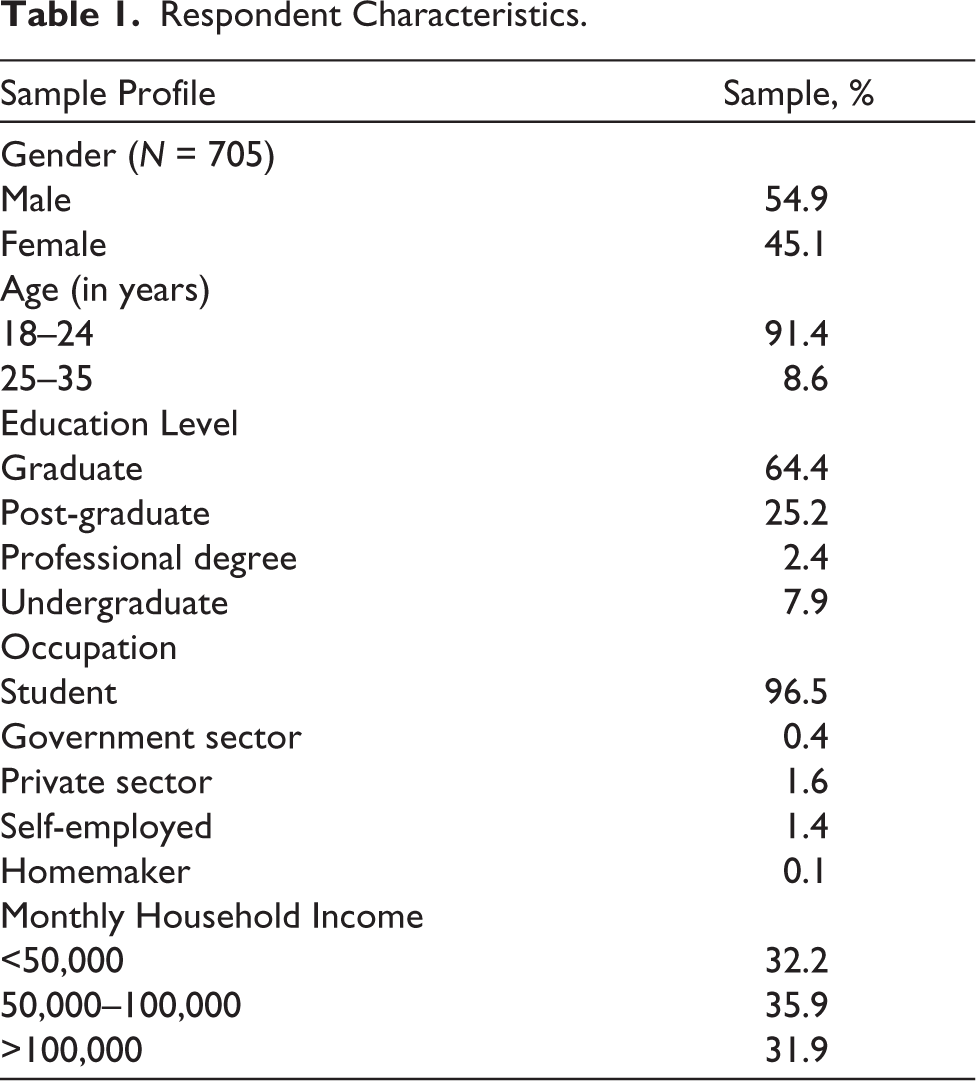
In Table 1, the demographic variables of the respondents were reported. Most of the respondents were Indian youth.
Respondent Characteristics.
Model Analysis
Structural equation modeling (SEM) was used to test the proposed model of this study and the tool was AMOS 20. SEM is a well-recognized technique to test a model in social science research (Bagozzi & Yi, 1988; Hooper et al., 2008). In sync with the guideline proposed by Anderson and Gerbing (1988), researchers used a two-step approach to test the model. First, the reliability and validity of the instrument were established through the measurement model, and in the second phase of the data analysis, through analysis of the structural model hypothesized relationships were tested.
Reliability and Validity of the Instrument
For this, exploratory factor analysis was done with respect to the scale items with principal component analysis and varimax rotation. KMO (Kaiser–Meyer–Olkin) measure and Bartlett’s test of sphericity tested and proved sampling adequacy and sample appropriateness respectively. The threshold value for retained factors was based on an eigenvalue greater than 1 and factor loadings greater than 0.5. Cronbach’s alpha coefficients (greater than 0.7) were used to measure scale reliability and internal consistency.
Measurement Model
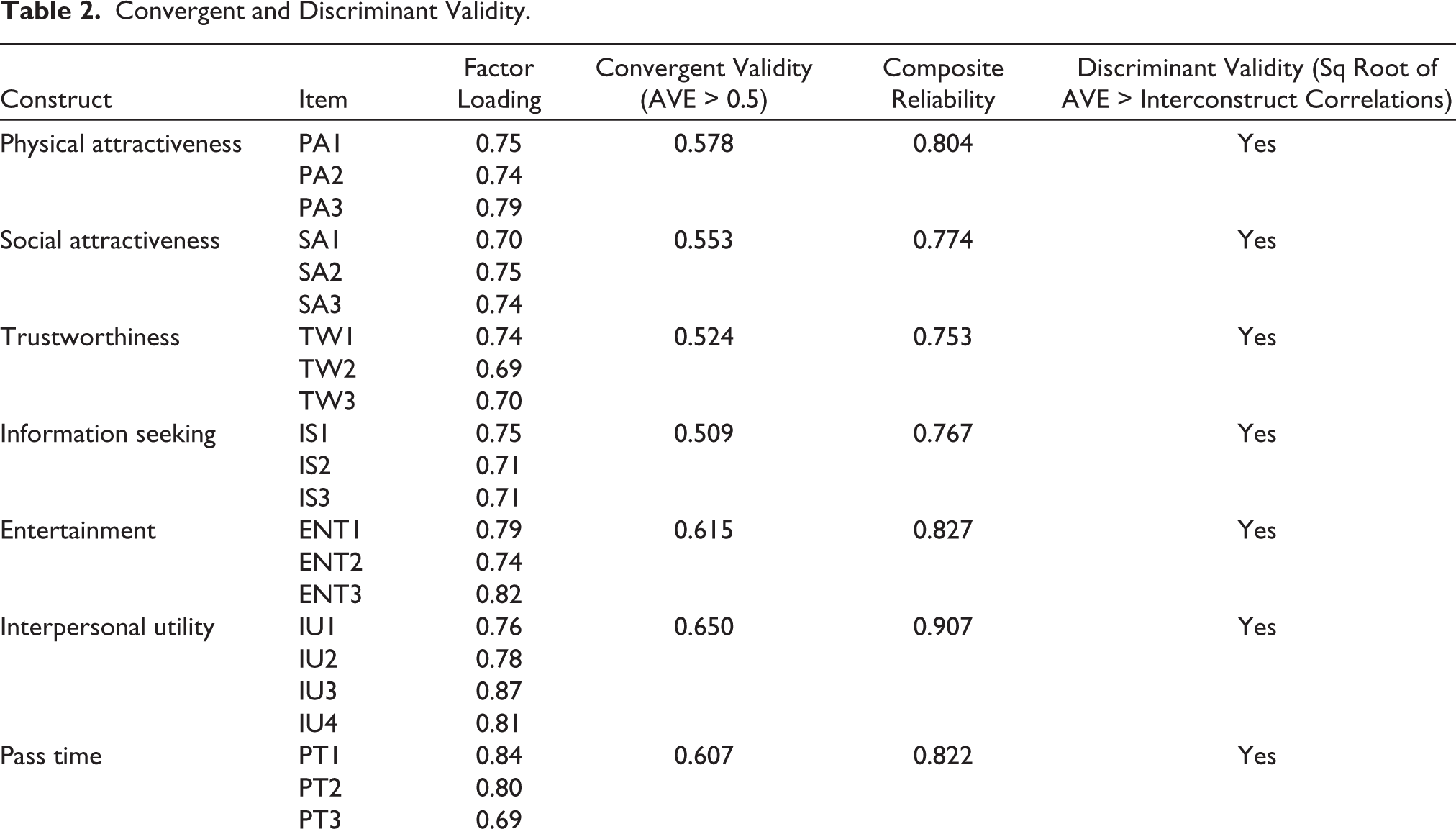
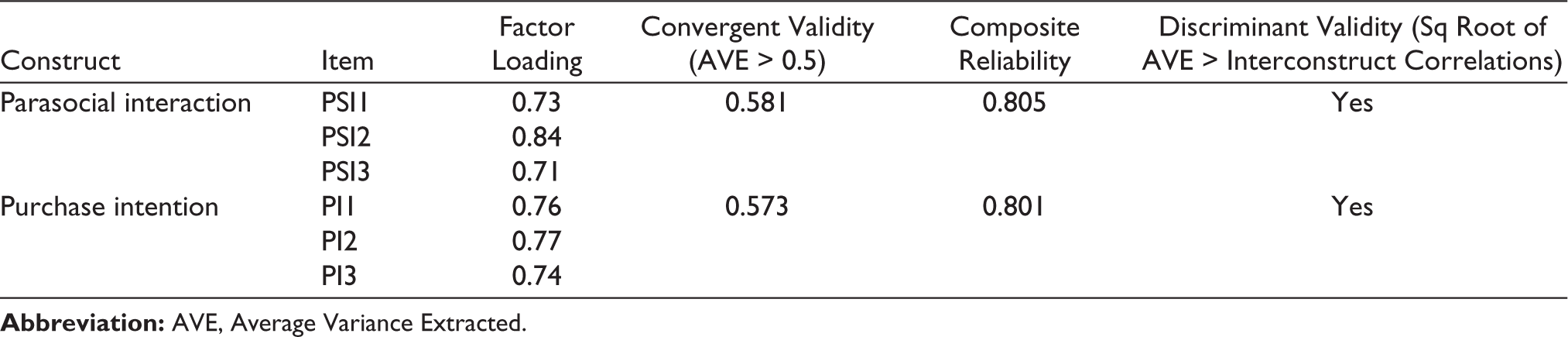
Confirmatory factor analysis was used to calculate the goodness-of-fit indices of the measurement model. The calculated values (χ²/df = 1.789, Root Mean Square Error of Approximation (RMSEA)= 0.068, Goodness-of-Fit Index (GFI) = 0.905, Normed Fit Index (NFI) = 0.809, Comparative Fit Index (CFI) = 0.912) indicated a satisfactory fit with the data. Also, the measurement model exhibited both convergent validity (Average Variance Extracted (AVE) > 0.5) and discriminant validity (square root of AVE> inter-construct correlations), as confirmed by the results presented in Table 2.
Convergent and Discriminant Validity.
Structural Model and Hypothesis Testing
The structural model was tested using maximum likelihood estimation and employing the software AMOS 20 (depicted in Figure 2). The GFI indices of the structural model were as follows: χ²/df = 1.986, RMSEA = 0.072, GFI = 0.801, NFI = 0.873, CFI = 0.877. These values fell within the acceptable range, indicating a reasonable alignment between the hypothesized model and the observed data.
Structural Model.
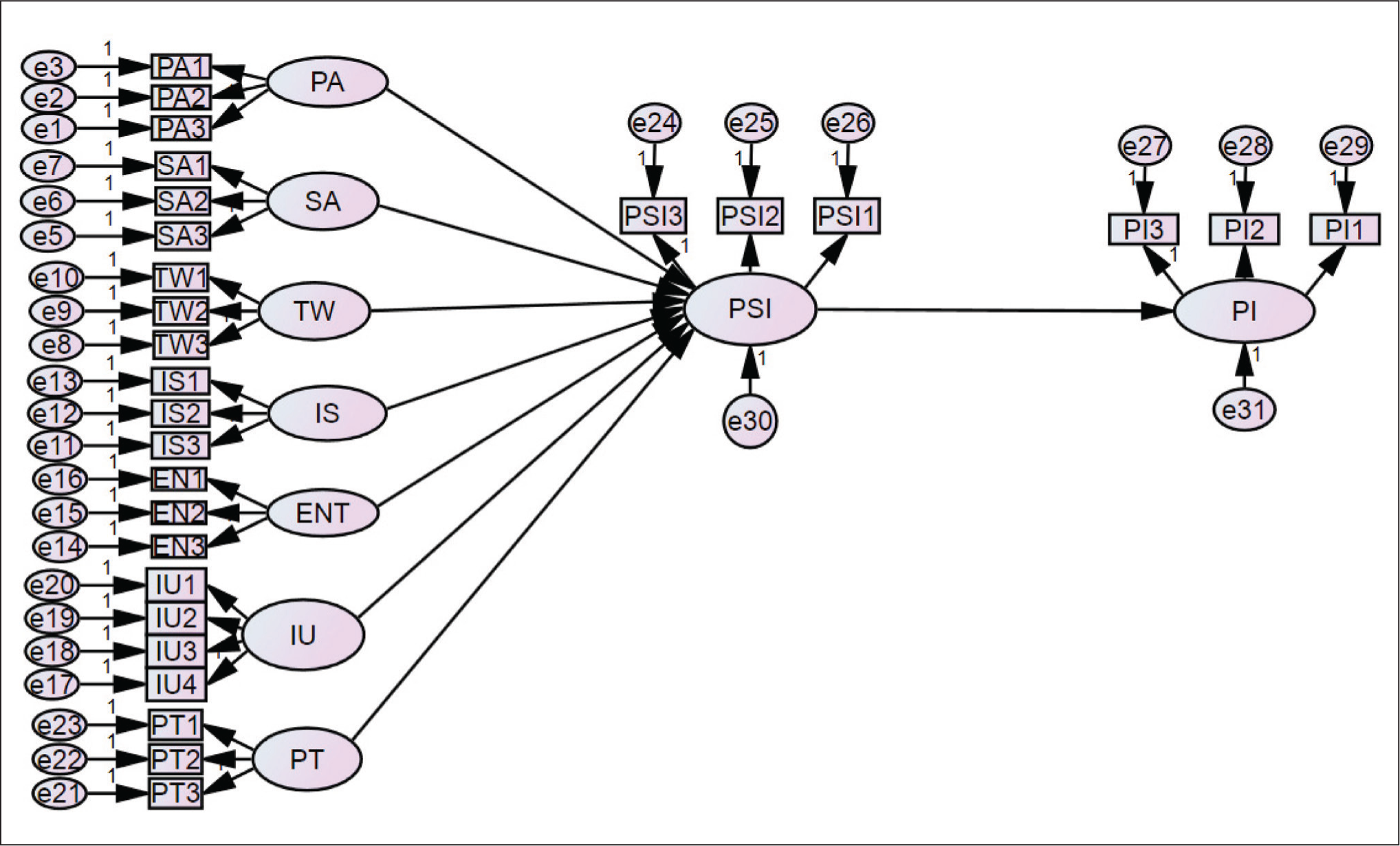
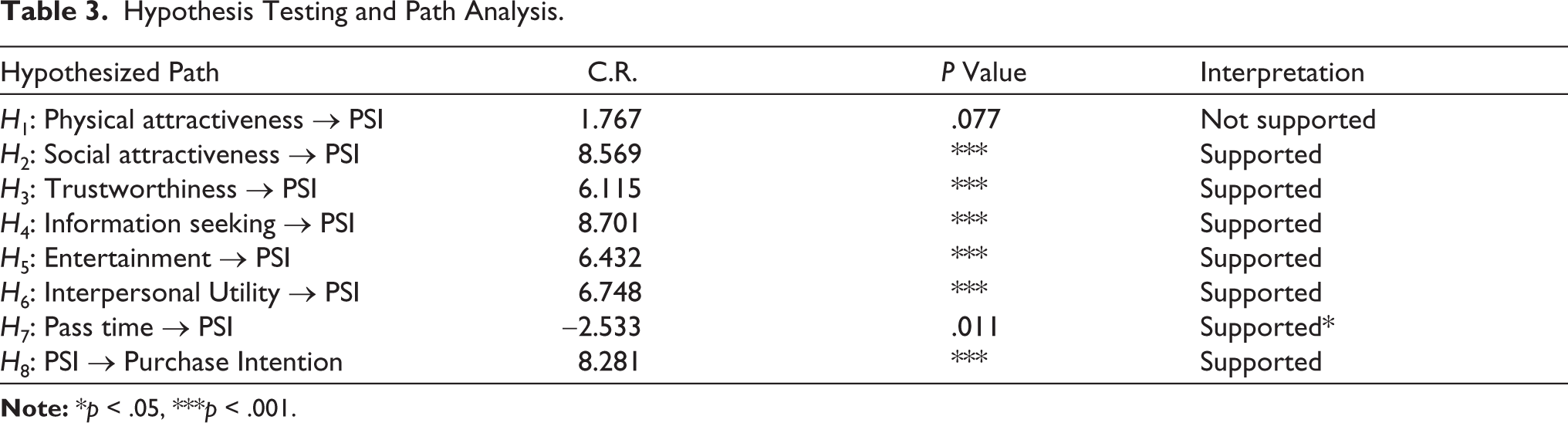
Subsequently, the proposed paths outlined in the model were subjected to testing, and the outcomes of these tests have been documented in Table 3.
Moderation Effect
To assess potential variations in the model based on the gender (male, female) of the participants within the scope of this study, a multi-group analysis was done. Employing AMOS 20, the chi-square values for both unconstrained and constrained models were computed and compared. The resulting p value demonstrated statistical significance, as indicated in Table 4. As a result, the conclusion drawn was that the model is moderated by gender, signifying distinct differences between the groups based on gender.
Hypothesis Testing and Path Analysis.
Result of the Multi-group Moderation Effect.

Based on the above outcome, the next step involved testing of moderation by gender across the nine paths.
Within these nine paths, it was observed, two specific paths, SA → PSI (χ2 = 3,585.41, df = 685 at 99% confidence) and PSI → INT (χ2 = 3,586.648, df = 685 at 99% confidence) displayed gender-based moderation which indicated distinguishable variations between males and females concerning these two paths.
Discussion and Conclusion
General Discussion
The emergence of YouTube unboxing videos, where influencers create amateur content, has captured marketers’ and advertisers’ interest. The present study aims to explore purchase intention antecedents by developing and testing a model in the cultural context of India. The model includes PSI and also examines gender’s moderating impact on the model. This research contributes to the nascent literature on YouTube unboxing within an emerging economy and addresses a limitation of Kim’s (2020) study by introducing physical attractiveness and social attractiveness as new variables.
The study results do not confirm a significant positive relationship between physical attractiveness and PSI. This contrasts with findings by Lin et al. (2021) and Lee and Watkins (2016), but aligns with Sokolova and Kefi (2020), who propose that PSI is more influenced by followers’ shared values than the influencer’s physical attractiveness. Similar to Lin et al. (2021) and Sokolova and Kefi (2020), a significant positive relationship is found between social attractiveness of the influencer and PSI. Additionally, the positive relationship between source trustworthiness and PSI corroborates earlier research (De Jans et al., 2018; Lou & Kim, 2019; Yuan et al., 2016).
Information-seeking emerges as the most robust predictor of purchase intent, supported by Kim (2020) who highlights informative unboxing videos’ influence on product purchases, especially for viewers seeking specific product details. Entertainment and interpersonal utility, classified as “nonpurposive intentions” (Kim, 2020), also exhibit positive relationships with PSI, albeit weaker than information seeking. These nonpurposive intentions, where consumers are not looking for product information actively and passively watching the videos either for personal pleasure or to connect with others through comments and remarks, indirectly impact purchase intention through PSI (Mowlabocus, 2020) by making the product engaging and compelling for customers, potentially leading to impulse buying (Xiang et al., 2016; Kim, 2020).
Interestingly, pass-time as a motive shows a significant yet negative relationship with PSI. This could stem from the fact that unboxing content and influencer charisma being less appealing to viewers who watch these videos simply to alleviate boredom. The study also identifies a gender-moderating effect on the PSI model, aligning with prior research (Eyal & Cohen, 2006; Greenwood & Long, 2011; Laken, 2009; Theran et al., 2010).
Implications for Researchers
The present research aimed to propose and test a model of unboxing using PSI with antecedents and outcomes based on source credibility theory and uses and gratification theory. It found support for the six antecedents but could not confirm physical attractiveness. One unique contribution of this study is the findings that gender moderates the model in the YouTube unboxing context. According to our findings, male and female respondents perceive the social attractiveness of the influencer differently and as a result, the effect of PSI on purchase intent was also different. This could be further probed in future studies.
Implications for Practitioners
The findings of the study are useful to enhance the advertising effectiveness of influencer marketing regarding how influencers should interact with viewers to effectively engage. Brand marketers can leverage YouTube unboxing while launching a new product as the YouTube unboxers, who are also social media influencers, can channel customer desire and boost demand. Advertisers can utilize YouTube unboxing as a strategic promotional channel, a “wildly popular digital form” (Mowlabocus, 2020), for customers who predominantly watch these videos for entertainment and to fulfill social interaction needs to influence them through influencer-induced PSI in order to drive purchase intent and demand.
Also, this study shows the effect of information seeking (a cognitive motivation) vis-a-vis entertainment or interpersonal utility (an affective motivation) on PSI was strong. Brands and unboxers should keep this in mind while designing future interactive advertising campaigns in the domain of interactive marketing.
Limitations and Future Research Directions
The present research findings advance the knowledge in the YouTube unboxing context but it has a few limitations. First, the sample of the study is skewed toward the youth segment. Also, the present study included all categories of unboxing videos, future studies may filter a specific product category or a specific generation and explore the unboxing phenomenon with gender differences in that context. Next, research can be done on how relationships between different variables like information seeking, entertainment, etc. interact with each other and collectively influence PSI. Future studies can also focus on how antecedents of PSI vary and interact across product categories can be an interesting topic of research. Lastly, qualitative research can be done by content analysis of unboxing video viewers’ review comments to create a customer typology.
Footnotes
Declaration of Conflicting Interests
The authors declared no potential conflicts of interest with respect to the research, authorship, and/or publication of this article.
Funding
The authors received no financial support for the research, authorship, and/or publication of this article.