




Abstract
This article contributes to research on children’s participation on social media by analyzing “toy unboxing” videos. Toy unboxing videos are a popular genre on the video-sharing platform YouTube, in which children and adults record themselves unpacking and reviewing various commercial toys. Emerging research in this area has focused on case studies of how these videos are consumed within the home as a means of augmenting offline toys and play practices, or, more commonly, on case studies of how these videos fit within YouTube’s broader economies of play and performance. Drawing on data produced through a content analysis of 100 recent toy unboxing videos, this article analyzes the place of children in the YouTube genre’s “affinity space.” The toy unboxing videos are coded across five key categories—genre, product, narration, production, and branding—to analyze variations of expertise, professionalism, and promotion across the genre. The findings indicate that children’s modes of production as amateur content producers both shape and are shaped by the shared and standardized conventions of this video genre. That is, while well-known “professional” channels such as EvanTube often seek to produce a semblance of playful amateur authenticity, the ostensibly “amateur” child unboxers mimic the production and branding strategies of the “professional” channels. We argue that this reciprocal relationship between professional and amateur content production can be best understood through the concept of “mimesis,” which characterizes the qualities of play and commercialization within the toy unboxing genre.
Introduction
Within a range of digital spaces, including online video-sharing platforms such as YouTube, children’s participation, play, and productivity is gaining increased attention from Internet researchers. Young children often possess the competencies necessary to engage with platforms such as YouTube (Marsh, 2016, p. 374), facilitated by developments in touchscreen interfaces, automated content delivery, and child-specific platforms like the YouTube Kids App (Burroughs, 2017). As a result, children are playing an active role in both the consumption and production of online video content. This now begins in infancy, with parents producing and publishing videos such as “iPad babies” (Nansen & Jayemanne, 2016), and continues into early childhood with homemade YouTube videos made for and by children (Lange, 2014; Marsh, 2016).
The aggregation of children’s user-created content has formed into recognizable and distinct genres of entertainment, including gaming tutorials and let’s play videos, to prank and comedy channels, to children’s play and DIY videos involving materials like slime or Play-Doh, and, of course, toy unboxing videos—a popular genre in which children and adults publish videos of themselves unpacking and reviewing various commercial toy products.
This article contributes to research on children’s social media use, extending emerging studies of children’s YouTube participation by analyzing “toy unboxing” videos. Drawing on data produced through a content analysis of recent toy unboxing videos, this article analyzes the place of children in the YouTube genre’s “affinity space” (Lange, 2014). We identify a reciprocal relationship between professional and amateur content production, which we suggest can be understood through the concept of “mimesis.” Such mimetic participation characterizes the qualities of play and commercialization within the toy unboxing genre, and involves children operating as both sites and subjects of imitation within affinity spaces such as YouTube.
Unboxing Product(ion)s
Emerging research in this area has largely adopted case study approaches by focusing, for example, on how these videos are consumed within the home as a means of augmenting offline toys and play practices (Marsh, 2016). Here, child viewers are understood as “cyberflâneurs” (Marsh, 2016) whose practices exceed passive consumption through the vicarious enjoyment of observing other children playing. These children are viewed not as producers per se, but rather are embedded as co-creators what Patricia G. Lange (2014, p. 144; cf. Gee, 2004) describes as the platform’s affective and technical “affinity spaces”—that is, participatory cultural spaces of shared interest that facilitate a feeling of identification, affiliation, and the development of informal literacies.
Other studies of toy unboxing videos, which also draw on specific case studies, have looked at how these videos fit within YouTube’s entertainment industry (Craig & Cunningham, 2017; Ramos-Serrano & Herrero-Diz, 2016). This research often focuses on well-known unboxing channels such as FunToys Collector or EvanTube, and how these channels operate as creative producers and commercial partners within the programmatic advertising space of YouTube, creating lucrative media enterprises that build on shared ad revenue and direct marketing deals with toy manufacturers to become significant “brand influencers” (Ramos-Serrano & Herrero-Diz, 2016). In turn, this research highlights a number of tensions and concerns about the vulnerability or exploitation of children within the economies of YouTube marketing—either as audiences of largely unregulated advertising content or as child labor illegally producing branded content for the advertising industry (Craig & Cunningham, 2017).
These ambivalences are reflected in news media coverage, with articles highlighting in amazement how unboxing channels such as Ryan’s Toys Review are among the top earning channels on YouTube. Based on numbers of subscribers and views, these channels are quickly becoming legitimate and aspirational media enterprises that often earn more than traditional celebrities within the YouTube economy (e.g., Dredge, 2016). Alternatively, a number of articles are raising concerns about the impact of the kind of content produced and how it is delivered to young audiences on YouTube—algorithmically organized and automated to serve up endless amounts of excruciatingly repetitive and mindless content of toys being unboxed, and in the process captivating, coercing, and commodifying the lives of young children (e.g., Bridle, 2017; Lafrance, 2017).
Children, then, are largely positioned as victims of a digital culture industry, either interpellated as passive consumers of hyper-commercial content without any protections or blindly imitating brand influencers in the futile and aspirational hope of becoming successful YouTubers by, for example, inviting viewers to “like, comment, and subscribe” (McRoberts, Bonsignore, Peyton, & Yarosh, 2016, p. 338). And yet, the popularity of the genre challenges such reductive conclusions. Children are clearly deriving pleasure from watching, identifying with, and making unboxing videos, suggesting there is much more going on in this space of affinity. The space of affinity for child unboxers centers on the participatory appeal of this genre; on their capacity to view, share, and publish videos; and on the relays between consumption and production in which children intermediate between other users, producers, publics, and brands within YouTube unboxing genre.
This article seeks to build on initial analyses of unboxing videos by examining a wider spectrum of videos within the affinity space of the YouTube unboxing genre to develop a more contextual understanding of children’s participation. By looking at the content of toy unboxing videos, we explore how such vernacular or amateur child-produced user-created content relates to more professional content production from adult YouTubers or influencer channels. In doing so, this research contributes to understandings of how children operate as active content producers, and not simply passive consumers or audiences of this popular genre, and thus to critiques that problematize assumptions about children’s digital media use based on distinctions between consumption and production, passive and active, and amateur and professional—both within YouTube and more broadly in digital play and learning (e.g., Burgess & Green, 2009; Jenkins, 2006; Kafai & Peppler, 2011; Lange, 2014).
Our findings indicate that there is often a reciprocal relationship between the “professional” and “amateur” unboxing videos, in the ways they are filmed, edited, produced, and narrated. To be clear, we do not want to codify “amateur” and “professional” as discrete or binary categories in the toy unboxing genre. Rather, our aim is to illustrate how ostensibly “professional” techniques native to adult or influencer produced videos—including production effects, narration style, audience engagement, and so on—are reflexively co-opted or imitated by everyday or “amateur” users, and vice versa in the imitation of amateur user-created content aesthetics by influencer channels. We argue, therefore, that the concept of mimesis is helpful for gaining insight into the popularity of the videos among young YouTubers, as well as the “waves of collective imitation” (Arvidsson & Caliandro, 2015) which characterize the toy unboxing genre. Children operate as both sites and subjects of mimesis within the collective imitation of the toy unboxing affinity space; their modes of production shape and are shaped by the conventions, expectations, and influencers of the genre.
Researching Unboxing Video Content
This study is part of a wider research project exploring young children’s household use and online mediation of mobile and touchscreen media. For this piece of research, we focused on children’s YouTube production and participation and in particular the genre of toy unboxing videos. This is not only a hugely popular genre, which connects with a broader history and practice of unboxing various commercial and electronics products (e.g., Mowlabocus, 2016), but also a particularly prominent genre within children’s YouTube culture. Searches for “toy unboxing” in YouTube generate millions of results; we conducted a content analysis of 100 toy unboxing videos on December 20, 2016 and December 28, 2016. We applied the “most recent” filter to the search term “toy unboxing” and analyzed the first 50 results on each day. We selectively excluded nonrelevant false positive videos from the search results (e.g., videos of people unboxing electronics).
We then coded each of the videos using a mixture of single and multiple coding. Initially, we coded the videos in terms of “actors” (child/adult, age, gender, point-of-view, and who is present in the videos). We then created two data sets: one for videos featuring adults as the primary unboxers (47 videos in total) and one for videos featuring children as the primary unboxers (53 videos in total). Our motive for this was to create an analytical distinction between more “professional” toy unboxing videos produced by adults with the more diverse production qualities of children’s videos, to reveal both commonalities and points of difference across the spectrum of adult–child and professional–amateur videos in the way toy unboxing videos are filmed, produced, and branded.
Within each of the data sets featuring either primarily adult or primarily child unboxing actors, we then coded each of the videos under five further separate categories. These categories were organized around the characteristics that constituted ostensibly “professional” videos in terms of “genre” (e.g., sequence of unboxing, assembling), “product” (e.g., branded toy, entertainment franchise), “narration” (e.g., product description, review), “production” (e.g., setting, editing techniques), and “branding” (e.g., self-promotion, audience solicitation, sponsor engagement). As the findings below reveal, the more professional adult videos typically demonstrated more formal, standardized, scripted, or seamless characteristics across these categories, whereas more amateur produced child videos tended toward performances and productions that were clearly more informal, vernacular, and varied.
This content analysis was then complemented with close analysis of key exemplary videos from across the spectrum of amateur and professional videos within the data set and genre, such as the “Unboxing Skylanders Imaginators” video posted by James Games and the EvanTube video “STAR WARS Super TOY Unboxing!!! The Force Awakens Surprise Box!”. This qualitative dimension was useful for contextualizing the figures from the content analysis with descriptive examples to reveal how the mimetic relationships in the genre played out through qualities of play and commercialization across branding, performance, and production techniques.
De-coding the Genre of Unboxing
Actors (Single Coding)
This category sorted videos based on the identities of those present in the unboxing videos (Figure 1). These dimensions included whether the presenter was a child or adult, whether the child presented by themselves or with others, the estimated age of the child, the gender of the presenter, and the point-of-view of the videos. Actors were coded according to the following categories: children, children (disembodied), children with adults, children with friends and siblings, adults, and adults (disembodied). The “disembodied” categories refer to videos shot primarily (or entirely) from an anonymous first-person perspective. To the best of our ability, we attempted to discern whether the actor was a child or adult based on their commentary and the size and shape of their hands.

Actors (single coding: 100 videos).
We also coded the actors for gender, based on who was the most prominent “unboxer” in the video, with the gender of children 36% female and 52% male, while for adults it was 28% female and 51% male. The gender was ambiguous and undecided in 11% of child videos and 21% of adult videos. This was largely a result of anonymous or disembodied videos featuring only hands and often no commentary making gender identification difficult to determine.
Age of Child (Single Coding)
This category sorted videos based on the age range of the child (or children) represented (Figure 2). Videos were coded into one of the following categories: infant, toddler, child, adolescent, or no children. Infant refers to children aged 1 to 2 years; toddler refers to children aged 2 to 4 years; child refers to children aged 4 to 11 years; and adolescent refers to children aged 12 to 18 years. To the best of our abilities, we attempted to discern the age of the child (or children) according to these categories.

Age of child (single coding: 100 videos).
Genre (Multiple Coding)
This category sorted videos based on the generic conventions or narrative sequences within the videos (Figures 3 and 4). While the majority of videos focused only on unboxing a toy and little else, we noted instances in which unboxing also included other tropes observed in the genre, such as assembling, reviewing, playing, or demonstrating. The videos were coded according to the following activities: assembling, reviewing, playing, and performing narrative. The performing narrative category refers to videos where children or adults performed a fictional narrative or script related to the unboxed toys, which differed from playing by moving beyond briefly playing with a toy as a demonstration of its use to include a more performative piece of entertainment involving the toy.
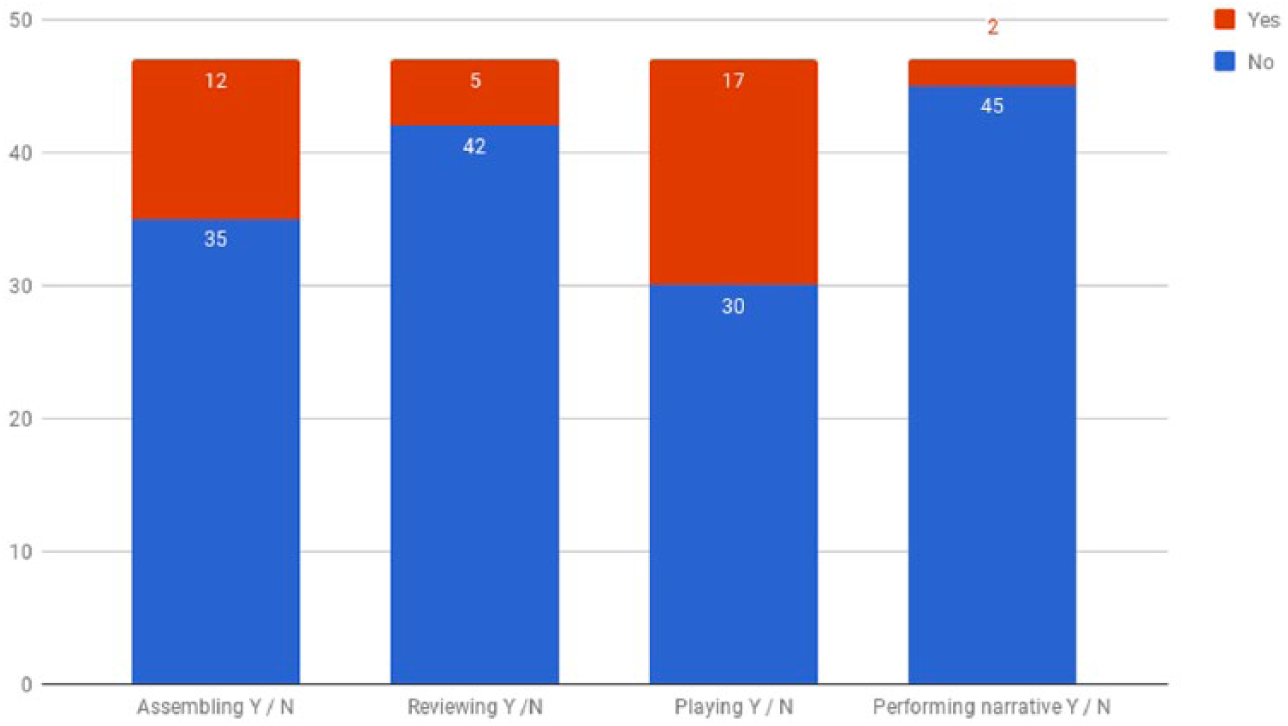
Genre/adults (multiple coding: 47 videos).

Genre/children (multiple coding: 53 videos).
Product (Multiple Coding)
For this analysis, we sorted videos based on the types of products featured in the videos (Figures 5 and 6). Videos were categorized according to whether the main toy unboxed was based on an entertainment franchise or toy company, whether there was a single toy or multiple toys unboxed, and whether the dominant form of the unboxing was a blind box or not.

Product/adults (multiple coding: 47 videos).

Product/children (multiple coding: 53 videos).
The blind box category refers to videos that featured collectible or “blind-bag” toys. Blind-bag, lucky-dip, or surprise egg toys are a type of toy—often collectible—that are only revealed after having opened the packaging. Entertainment franchise refers to videos where the main toy brand was from a transmedia franchise (e.g., Star Wars or Marvel), while toy company refers to videos where the toys originated from more “conventional” toy companies. This would include companies such as Lego, even though their products do cut across these rigid definitions.
Narration (Multiple Coding)
For this category, we sorted videos based on their style of commentary (Figures 7 and 8). Videos were categorized into multiple codes, depending on whether they featured one or more of the following types of commentary: vernacular description, product description, instructional, assessment, and no narration. The vernacular description category refers to videos that featured seemingly unscripted commentary that was more personal or spontaneous in nature, while the product description category refers to videos that featured more descriptive sections of seemingly scripted commentary—that is, commentary describing or framing the toy in a similar manner to the official packaging or company description (this was more common in videos that were sponsored by certain toy companies or retailers). To the best of our abilities, we attempted to discern whether a video was scripted by paying attention to the speaker’s delivery and the content of the dialogue. The instructional category refers to videos where commentary was more focused on providing step-by-step instructions on how to assemble a toy, while assessment refers to commentary focused on providing a critical evaluation of the toy.
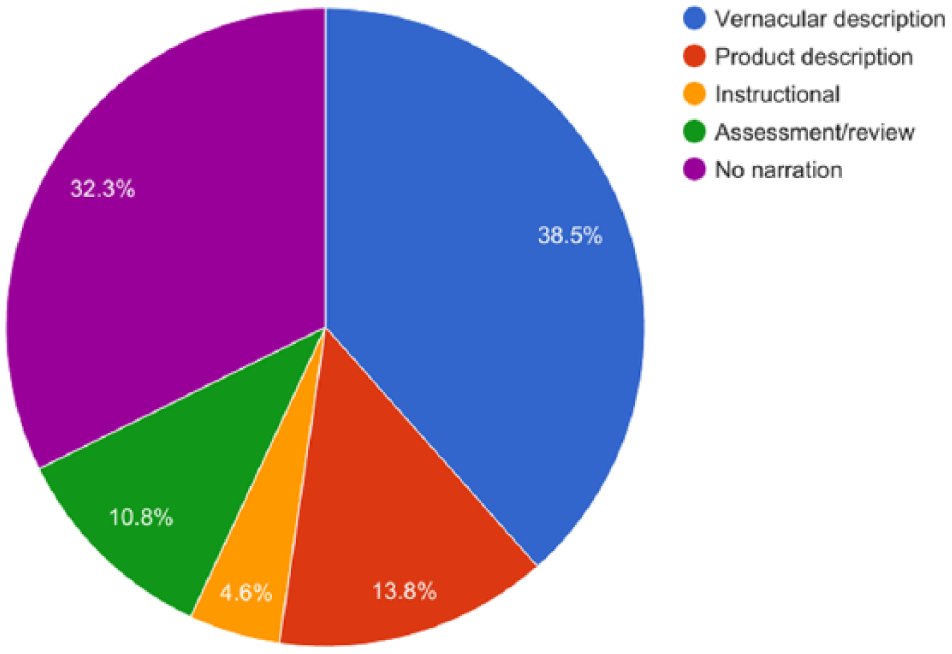
Narration/adults (multiple coding: 47 videos).

Narration/children (multiple coding: 53 videos).
Production (Multiple Coding)
This category sorted videos based on their filmed contexts and their use of post-production techniques such as editing and visual effects (Figures 9 and 10). The contexts of the videos were coded according by indoors/outdoors, and blank/identifiable space, to see whether they used more vernacular, personal, and informal settings, or whether they adopted more generic, formal, and “professional” backdrops. The editing techniques were coded to see whether videos were shot in a continuous or montage sequence, and whether they applied any visual effects to videos using post-production graphical effects, such as introduction sequences. Finally, we included a repost category to refer to videos that were poached from another account and then reposted. We decided to include this category because it is a remarkably common occurrence among toy unboxing videos and speaks to the “collective waves of imitation” that drive the genre (Arvidsson & Caliandro, 2015).

Production/adults (multiple coding: 47 videos).

Production/children (multiple coding: 53 videos).
Branding (Multiple Coding)
For this category, we sorted videos based on whether the actors engaged in self-branding strategies, audience solicitation, or sponsorship promotion. Videos were categorized into multiple sub-categories depending upon whether they featured: brand identity, audience engagement, brand engagement, or nothing. Brand identity refers to videos that featured overt self-branding strategies (e.g., a designed logo or name for their channel); audience engagement refers to videos that featured any other kind of direct acknowledgment of their fans and/or a solicitation from their viewers to “like, comment, and subscribe”; and brand engagement refers to videos where authors directly referenced sponsors of their channel or video, which are separate to the brands of the toys actually unboxed.
The Affinity Space of Unboxing
Three key findings emerged from the analysis of the above data. First, children’s videos tended to be much more varied and vernacular compared to the adult’s videos, which were much more uniform in their presentation and format. Second, children often sought to produce a veneer of professionalism by mimicking the production techniques of the adult’s videos. However, rather than reproducing their formats wholesale, children would often mix together multiple ways of producing and presenting their videos by, for instance, shifting from first- to third-person perspective or from a vernacular to a professional style of commentary. Finally, the data reveal that children are highly cognizant of the branding and promotion strategies that contribute to the cultivation of subscribers, which is also evidenced in the ways they copied or reproduced the branding strategies of “professional” channels and videos.
Almost half of the videos featured a child (or multiple children) as the principal unboxer(s) (see Figure 1). The age of children unboxers ranged from toddler to adolescent, with the majority being primary school age (see Figure 2). Many of the videos made by or starring children were filmed from a third-person point-of-view or webcam-style setup. However, there were often a diverse range of actors present in the children’s videos, with many featuring friends, siblings, or parents, either directly or off-camera as “directors” or “curators” of the content (see Figure 1). Both adult and child videos featured more male than female actors, with similar gendered percentages; however, adult videos were much more likely to feature undetermined gender due to the production characteristics.
The videos featuring adults as the main unboxers were overwhelmingly uniform in their presentation and format. The majority of these videos rarely featured a primary “subject,” but were instead filmed almost exclusively from a disembodied first-person perspective (see Figure 1). The primary focus of these videos was the actor’s hands and the process of actually unboxing or assembling toys, with some actors even wearing gloves. The adult actors rarely filmed their faces or even the environments in which they were filming, opting instead for blank, nondescript backdrops, often with no narration at all (see Figure 7). It appears that these conventions were aimed at making the viewing experience as “immediate” and interface-less as possible, to facilitate child viewers’ sense of identification and presence in the unboxing sequence. The framing of these videos generally remained static, focusing only on the toys themselves, and they were more likely to use montage and editing effects.
Children’s videos were, by contrast, more balanced between blank and identifiable home spaces (see Figure 10), and often shifted fluidly between first-person and third-person perspectives. Some videos, such as “UNBOXING MY NEW TOY” from the account “Real Gaming Ha Ha,” begin from a disembodied first-person perspective and then transition to a webcam-style monologue. Children’s videos were also much more likely to feature vernacular description in their narration (see Figure 8), and to be shot continuously without any visual effects (see Figure 10), although the imitation of post-production visual effects meant this difference was less pronounced.
Yet, many of the children’s videos clearly attempted to mimic the first-person or disembodied style of filming popular in the adult’s videos. The video “LPS: Unboxing” from the channel “LPS Pura” is one such example. In this video, the child author films the unboxing process entirely from a disembodied first-person perspective and provides commentary throughout. LPS Pura’s video also features a “blank” backdrop onto which the unboxing is filmed. The author clearly attempts to recreate the effect of a blank backdrop by using everyday materials from her house (in this case, a piece of gold material). While both child and adult unboxers frequently engaged with their audiences by providing commentary in the form of vernacular description and discussion, the adult’s videos were less likely to feature commentary.
In terms of the products, adults were more likely to unbox “blind-bag” toys, which featured collectibles or an element of surprise, and they more often featured multiple toys in the unboxing video sequence, suggesting a strategy to hold viewer attention through elements of surprise or stimulation (see Figures 5 and 6). There was a distinct gender difference in the type of toys children unboxed, with boys unboxing (and often assembling) toy cars and Lego, whereas girls tended to unbox toys like Shopkins. In terms of the genre or sequence of events in the unboxing videos, surprisingly, adults were also more likely to play with the toys once unboxed, although playing, along with reviewing, was uncommon across both adults and children (see Figures 3 and 4).
Clearly there are standardized generic conventions within the unboxing YouTube videos, driven by adult and influencer channels, which give it a distinct and discrete generic form. Questions of genre offer avenues for further research within various affinity spaces of YouTube, especially as such identifiable generic qualities or conventions of unboxing videos are also characterized by a kind of transversality in how this genre bleeds into other related videos, such as play, making and crafting, and a range of visual and tactile products or materials such as Play-Doh, jelly, and slime, or how multiple genres converge around a single toy, such as Furby unboxing, playful set-pieces, and more subversive pranks of destruction (Chesher, 2017). Another possibility for exploring the genre includes the historical development of the genre in terms of the identifiable increase and excess in the number of toys unboxed, as well as the growing length of titles and use of keywords to optimize search and algorithmic recommendation. These aspects of further research point to questions about the kinds of content and cultures produced within YouTube’s algorithmically organized attention economy—how the “affinity space” demands more intensive and excessive forms of content and participation in the pursuit of market distinction and audience attention.
Many of the ostensibly amateur toy unboxing videos were calibrated in various ways to appeal to a networked audience. Child unboxers frequently engaged with their imagined audiences by directly soliciting likes, comments, and subscriptions (see Figure 11; cf. Figure 12). It is worth noting that several of the children’s videos were quite obviously curated by adults or parents to achieve a veneer of professionalism. One example is the video “Pasta Challenge—Trolls Disney Lego Minifigure Glitzi Globes Toy Surprise Unboxing” from the account “Fun Toys Craft.” In this video, a child and an adult (the child’s mother, presumably) unbox a number of blind-bag toys and collectibles. To determine who should open which toys, the duo compete in a “pasta challenge” game where they each thread pieces of pasta through a skewer held only in their mouths. The parent—who is also holding an infant child while performing in the video—frequently “scripts” the child’s speech and actions by providing her with auditory prompts, a finding noticed in other genres of children’s YouTube video production and culture (Nansen & Jayemanne, 2016).
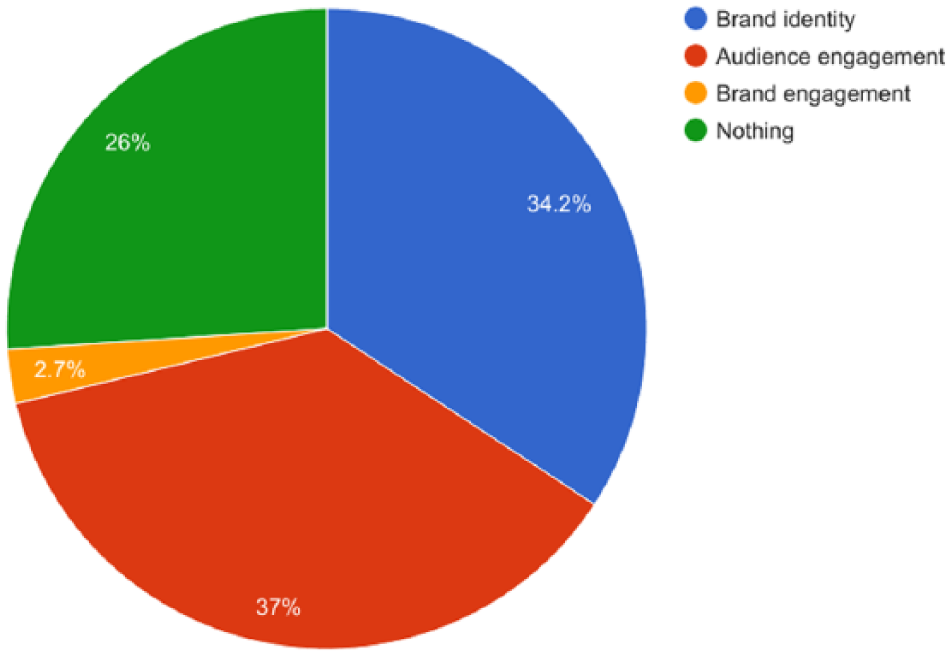
Branding/adults (multiple coding: 47 videos).

Branding/children (multiple coding: 53 videos).
The video begins with the adult asking the child the question: “To open these bags, what do we have to do Malaya?” The child goes to respond but subsequently becomes distracted by the toys. The adult then answers her own question: “We have a challenge!” The adult also frequently reminds the child to describe the toys and show them to the camera after the unboxing process. These prompts serve as a way for the adult to “modulate” rather than “moderate” the child’s participation in the toy unboxing affinity space (Nansen & Jayemanne, 2016). At the end of the video, the parent prompts the child with the question: “What are our audience going to do if they like this video?” This then serves as a segue for the child to invite viewers to like, comment, and subscribe. The video also features a number of post-production techniques, including frequent edits, multiple camera angles, music, and introduction and “outro” sequences.
This video is just one among many amateur or child videos that aspires to create a veneer of professionalism through its production and editing techniques. Such videos are often drawing influence from recognizable tropes within the genre, discussed above, standardized by adult channels, but also from well-known child YouTubers or “brand influencers” such as EvanTube (Ramos-Serrano & Herrero-Diz, 2016). Despite their professional “polish” and brand awareness, EvanTube’s videos are, inversely, often carefully calibrated to achieve a feeling of amateur authenticity. Much like Fun Toys Craft’s Pasta Challenge video described above, EvanTube’s unboxing videos are carefully scripted and edited. However, where the Pasta Challenge video often lapses into moments of genuine spontaneity—when, for example, the child forgets her lines or does something unexpected—EvanTube’s videos are, by comparison, very carefully edited and produced. Moments of amateur authenticity are instead scripted into videos. For example, in the EvanTube video “STAR WARS Super TOY Unboxing!!! The Force Awakens Surprise Box!”, Evan pilots a remote-controlled drone into a room where his “mother” is vacuum-cleaning. Although it is directed in a way to feel amateur and playful, it is nonetheless very “staged.” A feeling of amateurism is thus “calibrated” (Abidin, 2017) into the video to increase its appeal to a networked audience.
EvanTube’s videos rarely depict the challenges or difficulties encountered when unboxing or assembling a new toy, whereas in amateur videos such as “Unboxing Skylanders Imaginators” from the account “James Games,” every step of the unboxing process is recorded. In this video, the child actor encounters various difficulties while attempting to unbox the toy, such as fiddling with various plastic parts and pieces. Yet, despite its obvious “amateurishness,” the video as a whole aims to mimic the professional polish of toy unboxing brand influencers through post-production graphics and introduction sequences.
As the above examples illustrate, many amateur content creators are keenly aware of the branding strategies and promotion techniques that go into the production of successful YouTube channels. In the Pasta Challenge video, these branding strategies also extend to the comment section below the video, where the authors respond to comments and “follow back” like-minded subscribers. Even the title of the video—“Pasta Challenge—Trolls Disney Lego Minifigure Glitzi Globes Toy Surprise Unboxing”—is clearly worded so as to capture a wide variety of possible search terms. Another interesting example that came up in our content analysis was the video “B buddieez toy unboxing + 50 Sub announcement for giveaway!” from the account “Gemma’s Golden World.” In this video, an adolescent child unboxes various toys before directly engaging with her subscribers by offering a 50 subscriber “giveaway” prize. When announcing the prize, she thanks her existing subscribers and mentions that she hopes they will stay subscribed and that “we can progress toward more subscribers.” Similarly, in the video “Toy unboxing w/ my sister” from the account “toni webb,” two adolescent sisters begin their video by cross-promoting their Instagram accounts, demonstrating their awareness of the branding strategies necessary to capture a networked, cross-platform audience.
The data reveal, then, that young and amateur YouTubers possess an awareness of the affective space of performance, as well as technical literacies of production that inform successful toy unboxing videos. While well-known professional channels such as EvanTube often seek to produce a semblance of playful amateur authenticity, the ostensibly amateur child unboxers mimic the production and branding strategies of the professional channels. We argue that this reciprocal relationship between professional and amateur can be best understood through the concept of “mimesis” in both play and commercialization within the unboxing affinity space.
Producing Mimesis
Mimesis has long featured as an observed dynamic in children’s play, with forms of simulation or role-playing identified as a key element of children’s symbolic or imaginative play practices. This kind of mimicry (Caillois, 2001) or ludic play (Sutton-Smith, 1997) continues into digital spaces and play activities, both through platforms that mimic analog games—such as Minecraft commonly being described as digital Lego—and through playful practices that transport forms of role-playing or simulation—such as the use of avatars—into symbolic, imaginative, or dramatic play practices in digital spaces (Marsh, Plowman, Yamada-Rice, Bishop, & Scott, 2016). Yet, as Seth Giddings (2014) notes, in analysis of children’s physical play with digital products such as Lego Racers 2, children’s mimetic and imitative play intensifies when brought into contact with virtual spaces. Participatory digital media create a springboard for what he calls “meta-play” (Giddings, 2014, p. 153)—that is, the process by which children take performative or playful inspiration from a media representation (such as a Lego car racing game) and “simulate” (Giddings, 2014, p. 145) that representation in a parallel or offline play world.
In our analysis, meta-play was widespread. Children imitated professional video production techniques and branding activities—with young children’s performances often closely verbally directed and curated by parents—while professional channels and adult producers in turn imitated the vernacular and spontaneous qualities of children’s play in the pursuit of authenticity. While not incompatible with genuine family affection (Lange, 2014, p. 134), this “calibration” of authenticity is, as Crystal Abidin (2017) writes on “family influencers” more broadly, a deliberate tactic deployed by parents to offset critiques of exploitation—to “[convince] followers that these performers are ‘family’ before ‘influencers’, and privilege care, wellbeing, and enjoyment of their children above commerce” (p. 18). As Lange (2014) further notes, “commercialization [of YouTube family videos] is not incompatible with genuine family affection” (p. 134).
This observation of mimetic relations in children’s toy unboxing videos can be critically understood and analyzed through Walter Benjamin’s cultural theorization of mimesis in his essays “On the Mimetic Faculty” and “Doctrine of the Similar.” In these writings, Benjamin (1979, p. 65) describes childlike mimesis as a process that involves both perceiving and embodying similarity. As he points out, children are capable of imitating not only other children or adults but also objects and things: “[t]he child plays at being not only a shopkeeper or teacher but also a windmill and a train” (Benjamin, 1978, p. 333). For Benjamin, this mimetic process of assimilating self to other—of relinquishing one’s subjectivity to something or someone else, if only momentarily—cannot simply be reduced to a form of derivative imitation. It is, he suggests, a much more productive and empathetic relation, in which the self recognizes something of themselves in the other, and in the act of identification (perception) and imitation (embodiment), the mimetic function expresses a capacity to rearticulate and reinterpret the original as a novel and creative expressive form. He argues that mimesis gains its highest expression in language, which he thought embodied the “nonsensuous similarity” characteristic of mimetic behavior—of perceiving and producing a mimetic connection between words and objects that do not necessarily possess a real or natural resemblance (Benjamin, 1978, p. 336).
Mimesis is, as Benjamin (1979, p. 68) also argues, historically contextual and migratory—It “moves” from one domain of perceptual and embodied experience to another and is molded by certain historical and cultural forces along the way. In Berlin Childhood, Benjamin (2003) personally reflects on a new stage of mimetic behavior whereby children are mimetically molded by the technological and cultural shifts of the 20th century. He recalls his childhood in a Berlin apartment, peering out of his upper-story apartment window at everyday life. Not only does he witness the new technologies and modes of transport that were reshaping the pace of modern city life—“the rhythm of the metropolitan railway,” as he describes it (Benjamin, 2003, p. 345)—but also other ways of living; other families struggling to make ends meet. He describes peering out of his apartment window on Christmas Eve at the “constellation” of Christmas candles, trees, and presents filling other apartment windows (Benjamin, 2003, p. 337). Yet, at the same time, he notices the darkened windows of those who could not afford such extravagances (Benjamin, 2003, p. 337). He thus perceives or internalizes something akin to class consciousness by observing a new kind of constellation projected by everyday 20th-century city life.
Although this “historical molding” can be seen as childlike, enigmatic, and perhaps even utopian, it also involves what Shierry Nicholsen (1997, p. 141) calls a kind of “entrapment,” insofar as mimetic behavior is largely bound and directed by the technological and social conditions in which play is afforded. In a Benjaminian sense, children imitate and thus seek to produce a nonsensuous similarity through forms of perception and embodiment, which are nevertheless constrained by the social and technological environments they inhabit. As Giddings (2014) observes in socio-technical configuration of children’s digital play more broadly, such mimetic dimensions of perception and embodiment also demonstrably unfold in the conduct of children in toy unboxing videos. Mimesis is perceived in the way children identify characteristics of production and branding and performance in more professional videos, and embodied in the way they imitate generic features of other unboxing YouTube videos, through types of setting, narration, products, and audience engagement. It is, then, shaped and guided by the conventions of the genre and a sense of affiliation within the affinity space. Nevertheless, in rearticulating unboxing performances, moments of spontaneity and novelty emerge to exceed standardization and produce variation. This, in turn, becomes a resource for professional channels to appropriate in the pursuit of playful amateur authenticity. These reciprocal relations of identification, imitation, and absorption produce children as both sites and subjects of mimetic production.
But, how does this mimetic production fit within the highly commercialized space of YouTube, and children’s social media production, sharing, and consumption more broadly? Scott Lash and Celia Lury (2007, p. 191) pick up this thread by arguing that childlike mimesis has become imbricated in the branding strategies of what they call “global culture industry,” where it is solicited by cultural products for the “accumulation of capital.” Playful mimetic activity is central to what they call the “thingification” of media; it stabilizes not only a system of objects but also their relation to the development of individual subjects, sociability and behaviour” (Lash & Lury, 2007). Jussi Parikka (2010, p. 109) makes a similar case when he argues that digital technologies are increasingly oriented toward the goal of “capturing” the affective potential latent in human mimicry (cf. Nicoll, 2016).
In the contexts of social media and branding, Adam Arvidsson and Alessandro Caliandro (2015) argue something similar in their analysis of Twitter hashtags and “brand publics,” noting that social media platforms such as YouTube are driven less by “identity” and “community” and instead by “brand publicity” and “collective imitation.” As they write, “in brand publics, participation is structured either by private affects like desire for visibility or an urge to share a point of view or an experience, or by collective affects that drive waves of imitation” (Arvidsson & Caliandro, 2015, p. 2, italics added). In a Benjaminian sense, children’s mimesis gains new expression on social media platforms, where it is solicited for the purpose of gaining networked visibility and the accumulation of both cultural and economic capital.
In toy unboxing videos, children are immersed in a space of affinity in which they perceive and embody a distinct genre of content production. They perceive and embody affiliation by recognizing and reproducing similarity through branding strategies and production techniques of adults and brand influencers, “performing” these similarities by, for example, directly acknowledging subscribers or unboxing toys from a first-person viewpoint. To borrow Arvidsson and Caliandro’s (2015) terms, the toy unboxing genre therefore functions “not to supply a focus for identification, but a vehicle for visibility and publicity” (p. 17). In other words, the data reveal that vernacular expression is not the sole driving force behind the creation of these videos. Rather, children create and engage with toy unboxing videos as a means of participating in a YouTube affinity space that serves as a platform to bolster their online presence and bring them into contact with other unboxers, as well as potential subscribers and perhaps even sponsorship.
In turn, more established and professional channels deploy mimetic operations by borrowing the more spontaneous playful aesthetics that persist within children’s unboxing productions. Paradoxically, these reciprocal relations lock in a kind of path dependence through the imitation of dominant and standardized generic conventions, while producing continual evolution and variation and novelty—a mimetic configuration that is intensified within the YouTube platform ecology and its algorithmic and participatory affinity space of video search, recommendation, consumption, and production.
Conclusion
This article has aimed to contribute to a growing research agenda focused on children’s participation on social media by analyzing children’s toy unboxing videos. While there is some emerging research in this area, this has tended to focus on particular case studies and on the more professional channels. We extended this approach, by turning attention to the diversity of producers and videos within the genre—in particular, by looking at the more “amateur” children’s videos. Drawing on data produced through a content analysis of 100 recent toy unboxing videos, we analyzed the place of children in the YouTube genre’s affinity space. We found that children’s videos tended to be much more varied and vernacular compared to professional or adult’s videos, yet they lean toward and often sought to produce a veneer of professionalism by mimicking the production techniques of the more professional or adult videos.
The research reveals, then, that young and amateur YouTubers possess an awareness of the affective and technical literacies that inform the production of successful toy unboxing videos. While the notion of an “affective literacy” may seem contradictory—insofar as affect is experienced at a threshold preceding emotional or cognitive awareness, while the term literacy implies something that can be intellectually or practically grasped—we want to suggest that mimetic production is characterized by this very “in-between-ness,” a process of affects becoming structured as literacies through processes of identification, affiliation, and imitation. Mimetic production in toy unboxing videos is characterized by a two-way exchange whereby children frequently mimic the production and branding strategies of adult and professional channels, while well-known professional channels such as EvanTube often imitate the playful qualities of children’s videos to produce a semblance of amateur authenticity. We argue that this reciprocal relationship between professional and amateur can be best understood through the concept of mimesis in both play and commercialization within the YouTube toy unboxing genre. Such mimetic participation involves children operating as both sites and subjects of imitation within the affinity spaces of YouTube.
Footnotes
Declaration of Conflicting Interests
The author(s) declared no potential conflicts of interest with respect to the research, authorship, and/or publication of this article.
Funding
The author(s) disclosed receipt of the following financial support for the research, authorship, and/or publication of this article: This work was supported by the Australian Research Council (ARC) under Discovery Early Career Researcher Award Grant Number DE130100735.