




Abstract
This article investigates how livestreaming content can be integrated into influencer marketing to effectively engage Generation Z—a demographic increasingly wary of traditional marketing techniques. Livestreaming is an interactive marketing channel that enhances influencer credibility, audience engagement, and brand authenticity. Through a conceptual model, this article explores the core dynamics of livestream influencer marketing and introduces a framework to provide actionable managerial insights. The analysis highlights how livestreaming can revitalize the influencer marketing landscape by offering a more authentic and interactive avenue for brand promotion.
Keywords
Conveying a marketing message successfully to younger consumers is challenging. On the one hand, Generation Z consumers (Gen Zers; loosely, people born between 1995 and 2010, aged between 15 and 30 today) 1 have very different media consumption preferences than prior generations. They are digital natives who rely heavily on technology for entertainment and social interaction and are early adopters of technological innovations (e.g., augmented and virtual reality technologies and the metaverse). Consequently, the number of channels marketers can use to reach them has grown exponentially and is constantly evolving. This makes marketing activities costlier and more complex. On the other hand, twentysomethings have grown increasingly wary of advertisements and are signing up for ad blockers and premium subscription services like Spotify Premium and YouTube Premium to consciously evade advertisers.
In light of this, influencer marketing emerged as a valuable strategy for engaging Gen Zers, providing authenticity, relatability, and a fresh way for consumers and firms to interact online. 2 Influencers facilitate the communication of authentic and trustworthy commercial messages to targeted consumer segments. Successful online influencers command a dedicated following due to their perceived authenticity, and this broad reach makes them a compelling marketing asset for firms, enabling them to convey their marketing messages more effectively to online consumers. 3 Spending on influencer marketing exceeded 16 billion dollars in 2022, and more than 90% of marketing practitioners leveraged influencers to promote products and services. 4 This widespread adoption underscores marketers’ significant trust in influencers to reach various consumer segments.
However, there has been a steady flow of influencer controversies in recent years, with many being accused of deceptive business practices such as deliberately curating their content to mislead consumers about sponsored products for commercial gain. 5 This is significant because marketing research suggests that Gen Zers prioritize authenticity and are particularly sensitive to overt marketing tactics. For instance, when Gen Zers perceive influencers as being controlled by brands, they view their endorsements as moral transgressions and direct violations of relationship ethics, which manifests in avoidance behaviors. 6 Such behaviors can be attributed to Gen Zers’ concerns about fairness, social responsibility, environmental issues, and diminishing loyalty toward products and retailers. 7
These controversies have impacted the influencer landscape in at least three key ways. First, discussions about influencer fatigue are rising considerably, 8 with consumers becoming progressively weary of the prevalence of overly scripted and disingenuous influencer endorsements across social media. 9 This has increased Gen Zers’ avoidance of brands and influencers. 10 Nevertheless, Gen Zers’ purchase behavior is still heavily influenced by influencers they trust. 11
Second, in early 2023, a new trend called “deinfluencing” emerged as a countervailing approach within the social media landscape. 12 This involved influential social media personalities and regular users creating content to inform their followers about products and services they should avoid in order to promote more conscious buying and combat overconsumption. As of December 2023, posts on TikTok that include the hashtag “#deinfluencing” have been viewed by over one billion users, 13 indicating widespread and growing resistance to influencer endorsements.
Finally, increasing consumer demand for authenticity profoundly impacts the content consumed online. Specifically, there has been a marked shift toward more genuine forms of digital media and communication, with livestreaming at the forefront. Livestreaming is an emergent form of digital content that has surged in popularity over the last few years, especially since the onset of the COVID-19 pandemic. It has initiated several dedicated platforms (e.g., Twitch and Kick) and has been successfully embedded within other prominent social media applications (e.g., Instagram Live, TikTok LIVE, YouTube Live). 14 This shift has been largely consumer-driven, with Gen Zers seeking environments where influencers can participate in real-time, unscripted interactions. These settings allow influencers to express their unmediated selves, enhancing consumers’ trust and confidence in the integrity of the content they consume. Content with high degrees of liveness meets consumer expectations for transparency and authenticity more effectively by facilitating direct and immediate exchanges between influencers and their audience. 15 This makes livestreaming an increasingly popular choice among Gen Z social media users. Surprisingly, livestreaming is not yet widely leveraged by businesses for influencer marketing activities.
Leveraging Livestreaming for Influencer Marketing
Livestreams are virtual spaces where users with similar interests socialize and create distinctive shared experiences. Livestream influencers 16 are responsible for these spaces and the communities they give rise to, allowing them to position themselves as genuine and trustworthy fellow consumers. As such, their thoughts, opinions, and recommendations regarding products and brands are respected and influential among their followers. Livestream influencers can induce more authentic consumer viewing experiences than asynchronous influencers because viewers can interact with them in real time during content creation. 17 These interactions, which often shape the creation of the stream, represent a significant departure from both asynchronous social media content and traditional synchronous content like live television. Dynamic, real-time interactivity enables a deeper connection between influencers and their audience.
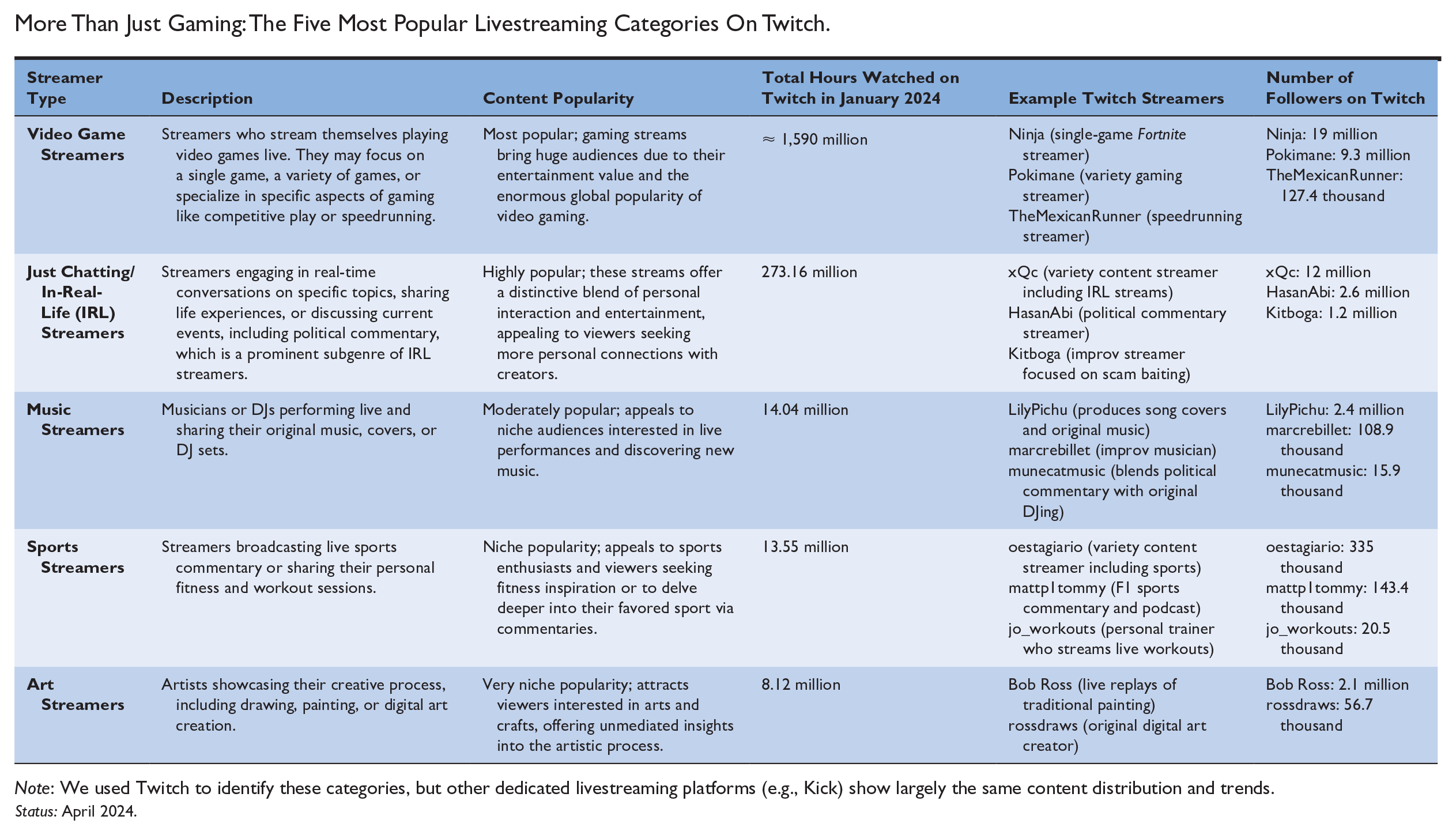
Livestreaming involves creators (known as “streamers”) broadcasting themselves live to audiences via online platforms. Livestreams can be structured around a specific activity, such as playing a video game or producing music. 18 They can also be unstructured, with streamers simply chatting with their audience and discussing their lives or relevant current events (see the appendix for more information on popular streamer types). The average streamer will broadcast for several hours daily, three to five days weekly. 19
To illustrate the growing social and cultural significance of livestreaming, consider Twitch, one of the leading livestreaming platforms worldwide. On this platform, active monthly creators grew to nearly 10 million in 2020, a threefold increase compared to 2019. 20 Today, 63% of people aged between 18 and 34 regularly watch online livestreams, 21 and the global livestreaming industry is projected to grow to more than three billion dollars by 2027. 22 Furthermore, in September 2023, one of Twitch’s most popular streamers, Félix Lengyel (known as xQc), signed a 100 million dollar deal with competing livestreaming platform Kick to produce content on the platform for two years, non-exclusively (i.e., Lengyel can still livestream on Twitch and other platforms, just as he did as before). 23 For context, this deal is larger than LeBron James’s two-year contract with the Los Angeles Lakers basketball team signed in 2022 for 97 million dollars. 24 The size of Kick’s deal with xQc shows the substantial financial value of top streamers, given their significant influence, especially within the gaming and entertainment industries.
Livestreaming appeals to creators and audiences because it enables them to actively engage with each other in real time. This allows for unconventional influencer marketing activities, where influencers communicate promotional messages live and interactively to an audience of immediately available and actively engaged prospective consumers. Real-time interactions between the influencer and their followers can broaden the scope of influencer marketing by enabling firms to create more personalized and authentic relationships with consumers “in the moment.”
By collaborating with livestream influencers for influencer marketing campaigns, firms can create a more active and authentic consumer experience. Streamers interact with consumers in real time, and since livestreams are immediate and unedited, there is greater transparency in the production process, which fosters authenticity. 25 Previous research has shown that an influencer’s persuasive power and marketing value are contingent on their followers’ perception of them as authentic. 26 Therefore, the sense of authenticity inherent in livestreaming increases influencer marketing effectiveness by strengthening the influencer’s persuasive power and marketing value. Content with high degrees of liveness also reportedly engages consumers for between 10 and 20 times longer than pre-recorded media, offering more opportunities for marketing messages to be successfully processed by consumers. 27 Consistent with these arguments, 76% of Twitch users report a positive perception of brands that actively support their favorite streamers, as this gives them financial stability and helps sustain their livestreaming career and, by extension, their virtual community. 28 This highlights how streamers can develop more intimate relationships with their followers than asynchronous influencers because their content fosters a strong sense of shared experience and community, positively impacting how followers perceive sponsored content. While content with high degrees of liveness can potentially enrich influencer marketing, this liveness also introduces an additional layer of complexity for managers.
Livestreaming: Immediacy, Indeterminacy, and Interactivity
Online livestreaming started gaining traction in the early 2010s with the launch of Twitch, a dedicated video livestreaming platform focused on gaming. Twitch introduced a new way for gaming influencers and esports players to share their gameplay with the online gaming community, allowing them to showcase their passion and skill to audiences in real time. Video game livestreaming flourished over the next decade, giving rise to several other prominent livestreaming services like YouTube Gaming and Facebook Gaming and playing a pivotal role in mainstreaming esports globally. Livestreaming has since diversified and gained popularity across various domains and online platforms. Other dedicated livestreaming platforms have emerged, including Kick in 2022, and live features have become prominent on otherwise asynchronous platforms, such as Instagram Live, TikTok LIVE, and YouTube Live. A standard livestreaming interface includes the main screen (showing the activity being undertaken, e.g., the video game the streamer is playing), the face cam (showing the streamer, e.g., via a webcam overlay), and the live chat, which facilitates real-time interactions between the streamer and audience and among the audience.
Although the rising popularity of livestreaming has generated interest in the topic, there has yet to be a convergence on how exactly to define it. Three core characteristics of livestreaming emerge as crucial irrespective of domain or platform: immediacy, indeterminacy, and interactivity. We conceptualize these characteristics as building blocks that manifest in varying degrees depending on the type of livestream content (see Table 1). Livestreaming is not the only medium in which any of these characteristics may be expressed, but it is unique in that these three characteristics can simultaneously be expressed in high degrees. Indeed, it is when they combine in high degrees that these characteristics make livestreaming such a distinctive and highly engaging digital medium. Hence, we present the following definition of livestreaming: Livestreaming is dynamic digital content that combines the immediacy of real-time broadcasting with the indeterminacy of live events and the interactivity of instant messaging technology to create distinctive shared experiences.
Comparing the Degree of Immediacy, Indeterminacy, and Interactivity of Different Types of Livestream Content.
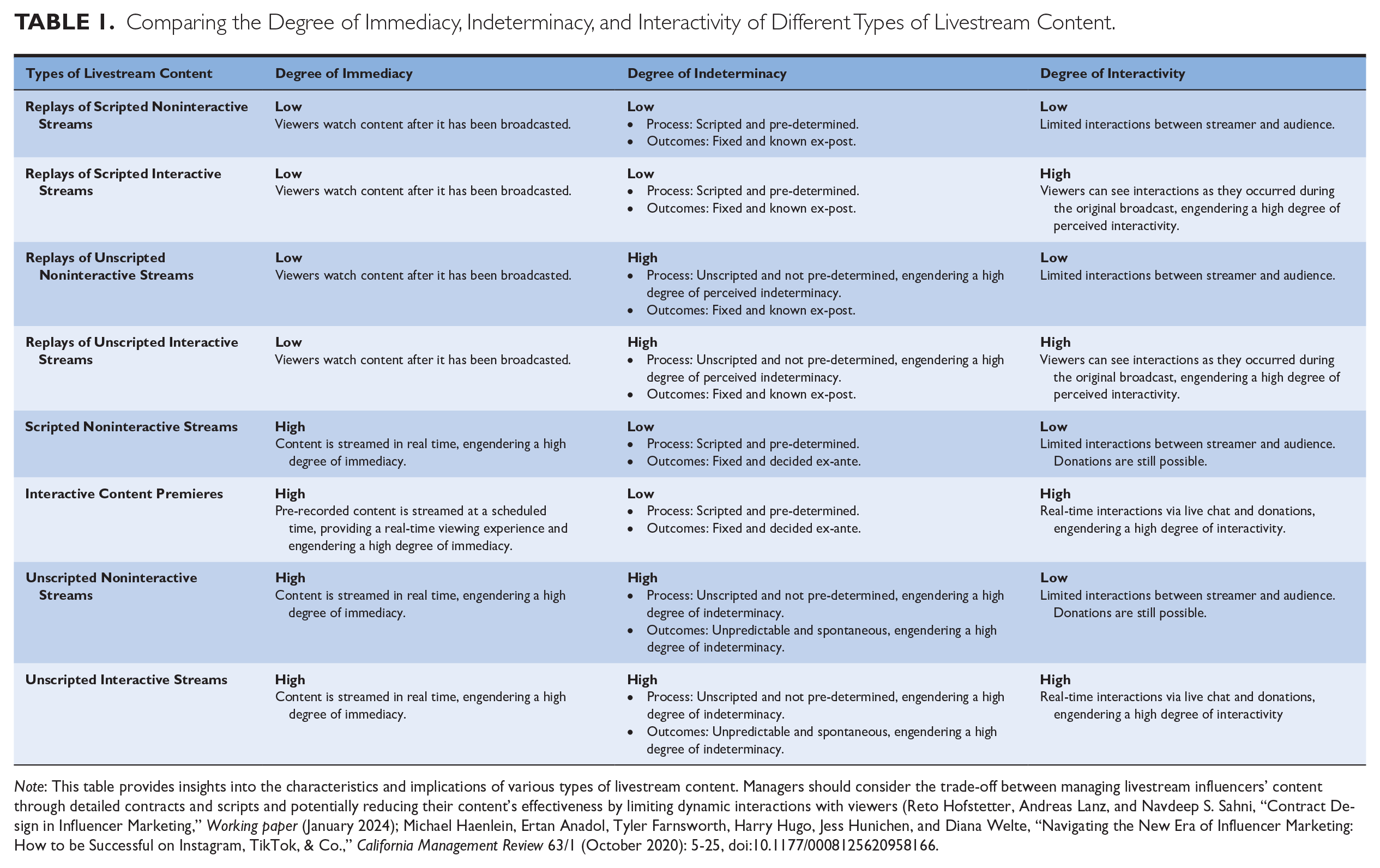
Note: This table provides insights into the characteristics and implications of various types of livestream content. Managers should consider the trade-off between managing livestream influencers’ content through detailed contracts and scripts and potentially reducing their content’s effectiveness by limiting dynamic interactions with viewers (Reto Hofstetter, Andreas Lanz, and Navdeep S. Sahni, “Contract Design in Influencer Marketing,” Working paper (January 2024); Michael Haenlein, Ertan Anadol, Tyler Farnsworth, Harry Hugo, Jess Hunichen, and Diana Welte, “Navigating the New Era of Influencer Marketing: How to be Successful on Instagram, TikTok, & Co.,” California Management Review 63/1 (October 2020): 5-25, doi:10.1177/0008125620958166.
Immediacy
Livestreaming involves simultaneous production and consumption, engendering a degree of immediacy. There should be no perceptible delay between the moment a streamer acts in the real world and the moment viewers see this on their screens. This immediacy of production and consumption has two main implications. First, it creates a fear of missing out (FOMO) among viewers, as viewers who do not tune in during a livestream cannot participate and will miss out on the shared experience. FOMO is an important mechanism for consumer engagement because it engenders a sense of urgency. 29 Unlike more formalized live broadcasts on television and radio, viewers may not even have the chance to catch up on missed livestreams because streamers do not always make them available for on-demand viewing. This further amplifies FOMO. Hence, when a streamer goes live, consumers are likely to prioritize watching the stream over other pre-recorded content because of its ephemerality, giving it the potential to generate strong marketing impressions immediately.
Second, the immediacy with which livestreams are created and consumed engenders a more authentic and transparent consumer viewing experience than pre-recorded content. This is because, in contrast to pre-recorded media, there is no intermediary stage between production and consumption in livestreams during which raw footage can be edited. Since influencers who produce sponsored content asynchronously can modify the material in this content before sharing it online, consumers can feel uncertain about its trustworthiness and the authenticity of any claims being made. As an example, one of the most prominent influencer controversies in 2023 was sparked when TikTok beauty influencer Mikayla Nogueira (
Indeterminacy
The real-time nature of livestreaming engenders a degree of indeterminacy and spontaneity, similar to other online and offline live events, such as theater performances and sporting events. When consumers perceive indeterminacy, content is more exciting and captivating than equivalent determinate experiences (such as watching recorded broadcasts). 32 Livestreaming is a dynamic process involving many variables. These include technological factors (e.g., internet stability and software and hardware reliability), platform-specific features (e.g., Raids and Cheers on Twitch 33 and Super Chats and Super Stickers on YouTube, 34 which are gamified livestream elements that excite the regular flow of the broadcast), and real-time interactions between the streamer and other actors (e.g., viewers, whose interactions with a streamer can influence the direction of their broadcast). Hence, even when streamers outline a clear agenda for their stream, they often cannot foresee every possible turn and do not have full control over the process. This makes livestreaming a generally indeterminate experience (see Table 1). The result is that streamers and viewers alike often perceive uncertainty and unpredictability during livestreams, which heightens the excitement of livestreaming as each new broadcast constitutes a distinctive shared event.
Interactivity
Livestreaming facilitates direct, real-time interactions between streamers and viewers and among viewers, making it an interactive medium. These interactions occur primarily through the live chat feature embedded in most livestreams, which enables viewers to send messages to the streamer and other viewers in real time. Viewers wanting to amplify their messages can donate to streamers and have their messages read aloud using text-to-speech technology. Furthermore, streamers can foster viewer interactions by creating polls and asking viewers to vote on various aspects of the broadcast, such as the activity they should do next. These real-time exchanges can make viewers feel closely connected to the streamer and create a strong sense of presence and immersion. 35 They also amplify streamers’ perceived authenticity by making them seem more real and relatable. 36 Additionally, they make the medium more dynamic, as spontaneous interactions with viewers can shift the direction of a broadcast, for example, if viewers spark a conversation about an unrelated topic or collectively encourage the streamer to participate in another activity (e.g., to play another video game).
Previous research has found that viewer motivations to engage with livestreams have a much stronger social and community basis than mass media, which stems from the centrality of social interactions in the livestreaming context. 37 Furthermore, the interactivity of livestreaming has given rise to entirely new forms of online entertainment, such as the online gaming format known as “Twitch Plays” on Twitch. 38 This involves popular games like Pokémon being modified to be completely controllable by livestream viewers, whose chat messages serve as game controls (e.g., typing “left” in the chat will move the in-game character to the left) to create distinctive shared gaming experiences.
A Model of Livestream Influencer Marketing Effectiveness
Given livestreaming’s nascency relative to other forms of digital media, many managers are still uncertain about leveraging livestream influencers to effectively achieve marketing goals. In the following, we present a conceptual framework (see Figure 1) that explores how livestream influencer marketing activities 39 foster effective influencer marketing outcomes. The framework highlights that the degrees of immediacy, indeterminacy, and interactivity of livestream influencer content play a mediating role. Furthermore, the framework identifies three sets of moderating variables: the characteristics of the sender (i.e., the streamer), the receiver (i.e., the consumer), and the community, each impacting the efficacy of influencer activities. By clarifying these core dynamics, our framework seeks to equip managers with strategic insights to facilitate the successful planning and implementation of livestream influencer partnerships.
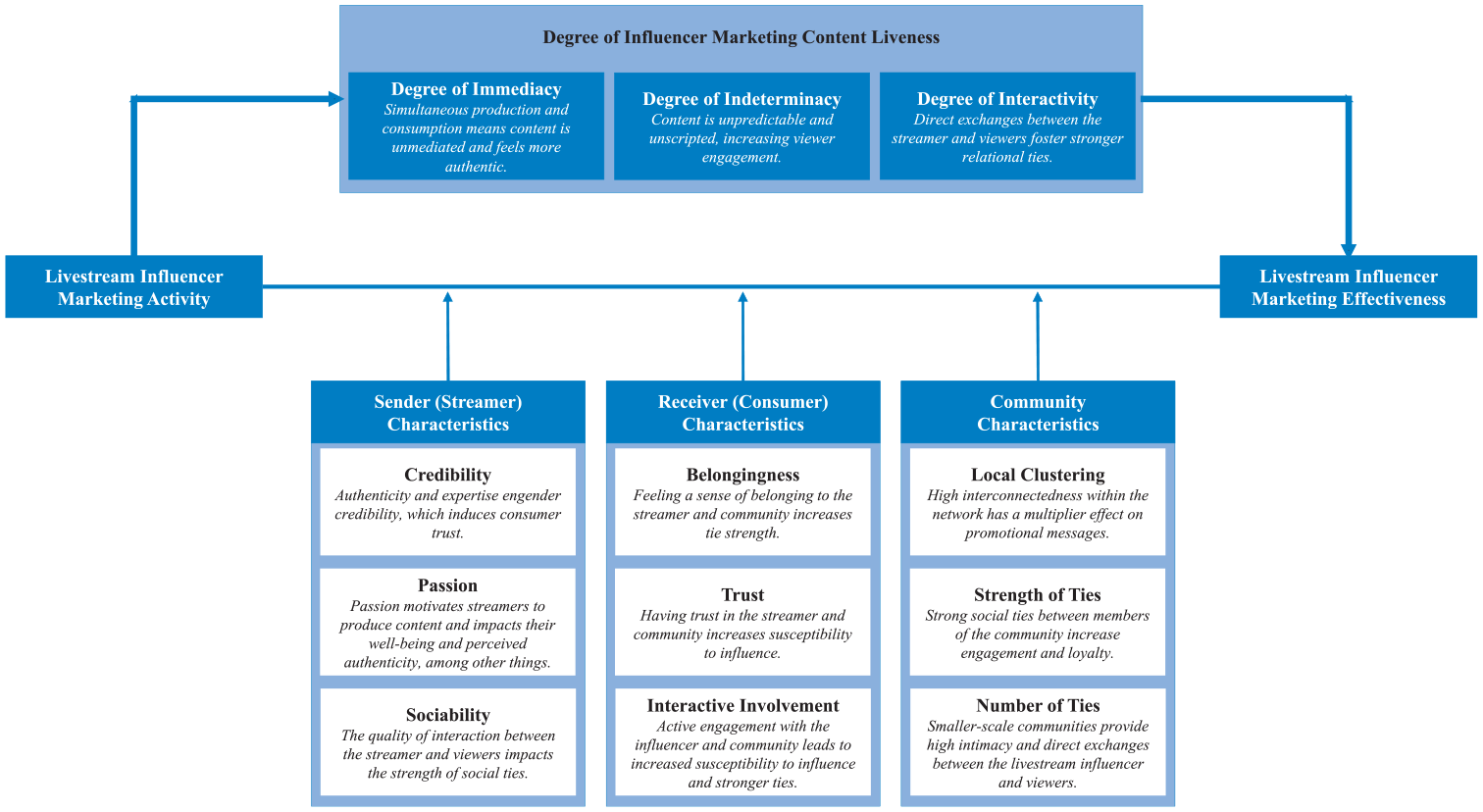
A conceptual model of livestream influencer marketing effectiveness.
Sender (Streamer) Characteristics
Credibility
A streamer’s authenticity and expertise contribute to their perceived credibility, which is crucial for inducing their followers to trust them. 40 Credibility is one of the most critical qualities of influencers, 41 with several prior influencer-based studies emphasizing the significance of credibility for influencing consumer behavior and purchase decisions. 42 Streamers usually focus their content on a specific activity, such as playing video games, producing music, or discussing politics. These focal activities enable streamers to carve out a niche and to create an online identity. Streamers differentiate themselves through their personality, knowledge, and expertise, all of which combine to make them credible within their niche. When followers perceive a streamer as credible, their recommendations, insights, and actions are received with greater weight and influence, making their content more engaging, persuasive, and impactful. For brands partnering with these streamers, the streamer’s credibility translates to heightened consumer trust in endorsed products and messages. Moreover, a credible streamer is more likely to cultivate an authentic virtual space, wherein viewers feel represented and valued instead of being subjected to deceptive or superficial content. Credibility thus amplifies a streamer’s influence and strengthens the bond between them and their audience, ensuring longevity and mutual respect are fostered within their online community.
Passion
A genuine passion is vital for streamers as it significantly influences their content creation and personal well-being. When streamers are genuinely passionate about their content, it motivates them to create more and facilitates the development of authentic connections with their audience. Passionate streamers radiate genuine enthusiasm for their content, which manifests in observable and impactful ways, including through expressive content delivery (e.g., high levels of energy and an engaging tone of voice), active audience interactions (e.g., providing thoughtful responses to viewer comments and questions), and the maintenance of a regular livestreaming schedule. These displays of passion and enthusiasm directly engender perceived authenticity, allowing them to sustain viewer engagement more effectively. 43 Note that marketing research also recognizes the importance of authenticity for improving (sponsored) message receptivity, 44 enhancing perceived quality, 45 and increasing purchase intentions. 46 A genuine passion can also ensure that a streamer’s output is sustained and of consistently high quality since passion plays a protective role against burnout, 47 which is a significant concern for streamers due to the multitude of pressures associated with online livestreaming (e.g., harassment from anonymous online users and precarious working conditions such as lone working and long working hours). Hence, passionate streamers can foster organic, collaborative, and sustainable virtual communities, delivering an enhanced livestreaming experience for themselves and their followers.
Sociability
A streamer’s willingness to interact with other users online is key to developing and sustaining a rich virtual community. Livestreaming thrives in large part because of the communities formed by streamers. These communities fuel the interactive nature of livestreaming, create compelling shared experiences, foster deep connections between streamers and their audience, and impact the direction of livestreams by influencing the themes and topics discussed. Furthermore, a streamer’s community provides emotional, social, and even financial support, which they seek to reciprocate with high-quality content, acknowledgments, and interactions. Streamers who successfully cultivate an interactive virtual space wherein viewers feel acknowledged and appreciated can foster meaningful connections with their audience. This is key since the sense of community and interactivity derived from livestream engagement positively influences viewers’ motivation to watch livestreams 48 and creates high member loyalty to the (streamer’s) virtual community. 49 Thus, a sociable streamer who can navigate social interactions with their audience to deliver positive social experiences becomes attractive for firms as their endorsements are nestled within an engaged communal environment that amplifies the potential impact of their marketing efforts.
Receiver (Consumer) Characteristics
Belongingness
Real-time interactions and forming cohesive virtual communities are core aspects of livestreaming. 50 For many viewers, livestreams serve as virtual communal spaces where they can share experiences with like-minded others, engage in dialogues concerning topics they are passionate about, and feel part of a collective. A strong sense of belonging is important for successful livestream influencer marketing. Viewers who feel a high sense of belongingness to a streamer’s virtual community exhibit enhanced loyalty, 51 an increased drive to participate in community communications (e.g., via live chat), 52 and are predisposed to trust the community and the streamer. This, in turn, can amplify the effectiveness of the streamer’s promotional messages and increase the likelihood that consumers engage in electronic word-of-mouth marketing both within and beyond the community. Firms can assess the extent to which followers feel they belong to a particular streamer and their community by observing community-specific language within the live chat (e.g., customized emotes, distinct acronyms, in-jokes) and analyzing its sentiment. Generally, using intragroup terms and phrases indicates cohesion and loyalty among a streamer’s fanbase and can be seen as evidence that the streamer has substantial influence over their followers.
Trust
Livestreaming allows for real-time interactions between a streamer and their audience and provides unfiltered insights into the real-world experiences of the individual streamer. This sense of transparency and realness inherent in livestreaming gives streamers a distinct advantage when cultivating a trusting relationship with viewers, as trustworthiness can be more easily developed when tangible personal connections exist. 53 Consumer trust in a streamer develops gradually over time as the streamer consistently engages and interacts with their audience authentically and credibly, which reassures viewers of the streamer’s integrity. When consumers have confidence in a streamer’s integrity, they will be more inclined to consistently engage with and support their content, leading to stronger consumer-streamer relationships and a more cohesive streamer community.
From a livestream influencer marketing perspective, streamers who establish high trust among their viewers will be better positioned to influence them with their (sponsored) recommendations. Prior research suggests that an influencer’s trustworthiness is the dominant driver of their persuasiveness, as it involves confidence in their credibility and authenticity. 54 Viewers who trust a streamer are also more likely to engage in supportive behaviors such as sharing content, participating in (branded) events, or making direct (affiliate) purchases based on the streamer’s endorsement. These active and engaged viewers may make influencer marketing collaborations more effective, given their high levels of engagement and high likelihood of conversion. 55 By examining monthly subscriber numbers, managers can assess whether a streamer’s audience perceives them as trustworthy. While following is free and easy for any user, subscriptions require a monthly donation and thus indicate a streamer’s brand strength—their influence and the trust they have built within their community.
Interactive Involvement Livestreaming facilitates higher viewer involvement than asynchronous content, as the real-time, interactive nature of livestreams allows viewers to actively consume and contribute to it. Viewer involvement can range from engaging in live chat discussions with other viewers as the livestream unfolds to making real-time suggestions and decisions that can directly impact the direction of a streamer’s activities. High viewer involvement can amplify the effectiveness of promotional efforts. When viewers are deeply involved with a streamer’s content, they are more attentive and receptive to what the streamer is saying and doing. This heightened attention means promotional content is seen and actively processed, enhancing brand recall and recognition. Furthermore, involved viewers often have a more significant emotional investment in the streamer and their content. A trusted streamer’s endorsement can evoke robust consumer responses as the marketing messages they communicate are more persuasive. Thus, streamers who facilitate high viewer involvement strengthen their bond with the audience and amplify the resonance and recall of their endorsements and promotions.
Community Characteristics
Local Clustering
Livestream influencers often build communities with high interconnectedness among members, primarily due to their content’s high interactivity. Through regular, computer-mediated interactions between individuals within the streamer’s community, closely knit groups (clusters) of like-minded viewers emerge. These clusters are characterized by high levels of familiarity and intimacy, manifesting through frequent interactions and rapid information diffusion. 56 For brands, leveraging influencer networks with high local clustering can be highly advantageous as it often leads to a ripple effect, wherein influencer-endorsed promotional messages cascade within clusters, from one individual to the next, with heightened virality. 57 In other words, in virtual communities with high local clustering, there tends to be faster and more widespread dissemination of information among followers because they trust and interact with each other frequently.
Moreover, these tightly knit groups typically develop a stronger collective identity and a higher degree of trust in the influencer’s credibility, which is vital as it transforms casual followers into committed community members who are more likely to engage with the influencer’s content, participate in discussions, and act on recommendations. An effective illustration of this is how livestreaming communities often develop a shared lexicon of unique acronyms and emotes, which viewers—and often the streamers themselves—will adopt as a form of intimate, intragroup communication. Certain expressions can even signify intragroup status, with some emotes being locked behind a subscription paywall and usable only by financially committed fans.
Strength of Ties
Tie strength signifies the closeness of relationships between individuals within a network and is influenced by relationship dynamics like directionality and reciprocity. 58 The highly immediate and interactive nature of livestreaming creates distinct opportunities for livestream influencers to foster strong ties with their audience as well as for their audience to build strong ties among themselves. Specifically, the bi-directionality of the sender-recipient dynamic in livestreaming positively impacts the persistence and strength of streamer-consumer ties. 59 Streamers create content and engage directly with their audience by responding to live chat messages and acknowledging donations in real time. This two-way interaction fosters greater interconnectedness between the streamer and their viewers and a sense of belonging among viewers, distinguishing it from the more unilateral communication typical of traditional media. Reciprocity, that is, interactions between the streamer and the viewers and among the viewers, further enhances these relationships. For instance, viewers may respond to one another and exchange advice, share personal insights, and offer support during live sessions. This reciprocal engagement creates a robust network of interconnected relationships and strengthens overall community cohesion.
The impact of these interactive and reciprocal dynamics is magnified by the time viewers spend engaged in these communities. Many viewers, especially paying subscribers, dedicate several hours daily to watching streams and participating in related community activities. During this time, viewers often participate in community discussions and contribute to community activities, intentionally “meeting up” with each other in the virtual environment of the stream. This ritualized engagement amplifies the development of strong social relationships between streamers and their followers and leads to shared narratives between them. Hence, when brands partner with streamers who have cultivated close-knit communities, they gain access to a pool of prospective consumers through a cohesive group of individuals with shared values, interests, and trust—essentially a large virtual friend group with the streamer at the center. This can enhance the resonance and efficacy of their promotional activities since consumers are more inclined to trust the opinions of their peers over those articulated directly by brands. 60
Number of Ties
The livestreaming landscape parallels the traditional influencer space in that it combines a variety of platforms featuring influencers of various sizes and content specialties. Typically, influencers with larger followings generate more impressions and demand higher premiums to produce sponsored content owing to their extensive reach. 61 However, contrary to traditional approaches that prioritize high-followership influencers due to their broad reach, recent marketing research indicates that low-followership influencers generally yield a better return on investment compared to their high-followership counterparts; this is primarily because influencers with smaller followings have higher engagement rates, which mediates the relationship between follower size and marketing effectiveness. 62
Given the relative newness of livestreaming, it offers brands a potentially high reward for early adoption. Even the most popular streamers on dedicated livestreaming platforms like Kick and Twitch have significantly smaller followings than influencers on other, more established platforms like Instagram and YouTube. 63 This can make livestream influencers a more cost-effective choice for brands, as the smaller scale of livestream communities may lead to enhanced viewer engagement and community-interconnectedness, thereby increasing marketing effectiveness. 64 It is worth noting that streamers with smaller followings can provide more reciprocal interactions and cultivate a stronger sense of community with their viewers than their high-followership counterparts and traditional asynchronous influencers. 65 It is not uncommon for streamers to recognize regular viewers’ usernames and directly address them during streams, further heightening the reciprocity between the streamer and their viewers. Therefore, as with asynchronous influencers, brands may experience more effective marketing outcomes when partnering with low-followership livestream influencers, abundant on dedicated platforms like Kick and Twitch.
Additionally, brands are encouraged to consider subscriber size over follower size when screening potential livestream influencers. Examining a streamer’s number of subscribers at any given moment can help firms gauge their present popularity more accurately. Unlike following, subscribing requires a direct financial investment from viewers and thus strongly indicates ongoing engagement and commitment.
Livestream Influencer Marketing Effectiveness
The above characteristics are important in moderating the relationship between livestream influencer activities and livestream influencer marketing effectiveness. When leveraged successfully, livestreaming yields high conversion rates, with brands experiencing conversion rates of around 50% from sponsored streams with “micro-streamers” (streamers with up to 2,000 average concurrent viewers) on Twitch. 66 Furthermore, livestream influencers can positively impact brand attitudes by imparting their positive image and reputation on the brand through engaging in open, persuasive dialogues with their audience about the products and services they are endorsing. Livestreaming also offers opportunities for consumers to actively participate in—even co-create—sponsored content. 67 This heightens consumers’ engagement and amplifies resonance and recallability. Therefore, livestream influencer endorsements tend to be communicated to highly engaged consumers, enhancing brand awareness and engagement. Livestream influencers can further boost brand engagement by demonstrating real-time product usage and responding to viewer questions.
Advice for Firms Engaging in Livestream Influencer Marketing
Our recommendations are organized around the core characteristics of livestreaming—immediacy, indeterminacy, and interactivity—and tailored according to their relevance for managers when focusing on the streamer, consumer, or the (streamer’s) community.
Managing the Immediacy of Livestream Influencing
Livestreaming is immediate due to the synchronicity of its content production and consumption. This immediacy presents livestream influencers as authentic and reliable, as their content is driven by their “real,” in-the-moment actions, thoughts, and feelings. This helps create a robust connection between the influencer and their audience by fostering a sense of intimacy and shared experience. It also enhances the relevance of content, as it is reactive and in the moment, improving audience engagement. However, the instantaneous nature of livestreaming means there is little room for error. Mistakes or missteps by influencers are immediately visible to the audience, potentially impacting the brand’s image. We offer three pieces of advice to help managers successfully navigate the immediacy of livestreaming.
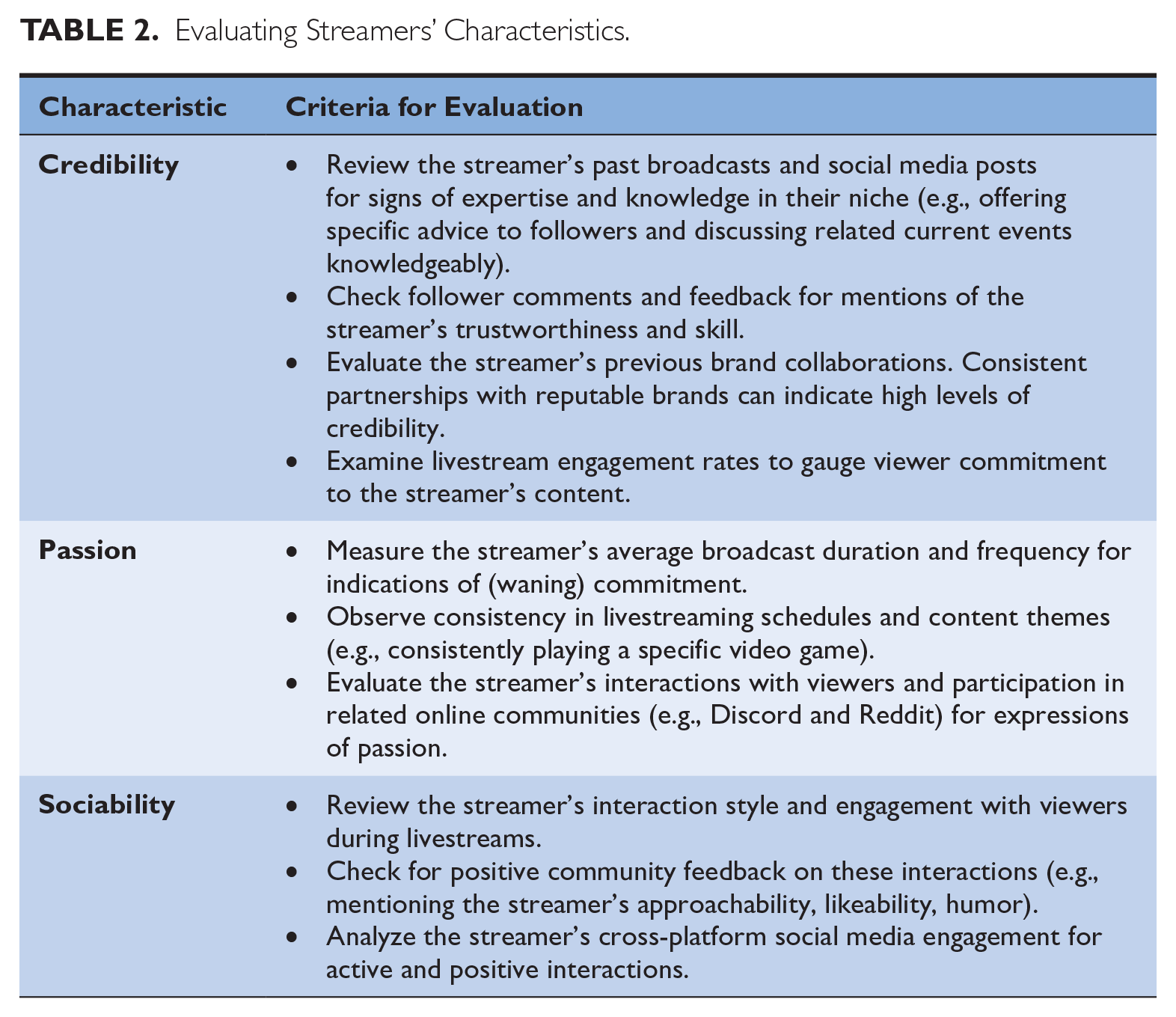
Select streamers with credibility, passion, and sociability to maximize real-time audience engagement Selecting the right influencer(s) to partner with is key to the success of any influencer marketing campaign. Many streamers are available across multiple platforms, and filtering through them can be daunting for managers. The key characteristics outlined in Figure 1 are essential for streamers to develop compelling online personalities, as they equip them with the knowledge, motivation, and social competence required to be consistently entertaining and exciting for the several concurrent hours they stream per session. The immediate nature of livestreaming amplifies the significance of these characteristics, as streamers do not have the same resources available as asynchronous creators to refine their online personas through clever editing and scriptwriting. Managers can identify these key characteristics by evaluating the metrics and features in Table 2.
Evaluating Streamers’ Characteristics.
Thread promotional messaging seamlessly into livestreams to enhance real-time audience engagement
When partnering with livestream influencers, the immediate nature of their content means managers must ensure promotional messages are seamlessly integrated within the live broadcast to not distract viewers from the live experience. This is important for at least two reasons. First, overzealous and disjointed influencer promotions threaten to undermine the influencer’s perceived authenticity, 68 making them seem commercially motivated and inauthentic, negatively affecting viewers’ sentiments toward them. Second, while viewers can pause or revisit content on asynchronous platforms, livestreaming thrives on real-time interactions and sustained in-the-moment viewer engagement, so promotions should complement rather than disrupt this experience.
Sustained viewer commitment and involvement are critical for maximizing the effectiveness of livestream influencer marketing. Thus, to ensure promotions do not reduce the quality of the live experience, managers should follow native advertising principles wherever possible. This can be achieved in the following three ways. First, brands can supply streamers with custom stream overlays to subtly display their branding on-screen throughout sponsored broadcasts. These overlays remind the audience of the ongoing partnership between the brand and streamer in a non-intrusive manner. Second, each livestream is accompanied by a description section that brands can leverage to blend traditional banner ads with interactive elements such as affiliate links and call-to-action buttons to facilitate immediate viewer action. Finally, product placements should be carefully woven into the streamer’s natural actions and dialogue to preserve the spontaneity and flow of the stream. These approaches seek to maintain the stream’s fluidity and respect viewers’ desire for an authentic, uninterrupted experience, maximizing engagement.
Additionally, the strategic use of recorded livestreaming content can be vital in continually (re-)engaging viewers. By periodically revisiting and promoting high-impact segments from previous livestreams, brands can create multiple impressions that help sustain viewer interest and engagement and funnel viewers back to the streamer’s content. This hybrid content format combines synchronous and asynchronous media to cement relationships over time and algorithmically draw in new viewers to the streamer and re-engage previously interested viewers who may have “dropped off.” This continuous engagement cycle helps build a sustained audience base receptive to the streamer’s (sponsored) content.
Refine real-time product promotion using livestream analytics and social listening tools
Livestream influencers can promote products and services in real time, increasing their endorsements’ perceived authenticity and persuasiveness. For example, streamers can explicitly discuss the sponsored items, demonstrate their key features, and respond to viewers’ questions via the live chat. Additionally, they can indirectly promote products by incorporating them into their regular livestreaming activities, for example, using a sponsored gaming headset while playing video games on stream. These approaches can help to legitimize the brand’s presence within the community. When conducting a product launch or demonstration with a livestream influencer, the key is to ensure an interactive and seamlessly integrated experience that leverages the immediacy of livestreaming to induce excitement and exclusivity among viewers. Brands should encourage the streamer to actively engage and interact with the audience by responding to questions and feedback to foster interaction and engagement and running interactive live polls to gather instant consumer insights. Brands should also promote the event across social media to maximize live viewership. After the event, sharing highlights from the stream as shareable clips on social media can help amplify reach and capitalize on the initial buzz. By embracing the immediacy of livestreaming, brands can create immersive experiences that authentically showcase their products and strengthen consumer relationships and brand loyalty.
Given the in-the-moment nature of these livestream promotions, managers should leverage the real-time analytics available on livestreaming platforms to better understand the relationship between the streamer and their audience and identify how to successfully translate this to the brand. Managers, therefore, need to identify relevant key performance indicators that will enable them to evaluate audience engagement and sentiment. Traditional indicators include peak viewership, average watch duration, follower growth, and the number of likes and shares received. These can all be tracked during and after livestreams using integrated analytics features like Twitch Analytics and YouTube Analytics.
Beyond these traditional measures, livestreaming analytics can also track viewer behaviors that indicate a deeper level of investment in the content. Direct financial contributions like subscriptions and donations, for example, are powerful indicators of viewer loyalty and engagement, as they represent a tangible, monetary investment in the streamer’s continued success. Analyzing these dynamic forms of viewer interaction provides a clearer picture of the audience’s dedication and enthusiasm, which helps in understanding the impact of livestream promotions on brand perception and engagement.
Furthermore, social listening tools like YouScan and Meltwater can be used to gain a comprehensive overview of audience engagement and sentiment based on their interactions with livestreams, such as through live chat messages and donations. 69 Managers should also identify specific metrics for measuring conversions from livestream influencer promotions, such as using traceable affiliate URLs and unique promo codes. All these data can enable brands to make immediate content adjustments—while the streamer is livestreaming, managers can advise them to reiterate or elaborate promotional messages, for example—and inform future strategy development, ensuring alignment with audience preferences and maximizing campaign impact.
Managing the Indeterminacy of Livestream Influencing
The real-time nature of livestreaming introduces a degree of indeterminacy and unpredictability to the medium, adding to its excitement and perceived authenticity. Content indeterminacy can lead to unique, spontaneous moments that resonate with viewers, making the content more memorable and engaging. It also enables influencers to adapt and evolve their content on the fly, making the experience seem more authentic as it reflects the influencer’s in-the-moment thoughts and feelings, reducing perceptions of rigidity or scriptedness. However, indeterminacy can be a double-edged sword, as unpredictable events can cause influencers to stray off-message or bring about unforeseen issues (e.g., technical issues, online harassment), posing a risk to the brand’s image and overall consistency. To best manage the indeterminacy of live content, we propose the following three strategies.
Establish long-term, symbiotic partnerships with livestream influencers to increase marketing effectiveness and support streamers
Fostering long-term, symbiotic relationships with livestream influencers is crucial, given the distinct and unpredictable conditions in which they operate. Unlike most asynchronous influencers who rely almost exclusively on ad revenue and sponsorships, livestream influencers typically generate a substantial amount of their income through viewer donations and subscriptions, which, while contributing to the unpredictability of livestreaming, also fosters a direct financial relationship with their audience. This monetization model amplifies the importance of authenticity and viewer loyalty in achieving livestreaming success. Short-term, transactional partnerships can risk undermining a streamer’s perceived authenticity, potentially depicting them as “selling out” and thus alienating their paying followers.
Therefore, to effectively engage within the livestreaming landscape, firms should aim to build enduring relationships with streamers. These prolonged partnerships—termed “influencer relations” 70 —should focus on generating mutual benefits over time rather than immediate sales or conversions and integrating the brand within the streamer’s community. Long-term partnerships can include providing streamers early access to products and features, collaborating on content creation, or involving them in brand events. Such approaches seamlessly integrate the brand and streamer to highlight influencer-brand fit, mitigating potential risks to the streamer’s authentic connection with their audience and fostering a more sustainable content production environment, whereby the streamer can rely less on precarious funding from viewers. This long-term strategic approach benefits all parties: brands gain genuine and engaged promotion, streamers receive stable support, and viewers enjoy authentic content without excessive advertising disruption or pressure to contribute financially.
Adopt agile strategies to navigate the unpredictability of live content and capitalize on audience engagement
Flexibility is imperative when executing livestream influencer marketing campaigns to accommodate the indeterminacy inherent in live content. The spontaneous nature of livestreams, which tends to enhance viewer engagement and perceived authenticity, also poses unique challenges deriving from how unexpected comments or shifts in discourse can occur without warning. To effectively manage this unpredictability, managers must use techniques in line with the principle of agile marketing—the ability to respond to environmental changes. 71 This includes thorough briefings to influencers on handling off-script scenarios and realigning discussions toward brand-aligned narratives. Streamers usually have a good idea about their audience’s sentiments and behavior, so given sufficient freedom, they should be capable of preempting and avoiding potential issues. Real-time monitoring of livestreams is also important, enabling managers to offer instantaneous feedback to streamers and suggest content modifications based on audience interactions. Equally, conducting thorough post-stream analysis to understand what worked and did not work during the livestream can offer valuable insights for future streams and help refine strategies. These approaches can help ensure that marketing messages remain effective throughout the unpredictable flow of live content and enable brands to capitalize on unexpected events during livestreams to deepen audience engagement.
Mandate clear guidelines and oversee livestream influencers to maintain brand alignment and manage risks
Acknowledging the potential risks associated with partnering with livestream influencers is important. Given the time they spend broadcasting themselves live over the Internet, streamers showcase a broad range of activities and emotions, which may lead to inconsistencies in their messaging. While this quality is part of what makes streamers so authentic to followers, managers must exercise caution to avoid potential conflicts if the streamer they partner with behaves in a way that does not align with their brand’s values. To minimize these risks, clear guidelines and expectations should be set at the outset of the partnership, including agreements on acceptable behavior, particularly concerning sensitive issues such as racism, substance use, derogatory comments, and toxicity. These agreements should be comprehensive, covering all content even when not overtly sponsored, as well as their cross-platform conduct, including within community spaces like Discord and Reddit. Regularly monitoring and communicating with streamers is advised to ensure continued alignment with brand values. This will also enable brands to respond swiftly should issues arise. However, there is a trade-off between managing brand risks through content constraints and potentially reducing the influencer’s effectiveness. More restrictive conditions can suppress creativity, leading to less favorable audience responses and negatively impacting marketing outcomes. 72
Managing the Interactivity of Livestream Influencing
Livestreaming facilitates direct exchanges between streamers and their viewers and among viewers. These interactions are integral to the appeal of livestreaming and enable streamers to foster relationships with their followers that transcend the possibilities of asynchronous influencer-consumer connections. Brands can leverage the interactivity of livestreaming to boost engagement with promotional activities and gather immediate consumer insights. The immediate feedback received can be invaluable for brands to quickly gauge the impact of their marketing messages and adjust strategies accordingly. Nevertheless, these organic interactions also amplify the unpredictability of livestreaming as audience interactions can sidetrack the stream from its intended focus, thereby necessitating resource-intensive moderation of the live chat to manage the flow of (especially negative) received messages. Thus, brands need to strategize to strike a balance between encouraging spontaneous interactions and ensuring the successful delivery of their marketing messages. The following three pieces of advice can help in this regard.
Invest in streamers by providing value-adding gifts, early product access, and exclusive event invites to position your brand as a community ally
The interactive nature of livestreaming places the community front and center. Successful streamers cultivate dedicated communities of followers who regularly interact and engage with them and play a vital role in developing fresh and exciting experiences during each new stream. Streamers also rely on their communities financially through donations and subscriptions. For this reason, firms should prioritize becoming recognized as community allies when partnering with livestream influencers. This requires going beyond sponsorship by engaging authentically with the community and adding value where possible. Actions such as gifting streamers useful products that add value to their broadcasts, providing them with early access to product launches to involve them in new developments, and inviting them to exclusive live events (e.g., conferences, business fairs) all make the streamer (and, by extension, members of their community) feel intimately integrated with the partnered brand. 73 These actions also facilitate brand-related interactive engagement with the streamer’s audience in a natural way. Adopting community-centric approaches is crucial to fostering a connection with the community and aligning the firm’s values with those of the audience, ultimately enhancing viewers’ willingness to respond to promotional messaging.
Nurture consumer-brand relations actively in live chat during sponsored livestreams, including direct, personalized interactions Linking with the previous point, engaging in direct dialogue with consumers during sponsored livestreams can improve consumer-brand relations. The aim is for the brand to play an active role during sponsored livestreams to reinforce its symbiotic relationship with the streamer. Active participation involves being present in the live chat by responding to viewers’ comments and questions in real time and by addressing viewers directly via their (user)names. Direct, personalized interactions with viewers amplify the brand’s presence within the community and enrich the connection between the brand, the streamer, and the audience, lending credibility and relevance to promotional activities. Brands can also use these direct exchanges to offer exclusive deals (either to the audience as a whole or to specific users) to further incentivize viewer participation and engagement. They can run interactive polls to gather instant consumer insights that can be used to inform future brand initiatives. It is also worth noting the prevalence of community-specific terms within streamer communities, so clarifying these with the streamer before engaging in the chat is key: use these terms wherever relevant. By leveraging the interactivity of livestreaming in this direct and personalized manner, brands can build strong relationships with their audience, enhancing consumer-brand relations, which can lead to increased loyalty and brand advocacy. Note that these recommendations depend on the nature of the stream and community and can be actioned to differing levels to best fit the specific livestream context.
Guide livestream collaborations proactively with crisis management, real-time monitoring, and experienced moderators
Finally, managers should prioritize proactive crisis management when collaborating with livestream influencers, as the unpredictable and interactive nature of livestreams can derail sponsored streams if they are not planned and executed adequately. As mentioned above, establishing clear guidelines and protocols with influencers is important. The same applies to advising them on handling potential disruptions from online trolls and clarifying certain off-limits topics. Beyond this, however, brands need a dedicated team to monitor sponsored livestreams in real time. This team can quickly identify and address any harmful comments received via the live chat and proactively steer community discussions by directly contributing to them. 74 Livestreaming platforms are equipped with moderation tools, and streamers will usually have a team of (often voluntary) chat moderators they already work with, so it may be effective for brands to also incentivize and brief these moderators, given their preexisting familiarity with the streamer and their community. By being proactive and prepared, firms can mitigate risks and maintain the integrity and effectiveness of their livestream influencer marketing campaigns.
Ethical Considerations in Livestreaming
As livestreaming evolves into a prominent digital medium, it introduces not only a potentially lucrative avenue for brands to reach Gen Zers through sponsored influencer content, but also distinct ethical challenges that impact streamers, viewers, and platforms alike. Managers and researchers must be mindful of these issues going forward to ensure the responsible growth and utilization of this innovative content format. 75 Below, we explore several key ethical challenges in livestreaming, highlighting the necessity for proactive management of these issues.
Addiction and Parasocial Relationships
Livestreaming’s real-time interactions can cause viewers to develop deep personal connections to streamers, potentially leading to problematic parasocial relationships, whereby viewers develop strong, unreciprocated emotional bonds toward streamers that become all-consuming. These parasocial relationships can escalate into problematic and addictive behaviors, such as viewers spending unhealthy amounts of time engaging with their favorite streamer’s broadcasts, often at the expense of their real-life relationships and responsibilities. The sheer number of hours that many streamers broadcast for can exacerbate these behaviors; unlike asynchronous influencers, whose content is drip-fed to their followers, streamers broadcast for several hours daily, multiple times each week. This can amplify the intensity of these behaviors. 76
Online Harassment
The live and interactive nature of livestreaming means it is not uncommon for streamers to experience harassment from disgruntled viewers and online trolls, for example, via the live chat. Ensuring that livestreaming platforms enforce rules against harassment, abuse, and inappropriate content is vital for safeguarding streamers and viewers. Effective moderation and clear codes of conduct during streamers’ broadcasts are essential to maintaining a respectful and safe virtual environment. 77 Community rules are often clearly laid out by streamers in the description section of their streams.
Lack of Professional Protection Unlike in traditional employment sectors, livestreaming generally lacks formal protections for content creators and influencers, leaving them vulnerable to exploitation and unstable income. Establishing regulations to offer professional protection can help secure a safer working environment for streamers.
Streamer Well-Being
Streamers are under pressure to livestream as often as possible. However, livestreaming continuously without adequate breaks can lead to significant physical and mental health issues. 78 Therefore, it is vital that brands and consumers recognize the importance of and advocate for reasonable livestreaming schedules to prevent burnout and promote long-term well-being among streamers. It is worth noting that several prominent streamers have come forward to discuss and raise awareness of the well-being issues they have experienced due to livestreaming, including anxiety and chronic stress. 79 There have also been instances where livestreaming pressures have contributed to popular streamers being hospitalized or even taking their own lives. 80 Brands can proactively help alleviate these pressures, for example, by establishing long-term, symbiotic partnerships with streamers that provide financial stability in this otherwise precarious working environment.
Transparency in Sponsorships
Streamers must always clearly disclose any sponsorships or endorsements. This may be overlooked due to the ephemeral nature of the content they produce. Nevertheless, transparency is vital for maintaining viewer trust and complying with legal standards, such as those enforced by the Federal Trade Commission in North America, which requires clear communication about sponsored content to prevent deceptive practices. 81
Conclusion
For those who remain unconvinced about the potential of livestream influencer marketing, a back-of-the-envelope calculation of return on investment may offer some compelling insight. Take the example of a “micro-streamer” on Twitch with 2,000 average concurrent viewers and compare this to a “micro-influencer” on YouTube with 40,000 subscribers. The cost for a brand wanting to sponsor a one-hour segment of the streamer’s broadcast will be between 800 and 2,000 dollars, whereas sponsoring one of the YouTuber’s videos will cost between 200 and 1,000 dollars. At first glance, the choice seems obvious: the YouTuber reaches 20 times as many people for half the cost or less. But the picture changes when considering conversion rates, which on average are 1.5% for YouTube micro-influencers 82 but over 30 times larger for Twitch micro-streamers (around 50%). 83 Hence, while the Twitch streamer can generate 1,000 purchases, the YouTuber will only deliver 600. Whenever the average order volume exceeds 1.5 dollars for the lower end of the cost spectrum and 2.5 dollars for the upper end, the Twitch streamer will outperform the YouTuber in terms of return on investment. 84
Furthermore, livestreaming offers influencers a potentially superior income avenue than traditional channels, thanks to its interactive revenue options. After investing around 3,000 dollars in a typical setup, 85 a streamer can earn between 50 and 200 dollars per stream from regular activities like advertisements and subscriptions, with monthly totals ranging from 750 to 3,000 dollars based on 15 streams. Therefore, the initial investment can be recovered in three months or less. Sponsored streams are even more lucrative. For example, a micro-streamer with an average of 800 viewers can earn between 400 and 2,000 dollars from a single two-hour sponsored stream, with 25% to 50% conversion rates and a cost per conversion of two to five dollars. 86 By contrast, a micro-influencer on Instagram, starting with essentially zero upfront investment, can typically only expect to earn between ten and 100 dollars per post through advertising revenue and sponsorships. 87 Even with one sponsored post every two days, their monthly earnings are between 150 and 1,500 dollars—substantially less. Hence, while the initial outlay for streamers can be high, the diverse and interactive revenue options available, such as subscriptions and donations, offer substantial opportunities for higher long-term gains.
Therefore, as Gen Zers’s skepticism toward influencer endorsements grows, leading to rising levels of influencer fatigue and avoidance, 88 livestream influencer marketing emerges as an innovative content strategy to enhance marketing outcomes. Through its immediacy, indeterminacy, and interactivity, livestreaming can enhance viewer engagement and perceived authenticity and help influencers cultivate tightly knit virtual communities ideal for brand promotions. By fostering symbiotic partnerships with livestream influencers to produce meaningful content with high degrees of liveness, marketers can more effectively reach elusive Gen Zers with their promotions.
Overall, firms can integrate livestreaming content into their influencer marketing strategies to enrich their marketing outcomes. Through careful and strategic implementation, livestreaming can be a powerful content format for delivering authentic promotions and fostering deep connections with prospective consumers.
Footnotes
Appendix
More Than Just Gaming: The Five Most Popular Livestreaming Categories On Twitch.
| Streamer Type | Description | Content Popularity | Total Hours Watched on Twitch in January 2024 | Example Twitch Streamers | Number of Followers on Twitch |
|---|---|---|---|---|---|
|
|
Streamers who stream themselves playing video games live. They may focus on a single game, a variety of games, or specialize in specific aspects of gaming like competitive play or speedrunning. | Most popular; gaming streams bring huge audiences due to their entertainment value and the enormous global popularity of video gaming. | ≈ 1,590 million | Ninja (single-game Fortnite streamer) Pokimane (variety gaming streamer) TheMexicanRunner (speedrunning streamer) |
Ninja: 19 million Pokimane: 9.3 million TheMexicanRunner: 127.4 thousand |
|
|
Streamers engaging in real-time conversations on specific topics, sharing life experiences, or discussing current events, including political commentary, which is a prominent subgenre of IRL streamers. | Highly popular; these streams offer a distinctive blend of personal interaction and entertainment, appealing to viewers seeking more personal connections with creators. | 273.16 million | xQc (variety content streamer including IRL streams) HasanAbi (political commentary streamer) Kitboga (improv streamer focused on scam baiting) |
xQc: 12 million HasanAbi: 2.6 million Kitboga: 1.2 million |
|
|
Musicians or DJs performing live and sharing their original music, covers, or DJ sets. | Moderately popular; appeals to niche audiences interested in live performances and discovering new music. | 14.04 million | LilyPichu (produces song covers and original music) marcrebillet (improv musician) munecatmusic (blends political commentary with original DJing) |
LilyPichu: 2.4 million marcrebillet: 108.9 thousand munecatmusic: 15.9 thousand |
|
|
Streamers broadcasting live sports commentary or sharing their personal fitness and workout sessions. | Niche popularity; appeals to sports enthusiasts and viewers seeking fitness inspiration or to delve deeper into their favored sport via commentaries. | 13.55 million | oestagiario (variety content streamer including sports) mattp1tommy (F1 sports commentary and podcast) jo_workouts (personal trainer who streams live workouts) |
oestagiario: 335 thousand mattp1tommy: 143.4 thousand jo_workouts: 20.5 thousand |
|
|
Artists showcasing their creative process, including drawing, painting, or digital art creation. | Very niche popularity; attracts viewers interested in arts and crafts, offering unmediated insights into the artistic process. | 8.12 million | Bob Ross (live replays of traditional painting) rossdraws (original digital art creator) |
Bob Ross: 2.1 million rossdraws: 56.7 thousand |
Note: We used Twitch to identify these categories, but other dedicated livestreaming platforms (e.g., Kick) show largely the same content distribution and trends.
Status: April 2024.
Notes
Author Biographies
Oliver Buckley is a PhD Candidate in the Marketing Department at the University of Liverpool Management School (email:
Rachel Ashman is a Reader in Marketing at the University of Liverpool Management School (email:
Michael Haenlein is a Professor of Marketing at ESCP Business School (email: